Finland launches International Gender Equality Prize

Finland prides itself on its take on gender issues, and the fact that women and men participate in all levels of society. The country’s free education system, which covers everything from elementary school to post-doc programmes, offers the Finns educational opportunities seldom seen elsewhere.

Studies show that countries where women have strong roles in society are the most sustainable financially, socially and ecologically. Solutions to the world’s problems will not be found without equality and inclusion of all genders in decision making.

Finns noticed this early; in 1906 Finland became the first country in the world to pass a law that allowed women both to vote and to run for election. The work toward equality has continued at all levels of the society ever since.

In 2017 all ninth-grade students in Finland received a free copy of Chimamanda Ngozi Adichie’s book We Should All Be Feminists, in translation. The Ministry of Culture and Education supported the distribution.

Gender equality on the agenda
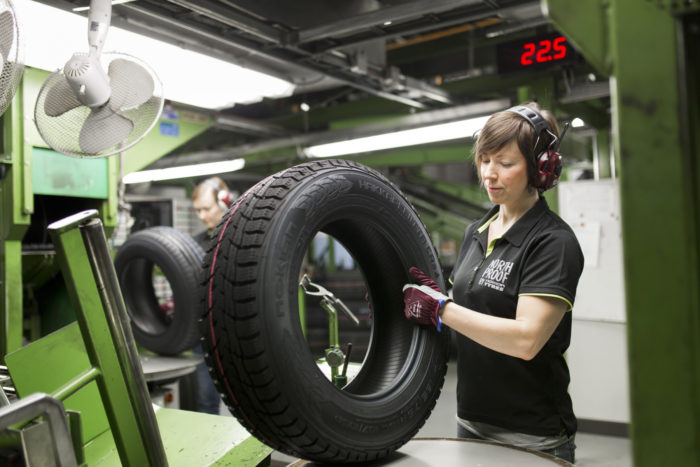
When girls – and boys – see women role models in professions that used to be dominated by men, gender equality becomes part of the way they perceive the world.Photo: Olli-Pekka Latvala/Nokian Tyres/Tampere All Bright

You might ask what’s next for Finland. The Prime Minister’s Office is launching an International Gender Equality Prize that will cement Finland’s role as a leader in gender equality issues. The award honours work in the field of gender equality and will be presented to individuals who have, by their example, advanced equality among genders.

The primary goal of the International Gender Equality Prize is to create a platform for the further promotion of gender equality across the world. To achieve this aim, the prize is given to “a distinguished defender and builder of equality,” as the organisers phrase it.

The winner of the award does not receive the prize money, but rather identifies an issue or action that advances equality, and the money goes toward that cause. The organisers hope that the choice of award winner, and that person’s actions, will exemplify how investments in equality support every society.

The International Gender Equality Prize is noteworthy partly because of its inbuilt notion of solidarity: The selection committee commits to creating and sustaining platforms for addressing issues of gender equality from different perspectives around the globe. The prize’s formal launch day was March 8, 2017. The announcement of the inaugural winner and the award ceremony will happen at a later date.

One hundred years of progress

Video: Yle

“Finland is celebrating 100 years of independence, which makes 2017 quite special for us,” says Paula Lehtomäki, State Secretary at the Prime Minister’s Office.

“Finland has been a leader when it comes to issues relating to gender equality over the past 100 years, and this is the first high-profile prize of its kind in the world.”

The Prime Minister’s Office set up the selection committee to choose the prize nominees. The head of the committee is Paulina Ahokas, who works as CEO of the conference and concert venue Tampere Hall and is also in charge of the Women of the World (WOW) Festival in Finland. The festival was held in Tampere in mid-March 2017.

By Maryan Abdulkarim, March 2017
Stopovers in Finland growing in popularity

Helsinki Airport is the leading long-haul airport in Northern Europe, serving over 16 million passengers annually. Each year more passengers travelling to or from Asia stop there for just five hours or a couple of nights, enough time to look around and get to know Finland a bit better.

There’s lots to explore. Travel guide publisher Lonely Planet nominated Finland as one of the top three travel destinations for 2017. Lonely Planet notes that with the centenary celebrations in 2017 for the anniversary of Finland’s independence, the country is filled with interesting events happening in every region.

If your journey leads you through Helsinki Airport, take some extra time and stop overnight with StopOver Finland.

“Highlights include Jogging between Flights, in which travellers are invited to stretch their legs, enjoy some fresh air and see Helsinki’s main sites all at once, with an English-speaking running guide”, says StopOver Finland programme manager Kaisa Kosonen.

Kosonen also recommends Northern Lights in winter. A three-night stopover provides a once-in-a-lifetime opportunity to explore the natural phenomenon of Aurora Borealis, nature’s spectacular light show. Another fascinating way to spend your stop is Live like a Local, which offers visitors the opportunity to enjoy life like a genuine Finn. The package includes a compact introduction to the Finnish way of life, with dinner at a local home and many other unique experiences.

By Hannele Tavi, ThisisFINLAND Magazine 2017

100 Moods from Finland

A sunset in the archipelago, morning hour at a marketplace – 100 Moods from Finland invites you to suggest your favorite location and mood that you think the whole world should experience.

“This project is special, because we give people the possibility to take part and suggest how Finland is shown to the world. We hope for surprising and interesting locations or moods to broaden the image of Finland,” says Miikka Niemi from Flatlight Creative House, the creator of the project.

The moods will be documented in 360-degree videos and they can be experienced digitally through various channels and in an experiential igloo-style exhibition space, which is part of 100 Moods From Finland tour abroad. Stepping in to this space takes the viewers right in the middle of Finnish moods and landscapes. The project will be updated throughout the year with the new, documented moods that are mostly selected from people’s suggestions.

Suggestions for the moods can be submitted until March 31, 2017.

Pronouncing Finnish: The kalsarikännit video edition

Studying a language also includes learning about another culture. So here’s a good word that might come in handy in Finland, although it’s not necessarily the first thing they teach you in Finnish class: kalsarikännit.

A combination of kalsari (underwear) and kännit (drunkenness), kalsarikännit refers to those times when you can’t be bothered to go out so you just have a drink at home – in your underwear, because why dress up if you’re not going anywhere? We’d call kalsarikännit a typical example of dry Finnish humour, if liquid wasn’t involved.

The Chicago Tribune, New York MagazineVogue and other major publications have remarked upon this useful, uniquely Finnish word (@chicagotribune: for the record, it’s a noun). They found it in our collection of Finland emojis; Finland is the first country to release its own set of official national emojis.

We love it when refined Finnish customs find new devotees all over the globe. However, the international media’s attempts to phoneticise kalsarikännit for English speakers were ultimately doomed. Kalsarikännit is, well, a mouthful for anyone not of the Finnish persuasion.

For all true connoisseurs of Finnish culture everywhere, including Finland fans who find something in kalsarikännit that rings true for them, we’re posting a pronunciation video. It comes with a guarantee that you’ll learn Finnish – or at least this one Finnish word – in 30 seconds or less.

When you decide it’s time for an evening of kalsarikännit – and based on our experience, we believe that day will arrive sooner rather than later – you want to be able to say it right, so you can get the best possible results.

The Parisians may have their joie de vivre, but we’ll always have kalsarikännit.

Cheers! Real Helsinkians show you how to pronounce “kalsarikännit.”
Video: ThisisFINLAND

By Peter Marten, February 2017

Rye bread reigns as *the* Finnish food

With Finland celebrating 100 years of independence in 2017, a group of Finnish culinary experts decided it was high time to select an official national food. The idea forms part of a wider campaign to celebrate Finnish food culture and encourage everyone to cherish quintessentially Finnish foods.

“The idea of publicly choosing a national food proved to be very popular,” says Seija Kurunmäki, executive director of the ELO Foundation for the Promotion of Finnish Food Culture. “In the first round of the vote, about 10,000 people responded with suggestions proposing 1,000 different foods. From these ideas a jury of experts chose a shortlist of 12 nationally popular dishes for the final vote.”

Almost 40,000 Finns then voted for their favourite foods in autumn 2016. The winner, rye bread, attracted nearly 10,000 votes, reflecting its nationwide popularity among people of all ages and social backgrounds. Kurunmäki says that a loaf of crusty, dark brown rye bread is invariably the first thing that Finns living abroad ask visitors from their homeland to bring.

Roots as old as Finland

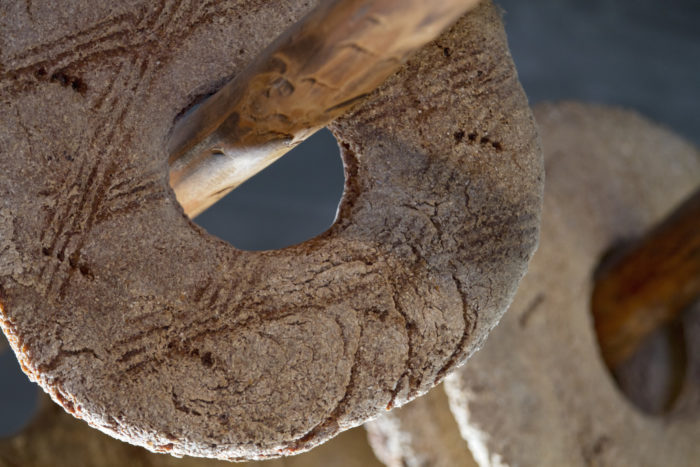
Certain kinds of rye bread are hung up to dry – traditionally the racks would have been placed in the rafters of a log cabin.Photo:Vastavalo/Visit Finland

Restaurateur and TV chef Henri Alén, who served on the jury, agrees that rye bread is an excellent choice for Finland’s national dish. “You can’t get such good rye bread anywhere else in the world, and it’s a traditional food which truly reflects us, made with healthy locally grown ingredients,” he says.

Alén explains that the characteristic sourness of Finnish rye bread is due to a living leaven that generations of bakers lovingly preserve, repeatedly saving a dollop of residual sourdough as a “root” for future bread batches. “Bakers – like those supplying our restaurants in Helsinki – lovingly cherish this root,” he says. “Dough roots may be well travelled, and a hundred years old or more. This makes rye bread truly symbolic of the history of Finnish food culture now we’re reaching the centenary of our independence.”

Alén especially loves warm rye bread fresh from the oven generously spread with salted butter, though he also recommends serving it with salted salmon, liver paté or fish soup.

Truly nationwide favourites

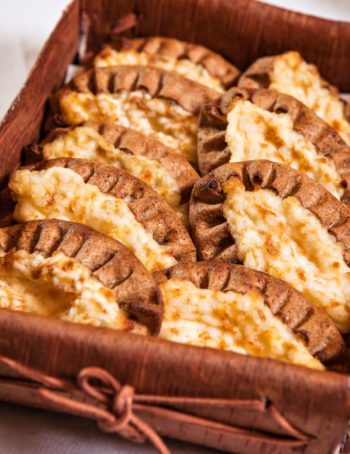
Karelian pasties, also known as Karelian pies, were in the top three when Finland voted on a national food.Photo: Jani Kärppä/Visit Finland

As the experts drew up the shortlist, they excluded popular but more local dishes, such as reindeer from Lapland in the north; fish loaf from Savo, a region in the east; and black sausage from Tampere. Two nationally popular dishes from Karelia, another eastern area, nevertheless made the grade, with the second-place dish Karelian stew proving particularly popular among older Finns, and Karelian pasties attracting votes from young Finns.

The top five national dishes also include pea soup – traditionally eaten on Thursdays – and fried fish (typically Baltic herring in coastal Finland and vendace in Finnish lake country) served with mashed potatoes.

Don’t forget dessert

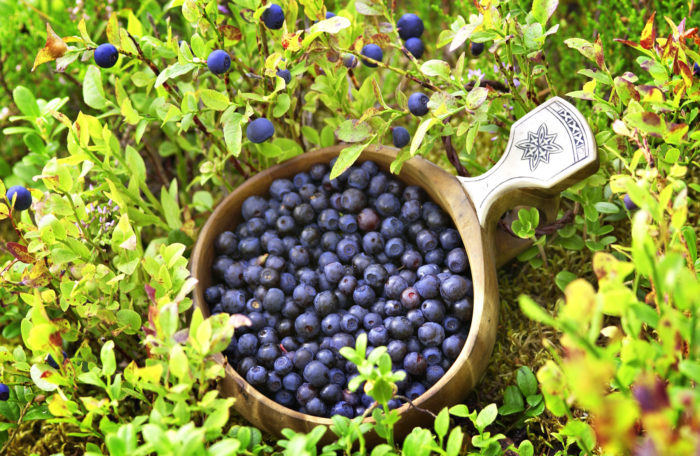
People pick the bilberries, or blueberries, that grow wild in the woods all over Finland and bake them in pies.Photo: Visit Finland

The highest-rated sweet dish was bilberry pie (“bilberry” is the British name for a type of blueberry that is smaller than the North American variety and grows wild in the Finnish woods). “This is a perfect choice for our national dessert,” says Alén. “It’s a well-loved dish that Finnish families like to make themselves at home – especially in late summer when everyone can go out into the forests and freely pick bilberries to use fresh or freeze.”

Kurunmäki reckons that the eternal popularity of bilberry pie also reflects current trends favouring local food and wild food. Food scientists have rated Finnish bilberries a natural superfood, bursting with healthy vitamins and minerals.

By Fran Weaver, February 2017

Lovely Lahti hosts Nordic World Ski Championships

The Nordic World Ski Championships bring tens of thousands of ski fans to Lahti, about 100 kilometres (60 miles) north of Helsinki, from February 22 to March 5, 2017.

Check out course maps, see a list of participating nationalities and learn about events with names such as Skiathlon and Mass Start.

Daredevil Dudesons take Finnish innovations to extremes

The Dudesons and Tekes, the Finnish Funding Agency for Innovations, have joined forces to bring Finnish innovations to the world’s attention. In a new video series entitled Meanwhile in Finland, the Dudesons demonstrate Finnish innovations through extreme stunts such as the Forest Harvester Rodeo, the Icebreaker Chase, and other courageous adventures.

“We are doing things with these innovations which nobody has done in the world, and it looks like people love it. The number of views we’ve got on the first day is just crazy,” said Dudesons member Jarno Laasala. “We also wanted to show the world why Finns are known for their unconventional thinking, and what Finnish innovations can do when four wacky Dudesons put them under extreme conditions.”

“Finland is the coolest innovation hub in Europe,” said Tekes general director Pekka Soini. “We have fantastic success stories in cleantech, health and wellness, Arctic know-how and other fields. Creating new innovations takes courage, even temerity.  The Dudesons embody the adventurous Finnish mentality by testing out Finnish extreme innovations in their own unique style in this new series.”

Dudesons in action

The new series grabs the viewers’ attention with daring stunts and fresh thinking. The first episode shows the Dudesons rodeoing on a forest harvester made by Ponsse, one of the world’s leading manufacturers of forest machines. Later episodes will feature swimming in freezing seas and being chased by an icebreaker, racing snowmobiles through a storm of paintballs, and plunging head-first off haystacks.

Endangered Finnish seals get winter help from locals

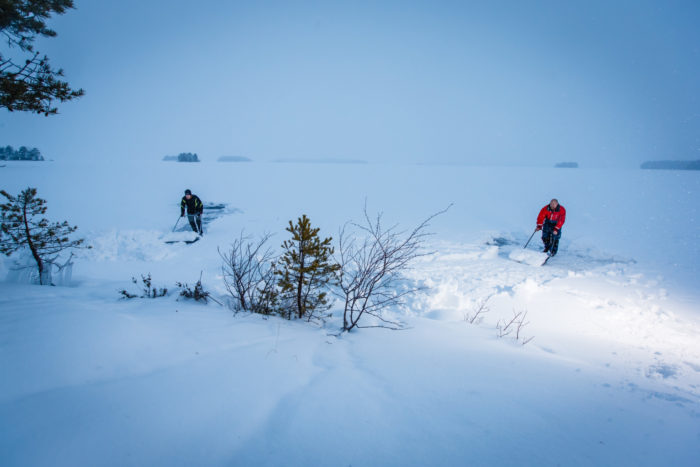
Snow falls gently on the frozen surface of Lake Saimaa, the country’s largest lake, as a blue dawn breaks over eastern Finland. Mikko Uimonen grabs a broad snow shovel known as a “snow pusher” and uses it to pile up deep snowdrifts by the rocky lakeshore.

At first it’s hard to imagine why anyone should take on such a herculean task, but Uimonen and his fellow volunteers are working for a good cause: they’re helping the Saimaa ringed seals, endangered freshwater seals that live in the labyrinth of bays and islands that make up the lake. Their total population is estimated at 360.

As breeding season approaches, the workers are piling up man-made snowdrifts in which the seals can make dens to raise their pups. During winters with little snow, pup mortality rates can rise steeply.

In late January more than a hundred snow-shovelling volunteers work at locations around the vast frozen lake. Most of them are locals, like Uimonen, dedicated to helping their aquatic mammalian neighbours. “To help the seals, all you need is a shovel and plenty of energy,” he says. “It’s rewarding to think that by doing this we can help preserve Lake Saimaa’s seals for future generations.”

Giving nature a helping hand

Mikko Uimonen (right) and his brother, Esa, push snow off the frozen surface of the lake to help provide for the Saimaa ringed seals.Photo: Mikko Nikkinen

Uimonen piles up further layers of snow on the new man-made snowdrift, occasionally beating the surface to make it harden before adding the next layer. The seals need snowdrifts almost a metre (39 inches) deep for their winter dens. Because of climate change, suitable natural snowdrifts have been in short supply during recent winters, so the seals need a helping hand from willing volunteers.

It’s not worth piling up snowdrifts just anywhere on the lake. Anyone keen to help must contact the experts at Parks & Wildlife Finland, a division of Metsähallitus (literally “forest administration”). They coordinate this work, assisted by the University of Eastern Finland and WWF Finland.

The artificial snowdrifts have been well used by the seals. In the winter of 2014, when there was very little snow, they proved crucial for the breeding seals, since more than 90 percent of the pups born that winter were raised in dens in the man-made snow piles. “The seals don’t mind at all whether the snowdrifts are natural or man-made,” says Uimonen.

In recent times more than 60 seals have been born each year. The number jumped to 86 in 2016, but only time will tell whether that was an anomaly or the beginning of a trend.

Local pride in the lake and its wildlife

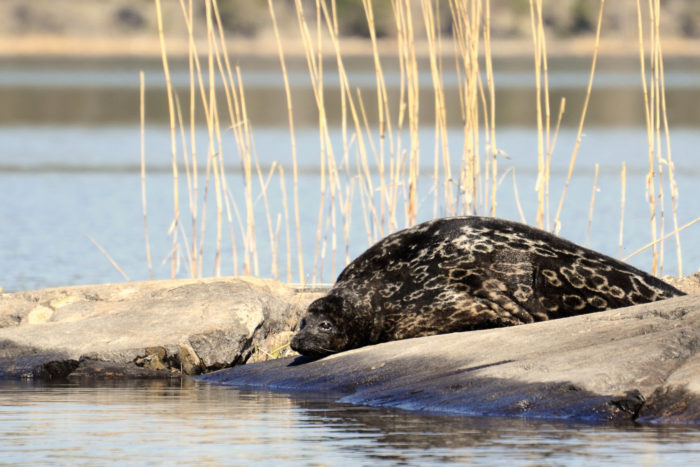
Warmer weather will eventually arrive, and when it does you may see a Saimaa ringed seal basking on a rock, showing off the pattern of its pelt.Photo: Teuvo Juvonen/ Vastavalo/VisitFinland

Lake Saimaa has been important to Mikko Uimonen throughout his life: “Ever since my childhood I’ve always lived just a stone’s throw from the lake. As a small boy I often went out fishing with my dad and my uncles. I first encountered the lake seals on those trips.”

In the 1990s Uimonen made many long winter ski treks on the lake, pulling his survival gear on a sled behind him. On one of these treks he first met the well-known nature documentarist, writer and photographer Juha Taskinen. Much of Taskinen’s work has focused on Lake Saimaa and its wildlife – especially its unique seals. The tales Taskinen tells have made a deep impression on Uimonen.

“His stories have really inspired me,” he says. “It’s fantastic that we have a great lake like this – and such special seals to share it with. We’re really privileged to be able to live here.”

After these encounters Uimonen volunteered to help out with research conducted by the University of Eastern Finland examining the behaviour of Saimaa’s seals. He has assisted the scientists with many practical issues, enabling them to concentrate on their research.

“Though Saimaa’s ringed seals have been studied quite a lot, they’re still enigmatic animals, and there’s a lot about their underwater world that we don’t fully understand,” he says.

Deeply moving winter wonders

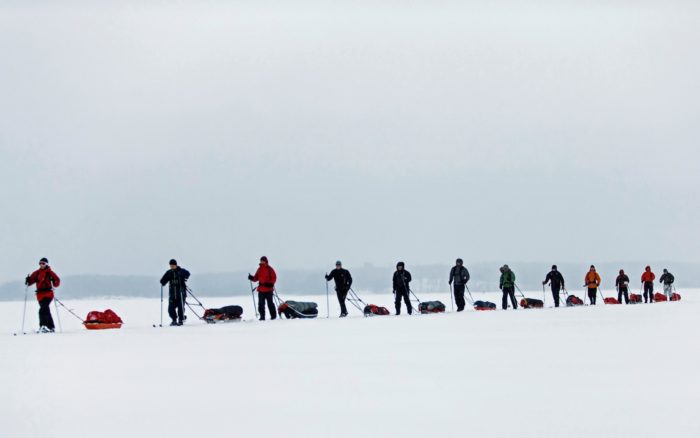
A group of ski trekkers crosses part of Lake Saimaa, pulling their gear on sleds behind them.Photo: Mikko Nikkinen/VisitFinland

For Uimonen, who works as a firefighter, Lake Saimaa most of all represents a place to relax and forget any worries. “Though I know the lake quite well, it’s still full of surprises,” he says. “It has so many little bays and inlets that even a whole lifetime isn’t enough to explore them all.”

He particularly likes to explore Lake Saimaa during the winter. “It’s so tranquil here in wintertime. There’s usually no one on the ice except for the odd skier or fisherman – and the colours of nature are simple and pure, with white snow, clear ice and dark grey rocks. I find it deeply moving.”

Uimonen doesn’t seem to mind the biting wind and the way the bitter cold infiltrates and freezes your fingers. “Those sensations make you feel really alive!” he says with a laugh.

The pale midwinter sun is sinking towards the horizon by the time Uimonen and his mates stop piling up the snowdrifts. But this isn’t the end of the project. When winter starts turning to spring, Uimonen goes round the potential breeding den sites to count how many of them have been occupied – and how many new pups have been raised safely thanks to the volunteers’ work.

Lake Saimaa – a uniquely labyrinthine lake system

Finland’s largest lake, Europe’s fourth largest
Total area about 4,400 square kilometres (1,700 square miles)
Located in eastern Finland
Made up of many interconnected areas of open water, channels and bays
Dotted with thousands of islands and islets

By Tiina Suomalainen, February 2017