100 objects from Finland – 100 years of Finnish independence

The exhibition tells the story of Finland by featuring one object from each year of its independence. The Maternity Package from 1938, a pedestrian safety reflector from 1950, a plastic sled from 1967 and a Mobira Cityman portable phone from 1987.

For an object to be from Finland does not simply mean it has been made or designed in Finland, but it also communicates the essence of life in Finland. The exhibits include a map of Finland, showing where the objects are from geographically.

The exhibition is coordinated by the Finnish Institute in Estonia and has been produced in collaboration with Finnish cultural and academic institutes around the world.

What object do you think would best describe Finnishness?

American-based Finnish journalist talks healthcare

Partanen, who has been based in the US for nearly a decade, is the author of the book The Nordic Theory of Everything: In Search of a Better Life (HarperCollins, 2016).

In an interview on The World, aired just as a new healthcare bill was being debated in the US Congress, she compares her experiences of the healthcare systems in Finland and America.

The show’s host, Marco Werman, notes that Finland has a universal, taxpayer-funded, publicly managed healthcare system. Partanen says that, among other things, this frees people from “an immense amount of stress and time” spent worrying about what healthcare to acquire and double-checking the fine print in various policies. That time could be used for something else: “Nordic people can go enjoy a walk in the forest while Americans are figuring out their healthcare,” she says.

Partanen does not claim that Finland’s system is perfect – lawmakers back home struggle to solve problems as they do anywhere else. However, the context is different. She draws a connection to other areas that affect health, such as urban planning: “[The way Finnish society is built] enable[s] you in your everyday life to make healthier choices.”

By ThisisFINLAND staff, March 2017

Figure skating world focuses on Finland

The first time Finland hosted the World Figure Skating Championships, the country was still a Grand Duchy in the Russian Empire. It was in 1914, three years before Finland gained its independence, and on the frozen surface of Helsinki’s North Harbour, Gösta Sandahl of Sweden was declared men’s singles champion.

Those were the days before the competitions for men, women and pairs were held at same venue. That year, for example, St Moritz, Switzerland played host to the ladies’ contest and the pairs event. In 1952, the International Skating Union added ice dancing to the World Championships repertoire, creating a four-event extravaganza.

From March 29 to April 2, 2017, the World Figure Skating Championships take place in Helsinki again, this time at Hartwall Arena, with competitors from more than 30 countries. Coinciding with Finland’s centennial, the Worlds promise a combined celebration of unparalleled figure skating and continued citywide festivities commemorating 100 years of Finnish independence. One of the more unusual World Championship tie-ins is an official Helsinki 2017 detective story, The Mystery of a Missing Skater, written by Finland’s own Leena Lehtolainen and appearing online in installments (link below).

Olympics on the horizon

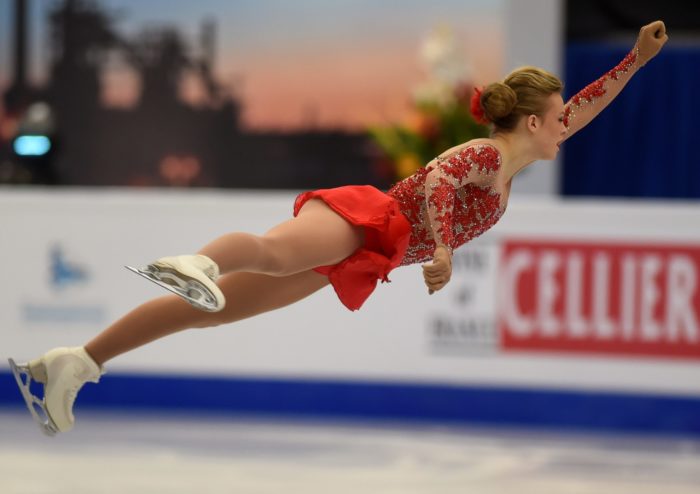
Finnish 2017 national champion Emmi Peltonen flies high over the ice.Photo: Jaroslav Ozana/ CTK/Lehtikuva

Held annually, the World Figure Skating Championships form the most prestigious of the title events sponsored by the ISU, including the European Championships, the Four Continents Championships and the World Junior Championships. Only an Olympic medal is considered a higher achievement in figuring skating than placing at the Worlds.

Helsinki is also an important precursor to the 2018 Winter Olympic Games in Pyeongchang, South Korea, as the 2017 World Championships will determine the number of Olympic entries for each country.

In Helsinki, the women’s competition includes 38 participants, with 2017 Finnish national champion Emmi Peltonen among them. The men’s competition has 37, including two-time Nordic medalist and four-time Finnish national champion Valtter Virtanen. Twenty-nine couples are taking part in the pairs competition, in which Emilia Simonen of Finland takes the ice together with her Canadian partner Matthew Penasse. In the ice dancing category, Cecilia Törn and Jussiville Partanen are representing Finland in a field of 32 couples.

Defending champs and challengers

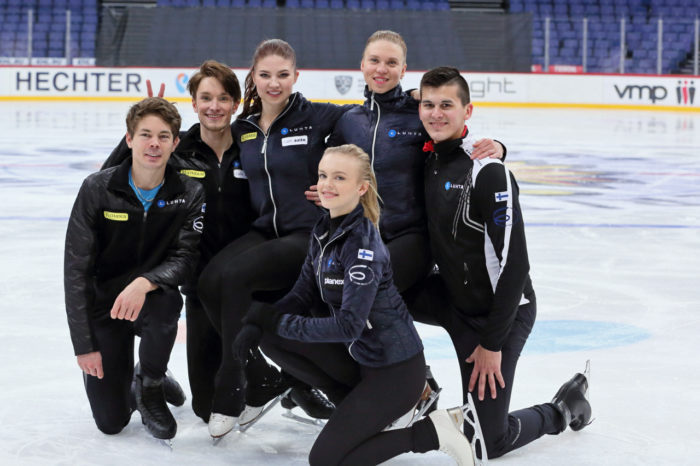
The Finnish team gathers together (from left): Valtter Virtanen, Jussiville Partanen, Cecilia Törn, Emilia Simonen, Emmi Peltonen and Matthew Penasse.Photo: Sari Niskanen

The 2017 event marks the fifth time Helsinki has played host to the championships, which first took place in 1896. Finland has won one bronze medal in World Championship history (Laura Lepistö in 2010).

Russia made a clean sweep in 1999, the previous time the event was held in Helsinki: Alexei Yagudin and Maria Butyrskaya were singles winners, while Elena Berezhnaya and Anton Sikharulidze won the pairs event and Anjelika Krylova and Oleg Ovsyannikov took ice dancing. In Helsinki in 1983, American Scott Hamilton and Rosalynn Sumners were individual winners. Soviets Elena Valova and Oleg Vasiliev were awarded the pairs championship, while British skaters Jayne Torvill and Christopher Dean were tops in ice dancing.

In 2017, the defending champions from the 2016 World Championships in Boston include: Spain’s Javier Fernandez (men’s singles), Russia’s Evgenia Medvedeva (ladies’ singles), Canada’s Meagan Duhamel and Eric Radford (pairs) and France’s Gabriella Papadakis and Guillaume Cizeron (ice dancing).

Japan’s Yuzuru Hanyu – the 2014 Olympic and world champion – is considered one of the favorites in the men’s singles along with Fernandez. Satoko Miyahara, also from Japan, is expected to challenge Medvedeva in the ladies’ singles.

By Michael Hunt, March 2017

Finnish author Minna Canth could, and she did

Minna Canth (1844–97), who is widely acknowledged as Finland’s first significant female writer, was born Ulrika Wilhelmina Johnsson in Tampere. Her versatile oeuvre includes short stories, novellas, plays and journalism; she wrote mainly in Finnish but also in Swedish. She championed women’s rights and feminism, and drew social issues into her writings and discourse.

She and her husband, Johann Ferdinand Canth (1836–79), lived in Jyväskylä and had seven children. After his death, she became a businesswoman, taking over a draper’s shop in Kuopio. This allowed her the financial independence to provide for her family while also participating in the literary and social-activism scenes; her home became a place where intellectuals and artists gathered.

In a column on the website of Finland’s national broadcasting company Yle, author Johanna Holmström calls Canth “truly one of the people who participated in laying the foundations of culture in Finland.” Holmström takes inspiration from Canth’s fight for women’s rights, while noting that the struggle is far from over, despite the progress that has been made:

“Every generation has to conduct its own battle to drive equality forward, and that’s where we are at the moment. We often forget that our hard-won gains can disappear in the blink of an eye if we lean back and think to ourselves, ‘Everything has already been solved!’”

By ThisisFINLAND staff (including translations), March 2017, updated March 2018

Genuine Finnish mermaid makes a real splash

Riia the mermaid splashes the water with her tail fins, blows effusive bubble kisses and performs subaquatic somersaults to the delight of the girls attending her mermaid class at Mäkelänrinne Swimming Pool in Helsinki.

Her pupils eagerly don the colourful mermaid tails Riia has brought for them, and quickly learn to swim like dolphins and do underwater tricks just like real mermaids.

Riia comes from Lappeenranta, where she lives beside Lake Saimaa, Finland’s largest lake. On dry land she more commonly goes by the name of Anni Perttula, though water is clearly her true element: “I’ve lived by water all my life, and I’ve always loved swimming, even in the winter,” she says. “I get a bit anxious when there’s no water nearby.”

Dream job

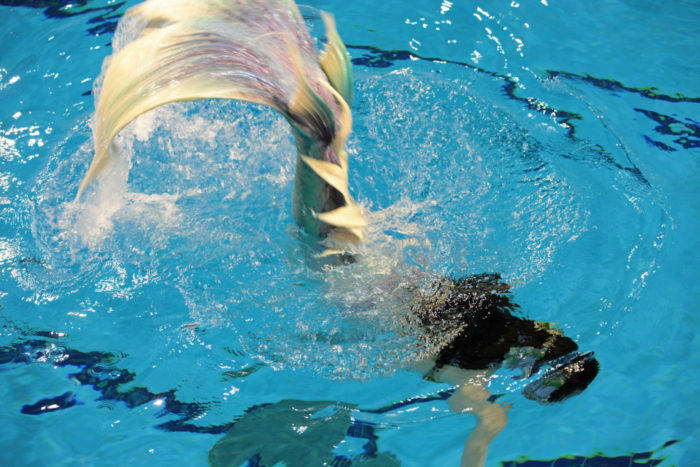
Quick to startle, a mermaid dives out of reach with a swish of her tail.Photo: Hernan Patiño

Perttula first got the idea of becoming a professional mermaid a few years ago when she read about mermaid performers working in Florida. “I love entertaining people, and especially working and playing with children, so it’s a dream job for me,” she says.

Her friends initially worried whether she could make a living from her mythical alter ego, but as Riia’s popularity increased, Perttula was able to quit her more mundane terrestrial job as a store manager and become a fulltime mermaid. Her courses and shows are now in great demand at spas and swimming pools around the country.

Performances for younger children include lots of storytelling and roleplaying, with an assistant keeping a close watch for safety’s sake. Perttula is herself a qualified swimming and snorkelling instructor, able to teach her keen apprentice mermaids many special underwater tricks and techniques.

Finns with fins

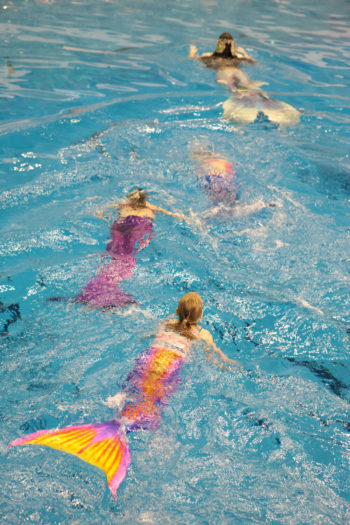
A school of mermaids: Riia offers lessons for young, aspiring merfolk.Photo: Hernan Patiño

Mermaid Riia also often performs at private parties and corporate events. When working with larger groups or at big events like the Helsinki International Boat Show, she sometimes appears with a like-minded friend – Nerissa the mermaid, from Rovaniemi in Finnish Lapland.

According to Perttula, even initially sceptical adults can enjoy being friendly and graceful mermaids for a while. “It’s great fun to forget your everyday routine and let your imagination run free,” she says.

Mermaid gigs can still be difficult work, however, especially when they involve driving long distances and lugging heavy, waterlogged costumes about. Perttula’s favourite finned costumes, made of glistening platinum-cured silicone, weigh almost 15 kilogrammes (33 pounds) each. She imported them at great expense from the US, and they passed through customs labelled as prosthetic limbs.

Unforgettable underwater encounters

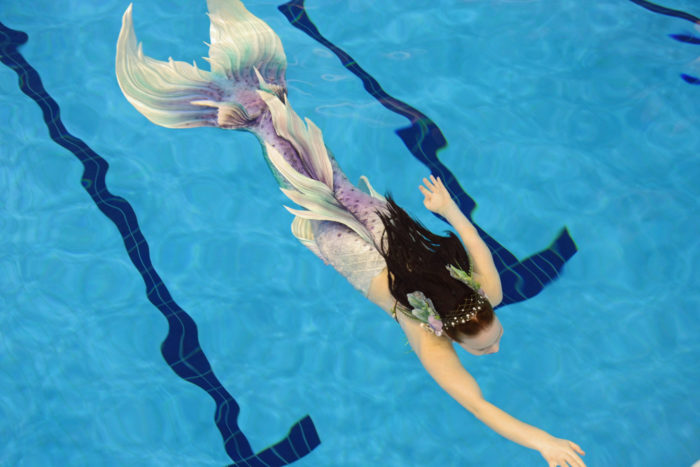
Being a mermaid “lets your imagination run free,” says Perttula.Photo: Hernan Patiño

After the mermaid school session in Helsinki, Riia’s new young fans proudly pose with her for selfies, and ask when they can swim with her again.

“Swimming with a big tail felt funny at first, but if you’re a good swimmer you can get used to it,” says Mona, 11. “Blowing bubble rings underwater was the funniest thing!” adds 11-year-old Sofia. According to Eeva, 10, all of the girls now hope to become performing mermaids like Riia.

By Fran Weaver, March 2017

Taking an icy plunge in Finnish waters

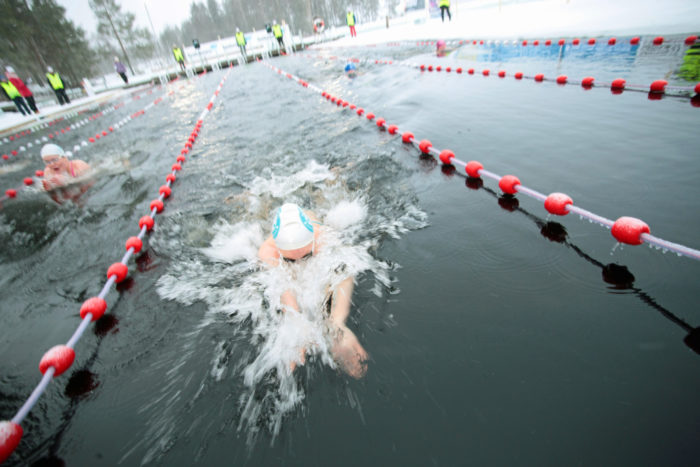
From late autumn until spring, a removable bridge connects the small island of Uunisaari with Kaivopuisto, the park that covers Helsinki’s southern shore. On a frosty winter morning, the silence on the island is repeatedly broken by a stream of scantily clad figures scampering between a low sauna building and a jetty before bravely plunging into a large hole cut into the frozen surface of the ocean.

Each winter as many as 150,000 Finns “enjoy” taking regular dips in the chilly lakes and sea bays. People who are unfamiliar with the practice often ask one question: Why?

“The shock of the icy water gives you a cold rush that makes you feel really alive, and afterwards you feel extremely calm and refreshed,” explains Jonas Sipilä, secretary of Uunisaari Arctic Swimming Club. “You leave your stress behind in the sea, and the whole experience is quite addictive.”

The club has about 220 members, ages 12 to 75, from shipyard workers to managing directors. Most live locally, like Sipilä, who takes the plunge at Uunisaari almost every day, even when the sauna is not heated. The keenest aficionados still swim at Uunisaari when air temperatures plummet to minus 20 degrees Celsius (minus 4 Fahrenheit), since water temperatures always stay just above zero Celsius (32 Fahrenheit).

Health, achievement and euphoria

At the national winter swimming championships, the low temperatures can easily make the lanes seem longer than 25 metres (82 feet).Photo: Hernan Patiño

The club’s chairperson, Sirkka Mäkeläinen, is convinced that regular indulgers enjoy many physical and mental health benefits as well as a buzz. “Most feel they suffer less from stress, colds and painful ailments,” she says. “Many also say they sleep better at night and feel more awake during the day.”

Scientific studies show that cold immersions can also reduce blood pressure and promote the growth of healthy brown adipose tissue, improving cold tolerance. Cold shocks also trigger the brain’s production of endorphin hormones, which enhance pain resistance and create a sense of euphoria.

“There’s definitely a feeling of overcoming an exciting challenge,” says Mäkeläinen, as we sip warm drinks in Uunisaari’s cosy café after our icy ordeal. “There’s also a social side to winter swimming clubs, especially since having a sauna together is often part of the experience. I’ve made many friends through the club.”

Chilly championships

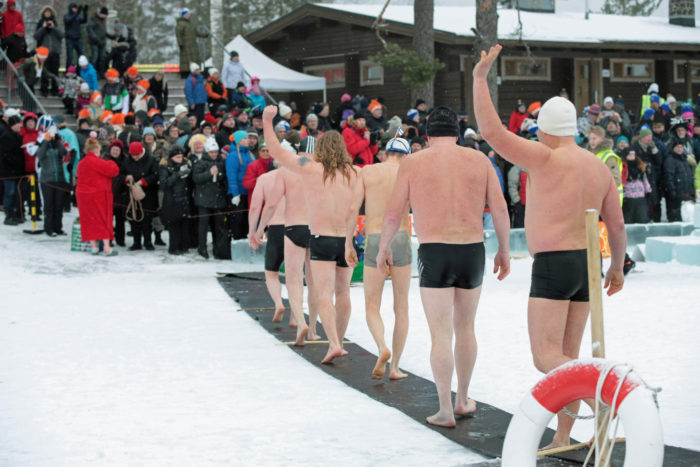
The season-appropriate winter coats and snowsuits of the fans make for a comical contrast with the swimsuit-clad contestants.Photo: Hernan Patiño

Finland has over 200 registered winter swimming clubs and facilities, while many more people make smaller ice-holes near their homes using spades or chainsaws.

National championships have been held in various locations annually since 1989, though Finns are known to have relished this eccentric pursuit since the 17th century. The first clubs were founded back in the 1920s.

The 2017 championships, held at the lakeside Tanhuvaara Sports Institute in eastern Finland, attracted nearly 800 participants competing in age groups from under-20s to over-70s, and about the same number of landlubber spectators. “For 2017 we added new events, including 50-metre breaststroke and 25-metre freestyle, as well as the traditional 25-metre breaststroke and exciting 4×25-metre relay races,” says co-organiser Hanna Okkonen, who coordinates winter swimming activities for the Outdoor Association of Finland. “Competitor numbers show that winter swimming is particularly popular among middle-aged women, but the youngest entrant was 13, and the oldest 84.”

A great way to test yourself

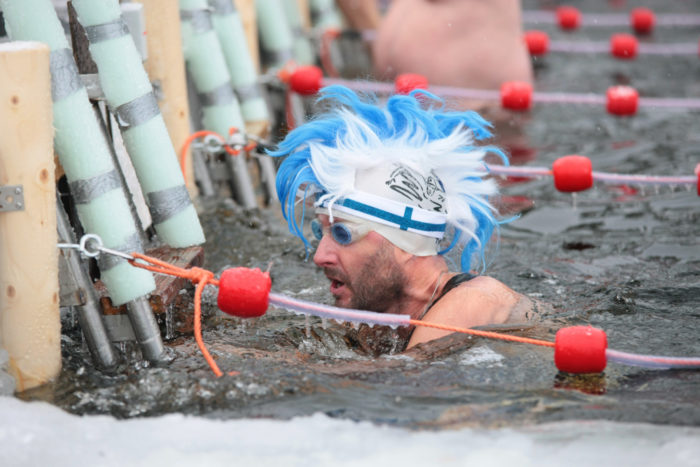
Swimmers show off all kinds of hats, from bathing caps to top hats to – this.Photo: Hernan Patiño

Headwear is compulsory – in the shape of conventional bathing caps or silly woolly hats – and frogmen are on standby in case anyone flounders. Though most competitors are here for fun, others take the races very seriously – including some with impressive track records as competitive swimmers or even Olympians. Times are slower than they are at summer events, since competitors start from a standing, shivering position already in the pool, instead of diving in.

Elina Mäkinen, 23, from Joensuu, recently swam an “ice mile” at two degrees Celsius (35.5 Fahrenheit) at a Wild Water event in Armagh, Ireland, in just over 26 minutes. “I don’t seem to feel the cold too badly, and winter swimming is a great way to test yourself and meet positive people with similar interests,” she says.

Anja Selenius, 79, has won 15 gold medals in her age group at world championship events in Finland, Latvia, London, Slovenia and Siberia. She swims outdoors near her home in the eastern Finnish town of Punkaharju twice weekly all year round. “It’s worth practising swimming style, starts and turns regularly ahead of big events,” she says. “I’ll be 80 next year for the 2018 championships, but largely thanks to swimming I don’t suffer from any rheumatism – and I can’t remember when I last had a cold.”

Selenius is already mentoring a young successor: 14-year-old Viivi Paasonen, from the same swimming club. Paasonen swam 25 metres in less than 20 seconds at this year’s Finnish championships. “I’ve swum competitively since I was 8, but this is my first winter season,” she says. “My schoolmates are amazed that I dare to do it, but it’s a great feeling swimming in an ice hole. I’m very excited about the chance to go to the world championships in Estonia next year with Anja and our teammates.”

By Fran Weaver, March 2017

Finnish star Markkanen makes mark in America

Markkanen also helped lead Finland’s national team, the “Wolf Pack,” when Helsinki cohosted the 2017 European Basketball Championship. For coaches at US universities and in the NBA, big European players who can shoot are nothing new, but seeing one as tall as Markkanen combine extraordinary grace, fluidity and accuracy gets their attention.

Hanno Möttölä, Finland’s best-known basketball player from the generation before Markkanen, coaches a programme for talented teenagers called Helsinki Basketball Academy, part of the Mäkelänrinne Sports High School, where the schedule helps players keep up in both academics and sports. In 2016 he began receiving inquiries from American colleges about one of the stars of the squad.

Approaching the 213-centimetre (seven-foot) frame he would eventually grow into, Lauri Markkanen was already beginning to turn heads on the continent, but coaches from the University of Arizona were astonished when they saw the video Möttölä had sent them. They’d seen tall European players with good shots, but they’d never seen one of Markkanen’s height display such poise and precision.

Arizona coach Sean Miller got himself to Helsinki as soon as he could and treated Markkanen to a meal of reindeer, mashed potatoes and cranberries at a restaurant on Senate Square. Not long afterward, Markkanen decided to enroll at the desert school that could not be more geographically dissimilar from his homeland.

The result was spectacular.

High-flying Finns and March Madness
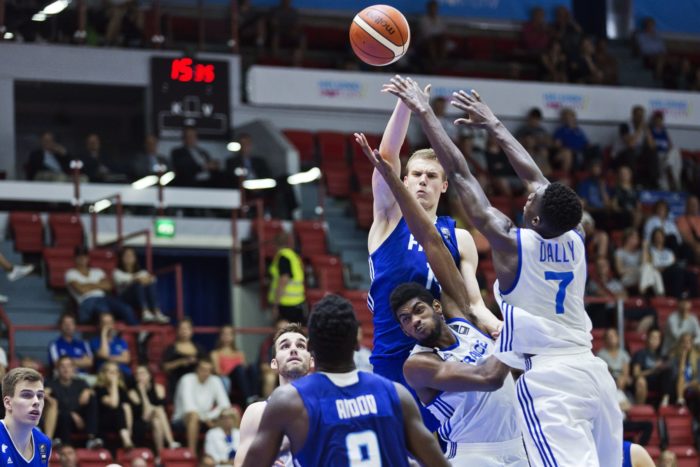
Playing for Finland (in blue) against France in the U20 European Championship in 2016, Lauri Markkanen rises above the competition.Photo: Roni Rekomaa/Lehtikuva

Basketball is a growing sport in Finland. The country, whose national team is nicknamed the Wolf Pack, competed in the World Cup tournament for the first time in 2014. Helsinki cohosted the European Championship in August and September 2017, with Finland placing second in their group and progressing to the round of 16, only to lose to Italy.

Prior to 2017, two Finnish players had reached the most competitive league in the world, the National Basketball Association.

There is Möttölä, the 208-centimetre (six-foot-ten) forward from Helsinki who played at the University of Utah and was chosen 40th overall in the 2000 NBA draft by the Atlanta Hawks, for whom he played two seasons.

Then there is Erik Murphy, the same height, who was drafted 68th overall in 2013 by the Chicago Bulls. Born in Lyon, France, Murphy played for the Finnish national team in 2014 and 2015, eligible because his mother, Päivi Murphy, is Finnish.

In June 2017, Markkanen became the third. The Minnesota Timberwolves picked him seventh overall in the 2017 NBA draft, shortly after his 20th birthday. Before the draft was over, he was part of a trade and ended up on the Chicago Bulls, where he is starting his pro career after playing for Finland in the European Championship.

Born in Vantaa, just north of Helsinki, and raised in the central Finnish city of Jyväskylä, he finished his freshman season with the Arizona Wildcats in spring 2017. The team was one of the favourites to win the National Collegiate Athletic Association Division I championship, but ended up getting knocked out of the playoffs three games into the post-season.

Going into the national tournament, which is nicknamed March Madness, Markkanen led the seventh-ranked Wildcats in scoring at more than 15 points a game. The top scorer in the U20 European Championship in 2016, Markkanen became eligible for the draft because he had played the requisite one year of college basketball. Talent scouts verified his immediate readiness for the NBA, listing his size, coordination, physique, shooting mechanics and athleticism as the basis for a successful career.

Markkanen, who scored a career-high 30 points against rival Arizona State in January 2017, became a finalist for nearly every major award in college basketball. In January, a US sports website anointed him the best-shooting seven-footer college basketball has ever seen.

Blood, sweat and cheers
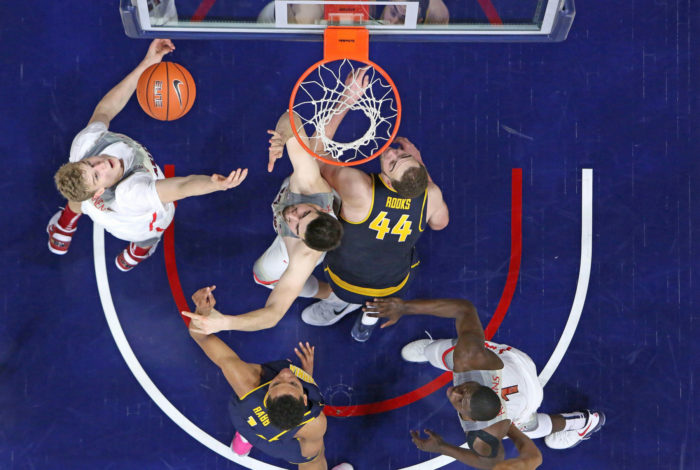
Lauri Markkanen (left) goes up for a rebound in a University of Arizona game against the University of California.Photo: Chris Coduto/AFP/Lehtikuva

Whereas European players coming to America were once considered mechanical, awkward shooters, future NBA Hall of Famer Dirk Nowitzki of Germany was one of the big men who changed that perception with his fluid motion. As continental coaching began to improve and the NBA’s influence spread to Europe, genetically gifted youngsters like Markkanen began reaping the benefits. Because of his outside touch, NBA scouts believe Markkanen, like Nowitzki, will be suited to playing on the wing.

It doesn’t hurt that Markkanen, like Möttölä and Murphy, comes from an athletic background. Möttölä is a second cousin of top-level hockey players Jarkko Ruutu and Tuomo Ruutu. Both of Murphy’s parents played basketball; his father, Connecticut-born Jay Murphy, played in the NBA and in Europe.

Markkanen’s parents also played basketball. Pekka Markkanen played at the powerhouse University of Kansas for one season and later on the Finnish national team. His brother, Eero, is a professional soccer player with the Swedish club AIK, as well as a member of the Finnish national squad.

The six-foot-ten Pekka passed on his size to his son, who is said to have worked four or five hours a day while growing up in Jyväskylä on the jump shot that could again put Finland on the global basketball map.

“I have to be a little bit selfish and give credit to myself,” Markkanen recently told Sports Illustrated magazine. “The actual amount, the work I put in, it’s like, I can’t even tell you how many hours I put in on a daily basis to work on my shot.” However, he also remembers to give due credit to his mother, father and coaches.

Now the world will see what Arizona saw.

By Michael Hunt, March 2017, updated October 2017
Finnish lake finds fame in kicksled culture

Säkylä (population: 7,000), situated in southwestern Finland, provides a fine example of an idyllic rural municipality: peaceful yet lively, and surrounded by expansive forest areas.

A local lake, Köyliönjärvi, provides a setting for leisure activities, although it used to be mainly a summer venue. That changed a few years ago when an active citizen, Kari Hietala, came up with an idea to attract people during the cold months, too. He took it upon himself to plough a track on the frozen lake and arranged sponsorship in the form of kicksleds donated by local enterprises – because icy conditions require their own means of transport, and some people don’t feel like skating.

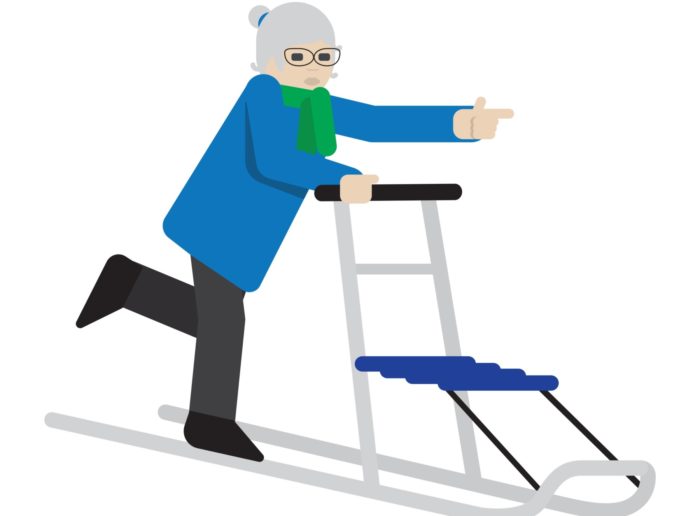
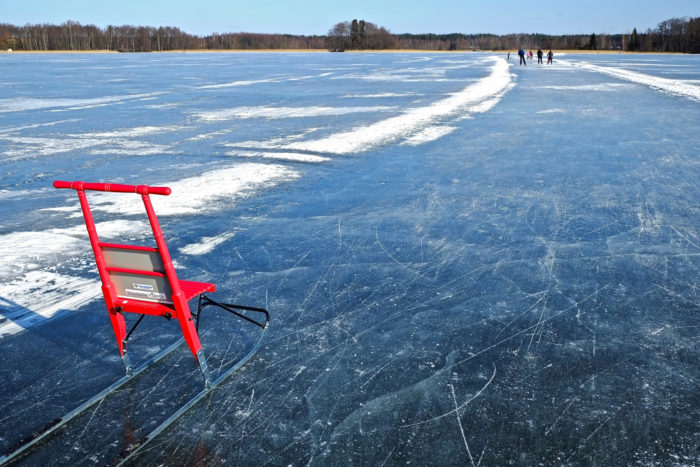
A typical kicksled looks like a chair with handles on top and two long sled runners underneath. You push with one foot, similarly to a scooter, and glide along with one foot on each runner. The chair provides room for a bag or even a passenger, or just a place to sit when you take a rest.

Hietala’s motivation was very simple. “I wanted to bring more life to the lake during winter,” he says. “My goal was to get people moving, regardless of their physical abilities, and get them enjoying the beautiful wintery landscape nature has provided us.”

The kicksledding tradition in Finland stretches back to well before the country gained independence in 1917. A manageable mode of movement for everyone from kids to senior citizens, kicksleds are perfect for navigating village walkways and country lanes covered with packed snow.

Violent past, pleasant present

Finland’s official Kicksled emoji: Kicksleds are for all age groups and offer a convenient form of transport if you live in a town where the walkways are covered with packed snow.Illustration: ThisisFINLAND

The ploughed route on Köyliönjärvi stretches ten kilometres (6.2 miles) in a long loop with a campfire site at each end, and it’s free of charge. All you need to do is bring your own sausages for the grill. Nothing beats a freshly barbequed, smoky sausage with mustard, consumed in the crisp winter air on a sunny day after some outdoor exercise.

The ice of Köyliönjärvi also possesses bloodstained historical connotations: Legend has it that in the mid-12th century, a Bishop Henry, an Englishman, died there as a martyr after being stationed in Sweden and then in Finland. He is said to have been murdered on the frozen Köyliönjärvi by an enraged peasant named Lalli. It’s uncertain whether Lalli actually existed, and the circumstances of Henry’s death are unclear; nonetheless, Lalli has his place in Finnish history.

These days, it’s hard to imagine such a bloody scene on Köyliönjärvi. On a typical winter day, the route is buzzing with happy people enjoying the fun on kicksleds or skates.

Popular pastime

Here’s your kicksled and there’s the track. Go for it!Photo: Mari Storpellinen

“This route has been running for several years already,” Hietala says. “But as a part of the Finland 100 celebrations, the number of kicksleds has now been increased accordingly.”

To mark the occasion, local enterprises were generous in financing additional kicksleds to bring the fleet to the full 100. As the municipality has devoted energy to publicity, the amount of people visiting the lake has multiplied.

Visitors can write their comments down and put them in feedback boxes near the track. “According to that feedback, we have had more than 10,000 visitors this year,” says Lauri Parviainen, Säkylä’s secretary of sports and leisure activities, in an interview at the end of February. However, not everyone puts a piece of paper in the feedback box, so he guesses that the actual number is much higher.

“With clever advertising, the municipality has made this place more widely known,” he says. “Social media has been a major factor, with people posting about how much they’ve enjoyed it here.”

The season lasts from two to three months, depending on the year. “These activities are dependent on the ice being thick enough,” Hietala says. “The lake follows the laws of nature, so we follow them, too.”

By Mari Storpellinen, March 2017