Finland prevails together

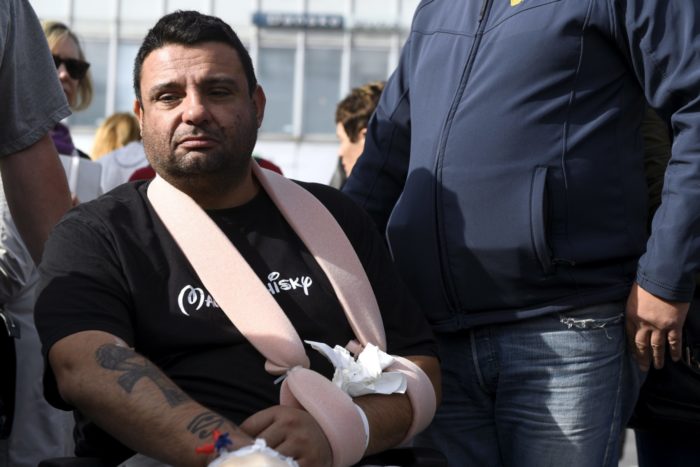
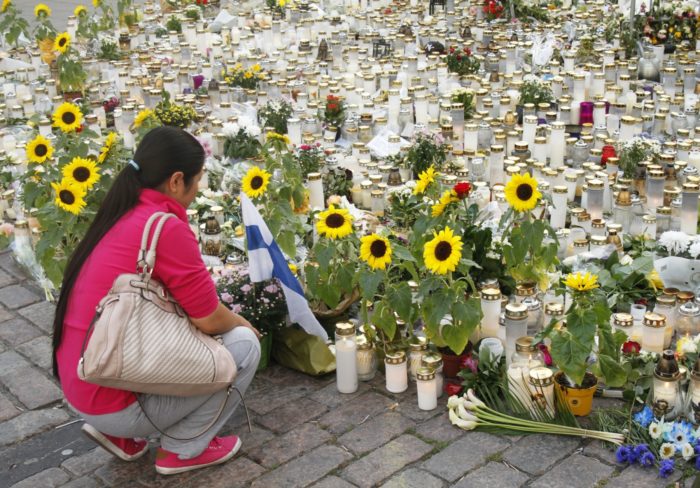
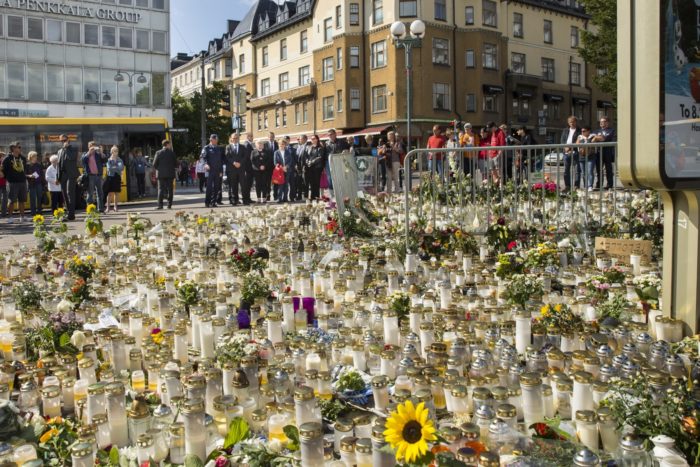
He was referring to the knife attack in the southwestern Finnish city of Turku on August 18, 2017. Two people died and eight others were injured, some of them bystanders who jumped in to try to stop the perpetrator. The police put an end to the attack by shooting the perpetrator in the leg; they arrived on the scene just three minutes after receiving the first emergency call.

“Hate must not be answered with hate,” said Prime Minister Juha Sipilä. The police are investigating the attack as an act of terrorism.

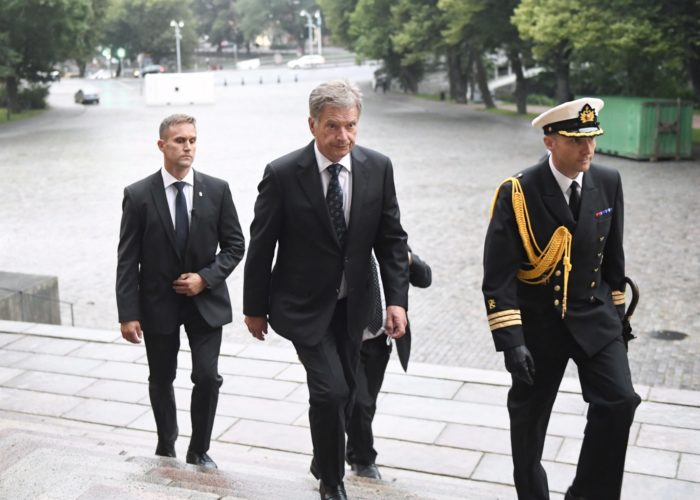
Niinistö stated that “Finland’s success, Finland’s strength, is based on our ability to work together, to allow space for different viewpoints. Without labelling or blaming.”

He emphasised that rule of law continues to prevail in Finland, with its deep democratic traditions and legal system. “The peace of our society strongly depends on our confidence in the authorities and the justice system,” he said.

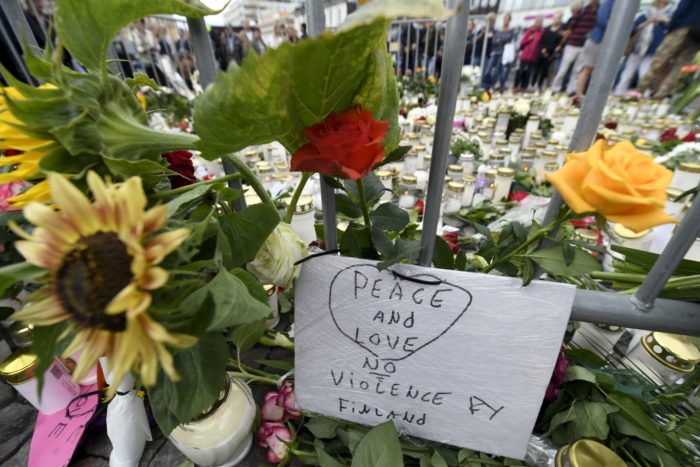
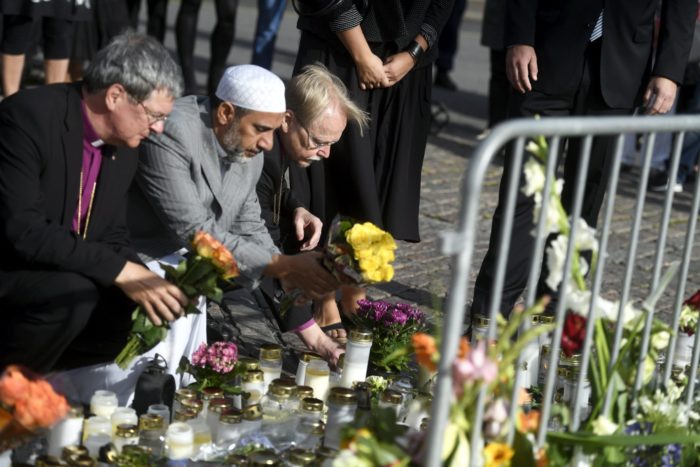
Turku’s sea of flowers

By ThisisFINLAND staff, August 2017

Helsinki Design Week 2017: It’s all about Q&A

Looking for questions and answers highlights the fact that good design always entails good thinking. The value of design has surpassed making mere objects, and includes insight and questioning the obvious.

The theme encourages open-mindedness, vision, exploration and discovery. Criticality is important, and so is being open to options. The theme tackles social questions that impact the future.

How can we use design to build better cities and a better society? How could design thinking benefit new areas? We must ask the right questions and come up with answers that remain relevant in the future. The theme includes topics like urban development; education and learning; sustainable development; spaces and houses; and entrepreneurship and collaboration in the creative fields.

Two Finnish designers to check out

New York-based illustrator and graphic designer Lotta Nieminen’s work includes illustrations for Facebook’s events and Google’s calendar apps.

Nieminen is the creator of strikingly colourful, nuanced illustrations for clients such as IBM, Hermès and the New York Times.

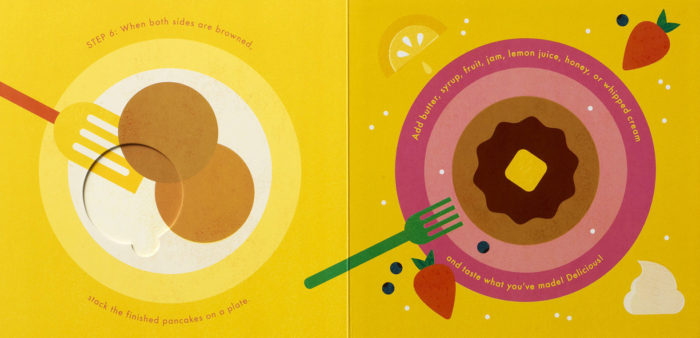
“Pancakes! An Interactive Recipe Book” forms one of Lotta Nieminen’s newest accomplishments.Photo: Lotta Nieminen

She has even made it onto Forbes magazine’s 30 Under 30 list. A graduate of Aalto University in Helsinki, she has designed everything from window display illustrations to children’s books. Her most recent work is her illustrated children’s book Pancakes! An Interactive Recipe Book.

Arctic odyssey

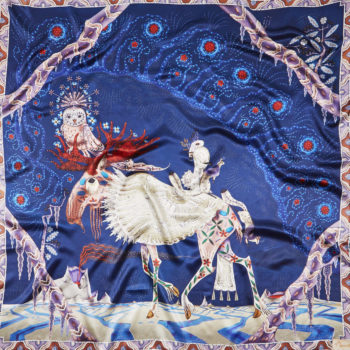
This scarf by Klaus Haapaniemi is part of the series “Polar Byzantine,” which follows a story by Finnish author Rosa Liksom. “A true arctic odyssey,” says Haapaniemi’s website.Photo: Klaus Haapaniemi

Inspired by folklore and nature, Klaus Haapaniemi is a London-based designer and the cofounder of the design and lifestyle brand Klaus Haapaniemi & Co.

His impressive résumé includes work for global brands such as Christian Louboutin and Established & Sons, and his designs inspired by mythological elements can also be found on Iittala’s tableware and even on the opera stage. Since 2010, he has had his own shop on the popular Redchurch Street in London.

By Tiia Rask, ThisisFINLAND Magazine 2017

Hearts of art beat strong in Suomenlinna’s island life

Helsinki’s Unesco-listed sea fortress Suomenlinna, the Finnish capital’s most beautiful and historic attraction, has never been so popular, attracting upwards of a million visitors, Finnish and foreign, annually. But visitors don’t always realise that the islands are home to a community of some 800 souls.

Many members of this community, including a diverse collection of artists, musicians, historians and museum curators as well as sailors from the Finnish Naval Academy based here, are drawn by the romance of island life. When the last ferry leaves for the mainland after midnight and the last tourist has deserted for the day, that life goes on behind the windswept windows of the stone apartments and wooden villas.  

Seija Linnanmäki and Markku Kallio: Building restorers, ballroom dancers
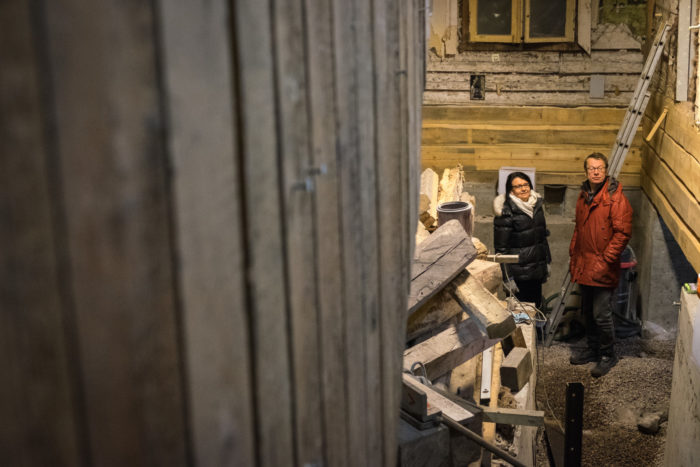
“We are newcomers – we’ve only lived here for about 30 years!”Photo: Tim Bird

Suomenlinna is home to some of Finland’s oldest buildings. A handful of properties remain in private ownership on land rented from the Suomenlinna Governing Body.  Seija Linnanmäki and her husband Markku Kallio own two of these, residing in one while renovations proceed on the other.

“We came to live on the islands in 1989 and only got access to running water and an indoor toilet in 1993,” says Seija.

Expeditions to the mainland are made in pursuit of the couple’s hobby: competitive ballroom dancing. This explains the several dozen trophies lining the top of the bookshelf.

“We are still very close to Helsinki,” says Markku. “But it’s pretty much like living in the countryside. There are people here who have been living here for many generations. We are newcomers – we’ve only lived here for about 30 years!”

Petra Tandefelt: Collector of toys and teapots
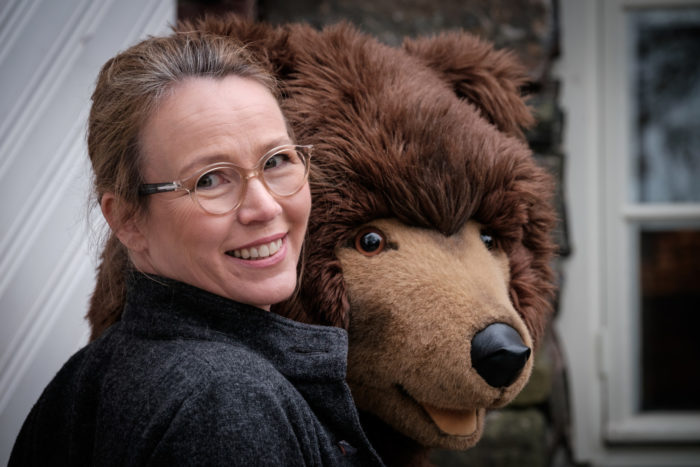
“I like to share the atmosphere and give people some kind of nostalgic feeling.”Photo: Tim Bird

Petra Tandefelt, owner, collector and manager of the Suomenlinna Toy Museum, is pouring tea in the café adjoining the museum. On the shelf above the counter stands a row of similar samovars, a separate small museum in itself.

“Running the museum is not just a duty,” she says. “It’s a passion. I like to share the atmosphere and give people some kind of nostalgic feeling. There are more and more visitors, from all over the world. People need comfort and to be told stories, and to go back to their childhood a bit. That idea is important for me.

“In July when it’s most crowded and busiest, we get plenty of Finnish and foreign visitors. I think it’s important to concentrate on toys with a strong Finnish connection so I can explain some things about Finnish lifestyle to the foreigners.”

Minna Koivikko: Maritime archaeologist
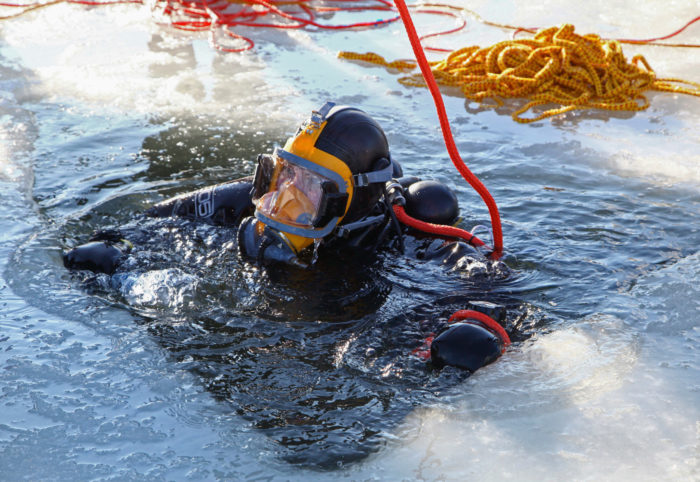
“If you live in a Unesco site, you have to be ready to share it.”Photo: Tim Bird

The temperature hovers at about minus 10 Celsius and the air is blue, still, sharp and bitterly chilled. A head emerges from a hole in the ice. Maritime archaeologist Minna Koivikko of the Finnish National Board of Antiquities is completing the inspection of a wreck. Minna’s PhD dealing with Suomenlinna is the first one in Finland in maritime archaeology, so her expertise is second to none.

“We dive under the ice because in the summer there is so much boat traffic,” she says. “Helsinki is at the mouth of a river (the River Vantaa) so there is a lot of silt that gets stirred up, spoiling visibility. It’s easier to locate a wreck using GPS coordinates, then to make the hole in the ice. In fact, making the hole is the most difficult part.

“I love living here. The community spirit has grown since I moved here. People look out for each other; we do a lot of things together. There are more visitors, but if you live in a Unesco World Heritage site, you have to be ready to share it.”

Mikael Holmström: Traditional boat builder
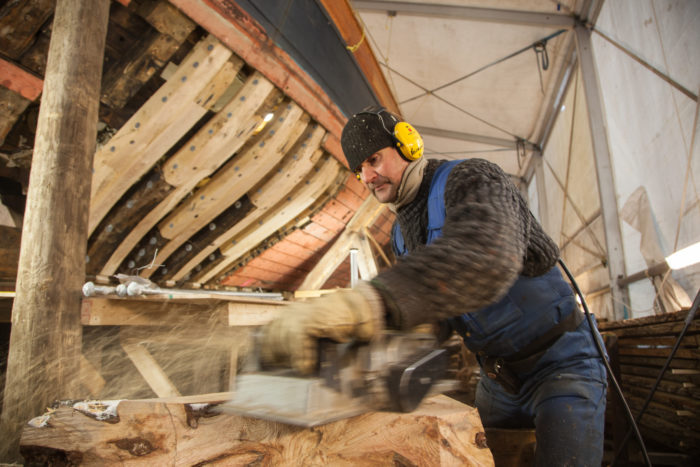
Mikael Holmström keeps traditional boatbuilding alive.Photo: Tim Bird

A white glow issues from a heated tent close to Suomenlinna’s dry dock. Inside, Mikael Holmström is at work repairing a wooden Norwegian trawler.  The only remaining traditional wooden shipwright in Finland, Mikael works a 60-hour week at the dock in winter and in summer.

“I like to be here at any time, but I am a winter person especially,” he says. “The only problem is it slows down my work because I have to do the snow clearing – nobody pays you for that.

“It’s close to the city but I could be anywhere. It could just as easily be the remote town of Inari in Lapland, but here I can have my own life and work. It’s not such a long time ago that everyone did their own work for themselves in Finland. But there is no subsidy for this work. That’s one reason why I do this 60 hours a week.”

Jaakko Vilander: Meditative student of war
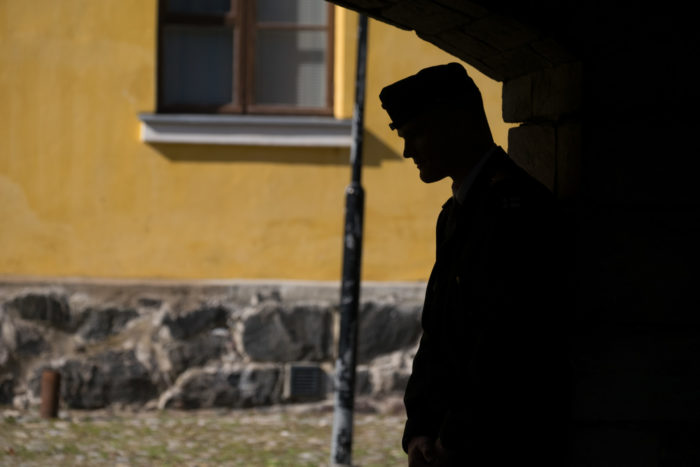
“The whole archipelago here settles you,” says Jaakko Vilander. “It allows you to be in your own undisturbed peace.”Photo: Tim Bird

It is an obvious paradox that one of Helsinki’s most peaceful outposts gained much of its character by being prepared for war. The island of Pikku-Mustasaari remains the site of the Academy of the Finnish Navy. Young conscripts in navy uniforms and academy cadets are frequent passengers on the public ferry. Cadet Chief Petty Officer Jaakko Vilander is one of these.

“What’s the best thing about living here?” he says. “That’s easy to answer. It’s the views and the serenity. The whole archipelago here settles you; it allows you to be in your own undisturbed peace.

“This place represents a kind of fantasy of what Finland could be, a small place where people try to look after themselves. It’s like Buddhism or a kind of monasticism. People pull away from society and live in their own quiet compartments. I can live in peace. But we can’t separate ourselves from society because it’s our job to protect it.”

Ida Lindström: Listening to ghosts
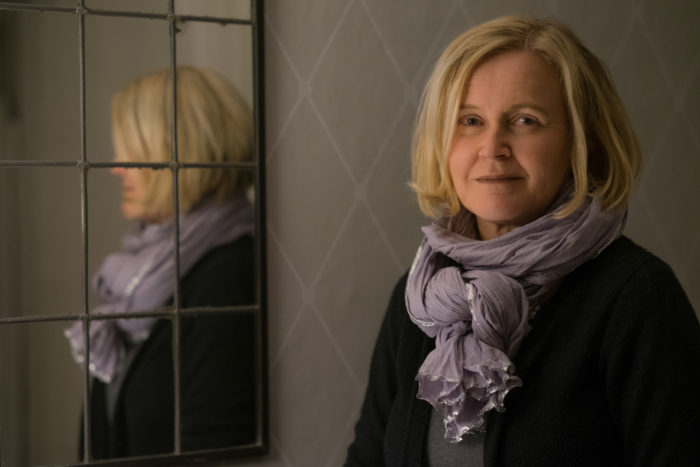
“I believe in someone’s soul or energy making its presence felt.”Photo: Tim Bird

Suomenlinna’s most westerly island, Länsi-Mustasaari, bears the brunt of the prevailing Baltic winds and the full force of the autumn storms. When the wind gets up here, it whistles through the trees and penetrates the windows of the apartment blocks built to house the officers and soldiers who once guarded the fortress.

One of those windows belongs to writer and painter Ida Lindström, whose top floor apartment offers glimpses of the lights of Helsinki. Ida is a guardian of Suomenlinna’s stories, of historical anecdotes, and of ghost tales.

“Do I believe in ghosts?” Ida nods her head softly. “I believe in someone’s soul or energy or whatever you want to call it making its presence felt. Not everyone sees or hears them. I think you’re lucky if you don’t! I don’t see anything, I only hear. Some people are more sensitive than others. Some people see weird things every week.”

Hannu Leidén: Rocker in tune with island tempo
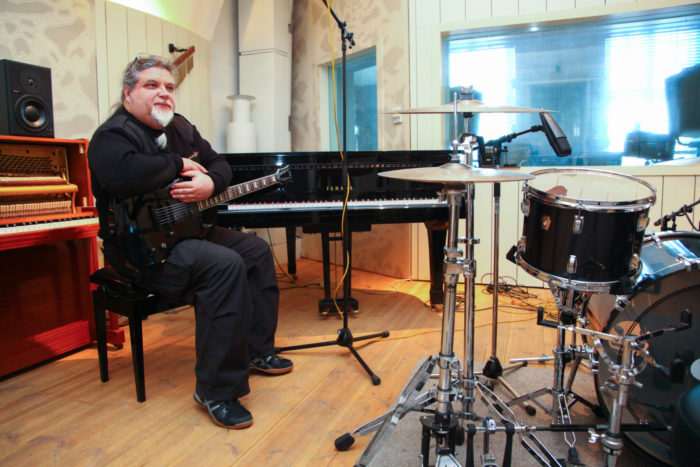
“The tempo here is a little slower than in the city. I like that.”Photo: Tim Bird

Hannu Leidén, musician, producer and sound engineer, is known to Finnish rock audiences as vocalist with Havana Black, big in the late 1980s and early ’90s and occasionally reunited.

Hannu’s gentle and friendly demeanour belies the full-blooded rock-and-roll growl admired by his fans. He strokes a long grey beard, a gnomic rock-rebel glint in his eye, as we talk in the apartment living room. The beam from the church dome that serves as a lighthouse sweeps above the window as we talk, signalling in Morse the letter H. H for Helsinki, H for Hannu.

“The tempo here is a little slower than in the city,” he says. I like that. “The presence of the sea is so great, I couldn’t think of moving away from it nowadays. Suomenlinna is a small village. It’s not always ideal and everything has its pros and cons, but if you feel a little sociable you can manage.”

Esa Toivanen: Music lover and inventor of the “stress cube”
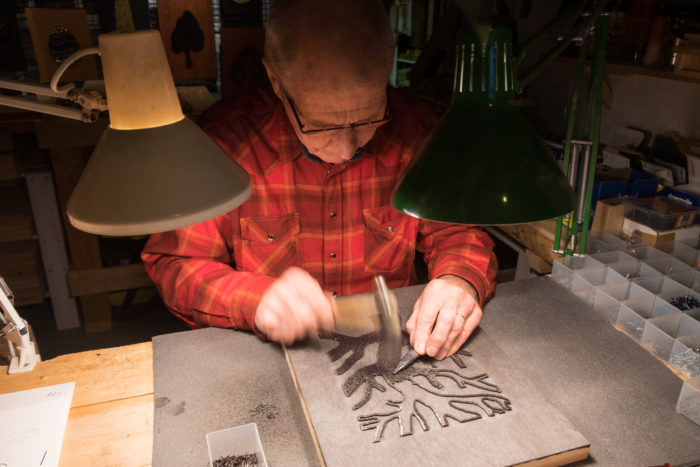
“I just keep the door open and people can come in easily.”Photo: Tim Bird

Esa Toivanen is waiting at the door of his studio, set back in a courtyard lined with former barracks and storehouses behind the Piper’s Park on Susisaari.

“I like making things from wood, so I started making pictures from nails,” he says. “I’m not sure where the idea first came from. There have been many people from around the world who say they haven’t seen anything like this anywhere else. I think there must be somewhere. But it’s not so common, this kind of creation.”

The island community is very artistic. “There are musicians, artists and crafts artisans, a guitar maker, textile artists. I had a previous studio on the second floor, but I have been in this one for three years. I just keep the door open while I’m here and people can come in easily.”

These texts and photos are part of Tim Bird’s “Suomenlinna – Islands of Light” book and exhibition project. The photo exhibition is on show at the Suomenlinna Museum and the book, in English and Finnish, is available in Finnish bookstores and online through the publisher, Docendo. 

By Tim Bird, August 2017
The most interesting Finnish companies in the circular economy

“The most interesting companies in the circular economy” is a list compiled by Sitra to showcase Finland’s most inspiring examples of the circular economy. During the first phase, the list presented the new circular economy business models of 19 Finnish companies; the following phase expanded to include 54 companies throughout 2017. Indeed, Sitra is using the list as a way to challenge Finnish companies to meet the changing needs of the world.

The most interesting examples on the new list have been divided according to different circular economy business models. New types of business models are needed in order to ensure that materials and value stay in circulation for as long as possible with minimal waste. In a circular economy, companies create added value for their products by means of services and smart approaches. The greatest increase in value is generated by, for example, the maintenance, reuse and remanufacturing of equipment.

The list includes such companies as Valtavalo, which sells lighting solutions as opposed to light fixtures; EkoRent, which provides a shared electric vehicle solution for housing communities and companies; and Eko-Expert, which offers a recycling method for surplus building insulation. Finnish-owned Swap.com facilitates the recycling of goods from the United States on its online consignment and thrift store, and tractor manufacturer Valtra offers factory remanufactured gearboxes as an alternative to entirely new ones.

Finnish sauna cuisine: Cooking time may vary

A sauna is more than just a place to sweat, bathe and relax. Finnish people may read in the sauna, hang clothes to dry in the sauna, wash a newborn baby in the sauna, do yoga in the sauna and even cook in the sauna.

The most common way to prepare food in a sauna is to wrap some sausages in tinfoil and roast them on the sauna stove. Add some garlic or cheese and voilà, dinner cooks itself while you are enjoying the löyly (literally “steam,” but in a wider sense the word stands for the whole feeling and atmosphere of the sauna).

Turning necessity into virtue

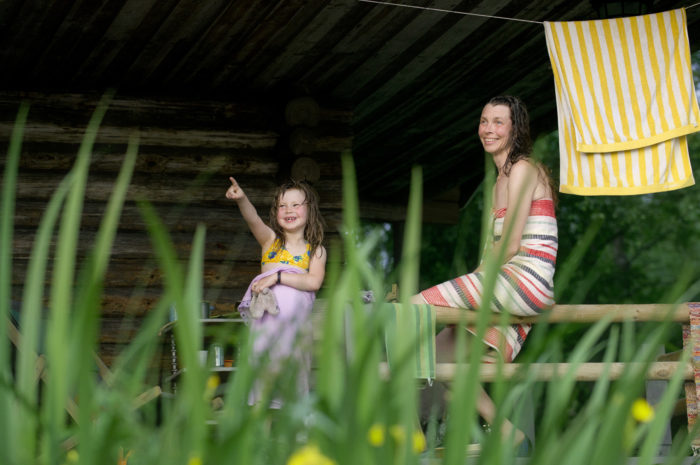
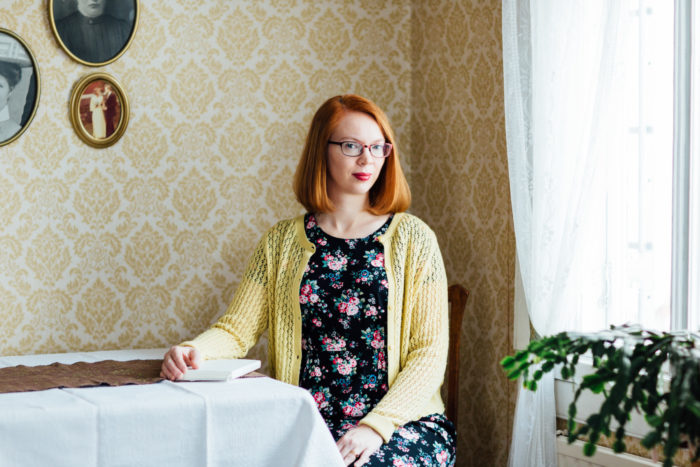
Author Katariina Vuori (right) originally started cooking meals in the sauna so she could stay near the lakeshore and supervise the kids while they swam.Photo: Vesa Ranta

Sauna cuisine isn’t a new thing – Finnish people have utilised the sauna stove, with its heated rocks and water basin, in various household chores such as laundry and cooking for as far back as anyone can remember, and then some. Archival information about sauna cooking is sparse, but the Finns are known to have cooked Christmas ham and even school meals in saunas back in the 1940s.

At that time, most Finns lived in the countryside, a great many still without electricity or running water. The idea was to make the best possible use of the warmth and warm water produced by heating up the sauna.

As a young girl, Finnish author Katariina Vuori watched her grandmother cook fish, freshly caught from the lake, in the furnace portion of a sauna stove. The idea of an actual book called Saunakeittokirja (Sauna Cookbook, Tammi, 2014) came to her far from home, in the middle of the Indian Ocean on a sailboat in the late 1990s.

However, it took until 2011, when Vuori was at her summer cottage with her kids, for her to start broadening her sauna cooking perspectives from sausages and smoked bream to cooking and baking nearly every meal in sauna. The reason was practical: her kids loved swimming in the lake and Vuori had to keep an eye on them. So she started cooking in the lakeshore sauna in order to look after her children at the same time.

Relaxed attitude

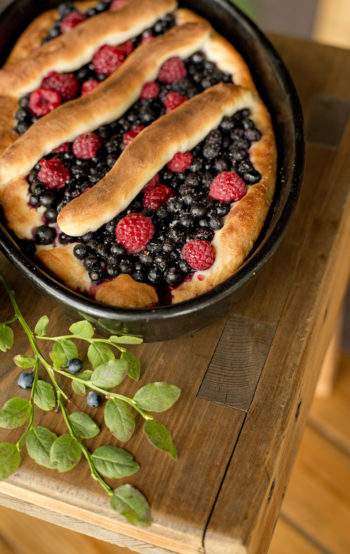
A summer favourite: Berries ripen in the Finnish forests and taste great in a sauna-baked pie.Photo: Vesa Ranta

“You can cook anything in a sauna,” Vuori says, who co-authored the book with Janne Pekkala. “But you have to have a more relaxed attitude than in a normal kitchen. Cooking time varies depending on the sauna, so you have to make sure you keep a constant eye on the food.”

The stones are at their hottest right after wood is added to the fire, so that is a good time for frying food. Also note the size of the stove: the smaller the stove, the faster it heats up, and the larger the stove, the more moderate and smooth the heat will be.

“You’ll get to know your stove quickly,” says Vuori. “If you want to start easy, begin with casseroles.”

There are several things to consider before beginning. The main thing is that the furnace portion works as an oven and the rocks act like a stove. With an electrically heated sauna you have to be extra careful not to spill anything on the rocks. The sauna stove should be flat and large enough for cooking.

Vuori prefers a wood-heated sauna. A wood-heated water basin works great for cooking vacuum-packed food. And don’t forget the smoke sauna, a Finnish speciality that leaves sauna-goers’ skin with a unique smoky scent; food cooked in a smoke sauna picks up a smoky flavour. Whatever sauna you choose, make sure the stove is hot enough.

Nineteen different saunas

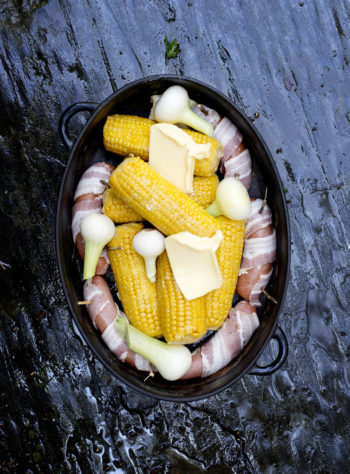
Ready to roast: Fresh corn on the cob, sausages wrapped in bacon, and onions will fill the sauna with savoury aromas.Photo: Vesa Ranta

As for cooking dishes, make sure that they are flame resistant – ovenproof is not enough. Cast iron is always a sound choice. Use long-sleeved oven mitts when the furnace is open and you’re inserting or removing food.

If all that sounds like a bit too much, you can always just cook an omelette in the scoop you use to throw water on the stones, if it’s made of metal. Just line it with tinfoil to keep the food from absorbing metallic flavours from the scoop.

Vuori travelled 6,000 kilometres while researching the sauna cookbook. In addition to presenting recipes, the volume offers detailed looks at 19 different saunas in locations all over Finland.

“The most memorable saunas we cooked in were that of Finland’s former president, Urho Kekkonen, in Karigasniemi [in the Finnish far north], and an underground sauna made of granite blocks on [the southwestern Finnish island of] Kemiö,” says Vuori.

By Jonna Pulkkinen, July 2017

Proud to be weird at Worldcon

Elves of the world unite! You are called to the far north, along with all Klingons and Hobbits, time lords and superheroes. Finns love science fiction and fantasy, so hosting the annual Worldcon convention this August is a dream come true.

The World Science Fiction Convention, better known as Worldcon, is visiting Helsinki for the first time. Attendees will mix with other fans, listen to world-renowned authors and see the presentation of the Hugo Awards, the top prizes in the genre.

Fans will also have the opportunity to learn about the thriving Finnish scifi and fantasy scene, which has matured and developed in recent years.

“There used to be this idea in Finland that good literature had to be realistic fiction,” says Ben Roimola, editor of the Enhörningen fan magazine. “Johanna Sinisalo shattered that barrier.”

Sinisalo won the Finlandia prize, Finland’s highest literary honour, for her fantasy novel Not Before Sundown. She coined the term “Finnish Weird” for domestic scifi and fantasy and has since been joined by a long list of writers to succeed in international markets. These include Pasi Jääskeläinen, Hannu Rajaniemi, Emmi Itäranta and Maria Turtschaninoff.

Writing is a feminist action

Maria Turtschaninoff is a feminist, but says she doesn’t try to write feminist fantasy novels.Photo: Niklas Sandstöm

Turtschaninoff, who won the Finlandia Junior prize, is one of the most popular authors in Finnish literature today. She has had her book rights sold to over twenty countries and a movie has even been optioned. The first two books in her Red Abbey Chronicles series, Maresi and Naondel, have been called “feminist fantasy” by impressed reviewers.

“I’m not very interested in labels. I’m not that interested in messages either,” she says. “But I am a feminist, and an environmentalist, and a humanist, and all my values are reflected in what I write. And the mere fact that I am a woman who gets to write and who writes about women is inarguably a feminist action.”

Worldcon attendee Turtschaninoff says she is proud of the diversity in Finnish Weird, and says for such a small country Finnish writers have done quite well.

“From what I have seen, we in Finland are somewhat freed of the commercial expectations authors in, for instance, the Anglo-Saxon world face,” she continues. “This gives us some room to experiment, to go beyond what is expected. I believe Finland is fertile ground for bold, different and new voices and stories.”

Ice, fire and reindeer

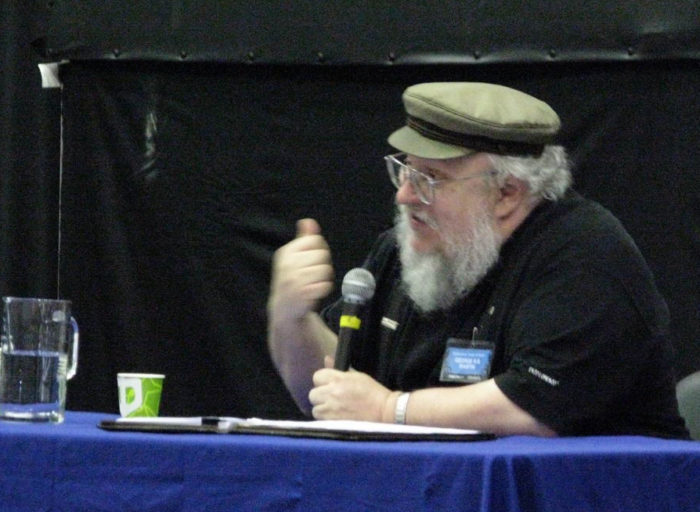
Game of Thrones author George R.R. Martin loved his trip to Finland and encouraged Worldcon to come to Helsinki.Photo: Markku Lappalainen / Flickr

While Worldcon is an excellent place to learn about Finnish authors, it is an international event and draws some of the biggest global names in scifi and fantasy.

“Our Finnish convention, Finncon, can get very large, but people from over fifty countries will be at Worldcon,” Roimola continues. “One nice thing is that the authors are fans as well. You might be listening to a speaker and notice George R.R. Martin is sitting in the row behind you.”

Martin’s fantasy series A Song of Ice and Fire was a hit even before HBO’s Game of Thrones adaption created a global cultural phenomenon. He only has three scheduled appearances for 2017, one of which is Worldcon. Martin has attended Finncon and was a vocal supporter of the convention coming to Finland.

“Helsinki is a great, lively, historic city, and the Finnish fans are terrific,” Martin wrote on his blog. “I know the Finnish fans would love to show you their city, their castles, the herds of reindeer wandering the streets. Oh, there’s vodka too. And saunas. Did I mention the saunas?”

Worldcon 75

Who: Fans of scifi and fantasy
What: The world scifi and fantasy convention
When: 9-13 August 2017
Where: Messukeskus, Helsinki

By David J. Cord, July 2017

Finnish Aalto satellites make waves in space

Nanosatellites such as those built at Aalto University (named Aalto-1 and Aalto-2) are dispelling people’s preconceptions about what a satellite is and what it can achieve.

“While a traditional large satellite weighs around 500 kilogrammes, a nanosatellite weighs just 5 kilos,” states Jaan Praks,  Assistant Professor at Aalto University, whose areas of expertise are remote sensing and space technology. “The price of a standardised nanosatellite is only a fraction of that of a large satellite.”

When satellites are small and light, a carrier rocket can carry a large number of them into space at one time.

“Although the satellite is very small, its advanced technology means that its payload can be nearly equal to that of a larger instrument. The technology is miniaturised: smaller and  smaller devices carry out increasingly demanding tasks.”

Praks explains that a hyperspectral imaging camera built by VTT Technical Research Centre of Finland Ltd for remote sensing was launched along with Aalto-1.

“Whereas similar devices previously weighed 100 kilograms, our satellite’s camera weighs 600 grams.”

Multiple pairs of eyes can see more than one

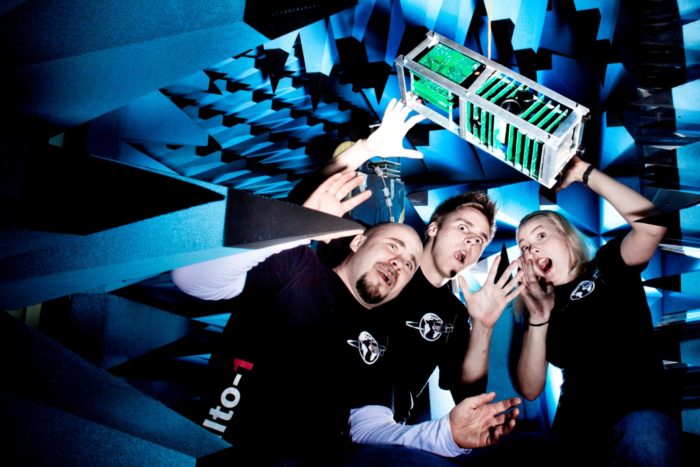
Several members of the Aalto-1 development team strike an informal pose with an early model of the satellite.Photo: Aalto-1 Project/Aalto University (cc by sa 4.0)

Thanks to the size of nanosatellites, one launch can include dozens of them. On April 18, 2017, the two-kilogramme Aalto-2 became the first Finnish-built satellite to be launched into space, part of an Atlas V launch from Cape Canaveral, Florida. On June 23, 2017, Aalto-1 made it into space on the Polar Satellite Launch Vehicle sent up by the Indian Space Research Organisation.

The students, who built Aalto-2, now work at  Reaktor Space Lab, a start-up company which  designs, manufactures and tests small satellites.

Reaktor’s Director of Space & Robotics Juha-Matti Liukkonen believes that small satellites will play a significant role in the IoT i.e. the Internet of Things:

“Small satellites will, for their part, produce essential data for the use of business. They will also extend the data network and information infrastructure to areas where these have not previously been available, such as to the Arctic Ocean.

“The crux of the matter is that multiple pairs of eyes can see more than one. A large number of small satellites can pass by the target more often and create a more real time situation picture.”

Sights set on the Arctic

Satellites designed here: Reaktor Space Lab is the developer of the Aalto-2 satellite.Photo Tuomas Tikka

The use of space applications to respond to the Arctic’s growing demands is highlighted in Finland’s space strategy. Another objective is to use open geospatial data to strengthen the competitiveness of services.

In practice, Arctic expertise combined with space expertise can refer to the provision of accurate navigational data to vessels travelling in the Arctic or to information on changes to the area’s natural conditions. Arctic space expertise can also refer to the provision of accurate data on the Northern Lights for the use of tourism.

Space technology can in part help in finding solutions to critical problems that impact the world population as a whole. In particular, satellites will help us gain a better understanding of climate change and allow us to measure it.

“Solving global problems will require global situation picture. We now understand weather phenomena better than previously as we can model the entire globe’s weather at one time using satellite data,” Praks says.

“Satellites provide accurate information on things such as the volume of atmospheric gases, cloudiness, the melting of glaciers, changes to the tree line, the melting of permafrost, flooding and many other phenomena.”

According to the wildest visions, space technology could provide tools for mitigating climate change. These could include mirrors to be situated in space that reflect the sunrays  as well as solar panels, from which emission-free power could be transferred to Earth via microwaves.

Future likely to hold surprises

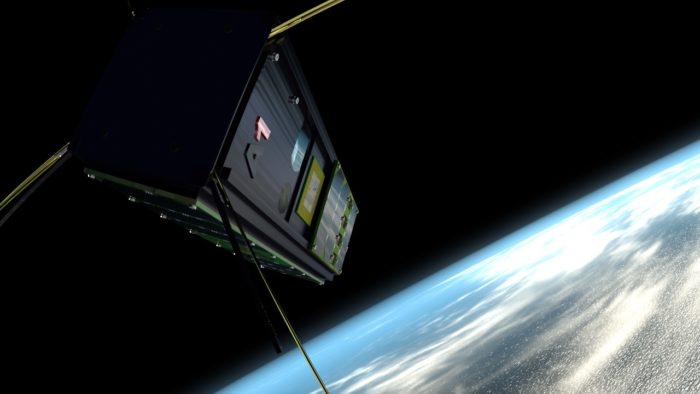
Aalto-1 orbits the earth, gathering and transmitting data (artist’s visualisation).Illustration: Aalto-1/Aalto University (cc by sa 4.0)

What will the future hold?

“Much will happen including things which we did not expect. Things will perhaps happen at a pace slower than what we would like. However, infrastructure to be situated in space will be a key part of global infrastructure,” Praks says.

“Hyperspectral imaging cameras on satellites will give, for example, a large Australian farming corporation access to accurate information on what is happening on fields in remote areas and when it would be optimal to send, for example, combine harvesters to the area.”

Small satellites alter satellite data into real time data – satellites allow us to receive real time data on such things as traffic and logistics.

“The satellite segment will be part of digitalisation. Space will hold an important part of the worldwide sensor network,” Praks explains.

By Matti Välimäki, July 2017