Finnish events put sustainability at the forefront

Have you ever attended an event with great speakers, workshops or musicians, but felt dismayed at the mountain of plastic waste overflowing the trash cans at the end of the day?

Several of Finland’s largest annual events make a point of devoting their energy to ensuring that they don’t burden the environment. We talk with the organisers of Slush, Flow Festival and Nordic Business Forum.

Compensating for carbon
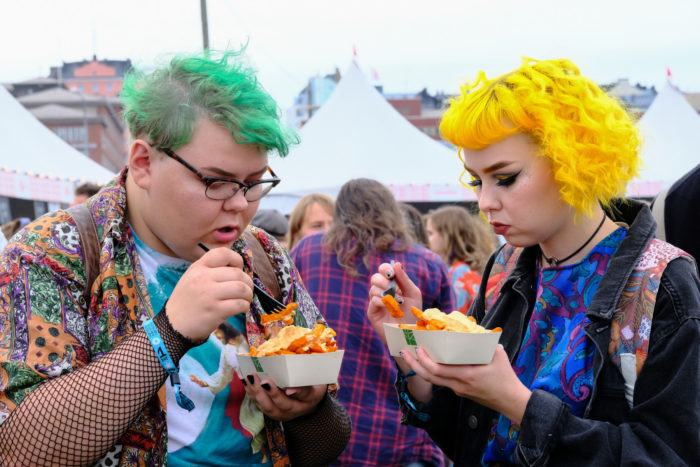
Two girls eating sweet potato fries, white festival tents in the background.

Flow Festival visitors Ronja (left) and Aino say they don’t prioritise vegetarian food, but were just looking for a little snack – which turned out to be sweet potato fries from Soisoi.Photo: Tim Bird

“Flow Festival is a carbon-neutral festival,” says Suvi Kallio, the managing director of the urban music festival that takes place every August in Helsinki (90,000 attendees in 2022). The festival considers sustainability in energy production, catering and transportation. It reuses and recycles materials, and encourages festival-goers to do the same.

“It’s obvious that this kind of an event causes emissions, especially the flights of the international artists,” says Kallio. “We compensate for the emissions by donating to renewable energy initiatives.”

Nordic Business Forum (NBForum, more than 7,000 attendees in 2022), staged at the Helsinki Fair Centre in the Pasila district, has hosted speakers including Richard Branson and Barack Obama. The organisers believe that the most effective way to influence society as a whole is to inspire and equip business leaders who want to make the world a better place.

Setting a good example
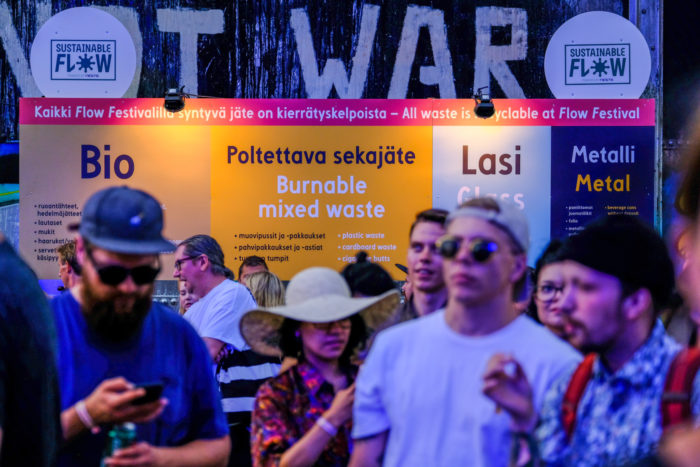
The recycling station at Flow festival; informative signs on the wall and people in front of the station.

Empirical evidence shows that if you offer people a convenient option for sorting their garbage, they’re happy to have the opportunity; Flow Festival puts up stations with bins for metal and glass recycling; biodegradable waste; and mixed garbage bound for incineration.Photo: Tim Bird

“It is important that we make business leaders understand the importance of leading with sustainable values,” says NBForum CEO Aslak de Silva.

The event, held every autumn, uses catering and waste disposal practices that reflect a desire to set an example. Print materials and stage setups are designed to be reused from one year to another. In 2018 NBForum committed to planting 7,500 trees – one for each attendee – to offset greenhouse gas emissions.

“We take sustainability into account in all decisions related to event production, programming and operations,” says Anna Pakkala, head of sustainability at annual startup conference Slush, the largest event of its kind in northern Europe (20,000 attendees including 2,600 startups and 1,600 investors).

In 2018, for example, Slush offset 10,000 tonnes of CO2 with the help of a Finnish energy company that has set up a solar-power project in India. This covered the whole event and related emissions such as the flights of the participants.

Like NBForum, Slush has grown from humble local beginnings to international status, and is also staged at the Helsinki Fair Centre. Slush gets its name from the prevalent weather in late November and early December, when it takes place (November 17–18 in 2022).

Slush and Flow report to EcoCompass [a Finnish environmental management certification for small and medium-size enterprises] to track sustainability. “I also work with our teams to further integrate sustainability into the marketing, programming and offerings of our organisation on a year-round basis,” says Pakkala.

Food is more than fuel

A man in a silver coat holding a pair of chopsticks.

“It really bugs me when there’s plastic everywhere, so I’m glad all the plates and cutlery here are biodegradable,” says Riku while munching on a stir-fry at Flow Festival using wooden chopsticks.Photo: Tim Bird

These events also rely on education and on making sustainable choices more attractive to their audiences.

“If we have the possibility to influence people, we want to use that in any way we can,” says Suvi Kallio. All Flow food venders offer vegan and sustainable meal options and participate in the Sustainable Meal initiative, a set of guidelines that direct attention to the ethicality and origin of the ingredients; energy efficiency in food production; logistics; and packaging material. The festival favours organic and locally produced food.

Catering entrepreneur Minna Väisälä has worked at Flow Festival for seven years. Her food stand, The Tasty Dogs, serves pork, lamb and seitan hotdogs, and French fries.

“We’ve developed our menu over the years together with the festival,” Väisälä says. Her festival sales are divided fairly evenly between the three varieties of hotdogs. In 2018, 46 percent of Flow visitors’ meal purchases were vegetarian or vegan.

Sustainability stems from the organisers
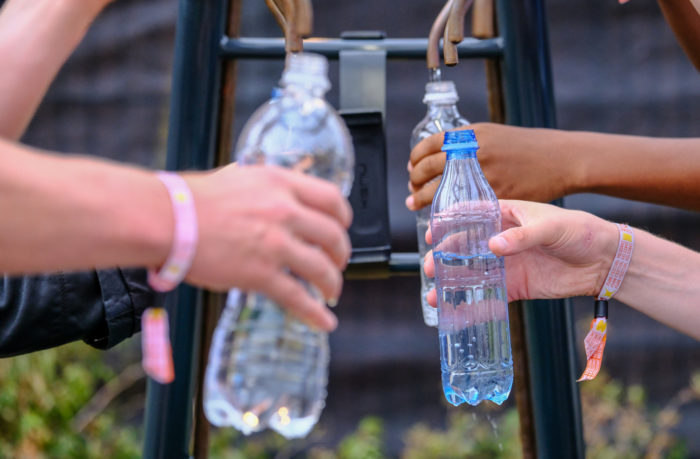
Three pairs of hands filling up water bottles from two taps.

Simple but effective: Each Flow Festival visitor may bring one empty bottle and refill it at the water stations, a practice that beats the Finnish summer heat and significantly cuts the amount of plastic waste the festival-goers generate.Photo: Tim Bird

“Responsibility and friendliness to the environment have always been important values of the festival,” says Kallio, “but as the festival expanded we felt it would be good to start promoting and tracking environmental liability more systematically. Our audience is very aware, so our actions must be transparent.”

Of course, there’s still room for improvement. For Flow this means, most of all, increasing the recycling of compostable waste and reducing the amount of mixed waste, which a power plant incinerates to produce energy.

Sustainability is one of Slush’s core values, as well. “For several years it has been our key goal to set an example when it comes to sustainable event production,” says Pakkala, “even when it means that something might be a bit more difficult or costly to implement. We’ve also noticed that this is very much appreciated by people attending the event.”

By Anna Ruohonen and Tim Bird, November 2018, updated November 2022
Zero isn’t nothing: Two Helsinki restaurants cut waste out of the picture

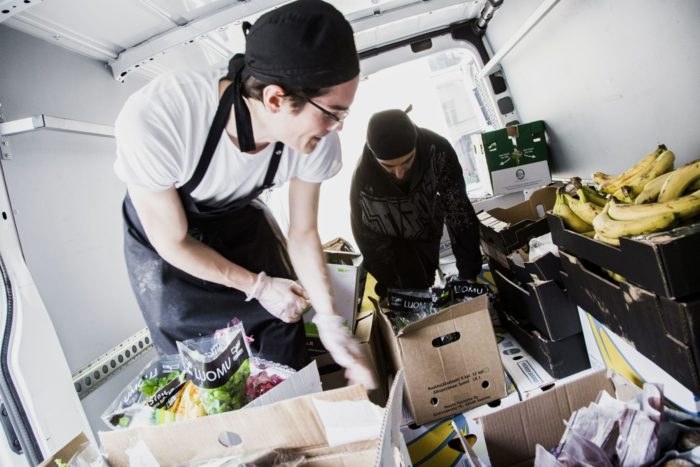
“Food is political,” says Ossi Paloneva, head chef at Helsinki’s Loop Restaurant, where the surprisingly appetising menu is comprised of waste food – ingredients that stores would normally discard.

“I always thought it would be silly to work as a chef and not think of the bigger picture at all,” he says.

Estimates vary about how much food is wasted in Finland annually, but the Wastestimator project, carried out by National Resources Institute Finland from January 2016 to February 2017, puts the amount between 335 million and 460 million kilos. On average, restaurants account for as much as 70,000 kilos each year. Apart from any issues of morality or environmental sustainability, these levels of waste make no sense from a business point of view.

In Finland, the challenge of food waste persists in spite of relatively advanced awareness of the need to recycle and an infrastructure that supports recycling. Efforts on the Helsinki restaurant scene could set trends for the industry to erode the mountains of food waste.

What to do with half a van of cornflakes?

Two people unloading a van filled with different produce, for example vegetables and bananas.

Staff members at Loop Restaurant unload a van of ingredients that would have otherwise gone to waste.Photo: Niclas Mäkelä/Otavamedia/Lehtikuva

Loop is tucked away in a former hospital in Lapinlahti, a relatively undiscovered leafy backwater just a five-minute stroll from the metro station in the Ruoholahti neighbourhood. On a Monday at lunchtime, the restaurant is bustling, and satisfied diners are tucking in to a varied veggie buffet.

In spite of its slightly off-loop location, the restaurant has established a reputation with locals and more adventurous tourists. Even so, catering for events and functions is Loop’s mainstay.

“This is a crazy project, and a totally different kind of cooking,” says Paloneva, adding that profit is not the main motivation for this unusual enterprise, founded by an association called From Waste to Taste. “There are quite different rules at play with waste food. But perhaps the most surprising thing is that there is so much goodwill. It’s a hot topic and companies want to be associated with us.”

For renovations, Loop makes use of surplus construction materials donated by multiple companies. However, the most crucial contribution comes from the dozen or so stores across the Helsinki area that provide the food.

“We have drivers working daily to fill our van with waste food, mainly vegetables and fruit,” says Paloneva. “We adapt our menus to what is provided. For example, we received half a van full of cornflakes, and at first we thought, no, we can’t use this. But then we ground them into flour.”

Aiming for 100% of zero

A smiling Luka Balac sitting at a table at Restaurant Nolla.

“We don’t use any single-use plastic or anything that is not reusable,” says Luka Balac, one of three chefs who started Ravintola Nolla (Restaurant Zero).Photo: Tim Bird

Another Helsinki restaurant, Ravintola Nolla (Restaurant Zero), starts from a notion opposite to that of Loop, advocating a quietly effective campaign against waste of any kind in its own operations rather than mitigating the waste of others. At the time of writing, Nolla is completing a move across town to premises in the trendy Punavuori neighbourhood, where it is set to reopen in early 2019.

Three chefs who converged on the Finnish capital’s restaurant scene from abroad form the brains behind Nolla: Carlos Henriques from Portugal; Albert Franch Sunyer from Barcelona; and Luka Balac from Serbia.

“All three of us come from strong roots of producing our own food,” says Balac, “and we all felt very strongly that something was basically wrong with how things have been done with respect to waste of both food and food packaging – especially plastic, which is a huge problem. We arrived at the concept of zero waste. We don’t use any single-use plastic or anything that is not reusable.”

This approach changes how everything is done, from menu planning to storage, but the idea is to make the concept part of the “package,” rather than using it as a sales gimmick or novelty.

Uncharted territory

Luka Balac with a metallic composter which has its lid open.

Chef Luka Balac shows off the on-site superfast composter at Nolla; the compost goes to small-scale local producers who provide seasonal ingredients.Photo: Tim Bird

Walk-in diners will not necessarily know that the water glasses are fashioned from bottles discarded by the Presidential Palace – a small but fine example of the circular-economy approach. They might also be unaware that an on-site superfast composter gobbles up every morsel of food that customers don’t consume. The compost is returned to the small-scale local producers who provide the seasonal ingredients on the menu.

The uncompromising idea is to make zero waste normal and not the exception, ultimately even dissolving the draw of various apps that alert consumers to special offers on food that has passed its best-by date. Restaurants and stores need to change their management systems, says Balac, to make sure that overstocking doesn’t happen in the first place.

“Nobody else is doing anything like this anywhere in the Nordic area,” he says. “It’s unknown territory. In a couple of years, when we have shown that this is a viable business model, I think it’s going to be much more common.”

By Tim Bird, November 2018

Curious Finnish startup researches third wave of AI

A Finnish deep-tech startup, the Curious AI Company is building the autonomous AI of the future.

Founded in 2015 and building on decades of previous research, Curious AI is researching, testing and developing the building blocks of the autonomous AI of the future – the one that will have a rich inner life, learn by trial and error, and behave in a human-like manner, exploring and making intuitive one-shot decisions.

Contributing to creating something that is still far in the future calls for scientific curiosity and a bold explorer spirit. You have to know where you are going. And you have to have enough funding to carry you through the phase when you are not yet offering a concrete product.

Making digital coworkers

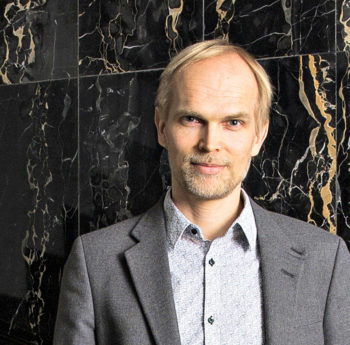
Portrait of Harri Valpola in front of a black marble wall.

“We are the first to bring a key human learning mechanism to computers,” says Harri Valpola of the Curious AI Company.Photo: Ville Rinne

“We are the first to bring a key human-learning mechanism to computers,” says founder and CEO Harri Valpola.

“We humans can solve many problematic tasks once we are given the correct answer a couple of times, for example when a mother tells a child what a dog looks like,” he says. “To learn largely independently, we need plenty of real-life observations (raw data), a handful of correct examples (labelled data) and perhaps some corrections (‘That’s not a dog, that’s a sheep’).”

In machine learning, this is known as semi-supervised learning. In 2015, Curious AI published an AI system that can learn handwritten digits from just ten examples – for example, ten different renditions of the figure six.

“Now we have upgraded the AI system to tackle much more difficult problems,” says Valpola. “When scaled up, such a system may allow the automation of human knowledge work. The final product we are developing is called a digital coworker.”

By Leena Koskenlaakso, ThisisFINLAND Magazine 2018

Two Finnish companies show the way away from plastic

Unless you’ve been living on another planet, you know about the mountains of plastic waste clogging up the world’s landfills and finding its way into the rivers and oceans. The environmental damage caused by this waste has reached a critical juncture.

Pressure is mounting to come up with feasible, environmentally friendly substitutes for single-use plastic in packaging that contains, protects and prolongs the life of food and other products.

In October 2018, the European Parliament approved a ban on a list of single-use plastic products, with another host of plastic products slated for reduction without a complete ban.

The future is potentially dazzling for companies that can provide convincing alternatives to plastic in large enough quantities and at an affordable price. Finland is home to several companies with their eyes on that prize. One of the best known is Sulapac, producers of an innovative packaging material of the same name. They make convincingly sustainable claims; they use wood grown in managed Nordic forests.

“Sulapac’s biggest advantage compared to plastic is that it is 100 percent biodegradable and microplastic-free,” says CEO and cofounder Suvi Haimi. “Sulapac outperforms other sustainable alternatives in terms of biodegradation speed, carbon dioxide footprint, barrier properties and unique appearance.”

Consumers drive change

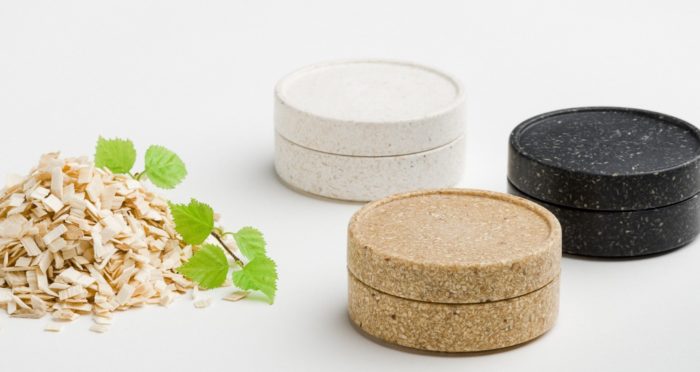
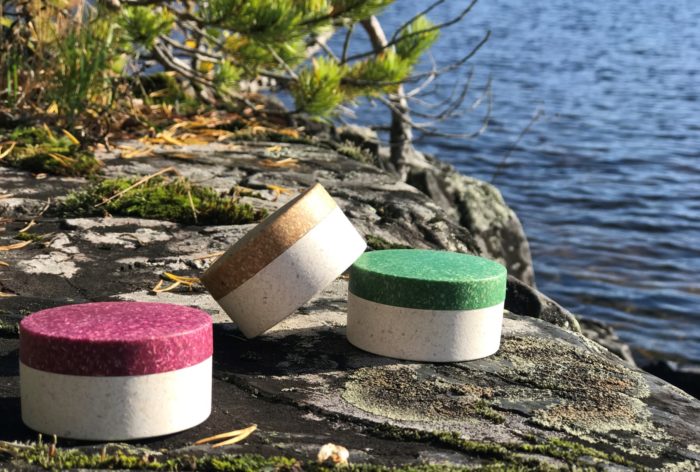
Three small round containers, wood chips next to them.

Sulapac’s cosmetics containers are made out of a plastic-free, wood-based, biodegradable material that manufacturers can use with their existing machinery.Photo: Sulapac

“Plastic manufacturers can use their existing machinery with the material, so only minimal investments are needed,” says Haimi. “Sulapac solutions are oil-, water- and oxygen-resistant, and all biodegrade fully without leaving microplastics behind.”

Big brands, especially in cosmetics, are expressing interest in Sulapac materials, although the early champions of the material have been smaller Finnish brands. Niki Newd and Atopik are two companies that sell their skin products in Sulapac packaging.

“Eventually consumers drive the change and demand better sustainable alternatives, so I believe forerunner brands will be the winners,” she says. “We have already expanded our portfolio to foodstuff, and others will follow. Our first foodstuff customer is Fazer in Finland. We are also expanding beyond packaging, as converters can use our material with their existing machinery to create toys, consumer electronics or hygiene products, for example.”

Some consumers face difficulties in understanding what makes a truly sustainable product, she says. “For example, most biobased plastics are not at all biodegradable and release microplastics that will eventually end up in our bodies. Our thinking is that we should redefine materials and split them into microplastic-free and microplastic-releasing, to make it easy for consumers to choose. We want authorities, especially the EU, to emphasise to consumers what makes a truly sustainable choice.”

Sustainably served coffee

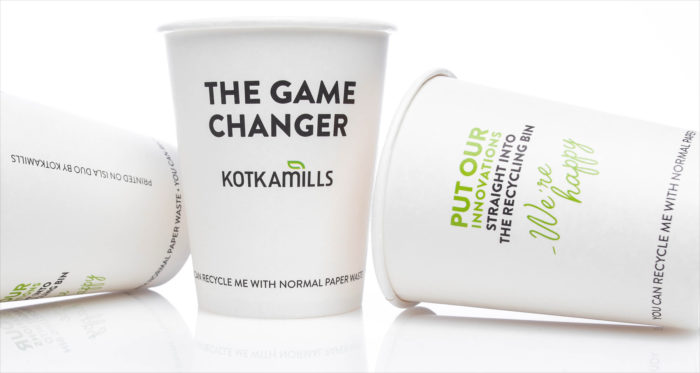
Three disposable coffee cups with the text 'The game changer, Kotkamills'.

Cafés will seek any advantage to catch coffee-drinkers’ attention; customers are interested in the origin of the beans, but also want plastic-free recyclable cups.Photo: Kotkamills

Recyclable materials are being applied to a wide range of uses. Onbone, for example, is a Finnish company that has developed Woodcast, a nontoxic, self-adhesive, mouldable material for the casts and splints used to help heal broken bones. Woodcast is based on a combination of wood and biodegradable plastic.

As a consumer, it isn’t easy to follow your conscience and avoid making everyday purchases that don’t include some kind of plastic wrapping. Take one of the most common products: the cups of coffee that people buy on their way to work. Although a growing number of cafés are offering sustainably produced, fair-trade, organic coffee, the next link in the chain – disposable cups – still poses at least one glaring discrepancy for conscientious consumers: Cups are lined with a plastic “barrier” layer to stop them going soggy.

That’s one place where Finnish forest industry company Kotkamills aims to make a difference with a plastic-free alternative. Their cups use recyclable barrier products that they call ISLA. (The company’s other plastic-free food packaging, such as fast-food boxes, goes by the brand name AEGLE.)

The barrier layer in ISLA products is a water-based dispersion coating, explains Kotkamills CEO Markku Hämäläinen. The plastic-free products are easily recyclable in normal paper and board recycling, and the wood fibres can be reused fully.

New potential to save the planet

Three small round containers pictures outside on a cliff by water.

“We want authorities, especially the EU, to emphasise to consumers what makes a truly sustainable choice,” says Suvi Haimi of Sulapac, whose plastic-free cosmetics containers decrease the burden on the environment.Photo: Sulapac

“The interest in Kotkamills’ ISLA products has been huge, and the market is ready for our plastic-free solutions,” says Hämäläinen. “Food service packaging plays an important part in modern, on-the-go lifestyles. Our mission is to make these disposable solutions as sustainable as possible. Today, too few disposables are recycled, even if they could be. So we are committed to developing easily recyclable barrier boards for the food service industry.”

Consumption and recycling are consumer choices, he says, but it is up to manufacturers to provide products that answer these challenges. “Kotkamills has also reacted by developing barrier board solutions especially designed for packages of takeaway food, chilled and frozen food, and bakery products. All these products are plastic-free and recyclable with normal paper and board waste.”

Just as Sulapac’s material is compatible with manufacturing equipment already in use, ISLA carton boards are also designed to run on existing cup-making machinery.

Sulapac sees itself as keeping ahead of the game. “We believe that our patented material and its manufacturing technology have a lead of between one and two years over main competitors,” says Haimi. “All competition is good, as it accelerates the development of the industry.”

She is upbeat about the future of her company: “I have always encouraged people to be open to new technologies, as they develop way faster than we think and have totally new potential to save this planet from plastic waste.”

By Tim Bird, November 2018

Who do you think deserves the next edition of the Finland-based International Gender Equality Prize?

Gender equality is important to Finland, and it’s a crucial issue all over the world.

Created in 2017 to help celebrate Finland’s 100th anniversary of independence, the nonpolitical International Gender Equality Prize is awarded in the central western Finnish city of Tampere. The next edition will be presented in autumn 2019; from October 25 to December 31, 2018, anyone anywhere can go online and submit a suggested recipient.

The Government of Finland awards the prize based on the recommendation of an independent jury, which considers the nominations people submit.

The organisers are looking for “a distinguished builder and defender of equality.” It can be a person or organisation anywhere in the world. What matters is their work to “advance gender equality and its impact.” The winner does not actually get the prize money, which totals 300,000 euros, double the amount of the original edition of the award. Instead, they choose “a cause, an innovative endeavour or action that promotes gender equality” to receive the sum.

Gender equality a guiding principle

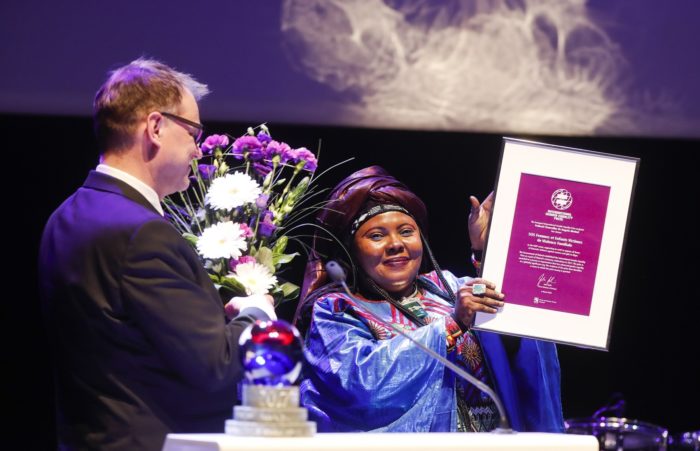
Mariama Moussa holding the International Gender Equality Prize diploma and Juha Sipilä holding a bouquet.

Mariama Moussa travelled to Tampere, Finland to accept the International Gender Equality Prize money for SOS Femmes et Enfants Victimes de Violence Familiale (SOS Women and Children Victims of Domestic Violence), the nongovernmental organisation in Niger selected by prize winner Angela Merkel, chancellor of Germany. At left, Finnish Prime Minister Juha Sipilä holds a bouquet.Photo: Mika Kanerva/Lehtikuva

In 1906, Finland became the first country in the world to grant full political rights to women – they gained the right to vote (a first in Europe) and also the right to run for election. Finnish people have considered gender equality a guiding principle ever since.

Work still remains to be done, but Finland has repeatedly placed in the top two or three in studies and rankings that measure gender equality and women’s wellbeing. It is usually joined at the top by other Nordic countries. In Finland at the time of writing, women make up 42 percent of Parliament, 23 percent of board members in listed companies and 39 percent of board members in state-owned companies. Six out of the 17 government ministers are women.

When you go online to nominate a recipient, you can explain how the person or organisation has advanced gender equality and describe the impact of their actions. You can also estimate how many people have been affected by the activities of the person or organisation.

The inaugural International Gender Equality Prize went to Angela Merkel, the chancellor of Germany. Her life’s work has made her one of the world’s most influential people and an example to many women and girls. She chose to direct the money to the nongovernmental organisation SOS Femmes et Enfants Victimes de Violence Familiale (SOS Women and Children Victims of Domestic Violence) in Niger, which is establishing a residential shelter for victims of gender-based violence.

A post on the International Gender Equality Prize website encourages you to suggest a recipient: “We are looking forward to receiving excellent nominations,” it says.

By ThisisFINLAND staff, October 2018

The media is the mushroom: Finnish artist reveals hidden forest colours

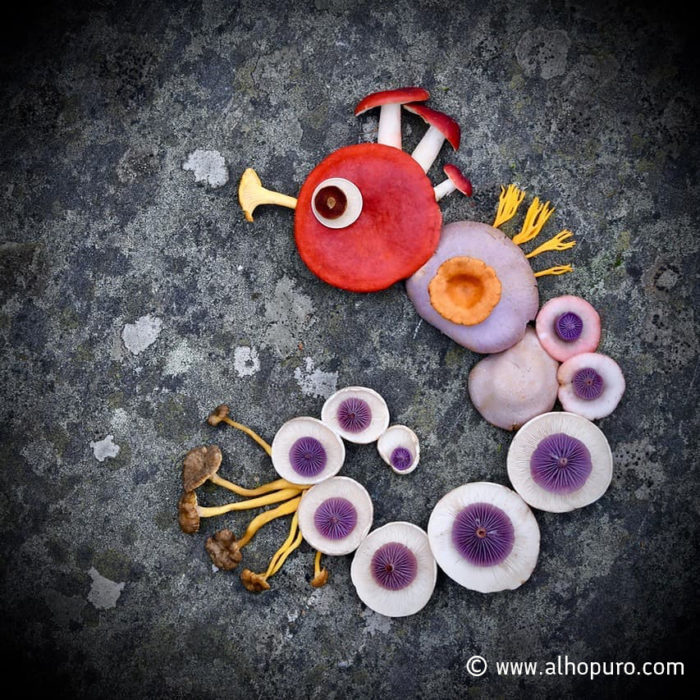
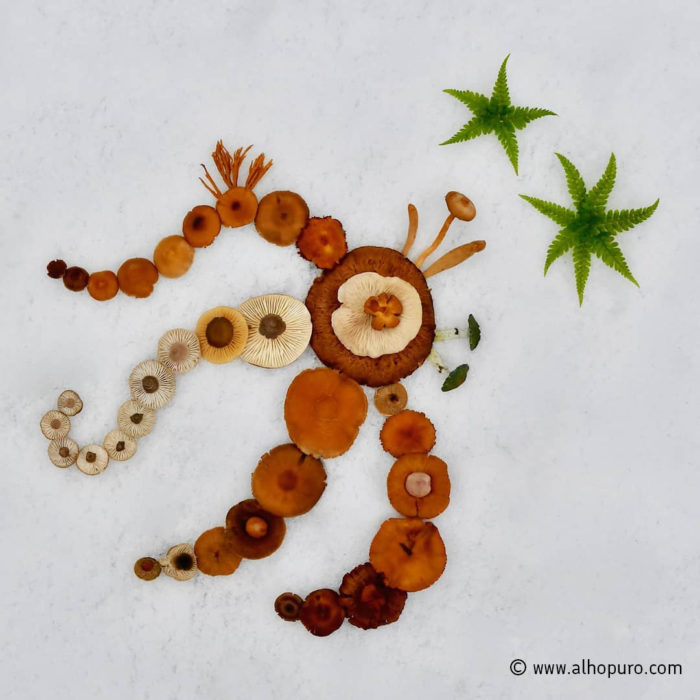
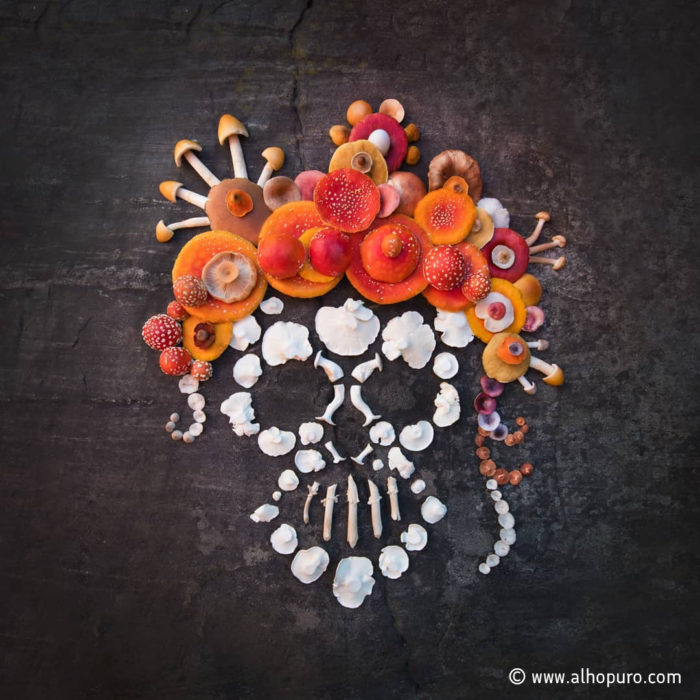
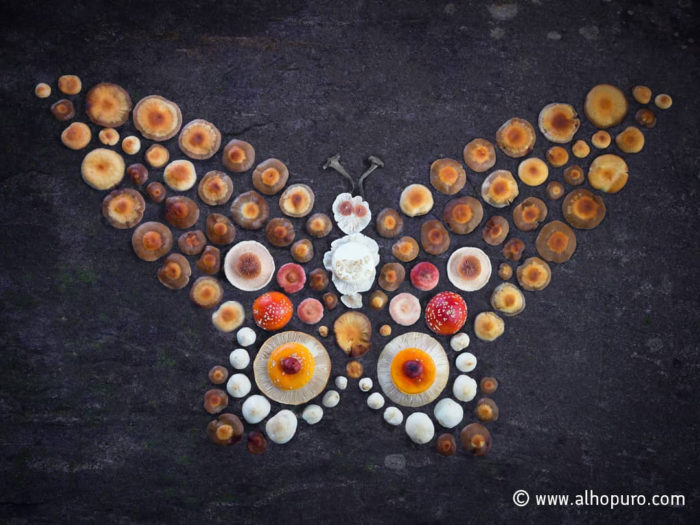
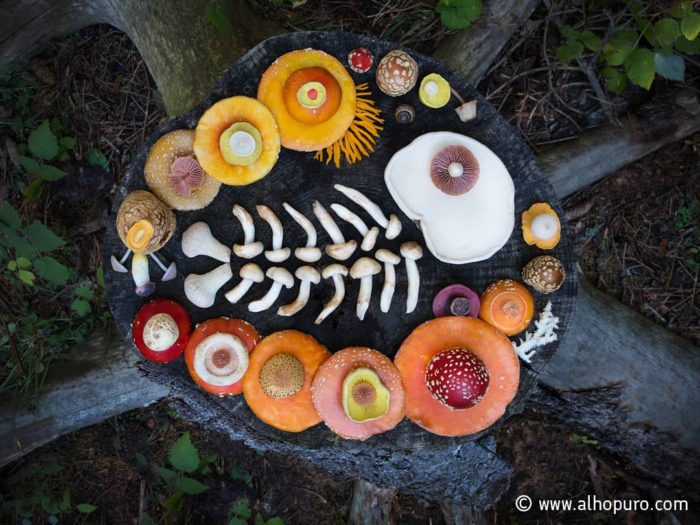
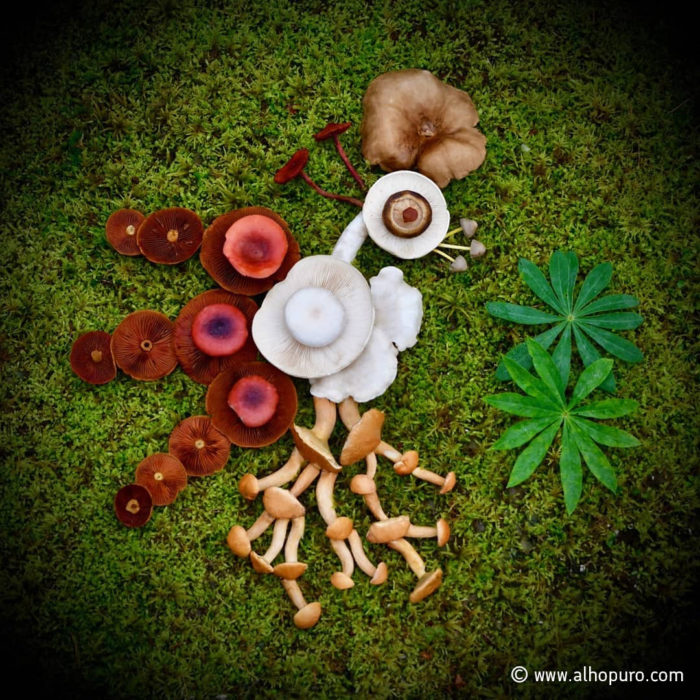
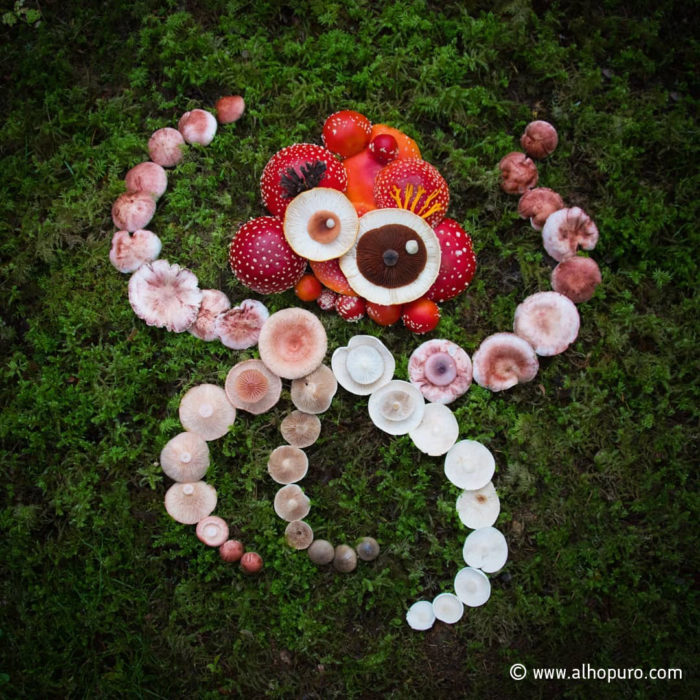
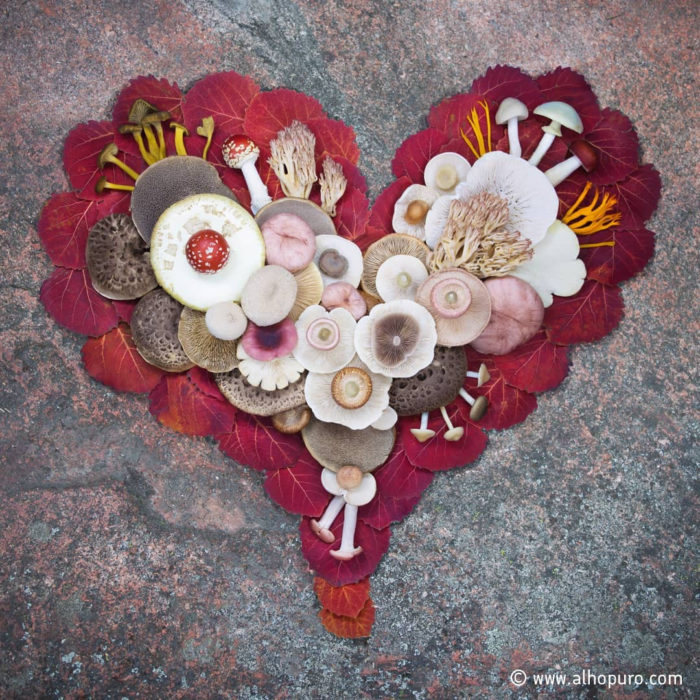
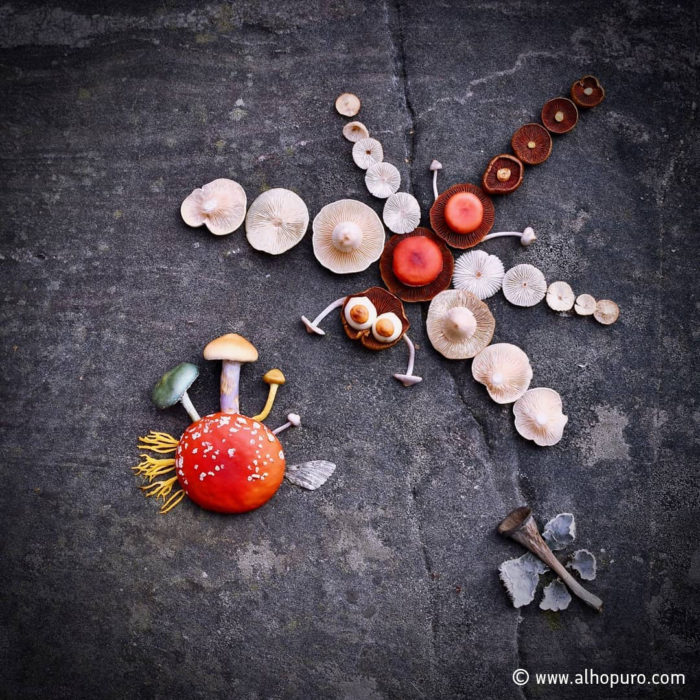
They don’t last long in the wild. Within hours of their creation, the materials dry and fade, or forest critters may eat them, but the world can view the art online.

“As a former diving instructor, I’ve always been passionate about nature,” says Alhopuro. “I used to think that our forests offered no comparison to the colours found on coral reefs.” [Full disclosure: When not busy with her photography career, Alhopuro works as a diplomat at Finland’s Ministry for Foreign Affairs, which also produces ThisisFINLAND.]

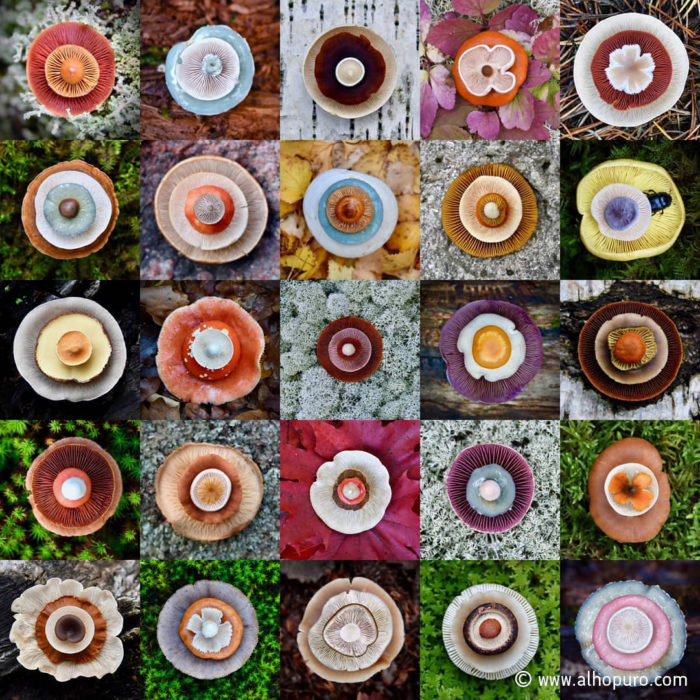
A tradition called “every person’s right” means that anyone can enjoy hiking in the forest – and picking berries and mushrooms there – no matter who owns the land. Alhopuro started investigating whether she could use mushrooms in her art and discovered that the undersides – especially of toxic mushrooms – offered “a whole new, exciting colour palette.”

She arranges them to form patterns or images, then takes a picture “before it gets dark and before snails and birds attack it.” She assembles the artworks near forest paths “for random passers-by to enjoy,” and believes it may add “a bit of mystery and wonder to their day.” Her steadily growing following on Instagram and Facebook seems to agree.

Alhopuro has found inspiration in the work of environmental artists such as Andy Goldsworthy. She also mentions Bernadette Bohan, who recycles toys into artworks, whom she met at Burning Man in 2017.

A skeleton motif is present in some of Alhopuro’s photos – she says that this “imagery of death” is not related to the toxicity of the mushrooms, but rather tells of her “fears about declining diversity in nature.”

Official disclaimer: If you go mushroom picking, remember that many mushrooms are poisonous. Exercise caution: Use a good, modern guidebook and consult with the locals. Or just stick to our slideshow.

By ThisisFINLAND staff, October 2018

Finnish AI image analysis supports better healthcare

Fast, accurate tissue sample analysis speeds up the work of pathologists and researchers and ensures better patient care.

Analysing tissue samples the traditional way – slowly and strenuously, while hunched over a microscope – may now be a thing of the past. Pathologists and researchers can accelerate and automate the analysis process using tools developed by Fimmic, a Finnish startup founded in 2013: Aiforia is a virtual microscope and a cloud platform in the same software. Fimmic is a spin-off of the Finnish Institute for Molecular Medicine at the University of Helsinki.

“Our deep-learning AI image analysis technology enables fast and accurate automation of complex image analysis tasks not previously possible,” says CEO Kaisa Helminen.

“Our AI software is trained to detect and quantify objects, categorise cancer tumours based on progression, and identify rare targets such as malaria parasites,” she Helminen. “For the first time, we’re able to mimic a human observer in understanding the context in tissue.

“The solution acts as a tireless analysis support tool, or like a second opinion, for pathologists and researchers, speeding up the workflow and preventing human errors in interpretation. This way, it ensures better patient care.”

Results in minutes

Portrait of a smiling Kaisa Helminen standing in a hallway.

“For the first time, we’re able to mimic a human observer in understanding the context in tissue,” says Kaisa Helminen of Fimmic.Photo: Sebastian Mardones/Health Capital Helsinki

The on-demand process runs in a cloud computing environment. The platform operates on a software-as-a-service basis, meaning customers do not need to buy local hardware or install any local software. All they have to do is upload their scanned tissue sample images to the service, and the results will arrive in minutes.

“In 2018, Aiforia will be used for analysing clinical patient samples for the first time,” Helminen says. “There is also a big need for this type of software in the early preclinical phase of new drug development.”

Investors agree; the company closed a five-million-euro funding round in November 2017.

By Leena Koskenlaakso, ThisisFINLAND Magazine 2018

Finnish baking tradition combines cinnamon, cardamom, sugar and love

We’re going to throw three big words at you, one of them in Finnish: ubiquitous, quintessential and korvapuusti. The latter is the Finns’ term for their own special cinnamon bun, flavoured with a dash of cardamom.

“Ubiquitous” and “quintessential” are labels that travel bloggers love to use when describing the korvapuusti (known as an örfil in Swedish, also an official language in Finland). The choice of adjectives indicates that the tasty pastry is, like coffee, ever-present and vital in Finland.

It’s so popular that pretty much every bag of flour in the supermarket has a korvapuusti recipe printed on it. Finnish households often make them from scratch as a sweet bite for the weekend. (There are recipes for korvapuusti and many other buns and cakes on our baked-goods recipe page.) For those unexpected guests, stores also sell frozen versions that can be popped in the oven, filling the house with the same divine fresh-baked scent.

According to professional bakers, the secret to the perfect korvapuusti is using enough sugar and butter. Sprinkling large crystals of nib sugar (also called pearl sugar) on top puts the finishing touches on the pastry.

In love with a pastry

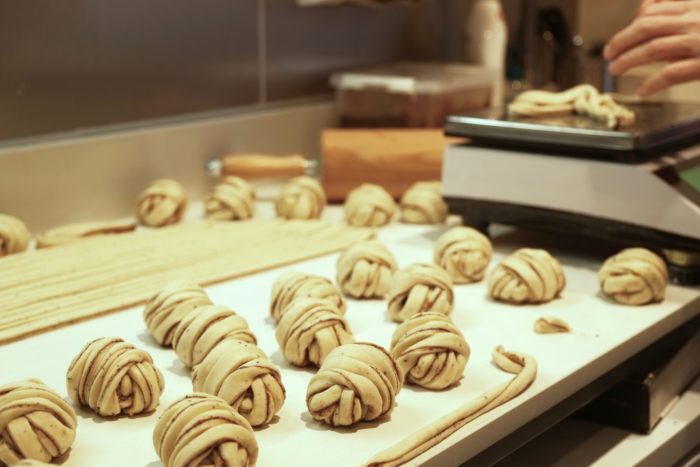
Long and thin strands of cinnamon bun dough rolled into a knot-shaped buns.

This batch of korvapuusti at Helsinki Homemade is rolled into a rather unconventional shape.Photo: Mari Storpellinen

Funnily enough, both “korvapuusti” and “örfil” literally mean a slap or cuff on the ear. Why does a beloved bun have such a seemingly negative name?

“The name comes from the usual form of the pastry, which resembles two diametrically placed ears,” says Arja Hopsu-Neuvonen, development manager at Martat, a Finnish home economics organisation founded in 1899.

There are other variations of korvapuusti, though, where the ear shape has been abandoned but the ingredients and the craftsmanship remain the same.

“Korvapuusti can be enjoyed also in the form of cake,” says Thomas Backman, owner of Café Succès in the central Helsinki neighbourhood of Ullanlinna. He says they also sell a korvapuusti rusk, which is a hardened, cookie-like snack. “We are looking into growing our selection of korvapuusti byproducts, since korvapuusti is our bestseller.” Their korvapuusti is a favourite among Helsinkians, and is renowned for being larger than the average.

Another popular spot for korvapuusti fans is Helsinki Homemade, an artisan bakery in the Töölö neighbourhood. [Editor’s note: Helsinki Homemade has closed its café, but its products continue to be available at Töölön kyläkauppa (Töölö Village Store).] The lucky locals tell of how luxurious it is to wake up to the smell of freshly baked korvapuusti.

“The special ingredient of the korvapuusti is love,” says Klaus Ittonen, pulling no punches to play on our heartstrings. He’s Helsinki Homemade’s cofounder and baker. He started off selling korvapuusti and Karelian pies to tourists off his bike before founding the bakery together with Kátia Corrêa.

“The korvapuusti needs to be made with love in order to get it right,” says Ittonen. “It sounds a bit silly but that’s the way it is.”

Long-term favourite

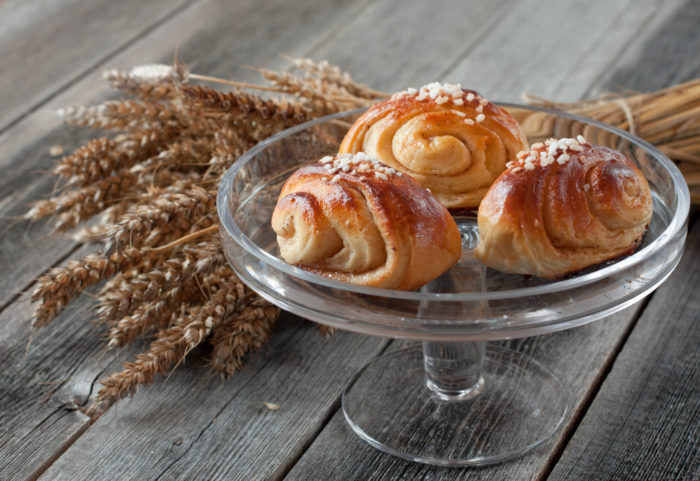
Three cinnamon buns on a glass tray on a wooden table, a bunch of wheat behind the tray.

The origins of the korvapuusti can be traced to at least the 1800s.Photo: Taru Rantala/Vastavalo/Visit Finland

Versions of the korvapuusti have been delighting Finnish taste buds since the 18th century.

“Wheat pastries arrived in Finland from Germany via Sweden in the 18th century, but were available only to the upper class at first,” says Hopsu-Neuvonen. “By the end of the 19th century, the korvapuusti had reached the kitchens of the common people, too.”

Still, the process was gradual: “It became really popular only after the Second World War, when the ingredients became more readily available.”

Once the korvapuusti had made its way into the mouths of all Finns, there was no stopping it from becoming a firm national favourite. Since the mid-2000s, the pastry has had its own official Korvapuusti Day (Cinnamon Bun Day), celebrated on October 4.

Making the world a better place

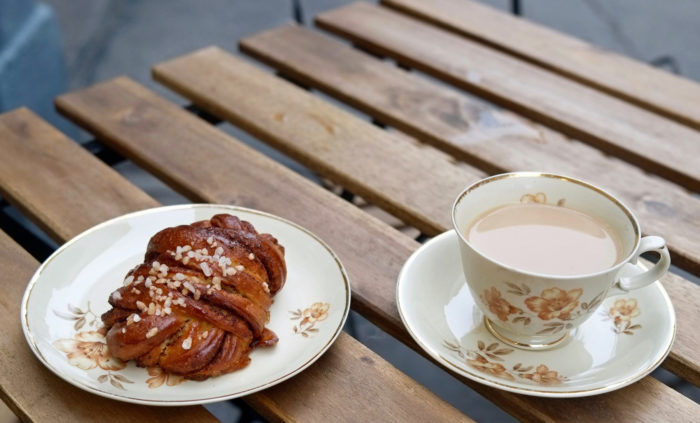
A cinnamon bun on a plate next to a small coffee cup with floral decorations on a wooden table.

The Finnish language has a special term for coffee and bun: “pullakahvit” (literally “bun coffee”); Klaus Ittonen of Helsinki Homemade loves the word.Photo: Mari Storpellinen

Ittonen is keen on spreading the word about this Finnish delicacy. Get ready for another Finnish vocabulary word.

Pullakahvit is the most beautiful word in the world,” says Ittonen, using the Finnish term that means coffee enjoyed with a sweet bun (literally “bun coffee”). In many instances, that bun is a korvapuusti.

That’s right: the Finns love their coffee and korvapuusti so much that there is actually a special word for it.

Being truly passionate about what he does, Ittonen holds a rather philosophical view of pullakahvit:

“It’s the highlight of the day, an enjoyment that brings back memories from people’s childhoods. It is not a time for counting calories. Good coffee paired with a homemade korvapuusti makes the world a better place.”

Vegan views

Several places in Helsinki offer vegan variants of the korvapuusti, too.

“The milk can be replaced with oat milk, or just plain water, and the butter with vegetable margarine,” says Arja Hopsu-Neuvonen of the Finnish home economics organisation Martat. Instead of brushing the top of the korvapuusti with egg mixture before baking, you can use a finish of melted margarine.

By Mari Storpellinen, September 2018