Near Helsinki, Aalto University “A Grid” nourishes startups

Aalto University loves entrepreneurs. Its thriving formal and informal curriculums help people start and run their own businesses.

Aalto students organise Slush, one of the world’s leading startup events, held in Helsinki every autumn.

Aalto has even built a home for startups: A Grid, a 25,000-square-metre building on their Otaniemi campus, just west of Helsinki.

A Grid has offices for other groups in the startup ecosystem, such as multinational corporations, the European Space Agency and the world’s first UN Technology Innovation Lab. Yet young, innovative companies are what is most exciting about A Grid; we take a look at three of the coolest startups in residence.

Beyond the line of sight
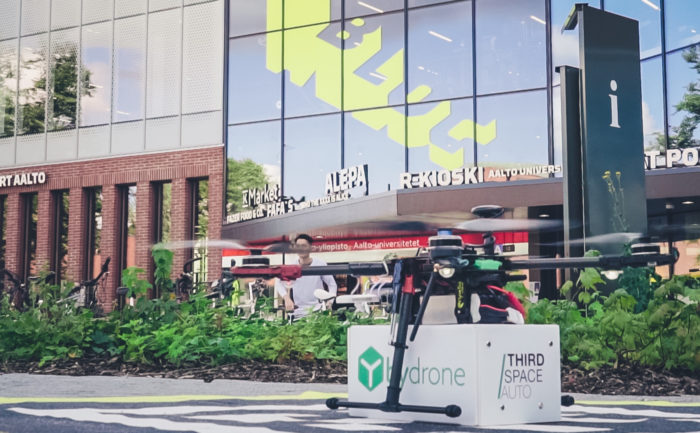
A delivery drone with propellors whirring has a package in its clamps on the ground at a landing site.

Third Space Auto’s autonomous delivery drone has been spotted flying around Aalto University’s campus in Otaniemi, west of Helsinki.Photo courtesy of A Bloc and Third Space Auto

Grocery delivery is nothing new around the world, but it is unusual – at the moment, anyway – to have your food delivered by an autonomous drone. Third Space Auto has demonstrated its capabilities to deliver small packages by drone around the Aalto campus.

“It isn’t simple for a drone to fly beyond the line of sight without an operator,” says Third Space Auto cofounder Arshia Gratiot. “We built the platform to enable autonomous vehicles. It has to know where and how to fly, as well as how to land. Let’s say it has a landing spot, but there happens to be a person standing there.”

Third Space Auto uses AI so that a drone can plan a new path if it recognises a potential collision, such as powerlines or an unexpected person on the landing spot.

A portrait of a woman, Arshia Gratiot, cofounder of Third Space Auto.

“It isn’t simple for a drone to fly beyond the line of sight without an operator,” says Third Space Auto cofounder Arshia Gratiot.
Photo: Third Space Auto

“This isn’t just about delivering your burrito,” Gratiot says. “We are also testing autonomous boats to pick up plastic in the water. It even works as a fleet management system for multiple drones.

“Coming to A Grid was the best decision I made. They have a young, dynamic team who never say, ‘No, you can’t try that technology here.’ I’ve even brought my two kids to A Grid, and no one complained about them playing. It’s a very supportive atmosphere.”

The AirBNB of education
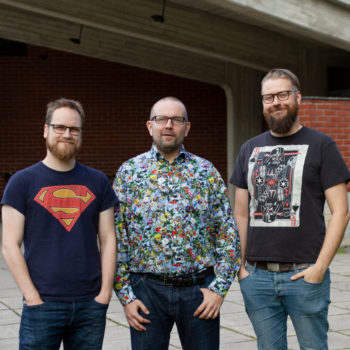
The founders of Superlect stand with their hands in their pockets in front of a red brick building.

The founders of Superlect, (from left) Anton Valle, Antti Jäänvirta and Sampo Leino, advise you not to be nervous if you need to learn new skills to stay viable on the job market.
Photo: Superlect

The philosophy behind Superlect is simple: matching trainers with particular skills and students looking for those skills. It began with training journalists how to use new camera and editing equipment, but now encompasses hundreds of topics.

“We are focusing on workplace and career skills, such as accounting, communications or sales,” says CEO Antti Jäänvirta. “A person who is good at finding the perfect position in a job search, for example, can sign up to host a class and get paid for it. Students rate the teacher, so people know the value she offers.”

Someone seeking to learn a new skill simply types in key words to see what is available in their area. Superlect is also exploring using their solution within companies. A former firefighter in your office could train coworkers how to properly use a fire extinguisher, for instance.

“It can take a university eight years to start graduating people with degrees in a new field,” Jäänvirta says. “We can start training people on a new skill in eight minutes. There’s a lot of negativity about the future of work. Don’t be afraid because you need to learn new skills.”

Making better decisions
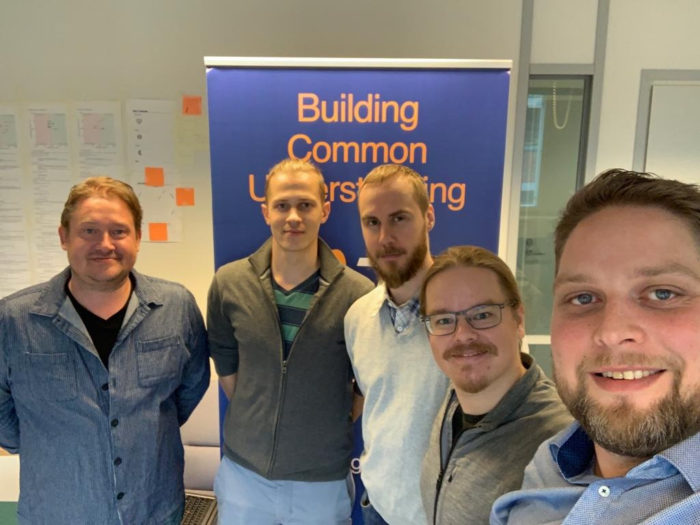
Five men stand in a row in an office setting.

Inforglobe’s core team (from left: Sami Kärnä, Valtteri Frantsi, Joonas Rajamäki, Juha Törmänen and Mikaeli Langinvainio) creates software that brings stakeholders together to analyse a situation and consider a way forward.
Photo: Inforglobe

Inforglobe provides software solutions for participatory analysis and decision making. The company was born in the demanding world of international conflict resolution and is now based at A Grid.

“We work with Crisis Management Initiative, the peace broker founded by former Finnish president and Nobel Peace Prize laureate Martti Ahtisaari,” says Inforglobe CEO Mikaeli Langinvainio. “With CMI we have worked in about 15 countries around the world.”

The idea is to bring all stakeholders together to analyse a situation and consider a way forward. It is a visual tool which shows all the different opinions, how they differ and why they differ. The beauty of the tool is that it can also work in scenarios in the private sector.

“Think of a big construction project with many stakeholders,” Langinvainio says. “There are conflicts on priorities and timetables between the contractors and even local citizens. This is a way to incorporate different viewpoints, manage risk and make better quality decisions.”

By David J. Cord, November 2019
Finnish singer Alma collaborates on new Charlie’s Angels theme song

Alma Miettinen, better known by her mononymous artist name Alma, is credited as one of the songwriters on the new single “Don’t Call Me Angel” by Ariana Grande, Miley Cyrus and Lana Del Rey. The track is a theme song for the action comedy Charlie’s Angels – the third installment of the popular Charlie’s Angels film series, premiering on November 15, 2019.

For the third consecutive year, Alma is participating in Music Finland’s Fast Track export programme, which aims to support the export of the most potential-rich names in Finnish music industry. Her first international songwriting camp was Music Finland’s Hip Hop Workshop in April 2015, where Alma made initial contact with her current publisher.

Honouring inclusivity with Finnish pronoun power

Hän is a powerful word, a Finnish personal pronoun that refers to “he,” “she,” or any other gender, all at the same time.

It’s worth spreading the word about this word because it is inclusive and stands for equal opportunity. That’s why Finland believes in introducing hän, and the philosophy behind it, to the rest of the world. (The ä is pronounced like the a in “at.”)

Finland strives to be an egalitarian society where everyone is equal regardless of factors such as background, appearance, sexuality or gender.

It’s important to work with and recognise others around the world who are working towards the same goal. Finland is presenting the Hän Honour as a special recognition of commitment to advancing inclusivity. So far, some 20 individuals and groups around the world have received this honour.

Improving rights, protecting gains

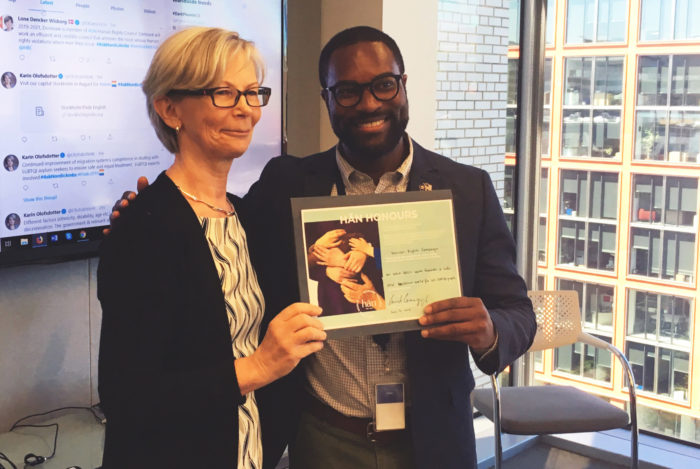
A woman and a man smile for the camera, holding a certificate that reads Hän Honours.

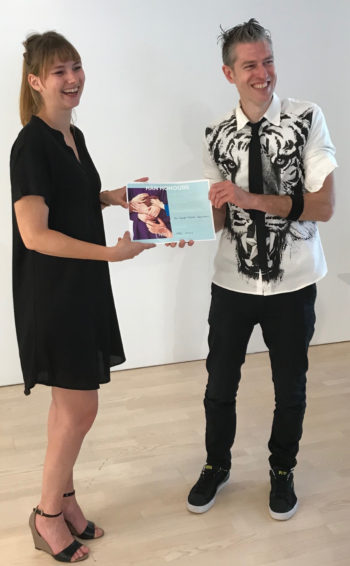
Finnish ambassador Kirsti Kauppi (left), presents the Hän Honour to Jay Gilliam, director of global leadership at Human Rights Campaign, in recognition of the organisation’s tireless work to build a safe and inclusive world for all LGBTQ people.Photo: Embassy of Finland, Washington

Founded in 1980, the Human Rights Campaign (HRC) is the largest LGBTQ (lesbian, gay, bisexual, transsexual, queer/questioning) advocacy group and political lobbying organisation in the US. Finland’s ambassador to America, Kirsti Kauppi, presented the Hän Honour to HRC for their tireless work to build a safe and inclusive world for all LGBTQ people.

“We must work to improve our rights, as well as to ensure and protect the gains we’ve made,” says Jay Gilliam, the director of global leadership at HRC. “It is not just about passing laws to increase protection. We also work in education through schools, workplaces and houses of faith.”

HRC is primarily known for its work in the US, but they also work with organisations around the world and have several programmes for international participants.

“One positive worldwide trend is the decriminalisation of same-sex relations and the legalisation of marriage equality in a number of countries,” Gilliam says. “We are proud that Finland promotes LGBTQ equality and are spreading the message of hän.”

Tireless in the face of controversy

Portrait of a smiling woman, Chizuko Ueno.

Sociologist Chizuko Ueno received the Hän Honour in Japan for “tirelessly addressing sometimes controversial issues, such as gender discrimination and sexual violence.”
Photo: Katsuo Sugano

Sociologist Chizuko Ueno, chief director of the Women’s Action Network, received the Hän Honour from former Finnish President Tarja Halonen for her pioneering work in feminism and woman’s studies in Japan.

During the presentation ceremony, Halonen said that Ueno “has tirelessly addressed sometimes controversial issues, such as gender discrimination and sexual violence, and provoked debate to make Japan a better society in respect of gender equality.”

Ueno achieved prominence in the 1980s with her book A Study of Sexy Girls and continued into the 2000s with books such as Survival Strategies for Women. She is not only a feminist advocate, but also a scholar on the history of women’s liberation and feminism.

Ueno reciprocated Halonen’s remarks, saying, “It is my great honour to receive a letter of thanks from the first female president of Finland…because Finland is well known as one of the highest-ranking countries in terms of a gender-equal society.”

Creating more freedom for human beings

A woman and a man smile for the camera, holding a certificate that reads Hän Honours.

Jill Michiels (left) and Koen Dedoncker accepted the Hän Honour on behalf of the Men Engage Network in Belgium for the organisation’s work in redefining masculinity.Photo: Ulla Suortti

The Men Engage Network in Belgium received the Hän Honour for their work in redefining masculinity. Koen Dedoncker and Jill Michiels accepted the recognition from Riitta Resch, Finnish ambassador to Belgium.

“Our work is necessary because there is an unhealthy relationship between men and violence,” says Dedoncker, chair of Men Engage in the Flanders region of Belgium. “Men die early and have higher rates of alcoholism and suicide. This shows a problem with masculinity.”

Stereotypical values would dictate that men must be strong, aggressive, competitive and never show vulnerability. This causes problems for men – and others – throughout a man’s life.

“Men aren’t supposed to cry, show weakness or talk about their emotions,” Dedoncker says. “We try to break open these roles and create more freedom for people as human beings. It is not only to prevent violence and advance gender equality, but also to promote healthier lives. To step out of the societal ‘man box’ takes balls – or any other term you want to use for ‘manly courage’ – but it benefits everyone.”

By ThisisFINLAND staff, November 2019

Finland offers stable platform for scientific research

“My work is profoundly international, and the scientific community to which I personally feel I belong is located in many parts of the world.

Colleagues and partners exploring the same research areas as my team and people I have met at international conferences, are all building a global puzzle together in the field of cancer cell biology.

My own team that we call Ivaska Lab is my closest community and we work together in Finland, at the Turku Centre of Biotechnology. My internationally recognised team has 18 members including myself. The members are all at different stages of their careers. Some of them are writing their master’s theses, some are working on their doctoral theses and others are post-doctoral researchers. They are men and women from eight different countries with different backgrounds, religions and mother tongues. Together, we form a multidisciplinary research group of equals. We are interested in understanding how integrins contribute to almost every step of cancer progression.

Finnish universities offer a genuinely English-speaking working environment for foreign researchers. All scientists and even the support personnel at universities speak fluent English. Most of the bureaucracy can be dealt with online and in English. The everyday conversations at the lab are also in English, which enables integration irrespective of an individual’s background and also provides the staff with good practise in discussing their topics at conferences and writing papers.

I specialise in the role of cellular changes in metastatic development of cancer. Finnish universities have increased their cooperation with business, which provides researchers with access to new forms of funding. The pharmaceutical companies do not do basic research, but they utilise the results of the research done at universities. We are still working on the rules of this cooperation, since the scientists need to publish their results, even if it is not in the interest of the company.

Finnish society is one of the most stable in the world and it functions well. It is an equal society where everyone is offered a good education and healthcare that is almost free. Even if researchers do not earn top salaries, we still enjoy a good standard of living and a pleasant living environment. Affordable English-speaking daycare facilities and free international schools are a clear advantage for anyone with children working in Finland. Finland does not have big cities, but if you enjoy nature and small town living, this is a great place to live in. Many of the foreign researchers I have persuaded to join my team have ended up staying for years.”

By Johanna Ivaska; edited by Päivi Brink and ThisisFINLAND staff, ThisisFINLAND Magazine 2019

Integral to the culture, Sámi languages stay vibrant in Finland

Sápmi – the homeland of the Sámi, the only recognised Indigenous People in the EU area – is split into four parts by the borders of the nation-states Finland, Sweden, Norway and Russia.

Different Sámi languages are spoken in different areas of Sápmi. Speakers of geographically distant variants cannot always understand each other’s languages.

How are people maintaining these languages today, and how do their efforts contribute to preserving Sámi culture and identity? Fewer than ten Sámi languages are still spoken, including three in Finland: Northern Sámi, Skolt Sámi and Inari Sámi.

Ensuring continuity

A crowd of people sit outside on seats made from packed snow, watching a film on a big screen.

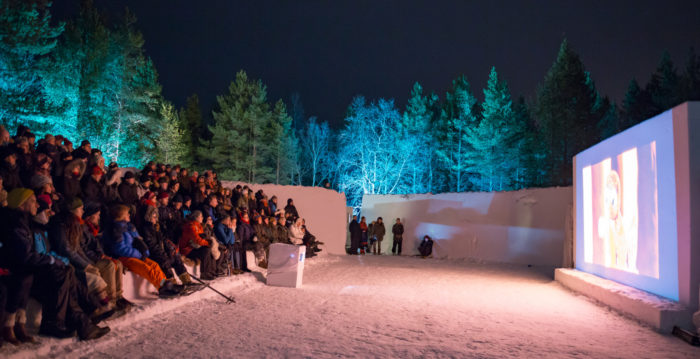
Skábmagovat, an annual Indigenous film festival in the northern Finnish town of Inari, holds some screenings outside in an open-air theatre where the seats and the screen are made out of snow.Photo: Terhi Tuovinen/Lapland Material Bank

Northern Sámi has more than 2,500 speakers in Finland, and upwards of 25,000 more across Norway and Sweden, while Skolt Sámi and Inari Sámi have a few hundred speakers each. Skolt and Inari Sámi came close to dying out in the 20th century, but grassroots activists and volunteers have worked tirelessly to reintroduce them to younger generations, ensuring that people continue to speak them.

There are also people who are Sámi but do not speak a Sámi language, or who live outside of Sápmi. Estimates vary, but according to information published by the Sámi Parliament of Finland, about 10,000 Sámi live in Finland and the total number of Sámi is more than 75,000.

“Many parents used to think it was best that their kids didn’t learn Sámi languages, and that they concentrated on learning only Finnish,” says Pirita Näkkäläjärvi, a mergers and acquisitions advisor and Sámi rights advocate. At the time of writing, she is also a newly elected member of the Sámi Parliament for the 2020–23 term. “Until the 1980s, some parents sincerely believed that they’d make their kids’ lives easier if they didn’t have to carry the [perceived] burden of being Sámi.”

Many things are different today. The town of Inari in northern Finland has hosted an annual Indigenous film festival called Skábmagovat since 1999 and a yearly Indigenous music festival entitled Ijahis Idja since 2004. The former translates to “reflections of endless night” and takes place in the winter, while the latter means “nightless night” and happens in the summer. Inari is home to Sajos, a Sámi cultural centre that opened in 2012, and Siida, a Sámi museum and nature centre that opened in 1998.

Finnish national broadcaster Yle has a Sámi-language department, Yle Sápmi, which provides content in all three Sámi languages, including the trilingual children’s television series Unna Junná, as well as radio shows, TV news broadcasts and online news. A Netflix-style service called Sápmifilm streams movies in Sámi languages with English subtitles.

Living languages

A wooden building with floor-to-ceiling windows.

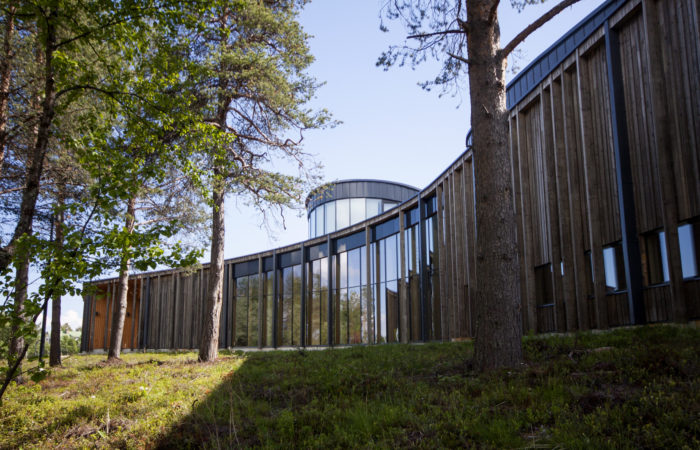
Sajos, a Sámi cultural centre that opened in 2012 in Inari, northern Finland, is also the meeting place for the Sámi Parliament.Photo: Terhi Tuovinen/Lapland Material Bank

Festivals and media contribute to maintaining the vibrancy of Sámi language and culture, but are by no means enough. “To keep a language alive you need structural and official support,” says Näkkäläjärvi. “But ultimately it’s up to those of us who speak the languages to use them.”

This is exactly what various language revitalisation efforts scattered around Finland are striving to support.

In the 1980s, there were only four people who spoke Inari Sámi as their first language and were under the age of thirty.

The Inari Sámi Language Association was founded in 1986 to promote Inari Sámi. It publishes books and magazines and runs three language nests: two in Inari and one in Ivalo.

Language nests form an example of immersion-based language revitalisation, whereby staff use the minority language all the time, starting from the first day. “The idea actually came from New Zealand, where older Māori people were talking to children [in the Te Reo Māori language] in an effort to reintroduce it,” says Petter Morottaja, the association’s media worker.

“Our language nests take the form of daycare, where the people who look after the children are Inari Sámi speakers, even if the children’s parents are not.”

Nowadays there are between 350 and 450 Inari Sámi speakers in Finland.

“Keeping languages alive is important because it allows us to preserve our diversity,” Morottaja says. “Every language contains aspects of culture. When a language dies, we easily lose the cultural aspects it contains with it.

“Revitalising minority languages is about equality but, for me, promoting diversity is the most important thing.”

Bilingual education

Three men and two women stand outside in the snow. The men are wearing T-shirts and the women are dressed in traditional Sámi dresses.

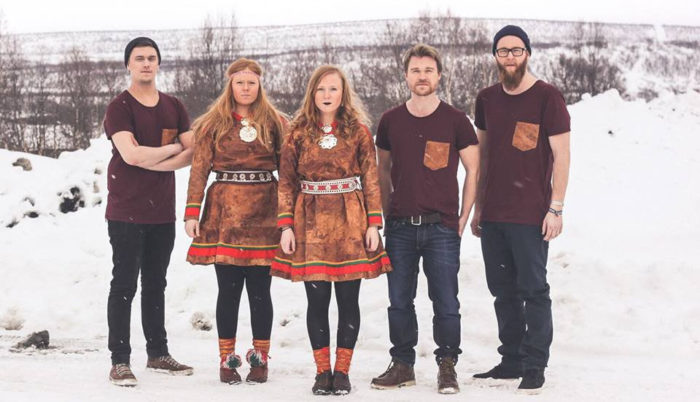
Ravggon bills itself as “a Sámi folk-rock band from Vuotso,” a town in northern Finland. They performed a concert at Pasila Comprehensive School in Helsinki, which has a bilingual education programme in Finnish and Northern Sámi. (From left: Matti Naakka, guitar and vocals; Unna-Maari Pulska, keyboards; Milla Elmiina Pulska, lead vocals; Erno Karjalainen, bass; and Panu Klemettilä, drums.)Photo: Antti Aunula/Ravggon

While there are a few Sámi-language schools in Finland, Pasila Comprehensive School in Helsinki offers something different: bilingual classes taught in both Finnish and Northern Sámi.

At the time of writing, the school has five students taking classes in both Finnish and Northern Sámi, in first and second grade (ages seven to nine). The school will offer these students a bilingual education until ninth grade (age 15).

“Eighty percent of the children’s education takes place in Northern Sámi, and the rest takes place in Finnish,” says Maria Uutaniemi, the school principal.

As well as providing their students with an education in Northern Sámi, the school is committed to celebrating Sámi culture more broadly. For example, the Sámi rock band Ravggon performed a concert for the entire school one year.

“We also display Sámi art in our corridors and classrooms, and we’ve had Skolt Sámi artists come and visit us,” Uutaniemi says.

“I hope we can be an example to other cities and northern countries of how to organise Sámi lessons and Sámi education. I hope we’ll eventually see this kind of thing happening all over the northern countries.”

Language learning isn’t just for kids

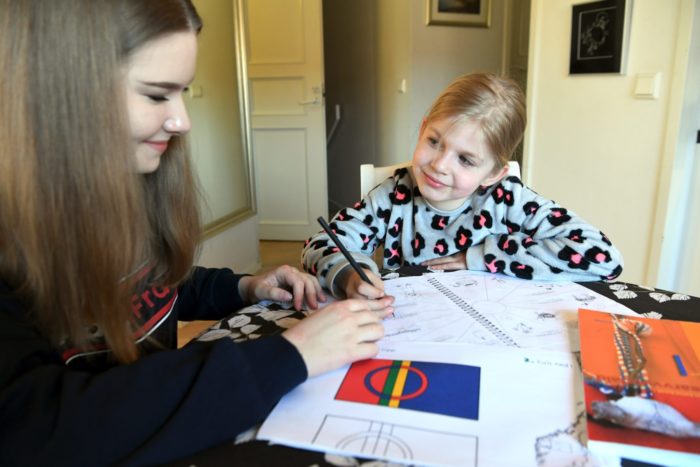
Two girls sit at a table with schoolbooks, notebooks and a colour printout of the Sámi flag.

Eve (left) and Aava are learning Northern Sámi in Helsinki. By some estimates, as much as 70 percent of Sámi live outside of Sápmi, the Sámi homeland.Photo: Jussi Nukari/Lehtikuva

It’s not just children who are being offered classes in Sámi languages. The Sami Education Institute in Inari offers year-long intensive language courses in Northern, Skolt and Inari Sámi.

These are practical courses that focus on developing spoken language skills. Some of the courses are tailored to individuals whose jobs require them to have a good level of spoken Sámi languages, for example those working in education, healthcare and the service industry.

“Next year we are running courses for nurses,” Eeva-Liisa Rasmus-Moilanen, the institute’s principal says.

“We also run lessons in Sámi culture. This is a value that is reflected in all of the education we provide. Our education is based around the core values of cultural sensitivity and understanding.”

In addition to classes in Inari, the institute runs e-learning courses in all three languages. “Seventy percent of Sámi people don’t live in the Sámi region,” Rasmus-Moilanen explains. “Offering virtual lessons allows us to reach them too.”

Interested in learning more about Sámi languages?

Check out Say it in Saami, a project set up by Niillas Holmberg and Katri Koivula. It contains useful phrases in Northern Sámi, Skolt Sámi and Inari Sámi, as well as info about Sámi history and culture.

By Tabatha Leggett, October 2019

Taking to the streets for a spirited Helsinki ghost walk

“Helsinki is ideal for ghost stories – many buildings in the central area have their own ghost.”

This assertion by Karri Korppi, who heads up the Happy Guide Helsinki tour company, might come as a surprise. After all, Helsinki is better known for its cutting-edge modern architecture than its spooky graveyards and gloomy half-lit mansions.

Korppi explains that much of the city as we know it was built on top of cemeteries. The 18th-century Ulrika Eleonora Church and its burial ground, for example, were cleared to make way for the 19th-century Senate Square that forms a Helsinki landmark today.

The burial grounds that now serve as a pleasant park next to Old Church on the leafy street called Bulevardi are known colloquially as Plague Park because hundreds of victims of the 18th-century epidemic were buried there. However, not many people know that this site was pre-dated by cemeteries extending across the Kamppi district.

Horror drama

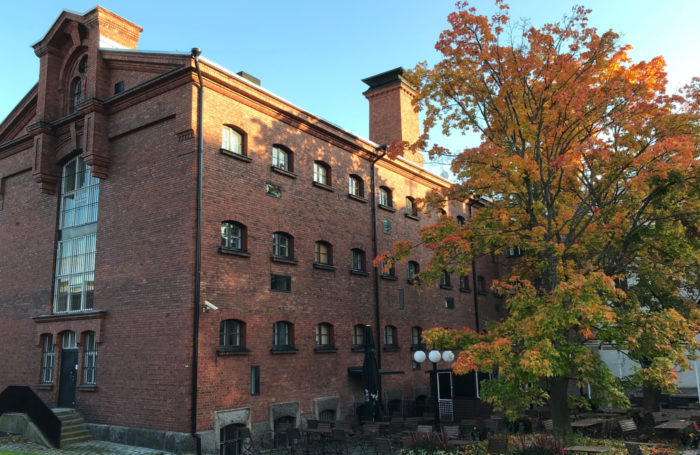
Maple trees stand in front of a red brick building.

Hotel Katajanokka, located in a former prison not far from the centre of Helsinki, is rumoured to accommodate a spooky guest: a ghost who sometimes slams doors.Photo: Peter Marten

Korppi doesn’t want to reveal how, or even if, any of these locations figure in his company’s popular Helsinki Horror Walks.  “It’s a theme tour that takes the course of a drama,” he says. “We are not actors, but we build the drama so that the stories work in a certain order. But it’s not a secret that we start at the former prison in Katajanokka.”

Guests at the hotel that now occupies the former prison can rest assured that the resident ghost, although inclined to slam the occasional door, is otherwise benign. Another famous phantom, a headless colonel by the name of Aleksi, is said to haunt a building in the Kruununhaka district, holding his head under his arm and taking rides in the lift.

It’s not clear if he is the same headless soldier rumoured to roam around the island of Vallisaari, originally part of the Suomenlinna sea fortress, or if Helsinki is simply especially prone to decapitated spirits.

Soul cellar

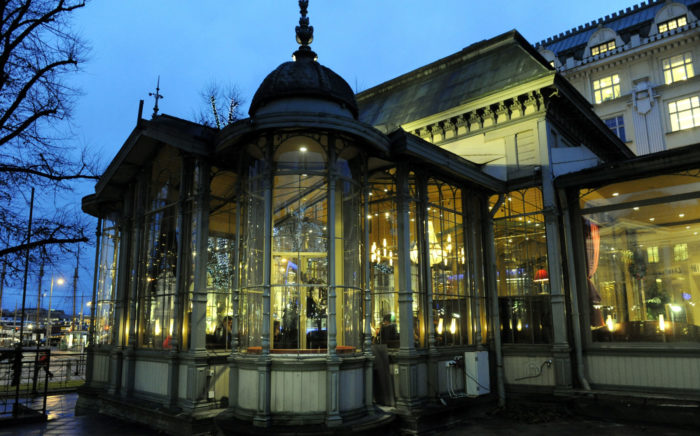
Lights show through the tall windows of a restaurant at dusk.

As dusk falls on a crisp autumn evening, the warm lights in Kappeli’s tall windows beckon to would-be diners; they may not know about the ghost who supposedly haunts the cellar of the restaurant.Photo: Sari Gustafsson/Lehtikuva

For phantom hunters in the Finnish capital, Happy Guide Helsinki is a prominent operator, offering both public and private tours. Another option is Helsinki City Museum’s Promenade Ghost Walk (in Finnish and occasionally in English), which sets off from the museum at Aleksanterinkatu 16 and heads towards Kamppi.

Helsinki is such a concertedly modern city that it does come as a surprise that it is home to so many ghosts. My meeting with Karri Korppi and his colleague Emil Anton takes place on the Esplanade at the elegant Kappeli, a restaurant founded in the late 1800s.

I find myself looking over my shoulder and the hairs on my neck bristle as Korppi and Anton tell me about kellarin kummitus, the cellar ghost.

As seems typical of Helsinki ghosts, this one seems to be mischievously angry rather than outright malevolent. “It’s the ghost of Josef Wolontis, who ran Kappeli in the 1880s and 1890s, when this was a favourite watering hole for composer Jean Sibelius and artist Akseli Gallen-Kallela,” says Korppi.

Wolontis would give everyone free breakfast at Kappeli on Mondays at the end of their parties. He was much liked, a kind of restaurant mogul of his day, with something of a monopoly on the restaurant scene. According to Korppi, Wolontis is the angriest ghost in Helsinki now, because his restaurants no longer hold that monopoly. Staff at the restaurant seem unperturbed at his presence, however, although several claim to have experienced his furniture-moving antics.

Urban legends

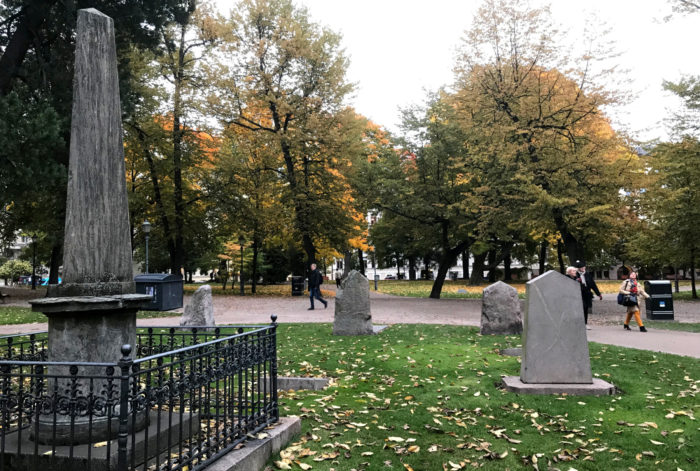
Tombstones and burial monuments stand in a park where autumn leaves have fallen from the trees.

Pedestrians walk past tombstones and monuments in Old Church Park, also known as Plague Park because of the hundreds of plague victims who were buried nearby in 1710.Photo: Peter Marten

These are the kind of anecdotes that appeal to Helsinki residents and visitors alike. “Even if you have lived your whole life here, I promise you will find something you have never heard about before,” says Korppi. “We tell the alternative history of Helsinki through its ghost stories and urban legends. Those include conspiracy theories, as well as notorious murders.”

Do the lead ghost hunters believe in ghosts themselves? “I have been interested in haunting buildings and ghosts since my sister used to see a lady walking around our family house in [the southeastern Finnish town of] Kouvola,” Korppi says. “But exactly what a ghost is – that’s another story.”

“I’m open to the possibility that the spirits of dead people might manifest themselves,” says Emil Anton. “We have heard of so many experiences and so many witnesses. The cumulative experiences make me lean towards accepting rather than rejecting.”

Where to look for ghosts in the Finnish capital

Helsinki Horror Walks with Happy Guide Helsinki, available in Finnish and English (check their ticket page, too)

Helsinki City Museum’s Ghost Walks, sometimes offered in English, take one of three routes: the Promenade Ghost Walk; the Kruununhaka Ghost Walk; and From Töölö to the Beyond

By Tim Bird, October 2019, updated October 2021

It all adds up: How Finnish towns are taking action against climate change

Finland’s capital, Helsinki, has made a commitment to report voluntarily to the UN on its implementation of the sustainable development goals. However, ambitious planet-friendly solutions are already being put into practice around the country.

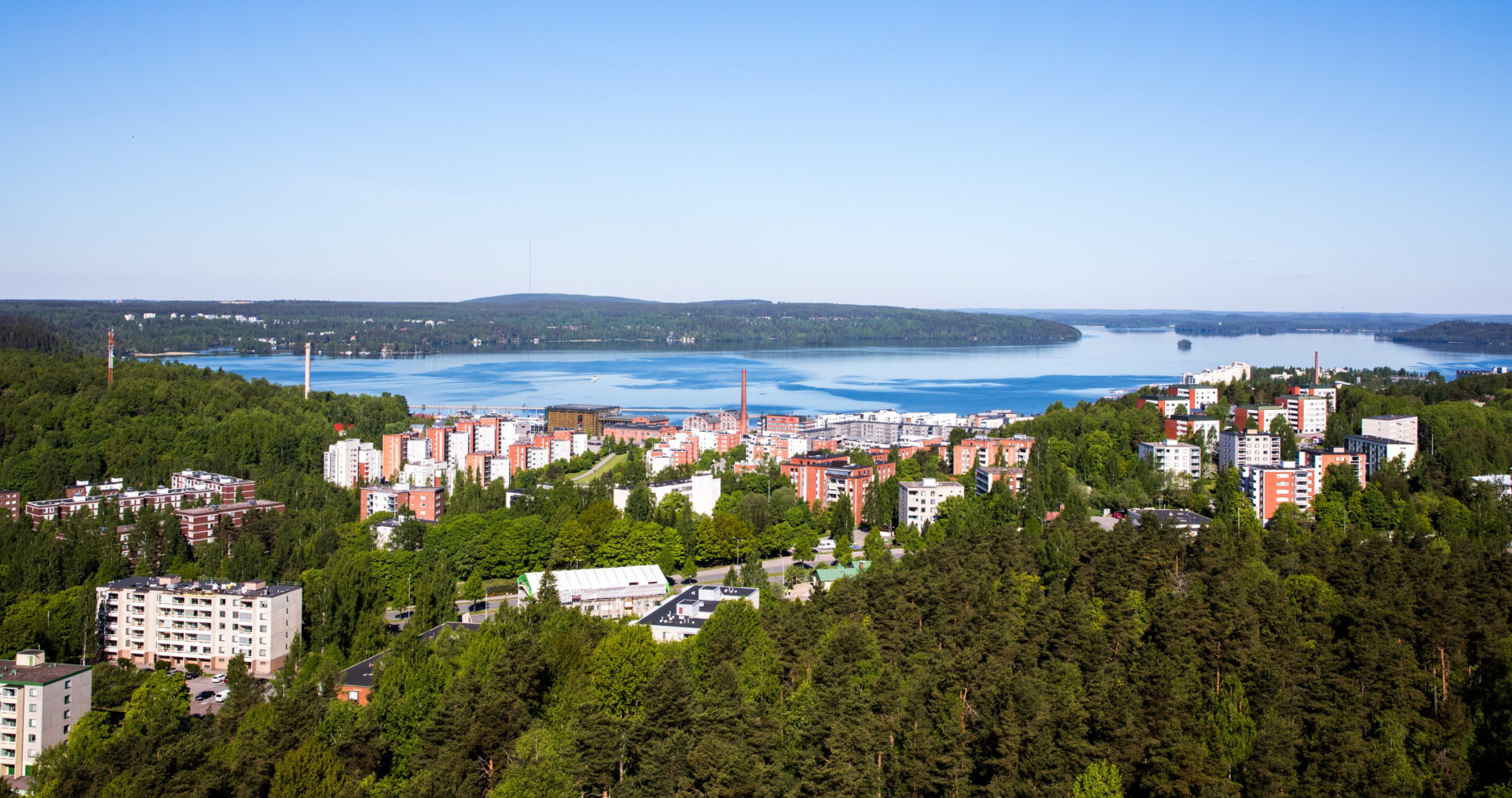
Lahti, a city of 120,000 just over 100 kilometres north of Helsinki, recently won the European Green Capital Award 2021, conferred by the European Commission. The honour brings Lahti to light as a leading model for urban sustainability on the continent. It unveiled a strategy called Bold Green City in 2018, but its environmental commitment goes back much farther and reflects a combination of factors, according to Saara Vauramo, who runs the Lahti Green Capital project together with Milla Bruneau.

Carbon trading gets personal

A panoramic view of a city beside a lake.

It’s easy to see where the city of Lahti, recipient of the European Green Capital Award 2021, gets its name: “lahti” means “bay” in Finnish. The name of the lake in the picture is similarly straightforward: Vesijärvi (Water Lake).Photo: Lassi Häkkinen/City of Lahti

“Firstly, there’s our connection with nature,” says Vauramo. “Ninety-nine percent of Lahti’s residents live within 300 metres of the natural environment.”

“Then, after the collapse of industry and jobs in the 1990s, there was a strong need to develop the local economy. We started cooperating with universities and investing in research, all of it related to environmental solutions. So we have people with vision and we think big.”

Lahti stopped using coal in April of 2019 and is spending 180 million euros on a bioenergy plant, aiming to become carbon neutral by 2025 and be the first major Finnish city to do so. Lahti’s experiment with CitiCAP, the world’s first personal carbon trading scheme, also caught the attention of the Green Capital jury.

“CitiCap is about trading your personal carbon emissions for local benefits, like bus or movie tickets,” says Vauramo. “We will pilot it for a year and then invite other cities to use it. It’s a unique tool.”

Town with two-letter name aims for zero waste

Schoolchildren sit around a long table drawing.

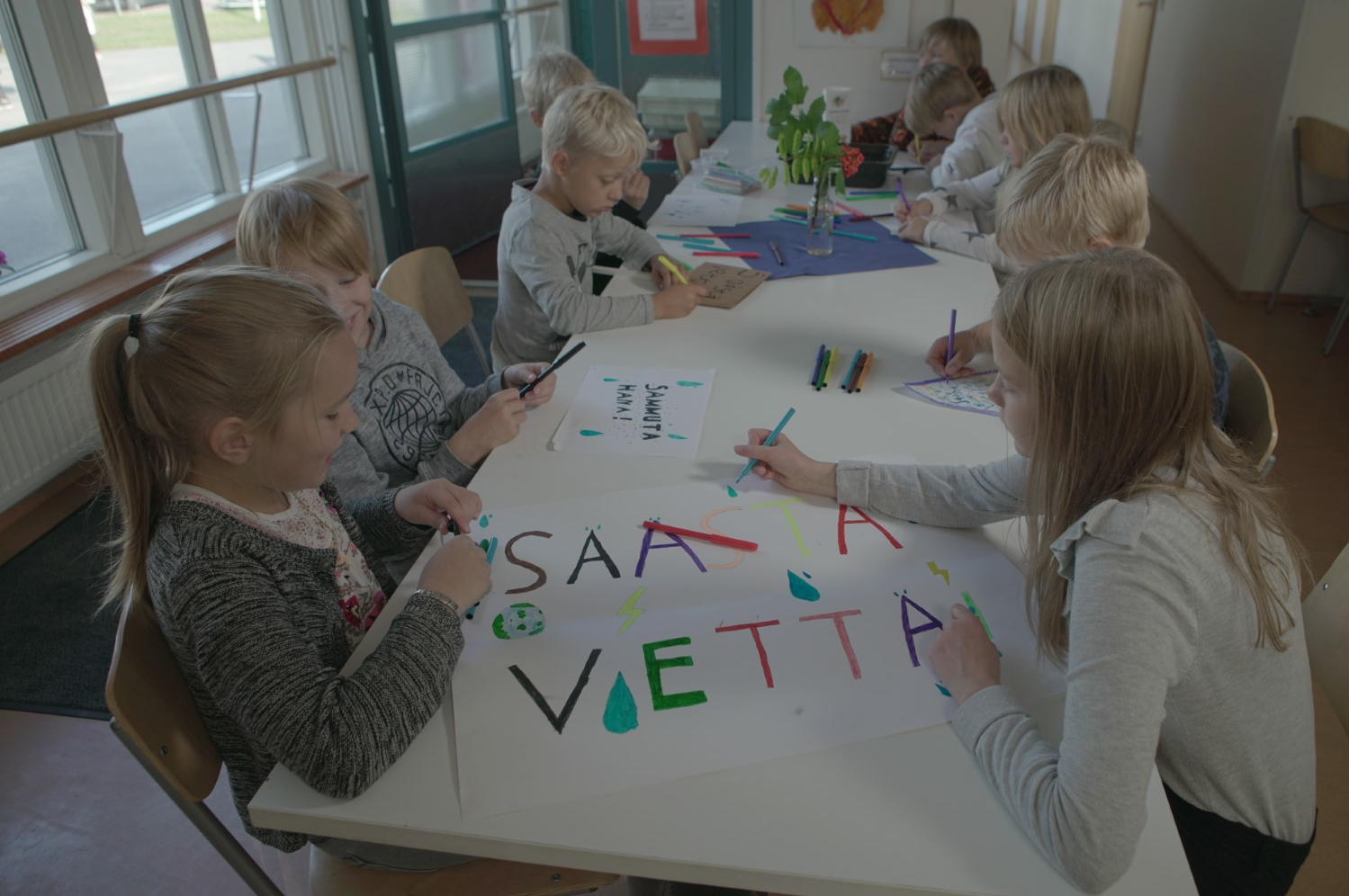
Schoolchildren in the town of Ii learn about recycling, sustainability and measuring carbon emissions; the sign reads “Conserve water.”Photo: Municipality of Ii

The town of Ii in northwestern Finland has the shortest name in the country – that’s capital “i” followed by lowercase “i,” pronounced “ee” like the letter “e.” Its population is also small: just 9,889 people. However, it harbours the biggest of ambitions: it wants to be the first zero-waste town in the world. By investing in solar, wind and geothermal energy, Ii is on track to cut carbon emissions by 80 percent by 2020, a cool 30 years ahead of the EU target.

“The fact that other countries are interested in us has boosted our ego,” says Johanna Konttila, an Ii resident who is doing her master’s thesis on climate change. “But it’s sometimes difficult to explain how I live sustainably. I don’t think about recycling, I just automatically do it.” She also doesn’t see anything special about picking up her two-year-old child from daycare on a bike or, in the winter, on a kicksled.

According to Ii’s mayor Ari Alatossava, successful climate action starts with education at a young age. All the schools and daycare centres in Ii participate in the Euronet 50/50 energy-saving programme, in which children learn to measure their own emissions. “We are bringing up a sustainably conscious generation,” says Alatossava, who lives in a house with a geothermal heating system. “The Ii way of living can be applied to any city.”

Finland is just one country, but even seemingly small-scale actions and inspiring examples here can have a big cumulative effect when multiplied internationally.

“It does make a difference, even if we are just little Ii,” says Konttila.

European greenery

Solar panels line the roof a university building, with trees and a lake in the background.

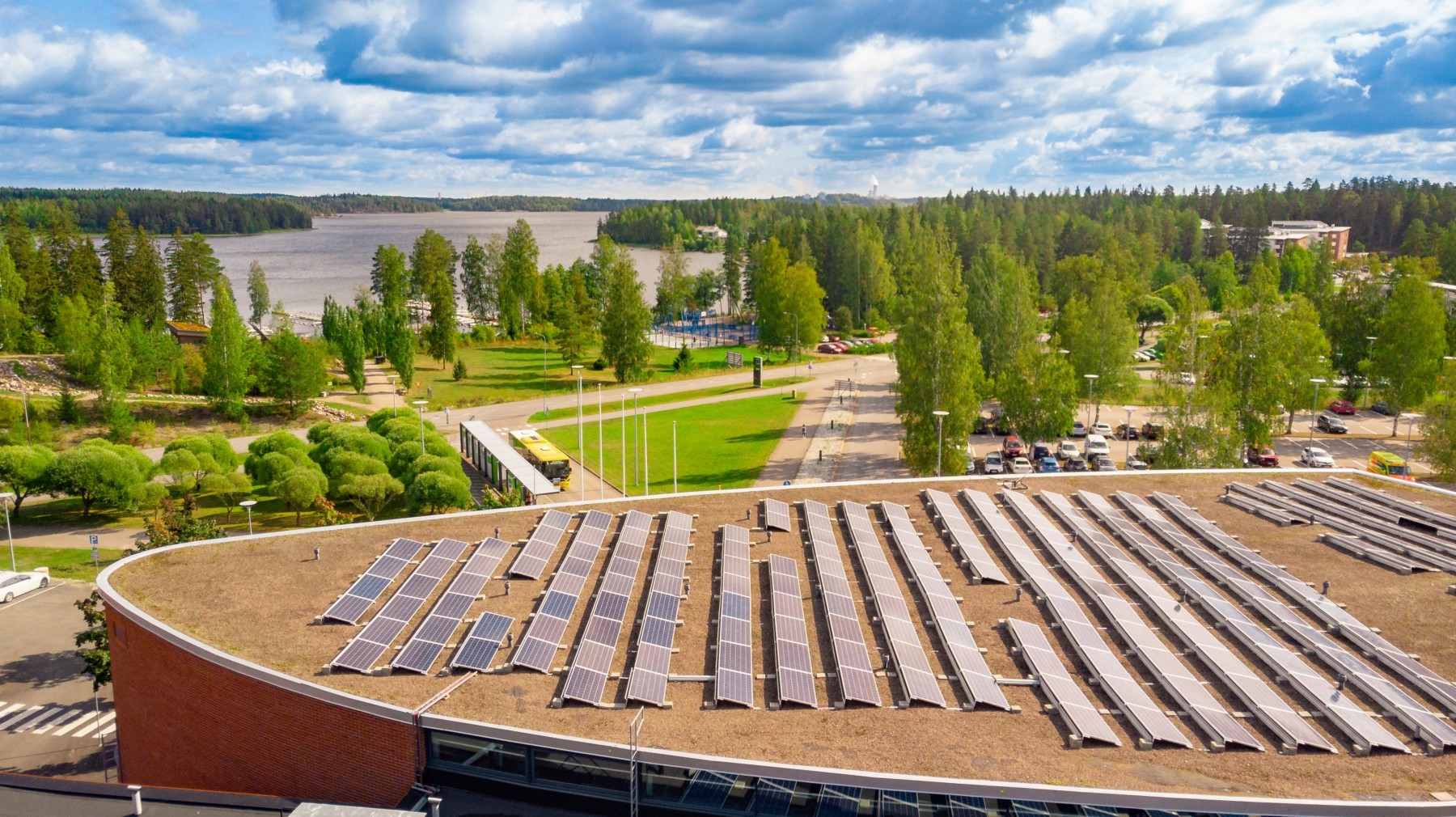
The roofs of several buildings sport solar panels at Lappeenranta-Lahti University of Technology’s campus in the eastern Finnish city of Lappeenranta.Photo: LUT

Lahti and Ii are also part of Fisu (Finnish Sustainable Communities), a network of municipalities working towards becoming carbon neutral and waste-free by 2050. The other Fisu communities are Forssa, Hyvinkää, Joensuu, Jyväskylä, Kuopio, Lappeenranta, Riihimäki, Turku and Vaasa.

The southeastern city of Lappeenranta was among this year’s finalists in the European Commission’s Green Leaf award for cities with a total population between 20,000 and 100,000. The European Green Leaf title 2020 was jointly awarded to Limerick, in Ireland, and Mechelen, in Belgium.

“I’m very proud that our city made it to the final.” says Calvin Otewa, a 17-year-old member of the Lappeenranta Youth Council. For Otewa, it’s important to know that his city is trying to combat climate change and to come up with solutions.

Lappeenranta-Lahti University of Technology (LUT) has long played an important role in the city’s green development. LUT’s Green Campus, a forerunner in green energy research, focuses on seeking climate change solutions and makes practical use of its own innovations.

“Lappeenranta is on a good road, but there’s still a lot to improve,” says Otewa. “For instance, the city should also invest in bioenergy buses.” He commutes by bike and public transport.

By Carina Chela, October 2019

Finnish company produces competitive esports games for mobile

By the end of 2018, Critical Force’s online first-person shooter game Critical Ops had been downloaded more than 50 million times worldwide.

“Competitive online multiplayer games are typically downloaded by 18-to-24-year-old males and younger,” says Critical Force founder and CEO Veli-Pekka Piirainen. “They love the competition, challenge and social interaction that online gaming provides.”

The roots of the company are at Kajaani University of Applied Sciences, where Piirainen used to work as a senior lecturer. In 2006, he founded the university’s game development curriculum, which supplies the company’s multicultural staff with young talent.

Korean investment and Finnish funding

Two men sit on a large rock in a forest.

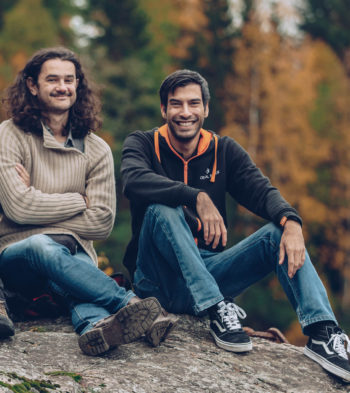
Dawid Chemloul (left) and Nicky Pelupessy are part of the team at Critical Force.Photo: Anu Kovalainen

Mobile esports is still a niche market, but it has lots of potential, with top-grossing games making up to two million dollars in revenue per day.

In 2016, Critical Force raised a four-million-euro seed investment from the South Korean video game publisher NHN Entertainment, with whom they later partnered. This led to the establishment of a subsidiary in Seoul.

“NHN Entertainment saw the potential of our game, especially for the Asian market,” Piirainen says. The result is a retailored, localised version.

In 2018, Critical Force raised 5.4 million euros in funding from Business Finland. The funds are going towards developing the company’s technology and organisation further.

“Five years from now, we want to be a recognised and respected brand and a trendsetter for competitive mobile game titles,” says Piirainen.

By Leena Koskenlaakso, ThisisFINLAND Magazine 2019