Get your season tickets now – from a Finnish library

When Helsinki’s swanky and enormous new central library Oodi (the name means “ode”) opened at the end of 2018, it attracted as much international attention for the variety of its services and facilities as for its fabulous architecture.

Finnish people, while hugely proud of the new landmark, were not greatly surprised that the library concept now embraced sewing machines and 3D printers, available for use at Oodi.

Oodi is the most conspicuous example of Finnish libraries’ established tradition of widening the horizons for public lending. The newest imaginative loan option has been gaining momentum in and beyond the capital: season tickets for sporting and cultural events.

People who invest in season tickets, reserving the same seats for every game or concert of the season, sometimes lend them to friends or business contacts, but now you can borrow certain tickets from the library. For a week or two, you are a season ticket holder.

Seagulls lead the way
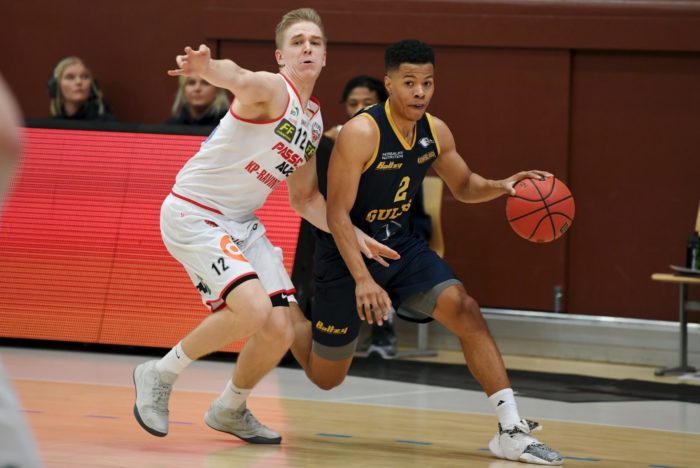
Two men in team uniforms play basketball.

Helsinki Seagulls’ Trae Bell-Haynes (right) makes a break around Aatu Kivimäki of Vilpas, a club from the southwestern town of Salo, in Finland Cup action on January 25, 2020. The Seagulls won, 94–93.Photo: Antti Aimo-Koivisto/Lehtikuva

The concept was pioneered by Toni Leppänen, sports director of the Helsinki Seagulls basketball club, in autumn 2019. His initiative to make several season tickets to Seagulls matches available through the local library in the Töölö neighbourhood has caught on a big way. Now libraries throughout the capital and the rest of the country are making similar lending options available for all sorts of events.

“As far as I know, the cooperation between the Seagulls and Töölö Library was the first one of its kind,” says Rauha Maarno, secretary general of the Finnish Library Association. As far as she is aware, the concept of loaning season tickets is unique to Finland.

“It spread throughout Finland in a very organic way. People got excited and started thinking that this was something they could do locally.”

This democratisation of event access brings in spectators who normally wouldn’t, or couldn’t, spend money for tickets. And it’s also neighbourhood outreach for the teams – the season tickets are typically located at a library near the venue.

“The same kind of concept spread beyond sporting events to cultural events and concerts,” says Maarno. “I think it’s a really excellent innovation because it’s quite easy to make it happen. Libraries have the infrastructure to manage the season tickets and it’s easy to do anywhere in Finland.”

Ice hockey teams with tickets at libraries include JYP in Jyväskylä, Jokerit in Helsinki and both Tampere teams (Ilves and Tappara). In Vaasa you can borrow tickets to the hockey arena, the concert hall or the city theatre. Oodi’s collection includes the Helsinki Philharmonic Orchestra and the Finnish Radio Symphony Orchestra.

Ahead of the game
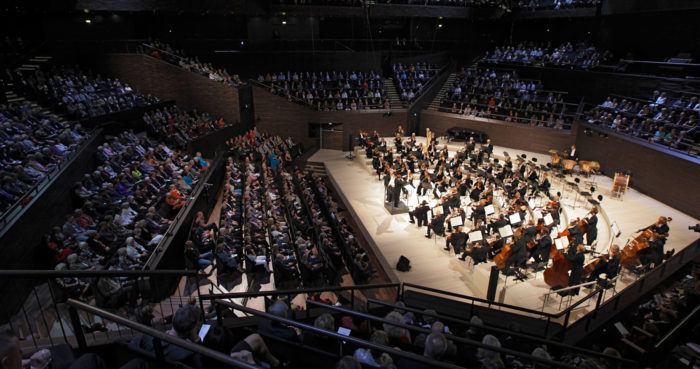
The Helsinki Philharmonic Orchestra plays on the main stage at the Music Centre.

The Helsinki Philharmonic Orchestra plays on the main stage at the Music Centre, across the plaza from the Oodi Library, where you can conveniently borrow season tickets to their concerts.Photo: Heikki Tuuli

The original debate about whether Finnish libraries should expand their offerings beyond the customary books, music and films was settled long ago, at the beginning of the millennium. The surprising catalogue of items already available to borrowers at various libraries ranges from electric drills and snowshoes to garden equipment and a rowboat (stowed at the nearest beach, rather than on a bookshelf).

It also helps that Finnish law requires every municipality to be equipped with a public library. Some areas might face demographic challenges, such as falling tax revenues in ageing rural communities, but imaginative developments can help maintain the healthy 60-percent library usage rate recorded across the country.

“Finnish libraries are known for being ahead of the game, innovating and trying out new ideas,” says Maarno. “Librarians are very open; they want to develop services and are good at adapting to new ideas. There might be times when the libraries are short-staffed, so then there might be challenges, but I think the season ticket service is quite easy to offer.”

By Tim Bird, January 2020
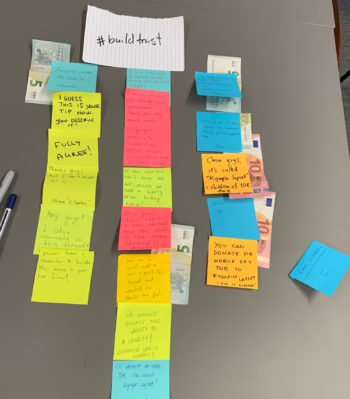
“Only in Finland”: A story of banknotes, post-it notes and social media posts

It’s strangely fitting that this story happened at a company that handles online advertising, because it seems to be a case of social media visibility springing up organically, without preplanning or algorithms.

It all started with a cleaner at Smartly.io, a Helsinki-based international company that optimises online advertising for brands in many different industries.

In late January 2020, the cleaner found a five-euro bill on the floor and left in on a table with a blue post-it note that read, “Found under the table. Cleaner.” That set off a chain of responses that stretched over several days.

A Smartly employee returning to work later stuck a yellow post-it below the blue one: “I guess this is your tip now. You deserve it!” Another colleague added a separate note: “Fully agree!” Smartly has both Finnish and foreign employees, so the exchange took place in English.

“Thanks guys but I can’t accept it! :-),” wrote the cleaner, who works for a company called Laatutakuu (which means “quality guarantee”). By this time people from Smartly were posting pictures of the exchange on their social media channels. (I noticed it in the Facebook feed of a friend who works at Smartly.)

Nobility and charity

Banknotes and post-it notes on a table.

Within several days, post-it notes and banknotes covered the table. In the end, the employees decided to donate the money to charity.Photo courtesy of Smartly.io

A comment appeared under my friend’s Facebook post: “#onlyinfinland”. Finland recently placed first in an assessment of how much people in EU nations trust their fellow citizens. In addition, the Corruption Perceptions Index has repeatedly named Finland one of the least corrupt countries in the world.

Back at the Smartly office, though, things were just getting started. The chain of post-it notes remained on the table and grew longer.

“If we purchase a small gift would you accept that?” someone asked. To which the cleaner responded, “I already got my gift through your appreciation. Thank you very much indeed!”

A few notes down the chain, another five-euro note appeared, held down by a post-it that said, “Someone on social media saw a post [of] this thread and wanted to double the pot.” With the following note, the direction changed: “We should donate this money to a charity! Cleaner, which charity?”

The thread continues

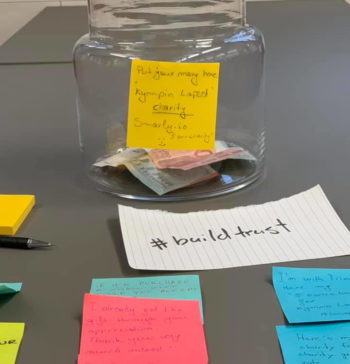
Collection jar that says, Put your money here.

A collection jar appeared on the table with a note that said, “Put your money here.”Photo courtesy of Smartly.io

The next person to write a note suggested Kympin Lapset, a non-profit that supports children who have cancer, and their families. The cleaner herself then contributed five euros. Several more donations appeared, five- and ten-euro bills, followed by an orange post-it reading, “You can donate via MobilePay too to Kympin Lapset. I did it already!”

Off to the side, a new blue post-it appeared: “Case closed! :-)”

Not quite: An ecosystem was developing around the notes. Last time we checked, a collection jar had materialised, with a yellow post-it encouraging people to “Put your money here.” There were already several banknotes in the jar.

By Peter Marten, January 2020

Finnish city of Tampere declares itself sauna capital of the world

Whether you’re an active sauna-goer or a newbie interested in experiencing authentic Finnish sauna culture, Tampere is the place to go. This city in central western Finland is the sauna capital of the world according to the Finnish Sauna Society and the International Sauna Association.

The historic gem is the Rajaportti sauna – the oldest public sauna still operating in Finland. It’s located in the old working-class district of ​​Pispala, and its roots date back to 1906.

If you’re looking for a lakefront sauna, head for the legendary Rauhaniemi or Kaupinoja saunas. Both offer the opportunity to go for a swim, too – even in the winter, if you have the guts (or sisu, as Finnish people call it) to take a dip in ice-cold water.

Kaukajärvi is a lake just outside Tampere with a beach and a sauna, and the cleanest water in the whole Pirkanmaa region. Suomensaari, a sauna in the Lielahti district, is renowned for its feisty heat and friendly service.

Tohloppi and Hervanta, also just outside of town, offer unique experiences at delightful lakeside locations. The former is a barrel-shaped portable cottage. At Sauna Restaurant Kuuma (kuuma means “hot”), visitors can enjoy a sauna and some good food, and even take a dip in the lake all year round.

In Tampere, every day is a sauna day.

Genome research in Finland is cracking the code

Professor Mark Daly, director of the Institute for Molecular Medicine Finland (FIMM), sees the big picture. He believes Finnish health technology is well positioned to make its mark in international markets.

“Finland has a strong history in technology development and investment,” Mark Daly says. “What’s more, you already have the right legal structure. This is often a prerequisite for scientific breakthroughs in our field.”

Daly knows a thing or ten about the frontiers of scientific research and innovation. During his 20-year career he has made major contributions to human genetics and genomics. A couple years ago, after long and productive periods at Harvard Medical School and, most recently, at the Broad Institute of MIT and Harvard, he decided to head north and push the boundaries of genetic research. He arrived at FIMM in February 2018.

What can the University of Helsinki offer that MIT and Harvard can’t?

“When you look at things such as technology, resources and brain power, you can’t beat the Boston area,” he says. “But there is a research ecosystem here in Finland that simply does not exist in the US.”

The North remembers

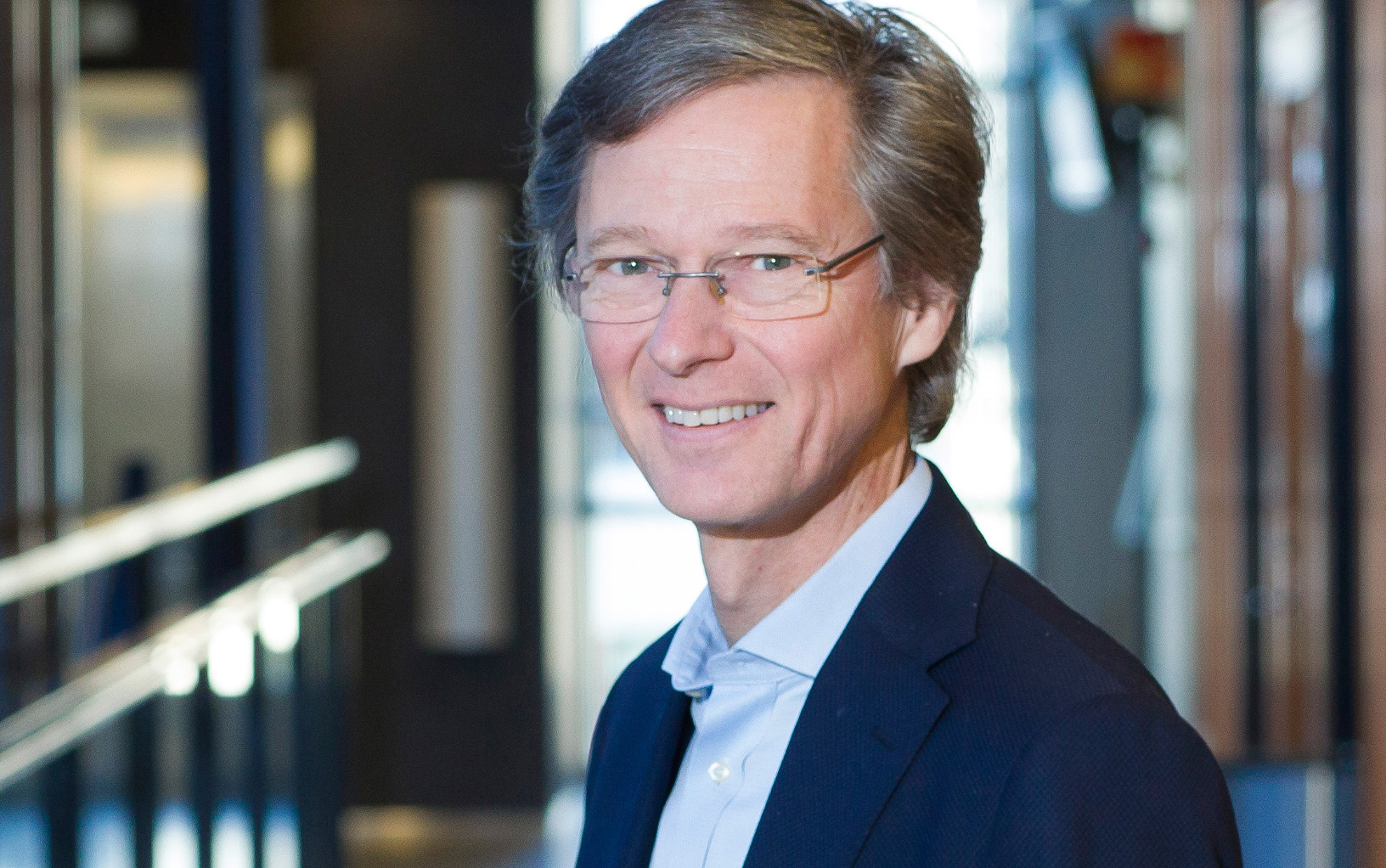
A man wearing a blue jacket, a shirt with the top button undone, and wire-rim glasses poses for a portrait in the lobby of a building.

Aarno Palotie, research director of the human genomics project at FIMM, is also scientific director of the FinnGen project.Photo: Linda Tammisto/FIMM

Daly marvels at Finland’s comprehensive national healthcare system, which not only collects information on patients and archives the data, but also exists in a legal framework that allows the data to be utilised in research. “Outside of the Nordic countries, this just can’t be done,” he says.

The strength of Finland’s biobank legislation is its empowering, innovation-positive framework that, at the same time, contains multiple protective mechanisms to make sure everything is done in an ethically and legally correct way. It is safe for biobank customers to deal with the Finns. The rights and self-determination of people who provide samples are respected.

Daly describes the Finns as pro-science, with enough trust in the authorities to make all this a reality. He also praises legislators for passing forward-looking laws. Finnish biobank laws are very progressive and support the scientific cause, he says.

The recently initiated FinnGen research project rises from that ecosystem. FinnGen integrates genomic and medical registry information from 500,000 individuals in all, about 10 percent of the Finnish population. Daly calls FinnGen one of the foremost biobank genetics projects in the world.

“A project such as FinnGen is only possible in very few places,” he says.

Daly is also impressed by the government’s decision to establish a full-blown genome centre to boost the development of personalised medicine and public health: “Finland is ideally set up to launch a genome centre and to be at the forefront of defining responsible and impactful clinical use of genome information.”

This means that Finnish research can really make a difference – around the world.

Treasures of the deep

A man wearing wire-rim glasses and a grey shirt with the top button undone looks to his left in a scientific lab, showing his profile and his long hair in a ponytail.

“A project such as FinnGen is only possible in very few places,” says Mark Daly.Photo: Samuli Skantsi

When you start data mining in the genomic vaults – using AI tools, for instance – there’s no telling what solutions you may uncover. “There are tremendous opportunities to boost national healthcare, starting with better means to predict disease,” says Daly.

He perceives a variety of ways in which partnership with the Finnish population can advance research and industry in a world-leading way. By the same token, Finnish people will be the first to receive the medical benefits of genome information in clinical settings. This knowledge will then cascade into other countries, too.

Daly envisions FIMM as the “pre-eminent institution in human genetics in Europe,” spurred on by the partnership between the University of Helsinki and Broad Institute, as well as the Nordic EMBL (European Molecular Biology Laboratory) Partnership in Molecular Medicine.

“Working through these partnerships, there will be an outstanding opportunity for FIMM, and research throughout Finland, in the coming years,” Daly says. FIMM is poised to make a big splash in the scientific world, being powered by – in part – its multicultural research teams, which combine expertise from various parts of the planet.

Superstar power

For the Finnish genetics field, having Daly on board is equivalent to a Helsinki basketball team adding LeBron James to their roster. Daly has, for instance, made seminal discoveries in understanding the structure of the human genome and developing software tools to analyse the impact of genetic variations on various diseases. He’s also the most cited scientist in Finland, with over 130,000 citations under his belt.

To Daly’s mind, people should not suffer needlessly when there are cures and better treatments just around the corner.

“We can take the first steps towards a longer, healthier life right here in Helsinki,” he says. And while science is not a 100-metre dash, some results should be visible in just a few years.

“By the mid-2020s, we will have concrete solutions allowing us to [notice] disease and intervene early.”

By Sami Anteroinen, ThisisFINLAND Magazine 2020

Accordionist, composer Johanna Juhola gets award at Finnish Ethnogala for transcending borders

Music Finland awarded the Border Breaking Act of the Year prize; this time it went to accordionist and composer Johanna Juhola. It is one of eight highly coveted awards presented to leading figures in Finnish folk and world music and folk dance at Ethnogala.

The Border Breaking Act is awarded yearly to a performer who has generated interest from the international music industry and demonstrated export-readiness. With a recording career spanning 15 years, Juhola charms an ever-growing following in Europe and worldwide. She tours with various bands: Johanna Juhola Trio, the quartet Reaktori, a tango duo with Milla Viljamaa, and Juhola’s newest solo project, entitled Imaginary Friends.

The Ethnogala jury calls her music “adventurous, expressive, fairytale-like, yet smart, well-rooted and forward-thinking.”

Coaching conducting: Finland possesses prowess on the orchestral podium

Finland, a country of 5.5 million people, is home to 30 orchestras, including 14 symphonies, according to the Association of Finnish Symphony Orchestras. This is quite possibly the most orchestras per capita of any country in the world.

The land of composer Jean Sibelius is an established contributor of conducting talent to the global classical music scene. Finland’s record of producing a large number of internationally distinguished conductors is rooted in long-term policy commitment to and funding for musical education and culture.

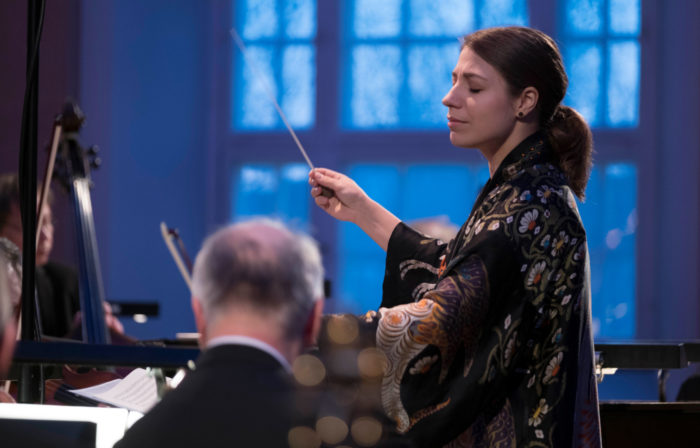
At the time of writing, Finnish conductors recently appointed to notable foreign orchestras include Dalia Stasevska (BBC Symphony) Santtu-Matias Rouvali (London’s Philharmonia), Eva Ollikainen (Iceland Symphony) and Klaus Mäkelä (Oslo Philharmonic).

Broad background

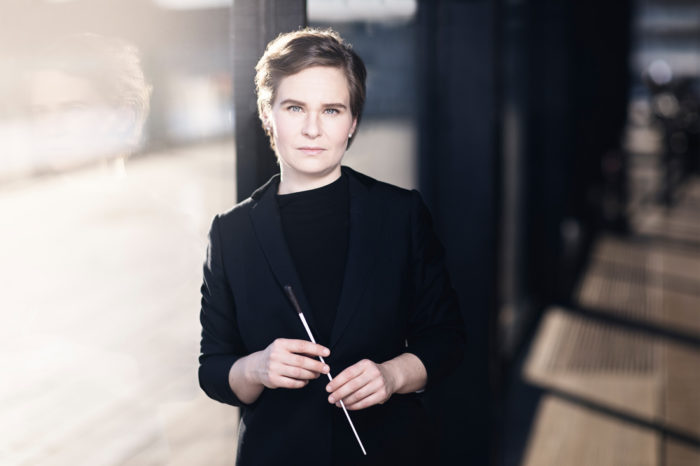
A woman dressed all in black holds a conductor's baton.

Finnish conductor Eva Ollikainen leads the Iceland Symphony Orchestra, starting in the 2020–21 season.Photo: Nikolaj Lund

“One of the main reasons why so many conductors and top-level musicians emerge from Finland is the high level and diversity of our music education,” says Ville Matvejeff, conductor, composer, pianist and artistic director of the Savonlinna Opera Festival, which takes place every summer in eastern Finland.

“Many of us have studied several instruments, composition, singing, different genres of music and so on, which provides the broad background and resources needed to work as a conductor.”

Matvejeff studied at Helsinki’s Sibelius Academy and at the Espoo Music Institute, just west of the capital. He has worked as an assistant with famous conductors including Esa-Pekka Salonen, also Finnish, who is world-famous for his decades with the Los Angeles Philharmonic.

Freedom to develop

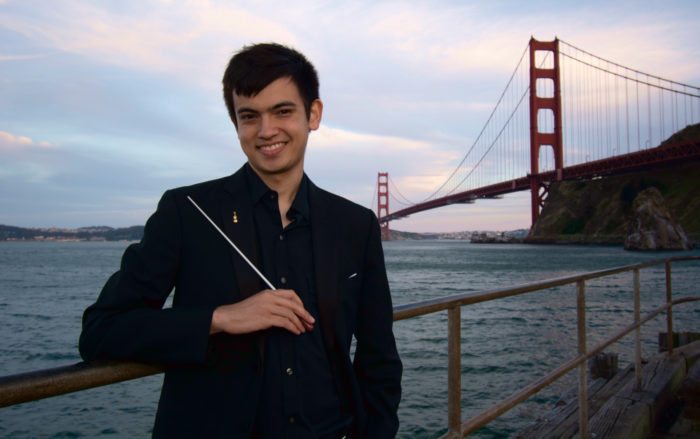
A man posing in front of the Golden Gate bridge, conductor's baton in hand.

Aku Sorensen, a Finnish American violinist and conductor, says that at Sibelius Academy he has “freedom to develop as a conductor.”Photo: Mario Ramirez

Sibelius Academy, part of Helsinki’s University of the Arts, is Finland’s most famous and competitive seat of musical learning, renowned for high-quality teaching, innovation and producing some of the world’s most celebrated conductors. Its conducting programmes include orchestral conducting, choral conducting and wind orchestra conducting.

“The Sibelius Academy offers freedom to develop as a conductor and a great community of students and teachers who really support each other,” says Aku Sorensen, a Finnish American first-year student of conducting who previously earned a degree in violin performance.

“In the first week of my studies I was thrown to the wolves. I was already conducting the academy’s trainee orchestra. Well, you either sink or swim. But it allows you to start finding your own personal way to conduct at an early stage.”

If students receive invitations to conduct other orchestras, they are allowed to take a break from their studies. Sorensen acts as concertmaster (lead violinist) in the Helsinki Chamber Orchestra and artistic director of Sounds of Luosto, a music festival that takes place in Finnish Lapland.

Inspiring communicators

A woman conducts an orchestra with her eyes closed.

“I believe that great conductors are curious and are good communicators,” says Finnish conductor Dalia Stasevska. Photo: Nikolaj Lund

Being a conductor isn’t just about setting the beat. The conductor interprets the score, suggests phrasing, dynamics and tempo, and notices if something goes awry.

“There’s no one right way to conduct,” says Dalia Stasevska, principal guest conductor of the BBC Symphony Orchestra since August 2019. “We all have different personalities, but I believe that great conductors are curious and are good communicators. They are clear with what they want, and they must inspire others.”

Stasevska trained at the Tampere Conservatory as a violinist, and at the Sibelius Academy as a violist and a conductor.

She praises the Sibelius Academy’s trainee orchestra, which is composed solely of students. There, she says, “you build your core, your technique, and you are also exposed. When you are studying, it’s vital to have an instrument, and the conductor’s instrument is the orchestra.”

Instruments and batons

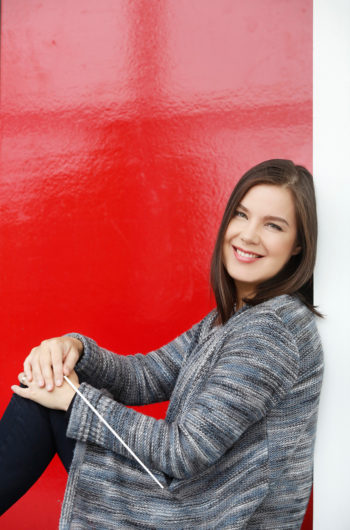
A woman sits in front of a red background, conductor's baton in hand.

Jutta Seppinen first trained at the Sibelius Academy as a singer before taking up orchestral conducting. Photo: Maarit Kytöharju

Superb music education, ingrained musical culture and musical versatility summarise the background of Finnish conductors.

In Finland, most students of conducting first learn the craft of an instrumentalist before taking the leap to command a whole orchestra. “If you don’t know how to play an instrument at the top level, it’s practically impossible to have authority over professional instrumentalists,” says Matvejeff.

Nonetheless, not all conductors are instrumentalists. Jutta Seppinen, who works as the conductor of the Academic Female Choir Lyran, first trained at the Sibelius Academy as a singer before taking up orchestral conducting.

She recently worked with Helsinki Philharmonic Orchestra, and in spring 2020 she conducts the Lahti Symphony Orchestra and the Vivo Symphony Orchestra, the latter a philharmonic made up of young musicians from all over Finland.

“As I come from the vocal side, my instrument is my voice,” says Seppinen, who had to learn to use a baton after conducting choirs without one. “So I am a bit of an exception in orchestral conducting.”

By Carina Chela, January 2020

That time Santa Claus visited Finland’s Twitter chat

With all the talk about artificial intelligence these days, have you ever wondered if AI could help Santa Claus during his busiest time of year?

We have, so we asked him to join us for a #TiFChat, a ThisisFINLAND Twitter chat, about it. And he did!

Since Santa Claus lives in northern Finland (as everyone knows), we have a few connections – friends of friends, and distant cousins, and friends of distant cousins and such. Next thing you know, Santa managed to find time for an online conversation despite how busy he was preparing for his annual delivery run.

Santa Claus and one of his elves, Ferdie, logged on from the northern Finnish city of Rovaniemi, where he maintains a workshop and a post office right on the Arctic Circle. Santa tweets as @Santas_Office. Also joining us were a whole bunch of Finnish AI experts, and numerous Twitter users around the world, including kids at a school in the US.

You’ll find a couple highlights from that amazing Twitter chat in the slideshow below. To relive the whole thing, search for “#TiFChat #Santa” on Twitter.

Santa speaks on #TiFChat

By ThisisFINLAND staff, December 2019