Finland’s film and TV industry is thriving and finding new audiences

In the past few years, the Finnish audiovisual sector has expanded domestically and internationally. The upward trend continued in 2022, as films such as Girl Picture, Hatching and My Sailor, My Love won awards at festivals.

The year 2023 looks equally promising.

One of the most anticipated Finnish films is Sisu, an action thriller directed by Jalmari Helander (known for Big Game and Rare Exports). The Finnish word sisu refers to a combination of resilience and stoic determination. It is found at the very core of Finnishness, and it comes across in the movie, which features a Finnish gold miner fighting Nazis deep in the northern wilderness of Lapland, in the Finnish far north.

Time for screen time

Sisu, a film by Jalmari Helander, is all about action, as you can see in this trailer.Video: Nordisk Film Finland

Finnish TV series are also thriving. According to Laura Kuulasmaa, executive director of Audiovisual Producers Finland, 30 original drama and comedy series were released in Finland in 2022 alone. Many of them went on to do well internationally.

This is set to continue. Much-anticipated Finnish series such as Estonia and Dance Brothers will premiere in 2023. Estonia, a 15 million-euro series about Europe’s deadliest civil maritime disaster, was made in collaboration with creatives from series such as Chernobyl and Bordertown. On the other hand, Dance Brothers is a modern story about two brothers who start a dance company. It’s produced by Finnish national broadcaster Yle and Netflix.

Finnish ambient music nourishes the soul in restless times

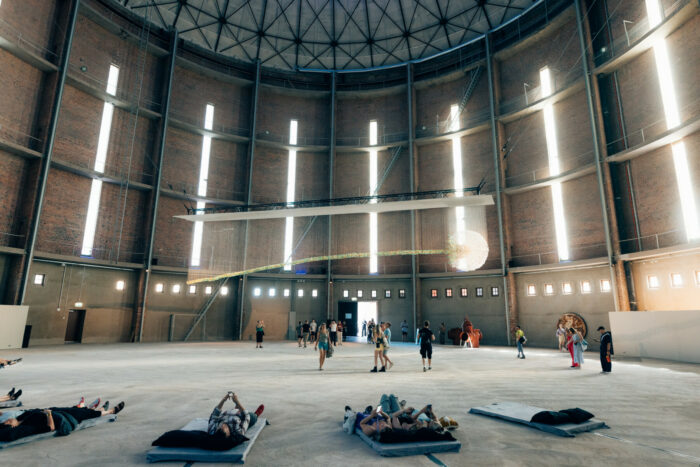
Waves of electronic sound wash through a vast, Pantheon-like space under a 40-metre dome. Visitors lounge on platforms that shudder with vibrations from a sound bath and a gong wired to multiple speakers.

Butterfly Effect, an audio installation by Antti Tolvi, filled a century-old gasometer at Helsinki’s former Suvilahti power plant during Flow Festival – just one of a growing number of ambient phenomena in Finland.

Space is the place

Inside a wide round hall, some people lie on mattresses while others walk around.

Antti Tolvi’s music draws power from spaces such as this former industrial building.Photo: Petri Anttila/Flow Festival

“I like to create sound with lots of empty space,” Tolvi tells me later. “Space is the place!”

Devotees of the genre gather each summer at events like Ambient Archipelago and Kiila Sound Days, both festivals on Finland’s southwest coast.

The term ambient was coined in 1978 by producer Brian Eno, who described it as music that is “designed to induce calm and space to think” and “as ignorable as it is interesting,” rewarding active and passive listening.

“The time is right for this kind of sound,” says Tolvi. “I guess we just need more softness and kindness as the world around us gets harder and harder.”

Music can be very emotional

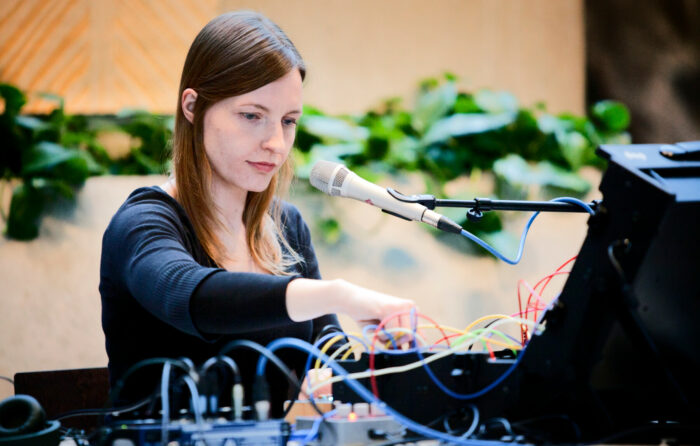
A woman tinkers with a sound system that includes a microphone and an audio mixing board.

Nature is a major source of inspiration for Lau Nau, whose music features field recordings and combines multiple genres.Photo: Rosemarie Särkkä

Lau Nau (Laura Naukkarinen) has performed at Flow, Ambient Archipelago and Kiila, and has toured the US, Asia and Europe. Her dozen albums range from film soundtracks to folky ballads to spacey atmospheres. While Naukkarinen doesn’t consider herself to be an ambient musician, she agrees that some of her work fits into the genre – which is tricky to define.

Ambient covers a range of slow-moving music and sound, in which atmosphere and texture outweigh rhythm or melody. Its many subgenres overlap with classical, electroacoustic, avant-garde, jazz, new age, drone and traditional music from around the globe.

“For film music, I may try to create an atmosphere that responds to a certain mood,” says Naukkarinen. “Sometimes my music can be very emotional. I hear people sobbing in the audience. I also enjoy making sounds that carry no feeling, just pure abstract sound.”

Her works feature field recordings of nature sounds, reflecting many years living on an island. “I find comfort in the sounds of nature, so I want to give some of that experience to the listener,” she says.

A vibrant, diverse scene

A wide round ceiling is lit in blue, with strings of white beads hanging beneath it.

When Antti Tolvi’s installation was at Helsinki’s Flow Festival, the audience could gaze up at this view while listening.Photo: Petri Anttila/Flow Festival

Besides Lau Nau, other strong female composers have emerged in the formerly male-dominated Finnish ambient scene. They include sound artist Marja Ahti, cinematic composer Mari Sainio and violinist Sanna Komi of Dugong Dugon, which releases eerie, spacious music on handmade cassette tapes.

One of the pioneers is Esa Kotilainen. He introduced the Moog synthesiser to Finland in the 1970s. In the 1990s, the group Pan Sonic earned a worldwide following with their minimalist soundscapes. Vladislav Delay (real name: Sasu Ripatti) has gained international acclaim for his bubbling ambient and his minimal techno, collaborating with Jamaican dub masters Sly & Robbie, Scottish composer Craig Armstrong and German vocalist Antye Greie.

Kumea Sound combines the handpan with traditional Finnish instruments such as the kantele and the jouhikko to mesmerising effect (the former is a traditional zither and Finland’s national instrument, while the latter is an ancient lyre played with a bow).

Jazz drummer Teppo Mäkynen has delved into ambient under the moniker 3TM. Timo Kaukolampi of rock group K-X-P has also branched out into minimalist film music and sound installations, including one for a Helsinki harbour terminal during the 2019 Helsinki Festival.

Yoga studios and train stations

A man in white plays a bass clarinet on a stage in front of colourful light patterns.

Tapani Rinne, best known as a jazz saxophonist, also plays melancholy, organic-edged ambient music that features bass clarinet.Photo: Ira Aaltonen

Ambient is increasingly used for meditation, yoga, dance performances, films and public installations. Covering all these bases is Tapani Rinne, best known as saxophonist of the electro-jazz group RinneRadio.

His melancholy, organic-edged ambient albums feature bass clarinet with effects. Alongside dance and yoga events, Rinne recently created a permanent sound installation for the railway station in the west-coast town of Pori.

“For me, music has its own value, but I have nothing against it being used in the background,” he says. “Many people use ambient as a soundscape while working, studying, chilling, exercising, cooking and so on.

“Streaming services offer these kinds of playlists, so it’s easy to find new music. Innovations in music technology have also made it easier to make ambient music, at least its more generic styles.”

Sound from silence

Musician Timo Kaukolampi and light designer Jenni Pystynen collaborated on Silent Sea, a sound and sculpture installation at Helsinki’s West Terminal, for the Helsinki Festival in 2019. It reflected the enormity and majesty of the sea and the frailty of its ecosystem.Video: Helsinki Festival

Tolvi has performed while teaching tai chi, qigong and meditation for more than ten years. His career includes tours of the US and Asia, as well as 14 solo albums.

“If I create a sound bath in a yoga studio, I play the same way as at a minimalist concert,” he says. “I just play from silence and stillness.”  At the time of writing, Tolvi is preparing installations for the Sibelius Museum, in the southwestern city of Turku, and the Porvoo Art Factory, about 50 kilometres (30 miles) east of Helsinki.

“I don’t create sound with any specific purpose in mind, but it seems that many people use it as background for reading, falling asleep and so on,” says Tolvi. “My artistic practice centres on listening, not just with my ears, but with my whole being.

“The place where my work originates is somewhere beyond words, identity or any desire. So it may take your mind somewhere, to a similar space.”

By Wif Stenger, January 2023

Finnish researcher looks for climate answers in cold water

You research the impact of climate change on water systems, and you specialise in rivers, from the Finnish far north to the south. Can you tell us a bit about that?

Water systems have always been a presence in my life. I spent my childhood on a farm in Pukkila, southern Finland, and I liked to keep watch on the nearby tributary of Porvoo River. So I started observing nature and the environment almost by chance.

While doing my PhD, I was struck by how little was known about water systems in winter – for example, what happens to sediment transport when a river freezes? Such issues hadn’t been considered in modelling the impact of climate change, because there was hardly any data.

Your research team performs a lot of aerial and underwater photography. Has anything particularly surprising shown up in the pictures?

You do sometimes see elk, reindeer or even a fox [in the aerial images]. And it was great to see a salmon in the underwater photos. But the most impressive thing was when we happened to schedule an autumn shoot at the very moment frazil ice was forming. [Frazil ice refers to tiny ice crystals that can form and accumulate in moving water.] We were able to see how the ice started to form at the bottom of the river. It’s rare to be able to observe and measure a phenomenon in that brief moment.

You like to study cold water – but do you like to go ice swimming?

Before Aalto, I worked at the University of Eastern Finland, in Joensuu, where they have one of the largest ice-swimming clubs in Finland. I used to frequent it quite often.

Baking batches of biscuits: A Finnish collection of cookie recipes

Whether you call them cookies or biscuits, they taste great. Finnish has at least two different words for them: keksi and pikkuleipä (the latter actually means “little bread”).

You can trace the origins of many Finnish cookies to continental Europe. Some of them have changed more than others over the years.

Chocolate-dipped gingerbread cookies

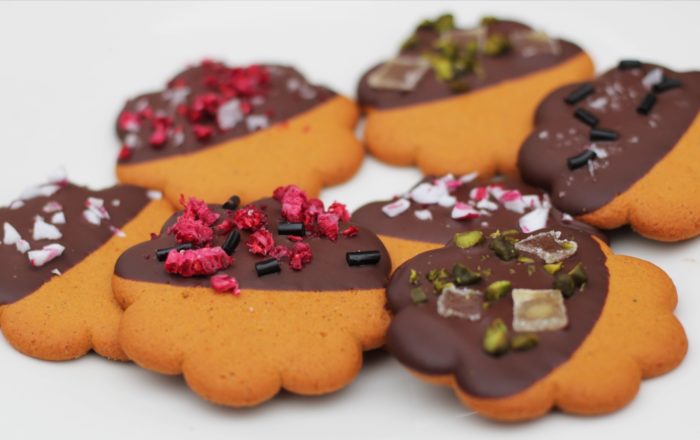
Several chocolate-dipped gingerbread cookies lie on a white background.

Gingerbread and chocolate form a perfect combination.Photo: Piritta Kaartio

Gingerbread is a fun way to bake with the kids. We all love gingerbread, but with this recipe you can add more taste and different textures and have fun decorating the cookies.

You can buy gingerbread from the store or, better yet, make it yourself [see ThisisFINLAND’s Finnish Christmas cookbook page]. I chose to dip the cookies into dark chocolate, but you can use any kind of chocolate you like. This is like taking your cookies to the next level. I prefer to use high quality chocolate because you can really tell the difference in flavour. As a garnish, you can choose your favourites. Good matches are candied orange peels or white chocolate chips. Chocolate can be melted in a bain-marie, or gently in a microwave.”

  • 20 gingerbread cookies
  • 200 g good-quality dark chocolate
  • Candied ginger and pistachios
  • Crushed candy canes and soft liquorice
  • Freeze-dried raspberries and salt flakes
  • Baking paper

If necessary, cut the garnishes into smaller pieces. Coarsely chop chocolate and place it in a bowl that can be used on top of a saucepan. Add a small amount of water into the saucepan and place the bowl of chocolate on top. Gently heat up the water, but do not boil. Let the chocolate melt gently without stirring too much. Once the chocolate has melted completely, take the pan off the stove.

Dip gingerbread cookies halfway into the melted chocolate and place them on the baking paper. Sprinkle desired garnishes over the chocolate parts and let cool completely.

Old customs and new ones

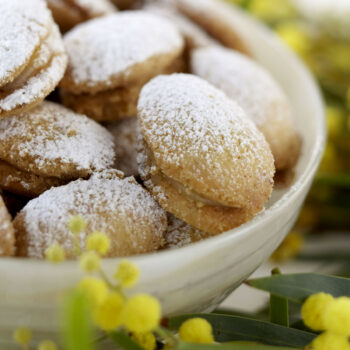
A bowl full of round, sugary cookies.

You make these delicacies, called Finnish spoon cookies, by scooping dough onto a baking sheet with a teaspoon. Later you add the filling and sprinkle them with sugar.
Photo: Norman Ojanen/Otavamedia/Lehtikuva

Local ingredients and customs vary depending on the region and the occasion, but buns and cookies have a place of honour wherever and whenever coffee is served. And coffee is served a lot in Finland (you can always get tea, as well).

You can make vegan versions of all these cookies, too. The results may vary according to the kind of plant-based substitutes available. Plant-based margarines, milks, creams and egg substitutes are different from country to country, so if you want to veganise, I recommend trying different variations until you find the ones that work best.

For more baked goods recipes, be sure to check out our other recipe articles, including Finnish baked goods, modern Finnish Christmas cuisine, traditional Finnish Christmas food and May Day brunch.

Crispy oat cookies (kauralastu)

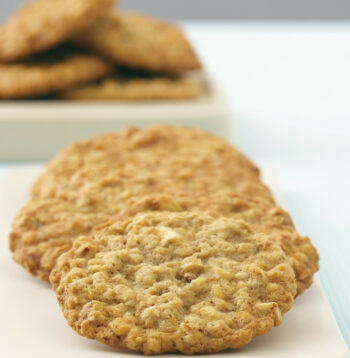
Several round cookies on a plate.

Photo: R&R/Stockfood/Lehtikuva

These thin cookies can be shaped after baking. As soon as you remove them from the baking sheet, you can drape them on top of a rolling pin while they cool. Or you can shape them over a wine cork to create a basket shape, then fill them with something delicious for a lovely dessert. Just be careful because they are very hot. You can also leave them to cool on the baking sheet if you’re not going to shape them.

  • 100 g sugar
  • 85 g butter
  • 35 g rolled oats
  • 70 g all-purpose flour
  • 1 tsp baking soda
  • 2 tbsp cream
  • 2 tbsp golden syrup
  • pinch of salt

Preheat the oven to 180 degrees Celsius.

Mix all the dry ingredients together. Melt the butter in a pan that also has room for the dry ingredients. After the butter has melted, add the rest of the ingredients. Using a tablespoon, scoop the batter onto a prepared baking sheet, leaving approximately 15 centimetres between cookies (they will flatten out and spread). Bake for about seven or eight minutes, until edges are golden brown.

S-shaped cinnamon cookies (kaneliässä)

A plateful of cookies that are shaped like the letter S.

Photo: Jorma Marstio/Otavamedia/Lehtikuva

The name for these cookies comes from their shape. Each one looks like a letter “S.” There are two different approaches to making them: either roll them by hand or use a piping bag. If you’re going to roll them, you have to chill the dough in the fridge for two hours. Then make thin logs and twist them into the shape of a letter “S.” This recipe is for piping the “S” shapes straight onto a baking sheet. That’s much faster and tidier, and it also lets you do all sorts of other letters, too.

  • 275 g sugar
  • 125 g butter (room temperature)
  • 3 eggs
  • 1–2 tsp cinnamon
  • 1 tsp baking powder
  • 350 g flour (all-purpose)
  • pinch of salt

Topping:

  • 30 g sugar
  • 1 tbsp cinnamon

The butter must be at room temperature when you start making the dough. The best way is to leave the butter at room temperature overnight or for at least for six hours. If you don’t have six hours, you can temper the butter with the gentle use of a microwave oven, but you need to be careful not to melt the butter. Place the butter and the sugar in a bowl and whisk with a mixer until it is a pale colour.

Add the eggs one by one, mixing until smooth after each one. Mix the dry ingredients together and sift them over the whisked butter. Mix carefully with a spatula.

Place the batter into a piping bag; you can use a tip of your choice but it’s not necessary. Preheat oven to 200 degrees Celsius. Pipe the shape of a letter “S” approximately five centimetres tall onto a prepared baking sheet. When all the cookies are piped, mix the cinnamon-sugar topping and sprinkle it over the cookies. Bake the cookies for 12 to 14 minutes and let them cool them on the baking sheet.

Aristocratic sandwich cookies (herrasväen pikkuleipä)

A hand is sprinkling sugar over several rows of round cookies that look like sandwiches with jam filling.

Photo: Natasa Dangubic/Stockfood/Lehtikuva

These sandwich biscuits traditionally have a raspberry jam filling, but you can vary them according to the season. How about rhubarb and ginger jam in the spring, or caramel made from condensed milk and seasoned with a touch of cardamom and salt for the holiday season? You can also cut a small hole with a tiny cookie cutter in every second cookie, for decoration and to provide a glimpse of what’s inside. Remember to make enough, because these cookies tend to vanish quite quickly!

  • 200g butter
  • 150 g sugar, plus extra for the coating
  • 1 egg
  • 3 tbsp cream
  • 70 g corn or potato starch
  • 1 tsp vanilla extract
  • 1 tsp baking powder
  • 200 g flour (all-purpose)
  • pinch of salt
  • 200 g jam

The butter must be at room temperature when you start making the dough. The best way is to leave the butter at room temperature overnight or for at least for six hours. If you don’t have six hours, you can temper the butter with the gentle use of a microwave oven, but you need to be careful not to melt the butter. Place the butter and the sugar in a bowl and whisk with a mixer until it is a pale colour.

Add the egg, cream and vanilla extract and whisk until smooth. Mix all the dry ingredients together and sift them over the whisked butter. Mix carefully.

Cover the dough with cling film and place the bowl in the fridge for one to two hours. Preheat the oven to 180 degrees Celsius. There are two ways to shape the cookies. You can roll the dough into a log approximately six centimetres in diameter and cut discs with a knife while the dough is very cold, or you can roll out the dough with a rolling pin and use a six-centimetre cookie cutter. The discs should be around four millimetres thick. Place the discs on a prepared baking sheet and bake them for eight minutes. While the biscuits are still warm, place a small amount of your chosen jam on half of them and put the others on top of them to form sandwiches. If you’ve cut decorative holes some of them, use those as the lids. Coat the biscuits with sugar and enjoy.

Wilhelmiina cookies

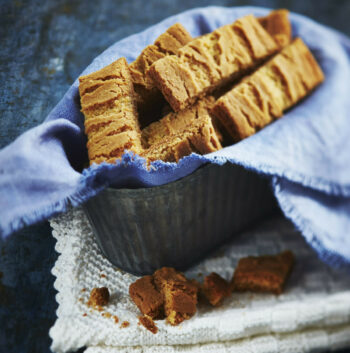
Several rectangular cookies in a basket.

Photo: Jorma Marstio/Otavamedia/Lehtikuva

These cookies are quite easy to make and there are many variations. You can use different sugars or a mix of sugars. Try normal white caster sugar, or replace half the amount with dark muscovado sugar or brown sugar. Season with your spices of choice, for example cinnamon or ground ginger. Or you can add a tablespoon of coffee like my sister does. The dough is quite crumbly, so you have to be patient when shaping it.

  • 200 g butter
  • 170 g sugar
  • 2 tbsp dark syrup or molasses
  • 1 egg yolk
  • 2 tsp vanilla extract
  • 2 tsp baking soda
  • (1 tbsp of coffee)

Preheat the oven to 175 degrees Celsius.

The butter must be at room temperature when you start making the dough. The best way is to leave the butter at room temperature overnight or for at least for six hours. If you don’t have six hours, you can temper the butter with the gentle use of a microwave oven, but you need to be careful not to melt the butter. Place the butter and the sugar in a bowl and whisk with a mixer until it is a pale colour.

Add the egg yolk and the syrup (and coffee). Mix all the dry ingredients (and ground spices) together and sift them over the whisked butter.

Mix until you have a crumbly dough. On a prepared baking sheet, shape it into two or three logs approximately two centimetres in diameter, leaving at least ten centimetres for the cookies to spread out. Bake for around 15 to 20 minutes, and as soon you remove the baking sheet from the oven, cut the cookies into slice three centimetres thick, holding the knife at a bit of diagonal. Leave them to cool, and then enjoy.

Finnish spoon cookies (lusikkaleipä)

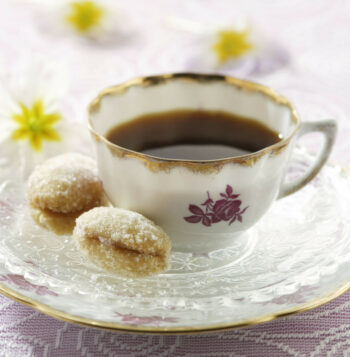
Two sugary cookies beside a coffee cup.

Photo: Mirva Kakko/Otavamedia/Lehtikuva

The name provides a clue about how you shape these cookies. You press the dough with a spoon to make oval-shaped cookies. They can be filled with different kinds of jams, but most common ones are apple or raspberry – just make sure that the jam you’re using is firm enough not to ooze out. Tip: if you want to add a “Finnishing touch,” you can mix a bit of liquorice powder into the sugar you use to coat the cookies. This goes really well with raspberry or blackcurrant jam.

  • 200 g butter
  • 140 g sugar, plus extra for the coating
  • 260 g flour (all-purpose)
  • 1 tsp baking soda
  • pinch of salt
  • 150 g jam of choice

Place the butter into a pan and melt it at moderate heat. Stirring the melted butter occasionally, continue until it turns a bit brown. Cool the butter in a heatproof mixing bowl. Preheat the oven to 175 degrees Celsius. Mix all the dry ingredients together and then mix them with the browned butter. Keep going until you have a firm but crumbly dough.

Prepare a baking sheet with baking paper or a silicone mat. Using a teaspoon, scoop a heaped spoonful of the dough and scrape the excess by dragging and pressing the spoon upside down against the edge of the mixing bowl. Push the shaped dough gently with the help of a finger flat side down on to the baking sheet. Do this until the whole batch of dough is gone.

Bake for 12 minutes and leave to cool slightly. Put some sugar into a soup dish for coating. When the cookies are still a bit warm, place a bit of your chosen jam onto the flat side of one cookie, then take another cookie and press the flat side gently on top of the jam. Roll the cookie in sugar.

By Timo Lepistö, January 2023

For more than 100 years, Finnish “neuvola” clinics have given families a healthy start

The Finnish name for the clinics, neuvola, means “place of advice,” and, as it suggests, the system offers healthcare consultations and services. Since they’re free of charge, they’re readily available to all families, regardless of socioeconomic factors.

There are frequent checkups during the pregnancy, and after the baby is born, the family continues to attend regular appointments for several years. The healthcare staff monitors the infant’s growth and development, as well as fielding any questions the parents may have as they adjust to life as a family.

The first maternity and child health clinic opened in 1922 in the working-class Helsinki neighbourhood of Kallio. In only three years, child mortality rates in that area decreased from 15 to 3 percent.

A healthy start

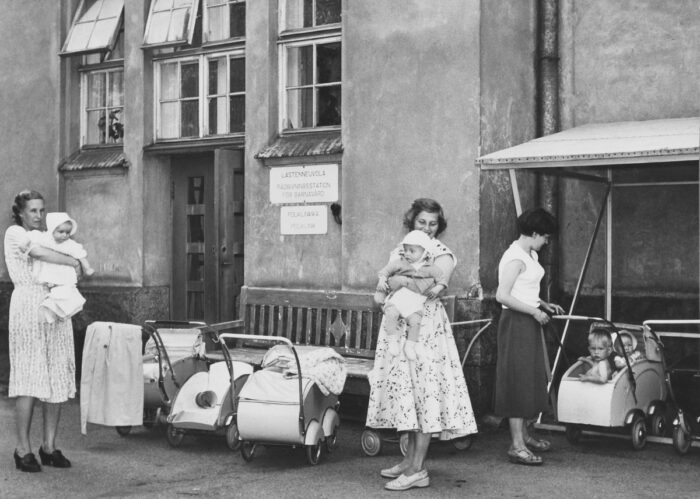
A black and white photo of several women holding babies beside a row of strollers in front of a building.

In 1954, mothers arrive with their babies for appointments at a maternal and child health clinic in Helsinki.Photo: Helsinki City Museum/cc by 4.0

The neuvola system expanded after the Second World War and became part of universal healthcare in Finland. The expansion resulted from a requirement, adopted in 1944, that tasked municipalities with the responsibility of operating their own maternity and child health clinics.

The consequences are visible in the infant mortality statistics: From 1935 to 1944, the national level averaged 67.2 per 1,000 live births. In 1955 the figure was 29.7, then 17.6 in 1965. It continued to drop, hitting 9.6 in 1975. At 1.8 for the year 2021, Finland’s infant mortality statistics are among the lowest in the world.

The maternity and child health clinics are considered a social innovation, a solution that meets social needs and strengthens society. In effect, the clinics improve the nation’s overall health by focusing on its children.

By supplying the whole family with comprehensive support, including healthcare and practical advice, the neuvola helps give all kids of all backgrounds a healthy start in life.

Thinking inside the box

Finland’s Maternity Package (a tradition since 1938): This Finnish invention includes dozens of items for the new baby. Watch our video collage to see how the contents and fabric patterns have changed over the past three decades.Photos: Social Insurance Institute of Finland; Video: Juho Hakuni/ThisisFINLAND.fi

Another, related Finnish social innovation – and also one that is quite social-media friendly, as it happens – is the maternity package, which some people whimsically call a “baby box.”

It contains dozens of supplies for the baby, including clothing, hygiene items and bedding. The parents of about 30,000 newborns elect to receive it each year. Alternatively, they can choose to get a payment (170 euros at the time of writing); almost all first-time parents select the maternity package.

Introduced in Finland in 1938, the concept of the maternity package has been implemented in some form in Ireland, Scotland and Australia, and about 60 other countries. “We have seen various applications and adaptations,” says Tuovi Hakulinen, who is an adjunct professor of health promotion and is also a former research manager at the Finnish Institute for Health and Welfare.

A definite success

Raija unboxes her new maternity package, displays the contents and offers some words of explanation.Video: @Raija7208

Perhaps unsurprisingly, the maternity package has proved to be the perfect subject for unboxing videos. People also post comments about the fabric patterns when new ones appear (each year is different), although the maternity package’s main purpose is function rather than fashion.

Maternity and child health clinics have come a long way since they were born, in 1922. “The Finnish neuvola is undeniably a success story,” says Hakulinen. “Because of it, we brought down maternal and infant mortality rates, and Finland is one of the safest countries for births” – whether you are giving birth or being born.

The clinics assist people with prenatal care, family planning, child development and family health. A host of services are offered around Finland, including prenatal physiotherapy sessions, family counselling, breastfeeding support groups and standard childhood vaccinations. The clinics are tremendously popular; 99.7% of pregnant people in Finland use their services.

Reaching all families

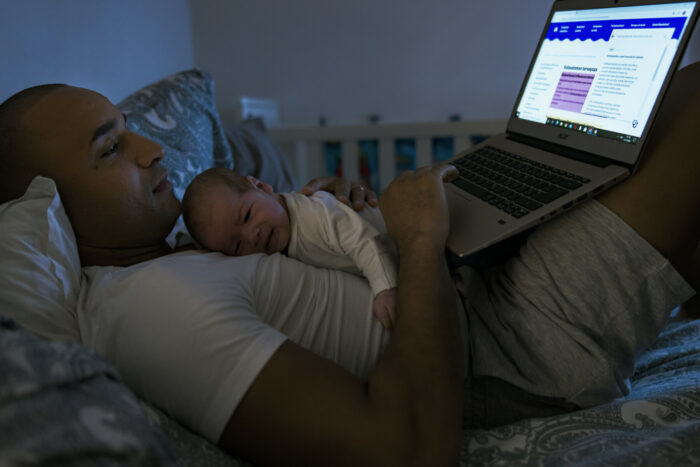
A man lying on a bed with a baby on his chest and a laptop computer on his legs.

The City of Helsinki offers an online neuvola chat service where parents can talk with healthcare providers in real time. There’s also a 24-hour neuvola chatbot.Photo: Jussi Hellsten/City of Helsinki

Hakulinen, whose decades-long career has included many years working in maternal and child health clinics and in school healthcare centres, says she has seen “how neuvola services have changed and developed,” over the years. “The emphasis on the family as a whole has continuously increased.”

She continues, “A great strength of the Finnish neuvola system is that the services reach practically all families, regardless of socioeconomic situation. We have high-quality services, and people really want to make use of them.”

In recent years, online neuvola services have also expanded. The City of Helsinki offers a neuvola chat service where parents can talk with healthcare providers in real time. There’s also a 24-hour neuvola chatbot that can answer many questions, and a good old-fashioned FAQ page, which is available in English.

The Finnish clinics have served as a source of inspiration in many other countries, which have flexibly adapted the neuvola to fit their own contexts and needs. Japan developed similar holistic healthcare centres for mothers and children based on the Finnish concept, launching them in 2017.

Being heard

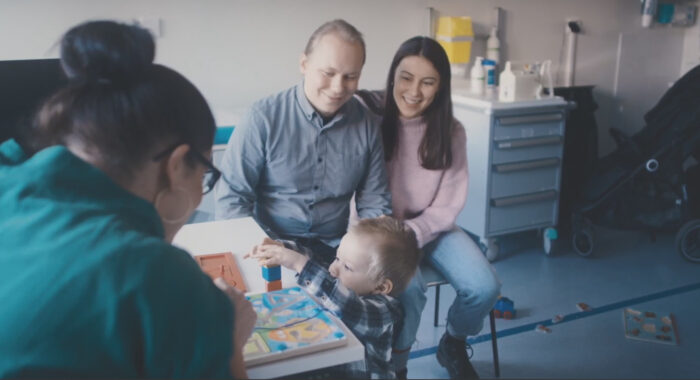
A young child arranges building blocks on a table while his parents and a nurse watch him.

One goal of the maternal and child health clinics is to build a safe and healthy family environment.Photo: ThisisFINLAND

With new situations come new challenges for the neuvola system. Kirsi Peltonen, senior researcher at the University of Turku’s INVEST Research Flagship Centre in southwestern Finland, tells us about how maternity and child health clinics play a role in handling extraordinary circumstances.

Every family is different, and families may present the clinics with multiple different challenges. “Together we can build a safe and healthy family environment,” says Peltonen. One example that she has studied is refugee families who are trying to adapt to life in a new country.

“You have to remember that with any families, including refugee families, there are some that are doing well and some that aren’t,” she says. “It’s important to take stock of the situation, both from the parents’ viewpoint and the children’s perspective.”

The neuvola functions as a space to support the physical and mental wellbeing of all families. Children and their families receive support in cases of issues related to trauma or stress. This means communication between practitioners and families, building a safe and calm environment, and helping parents feel that they are being heard and have agency.

A genuine meeting

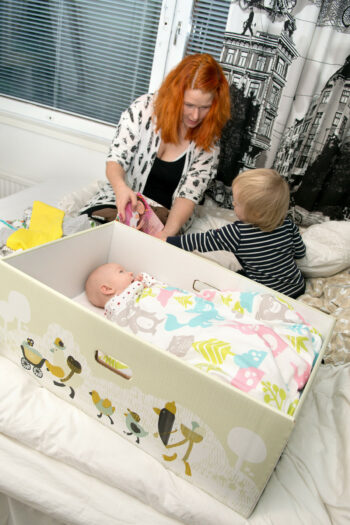
A woman and a toddler sit by a cardboard box with a baby sleeping in it under a colourful blanket.

The box from the maternity package is designed so that it can serve as a first crib.Photo: Annika Söderblom/Social Insurance Institute of Finland

The regularly scheduled visits during the child’s early years also offer a natural opportunity to ask the parents “about their experiences and the effect of those experiences on their current wellbeing,” says Peltonen. The family is already in the office, talking about their child and their day-to-day routine.

The services at maternity and child health clinics have grown and developed over the past century, and adapting them to current global challenges ensures that the system will continue to benefit society.

By the same token, Hakulinen says that with families more diverse than ever before in many different respects, neuvola visits have to include time for a “genuine meeting” and conversation.

By Emma De Carvalho, December 2022

His birthday became Finnish Music Day: Using dance to depict the life of composer Jean Sibelius

Elo, one of Finland’s top choreographers, has decades of experience dancing and creating ballets for esteemed companies in Europe and North America. His Sibelius premiered in Helsinki in spring 2022, when the Finnish National Ballet marked its centenary.

About four years earlier, the company’s artistic management had contacted him to discuss creating a full-length piece about a historical figure, something special for their 100th anniversary. Jean Sibelius (December 8, 1865–September 20, 1957) emerged as the clear frontrunner.

Just about everyone in Finland recognises certain Sibelius pieces, some of which draw inspiration from the Kalevala, Finland’s national epic. His work was and is perceived as having a symbolic connection with the Finnish national identity and the Finnish landscape, similar to that of contemporaries such as painter Akseli Gallen-Kallela, who was born the same year as Sibelius.

Making the choreography work
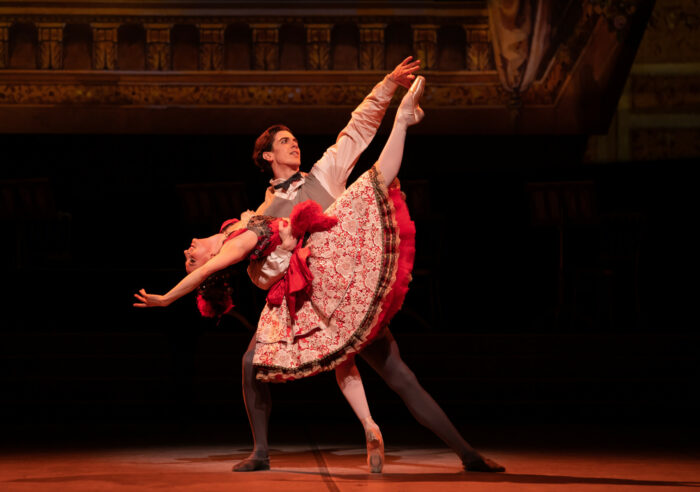
A man and a woman in fancy dress dance together.

Sibelius (Henry Grey) met singer Pauline Lucca (Lucie Rákosníková) at social events in Vienna.Photo: Roosa Oksaharju/Finnish National Ballet

It wasn’t immediately obvious that Sibelius’s compositions would be suitable for telling a story with a combination of motion and music.

When you listen to Sibelius, says Elo, it can at first seem like “this is already too much [for a ballet]. There’s too much nature and colours. There’s a mood to it. Put anything on top of this and it’s just going to ruin it.”

However, his previous experience showed that it could work. Elo used Sibelius’s Violin Concerto in First Flash in the early 2000s, and in 2018 he created a ballet called Fifth Symphony of Jean Sibelius for the Boston Ballet, where he has held the position of resident choreographer since 2005. “I had already done two ballets to his music,” says Elo, “so I felt like I could choreograph to it.”

A many-tiered story

Watch the Sibelius trailer to glimpse different scenes from the ballet.Video: Finnish National Ballet

The resulting two-hour ballet Sibelius holds numerous levels of appeal for audiences. There’s the music, of course; Elo taps lengthy excerpts from many of Sibelius’s most famous compositions to stir viewers’ emotions (except for one Richard Strauss piece, the whole score of the ballet is Sibelius).

There’s the story: we see a young Sibelius meet his future wife, Aino Järnefelt, and follow the ups and downs of their relationship, their family life and, of course, Sibelius’s career.

We witness celebrations, such as a party at the Järnefelt estate or a ballroom full of gaudily clad dancers waltzing in Vienna, where Sibelius studied composing. We see day-to-day life, including births and deaths in the family, arguments, drinking bouts, visits from the in-laws and tense discussions with a debt collector. We catch glimpses of history, such as the Finnish Civil War of 1918, when the family has a brush with death while fleeing to safety.

Sibelius is a biographical ballet, and checks in throughout his life, from childhood to old age. It’s also an interpretation of that life, and of Aino and Jean’s relationship.

They meet and get engaged. Jean travels to Vienna to further his career. Later, the family spends time in Italy. We see Aino and Jean grow. Sibelius’s success develops and his works find an audience, but there are obstacles and setbacks along the way, including his fondness for drinking.

Intense artistic loop
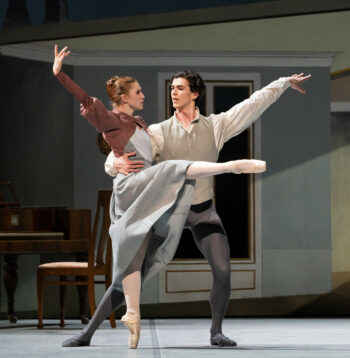
A man and a woman dance onstage with furniture in the background.

Aino (Abigail Sheppard) and Jean (Henry Grey) at home in their Helsinki flat.Photo: Roosa Oksaharju/Finnish National Ballet

Elo perceives similarities between the jobs of choreographer and composer. Starting with a creative idea, “you do the original process alone,” he says. Eventually, you present it to the dancers or musicians. “I think it’s a beautiful moment,” says Elo, also admitting that it’s a nerve-wracking one. Dancers and musicians are exacting, and may be more difficult to please than the audience itself.

We see this in Sibelius when the composer is leading an orchestra and has difficulty explaining his vision to the musicians. “He was conducting a lot of his own stuff,” says Elo, “so I thought those orchestra rehearsals, facing the orchestra, were important elements to bring into the ballet.”

Sibelius started as a violinist and found fame as a composer. Elo had a successful career as a dancer and later became a choreographer. “I was a dancer, and so you think you are an expert in the field, but still, to be a dancer and to be a choreographer is, in many ways, a very different thing.”

An unusual additional dimension exists in choreographing a biographical ballet and setting it to music written by the subject of the story. It’s an intense artistic loop, with dance expressions playing out on a background created by a composer who also happens to be the main character.

Not last and certainly not least
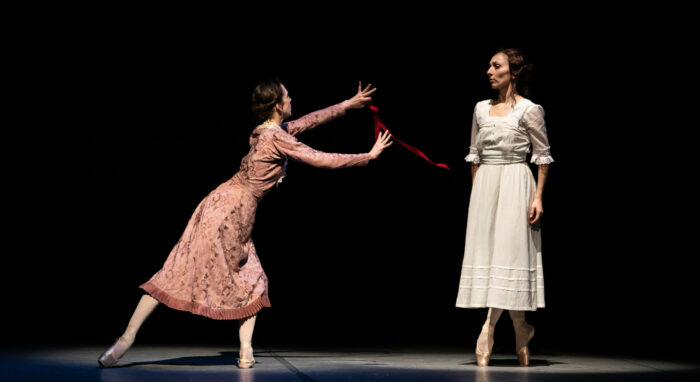
A woman leans and reaches towards another woman.

The ballet Sibelius includes a portrayal of how Aino (left, Rebecca King) was affected by the suicide of her sister Elli (Edita Raušerová). Photo: Roosa Oksaharju/Finnish National Ballet

On Sibelius and other productions over the years, Elo has collaborated with his wife, Nancy Euverink. She’s a veteran of the Dutch company Nederlands Dans Theater, where Elo also danced for part of his career.

The program lists her as dramaturgic assistant to the choreographer and as artistic adviser. “We’ve been working as a team on every level,” Elo says.

Throughout the process, they bounced ideas back and forth. She provided feedback on versions of the script and participated actively in rehearsals, sometimes stepping in to explain Elo’s ideas to the dancers when he failed to notice that “there’s no way they can read my mind,” he says.

Perhaps partly because they were working so intensively together, Elo and Euverink didn’t want to downplay Aino’s significance. She had a big role in Sibelius’s life and career, and his story is, by definition, also the tale of the bond between them.

In the ballet, her sister Elli’s suicide contributes to shaping Aino, although “in a lot of books it’s not described as a big event in her life,” says Elo. Integrating it into the performance helped ensure that “her character wouldn’t become secondary,” he says. Both Euverink and Elo felt strongly about this.

Aino is “sometimes right on the edge,” he says, “fighting her own demons.” She and Jean are “figuring out their way together in life.” From time to time throughout the performance, projections show us bits of handwritten correspondence between Jean and Aino, phrases and sentiments that indicate the depth and direction of their relationship.

Blinking back tears
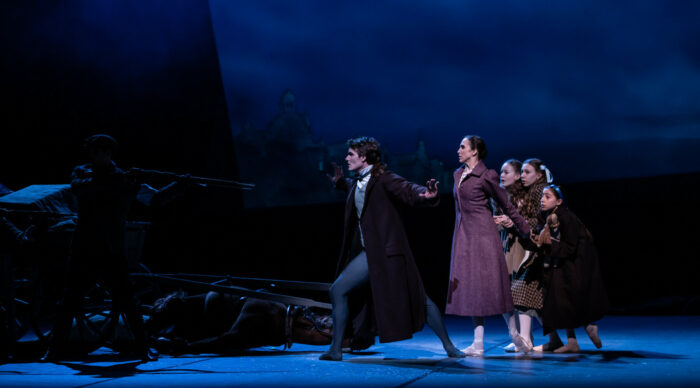
A family is challenged by a man with a rifle.

Finland witnessed tumultuous events during Sibelius’s lifetime, including the Finnish Civil War in 1918. In this scene Jean (Tuukka Piitulainen), Aino (Rebecca King) and their daughters encounter danger while fleeing across Helsinki to safety.Photo: Roosa Oksaharju/Finnish National Ballet

Finlandia, written in 1899 and 1900, is one of Sibelius’s most beloved compositions, closely associated with the heart, soul, dreams and history of the country. At performances, you are extremely likely to see audience members blinking back tears.

In Sibelius, the “Finlandia Hymn” – the nickname for the best-known part of the opus – sneaks up on you in a scene called “The birthday party continues,” late in the ballet. As the chorus of the Finnish National Opera sings in the stage wings, the dancers aren’t decked out in patriotic blue and white. The men wear suits of brown and grey, the women one-tone dresses that are colourful but not bright.

The costumes, choreography and music combine to form an unpresumptuous impression, less pompous than the Viennese waltz and more pensive than the garden parties of Aino and Jean’s youth. We’re in a different era now, much later in Sibelius’s life. In this scene, the choreography makes room for the music to inspire and carry the viewers’ emotions.

Staging the creative process
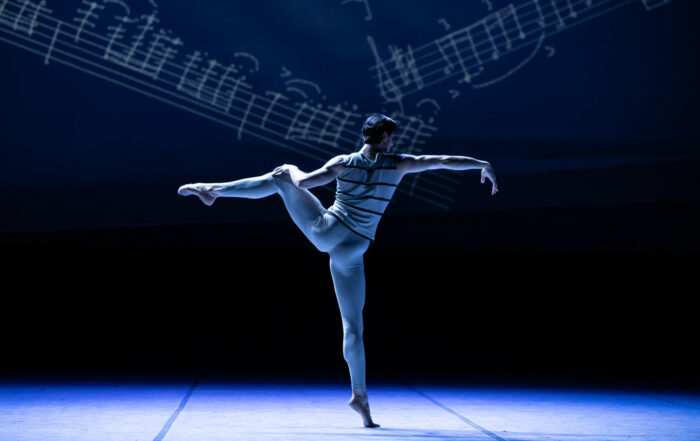
A lone dancer balances on one foot in front of a picture of music notes.

This photo captures one of the eight dancers (Henry Grey in this particular performance) who represent the inner vision and creativity of Jean Sibelius as he composes his Violin Concerto.Photo: Roosa Oksaharju/Finnish National Ballet

One of the most fascinating scenes in the ballet occurs when it switches gears and goes from portraying biographical events to imagining the composer’s creative process. It happens near the end of the first act, in a scene called “Inner vision.”

As the tones of the famous Violin Concerto in D Minor start to play, the ballet goes from literal to figurative. I saw members of the audience sit up straighter in their seats, realising that something unusual was happening. The whole performance veers in another direction, taking the spectators with it.

To visualise this event in Sibelius’s life – composing the Violin Concerto, in 1904 and 1905 – Elo brings out eight dancers (an octave, maybe?) in simple, off-white costumes, sparsely decorated with black lines and shapes that bring to mind music notation. In a projection on the backdrop, handwritten sheet music appears; the concerto is taking shape.

Ideas come alive
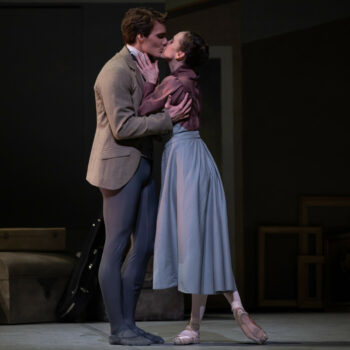
A woman and a man kiss.

Jean (Tuukka Piitulainen) and Aino (Rebecca King) embrace each other.Photo: Roosa Oksaharju/Finnish National Ballet

The dancers enter and leave the stage in various combinations, interweaving, gesturing and wavering. They meet, part ways and return repeatedly as the dance deepens. Sibelius himself joins at times and interacts with them, almost as if he’s attempting to herd the notes from his imagination onto the page. The dancers’ vocabulary of movement is now much more modern than in the previous segments.

The scene crystallises with Sibelius standing at the front of the stage, the others stretched in a diagonal line behind him. For a few moments, they remain in this formation. They shift on their legs, while their arms trace sudden, gracious paths in the air, reminiscent of an orchestra conductor.

Sibelius, a violinist, composer and conductor, has managed to impose a kind of order and finish writing his concerto. Elo’s own artistic efforts have succeeded in making the process of composition come alive for the ballet audience.

A short time later, Sibelius stands alone in the beam of a spotlight, both arms raised as if indicating a crescendo – or expressing triumph.

By Peter Marten, December 2022
Finnish playwright’s newest production creates space for exploring social norms

In a brand-new theatre aesthetic established under Turunen’s leadership, the sets, lighting, costumes and sound design make a space for exploring social norms through humour.

The characters might not say much, but they nevertheless speak volumes about normality, social norms and the dominant role reason plays in our lives. The Grapes of Reason deals with corporeality – bodily existence.

“This time, I wanted to explore the contradiction that’s inherent between reason and corporeality,” Turunen says. “I had already picked up this theme in my novel, but it bothered me that reason had this sort of upper hand in it. It was about how this neat and sensible way of life seems to preclude us from any sort of corporeality, while corporeality rules out the chance to lead a neat and sensible life in turn.”

The English subtitles are viewable using a mobile app on November 22 and 29 and December 13 at Q-teatteri. Nely Keinänen of the University of Helsinki translated the script, funded by a grant from Theatre Info Finland.

Turunen has a high profile internationally, too. In February, 2023, The Grapes of Reason plays in Antwerpen, Belgium, where the Finnish actors reprise their roles in a subtitled performance. Previous plays in the Rooms trilogy visited stages in Germany and Argentina.

After finding refuge in Finland, Afghan woman continues to advocate for peace and equality

Shekeba Ahmadi arrived at a reception centre in the northern Finnish city of Oulu with nothing but her phone, her passport and the clothes on her back. In order to reach the airport in the Afghan capital, Kabul, and get out of the country, she had taken a harrowing escape route that included segments of sewer canals.

Ahmadi is a Hazara, an ethnic group heavily persecuted by the Taliban. As a former employee at the Finnish Embassy in Kabul, she was among a group of over 400 Afghans evacuated to safety with the help of the Finnish Defence Forces.

Arranging new cornerstones

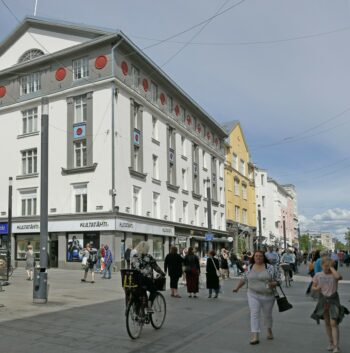
People and cyclists on a street of stately four-floor buildings.

The Finnish city of Oulu, shown here, was Ahmadi’s first destination after a chaotic and dangerous escape from Afghanistan in August 2021.Photo: Ismo Pekkarinen/Lehtikuva

Ahmadi shares her story while sipping coffee in downtown Helsinki, the city she has called home for the past year.

“Resettlement has been very empowering, but also challenging,” she says. “The early days were hard. I had terrible nightmares, so I tried to focus on actively rebuilding my life.”

After circulating her CV, she landed an internship at the peace mediation organisation CMI, a foundation created by Nobel Peace Prize Laureate and former Finnish president Martti Ahtisaari. She was also accepted to the Peace, Mediation and Conflict Research programme at Tampere University. She has deferred those studies while she continues her work at CMI.

“I had a wonderful social worker who found me an apartment in north Helsinki,” she says. “I’ve worked hard to earn every single thing in my small nest.”

Architect of her own life

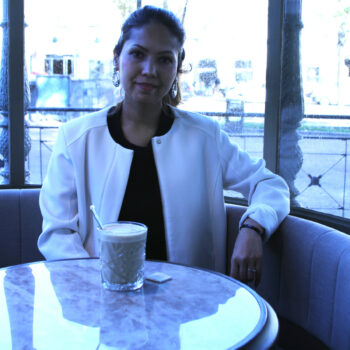
A woman in a white jacket sits in front of a window at a café with a cup of coffee.

The first one in her family to complete secondary school, Ahmadi says, “I’m proud to set an inspiring example for my nieces, who live in a society that is not open to girls’ education.”Photo: Peter Marten

Arriving in Finland was not Ahmadi’s first experience of restarting life from scratch. When she was a young girl, she and her family fled to Pakistan during the Taliban’s first regime.

Seeing Pakistani girls in their school uniforms was an inspiring moment that made Ahmadi passionate about getting an education.

“I was raised by a strong single mother who told me to become the architect of my own life,” she says. As a teenager, Ahmadi worked tutoring younger students in order to put herself through school.

Ahmadi mentions that her proudest achievement was becoming the first in her family to finish secondary school. After going on to complete a degree in politics, philosophy and economics in Bangladesh and working in Singapore, she returned to work in Afghanistan in 2019.

“I really miss the exciting vibe of those times, meeting with friends from different backgrounds to reimagine a new Afghanistan,” she says. Her voice softens as she adds, “Now it seems like every door is closed to me there.”

Haven of gender equality

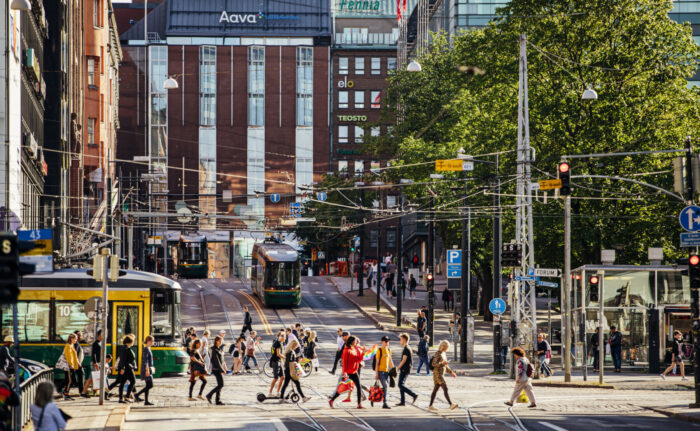
People, cyclists and trams cross a busy downtown intersection with buildings and trees in the background.

The Finnish capital, Helsinki, is the city Ahmadi now calls home.Photo: Jussi Hellstén/Helsinki Partners

While she is grateful for her new home, not a day goes by without her agonising about the struggles of those left behind.

“Many things that are taken for granted in Finland are amazing privileges for newcomers like me, such as free education, the healthcare system, fresh air and clean water,” she says. “In Afghanistan, we have to buy bottled drinking water.”

After witnessing how the Taliban placed extreme limits on women’s rights, Ahmadi expresses special appreciation for Finnish gender equality.

“It has been inspiring to meet so many brave, strong, independent women in Finland who do almost everything themselves,” she says. Finland consistently ranks at or very near the top of international studies that evaluate gender equality and women’s rights.

Freedom of education for all

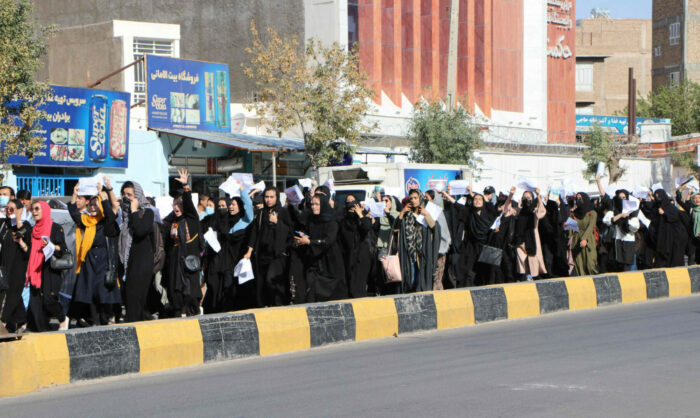
A large group of women, mainly dressed in black, march along a road in a demonstration.

Afghan women students chant, “Education is our right, genocide is a crime,” during a march in Herat, western Afghanistan, on October 2, 2022. It was one of many protests in the country after a suicide bomb attack at a learning centre in Kabul two days earlier.Photo: Mohsen Karimi/AFP/Lehtikuva

Ahmadi was recently promoted to the position of project assistant in CMI’s Women in Peacemaking team. Her new role involves liaising with the Afghan Women Leaders Forum, a network that seeks to ensure the inclusion of Afghan women in political dialogue.

“Every morning I wake up feeling happy to be contributing something positive in a job that is closely aligned with my personal values,” says Ahmadi.

With the Taliban continuing its systematic persecution, what does Ahmadi believe the international community should be doing?

“The remedies lie beyond just humanitarian support,” she says. “First of all, monitoring mechanisms must be put in place to keep a record of war crimes and human rights violations. And all Taliban leaders should be under a complete travel ban.”

She continues, “Added to that, Afghan refugees should be assured the right to fair, rapid processing of their asylum applications.”

When asked about her personal hopes for the future, Ahmadi says that she wants to live in a world where women do not have to struggle just to gain basic rights.

“And girls should not have to fight to go to school,” she says.

By Silja Kudel, November 2022