University of Helsinki presents health and sustainability innovations at startup mega-event Slush

The focus is on solutions related to wellbeing, sustainability and the energy economy.

ReLIGHT accelerates a sustainability transition by reducing the costs of green hydrogen production. Futumine has developed a new method for recycling green and pure gold from e-waste. Väki Insight’s tool utilising AI helps cities select the innovations that best support democracy.

Multivision Diagnostics is developing a new AI tool for better cancer treatment. ReCurE is developing gentler cancer drugs as an alternative to chemotherapy. SOLID-IO helps develop new immunotherapies for cancer patients faster and cheaper.

“Easy Language” increases your Finnish and Swedish language reach in Finland

The use of Easy Language is growing across various sectors. It has been promoted in Finland and the other Nordic countries for several decades, in contrast to many other European countries where the concept is not as established.

Easy Language or Easy-to-Read Language means language that is simpler in content, vocabulary and structure than standard language. Leealaura Leskelä is development manager at the Finnish Centre for Easy Language, “We have been using Easy Language in Finland for a very long time,” she says. She would still like to see more official recognition in national legislation.

Since 2000, the Centre for Easy Language in Finland has advanced communication, information and culture in Easy Finnish, operating under the Finnish Association on Intellectual and Developmental Disabilities. LL-Center, the Swedish-language counterpart, was founded in 2001. (Finnish and Swedish are both official languages in Finland.)

Current Finnish legislation covers technical accessibility rather than cognitive accessibility. It does not address how much the authorities should utilise Easy Language in official communications.

Growing demand

A view of a person’s hands turning the pages of a book that is on a table.

Easy Language content in Finland includes a range of literature.Photo: Emmi Korhonen/Lehtikuva

An estimated 650,000–750,000 people in Finland need Easy Language in their everyday lives. The largest groups are the elderly, people with disabilities and immigrants for whom Finnish or Swedish is a new language.

Easy Language content in Finland includes a range of literature; online and television news by the Finnish national broadcasting company Yle; and newspapers in Easy Finnish (selkosuomi) and Easy Swedish (lätt svenska).

Many Finnish authorities also provide services in Easy Language. One example was the Finnish Institute for Health and Welfare’s information during the COVID-19 pandemic. “Easy Language communications in a crisis is extremely important,” says Leskelä.

While the availability of both Easy Finnish and Easy Swedish is improving, there are differences in their availability. Johanna von Rutenberg is a specialist and team leader at LL-Center. “Many authorities and others communicating on the national level have realised the importance of Easy Language,” she says. “However, there is generally much more material in Easy Finnish than in Easy Swedish. Apart from fiction, content published in Sweden rarely works here.”

More research and services

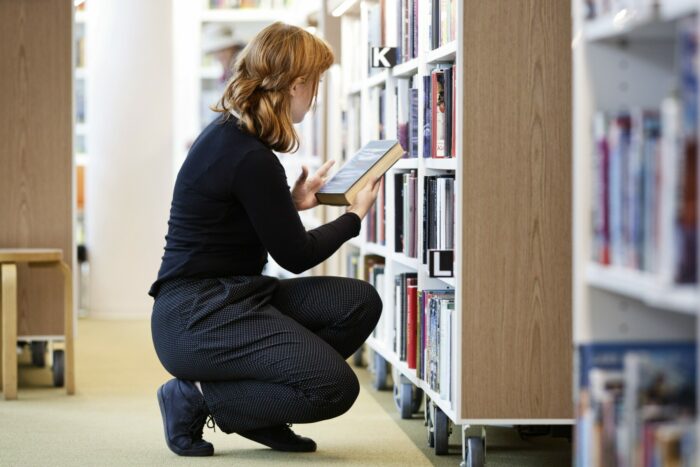
A person is crouching in front of a bookshelf in a library, looking at a book.

Easy Language was first defined in Finland in the 1990s and later expanded in more detail.Photo: Roni Rekomaa/Lehtikuva

Easy Language was first defined in Finland in the 1990s and later expanded in more detail, with 96 criteria to support content production. The Finnish Centre for Easy Language also grants a free Easy Language logo for materials that follow certain principles.

Immigrants often turn to services in English, as Easy Language availability cannot be guaranteed. Dental-care student Momota Hosna Mithi began studying Easy Finnish in 2021 after finding standard Finnish studies too difficult. Now she can handle everyday interactions in Finnish.

Mithi borrows Easy-to-Read books from the library and watches Easy Finnish news and series. She would like to see increased Easy Language services in official contexts. “Better availability would improve foreigners’ chances of learning Finnish and working in the country,” she says.

Work continues

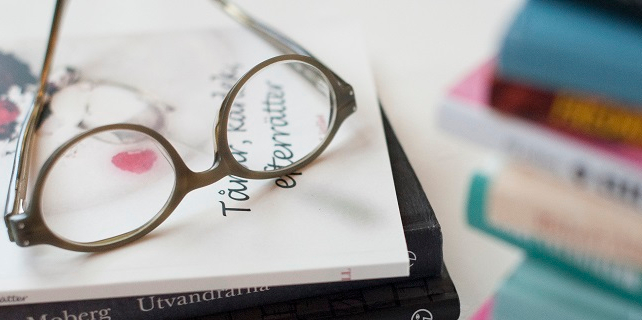
A pair of eyeglasses rests on top of a pile of books.

The need for Easy Language continues to grow.Photo: LL-Center

Leskelä wrote her doctoral thesis on spoken Easy Language between people with disabilities and the professionals who work with them. Her 2022 dissertation was, she believes, the first in the world on spoken Easy Language.

In her study, she found out that simplifying spoken language is not easy, even for professionals. “Yet I saw many successful examples of how to apply easy spoken language, use it to solve major difficulties in understanding and include a person with disabilities in the discussion,” she says. Although she analysed conversations involving people with disabilities, many of her observations apply to all interactions that could include Easy Language.

There has been active collaboration with Sweden over the years, but more recently it has shifted towards continental Europe, especially Germany, says Leskelä.

Because the need for Easy Language is growing, the Finnish Centre for Easy Language is working on criteria for professionals in the field. “At the moment, there are no official titles for Easy Language professionals, but we need a shared understanding of what it means to be an expert in it,” Leskelä says.

By Annika Rautakoura, October 2024

Passing the baton: 3 young star conductors from Finland

In classical music circles, Finland possesses a longstanding reputation as a hotbed of conductors. It’s an intensely competitive field.

Established names such as Susanna Mälkki, Esa-Pekka Salonen, Sakari Oramo, Jukka-Pekka Saraste, Osmo Vänskä and Hannu Lintu are all 55 or older, but a new crop of rising young Finns shows that the country fosters conducting talent from one generation to the next. One common factor behind all these baton-wielders has been professor Jorma Panula and the training system he set up at the Sibelius Academy in Helsinki.

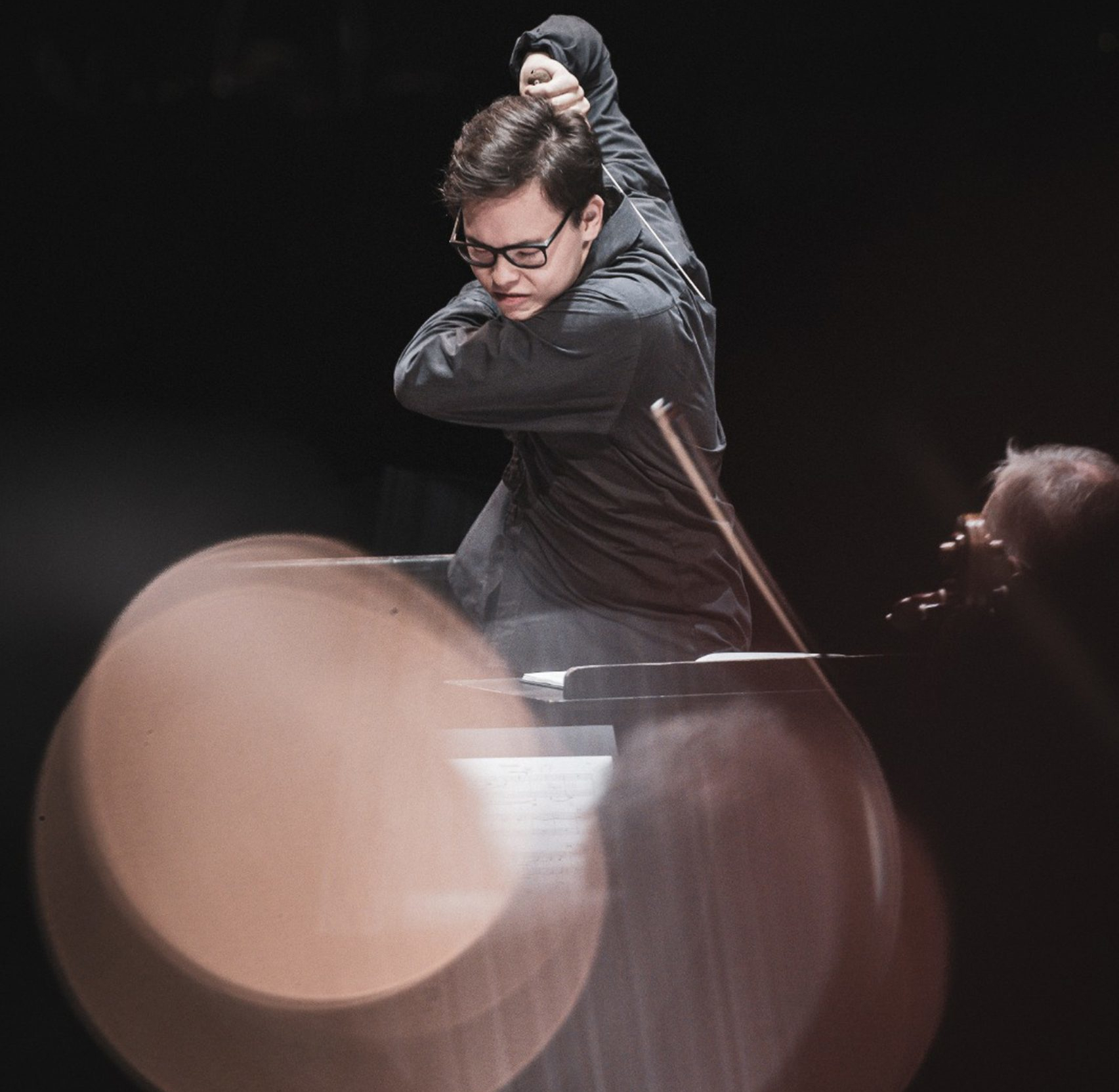
Panula (born in 1930) has taught several of the most in-demand young Finnish conductors: Emilia Hoving, Tarmo Peltokoski and Klaus Mäkelä, all under 30 at the time of writing.

How an orchestra reacts

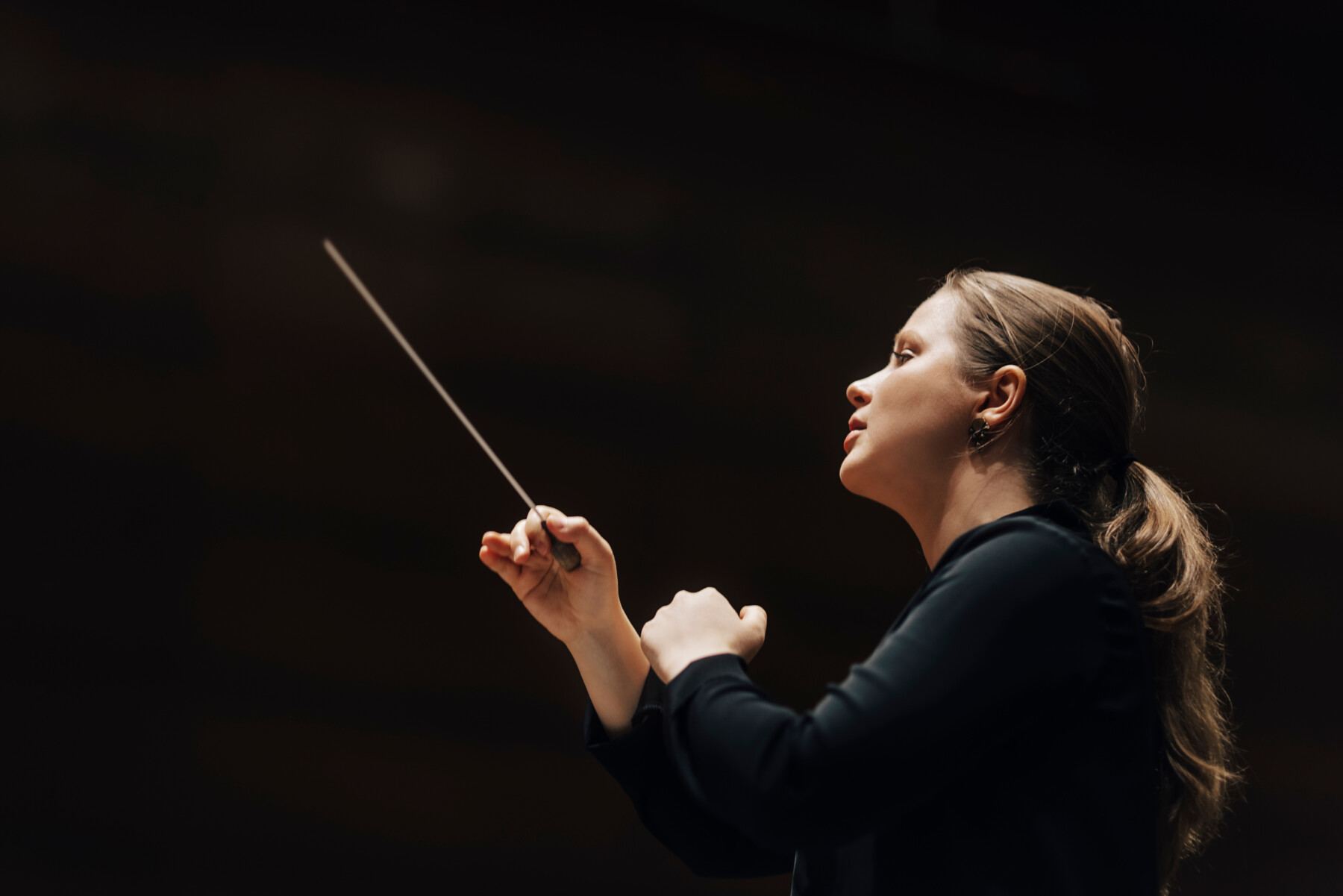
A woman dressed in black gestures with her hands and a conductor’s baton while leading an orchestra.

A conductor needs a “deep understanding of how an orchestra reacts to your gestures,” says Emilia Hoving. Photo: Nikolaj Lund

“The pedagogical tools that Panula created decades ago are partly why there are so many prominent Finnish conductors,” says Hoving (born in 1994). “At the Sibelius Academy, conducting students get to conduct a student orchestra during their lessons, which is very important.”

The lessons are filmed, and afterwards there’s an analysis session with the professor. “This is essential to help a young conductor develop technically and get a deep understanding of how an orchestra reacts to your gestures,” says Hoving, who has led the top Finnish and Swedish orchestras, as well as the BBC Symphony, the Philharmonia, the Yomiuri Nippon Symphony Orchestra and the Royal Scottish National Orchestra. Finnish film director Anna-Karin Grönroos profiled Hoving in the award-winning documentary Conductivity.

Hoving began her studies with Panula, but most of her training happened under Sakari Oramo and Atso Almila.

Panula stirred controversy in 2014 by claiming that women don’t have enough strength for the conductor’s job. That earned rebukes from Salonen and others. It is also thoroughly disproved – if any proof is actually necessary – by the success of Finnish female conductors such as Mälkki, Dalia Stasevska and Eva Ollikainen, whom Hoving praises for holding “inspiring masterclasses” at the academy.

Stellar trajectories

A man dressed in black gestures with his hands and a conductor’s baton while leading an orchestra.

Tarmo Peltokoski is known for his exuberant stage presence.Photo: Romain Alcaraz

The last prominent Panula protégé is Peltokoski (born in 2000), known for his flamboyant stage presence and dubbed “the world’s youngest star conductor” by the German broadcasting company Deutsche Welle. The Filipino-Finnish pianist is principal guest conductor at the Bremen and Rotterdam philharmonics, and music director of the Toulouse and Riga orchestras.

In May 2024, he released his first album for Deutsche Grammophon, saying, “It’s a luxury to perform Mozart with the Deutsche Kammerphilharmonie Bremen, and to put these three symphonies on record is a dream come true.” A second album is in the works, featuring music by English composer Ralph Vaughan Williams. Peltokoski is set to become music director of the Hong Kong Philharmonic Orchestra in the 2026–27 season.

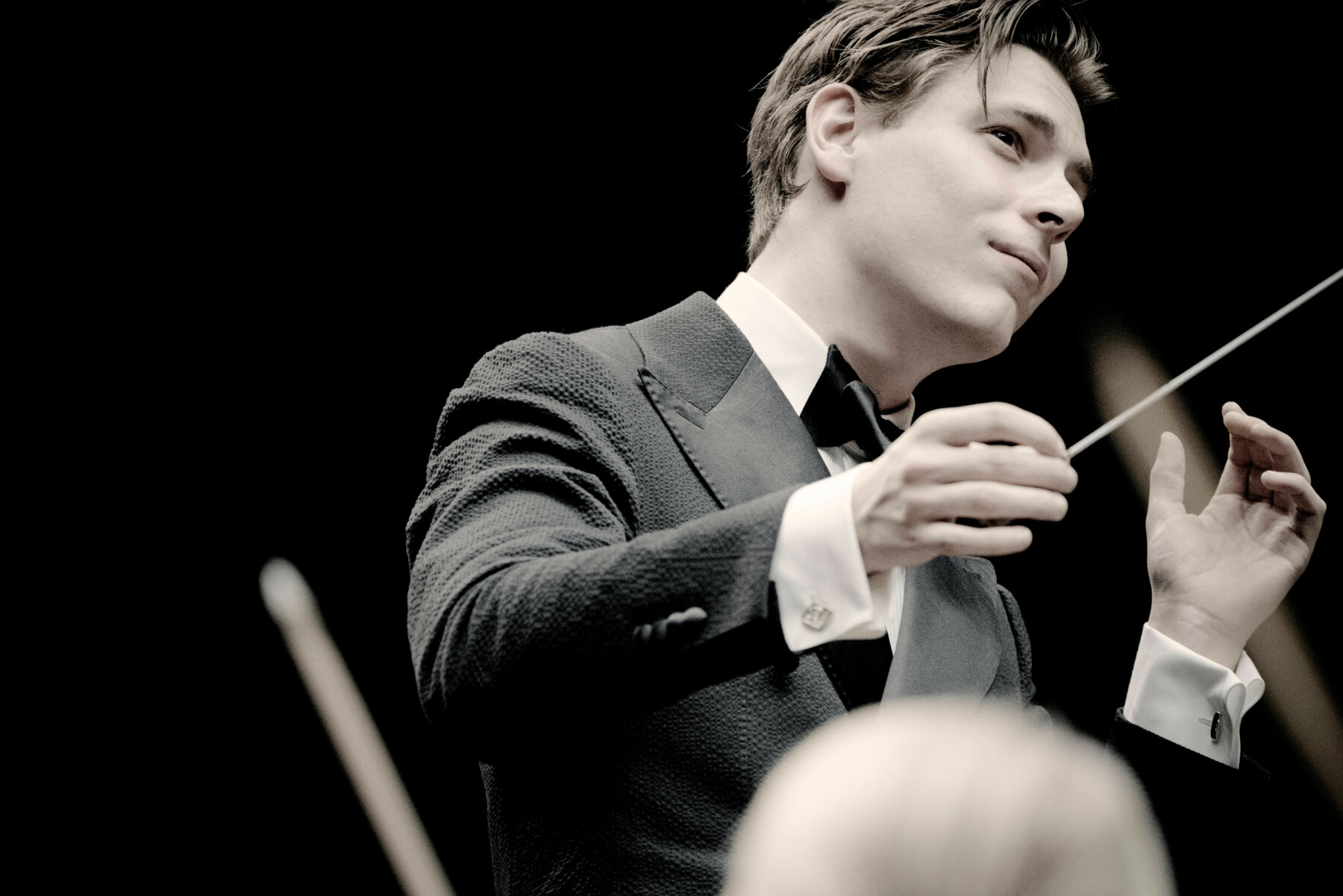
The most acclaimed young Finnish conductor is Klaus Mäkelä (born in 1996), a cellist who leads the Orchestre de Paris and the Oslo Philharmonic. From 2027, he’ll be chief conductor of the Royal Concertgebouw Orchestra and the youngest-ever music director of the Chicago Symphony.

Mäkelä, too, praises Panula for his training but emphasises in interviews that his mentor’s main aim has been helping each young conductor blossom in their own unique way.

Super-important

A man dressed in black gestures with his hands and a conductor’s baton while leading an orchestra.

Klaus Mäkelä is set to become the youngest-ever music director of the Chicago Symphony, in 2027.
Photo: Marco Borggreve/Oslo Philharmonic

Of course, a conductor’s job involves much more than appearing onstage. Most of the work goes on behind the scenes, from analysing scores and putting together concert programmes to leading rehearsals and coaxing orchestras to interpret works as the conductor envisages them. For all these young artists, discovering new works to premiere is a crucial part of the job.

“I feel that we can have a completely new chapter for the [Chicago] orchestra in terms of repertoire, in terms of developing the same amazing sound, but having it as flexible as possible,” Mäkelä told the New York Times in April 2024. Peltokoski has recently premiered new works such as Peruvian composer Jimmy López Bellido’s Trombone Concerto, while Hoving led the Australian premiere of US composer Missy Mazzoli’s Procession, a violin concerto.

“It’s super-important to programme contemporary works,” says Hoving. “I love doing new music, but it’s not always easy to carry out very adventurous contemporary programmes. In some places it can be difficult from the marketing point of view.”

The pandemic took a toll in this respect, she says, because orchestras had to get audiences back into concert halls, which was easier to do with familiar repertoire.

“That’s understandable, but we shouldn’t get stuck in ‘comfortable’ programming,” says Hoving. “Audiences in Finland are usually very positive and excited about contemporary music, which makes me very happy.”

By Wif Stenger, October 2024

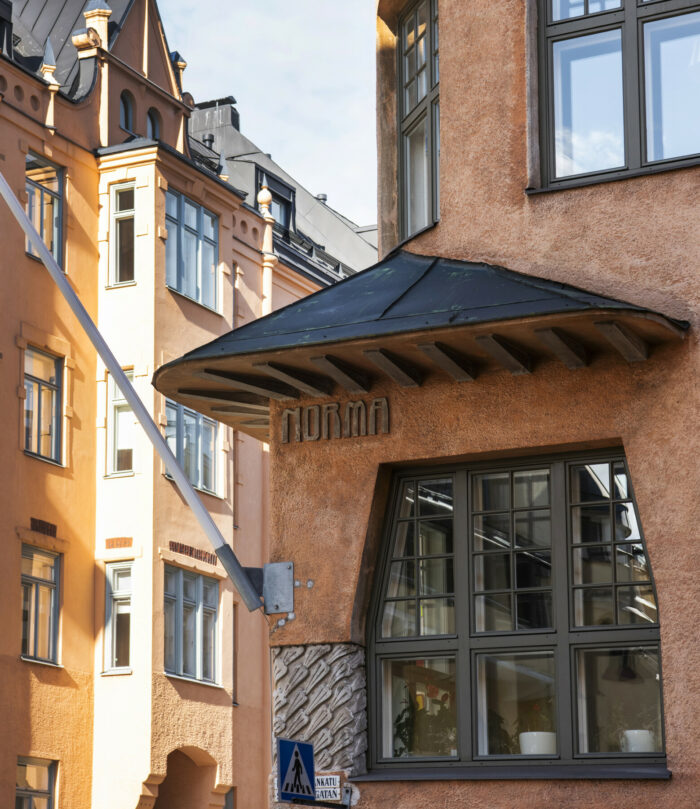
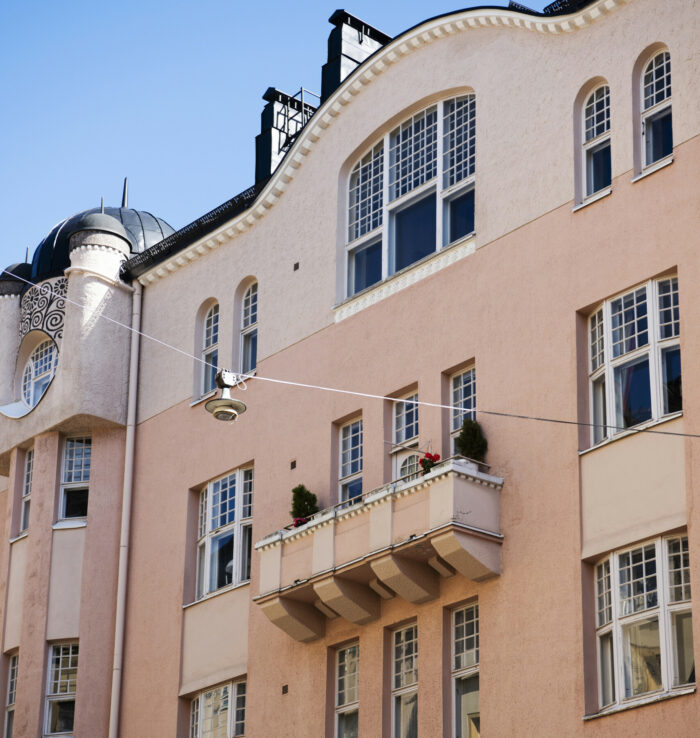
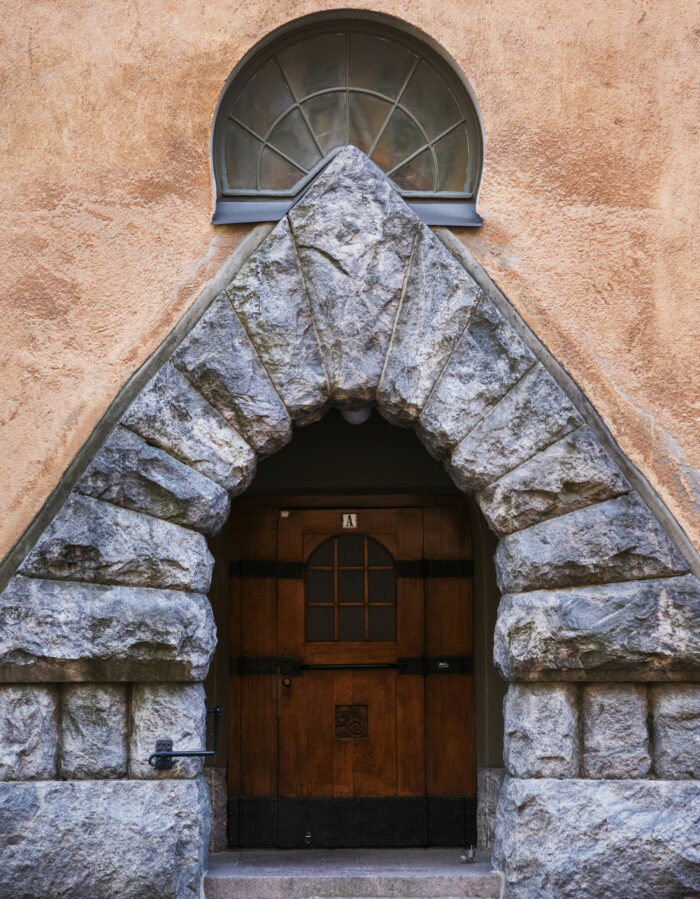
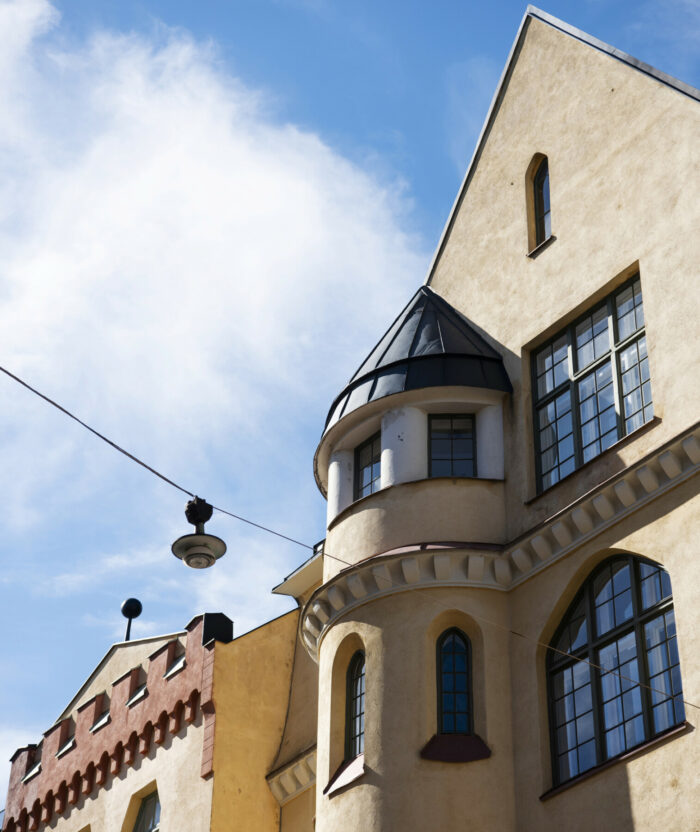
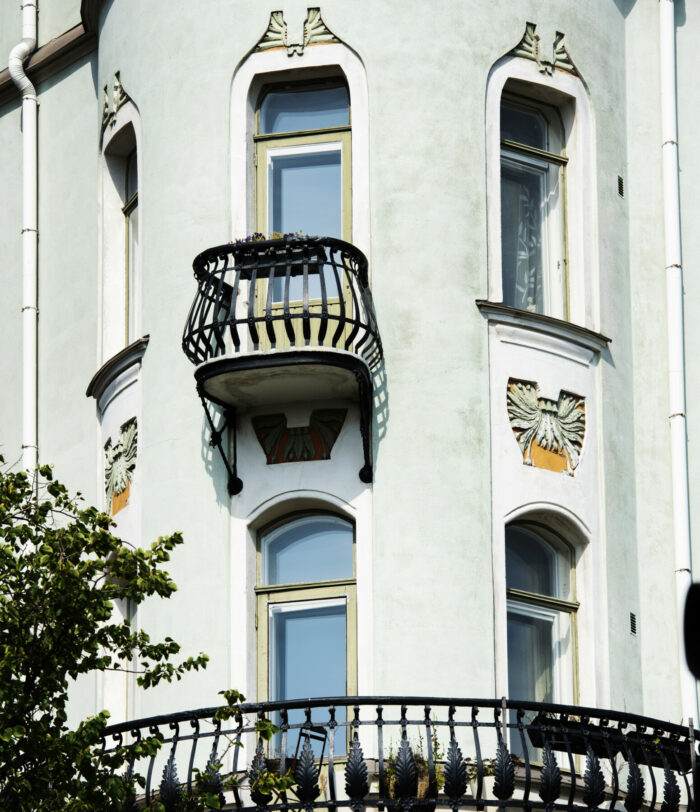
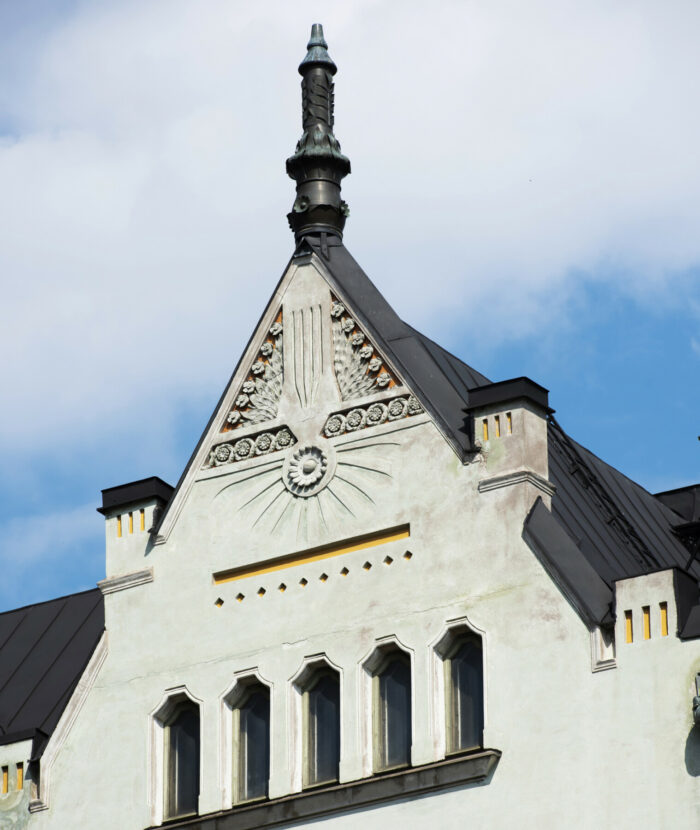
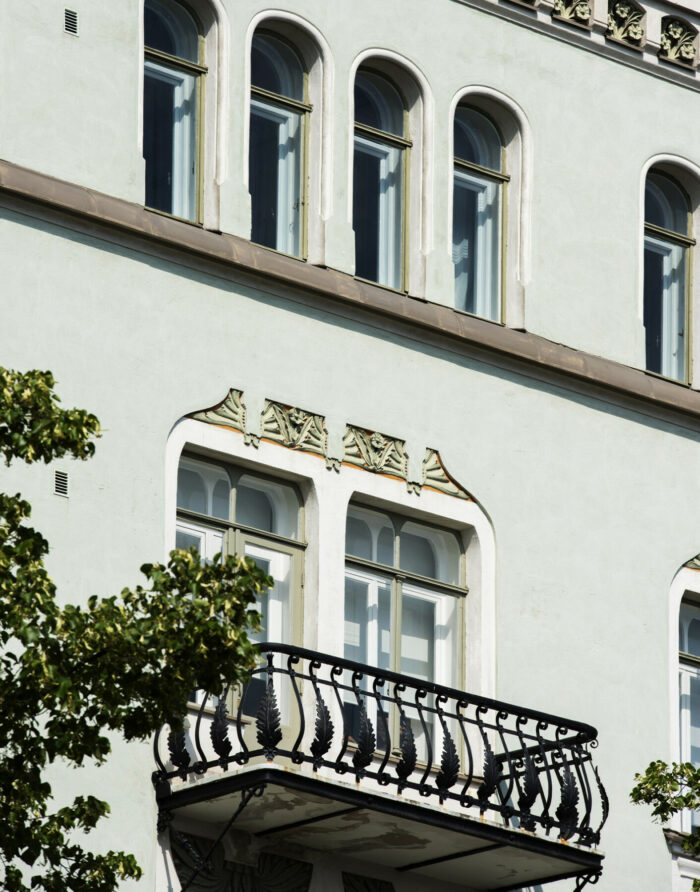
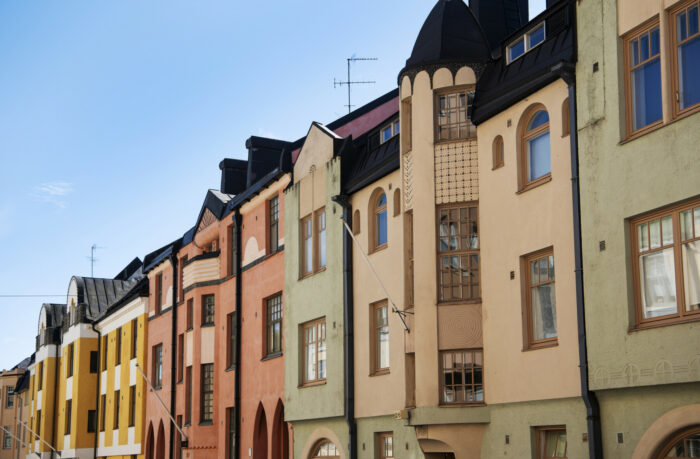
Admiring art nouveau: Helsinki’s architectural eye candy

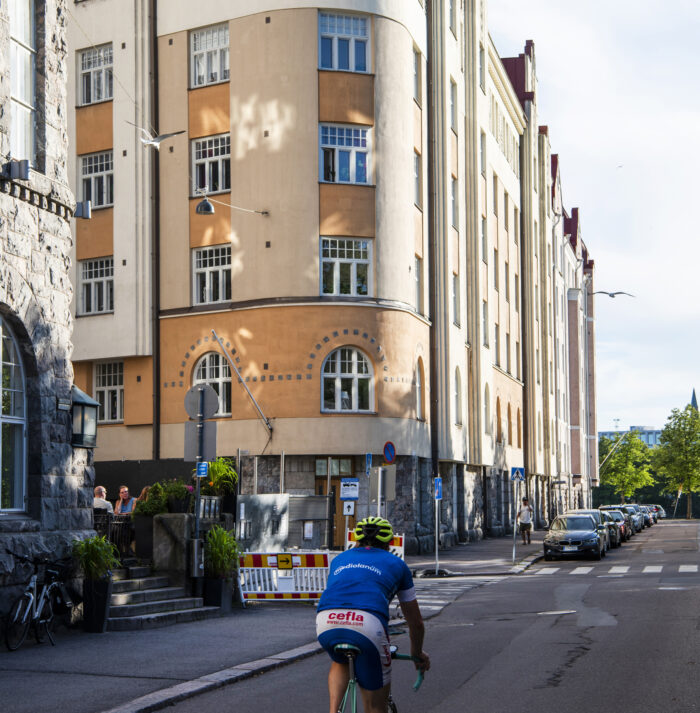
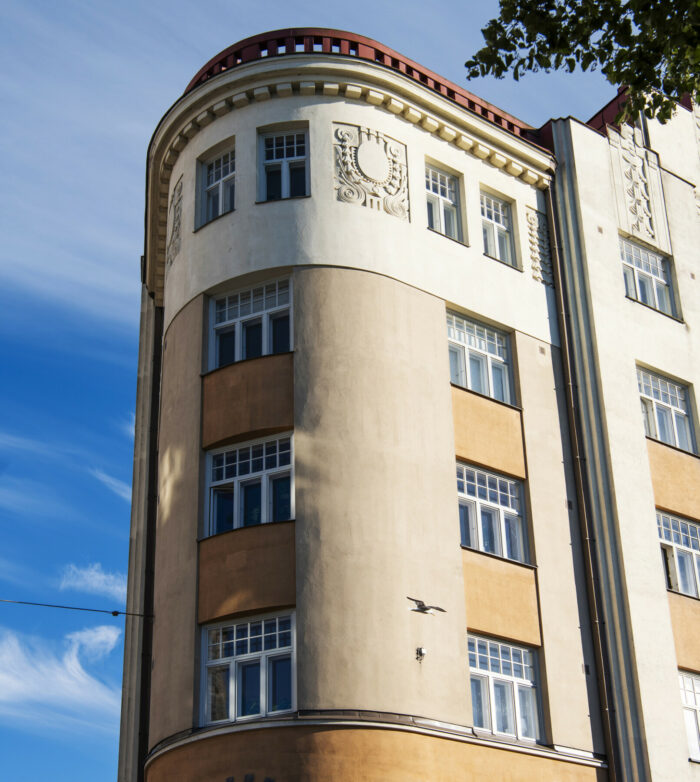
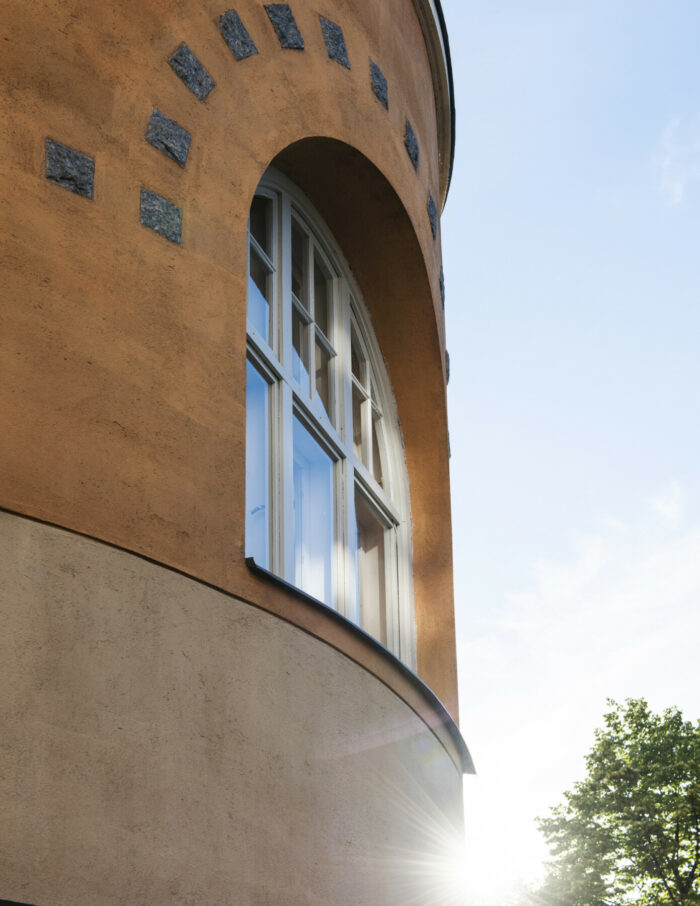
The Finnish capital has long been a well-known destination among art nouveau architecture aficionados. For others, the colourful constructions remain hidden jewels. Let’s see what all the excitement is about!

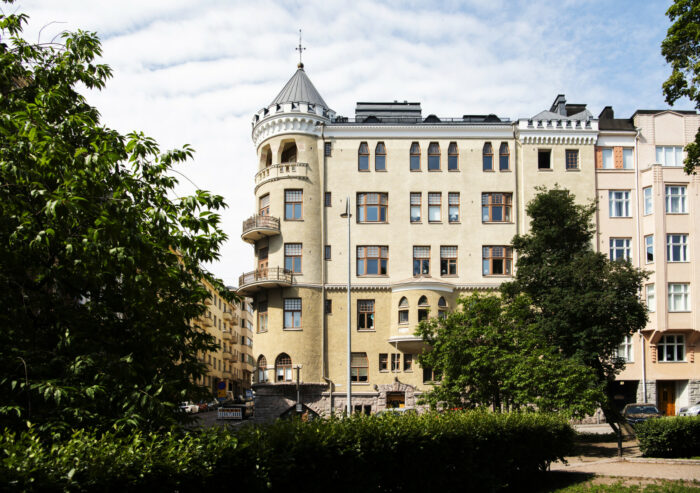
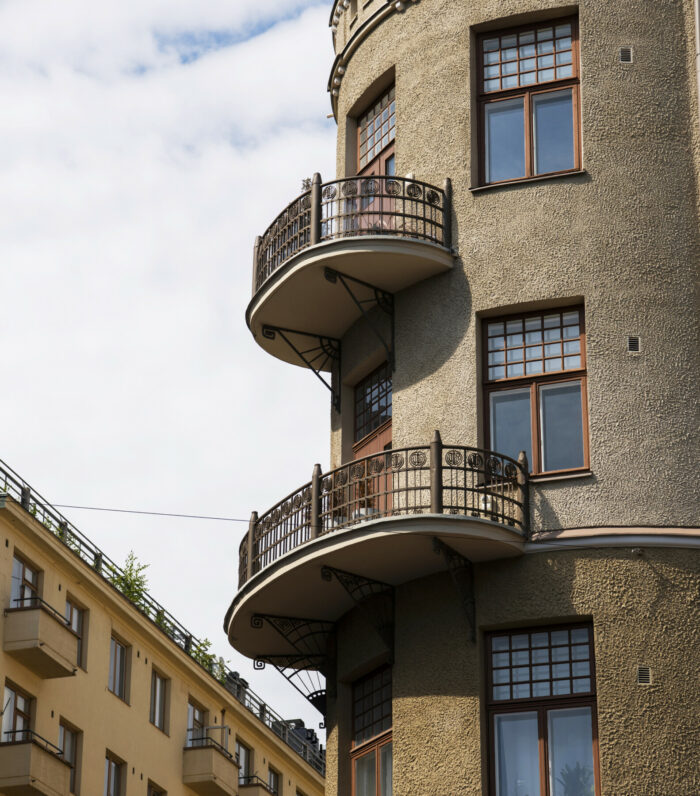
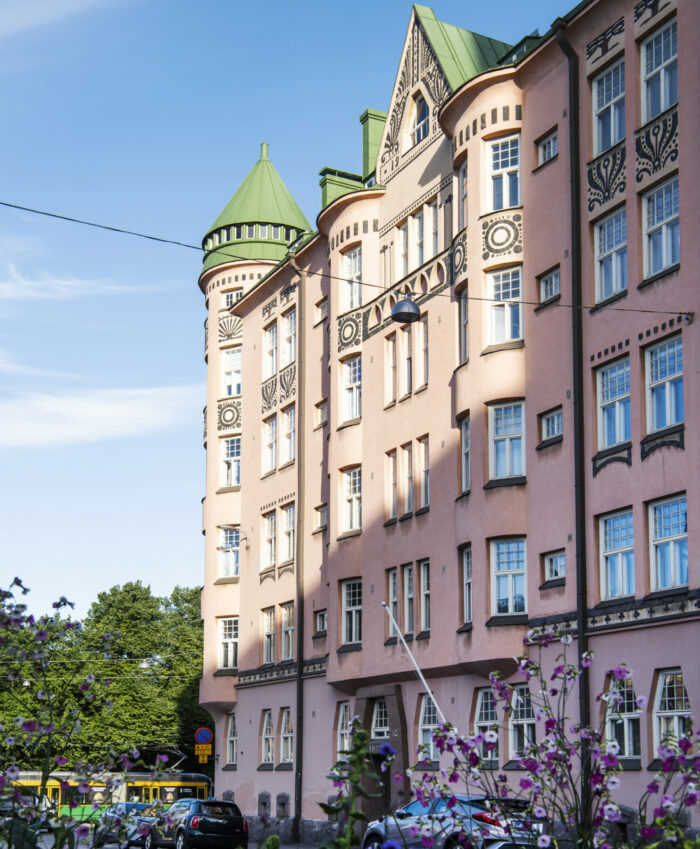
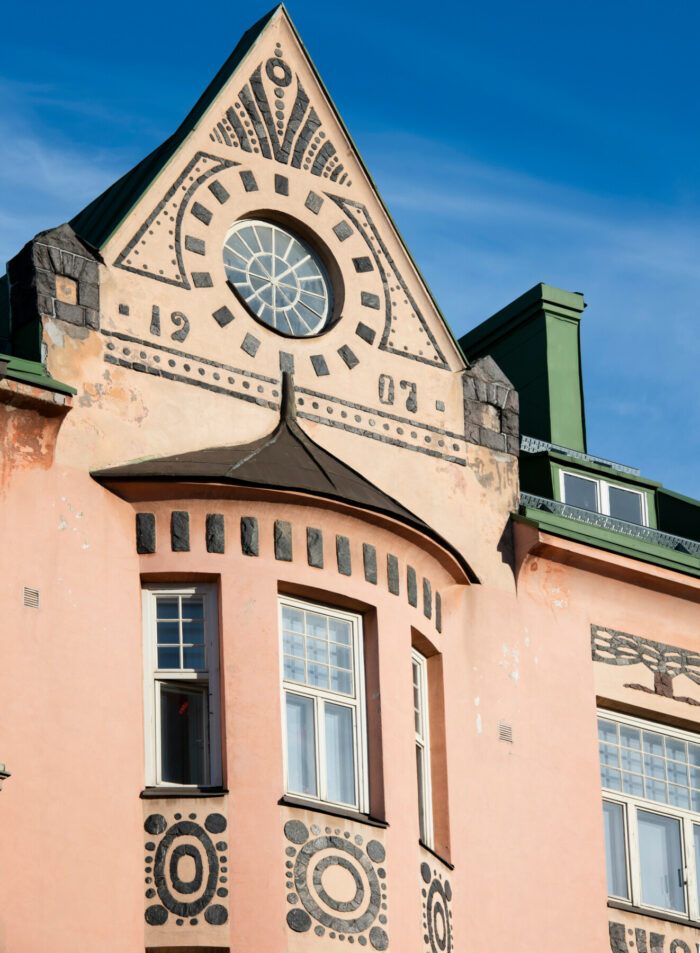
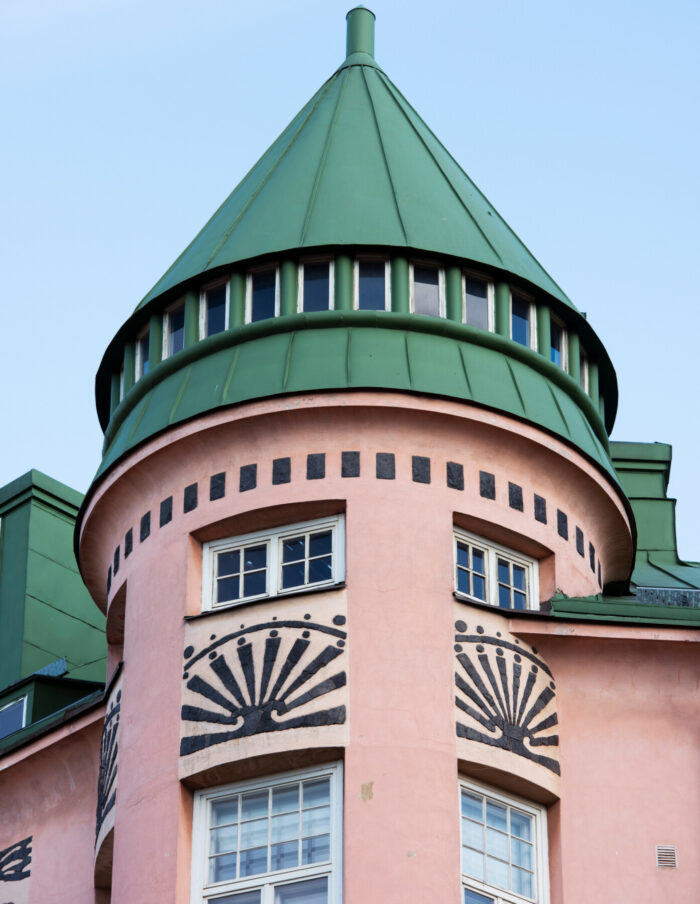
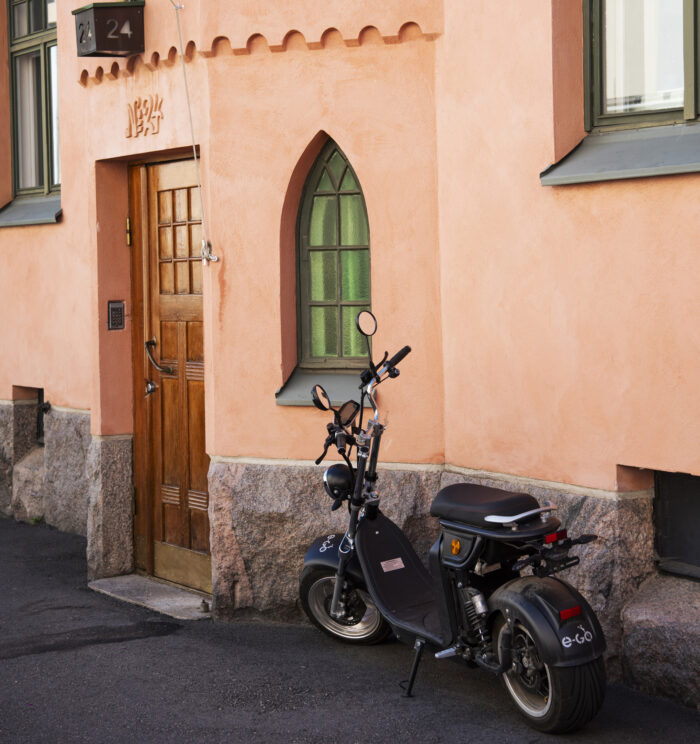
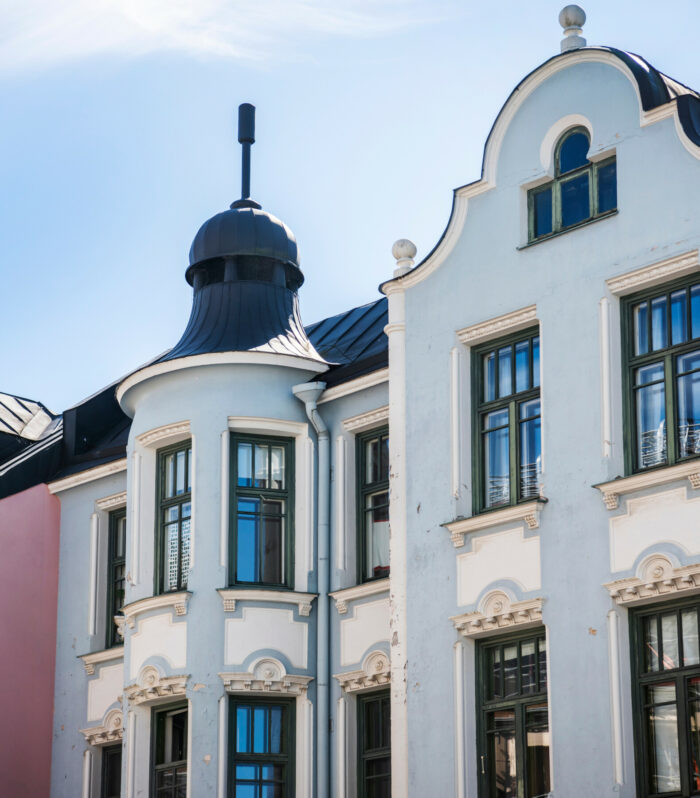
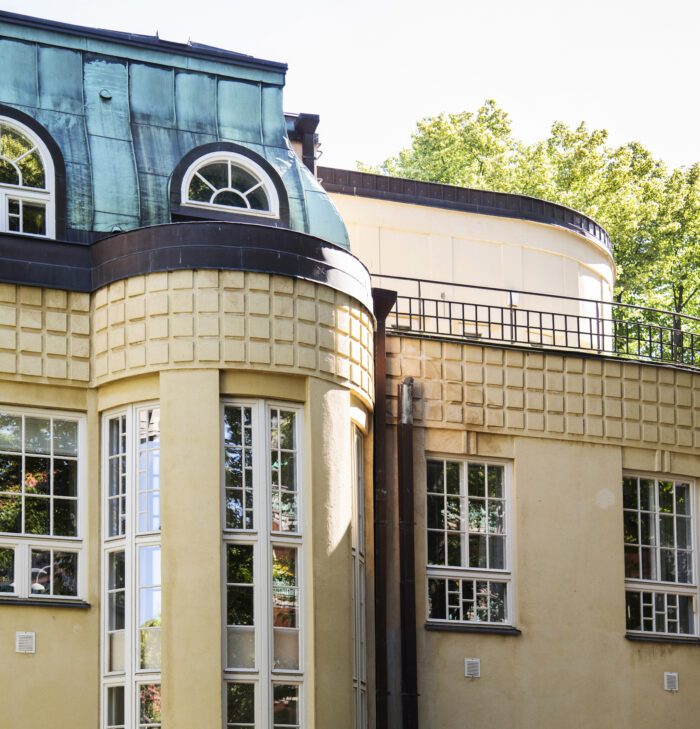
Helsinki is home to hundreds of buildings that belong to the genre, which flourished internationally from about 1895 to 1915. Locally it is called Jugend (from Jugendstil (youth style), a German term for art nouveau). Architects in Finland took the movement in their own direction, drawing heavily from Finnish nature, mythology and medieval motifs, resulting in structures that feel both timeless and imaginative.

In the run-up to Finland’s independence, which it achieved in 1917, art nouveau architecture evolved alongside the broader pursuit of a national identity. Finnish architects incorporated local materials such as granite and wood to create designs that reference Finland’s folklore and natural landscape. They also looked to medieval fortresses and churches as models for shaping these local materials into architectural forms that stand the test of time.

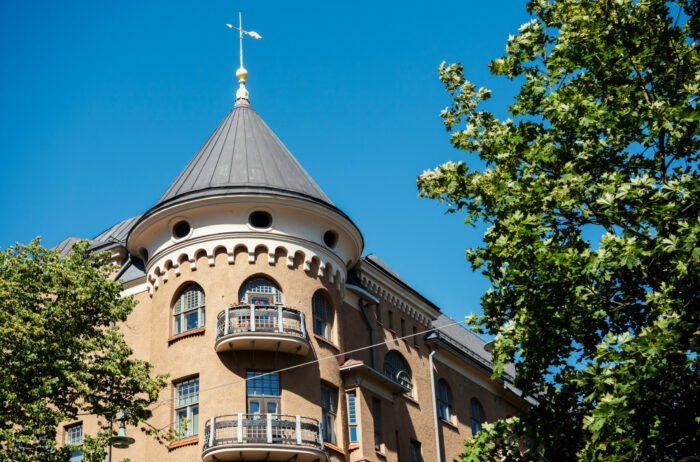
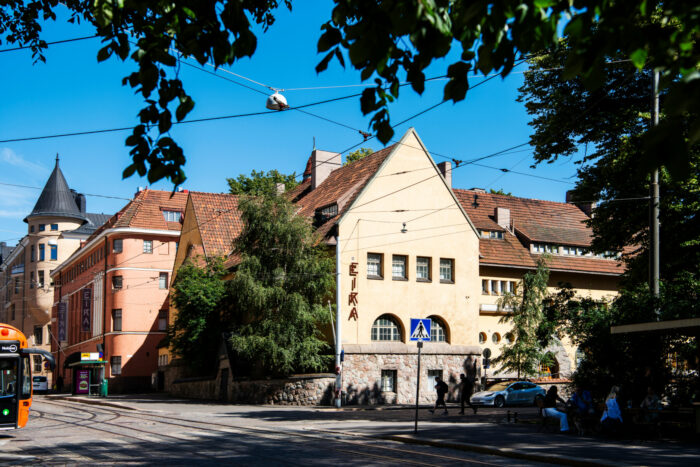
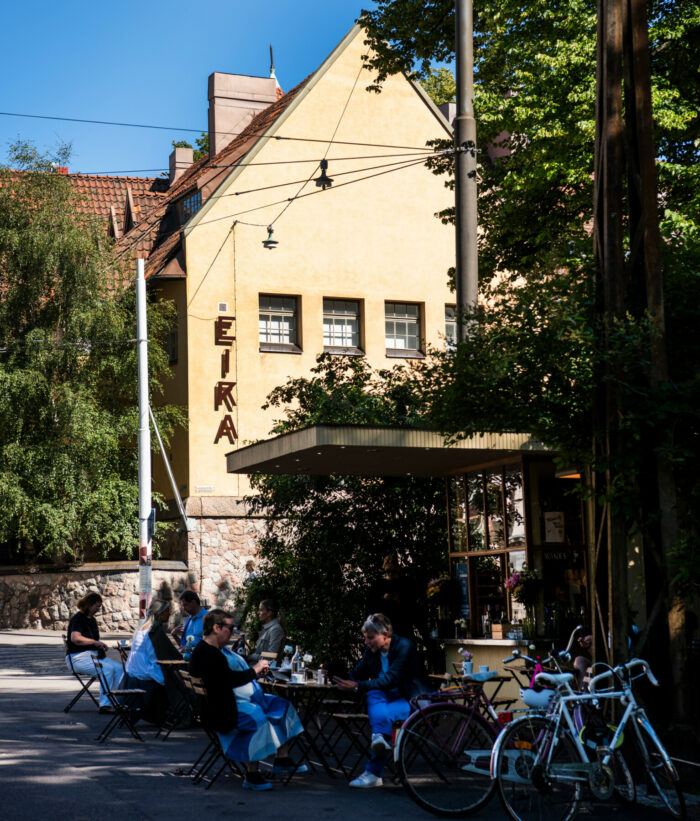
Neighbourhoods such as Katajanokka, Kruununhaka, Eira and Ullanlinna contain numerous eye-catching buildings with asymmetrical façades and rounded towers. Despite their ornate appearance, most of them were constructed as apartment buildings and remain in residential use, a part of Helsinkians’ daily life.

Photographer Kirsi-Marja Savola set out to capture some of the city’s most captivating architectural gems, each with its own story. There’s simply not room enough to include all of our favourites, but here are a few to feast your eyes on.

[We list the building name (if any), street address, neighbourhood, architect and year of construction. Click the arrows or swipe to see more pics.]

Luotsikatu, Katajanokka

Various architects, 1897–1906
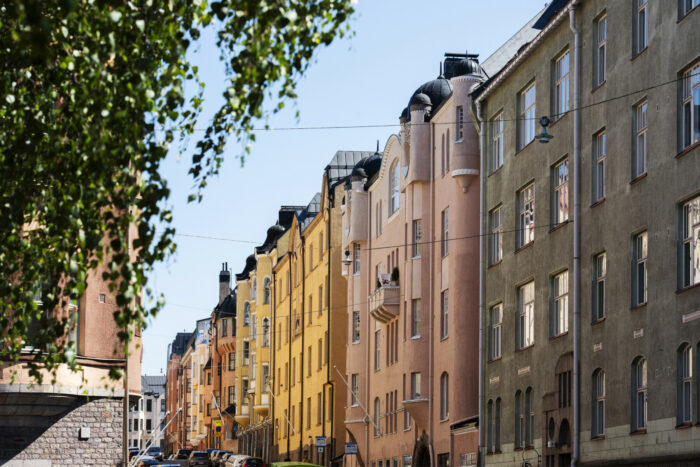
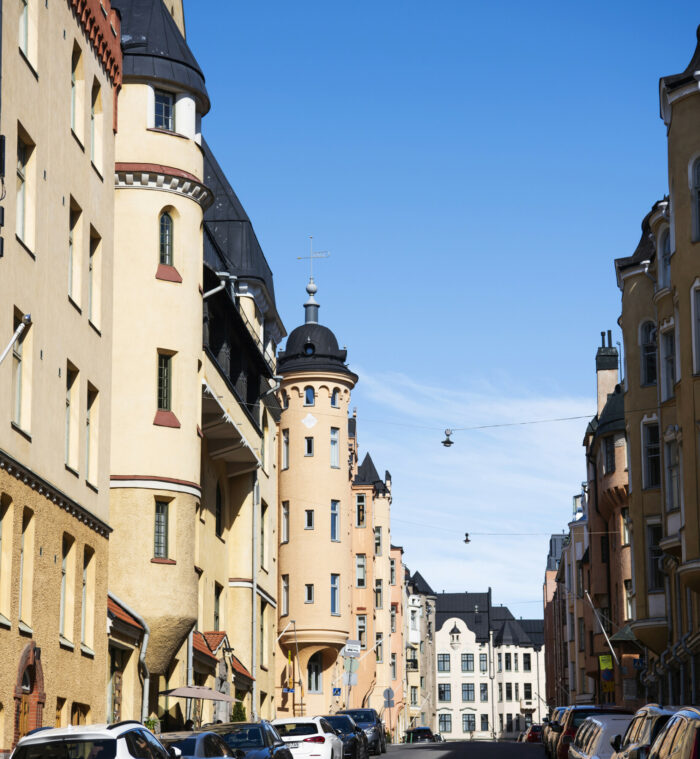
Luotsikatu holds a special place in the hearts of Helsinkians. Readers of Helsingin Sanomat, the largest daily in the Nordic countries, recently voted it the most beautiful street in Helsinki. Lined with exquisite art nouveau façades, this street was also the childhood home of beloved Finnish author and artist Tove Jansson, creator of the Moomin stories.

Aeolus, Satamakatu 5, Katajanokka

Selim Lindqvist, 1903
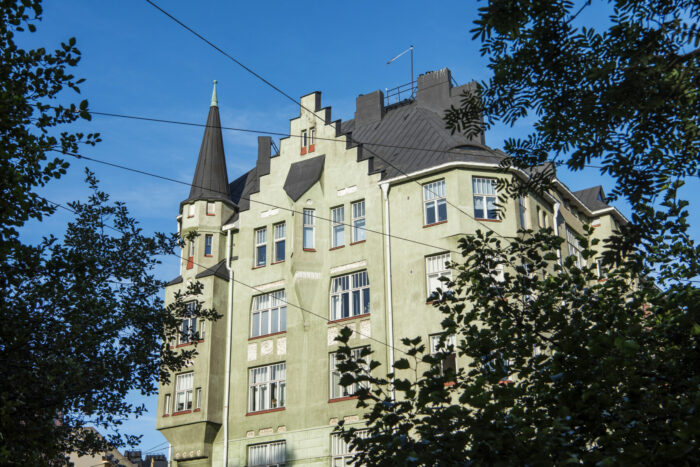
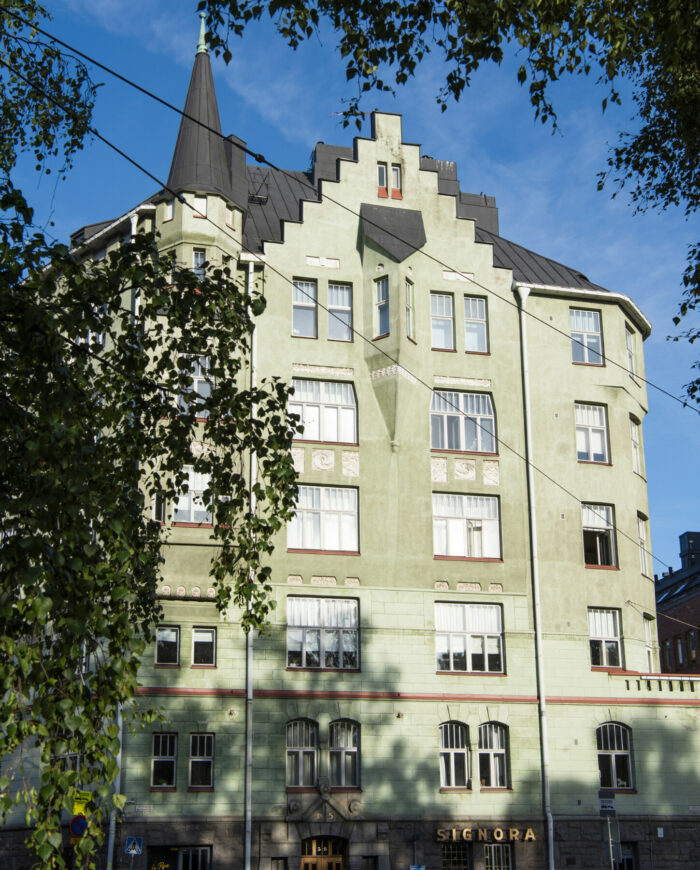
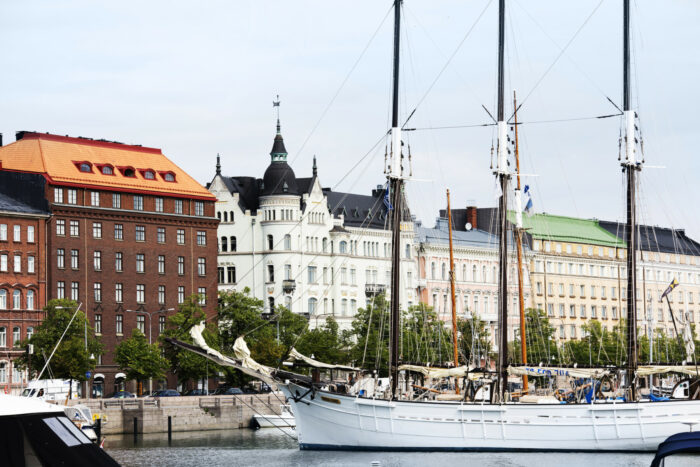
Aeolus reflects a captivating blend of mythology and architecture. The building is named after the Greek ruler of the winds, and his likeness can be found carved into its wooden doors, complete with pursed lips ready to blow away any unwelcome guests.

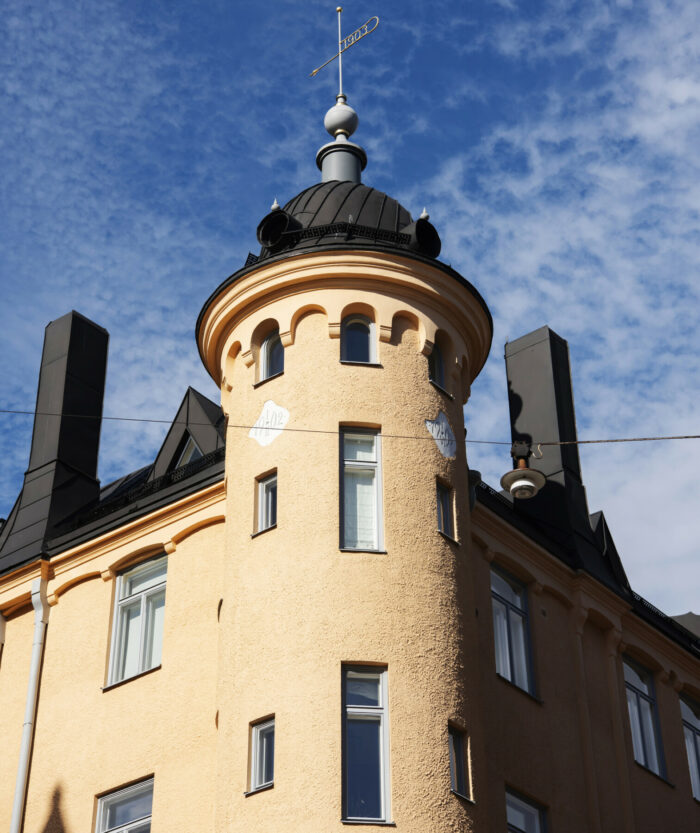
The building’s charm lies in its eclectic combination of elements: a red stone base gives way to green plaster, interspersed with exposed red brick, while its turreted corner, narrow windows and steep roof add a castle-like quality. This distinctive blend of styles showcases the playful yet harmonious spirit of Finnish art nouveau.

Torilinna, Fabianinkatu 13, Kaartinkaupunki

Edvard Löppönen, 1906
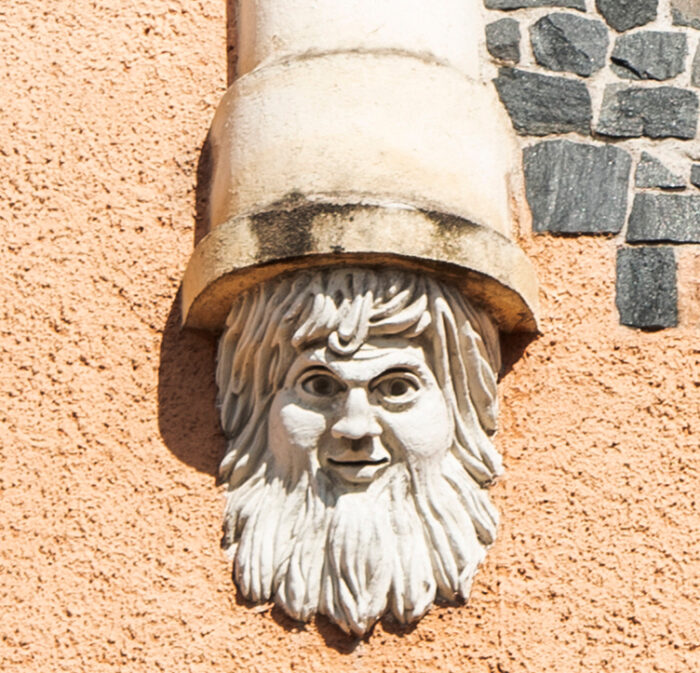
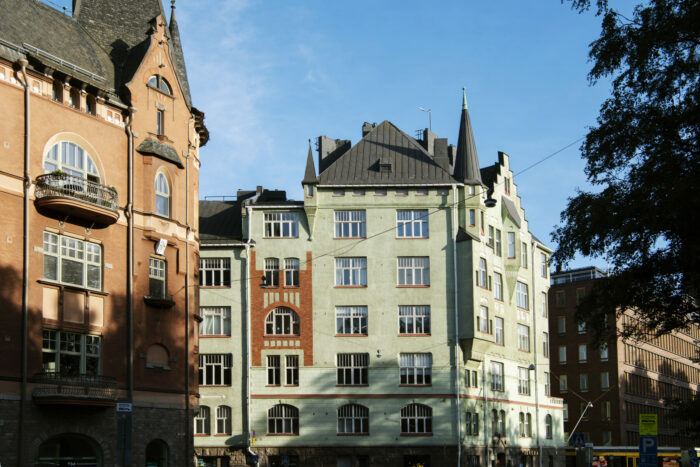
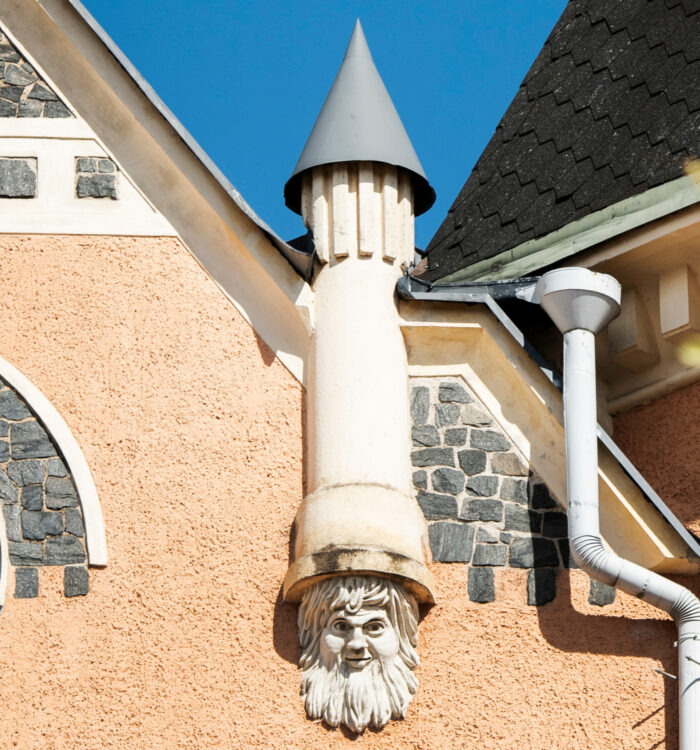
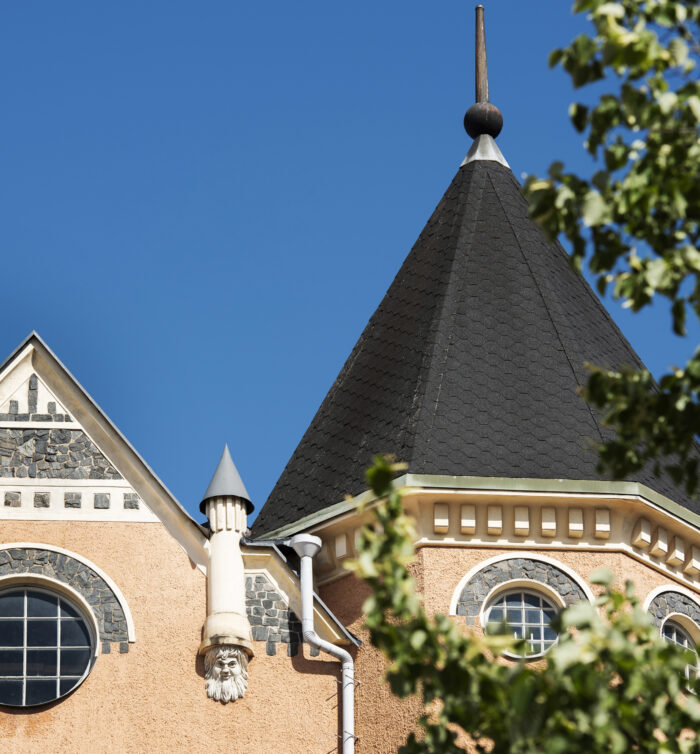
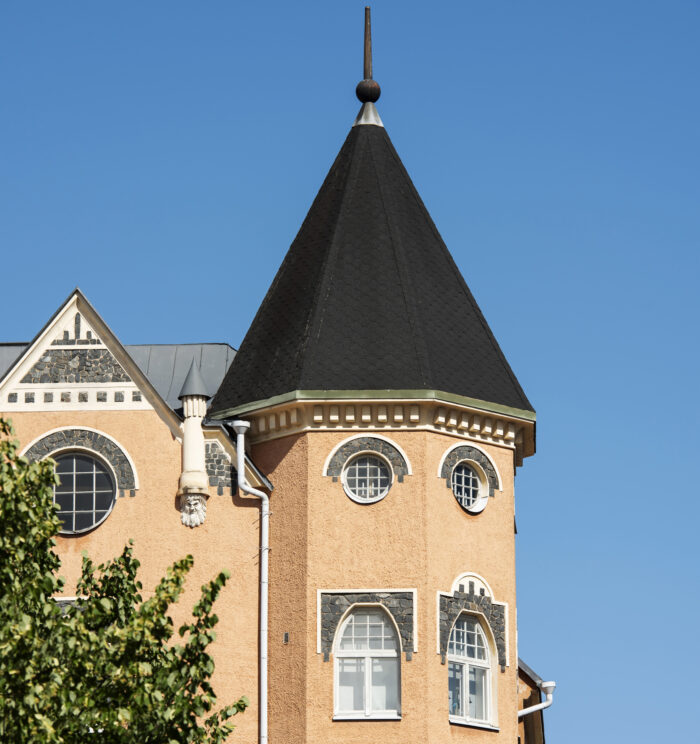
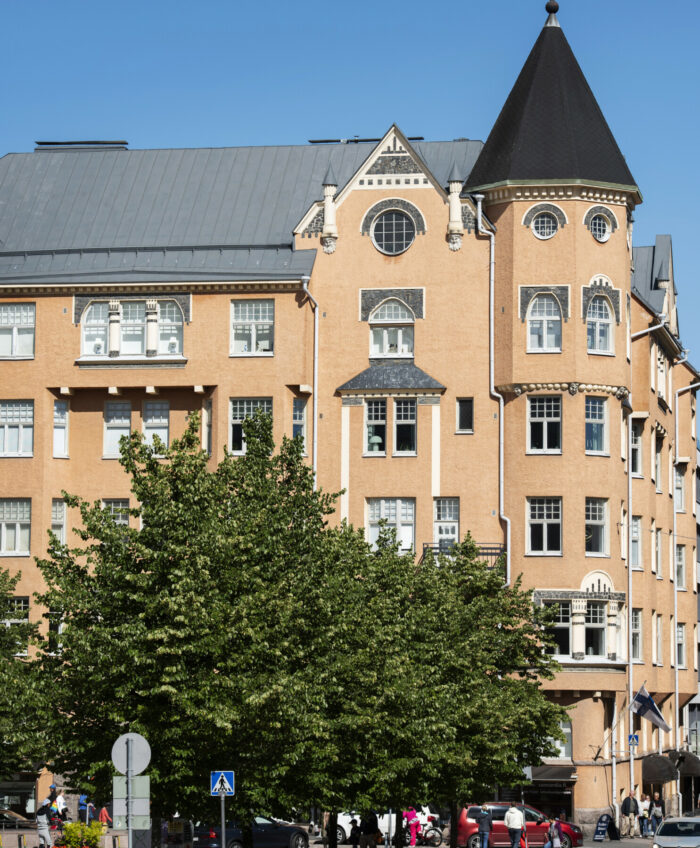
Torilinna (Castle on the Square) stands as a prime example of Jugend’s medieval influences, with its pointed and circular windows, imposing stone archway and corner turret overlooking Kasarmitori (Barracks Square). The building’s façade is adorned with decorated gables and miniature turrets, supported by sculpted faces that peer down over the square.

Though Torilinna lacks the natural motifs typical of Jugend, its architectural elements evoke a sense of an ancient castle set in the heart of Helsinki. It blends the past with the city’s evolving urban landscape.

Pohjoisranta 10, Kruununhaka

Onni Tarjanne and Lars Sonck, 1900
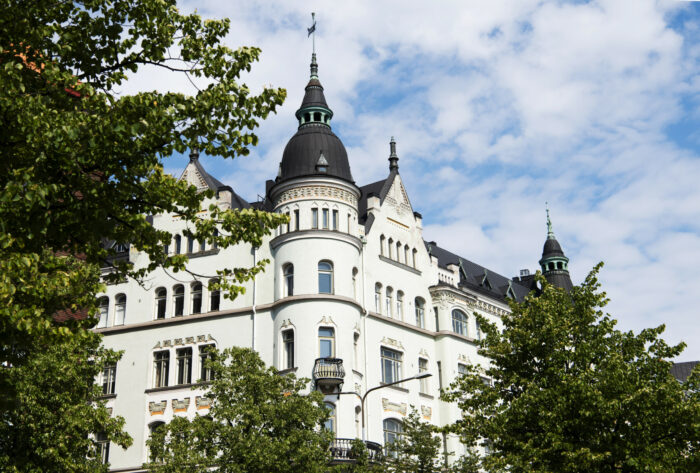
This building represents a fascinating transition between classical and national romantic architectural styles. It draws inspiration from the early French Renaissance, a period when castles began evolving into châteaux, blending fortifications with more refined and decorative elements. The façade features a juxtaposition of styles: we find the classical motif of the acanthus leaf woven into the modern material of wrought iron. The acanthus leaf connects to classical antiquity, while the wrought iron signals a shift towards the modern, decorative spirit of art nouveau.

Elisabeth, Maurinkatu 2, Kruununhaka

Gustaf Estlander, 1903
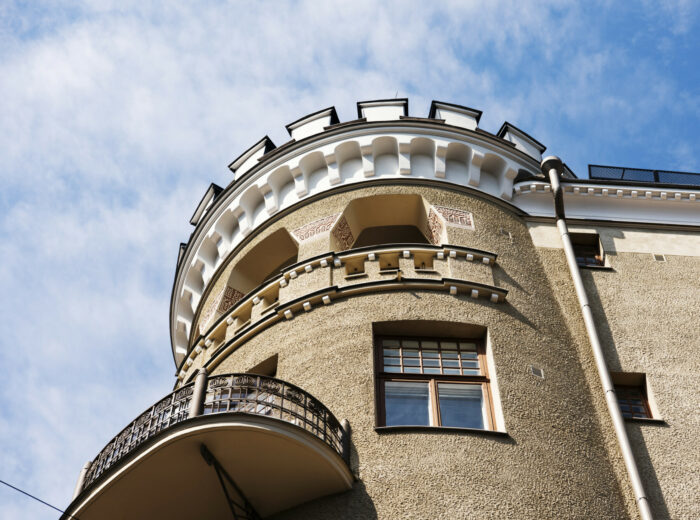
The free-flowing, eclectic nature of Jugend architecture is on display in this building’s asymmetrical façade, characterised by an array of balcony designs – some curved, others angular, with varying materials including wrought iron, stone and plaster.

Its name derives from adjacent Elizabeth Street (Liisankatu in Finnish and Elisabetsgatan in Swedish – both are official languages in Finland). The street received its designation in 1819 in honour of a visit from Emperor Alexander I of Russia, whose wife was called Elizabeth. The name of the neighbourhood also speaks of Helsinki’s layered, multicultural history: It is Kruununhaka in Finnish and Kronohagen (Crown Pasture) in Swedish, a reference to the area’s history as grazing land for horses that belonged to the Swedish monarchy. (Finland was part of the Kingdom of Sweden prior to 1809.)

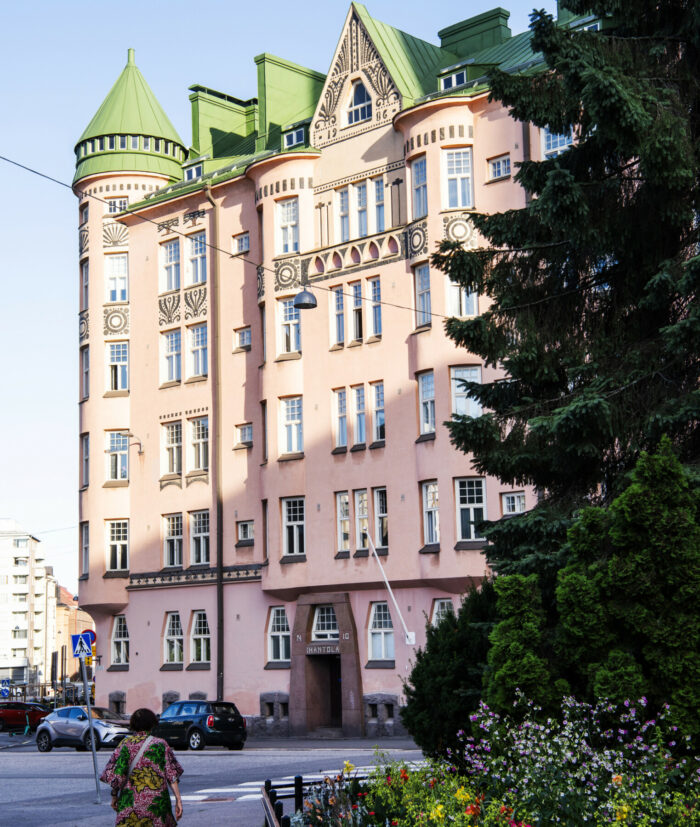
Ihantola, Viides linja 18, Kallio

O.E. Koskinen, 1907
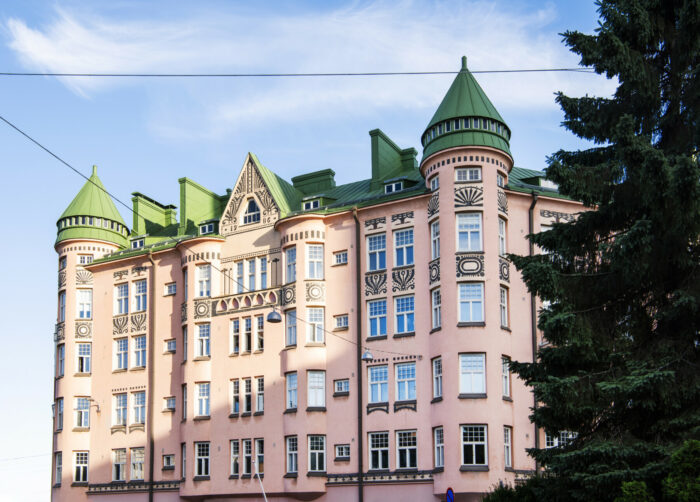
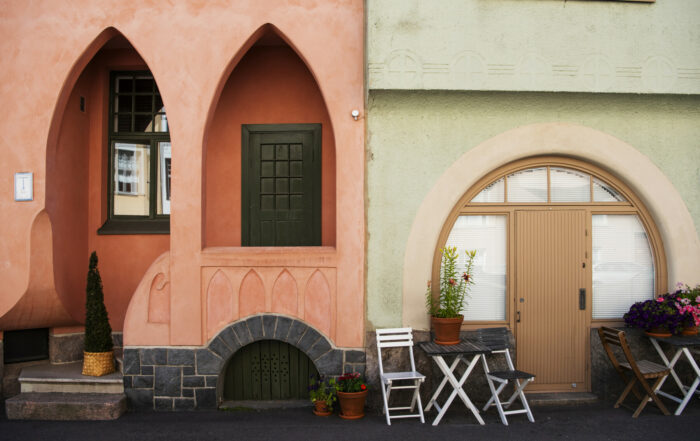
Ihantola recently gained some fame thanks to its appearance on the Instagram account Accidentally Wes Anderson. The symmetrical façade certainly resembles the colourful precision associated with the filmmaker’s aesthetic in movies such as The Grand Budapest Hotel.

Ihantola was the first Jugend building in the working-class neighbourhood of Kallio. The symmetrical façade is typical of later art nouveau, yet the building also has early Jugend elements, such as asymmetrical doors, ornamented gables and a granite foundation. Built by a worker-owned housing company, Ihantola reflects not only the architectural trends of the time, but also the social dynamics of the neighbourhood, as it was intended to provide quality housing for the area’s labourers.

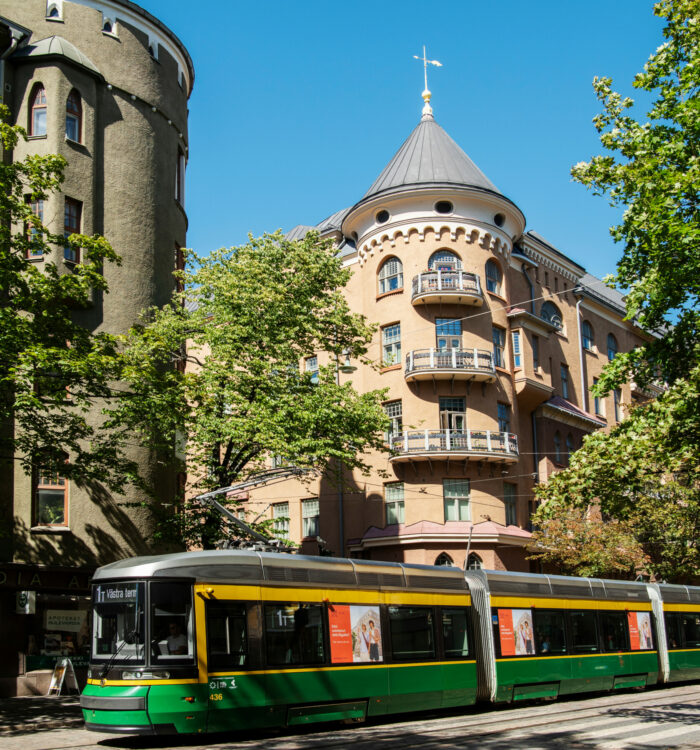
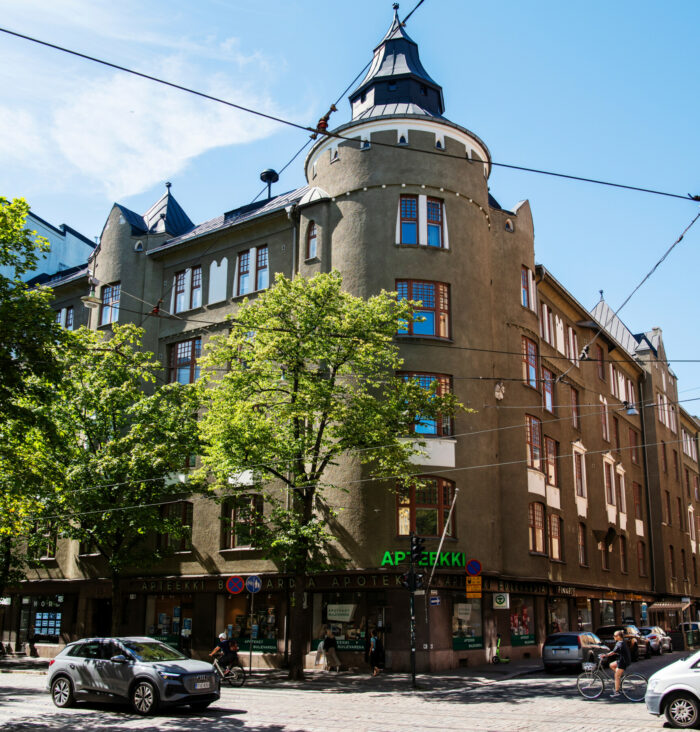
Bulevardi 11 and Sanmark House (Bulevardi 13), Kamppi

Gustaf Estlander, 1904; Karl Gustaf Grahn, Ernst Hedman and Knut Wasastjerna, 1903
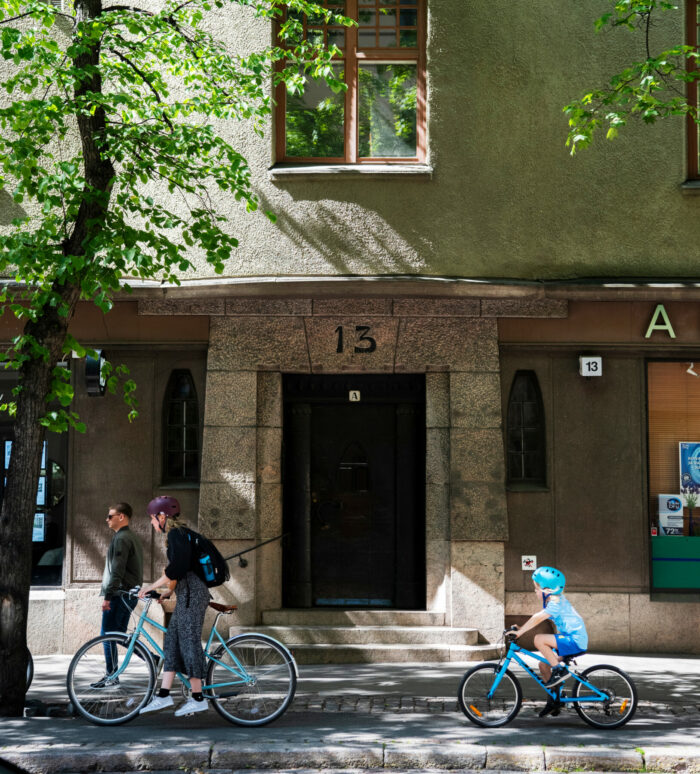
The towers of Sanmark House and Bulevardi 11, built just one year apart, offer contrasting yet complementary examples of Jugend design. Sanmark features smooth stucco walls and stylistic flourishes such as angular bay windows that jut out from the corner turret. Small sculpted figures on the façade, carrying tools of their trade, evoke images of medieval craftsmen building cathedrals.

Across the intersection, Bulevardi 11 showcases prominent balconies and asymmetrical windows. The base of its turret bulges outward, as if carrying the weight of centuries of architectural evolution, from medieval fortifications to modern residences. Both buildings highlight the era’s evolving approaches to the distinctive fortress-like style, combining the past with modernity in a flow of architectural ideas.

Eira Hospital, Ullanlinna/Eira

Lars Sonck, 1905
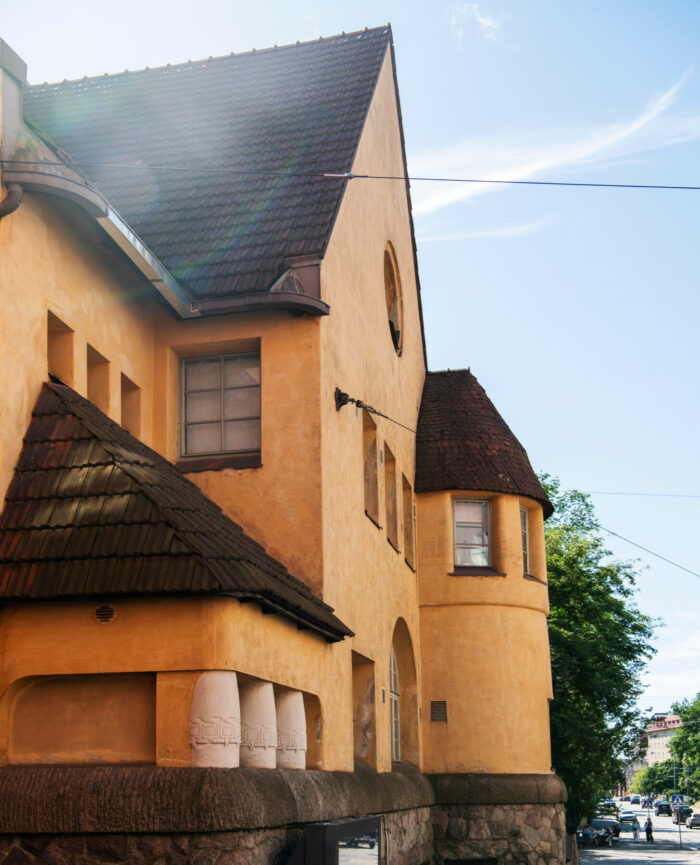
Eira Hospital illustrates the solid yet charming qualities of Finnish Jugend architecture. Commissioned by a group of doctors who sought a more comfortable hospital atmosphere, the building’s design emphasises strength and stability but maintains an asymmetrical charm, with non-matching windows and turreted corners. You won’t find endless hallways or sterile lighting here. In contrast to the highly decorative and flowing lines of Continental art nouveau, Eira Hospital projects a more grounded, simplified look, while retaining the quirky charm typical of Jugend.

The hospital is appropriately named after Eir, the Norse goddess of healing – another link to mythological and natural themes. Soon after its completion, Sonck oversaw the development of the nearby neighbourhood, also called Eira, employing urban planning principles inspired by classical, medieval and Renaissance designs. This method focused on aesthetic value and organic street layouts, in contrast to grid-like city plans.

Huvilakatu, Ullanlinna

Various architects, 1904–1908
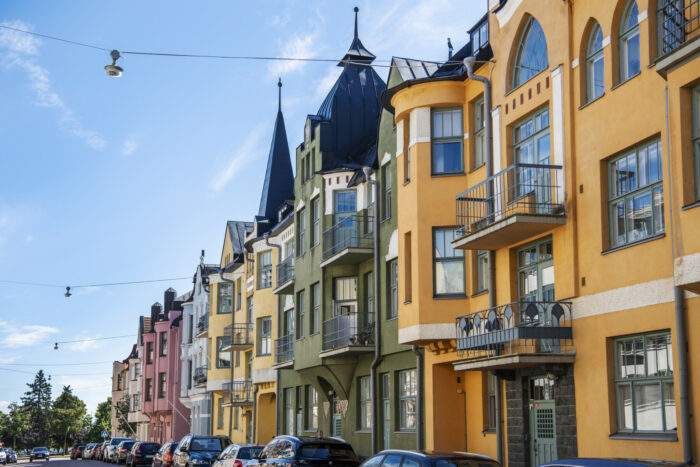
Designed by a who’s who of Finnish architects and master builders at the peak of the Jugend movement, the houses on this street make it one of the brightest, most fanciful places in Helsinki. Its patchwork of art nouveau architecture displays the era’s playful spirit. Huvilakatu (Villa Street) features a mosaic of colourful façades, turret-like bay windows and an eclectic mix of balconies.

The street’s charm and vibrant colours even appeared in Finland’s longest-running TV drama, Salatut elämät (Secret Lives) – it was the show’s main exterior filming location for more than 15 years. Huvilakatu remains a testament to Jugend’s imaginative approach to urban architecture, with a new surprise every few metres.

Villa Ensi, Merikatu 23, Eira

Selim Lindqvist, 1910
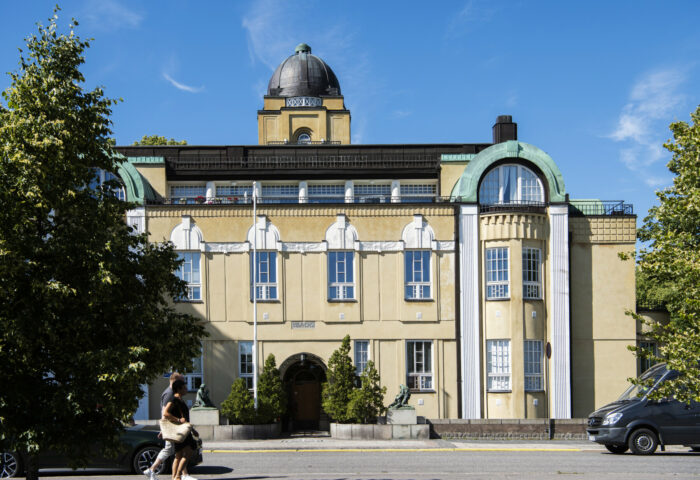
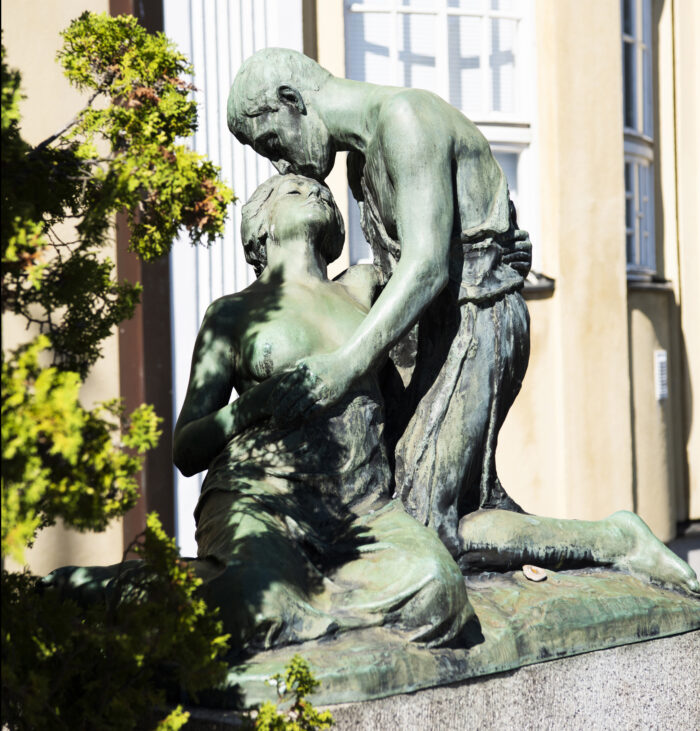
Villa Ensi, completed in 1910, represents a marked departure from the more elaborate and nature-inspired motifs of earlier Jugend architecture. Designed by Selim Lindqvist, who also created the Suvilahti Power Plant on the other side of Helsinki, Villa Ensi embodies a more minimalistic approach, embracing symmetry and simplicity rather than asymmetry and ornamentation. Gone are the natural motifs, mythical figures and turreted corners of earlier Jugend constructions, replaced by clean lines and restrained design. The grounds of the building feature several sculptures, including Harald Sörensen-Ringi’s Au revoir (1912).

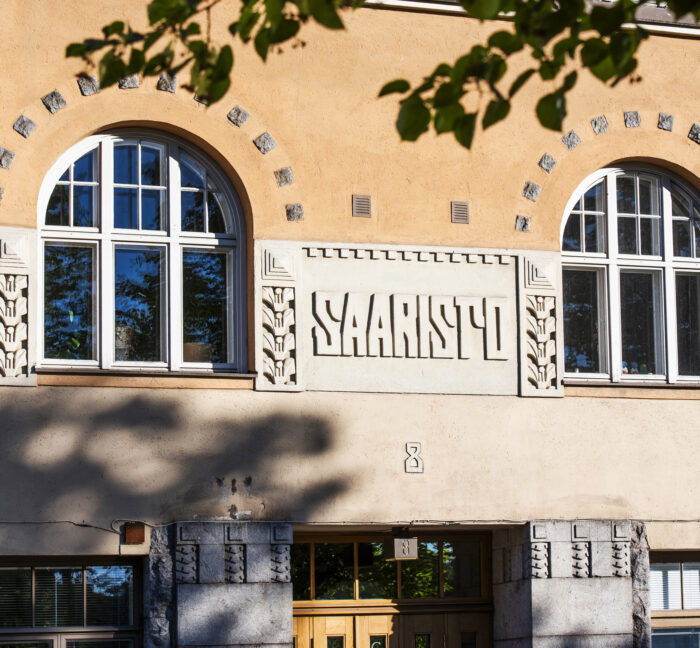
Saaristo, Säästöpankinranta 8, Siltasaari

Karl Lindahl, 1909
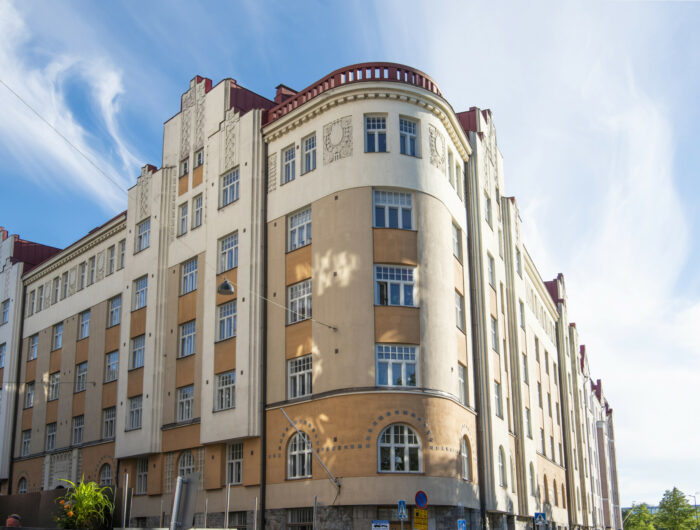
Saaristo (Archipelago) represents a prime example of late Jugend architecture. It exhibits more symmetry and classical restraint than its early Jugend predecessors, contrasting directly with Lindahl’s earlier work, the Helsinki Workers’ House (Paasitorni), which is located directly across the street. While Paasitorni’s granite-clad façade evokes the strength of a medieval fortress, Saaristo’s smooth plaster façade and balanced proportions reflect a growing trend toward simplicity and refinement within the Jugend style that would later become foundational to the modernist style. This contrast illustrates how quickly the architectural landscape in Helsinki evolved during the Jugend period, moving from the heavily ornamented and whimsical to more orderly and restrained designs.

By Tyler Walton, September 2024
On a roll: Helsinki urban planning continues to expand bike path network

The Helsinki region’s ever-growing cycling network builds on about 1,500 kilometres (930 miles) of existing cycle routes, including some of the most beautiful scenic bike rides of any capital city. They hug the Baltic Sea coast, follow the Vantaa River and fan out into the forests of Central Park.

People in Helsinki are increasingly choosing the two-wheel option as a leisure pursuit and for travel to work. Signage on new and existing cycling routes has been increased and improved.

For a growing urban area to function, the transport system needs to take into account all transport modes and their interconnectivity. Oskari Kaupinmäki, Helsinki City’s cycling coordinator, says, “Cycling and best-practice bicycle infrastructure are part of the holistic approach where cycling does not compete with walking or public transit, but complements them.”

Swift alternative

People bike along a paved path beside an embankment and a row of buildings.

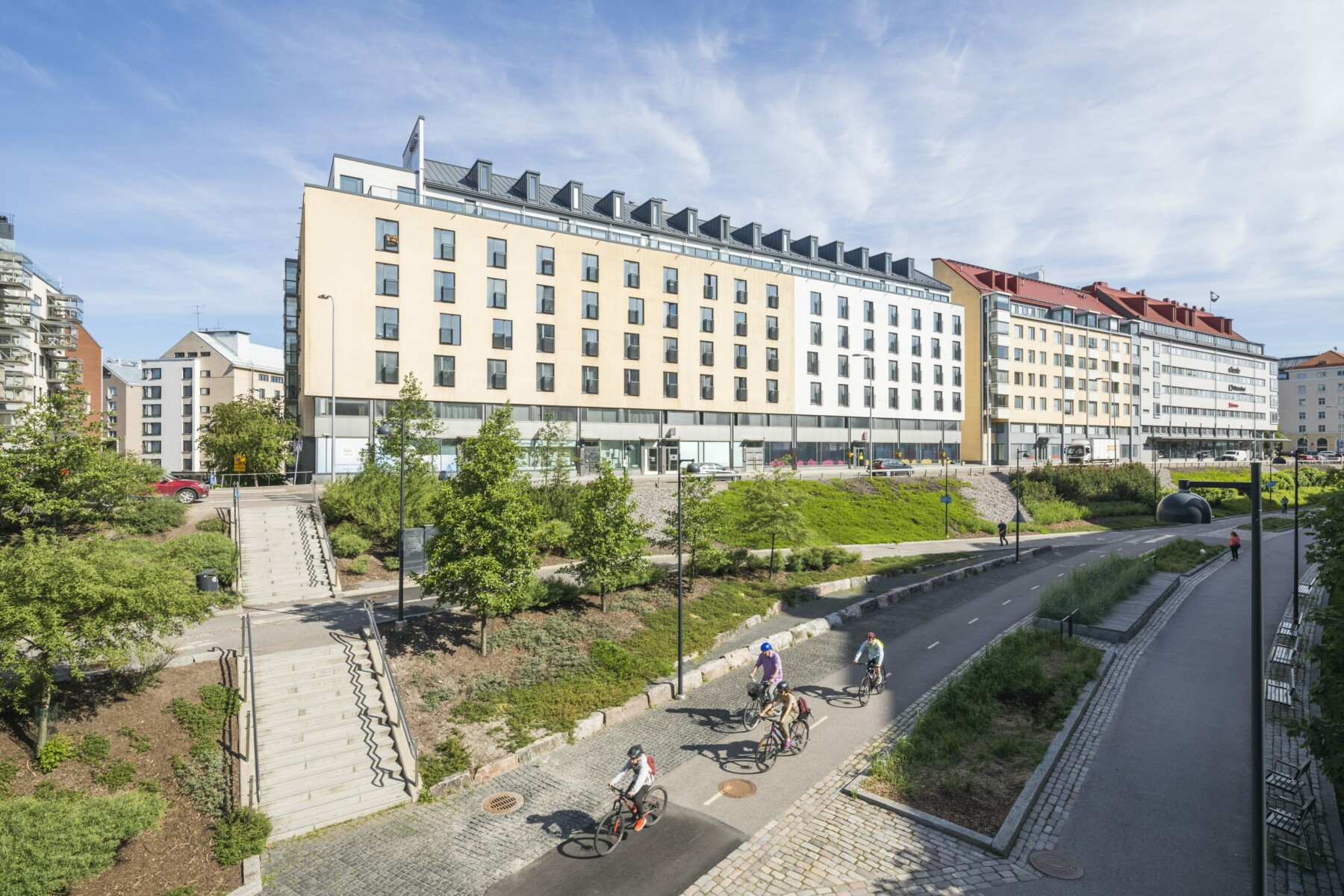
The Baana, built upon a former freight-train track, is a favourite bike and pedestrian route across downtown Helsinki.Photo: Timo Viitanen/Lehtikuva

Helsinki City’s strategy, “A Place for Growth,” includes the Bicycle Action Plan 2020–2025. The strategy states that intelligent traffic solutions underpin smooth transport. Kaupinmäki says, “The target is to reach a modal transport share for cycling of 20 percent by 2030, by means of best-practice infrastructure, improving maintenance, improving bicycle parking, improving construction site arrangements, and marketing and communications to promote a positive image of cycling.”

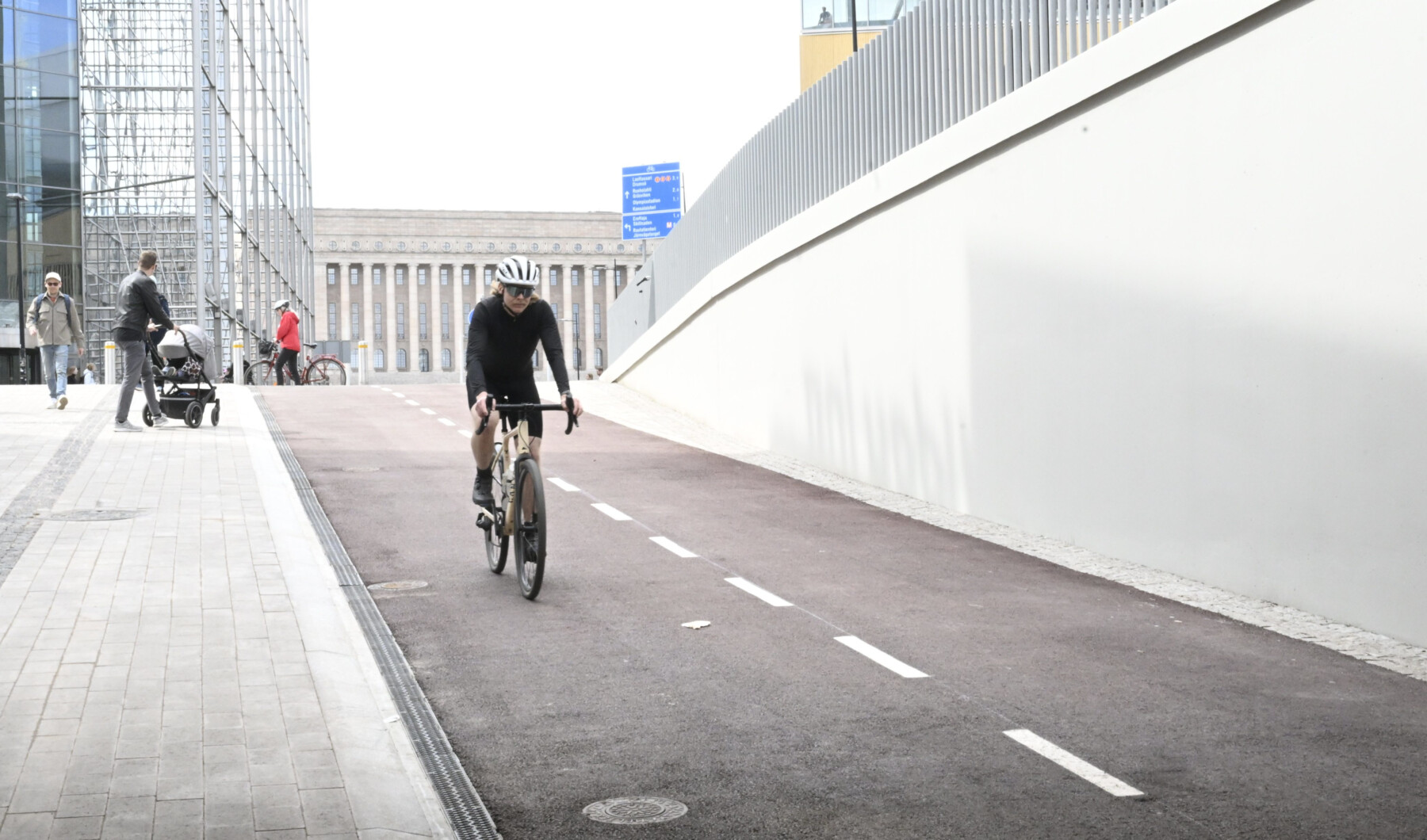
Public appreciation was evident in the fanfare that greeted the May 2024 opening of a cycle and pedestrian tunnel linking Kansalaistori (Citizens’ Square) in front of the Oodi Central Library with Kaisaniemi Park.

It passes under the platforms of the Central Railway Station. At 220 metres (240 yards) long, it offers a swift alternative to riding along the front of the station and contending with traffic lights and the busy flow of commuters and tourists. It was challenging to build the tunnel while regular train traffic continued unabated. The underground structure includes a bicycle parking garage with maintenance facilities.

Extending and connecting

A person rides a bike on a paved bike path that goes downhill into a tunnel, with buildings and pedestrians in the background.

Instead of having to go around the Central Railway Station, you can now conveniently bike or walk under the tracks.Photo: Heikki Saukkomaa/Lehtikuva

The new link connects and extends the cycle routes on both sides, including the Baana, a path built upon a former freight-rail track. It leads to new neighbourhoods west of the city centre. The “baana” label has also been adopted for other similar, specially constructed bicycle “highways.”

Other recent and upcoming additions include several bridges serving mainly foot, cycle and tram traffic. They connect the areas of Hakaniemi and Kruununhaka with new waterside neighbourhoods to the east. At the time of writing, Helsinki’s main thoroughfare, Mannerheim Road, is receiving a total makeover, complete with new bike paths.

Natural and viable

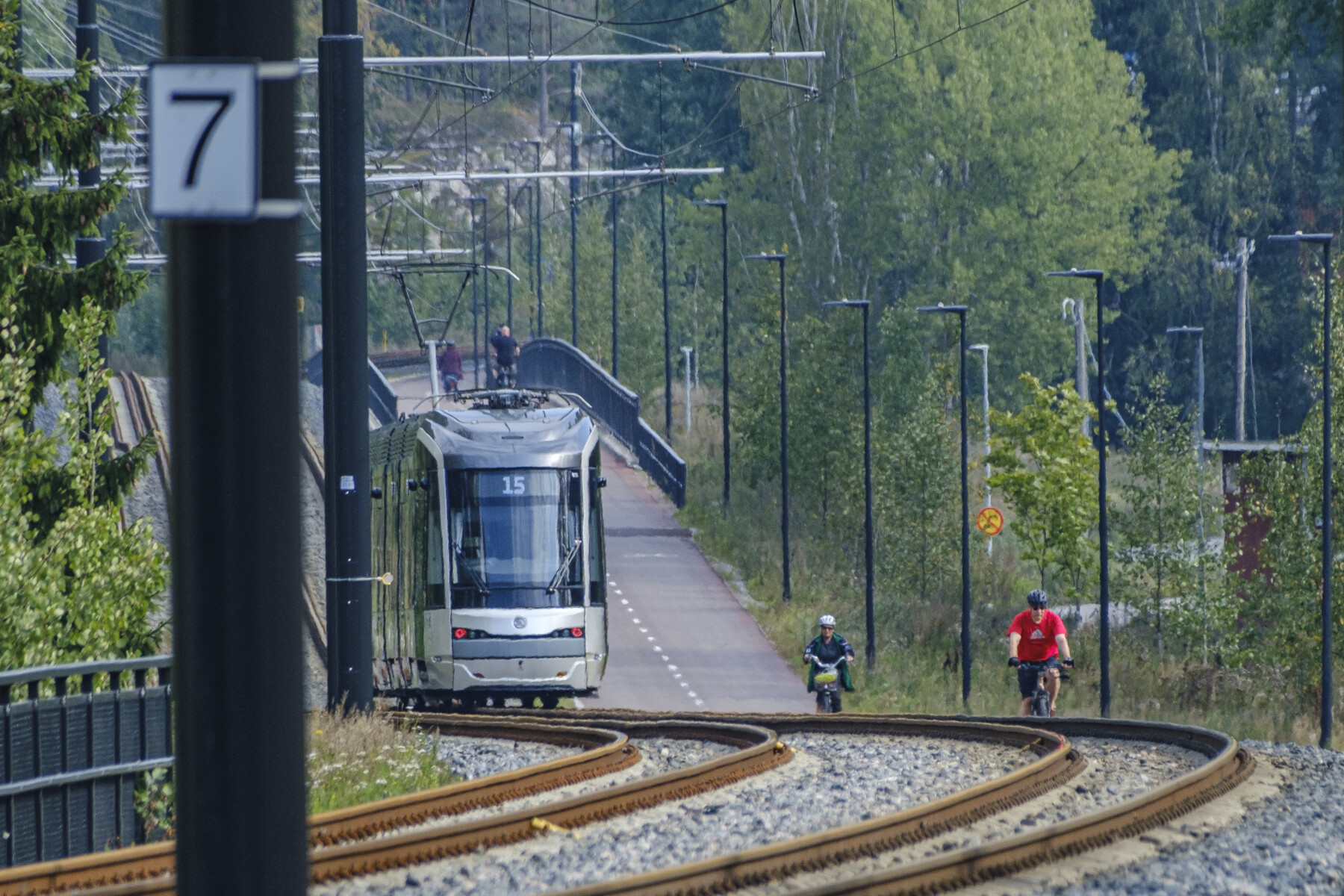
A tram moves along its tracks while beside it people are cycling on a bike path.

Freshly paved bike paths run parallel to Helsinki’s new light-rail line for much of its route.Photo: Tim Bird

Kaupinmäki notes that Helsinki has had a target network for cycling in the inner city since 2012, and extended it to cover the entire city in 2016. “In the urban and other built-up areas, main routes for cycling are planned along busy urban thoroughfares, which are main routes for other transport modes such as trams and light rail,” he says. “These routes are complemented by bicycle highways, connecting neighbourhoods with the city centre and each other among the most direct, easy, and efficient routes possible.”

The executive director of the nonprofit Helsinki Region Cyclists, Henni Ahvenlampi, welcomes the targets, but believes progress should be faster for cycling to make its contribution to Helsinki’s goals of achieving carbon neutrality by 2030, zero emissions by 2040 and carbon-negative status after that.

The association does advocacy work across the whole Helsinki region, including the neighbouring cities of Espoo, Vantaa and Kauniainen, for bicycle traffic to be a natural and viable part of city traffic. Regardless of age and other personal aspects, cycle traffic should be accessible for as many as possible.

Pedal power

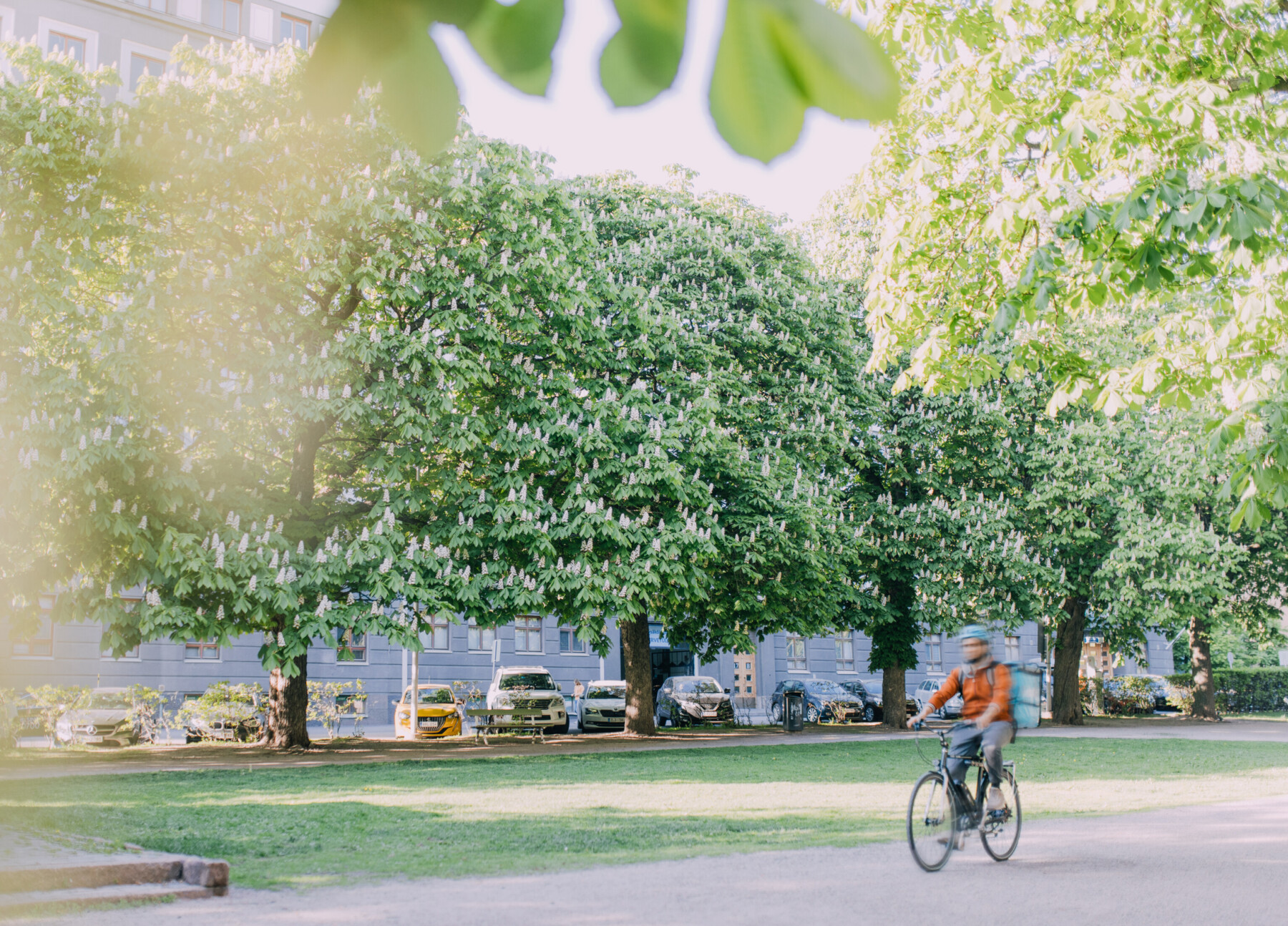
A person bikes along a path through a park where the trees are full of flowers.

A cyclist rides through Hesperia Park in the Töölö neighbourhood of Helsinki while the chestnut trees are in bloom.Photo: Julia Kivelä/Helsinki Partners

“It’s great that Helsinki has set the target network, and that the city realises it needs developing, and they have expedited the process,” she says, adding that about 70 percent of the Helsinki population own usable bicycles, making it one of the most cycle-intense cities in the world. “We need to concentrate on quality to ensure that the results match the plans.”

Helsinki winters are becoming less predictable as a consequence of climate change, but winter conditions are guaranteed. Year-round cycling is increasingly popular, but depends on winter path maintenance. Ahvenlampi would like to see this improved, for cyclists as well as pedestrians, including citizens using any mobility aids, such as rollators (wheeled walkers) or wheelchairs.

Popular pedalling

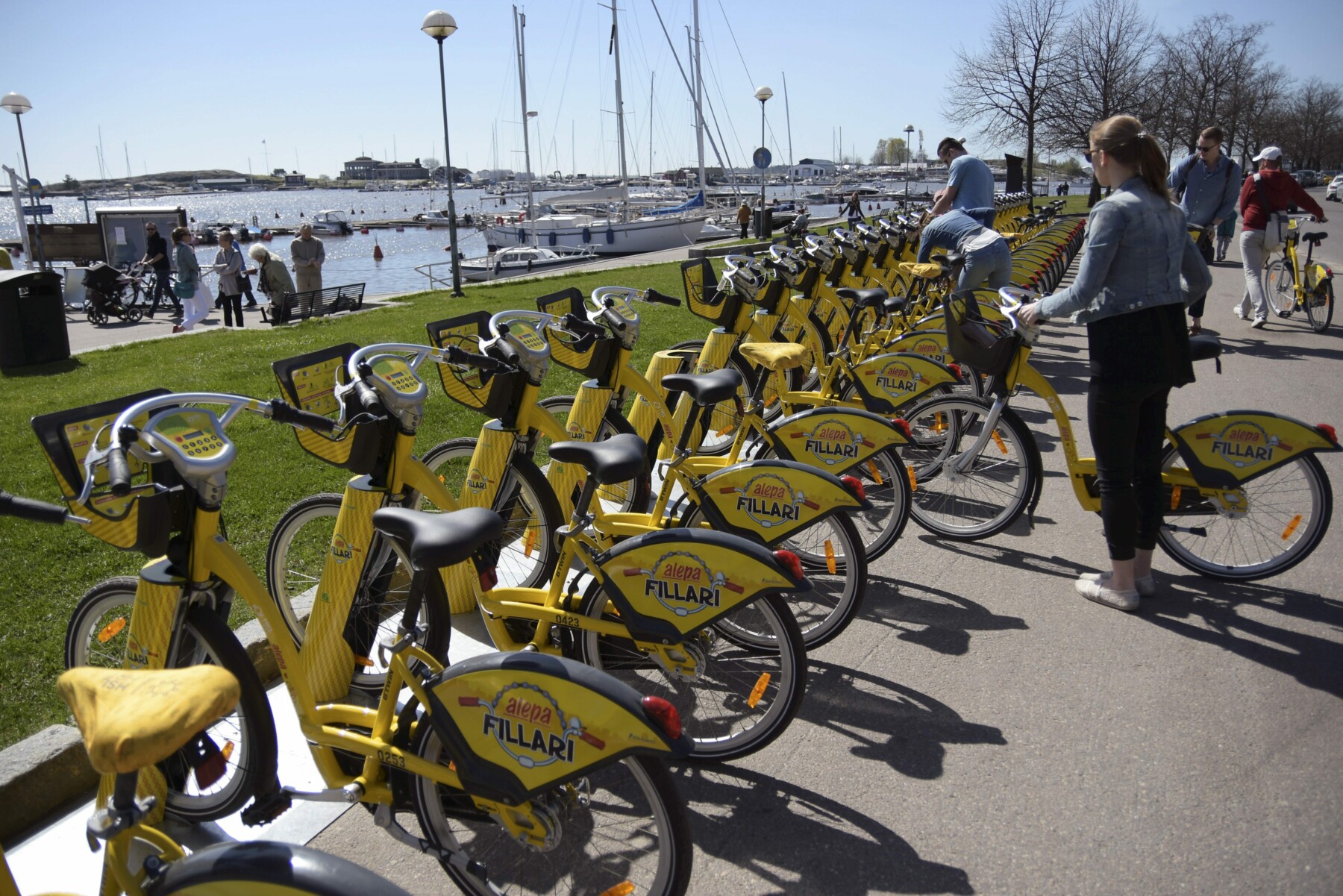
A woman pulls a bike from a row of bikes situated by a path near a scenic harbour.

Rows of yellow city bikes are a sign of spring in the Helsinki streetscape.Photo: Teemu Salonen/Lehtikuva

Ahvenlampi welcomes the provision of more indoor cycle parking garages. She points to the west coast city of Vaasa’s bike parking facility as a model for security: access requires registration using secure bank identification. She also mentions the enthusiasm for year-round cycling in the northern city of Oulu, facilitated by the high priority they place on winter path maintenance.

Helsinki and Espoo share an affordable, easy-to-use city-bike scheme, hugely popular with residents and visitors, with a total of 460 bike stations and about 4,600 bicycles. They’re available from early April to late October, but could be extended through the winter months with regular maintenance.

Political agreement

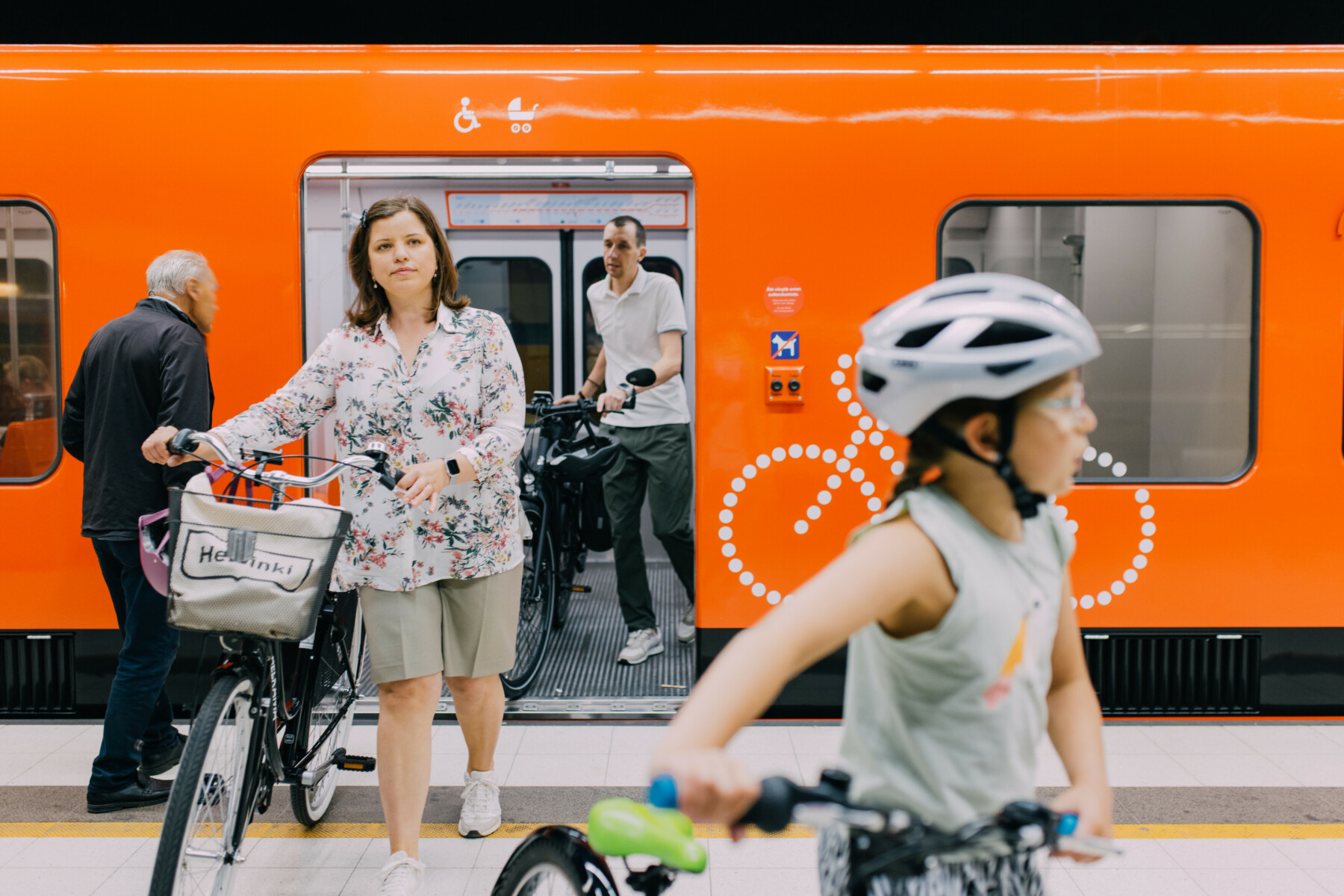
A man, a woman and a child are walking their bikes out of a metro train and onto the platform.

You can combine transport options by bringing your bike with you on Helsinki’s metro and commuter trains.Photo: Julia Kivelä/Helsinki Partners

While recognising the challenges, all parties – including political parties – are in broad agreement that cycling should be encouraged and facilitated, for reasons of environment, sustainability, health and convenience.

“The political will towards promoting cycling and other sustainable modes is very high in Helsinki,” says Kaupinmäki. “As the target network nears completion, we expect the number of resident cyclists to increase. Absolute cycling volumes at our counters already suggest that an increase is happening.”

By Tim Bird, September 2024

From bottles to molecules, Finland continues to reshape its plastic recycling

Finland has the best bottle recycling system in the world, according to Marko Mäkinen, CEO of Pramia Plastic. The company received the National Entrepreneur Award in 2023 from the Federation of Finnish Enterprises for pioneering work in the circular economy sector.

Mäkinen’s state-of-the-art facility in western Finland recycles a million bottles a day. With 96 percent of plastic bottles in Finland returned to circulation, there’s plenty of supply to keep the plant churning.

Pramia Plastic was founded in 2012 as a subsidiary of the beverage manufacturer Pramia. “The first seven years were very difficult, but we started to get huge demand when the recycling boom took off in 2019,” says Mäkinen, whose firm exports its products around Europe. “Buyers were competing to buy our products.”

The factory converts bottles into plastic flake, plastic granulate and bottle blanks, also known as preforms. Each year Pramia also produces 50 million metres of recycled packing straps, which are widely used by sawmills and other businesses.

After winning the National Entrepreneur Award, Mäkinen said, “In Finland, we can produce 100-percent recycled plastic in large volumes. In many other countries, this isn’t possible due to poor-quality raw material.”

Following the roadmap

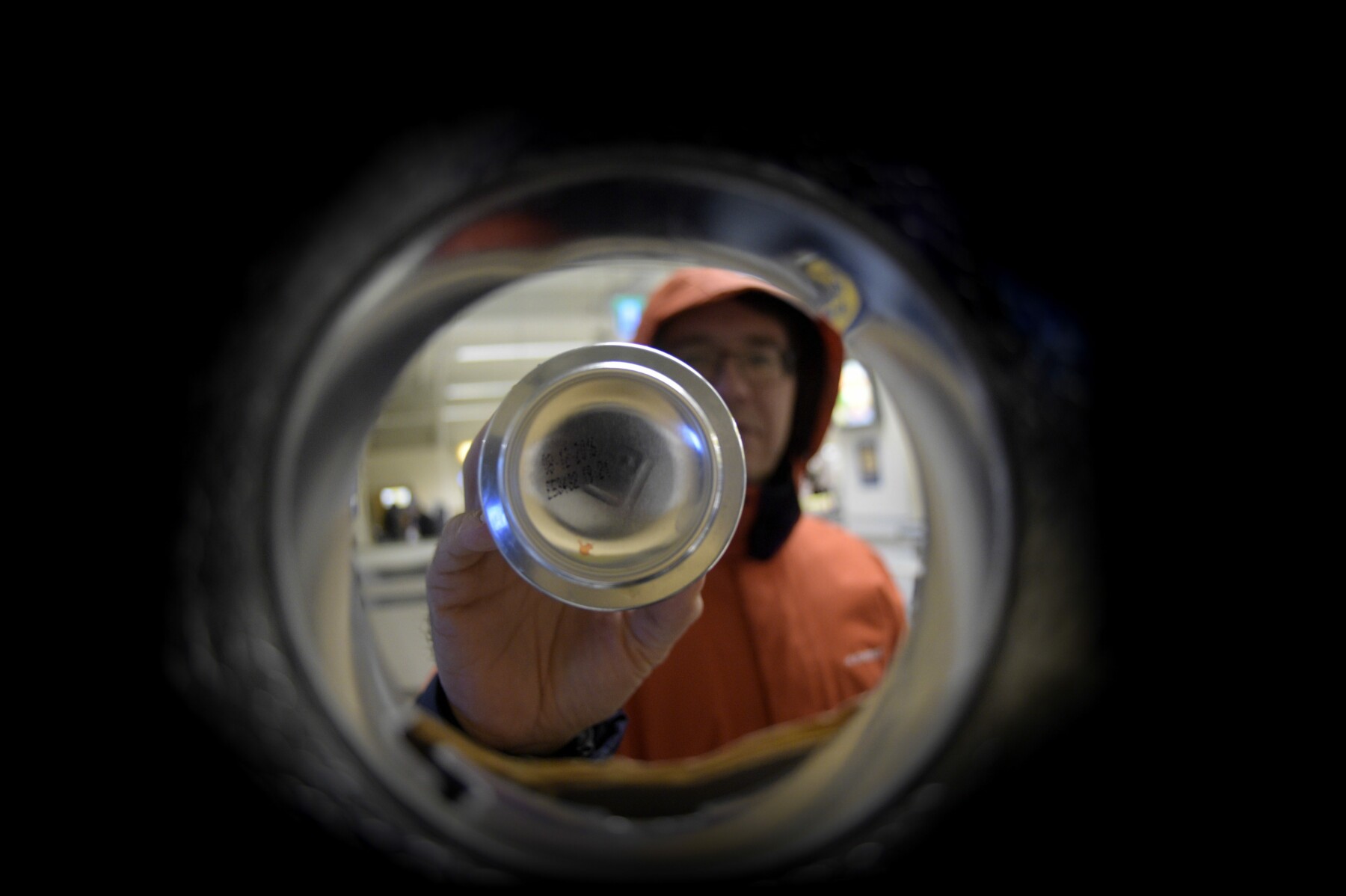
A camera angle inside a bottle-return machine shows a hand putting a bottle into the machine.

Inside view: A consumer feeds an empty bottle into a machine in order to get back the deposit money. For decades, Finland has had a near-total return rate for beverage containers.Photo: Martti Kainulainen/Lehtikuva

Despite the near-total return rate of plastic bottles, Finland still faces challenges with overall plastic recycling. The EU warned that Finland was at risk of falling short of the EU’s target, a recycling rate of 50 percent for plastic packaging by 2025.

That’s partly because a greater amount of corporate recyclable waste was being incinerated to generate power for industrial plants whose boilers were previously fired with wood imported from Russia.

The EU has also set a target of 55 percent by 2030. In Finland, officials and companies are working to stay on track with the Plastics Roadmap for Finland, a wide-ranging blueprint for a circular plastic economy by 2030.

Molecular-level recycling: the wave of the future

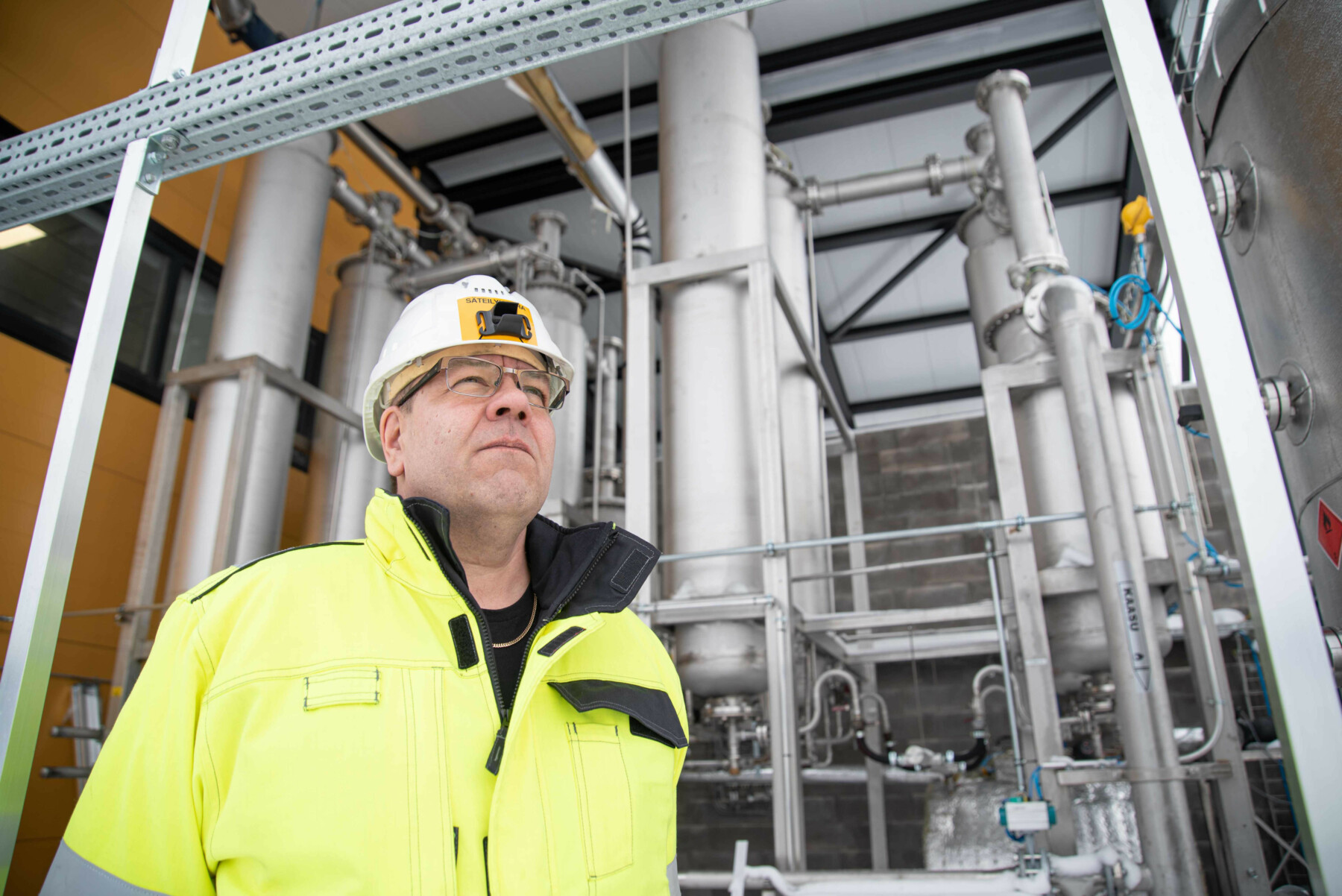
A man in work clothes and a hardhat stands in front of a massive structure of metal pipes and valves.

Production manager Ari Sillanpää has been one of the key people in ramping up WasteWise Group’s more efficient, chemical recycling methods.Photo: WasteWise Group

A larger proportion of packaging waste from households has been recycled since 2021, when a new law required each residential building with more than five apartments to provide a plastic collection bin. All businesses in urban areas must also separate plastic.

Plastic waste is usually recycled mechanically – by melting and granulating it – but Finnish firms have also come up with more efficient, chemical recycling methods. They break it down to the molecular level, making it possible to recycle nearly any type of plastics, including composites, and producing a circular raw material.

WasteWise Group opened the first such facility near Tampere in late 2023.

“Our method removes the need to incinerate plastic waste,” says Antti Åke, the firm’s CEO. “It produces pyrolysis oil, which replaces fossil fuels in the production of new plastics. WasteWise is the only Finnish company supplying pyrolysis oil, and market demand exceeds supply. We plan to increase our waste processing capacity to 24 kilotons by 2026 to direct more incinerated plastic waste streams toward chemical recycling.”

Doubling capacity

A enormous square shape made up of flattened plastic bottles is being moved through a garage door on a long industrial building.

A bale of compressed plastic bottles crosses the threshold at Pramia Plastic’s recycling facility.Photo: Pramia Plastic

Mika Surakka is a trailblazer, having set up the first Finnish company to recycle mixed plastics into reusable products in 2000. He’s now managing director of Sumi, a nonprofit producer-responsibility organisation for packages, co-owned by 33 companies and 4,000 other corporate partners. He was honoured with the Environment Ministry’s first-ever Plastic Circular Economy Award in late 2023.

“Finland is still behind the EU target, but we’re working to get it closer,” says Surakka. “We need to motivate consumers to contribute more packages to our collection system.”

A study published by Sumi in May 2024 found that the collection rate for plastic packaging in Finland is roughly 45 percent, and that women are more active than men in sorting plastics.

Also in May, Sumi and the country’s biggest energy company, Fortum, announced the launch of a huge sorting plant for plastic packaging, set to begin operations in Riihimäki in early 2026.

“This will greatly improve the sorting and recycling rates, especially since we’re adding some of our own innovations,” says Surakka. The new plant will at least double the domestic capacity, sorting up to 50,000 tonnes of plastic packaging annually.

A win-win-win situation

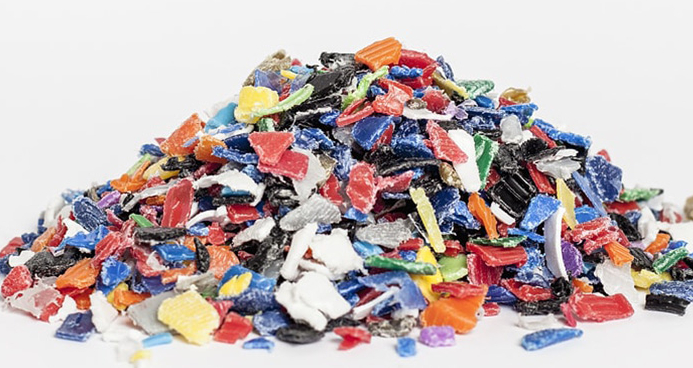
A multicoloured pile of tiny, jagged pieces of plastic.

These crushed bottle caps end up in pieces smaller than ten millimetres (0.4 inches) before becoming raw material for the injection moulding industry.Photo: Pramia Plastic

“We’ll then wash and granulate the plastic to produce recycled raw materials,” says Toni Ahtiainen, Fortum’s head of business line for plastics. “There’s market demand for high-quality customised materials made from recycled plastics.”

As Surakka sees it, recycling should pay for itself as a business without public funding.

“We need to find cost-efficient solutions and discuss with producers to find the right cost level. With packages, at least, it already works without public funding,” he says.

Merja Saarnilehto, a ministerial adviser at the Ministry of the Environment, agrees, saying, “In order to increase the recycling rate, we must find cost-effective solutions and possibly impose stricter requirements for separate collection, while investing more in new solutions.”

Recycling plastic is a win-win-win situation, says Antti Åke of WasteWise Group. “It creates additional value from domestic waste plastic streams, lowers reliance on fossil fuels, creates local business models and new jobs, removes the need to incinerate waste and lowers greenhouse gas emissions, while supporting the cradle-to-cradle mindset,” he says, envisaging a world where each product can be infinitely recycled or repurposed.

By Wif Stenger, September 2024

How “every person’s right” in Finland evolved over more than a century

Take a walk in the forest. Gather some berries and mushrooms to eat. Find a nice spot to pitch your tent overnight, and go for a refreshing swim in a lake.

In many countries, these things would only be possible in a designated recreational area, or with the landowner’s consent. In Finland, however, you don’t need to ask permission.

Thanks to the tradition of every person’s right, people in Finland enjoy extensive privileges for accessing nature practically anywhere, with few limitations.

A long history

A hand holding a basket full of mushrooms.

Generations ago families supplemented their diets with seasonal foods from the forests.Photo: Terhi Tuovinen / Lapland MaterialBank

The term “everyman’s right,” which in recent years has been replaced with “every person’s right” or “everyone’s right,” was coined in the 1930s, but the concept is older and has evolved over a long time.

In preindustrial times, it was a question of getting your livelihood from the land. Gathering berries and mushrooms provided a means of maintaining some level of self-sufficiency.

Isojako (the Great Partition), a land reform carried out in the 18th century, established land ownership for areas that were previously commons without designated owners. The number of people without land of their own grew over the years. It was essential that they still be able to use other people’s land.

In modern times, the emphasis is more on recreational use of nature, but even today, an avid gatherer can save a lot of money by picking berries instead of buying them from the supermarket.

A patchwork of legislation

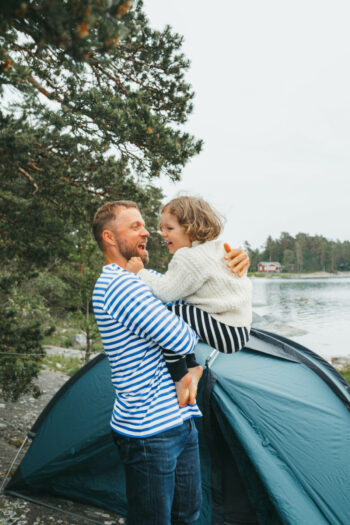
A man holding a child in his arms with a small tent and a lake in the background.

In modern times, every person’s right focuses on recreation in nature.Photo: Emilia Hoisko /Visit Finland

There is no single law in Finnish legislation that covers all aspects of every person’s right. Instead, several different laws either establish or restrict people’s rights in relation to nature.

For example, one section of the criminal code states that the paragraphs about theft do not apply to gathering fallen branches, fir cones or nuts, or to picking wild berries, mushrooms or flowers.

A court case from the early 20th century often receives attention as a landmark in establishing a legal precedent. It concerns Ilma Lindgren (1883–1957), a widowed mother of three, who supported her family by selling goods at the market.

In September 1914, Lindgren and three other women were gathering lingonberries (a wild relative of the cranberry) in the forests of Ruokolahti, in southeastern Finland. The local landowner demanded that the women hand over their harvest.

Lindgren had the guts to take the matter to court, including several appeals. While two lower-level courts ruled in favour of the landowner, the Supreme Court eventually decided otherwise, pointing out that “picking berries from another person’s land is not an act subject to punishment.”

Exceptions to the rule

Hands holding orange cloudberries above green bushes.

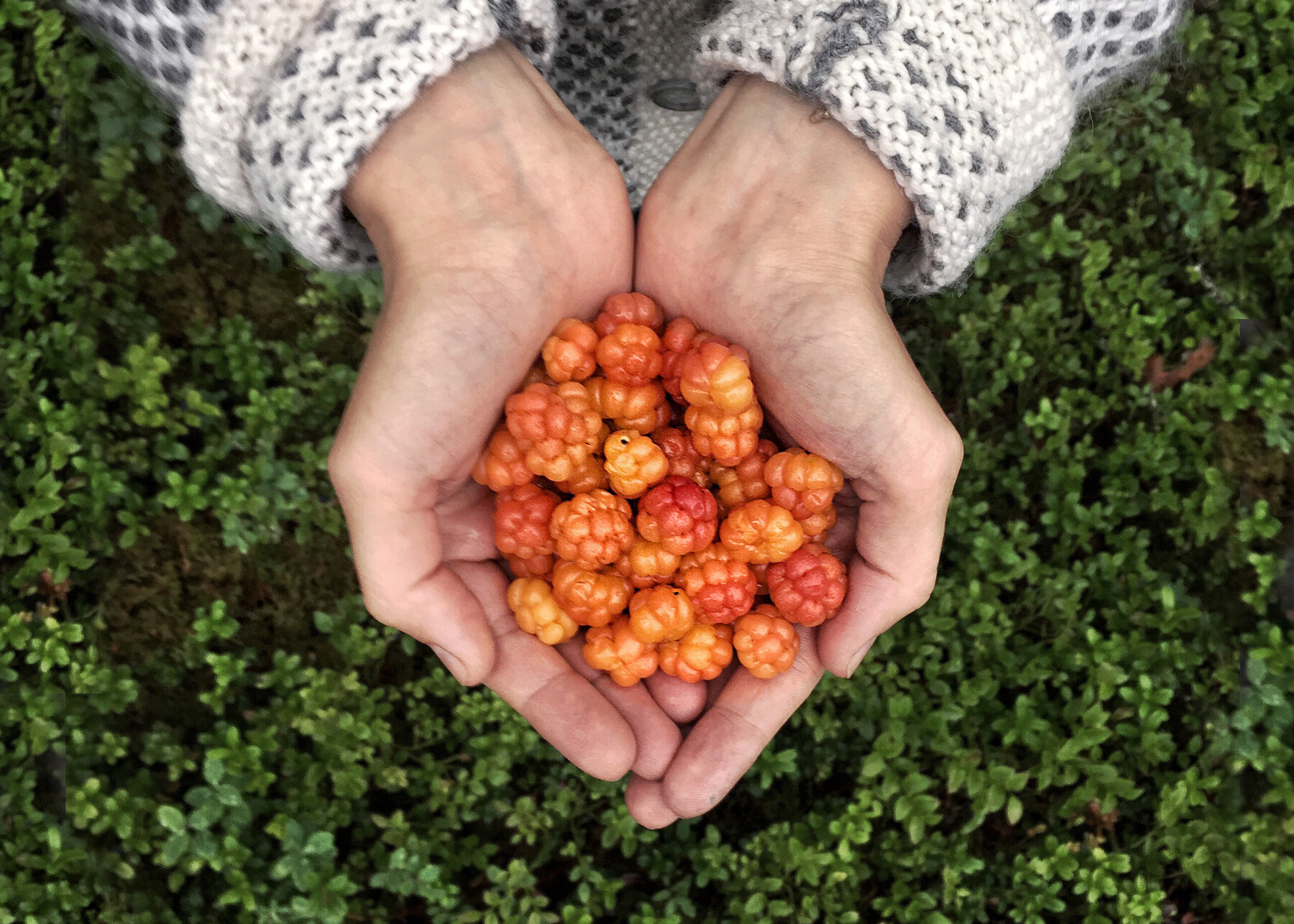
Berry-picking is one of the most popular applications of every person’s right. About half of Finns pick berries every year.Photo: Virpi Mikkonen / Visit Finland

Every person’s right is quite extensive, but it has its limits, of course. With privilege comes responsibility, as the saying goes.

You’re not allowed to trespass in anybody’s garden or backyard or walk on plantings or cultivated land. You can’t disturb wildlife, damage trees or collect moss or lichen. Making a fire always requires permission from the landowner, and is completely forbidden if a wildfire warning is in effect.

National parks and other protected areas often adopt more specific restrictions in order to protect the fragile environment. For example, hiking may be restricted to marked trails, or to specific times of the year.

Fishing rights depend on the equipment you’re using. Fishing with a simple rod and line, including ice fishing, usually don’t require a permit, whereas more sophisticated methods do (nets, traps or a rod and reel). Hunting is regulated much more strictly.

Nordic neighbours have similar traditions

Two men in a forest, bent over, picking mushrooms with a bucket beside them.

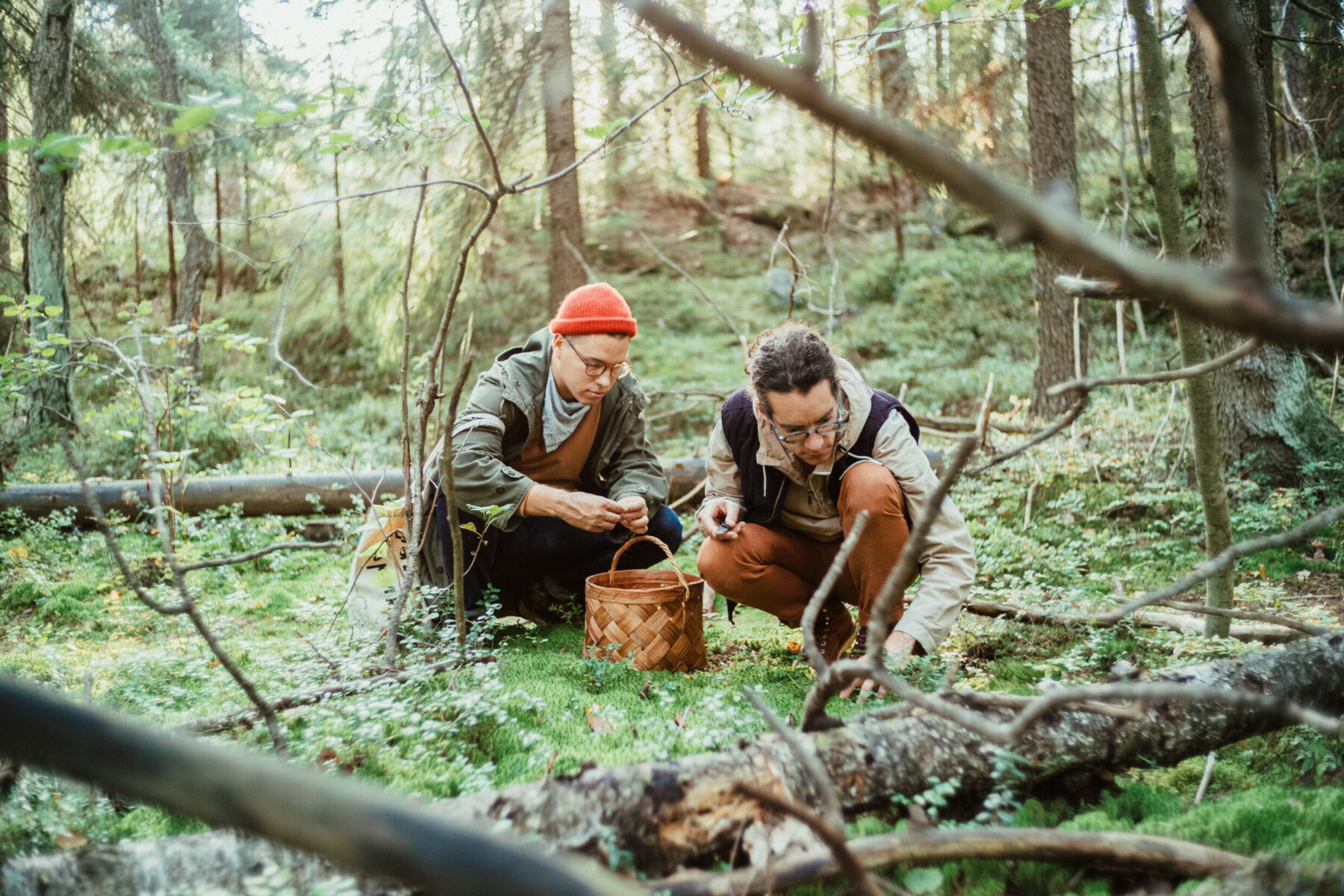
Mushroom season normally begins in late summer or early autumn. Many mushroom hunters keep their favourite spots secret.Photo: Jussi Hellsten / Helsinki Partners

Every person’s right is a firmly established custom in Finland. According to Hannu Tiusanen, senior specialist from the Finnish Outdoor Association Suomen Latu, the tradition is widely accepted, although there are some landowners who would prefer to receive compensation from people using their land.

Certain things make Finland favourable for maintaining the tradition. The country is relatively sparsely populated, with fewer than 19 inhabitants per square kilometre (48 inhabitants per square mile), and land ownership has traditionally been spread over a large number of small landowners. Roughly one in ten Finns owns some land.

Neighbouring Sweden and Norway have rather similar traditions. Denmark is much more densely populated and access rights are less extensive.

At its core, it is also a cultural issue, as Tiusanen points out. While some countries highlight the rights of the landowner, the Nordics emphasise the rights of the community – of every person.

By Juha Mäkinen, August 2024

Becoming Alan Wake: The Finnish face of a world-famous video game

To gamers, Ilkka Villi is known as the face of Alan Wake himself, in the video game Alan Wake by the Finnish studio Remedy Entertainment. Together with his voice acting partner Matthew Porretta, he brings the enigmatic author to life in the game through motion and performance capture.

“Acting in a video game is very hard and meticulous work. As an actor, you’re at the mercy of technology and the team of professionals surrounding you, because so much of the final product is their handiwork,” he muses.

With 19 years of experience and several big-budget game projects under his belt, Villi could be called Finland’s foremost expert on the topic. While superstars like Mark Hamill, Kristen Bell and Keanu Reeves have since lent their likenesses to video games, such occurrences were still rare when Villi began his career.

“Lots of people still think of video game acting as just voice acting, but these days it is so much more. Everything Alan does, I’ve done on camera – from basic running, dodging and shooting to more complex emotions and reactions.”

In a realistic scene from a video game, a man is sitting at a desk, writing on a typewriter.

In a scene from Alan Wake 2, Alan Wake is writing a script.Photo: Remedy Entertainment

Villi also acts in traditional movies and TV shows, and the experience of shooting a video game is quite different from them. Scenes are shot in an empty studio, with motion sensors stuck on the actors’ suits to make sure their movements can be faithfully translated into animated graphics. Body and face work are captured separately, making the process time-consuming and demanding for the actors.

“In a way, it is the purest form of acting in the sense that there is no set and no props to play off of. It is all about imagination. Thankfully I’ve always been good at shutting the world out and immersing myself in a good story,” Villi says.

Looking back at his long career, Villi is especially thankful for today’s technological feats.

“Back when I started, performance capture was still in its early days. Now they can replicate even the tiniest little muscle twitches and micro expressions in the final product. What I do as an actor actually carries over into the game, and it’s very rewarding to see.”

By Johanna Teelahti, ThisisFINLAND Magazine 2024