Improving access to Finnish water expertise

Global trends including population growth, urbanisation and climate change are increasingly putting scarce water resources under pressure, and better water services are urgently needed around the world. An expanding network of firms and organisations within the Finnish water sector aims to help meet this demand.

The Finnish Water Forum brings together public and private sector players working with all kinds of water-related issues and technologies, with an emphasis on sustainability and environmental protection. Members of the forum include research institutes, government agencies and many small and medium-sized firms, as well as major corporate names like Kemira, Pöyry and Fortum.

“So far we’ve largely been mapping out the strengths of our members to identify areas where we can contribute the most value,” says the Finnish Water Forum’s managing director Katri Mehtonen.

As a country with a long history of both utilising and protecting its own famously numerous lakes and rivers, Finland has built up plenty of experience in fields including water purification, wastewater treatment, integrated water resources management and administrative practices governing the use of water. Finnish expertise on the monitoring, measuring and modelling of flows and water quality in river systems and groundwater reserves is also highly respected.

Another goal of the forum is to help Finnish universities, research institutes and nongovernmental organisations build productive partnerships in far-flung regions, with an emphasis on joint learning.

Working around the world

3197-water2_b-jpg

Close to the land and close to the water: This Cambodian farmer’s rice paddy is fed by water from Tonle Sap.Photo: Marko Keskinen

“Through the forum’s workshops we’ve also been identifying the geographical regions where we can contribute most,” adds Mehtonen.

One region where Finnish experts have already been working is the Mekong River Basin in Southeast Asia. Finnish experts have widely contributed to the work of the international Mekong River Commission promoting sustainable water management through the region.

Water and development specialists from Aalto University and their local partners have been building a better understanding of the unique flood pulse system of Cambodia’s Tonle Sap Lake, which is crucial for local livelihoods and food security. Important considerations include the possible impacts on the lake of climate change and hydropower developments.

Shared by many countries, the Nile Basin is another region where water use needs to be harmonised through international cooperation, since the livelihoods of millions of people depend on the river. Finnish experts have particularly supported the efforts of the Eastern Nile Technical Regional Office (ENTRO) to enhance watershed management in Ethiopia, Sudan and Egypt.

The Finnish water sector is also supporting water management schemes in Eastern Europe, the South Caucasus and Central Asia through the wide-ranging FinWater WEI programme, whose themes include water and health, dam safety, and water monitoring and assessment.

Finding funding for vital water projects

3197-water3_b-jpg

A fisher employs the traditional nets along the Mekong River in Laos, where Finnish experts have contributed to promoting sustainable water management.Photo: Marko Keskinen

The Finnish Water Forum does not set up projects itself, but aims to facilitate the fruitful formation of consortiums and public private partnerships, and to serve as a point of access for potential clients from around the world.

“Finland’s Ministry for Foreign Affairs [full disclosure: ThisisFINLAND is produced at the Ministry] finances development cooperation projects related to water resources and water services in various regions, and our members can form consortiums and compete with international bidders for involvement in such schemes,” explains Mehtonen.

“But we’re also building contacts with various international financial institutions who fund water projects in developing countries, aiming to match up our technology providers with suitable financing wherever Finnish actors can together make a valuable contribution.”

The Finnish Water Forum also operates under the wider Cleantech Finland brand, which has been set up to promote Finnish expertise in all kinds of environmental technologies.

By Fran Weaver, October 2010

Roughing it in exotic Finland

What’s it like to lead the adventuresome life of a travel guidebook writer in a wild and cool country like Finland? And what’s the best thing about the Finns? We ask Roger Norum, co-author of the all-new Rough Guide to Finland.

Roger Norum is feeling good as he shows off the first edition of the Rough Guide to Finland, hot off the press. “I really do feel like I have the best job in the world,” he says. “I tried an office job but I was unhappy.”

He has written for Rough Guides about Mexico, Sicily, Paris, West Africa and Denmark, but Finland holds a special place in his heart. A New Yorker who now lives in London, he recounts how “Helsinki was my first time abroad, if you don’t count three days in Montréal. It was the most exotic place I’d ever been – and still is.”

So it was that, at the tender age of 16, during a two-day stop-off en route to Russia on a school trip, Norum “fell in love with Helsinki and Finland,” with the wintery cityscape of “neon signs in a bizarre language.”

Ah yes, the Finnish language – what about it? “You get a lot of insight into the culture even if you do learn just a little,” says Norum. He did put some time into it, long before doing the Rough Guide to Finland: “Finland just became the country I kept coming back to.”

Surprisingly personal

4374-travelbook2_b-jpg

Part of the Finnish experience: Long-distance skating on natural lake or ocean ice – known as Nordic skating – has enjoyed steady growth in popularity in recent years.© City of Helsinki, Tourist & Convention Bureau

While writing the book, Norum visited Finland several times for about a month each, over a period of more than a year. “I’d come and do research, take as many notes as possible,” he says, “then come home, wait one or two weeks, and write with a bit of distance.”

Writing guidebooks requires a surprisingly personal touch. You list the facts, of course, but “you’re writing about what happened to you while you were there,” Norum says. “You learn about a place from that experience and take the reader on that journey with you.”

“When I saw Helsinki about 20 years ago, it was a very different place and felt very closed to me. I’ve seen it change over that time, and built part of my life here, and I want to share that with others.”

So what’s his favourite place in Helsinki? His expression shows that this is a tough question, but it doesn’t take him long to answer: Bar 9 [Uudenmaankatu 9]. “That was the place I met the most people,” he says. “Just taking a pen to a piece of paper and looking very studious, people come up to you.” A pause follows. “And weekend brunch at Fanny Bar and Kitchen [Bulevardi 40],” he adds.

Apart from the capital, though, what part of Finland does he like the best after covering all of southern Finland for the guide? “The Åland archipelago [situated between Sweden and the Finnish mainland] is a very special place, too,” he says. “You feel very much removed from the world. Spending all this time in Finland has made me much more aware of the outdoors.”

Best of this and that

4374-travelbook3_b-jpg

The great outdoors: Finland’s a great place for people who love unspoiled natural scenery such as this view of Ounasjärvi, a lake in northern Lapland.Photo: Pekka Luukkola

While we’re on the subject of best-of picks, what’s best about Finnish people? “The best thing about the Finns – I’d say it’s their sense of humour,” Norum ventures, well aware that his remark doesn’t fit the tired, out-of-date stereotype of the silent Finn.

“People here have a real appreciation of the absurd,” he explains. “And they also like awkward moments. I’m a big fan of awkward moments – they take you out of your comfort zone.”

And what’s the best thing about writing guidebooks – which doesn’t seem to be a get-rich-quick branch of business? “You get to come back every two or three years,” says Norum. The first update trip for the next edition of the Rough Guide to Finland takes place in 2012.
 

By Peter Marten, October 2010

Signmark does what he wants

Signmark, the first deaf rapper and the first deaf person with a recording contract at an international record company, is changing the world by rapping in sign language – in New York’s Washington Square Park, among other places.

Marko Vuoriheimo (born 1978), better known as Signmark, began making music as a child by interpreting Christmas carols for relatives with hearing disabilities. In 2006, he released Signmark, the world’s first rap album by a person who is deaf.

His second album, Breaking the Rules, appeared in 2010 – this time on the Warner Music label. He doesn’t shy away from taking a stand about human rights and tolerance. His videos and live shows are bilingual; his group plays and raps his lyrics aloud while Signmark raps with his hands.

Signmark’s popularity extends from his home country of Finland to arenas in Germany, England and Austria. In Japan he has appeared in a live broadcast for an audience of millions.

In a unique event called Silent Shout, Signmark rapped in Washington Square Park in New York on September 23, 2010, with the crowd signing along on the chorus of his “Against the Wall” in American Sign Language.

Part of International Deaf Awareness Week, the event aimed to help “build a society where everyone has the equal opportunity to participate and dream.” Silent Shout is making a statement by gathering a diverse crowd for the concert experience.

Signing a rhyme in time

3551-signmark2_b-jpg

Loud and clear: Signmark (centre) with two musical friends.© Signmark

Raps in sign language rhyme just as spoken words do. The performer signs in rhythm, and the final syllables of each line are formed by similar hand shapes and signs.

The bass line represents the most important element for deaf rappers, since it helps them follow the flow of the music and rhythm. Facial expressions support the signing and improvisation forms an intrinsic part of the process. Put this all together onstage and you’ve got a show that’s not to be missed. The artist describes his creations as light but thoughtful party music. He believes that people with hearing disabilities should not be treated as disabled, but rather as part of a linguistic minority with its own culture and history.

Hip-hop, a multicultural form of music-making, represents an excellent forum for Signmark’s boundary-breaking messages.

How it works

Signmark begins by using headphones to experience music made by a friend, evaluating its feeling and tempo. He concentrates on the rhythm of the bass, creating background music and honing the results. Signmark’s band includes vocalist Brandon Bauer rapping the lyrics for the hearing audience, who can find a new rap music experience in Signmark’s visual performance.

And he has a full schedule at his “day job,” too. Signmark, who possesses a master’s degree in educational science, teaches sign-language interpreters at the University of Applied Sciences in Helsinki, and has also published an autobiography.

With a long list of achievements already under his belt, the ambitious Signmark shows no indication of slowing down. That’s not what he’s about.
 

By Jemina Juutti, September 2008, updated September 2010

Steel, glass, wood and Kalevala spirit

“Is there a deep mythology I can get into while I’m there?” asked American architect Travis Price prior to visiting Finland in early 2009. The question eventually gave rise to a unique new building to kick off Helsinki Design Week 2010.

Price was coming to Finland to get a “live” view of work by architectural greats Eliel Saarinen and Alvar Aalto, and to check out the world of Finnish design. When he brought up mythology, he says he immediately received a flood of email, all pointing to the Finnish national epic Kalevala.

He chose the Kalevala, a collection of eastern Finnish oral-tradition stories first compiled on paper in the 1800s, as the object and subject of one of his Spirit of Place projects. During its 17-year history, Spirit of Place has used architecture as a medium for exploring mythologies, ecologies and modernism in countries from Canada to Peru and from Uganda to Ireland.

Meditation and massive effort

2310-kalevalakehto3_b-jpg

Kalevalakehto’s wood, glass and metal look right at home on the shores of Seurasaari, surrounded by ocean, forest, stone and sky.Photo: Travis L. Price, FAIA

Price mentored an international group of architecture students as they went through a range of ideas and models before arriving at a design that would later be built on the Helsinki island park of Seurasaari and named Kalevalakehto.

But before we explain the moniker, a bit more about the construction itself: Kalevalakehto holds about 15 people and forms a venue for meetings or meditation. More than 30 people helped build it in “a massive effort over ten days in August 2010,” says Price. “Our worst construction accidents were bee stings.”

While symbolically connected with the Kalevala in many ways, Kalevalakehto’s combination of wood, steel and glass and waterside location can also be appreciated without knowing about themes such as the birth of the world, the mysteries of the Sampo or the character Väinämöinen.

The water becomes the sky

2310-kalevalakehto2_b-jpg

Meetings or meditation: Kalevalakehto’s design and the way it reflects its surroundings make it a peaceful and inviting setting.Photo: Peter Marten

The name of the building officially appears in English as “Kalevalakehto: Shaman’s Haven of the Kalevala.” You won’t find Kalevalakehto in your Finnish-English dictionary, though.

“I’m proud to say that, though I can’t speak Finnish, we’ve invented a new Finnish word,” says Price with a smile. The segment kehto signifies a cradle or protected space, and so the symbolism thickens, verbally as well as visually.

Kalevalakehto is right at home on Seurasaari, which also contains an open-air museum of historically important buildings from all over Finland. Price says he’s impressed with the Finns’ ability to “leave nature alone but also build in it.”

Very little of the landscape was disturbed to place Kalevalakehto on a rock surface near the shore, and the building fits perfectly into its environment. Water and forest are reflected in the metal and glass. As Price puts it, “You see the sea, and the water becomes the sky in the ceiling above. That’s the magic we wanted to achieve – thank you, Väinämöinen.”

Bouncing on steel

The Spirit of Design project on Seurasaari marked the opening of Helsinki Design Week 2010 by hosting a celebration. “Hollywood couldn’t have done it better,” Price recalls. “It rained on everyone, and then bam! The sun came out and bounced on the steel.”

Kalevalakehto “is alive,” he says, meaning that the wood is still settling. “Every two months someone has to come and adjust the bolts with a lot of love.” The unique structure looks set to stick around for a long time to come, although its current temporary permit runs out in 2013. “The Eiffel Tower is still on a temporary permit,” Price claims. And Eiffel probably didn’t even know anything about the Kalevala.
 

By Peter Marten, September 2010

See Helsinki with a spring in your step

Personalised jogging and Nordic walking tours are popular with busy visitors who want to get a fresh angle on Helsinki, insights into Finnish society and some healthy exercise – all at the same time.

The tailored tours are the brainchild of Lina Laurent, who wanted to combine her interest in fitness with her professional experience as an intercultural communications trainer. “I realised that business visitors here for just one or two days might not get much chance to get out into town and talk to people informally,” she explains. “Since many might also like to go jogging or walking, it seemed a good idea to combine these things.”

Laurent started a business now known as Jogging Helsinki. She and her jogging-guide colleagues are available to trot around town at just about any time that suits foreign visitors’ busy schedules, whatever the weather. Clients appreciate this flexibility, as well as a chance to sightsee without being herded round like sheep. “Businesswomen may especially appreciate local company when walking or jogging in a strange country – even though Helsinki is among Europe’s safest cities,” Laurent says.

Talk the talk, walk the walk

4417-jogging2_b-jpg

It’s a perfect day to try Nordic walking, a Finnish invention, by the sea in Helsinki.Photo: Fran Weaver

Tours start in downtown Helsinki. I choose to go Nordic walking – a Finnish invention – and pick up a pair of poles for a brisk 50-minute guided walk taking in the city’s southern seafront. After simple instructions I soon get the hang of this popular activity, which has many physiotherapeutic benefits for anyone who often sits in meetings or hunched over a computer.

Laurent is an informative and vivacious guide during our walk. She clearly enjoys sharing her views on all aspects of Finnish life, positive and negative. “I also like to hear foreigners’ impressions of Finland. Our clients are very interested in how we live, housing conditions, prices, food and political issues, but we might also talk about problems like alcohol abuse or declining services in the countryside,” she says.

Kindly praising my fitness as we march energetically up a hill in Kaivopuisto, a waterfront park, Laurent stresses that tours are paced just as fast as the client is able and willing to jog or walk. “If I get a really fit marathon-runner client I take my bicycle along,” she laughs. Routes and distances can be tailored to fit anyone’s interests, from architecture to shopping.

As we stride vigorously through Helsinki’s streets swinging our Nordic poles, no one seems to think we look out of place. Enjoying the fresh seaside air while having a nice chat with a friendly local guide feels infinitely more enjoyable than staring through the windows of a tour bus.

By Fran Weaver, September 2010, updated April 2018

Finland’s most uplifting scenery

Finland has seven Unesco World Heritage Sites but only one is natural. Kvarken Archipelago encompasses thousands of islands that are gradually emerging from the sea.

Unique geology and ecology have led Unesco to place the Kvarken Archipelago, located off Finland’s west coast near Vaasa, on the same list of natural wonders as the Grand Canyon and the Galapagos Isles. The Kvarken Unesco World Natural Heritage Site keeps Finland’s six Unesco World Cultural Heritage Sites company.

Exhibits at Vaasa’s Terranova Nature Centre illustrate how the massive ice sheet that covered Northern Europe during the Ice Age was more than three kilometres (1.9 miles) thick in this region. The weight of all this ice depressed the Earth’s crust by about a kilometre (0.6 miles). Terranova guide Minttu Kelloniemi explains that though the ice melted away some 10,000 years ago, this part of the crust is still rising on the rebound by about 8.5 millimetres (5/16 of an inch) a year. In geological terms this is a superfast rate of change.

“Because of the land uplift, we gain a square kilometre [0.4 square miles] of new land from the sea every year,” says Kelloniemi. “That’s enough for 150 football pitches – though the new shores and islands are too strewn with rocks to make good sports fields!”

Land bridge to Sweden

2945-kvarken3_b-jpg

Parallel emergent moraine ridge islands are visible beyond Björköby.Photo: Arto Hämäläinen/Mustasaari Municipality

Geologists reckon that ongoing land uplift will eventually create a land bridge between Finland and Sweden – in about 2,500 years – turning the northern end of the Gulf of Bothnia into a huge lake.

The rapid land uplift has serious repercussions for local communities along low-lying coasts. “The shorelines constantly change; islands become part of the mainland; and we must keep checking boating routes as treacherous new rocks and islands emerge,” says Roland Wiik, who guides tour groups visiting the archipelago.

“Over the centuries Björköby’s fishing harbour has had to be moved several times as older harbours were left high and dry,” adds Wiik. “Some local fishermen still use traditional wooden boats of a shallow-bottomed design. And many places where I remember fishing as a child in the 1960s are now dry land covered with trees.”

Tourism also rising

2945-kvarken2_b-jpg

A traditional local fishing boat in the harbour at Björköby: As the years pass this area may become dry land and a new location will have to be found for the harbour.Photo: Fran Weaver

Kvarken has welcomed increasing numbers of visitors since gaining its world-class status in 2006. With its picturesque rows of wooden fishing cabins, Björköby’s harbour, Svedjehamn, is the most popular destination, as the starting point for trips to more remote islands.

The scenic islands, bays, lagoons and labyrinthine channels of the archipelago have rich flora and fauna, including plentiful fish and rare seabirds. Ecologists are fascinated to observe how the newly emergent lands are gradually colonised by plants and animals.

Björköby’s viewing tower gives visitors a spectacular panorama over alternating bands of land and water where dozens of elongated, ridge-like islands are emerging from the shallow sea. These unusual landforms are made of rocky moraine fragments left behind by the retreating ice sheet 10,000 years ago. The Ice Age is still so recent here that its effects are continuing to shape local landscapes.

Finnish Top 7

The Kvarken Archipelago is so far the only Finnish natural attraction to make Unesco’s list, but six Finnish cultural attractions are listed as Unesco World Cultural Heritage Sites. More info on the seven wonders of Finland on the National Board of Antiquities website.

By Fran Weaver, September 2010, updated July 2015

Picture-perfect Porvoo beckons in southern Finland

Porvoo forms a jewel of a town and makes a great daytrip destination just an hour from Helsinki.

Even if you only have several days in Helsinki, it’s also worth seeing what lies beyond the city. Picturesque Porvoo, the second-oldest town in Finland, invites exploration and offers historical treasures, design shops, fashion and fine dining.

As you arrive in Porvoo, the town’s main landmark is visible: Saint Mary’s Cathedral, a building with origins in the late 13th century. It forms the ideal starting point for your tour.

The venerable church is rich in history, including coats of arms once used by the local nobility, not to mention medieval paintings and sculptures. This was where Tsar Alexander I convened the Diet when Finland was annexed to Russia as an autonomous grand duchy – an important step in Finland’s eventual progression to independence.

The aroma of tar hangs in the air in and around the cathedral, a reminder that it has been bombed, burgled and burned many a time – most recently in 2006 in an arson fire. It has been painstakingly restored to its former glory, and a new roof of tarred shingles has been installed.

Let there be pastry

4386-porvoo2_b-jpg

The popular, poetic pastry of Porvoo was invented by Fredrika Runeberg, wife of writer J.L. Runeberg.Photo: Porvoo City Tourist Office

The cathedral is surrounded by a charming old town where some houses are several hundred years old and still standing strong, although there is hardly a right angle to be found. Two of Finland’s oldest streets, Jokikatu (River Street) and Välikatu (Between Street), run past the tradition-steeped Raatihuoneentori (Town Hall Square). Beside Town Hall, the Holm residence forms a museum where you can travel back in time to the Porvoo of centuries past.

Porvoo once held status as an important cultural centre, and many significant historical figures lived and worked in the town. One of the most central of these was the poet Johan Ludvig Runeberg (1804–77), whose house on the southern edge of the Old Town has been made into a museum. Even if you don’t have time to explore that neighbourhood, built in the neoclassical style, you will surely be able to enjoy a Runeberg pastry at one of Porvoo’s many idyllic cafés. You’ll notice that the pastry, invented by the poet’s wife Fredrika (1807–79), is not the only thing in this town named after the Runebergs.

Porvoo artist Albert Edelfelt (1854–1905) has also achieved fame; his paintings now sell for hundreds of thousands of euros on the international market. A statue of Edelfelt gazes down from the same hill as the cathedral in the direction of his birthplace. His studio, several kilometres from the city centre, is open to the public.

Antiques, toys and chocolate

4386-porvoo3_b-jpg

Jokikatu (River Street) and the neighbouring streets offer great shopping and old-time charm.Photo: Porvoo City Tourist Office

From Town Hall Square, you enter a neighbourhood of charming boutiques. Antique stores contain remnants of the old days, and the handicraft shops offer a more original and unique selection of crafts and design items than you’ll find on the Esplanade in Helsinki. The Old Town specialises in toys (both new and antique), handicrafts designed by local artisans, and interior decoration items.

Chocolate is another great Porvoo souvenir gift. Brunberg Chocolate Factory was founded in 1871 and still sells its renowned truffles in its shop (Välikatu 4). A competitor is located by the cathedral: Pieni Suklaatehdas (Little Chocolate Factory, Kirkkotori 2), true to its name, has a storefront that can hold only a few customers at a time. You can also view the master chocolatier hand-making a fresh batch of confection.

If you have time, you can enjoy the other tastes of Old Porvoo, as well as the hospitality of the neighbourhood’s small, welcoming hotels. By the banks of the river you’ll find a café run by Porvoo Coffee Roastery (Mannerheiminkatu 2), a great place to enjoy freshly brewed coffee made from freshly roasted beans.

Time stands still at Hotel Onni (Kirkkotori 3), where you can imagine you’ve travelled back a century or two. Only traditional wooden houses are visible from the windows – not a neon light in sight.

Getting there

Put on your walking shoes and get going – leave your high heels at home when you set out to explore this cobblestoned town! You can get to Porvoo by bus from Helsinki’s Kamppi Bus Terminal. The journey lasts an hour and there are several buses every hour. If you’ve got more time to spare, there’s a ferry from Helsinki in the summer months. Railroad enthusiasts can also catch old-fashioned trains pulled by diesel or steam locomotives. They leave from Kerava, which is 30 minutes outside of Helsinki by commuter train, on selected summer days.

Porvoo in Photos

All photos by Porvoo City Tourist Office

By Salla Korpela, updated January 2022

Highly valued Helsinki

It’s official: For the third year in a row, Helsinki makes the top five in Monocle’s list of the world’s most liveable cities.

When the esteemed Monocle magazine, edited by guru of cool Tyler Brûlé, recently released its annual Most Liveable Cities Index, it again heaped compliments upon the Finnish capital. The magazine’s researchers spend months compiling their top 25, putting the world’s leading cities through a rigorous evaluation process. They rank the cities based on a range of criteria including education, public transport, crime rates and hours of sunshine.

Helsinki, a region of 1.3 million inhabitants, has been strong at fifth place in the Monocle index for three years in a row. It scores praise for its high level of state-funded education. Medical care is almost entirely financed by tax revenue, the city is unveiling several new institutions to boost small businesses and, as of 2014, residents will enjoy the convenience of a new Ring Rail Line around the metropolitan area.

This northern capital has truly come out of its shell. Gone are the days when Helsinki could be referred to as the “little brother of Stockholm”. (By the way, the Swedish capital placed sixth.) The Finnish capital is in the midst of the greatest infrastructure upgrade it has seen in a century, and it is gearing up for its year as World Design Capital in 2012.

In front of the curve: Monocle gives Helsinki top marks.

In front of the curve: Monocle gives Helsinki top marks.Photo: Pekka Saksala

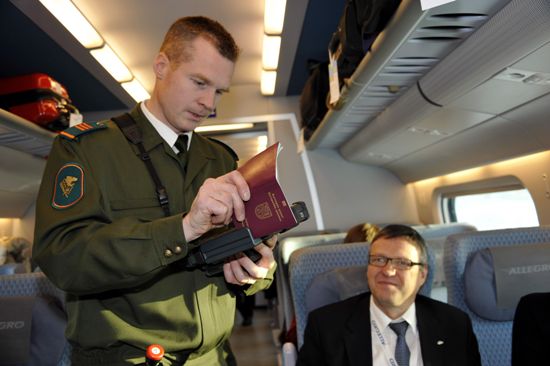
On the international level, Monocle mentions that Helsinki-Vantaa Airport forms a major base for Asia-bound Europeans, and that a high-speed rail connection will soon cut several hours off the train trip to St Petersburg in neighbouring Russia. At this rate, Helsinki is slated to become one of Europe’s most visited capitals, and will likely enjoy its ranking at the top of the charts for quite some time.
 

By Vauldi Carelse and Justin Bromberg, updated August 2010