Finland reads

Literature is close to the Finns’ hearts, today perhaps more than ever. Over 20 million books are sold in Finland every year. That’s an average of four books per person, including children.

In Finland as elsewhere, readers are clearly divided into major consumers and others. Approximately one in every six Finns between the ages of 15 and 79 buys at least ten books per year. Together, these major consumers buy over half of all books sold. Overall, book buying is quite common: three out of four Finns buy at least one book per year.
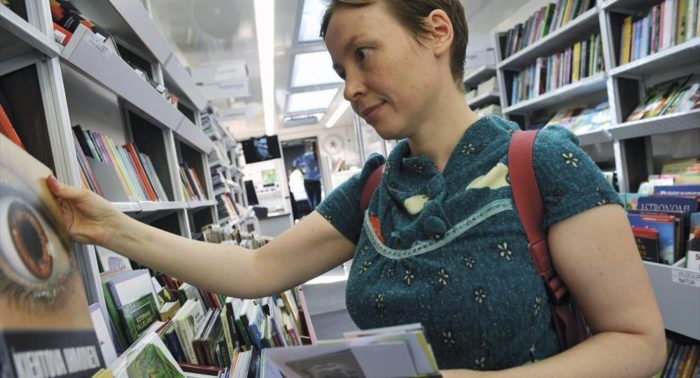
Even since the advent of the internet, the Finns continue to be drawn to books. “Browsing” can still mean looking at books at the library rather than online browsing.

Even since the advent of the internet, the Finns continue to be drawn to books. “Browsing” can still mean looking at books at the library rather than online browsing.Photo: Viena Kytöjoki / Lehtikuva

The internet does not seem to have affected the popularity of books to any great extent. For example, in 1995 – before widespread use of the internet – far fewer books were purchased in Finland than today. So the popularity of books has grown in spite of the rise in electronic media. And book sales have grown even faster in terms of value than they have in volume – readers have been willing to pay more for their books.

Finnish fiction remains the most popular genre in Finland, although translated fiction still accounts for a solid share of sales despite having seen a slight fall. Approximately one in every three Finns has read Finnish fiction during the past month. Finns also read books on history and home economics (mainly cookery books), and memoirs, crime novels and children’s books. They are increasingly reading foreign fiction in languages other than Finnish.

Books have long formed a traditional gift in Finland. In this respect, the scene is changing, as people are more frequently buying books to read themselves. About half of the books purchased as gifts are given to family members – and will perhaps be read by the gift-giver, as well.

Land of libraries
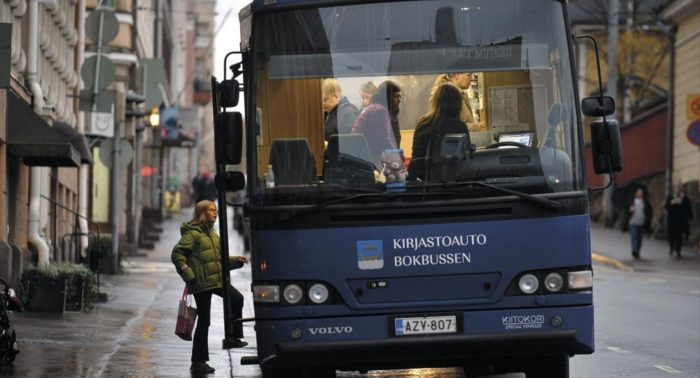
On average, each Finn borrows more than a dozen books from the library every year. Shown here is another of Finland’s mobile libraries.

On average, each Finn borrows more than a dozen books from the library every year. Shown here is another of Finland’s mobile libraries.Photo: Heikki Saukkomaa / Lehtikuva

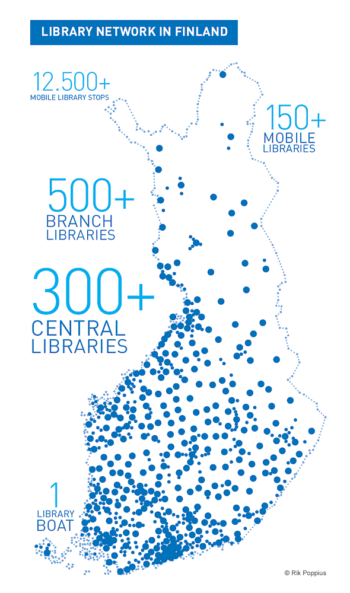
Finland is full of libraries – there is at least one in every municipality. Finland’s 300 plus central libraries are supported by 500 branch libraries and, particularly in sparsely populated areas, also mobile libraries, in the form of specially outfitted buses. Mobile libraries account for just under ten percent of all loans. Finland even has a library boat. A reservation system allows mobile libraries to offer the same books as central libraries.

The modern mobile library carries a selection of over 4,000 titles, including not only books but also a range of magazines, newspapers and audiovisual materials. Mobile library routes comprise dozens of stops. Even in a relatively densely populated region such as southern Finland, a mobile library may clock up 50,000 kilometres annually – in the north, the distances are greater.

By European standards, Finland’s public library services are technologically advanced as well as substantial in terms of volume. Libraries are free to use, although small fees are charged for late returns.

Finland’s library services are quite popular and actively used – about 40 percent of citizens are active users and visit the library about twice a month. On average, Finns borrow a book from a public lending library more than once a month. Or, looking at it from another perspective, libraries contain just over seven books per Finn and each book is read an average of 2.5 times per year.

Libraries are also significant book buyers. Every year they spend well over 300 euros per citizen on the acquisition of books and other materials. Libraries also benefit writers: authors and translators can apply for library grants to fund their writing. These grants are also awarded to authors who are unable to work due to age or illness.

Although books account for a considerable proportion of public libraries’ collections, plenty more is on offer: magazines, newspapers and audiovisual materials.
By Matti Sovijärvi, March 2014
Ski border to border in northern Finland

This is literally cross-country skiing: The skiers start at the Russian frontier and end at the Swedish border. The idea of traversing the entire distance attracts skiers, both experienced and inexperienced, from all over the world.

They begin their trip at the Russian border northeast of the town of Kuusamo, and continue until they reach Tornio, just across the river from Haparanda, Sweden.

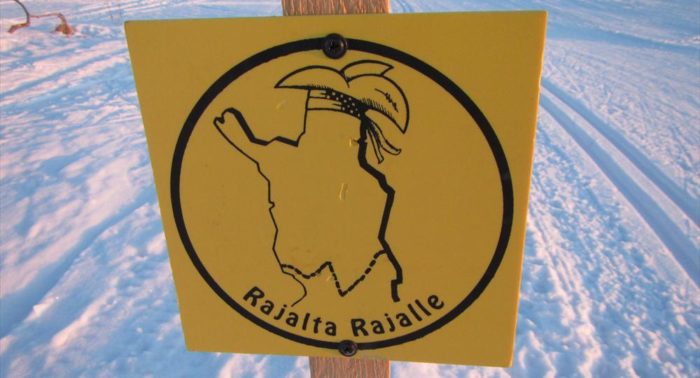
Staying on the trail: This sign, with a logo that resembles a map of northern Finland, shows the way.

Staying on the trail: This sign, with a logo that resembles a map of northern Finland, shows the way.Photo © Josefin Palmén

Breath-taking landscapes, Northern Lights, snow-covered trees and boundless nature form some of the attractions along the way during the seven-day trip. The historical course also contains some 40 kilometres (25 miles) along a route made by the Germans during World War II.

In 2013, Border to Border celebrated its 30th anniversary with more than 300 participants from 16 different countries – including one who came all the way from Brazil. For three of the skiers, it was their first time skiing on snow.

Participants inevitably begin to speculate that the kilometres they are covering add up to more than the officially listed distances. Many joke that the distance is measured in “Finnish kilometres.”

Border to Border organiser Anitta Jaakola can recount many theories on this subject. Some years ago, for example, a Dutch skier cooked up a story about the snowmobile driver who maintains the ski tracks every morning, saying that he had been a tad careless when measuring the distance.

Northern hospitality

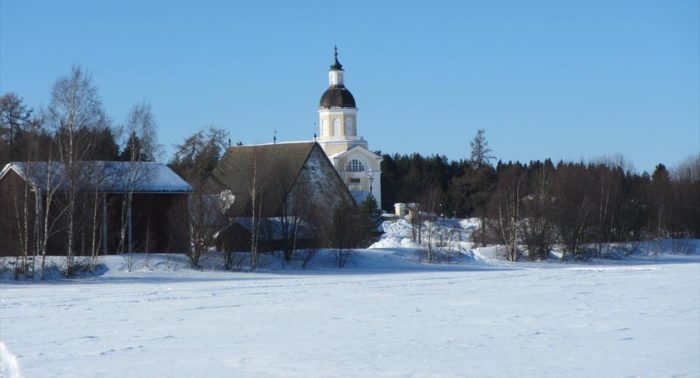
Scenic route: The Border to Border trail passes picturesque villages and national park land.

Scenic route: The Border to Border trail passes picturesque villages and national park land.Photo © Josefin Palmén

Josefin Palmén, a Swedish endurance athlete who also has type one diabetes, skied Border to Border in 2013 and notes that “the locals were very sweet and helpful.” On the longest day, a snowmobiler helped light her way through the darkness.

Volunteers maintain 39 support stations along the route, sometimes for the whole day in temperatures as low as minus 41 degrees Celsius (minus 42 Fahrenheit), offering encouragement and serving warm juice, snacks and soup.

At night they help set up saunas, and in some locations they prepare dinner for groups of hungry skiers, sometimes more than 100 at a time. Two nights of the race are spent sleeping in local schools, an experience that allows participants to peek into the area’s way of life.

A frequent worry of participants is getting lost or being left alone. Volunteers on snowmobiles support any stragglers, and also come to the rescue if anyone gets lost.

Camaraderie in cold conditions

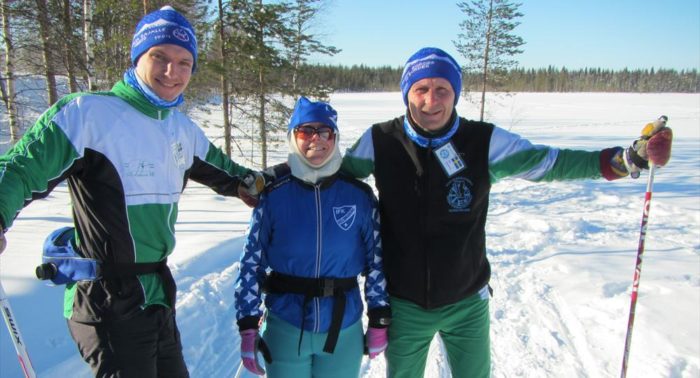
Josefin Palmén (centre) takes a break to smile for the camera with a couple of her fellow Border to Border skiers.

Josefin Palmén (centre) takes a break to smile for the camera with a couple of her fellow Border to Border skiers.Photo © Josefin Palmén

While skiing 440 kilometres across northern Finland could seem daunting, Border to Border is not a race. The distance is so long that measuring it officially would pose a challenge, and the origins of the event are filled with team spirit rather than competitive attitude.

Leila and Väinö Voutilainen, a husband-and-wife team, are the only ones to have taken part in Border to Border every single year. Leila recounts the first event in 1984: “Our little group skied persistently at the same pace with the slowest skiers. After all, we had come to ski together.”

It’s not a high-pressure event. Skiers may do less than the full distance each day if they choose and bus pick-up is available at the halfway point.

People sign up for different reasons. Palmén was asked by a member of her club to join him, and that was the first she heard of the event. For many enthusiastic cross-country skiers, Border to Border forms a lifelong goal.

Skiing the full distance is a challenge even for advanced skiers, but the camaraderie between participants and the excitement surrounding the event provides an extra push.

One participant trained on rollerblades in Spain, and only skied on snow once before the start of the event. He joined in because the views and adventure seemed so amazing. Some people show up for the novelty of literally skiing across a whole country.

By Pia Grochowski, March 2014, updated February 2017

Finnish Oscar nominee shows comical life

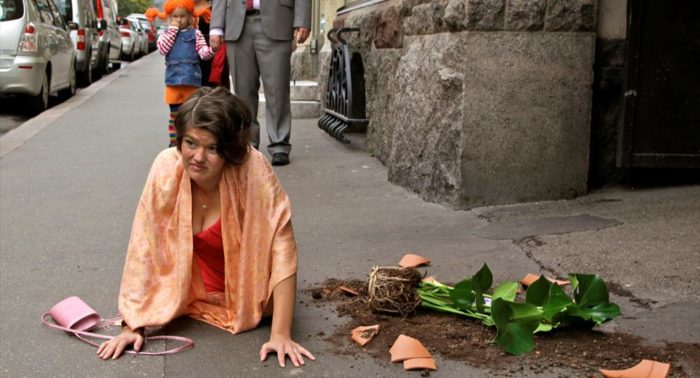
The short film Do I have to take care of everything? forms the second Finnish film ever to receive an Academy Award nomination. Screenwriter Kirsikka Saari tells us what it takes to create world-class film.

The only other Finnish film to get an Oscar nomination was Aki Kaurismäki’s Man without a Past (Mies vailla menneisyyttä), in 2002. Do I have to take care of everything? (Pitääkö mun kaikki hoitaa?), nominated in the category of Short Film Live Action, tells the story of one family’s chaotic morning and a mother determined to do everything it takes to get her family out the door on time.

The idea for the story came from screenwriter Kirsikka Saari’s own life. “When you have your own company and you’re working and trying to take care of your kids at the same time, it can sometimes be a struggle,” she explains.

The comical side of family life

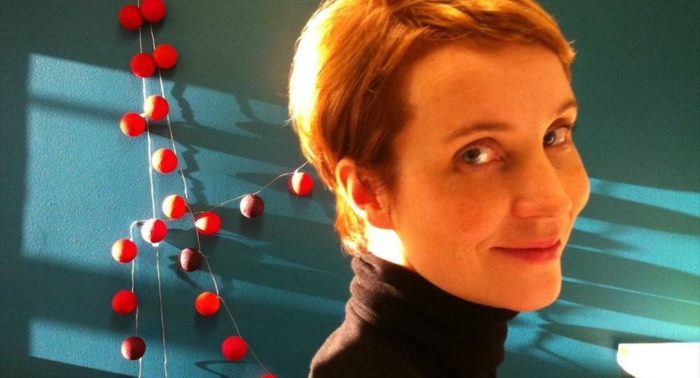
Screenwriter Kirsikka Saari got the idea for her Oscar-nominated film one day when she lost her temper and snapped at her family.

Screenwriter Kirsikka Saari got the idea for her Oscar-nominated film one day when she lost her temper and snapped at her family.Photo: Tuffi Films

“I’d been thinking about the idea of a busy family morning for a while, but the final idea only crystallised this one time when I snapped at my family and decided to go outside to cool down.

“While I was out, I started laughing at myself. Like me, many women often try to take care of everything by themselves but can also laugh at themselves. This is what I wanted to communicate with this film – that sometimes when you’re in a hurry you can forget what’s really important in family life.” Saari sees it as the story of a Finnish woman first and foremost, but believes “people identify with the characters in the film, and that makes it funny” to international audiences, too.

When the film was first released in March 2012, it didn’t seem to take off. “We sent it to a lot of festivals, but we didn’t think it was going to be a hit until Aspen. After that, things started happening and it attracted more interest,” Saari recalls. Do I have to take care of everything? won the Best Comedy and Audience Recognition awards at Aspen Shortfest 2013, which qualified the film for the Academy Awards application and led to the Oscar nomination.

A fun, hard-working film team

You can’t do everything – or can you? Finland’s Academy Award nominee may hold the answer.

You can’t do everything – or can you? Finland’s Academy Award nominee may hold the answer.Photo: Tuffi Films

The Oscar nomination represents a great benchmark for the filmmakers’ own production company, Tuffi Films.

Jenni Toivoniemi, a screenwriter and director, knew Saari, director Selma Vilhunen and producer Elli Toivoniemi separately and brought them together. In 2010, the four of them founded Tuffi, a company that is one-of-a-kind in the Finnish film industry. Unlike most other production companies, Tuffi Films employs screenwriters and directors in addition to producers, so it can produce films in-house from start to finish.

“Film productions are often long and there’s always the danger of someone walking out in the middle of the process,” says Saari. “We started the company because we all wanted to work as part of a well-functioning, fun team and really commit to the work. True commitment makes the work feel more important and increases our chances of succeeding.”

During its relatively short history, Tuffi Films has already collected honours such as the Short Film Jury Award at the Sundance Film Festival in 2013, for The Date. Korso, a fiction film about a teenager who lives in the Helsinki suburb of Korso and dreams about becoming a streetball star in New York, was released in February 2014. Tuffi also has several other fiction and documentary films in production.

“We’ve worked hard for years and now we’ve met with success,” says Saari. “Receiving international recognition is invaluable to us. It gives our work greater credibility and helps us go forward.”

By Henrietta Hautala, February 2014

Intrepid Finnish bands mix music and fun

Three up-and-coming Helsinki bands fearlessly mix musical styles with a spirit of fun. Mopo, Dalindèo and Ricky-Tick Big Band are high-energy outfits that tap into jazz without any brow-furrowing seriousness.

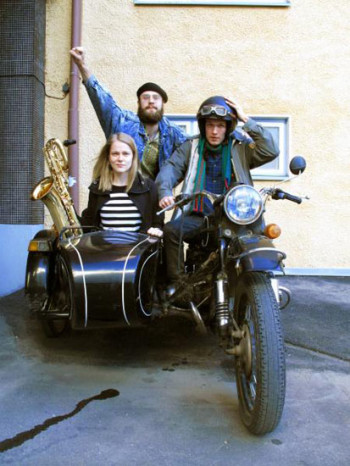
A slight blonde wearing jeans, Converse sneakers and a big grin jumps onto a small stage at an old movie theatre, carrying a big baritone saxophone. Her two bandmates in Mopo, dressed in thrift-shop clothes, grab a beat-up bass and drums. They launch into a high-speed thrill ride that owes as much to hardcore punk as to hard bop. Meanwhile an artist conjures swirling images behind them with an overhead projector.

At one point, the three switch instruments in mid-song without missing a beat. The show ends with them playing duck calls and whistles; then wandering out into the crowd, solemnly squeaking plastic animals.

Mopo won the Finnish stage of the Young Nordic Jazz Comets competition in 2011. Their 2012 debut album Jee! was nominated for a domestic Grammy and released internationally by the UK’s Edition Records. In spring 2013, saxophonist and glockenspiel master Linda Fredriksson, 27, won the 2013 Finnish Critics’ Association award for shaking up the academic-minded men’s club of Finnish jazz.

Hip-hop meets bebop

Power to the Mopo! Saxophonist Linda Fredriksson (left), bassist Eero Tikkanen (centre) and percussionist Eeti Nieminen form Mopo, a band that’s ready to go.

Power to the Mopo! Saxophonist Linda Fredriksson (left), bassist Eero Tikkanen (centre) and percussionist Eeti Nieminen form Mopo, a band that’s ready to go.Photo: Anna Tahkola

Mopo and another of Fredriksson’s groups, Ricky-Tick Big Band, are prime specimens of new Helsinki acts who refuse to be stuffed into pigeonholes. Another close relative is Dalindèo, which features many of same players – and similar irreverent musical attitudes.

As in any city, musicians in Helsinki have a hard time making a living these days. Yet those with open minds, 360-degree taste, experience and skills flourish by playing in a variety of bands and styles – which often overlap and mingle like the sounds, aromas and crowds at a street festival.

Rap and jazz, for instance, have overlapped since early-1970s LPs by the Last Poets and Gil Scott-Heron. In later decades, rap DJs have used bebop samples, while many a jazz musician has featured a token rap track – sometimes with cringeworthy results.

Ricky-Tick Big Band has taken a giant step: their second album Burnaa features three of Finland’s most established rappers: Paleface, Redrama and Tommy Lindgren, known collectively as Julkinen Sana.

“So far we’re unaware of similar collaborations with a big band and rap,” says composer/producer Valtteri Pöyhönen, leader of the 17-member Ricky-Tick Big Band and the six-man Dalindèo. “We wrote most of the texts in sessions together over the pre-recorded big band tracks.”

The MCs rhyme back-to-back, grooving seamlessly with the 13-strong horn section during witty raps in Finnish and Swedish about addiction, xenophobia, the Moscow militia and the state of homegrown hip-hop. In between, Fredriksson plays fierce solos, as does trumpeter Kalevi Louhivuori.

Bossa to Balkan

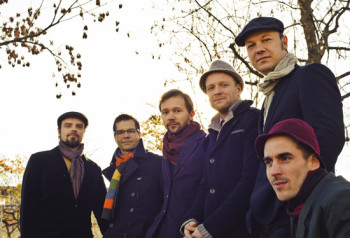
The members of Helsinki band Dalindèo cultivate irreverent musical attitudes.

The members of Helsinki band Dalindèo cultivate irreverent musical attitudes.Photo: Veikko Kähkönen

“Dalindèo has gotten feedback from a very varied audience for a long time, along the lines of, ‘I don’t really like jazz, but what you’re doing is great,’” says Pöyhönen. “It seems that the music just gets people, even before they realise that it’s jazz. It’s the same thing with Ricky-Tick Big Band.

“I’m very pleased about this because jazz seems to be a dirty word for a lot of people and I’d like to change that. And it seems to be working!”

Three of Dalindèo’s six members are also in Ricky-Tick Big Band. The former has been together for almost ten years, touring more than a dozen European countries. They started out playing bossa nova with a Japanese female singer on their 2007 debut.

Their third disc, Kallio, released in early 2013, splices in Ethiopian and Balkan sounds, ska, surf guitar, rockabilly and Pink Panther-style lounge. It entered the Finnish chart at number 13, with the single “Ilta Tokoinrannassa” becoming a local radio hit.

Kallio is definitely an evolution in the sound of Dalindèo,” says Pöyhönen, who switches off between guitar, keyboards and electronics. He has lived in many European cities, and conceived Kallio as a soundtrack to his bohemian Helsinki neighbourhood of the same name.

By Wif Stenger, June 2013

Finland’s national instrument gets louder

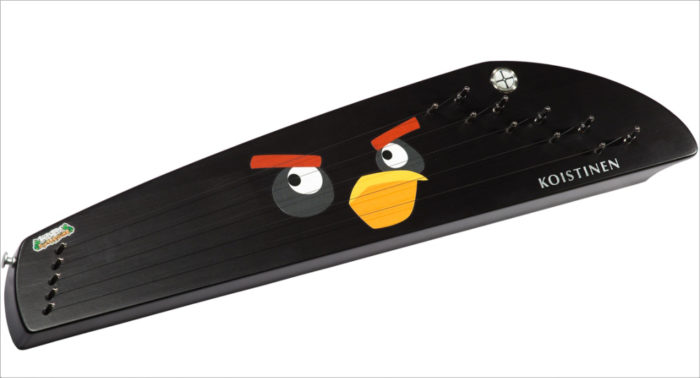
The Finnish national instrument, the kantele, has a tranquil, serene reputation. That’s changing as the kantele becomes louder, more versatile – and even a bit angry (yes, like Angry Birds). In addition, find out about its close connections to Kalevala Day, also called Finnish Culture Day, celebrated annually on February 28.

“There’s this National Romantic image from the beginning of the 20th century of a girl with long blond hair and a traditional costume playing a kantele under a birch tree or whatever,” says Jutta Rahmel, a 20-something, purple-haired urbanite who plays in the kantele quartet Kardemimmit. “So nowadays people think of the kantele as girlish, which I think is a shame.”

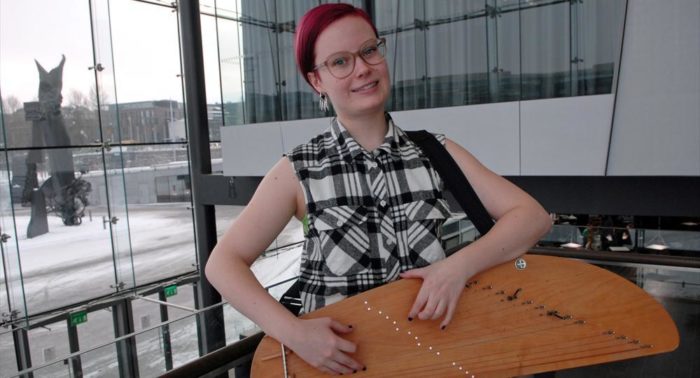
Jutta Rahmel and her group Kardemimmit represent a new generation of kantele players who are exploring the possibilities of the instrument.

Jutta Rahmel and her group Kardemimmit represent a new generation of kantele players who are exploring the possibilities of the instrument.Photo: Sinimaaria Kangas

The kantele plays a central role in Finnish culture. Kalevala, Finland’s national epic poem, first published in 1835, has a kantele-plucking hero. An 1840 companion volume contains similar verses and bears the title Kanteletar (the term for a female kantele player).

Resembling the zither, the instrument has been played in Finland for some 2,000 years, and variations exist in other eastern Baltic countries. The most basic version has five strings but there are up to 39 on large concert models such as that played by Rahmel. She encountered the instrument in the standard way – at music playschool when she was four years old.

“It’s a good introduction to music,” she says. “It’s a nice, easy way to start.” That’s why the kantele has been a key element of Finland’s celebrated music education system since the 1970s.

“Back then nobody was playing the kantele, but musician and composer Martti Pokela saved the instrument,” says Rahmel. “He encouraged every school to get at least one small, basic kantele.”

Bright and angry for export

This kantele for kids combines an ancient instrument and a modern tech success.

This kantele for kids combines an ancient instrument and a modern tech success.Photo: Koistinen

The instrument’s educational role is now being tested as an export product via the Angry Birds Playground learning concept.

The programme, based on the Finnish National Curriculum for Kindergarten, was launched with by gaming giant Rovio and the University of Helsinki in late 2013 and is being rolled out in China. Finland’s biggest kantele company, Koistinen, has created a bold, playful-looking instrument for the programme.

“Rovio didn’t have a music section for the Rovio Playground concept,” explains electric kantele player Anttu Koistinen, 21. “In the summer of 2012, they invited us to come in and introduce our kanteles and pedagogical products, and they got really excited. We did multiple school and kindergarten trials, and kids loved it – including the boys.”

Anttu is acting as Koistinen’s project manager for the Rovio programme. His grandfather started the kantele company in eastern Finland in 1957, and his aunt Ritva Koistinen works as a leading kantele educator and performer.

Shocking the kantele purists

The concept of the kantele has expanded in recent years and now includes bigger, flashier instruments.

The concept of the kantele has expanded in recent years and now includes bigger, flashier instruments.Photo: Koistinen

Anttu’s father, Hannu Koistinen, a second-generation kantele builder and an avid electric guitarist, began redesigning the kantele in 1989. He shocked the purists.

“At that time the kantele was invisible,” he says at the firm’s small Helsinki showroom. “It was very quiet and impossible to amplify well because of the very unequal sound of strings. So it wasn’t really working for the rising young musicians. Something had to be done.”

Hannu first developed acoustic concert kanteles to a professional level, then turned his attention to adding electricity. Taking a cue from electric guitars, he introduced brightly coloured, amplified kanteles that can be played standing up rather than in the classical seated position.

“It’s essential for musicians to have a closer connection with audience,” he says. “That’s natural, as kantele is rarely played in smoky huts nowadays,” he adds, referring to the rural settings where people used the instrument in previous centuries.

Instead, kanteles are appearing in rock clubs, pop videos and music festivals around the globe. That’s largely thanks to supergroup Värttinä, who hail from Rääkkylä, the same eastern Finnish town as Koistinen. It also hosts the annual Kihaus Folk Festival in early July. This area near the Russian border is a kantele hotbed, and source of most of the Kalevala verses.

Echoing mystical connections

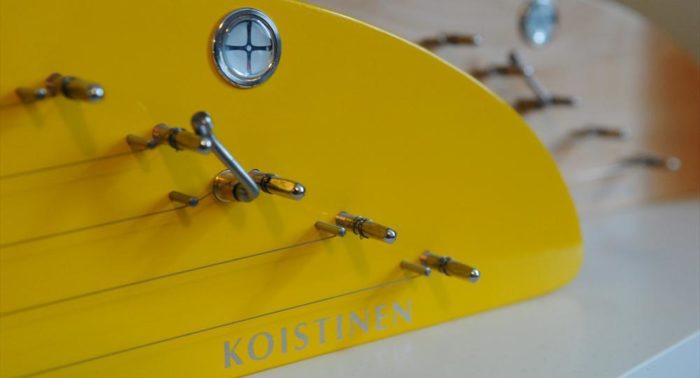
Koistinen close-up: The kantele strings are wrapped around metal tuning pegs.

Koistinen close-up: The kantele strings are wrapped around metal tuning pegs.Photo: Sinimaaria Kangas

“North Karelia has Finland’s oldest, most original kantele tradition, so I think it’s natural that the modernising is also taking place there,” says Hannu.

“My father, who’s still working at age 88, has always had a strong connection with Karelia’s nature. He gets ideas from dreams and intuition, and places like Koli [a national park], one of the greatest landscapes in Finland. You feel some kind of holy connection with the past there.”

Echoing that mystical connection, the traditional kantele sound is delicate, harp-like and celestial. The electric models, though, can hold their own in the hard-driving music of Finnish rapper Asa and heavy metal band Tevana3.

“I like the acoustic sound – even when you amplify it, it still sounds natural, just bigger,” says Rahmel. “But I’m also really interested in electrifying it with pedals and effects. That’s the next thing I really want to do.”

By Wif Stenger, February 2014

Social entrepreneurship rising in Finland

Finnish entrepreneurs are seeking to solve social and environmental problems with business by increasing work standards, promoting healthy eating and offering skills and support for the disabled. A special logo, the Finnish Social Enterprise Mark, helps these businesses stand out and grow.

The Finns want to make the world a better place, and that need is growing. Social entrepreneurs – businesses with a cause – have boomed in Finland since 2010, when there were only 150 of them.

“Now, there are thousands,” says Saila Tykkyläinen, development manager at the Association of Finnish Work in Helsinki.

Tracking down social entrepreneurs isn’t always easy. That’s why the association invented the Finnish Social Enterprise Mark, a symbol of certified social entrepreneurs. The blue-and-white logo carries prestige and isn’t easy to attain.

Of all the social entrepreneurs in Finland, only several dozen businesses possess social enterprise certification. During 2014, the association hopes to certify 50 more, bringing the total close to 100.

Making your mark

The Finnish Social Enterprise Mark, a symbol of certified social entrepreneurs, makes these companies easier to find.

The Finnish Social Enterprise Mark, a symbol of certified social entrepreneurs, makes these companies easier to find.Logo: Association of Finnish Work

Social entrepreneurs get the mark of certification if they promote well-being, limit their distribution profits and offer transparency of their business operations.

The Finnish Social Enterprise Mark committee meets four to six times per year. They ask each company for a written statement of social and business goals, seeking social entrepreneurs who develop the local economy, minimise environmental and health hazards, and prioritise vulnerable groups.

The association awarded the first certifications in spring 2012. Each social entrepreneur pays a 0.01 percent membership fee tied to the turnover of their company. In turn, they may use the logo on their website. They also receive marketing perks, training seminars and touring events that showcase and promote their businesses.

“The term ‘social enterprise’ itself isn’t well known yet,” says Tykkyläinen. “That’s the first challenge we have to tackle.”

Three companies with the Finnish Social Enterprise Mark

Mifuko: Demand outstrips supply

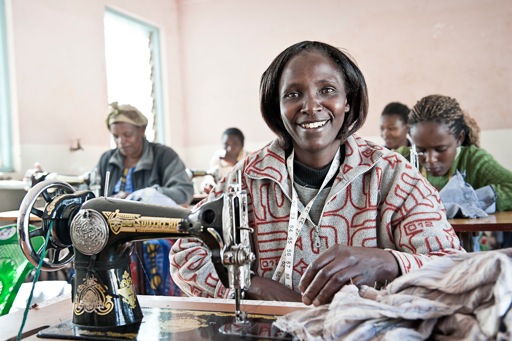
Mifuko ensures that the people in its workshops receive a regular income and good working conditions.

Mifuko ensures that the people in its workshops receive a regular income and good working conditions.Photo: Mifuko

Design company and online shop Mifuko, founded in 2009 by Helsinki-based designers Minna Impiö and Mari Martikainen, produces bags, baskets, jewellery and shoes from recycled material in Kenya.

Impiö, Martikainen and four other Finnish designers bridge the gap between Helsinki and Nairobi by designing African-inspired ecofriendly items that are made in Kenyan artist workshops. Mifuko ensures that the artists receive a regular income and good working conditions.

“Not only is Mifuko engaged in social entrepreneurship, but our subcontractors also are,” says Impiö. “That’s the idea. Many are employing street kids, single mothers or disadvantaged people.”

One example is their Kiondo baskets, made in the rural area of Machakos. Women’s groups organise the workshops there, and the wages go to feed, educate and buy medicine for their families. They always need backup work when weak harvests or drought hit. Demand for Mifuko’s baskets outstrips the supply from Kenya, so there’s always enough work.

Kanresta: Dividends go to a good cause

Restaurant and catering service Kanresta uses local ingredients and organic food as much as possible.

Restaurant and catering service Kanresta uses local ingredients and organic food as much as possible.Photo: Ossi Lehtonen/Lehtikuva

Restaurant and catering service Kanresta aims to make it easier for Finns to eat a healthier diet. The company takes an ethical approach, minimising its carbon footprint by using local ingredients and organic food as much as possible. The dividends go to Kanresta’s owner, the Finnish Association for Public Health, whose members include the Foundation for Pediatric Research, the Finnish Heart Association, the Central Union for the Welfare of the Aged and the Finnish Association for Mental Health.

Carrying the Finnish Social Enterprise Mark has helped businesses like Kanresta gain exposure and employment. “When an institution – for example Finlandia Hall in Helsinki – is choosing a new restaurant operator, the mark helps us,” says CEO Antti Rosenberg. “Our future goals are to increase our business moderately and make the mark known in the restaurant world.”

Sotek: Work and participation

Based in the cities of Kotka and Hamina, Sotek is a foundation that provides training, subsidised work, coaching and support for people with mental disabilities. It also assists in finding work for people who have challenges related to long-term unemployment or substance addiction, and for immigrants and young people who have yet to acquire vocational training.

Established in 2004, Sotek has about 60 employees and a turnover of 4.7 million euros. They aim to offer people the confidence to work and participate in society. They help roughly 800 people a year find work in one of their ten locations in the Kotka-Hamina region, in jobs that include sorting second-hand clothes, delivery services, cleaning and handicraft work.

By Nadja Sayej, February 2014

Finnish teachers venture out on exchange

Everyone knows about exchange students, but teachers go abroad, as well. We talk to teachers from Finland, famous for its education system, who go on exchange to get and share ideas. Finnish teachers, students and organisations play an important role in the global interchange of academic ideas and expertise.

The view from the Centre for International Mobility (CIMO), situated next to the sea in the Helsinki neighbourhood of Hakaniemi, stretches far across the water. Similar long-reaching vision has driven their development of teacher exchange opportunities aboard.

“The outside world is so much closer thanks to IT, Facebook and the media, and people travel much more,” explains Nina Rekola, head of general and adult education at CIMO. “Teachers are alert to finding new possibilities outside their permanent working range. They are looking for new contacts, language skills, methodologies, teaching materials and cooperation.”

Connecting interested schools and teachers from Finland and abroad, CIMO also helps coordinate programmes that enable the mobilisation of the teaching population. These include Erasmus+, which encompasses Europe, and Nordplus, which covers the Nordic and Baltic countries. The Fulbright Centre, located on the same floor as CIMO, coordinates exchanges with the USA.

Canadian exchange

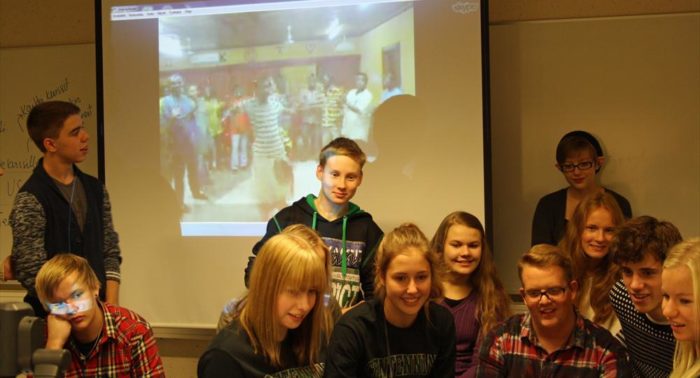
Finnish and Canadian students participating in an exchange programme in Seinäjoki, Finland talk to students in Ghana on Skype.

Finnish and Canadian students participating in an exchange programme in Seinäjoki, Finland talk to students in Ghana on Skype.Photo: Teijo Päkkilä

One significant project in recent years has been FinAl, the Finland-Alberta Partnership. Conducted between five upper secondary and two vocational education institutions in Finland and the Canadian province of Alberta, a number of teachers and students from both countries have participated in exchanges in order to share best practices.

Finland’s education system often receives praise in the international media, which could make you wonder if the need really exists to branch out to another country for expertise.

“Never underestimate what you can learn from international cooperation,” says Teijo Päkkilä, vice-principal at Seinäjoki High School and project coordinator for FinAl. A teacher exchange alumni who visited the Albertan cities of Edmonton and Grande Prairie, Päkkilä sees that good results won’t be achieved by always doing things the same way they’ve always been done.

“Everything is constantly in transition, and we need to keep our eyes peeled to find solutions to challenges. International cooperation is a good way to find these. At the end of the day you’ll be much wiser, no matter how knowledgeable you consider yourself.”

Aside from the independence enjoyed by teachers in Finland, Päkkilä believes that the strengths of the Finnish education system include its flexibility and its national curricula.

“This flexibility enables educational creativity,” he says. “Of course, this also happens in Alberta on a great scale. But it is in different areas than here, which makes the exchange very rewarding.”

Sharing expertise

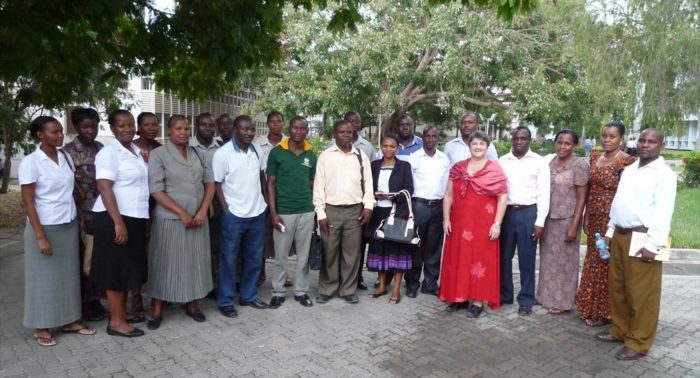
Educational sociologist Margaret Trotta Tuomi (red dress) of the University of Jyväskylä spent a semester at the University of Dar es Salaam, Tanzania and found new solutions.

Educational sociologist Margaret Trotta Tuomi (red dress) of the University of Jyväskylä spent a semester at the University of Dar es Salaam, Tanzania and found new solutions.Photo courtesy of Margaret Trotta Tuomi

The shared benefits of the exchange have also stretched further afield, with schools from both countries collaborating on a charity programme to equip a school in Uganda with computers.

Also connecting with African education is CIMO’s North-South-South (NSS) programme, celebrating ten years of Finnish cooperation with higher education institutions in a number of Africa countries, as well as other developing nations. Supporting student and teacher exchanges, NSS offers joint intensive courses as well as a range of networking and dissemination measures.

“The joint intensive courses provide opportunities for developing new teaching content or methodology, as well as teaching material and joint publications,” explains NSS programme manager Annika Sundbäck-Lindroos.

Culturally Responsive Teacher Education, one of 20 NSS projects, is being carried out in Finland, Ghana, South Africa and Tanzania. The main focus of the project is to promote culturally responsive teacher education, with an international, multidisciplinary team. 

“What I learned in Tanzania and brought back with me was a new level of humility,” says Margaret Trotta Tuomi, who visited the University of Dar es Salaam from the University of Jyväskylä. “For the past 60 years of my life I have seen what solutions we in the north have come up with, and now, in the south, I have seen a completely new set of solutions that also work perfectly.”

“It’s an eye-opener for one’s own positive and negative working environments and experiences,” concurs Mari-Anne Okkolin, also from the University of Jyväskylä. “I think all of our academics should spend some time abroad and to learn how universities, faculties and departments function elsewhere.”

By James O’Sullivan, February 2014

Your top 10 Finnish films, and a director

As movies go, Finland offers many treats, from award-winning documentaries to the entire oeuvre of Academy Award nominee Aki Kaurismäki.

Finns and non-Finns alike fall in love with this stuff – before you know it, you’ll be recommending these comedies, dramas and action flicks to everyone you know. Here we go (the voting was so close that we’ve left them unnumbered):

Rare Exports: A Christmas Tale
Directed by Jalmari Helander (original title: Rare Exports), 2010

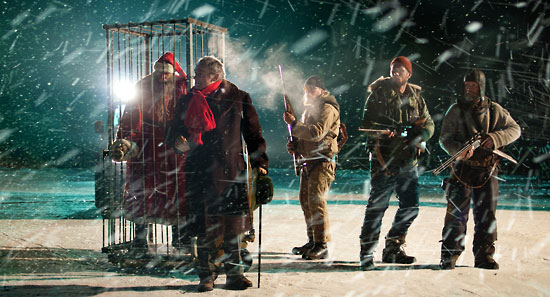
Three armed men guarding Santa Claus trapped in a cage.

Photo: SF Film Finland

This movie pulls off the challenging task of taking a familiar, traditional character – good old Santa Claus – and rewriting him in an action context, showing a darker side to his myth. In a daring fantasy film set in Lapland around Christmas time, Santa is discovered and captured. Children start disappearing and Lapland faces a band of rebellious elves trying to free their leader. Helander displays a deft touch in combining action and humour. The dark and frozen winter of the Finnish Lapland becomes one of the movie’s main characters.[Editor’s note: Not a film for kids!]

Lapland Odyssey
Dir. Dome Karukoski (orig. Napapiirin sankarit), 2010

Another movie set in Finnish Lapland presents action-tinged comedy with a sunnier outlook than Rare Exports, but in a setting that is just as dark. The shenanigans kick off when Janne, a career slacker, is given the task of buying a digital TV receiver by his girlfriend Inari. Snowy hijinks ensue. Janne and his friends face a comedy of errors ranging from the limited opening hours of electronics stores in Rovaniemi to the arrival of heavily armed Russian tourists. Lapland Odyssey is a gem.

Mother of Mine
Dir. Klaus Härö (orig. Äideistä parhain), 2005

Around 70,000 Finnish children were evacuated to Sweden during the Second World War. Härö’s movie examines this period through the eyes of a nine-year-old boy, Eero. The themes explored include trust, love and the difficulty of doing the right thing. Eero’s mother is undependable, and her choices make it hard for Eero to trust in maternal love. Sixty years later, he reads the letters of his Swedish foster mother after her funeral and finds a measure of peace. The film won a number of international awards, including the 2006 Audience Award for Best Narrative Feature at the Palm Springs International Film Festival.

Punk Syndrome
Dir. Jukka Kärkkäinen and Jani-Petteri Passi (orig. Kovasikajuttu), 2012

In Finland, known for its production of world-class documentary films, The Punk Syndrome stands out. So does its subject: a punk rock band consisting of four men with mental disabilities makes its mark in the music scene. The fact is that the band kicks ass. In addition to highlighting a great punk band, the documentary can be seen as an exploration of how similar we all are, even when society puts us in our individual little boxes. Like all great documentaries, this one gets really close to its subjects. It won the SXGlobal Award at SXSW in Austin, Texas.

Steam of Life
Dir. Joonas Berghäll and Mika Hotakainen (orig. Miesten vuoro), 2010

“Sauna” is the only word that has migrated from Finnish into English. In Finland saunas are used for socialising as well as bathing, and this film takes us into the country’s heart and soul. On screen, Finnish men bathe in various saunas and speak with great candour about what’s on their minds. Steam of Life forms a touching comment on humanity and masculinity, dealing with universal truths as it covers issues related to regret, life, love, empty-nest syndrome and what it’s like when your best friend is a bear. It’s difficult to avoid becoming teary-eyed at some point during the film.

The Unknown Soldier
Dir. Edvin Laine, 1955 and Rauni Mollberg, 1985 (orig. Tuntematon sotilas)

Two versions based on the same classic of Finnish literature, made 30 years apart, are both great movies and illustrate changing attitudes towards war and patriotism. Laine takes the originally controversial, but later beloved book by Väinö Linna and turns it into a tribute to the soul and resourcefulness of Finland’s soldiers during the Second World War. Mollberg’s version concentrates on the horrors and impact of war. The latter director went to great lengths to keep his actors on edge by denying them most normal comforts and changing the layouts of the sets without warning. The movies tell the story of a ragtag machine gun company called to the eastern Finnish front in 1941.

The Three Rooms of Melancholia
Dir. Pirjo Honkasalo (orig. Melancholian kolme huonetta), 2004

The devastation wrought by the Second Chechen War and its impact on both Chechen and Russian children are at the heart of this poetic documentary. The camera explores a Russian military school, a war-torn village and children in a refugee camp. Honkasalo lets the images speak for themselves and utilises sparse narration, telling a tragic story in a touching manner, while avoiding passing judgment. The film won three awards at the Venice Film Festival and Golden Apricot/Grand Prize for best documentary at the Yerevan International Film Festival, to list a few.

Black Ice
Dir. Petri Kotwica (orig. Musta jää), 2007

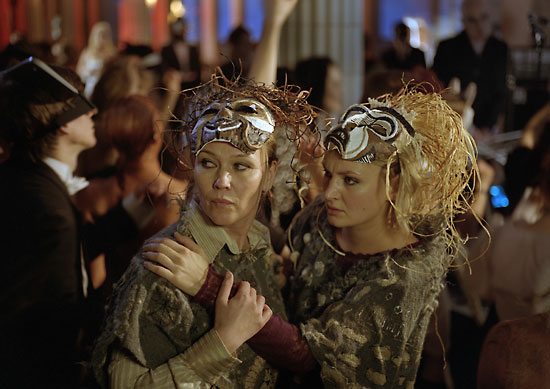
Two women dressed in tribal masks at a masquerade.

Photo: Malla Hukkanen/Making Movies Ltd

Kotwica’s film is a thriller, a psychological drama and a black comedy. Saara is a doctor whose architect husband, Leo, is having an affair with a younger woman, Tuuli. To get revenge, Saara befriends Tuuli without revealing her own identity. Eicca Toppinen of the band Apocalyptica wrote a suitably tense score for this labyrinthine movie. Kotwica received a nomination for Best Director at the Berlin International Film Festival and the movie was remade in South Korea under the title Love, In Between.

Frozen Land
Dir. Aku Louhimies (orig. Paha maa), 2005

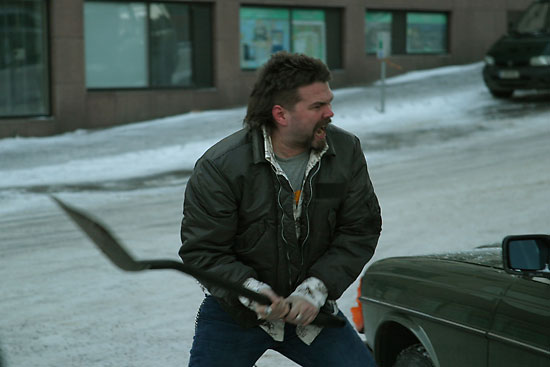
An angry-looking man swinging a shovel towards a car.

Photo: Solar Films

This complex movie involves a number of interwoven stories propelled into motion by a schoolteacher getting fired from his job. As a filmmaker, Louhimies tends to look at his fellow human beings and their foibles with an unblinking eye, but for all their weakness and tribulations, people tend to be resilient. At times they are even good. Frozen Land won awards at festivals in Athens, Bergen, Gothenburg, Leeds and Moscow.

Ricky Rapper
Dir. Mari Rantasila (orig. Risto Räppääjä), 2008

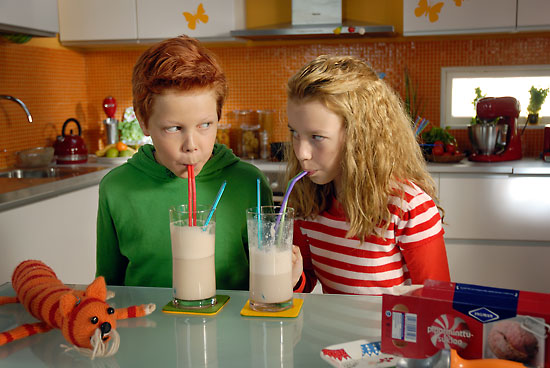
A red-haired boy and a blonde girl drinking milkshakes in a colourful kitchen.

Photo: Nordisk Film

In this film based on a children’s book series by Sinikka and Tiina Nopola, Ricky is a drummer and a rapper, and has a habit of getting into all kinds of jams, musical and otherwise. An independent and resourceful child, he finds himself at odds with the sometimes dopey adults of his world, some of whom just can’t abide his passion for funky beats. But fundamentally he’s on the side of all that is good in the world. A musical and a family film that everyone can enjoy, Ricky Rapper was one of Finland’s biggest box office successes the year it was released.

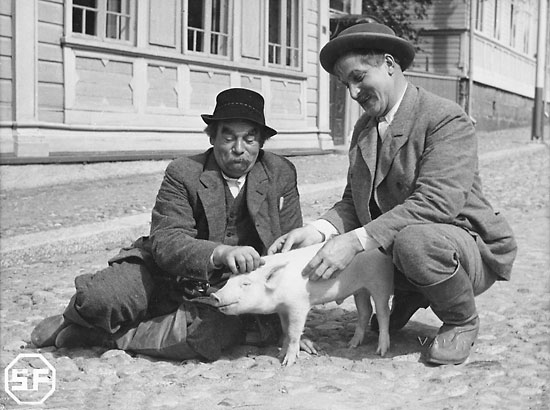
Borrowing Matchsticks
Dir. Leonid Gaidai and Risto Orko (orig. Tulitikkuja lainaamassa), 1980

A black-and-white image of two gentlemen sitting in a cobblestone street petting a piglet.

Photo: Toivo Särkkä, ©KAVI/Suomen Filmiteollisuus

Also known as Out to Borrow Matches, this Finnish-Soviet collaboration is based on a 1910 novel is a comedy set in the town of Liperi in eastern Finland and includes Russian and Finnish actors. The story begins with a simple trip by Antti Ihalainen to the neighbour to borrow matches, but takes a turn when Ihalainen runs into his friend Jussi Vatanen, who gives him a ride. Vatanen, who has been a widower for a year at this point, needs Ihalainen’s help in finding a new prospective wife. Events soon spiral out of control in this accomplished example of bucolic slapstick comedy. Another, all-Finnish version also exists, directed in 1938 by Yrjö Norta and Toivo Särkkä.

Director and writer Aki Kaurismäki

Kaurismäki is one of those rare directors whose style is so characteristic and unique that it merits its own adjective. “Kaurismäki-esque” is used to describe everything from American indie films to Helsinki restaurants. He has produced masterpieces of European cinema during every phase of his 30-year career, most recently Le Havre (2011) and The Man without a Past (2002). The latter won the Grand Prix and the Prize of the Ecumenical Jury at Cannes, and was the only Finnish Film ever nominated for an Academy Award. Kaurismäki’s works emphasise his empathy for the downtrodden and disenfranchised. He possesses the ability to make you laugh at surprising things.

By Arttu Tolonen, January 2014