Nokia sees future in programmable world

With a new CEO, Nokia plans to continue revolutionising the ways people work and live, even though it has now handed off its mobile phone business to Microsoft. Nokia is envisioning its place in a world where everyone – and everything – takes part in connectivity.

Just west of Helsinki, a new tenant has moved into the landmark building known as Nokia House – the sign on the façade has changed from Nokia to Microsoft. With Nokia’s sale of its handset division complete, the company has quietly moved several kilometres north to their new headquarters in Karakallio. This location is much less visible than the former headquarters, but that doesn’t mean Nokia is planning to keep a low profile.

Nokia’s new CEO Rajeev Suri has been widely lauded for turning its struggling networks division around. The company’s main business unit is Networks, which focusses on providing products and services to telecommunication operators. It has found a good market in fourth-generation Long Term Evolution (4G LTE) technologies and is known as an early leader in virtualisation and in implementing cloud technologies.

Timo Vuori, a professor at Aalto University who has studied strategy processes at Nokia and other companies, thinks Suri is a good choice for CEO, based upon his public image. Vuori also expresses optimism about Nokia’s future in the networks industry.

“I believe they will continue operating successfully in their industry,” Vuori says. “Nokia is strong in networks and there is no reason to think demand would decrease or Nokia fail to deliver.”

Common sensing
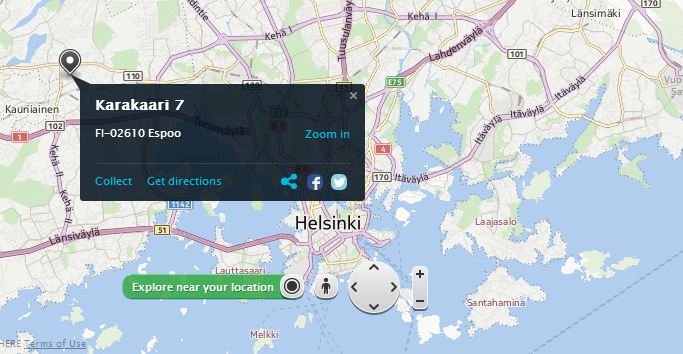
Nokia’s location-based business HERE is pointing out the address of the company’s new headquarters west of Helsinki.

Nokia’s location-based business HERE is pointing out the address of the company’s new headquarters west of Helsinki.Screenshot: here.com

Nokia’s second division is the location-based business HERE. It is deeply immersed in the “internet of things,” where physical objects have network connectivity. In particular, HERE is specialising in smart, connected vehicles and wearable technology.

“I think this is very interesting,” says researcher and journalist Carl-Gustav Lindén, who is currently writing a book about Nokia and the globalisation of Finland. “I think that everybody wants an alternative to Google Maps. The internet of things is the future and robots need to be connected to precise location systems. This is very exciting, actually.”

While the internet of things includes stationary objects, such as connected home appliances or industrial machinery, HERE’s expertise is in mobility. Smart watches and eyeglasses such as Google Glass may come to mind, but HERE could bring its innovations to the public in surprising ways.

“I believe there is huge potential in location-based wearable technologies,” Vuori continues. “The market is still emerging, and great innovators such as Nokia have the possibility to shape the market by being proactive and providing new solutions that one cannot fully imagine yet.”

The third prong of Nokia’s trident of business units is Technologies. This unit primarily manages Nokia’s patents and licenses, but also conducts new research in low-power connected smart multisensor systems and distributed sensing, among other things.

Connectivity in everything
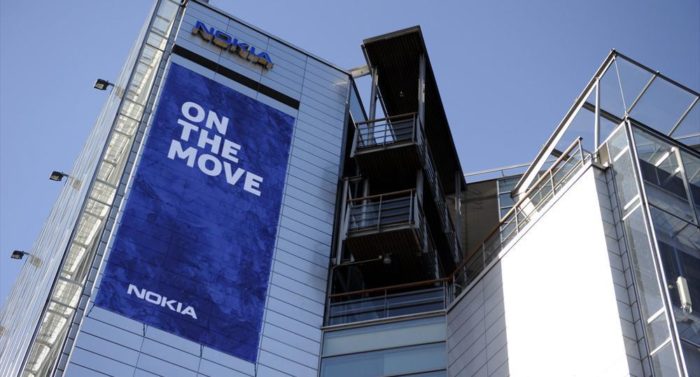
In April 2014, a banner hung on the façade of Nokia House announcing the company’s move. Before the end of the month, Nokia’s logo was replaced with that of Microsoft.

In April 2014, a banner hung on the façade of Nokia House announcing the company’s move. Before the end of the month, Nokia’s logo was replaced with that of Microsoft.Photo: Mikko Stig/Str/Lehtikuva

On the surface Nokia’s three units may not have much in common, but in a conference call Suri explains that the connectivity of everyone and everything will allow synergies to develop. He says that all of the recent changes in technology are leading to something often called “the programmable world.”

“It is a world where physical objects of all kinds – cars, TVs, medical devices, wristbands and more – will have built-in computing power, sensors and connectivity,” Suri says. “These objects will become bound together with intelligence built upon vast amounts of data which is processed in the cloud and used to automate and simplify, to create new services, and to improve peoples’ lives in many areas.”

Suri says the programmable world needs connectivity to handle massive numbers of devices and exponential increases in data traffic. Additionally, it is necessary to have sensing, location-based and low-power technologies. All of this requires enormous amounts of research and development. Much as Finland’s support was integral to Nokia’s rise to dominance in mobile phones, it is now hoped that national strengths will help in their new sphere of expertise.

“Nokia has already been working tightly with universities and I guess this will continue,” Lindén says. “It is of national importance, but this kind of research should not know any borders. It is really up to Finnish researchers to prove what they are capable of.”

By David J. Cord, May 2014
How the heck do you learn Finnish? part 2

Learning Finnish – it can be done. Just ask one of the ever-growing number of non-Finns who have gained proficiency in the language. An outgoing, positive attitude helps, and so does a good textbook.

In part two of what has become an enormously popular article (see part one), we talk to more friends and colleagues to find out what textbooks they like and what tried-and-true tips they recommend for mastering Finnish.

Don’t be afraid of mistakes

If you’re looking to speak Finnish, you’ve arrived in the right place.

If you’re looking to speak Finnish, you’ve arrived in the right place.Photo: flickr/StillBurning, cc by nc 2.0

Marina from Italy: Suomen kielen alkeisoppikirja (Finnish language: A basic textbook) and its companion books, by Anna-Liisa Lepäsmaa and Leena Silfverberg (Finn Lectura) are, in my opinion, the most complete and systematic. I like the fact that they’re written only in Finnish. I think that’s the best system – that way you learn from context and begin to think in Finnish. I like the practical approach of Finnish for Foreigners with its dialogues and its vocabulary section. I found the dialogues on the CDs very useful. Kato hei – puhekielen alkeet (Look: Beginning colloquial Finnish) by Maarit Berg and Leena Silfverberg (Finn Lectura) and the accompanying CD are very useful for learning the basics of colloquial (informal or spoken) Finnish. It’s very useful to learn how to write correctly in Finnish. A thin book made especially for non-Finns can serve as a reference: Tarkista tästä (Check it here) by Hannele Jönsson-Korhola and Leila White (Finn Lectura).

Marina’s tips: It’s important to start by learning Finnish grammar, but don’t focus on that alone. Read Finnish and listen to people speaking Finnish or, if you don’t live in Finland, use CDs or the internet. Don’t be afraid of making mistakes when you speak, and when you’re in Finland try to speak as much Finnish as possible!

Talk as much as you can

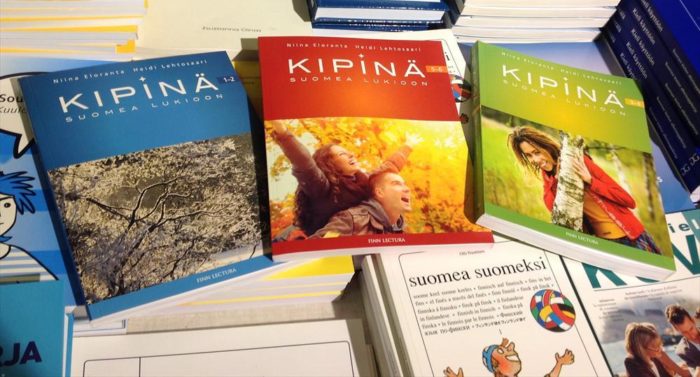
“Kipinä” (Spark), a textbook series for Finnish high school kids, offers students of Finnish the chance to challenge themselves and expand their horizons.

“Kipinä” (Spark), a textbook series for Finnish high school kids, offers students of Finnish the chance to challenge themselves and expand their horizons.Photo: thisisFINLAND

Nicola from Italy: Hyvin menee (Doing well) by Satu Heikkilä and Pirkka Majakangas (Otava) contains the basics and describes situations that you may find useful in Finland: the market, the seasons or the doctor’s office. Following short dialogues or texts, the book analyses and reviews the grammar and offers exercises. Because it is only in Finnish, I recommend taking a course at the same time. Kipinä 1–2 – suomea lukioon (Spark 1–2: High-school Finnish) by Niina Eloranta and Heidi Lehtosaari (Otava) is a new and very interesting book, so you can even discuss it with colleagues on your coffee break. Grammar is presented by means of current topics such as immigration, music, design, sauna and many others. In order to make the most of this advanced-level book (it is actually a Finnish textbook for Finnish-speaking high-school students), you should already know the basic rules, cases and vocabulary.

Nicola’s tips: In my experience, learning Finnish is a process that takes some years, maybe just a couple if you are very motivated. How do you speed up this process? Of course you need to learn the basics during your initial phase. Other than that, speak and listen. Try to talk as much as you can. Movies and news are a great help. Finns appreciate it when somebody tries to speak their language, no matter how many mistakes you might make. In the end you’ll find out that it’s about not only learning a language, but discovering a culture and a way people think.

If you’ve got it, use it

Spoonful of sugar: The red one or the blue one? Blue and white are the colours of Finland, of course.

Spoonful of sugar: The red one or the blue one? Blue and white are the colours of Finland, of course.Photo: flickr/frech, cc by sa 2.0

Matthieu from France: Kieli käyttöön (Putting language to use) by Marjukka Kenttälä (Gaudeamus) is a Finnish textbook in Finnish. That’s the best way to immerse yourself in the Finnish language. You may need to ask a Finnish person for help, but only in the beginning. Each lesson offers clear explanations and the vocabulary can be used directly in conversation. After finishing the first book, you’re already able to accomplish small conversations. A Grammar Book of Finnish by Leila White (Finn Lectura) forms a good addition to improve individual grammar points.

Matthieu’s tips: Don’t be afraid to speak Finnish, and continue to speak it even if people start to speak English to ease the conversation. As Finnish words are really different from other languages, learn them by heart and repeat them again and again.

As easy as 1, 2, 3

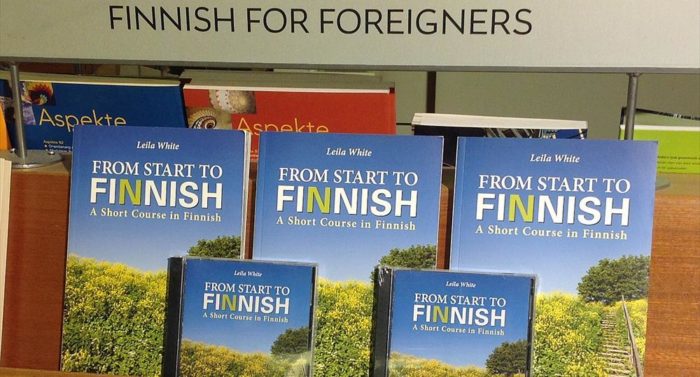
“Start to Finnish” contains useful dialogues and some handy colloquial words.

“Start to Finnish” contains useful dialogues and some handy colloquial words.Photo: thisisFINLAND

Anke from Germany: I learned Finnish with the book Yksi, kaksi, kolme: Finnisch für Deutschsprachige (One, two, three: Finnish for German speakers) by Senja Riekkinen-Gebbert (Hempen). You can learn the language with this book, but I found that it uses a more formal language than regular people in Finland. Later I used From Start to Finnish by Leila White (Finn Lectura) and I really liked it. The dialogues in the book are useful for the first conversations in a new country. It also contains some colloquial words, which comes in handy.

Anke’s tips: In my opinion it’s hard to learn Finnish, but not just because of all the double letters in the written language. It’s more about practicing. If you start speaking Finnish with a Finn, they may recognise that you’re not Finnish and, since they’re friendly people, they switch to English. But use your Finnish and don’t get discouraged! (Intermediate Finnish 101) (Intermediate Finnish 102) (Intermediate Finnish 103) : Free downloadable audio files and Finnish-English wordlist

Compiled by Peter Marten, Sabrina Salzano and Sara Vihavainen, April 2014
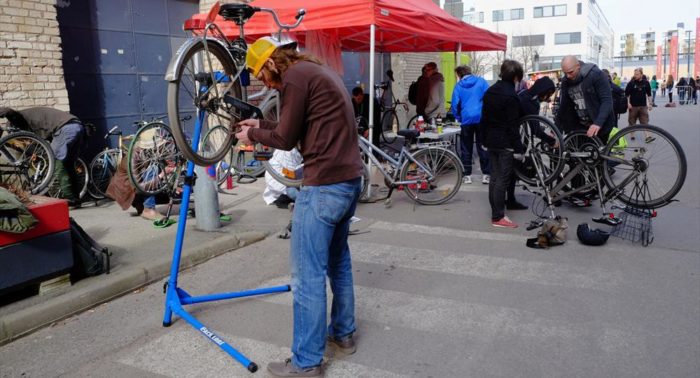
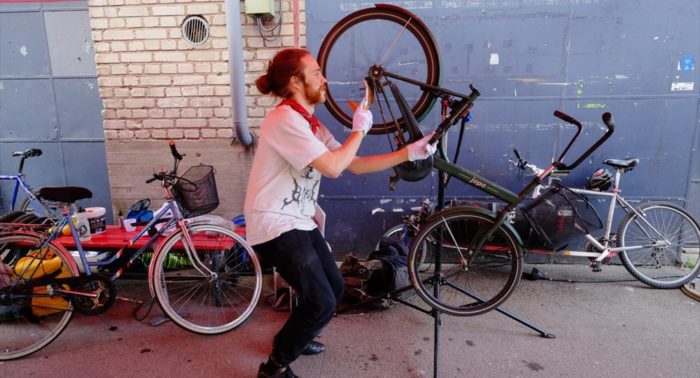
Helsinki’s Recycling Factory offers trashion, bikes, sauna and more

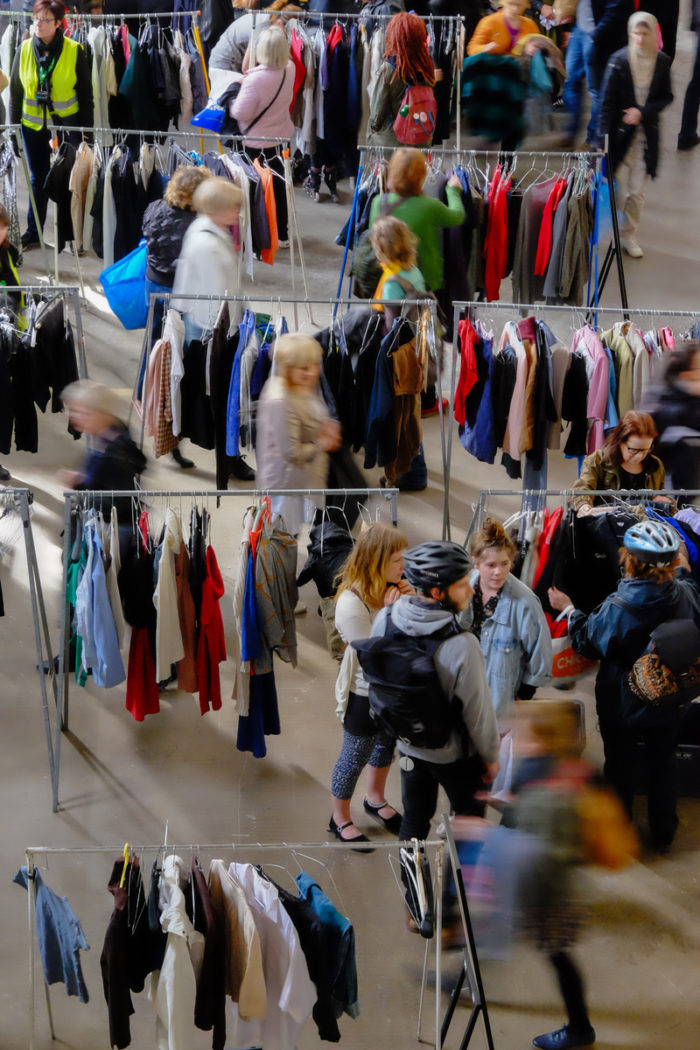
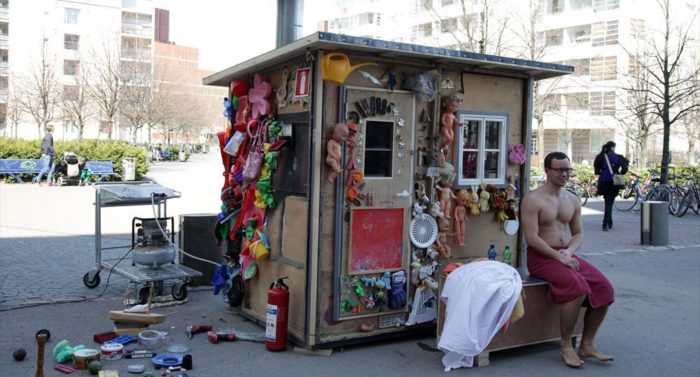
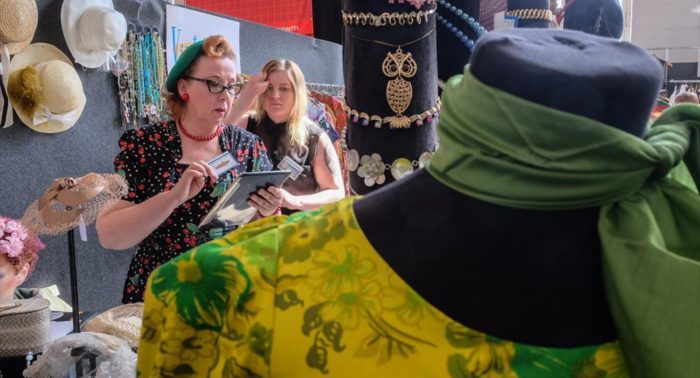
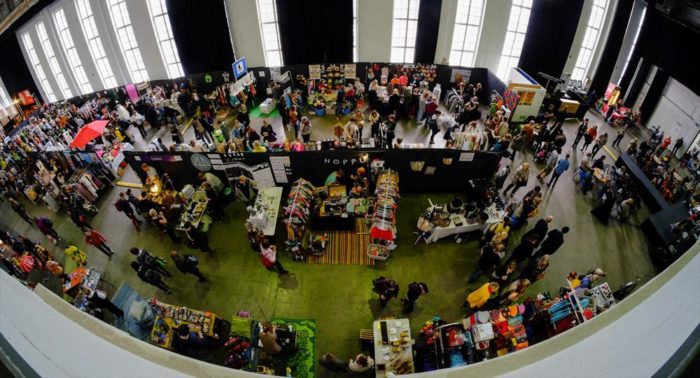
The Recycling Factory (slideshow below), an event held every spring in Helsinki, promotes two central trends of contemporary Finnish lifestyle: innovative design and ecological and sustainability issues.

The family-friendly Recycling Factory offers a free-of-charge market operating on a “bring and take” principle. It also includes workshops and shows that fit the global rise of ecological issues and awareness.

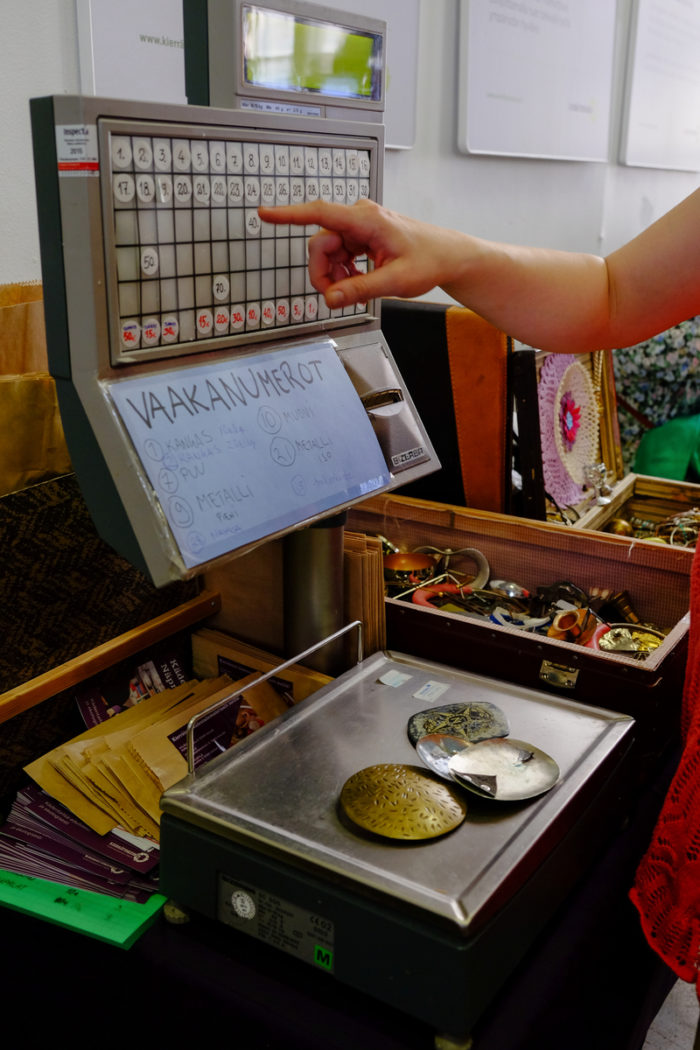
“Bring and take” means that throughout the weekend, you can bring clothes, toys, books and household goods that are fit for use – and you can take anything you need away with you.

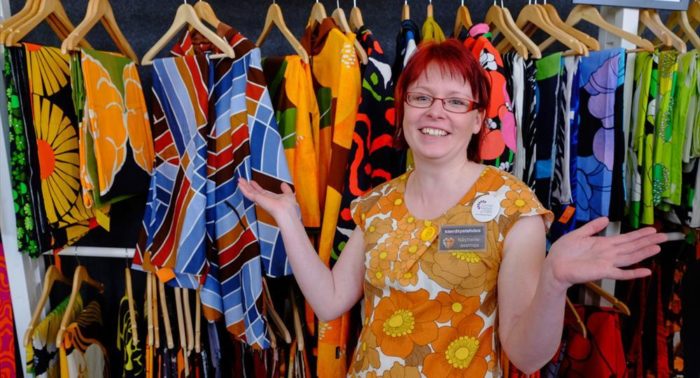
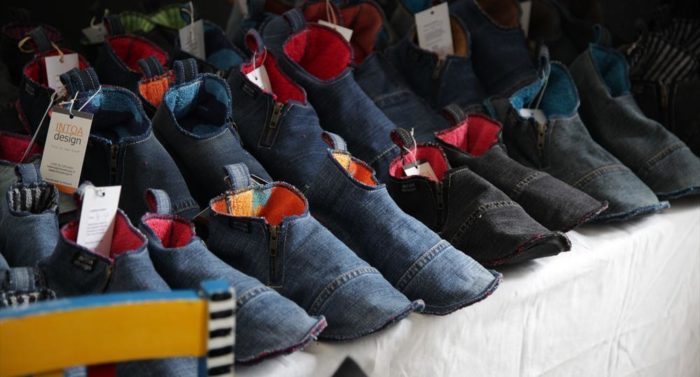
Another part of the market features some 70 pioneering Finnish companies selling clothes, jewellery, bags and interior design items made of recycled materials. Organic food products are available and ecological approaches to energy, beauty and nutrition are also represented.

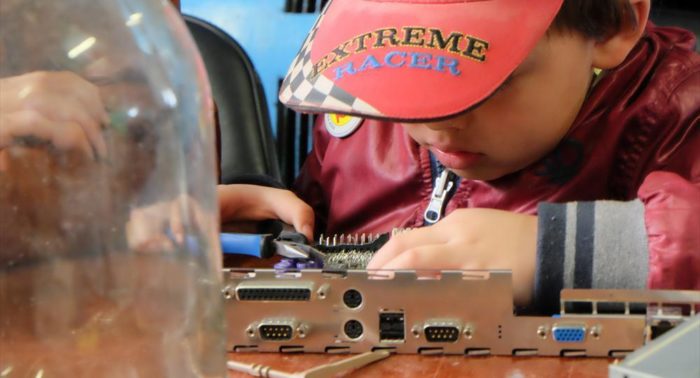
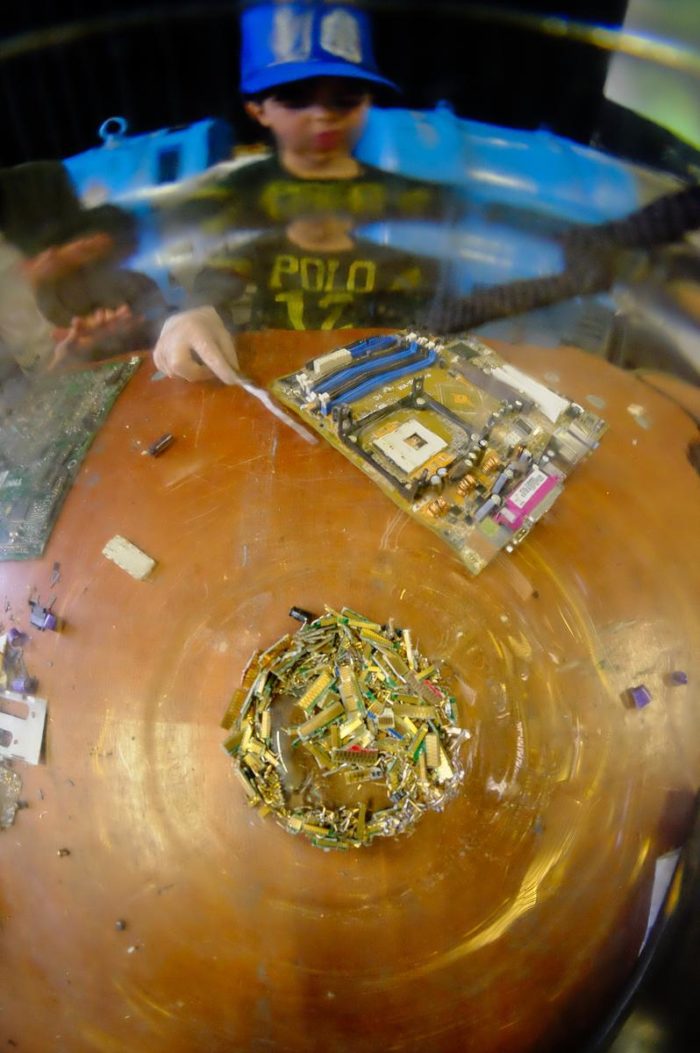
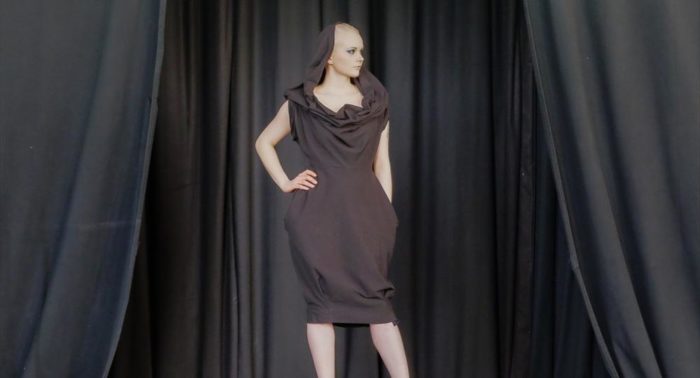
Do-it-yourself workshops engage both adults and children in creative activities, offering a chance to make jewellery, clothes and other items out of recycled materials. Fashion shows and handicraft demonstrations are also held. The annual Recycling Factory attracts well over 10,000 visitors.

A version of this article originally appeared on Visit Finland.

We came, we saw, we recycled

Photos by Tim Bird and Sabrina Salzano, updated April 2015

Finland shows carnival colours on May Day

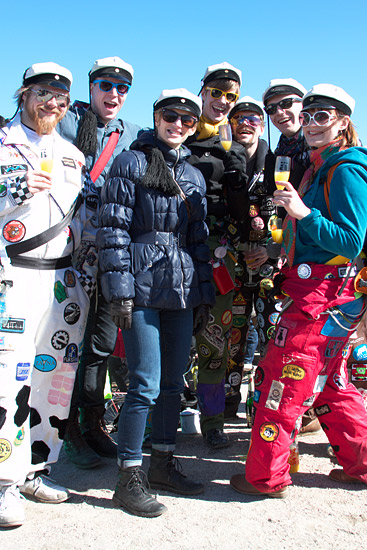
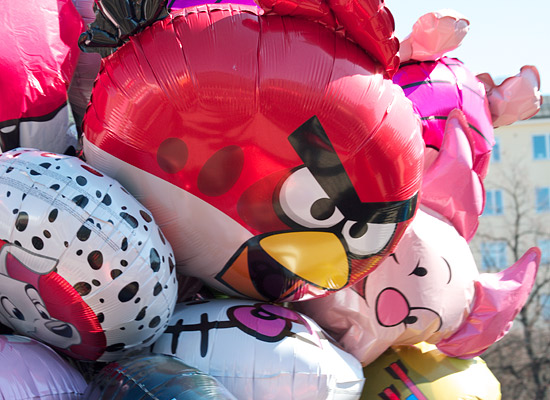
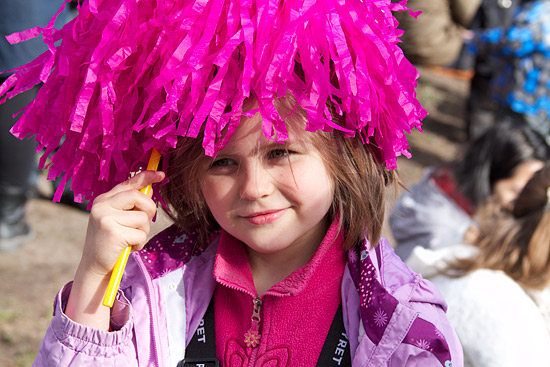
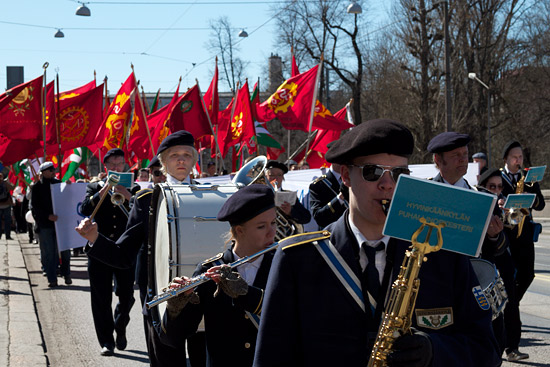
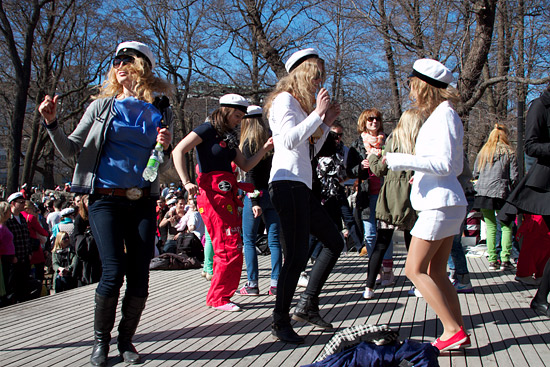
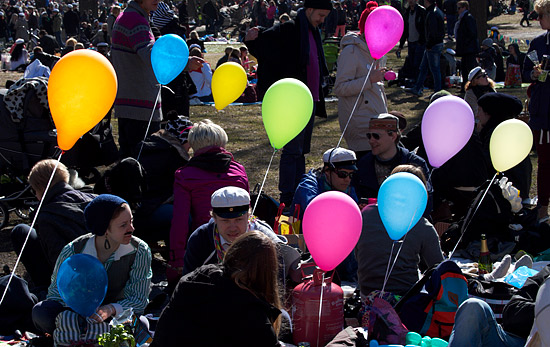
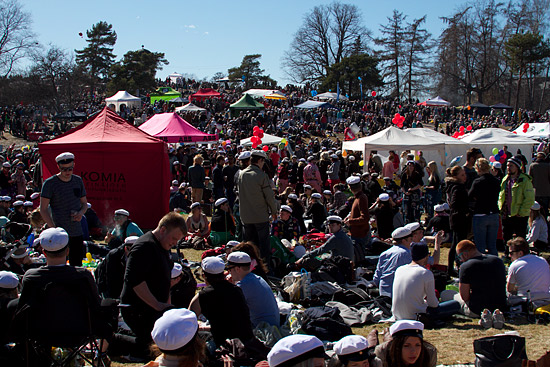
Every year on April 30 and May 1, Finland seems to go crazy as people celebrate May Day. Our photographers roamed the Finnish capital to record the boisterous celebration in pictures.

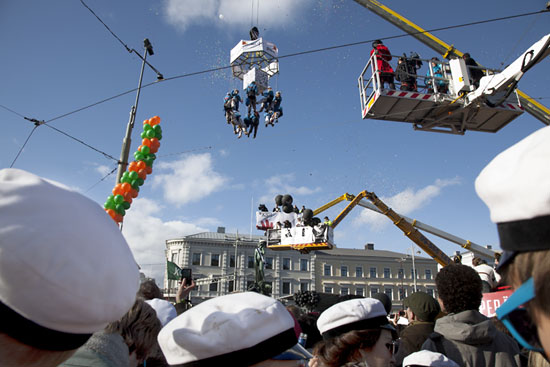
May 1 is Labour Day in many countries, including Finland. However, the Finns also see it as a chance to celebrate the arrival of spring, and numerous festive student traditions are also associated with the date. In fact, just about everyone gets in on the action – May Day and the preceding evening represent the biggest party of the year.

April 30 and May 1 are called Vappu in Finnish and Valborg in Swedish, which is also an official language in Finland. Walpurgis is the English word, referring to the feast of Saint Walpurga. All over  Finland, people dust off their white, secondary-school graduation caps and wear them around town, and the parks are filled with picnicking partiers of all ages.

First of May frolic

Photos by Leena Karppinen and Susanna Alatalo
By Peter Marten

Finnish swans take to the water

A dream that originated with one Finnish entrepreneur comes true whenever a Nautor Swan yacht takes to the water, combining three Finnish strengths: nature, design and business.

Finland’s winter sportsmen find it difficult to see the ice and snow melt away, but for Finnish boat owners, spring cannot come soon enough. Their euphoria becomes uncontainable when winter ends and the sea ice thaws. Boatyards along the country’s shores become hives of activity in preparation for the boating season as owners can’t wait to get out on the open water in the sun and the wind.

A distinguished Finnish member of the fleet of leisure boats that take to the water each spring is the sleek and graceful profile of Nautor’s Swan, a visual expression of all that is romantic and glamorous in sailing boats. The name forms a reminder of Finland’s national bird, the whooper swan.

Although Nautor has been under Italian ownership since 1998, the vessels still form a Finnish product, crafted at the Nautor yard in the west-coast town of Pietarsaari (known as Jakobstad in Swedish, the predominant language in the area).

A Finnish business vision

A Nautor Swan takes part in a competition off the coast of Sicily.

A Nautor Swan takes part in a competition off the coast of Sicily.Photo: Carlo Borlenghi

Pekka Koskenkylä, a Finnish entrepreneur who dreamed of producing top-quality, high-performance sailing boats, founded Nautor Ltd in 1966, delivering the first in a long line of fibreglass yachts, the Swan 36. Heritage remains a central part of the luxury Swan brand, which retains tight links with Finland and its long and admired tradition of boat- and shipbuilding.

“It’s quite unique to make yachts of this kind in a place like this,” says sales director Marcus Jungell. “Pekka Koskenkylä had a very strong vision from the start. Part of his dream was to draw on the skills and experience of the excellent craftsmen that are still found in the region.”

The Swan 36 and subsequent yachts up to the late 1970s were designed by New York architects Sparkman & Stephens, and Nautor’s Swan reputation was sealed when the Swan 65 Sayula II triumphed in the inaugural Whitbread Round the World Race in 1973 and ’74.

Timeless design, global market

Yachts are associated with both the difficult and dangerous work of racing and the luxurious world of riches and recreation.

Yachts are associated with both the difficult and dangerous work of racing and the luxurious world of riches and recreation.Photo: Carlo Borlenghi

“We offer something contemporary, yet the yachts have to stand the test of time, right through the range,” says Jungell. “The boats should always have great sailing performance and feel easy to handle, making good use of space and layout.” High quality, top technology and reliability attract sailing connoisseurs.

Luxury yachts may move further down the list of must-have items during times of economic uncertainty, and Nautor has experienced its own challenges. Yet Jungell says that a significant market nonetheless continues for Swans. You would expect someone with his job title to say that – but who is buying these boats, and how does Nautor stay on top of things?

“Our books have orders from all continents,” he says. “Traditional markets are Europe, especially the Mediterranean, but we have new markets in Russia, China, India, Mexico and the Philippines.

“We’re continuously developing our products. Cruising, for example, is a strong trend and we are responding to this to secure our position in that part of the market, having recently launched a range of performance cruising yachts.”

Jungell believes that part of Nautor’s Swan appeal is the Finnish-based connection with customers. The customer care team is headquartered in Pietarsaari, and the town’s yacht club also forms the official base for ClubSwan, which offers prestigious trophies for Swans competing in the most important regattas in the Caribbean, Mediterranean, Baltic Sea and North America. ClubSwan includes all Swan owners, past and present.

By Tim Bird, April 2014

How the heck do you learn Finnish? part 1

Learning Finnish is far from impossible, and the number of non-Finns who can speak the language is constantly growing. For this article, we ask friends and colleagues what textbooks they’re using, and request tips on mastering Finnish.

Recent years have seen numerous new Finnish-as-a-second-language textbooks hit the market – so many that one article cannot claim to encompass them all. A trip to a Helsinki bookstore reveals textbooks written for speakers of English, French, German, Italian, Russian and Swedish, as well as books that use Finnish only, independent of the student’s mother tongue (often accompanied by a separate, bilingual wordlist).

The people we talk to here offer some unexpected textbook suggestions and loads of encouragement, as well as home-tested tips and strategies for Finnish learners of all levels. In fact, we received so many recommendations that we had to divide the article into two parts.

The ultimate classic, and a new view

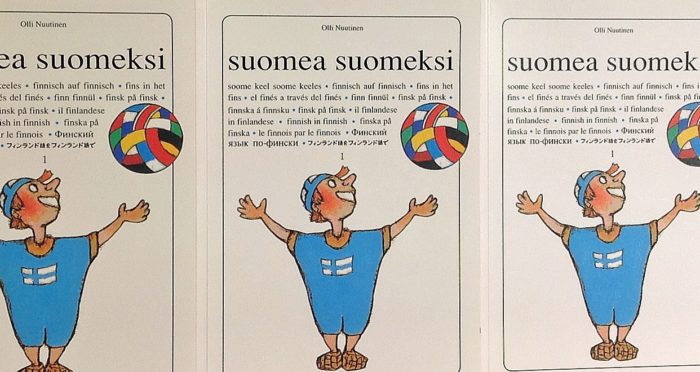
The cover of the book "Suomea suomeksi".

“Suomea suomeksi,” now in its 20th printing, is still going strong.Photo: ThisisFINLAND

ThisisFINLAND staff: Suomea suomeksi (Finnish in Finnish) by Olli Nuutinen (SKS) forms a decades-old, tried-and-true classic, now in its 20th printing and still going strong. Its easy-to-follow, systematic approach hasn’t gone out of fashion. A recent arrival is Eila ja Ossi (Eila and Ossi) by Mika Lamminpää (Gummerus), a textbook and accompanying CD made with immigrants in mind. Both books are clear, down-to-earth, practical and written solely in Finnish. (Eila ja Ossi does include three pages of Finnish-English vocabulary with space to fill in a third language if you like.)

Go for it, and don’t give up!

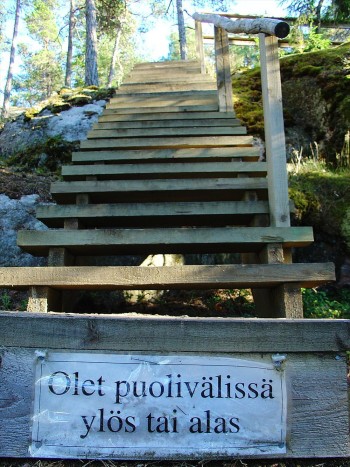
Wooden stairs in the forest with a sign saying “You’re either halfway up or halfway down.”

Get into the Finnish language – and the Finnish sense of humour: If you can read this sign, “You’re either halfway up or halfway down.”Photo: flickr/ZeroOne, cc by sa 2.0

Celia from France: The first book I used was Le finnois (Finnish) by Tuula Laakkonen (Assimil). This book let me study Finnish while living in France. The lessons were very well done, with cultural info and humour, which made it easier to learn. I acquired a satisfactory level and would recommend this book for French speakers.

Suomen mestari (Finnish champion), volume one, was the second book I used, in a course at the Summer University of Turku. After studying Finnish on my own, I enjoyed going to class and deepening my skills. This book was very well structured, enriched my vocabulary and strengthened my grammar.

Celia’s tips: You need lots of motivation in order to acquire a decent level, plus when learning any foreign language you’ll always face phases of ups and downs. I considered dropping it completely several times, but since I really wanted to come to Finland, my motivation level was very high and I continued. Now I can speak almost fluently, and I can’t even explain how great it feels to watch movies without subtitles, to speak Finnish when I go to the bank and to talk about everything with my friends. So go for it, and don’t give up!

Start learning right away

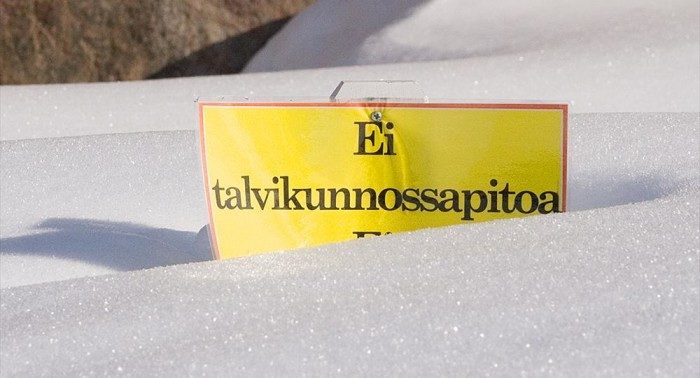
High piles of snow almost covering a sign saying "No winter maintenance".

This path is not maintained during the winter – but maybe you knew that even if you couldn’t read the sign.Photo: flickr/Tomi Tapio, cc by 2.0

Stanislaw from Poland: When I arrived in Finland 24 years ago I used Finnish for Foreigners by Maija-Hellikki Aaltio (Otava) in a course at Tampere University. For me this book was very good. The grammar and logic were clear to me. I learned a lot of words, which was important in the beginning.

Stanislaw’s tips: A good method is to watch Finnish TV and read the subtitles. I used to do this and consciously try to remember some key words to use later on. Having conversations with Finns is also good – ask them to correct your sentences. It’s important to start learning right away.

Finnish is child’s play

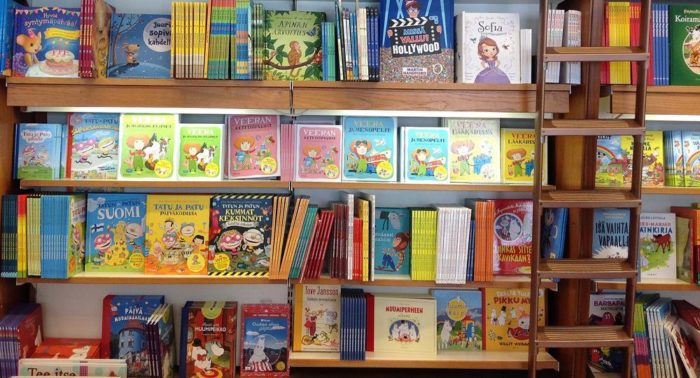
Bookstore shelves full of colourful children's books.

Kids’ books are fun and colourful, and you can learn a surprising amount of Finnish from them.Photo: ThisisFINLAND

Daria from Russia: The books that are the most useful for me are mainly children’s books, for three reasons:

1. The illustrations and the common words make it easy to choose one you’ll like. 2. I have a little boy. It’s more interesting to read with such nice company. We learn together. 3. The language is usually easy to understand, and the books are not too long.

My favourite one is Kumma­mumma (Funny granny) by Oili Tanninen (Otava). I bought it at a flea market because I loved the illustrations. Then I found that the text is very useful in everyday life. My other favourite is Leonardon suuri unelma (Leonardo’s Dream) by Hans de Beer (Lasten keskus). The text consists of simple, useful words. The dialogues are simple but emotional, which helps teach you different ways to say things. The penguin in the book doesn’t just talk about the weather – he says stuff like “Eipä taida olla tänään lentosää” (It doesn’t seem to be flying weather today), so you learn something new.

Champion of the Finnish language

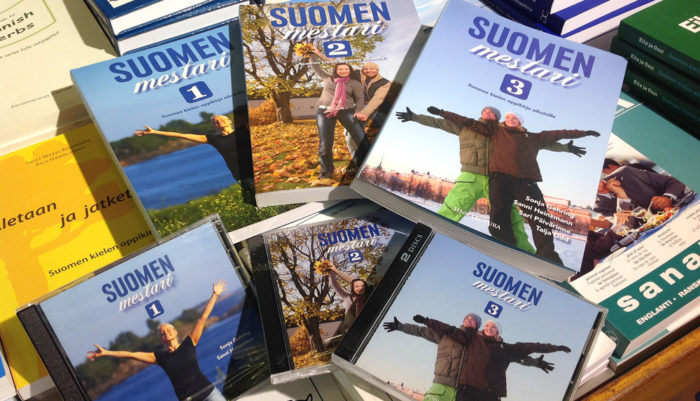
A pile of “Suomen mestari” language books.

The title “Suomen mestari” suggests that you’re on your way to becoming a master, or champion, of the Finnish language.Photo: thisisFINLAND

Florian from Germany: The Suomen mestari (Finnish champion) series forms an all-Finnish study book for people who are learning Finnish from scratch, and for people who know some Finnish and want to improve. Chapters revolve around certain topics, and grammar concepts are fortified by numerous writing, speaking and listening tasks. There’s a separate audio CD.

The lessons and related exercises feature a lot of illustrations, which is really helpful. I’d recommend this book if you have accompanying lessons with a teacher.

Florian’s tips: Finnish grammar is manageable – it’s quite methodical, with few exceptions – but the vocabulary can be a mouthful, so learning words is crucial. Getting comfortable with spoken Finnish is a challenge in its own right.

Compiled by Peter Marten, Sabrina Salzano and Sara Vihavainen, April 2014
Rockers favour Finnish guitars with soul

The Rolling Stones, The Who, ZZ Top and The Rasmus: These are the customer names that guitar maker Kari Nieminen will let us include in this article. They represent just a few of the elite musicians who own instruments by Nieminen’s company Versoul, a small shop tucked away in northern Helsinki.

Nieminen has travelled a remarkable career path to become a guitar maker whose instruments are in the hands of some of the most famous guitarists on earth.

“It was the music,” Nieminen says when asked about his initial vocational inspiration. Knowing that Finland alone was not large enough for someone to make a living building guitars, he had his eyes set on the international scene from the time he named his company. Versoul combines “versus” and “soul,” reflecting aspects of the company philosophy.

Raised in the northern Finnish city of Oulu, Nieminen started carving wood at the age of three, he says. He built his first guitar at 12, and received his first order at 17. What distinguishes Nieminen from other luthiers is that he chose to study industrial design, while remaining self-taught as a guitar builder.

Getting into the business

3560-zz-topbfg-bluelight-special-courtesy-of-versoulb-jpg

Billy Gibbons of ZZ Top saw a phtoto of Versoul’s Blue Light Special and hastened to order one.Photo: Joel Nieminen

Nieminen’s final project was an experimental series of six acoustic steel-string flat top guitars. In 1998, the Association of Finnish Industrial Designers named Nieminen Industrial Designer of the Year; in 1999 his ZOEL steel-string flat top guitar was featured in a set of postal stamps commemorating top new Finnish designs products.

His experimentation with different materials earned him early recognition, and reflects his industrial design background. He has developed guitars using nontraditional materials such as fibreglass; his fibreglass flat top guitars also use a design that can be relatively rapidly produced, and have  enjoyed wide recognition. Nieminen’s craftsmanship and experimentation with different neck designs and tonewoods give Versoul guitars their distinct sound.

The key to surviving in the industry depends on a number of factors. Mass-production can only reach so much of the market. The important thing is to gain a customer base.  In 1995 Nieminen attended his first National Association for Music Merchants convention, where he made a deal with Westwood Music in Los Angeles to stock his guitars.

At Westwood Music, Roger Daltrey of The Who ran across a Versoul guitar and became enchanted with its sound. “Daltrey is a great person, and really wanted to help me out in the beginning,” says Nieminen. “He was a big fan of my sound. He called up people in the industry and said, ‘You have to try these.’” Daltrey helped put Nieminen in contact with the Rolling Stones and their renowned guitar technician Alan Rogan.

Rolling Stones member Ronnie Wood, one of Nieminen’s most famous customers, owns about ten Versoul instruments. When we dropped by Nieminen’s studio, he was getting yet another guitar ready to ship to Wood.

Golden sound

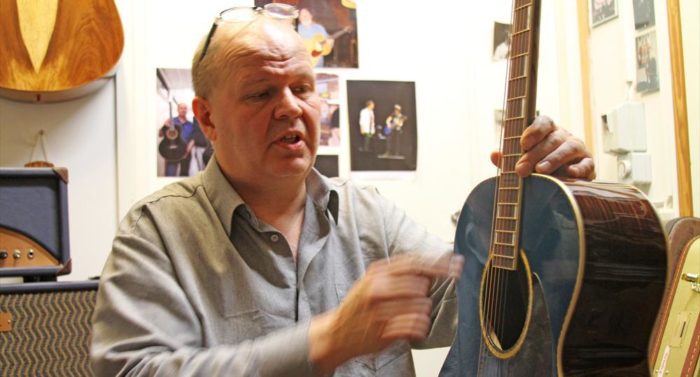
Guitar maker Kari Nieminen explains the finer points of one of his acoustic guitars.

Guitar maker Kari Nieminen explains the finer points of one of his acoustic guitars.Photo: Pia Grochowski

One distinguishing feature of Nieminen’s instruments can be found in the gold designs. Some custom guitars, such as the Blue Light Special, include gold-leaf ornamentation. Versoul’s premium guitars are labelled and signed in gold leaf. Some of the artistic details can reflect Finnish origins: Nieminen’s famous shamanic designs, found on a number of his guitars, are inspired by Finnish cave paintings.

Nieminen keeps original models of all his instruments on his studio wall. One of them, the popular Blue Light Special, was inspired by and made for ZZ Top’s Billy Gibbons, who collects unusual guitars. Inspiration struck on an intercontinental flight when Nieminen thought up a guitar featuring a blue light that glows when the guitar is amplified. Gibbons saw photos of the Blue Light Special and quickly ordered one.

Living in Finland puts Nieminen in a prime position to find suitable wood for his instruments. Finnish alder forms one of his preferences, but he also experiments with other species. Birch, one of the most common trees in Finland, makes a nice tonewood for acoustic models. Aesthetics are also important when making a guitar, and Nieminen likes curly birch, which displays a wavy, resplendent pattern.

By Pia Grochowski, April 2014
Wandering witches welcome Finnish Easter

Finnish Easter traditions mix religious references with customs related to the long-awaited arrival of spring. If you answer the door on the Sunday before Easter, you may be confronted by endearing little witches offering to bless your home in return for treats.

In the most popular family tradition, young children (especially girls) dress up as Easter witches, donning colourful old clothes and painting freckles on their faces. “The little witches then go from door to door, bringing willow twigs decorated with colourful feathers and crepe paper as blessings to drive away evil spirits, in return for treats,” says children’s culture expert Reeli Karimäki of the Pessi Children’s Art Centre in Vantaa, just north of Helsinki.

Like many Finnish householders, Karimäki keeps a basket of small chocolate Easter eggs ready by the door to pay off the marauding witches. Other families reward them with sweets or small change – or keep their front doors resolutely closed.

Eastern and western witches

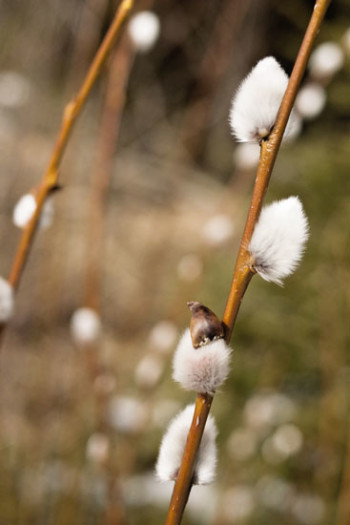
A close-up of willow catkins.

Willow twigs like this are cut and decorated by kids to give as gifts when they go door to door as Easter witches.Photo: VilleMisaki/flickr, cc by-nc-nd 2.0

The witches recite a traditional rhyme at the door: Virvon, varvon, tuoreeks terveeks, tulevaks vuodeks; vitsa sulle, palkka mulle! (In translation: I wave a twig for a fresh and healthy year ahead; a twig for you, a treat for me!)

“This Finnish children’s custom interestingly mixes two older traditions – a Russian Orthodox ritual where birch twigs originally represented the palms laid down when Jesus entered Jerusalem on Palm Sunday; and a Swedish and Western Finnish tradition in which children made fun of earlier fears that evil witches could be about on Easter Saturday,” explains Karimäki.

To this day, the little witches are more likely to roam on Easter Saturday in western Finland, but on Palm Sunday in other regions.

Karimäki adds that, as Easter approaches, Finnish children also plant grass seeds in shallow dishes of soil and place birch twigs in vases of water, and watch eagerly for green shoots and “mouse-ear” buds to appear symbolising the springtime reawakening of life. Easter eggs and Easter bunnies – both pre-Christian symbols of fertility – also abound in Finland, though these are more recent cultural imports.

Seasonal cuisine

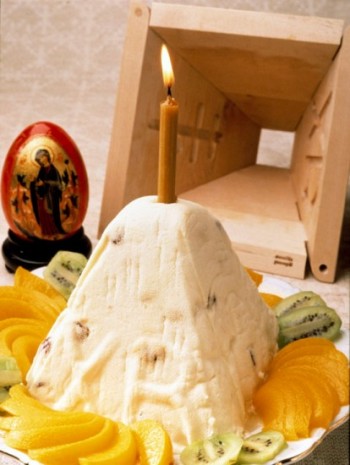
A pyramid-shaped pasha with a candle on top, surrounded with slices of peach and kiwifruit.

“Pasha” is a creamy-coloured pudding, sometimes made in a mould decorated with religious motifs.Photo: Visit Finland

Roast lamb is the most common main course for a Finnish Easter Sunday family dinner. Two seasonal local desserts are also widely enjoyed. Mämmi is a sludgy-looking dark brown pudding made of malt and rye flour (see below for a link to Finnish Easter recipes).

Mämmi was traditionally served in birch bark trays, but is now available in food stores round the country every spring in prepacked in cardboard cartons. “Though it looks a bit unappetising, it tastes delicious and children love it, especially served with cream and sugar,” says Karimäki.

Pasha is a creamy-coloured pudding made of sweetened homemade cheese, eggs, cream and seasonings left overnight to solidify – traditionally in a mould decorated with religious motifs, especially in eastern Finland where the influence of Orthodox Christianity is more prevalent.

Easter is the most important annual feast day for Finland’s Orthodox Christians, who make up approximately 1 percent of the population, but it is also a time of holy celebration for active members of the majority Evangelical Lutheran Church, which has more than 3.5 million members.

Passion plays, oratorios and bonfires

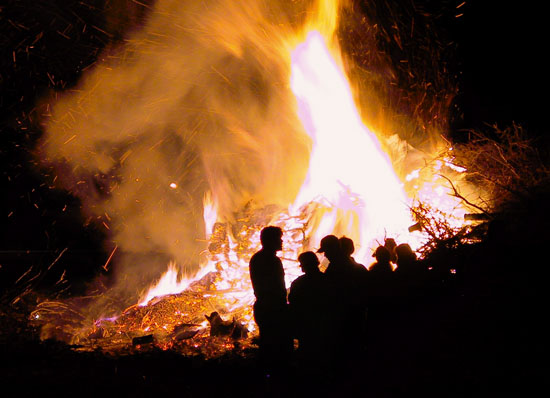
A huge bonfire; people seen as silhouettes in front of it.

In many western Finnish villages, bonfires are still lit to drive away evil spirits on the evening of Easter Saturday.Photo: samikki/flickr, cc by-nc-nd 2.0

“Evening mass on Maundy Thursday, commemorating the Last Supper, is still one of the most popular church events of the year,” says Iiris Kivimäki of the Evangelical Lutheran Church communications centre. “During Holy Week before Easter concerts such as Bach’s Passion oratorios are also performed in many churches.”

Passion plays and processions have also recently become popular among church-goers. “In Helsinki the processional Via Crucis Passion Play, which ends up at the Lutheran Cathedral on Senate Square, is performed on Good Friday. As many as 15,000 people follow this reenactment of Jesus’s passion and crucifixion every year,” adds Kivimäki.

In many western Finnish villages, bonfires are still lit to drive away evil spirits on the evening of Easter Saturday, when well-attended church services are also held to prepare to commemorate the Resurrection.

The whole country meanwhile enjoys a four-day weekend, perhaps searching outdoors for the first signs of spring – or just as likely sheltering indoors if the weather relapses and late snows fall.

By Fran Weaver