One step from the big stage

Isac Elliot is a big name in Finland and Norway. Wherever “Ikke” goes, a flock of teenage girls trails in his wake. This teenage pop singer, who started as a choirboy, follows in the footsteps of his big idol, Justin Bieber.

“Ikke! Ikke! Can we take a picture together? Can I wear your cap?” one of the girls asks Isac Elliot like they were old friends. The 15-year-old pop star hands over his cap, puts his arm around the girl’s shoulders and poses with obvious routine but without any sign of weariness.

“Hey, can I take a pic too?” another girl asks. And a third follows suit. The flashes of pink-cased smartphones go off as the “Ellioteers” capture their idol.

Mila Kosonen, 18, from Helsinki observes the bustle from the side. “I’ve followed him from day one. I should start saving for a flat, but I just spend all my money on Ikke’s gigs,” she says with a laugh.
On Friday, Kosonen will be at the Oslo Spektrum Arena to see the performance of her favourite artist. “It’s gonna be my 43rd Isac Elliot gig.”

The most popular Finn in Norway

In Norway, Isac’s smiling face is also familiar from several charity campaigns. He has won the hearts of his fans in Finland and Norway with his unpretentious attitude towards them. “Ikke’s” ordinariness is his trump card, together with his music.Photo: Heli Blåfield

The concert at the Arena is not the only reason Isac Elliot is visiting Norway again. The Finnish Embassy in Oslo is appointing Isac as the first Youth Ambassador of Finland.

“My grandmother told me to wear a dark suit to the embassy and make sure my socks are long enough so my ankles don’t show,” Isac Elliot describes the instructions he’s been given.

The title of Youth Ambassador is an official recognition of Isac’s work in promoting Finnish culture in Norway and bringing together Nordic youth with his music.

“Being appointed as Youth Ambassador is a totally great honour. Maybe I can show my diploma to my grandchildren one day.”

Isac Elliot is the first Finnish artist whose sold-out concerts in Norway attract an audience that shrieks ecstatically, waving Finnish flags. The frenzy started two years ago when Isac was doing gigs in Norway. After a small free gig he ended up on a gigantic stage in front of 100,000 viewers.

“I hadn’t done more than ten gigs before that, so I just tried not to blow it but enjoy the feeling. It was incredible to perform to such a big crowd abroad.”

Since then, there have been more and more gigs and television appearances. And more fans. The singing teenager has become the most popular Finn in Norway.

From church choir to Bieber’s footsteps

“I was told that if I sing in English, it will never work, but it has worked just fine,” Isac Elliot grins.

“I was told that if I sing in English, it will never work, but it has worked just fine,” Isac Elliot grins.
Photo: Heli Blåfield

Isac Elliot started his musical career at the age of six when he joined the famous Cantores Minores Choir of Boys and Young Men of Helsinki Cathedral. After a couple of years, at age nine, he took to pop music, inspired by the teen idol Justin Bieber, who had just made his breakthrough. The choir gave way to private singing lessons, and Isac started to gain stage experience in musicals put on at Svenska Teatern (the Swedish Theatre) in Helsinki.

Four years ago, Isac and his father Fredrik Lundén, who is an amateur musician, made an experimental demo and sent it to record companies. Neither of them thought that anything would come of it except professional advice for the future. Father and son were both surprised when all companies showed an interest in the newcomer. The choice was easy because only one record company wanted Isac to sing in English.

When the English-language first album Wake Up World made the top of the Finnish album chart and made gold in May 2013, Isac Elliot proved to the sceptics that a Finnish pop singer can sing in English and be successful.

“I’ve always wanted to do this on my own terms, and one of them is that I want to sing in English. My native language is Swedish and it wouldn’t have been natural for me to sing in Finnish, and I didn’t want to sing in Swedish either.”

Secret plans
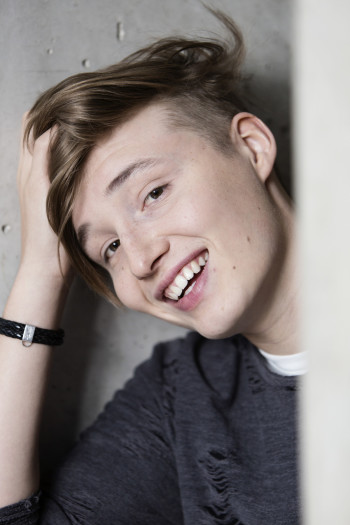
Isac Elliot is working on his third studio album, which will be released next summer. This time, he has tried his hand in song-writing.

Isac Elliot is working on his third studio album. This time, he has tried his hand in song-writing.
Photo: Heli Blåfield

A lot has happened in three years. Isac Elliot has published two albums, his life has been made into a film called Dream big – the movie, and American rapper Tyga sings on his new single, Lipstick.
“I’m so young that I don’t always quite understand what is happening. I just do my thing without holding back. If I was an adult, I’d probably worry about risks and such.”

The next big step is to get a proper foothold on the US music market. A few weeks ago the Finnish artist performed in Los Angeles at the iHeartRadio Summit, which also featured superstars such as Taylor Swift and Ariana Grande.

“The jury gave me a standing ovation! I’m not allowed to reveal what is coming next, but if everything goes according to plan, we’re talking big. It is in my nature to aim higher all the time. It feels good to achieve something even if it’s only a good grade at school,” Isac says excitedly.

Isac’s father Fredi is a trained teacher, and as his son’s manager he makes sure that the compulsory school curriculum is followed, even if it means opening the schoolbooks on flights and in backstage rooms.

“Even if great new things happen, it’s good to hold on to the normal life of a 15-year-old and not start floating in the air,” Isac says.

By Lena Nelskylä, February 2016
Finnish designers again to the final of the Hyères Fashion Festival

In recent years, the main prize of the Hyères Fashion Festival, which is aimed at young professionals, has been awarded twice to collections from Aalto University School of Arts, Design, and Architecture. This year the school’s fashion Master’s and Bachelor’s students demonstrated their skills once again by being selected for the final.

This year the Hyères finalists include Rolf Ekroth with his mens’ collection, Hanne Jurmu and Anton Vartiainen with their combined mens’ collection, and Akino Kurosawa with her womens’ collection. All four have studied fashion and clothing design in Aalto University.

“I feel truly privileged. The standard is very high”, said Hanne Jurmu. “Passing into the final is a great opportunity: we get sponsors for the materials and extra time to further develop our collection”, she added.

Finns treasure friendship on Valentine’s Day

Wouldn’t it be nice to celebrate friendship every year with your best friends and buddies, not only your soulmate? On Valentine’s Day, Finland is the place to be for those who appreciate their relationships with friends.

Do you remember that scene from the series Sex and the City where Carrie and Miranda go for a Valentine’s Day dinner together since they didn’t have dates to go with? The pair is seated among the happy couples in a restaurant filled with red and pink balloons. They are the only friends who are just friends who have gone out on this special romantic day.

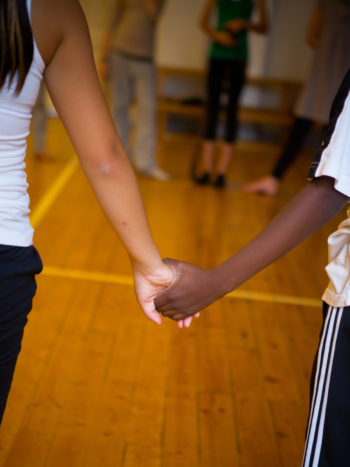
If Carrie and Miranda lived in Finland, no one would think it unusual to see a pair of just-friends dining together on Valentine’s Day. In Finnish, Valentine’s Day is called ystävänpäivä (literally “Friend’s Day”) and, like the name says, the idea is to celebrate friendship. Ystävänpäivä in Finland is a public declaration of friendship.

Two kids holding hands in a school gymnasium.

It was only as late as the 1980s that Finland started celebrating “ystävänpäivä,” and the day has been officially included in Finnish calendars since 1996. Photo: Riitta Supperi

Cards show friendship

It was only as late as the 1980s that Finland started celebrating “Friendship Day.” Ystävänpäivä has been officially included in Finnish calendars since 1996. Even though it’s a relatively young celebration in Finland, it is very popular, a much-awaited annual event, and has established its roots in Finnish culture.

The National Postal Service, Posti, also gets its share of ystävänpäivä: Valentine’s Day is the second-biggest season for cards in Finland.

Two elderly women hugging.

Valentine’s Day is the second-biggest season for cards in Finland. Most of the “ystävänpäivä” cards are sent by women to their dearest friends.Photo: Riitta Supperi

Not just chocolate and roses

Ystävänpäivä festivities have steadily increased in terms of commercialisation, and social gatherings are arranged all over the country by people young and old.

Groups of friends celebrate the day over brunches and dinners all over the country. Sports activities like bowling, skating and sledding are also popular.

Two men sitting on a bench eating ice cream.

February 14 is celebrated as Friendship Day. People go out with their best mates or with groups of friends to have fun.Photo: Juho Kuva/Visit Finland

With all sorts of events taking place on ystävänpäivä all over Finland, there’s no need to be miserable if you don’t have a “better half” by your side on Valentine’s Day. Friends are forever.

By Carina Chela and Jenita Cresswell, February 2016, updated February 2025

Shrovetide starts a slippery slide towards spring in Finland

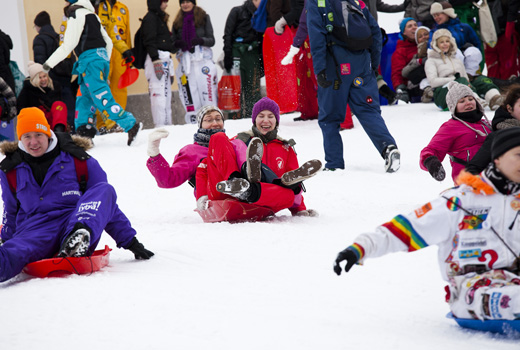
When Finnish people say, “Liukasta Laskiaista,” they are telling you to have a “Slippery Sledding Day!” And that’s a good thing, because every Finn wants to have a good slide down a fine snow-covered hill during the festive days of Shrovetide.

Shrovetide comes around six weeks before Easter. In the Catholic and Orthodox Christian traditions, it is celebrated during the three days before Ash Wednesday – which marks the start of Lent, a 40-day fast (eating very light food) before Easter. However, in Finland after the Reformation, folks no longer fasted, but many Shrovetide traditions continued, because people thought that following these customs would have a positive influence on their income.

During Shrovetide, work with sharp instruments was discontinued.  Household chores were stopped in the afternoon or not done at all. Women would cease spinning linen. People would concentrate on eating fatty, heavy food. In fact, it was considered a good thing to show off the grease on your hands and on the corners of your mouth. It was believed that the more fatty foods you ate, the fatter the pigs would become, and the more milk the cows would produce.

The good old days

Laskiaispulla, a Shrovetide bun, is the king of the season’s feast. There are two camps passionate about the filling of the pulla. One thinks almond paste is the one and only filling for the bun, whereas the other camp believes in strawberry jam. One has to pick his side, otherwise a proper ‘laskiaispulla’ conversation cannot be had.

Laskiaispulla, a Shrovetide bun, is the king of the season’s feast. There are two camps passionate about the filling of the pulla. One thinks marzipan (almond paste) is the one and only proper filling for the bun, whereas the other camp believes in strawberry jam. You have to choose your side, otherwise you can’t have a proper laskiaispulla conversation.Photo: Tiina Krook

Other Shrovetide traditions included a tobogganing event. The farther you could sled, the taller your flax would grow, and the bigger your rutabagas and turnips would become. As always, a sauna was prepared to enjoy during this time. Nonetheless, it was important to be silent in the sauna, otherwise you could be plagued by lots of flies and mosquitoes during the next summer. Moreover, there was an old proverb about the weather. “If the sun is shining on Shrovetide, it will be a good year. If it snows on Shrovetide, it will snow every day until Easter.”

The traditional Shrovetide fare included substantial dishes such as fatty unleavened bread with pork, blinis (small crêpes) with meat or fish fillings, blood sausages, pea soup with ham, Finnish pancakes with jam, and rich pastries.

Most of these foods are still popular today, although the star of the day is the beloved Shrovetide bun, laskiaispulla, a sweet pastry filled with almond paste or strawberry jam and lashings of whipped cream. (You’ll find a recipe in our baked goods article.) It’s something most Finns cannot resist, and taking seconds or thirds is certainly not uncommon. To wash all these heavy morsels down, Finns drink coffee or hot cocoa.

Fests for families and friends

Students make the most out of the Shrovetide festivals, putting together a boisterous programme of sledding competitions, music, barbequing, drinks and wild partying in the snow. Laskiaisrieha at Tähtitorninmäki in Helsinki is one of the biggest student events of the year in Finland.Photo: Ylioppilaslehti

These days, Finns generally observe two days of this festival: Shrove Sunday and Shrove Tuesday. Shrove Sunday is often a family day full of sledding, ice-skating and cross-country and downhill skiing. On Shrove Tuesday, people flock to the nearest hill after work or school. Sometimes, schools organise a special fun day for pupils in the lower grades.

Student organisations often put together a boisterous programme of sledding competitions, music, barbequing, drinks, and wild partying in the snow. Even cities get into the act by putting together winter carnivals with snow play, parades, kids’ activities, snacks and concerts.

Shrovetide is meant for people of all ages and all walks of life.  So, should you happen to be in Finland during Shrovetide, I will wish you a Slippery Shrovetide with perfect snow and sunny skies! And don’t forget to have pea soup and a Shrovetide bun!

By Russell Snyder

Runeberg: a patriotic 19th-century rapper

Johan Ludvig Runeberg (February 5, 1804–May 6, 1877) was a master at describing Finnish patriotism in his work; one of his poems later became Finland’s national anthem.

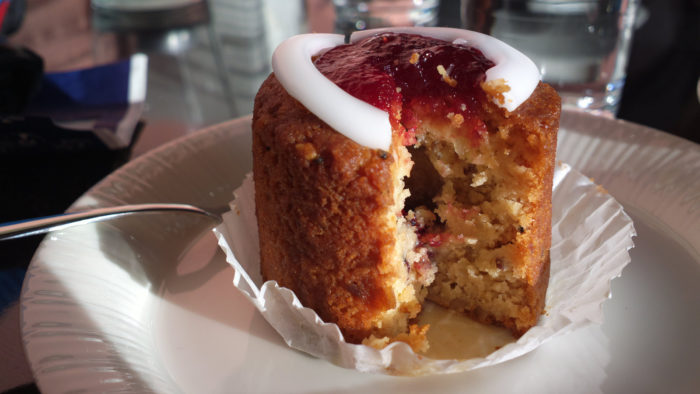
If you visit Finland in early February, when the whole nation celebrates J.L. Runeberg’s birthday by eating the quintessential Runeberg cakes (runebergintorttu in Finnish), you might be forgiven for assuming that Runeberg was a pastry chef, and a very good one at that. In fact, the raspberry jam-topped muffin is connected with a poet who stoked the self-esteem and patriotism of the Finnish people in the days before the nation achieved independence. The baker was his wife, Fredrika Runeberg.

Stirring the patriotic spirit

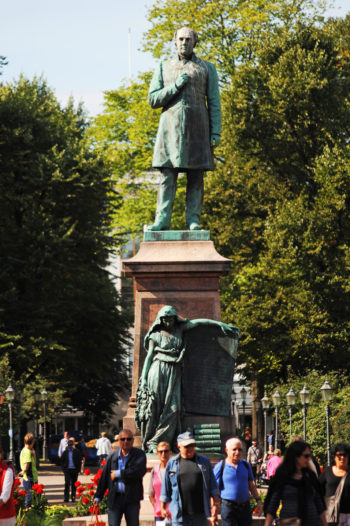
Runeberg’s statue stands in Esplanade in Helsinki. On the pedestal of the statue is the Maiden of Finland holding a table with the words of the Finnish national anthem ‘Maamme’ written by Runeberg.

J.L. Runeberg’s likeness stands atop a pedestal on the Esplanade in Helsinki. Closer to the ground, a statue representing the Maiden of Finland holds a tablet with the words of the Finnish national anthem, authored by Runeberg.Photo: Emilia Kangasluoma

In 1846 J.L. Runeberg wrote a poem as the prologue to The Tales of Ensign Stål, an epic poem describing the events of the Finnish War (1808–09). According to legend, it took Runeberg’s friend Fredrik Pacius 15 minutes to compose music to go with the poem. It eventually became Finland’s national anthem; Runeberg’s words did indeed aim to stir Finland’s patriotic spirit, more than half a century before independence. He came to be regarded as Finland’s national poet.

Many of Runeberg’s works express the patriotic spirit of his fellow Finns. He was Finland-Swedish – the term used for Finns whose native language is Swedish, which is one of modern-day Finland’s official languages. He lived his early life in central Finland, a mainly Finnish-speaking area, so he was well acquainted with Finnish speakers, too. Although he tried his hand as a playwright, he won lasting fame as a lyric poet whose work is often compared to that of the great European romantic poets.

In a more modern twist, the Finnish folk metal band Ensiferum quotes one of his poems in a song. If Runeberg were alive today, he might well be a socially conscious hip-hop performer or a rapper in the style of Finnish artists such as Paleface or Asa.

The great lady

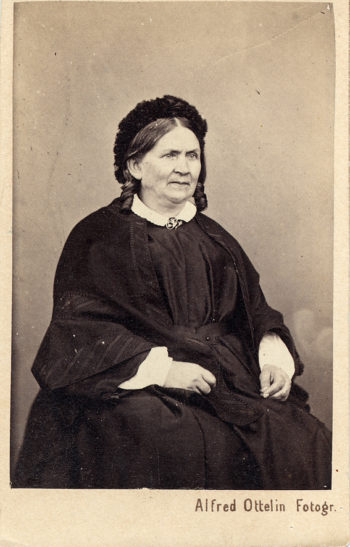
Fredrika Runeberg was a writer and is also said to have invented the famous Runeberg cakes.

Fredrika Runeberg was a writer and is also said to have invented the famous Runeberg cakes.Photo: Alfred Ottelin/Porvoo Museum

Behind every great man, or at least beside every great man, there’s a great woman. Runeberg’s wife, Fredrika Runeberg, was a writer herself, a pioneer of Finnish historical novels. She managed the Runeberg household and their eight children in Porvoo, a picturesque seaside town 50 kilometres (30 miles) east of Helsinki.

The story goes that money was often tight in the Runeberg family, but Fredrika was a frugal manager and she knew how to deal with her husband’s sweet tooth and his grumpy moods. To make what became the Runeberg cake, she took leftover bread crumbs, added punch and topped them with fruit from the garden. The muffin-like pastry became part of the poet’s daily breakfast. And on February 5, the whole country celebrates Runeberg Day.

Bake your own Runeberg cakes

Runebergin torttu_flickr_hugovk_ BY-NC-SA 2.0__12544

You are encouraged to take poetic license when experimenting with different recipes for Runeberg cakes.Photo: hugovk/Flickr

Many versions exist of the cakes that bear the Runeberg name. There are recipes for Runeberg cakes, Shrovetide buns and many other sweet treats on our baked-goods recipe page. You can find two more of our favourite Runeberg cake recipes on Desserts for Breakfast and Vagabond Baker.

Creative license – some might say poetic license – is allowed, and even encouraged: For a lighter version you can experiment with substituting Greek yogurt for cream, oatmeal for bread crumbs, and healthy spelt flour and wheat germ for wheat flour. The result is just as sweet; we believe that J.L. and Fredrika themselves would have approved of it.

By Carina Chela, February 2016, updated February 2020

New national park to celebrate Finland’s 100 years of independence

Minister of Agriculture and the Environment Kimmo Tiilikainen has proposed areas in Suomussalmi and Kuusamo in north-eastern Finland to be designated as the commemorative national park for Finland’s 100th year of independence 2017.   Establishing a national park was also one of the key projects in the current government programme.

The surface area of the national park in Hossa and Moilasenvaara in Suomussalmi and Julma-Ölkky in Kuusamo is about 11 000 hectares. The areas are owned by the State of Finland and they are included in the Natura 2000 network.

The Hossa area is a mosaic of heath forest ridges with pines, small rivers and lakes with crystal-clear water, kettle ponds and kettle bogs.  The general appearance is barren, with light in abundance.

We’re all members of the same tribe

Finnish rapper Karri ‘Paleface’ Miettinen is a member of the Centenary Board preparing the programme for Finland’s centenary celebration year. 

Paleface writes about what Finnishness means to him. “To me, the invisible bond between countrymen who don’t know one another, whether in the heat of the tropics or the hectic pace of a metropolitan area, is one of the most concrete expressions of Finnishness. We share something. We’re all members of the same tribe, part of the same collective consciousness.”

“I contemplated the Finnish identity in late summer while sitting in a dark cargo container with three other Finns as part of a human smuggling simulation organised by Yle, the Finnish Broadcasting Company. Journalist and artist Rakel Liekki from Savo, Eastern Finland, Swedish-speaking journalist Dan Granqvist from Kemiö, Southwestern Finland, Susani Mahadura, a Helsinki-based student whose roots are in Sri Lanka, and me, a rapper who grew up in Häme, studied in Tampere and lives in Helsinki – four people with very different backgrounds sitting there, in the dark. Together.”