Finland top-rated for press freedom

The World Press Freedom Index for 2016 gives Finland top ranking for the seventh year running.

Published annually by the Paris-based organisation Reporters without Borders, the World Press Freedom Index ranks 180 countries using criteria on the independence and pluralism of the media, the transparent flow of information, legal frameworks, and the safety and freedom of journalists.

The 2016 rankings show Finland in first place again. UNESCO’s choice to hold this year’s World Press Freedom Day event in Helsinki on May 2-4, also reflects the reputation of Finland’s free press.

“We’re proud to be so highly rated in this influential index, which is widely respected by international organisations,” says Ilkka Nousiainen, Chairperson of the Finnish branch of Reporters without Borders, which was set up in 2013 by Finnish journalists interested in press freedom at home and around the world.

Nousiainen believes Finland’s top rating is largely due to the high levels of freedom enjoyed by journalists in their everyday work. “Our journalists can write freely without interference from media owners or the government,” he says. “We also have very effective laws and institutions in place to help guarantee press freedom.”

One key organisation is Finland’s Council for Mass Media (CMM), which is jointly run by media publishers and the national journalists’ union to defend freedom of speech while also ensuring good journalistic practice and dealing with complaints through self-regulation.

CMM’s Chairperson Elina Grundström emphasises that long-standing Finnish legislation supports the freedom of the press by promoting transparency. “The Act on the Openness of Government Activities means all kinds of official documents are by default publicly available, except for very few documents justifiably designated as secret,” she says.

Ilkka Nousiainen agrees that Finnish journalists appreciate this openness – which even extends to the tax payment records of individual citizens – as well as the relative approachability of Finnish politicians and business figures. He feels the mainstream media are suitably objective, critical and diverse, even if the public broadcasting company YLE and the leading national daily newspaper Helsingin Sanomat sometimes seem to have a dominant role in shaping public opinion.

Enthusiastic readers with an eye for quality

Grundström also appreciates the plurality of the Finnish media: “I don’t think any other small country with a language spoken by so few people could have a media market of such high quality and diversity,” she says.

Figures compiled by Media Audit Finland show that 93% of Finnish adults regularly read printed or digital newspapers. The printed media market is highly diverse for a country of just 5.5 million inhabitants, with more than 200 national or regional newspapers published at least weekly, and more than 4,000 magazines produced for different interest groups.

“Recent surveys show how Finns are starting to look to traditional newspapers again for quality analysis and balance, in a healthy reaction to the turbulence and unreliability of the social media,” Nousiainen points out.
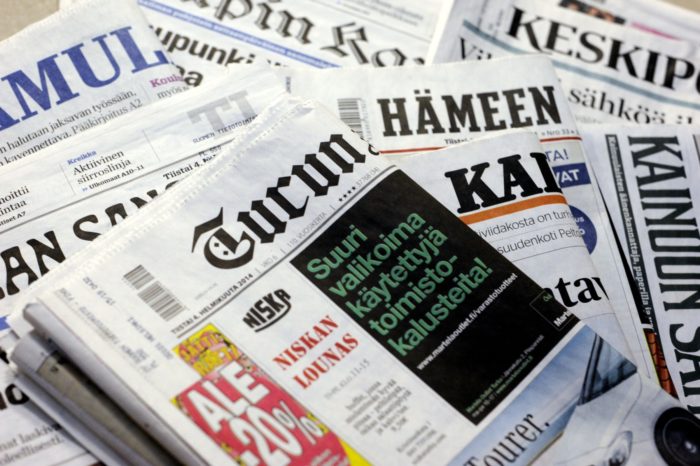
Finland ranks third in the world for newspaper readers per capita. The printed media market is highly diverse for a country of just 5.5 million inhabitants, with more than 200 national or regional newspapers published at least weekly. Most households subscribe to a daily paper and several magazines, while also receiving many free magazines and newspapers.

Finland ranks third in the world for newspaper readers per capita. The printed media market is highly diverse for a country of just 5.5 million inhabitants, with more than 200 national or regional newspapers published at least weekly. Most households subscribe to a daily paper and several magazines, while also receiving many free magazines and newspapers. Photo: Mikko Stig/Lehtikuva

Threats to freedom of speech

Like their counterparts in other countries, Finnish journalists have recently been increasingly targeted by online hate speech. Ilkka Nousiainen and Elina Grundström deplore this trend, and hope it won’t make Finnish journalists too cautious when writing on issues that provoke strong feelings, such as immigration, the refugee crisis, feminism, diets, hunting and gun laws. But they feel that self-censorship by the Finnish media on political issues has not been an issue since the days of the Cold War, when journalists used to be wary of criticising the Soviet Union.

According to Grundström, ongoing cuts by broadcasting and publishing companies represent a more serious threat to diversity and quality in Finnish media. “Finns tend to take the freedom of the press for granted, without realising it’s the product of journalists’ efforts over a long period. It’s worrying to see what’s happening to press freedom in parts of Eastern European and elsewhere,” she says.

The 2016 index shows an alarming rise in violations of media freedom worldwide due to religious intolerance, safety problems in conflict zones, and the increasingly authoritarian tendencies of many governments and media-owning oligarchs. The UNESCO event in Helsinki aims to promote freedom of information worldwide as a fundamental human right, to protect the press against censorship and excessive surveillance, and to ensure safety for journalists working both in the traditional media and online.

In Finland, a whole year of 2016 will be dedicated to the 250th Anniversary of the world”s first Freedom of Information Act (FOIA), the theme of the year being “Right to Know, Right to Say”.
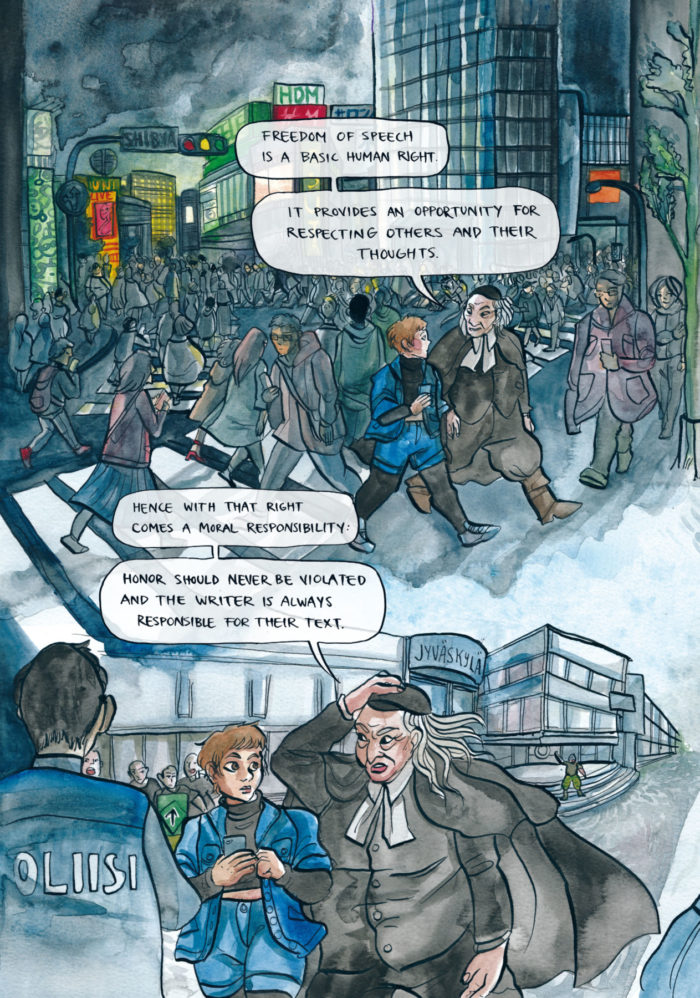
The Finn Anders Chydenius was one of the most notable politicians of eighteenth century Sweden-Finland. According to him, democracy, equality and a respect for human rights were the only way towards progress and happiness for the whole of society. His most important political accomplishment is the world´s first Freedom of the Press Act.

The Finn Anders Chydenius was one of the most notable politicians of eighteenth century Sweden-Finland. According to him, democracy, equality and a respect for human rights were the only way towards progress and happiness for the whole of society. His most important political accomplishment is the world´s first Freedom of the Press Act. Image: Siiri Viljakka, Script: Lauri Tuomi-Nikula/Last Words – the Return of Anders Chydenius.

Support for journalists working in countries with less freedom

To help budding investigative journalists and other media workers in countries where the freedom of the press cannot be taken for granted, the Finnish Foundation for Media and Development (Vikes) uses funding from the Finnish journalists’ union, the Ministry for Foreign Affairs and the EU to run projects where Finnish journalists’ expertise is used in training and networking. Many journalists from Somalia, Nigeria, Tanzania, Myanmar, Nepal, Nicaragua, Palestine, Eastern Europe and Central Asia have benefitted from such support.

By Fran Weaver, April 2016
(Don’t) stop the press!

The Hydraulic Press Channel has got millions of fans who log in to YouTube see what Lauri Vuohensilta in Tampere will smash next with his hydraulic press.

The hottest thing on the internet is a series of videos showing everyday objects crushed in a hydraulic press. Clocks. Fruit. Golf balls. A Finnish voice gives a laconic running commentary on the mayhem while another in the background laughs.

“The hockey puck exploded,” the voice announces. “Yeah. That’s all for today. Thank you for watching and have a nice day.”

This is Lauri Vuohensilta on his Hydraulic Press Channel, which has racked up tens of millions of views on YouTube. Part of the interest is in the crushing – it is pretty cool to watch a bowling ball pop under 100 tons of pressure – but much of the appeal is Vuohensilta and his wife Anni. They feed off each other and when one gets to laughing the other can’t stop.

“It would be stupid to laugh alone,” Vuohensilta explains. “It’s better to react to each other.”

One of the endearing features of the show is Vuohensilta’s voice. He is fluent in English but speaks with an accent peppered with Finnish pronunciations. For example, he pronounces “hydraulic” as “hoo-draulic.”

“There is an American YouTuber who speaks with a heavy Russian accent,” he says. “It’s very funny and entertaining. I think my voice is the same way.”

A call from Washington

Vuohensilta shoots his videos in the shop of his company Konepaja Vuohensilta. The shop is filled with heavy tools: lathes, mills, welders and cranes. Some of them are old Russian machines which he has modernised. The balancing machine, which spins a part to make sure it was machined correctly, he built himself.

“I got my degree from the Tampere University of Technology,” Vuohensilta continues. “I only have a few more courses to go for my Master’s in engineering.”

The shop is also home to the hydraulic press, which is the star of the show. In it he puts Legos, coins, rubber ducks, little clay figures his wife makes… all sorts of things. He invites suggestions from his viewers and was surprised to get one from the White House in Washington, D.C.

“I thought it was a hoax at first,” Vuohensilta says. “I thought someone was trying to make fun of me.”

It was no joke. The White House asked him to crush a cable box as President Barrack Obama encourages competition in the cable television industry. Millions of people were entertained when something unexpected happened, as often does in these videos: the remote control popped out of the press and landed in a bucket of liquid nitrogen.

Nokia and the Viking

Vuohensilta has tested internet lore regarding one of Finland’s most famous products, the Nokia 3310 mobile phone. According to legend the phone is indestructible, and it was even the subject of the Unbreakable emoji from the Finnish Foreign Ministry. Vuohensilta put the 3310 into his press and discovered that it would, in fact, break.

“Those phones were so tough,” he says. “But I have to say that the Nokia still looked like a phone when it came out of the press.”

Vuohensilta’s plans for the future include a new press, which he will partially build himself. He wants one which is ten times as powerful and also portable, so he can crush things outside which he doesn’t want to do in his shop.

“I’m looking for partners and sponsors to help with the new press,” he explains. “One with 1,000 tons of force is normally very large, but this one will be compact, about the size of a small car.”

He has become a global ambassador of sorts, with millions of people enjoying his engineering mentality and Finnish humour. He is pleased to represent his country.

“I am the stereotypical Finnish man,” he laughs. “I listen to heavy metal, am a power lifter, and I crush things. I’m like a Viking. It is a good stereotype, both for me and for Finland.”

By David J. Cord, April 2016

Ones to watch

Three of the much-buzzed-about names in Finnish fashion include Sasu Kauppi, R/H, and Satu Maaranen, freelance designer and Pre Helsinki co-founder.

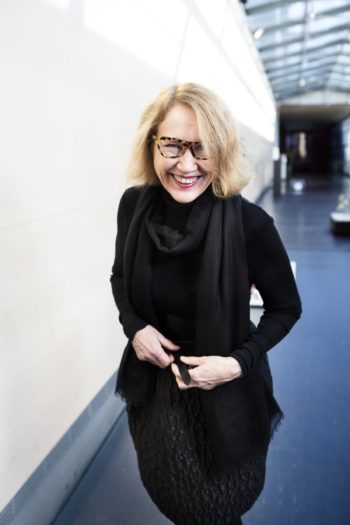
“We founded Pre Helsinki because we felt that we really needed to have this type of vehicle to promote Finnish fashion and help emerging designers make the right international connections,” says Satu Maaranen, who is also Pre Helsinki’s creative director.Photo: Satu Maaranen

Satu_Maaranen_Photo Filep MotwaryHelsinki-based Satu Maaranen graduated from Aalto University School of Arts, Design and Architecture in 2012, and her graduate collection won the first prize at the esteemed Hyéres Fashion Festival the following year.
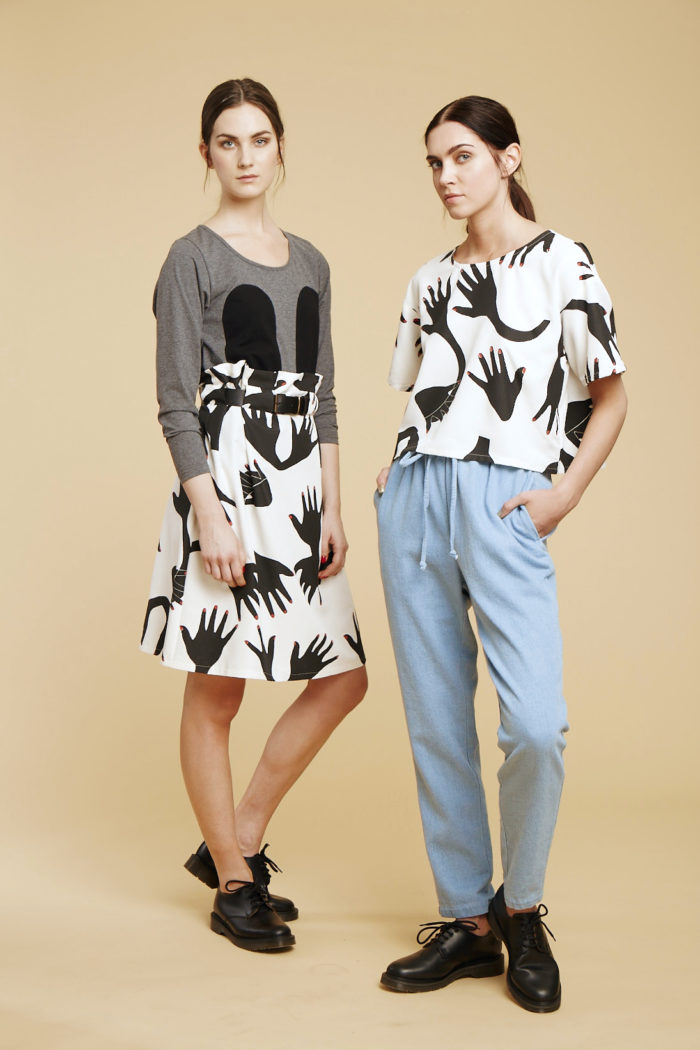

Four years ago Maaranen co-founded Pre Helsinki, a platform that features a five-day international event in Helsinki each spring showcasing and promoting the most interesting names in Finnish fashion. The event also maintains a significant presence at the most important Fashion Weeks around the world.

“We founded Pre Helsinki because we felt that we really needed to have this type of vehicle to promote Finnish fashion and help emerging designers make the right international connections,” says Maaranen, who is also Pre Helsinki’s creative director.

An award-winning freelance designer, Maaranen is known for her elegant, almost futuristic creations that feature colourful hand-painted prints on silk, cotton and viscose in dramatic sculptural forms. In addition to working with design icons such as Marimekko and Petit Bateau, she has collaborated with the Italian textile house that designs prints for clients including Prada, Max Mara and Dolce & Gabbana.

“What sets Aalto’s programme apart is that traditional craftsmanship is taught,” says Maaranen. “There are few places that do that. I know students at top schools such as Central Saint Martins and Parsons who need to use their own bathtubs for dyeing fabrics because those types of facilities simply don’t exist at their schools.”

According to Maaranen, the secret to success is to stand out from the crowd and be true to your own vision.

www.satumaaranen.com

“We’re inspired by our mothers, grandmothers, sisters and friends, and by Finnishness – whether it’s the materials we use such as reindeer leather or our approach,” says Emilia Hernesniemi. “Photo: R/H

RH_Hanna_ja_EmmuR/H designers Hanna Riiheläinen and Emilia Hernesniemi met while studying at Aalto University. After graduation, Riiheläinen worked at Zac Posen in New York and Hernesniemi worked in Berlin at Agency V before the duo founded R/H in 2010.

Their collections for women feature a delightfully whimsical world of handmade prints embellishing a collection of dresses, skirts, tops and trousers, as well as accessories.
“We’re inspired by our mothers, grandmothers, sisters and friends, and by Finnishness – whether it’s the materials we use such as reindeer leather or our approach,” says Hernesniemi. “We want to make clothes that work in women’s lives. Finnish women really demand that their clothes work owing to the climate and their active lifestyles,” she says.

And what is Finnishness? “We’re a bit different, we don’t need to please the world or
seek popularity – we’re content being a kind of lone wolf,” replies Hernesniemi.

R/H’s aesthetic is particularly popular in Japan. The brand is also sold in Hong Kong, the US, Iceland, and Finland, with their flagship boutique located in central Helsinki.

www.rh-studio.fi

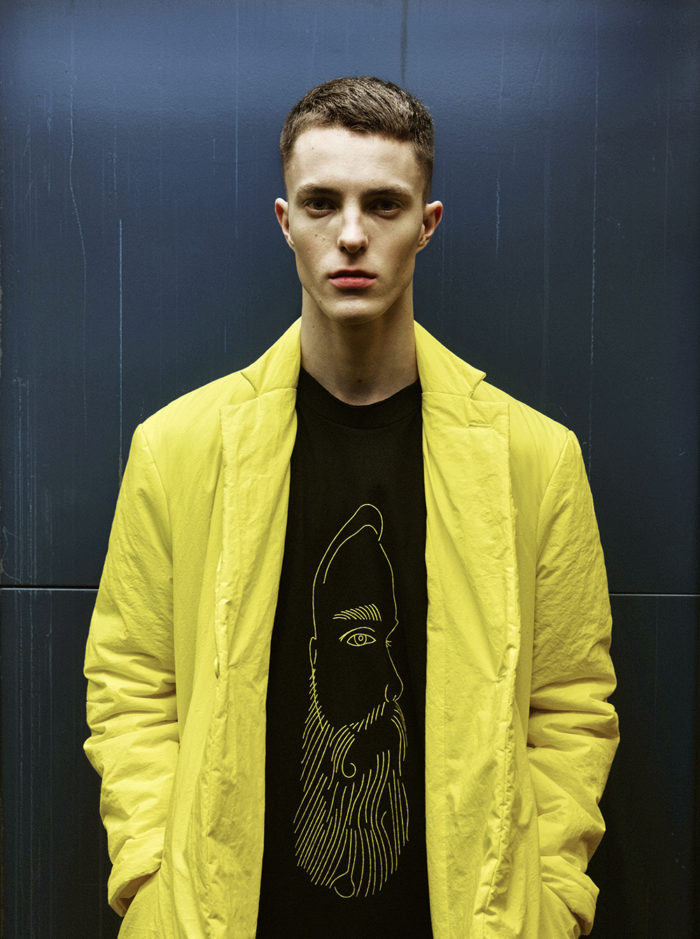
“I want to create products that are desirable enough to be worn out rather than forgotten after one brief season,” Sasu Kauppi says.Photo: Sasu Kauppi

Sasu-SELFRGB (1 of 1)Sasu Kauppi may be better known abroad than in his homeland. His colourful urban street wear is sold around the world from Hong Kong to the US and the UK.
A 2011 MA graduate of Central Saint Martins, Kauppi has also taught at Aalto University, where he completed his BA in fashion design. His distinct sense of style caught the eye of American rapper and designer Kanye West who flew to Helsinki to meet Kauppi in late 2014. The duo are reportedly collaborating – though Kauppi, who is currently living in Los Angeles and working as the design director of an LA-based fashion brand, says he can’t comment on the matter.

In the meantime, Kauppi says his focus is shifting. “I’m trying to move my focus to designing good products rather than thinking about ensembles. I’m learning to appreciate detail level even more, though it’s always been important to me. I want the love that I put in each design to be evident.”

“I want to create products that are desirable enough to be worn out rather than forgotten after one brief season,” he says.

www.sasukauppi.com

By Katja Pantzar, April 2016

Shaping the future

A dynamic new generation of Finnish talent is attracting the attention of top fashion houses, the international press and scouts. Many of the rising stars have one thing in common – they have all been influenced by the pioneering work of Aalto professor Pirjo Hirvonen.

When Vogue Italia’s head of talent Sara Maino attended Pre Helsinki fashion week, the seasoned senior fashion editor and scout told Finnish daily Helsingin Sanomat that she was “amazed.”

In addition to the bright new talent, what astonished Maino was the exceptional quality of the fashion design programme at Aalto University School of Arts, Design and Architecture. In the past five years, graduating Aalto students have been snapped up by leading fashion houses ranging from Lanvin and Maison Margiela to Marimekko and Balenciaga, have won prestigious industry awards, and garnered attention in magazines ranging from W and Wallpaper to Vogue Paris.

Yet ten years ago Finnish fashion – with few exceptions – was not a headline-grabbing story in the international design press. What has happened?

“It originated from us,” answers Aalto professor of fashion design Pirjo Hirvonen. “We’ve developed a bold new culture in which we’re constantly renewing and developing the way we think and operate,” says Hirvonen, who was the head of Aalto’s design department from 2008 to 2015 and led the fashion and textile design programme from 2003 to 2008.

In addition to a strong network of alumni who hold key industry positions around the world and work closely with the school, there’s a strong learning-by-doing focus that sets Aalto apart from other high-ranking schools in the field such as New York’s Parsons and London’s Central Saint Martins.

“Our students design and make their own materials whether it’s the printed fabric for a collection or something else,” says Hirvonen. “Students know that if something isn’t available, they can make it. This model is worth gold: not just for this industry, but also as a way to solve problems in any field.”

Necessity is the mother of invention

Hirvonen’s vision was born largely out of her own experiences as a young designer. After graduating from the University of Art and Design (a predecessor to Aalto University), Hirvonen worked as an in-house women’s-wear designer in the 1980s and ’90s.

“At the time we were trained to create clothing for the Finnish clothing industry,” she says. With globalisation, that domestic textile industry has all but disappeared. Yet Hirvonen says that change was actually a blessing in disguise.

“It has forced all of us to think in new ways and understand that this is an international playing field – what’s good in Finland is simply not enough,” says Hirvonen.

As a young creative with many ideas for the international market, Hirvonen was told that her ideas were great, but wouldn’t satisfy domestic customers. “That response was terribly narrowing and crushing,” she says. But it filled her with resolve to turn that kind of thinking around.

“My core goal when I started with the fashion programme was that the mindset and way of teaching needed to be renewed. Creativity and vision without borders must be encouraged,” she says.

Learning how to sell

“Our students design and make their own materials whether it’s the printed fabric for a collection or something else,” says Pirjo Hirvonen of Aalto University. Photo: Mirva Kakko / Otavamedia

But good ideas are not enough. A strong business understanding of the global marketplace is crucial. To that end, Hirvonen has been responsible for instituting business management courses as part of the fashion programme, and she has taken on significant EU projects with other design schools, initiated multidisciplinary studies within the design department, and paved the way for a new sustainability Masters programme.

“We have many visiting instructors who work internationally in the field – all of our work needs to be strategic and operative,” says Hirvonen. “And it’s important to remember that not only the students are the talent – the teaching staff are, too. Talented teachers who understand this industry are essential.”

The programme’s rigorous selection process features one week onsite, during which applicants tackle a range of assignments.

“It’s a skill to know how to read the right signals – a student may be tired or nervous – but it’s important to see the overall picture,” says Hirvonen. “This field demands an authentic and passionate attitude, drive, and talent – without those it’s impossible to succeed,” she says.

Daring to be original

Finnish fashion is often characterised in broad strokes as bold yet sensible, minimalist, sustainable, and environmentally and socially aware.

Hirvonen says that while some of those descriptions hold true, she sees an underlying theme of courage: “Finnish fashion is characterised by daring to be original and following one’s own vision.”

“This young generation has had it very easy way compared to previous generations,” says Hirvonen, “yet they have seen the dangers of consumerism and are very ecologically and politically aware and think about all of the big questions. This shows in their designs, which are not throwaway clothes but long-term creations not tied to fleeting trends.”

When asked to offer up the names of the next set of future stars, Hirvonen is characteristically mum: “I never favour any one of my students over another. They’re like sweet buns baking in an oven: there’s always exciting new talent rising.”

By Katja Pantzar, April 2016

Runners’ Super Week in Helsinki 8–12 June

In June, Helsinki offers a real Super Week for runners, when Helsinki Half Marathon, Baanan Maili (Baana Mile) and Helsinki Half Marathon Expo take over the city centre 8–11 June. Sunday 12 June is the anniversary of the founding of Helsinki: Helsinki Day.

The Super Week begins with a bang when Helsinki Half Marathon Expo arrives on the Narinkkatori square 8–9 June. On Friday 10 June, the action is at Baana, when the new event Baana Mile starts from Ruoholahti. Baana is a road for pedestrians and bikers that is constructed on a former railway cutting at the heart of Helsinki, next to the Parliament house. Baana offers the runners a fast running surface safe from other traffic.

The highlight of the Runners’ Super Week is Helsinki Half Marathon on Saturday morning. The organisers expect over 3000 participants to the event that is organised for the third time now. Helsinki Half Marathon has quickly gained popularity. Its trump card is the exceptionally beautiful route by the sea that leads the runners through the most beautiful sceneries of Helsinki.

Wave power makes a splash

Finnish start-ups are at the crest of wave power –  a vast future source of clean electricity.

Two Finnish firms are making an international splash with new inventions offering low-impact, emission-free electricity. Anyone who has seen big Atlantic surf crashing along Europe’s western coasts, readily understands there is an unfathomable amount of energy pent up in each crest and crash.

Yet it’s far from simple to capture that force in a steady, predictable way – especially as any device must stand up to the constant pounding and salt while minimising impact on the marine environment.

A Finnish company near Helsinki, AW-Energy  announced it’ll build the first wave-power farm in the Americas with a Mexican utility.

Meanwhile another Finnish wave-power firm, Wello, is partnering with Finland’s biggest utility, Fortum, on a project in Cornwall in the UK. The EU is bankrolling most of the €24 million budget.

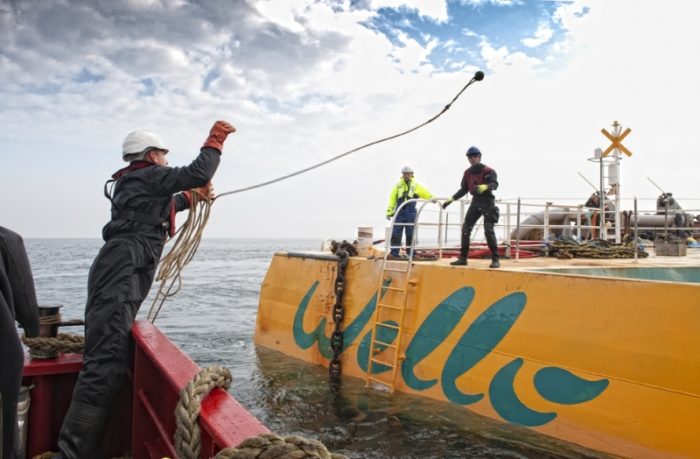
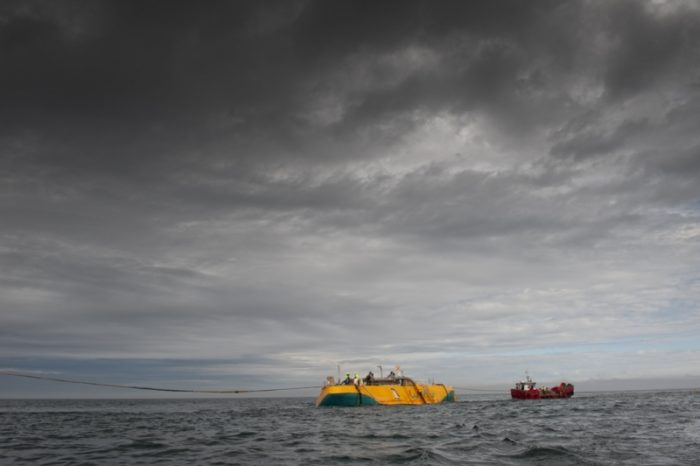
The 30-metre-long Penguin, floats on the surface far out at sea, with a fully-enclosed device that is spun by the water motion. Photo: Wello

The 30-metre-long Penguin, floats on the surface far out at sea, with a fully-enclosed device that is spun by the water motion. Photo: WelloPhoto: Wello

“Though Finland isn’t known for its surf, its wave power technology companies have been able to develop technologies that are absolutely among the best in the world,” says Mikko Huumo, Manager of R&D Growth Projects at Fortum, which has been investing in wave energy since 2007.

“It’s amazing that there are two leading companies in this field from a country which has no ocean or real waves!” says John Liljelund, CEO of AW-Energy.

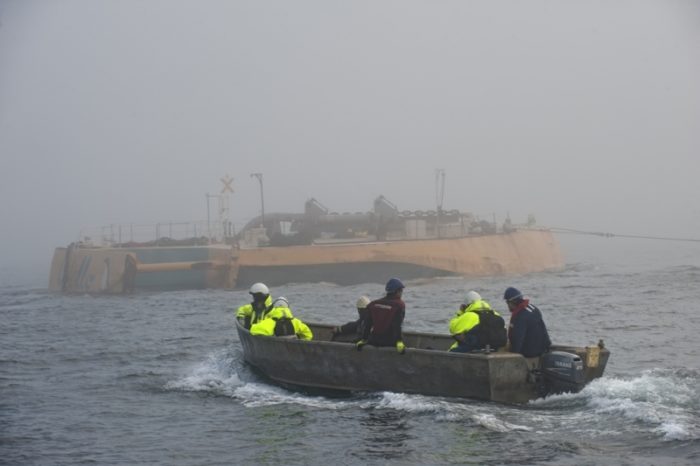
AW-Energy’s WaveRoller is a metal panel attached to the seabed, which is pushed back and forth by waves. Wello’s Penguin, on the other hand, floats on the surface, an enclosed gadget spun by wave motion.

“In our device there’s a continuous rotation movement,” explains Wello CEO Aki Luukkainen.
“We directly convert this movement into electricity. There are no moving parts outside the device in the water, which makes it durable and survivable in the harsh marine environment.”

The Penguin was designed in 2007 by architect and inventor Heikki Paakkinen. He founded Wello the following year. “I built various models in my garage and tested them in the sea near my house in Espoo,” he recalls. Photo: Wello

From Espoo garage to Scotland

Wello estimates that each 30-metre Penguin can produce up to 1 Mega Watts of electricity, with strings of them out at sea generating far more. The machine was invented in 2007 by architect Heikki Paakkinen, who founded Wello the following year.

“I built various models in my garage and tested them in the sea near my house in Espoo,” he recalls with a grin. “It was my hobby developing and testing these devices – an obsession, like some people play chess or go fishing.”

A full-scale Penguin has survived 12-metre storms in Scotland’s Orkney Islands, while successfully supplying electricity into the grid.

“We’ve proven the durability of the concept over three years with all the original components,” says Paakkinen.

Wello estimates that each Penguin produces between 160 kW and 1 MW of power, or enough electricity to power some 400 homes. Strings of them could be installed in open-sea areas without interfering with shipping or marine life.

Wello estimates that each Penguin produces between 160 kW and 1 MW of power, or enough electricity to power some 400 homes. Strings of them could be installed in open-sea areas without interfering with shipping or marine life. Photo: Wello

Meanwhile studies commissioned by both firms show no significant interference with shipping or marine life.

“In fact, our studies in Portugal only show positive impacts against erosion,” says Liljelund.
“It acts as artificial reef, attracting fish like a shipwreck. So the fishermen are happy. And so are the local surfers.”

Planet’s largest untapped resource

AW-Energy, a 2015 Red Herring Europe Award Winner, boasts 27 international patents and the first-ever Statement of Feasibility for a wave device. Lloyd’s Register declared the WaveRoller to be seaworthy after grid-connected trials in Portugal, with wave heights over eight meters.

The WaveRoller is a metal panel attached to the seabed close to the shore, which is pushed back and forth by the waves. Photo: AW-Energy

“We’re building a totally new industry,” says Liljelund. “We have three commercial customer projects underway including the ESB WestWave project near Limerick, Ireland, which is the flagship project of the whole industry.”

That installation will generate 5 MW of electricity, enough to power 3500 households. Another big commercial device is being installed in Portugal, along with a 1.5 MW Fortum project in France.

“Obviously it will take some time to be competitive against other sources of electricity. But by 2025, we should be competitive with offshore wind and the sector will be profitable,” predicts Luukkainen.

“It’ll take a decade to challenge traditional energy sources,” agrees Liljelund.
“But this is the largest untapped resource on the planet.”

By Wif Stenger, April 2016

Remember Finland emojis?

Headbanger, sauna, coffee… Can you still recall what else is a Finland emoji? The emojis are now hidden in the ThisisFINLAND memory game. Give it a go!

Finland was the first country in the world to have its own national emojis. We have now launched two sets of the  Finland emoji stickers. On May 12, on the Day of the Finnish Identity, we launched a new set of summer emojis.  The first set of Finland emoji stickers was launched in the ThisisFINLAND Christmas calendar in December 2015. The Finland emojis feature typical Finnish feelings. Some of the emojis are well known Finnish people who themselves represent a certain feeling for Finns.  The Finland emojis became a massive international hit.

If you have not heard about Finland emoji, update yourself. See the whole set of emoji in our Book of Finland emoji and download the stickers. The ‘Finland emojis’ applications are available for iPhone and Android in AppStore and Google Play.

Emoji memory game created by: Risto Joki
By: Jenita Cresswell, March 2016

Zalando chose Helsinki

Attracted by Helsinki’s huge talent pool and the strong mobile sector, rapidly growing German e-commerce giant Zalando set up a tech office in Finland’s capital.

Headquartered in Berlin, Zalando is an e-commerce company that maintains a cross-platform online store selling shoes, clothing and other fashion items. It operates in 15 European countries and has more than 16 million active customers.

Wanting to transform itself from a retail company to a technology company that connects brands, retailers and consumers, Zalando realised it needed to increase its tech team significantly.

Looking for the right city

Zalando began to research various European cities to find out which ones would have enough high-class talent and the right type of dynamic mental chemistry for setting up a new tech office.

After a couple of months of intensive talks with local people and authorities and meeting up with local tech companies and startups in spring 2015, Helsinki turned out to be a perfect match for Zalando.

Zalando’s Helsinki office, the company’s second tech hub outside of Germany, was up and running by the end of August. By late November, it had hired some 25 talented and passionate software developers.

“But in the long-term perspective, we see the potential for several hundred people,” says Tuomas Kytömaa, Site Lead for Zalando Finland.

Why Helsinki?

According to Marc Lamik, Zalando’s Head of Tech Expansion, the main reason why Zalando chose Helsinki was the huge available talent pool. There is an ample supply of engineering, user experience and design talent to hire. Other important factors were Finland’s strong mobile sector and the e-commerce friendly atmosphere.

After a couple of months of intensive talks with local people and authorities and meeting up with local tech companies and startups in spring 2015, Helsinki turned out to be a perfect match for Zalando.

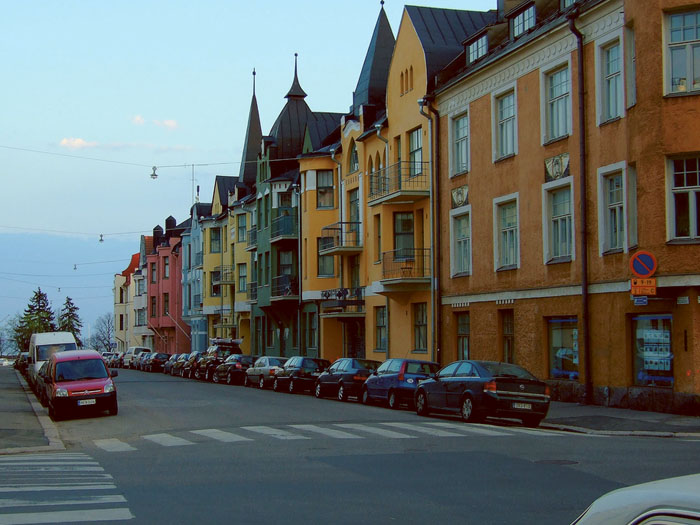
After a couple of months of intensive talks with local people and authorities and meeting up with local tech companies and startups in spring 2015, Helsinki turned out to be a perfect match for Zalando.Photo: Helsinki City Photo Competition at Flickr.com

“We received significant help from local authorities and organizations like Helsinki Business Hub and Finpro. They assisted us with recruiting staff and finding premises, and they put us in contact with all the right people. The more local knowledge you have, the smoother it is to set up operations,” Lamik notes.

Zalando’s Helsinki unit is focusing on developing consumer-facing products.

”We are building a new fashion application that connects customers, brands and retailers. Our development work touches all areas of modern software architecture. We have cross-functional teams that work on everything from the user interface on your mobile phone to the code that runs on servers, supporting millions of customers,” explains Kytömaa.

Contributing to the local tech community

Zalando wants to engage and interact with the local tech community.

“We are organizing events at our premises with various meetup groups almost every week. In addition, we just launched our Tech Startup Residency Program, and will be hosting selected startup teams in our office for three months, offering expertise, guidance and resources to help them build up their business,” Kytömaa says.

“These are two concrete activities that are already in place. They are helping us to become a contributing member of the local tech community.”

By Leena Koskenlaakso, April 2016