Finnish photographer sees light alone in landscape

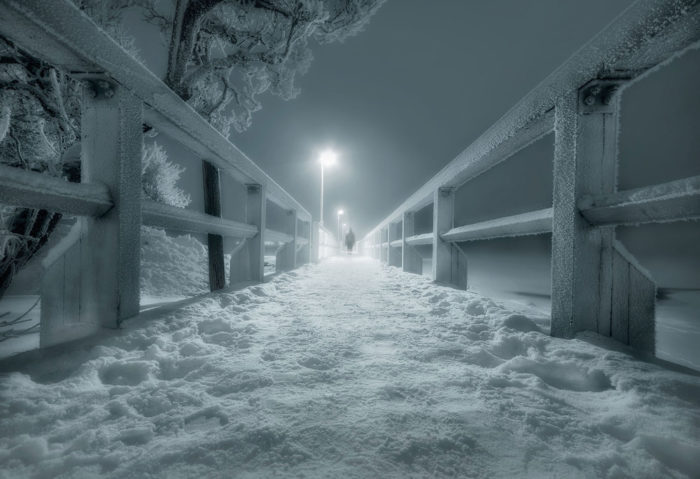
Pictures speak louder than words, and Lagerstedt’s photos speak of what you can gain by keeping your own company. Time spent alone can be a great source of empowerment and strength.

Finnish people’s love for their alone time is an essential part of their culture, as is their need to regularly spend time walking in the woods or by the shore. As a landscape photographer, Lagerstedt has found these traits inspirational to his art, as he usually works by himself and takes pictures of the natural world.

It’s important to note that being alone and being lonely are two different things. Finns understand that you can be alone and happy at the same time, though this idea sometimes requires some explanation for people who originate in other cultures. While being lonely tends to be harmful to any individual in the long run, choosing to be alone every now and then provides the Finns with something positive, a meditative time to unwind and charge their batteries.

International interest

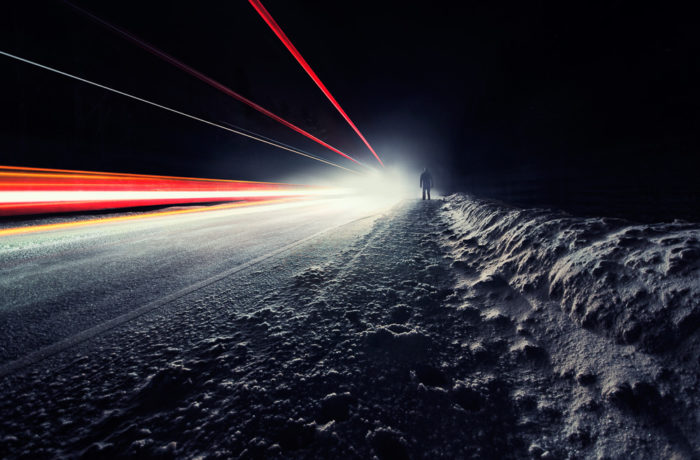
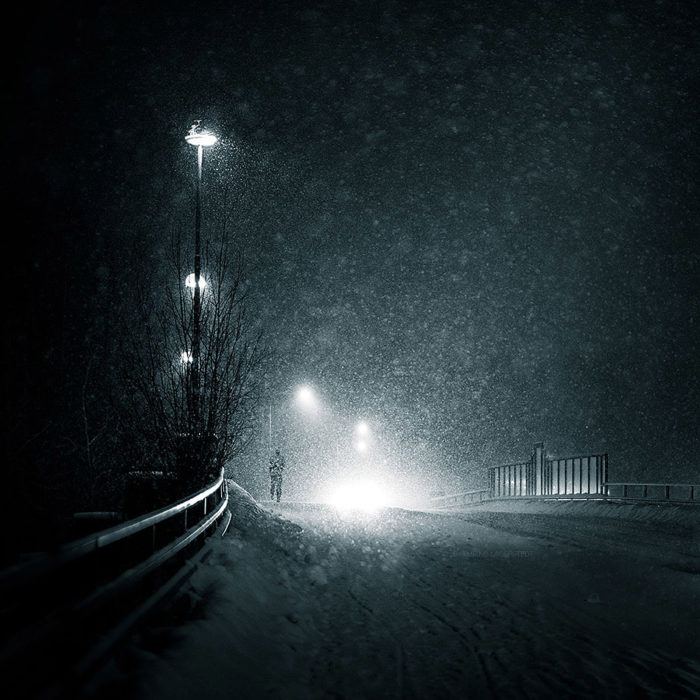
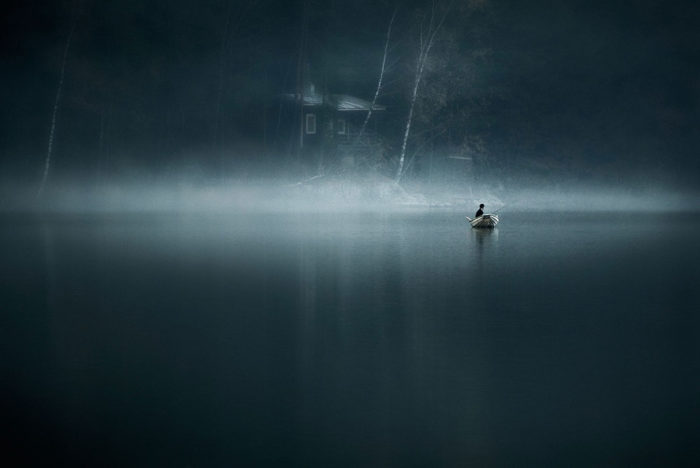
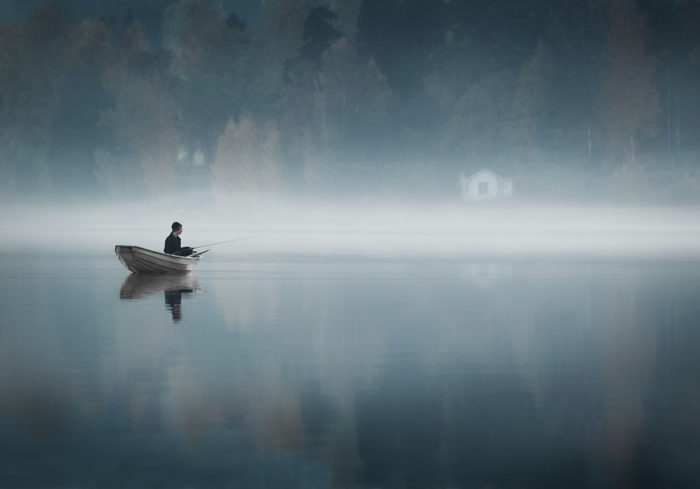
The “Alone” collection “can give people comfort and an experience of beauty,” says photographer Mikko Lagerstedt.Photo: Mikko Lagerstedt

Lagerstedt has published numerous collections of landscape photography, one of them specifically on the theme of solitude. It is aptly called Alone. He transforms a certain atmosphere or feeling into visual art, informed by his Finnish understanding of the need for solitude.

“I didn’t go looking to portray loneliness or solitude, but the collection kind of came into being of its own accord,” says Lagerstedt. “Those photos are of separate times and places that, in hindsight, seemed to carry a common theme. I came up with the name Alone because the images just seemed to suggest it.”

Although created by a Finnish photographer in Finland, Alone has gained most of its online viewers from abroad. This suggests that the interest in solitude is not such a Finnish phenomenon after all.

The beauty of darkness
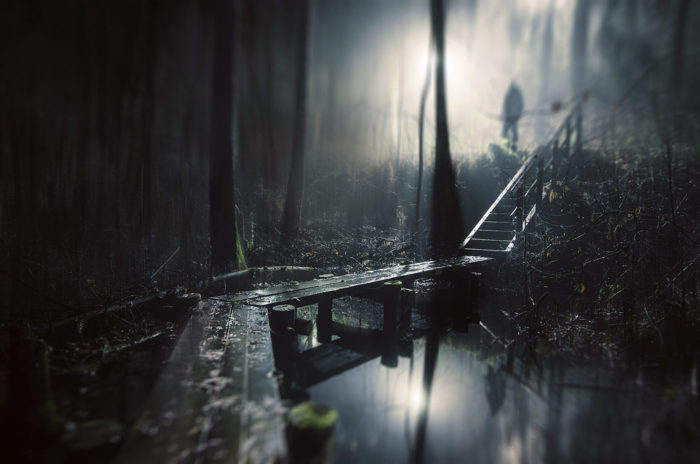
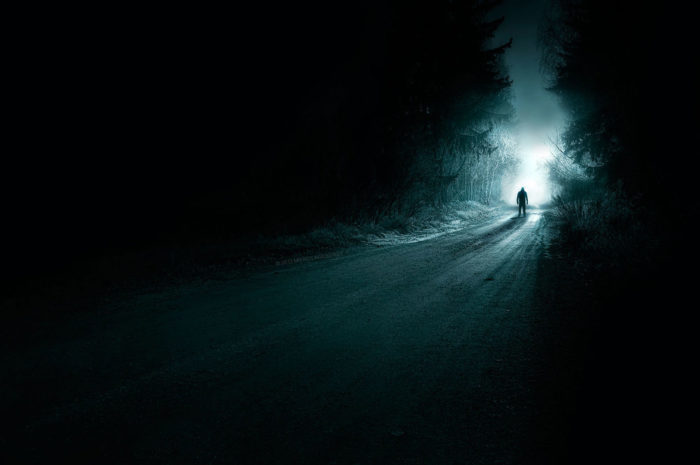
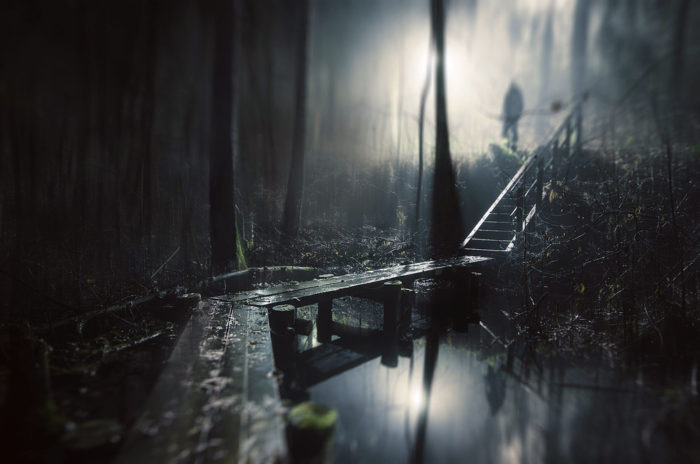
Someone finds a way through the wilderness in “Strange ways.”

Someone finds a way through the wilderness in “Strange ways.”Photo: Mikko Lagerstedt

“Since being published, Alone has kind of started to live a life of its own, reaching new viewers all over the world with a surprising speed,” Lagerstedt says. “It was the collection that really took off in terms of me being internationally known and recognised.”

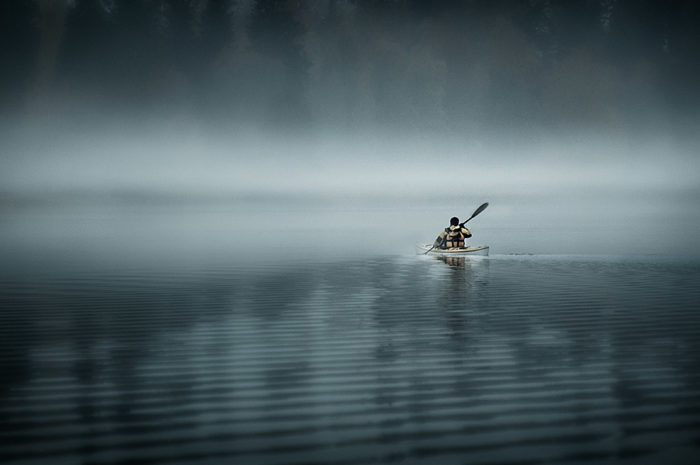
The photo collection features images of seemingly lonesome figures in vast, dark areas: in a forest, on a lake, in a field. The pictures can also be seen as delivering a calm, stress-free atmosphere in serene natural surroundings.

“To me, the Alone collection is a bit dark, but not in a bad way,” says Lagerstedt. “It can give people comfort and an experience of beauty, perhaps. In my opinion, solitude is meditative.”

Result of the past
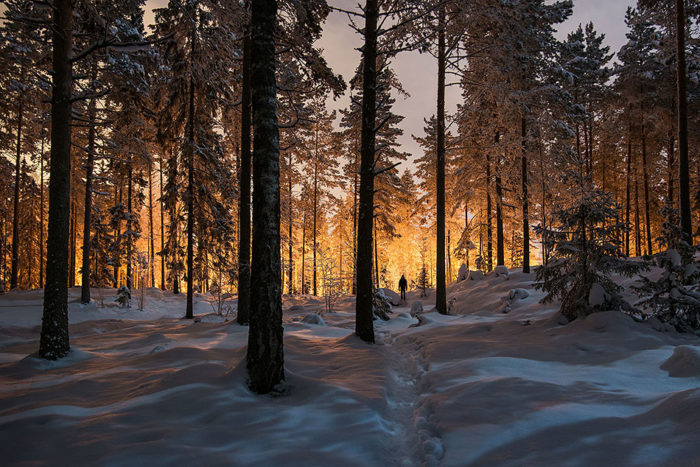
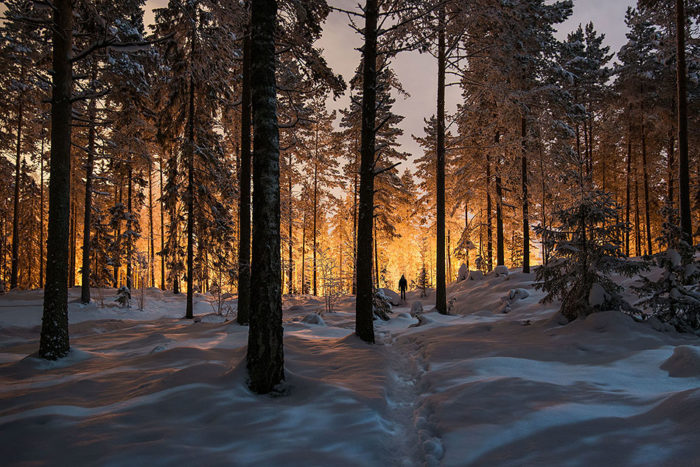
In “Between two worlds,” a small, solitary figure walks through the towering woods at sunset. Does this indicate sensible exercise or a sense of foreboding?

In “Between two worlds,” a small, solitary figure walks through the towering woods at sunset. Does this indicate sensible exercise or a sense of foreboding?Photo: Mikko Lagerstedt

When asked what has influenced the beginning of his career as a photographer, Lagerstedt picks one particular experience of his personal life:

“I lost my best friend suddenly when I was only 20 years old. I cannot say for sure but I’ve got a feeling that that had something to do with me starting to take photographs and getting deeper into photographic techniques. Most of my photos have got an element of darkness to them, and since you are always the result of your past, a great sorrow would inevitably play some kind of lasting role in your life.”

Whether the tragic incident is behind the atmosphere in the photos or not, the Alone collection is not about sadness and loneliness. It is simply about solitude.

“Feelings of being alone in this world are just a part of life,” says Lagerstedt, “and maybe they shouldn’t be seen as particularly negative or positive, since they can be both.”

Nine photos from Lagerstedt’s “Alone” series
By Mari Storpellinen, January 2017
Two Finnish composers in the spotlight

Musica nova Helsinki is Finland’s largest contemporary music festival. Held biennially, it presents the very latest music, composers now making their mark internationally, and contemporary classics.

“Everybody benefits from cross-programming at festivals. There’s a huge potential for contemporary classical, honestly, in this hipster scene because it’s good music that we’re doing. It’s not just regular classical concertgoers who might be interested,” says composer Sauli Zinovjev, 28.

“There’s this pluralism now in music where there aren’t such strict categories. There are overlaps that are quite natural for our time,” agrees his friend Sebastian Hilli, 26. The two sip espresso at the Helsinki Music Centre, where they’ll premiere new works during the Musica Nova contemporary music festival (Feb 1-12, 2017).

The composers are optimistic about the future. In autumn 2017, both will premiere longer pieces: Zinovjev a violin concerto and Hilli a work for orchestra and about 500 singers.

Finnish scientists: Pine-bud bacteria may help cure humans

It’s 4:30 am, and Janne Koskimäki is still working on through the night, alone in his lab at the University of Oulu, where he’s spent most of the last fortnight. Suddenly the sound of raucous and infectious laughter comes from the radio, when the DJ plays a comedy song by the Finnish artist Vesa-Matti Loiri. The cackling laughter distracts Koskimäki from his endeavours, and he realises how late it is.

“It was quite an absurd situation, and it really made me wonder whether there was any sense in what we were doing,” Koskinen recalls, remembering how long and hard he worked on his research, which has now been completed.

Surprises lurking inside pine buds

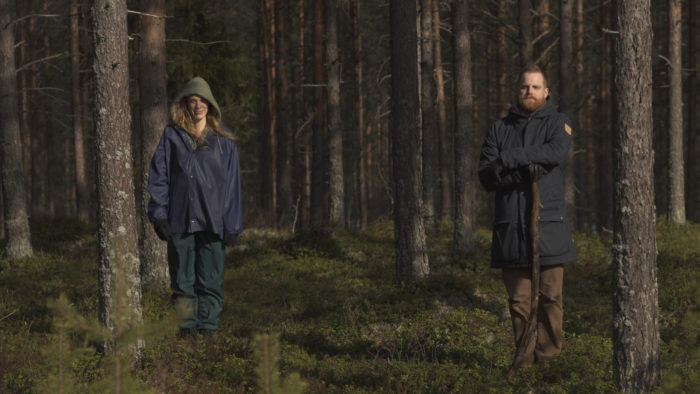
Anna Maria Pirttilä (left) and Janne Koskimäki studied pine buds for almost a decade, running 132 experiments and writing 160 drafts before their article was published.

Anna Maria Pirttilä (left) and Janne Koskimäki studied pine buds for almost a decade, running 132 experiments and writing 160 drafts before their article was published.Photo: University of Oulu

Opportunities for exciting new medical innovations may lie within the buds of coniferous Scots pine trees, which grow extensively in Finland. Anna Maria Pirttilä and Janne Koskimäki from the University of Oulu, 600 kilometres (370 miles) north of Helsinki, have researched bacteria found in pine buds for nearly a decade and recently published a breakthrough article. 

It all started with a doctoral research study in which plant microbiologist Anna Maria Pirttilä examined how Scots pines could be cloned from buds. “My study also revealed that the bacteria and yeasts present in pine buds evidently produce certain compounds that benefit plants – so I wanted to know what these compounds are,” she says.

Pirttilä enlisted Janne Koskimäki, who had just finished his postgraduate studies, and the two scientists got to grips with pine buds over the next eight years. As often happens in such research, their work changed direction after unexpected findings.

Koskimäki and Pirttilä’s work reveals how bacteria function inside plants. In relation to the human body, we’re used to the idea that lactic acid bacteria, for instance, benefit our digestive systems. But much less is known about what the bacteria living inside plants actually do.

“We have a lot to learn about the microbes found in plants – and it’s still a new and little-known idea that microbes even exist inside plants,” explains Koskimäki.

Pirttilä says, “People can get quite hysterical about microbes, but there are masses of them all around us, and only a tiny proportion of them cause diseases.”

Host cells and bacteria in harmony

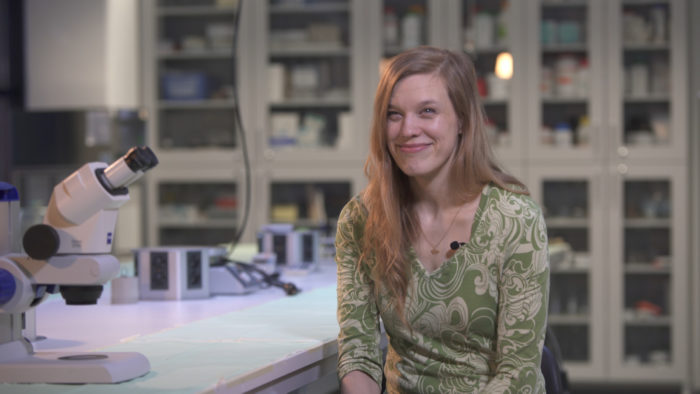
“For researchers, doing new science is a passion just like the creation of a new artwork is for an artist,” says Pirttilä.

“For researchers, doing new science is a passion just like the creation of a new artwork is for an artist,” says Pirttilä.Photo: University of Oulu

Pirttilä likes to go walking in the forest in her spare time. This helps her to relax, but observing the natural world also adds perspective to her research. Koskimäki likewise enjoys getting away from it all by going hiking or spending time in a simple cabin in the woods.

“One thing that’s always fascinated me in nature is the way everything is interrelated, with different species living together interdependently, in symbiosis,” says Pirttilä. Such linkages also became evident inside pine buds, where host cells and bacteria interact beneficially.

Plant cells and human cells defend themselves against harmful bacteria in similar ways, by producing oxygen radicals in the inflamed area. This process often leads to an overreaction, when the organism or body wants to stop bacteria getting deeper into tissue.

But oxygen radicals are a crude defence mechanism, since they also damage the host organism’s cells. Pirttilä and Koskimäki’s research has nevertheless revealed that bacteria are able to defend themselves even against the most toxic oxygen radicals, by internally generating long-chain fatty acids called polyhydroxybutyrates. When an inflammation occurs, bacteria can break down these fatty acid chains into smaller sections that can be used to combat oxygen radicals.

Their research project received funding from the Academy of Finland, which operates under the Ministry of Education and Culture. The study’s findings appeared in the journal Nature Chemical Biology in March 2016 in an article entitled “Methyl-esterified 3-hydroxybutyrate oligomers protect bacteria from hydroxyl radicals.”

Years of medical research ahead

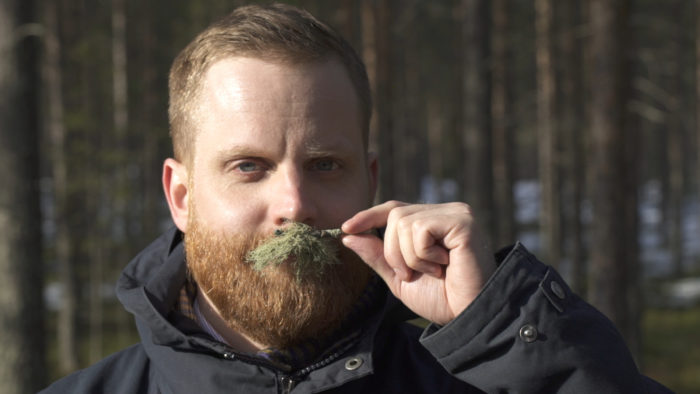
In the middle of a pine forest, Janne Koskimäki shows off a moustache made of moss.

In the middle of a pine forest, Janne Koskimäki shows off a moustache made of moss.Photo: University of Oulu

Damage caused by oxygen radicals lies behind serious clinical conditions including Alzheimer’s disease and macular degeneration, an eye disease. But the bacteria found inside pine buds are able to generate compounds that can effectively combat the toxic oxygen radicals that cause these problems. This discovery could open up opportunities to develop new medicines.

Pirttilä and Koskimäki now aim to devise medical innovations for treating age-related macular degeneration and other conditions affecting the back of the eye, through collaborative research bringing together the University of Oulu and the University of Eastern Finland. Tekes, the publicly financed Finnish Funding Agency for Technology and Innovation, has already earmarked 368,000 euros for the project.

Macular degeneration is the most common disease affecting eyesight in wealthier countries, and as the population ages such problems are expected to increase. Several years or even a decade of further research will be needed before a new medicine can be made available. But the scientists remain undaunted. “For researchers, doing new science is a passion just like the creation of a new artwork is for an artist,” says Pirttilä. “It’s like an exciting voyage of discovery.”

Check out the University of Oulu’s video about science with arctic attitude.

By Susanna Ekfors, January 2017
Pea soup tradition is weekly #TBT passion in Finland

Any regular at lunch places in Finland knows what to expect on Thursdays: pea soup is included on the menu. It looks thick and mushy, and, frankly, not all that appetising. However, this mundane dish boasts a grand pedigree. The secret behind its popularity lies in national traditions.

Pea soup goes way back in Finnish culinary history. According to Arja Hopsu-Neuvonen, development manager at Martat, a Finnish home economics organisation founded in 1899, pea soup may have played a part in Northern culinary circles as early as the Middle Ages.

“It has been discovered that a dish resembling pea soup was already being cooked during the Greek antiquity,” Hopsu-Neuvonen says. “Over time, various forms of the soup developed in different parts of Europe, with different styles of seasoning. The recipe arrived in Finland via Sweden, as so many dishes did.” (The blog My Blue and White Kitchen features a recipe you can try.)

Pre-Lent filler

Finns love this stuff: (from left) dark rye bread with butter; a bowl of pea soup with ham, onions and mustard; and a tube of Finnish mustard in case you need more.Photo: Mari Storpellinen

Traditionally consisting of peas with pork shank, onion and mustard, pea soup has several variations. Some cooks like to add carrots, others cream and minced meat. It’s often accompanied by dark Finnish rye bread with butter. Pea soup remains connected with Thursdays, at least in lunch restaurants. In Finnish homes, that’s not necessarily the case.

“During the working week, Monday is actually the day when the most pea soup is sold in stores,” says Jussi Mannila, assortment manager at SOK Corporation, owned by a group of retailing cooperatives.

“As far as seasons go, January and February are the time of the year when it clearly sells in larger volumes,” Mannila says.

That is most likely due to the approach of Lent. The history of pea soup in Finland is closely connected with the arrival of Christianity.

“Preparing pea soup on Thursdays stems from the fasting orders of the Catholic Church during the Middle Ages,” says Hopsu-Neuvonen. “Eating heavily on Thursday helped Catholics get through the fasting day on Friday.”

Cold-climate favourite

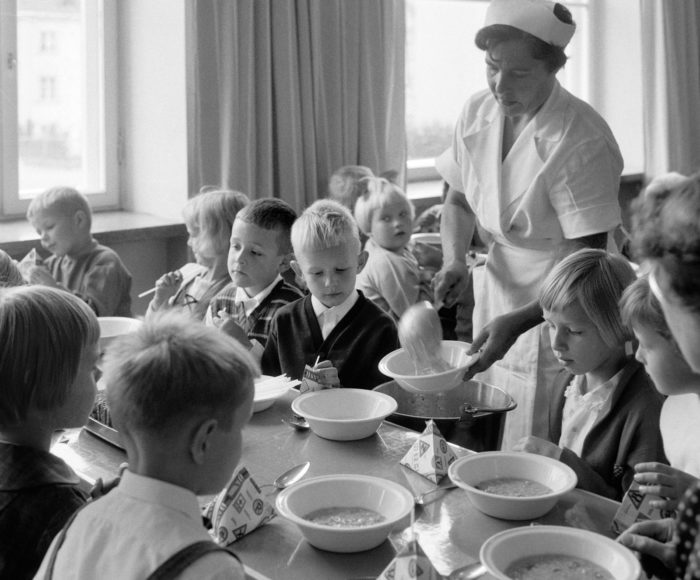
In 1965, eating pea soup for lunch on Thursdays was already a long-standing Finnish tradition in restaurants and in school cafeterias like this one.Photo: Pertti Jenytin/Lehtikuva

The S Group (the parent company behind SOK Corporation), Martat and the Finnish Literature Society are compiling a book about Finnish cuisine, in honour of Finland celebrating its 100th year of independence next year. In honour of Finland’s national epic, Kalevala, the book is called Ruoka-Kalevala (Food Kalevala). Naturally, pea soup is featured there, too – after all, it is a staple dish everywhere in Finland.

However, certain areas are even more fond of it than others.

“Pea soup sells in larger numbers in eastern and northern Finland, while in the southern or western parts it’s not quite so popular,” Mannila says. “All in all, there are no signs of its popularity waning.”

With Finland’s chilly winters, it makes sense. Who doesn’t love a bowl of hot soup on a cold winter’s day?

Sweet follow-up

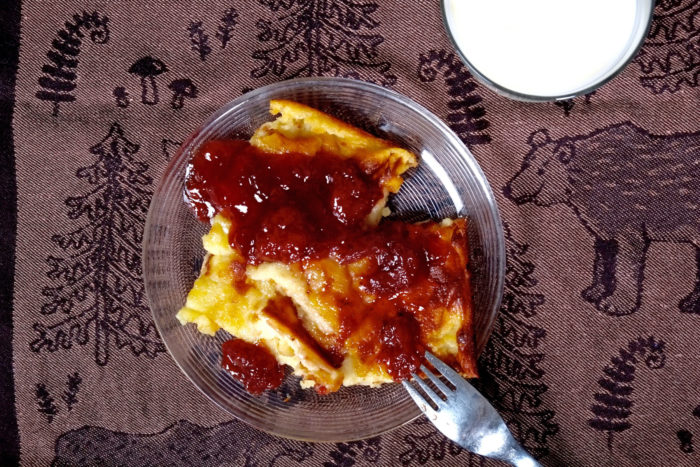
Thick slices of oven-baked pancake are served for dessert, topped with strawberry jam. (The tea towel, called “Metsäpolku” (forest path), is designed by Marja Rautiainen for Lapuan Kankurit.)

Thick slices of oven-baked pancake are served for dessert, topped with strawberry jam. (The tea towel, called “Metsäpolku” (forest path), is designed by Marja Rautiainen for Lapuan Kankurit.)Photo: Mari Storpellinen

Usually, pea soup is followed by a thick, oven-made pancake topped with jam. The pancake dough is baked on an oven tray, then cut into rectangular pieces – a truly sweet way to finish off the meal.

Hopsu-Neuvonen confirms that this combination of main course and dessert also meets today’s guidelines for a nutritious meal.

“However, since both dishes are very rich in protein, it would be ideal to accompany pea soup with a dessert that is a little bit lighter,” she says. “But if the temptation of a pancake proves too strong, then instead of strawberry jam, fresh or frozen berries would provide a better topping.”

By Mari Storpellinen, December 2016

Finland celebrates 100 years of independence in 2017

While the centenary forms the perfect opportunity for a great big party, it’s also an occasion for contemplation and insight. The 100-year mark offers a chance for people to look back to understand the way the nation emerged, but also to gaze ahead to the future to see what Finland can still become.

Starting in 1809 and up to independence, Finland formed an autonomous grand duchy in the Russian Empire. This proved to be an important time for laying the societal and administrative groundwork that allowed the Finns to break with Russia in 1917. Before 1809, the area that is now Finland had been under Swedish rule since at least the 13th century.

Together

Creating Finland was and continues to be a group effort.

Creating Finland was and continues to be a group effort.Photo: Suvi-Tuuli Kankaanpää/Finland 100

The theme for the celebratory year is “Together,” showing that everyone – Finns and friends of Finns – is welcome to take part, just as creating and building the nation were joint efforts.

At two o’clock on December 5, the day before Independence Day, people all over Finland have coffee and cakes together in anticipation of the holiday. Celebrations officially kick off the evening of December 5, when Helsinki’s Market Square becomes illuminated in a blue-and-white light show. The same day, large and small parties get under way at libraries, concert halls, schools, town squares and, yes, even karaoke bars, all over the country.

On December 6, flags fly high and the concerts and parades continue, and a multicultural Independence Day celebration takes place at Finlandia Hall in Helsinki, with First Lady Jenni Haukio acting as the honorary guardian of the festivities. She has time to make it back to the Presidential Palace by evening for the annual televised Independence Day Reception. The assembled dignitaries, a couple thousand of them, line up and shake hands with the presidential couple on the way into the hall.

Independent viewpoints

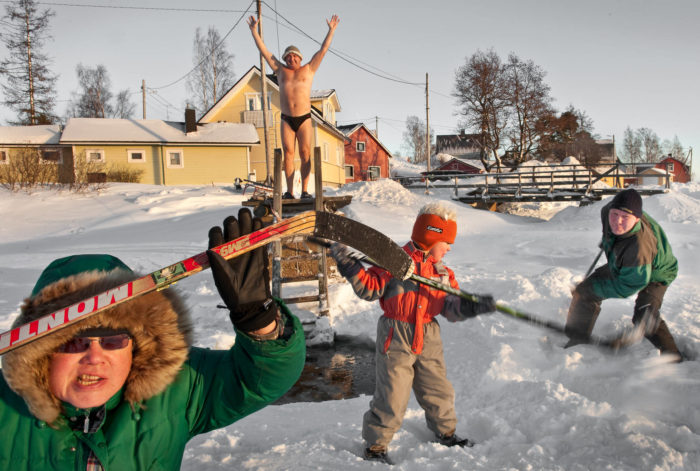
Ice is for hockey – or is it for ice swimming in the freezing water underneath? In Finland you can do both.

Ice is for hockey – or is it for ice swimming in the freezing water underneath? In Finland you can do both.Photo: Juha Metso/Finland 100

Below is a sampling of the centenary events and projects, large and small, happening in the run-up to Independence Day. They emphasise Finnish strengths such as equality and democracy, and of course sisu, that special Finnish blend of courage and endurance.

New passport design: In 2017, Finnish passports and ID cards gained a new look with artwork portraying the landscape of Finnish Lapland, the Northern Lights, and snowflakes.

#suomikuvahaaste (Finland photo challenge): From November 6 to December 6, 2017, a social media studio called Piilotettu aarre (Hidden Treasure) is encouraging people to post Finland-related pictures using the hashtag #suomikuvahaaste (Finland photo challenge), with a different theme each day: childhood, nature, music, language, happiness and design, to name a few (more info at this link – scroll down for English version).

Indigenous Heritage 2017: Helsinki University hosts a conference that examines the concept of heritage as it appears in indigenous peoples’ languages and thinking, as well as intangible and tangible cultural heritage, on November 16 and 17.

The Life of Art: This exhibition at Kunsthalle Helsinki displays different phases of Finnish art from the 1820s to the 1990s. The artworks come from the collection of financial services and insurance concern Sampo Group, and therefore many of them are rarely seen in public. Helene Schjerfbeck and Akseli Gallen-Kallela are among the many famous names included in the show (November 25–December 31).

Reflecting Finland’s identity

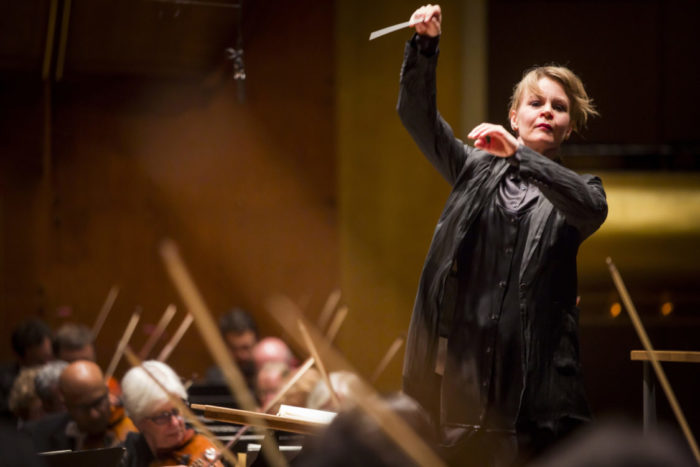
World-renowned Finnish conductor Susanna Mälkki leads the Helsinki Philharmonic.Photo: Chris Lee

What does Finland sound like? Poems and music: In a centenary concert at Helsinki’s Music Centre on December 1, actors Krista Kosonen and Hannu-Pekka Björkman take the stage with star conductor Susanna Mälkki and the Helsinki Philharmonic to “reflect the national identity in verse and melodies.”

Hockey – Helsinki Ice Challenge: As Finland turns 100, Helsinki’s main ice hockey clubs are also celebrating big birthdays: HIFK is 120 years old, while Jokerit is just 50. The teams are marking their own anniversaries and that of Finland’s independence by playing outdoors in Kaisaniemi Park downtown. They’re not facing each other, though – their crosstown rivalry was put on ice in 2014 when Jokerit joined the Kontinental Hockey League (KHL). So Jokerit plays against SKA St Petersburg on December 2, while HIFK faces Kärpät, from the northern Finnish city of Oulu, on December 5. Dress warmly.

100 Finnish photographers: Until December 2, one Finnish photographer is in focus each day at Kauppakatu 5 in the central Finnish city of Jyväskylä and on the event website, where you can see all of them at once. Discover or rediscover the work of photographic artists such as Nayab Ikram, Viivi Huuska, Sami Kero, Karoliina Paatos, Jari Silomäki, Minna Havukainen and 94 more.

Travelling sauna: Readers of The New Yorker discovered that the October 2, 2017 issue of the magazine contained an article entitled “The Finnish obsession with sweating.” Anna Russell wrote about Risto Sivula, a transplanted Finn who now makes his home in Minnesota. In honour of Finland’s 100th anniversary, he has hooked a trailer that is also a sauna to his pickup truck and toured the US, giving people a chance to try an important aspect of Finnish life. With about 60 stops in 24 states from coast to coast, the schedule culminates from December 2 to 6 in Washington, DC, outside the Finnish embassy. At the time of writing there are still slots available for would-be sauna-goers.

This is just a smattering of what’s happening to commemorate 100 years of Finnish independence. Other events during the year have included tango, samba, snow castles, hackathons, silent films, an arctic expo, a project to involve refugees in startup businesses, Finnish wine from France, and a Finland 100 satellite taking photos of the Northern Lights from space. They have even released a Finland 100 menu, complete with recipes. Finnish embassies and consulates are holding their own events, and concert planners around the world are featuring more Finnish composers and musicians than ever.

By Peter Marten, November 2017

Christmas lights up the Helsinki night

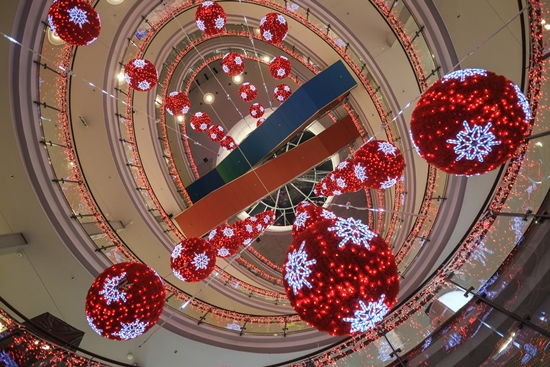
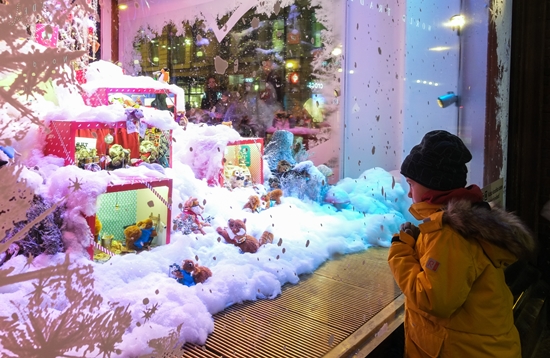
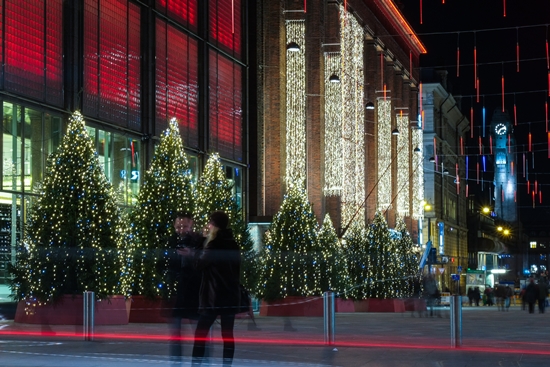
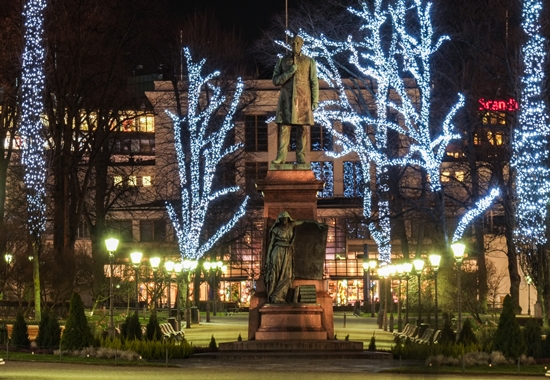
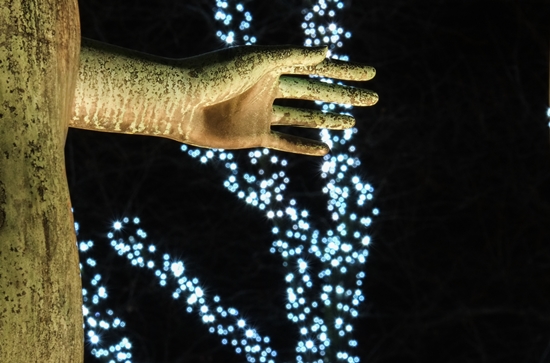
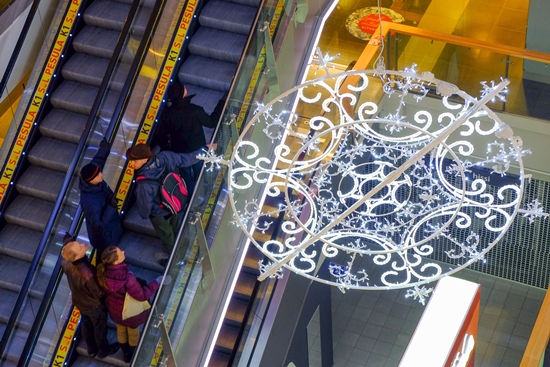
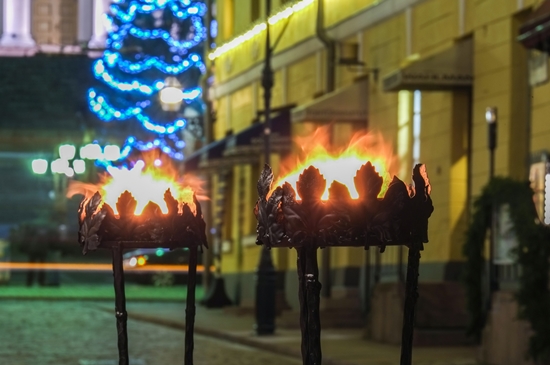
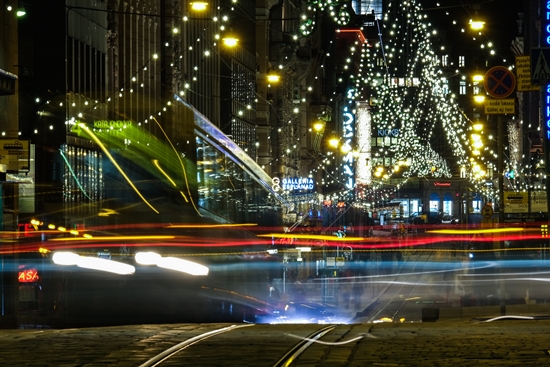
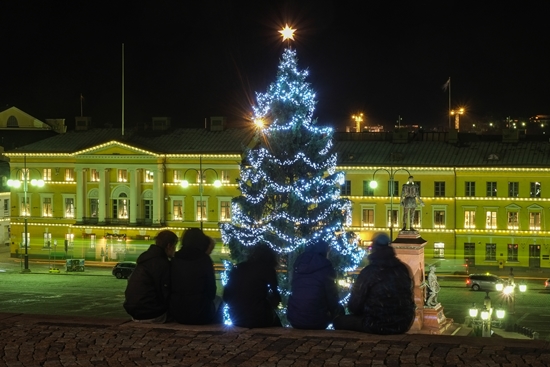
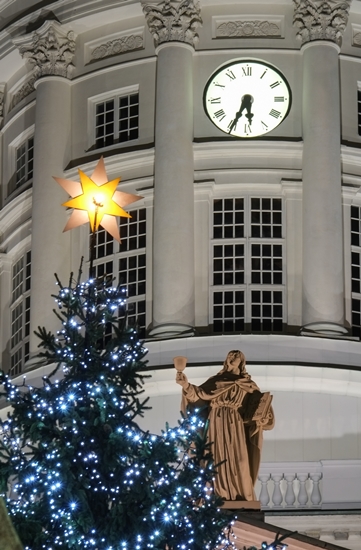
Holiday decorations in the Finnish capital contradict the idea that the northern winter must be a time of lingering darkness. Our photographer ventures out in search of illumination. Bring on the light!

When the holiday lights on Alexander Street come to life in late November, Helsinkians know that the Christmas season has begun in earnest. Senate Square always features a huge, locally harvested Christmas tree – workers spend several days in a bucket lift adorning the tree with lights. All across the city, merchants spare no expense to make their windows glow with seasonal cheer. Sample the holiday spirit in our slideshow!

A light-hearted Christmas in Helsinki

Photos by Tim Bird,
Text by Peter Marten

Bengt Holmström becomes Finland’s newest Nobel winner

The Finnish economist, a professor at Massachusetts Institute of Technology, wins the honour together with his British colleague, Harvard professor Oliver Hart. Announced in October 2016 and awarded at a ceremony on December 10, it recognises their work on contracts and incentives, trying to answer tough questions such as:

How can an employment contract motivate someone to work hard but not take unwise risks? How can that employee be properly compensated for her performance but not for matters outside her control?

For many economists, it was about time Holmström won the Nobel Prize. “I think my first reaction to the news was ‘Finally!’” says Topi Miettinen, professor at Hanken School of Economics in Helsinki. “The chance that he would win the prize has been discussed for a long time. Everyone at Hanken was very positive. As soon as I heard he won I decided to have a special session in my microeconomics class about Bengt’s moral hazard ideas.”

To explain “moral hazard” Miettinen describes the owner and CEO of a company. The owner wants the CEO to work hard but can’t fully monitor him. The risk-averse CEO would ideally like a constant salary, but the owner provides an incentive contract which ties the CEO’s pay to profit. However, the CEO can’t fully control profit and dislikes uncontrollable risk. The CEO has to be compensated for bearing the risk, and this makes the incentive contract expensive for the owner.

Ideas with broad relevance

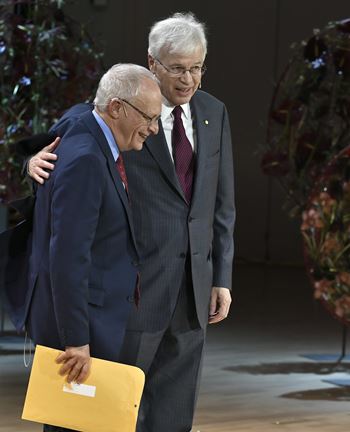
Oliver Hart (left) and Bengt Holmström smile for the cameras after delivering their Nobel Prize lectures in Stockholm on December 8, 2016.

Oliver Hart (left) and Bengt Holmström smile for the cameras after delivering their Nobel Prize lectures in Stockholm on December 8, 2016.Photo: Claudio Bresciani/TT/Lehtikuva

Holmström’s ideas are easily explained using executive contracts as examples, but Miettinen points out they can be applied to many different fields. Auto insurance is another example: If your car is insured there must be some other incentive for you to drive carefully. After all, if you damage your car the insurance company, not you, will pay for the repairs.

“Bengt has also extensively studied the multitasking problem,” Miettinen continues. “A teacher is given incentives to teach well, such as tying pay to the students’ exam results. But in this case the teacher focuses on teaching the students to get good scores on the exam, not to get a good education. It is difficult to use incentive pay when there are multiple tasks to perform.”

Although Holmström has spent much of his career at MIT, he still retains strong ties to Finland. He has served on the boards of the Finnish Business and Policy Forum (known by its Finnish abbreviation, EVA), Aalto University and Nokia.

“I’m happy he made it,” Miettinen says. “There has been a lot of public interest in economics because he won the prize. Of course, for us economists he was already an inspiration.”

Finland’s other Nobel Prize winners

Martti Ahtisaari, Finland’s former president (Nobel Peace Prize), 2008, “for his efforts on several continents and over more than three decades, to resolve international conflicts.”

Ragnar Granit (Physiology or Medicine), 1967, together with Haldan Hartline and George Wald, “for their discoveries concerning the primary physiological and chemical visual processes of the eye.”

Artturi Ilmari Virtanen (Chemistry), 1945, “for his research and inventions in agricultural and nutrition chemistry.” He improved milk production and invented a method of preserving butter.

Frans Eemil Sillanpää  (Literature), 1939,  “for his deep understanding of his country’s peasantry and the exquisite art with which he has portrayed their way of life and their relationship with Nature.”

By David J. Cord, December 2016

The simple strength of Finnish education

As a 19-year-old, I visited my Finnish wife (then girlfriend) and her family for the first time in Helsinki. And during that trip ten years ago, my mother-in-law asked me, “What do you like most about Finland?”

I told her I loved its simplicity. But instead of nodding approvingly, my mother-in-law’s eyebrows rose. She looked terribly offended; I assured her that I wasn’t criticising the people.

This Nordic country, I explained, impressed me with its abundance of simple treasures. With saunas; summer cottages; “baby boxes” full of supplies for new parents; and Everyman’s Right, which gives everyone permission to roam the forests and countryside; Finland is a nation where people know how to live well by living simply.

Before moving from Boston to Finland in 2013, I had heard the glowing reports about Finnish schools and I predicted – since Finland was internationally recognised as an education superpower – that I’d discover expensive, flashy ingredients to explain the success of its students on international standardised tests like the OECD’s Programme for International Student Assessment (PISA).

But when I began a two-year stint as a primary-school teacher in Helsinki, what I found surprised me. I developed a six-letter acronym to describe the key features of Finnish education. It’s SIMPLE: Sensible, Independent, Modest, Playful, Low-stress and Equitable.

Sensible

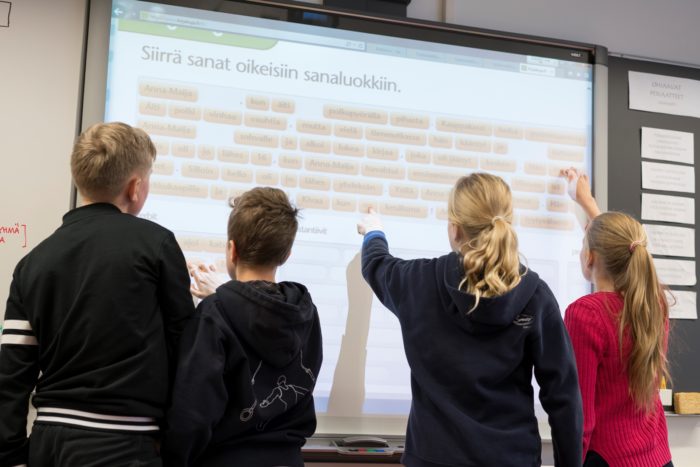
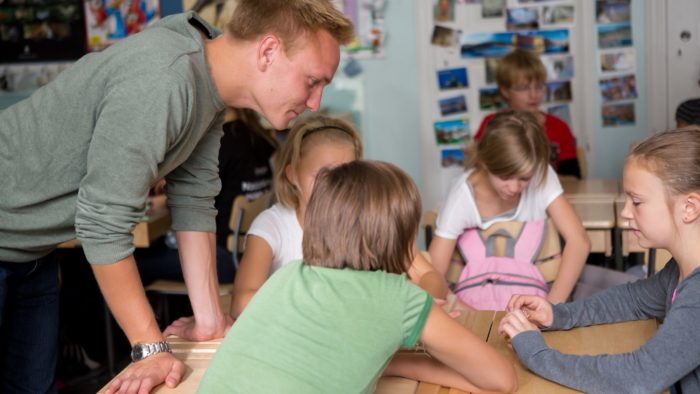
Four pupils gathered by a screen playing a word game.

This class activity involves moving words across the screen into different categories according to parts of speech.Photo: Riku Isohella/Velhot

Finland does many sensible things that promote student wellbeing. For instance:

  • Students typically receive a 15-minute unstructured break for every 45 minutes of instruction throughout the school day, and research suggests that these frequent breaks promote alertness in the classroom.
  • Every school day, all students in Finland – regardless of socioeconomic background – are provided with free, nutritious meals.
  • 90 percent of Finnish comprehensive schools are implementing an effective, research-informed program for countering bullying called KiVa, developed at Finland’s University of Turku.
  • 70 percent of Finland’s comprehensive schools have adopted a nationwide initiative to boost the physical activity of children, called Finnish Schools on the Move. 

Independent

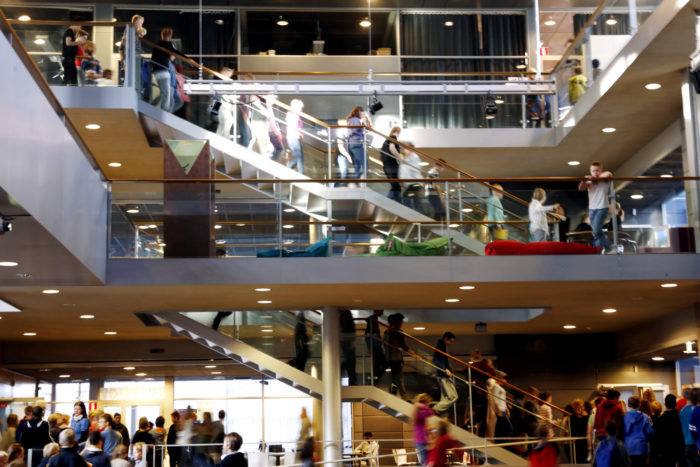
People gathered in corridors and walking up and down the stairs at a school building.

Students in Finland enjoy a great deal of freedom and independence.Photo: Liisa Takala

When I moved to Helsinki, I was shocked to find young children navigating the city’s streets without chaperones. At my school, I witnessed something similar. Primary-school students often walked the hallways without the guidance of teachers, served themselves hot food in the lunchroom, and exited the school on their own – things I hadn’t observed in my home country.

Inside Finnish classrooms, I noticed that many teachers seemed comfortable providing students with ample freedom, such as assigning open-ended projects. Not only did this practice seem to encourage creativity, but it also nudged students to develop stronger critical thinking skills.

Furthermore, Finland’s well-prepared teachers are world-famous for being trusted as professionals who enjoy significant leeway in their classrooms. (Research suggests that teacher autonomy is linked with happiness at work and retaining educators in the teaching profession.)

Modest

A teacher helping a group of pupils with their studies.

Finland’s well-prepared teachers enjoy significant independence in running their classes.Photo: Riitta Supperi/Keksi/Team Finland

When I moved to Finland, I expected to find the latest pedagogical methods, a surplus of classroom technologies and sparkling school facilities. It’s what “the world’s best school system” would offer its teachers and students, I reasoned.

But when I visited different Finnish schools, I generally didn’t find those ingredients. And I’ve since concluded that novel pedagogies, tech gadgets and shiny facilities are nice, but they’re secondary. What’s most important, Finland suggests, is a well-balanced curriculum taught by proficient educators in a learning environment that promotes student wellbeing. 

Playful

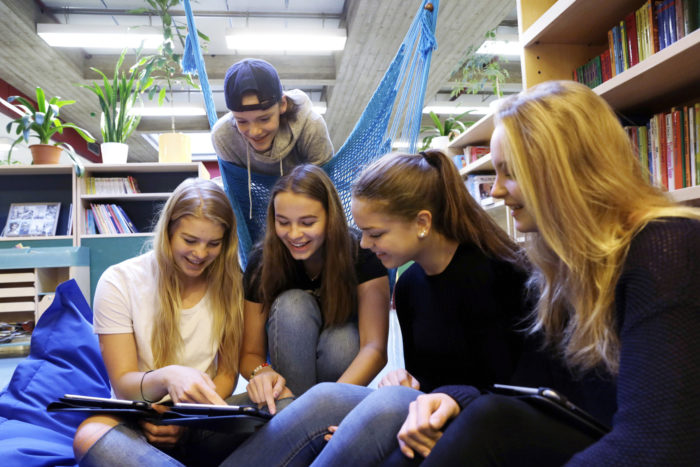
A group of smiling students studying on tablets at a library.

A learning environment that promotes student wellbeing is one of the most important factors in a good education.Photo: Liisa Takala

In Finland, there’s a widespread belief among parents and teachers that young children need lots of time to play on a regular basis. Research supports this philosophy, too: “In the short and long term, play benefits cognitive, social, emotional and physical development,” according to an American research summary entitled The Power of Play.

In fact, most children in Finland don’t begin first grade until they’re seven years old, and before then, they spend most of their school days learning through play.

But even when Finnish children enter first grade, the structure of the school day provides young students with plenty of opportunities to play. Specifically, most first- and second-graders in Finland, on average, only have about three hours of classroom instruction every day, interspersed with short recesses. And it’s common that, once their school day ends in the early afternoon, Finland’s first- and second-graders attend an after-school club where they typically engage in lots of self-directed play.

Low-stress

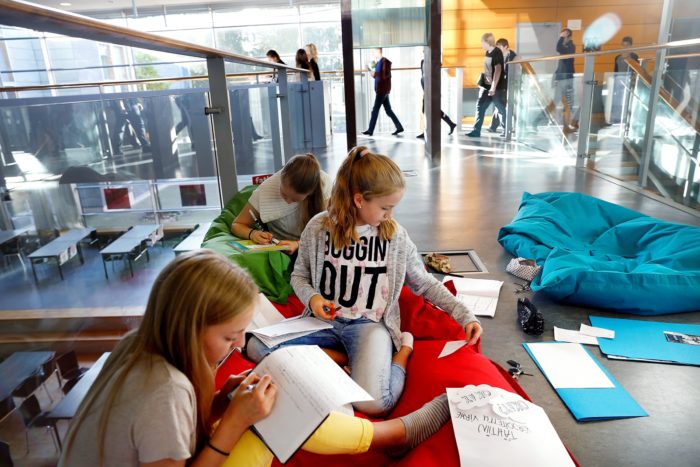
Pupils studying in a corridor on beanbag chairs.

Quiet, relaxed learning environments help create a low-stress experience.Photo: Liisa Takala

On my visits to different Finnish schools, I started to notice a pattern: the learning environments were generally quiet and relaxed. Since stress has adverse effects on learning and teaching, a low-stress atmosphere at school is vital for everyone – educators and students.

Equitable

All schools in Finland are public, with the exception of a tiny handful of independent schools, which means that high standards for teaching and learning are widespread. In other words, no matter where in Finland children grow up, they have free access to good schools with skilled teachers, a balanced curriculum, healthy lunches and high-quality learning materials.

Finland’s educational arrangement is simply good for kids.

By Tim Walker, December 2016

Tim Walker is an American teacher and writer whose books are Lost in Finland (2016, S&S) and Teach Like Finland: 33 Simple Strategies for Joyful Classrooms (April 2017, W.W. Norton).