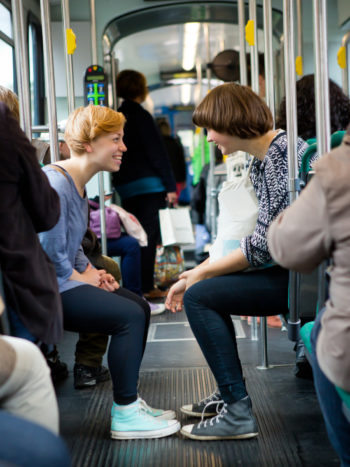
Valentine’s Day brings display of Finnish kissing

Finland is the most romantic country in the world. Happy Valentine’s Day!

Watch these poignant and passionate moments from Finnish movies new and old. Look at the longing in their eyes, the magnetic attraction – Finland does romance like nobody else.

The Finnish kiss is the new French kiss.
Video: Audiovisual Finland

By ThisisFINLAND staff, updated February 2020

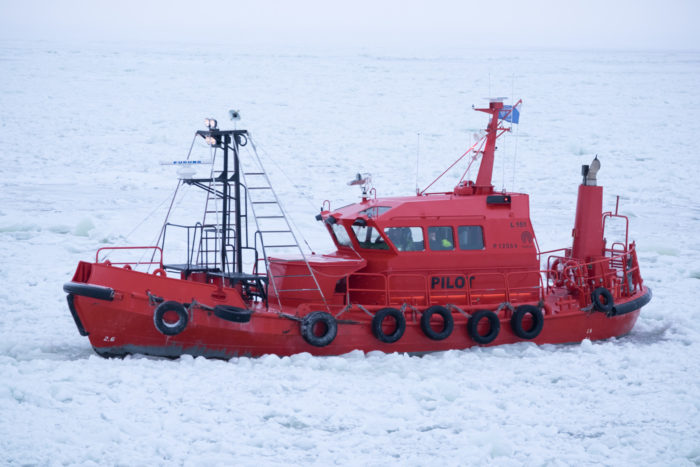
Finland’s icebreakers plough through Baltic ice

The northern reaches of the Bay of Bothnia, the part of the Baltic that stretches between Finland and Sweden, are especially prone to becoming blocked by ice, but it often occurs in more southerly transport corridors as well. The “fast ice” – the ice that occurs closest to the shore – can measure up to 70 or 80 centimetres (28 to 32 inches) thick in the north, while ice fragmented by gales can build up into formidable ridges that are 25 metres (82 feet) high.

Assistance might be needed at any Finnish port, from Kotka and Helsinki in the south to Raahe, Oulu and Kemi further north, for the cargo ships that provide crucial import and export links to keep the Finnish economy running through the winter.

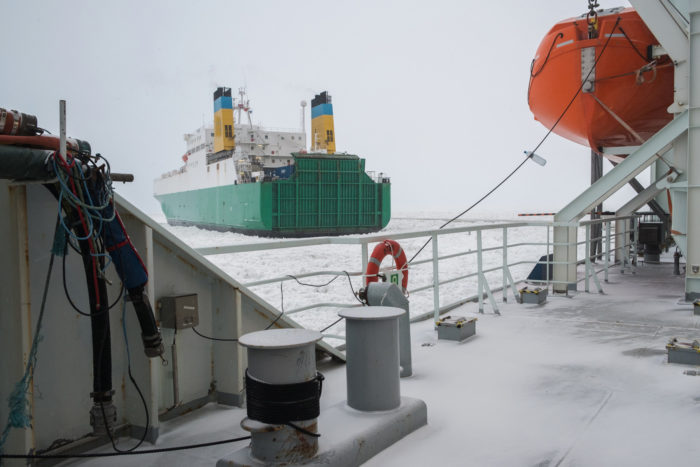
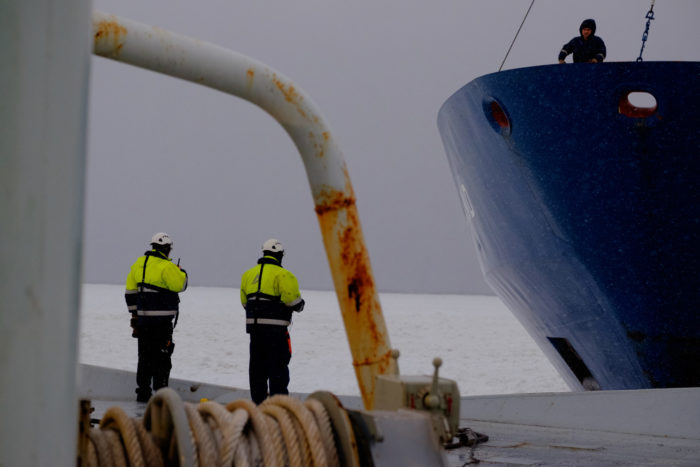
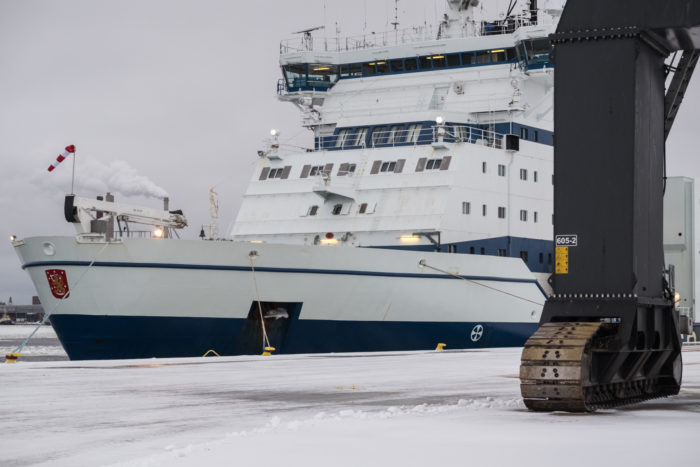
The task of clearing the ice “fairways,” or sea routes, falls to the state-owned company Arctia and its eight icebreakers, including the newest, state-of-the-art addition, the Polaris. Freeing ships from the ice can involve subtle, skilful manoeuvres and know-how, not only sheer power.

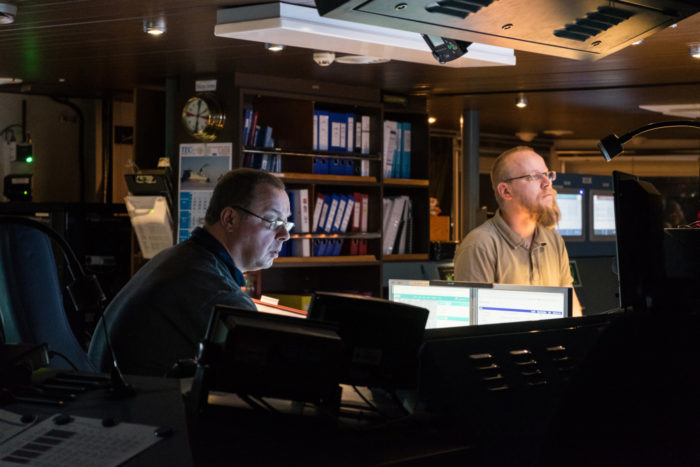
In the slideshow below, we set sail on the icebreaker Otso and follow its ten-day shift, working day and night to keep the fairways open for the ports of Oulu, Kemi and Tornio.

The other six are called Voima, Urho, SisuKontioNordica and Fennica. You can see the vessels parked on the quayside for maintenance in the summer beside Helsinki’s Katajanokka district.

On assignment with the icebreakers

By Tim Bird, February 2017

Cold is the new hot in Finland

Owing to the cold winters, Finns know how to cope with ice and snow. In today’s Arctic boom there is strong demand for Finnish Arctic know-how.

Finns spend their winters in freezing temperatures and darkness but they have learnt to make the most of it. Everyone knows how to drive a car on an icy road, and Finns know how to test cars in Arctic conditions. Thanks to fundamental low-temperature research, there is know-how and infrastructure to build quantum technology and nanotechnology solutions.

1. Breaking ice in Aalto Ice Tank
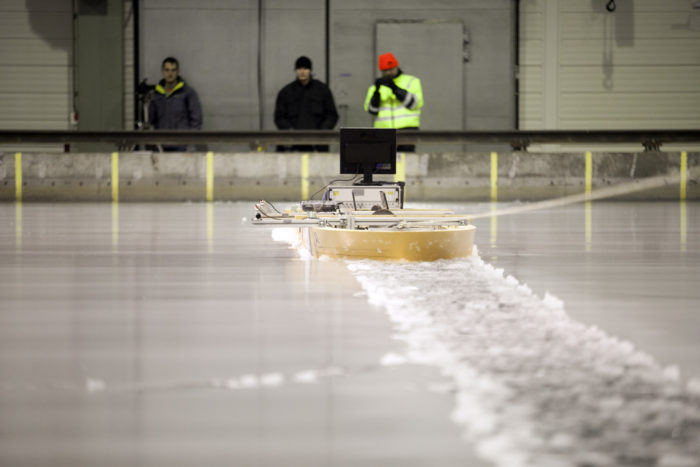
Photo: Adolfo Vera/Aalto University

In the Helsinki metropolitan region there is an Arctic marine technology ecosystem with three separate water basin facilities for testing Arctic vessels and offshore structures. One of them, the Aalto Ice Tank, is located in the premises of Aalto University Department of Mechanical Engineering in Espoo. The facility can be used by academic professionals and industrial experts alike.

“The Aalto Ice Tank, which was thoroughly renovated in 2015 and 2016, is unique in Europe because of its dimensions, particularly its large width. The 40-metre-wide and 40-metre-long water basin is equipped with a cooling system and equipment that produces model-scale sea ice. The ice is fine-grained and generated via a spraying process,” says Jukka Tuhkuri, solid mechanics professor at Aalto University.

“The scaled ship models being tested are typically five to six metres long. The wide basin makes it possible to study turning of ships in ice, and ice failure against wide offshore structures, such as harbours and windmill farms, attached to the sea bottom. You can test Arctic offshore structures by building scaled models of them and then pushing ice against them,” Tuhkuri explains.

Typical experiments in the 2.8-metre-deep ice tank include resistance, propulsion and maneuvring tests of scaled-down ship models in ice, ice load tests on offshore structures, as well as modelling of natural ice formations such as ice ridges.

Professor Tuhkuri is a member of the Arctic Marine Technology research team, one of the foremost research groups in this field in the world. Apart from the Aalto Ice Tank, they also carry out field experiments and measurements in the Antarctica, in Arctic waters, on board vessels, and in other laboratories.

2. Arctic testing ground for vehicles
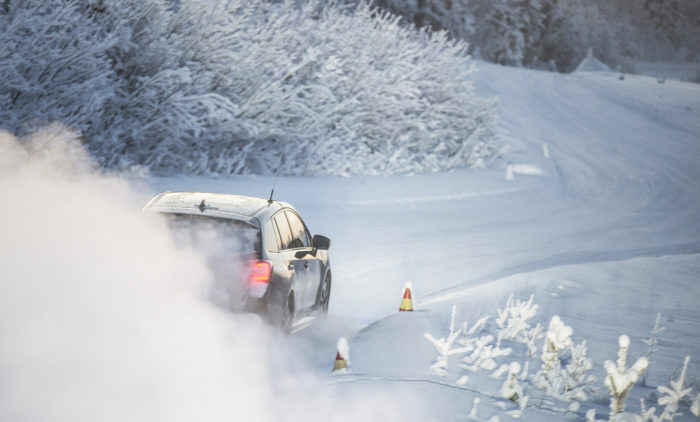
Arctic testing ground for vehicles

Photo: Markus Pentikäinen

A new testing area designed for testing self-driving vehicles in a cold climate has been opened in Muonio, about 200 kilometres north of the Arctic Circle. The 5,000-square-metre testing area, which is open to all automotive industry manufacturers, is called Lapland Proving Ground.

Muonio is one of the coldest municipalities in Finland, which makes it an ideal place for vehicle testing in extreme Arctic conditions – chilling cold, snow, ice and darkness.

The proving ground provides 20 kilometres of different land test tracks, up to 10 kilometres of ice tracks on the local lake, plus a large workshop and office building. There are also cold chambers available that can be cooled down to a minimum of minus 45 degrees.

Additional research and development facilities are located close to the testing ground, in the Arctic Research Centre. The centre facilities can be used by R&D organisations, universities and technology or service providers working for the automotive testing industry. The Lapland Proving Ground is a part of the Aurora project, aimed at building a world-class Arctic testing ecosystem for intelligent transport systems and automated driving in Finnish Lapland.

3. World record in low temperatures

Snow Texture

Photo: iStock

“Many physics phenomena manifest themselves more clearly in low temperatures, where thermal noise doesn’t interfere with them. The field of science researching these phenomena is called low temperature physics,” says academy professor Jukka Pekola. He heads the Centre of Excellence on Low Temperature Quantum Phenomena and Devices at Aalto University.

“Our research takes place in the temperature range close to the absolute zero that is -273.15 degrees Celsius. Especially interesting are quantum phenomena, such as superconductivity, superfluids and nanoelectronics,” he says.

Pekola and his team develop various refrigeration techniques at temperatures close to absolute zero.

“In 2000, our low temperature laboratory reached the low temperature world record of 0.000 000 000 1 Kelvin,” Pekola says.

In a sense, low temperature physics is thus an enabling technology, and the research being carried out in the low temperature laboratory is fundamental research, without which practical applications would not be possible.

“Ten to 20 years from now, quantum computers might not exist yet, but quantum simulators will. They will be used for simulating molecules, and the applications can be used, for example, in the development of new medicines.”

By Leena Koskenlaakso, ThisisFINLAND Magazine 2017
Finland cooks up special menu for centenary celebration

Chefs Kim Palhus and Arto Rastas designed the menu so that the dishes can be prepared around the world in a range of cultural environments and in different countries where availability of ingredients may vary.

The Finland 100 celebratory menu brings people together to make and enjoy food and drink that will introduce them to or remind them of taste experiences that have long been favourites of the Finns but are accessible to food-lovers wherever they may happen to live. The recipes form a base for professional and amateur chefs alike to create variations according to the season and the situation. The dishes also inspire conversation at the dining table.

Finland’s centenary celebration menu

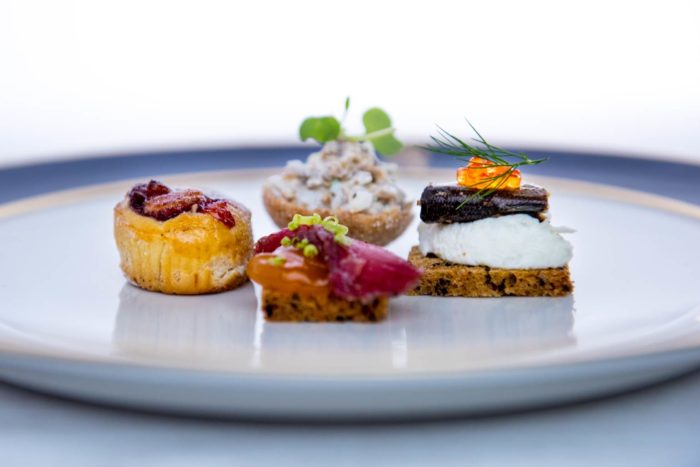
Canapés
Wild-mushroom salad
Smoked vendace with horseradish-cheese mousse
Cured beef sirloin with sea-buckthorn berry jam
Lingonberry bun

***
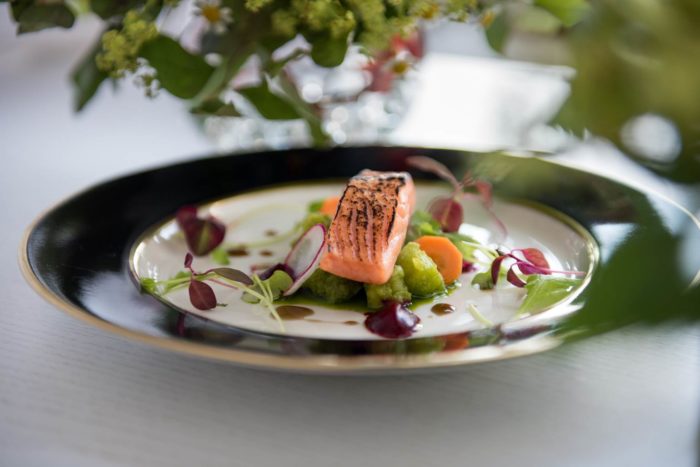
Tar-marinated, slightly salted salmon with dill cucumbers, green potato salad and beet puree

***
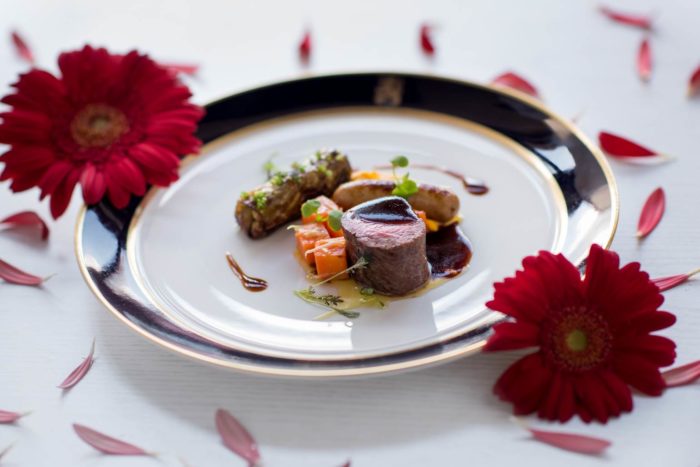
Lamb tenderloin with allspice sauce, cabbage rolls with oats and pine sprouts

***
Brita cake

And here are the recipes!

Photo: Petri Krook

Wild-mushroom salad (10 portions)

Ingredients:
150 g salted Finnish wild mushrooms, parboiled and soaked
6 ml  white vinegar
80 g mayonnaise
50 g  diced onion
20 Linkosuo Original ry crispbread
Ground white pepper powder to taste
Parsley and chives for decoration

Directions:
1. Dip the mushrooms 1-2 times into boiling water and let sit in cold water to cool thoroughly.
Change cold water at least once. Do not leave too long for mushrooms to lose their saltiness.
2. Rinse with cold water and gently squeeze dry.
3. Finely chop mushrooms and raw onions together into a mixture.
4. Mix mayonnaise until slightly foamy and add in white vinegar.
5. Combine all ingredients and season with pepper to taste.
6. When ready to serve, fill the rye crisps with wild mushrooms salad mixture, decorate
with parsley and chives. Do not prepare too far in advance, the rye bread crisps might get soggy.

Smoked vendace with horseradish-cheese mousse (10 portions)

Ingredients:
10 canned smoked Finnish vendace, whole
130 g fresh cheese (cream cheese)
1 tbsp  fresh grated horseradish
salt and ground white pepper
20 small pieces soft malt bread, toasted (recipe below)
2 tbsp. trout roe
fresh dill for decoration

Directions:
1. Cut each vendace into two or three pieces.
2. Mix cream cheese and horseradish together, season with salt and white pepper to taste.
3. With the use of a pastry bag, or the use of a small spoon, squeeze or scoop the cream cheese and horseradish mixture on each piece of the crispy malt bread.
4. Place a piece of vendace on top of each bread and decorate with dill and trout roe.

Cured beef sirloin with sea-buckthorn berry jam (10 portions)     

Ingredients:
500 g  beef tenderloin (coeur de fillet)
1.5 tbsp sea salt
3  crushed juniper berries
1/2 tsp black pepper from the mill
1/4 tsp mustard seeds
1  crushed bay leaf
20 small pieces soft malt bread, toasted
1 tbsp  sea-buckthorn berry jam
Parsley or chives for garnish

Directions:
Prepare the beef terderloin a day or two in advance so that it has time to absorb the spices.
1. Clean the meat by removing extra fat.
2. Mix all the spices together into a mixture and thoroughly rub evenly over the fillet.
3. Wrap tightly in plastic wrap, close ends and refrigerate for two or three hours.
4. Wrap tightly in tin foil and place into a freezer overnight.
5. Before cutting, let the beef sirloin thaw at room temperature for about one hour.
6. While the meat is still thawing, cut it into thin slices.
7. When ready to serve, butter the slices of the crispy malt bread and place sliced meat on each slice in a rosette formation. Note that the crispy malt bread will get soggy if this step is prepared too far in advance.
6. Decorate with sea-buckthorn berry jam and finely chopped chives before serving.

Lingonberry bun (10 portions)

Ingredients:
10 g  yeast
100 ml milk
1  egg
0.5 dl  sugar
1/4 tsp  salt
1/4 tsp crushed cardamom
200 g  wheat flour
35 g  butter

Filling
1 dl  lingonberry jam
2 tbsp  sugar
1 tbsp cinnamon powder
whipped egg for brushing

Directions:
1. Start by placing the yeast at the bottom of a large dish and break into pieces. Pour warm milk over, add salt, sugar and cardamom. Add in egg. Mix in flour while kneading by hand. Add melted butter and knead until all ingredients are mixed thoroughly.
2. Roll the dough into an even mixture and remove air bubbles. Roll the dough into a large, thin layer with a rolling pin.
3. Spread lingonberry jam thinly on the dough and sprinkle with cinnamon.
4. Roll the dough up and cut into 4-5 cm sized segments. Put each piece into a small muffin cup and allow to rise in a warm place for about an hour.
5. Brush with melted butter and bake for 15 to 20 minutes in 350F (180C) until cooked.
6. Allow to cool and garnish with powdered sugar before serving.

Malt bread from Häme

Ingredients:
1 litre  buttermilk
4 packets dry yeast
500 g malt
7.5 dl  water
10 tsp  salt
500 ml dark syrup
200 ml prune puree or marmalade
350 ml rapeseed oil
3 litres wheat flour (depend of flour, may use less)
Makes 12 small loaves

Directions:
1. Boil the malt for several minutes. Add buttermilk, oil, syrup, salt and marmalade.
2. Add the yeast to the wheat flour, and add the yeast and flour mixture to the malt mixture.
3. Knead well and put aside to rise in a warm place for about 30 minutes.
4. Form 12 loaves (500 g each) and place them in baking pans.
5. Cover with a cloth and let them rise again.
6. Bake at 150 degrees Celsius (300 Fahrenheit) for about 35 minutes.

Photo: Petri Krook

Tar-marinated, slightly salted salmon with dill cucumbers, green potato salad and beets

Ingredients:

200 g  fresh, boneless, skinless salmon fillet, ideally the back fillet
2 to 3 tbsp sea salt
sugar
1/2 tbsp crushed white pepper

Directions:
1. Mix the salt, sugar and white pepper together.
2. Sprinkle seasoning on top of the salmon fillet into a thick layer.
3. Keep refrigerated 24 hours to allow flavour to set in.
4. Place the salmon fillet on a cutting board, wipe off the seasoning mixture and dry with a paper towel.
5. Cut the fillet into four evenly sized pieces.
6. Heat the frying pan to maximum heat. Sprinkle a little salt in the pan.
7. Place the slices on top of the pan and fry only on one side with until it turns dark brown. Do not bake through.
Please note:
1. The frying pan has to be really hot to get the right effect.
2. Fry the fillet on the outer half of the fillet where the skin was, do not turn over!
Tar syrup:
1 package Leijona tar candies
200 ml water
Directions:
1. Bring water to boil. Add candies, and stir until they melt. Do not allow the mixture to burn.
2. Lower the heat to medium and cook for another 15 minutes, until the mixture turns into a syrup. Allow to cool.

Dill cucumbers like Grandmother used to make

Ingredients:
100 g fresh cucumbers, thinly sliced
50 ml water
50 ml vinegar
50 g granulated sugar
2 tbsp. chopped fresh dill

Directions:
1. Wash the cucumber but do not peel. Slice into thin slices with a knife or a cheese slicer.
2. Blend water, sugar and salt together. Allow the sugar to fully dissolve before pouring it over the sliced cucumber.
3. Add vinegar, seal into a container and shake until all ingredients are thoroughly mixed. Refrigerated overnight and add chopped dill before serving.

Green potato salad

Ingredients:
3 potatoes, floury
Dill emulsion:
2 dl parboiled dill
2 dl rapeseed oil
2 tbsp  white wine vinegar
1 tsp salt
white pepper to taste

Directions:
1. Bake the potatoes in boiling water until cooked thoroughly.
2. Parboiled the dill by putting it in boiling water for about 30 seconds.
3. Cool the dill under running cold water. Dry with paper towels.
4. Place in a blender, mix well and add in oil gradually.
5. Add salt and vinegar. Blend for another 3-5 minutes until mixture is an even blend.
6. Peel and dice the potatoes while they are still warm. Pour the dill emulsion over the potatoes in two batches and mix gently. Refrigerate at least four hours or overnight before serving.

Beet puree

Ingredients:
100 ml One small beet, peeled
400 ml Water
50 ml Red wine vinegar
½ tsp Salt
Nutmeg

Directions:
1. Bring water, vinegar and salt to boil. Add in beet.
2. Lower heat and boil the until cooked.
3. Blend the beet until a smooth, even puree forms.
4. Season with nutmeg and salt.
Decorate portion with thin slices of radish and carrot.

Photo: Petri Krook

Lamb tenderloin with allspice sauce, cabbage rolls with oats and pine sprouts

Ingredients:
1 kg lamb tenderloin
100 ml rapeseed oil
5 g thyme leaves
3 cloves garlic, chopped
salt and black pepper to taste
butter for frying

Directions:
1. Clean the tenderloins from extra fat and film.
2. Mix oil, garlic and thyme leaves together and spread the mixture on the fillets evenly.
3. Cover with plastic wrap and refrigerate for at least 12 hours.
4. Wipe off extra marinade, preheat frying pan, melt butter and fry fillets on high heat until brown.
5. Place the cooked fillets on an oven tray and put in a meat thermometer. Place in 100 degrees Celsius (212 Fahrenheit) oven.
6. When the meat temperature reaches 54 degrees Celsius (130 Fahrenheit), remove from the oven. Wrap in foil and allow to cool for 10 minutes.
7. Slice the fillet and plate.

Homemade lamb sausage

Ingredients:
200 g boneless lamb fillet
200 g beef shoulder
15 g potato starch
18 g salt
2 g grounded black pepper
2 g marjoram
1 chopped garlic clove
100 ml water
1 tbsp. white wine vinegar
lamb intestine

Directions:
1. Place the lamb intestines in cold water while you prepare the filling.
2. Grind meat once through a 3-mm sieve once or twice, depending on desired thickness.
3. Place meat in a mixer bowl and blend for few minutes.
4. Add potato starch and seasonings. Add in water in gradually in three steps, making sure that the mixture does not become too fluid. Cook a small patty on the stove to check flavour. Add spices to taste, if desired.
5. Attach sausage tube to the meat grinder, and attach the intestine carefully to the tube.
6. Fill intestine with sausage mixture, working slowly not to overfill or break the intestine. Form sausages that are about 10 cm long. Twist the intestine in opposite direction with each sausage so that it will not unravel when you are done.
7. Poke three small holes in each sausage and place into boiling water. Remove from heat, cover and allow to rest for 10 minutes.
8. Remove the sausages from water and dry. If not serving them right away, allow to cool and store in the refrigerator.
9. When ready to serve, heat up a frying pan with some oil and cook until slightly brown.

Allspice sauce

Ingredients:
2 tbsp. Rapeseed oil
1 Carrot
1 Shallot onion
2 Bay leaves
Thyme
1 dl Red wine vinegar
1 dl Red wine
1.5 dl Demi-glace sauce
6 + 6 Crushed allspice berries
Salt to taste

Directions:
1. Sautee diced onion, carrot in oil on a hot pan until caramelized. Add spices and fry until browned.
2. Add red wine and allow to simmer until half has evaporated. Then add demi-glace sauce and let it simmer until half the liquid has evaporated again.
3. Strain the liquid and add in crushed allspice berries. Allow to simmer on a low heat for a few minutes.
4. Strain again before serving.

Cabbage rolls with oats and pine sprouts

Ingredients:
1 Small head of cabbage
Salt

Filling:
1 Yellow onion
1 tbsp Butter
200 g Chopped small cabbage leaves
1 dl Cooking cream
1 tsp Pine sprout powder
400 g Softly boiled Finnish crushed oats
Salt

Topping:
syrup, butter (use rapeseed oil, in case need to have vegan rolls)

Directions:
1. Remove cabbage stalk and outer leaves before placing the cabbage in salted boiling water. Preheat oven to 200 degrees Celsius (400 degrees Fahrenheit).
2. Cover the cabbage and cook thoroughly until leaves start to separate.
3. Remove from the boiling water and allow to cool.
4. Remove the leaves from the cabbage and chop the core into small slices.
5. Put them in cold water, then remove and dry well.
6. Sautee chopped onion and chopped cabbage leaves for a few minutes in a sauce pan.
7. Add cream, pine sprout powder and salt. Let simmer 5 minutes
8. Add crushed oats, mix well and check the seasoning.
9. Open cabbage leaves on cutting board and spoon filling onto the edge of the leaves.
10. Fold sides in and roll tightly.
11. Place rolls on an oven tray and brush with a mixture of butter and syrup.
12. Place in the oven at 200 degrees Celsius (390 Fahrenheit) until brown, then reduce heat to 130 degrees Celsius (265 Fahrenheit) and bake for about 30 minutes.

Sautéed carrots in horseradish butter

Ingredients:
3  carrots
50 g  butter
20 g  fresh grated horse radiss
salt to taste

Directions:
1. Peel and dice carrots into desired shapes.
2. Place onto a frying pan and add water until submerged.
3. Boil until al dente. Pour out water. Add butter and mix it in with carrots until fully melted.
4. Add grated horseradish, season with salt and serve immediately.

Carrot puree

Ingredients:
500 g  peeled, coarsely chopped carrots
1 litre  water
1 tbsp  butter
1tsp  salt
1/4 tsp powdered nutmeg

Directions:
1. Boil carrots until soft. Pour into a strainer to remove water. Place carrots in blender at medium speed until smooth.
2. Add butter, salt and nutmeg.
3. Check the seasoning.
Note: You may make bigger portions of beet and carrot puree and preserve them for future use by placing them in a vacuum-packed bag or in the freezer. Cabbage rolls can also be prepared in advance and frozen, if you wish to make bigger batches.

Photo: Petri Krook

Brita cake

Ingredients:
125 g  butter
1 dl  sugar
2  egg yolks
1.5 dl  wheat flour
2 tsp baking powder
1 dl milk
Marengue:
2  egg whites
1.5 dl  sugar
1 dl  almond flakes

Rhubarb filling
5 dl peeled, chopped rhubarb
1 dl  sugar
dash of water
2 dl whipping cream

Directions:
Cake:
1. Whip butter and sugar into a white foam. Add egg yolks one by one. Mix in dry ingredients and milk gradually, alternating each.
2. Spread the dough on a 25 x 30-cm (10 x 12-inch) baking sheet covered with parchment paper.
3. Bake at 180 degrees Celsius (355 Fahrenheit) on the middle rack of the oven for 10-15 minutes until cooked. Remove from oven and allow to cool.
4. Whip egg whites into a firm foam. Add in sugar gradually in three batches. Mix until the foam is so thick that it does not fall out of the bowl. Spread the meringue evenly on the cooled off cake. Sprinkle with almond flakes. Place back in the oven’s middle rack for another 10-15 minutes until crispy brown. Remove from oven and allow to cool.
Rhubarb compote:
1. Cook the rhubarb on the stove with sugar for 5-8 minutes. Pour out liquid and use as juice, etc. Allow rhubarb compote to cool.
Cake Filling:
Prepare the cake right before serving
1. Mix 2dl whipped cream with 2 tablespoons of sugar until it forms a firm foam.
2. Combine rhubarb jam with the whipped cream.
3. Cut the cake horizontally into two even layers.
4. Gently remove the top layer and cover with filling. Place second layer on top of it.

Brita cake with strawberries or other berries or fruits:
Rhubarb can be replaced with berries or fruit (strawberries, raspberries, black currants, apples, plums, peaches, etc.) according to what is locally or seasonally available.
Note:
This cake cannot be made in advance or frozen.

Article by ThisisFINLAND staff, December 2016; recipes courtesy of Finland 100

Dancing Finland challenges you to dance!

Dancing Finland 2017 has six different Dance Challenge dances: ballet, street dance, contemporary dance, couple and folk dance, show dance and freestyle – where you can express yourself in your own, unique way. Anyone, regardless of age or level of mobility, can learn these dances.

Couple and folk dances form an integral part of Finnish dance culture. In couple dancing, two people dance together; one leads and the other follows, with predetermined steps to a rhythm set by the music. Folk dance – or tanhut, as Finnish folk dances are also known – is based on simple, folksy dances that are easy to pick up. The dances can be group dances, where the participants dance in symmetrical patterns, or couple dances that can be changed and adapted at will.

The campaign is part of the programme for the centenary of Finland’s independence in 2017.
Let’s all dance through the whole year.

See the six beautiful dance challenge videos, choose your favorite and learn to dance from the tuition videos.

A Finnish ice-breaking experience

An icy open sea extends ahead. Underneath, 75 metres of steel is pushing its way through the cold ice, powered by a strong diesel engine.

Icebreaker Sampo, built in Helsinki in 1961, is cleaving the northern part of the Gulf of Bothnia. Sampo was on official duty as an icebreaker until 1987, assisting commercial vessels in navigating the wintry sea to their destinations. Today, the vessel braves the seas offering memorable experiences to 150 tourists at a time.

The four-hour cruise culminates in the passengers floating in the newly opened water. Moving about in orange floatation suits is as awkward as it must be for an astronaut to walk in space. The icy sea radiates coldness through the suit, but the passengers are overjoyed at the opportunity to play among blocks of ice in the water.

The Helsinki shipyard, nowadays Arctech Helsinki Shipyard, has built more icebreakers than any other shipyard in the world. That is also where icebreaker Sampo was built in the 1960s. The latest vessel manufactured at the shipyard is Polaris, the world’s first icebreaker to run on liquefied natural gas (LNG). The goal of the 115-metre vessel is to offer more environmentally friendly service in the demanding conditions of the Baltic Sea for the next 50 years.

Finnish exports in the wintertime have relied on the tireless work of icebreakers since the beginning of the 20th century. Since 1971, icebreakers have made it possible for marine traffic to continue along the entire coast throughout the year. In the future, this expertise will be used even more around the globe, as the world turns to the Arctic waters!

By Hannele Tavi, ThisisFINLAND Magazine 2017

A great adventure: Finland begins basic-income experiment

“What will people do if they receive money unconditionally?” Olli Kangas asks. “Will they work more because they don’t have economic stress? Will they take time off to care for elderly parents? Maybe they will get lazy and sit in a pub.

“To be honest, we don’t know. But now we will at least get some evidence.”

Kangas is the director of community and governmental relations at the Social Insurance Institution of Finland, known by its Finnish abbreviation, Kela. He is leading a unique experiment as Finland tests basic income, a revolutionary form of social security. The goal is to determine if employment can be increased, poverty reduced and the traditional social security system simplified.

The classic definition of basic income is a periodic cash payment unconditionally delivered to all individuals, without means testing or work requirements. Finland’s experiment does not meet some of these points. For one, it is only available to unemployed persons. The net sum is 560 euros per month, below the official poverty income rate of 1,190 euros. Also, participants can still receive benefits from other programs.

New incentives may bring new behaviour

Going somewhere: Finland is the first nation to put this type of basic-income experiment into action.Photo: Riitta Supperi/Keksi

“Remember, this is an experiment,” says Aleksi Neuvonen of the Nordic think-tank Demos Helsinki. “No, it doesn’t fit the theory but it is still basic income. I am very excited and proud that Finland is the first country to really try this. An experiment can fail, but at least we have the courage to try.”

Prime Minister Juha Sipilä promised to conduct a basic-income experiment, but the plan was plagued by problems. The idea is extremely politicised and technically difficult to implement with existing systems. Moreover, the courts considered shutting it down because it could violate the Finnish Constitution, which guarantees everyone equal treatment. Yet the experiment still managed to pass all these roadblocks.

The authorities decided to focus on unemployed people to see if basic income would encourage them to work. In some cases people were in a “welfare trap” where if they took a part time job they would lose their benefits. Previously they had an incentive not to work, but with basic income they will keep their benefits whether they work or not.

“This will give us a more realistic understanding of behaviour when the incentive structure changes,” Neuvonen explains. “Young people in particular seem to be very adaptable when incentives change.”

An innovative, evidence-based direction

“The decisions are in the hands of the politicians,” says Olli Kangas, leader of the research group that prepared the report on how to approach and implement the basic-income experiment.Photo: Heikki Saukkomaa/Lehtikuva

The current program is only a small trial, but authorities would like to see it expand in the future.

“It could be expanded to other groups like freelancers and the self-employed,” says Kangas. “Furthermore, it would be necessary to experiment with a taxation model that would cover the costs. The present experiment is based on the current tax system and in order for the model to be cost-neutral we would need to have higher taxes. Maybe in 2019 there could be such an experiment, and we could also include a negative income tax. The decisions are in the hands of the politicians.”

Although we have two years before we learn if the basic income can have a positive impact, simply conducting the experiment broke new ground.

“This is a new way to develop policy,” says Neuvonen. “This is not just ideas or ideological arguments. It is evidence-based and could greatly change how decisions are made.”

Facts about Finland’s basic-income experiment

  • 2,000 randomly selected, unemployed persons between the ages of 25 and 58
  • Participants receive 560 euros per month, tax free, with no conditions attached
  • January 1, 2017–December 31, 2018
  • Administered by the Social Insurance Institution of Finland (Kela)
  • At stake: Could basic income increase employment and simplify the social security system?

Editor’s note, February 2019:

Preliminary data indicate that the employment level of the participants may not have increased during the first year of the basic-income experiment. However, at the end of the two-year experiment, the basic-income recipients’ perception of their wellbeing was higher than that of those in the control group. The results are still preliminary; it is not yet possible to draw any firm conclusions regarding the effects of the basic-income experiment. Data from the second year of the experiment has not yet been processed.

By David J. Cord, January 2017, updated February 2019

Meet and greet celebrating Finns in 2017

Where to find the Finns as they celebrate 100 years of independence:

Lahti, Finland
22 February–3 March
Nordic World Ski Championships
Finland doesn’t freeze even though there is snowfall and sub-zero temperatures. The power of snow-how is on display at the Nordic World Ski Championships organised in the city of Lahti. Guaranteed winter fun!

Tampere, Finland
8-12 March 2017
WOW – Women of the World
Gender equality is one of the greatest success stories Finland has achieved in the course of its independence. Women of the World will take place on International Women’s Day in Tampere, Finland. This feminist festival will highlight the capacity and creativity of women and girls.

Europe
The whole year
Mobile Home 2017
What is home? Mobile Home 2017 is a joint venture of Finnish cultural institutes in Paris, Berlin, the Benelux, and London. The project explores and interprets different meanings of home through experiences, architecture, art, science and sociology. Check the latest locations and details.

Turku, Finland
11–15 May
European Heritage Congress 2017
Do you know your cultural heritage? Around 400 heritage players from all over Europe will gather to city of Turku in May to discuss how cultural heritage could be mainstreamed. The Congress will provide a unique platform for exchanging of views on the latest EU policy developments related to heritage. And of course the chance to experience the fantastic city of Turku.

Astana, Kazakhstan
10 June–10 September
Astana EXPO 2017
Kazakhstan’s capital city Astana hosts EXPO 2017, with the theme of future energy solutions. Finland is one of the world’s leading countries in energy sector expertise, energy efficiency, and clean tech – all of which will be showcased in the Finnish pavilion.

Helsinki, Finland
9–13 August
Worldcon 75
Sci-Fi fans around the world will time travel to Helsinki this summer. The 75th World Science Fiction Convention will bring science fiction stars such as Nalo Hopkinson and Claire Wendling to the Helsinki Expo and Convention Centre. But watch out for the worm holes!

All around the world
25–27 August
Finnish Your Dinner!
Nordic food has been a trend for some time now. Simple, healthy food originating from Finnish forests, fields and waters will be highlighted also at The World’s Greatest Village Celebration. Hundreds of organisations all across Finland will create their own village festivals. Among these are celebrations in national parks, under the open sky, in garrisons, schools, and restaurants. Finns also serve up Finnish meals to strangers all over the world. Book yourself into one or offer up a meal yourself!

Helsinki, Finland
30 November–1 December
Slush
Nobody in their right mind would come to Helsinki in November. Well, except for 15,000 techheads who come to celebrate Slush, Europe’s leading startup event. Come and experience the Finnish weather first hand, or just watch the live stream with a million other people.

By Hannele Tavi, ThisisFINLAND Magazine 2017