A pun for party people: Finnish Your Dinner, under the sky

Each year a special dinner takes place, and anyone, anywhere in the world, can participate. The big din-din, nicknamed Finnish Your Dinner, happens on August 9 in 2018.

Finnish Your Dinner is the English name given to Illallinen taivaan alla (Finnish for “dinner under the sky”), an annual summer event. Originally begun in Helsinki, it has spread to other places in Finland and, encouraged by Finnish expats, to many other parts of the world.

Fancy and festive

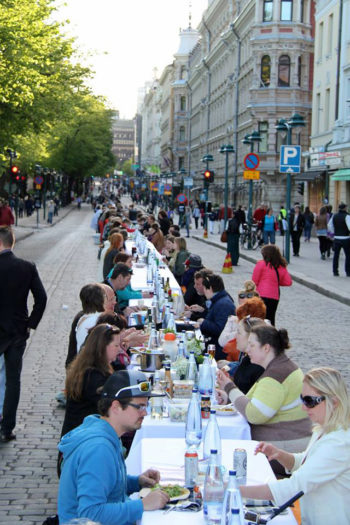
The focus is on bringing people together to enjoy each other’s company.Photo: Venla Helenius/Dinner Under the Sky

Finnish Your Dinner has similarities to Restaurant Day, a wildly successful Finnish creation that encourages people to open their own pop-up restaurants for a day, posting their locations online.

For Finnish Your Dinner, people set up dining tables outside in the spirit of a block party. That’s where the white tablecloth comes in. It raises the ante. Event organisers are encouraging participants to cover the tables to make the occasion a little fancier and a lot more festive.

Dinner parties are grand

Instead of lines of cars, a long line of tables and diners occupies Helsinki’s Northern Esplanade during Finnish Your Dinner.Photo: Jaakko Blomberg/Dinner Under the Sky

You can invite your friends while also leaving a few seats open for people from your neighbourhood or beyond, if you like. These extra guests of honour can sign up after you post your notice on the Finnish Your Dinner website. It’s a great way to celebrate Finnish summer and Finnish cuisine, no matter where you live or what nationality you are.

Need tips about what to serve? Try including something from the official Finland 100 menu, developed for the 100th anniversary of Finland’s independence, in 2017, or something from ThisisFINLAND’s other Finnish recipe pages (links below). You can choose something that suits your ambition level and your locally available ingredients. However, the focus is mainly on bringing people together to enjoy each other’s company.

Time for dinner

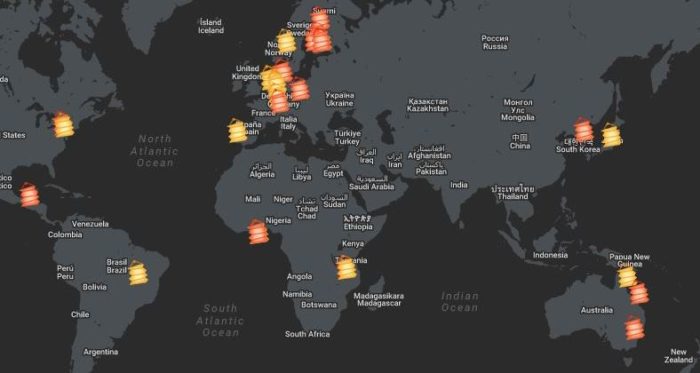
You can invite your friends while also leaving a few seats open for people from your neighbourhood or beyond, if you like. Illustration: Screenshot from the Finnish Your Dinner website (2017)

What about music for your event? Music Finland offers playlists of Finnish music that you can explore.

People around the world are throwing their own versions of Finnish Your Dinner parties. You can sign up on the Finnish Your Dinner website; look for “Sign up for a dinner.” If you don’t find one in your area, you can be the one who takes the first step!

By ThisisFINLAND staff, updated July 2018

Archipelago people: A peek at life in Åland

Åland consists of more than 6,500 named islands and islets, approximately 65 of them inhabited. Just over 29,000 people live there. More than one-third of them live in the regional capital, Mariehamn, while the smallest of the 16 Åland municipalities, Sottunga, only has about 90 inhabitants.

Being autonomous, the territory also has the right to enact its own laws and can decide over many key issues. International treaties specify that Åland forms a demilitarised, neutral zone, and it is often cited as an example of how an autonomous minority culture can thrive within a larger nation.

Important livelihoods nowadays include shipping, tourism, agriculture, banking and trade. We talk with five Ålanders to find out what archipelago life is like.

Prize-winning positivity
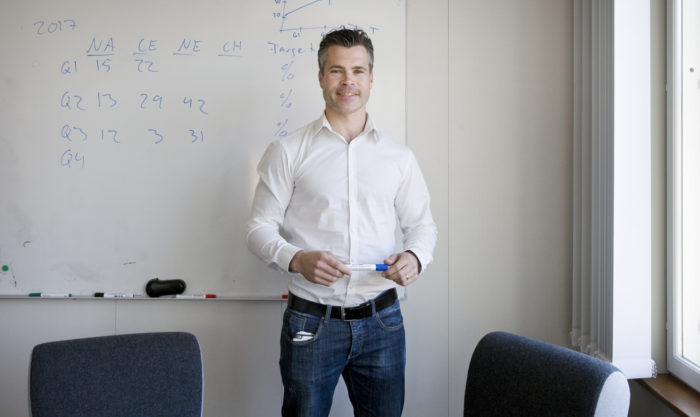
“I like to see the positive side of things,” says Anders Wiklund, who is known as one of the most positive people in Åland. “That’s a choice I make every day when I get up.”Photo: Maria Rosenlöf

In 2016 the Junior Chamber of Commerce in Mariehamn declared Anders Wiklund and his wife Camilla the most positive people in Åland, citing their work for underprivileged members of society.

They live with their four children, a dog and several cats in a country village north of Mariehamn – a peaceful place with ocean, forest, fields and meadows practically at its doorstep. Anders works as CEO of an Åland company that operates on the global marketplace.

“Things are on a small scale here but at the same time you can access the global world of work,” he says. “What more could anyone ask for?”

He enjoys having a stimulating job while also living in a safe place surrounded by beautiful nature and within easy reach of services. In addition to spending time outside hiking and fishing, Anders keeps in shape and runs a few races each year. On days off he likes to spend time at his cottage on Kökar, Åland’s most easterly municipality. There he can take a breather from everyday life and focus entirely on his family.

“I find it so empowering to see the difference you can make for other people just by helping out,” he says. “I like to see the positive side of things. That’s a choice I make every day when I get up.”

Island-hopping telecommuter
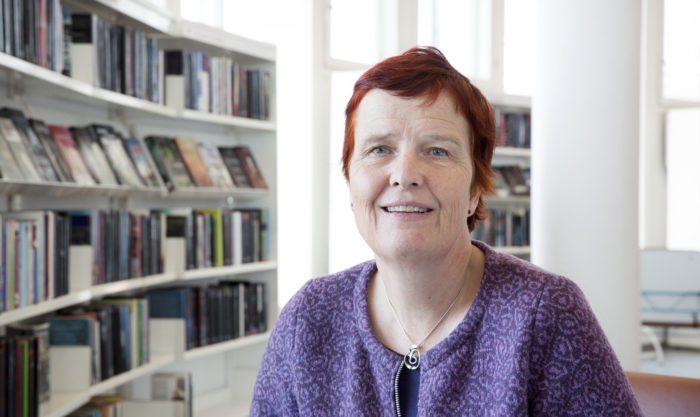
Mia Hanström moved to Åland from Sweden more than 30 years ago. She enjoys the proximity to nature and the changing seasons.Photo: Maria Rosenlöf

Mia Hanström, originally from Sweden, moved to mainland Åland – that’s what they call the biggest island in the archipelago – more than 30 years ago when she got a job there. Some years later she spotted an opportunity to move to Kumlinge, an island east of the mainland with just over 300 inhabitants. She lives close to nature and can experience the changing seasons, which she very much appreciates.

“That’s why I don’t mind putting up with all the trips back and forth from Kumlinge,” she says.

Mia is self-employed as a consultant in youth and equal opportunities work. She also manages an educational group and is active in various associations and governing boards. The journey between Kumlinge and Mariehamn takes two or three hours each way by car and ferry. Her solution is telecommuting, and it works well. She has an office at home in Kumlinge and an office space in Mariehamn, and she gets a lot of work done on the ferry.

“I’m very focused on making the most of the time I spend travelling,” she says.

At home on Kumlinge she has her family and a variety of animals – donkeys, horses, cats, chickens and even bees. “What I like best of all,” she says, “is to be with outdoors with my animals.” The family also hosts volunteers on the farm.

“This is quality of life – nature on your doorstep, and right by the water,” she says. “The sea atmosphere is good for your soul.”

Powerlifting postman
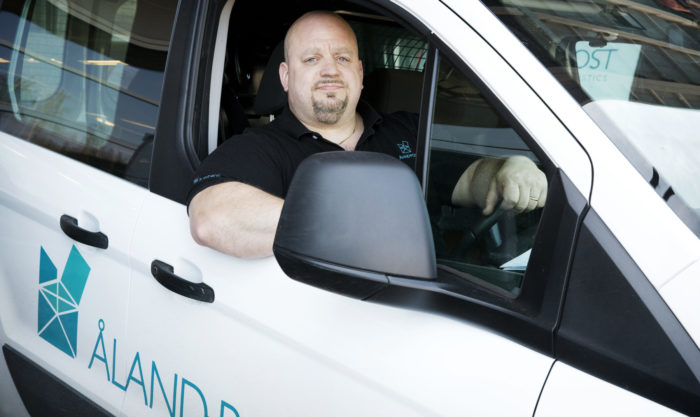
Kenneth “Kenta” Sandvik works as a postman, but is also a powerlifter with European and world records under his belt.Photo: Maria Rosenlöf

Kenneth “Kenta” Sandvik is a postman who also has numerous Finnish, European and world championship powerlifting titles under his belt, including European and world records. He lives with his wife and daughter in a recently built house in Jomala, just outside Mariehamn. He has always lived in Åland, whereas his wife, also a competitive powerlifter, moved there from Slovakia in 2005.

“Before our daughter came along we always trained together, but now we take turns,” says Sandvik. “We have our training routine three times a week.”

He believes that community is the most important thing in powerlifting.

“The social aspect of training and competing is at least as important as the sporting achievements,” he says. “Another advantage of powerlifting is that you get a very real and direct sense of how your training has progressed. What you lift depends on how well your training has gone.”

He says that sport forms an important part of Åland society and business life, and good financial assistance is available in the form of contributions and sponsors.

“Of course it’s a bit trickier to travel to competitions when you live on an island,” he says. “But living in Åland is cosy. Everything is nearby.” 

Young photographic artist
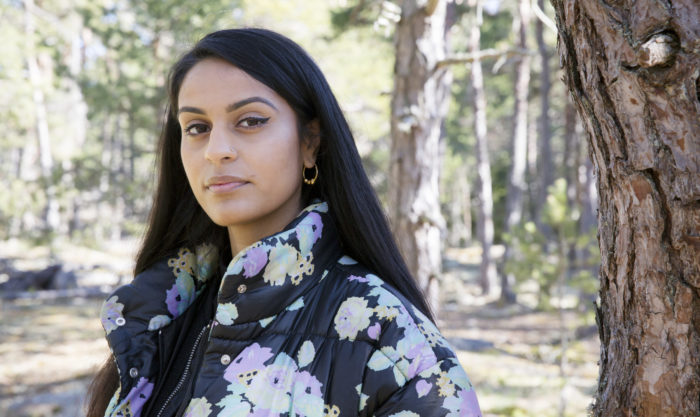
When artist Nayab Ikram comes home to Åland after a long trip abroad, that’s when she appreciates Åland the most.Photo: Maria Rosenlöf

Photographic artist Nayab Ikram is based in Åland, where she lives in Mariehamn with her parents and two budgerigars. She’s often out and about on foot.

Her older sister has moved away and lives in continental Europe, and Nayab has spent extended periods in Stockholm. When she comes home to Åland after long, often intensive periods away, that’s when she appreciates Åland the most. It’s a place where she can catch her breath. The sea air and the sight of the water are important to her.

“I walk along the water to clear my thoughts and get some peace,” she says. “Åland allows me to stop and catch up with myself. The good thing about Åland is that I can come here whenever I want. It’s my stopover. It’s important for my creative process.”

International Women’s Day (March 8), May Day (May 1) and Midsummer hold significance for her: “That’s when friends and family come together to celebrate, whereas at other times we’re in different places.”

Åland, and the small community that it is, have influenced Ikram, and this is reflected in her work as a photographic artist using various visual media to approach cultural identity and the formation of identity.

“Ålanders are so helpful,” she says. “People share knowledge and it’s easy to get help. That warms my heart. Åland has made me feel secure.”

Organic dairy on a farm with a family history
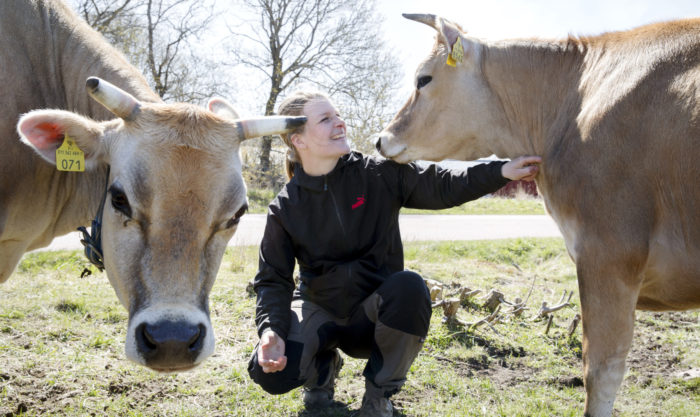
Jennifer Sundman raises cows on a farm that has been in her family’s ownership since 1815.Photo: Maria Rosenlöf

Jennifer Sundman lives with her husband and two children in Sund in northern Åland, on a farm that has been in her family’s ownership since 1815.

“Ever since I was a child, I always said that I would take over the farm and keep cows,” she says.

Like so many other Ålanders, she left Åland after high school to study. While studying to become a livestock agronomist in Uppsala, Sweden, she met her future husband, who is also from Åland. When she came across farm dairies towards the end of her studies, she knew at once that was what she wanted to do at home in Åland.

After graduation, the couple moved back to Åland, to Jennifer’s ancestral farm. They built a small dairy on the farm, and now the organic milk from their own cows goes into making cheeses, yoghurt, halloumi and ice cream. They also grow onions, potatoes, grain and fodder for the animals.

“The best thing about living here in Sund and in Åland is the nature,” she says.

“Spring is my favourite season. It’s so green, the days get longer and we can let the calves out. The time around Midsummer is magical, but I also like beautiful autumn days.

“I love living on this farm. It’s humbling to see the traces left by earlier generations.”

By Linda Wiktorsson-Lång, June 2017
Finland devotes energy to Astana Expo 2017

The exhibition in the Kazakh capital is devoted to solutions and technologies for the energy of the future. The Finnish pavilion’s theme is “Sharing pure energy.”

“For over 150 years, countries have been gathering at global exhibitions to try to make the world a better place”, says Severi Keinälä, Finland’s commissioner general for the event. This year is no exception.

Pure Finnish tech

Finland will be showing off the country’s expertise in energy efficiency, cleantech, digital tech, education programmes, logistics and design.Photo: Anton Kalland/ Tekes

Finland’s pavilion shows off the country’s know-how in the field of energy efficiency, in both production and distribution, as well as various types of cleantech expertise for driving sustainable growth.

Other topics Finland is emphasising at Astana Expo 2017 include digital technologies, education programmes, logistics and Finnish design. Among the Finnish firms displaying their wares at the event are Tikkurila, Isku Interior, Ensto, Honkarakenne, Vaisala and Finnair. In total, around 50 Finnish companies are taking part.

And it’s not just the big names. A startup called I’m Blue, founded last year by schoolchildren in the Finnish city of Espoo, will be there. I’m Blue makes healthy blueberry soda, designed to give people a taste of the power of Finnish nature.

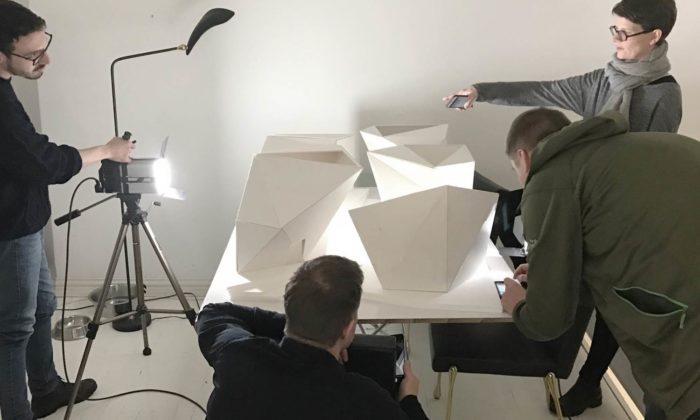
The Finnish pavilion consists of five structures constructed around a common space. Each structure has its own theme, for example Pure Energy, Smart City, Clean Water or Excellence in Education.

Not limited by walls

An architectural model of the Finnish pavilion shows its five structures.Photo: Ateljé Sotamaa

The walls of the Finland pavilion are being built by the Kazakhs, but the Finns are creating the rest. In order to be environmentally sustainable, the pavilion uses wood materials and modern technology. And after the exhibition, all the building materials will be sent for recycling.

The Finnish pavilion’s design is the work of Ateljé Sotamaa, founded by sister and brother Tuuli and Kivi Sotamaa. They work on major projects that combine architecture and design with art and related fields. They’ve previously worked with a diverse range of clients, such as Finland’s Kiasma Museum of Contemporary Art, the Helsinki Design Museum, Aalto University, and commercial companies such as Fazer, Marimekko and Stockmann.

The architects’ main task is to create an emotional experience that sparks people’s curiosity and encourages them to find out more about Finland. “With the design of the pavilion, we want to not only create impressions and stories for the visitors, but also leave space for their own personal experiences”, Kivi Sotomaa says.

Ateljé Sotamaa promises that “at the Finnish pavilion all of the senses will be engaged, including hearing and taste. The design flows between the digital and the natural, allowing the pavilion to become a stage for discussions about technology and nature.”

Big years for the Finns

Ever since the first time Finland took part in a world expo a century ago in Paris, Finnish participation has included a cultural programme. In Astana, jazz pianist Lenni-Kalle Taipale and his band perform. Photo courtesy of Lenni-Kalle Taipale

The first time Finland – at that time the Grand Duchy of Finland – took part in the world expo was over 100 years ago in Paris.

Finland’s programme was a cultural experience then, too. As historian Laura Kolbe puts it, a country’s image is created at global exhibitions. In Paris, a male choir sang – at the time this was considered to be the very essence of Finnishness. In Astana, jazz pianist Lenni-Kalle Taipale performs with his band.

The cultural programme is being coordinated by Mato Valtonen, known among other things as the frontman of the Finnish rock groups Sleepy Sleepers and Leningrad Cowboys. Founded in 1987, the Leningrad Cowboys perform their own songs, as well as cover versions of Western rock music and arrangements of Russian folk songs. The group featured in two films by Finnish director Aki Kaurismäki in the 1990s and performed together with the Alexandrov Red Army Choir.

The exhibition in Astana is especially significant for Finland because this year the country celebrates 100 years of independence. Severi Keinälä ventures as far as to say that Astana Expo 2017 is the biggest celebratory event in honour of the anniversary, because it lasts 93 days.

By Anna Ruohonen, May 2017

A Finnish hipster named Mannerheim

Carl Gustaf Emil Mannerheim (1867–1951) commanded the Finnish armed forces during the Second World War and went on to serve as president. His house in Helsinki is now the Mannerheim Museum and shows off his collection of weapons, his hunting trophies and his taste in interior decoration.

His residence forms a real work of installation art. The visitor enters different worlds in the various rooms because Mannerheim, ever cosmopolitan, wanted the décor to present diverse cultural trends, from English nuances to French ambience. That’s how Mannerheim Museum curator Kristina Ranki describes the house.

One of the most important figures in the history of independent Finland, Mannerheim leased the villa when he was 57 from Karl Fazer, the owner of a candy factory. Mannerheim lived there, surrounded by the greenery of Kaivopuisto, the park that covers the southern tip of Helsinki, until he passed away. The great man’s residence was subsequently opened to the public as a museum.

“The reception rooms for prestigious guests were downstairs, while upstairs was more for his private use,” says Ranki. Except for the three exhibition rooms upstairs, the residence remains almost exactly as it was when Mannerheim was alive.

“A visit to the museum and the guides’ stories are sure to provide a new kind of experience,” says Ranki, “even for people who have read their war history and think they already know everything about Mannerheim.”

Elegance before etiquette

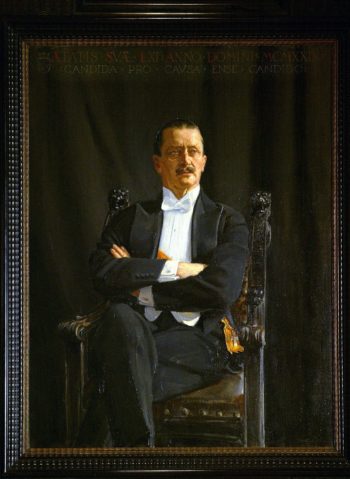
Akseli Gallen-Kallela painted this sitting portrait of Mannerheim; a standing portrait by the same artist hangs in the Mannerheim Museum.Photo: Heikki Saukkomaa/ Lehtikuva

The only object brought to the museum later is a classic portrait of Mannerheim painted in 1929 by a good friend of his, the prominent artist Akseli Gallen-Kallela. The painting reveals a lot about its subject. It conveys the essential nature of a Renaissance regent and his dandyish sense of style, with his sword of honour and his tailcoat.

Mannerheim was neurotically meticulous not only about his appearance, but also about his public image: He demanded the right to inspect all photos of him before publication to make sure that no signs of fatigue were visible.

As a young military officer, Mannerheim was already extremely particular about grooming. Later in his career, when he had attained the title of field marshal, he ordered bespoke clothing from foreign tailors, with details according to his wishes. The gentleman’s civilian outfits were always immaculate, but for reasons of style the commander-in-chief took liberties even with military uniform etiquette. Mannerheim considered narrow lampasses, or trouser stripes, more elegant than the wide stripes that would have been in accordance with regulations for his military rank. For this reason he preferred to wear a uniform of lower rank.

A home says something about its inhabitant

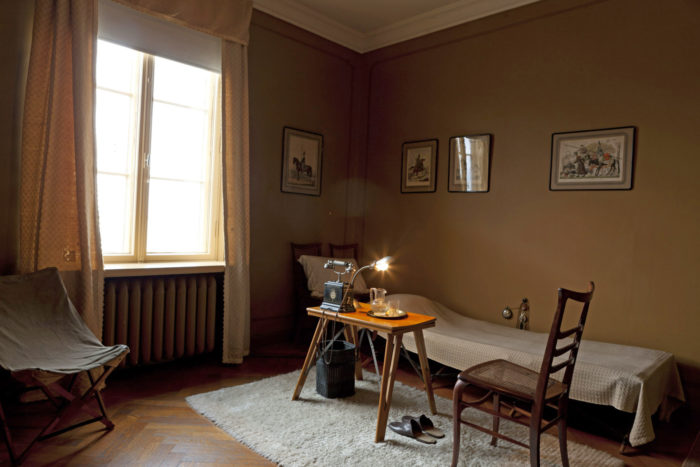
Mannerheim’s bedroom contains an army-style cot, just as it did when he was alive.Photo: Pekka Holmström/ Otavamedia/Lehtikuva

The walls of Mannerheim’s home are decorated with dozens of hunting trophies, of which the most famous is probably the tiger skin on the floor of the salon. He killed the Bengal tiger while visiting India in 1937. Nor did he ever go hunting looking like a novice; he rode out on horseback dressed as stylishly as if he were going to war. His wardrobe included a red tailcoat and black top hat to wear while hunting.

Mannerheim took care of his grooming otherwise, too, and not only when he was entertaining – he was well aware of the impact his elegant appearance had on other people. For example, in addition to a toothbrush, he used an innovation of his time – a water jet. Menthol drops were added to a device resembling a small pressure washer attached to the bathroom wall, and then he could carefully rinse his teeth.

His boots gleamed, every hair was in place and his moustache was correctly shaped, even on his deathbed. A real dandy.

“He represented the gentleman’s culture,” says Ranki. “Nowadays Mannerheim could perhaps be called a hipster, if the word is taken to mean a person who cares about his own appearance.”

Welcome to a work of art

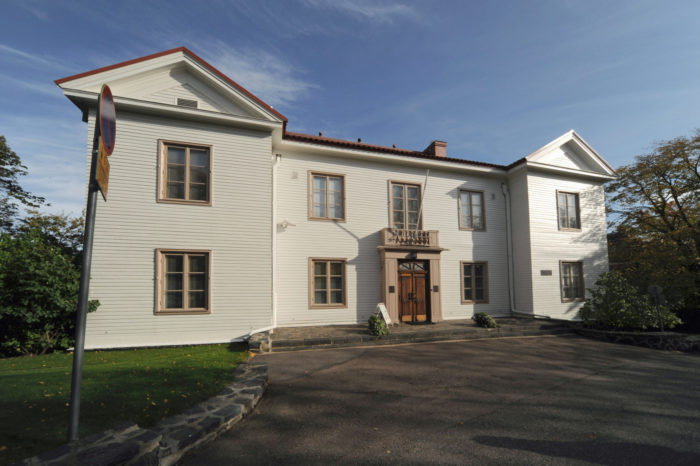
Wealthy chocolate manufacturer Karl Fazer leased this house in Helsinki to Mannerheim for decades; it is now a museum.Photo: Ilkka A. Suominen/ Lehtikuva

The smartness of the residence emphasised Mannerheim’s aesthetic sensibility, which extended from his own appearance to the matching colours of the décor in his house.

“Military discipline is visible in the home,” says Ranki. “Mannerheim himself paid attention to every detail and made sure that everything was exactly in place. He wanted his home to present a certain image of himself, which was conveyed in the items on display – hunting trophies, official gifts and, placed on the grand piano, pictures of heads of state.”

By Marko Ylitalo, June 2017

Soldier then president, Mannerheim took Finland from war to peace

Mannerheim (June 4, 1867–January 27, 1951), Finland’s best known war hero, served as president of Finland between August 1944 and March 1946. He guided the country through the transition from war to peace.

He served in the Russian army, where he attained the rank of general, before Finland gained independence in 1917. Later, in Finland, he was made a field marshal, and during the Second World War he was commander-in-chief of the Finnish forces and subsequently became president. No soldier had previously been president of Finland – nor has one been chosen for the post since Mannerheim. He was 78 when he retired, citing health reasons.

From Russian army to Finnish presidency

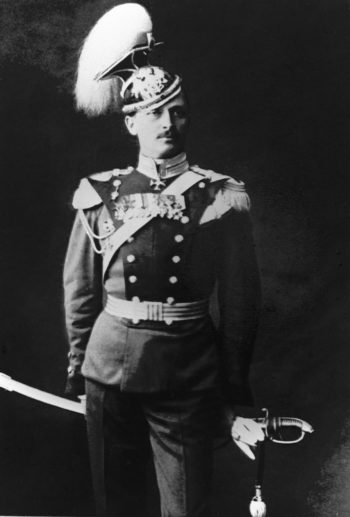
Mannerheim poses in his Russian army uniform in the early 1900s.Photo: Lehtikuva

Mannerheim was a Finn by birth, but he joined the Russian army in the autumn of 1887, at the age of 20, and served the emperor for 30 years. He was very close to the Imperial Court. After the revolution, Mannerheim fled to Finland in January 1918.

Immediately after gaining independence, Finland experienced a short but merciless civil war between the Reds, or socialists, and the Whites, or the bourgeois forces. Mannerheim led the White army, which defeated the Reds, often by means of harsh measures. Foreign powers also intervened in the Civil War: Germany supported the Whites and Soviet Russia the Reds.

The Civil War divided the nation, and its scars started healing only in the late 1930s, when Mannerheim began to reach out to the Left and succeeded in gaining the trust of the Social Democrats.

During the 1920s and 1930s, Mannerheim had many detractors in Finland, but when the Soviet Union attacked Finland in the autumn of 1939, the Social Democrats approved his appointment as commander-in-chief of the army. He retained the trust of the Left during the Continuation War, also against the Soviet Union, which began in the summer of 1941.

Unanimously persuaded to be president

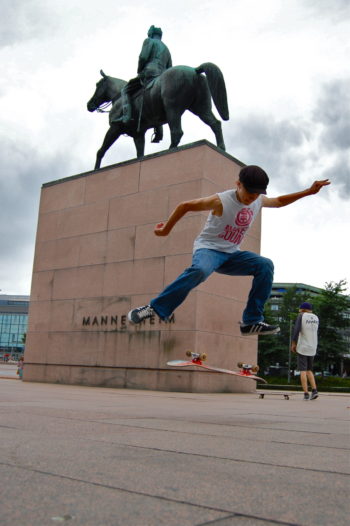
Over the decades, new buildings have gone up around Helsinki’s statue of Mannerheim, and today kids on skateboards perform tricks on the surrounding plaza.Photo: Emilia Kangasluoma

When Parliament elected Mannerheim president in August 1944, Finland’s independence was in great danger. Finland had been at war with the Soviet Union for three years and had had a military alliance with Germany.

The Soviet army had been attacking all summer. The Finnish army had been forced to retreat and suffered heavy losses. The war had already claimed the lives of 70,000 Finnish soldiers.

Parliament wanted Finland to terminate the alliance with Germany and make a separate peace with the Soviet Union.

Members of Parliament thought that only Mannerheim would possess the authority to lead the country from war to peace. For this reason, leading right-wing, centre and leftist politicians persuaded a reluctant Mannerheim to become head of state. Despite the burden of history, Mannerheim succeeded in the role.

An armistice was agreed with the Soviet Union in the autumn of 1944. Its terms were heavy, but the country was spared from occupation and maintained its independence and its democratic system. Finland broke away from the alliance with Germany and expelled the German troops from northern Finland during the winter of 1945.

After the war, the Soviet Union demanded that Finland’s wartime leadership be punished. At the insistence of the Soviet Union, President Risto Ryti, Prime Minister Edvin Linkomies and Minister of Finance Väinö Tanner, who was also chairman of the Social Democratic party during the war, were convicted, along with others.

By contrast, Mannerheim was not convicted, even though his position during the war was at least as important as those of the political leaders who received sentences. The Soviet Union did not actively demand his conviction, though after the war the Soviet press criticised him strongly.

Mannerheim still commands interest

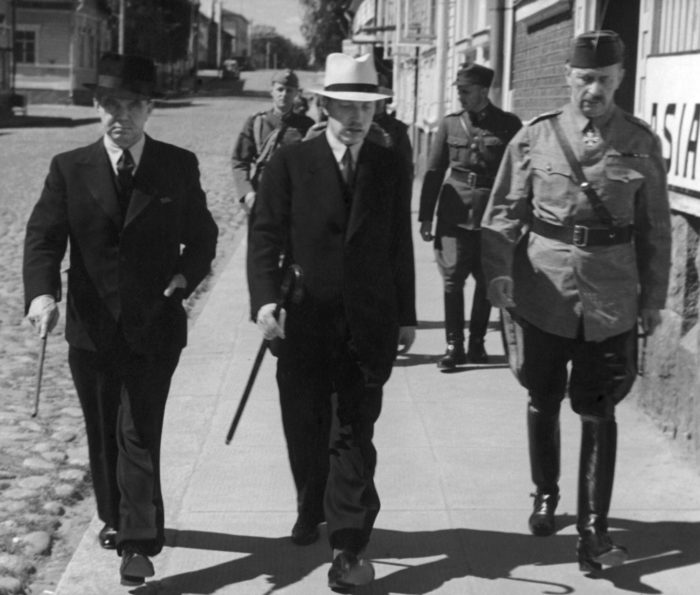
In July 1941, Mannerheim (right) walks with President Risto Ryti (middle) and Prime Minister Jukka Rangell through the town of Mikkeli, where the military had its headquarters.Photo: SA-kuva/Lehtikuva

Mannerheim’s long career has been under evaluation since his death in 1951. The assessments have been conflicting and often politically coloured. In addition, the Cold War made it difficult to weigh his life’s work. The Soviet Union readily interjected when Mannerheim formed the topic of public discussion in Finland.

Since the end of the Cold War, however, opinions have been nearly unanimous on one point: Mannerheim’s short period as president, leading Finland from war to peace, was his most important achievement.

Even his harshest critics are willing to admit that Mannerheim was the right person for the job at that particular time. It’s unlikely that any other Finn would have had more success than Mannerheim did.

Mannerheim’s life and career have been studied more than those of any other Finnish person. Almost 300 books about him have been published in Finland and abroad, and new studies are constantly appearing.

He continues to be the subject of a wide range of conflicts among historians. Some authors admire him and even worship him as a hero and saviour of the fatherland. Other books criticise his actions during the Civil War or question his skills as a wartime leader in the Winter War (1939–40) and Continuation War (1941–44).

Mannerheim’s life also fascinates ordinary Finns from one generation to the next. His Helsinki residence has been a museum for over 60 years and is still very popular. Mannerheim had the lifestyle of an aristocrat and his home says much about his colourful life and his expeditions.

By Unto Hämäläinen, May 2017
The author is a journalist who specialises in Finland’s political history.

Statesman from humble background, Mauno Koivisto led Finland into EU

Mauno Henrik Koivisto served two six-year terms as president of the Republic of Finland between 1982 and 1994. He was born on November 25, 1923 in the southwestern city of Turku and passed away on May 12, 2017 in Helsinki.

After succeeding Finland’s long-term president Urho Kekkonen, Koivisto gave parliament a more prominent role in Finland’s democratic system. By the end of his period in office, he had found a new place for Finland in a rapidly evolving Europe.

Koivisto won presidential elections in 1982 and 1988, with his popularity extending across traditional political party boundaries.

Many Finns knew him by the nickname “Manu.” He was regarded as a decent, handsome and relaxed man of the people, somewhat prone to ramble during his speeches. This image certainly suited Koivisto himself, and he carefully nurtured it.

In political circles people knew quite a different Koivisto: a skilled strategist who didn’t waste time on petty bickering, since he always had a master plan in mind. He successfully achieved this plan in his own career, as well as during his time as head of state.

Koivisto did not shirk from forceful action. He knew that there was no room at the top for the soft-hearted.

From working man to PhD

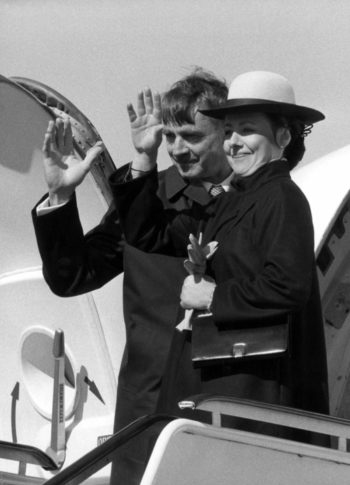
President Mauno Koivisto and his wife Tellervo wave before boarding a plane for an official visit to Sweden in 1982, early in his presidency.Photo: Matti Björkman/Lehtikuva

Koivisto was the first Finnish president from a left-wing background, from the Social Democratic Party (SDP) – and the first with working-class roots.

He also represented a generation who came of age in wartime. As a young man he fought against the Soviets in the Continuation War (1941–44). After the war he did hard manual work in the Turku Harbour, while also studying until he obtained a PhD in sociology.

Throughout his life Koivisto lived by the virtues he learnt in his religious, working-class childhood home. He had a modest lifestyle, and was never prone to extravagant gestures in his private life or in politics.

Koivisto felt a strong Finnish identity, but from his youth he was also an internationalist. Friendship between peoples was never an empty political cliché to him. When at the start of his presidency he said he wanted to “build world peace,” the promise came right from his heart.

No early ambition to enter full-time politics

The Finnish people first became aware of Koivisto when he was appointed minister of finance in spring 1966, moving from his previous position running the Helsinki Workers’ Savings Bank.
Though Koivisto willingly participated in academic debates on economic policy, and was politically active within the SDP, earlier in his life he had not wanted to go into politics as his main career.

In 1967 Koivisto had only just been named governor of the Bank of Finland when President Urho Kekkonen enticed him to take on the mantle of prime minister.

Kekkonen and Koivisto worked well together until the spring of 1970, when their opinions of how Finland should regard the planned Nordic economic alliance Nordek differed radically. Koivisto wanted Finland to join Nordek, but Kekkonen was suspicious about the project. Koivisto then returned to the Bank of Finland, where he stayed for nine long years. The President and the country’s leading banker had to get along, though it was far from easy.

Mauno Koivisto returned to the hurly burly of everyday politics in spring 1979. He served as prime minister again until autumn 1981, when Kekkonen, who had led Finland for 25 years, fell ill, and Koivisto became acting president until elections could be held.

Bringing Finland closer to Europe

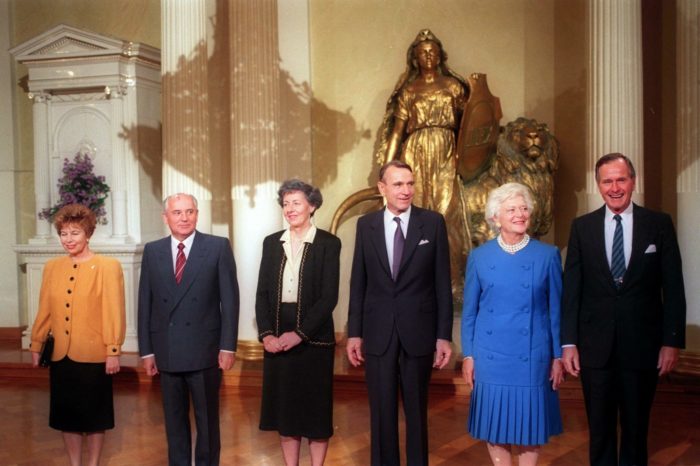
During the Helsinki Summit in September 1990, Finnish President Mauno Koivisto and his wife Tellervo (centre) hosted Soviet President Mikhail Gorbachev and his wife Raisa (left) and US President George Bush and his wife Barbara.Photo: Juha Kärkkäinen/Lehtikuva

At the start of his presidency Mauno Koivisto was 58, with plenty of experience in domestic politics, particularly in economic policy. Contrastingly, he was not so knowledgeable in the field of foreign policy, and approached it very cautiously during his first six-year term.

Koivisto’s foreign policies continued broadly along the lines of those of his predecessors, Kekkonen and Juho Paasikivi, especially with regard to relations with the Soviet Union. The Finnish-Soviet Friendship Agreement was extended for 20 more years.

In domestic politics Koivisto was keen to strengthen the roles of Parliament and the government, while reducing the President’s own power and influence.

During Koivisto’s second term, from 1988 to 1994, Finland’s external relations changed greatly, due to upheavals in both Eastern and Western Europe.

In the East the Soviet system collapsed, while in the West cooperation intensified. Relations between the great powers also changed as the Cold War ended. Since 1983 Koivisto had corresponded in secret with both Mikhail Gorbachev and George H.W. Bush. In autumn 1990 the leaders of the two superpowers expressed a desire to meet in Helsinki. This choice of venue clearly reflected Koivisto’s prominent role in encouraging such a summit.

Finland’s relations with both the Soviet Union and the US had remained good through the final stages of the Cold War. During this period Koivisto also encouraged Gorbachev to persevere with his dramatic reforms to the Soviet system.
Under Koivisto’s leadership Finland resolved to apply for EU membership in the winter of 1992. This was a momentous decision, one of the main political landmarks of Finland’s history since independence. Under the Finnish Constitution at that time, only the President could initiate such a move.

Membership negotiations concluded on March 1, 1994, just a few hours after Koivisto had handed over the presidency to his successor, Martti Ahtisaari.

Trust that everything’s going well

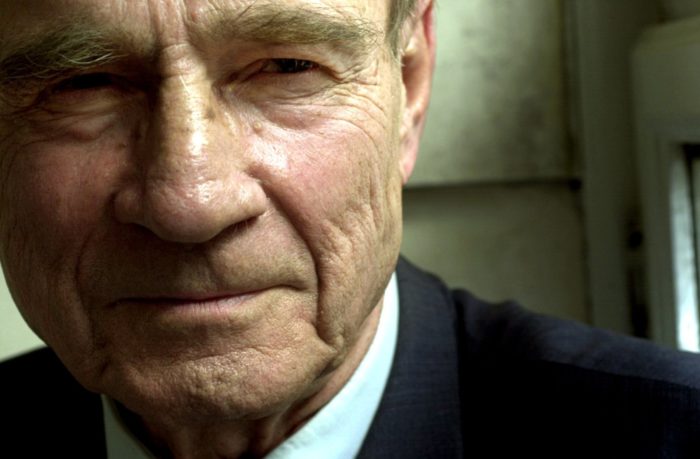
Mauno Koivisto in 2001, when the Swedish-language version of his autobiography was published.Photo: Dan Hansson/ TT/Lehtikuva

Until recent years Koivisto continued to work in his small office in Helsinki. He wrote several books, but only occasionally participated in political debate. He could often be seen on the streets of Helsinki or taking a tram. He tried to keep active even though his strength was fading.

In January 2013 Koivisto granted what would be his last newspaper interview to Helsingin Sanomat, Finland’s largest daily. When asked about the worthwhile things in life, he replied: “In life it’s usually wise to trust that everything’s going well, even when that’s not what you really believe. All too often threats have started to actually materialise namely because people have been preparing to deal with them.”

By Unto Hämäläinen, May 2017
This article was originally published in Finnish in the newspaper Helsingin Sanomat on May 13, 2017.
The writer is a journalist who specialises in Finland’s political history

Experience Circus from Finland!

You wouldn’t expect Finland to be the birthplace of fantastic contemporary circus. But from sensuous to explosive, Finnish contemporary circus is generating a buzz, worldwide. International circus marketplace CircusTalk got interested in how this happened and interviewed CircusInfo Finland.

Finland often gets held up as an example of how a European country with the proper resources and a supportive government can foster the development of circus arts among its people and allow a fledgling contemporary art form to thrive.

There are currently about 20 full-time contemporary circus companies and around the same number of solo artists, duos, collectives and working groups in Finland. We estimate around 250 circus professionals working in Finland, both performing and teaching circus skills.

Unlike other performing arts, circus reaches out to young, urban and often male audiences. Circus has a strong sense of community, which pulls you in. Fifteen years ago no one knew about Finnish circus. Today everybody talks about it.

Build *this* wall: Finnish company makes fresh air

Today people spend the majority of their lives indoors, where air contains unnatural impurities like hydrocarbons, solvents and other chemicals, as well as domestic dust.

“I’m originally from Finnish Lapland, where we have the cleanest air in Europe, and when working earlier as a health science and physical education teacher, I noticed my own health and breathing were much better whenever I worked outdoors,” says Aki Soudunsaari, cofounder and CEO of Naava. Based in the central Finnish city of Jyväskylä, the firm produces smart green walls with names such as Naava Twin and Naava Designer. “We realised we needed to find ways to create healthier indoor environments by bringing natural forest air inside.”

Naava’s smart green walls consist of dozens of small plant pots filled with a gritty substrate, clipped to a movable wall with a water tank in its base. Other companies produce green walls of plants, but Naava’s walls have additional active features that enhance the air-purifying power of their jungle plants, including automatic air fans, LED lighting and watering systems – all remotely adjustable via integrated mobile devices. The product won a coveted Fennia Design Prize in 2017.

Back to the roots

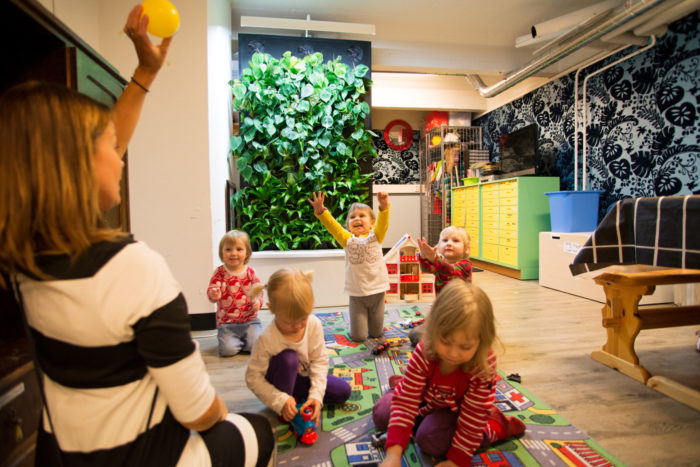
A green wall in a daycare in central Finland helps keep the air fresh for young lungs.Photo: Jussi Kämäräinen/ Naava

“The secret is in the way our walls actively feed moist air through the plants’ roots, which are rich in natural microbes that purify the air,” says Soudunsaari. Tests have shown that more than half of the harmful chemicals in the air are absorbed each time it passes through the wall. The plants get all the nutrients they need from the air and water – and naturally convert carbon dioxide to oxygen – while cheerfully greening up indoor environments.

“This all makes our green walls highly functional, as well as aesthetic,” says Soudunsaari. “Our servicing staff visit walls about once a month to trim plants and add nutrients to the water, so all our customers need to do is breathe in the fresh air.

“In extensive independent surveys users have widely reported that their green walls have reduced indoor air quality problems such as dryness, stuffiness and related symptoms like coughs.”

Living oasis in downtown Helsinki

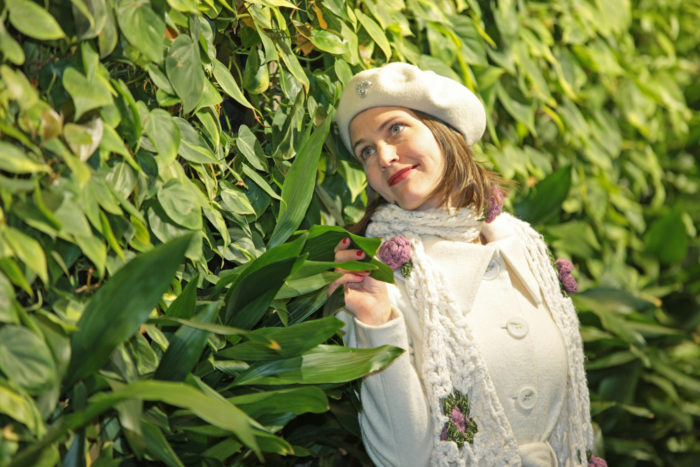
Both functional and aesthetic, a green wall can make a room more liveable while making the air more breathable.Photo: Hernan Patiño

Tiina Vaitomaa runs a wellbeing pharmacy offering a wide range of treatments, medicines and health products in Helsinki’s busy Hakaniemi district. She realised that green walls would be an ideal addition to her pharmacy’s small wellness bar, where customers are encouraged to linger and read health pamphlets while enjoying a smoothie or a cup of organic butter coffee.

“Our wellness bar is part of our holistic way of looking after customers’ physical and mental well-being,” she says. “Since fitting two green walls, we’ve noticed the air feels fresher and moister, and there’s less dust. It’s like bringing a forest climate inside to make a nice place for people to sit and relax – especially in winter!”

After creating this popular oasis, Vaitomaa bought two more smart green walls for her own living room and bedroom. “They’ve helped me a lot with my dust allergy, blocked nose and eye irritation problems,” she says.

Green walls go global

At Helsinki Airport, a great green wall greets travellers in one of the waiting areas.Photo: Jan Lönnberg/ Naava

About 1,200 smart walls are already refreshing homes and workplaces around Finland. In April 2017 Naava opened a new “gigafactory” in New Jersey, targeting American markets. “There are clear global trends towards biophilic design and health-enhancing buildings,” says Soudunsaaari. “We envisage receptive markets for smart green walls in countries like the US – and later also Asian markets like China.

“In a way, we’re responding to global megatrends which go against millions of years of human evolution, like urbanisation and increasing alienation from nature. Our mission is to reconnect people with nature, exporting Finland’s strong tradition of clean air as a natural right for everyone.”

By Fran Weaver, May 2017