Christmas in Finland with the Sibelius family

Sibelius (Dec 8, 1865–Sept 20, 1957), Finland’s most famous composer, also wrote some of Finland’s most beloved Christmas carols, although he dreaded the darkest time of the year. The Sibelius household nonetheless celebrated a jolly Christmas with lots of music.

I know exactly how it feels to have a composer in the family at Christmas time. The entire, big rambunctious household gathers around the piano after a sumptuous dinner with all the Finnish trimmings and around the man who dominates the house. The fervent but sometimes dissonant singing of traditional and, better still, self-composed carols melts the ice outside.

For 20 years, I experienced these unforgettable high-spirited holidays with my father-in-law, the Finnish composer Tauno Marttinen, in the cosy wooden house where he and his wife, Ilmi, lived in Hämeenlinna. This city also forms the birthplace of Finland’s most famous composer, Jean Sibelius, whose carols Finns love to sing on Christmas Eve.

Joy and melancholy
2537-2466891-pekkasakki-550px-jpg

View from the piano: Aino and Jean played the piano (foreground) while the family sang Christmas carols. Photo: Pekka Sakki

I imagine that at idyllic Lake Tuusula, where Sibelius lived most of his life with his wife Aino and their five daughters, the atmosphere must have been a bit like ours in that music, composer and family were brought together and joy prevailed.

Sibelius seemed not to have been very religious, and talked about his Christianity only as the “faith of my ancestors,” but it is known that he went to church at least once a year, on Christmas morning. He was not especially fond of Christmas time, in any case.

“The darkest weeks of the year from my birthday [December 8] until Christmas, when the sun is at its lowest, are always a difficult time for me,” he confided to his secretary, Santeri Levas. “Immediately after Christmas is over, things improve and life is fun once more.”

Musical Christmas gifts from Sibelius
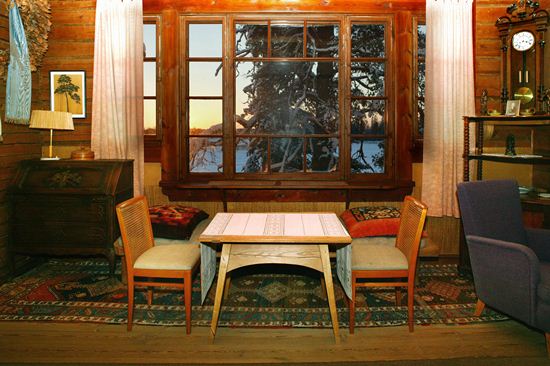
2537-2466908-pekkasakki-550px-jpg

Ainola overlooks Lake Tuusula near Järvenpää, about 40 kilometres north of Helsinki. Photo: Pekka Sakki

Winter doldrums aside, by all accounts the composer enjoyed the time spent with his family when he gave them and their friends compositions as Christmas presents.

In 1915, Sibelius compiled five carols from his Christmas songs as Opus 1, composed between 1897 and 1913. One of them was the hymn “En etsi valtaa loistoa” (“Give me no splendour, gold or pomp”) and another is “On hanget korkeat, nietokset” (“High are the snowdrifts”), both of which rank among the best-loved Christmas carols in Finland.

Each year the Sibelius children sang the songs, which played a special role in the holiday traditions of the Sibelius family, because when “Give me no splendour, gold or pomp” was sung, their mother, Aino, was sitting at the piano for once. But it was a signal to the Sibelius children that the Christmas festivities had begun when Jean started to play “High are the snowdrifts.”

The importance of the carols to Sibelius is indicated by the fact that he reworked them continuously until just a few years before his death in 1957. Sibelius composed “Give me no splendour, gold or pomp” soon after he moved in 1904 to Ainola. The house was named after his wife and located near Järvenpää, about 40 kilometres north of Helsinki.

At his previous home in Kerava, about ten kilometres further south, he had composed “High are the snowdrifts.” In 1943, that song, with lyrics from a poem by Zacharias Topelius, was given a place in the hymn book of the Finnish Evangelical-Lutheran Church, first in Swedish and later in Finnish.

Boisterous Christmas din
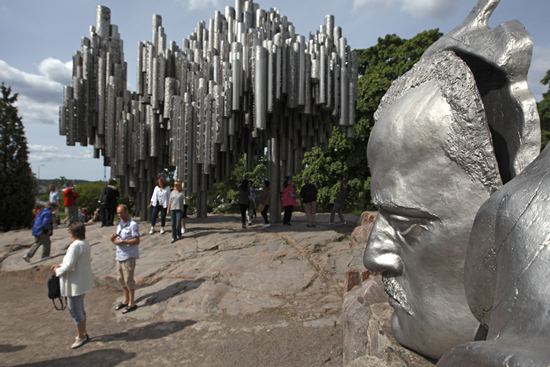
2537-17940208-ismopekkarinen-550px-jpg

The formidable Sibelius Monument, created by sculptor Eila Hiltunen, forms one of Helsinki’s most popular tourist sites. Photo: Ismo Pekkarinen

At Christmastime Ainola bustled with people. There were the daughters with their growing families, and in-laws and friends dropping in. The house, normally so quiet one could hear a pin drop, echoed with music and game playing and the patter of children running around. And I imagine that smoke from Sibelius’s beloved cigars billowed around them.

The house had electricity but no running water – Sibelius didn’t want it. It must have been a challenge for the women as they prepared the culinary feast for so many. Among the delicacies were Aino’s own homemade preserves.

For the children, the high point was the start of Christmas at Ainola. “The children were taken to the dark nursery. They were called to the drawing-room when the Christmas tree was all lit up,” writes his granddaughter Laura Enckell in her recollections of her childhood.

“It really had to dazzle you with its brightness. He played ‘High are the snowdrifts,’ and he played so loud, with the pedal down, as if he were playing the organ. It was as if he would have liked to have had an orchestra there as well. We sang this song and then we sang ‘Give me no splendour, gold or pomp.’ This was all very jolly. It wasn’t pious or gloomy at all.”

By Rebecca Libermann
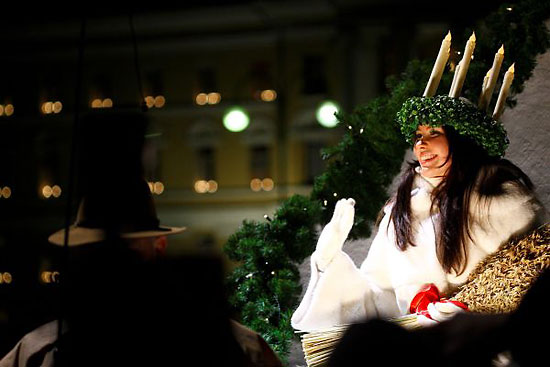
The chosen one

Mid-December is dark and cold in Finland – there are no two ways about it. As the country takes its annual plunge into winter, many Finns find solace in a saint.

White-clad Saint Lucia, borrowed from Catholic and Orthodox churches, wears a striking crown of tall white candles and sings ancient songs to urge people out of their winter doldrums. The main event takes place on December 13.

It’s the closest thing Finland has to celebrating royalty. This special woman, symbolic of the fourth-century Italian martyr Lucia, is put on a pedestal. She is literally crowned – and then given the duty of offering an abundance of joy, music and golden light to everyone who needs it.

Thousands of girls across the country also don homemade versions of Lucia’s trademark white dress and crown of candles (kids use safe, battery-powered “candles” nowadays). Then they sing for family or schoolmates in an annual tradition that has continued to grow over the years.

Tens of thousands of fans

The honour of being chosen as the one who “gets to be Lucia this year” does not go unnoticed by most girls, many of whom dream of someday being the real Lucia. Hundreds of musically gifted girls in their late teens and early twenties vie for the prestigious title.

Smiling Lucia with her signature wreath of candles on her head waving from her seat.

Waving to the crowd: Every year about 30,000 people attend the Lucia crowning ceremony and parade in downtown Helsinki. Photo: Mikko Käkelä/Folkhälsan

Every autumn ten finalists are selected by a jury and proceed to the next round, the winner of which is decided by popular vote. On December 13, Lucia is crowned at Helsinki Cathedral and parades through the city centre as tens of thousands of bundled-up onlookers cheer and wave.

For more than 60 years, Lucia festivities have been organised by nongovernmental social welfare organisation Folkhälsan and Swedish-language daily Hufvudstadsbladet.

The chief Lucia organiser, Folkhälsan’s Margaretha Wildtgrube, says Lucia has come to mean charity, both literal and aesthetic. “Lucia has many roles,” she explains, “building on centuries of Nordic tradition. She has the role of being the ‘Swedish-speaking Finns’ Lucia,’ and is obligated to offer a beautiful, ethereal experience.”

“But the Lucia brand also has a social responsibility,” Wildtgrube notes. Lucia also raises money to help children who have experienced violence at home.

For many weeks after December 13, Lucia continues to spread her hope and cheer, visiting hospitals, orphanages, daycare centres and nursing homes at the darkest time of the year in Finland.

More than a brand name

But isn’t this the 21st century? Why does an old-fashioned thing like this only get more popular as the gears of modern life churn along? Hasn’t Lucia changed since her debut? “At her core, Lucia hasn’t changed at all: the white dress, the red belt, the crown of real candles in her hair,” Wildtgrube says.

“The demands about what qualities Lucia should possess have indeed changed. In the past Lucia was perhaps the ‘quiet girl,’ the one who didn’t necessarily outshine everyone else in the room. But today we want to see a Lucia who can handle the media and feels comfortable in the public eye and everything that goes with that.”

The value of Lucia is not just a brand name, but a personal feeling, according to Wildtgrube.

“Lucia hasn’t been exploited by designers and stylists yet, and is genuinely human in her simplicity,” she says. “It’s the ‘small format’ that has made Lucia such a big deal.”

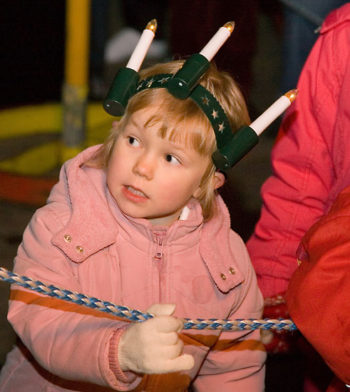
An eager-looking young child dressed in Lucia's wreath of candles.

Candles, music and mood: This little Lucia is eagerly waiting to catch a glimpse of her official counterpart. Photo: Hannes Viktorzon/Folkhälsan

Every girl wants to be Lucia

Most little girls dress up as Lucia at home, whether or not they were selected at school. The candles, music and mood are much too tempting. Margaretha Wildtgrube, who has been in charge of Lucia festivities for the past ten years at social welfare organisation Folkhälsan, reveals that she too was chosen to be Lucia at school.

Whether official or otherwise, being Lucia is definitely an honour, Wildtgrube says.

“The girls who have been Lucia say that they did it because the tradition is beautiful and that Lucia brings the best out in people. They also say they get a warm feeling and felt truly wanted when greeted by so many smiles and friendliness.”

By Mark B. Odom

At home in Finland, Santa tells the world’s kids he has the green light for Christmas

Santa Claus has been in touch with countries all over the world to make sure that he can deliver presents this year despite the coronavirus situation.

A bulletin released by the Ministry for Foreign Affairs of Finland states that through their diplomatic channels around the globe, they have helped Santa ascertain that “Covid-19-related travel restrictions do not apply to flying reindeer, if those reindeer are pulling a sleigh full of presents.” Also, “the driver of such a sleigh” gets a temporary exemption from the restrictions. [Full disclosure: ThisisFINLAND is produced at the Ministry.]

So on Christmas Eve, Santa will be able to take off from his headquarters in northern Finland, as he always has, and make his delivery rounds.

Many of us probably haven’t given this issue much thought, but you can bet that one group of people definitely has: kids. This website has written previously about children’s letters to Santa. When we talked with Santa’s elves in Finnish Lapland, where his workshop, post office and home are located, they told us that, in addition to presents, kids mention troubling current events, such as wars, natural disasters, famines, epidemics and other news stories they have heard about – or witnessed first-hand. Taken collectively, the messages reflect the issues that are on kids’ minds in any given year.

Wonderful ideas

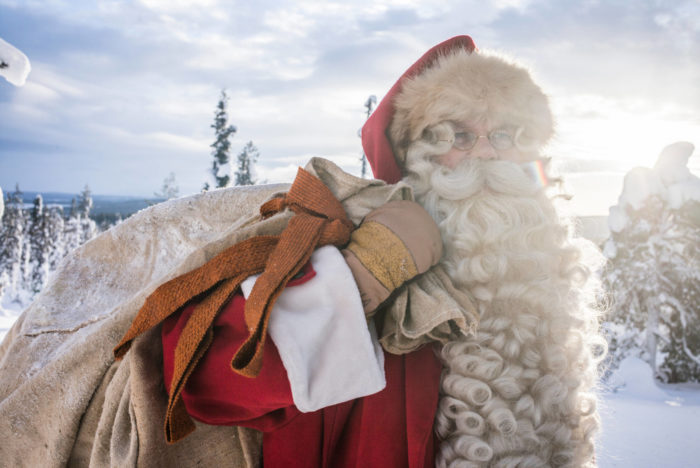
Santa Claus carries a bag over his shoulder, with a snowy forest in the background.

In a snowy Finnish landscape, Santa Claus carries a bag of gifts to his sleigh.Photo: Kimmo Syväri/Visit Finland

The coronavirus situation has touched everyone’s lives in one way or another. Since it has curtailed travel, social gatherings and even school attendance, it’s not surprising that kids were left wondering if Santa would arrive.

And while Santa will not be deterred from delivering his presents, his statement to the Ministry for Foreign Affairs of Finland emphasised other aspects of the holiday in addition to gift-giving: Christmas spirit and safety: “This year, above all, I want people to experience Christmas as a relaxing time, and as a happy moment that also revitalises us. Nothing can stop us from enjoying the finest time of the year. However, this time we should celebrate Christmas in a safe and proper way by carefully following instructions we are given.”

Ireland’s ambassador to Finland, Ruth Parkin, has also delved into these issues. She posted footage from a video call she had with Santa Claus. They talked about children’s letters (“They have wonderful ideas,” said Santa), and about climate issues (“We need [those ideas] now, because we have to help the environment,” he also said).

She had contacted Santa to discuss facilitating delivery to him of “messages from the children of Ireland” on behalf of her country’s Department of Foreign Affairs, as part of a Christmas campaign on their To Be Irish website. He talked with her from his office, which is located right on the Arctic Circle, just outside the northern Finnish city of Rovaniemi, about 800 kilometres (500 miles) north of the capital, Helsinki.

For part of December, the Irish website is carrying an online form for messages to Santa, which Parkin will ensure get delivered to him. For more about Santa and Mrs Claus, see ThisisFINLAND’s articles “Finland’s ambassador of Christmas” and “Exclusive interview: Mrs Claus of Korvatunturi, Finland.”

By ThisisFINLAND staff, December 2020

Courageous Finnish hobbyhorsing inspires designers

Young Finnish people are behind the growing popularity of hobbyhorsing – they handcraft elaborate stick horses that are more than mere toys, and organise meets where they ride those horses in dressage and show jumping events. The community also congregates online, especially on Instagram.

Not all grown-ups get it. But the hobbyhorse phenomenon involves imagination, innovation and independent thinking, and the art, sport and culture of hobbyhorsing are receiving an increasing amount of richly deserved publicity in Finland and all over the world.

Brave enough to ride

Photographer and filmmaker Viivi Huuska directed the short film “Brave Enough to Ride” to show the world a vision of hobbyhorsing.

ThisisFINLAND is supporting the courageous hobbyhorsing attitude with a multilingual Hobbyhorse Toolbox  that contains videos and other content about making and riding hobbyhorses. During December 2017 and early 2018, a popup webshop is also making available a limited edition line of urban fashion by top Finnish designers, with new products being revealed on a weekly basis.

Which designers are helping encourage these hobbyhorse enthusiasts who are brave enough to ride? Many of Finland’s top names: IvanaHelsinki, R-Collection, Riski, .TEBIAN, Uhana Design and WWOOLLFF. Flip through the slideshow below to find out more.

Designers who do get it

By ThisisFINLAND staff, November 2017

Finnish hobbyhorse phenomenon gains new ground at a gallop

The world’s newest equestrian craze started in Finland, but it has nothing to do with live horses. It’s all about hobbyhorses.

Although hobbyhorsing has existed for many years, it really gained speed starting in about 2010. A growing number of Finnish youngsters got into designing and making their own hobbyhorses – elaborate, handcrafted versions that are more than mere toys – and also started holding meets where they ride those horses in dressage and show jumping events.

No grown-ups necessary

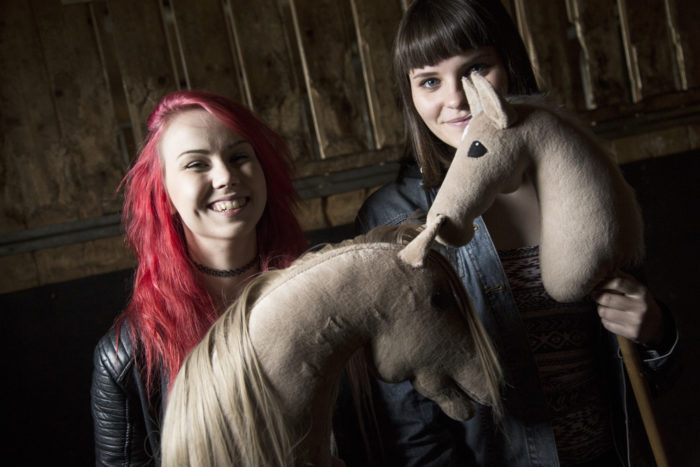
Alisa Aarniomäki (left) and Vilhelmiina Keskilä are getting ready for training at the stable.Photo © ThisisFINLAND

It grew organically, with little help or interference from grown-ups. The teenagers developed a community that exists online and in real life, where hobbyhorse stables enter riders and steeds in competitions, including the annual Finnish Hobbyhorse Championship, and keep records of their progress. If it sounds a lot like equestrian events with live horses, that might be because approximately half of the participants also have experience with horseback riding.

The hobbyhorse phenomenon involves imagination, innovation and independent thinking – all qualities that are a source of pride in Finland and are highly valued in today’s world. The hobbyhorse culture tends naturally toward inclusivity, whether online, where a constant flow of photos fills Instagram feeds, or at competitions, where hardworking athletes show off their gaits and movements in front of stern-faced judges who evaluate their efforts. The same gatherings include entrepreneurs who sell the finest of thoroughbred hobbyhorses, as well as bridles and other equipment and accessories.

Hobbyhorsing is receiving an increasing amount of richly deserved publicity, not only within Finland but abroad, as well. People are discovering it all over the world: Sweden, Denmark, the Netherlands, the UK, the US, Russia and across Asia and Australia. It is also expected to make headway in other horse-loving nations, such as Brazil and Argentina.

It spreads by online word-of-mouth and video, and it also received a visibility boost with the 2017 release of a Finnish-made documentary, Hobbyhorse Revolution, which follows the stories of several pioneers in the field.

You’ve got to see hobbyhorsing to believe it. In fact, you’ll probably want to try it yourself.

Brave enough to ride

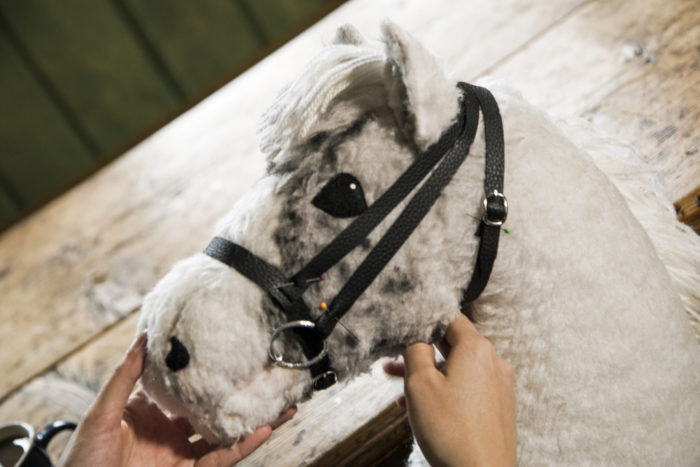
Vilhelmiina Keskilä shows off a new set of reins she’s making, still held together by sewing pins in some places.Photo © ThisisFINLAND

There are different ways to get into the hobby. Some people specialise in one area, while others take part across the board. ThisisFINLAND is teaming up with some of the most experienced hobbyhorse enthusiasts to create a Hobbyhorse Toolbox, so that it’s easy to start, no matter where you live.

For athletes and competition organisers, our videos demonstrate show jumping, dressage and trail riding. And our experts list the top seven best things about hobbyhorsing.

Behind the scenes, there’s an art involved in making the actual hobbyhorses – it’s a combination of creativity and handicraft. We take you through the process with videos about making horses and constructing bridles.

And online, Instagram is the place to be for many hobbyhorse owners, the place to display your handiwork and applaud others’ achievements, too.

ThisisFINLAND is also supporting the no-nonsense – you might even say courageous – attitude of the hobbyhorse enthusiasts, with a limited edition line of urban fashion, devised and produced by top Finnish designers.

This is where you’ll find the most unique T-shirt, dress or jacket of the season. Wearing this collection is a show of support for hobbyhorse enthusiasts, although they really don’t stop to worry about what anyone else thinks of their hobby.

[Editor’s note: The webshop was open during December 2017 and January 2018. You can still visit it to see hobbyhorse-related content and write-ups of the designers, and ThisisFINLAND also has a piece about the designers and their creations.]

We’re asking: Are you brave enough to ride?

A world of hobbyhorses

Although of course we recommend that you try making a hobbyhorse of your own (you can find plenty of great tips on www.thehobbyhorse.fi), there are already craftspeople, companies and organisations in Finland selling very elaborate hobbyhorses and hobbyhorsing-related items, many of them through their Instagram accounts.

Here are several good Finland-based commercial hobbyhorsing links with info in English:

My Hobby Horses
KHT Vermillon
KHT Kuunvarjo
Hobbyhorse Equestrians: The Amazing World of the Contemporary Stick Horse (forthcoming book): more info and excerpt from the English version

By ThisisFINLAND staff, November 2017, updated February 2018

Finland presents HRH The Duke of Cambridge with two hobbyhorses for his kids

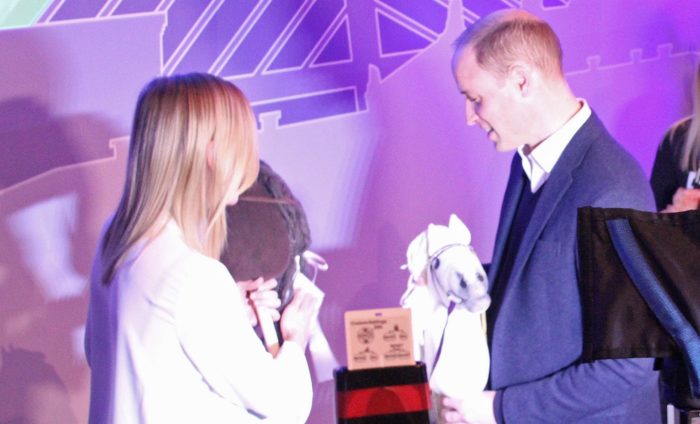
While visiting the annual Slush Helsinki, the largest startup event in Europe, the Duke received two handmade hobbyhorses to take home to his children. He said he was “very touched” by the gift.

Both hobbyhorses are designed and created by Finnish hobbyhorsing superstar Alisa Aarniomäki, who achieved worldwide visibility after she was featured in the documentary film Hobbyhorse Revolution.

Sporting horses

The Duke of Cambridge said he was “very touched” by the gift and the fact that one of the hobbyhorses, Smokey, was named after his first pony.Photo: Peter Marten

Hobbyhorsing has been sweeping Finland in recent years, with thousands of enthusiasts making and selling horses and riding them at events inspired by real equestrian disciplines such as dressage and show jumping.

Hobbyhorses riding even takes the form of an organised sport, with the Hobbyhorse Championship held annually in Finland. The sport is estimated to have more than 10,000 followers in Finland alone.

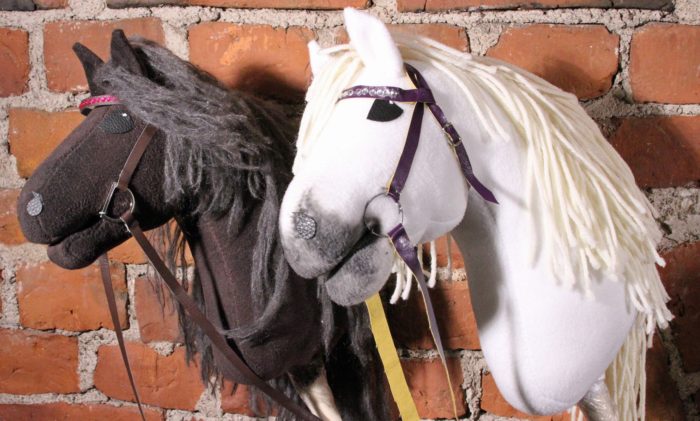
Princess Charlotte’s hobbyhorse, called Snowflake, is a Finnhorse with ashen markings on its muzzle and a light blond mane. Its bridle is magenta. Prince George’s hobbyhorse, named after his father’s first pony, Smokey, has a long, grey mane, friendly eyes and a dark brown bridle.

Courageous phenomenon

Prince George’s hobbyhorse (left), named after his father’s first pony, Smokey, has a long, grey mane and friendly eyes. Princess Charlotte’s hobbyhorse, called Snowflake, is a Finnhorse with ashen markings on its muzzle and a light blond mane.Photo: Emma Rispoli

The gift horses were given the day before the opening of a Hobbyhorse Toolbox website that promotes the art and sport of hobbyhorsing, and its courageous, against-the-odds mentality. Photographer and filmmaker Viivi Huuska, well known for her music videos, has directed Brave Enough to Ride, a short film that shows the world a vision of hobbyhorsing.

The Duke of Cambridge and his family are known for their love of horses. As hobbyhorsing is such a runaway phenomenon in Finland, personalised hobbyhorses make excellent presents to take home to Princess Charlotte and Prince George after visiting Slush Helsinki.

By ThisisFINLAND staff, November 2017

Finland’s #checkout247 live broadcast makes the mundane mindful

On ThisisFINLAND’s Facebook, a twelve-hour livestream shows unedited real-time footage of items moving along the conveyor belt at a supermarket checkout.

Finland celebrates Independence Day on December 6. Every year on December 5, thousands of shoppers visit 24/7 supermarkets to buy last-minute treats and party supplies. On December 5, 2017, with Finland marking its 100th year of independence, we focus on one checkout line at Prisma Kaari, the largest supermarket in Helsinki, livestreaming what people are purchasing without showing the shoppers themselves.

Call it slow TV, or call it curiosity carried to the extreme, or call it by the hashtag #checkout247. There’s something spellbinding about other people’s groceries rolling past on a conveyor belt. The idea was a hit within Finland when it premiered in summer 2017.

This time it’s global.

By ThisisFINLAND staff, November 2017

See ThisisFINLAND’s Facebook on or after December 5, 2017 (starting at four o’clock Finnish time that day) to check out the video footage.

Come in from the cold with Finnish glögi

In our search for the best cup of seasonal glögi (mulled wine) to stoke our holiday cheer, we visit Hvitträsk, architect Eliel Saarinen’s lakeside manor in Kirkkonummi, close to the Finnish capital.

Half an hour west of Helsinki stands Hvitträsk, a stocky fairytale mansion atop a wooded hill. Majestic steps lead down to a lake on whose shores the sharp-eyed may spot prehistoric rock art. The first to do so was composer and sybarite Jean Sibelius. A century ago, he was a frequent guest at the house, along with other leading artists of the day.

Eliel Saarinen and two other hot young architects, Herman Gesellius and Armas Lindgren, built Hvitträsk as their shared home. It was known among pre-independence Finland’s elite for its fine dining and wild parties – indeed, one of the architects soon moved out amid a spouse-swapping scandal.

The 1903 mansion, built in the rustic National Romantic style, is now a museum. The guesthouse where Sibelius, Maxim Gorky and other luminaries stayed is now Hvitträsk’s restaurant, run by Tiia and Ville Dillemuth. [Editor’s note: Since this piece was originally published, Tiia and Ville have moved on to other projects, but their words of wisdom about glögi have not lost any of their potency, so we’ve kept them in this article.] The mood today is more discreet, but glowing with holiday spirit. According to the hosts, the best way to bring holiday cheer to anyone coming in from the cold is to hand them a steaming glass of glögi.

Inspiration from the forest

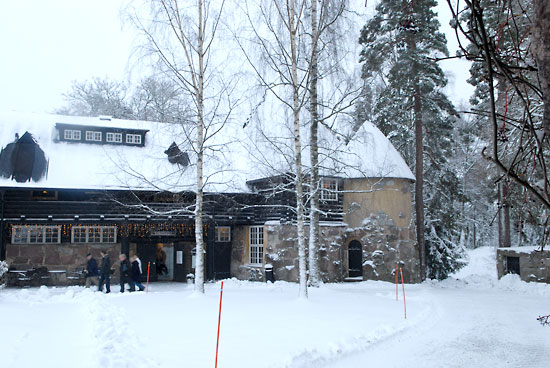
Hvitträsk museum on a snowy day.

Hvitträsk stands like a fairytale mansion atop a wooded hill. Photo: Sinimaaria Kangas

Glögi is the Finnish version of mulled wine, known as glögg in other Scandinavian countries and Glühwein in German-speaking areas. The Dillemuths have created a distinctive Hvitträsk version of the drink, based around blueberries.

“We took our inspiration from the amazing blueberry forests that surround the house and the fact that the Saarinens loved blueberry pie, even at Christmas,” explains Tiia. While Finns typically serve the drink with gingerbread cookies, the Dillemuths accompany it with blueberry-oat cookies.

Jars of their glögi spice mixture are available at Hvitträsk’s traditional Christmas market. The annual handicraft bazaar has been held in and around Hvitträsk’s buildings for decades. “Some of the same grannies have been selling their woollen goods here ever since 1975,” says Tiia with a grin.

Blonde, berry or blood

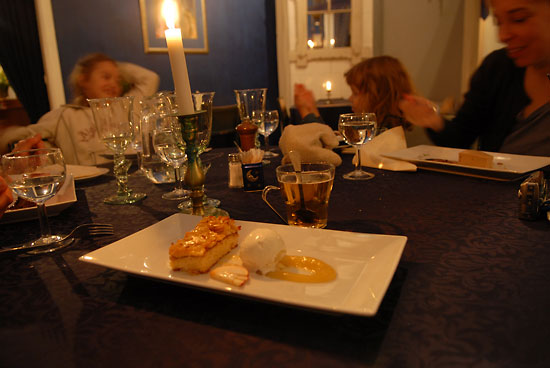
A dessert and a glass of blonde glögi on a table in a dimly lit room.

In recent years blonde glögi has gained popularity. Photo: Sinimaaria Kangas

Most Finns simply buy premixed glögi off the shelf at grocery stores or state-run Alko liquor outlets, serving it with raisins and blanched almonds. These days, though, many people seem to be favouring the simple and homemade for Christmas – which goes for drinks as well as food, cards and gifts.

Finnish food blogs are buzzing with exotic glögi recipes involving blood-grapefruit juice, cherries or almond liqueur. In recent years blonde glögi has gained popularity. Cookbook author Marianne Kiskola suggests strawberry juice spiked with cinnamon, vanilla and ginger, while Sami Malila’s Moomin cookbook offers a favourite based on blackcurrant juice.

Glögi variations from Hvitträsk

Hvitträsk glögi

  • 1 litre blackcurrant juice
  • 0.5 litre apple juice
  • 2 cinnamon sticks
  • Half a vanilla bean
  • 4 cloves
  • 3 cardamom seeds (or pinch of ground cardamom)
  • 1 tsp ground Seville orange peel
  • 2 star anise
  • 3–5 dl red wine

Simmer 20–30 minutes; strain. Makes about 1.5 litres of glögi.

Blueberry purée

  • 1 litre blueberries
  • 1 dl water
  • Sugar to taste

Boil for about 5 minutes; purée with wand blender.

Add 1 tablespoon of purée per glass, along with dried blueberries and almonds (whole or sliced).

The alcohol evaporates in the cooking process. If desired, the glögi can be “strengthened” with 2 cl of Koskenkorva Vodka Vanilla or Becherovka herbal bitters.

Hvitträsk royal glögi

Moisten rim of wine glasses and dip in gingerbread crumbs.

  • 12 cl Cristal Cava Castellblanch sparkling wine (semiseco, chilled)

Add 1 tablespoon of glögi concentrate (cook above recipe until condensed by half or use commercial mixture) to each glass.

By Wif Stenger