Finnish movie rides heavy metal wave onto silver screen

First question: Why has nobody made this kind of movie in Finland before now?

After all, the country has more heavy metal groups per capita than any other (see the map included in another of our articles). Finns really love speed metal, glam metal, death metal, doom metal and the other subgenres. Heavy metal is known for its fantasy elements and sometimes ridiculous excesses – which form obvious starting points for comedy.

The idea of heavy metal as farce is hardly new. Spinal Tap is among the world’s best-loved comedies and cult movies. Jukka Vidgren and Juuso Laatio surely had Rob Reiner’s 1984 parody in mind as they cowrote and codirected their film Hevi reissu (Heavy Trip).

Distinctive heavy milieu

Official trailer: In the words of the film’s production company, Making Movies, the band’s trip “includes metal music, vomiting, grave robbing, fake Vikings and the first-ever armed conflict between Finland and Norway.”

While the inspiration for the movie is clear, what makes Heavy Trip distinctive is its milieu: rural northern Finland, where metal music is more than just a passion for its fans. It’s what sets them apart from the surrounding community, which is quiet, agrarian and downright redneck.

Vidgren and Laatio’s film doesn’t make fun of anyone, though – except maybe the villain of the story, a smug adult-contemporary pop singer. Pitted against each other are two kinds of music: naïve but sincere heavy metal and the calculated, treacly easy-listening Finnish schlager pop known as iskelmä. The juxtaposition is subjective and exaggerated, of course. Yet the commanding position of these two genres in rural Finland is indisputable. And the two genres do share a taste for melody and sentimentality.

Like many classic comedies, Heavy Trip is a road movie. The main characters have to leave their small hometown to make something of themselves – or they at least hope that the grass will be greener on the other side of the fence. Their band hits the road to play at a festival in Norway, where they may or may not have been invited to perform. The trip is more important than the destination, though.

It’s no wonder that the film’s highest-profile coproduction country is Norway. Besides being northern Finland’s neighbour, the land of the fjords is another nation known for its more or less exhilarating metallic excesses.

Symphonic post-apocalyptic reindeer grinding
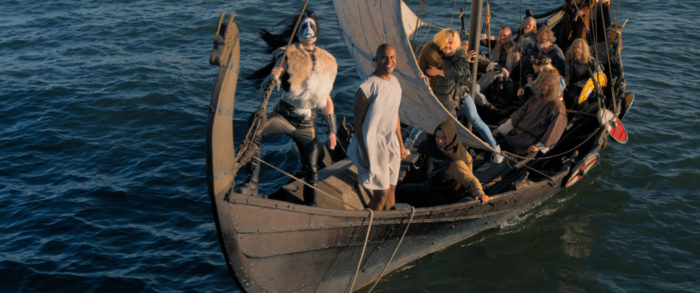
When in Norway: The band travels by van, but also by Viking boat.Photo: Harri Räty/Making Movies

Style-wise, Heavy Trip is a combination of laconic Finnish humour and recklessness, including some rather macabre goings-on. For instance, the drummer suffers, a bit like in Spinal Tap.

The movie pays tribute not only to its cinematic forebears, but also to the music. Vidgren and Laatio seem to understand and love the aesthetics of metal. The film is never mocking, though it often shows the metalheads’ antics in a humorous light.

One of the movie’s recurring jokes refers to the wide range of subgenres within heavy metal. “Symphonic post-apocalyptic reindeer-grinding Christ-abusing extreme war pagan Fennoscandian metal,” is how guitarist Pasi (Max Ovaska) describes the group’s sound.

Pasi, an odd character with an unchanging expression, is in his own way unselfishly sympathetic – and he’s a walking dictionary of heavy metal. In one scene, he announces that he’s changing his name from Pasi to Xytrax. The film’s humour draws on metal’s more extreme phenomena and provocative clichés – for instance, the band is called Impaled Rektum.

A road movie that travels widely
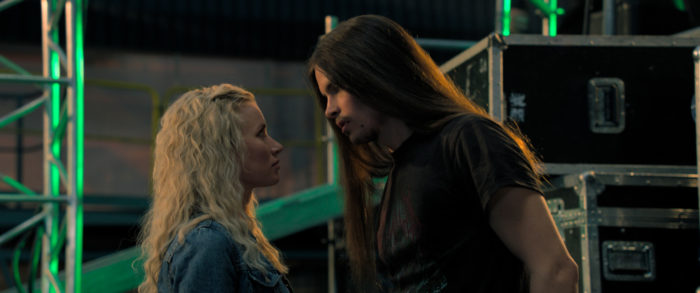
To top it all off, “Heavy Trip” even includes romance.Photo: Harri Räty/Making Movies

Few Finnish-language movies find large audiences and distributors outside the country. Fittingly, Heavy Trip’s world premiere happened at the leading US festival of music, film and interactive media, SXSW in Austin, Texas. Like this renowned event, the movie takes a multidisciplinary approach to pop culture.

Finnish viewers may see Heavy Trip as part of a domestic comedy farce genre, whose biggest international success has been Napapiirin sankarit (Lapland Odyssey). Elsewhere, it may be seen as an intriguing mix of Finnish exotica, humorous metal clichés and Anglo-Saxon indie-film mischievousness, bringing to mind the works of Taika Waititi or even Wes Anderson.

A love story involving the band’s front man, Turo (Johannes Holopainen), and Miia (Minka Kuustonen), a flower shop assistant, is a gesture toward the mainstream, but at least a slight interest in metal culture is essential to fully appreciate the comedy.

Thanks to an exceptionally high budget by Finnish standards – three million euros – Heavy Trip also includes some surprising action sequences. Due to the extreme views of the pop singer and local authorities, the band members have to escape a trigger-happy Norwegian officer. Impressive explosions set up the film’s grand finale, which takes place – naturally – onstage in front of an audience.

By Kalle Kinnunen, April 2018
In Helsinki, winter shines brightly, then turns into spring

Bright Christmas parades and the light installations of Lux Helsinki illuminate the winter darkness before the intensifying sun makes it clear that spring is arriving, in Lights in Helsinki: winter and spring.

Lights in Helsinki: winter and spring
Video: Seppo Saarinen/MoviesKy

By ThisisFINLAND staff, April 2018

Helsinki professor becomes pioneer of metal music research

Esa Lilja’s credentials include a doctorate and an adjunct professorship in musicology at the University of Helsinki – and a love of heavy metal.

His foot is tapping to the beat of heavy metal music. He’s sitting in the rehearsal space of the metal band Tyrantti, listening carefully. As a musicologist, Lilja focuses on the chords and melodies of heavy metal and other genres, as well as the way they connect in harmonies.

“My most important finding was,” says Lilja, “that because of distortion, which is essential in all heavy metal…

Freedom in fashion in Finnish kids’ clothes

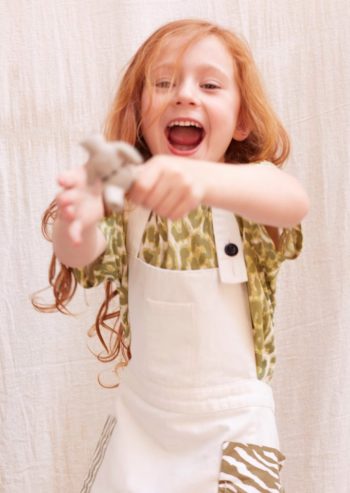
In the wake of increasing demand for gender equality, traditional gender-biased division of colours and prints in kids’ clothing looks hopelessly old-fashioned.

As a formula, blue cars for boys and pink princesses for girls simply don’t make the cut anymore. Mothers and fathers are increasingly expecting to dress their kids in current unisex styles. What’s more, they are seeking out individual designs by smaller companies, rather than the garments mega-chains offer.

“At the core of the current kids’ clothing trends, there is an increasing interest in values, in being as ethical and environmental as possible,” says Marika Westerlund, founder of Harakanpesä (Magpie’s Nest) Shop, a Helsinki-based Finnish design retailer whose mainstay has been children’s clothing.

“When this new wave of ethical, unisex children’s clothing first took off, the brands couldn’t meet customer demand,” she says. “Even now, the most popular items sell out within hours in online stores.”

Bold prints, urban attitude

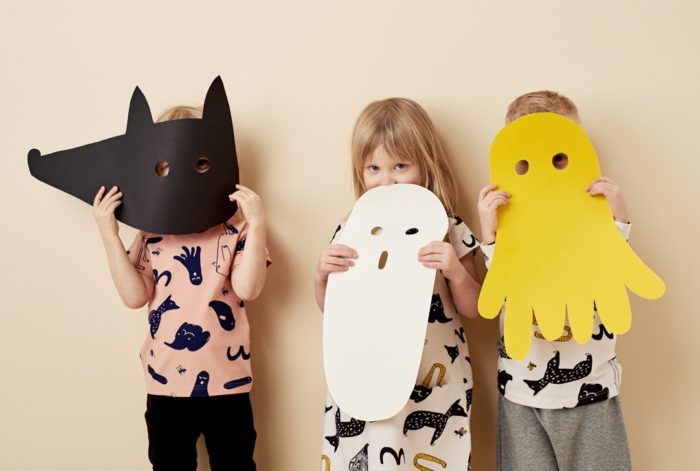
Wildkind Kids offers gender-neutral, bold-print clothes that allow children to be wild, as the name implies.Photo: Johanna Laitanen

One brand with great prospects of growing internationally is Wildkind Kids, which is built around the idea of complete gender neutrality.

“We were first meant to design a Scandinavian-style clothing line, but somehow the prints just got a lot crazier, and now we’re all about bold prints and colours,” says Emilia Laitanen, who cofounded Wildkind Kids with her sister.

The clothes reflect the brand name. “The prints are wild, and the design of the clothes also allows kids to be wild,” says Laitanen. “We get a lot of our inspiration from skateboarding culture, since we used to skate and hang out with skaters as kids.”

Making an impact

Ghosts and animals figure in these patterns by Papu, a Finnish children’s clothing label founded on ethical principles.Photo: Mikko Ovaska

In a story similar to those of many other countries, Finland’s once-vibrant textile industry shrank drastically as imports from places with cheaper production costs took over. However, a relatively new textile company called Nokian Neulomo has seen several success stories.

When Finnish clothing brand Nanso decided to cease operations at its factory in the southwestern town of Nokia (yes, that Nokia), Nokian Neulomo stepped in to keep it going and continue employing people. It concentrates on sustainable, ethical production; it has its own line, Neulomo, and manufactures clothing for several other domestic brands, including Papu, Uhana Design and TAUKO.

Papu (the word means “bean” in Finnish), a children’s clothing label created in 2012, was one of the first brands in the field to be founded on ethical principles. “Starting out, I wanted to make an impact,” says designer Anna Kurkela, Papu’s founder.

At first, she had doubts about remaining in an industry often marred by human rights violations and environmental pollution. “I soon realised that the best way to affect it was from within, by doing things differently,” she says. Kurkela and her husband, Jussi Kurkela, are also minority shareholders in Nokian Neulomo.

Free thinking

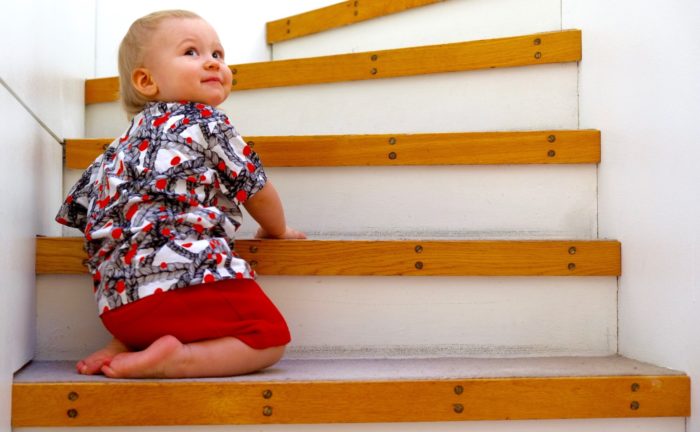
This baby’s shirt shows one version of Vimma’s Braid design, which has become a modern classic. Vimma, Papu and Gugguu are some of the best-known Finnish children’s clothing brands, according to Marika Westerlund of Harakanpesä Shop.Photo: Mari Storpellinen

Now it seems that interest in unisex clothing is becoming more than a trend. As children’s clothing has traditionally been about allowing kids to move freely, it now allows them to think freely, too. And parents welcome that.

“I don’t want to offer my daughter preconceived roles that children are usually put into as soon as they’re born”, says Emilia Hernesniemi, fashion designer and cofounder of the R/H brand, as well as mother to Doris, one year old at the time of writing.

“I want Doris to be comfortable and wear whatever she likes to wear,” says Hannu Hirstiö, Doris’s father. “I know my daughter and what she likes to do, so I just try to pick clothes that allow her to be herself.”

Children aren’t the only ones who benefit from unisex clothing. Anna Kurkela of Papu tells this story: “I was delighted to find that a male customer once bought our Kanto dress to wear as a nightshirt. Because why not?”

By Mari Storpellinen, April 2018

Cuisine gets cute – and ugly – for Easter in Finland

They’re both the same colour (brown), and the Finns consider them both Easter delicacies. Mämmi has hundreds of years of history, while Mignon eggs have existed for only about a century and a quarter.

Manufactured by Finnish confectioner Fazer since 1896, Mignon eggs are easy to love. Although many people nonchalantly refer to them as chocolate eggs, their filling is technically not chocolate – it’s a smooth, milk-free, chocolatey blend of cocoa, almonds and hazelnuts. Mämmi, a pudding-like substance made from rye malt and rye flour, is a food that non-Finns often find more difficult to fall for.

Fazer likes to say that its Mignon eggs (the word means “cute” in French) are handmade. The company uses real eggshells, filling them with a liquefied cocoa mixture that later solidifies. That’s the part that they do by hand, holding one eggshell at a time under a faucet, a little bit like something you’d see in a movie about Willy Wonka. They also have to pack the eggs manually to avoid cracking them.

You can’t eat Fabergé eggs

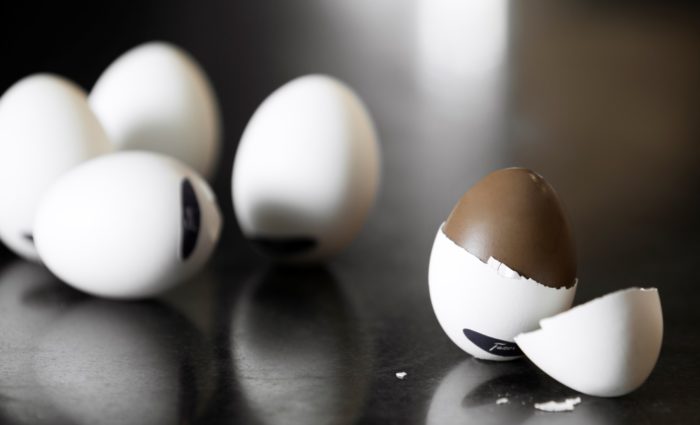
You peel a Mignon like a regular egg, but it contains a solid, chocolatey confection.Photo: Kristiina Hemminki/Fazer

Legend has it that Tsar Nicholas II was one of the first famous fans of Mignon eggs and made them an Easter tradition at his court in Saint Petersburg. Nowadays Fazer produces more than 1.5 million of them each year, enough to fill 23 transport trucks. For the employees who fill and stack the eggs, the season lasts from November through March.

In order to eat a Mignon, the customer has to peel it like a hard-boiled egg, revealing a round, solid, chocolatey confection. In one Finnish family we know of, the father used to insist to the kids that Mignon shells were actually made of sugar (they’re not, except for the solid sugar covering the hole used for the filling). He would also eat the shell to prove his point.

Don’t try that at home, but for anyone who likes to decorate, dye or paint eggs for Easter, Mignons are great: they don’t need to be cooked or emptied, they don’t smell ugly, they keep longer and, we think you’ll agree, they taste better than regular eggs.

Nutritious consistency

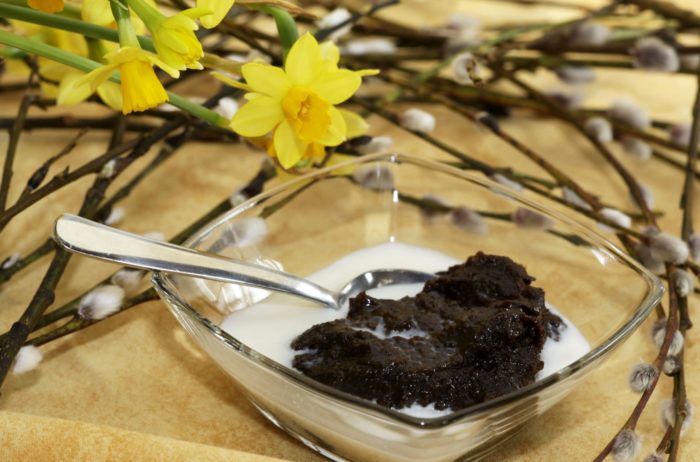
Mämmi has a consistency somewhere between cake batter and cookie dough, and is usually served with cream. Daffodils and budding willow branches are also associated with Easter, as the holiday often happens just as these signs of spring are appearing.Photo: Soili Jussila/Lehtikuva

The attraction of mämmi is more difficult to explain, but it’s definitely nutritious. Its consistency lies somewhere between cake batter and cookie dough, which sort of suits the name, with its multiple m’s that make it feel like your lips are sticking together. Saying it in Swedish, the country’s other major language (Finland is officially bilingual), produces much the same effect: memma.

It tastes pleasant, but visually it resembles – there’s really no nice way to put this, so let’s just say it tastes better than it looks. People often pour cream over their mämmi and sprinkle sugar on top, which contributes to the taste but doesn’t improve the appearance.

A Finnish invention, mämmi is generally available only in Finland and Sweden, which is home to approximately half a million people of Finnish descent, about five percent of that country’s population. One other similar dish exists: samanu, made by a similar process from wheat instead of rye, is associated with Nowruz, the Persian New Year celebration, held every March.

If you value a connection with history, mämmi offers a tradition that stretches back to at least the 1600s and possibly as far as the 1100s. It is prepared by baking but can be stored cold for many days; this made it a perfect fit for Good Friday, when custom forbade lighting a fire and cooking food.

Mämmi is also healthy – at least before you add cream and sugar, but even then. It is rich in protein and fibre from the rye; depending on the recipe, it contains approximately five percent protein and eight percent fibre. It also conveys an array of minerals and B vitamins.

The many manifestations of mämmi

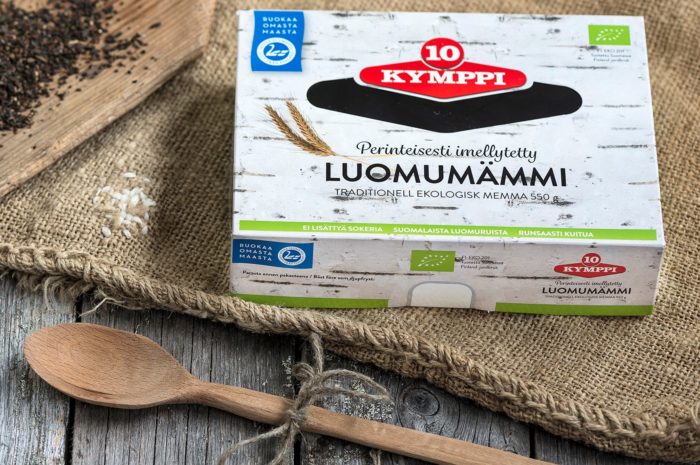
Many brands, varieties and flavours of mämmi appear in Finnish grocery stores; shown here is organic mämmi. Birch-bark patterns often appear in the packaging, alluding to the birch-bark trays that people traditionally used to serve this Easter delicacy.Photo courtesy of Kymppi-Maukkaat

Multiple brands are available at any store during the Easter season, usually packaged in compact disposable trays holding about 500 grams (a little more than a pound), but any way you present it, it lacks the cuteness factor of chocolate eggs. However, that hasn’t stopped the Finns from getting creative with mämmi in various desserts, main dishes and beverages. Sampling Finnish food blogs and grocery stores, you can find berry mämmi, potato mämmi, coffee mämmi, vanilla mämmi, mämmi-mango dessert platters, mämmi yogurt, mämmi-liquorice ice cream, mämmi cheesecake, mämmi custard buns, mämmi lemon-custard pie, mämmi chocolate cake, mämmi mousse, mämmi-orange parfait and several kinds of mämmi bread, not to mention mämmi cream stout beer.

You can find Finnish people who can’t stand mämmi, but the majority of them seem to like it – once a year, in any case. For recent arrivals to the country who are experiencing their first Finnish Easter, mämmi represents a kind of rite of passage. You have to taste it first – then you can criticise it, defend it, or just reserve judgement, as the case may be.

The Finns buy more than 1.7 million kilograms (3.7 million pounds) of mämmi per year, most of it around Eastertime. This means more than a kilogram (2.2 pounds) of mämmi for every Mignon egg sold. How about this: Has anyone tried manufacturing mämmi-filled chocolate eggs? They’d be sure to become a hit in Finland.

By ThisisFINLAND staff

Happy Easter egg hunting in Helsinki and beyond

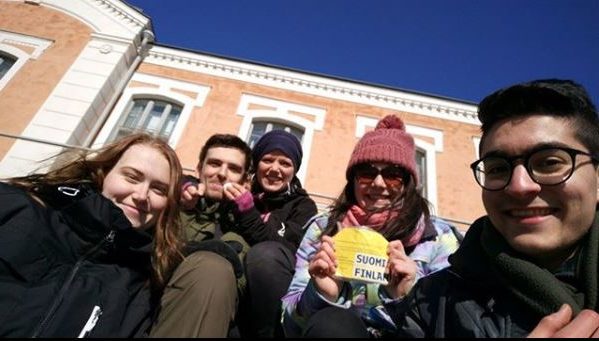
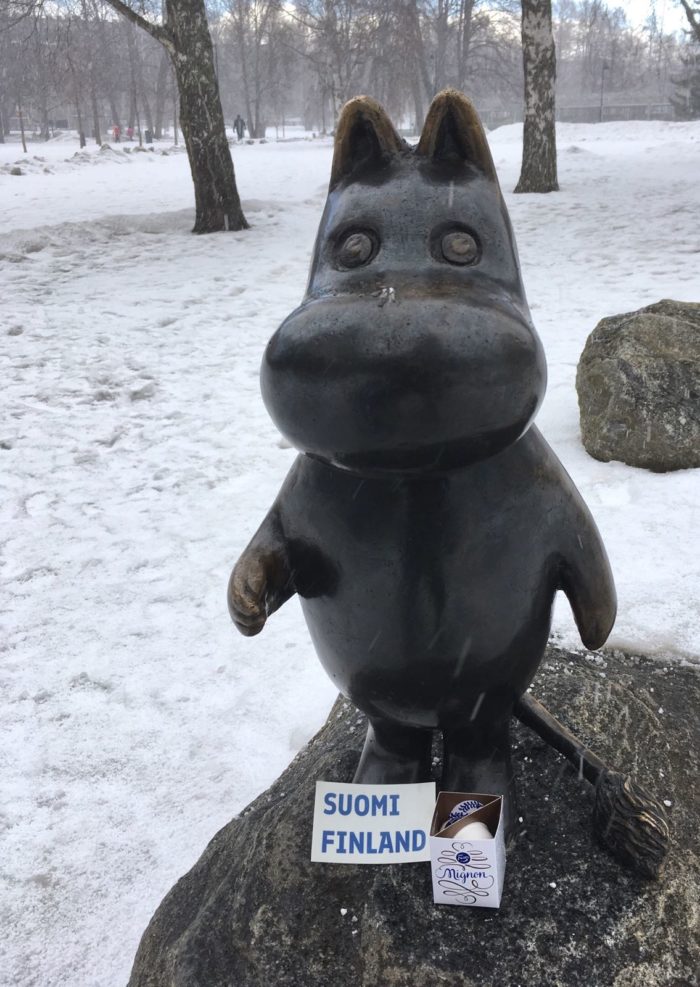
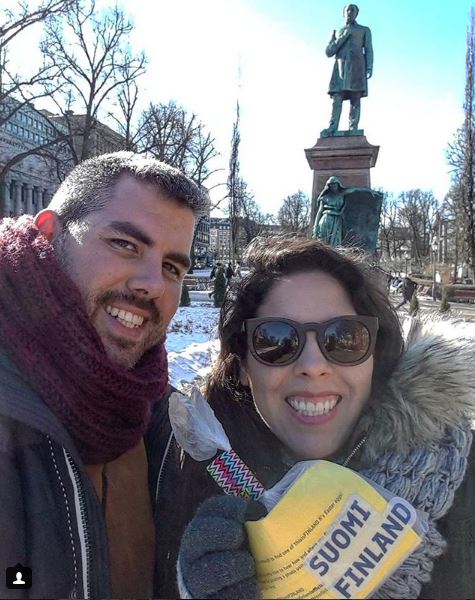
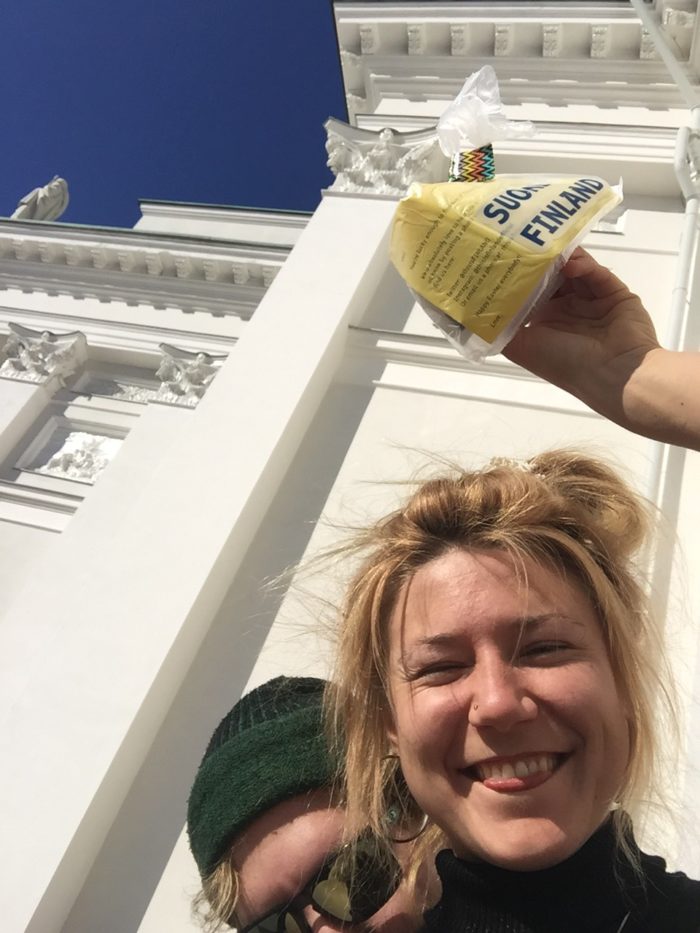
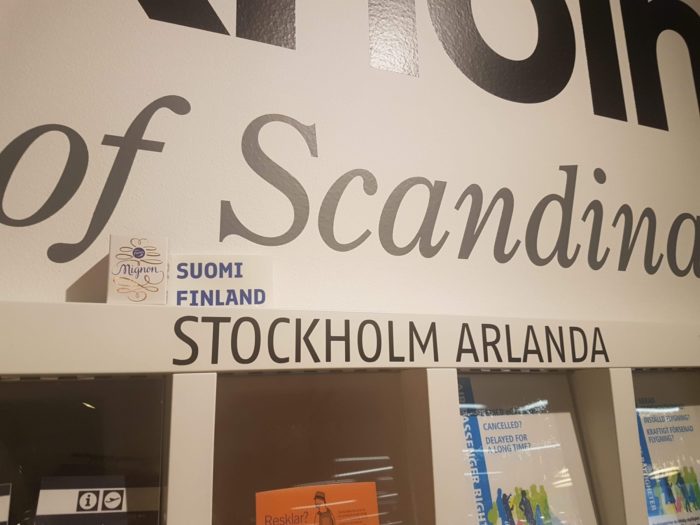
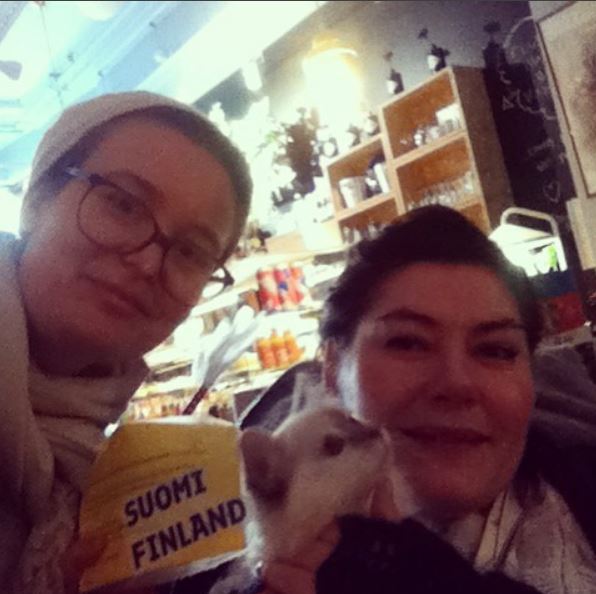
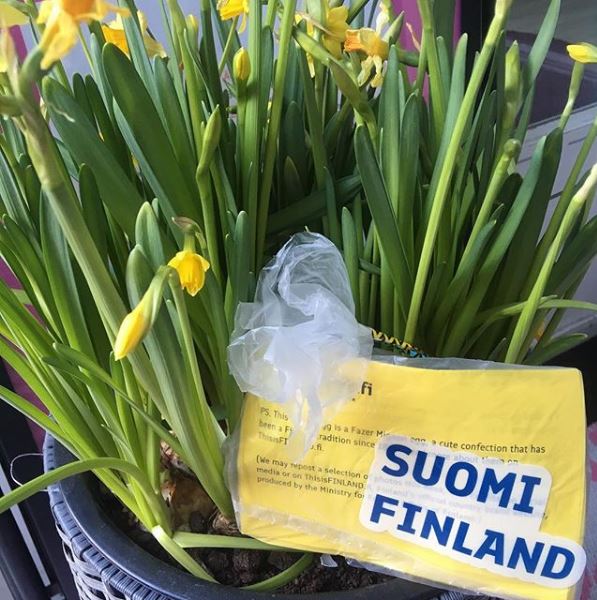
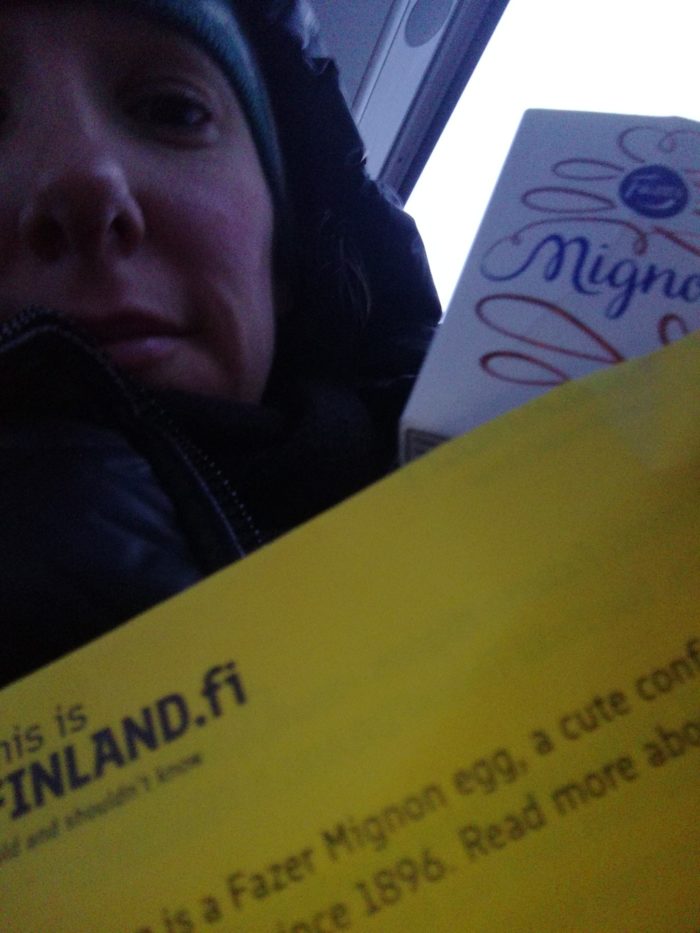
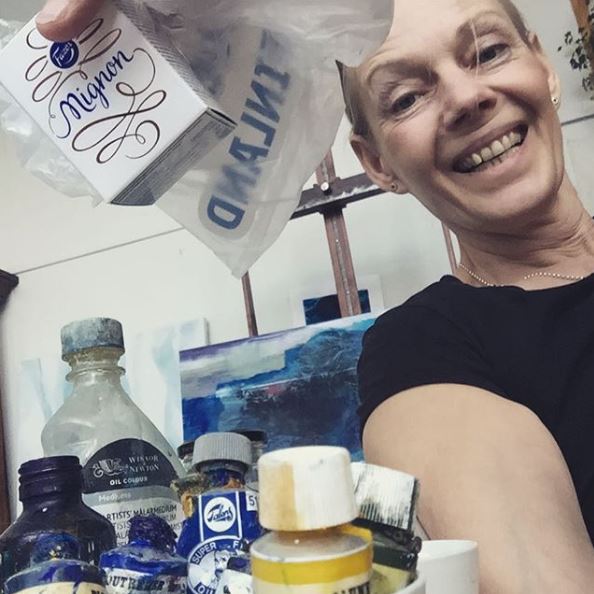
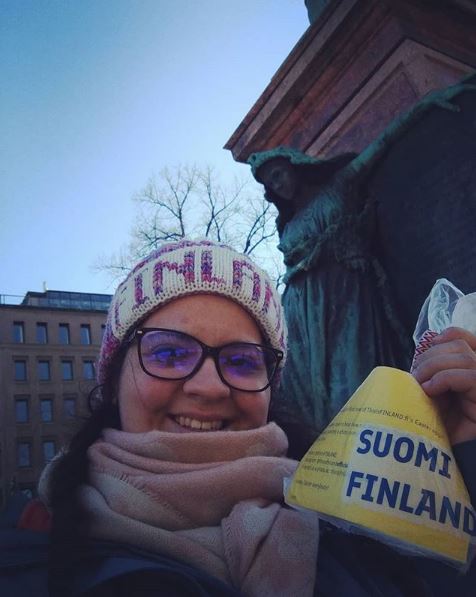
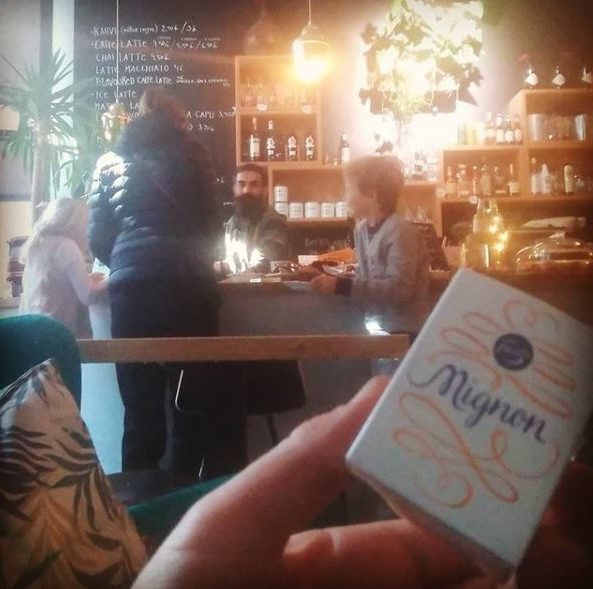
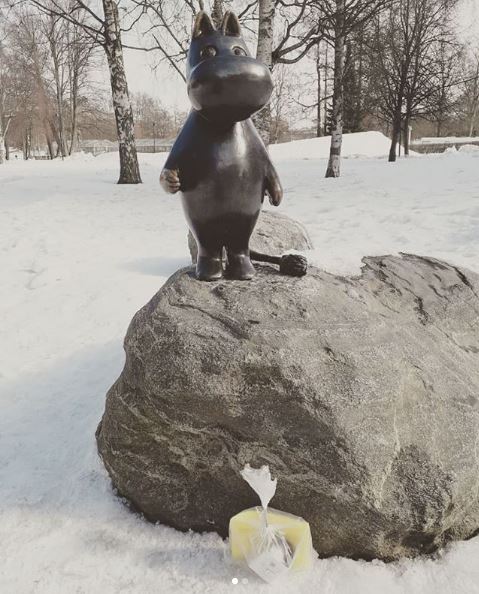
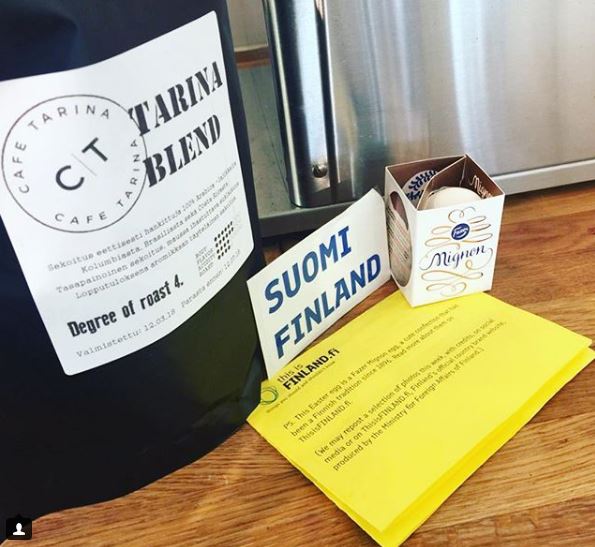
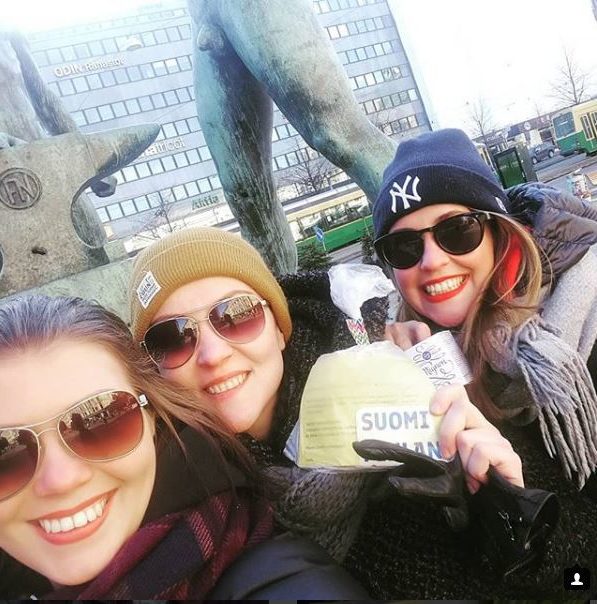
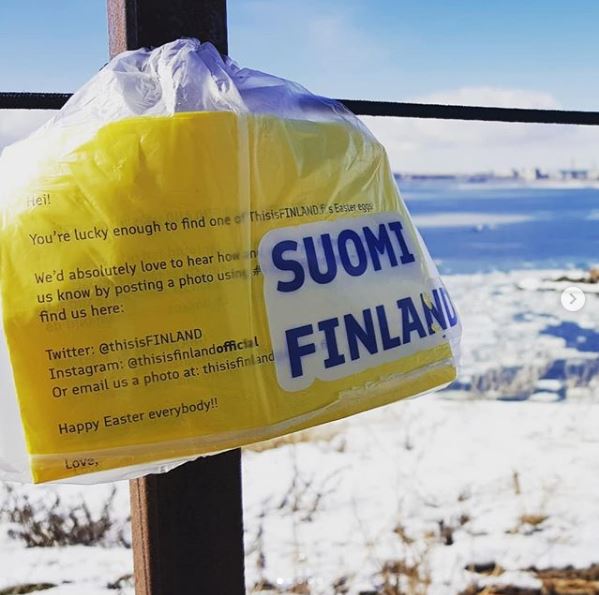
Each package contains a “Suomi Finland” sticker (Suomi is the Finnish word for “Finland”) and a Fazer Mignon egg, a cute confection that has been a Finnish tradition since 1896.

We can’t transmit chocolate eggs to you over an internet connection, but until the day when that becomes possible, check out our video and the photos sent in by the lucky people who found the eggs.

We go around Helsinki hiding candy eggs on a brisk spring day.
Video: Peter Marten

The note in the packages read, “We’d absolutely love to hear how and where you found it!” Below are a few of the responses.

We found one!

Happy Easter everybody!

By ThisisFINLAND staff, March 2018

PS. Click here for more about Fazer Mignon eggs and another Finnish Easter delicacy: mämmi.

Eighty years promoting a good start for every child in Finland

Every spring there’s a bit of a commotion when Finland’s Social Insurance Institution (commonly called by its Finnish abbreviation, Kela) unveils its newest maternity package.

People await the announcement of new items, colours and designs with much interest – after all, the maternity package helps determine what tens of thousands of babies across the country will be wearing.

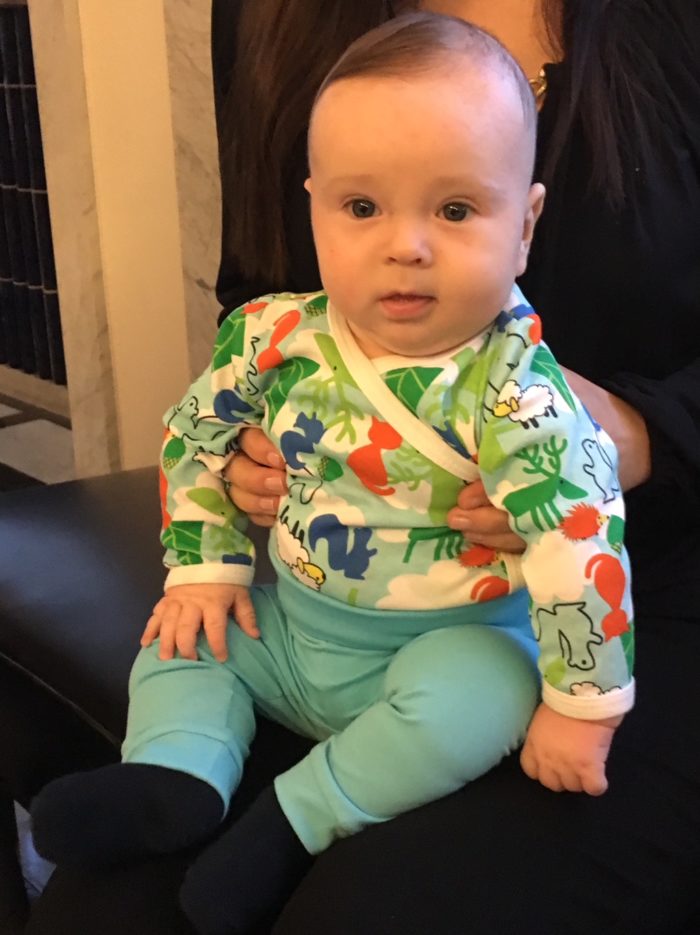
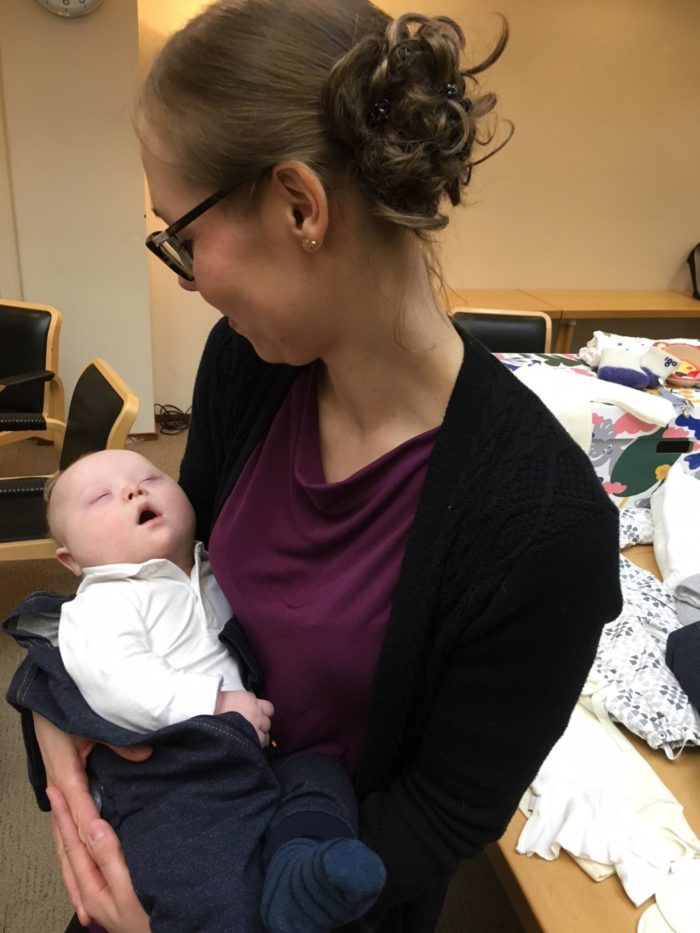
Luca and Eetu, two boys of about five months old at the time of writing, were brought to a press conference to model some of the new clothes. They were unperturbed by the attention.

Material, medical and educational value

There’s more to the maternity package than fashion statements, though. Every new mother in Finland has the right to this box of baby clothes, care items and accessories to give every child a good start and help parents grow into their new role. The system originated in 1938, when the government introduced a maternity grant with a monetary value, to help address concerns about infant mortality and declining birthrates.

Then, as now, expecting mothers had to attend a prenatal clinic in order to qualify to receive the incentive, and the medical and educational value of these visits remains closely associated with the maternity package concept. Finland has one of the lowest rates of infant mortality – and of maternal mortality – in the world.

Today you can choose the maternity package or a cash benefit of 140 euros (170 euros starting June 1, 2018). Approximately 60,000 families receive the package or the money each year. Ninety-five percent of first-time mothers take the maternity package; for subsequent children, almost one-third of mothers opt for the cash instead.

An extremely useful idea

Luca is wearing this year’s wraparound bodysuit, with whimsical representations of orange cats, blue squirrels, white lambs and green moose overlapping white clouds, together with turquoise footless trousers.Photo: Pauliina Pennanen

Kela modifies and updates the maternity package annually based on feedback from parents and according to changing trends. For the 2018 version, additions included a pair of wool trousers and a pair of blue and white felt boots. The latter are decorated with an “80” in recognition of the maternity-package tradition’s 80th anniversary.

Standard items include a snowsuit, mittens, various hats and a blanket that can be zipped up to form a sleeping bag. The selection of winter gear in the box shows that Finns get used to spending time outdoors in the fresh air at an early age, no matter what the temperature is.

The fabric colours and patterns, and even the illustrations that cover the box, change from year to year, but they’re designed to be gender neutral. Every family gets the same assortment. In 2018, the sleeping bag features pointillism-inspired sheep on a blue-green background; in 2017, blue, pink and yellow owls stood on a grey background; and the 2016 version showed a blue-and-green pattern of bears, berries and conifer trees.

In addition to the wide variety of apparel – not all of it is winter clothing – the maternity package also contains useful items such as nail scissors, baby’s first toothbrush, a hairbrush and a bath thermometer. A foam mattress covers the bottom of the box, so that the box itself can serve as a safe, clean crib for the new baby.

Emphasis on environmental sustainability has increased over time, in large part thanks to customer comments. For example, in 2009 Kela stopped including disposable nappies (diapers), which take hundreds of years to decompose and contain harmful chemicals.

Knowledge boost

Being a model is hard work: Eetu fell asleep in his mother’s arms before he could actively show off the range of motion in the cotton “jean” overalls included in Finland’s new maternity package.Photo: Pauliina Pennanen

Kela frequently receives inquiries from other countries that are considering introducing similar programmes. Scotland, Argentina and the US state of New Jersey are experimenting with maternity packages of their own. Kela provides background info about its own programme, but does not make specific recommendations about the contents of the boxes, since local climate and cultural factors affect the choices of what to include.

Other governments that introduce maternity packages have priorities that are similar to those of the Finnish programme. The main point is to give all children an equal start in life, so the package is designed with their needs in mind.

The parents-to-be receive a material benefit, but also gain a critical knowledge boost by coming into early contact with healthcare professionals at a time when there’s a lot to learn. When you unpack the whole idea, it represents a benefit to all of society.

By Pauliina Pennanen and ThisisFINLAND staff, March 2018

Keeping good company at the top: Finland number one in World Happiness Report

They say it’s lonely at the top, but the same five countries are at the top of the World Happiness Report in 2018, just in a different order than 2017. How do they measure happiness?

Produced by the UN Sustainable Development Solutions Network (SDSN) and carried out by independent researchers, the report takes into account six key variables that “have been found to support wellbeing,” it says. They are income, healthy life expectancy, social support, freedom, trust and generosity.

Finland jumped from fifth place to displace the previous number one, Norway, which moved to number two. Another Nordic neighbor, Denmark, took third place, followed by Iceland, Switzerland, the Netherlands, Canada and New Zealand. Sweden is ninth.

New in the 2018 report is a ranking of immigrant happiness, based on Gallup data spanning 2005 to 2017. “Perhaps the most striking finding of the whole report,” says the report, “is that a ranking of countries according to the happiness of their immigrant populations is almost exactly the same as for the rest of the population.” This means that the happiness of immigrants to a country “converges” with that of the country’s general population. Finland also leads the table entitled Happiness Ranking for the Foreign-Born.

“The happiest immigrants are not [those in] the richest countries,” say the report authors, “but instead [those in] countries with a more balanced set of social and institutional supports for better lives.”

By ThisisFINLAND staff, March 2018