Paavo Nurmi

Runner, Olympic champion

  • born 13.6.1897 Turku, died 2.10.1973 Helsinki

Is he the best known Finn of all time? Possibly not, but he is arguably the best known long-distance runner of them all and to the people of Finland he was, and is, the man who ran their country on to the world map. That was in the 1920s, just a few years after Finland had gained independence and was strengthening its position among the free nations of the world. It was the decade when Paavo Nurmi dominated middle and long-distance running, winning a total of nine gold and three silver Olympic medals: three golds and one silver at Antwerp in 1920, five golds at Paris in 1924 and one gold and two silvers at Amsterdam in 1928.

Paavo Nurmi at the Olympic Games of Antwerp in 1920.

Paavo Nurmi at the Olympic Games of Antwerp in 1920.

As an athlete Nurmi was ahead of his time: he trained with a dedication and intensity never previously seen. With stopwatch in hand he raised the quantity and quality of endurance training to levels that none of his contemporaries could equal. The result was that, apart from his Olympic victories, he set altogether 25 world records at distances from 1,500 metres to 20,000 metres in a career that lasted at the highest level of athletics for some twelve years.

Nurmi was an introvert. To many observers he seemed bleak and remote, interested only in his running and ultimately dissatisfied with his achievements on the track. He wanted to leave behind something permanent and clearly did not share the view that records, as today’s saying goes, are meant to be broken. But there was a twofold permanence to his achievements: in his day, he ran farther and faster and for more seasons than anyone else and, despite his apparent dislike of publicity, he came to be regarded as Finland’s unofficial goodwill ambassador at a time when his country needed all the positive exposure it could get.

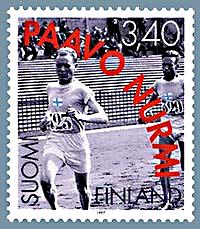
Paavo Nurmi featuring in a stamp

Paavo Johannes Nurmi was born in 1897 in the southwestern Finnish city of Turku. He was laid to rest there, with full state honours, in 1973.

“Success in sport as in almost anything comes from devotion. The athlete must make a devotion of his specialty.”

Paavo Nurmi according to Hudson Strode

By Joe Brady, August 2000

Mirages in Finland

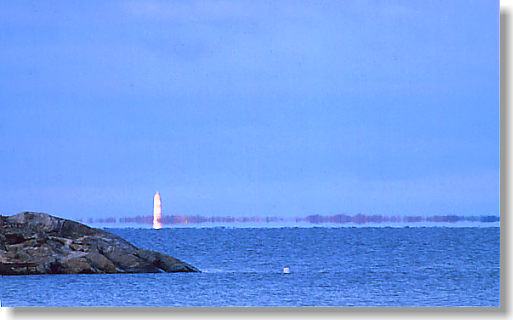
The open sea lies before you, the spring warmth and a light wind have split the sea ice into floes that rock lazily on small waves. Beyond the horizon, on the other side of this body of water, lies Sweden. In between, there is only water — or there ought to be only water.

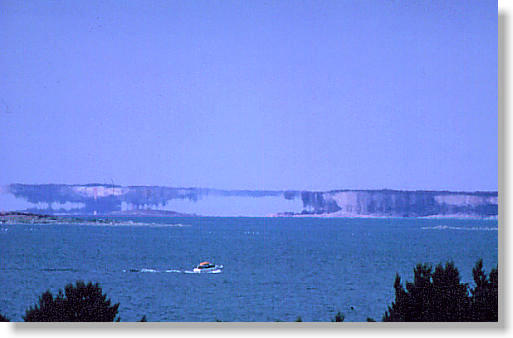
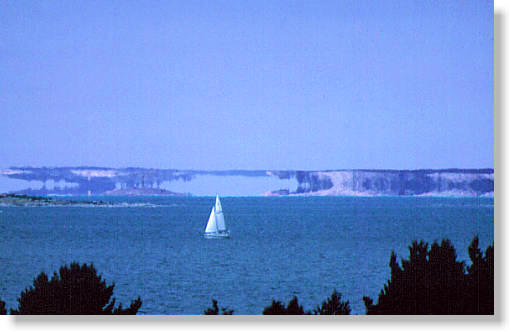
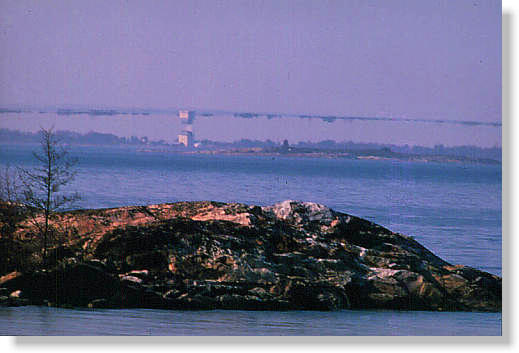
There are pale columns ‘dancing’ on the horizon! Looking along the shore, you see distant islands, whose low, thin silhouettes grow into steep rock faces. The entire shoreline takes on the shape of a rock wall where the familiar outlines are impossible to find; a mirage distorts the shores of Finland!

Most people’s impression of mirages comes from comic books, for instance the elusive and distant mirage of an oasis which tends to appear to Donald Duck during adventures in the desert. People consequently tend to conclude that the mirage is a phenomenon produced by the delusions of a person who is exhausted by heat and thirst, a hallucination which exists only in the imagination of that person, rather than something which can be documented in, for instance, photographs. On the other hand, most people are familiar with the shimmering pools of water that can often been seen on hot pavements on summer days. These apparent pools are not given any mystical connotations, however, even if they are in fact the same phenomenon as the mirage of an oasis in the desert: the sky and its blue colour appear to be reflected above a hot surface, producing an illusion of water, which constantly recedes out of reach before the approaching traveller.

There are a number of possible explanations for the mystique of mirages. The cold northern sea off the coast of Finland is an exotic experience in itself and has proved a fertile source for traveller’s tales but it is also an exceptionally good place for seeing incredible mirages. In the past, seafarers who had visited all kinds of faraway places and seen all kinds of marvels usually developed something of a reputation as storytellers. Their stories were often extraordinary, but talk of ships sailing upside down and the sight of palaces and vast meadows out in the middle of the ocean must have sounded particularly strange. Since telescopes and binoculars had not been invented yet, people’s imagination added the detail and colour to the stories of the things they had seen. Mirages appeared seemingly at random, they might be visible only for a brief moment, they changed shape and disappeared as you approached them, observers at different heights saw different types of mirages, and so on. The only explanation seemed to be some unknown force under the trackless waves, which had the power to shift all manner of marvels between the underwater world and the world above the surface!

Shifting horizons and eerie ships

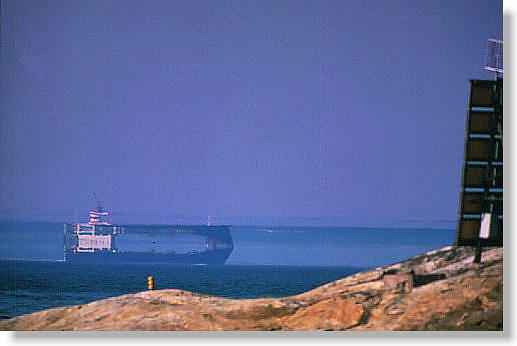
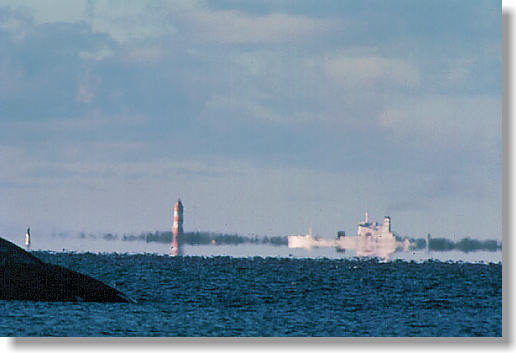
The word mirage can be more accurately defined by explaining that atmospheric conditions can cause deviation of the normally straight movement of light rays, creating a situation where an object is perceived as displaced or distorted. Mirages are usually seen at the horizon and with a very small angular diameter, yet they may take a number of shapes. The shrubs and rocks on a small island may tower into the sky; low, sloping shores may be vertically stretched so they look like precipices; a ship and its deck superstructures may distort into unidentifiable boxy shapes; entire islands seem to float in the air with inverted mirages below them; a number of mirages of the same island appear, now right way up, now upside down, above the island; a ship is seen to travel along the distant horizon upside down; the setting sun looks square, splits up into slices and gives off a final, bright green flash before going down. Sailors who spend more time in Finnish waters inevitably come up against mirages; seasoned navigators and sailors who know their channels are well aware that there are conditions in which it is extremely difficult to find a familiar route among the confusing mirages obscuring a rocky shoreline; people who use radar may remember occasions on which the radar range seemed strangely limited or other occasions when the radar range seemed to extend past the normal horizon. Sometimes, there is a mention on the news for TV viewers and mobile phone users that meteorological conditions are causing transmission disturbances. Mirages caused by atmospheric conditions are everywhere; usually only as a marginal phenomenon for those who look for it, but sometimes to the extent where it interferes with our everyday lives.

A ship of many shapes

On April 20, 1999 an ordinary freighter was plying the waters of Finland's south-western archipelago. But what Pekka Parviainen saw on that day was anything but ordinary. The ship turned up in a number of different shapes; sometimes there seemed to be two ships, one of the pair upside down. Luckily Pekka had brought his video camera with him. Here is part of his footage for you to enjoy. On a day like this Finland is full of mirages!

On April 20, 1999 an ordinary freighter was plying the waters of Finland’s south-western archipelago. But what Pekka Parviainen saw on that day was anything but ordinary. The ship turned up in a number of different shapes; sometimes there seemed to be two ships, one of the pair upside down. Luckily Pekka had brought his video camera with him. Here is part of his footage for you to enjoy. On a day like this Finland is full of mirages!

The refraction of light

Air gets thinner the higher you are from the surface of the earth or the sea. In normal conditions, the density of air decreases with increasing altitude. When light rays travel along the surface of the earth, the air below the light ray is therefore denser than the air above it. One of the typical properties of light is that it refracts towards the denser medium, and thus a ray moving along the surface of the earth is in fact constantly refracted slightly downward, following the earth’s curve instead of escaping straight into space. Imagine if you will that the denser air exerts a kind of friction on the ray of light, drawing it towards itself. When we see something, we imagine that the object we are seeing is in the direction from which its light reaches our eyes. But when we look at the distant horizon, we see objects which are in fact partly below the horizon. The light from these objects is refracted in a low curve along the curved surface of land or sea, and reaches the observer’s eye from what only appears to be the direction of the horizon. Many people must be familiar with the often repeated fact that when we are looking at the setting sun, it is in fact already below the horizon. In astronomy, this phenomenon is known as refraction: the refraction of light in the atmosphere raises objects in the sky at the horizon by about half an (angular) degree.

This is all very well, but Nature has a way of surprising us: very often, the density of air does not change consistently with the altitude, and instead, colder, denser air and warmer air form layers of different temperatures at different altitudes. The movement of light in this kind of stratified ocean of air can be quite erratic, thus creating a strongly distorted image of the landscape — mirages, in other words. The stratification of the air, furthermore, is not necessarily clearly defined or stable, yet it may at times be strong enough to create at least a moment’s amazing mirages. In Finland, the conditions for mirages are particularly favourable in spring, when the sea ice thaws. Sea water of 0° C combined with a spring ‘heat wave’ of 15° C in the air can create miraculous images.

The two paths of light

Keeping in mind that light is refracted towards colder air, let us consider some of the peculiar things you might see out at sea, for instance. In late summer and early autumn in Finland, the nights quickly get colder and air temperatures drop rapidly above the heat-retaining sea water. The sea warms a layer of air a few centimetres above the water, however, creating a thin layer of warm, thus less dense, air just above the water surface. When the light is reflected off a distant island towards the observer, it might consequently find two different paths: one ‘normal’ path travelling clearly above the surface of the water almost straight to the eye of the observer, the other moving at a low angle toward the water surface, where it is refracted at a height of a few centimetres up toward the colder air, reaching the observer’s eye from an angle below the line of sight. This means that the observer sees two images of the island, one normal and the other an inverted mirage hanging below the island. This is called an inferior mirage.

The inferior mirage

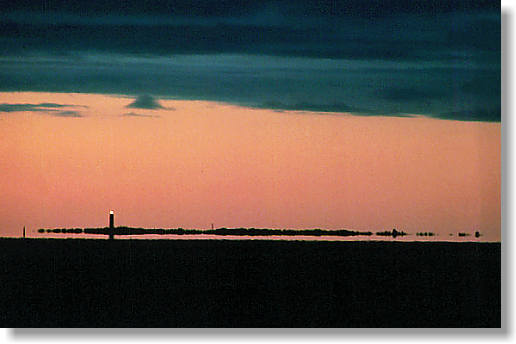
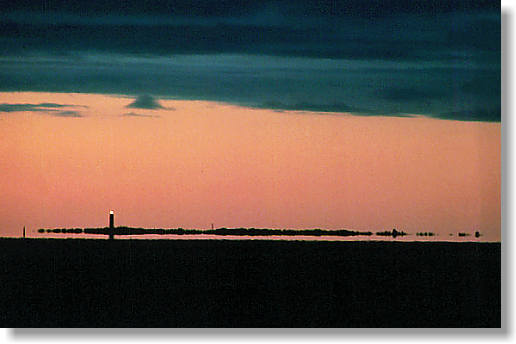
Inferior mirages are quite common. For instance, the water seen on desert sand or on hot pavement is a mirage of sky above the hot sand or asphalt. Landing aircraft in films or car races on television are often filmed from a point quite close to the surface of the hot tarmac of the runway or race track. This means that below the car or plane, you can see a mirage of the sky, but also an inverted image of the actual car or plane — its inferior mirage. In this same way, if you look at an object along, for instance, the wall of a house which is warmed by the sun, you can almost always see a mirage of the object very close to the surface of the wall. Inferior mirages by the sea in autumn are worth investigating by trying out different observation heights: the higher you are as you watch the phenomenon, the less visible it becomes. Meanwhile, the lower you go to watch the phenomenon, the thicker the slice that the mirage ‘cuts’ off the horizon to project the inferior mirage on. Sailors know this phenomenon well: islands look suspended in mid-air. The impression occurs when you watch the seascape from a boat and your eye level is between two and three metres above the water surface. A thin slice of sky above the horizon and the inferior mirage below it become ‘welded together’. The mirage of the island is seen at this height as a strongly flattened slightly rounded ‘bottom half’ of the island, outlined as a dark shape with the island itself “in mid-air along the welding seam”.

The inferior mirage as a phenomenon is rather monotonous: there is always only one inverted mirage below the object and the mirage is always more or less flattened. If the actual landscape itself is beautiful, then so is the mirage, and they may spread together across the horizon as a string of buildings and treetops. As a phenomenon the inferior mirage is, however, always identical in structure and easy enough to understand. As a phenomenon of physics, it is devoid of interest.

The two paths of light in a thermal inversion

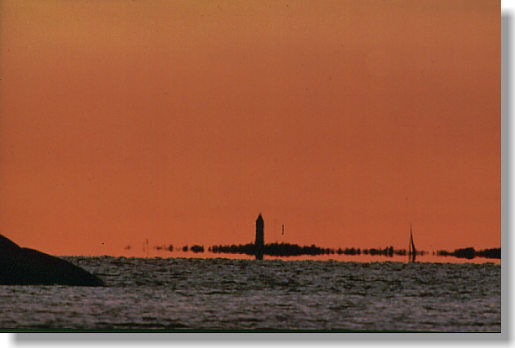
In spring the reverse of the stratified temperatures described above may occur over the sea or a big lake: the cold water, recently freed from winter ice, is covered by a warm layer of air from above the land. Favourable conditions for this occur when the wind blows seaward off the land. In such situations in Finland, there is often a dry, warm wind from deep within the Russian steppes, driving the first spring warmth out over the open sea. Again, the light reflected off a distant island finds two paths to the observer’s eye; again, one of these paths is almost straight from the island to the observer, but this time the other leaves the island at a slight upward angle towards the warmer air, being refracted at the boundary between the air layers down toward colder air and reaching the observer’s eye from an angle above the line of sight. This, again, creates two images of the island, one ‘normal’, but this time the other image is an inverted mirage above the island. This is called a superior mirage. The particular type of atmospheric condition which creates superior mirages is called thermal inversion, i.e. a clearly defined, lighter and less dense layer of warm air rests on top of a cold air mass. Powerful thermal inversion is also the cause of the occasional disturbances of radio and television reception and mobile phone transmissions.

The superior mirage

The type of air layers in a thermal inversion can vary a great deal: sometimes the warm air mass is thick, sometimes it is thin and hot, sometimes there are several warm layers, and the temperature profile of the air layer near the earth and the vertical temperature gradient may fluctuate wildly. As a consequence, the superior mirages caused by this can be extremely strange. At sea, there may not be a single ‘normal’ image of an island, and instead the parts of the island at different elevations are flattened or elongated in several different ways; there may be up to four mirages above the distorted island, visible now right side up, now upside down, and flatter the higher up they are. Islands at different distances also produce different mirages. In this kind of situation, if you can look towards land from your position out at sea, the shoreline will be visible as a wall of roughly even height, where elongated mirages of lighter rocks and darker trees make speckles on the wall. On the open sea, low waves may reach into the mirage-producing air layer, where they become vertically stretched into high columns: this produces a vision of dancing columns far out to sea. If the height of the thermal inversion layer is variable, the mirage may raise parts of the sea surface up into the air, causing the appearance of ‘castles in the air’ which rise and then crumble into the waves in an instant. These exceptionally impressive mirages are also called Fata Morgana. (The phenomenon was named after King Arthur’s wicked stepsister, the sorceress Morgan le Fay, who, according to some legends, lived in a crystal palace under the waves and manifested her magical powers by creating mirages.)

Hunt for mirages with your binoculars

In order to see mirages, you need a wide and fairly even horizontal surface that the air can form layers above. The alternation of air temperatures in the different layers at different altitudes causes vertical distortion of objects. In contrast, the formation of vertical layers of air with subsequent clear and stable horizontal mirages is not possible. The only exception is the situation mentioned before, where a wall is heated by the sun and an inferior mirage is created between an object and the wall. A mirage always has a small angular height, and therefore it is much easier to discover the phenomenon and observe it in more detail with the help of binoculars than with the naked eye.

Mirages require searching and waiting

Inferior mirages are clearly visible near a warm sea surface, but an elevation of as little as a couple of metres may cause the phenomenon to go unnoticed unless you are already familiar with it. On the other hand, as the phenomenon occurs very frequently in late summer and early autumn, it is easy to see if you make a slight effort. Superior mirages, meanwhile, are much more rare than inferior ones and also very sensitive to just the right viewing height. A deviation of as little as one or two metres up or down may prevent you from seeing the mirage at all. Therefore, when conditions seem favourable — for instance the first warm spring day by a cold sea — it is a good idea to scan the horizon from positions at different heights. Here, one clue to the possible presence of mirages can be a dark stripe along the horizon, looking like a thin layer of pollution fog. If you see this, it is well worth experimenting with different viewing heights to look for good mirages; it may even be worth waiting around for them. The wind should be blowing at a few m/s from the warm land mass; should the wind be too strong, even 6-8 m/s, it tends to mix up the air layers. It is nevertheless also true that on the coast of the Gulf of Finland, a long-term current of warm air across the sea from Estonia may be just right for creating conditions which are conducive to mirages. Your chances of seeing superior mirages may, however, be further complicated by poor visibility; these mirages are usually visible out at sea affecting islands at a distance of about 15-30 kilometres, and at that distance, even a slight haze is enough to cloud the contrast and spoil the visibility of the mirage. Fortunately, warm spring air currents are often dry in Finland and thus offer good opportunities for looking for mirages. After all the trouble, it is usually well worth the effort when you actually see a mirage, which at best can distort the landscape in the most incredible way. If and when you come across this natural phenomenon, be grateful for the opportunity and make the most of the atmospheric optics!

The green flash

2946-mirage5-jpg

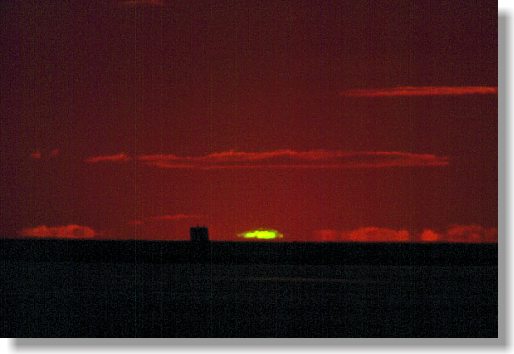
In the context of mirages, we should not forget sunsets, because so many people watch them and therefore often witness the surprising tricks of the atmosphere — possibly even without ever realizing it. Even the setting sun is usually too bright to watch with the naked eye, so a piece of exposed film or the grey filter from a camera is useful. (At sunset, the film you use can even be a piece of exposed colour film, unlike when the sun is high in the sky, when only exposed black and white film is safe.) Unlike the conditions in daytime landscapes, the sunset is never spoilt by a slight haze. Furthermore, the sunlight passes twice through the entire atmosphere, so clear distortions are much more common than good superior mirages. The sun can be distorted in the most amazing ways: it splits up into slices; it looks almost square when it sets; the disc of the sun takes on the shape of a Chinese lantern; after it has actually set, the sun may sometimes float above the horizon as a needle-thin strip for 10-15 minutes before finally disappearing; the sun may have the shape of a pot, a peaked cap, a vase, a cauldron, an atom bomb… On the surface of the sun, dark sunspots may be vertically elongated into dark columns or double like ordinary mirages. At sunset it is possible to see anything! Some people may be familiar with one of Nature’s most exciting surprises: sometimes the very last ray of the setting sun is bright green, a pure, metallic shade of green which would be considered utterly mendacious if a painter dared to include it in his painting. Jules Verne has written an entire novel on the theme of this green flash (Le Rayon vert). It is said that whosoever sees it shall never be short of luck in love! Surely that alone is a good enough reason to go looking for mirages on the horizon?

Pekka Parviainen’s pictures of the sun in different shapes

Text and photos by Pekka Parviainen, mathematics lecturer, University of Turku, December 2001

Where does Finnish come from?

There is a certain logic in thinking that languages spoken in neighbouring countries must be closely related. However, that’s not the case with Finnish.

Finnish speakers may run into questions like “Is Finnish like Swedish?” or “Does everyone in Finland speak Russian?” The simple answer to these questions is no (although Swedish is one of Finland’s official languages).

Both Swedish and Russian belong to the Indo-European group of languages, while Finnish is a Finno-Ugric language. The latter group also includes Hungarian, Estonian, Karelian and the Sámi languages (spoken by the Sámi Indigenous People, whose far-northern homeland is divided into four parts by the borders of the nation-states Finland, Sweden, Norway and Russia), as well as several languages spoken in areas of Russia. The Finno-Ugric languages share enough common lexical and grammatical features to prove a common origin.

Although these languages have developed separately for thousands of years, it can be seen that common features include:

1) absence of gender (the same Finnish pronoun, “hän,” denotes both “he” and “she”)
2) absence of articles (a and the in English)
3) long words due to the structure of the language
4) numerous grammatical cases
5) personal possession expressed with suffixes
6) postpositions in addition to prepositions
7) no equivalent of the verb “to have”

There are various theories about the time and place of the origin of the so-called Proto-Finno-Ugrian language. It seems that Hungarian and Finnish are separated by several thousand years of separate development.

How long Finnish speakers have populated Finland is a question that has always interested Finnish scholars. It is thought that speakers of a predecessor of Finnish arrived in what is now Finland approximately 1,500–2,000 years ago. Over time, contacts proliferated between Finno-Ugric speakers and speakers of neighbouring Indo-European languages, including Baltic, Germanic and Slavic dialects. Numerous loan words borrowed by Finnish, Estonian and the other Baltic Finnic languages (Karelian, Lude, Vepsian, Vote and Livonian) demonstrate the existence of contacts between people speaking Finnic languages and people speaking Indo-European languages. Most loan words in present-day Finnish have come from Germanic and Scandinavian languages, especially Swedish and, of course, English.

Modified from an article originally written by Hannele Branch

Is Finnish a difficult language?

How easily can a foreigner learn a language like this? In fact, Finnish is a very logical language, as many students who have methodologically studied it admit.

Finnish often expresses ideas very differently from the ways of the more commonly studied European languages. In other words Finnish is different. But this does not make it more difficult than other languages. Linguists recognise a phenomenon called Sprachbund. This means that in a certain geographical area, languages which differ from each other typologically share other similarities which result from living in a similar environment. This kind of phenomenon exists, for example, in the Baltic region. Because of the same environment, a common history, culture and contacts, Scandinavian languages, German and Finnish share some features (perhaps mostly in vocabulary) which bind them together and accordingly make it easier for people who know these languages to understand some features of Finnish.

To start with, Finnish is a very demanding language, not least for a teacher and an author of a Finnish textbook. Why? Because Finnish is a very synthetic language. Both nouns and verbs have a large number of inflectional types, some of which are more frequent than others. Furthermore, as I have already mentioned, languages are never static. They change, and, therefore, it is often impossible to give a strict rule for a particular grammatical point. One example of this is the change ti > si which started hundreds of years ago and is still continuing. Many native speakers might hesitate, for example, between the imperfect forms kielsi and kielti, meaning “he forbade”.

For these reasons, the problem facing the teacher of Finnish is to decide in which order grammar and vocabulary should be taught and how thoroughly they should be learnt. The answer to this depends on the aim of the language course. Is it just to learn a little conversational Finnish and to keep the students amused for two hours per week? Or is the learner going to be a translator or interpreter who has to understand all the nuances of the language?

To understand the kind of complexities that Finnish presents to the beginner, let us examine the Finnish equivalent of the simple English sentence: I like you. The English sentence is very easy for a foreigner to handle because you simply place one word after the other. This simple sentence translates into Finnish as Minä pidän sinusta.

Before you can produce this Finnish sentence, you have to know the following:

  1. how a Finnish verb is conjugated (the personal endings);
  2. pitää is a verb affected by consonant gradation; you must know about the t-d alternation;
  3. pitää requires the noun in the elative case; thus you must know about the case system and how the pronouns are declined.

It is quite a lot of grammar to handle such a simple sentence. Of course, you can say Minä pitää sinä leaving all the words in their basic form, and surprisingly the Finns will understand you (provided your body language is appropriate). But if you are a perfectionist or otherwise take your studies seriously, you will want to know how a Finn says it.

However, that is only the start of the problem. In reality it is not very likely that a Finn today would say: Minä pidän sinusta. If a young Finnish man were bold enough to express such feelings in words, he would be more likely to say something like: Mä tykkään susta. This brings us to the reality that every language has a range of dialects and registers. Finnish has regional dialects and different social variants (jargons, slangs). Colloquial Finnish often differs markedly from the standard language. For a foreigner, however, it is always best to start with the standard form of the language.

This all brings me back to the question: Is Finnish a difficult language? As the reader might already have guessed, my usual reply to the question is: it is not difficult but different. The biggest problem is where to start. You want to learn but there seems to be no end to what you have to remember before you can form even the most simple statement. There are so many words which all seem to look the same but which have different meanings and functions.

But is Finnish more difficult than French or Spanish or Latin or German which you might have studied at school? Remember how you learnt (or failed to learn) French at school. How many years did you spend on it? How many classes did you have with teacher every week? How much home work did you have? What was your French like when you left the school? What is your French like now?

When people study Finnish abroad it is most often once a week for perhaps two hours at a time in an evening class. Most teachers give students some homework but many students do not do it. Students often believe, or expect, that a language can be learnt by osmosis – just like that, in the classroom. Unfortunately, the study of any foreign language requires work – and often very hard work. Finnish grammar can be learnt logically. The greatest obstacle is the vocabulary, which requires memory; and the teacher cannot memorise for you.

By Hannele Branch, lecturer in Finnish, University of London

Finnish cuisine: The recipe edition

Starters

2641-cuisine6_b-jpg

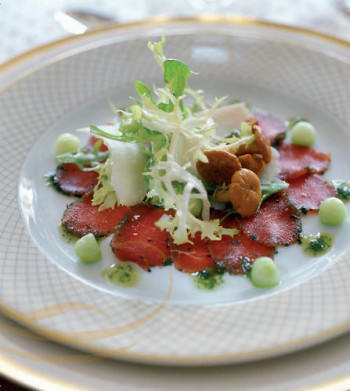
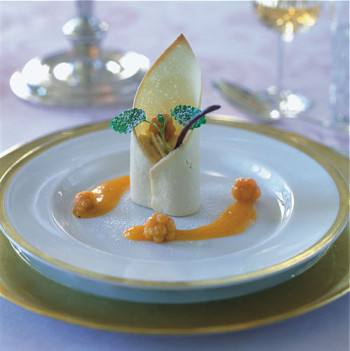
Salted fillet of lamb aux fines herbes with pickled chanterelles

(serves 6)

  • 1 (approx. 180 g) outer fillet of Finnish lamb
  • 1 tsp gourmet salt
  • 2 tbs mint
  • 1 tbs chervil
  • 1 tbs tarragon
  • 1 tsp thyme
  • 1 tbs parsley
  • ½ tsp rosemary
  • ½ tsp lemon pepper
  • freshly ground black pepper
  • frisee salad
  • cucumber bits (e.g. ball shaped)
  • parmesan cheese
  • pickled chanterelles

Chop up all the herbs and add the peppers. Remove the membranes from the meat and dry it. Rub the surface of the meat with salt and roll it in the herb mixture. Press the herbs tightly into the meat to form a green covering. Wrap the fillet tightly into a roll in cling film, let it stand for 2−3 hours and then freeze it. Slice the frozen meat thinly with a slicer or a sharp knife and lay the slices in a circle thinly brushed with the vinaigrette. Sprinkle the vinaigrette lightly over the slices of meat. Set the frisee salad and cucumber bits in the middle of the dish and sprinkle the serving with gourmet salt and parmesan cheese. Drizzle a little herb oil around the edges of the serving dish.

ROSEMARY VINAIGRETTE

  • 5 cl olive oil
  • 1.25 cl red wine vinegar
  • 2 tsp sugar
  • ½ tsp finely chopped fresh rosemary
  • ½ tsp gourmet salt

Mix the ingredients and let the mixture stand for about an hour.

HERB OIL

  • 1 dl rape oil
  • 1.5 dl chopped parsley
  • 5 cl chopped chervil
  • ½ tsp gourmet salt
  • freshly ground black pepper

Chop the parsley, chervil and salt finely in a food processor. Drizzle the oil over them and continue processing until the oil is an even green colour. Season with the pepper and strain. You can store any surplus oil in the refrigerator for later use.

PICKLED CHANTERELLES

  • 1 l small chanterelles

Vinegar solution:

  • 5 cl spirit vinegar
  • 5 cl red wine vinegar
  • 1.5 dl water
  • 2 dl sugar
  • 5 whole cloves
  • mace
  • 1 small cinnamon stick
  • salt
  • (1 onion)

Clean the chanterelles, parboil them for a minute and drain them. Measure the ingredients for the vinegar solution into a saucepan and bring to the boil. Slice the onion into rings and add them and the chanterelles to the boiling solution. Cook for 20 minutes. Remove the whole spices and pour the mushrooms with the brine into small, clean, heated jars. Cool. The chanterelles will keep for a long time when stored in a cold place.

2641-cuisine7_b-jpg

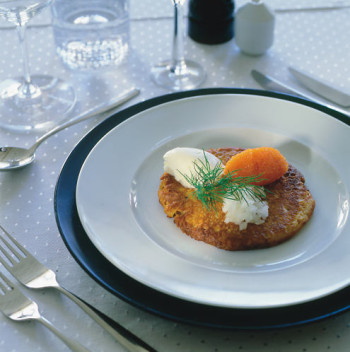
Blinis with vendance roe

(serves 6)

  • 3 dl semi-skimmed milk
  • ½ sachet of dried yeast
  • 2 dl buckwheat flour
  • 2 egg yolks
  • 1 dl beer
  • 5 cl rye flour
  • 1 dl wheat flour
  • ½ tbs salt
  • freshly ground white pepper
  • 1½ tbs smetana
  • 2 beaten egg whites

Warm the milk to 42 °C and add the yeast. Add the buckwheat flour and mix it to a smooth dough. Cover and allow it to stand overnight and ferment into sourdough. Combine the other ingredients with the sourdough, folding in the beaten egg whites last. Fry the blinis until crisp in clarified butter in a blini pan and serve them hot with clarified butter, vendance roe, chopped onion, black pepper and smetana.

2641-cuisine17_b-jpg

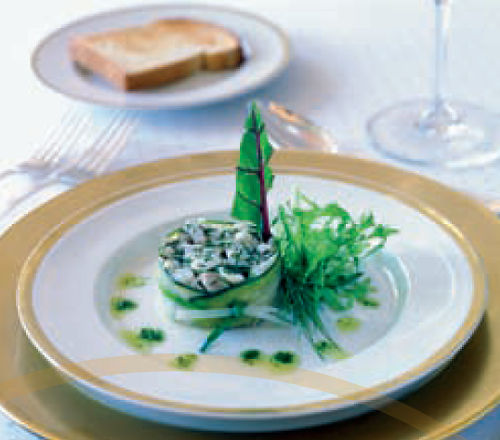
Whitefish tartare marinated in lemon served in a courgette ring

(serves 8)

  • 700 g whitefish fillets
  • 1 courgette

MARINADE

  • 2.5 dl rape oil
  • 1½ tbs sea salt
  • juice of 2½ lemons
  • 3 tsp red wine vinegar
  • 3 tsp sugar
  • 1 dl chopped dill
  • 1 leek

Cut the fish fillets into thin strips. Combine the marinade ingredients. Turn the strips of fish in the marinade ensuring that there is marinade between them. Let them marinate for at least 2 hours.

Cut the courgette lengthwise into thin slices with a cheese slicer. Steam the slices for a couple of minutes and chill them in iced water. Finally dry them carefully between sheets of kitchen roll.

Drain off excess marinade from the strips of fish and dice them. With the aid of a ring mould form the whitefish into tartare portions and wrap rings made of slices of courgette around them. Tie the rings in place with a strip of boiled leak. Serve on a bed of frisée salad, garnish with a shoot of mangold and drizzle herb oil around the serving.

HERB OIL

  • 1 dl rape oil
  • 1.5 dl chopped parsley
  • 5 cl chopped chervil
  • ½ tsp gourmet salt
  • freshly ground black pepper

Chop the parsley, chervil and salt finely in a food processor. Drizzle the oil over them and continue processing until the oil is an even green colour. Season with the pepper and strain. You can store any surplus oil in the refrigerator for later use.

2641-cuisine2_b-jpg

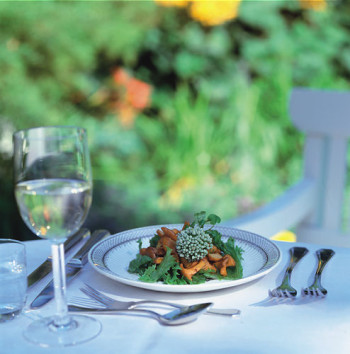
Warm chanterelle salad

(serves 8)

  • 700 g small chanterelles
  • 30 g butter
  • salt
  • freshly ground black pepper
  • 1½−2 tbs chopped dill

SALAD

  • 70 g romaine lettuce
  • 1 head of crispy pot lettuce
  • 14 leaves of rocket
  • olive oil
  • gourmet salt
  • white balsamic vinegar

Clean the mushrooms, place them in a saucepan and sweat them dry. Strain them and allow them to drip completely dry through a sieve. Then sauté them golden brown in butter and season them with salt and black pepper.

Wash the lettuces and let them drip dry. Tear them up into a bowl and dress them with olive oil, salt and balsamic vinegar just prior to serving. Put the mixed salad in mounds on the plates and lay the mushrooms on them directly from the pan. Garnish with onion flowers, crown dill, dill sprigs or chopped dill.

Main courses

2641-cuisine8_b-jpg

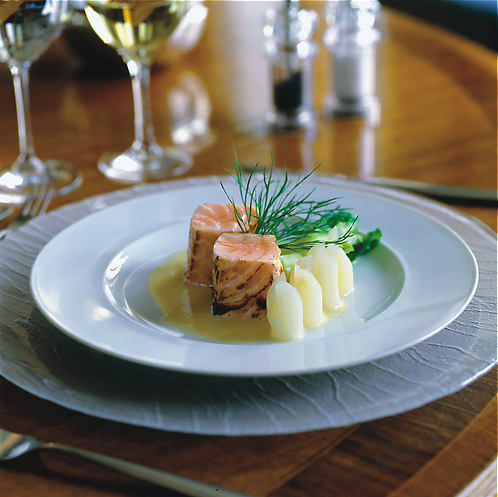
Tower of grilled salmon with Sauternes sauce

(serves 6)

  • 800−900 g salmon, preferably the thicker end of the fillet.
  • coarse salt

From the thicker part of the salmon fillet cut three pieces of approximately equal thickness, each about 20 cm long and 3−4 cm wide. Salt the pieces of salmon and set them aside for about an hour. Wipe off the salt and dry the salmon. Sear the pieces of salmon on all sides on a hot griddle pan, and when they are browned transfer them to an oven tray. Prepare the Sauternes sauce. Then cook the salmon in a 170°C oven for 5−7 minutes until the interior temperature of the fish is about 48 degrees. The fish can remain a little reddish in the middle.

Cut the pieces of salmon crosswise into two and slice the resulting halves again into two. Place the tower-like pieces of salmon in pairs on the plates and serve with the Sauternes sauce, boiled asparagus and green vegetables.

SAUTERNES SAUCE

  • 70 g shallots
  • 30 g butter
  • 3 dl Sauternes wine
  • 2 dl mild fish stock
  • 100 g butter
  • salt
  • freshly ground white pepper

Sweat the shallots in butter and let them stand for a while. Then add the wine and the fish stock. Reduce the sauce to 2.5 dl. Process the ingredients with a hand-held blender to an even consistency and mix in the butter. Froth the soup with the blender and taste for flavour. Add seasoning if necessary.

2641-cuisine9_b-jpg

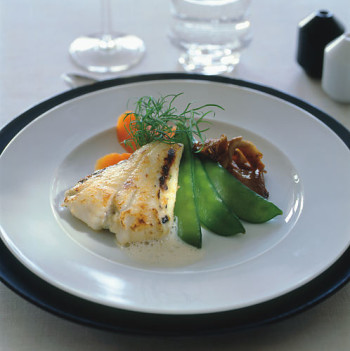
Zander fillets stuffed with mushrooms

(serves 8)

  • 8 zander fillets
  • salt
  • freshly ground white pepper

MINCE

  • 200g filleted zander
  • 1 egg
  • 1 dl whipping cream (approx. 35% fat)
  • salt
  • freshly ground white pepper

MUSHROOM STUFFING

  • 200 g portabella mushrooms
  • 20 g butter

If the zander fillets are thick, you can pound them gently flat. Lay them on the work surface skin side up and season them lightly with salt and white pepper.

Cut up the filleted zander for the stuffing, season it with salt and mince it in a food processor. Add the egg and continue mincing. Finally drizzle in the cream in a thin stream and season with white pepper.

Dice the mushrooms finely, sauté them in butter and drain them.

Spread the mince thinly over the skin side of the fillets of zander and then sprinkle the mushrooms on top. Press them lightly into the mince, and fold the fillets in two, turning the tails over towards the heads.

Grill the folded fillets either on a salted hotplate or a griddle plan. Transfer them to an oven dish, place a knob of butter on each and bake them in a 175°C oven for 10−12 minutes.

Serve with butter and wine sauce, halved tomatoes, mangetouts and sautéed portabella mushrooms seasoned with salt, white pepper and thyme.

BUTTER AND WINE SAUCE

  • 1 onion
  • 1 tbs cooking oil
  • 5 dl white wine
  • 5 cl lemon juice
  • 150 g butter
  • freshly ground white pepper
  • (salt)
  • ½ tbs Maizena cornflour

Chop up the onion and sweat it for a few minutes in cooking oil. Add the wine and lemon juice and reduce the sauce by a half. Thicken slightly with the cornflour. Mix in the butter vigorously with a hand-held blender and strain the sauce. Do not boil it again.

2641-cuisine10_b-jpg

Roast willow grouse with apple

(serves 6)

  • 6 willow grouse
  • 1 large Granny Smith apple
  • salt
  • freshly ground black pepper

Detach the legs and breasts from the willow grouse. Remove any gristle, tenderise them lightly and season them with salt and pepper. Peel the apple and slice it. Reserve 6 rings and put the rest to boil with the sauce base. Sauté the breasts and the slices of apple quickly in butter and transfer them to an oven tray. Roast them for a couple of minutes at 200°C.

Assemble the servings as follows: at the bottom a bed of sautéed chanterelles, on that one breast, then an apple ring and on top the other breast. Garnish with decorative vegetables and drizzle a little of the sauce over the breasts and on the plate.

You can freeze the fillets and the legs and use them later, for example for a timbale.

SAUTÉED CHANTERELLES

  • 250 g chanterelles
  • 1 shallot
  • 2 tbs butter
  • salt
  • freshly ground white or black pepper

Cut up the chanterelles coarsely and chop the onion. Sauté the chanterelles in butter for a few minutes and add the chopped onion.

SAUCE

  • carcases of the willow grouse
  • 1 onion
  • 1 carrot
  • ½ small parsnip
  • 1 l mild meat or chicken stock
  • 1 dl demi-glace poultry sauce mix
  • 1 bay leaf
  • 1 tbs blackcurrant jelly
  • freshly ground black pepper
  • 1 dl whipping cream (approx. 35% fat)
  • 1 tbs butter
  • 2 tbs dark Maizena cornflour

Cut up the carcasses of the willow grouse. Brown them together with the chopped root vegetables in the oven or on a frying pan. Transfer them to a saucepan and add enough stock to cover them. Add the sauce mix and the bay leaf. Cook them for about 40 minutes, strain, and continue to reduce the liquid until the sauce base is sufficiently strong.

Taste for flavour, add seasoning if necessary and thicken with dark cornflour, blackcurrant jelly and a drop of cream. Add 1 tablespoonful of butter and froth the sauce with a hand-held blender.

2641-cuisine15_b-jpg

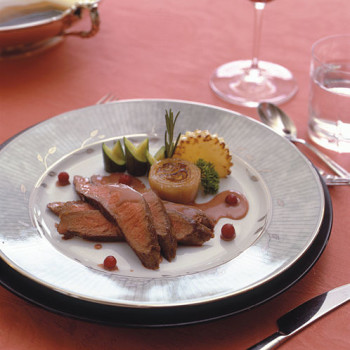
Sirloin of reindeer with lingonberry sauce

(serves 6)

  • 6 sirloin fillets of reindeer (approx. 600 g)
  • salt
  • freshly ground white pepper

Remove the gristle from the fillets and season them with salt and pepper. Let them rest and prepare the sauce (see below).

Sauté the fillets quickly in butter. Continue frying until they turn pink in the middle or roast them for 4−5 minutes in the oven at 200°C. Allow them to rest under foil for 2−3 minutes. Slice them across the grain and set them on the plate. Serve with lingonberry sauce and fried shallots, baby courgettes and turnip rings. Garnish with a few lingonberries and herbs.

LINGONBERRY SAUCE

  • gristle from the reindeer fillets
  • 1 onion
  • 1 carrot
  • 1 piece of celery
  • 1 piece of parsnip
  • 200 g lingonberries
  • 2 tbs sugar
  • salt
  • 1 bay leaf
  • assorted peppercorns
  • 6 dl meat stock
  • 2 dl demi-glace sauce mix (e.g. demi-glace game sauce)
  • 1.5 dl whipping cream (approx. 35% fat)
  • Maizena cornflour

Sauté the gristle and the chopped root vegetables in a frying pan or saucepan. Add the sugar and continue frying until it dissolves. Add the lingonberries, stock, sauce mix and spices. Reduce by a half and strain. Add the cream and continue to reduce the liquid. Taste for flavour and add seasoning if necessary. Thicken the sauce with cornflour.

2641-cuisine11_b-jpg

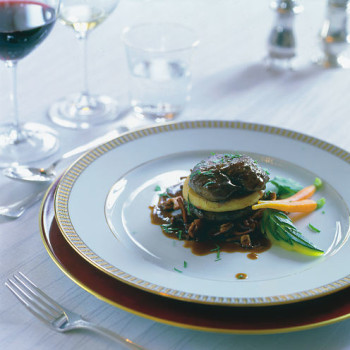
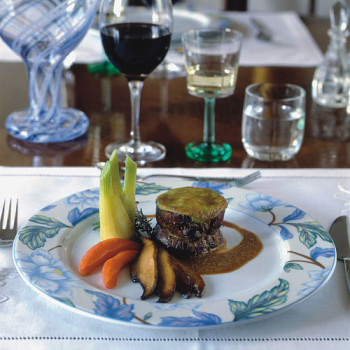
Stuffed elk rump steak topped with goat’s cheese

(serves 8)

  • 1 kg elk rump steak

STUFFING

  • 100 g spinach
  • 50 g dried apricots
  • 50 g goat’s Cheddar cheese
  • balsamic syrup (e.g. De Nigris Balsamic Glaze,)
  • salt
  • freshly ground black pepper
  • mixed herbs

TOPPING

  • 90 g Soignon goat’s cheese
  • 50 g butter
  • 1 slice of toast
  • 1 tbs chopped parsley

Remove the gristle from the meat and slit it open into a steak. Tenderise it lightly and season with salt and pepper. Sweat the spinach rapidly in a drop of olive oil and season with salt and black pepper. Cut the apricots into strips and grate the cheese coarsely.

Spread the spinach evenly all along the steak and then sprinkle the apricot strips and grated cheddar over it. Drizzle a stripe of balsamic syrup over the cheese and fold the slab of meat into a tight roll, binding it with twine in 5 or 6 places. Season the surface of the roll with mixed herbs and salt and allow it to rest at room temperature for about an hour.

Sear the meat in a frying pan and transfer it to a baking tray. Roast it for about 15 minutes at 225°C. Remove it from the oven and allow it to rest for a while. Cut the roll into slices about 3−4 cm thick.

For the topping, dice the toasted bread, the cheese (with the rind) and the butter into small cubes. Blend into a paste in a food processor and roll between cling film into a sheet about 0.5 cm thick. Chill briefly in the freezer. Cut out disks the size of the fillet roll (about 7 cm in diameter) from the paste and return them to the freezer for a while. Place the topping disks on the fillet rolls and gratinate them quickly at a high temperature under the grill in the upper part of the oven.

Serve with elk sauce, sculpted sweet potatoes, fried slices of portabella mushroom and boiled baby fenugreeks.

ELK SAUCE

  • 2 onions
  • 1 carrot
  • 50 g celery
  • 1 tbs butter
  • 6 dl meat stock or demi-glace game sauce mix
  • juices from the roast meat
  • dark Maizena cornflour

Sauté the chopped onion, carrot and celery, add the stock and reduce. Add the juices from the roast meat. Strain the sauce and taste for flavour. Add seasoning if necessary. Also thicken with cornflour if necessary.

Desserts

2641-cuisine12_b-jpg

Cloudberry mousse

(serves 6-8)

  • 1 egg
  • 7.5 cl sugar
  • 1½ gelatine sheets (225×70 mm)
  • 5 cl whipping cream (approx. 35% fat)
  • 1 dl cloudberry purée (strained)

CLOUDBERRY SAUCE

  • 3.5 dl cloudberries
  • 100 g sugar
  • 1 tbs cloudberry liqueur

Pass the cloudberries through a fine sieve or use a hand-held blender to process them into a smooth sauce. Mix in the sugar and thin the syryp to a suitable consistency with the cloudberry liqueur to make 2 dl of sauce.

Separate the egg white from the yolk, and beat the yolk together with the sugar into a froth. Whip the cream and beat the egg white into a froth. Fold half of the cloudberry syrup into the creamed egg yolk. Soak the gelatine, squeeze it dry, dissolve it in boiling water and add it to the creamed egg yolk. Then gently fold in the whipped cream and beaten egg white. Allow the mixture to set in the refrigerator for about 3 hours. Pipe the mixture into cylinders made from tuille pastry and garnish with cloudberry sauce and fresh cloudberries.

TUILLE PASTRY CYLINDERS

  • 1 egg white
  • 35 g icing sugar
  • 34 g flour
  • 20 g melted unsalted butter

Cream the egg white and the icing sugar. Fold in the flour. Add the melted butter and mix to an even dough. Cover the dough and place it in the refrigerator for about half an hour. Heat the oven to 200 °C and either grease two oven trays or use silicon pastry mats. Use a mould to cut the pastry into the desired shape to make the cylinders and bake them in the oven for 5-8 minutes until the biscuits take on an attractive colour. Use a spatula to lift off the biscuits carefully and bend them into cylinders while still hot.

This will make about 15 biscuits depending their shape and size.

The dough will keep in a refrigerator for 3-4 days.

2641-cuisine1_b-jpg

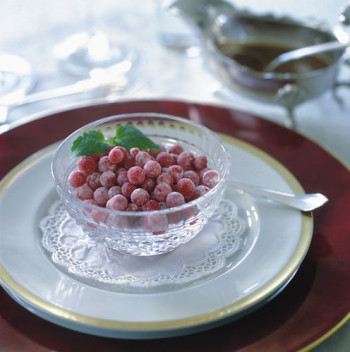
Frozen redcurrants with butterscotch sauce

(serves 6)

  • 6 dl fozen redcurrants

Place 1 dl of slightly frozen redcurrants in each bowl or dish and pour hot butterscotch sauce over them. Serve immediately.

Alternatively you can roll the redcurrants in icing sugar twice, re-freezing them between the sugarings. Serve with the butterscotch sauce in a separate jug.

BUTTERSCOTCH SAUCE

  • 5 dl coffee cream (approx. 10% fat)
  • 150 g sugar

Cook the mixture on low heat for 1-1 ½ hours until the sauce is golden brown.

2641-cuisine16_b-jpg

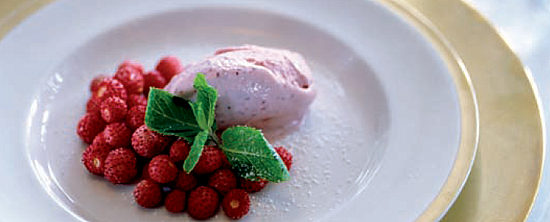
Wild strawberry ice cream

(serves 6)

  • 3 egg yolks
  • 5 cl sugar
  • 3 dl coffee cream (approx. 10% fat)
  • 400 g wild strawberries
  • 5 cl sugar
  • 1 tbs Koskenkorva vodka
  • 1 tbs strawberry liqueur

Blend the egg yolks, sugar and cream in a bowl and whip the mixture in a bain-marie until it reaches a temperature of 82 °C. Cool the bowl in iced water.

Blend the sugar with the wild strawberries in a food processor. Add ¾ of the mixture and the vodka to the ice cream mixture and make it into ice cream in an ice cream maker. Add a little sugar to the remaining strawberry mixture and thin it with strawberry liqueur to form a sauce. Garnish the ice cream portions with whole wild strawberries and strawberry sauce.

2641-cuisine13_b-jpg

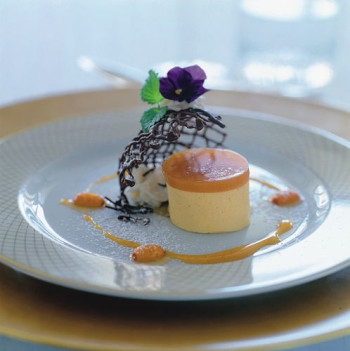
Sea buckthorn pudding with a chocolate hood

(serves 8)

  • 5 cl milk
  • 1 egg
  • 1½ gelatine sheets (225 x 70 mm)
  • 1,25 dl whipping cream (approx. 35% fat)
  • 1 dl sea buckthorn essence

Soak the sheets of gelatine in cold water for about 10 minutes. Squeeze them dry. Heat the milk. Place the egg and the soaked gelatine on the bottom of a bowl and pour the hot milk over them, stirring continuously. Then add the essence and finally fold in the whipped cream.

Pour the mixture into a loose-based baking tin to a depth of about 3 cm. When it has set, pour a thin layer of the sea buckthorn jelly (made with sea buckthorn essence and 1 sheet of gelatine) over it.

When the jelly too has set, carefully remove the sides of the baking tin and cut round serving portions with a ring mould. Lay a chocolate basket hood partly over each serving and garnish it with drizzled sea buckthorn syrup, halved sea buckthorn berries and a sprig of melissa. You can also use edible violets to give the servings a final garnish.

SEA BUCKTHORN ESSENCE

  • 2 dl sea buckthorn juice
  • 1 dl sugar

Reduce the sea buckthorn juice and the sugar gently for about 10 minutes until there is 2 dl left. Use half of the essence for the pudding and the other half for the jelly.

SEA BUCKTHORN SYRUP

  • 1.5 dl sea buckthorn juice
  • 1 dl sugar

Boil the ingredients at 104°C into a syrup.

CHOCOLATE BASKET HOODS
(8 pieces)

  • 100 g plain chocolate

Melt the chocolate in a bain-marie, or use the melting program in your micro-wave oven. If using a bain-marie, ensure that the water does not come into contact with the chocolate.

Crush ice finely in a food processor and pack it into an individual serving bowl. Then turn out the ice onto the work surface. Pipe the melted chocolate in a thin stream over the heap of crushed ice in a cross-hatch pattern and allow the chocolate to set. Lift the chocolate basket carefully off the ice and place it upright. You have time to make several baskets before the ice melts.

2641-cuisine14_b-jpg

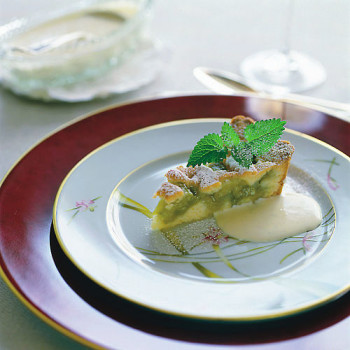
Rhubarb tart with vanilla sauce

(serves 8−10)

  • 150 g butter
  • 7.5 cl sugar
  • 1 egg
  • 2 dl wheat flour
  • 7.5 cl potato flour
  • 1 tsp baking powder

FILLING

  • 8 dl rhubarb chopped into pieces 5 ml thick
  • 2 dl sugar
  • 2 tbs potato flourCream the butter and sugar and add the cream, continuing to beat. Combine the flour, potato flour and baking powder, add them through a sieve, and knead into a dough. Press the dough into a greased loose-based cake tin about 24 cm in diameter. Set some of the dough aside to use as a decoration.For the filling, mix the sugar with the chopped rhubarb and steam it quickly. Let it cool a little and add the potato flour. Allow the filling to cool completely and then pour it onto the base. Roll or pipe some of the dough into the shape of a cross to place on top of the filling. Bake at 180°C for about 40 minutes. Serve with vanilla sauce.VANILLA SAUCE
    • 2 egg yolks
    • 5 cl sugar
    • 1 vanilla pod
    • 1.5 dl semi-skimmed milk
    • 1.5 dl whipping cream (approx. 35% fat)
    • ½ tbs potato flour
    • 1.5 dl loosely whipped cream

Measure all the ingredients apart from the whipped cream into a saucepan. Stirring all the time, cook in a bain-marie until done (at 82°C). Cool and fold in the whipped cream.

Measures

The following conversions are approximate but sufficiently accurate for normal cooking purposes.

Dry measures:
Metric US/Imperial
10 g 0.35 oz
100 g 3.5 oz
500 g 1.1 lb
1 kg 2.2 lb
Liquid measures:
Metric US/Imperial
1 cl 0.34 fl oz/0.35 fl oz
1 dl 8.5 gills/3.5 fl oz
5 dl 1.1 pints/0.88 pints
1 l 2.2 pints/1.76 pints
Other measures:
1 cm 0.39 in
1 tsp 5 ml
1 tbs 2 cl

Oven temperatures

Gas mark
Very low 120 250 1
Low 150 300 2
Moderately low 160 325 3
Moderate 180 350 4
Moderate hot 190 375 5
Hot 200 400 6
Very hot 230 450 7

Substitute ingredients

Below is a list of more generally available substitutes for Finnish ingredients. The substitutes are listed in order of preference.

  • cloudberries – woodland strawberries
  • elk meat – venison (roe or red deer)
  • reindeer meat – venison (roe or red deer)
  • sea buckthorn berries – cranberries, lingonberries, redcurrants or blackcurrants
  • willow grouse (ptarmigan) – Bresse pigeon
  • zander (pike-perch) – angler fish or sole.

Published September 2008, updated June 2017

Success of Finnish schoolchildren indicates society’s values

What factors lie behind the success? We interviewed Aki Holopainen, Headmaster of Munkkiniemi School in Helsinki.

Mr Holopainen is not surprised by the results of the PISA survey. He points out, however, that the conclusions to be drawn from the results do not apply merely to the school system.

“A school is not a separate island of excellence — and there is a lot of room for improvement in schools too. In my opinion, the results of the survey are rather an indication of the values and potential of society.

Children and adolescents grow up in an environment where education is highly valued across the board and where there is a high level of preparedness to do work. The value base is never questioned, there is generally a good, non-disruptive atmosphere in which to work, and there is a practical approach in all things,” says Holopainen, listing factors behind the success of Finnish schools.

Top-level schooling for all children in the immediate area

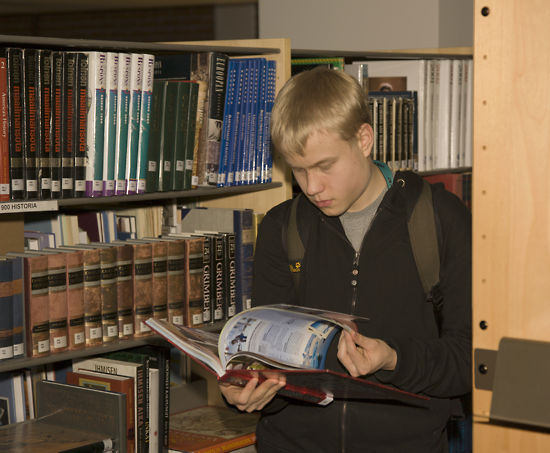
Munkkiniemi School has a library with 23,000 volumes.

Munkkiniemi School has a library with 23,000 volumes.Photo: Anna Dammert

Holopainen is in charge of one of the biggest schools in Helsinki, with some 950 pupils and 70 teachers. The School has some 400 pupils studying in the 7th to 9th grades, which is compulsory, and 450 upper secondary school pupils.

The upper secondary school is classless, in other words pupils complete courses at their own pace, the average time being three years. The school is situated in the west of Helsinki, in the middle-class suburb of Munkkiniemi. The oldest section of the school building dates back to 1951, and it was last renovated and extended in 2000. The building is pleasant and well-equipped, including a sports hall and seating area of more 900 m2, an assembly hall seating 700, a library with 23,000 volumes and the latest in information and teaching technology apparatus.

Munkkiniemi School is a privately owned, but as far as the pupils are concerned there is hardly any difference between it and municipal schools. Tuition is free of charge at all levels in the school, the costs being covered mainly by central and local government grants.

Being a private school means being administratively autonomous, but teachers’ salaries and the school’s disposable funds are largely equal to those of municipal schools.

All the children living in the catchment area are guaranteed a place in the school, and other Helsinki children can be admitted by application if there are places available. Admission to the upper secondary school depends on the average of the grades on the comprehensive school leaving certificate, and students can apply from anywhere in Finland.

In Finnish schools, the grade scale ranges from 4 (fail) to 10 (excellent), and in order to get a place at Munkkiniemi School, a student must have a minimum grade average of about 8.2 to 8.3.

“We’re a good school, but we’re not right at the top. This means that our pupils include quite ordinary boys too, not just high-achieving girls. About half of those who complete their minimum compulsory education at this school progress into our upper secondary stage,” Holopainen says.

Comprehensive curriculum guarantees knowledge and skills

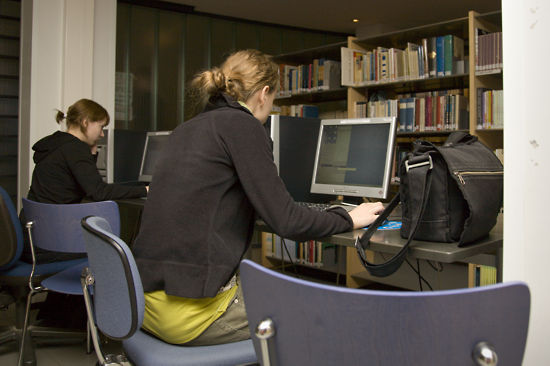
According to teachers young people know how to react with healthy common sense to what is published on the internet.

According to teachers young people know how to react with healthy common sense to what is published on the internet.Photo: Anna Dammert

Munkkiniemi School has its own curriculum, which is based on the national curriculum. The national curriculum sets the compulsory subjects, the number of hours to be allocated to them and the contents to be taught. It is up to the school and the teachers to decide how the subjects will be taught.

“The national curriculum is clearly-stated and extensive and by following it we ensure that pupils and students are left with no skill gaps. It also guarantees a uniform level of study and goals so that no major differences are created by school or by area. This must be one factor that explains the consistently high level of success that Finland reaches in the PISA tests,” Holopainen states.

In the upper level of the comprehensive school, every pupil studies the core subjects, namely mathematics, one foreign language and the other official language (Swedish or Finnish depending on their mother tongue), natural sciences, history, social studies, religion or ethics, health education, music, arts and crafts, home economics, and physical education.

The pupils also choose optional subjects. At Munkkiniemi School, there is a diverse array of electives on offer, thanks to the diversity of teaching staff: drama, basketball, home economics, art, technical work, textile work, physical exercise, media education, music, information technology, French and German.

Upper secondary school has mainly the same compulsory subjects as the upper level of comprehensive school, with the addition of economics, law, psychology and philosophy. Munkkiniemi School specializes in extended mathematics courses, which start in comprehensive school and continue in upper secondary school.

The course programme in upper secondary school classes includes university-level mathematics courses. If they so wish, the upper secondary school pupils can also study applied skills courses. “The high educational level, motivation and commitment of the teachers are important factors. They genuinely pursue the pupils’ best interests and also integrate those who need special support.”

Why then do Finnish schoolchildren do so well in natural sciences? “The natural science curriculum contains an enormous amount of material, and to help assimilate it, we appeal to all the senses and use practical exercises. A wide range of laboratory and field work keeps up interest and motivation,” replies Tiina Virkki, who teaches geography and biology.

“I also think it is important for subjects taught to be always connected to the society outside school. In biology and geography, for example, we achieve this via extramural ecological issues that will become increasingly important,” Virkki continues.

Munkkiniemi School participates in the Green Flag project that is part of the international Eco-Schools programme in which an entire school community endeavours to reduce environmental loading caused by the school.

How are things going at school?

2900-pisa4_b-jpg

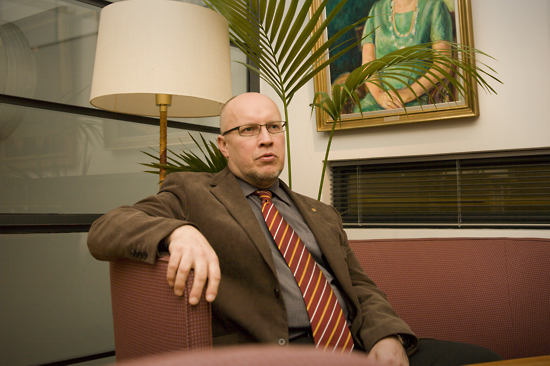
Aki Holopainen, headmaster of Munkkiniemi School in Helsinki.

From time to time, the media ask how things are going in Finnish schools. Are top-level learning results achieved at the expense of increasing stress and mental ailments? This question was last put to the public at the beginning of November 2007 in connection with the shooting at Jokela School.

“In my opinion, things are going well, generally speaking. In fact, I think that for most young people things are going better than ever, but there is some polarization here. Some suffer from exclusion, and their situation can be difficult,” Holopainen remarks.

He feels the Jokela shooting was the act of a sick individual and does not see it as a symptom of a wider problem. Surveys conducted in Finnish schools have occasionally revealed that Finnish children do not enjoy school as much as children in many other European countries.

This Holopainen puts down partly to cultural factors: when a Finn is asked ‘how are you?’, the reply is not automatically ‘fine, thanks’, but an honest description of his or her health at the time. In many countries, it would be bad manners or even provocative to talk about dissatisfaction or a community’s faults. Nor does Holopainen believe that the problems have increased, just that they have never been talked about so openly.

“When we plan the schoolwork, we take into account the situation of individual pupils and make sure that not too many tests and projects are piled on to them at the same time. At our school we have a school social worker, a psychologist, a pupil counsellor and a pupil welfare team who look after the wellbeing of the pupils both pre-emptively and when someone starts to show symptoms. In my opinion, this system works,” Holopainen states.

Primary responsibility for children lies, of course, with the parents, but the adults in a school community are an important support for young people. Many foreign visitors to Finnish schools remark on the friendly relationship between teachers and pupils. The pupils are on familiar terms with their teachers and address them by their first names, and they chat informally in the classrooms and corridors.

“Finnish young people are smart, society-oriented, gregarious and family-centered. Parents are interested in their schooling and support it; cooperation with families is good. As I see it, our schools are producing young people who are not only capable but also mentally strong and well-balanced and who have a lot to offer the world,” Aki Holopainen sums up.

By Salla Korpela, February 2008

Environmental protection in Finland

Finland provides many good examples of how to protect the natural environment. Wide-ranging and detailed environmental data and high levels of technological skill form the basis of Finland’s effective environmental protection policies. As one of the world’s wealthiest industrialised countries Finland is also able to afford vital environmental investments. Finland’s low population density and comparatively unspoilt natural environment also facilitate nature conservation.

The fruits of successful environmental policies are clearly visible around the country. Many polluted lakes and rivers have been cleaned up. Air quality has improved greatly around industrial locations. An extensive network of protected areas has been built up to safeguard biodiversity. Forests – Finland’s most valuable natural resources – are managed more sensitively than in the past, and the overall annual growth rate clearly exceeds the total timber harvest.

Emissions from large industrial facilities have particularly been curbed significantly. There has also been progress in controlling emissions from agriculture, transport and homes, although these trends have not been as favourable as for industry. There is still a need to reduce airborne emissions of carbon dioxide, noise and particles from traffic, as well as waterborne nutrient emissions generated by farms and by scattered settlements not connected to sewerage systems.

Efforts to halt the ongoing decline in biodiversity have also been insufficient in spite of progress in the conservation of certain threatened species. The struggle to combat climate change must also be continued more resolutely both in Finland and globally. But the successful reduction of acidification problems shows that well-planned strategic environmental policies can achieve their goals.

Sensitive northern environments

The main aim of environmental protection is to anticipate risks and prevent damage before any harm is done. It is especially vital to be aware of critical ecological thresholds in cold northern environments, where nature can be slow to recover from any damage.

The vegetation of Finnish Lapland is especially sensitive to disturbances such as logging and overgrazing by domesticated reindeer. Fortunately these threats have been reduced through the protection of large areas of forest and restrictions on the number of reindeer. Increasing tourism in Lapland can likewise burden the environment, but it can also encourage environmental protection, since most tourists are attracted to Lapland by the region’s unspoilt natural settings.
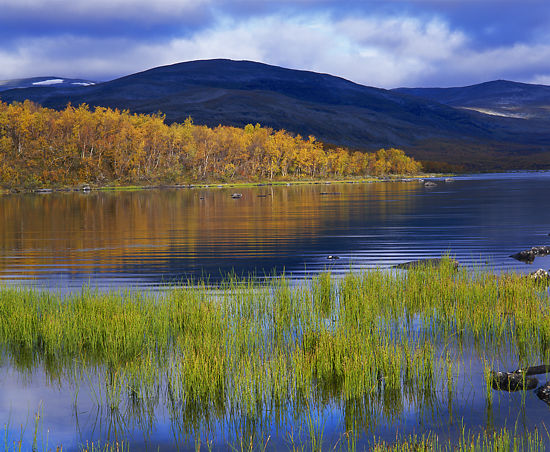
A view across a lake with forests and fells in the background.

Tourism in Lappland can burden the environment but it can also encourage environmental protection, since tourists are attracted to Lapland by the unspoilt nature.Photo: Finnish Tourist Board/Pekka Luukkola
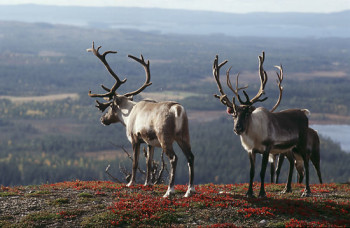
Reindeer standing on a fell.

Photo: Finnish Tourist Board

It is much harder and more expensive to repair any damage done to the environment than to prevent harm in the first place. In the worst cases damage may even be irreparable. Arctic climatic conditions may inhibit the natural regeneration of logged forests in northern Lapland. On the other hand, the predicted warming of the climate could completely wipe out species and whole ecosystems adapted to cold conditions.

Climate change and the consequent reduction in snow and ice cover could prove to be fateful for animals such as the Saimaa ringed seal, since these rare lake seals raise their young in winter dens dug in compact snowdrifts on the frozen waters of the Saimaa lake system in eastern Finland. Thanks to the efforts of conservationists, seal numbers have risen slowly since the 1980s, but there are still fewer than 300 seals, and their population increase seems to be slowing. Saimaa ringed seals used to face problems including persecution by fishermen and contamination with mercury and other toxic chemicals. Controls over fishing have thankfully reduced the numbers of young seals killed in fishing nets or traps, but seals are increasingly suffering due to the disturbance of their habitat by snowmobile traffic in the winter, and the construction of lakeside holiday homes.
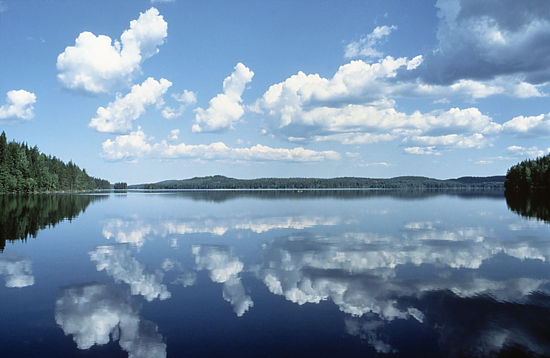
A clear lake reflecting the clouds on the sky.

Across 80% of Finland’s lacustrine area the water is rated excellent or good. Water near industrial sites has improved but Finland’s inland waters are shallow and vulnerable and thus still need care.Photo: Finnish Tourist Board

Many environmental problems can be lessened if sufficient time and money can be found to address them. But it could take decades to resolve the problem of eutrophication in Finland’s inland waters and the Baltic Sea, for instance. Over time some waters could recover from the presence of excess nutrients through natural processes, if further inputs of phosphorus and nitrogen could be kept down to acceptable levels. But there are at least 1,500 lakes around Finland where more active ecological restoration measures such as selective fishing, oxygenation or the removal of aquatic vegetation would be needed to combat eutrophication effectively. Such measures have already been applied in almost a thousand lakes.

Eutrophication is an example of a gradual environmental change that can suddenly attract the attention of the public when a certain threshold is exceeded. In Finland eutrophication first became the focus of extensive debate in the summer of 1997, when massive algal blooms occurred widely in the Gulf of Finland. Blue-green algae occur naturally in Finnish waters, but such massive blooms are a clearly visible consequence of decades of excessive nutrient loads.

Water quality is classified as excellent or good across 80% of the total area of Finland’s lakes. Waters near industrial facilities have particularly become cleaner in recent years. But Finland’s small and shallow bodies of water are sensitive to pollution, and environmental protection must still be further enhanced.

Finnish track record

Finland has been rated among the world’s leading countries in many international comparisons of environmental protection standards, such as the Global Economic Forum’s regularly compiled Environmental Sustainability Index. Finland’s strengths include highly effective environmental administration and legislation, and the ways environmental protection is considered in all sectors of society.

But not all comparisons are so flattering. Signs of the need for improvement include Finland’s large ecological footprint, high levels of material and energy consumption, and excessive greenhouse gas emissions.

The WWF assesses the environmental impacts of societies or individuals through indicators known as ecological footprints, which show how much biologically productive space would be needed to meet our levels of consumption and deal with the wastes and emissions we generate. A recent comparative study revealed Finland’s natural resource consumption rates per capita to be the third highest in the world.
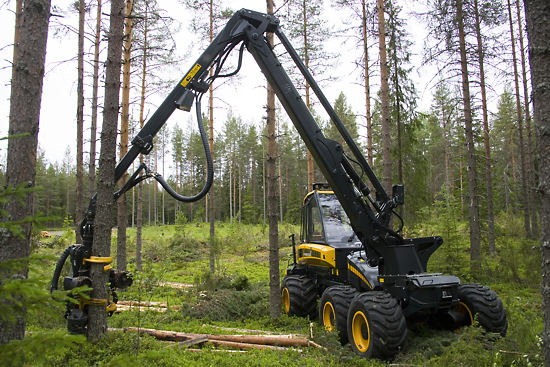
A forestry machine at work in a forest.

Finland is Europe’s most forested country, with more than 70% of the land covered with forests. About 17,000 km2 of forest is strictly protected. Finland’s forest resources are increasing as the natural growth of forests more than compensates for the amounts of timber logged.Photo: Ponsse

According to the WWF, the average Finnish citizen has an ecological footprint of about 7.6 global hectares. This footprint is more than three times larger than the global average. Finland does have more than 12 global hectares of biologically productive areas per head of population, however, which is much higher figure than the national consumption rate. This figure is so high due to Finland’s extensive areas of sparsely populated forest.

The environmental loads produced by Finns are also large in absolute terms. When all the natural resources used in Finland are added up to give the country’s Total Material Requirement (TMR), it becomes evident that each person consumes an average of about 100 tonnes of resources every year. This figure includes the hidden material flows that lie behind the production of all goods and services. These figures are high due to Finland’s high standard of living, large-scale intensive metal and forest industries, and the high demand for energy due to the cold climate and long distances.

Enhancing the efficiency of the use of materials is one of the main goals of today’s environmental policies. The concept of eco-efficiency is used to promote such improvements, with the idea being to produce more commodities and well-being using the same amounts of resources. Initiatives designed to increase eco-efficiency include a wide-ranging national programme to promote sustainable consumption and production launched in 2005. This programme includes more than 70 measures designed to save energy and natural resources. Such goals can only be reached through the active involvement of all sectors of society.

The Baltic Sea – permanently ill?

Some experts fear that the state of the Baltic Sea has deteriorated so much that it might never be able to revert to its natural condition. The Baltic is a shallow sea, and has only a slow exchange of water with the open seas. In its catchment area live 5.2 million Finns and some 80 million other people and much of the pollution from their homes, workplaces, farms and ships ends up in the sea. Symptoms of the Baltic’s serious ecological problems include mass algal blooms, declining fish stocks and extensive lifeless areas on the sea bed.

The depletion of vital oxygen from large areas of the seafloor is a consequence of the high inputs of nutrients entering the Baltic. Oxygen is used up when algae and other organic matter sink to the sea bed and decompose. In the absence of oxygen, large quantities of phosphorus can be released from seafloor sediments into the water. This internal nutrient loading can prolong the eutrophication process even where new inputs of nutrients from the land are kept under control.

The bottom waters of the Baltic are only replaced effectively when an occasional major pulse of heavy salty water from the North Sea flows in along the sea bed through the Danish Straits. In recent decades such pulses have been increasingly rare. It is not yet known whether this is a natural variation, or the impact of climate change on sea currents.
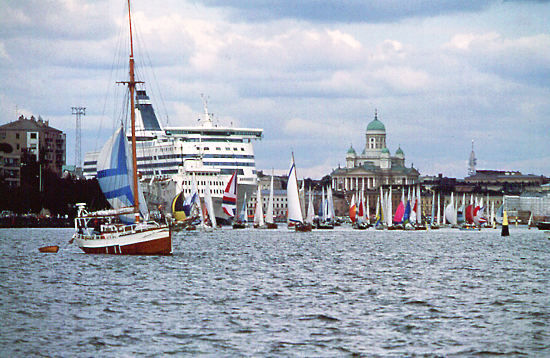
Helsinki seen from the sea; sailboats in the water and Helsinki Cathedral in the background.

The waters of the Gulf of Finland near Helsinki are much cleaner than they used to be, thanks to successful environmental protection work. But to improve the state of the whole Gulf, measures need to be taken in Russia and Estonia as well as Finland.Photo: Martti Lintunen

Nutrient emissions from Finland’s coastal towns and fish farms into the Baltic have declined significantly. Finland has also contributed to improvements in wastewater treatment in the Russian city of St Petersburg, which represents the largest single source of nutrient loads entering the Gulf of Finland. Cleaning up St Petersburg’s wastewater is the fastest way to improve the state of the Gulf.

The condition of the Baltic Sea has long worried citizens and politicians from all the countries around its shores. One of the first ever international environmental agreements, the Helsinki Convention on the protection of the Baltic marine environment was signed by the coastal states in 1974. The Helsinki Commission (HELCOM) was set up to co-ordinate both the implementation of the convention and related improvements in environmental protection around the Baltic Sea.

Thanks to national and international actions, the amounts of toxic chemicals entering the Baltic Sea have been radically reduced. Many of the coastal states have also curbed nutrient inputs. More than half of the worst pollution sources around the Baltic have already been successfully addressed, enabling them to be removed from HELCOM’s Hot Spots List. Only one of the originally listed ten Finnish hot spots remains: farmland in southwest Finland bordering the Archipelago Sea.

Green and spacious cities

By international standards Finland’s cities are small and blessed with many green areas. Most have only grown recently and are still developing rapidly. Until the mid 20th century Finland was still largely a rural society. Large-scale industrialisation only commenced after the Second World War. The new demand for an industrial labour force and the mechanisation of agriculture led to rapid urbanisation, especially from the 1960s onwards. Migration trends in recent years have involved the movement of people from smaller towns to a handful of larger urban centres.

This migration and rapid construction have resulted in more spatially scattered suburban communities, especially on the fringes of larger cities. This trend is problematic in environmental terms, as it leads to increases in traffic, energy consumption and the use of natural resources. It is difficult to organise effective public transportation systems where homes, services and workplaces are scattered over large areas. Planners nowadays endeavour to locate new buildings in existing built-up areas near the necessary infrastructure. Well-planned urban developments can still leave enough room for green areas and nature.

Air pollution and other environmental problems associated with cities around the world are comparatively slight in Finland’s urban centres. The most serious health problems concern particle emissions and noise. More than 800,000 Finns live in surroundings where they are subjected to noise levels of more than 55 decibels. Road traffic is the main source of this acoustic pollution , which can be difficult to reduce since residential areas are necessarily located near road links.

Airborne particle emissions reduce urban air quality in Finland particularly in the springtime, when the dry air can contain high concentrations of particles eroded from roads by the studded winter tyres of vehicles and the grit spread on roads through the winter to prevent skidding. This problem is serious enough to provoke widespread public concern. Particles emitted from domestic heating systems are also a health risk, especially in areas where many homes are heated with firewood.

Climate change and energy

Global climate change is expected to have extremely dramatic effects in Finland. Finnish experts have estimated that mean annual temperatures could rise by 2–7oC by 2080, while annual precipitation could increase by 5–40%. The winters could become largely snow-free in southern Finland, whilst in the north more snow may fall than previously.
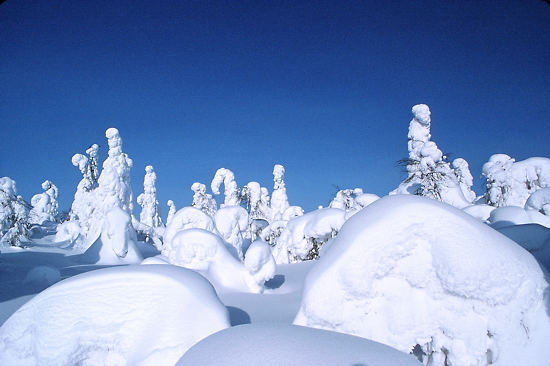
Snow-covered trees.

Climate change could mean largely snow-free winters in southern Finland, whilst in the north more snow may fall than previously.Photo: Finnish Tourist Board/Hannu Hautala

Finland’s contributions to global greenhouse gas emissions are small in absolute terms, but very high when measured per capita. It is proving to be very difficult to reduce emissions to their 1990 level, which has been set as Finland’s target under the UN Kyoto Protocol. Emission levels in recent years have clearly exceeded this target, except during a couple of years with exceptional conditions.

Finland’s northerly location increases the demand for energy and natural resources, but the cold climate has also forced people to make sure that they produce and use energy efficiently, and insulate their homes well. Finland is one of the world’s leading countries in co-generation, the production of combined heat and power (CHP), by which the same power plant produces both electricity for the local grid, and heat to warm buildings and run industrial processes, a system known as district heating. This makes good use of heat energy that would be wasted in facilities only generating electricity.

Renewable energy sources account for about a quarter of all the energy used in Finland – a very high proportion by international standards. A large part of this renewable energy is produced from residuals generated in the pulp and paper industry, including bio-sludge and wood chips. Almost half of the wood used in Finland is burnt to produce energy.
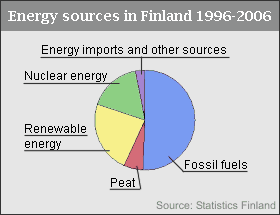
Pie chart of energy sources in Finland 1996-2006.

Chart of energy sources in Finland 1996-2006.

About 50 per cent of Finland’s energy is produced by burning oil, gas or coal. Nuclear power accounts for 16% of the country’s energy, and peat about 5%. The share of nuclear energy will rise in a few years when Finland’s fifth nuclear reactor comes into operation.

Finland’s energy policies aim to significantly increase the use of renewable energy sources. So far wind power, solar power and geothermal or ground source heat are only exploited on a very small scale, but the number of Finnish buildings warmed using ground source heat is increasing rapidly. The greatest challenge for Finland is to find ways to save energy more effectively.

Threat of acidification receding

Measures taken to combat acidification represent one of the most significant successes in the field of environmental protection. Purposeful policies followed at national and international level have had the desired effects. Finland’s soils are naturally vulnerable to acidification, since they only contain low concentrations of calcium to buffer the acidifying effects of sulphur and nitrogen compounds deposited in the soils from airborne pollution. Farmland soils in Finland have to be regularly limed due to their natural acidity.

Thanks to various international environmental agreements and the development of cleaner fuels and emission cleaning technologies, acidifying emissions have declined steeply around Europe. And the collapse of the Soviet Union reduced airborne acidifying emissions from beyond Finland’s eastern border. Finland’s own atmospheric sulphur and nitrogen emissions are today just 25% and 60% of their levels in 1990.
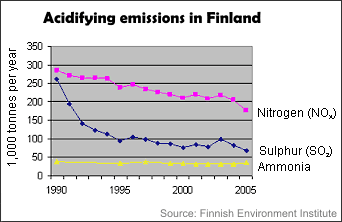
Chart of acidifying emissions in Finland 1990-2005.

Chart of acidifying emissions in Finland.

Acidification is harmful to many plants, but especially aquatic species. The forests and inland waters of northern Finland are particularly vulnerable, since their buffering capacity is naturally weak. Habitats in southern Finland are generally more resistant to acidification.

The harmful impacts of acidifying compounds can be expressed in terms of critical loads, which are the highest concentrations of impurities that an ecosystem can withstand without significant damage. If this critical load is exceeded, the entire functioning of an ecosystem can be endangered. According to such indicators the threat of acidification generally seems to be receding in Finland.

Toxic chemicals

Unnatural concentrations of toxic chemicals in the environment have given rise to public concern, but their levels in Finland do not currently represent a serious health risk. Emissions of the most hazardous substances have been significantly reduced. Annual atmospheric emissions of lead, for instance, have declined from more than 1,000 tonnes in the early 1980s to just 20 tonnes today. Finland does not suffer from large quantities of airborne toxic pollution originating from other countries.

Finland’s winters are too cold for many crop pests to survive, so farmers do not need to use as many pesticides as their counterparts further south. But in such harsh conditions even small quantities of hazardous substances can be fateful for sensitive ecosystems and the cold climate can slow the natural degradation of toxic substances.

Only a few chemicals have been studied in enough detail for comprehensive evaluations of their environmental impacts to be possible. The EU’s REACH Regulation system (for the Registration, Evaluation and Authorisation of Chemicals) aims to improve the management of risks related to chemicals. A key element of this system will be a database maintained by the new European Chemicals Agency, located in Helsinki. The database will include a register of all substances manufactured or imported by EU countries in quantities of more than one tonne. It has been estimated that the system will cover some 30,000 chemicals.

It is important to have comprehensive information about the properties of different chemicals, to ensure that action is taken to prevent releases of the more harmful chemicals into the natural environment. Preventive measures are vital, since many hazardous substances persist in the environment indefinitely, or only degrade slowly. Chemicals contaminating soils can still cause problems decades after the pollution occurs. In Finland there are estimated to be approximately 20,000 sites potentially suffering from soil contamination. Efforts to remediate such sites intensified in the late 1990s, and more recently clean-up work has been initiated at several hundred sites annually.

Biodiversity in Finland

Finland’s biodiversity is exceptionally well documented, thanks to high quality research and the work of many keen amateur naturalists. On the other hand, Finland’s natural habitats contain fewer species than other habitats such as tropical rainforests. It is estimated that some 42,000 species occur naturally in the wild in Finland but in spite of the dedicated work of researchers, sufficient information is only available for the conservation statuses of about 15,000 of these species to be evaluated. About a tenth of these evaluated species have been classified as threatened. Some 200 species have provenly become extinct in Finland.

Finland and the other EU countries officially aim to halt the ongoing decline in biodiversity by 2010, but this goal is unlikely to be achieved. The number of threatened species in Finland is expected to grow by about 10% by 2010.

Most of Finland’s threatened species are associated with forest and farmland habitats. Forest species are threatened by logging and the shortage of decaying wood in commercially managed forests, and by the fragmentation of the remaining natural forests. Meanwhile, due to the intensification of agriculture, small-scale ecologically diverse habitats created by traditional farming practices have almost disappeared from the Finnish countryside. The spread of building developments along shorelines also reduces biodiversity.
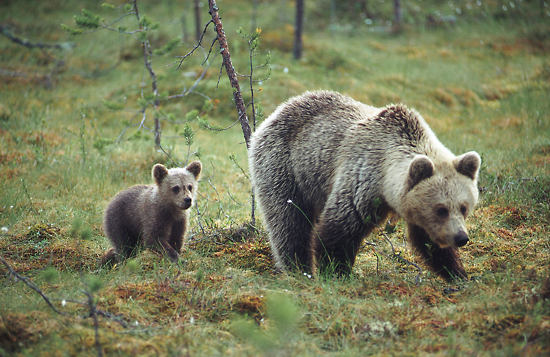
A bear and its cub roaming in the forest.

The number of Finland’s large carnivores, bear, lynx, wolf and wolverine, has increased in recent years.Photo: Finnish Tourist Board/Eero Kemilä
Two whooper swans with their wings spread.

Finland’s national bird, the whooper swan, has also become more widespread since the end of the 1950s.Photo: Finnish Tourist Board

Finland has achieved notable nature conservation successes in recent years, particularly in the cases of some larger animals and birds that were formerly hunted or harassed. Finland’s national bird, the whooper swan, for instance, has become much more widespread in recent decades.

The growing numbers of Finland’s four large carnivores – bear, lynx, wolf and wolverine – have provoked widespread public debate. These predators are feared in rural areas, even though exceptional permits have always been readily granted for the hunting of individual animals considered to be dangerous. There has been less controversy about increasing numbers of golden and white-tailed eagles.

Invasive species are one of the greatest threats to biodiversity around the world. The rapid spread of exotic species can seriously disrupt native ecosystems. So far only a few such species have created problems in Finland. The cold climate offers some protection, as many invaders fail to survive the northern winter. Biodiversity in Finland could be faced by many more problems with invasive species if the climate becomes warmer.

Jari Lyytimäki, M.Sc., researcher, Finnish Environment Institute, July 2007, updated July 2014
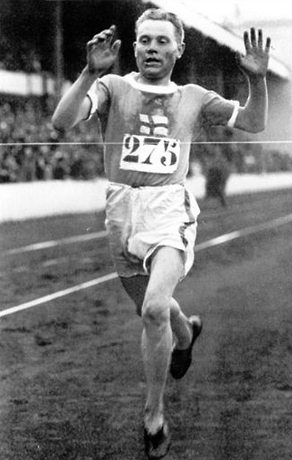
Tracing Finland’s eastern border

The Finnish-Russian border has been redrawn many times during the past.

Finland’s eastern border was drawn for the first time between Sweden and Novgorod in 1323 in the Treaty of Nöteborg. It cut through the present Finnish territory from northwest to southeast, from Pyhäjoki in northern Ostrobothnia to the Karelian Isthmus. The areas to the south and west of the border, including Vyborg, belonged to Sweden, while the areas north and east of the border, including the northern parts of Finland, were Russian territory. For centuries, the border drawn in the Treaty would separate two cultures, religions and languages, and its impacts are still felt today. Finnish dialects can be roughly classified into eastern and western variants in accordance with this ancient divide.

First eastwards

Resurgent Sweden and Russia clashed a number of times during the ensuing centuries and most of the battles were fought on Finnish soil. The Treaty of Teusina, concluded in 1595, ended a bloody guerrilla war between the two countries (known as the Long Wrath) that had been raging for 25 years. Under the Treaty, the northern section of Finland’s eastern border made a great leap eastwards, reaching the Arctic Ocean. Those drawing the new border recognised the fact that Finnish tribes had already spread towards the east. The next redrawing came two decades later. Russia had been weakened by succession disputes and Sweden managed to occupy large areas of Russia located to the southeast of Finland, which were ceded to it in the Treaty of Stolbovo in 1617. As a result of its territorial gains, Sweden became one of the largest countries in Europe. For Karelians living in the areas now under Swedish rule, the redrawing of the border meant major changes. Sweden started to convert members of the Orthodox Church to the Protestant faith and imposed heavy taxes on them. As a result, a large number of Karelians moved to Russia and the westernmost Finnish tribes started settling in the areas conquered by Sweden.

Then westwards

Some 100 years later, in a war known as the Great Wrath, Tsar Peter the Great reconquered the areas Russia had ceded to Sweden in the 17th century. Under the Treaty of Uusikaupunki, which brought the conflict to a close, Finland’s eastern border was moved to more or less where it is today. Two decades later, Russians invaded Finland again. The occupation, known as the Little Wrath, ended with the Treaty of Turku under which the areas east of the Kymijoki River and those around Savonlinna were ceded to Russia.

Finland's eastern border 1323 - 1947.

Finland’s eastern border 1323 – 1947.Map: The Karelian Association

Under the Treaty of Hamina in 1809, which ended the war between Sweden and Russia fought in 1808-1809, Finland was incorporated into Russia. Finland was granted autonomy, its pre-war administrative bodies remained in place, Protestantism remained the country’s religion, and the laws passed under the Swedish rule remained in force. In 1812, the parts of Karelia around Vyborg and to the north of Lake Ladoga were incorporated into the autonomous Grand Duchy of Finland. As a result, Finland’s eastern border now followed the course laid down in the Treaty of Stolbovo in 1617.

Borders of the independent Finland

Finland declared itself independent in December 1917. A state of war existed between Finland and Soviet Russia even though no major battles were fought. Russia recognised Finland’s independence and concluded a peace treaty with its northwestern neighbour. Under the treaty, signed in the Estonian town of Tartu in 1920, the northern area of Petsamo was incorporated into Finland, while Finland ceded the Karelian districts of Repola and Porajärvi to Russia.

Finland’s eastern border was redrawn for the last time during the Second World War following conflicts between Finland and the Soviet Union. Under an interim peace treaty in 1944, Finland again had to cede to the Soviet Union the areas around Vyborg and to the north of Lake Ladoga, the Petsamo area, and parts of the northern municipalities of Salla and Kuusamo. Almost the entire population of these areas, some 400,000 people, were resettled in different parts of Finland.

By Salla Korpela, June 2008