Finns walk on water in winter

When the winter reaches its coldest and snowiest time, the Finns take it in stride. They make the most out of it by using the frozen ocean as a winter playground.

It’s fun, fascinating and maybe just a little scary to walk over the frozen Baltic Sea. And even more fun to ski over it. You can drill a hole in the ice and go fishing, or visit a site where a larger hole is maintained and go swimming.

Thick ice occasionally disrupts Baltic shipping lanes, but for the rest of us, it brings a sense of adventure and a breath of fresh air. Islands become closer, suddenly just a stroll away, directly across the bay, instead of requiring boats or bridges. When conditions permit, municipal authorities plough ocean ice-skating tracks several kilometres long.

It’s a winter wonderland well worth experiencing if you have the chance.

Official disclaimer

Remember to use a healthy dose of caution, of course: Don’t go out alone – follow the crowds of locals and be aware that, especially as spring approaches, ice conditions can change and weaken from day to day, sometimes from hour to hour. If the ice looks too thin or you’re otherwise in doubt, just stick to our slideshow.

Strolling over the sea

Photos by Tim Bird
Text by Peter Marten

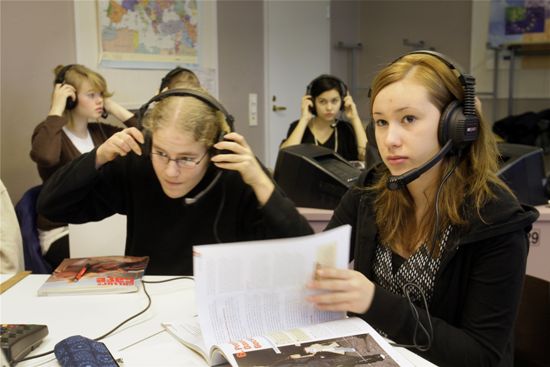
The secret of Finnish schools

Is UK-style competition and discipline the best way to learn? Or should we ensure that kids are divided early into different educational focuses, as they do in Germany? The principal of Helsinki’s German School says – as do many of his colleagues around the world – that you can learn a lot from Finland.

In 2011 the German School celebrates its 130th anniversary. It’s the oldest foreign-language private school in Finland, but is also fully recognised and cofunded by the Finnish authorities. More than two-thirds of its students are Finnish.

Weber believes Finland has recognised that well-being forms a prerequisite for meaningful learning. This is also linked to a greater emphasis on pre-empting problems. "By comparison, students fall through the cracks more often in Germany before someone notices and considers how to help them," says Weber, who taught mathematics for ten years at a comprehensive school in North Rhine Westphalia.

In contrast to Germany or the US, Finland has virtually no private tutoring market, but the school regards itself as responsible for its students and organises similar services. "So children get help while there is still a real chance," Weber says.

Other advantages that he notices include the consistently high quality of teacher education in Finland and the highly motivated teaching force. But why are teachers in Finland more motivated?

The best of both systems

2881-ge_school2_b-jpg

Photo: Sari Gustafsson/Lehtikuva

"Teachers are well respected here," says Weber. "That strengthens their sense of self-worth. This really takes some getting used to for teachers arriving from Germany. First they have to learn to deal with receiving praise for their work."

The German School has an excellent reputation, and many education-oriented Finnish parents enrol their children there to work toward the widely recognised German school-leaving examination and grow up bilingual. However, the school has also borrowed quite a bit from the Finnish system.

"We look to select and combine the best aspects of both systems. Our school also employs addition personnel: a healthcare specialist, two special-needs teachers and a school welfare officer. And I’m very proud that in 2009 a school psychologist joined our establishment."

Things that are common in Finland would be considered a luxury in Germany.

Another secret

Even if reading levels have dropped slightly in Finland, particularly among boys, according to the newest OECD Programme for International Student Assessment (PISA) study, the Finns are still far stronger than many other countries. Weber believes that there is more to it than the Finnish affinity for reading and the many excellently equipped public libraries, which make reading fun.

2881-ge_school3_b-jpg

Photo: Heikki Saukkomaa/Lehtikuva

"Many children begin reading aloud while they’re still toddlers. There is also another secret: television. In many other countries, programmes are dubbed, but in Finland they are subtitled. The children are forced to read fast if they want to understand what’s going on."

However, in a country where the emphasis is on integration rather than singling people out, where equal opportunity is a priority and where no one is supposed to be overlooked, is it possible that some above-average children go unnoticed?

"No," says Weber. "In discussions with colleagues from other Nordic countries, we’ve determined that in Scandinavia there is a sort of reluctance to put any child before the rest of the group. But in Finland I haven’t seen that. They look at it from all angles."

For the head of the German School in Helsinki, there are many things you can learn from Finland, but that doesn’t mean there aren’t things that Finland could learn from other countries, as well. One of these areas might be approaches to students who come from an immigrant background, he suggests.

By Rebecca Libermann, March 2011

Helsinki’s uniquely beautiful winter soul

The seasons of the year all contribute to the soul of the Finnish people, and winter occupies a special place. In the middle of winter the days are short – in northern Finland the sun doesn’t even rise above the horizon for weeks on end.

However, when the winter sky is free of clouds, it can turn the most amazing shades of blue. And when everything is covered with snow, it reflects any and all light, seeming to brighten up even the dusk.

At the southern end of the country, the capital city Helsinki provides uniquely beautiful views that combine snow, ice, sky and ocean. It’s all within a few steps of the city centre – see our slideshow to see for yourself.

The capital’s winter coat

By Nadja Karhunen

Forecast fair for weather expertise exports

Finnish meteorological know-how is a sought-after commodity as global demand increases for knowledge about long-term weather scenarios.

They know a thing or two about the weather in Finland. They get plenty of it, after all.

Finns are even keener than most to know what the weather is going to do. In the harsh winters, it’s a question of national economy, even survival, of Baltic Sea ice cover and traffic conditions.

During the fleeting summer it’s a question of factors affecting the growing season on one hand and, on the other, of how to allocate precious vacation: the reliably clement beaches of Thailand or the lakeside Finnish summer cottage?

The Finnish Meteorological Institute (FMI), founded more than a century ago, is charged with the responsibility of imparting information about the whims of the Finnish climate. The fact that this climate is changing, for whatever reason, means that FMI is increasingly engaged in researching long-term scenarios – an area of expertise that has attracted interest and business from around the world.

“We have invested a lot in the last two years to increase our consulting service activities,” says Harri Pietarila, head of consulting services at FMI. “We’ve established a dedicated unit, increased manpower and increased the number of projects and subsequent income significantly. It will be a rising trend through 2011 at least.”

Increasing global demand

As the economic and social results of climate change, such as agricultural yields and natural resource availability, fall into sharper focus, governments are recognising the need for accurate forecasts and better preparations for extreme weather events. “There is an increasing global demand for better meteorological and climate data and services,” says Pietarila. “So we are in a very competitive and growing market worldwide.

Sea smoke: On a cold winter morning, fog drifts over the open sea past frost-decorated vegetation on the island fortress of Suomenlinna, outside Helsinki.

Sea smoke: On a cold winter morning, fog drifts over the open sea past frost-decorated vegetation on the island fortress of Suomenlinna, outside Helsinki.

“Almost all of our projects and work are related to climate change,” he continues. “Observation networks; climate projections; adaptation advice; early-warning system and disaster risk reduction projects; weather and climate production systems – we offer them all. International cooperation takes the form of commercial consulting projects, research projects, bilateral cooperation with sister organisations, and exchanges and cooperation between experts and scientists.” Governments, companies and other meteorological institutes all benefit from FMI’s expertise.

FMI’s projects extend from the Balkans to the Caribbean and from Central Asia to the Pacific. A project in Nepal and Vietnam, for example, will help those countries to prepare for dangerous weather events causing flooding and landslides [full disclosure: the project receives funding from the Finnish Ministry of Foreign Affairs]. Such non–profit-making projects are carried out under the Institutional Cooperation Instrument (ICI), which facilitates the participation of government institutes and agencies in development cooperation. FMI has other similar projects in progress in Peru on a number of Pacific islands.

Competitive advantages

Income from the institute’s commercial activities is close to half of FMI’s total chargeable income, including that from activity required under Finnish public law, rising from a little more than 4 million euros in 2006 to 6.2 million in 2009. According to Pietarila, FMI has several competitive advantages from a commercial consultative perspective, as well a head start over other meteorological institutes.

“We offer a better organisational structure, a better system for production delivery covering the whole chain from observation to end products, and customer orientation. FMI is both a service and research organisation, while most of our sister organisations are only service organisations, so we always have the best research information available as well as high-end systems for service. And we have good connections and partnerships with Vaisala, the world-leading Finnish manufacturer of meteorological instruments.”

Every nation likes to talk about its weather as if it’s a defining national characteristic, like the local language. In reality, of course, the climate and its short- and long-term phenomena and consequences have no respect for borders. The forecast can only get fairer for FMI’s exports of weather-related expertise.

By Tim Bird, December 2010

Begin the year brightly

Colour, contrast and texture illuminate Helsinki landmarks and parks when light designer Mikki Kunttu and his colleagues are given free rein.

Lighting designer Mikki Kunttu, who gained the international spotlight with his work on the 2007 Eurovision Song Contest in Helsinki, adds colour and brightness to the Finnish capital with Season of Light until January 9, 2011. He is joined by other designers and performers from Finland, Sweden, Germany and USA.

Shows take place at seven locations, six of which are outdoors, from Esplanade Park to Senate Square to the Parliament building. If you can’t get to Helsinki to see the light, gaze upon our slideshow.


Season of Light 2011


From the top of a purple Unioninkatu (Union Street), you can see the "natural" streetlights and traffic lights in the neighbourhoods of Kaisaniemi and Hakaniemi, backed by the tower of Kallio Church.

From the top of a purple Unioninkatu (Union Street), you can see the "natural" streetlights and traffic lights in the neighbourhoods of Kaisaniemi and Hakaniemi, backed by the tower of Kallio Church.

 
The Walkea Fire Circus ignites audiences three times each evening during Season of Light 2011.

The Walkea Fire Circus ignites audiences three times each evening during Season of Light 2011.

 
The folks behind the fire: Members of the Walkea Fire Circus relax between bouts of torch tumbling.

The folks behind the fire: Members of the Walkea Fire Circus relax between bouts of torch tumbling.

 
Purple to the people: Helsinki Cathedral forms the focal point of Mikki Kunttu's light show <i>Mercy</i>.

Purple to the people: Helsinki Cathedral forms the focal point of Mikki Kunttu’s light show <i>Mercy</i>.

 
Senate Square's statue of Tsar Alexander II receives its share of light in Mikki Kunttu's <i>Mercy</i>.

Senate Square’s statue of Tsar Alexander II receives its share of light in Mikki Kunttu’s <i>Mercy</i>.

 
Visitors are amazed at the variation and effects achieved by the constantly changing interplay of light on the cathedral and the square.

Visitors are amazed at the variation and effects achieved by the constantly changing interplay of light on the cathedral and the square.

 
The LED cross, installed in front of the cathedral especially for the Season of Light, shows a slowly altering pattern. At times an angel-like figure can be discerned.

The LED cross, installed in front of the cathedral especially for the Season of Light, shows a slowly altering pattern. At times an angel-like figure can be discerned.

 
Variations on a theme: As the cross changes colour, so do the lights projected onto the cathedral.

Variations on a theme: As the cross changes colour, so do the lights projected onto the cathedral.

 
Pedestrians on this well-travelled path in Kaisaniemi Park find themselves walking through an installation by Finnish lighting designer Tülay Schakir.

Pedestrians on this well-travelled path in Kaisaniemi Park find themselves walking through an installation by Finnish lighting designer Tülay Schakir.

 
Unique angle: While Swedish artist Per Sundin’s <i>Soul of Suomi</i> plays across the face of the Parliament building, scaffolding still remains outside the nearly complete Helsinki Music Centre across the street. (Note: <i>Suomi</i> means "Finland" in Finnish.)

Unique angle: While Swedish artist Per Sundin’s <i>Soul of Suomi</i> plays across the face of the Parliament building, scaffolding still remains outside the nearly complete Helsinki Music Centre across the street. (Note: <i>Suomi</i> means "Finland" in Finnish.)

 
Inside Sanoma House, the headquarters of daily newspaper <i>Helsingin Sanomat</i>, German artist Ralph Larmann's <i>Stage Emotions</i> acquaints viewers with onstage spaces and atmospheres created using light.

Inside Sanoma House, the headquarters of daily newspaper <i>Helsingin Sanomat</i>, German artist Ralph Larmann’s <i>Stage Emotions</i> acquaints viewers with onstage spaces and atmospheres created using light.

Note: Click the first photo to begin the slideshow. "Next" and "Previous" buttons appear in the top corners when you roll your mouse over the photos.


Links:

in downtown Helsinki every evening until January 9, 2011

Try it online: for the Parliament building 

Photos by Tim Bird
Text by Peter Marten, updated January 2011

Choking off cancer cells

We’re one of the first nonspecialist publications to hear about how researchers led by award-winning professor Kari Alitalo in Helsinki are breaking ground with a new procedure to limit or even halt a cancer tumour’s growth by choking off its supply of oxygen and nutrients.

Overlooking the sea and the Prime Minister’s residence, the University of Helsinki’s Meilahti campus is Finland’s biggest medical centre, encompassing around ten institutions – among them the Biomedicum research and teaching centre, where some 1,200 researchers work, including academy professor Kari Alitalo, one of the world’s leading fighters in the battle against cancer.

Alitalo earned his MD from the University of Helsinki in 1977. That year, he published the first of nearly 400 papers in medical and scientific journals.

Now 58, Alitalo is a dapper gentleman with a salt-and-pepper moustache and a pleasant way of explaining complex concepts. He speaks with a mild American accent, dating back to the early 1980s, when he worked for future Nobel laureates J. Michael Bishop and Harold E. Varmus in San Francisco.

Alitalo has won a string of awards, including the 2006 Louis-Jeantet Prize for Medicine (475,000 euros) for discovering the first growth factor controlling the formation of the lymphatic vessels. The jury described it as a “breakthrough could lead to innovative anticancer and cardiovascular therapies.”

In October 2010, he was awarded Norway’s Anders Jahre Senior Medical Prize (125,000 euros) for his “pioneering discoveries relating to the development and growth of lymphatic vessels,” which have led to “new promising approaches to treat cancer and metastases.” In December 2010, Alitalo was honoured with the Earl P. Benditt Award in the US for his “groundbreaking work on angiogenesis and lymphangiogenesis.”

Explaining how it works

More accolades are likely following Alitalo’s latest paper, published in the prestigious American journal Cancer Cell in December 2010.

On a bitterly cold day just before its release, he explained how it outlines a new strategy of using antibodies to halt the growth of blood vessels. His team’s latest breakthroughs will likely lead to more powerful weapons to battle cancerous tumours. The attack focuses on the blood vessels which they need for growth and the lymphatic vessels they use for metastatic spread – the much-feared stage that is so often fatal for patients.

|||Photo: Marja Airio/Lehtikuva

Photo: Marja Airio/Lehtikuva

Alitalo and his teams have earlier shown how the formation of metastasis in lymph nodes can be cut by 50 to 70 percent. This is done with antibodies that prevent VEGF-C – a protein that stimulates the growth of new blood vessels – from setting up shop in growth factor receptors known as VEGFR-3. These antibodies can also stop the formation of new blood vessels, a process known as angiogenesis.

In adults, this usually only occurs when a wound is healing or as part of the menstrual cycle. However cancerous tumours also have the ability to launch angiogenesis. Without new vessels to supply oxygen and nutrition, they simply can’t grow.

Medicines that block angiogenesis are already used to treat some kinds of cancer. However they are often ineffective, and some cancers develop resistance to them. In binding with these receptors, these antibodies must compete with growth factors in the tumour – and can be overpowered by them. It can also be difficult for antibodies to enter the tumour because of irregular blood circulation and high pressure within the growth.

“The new antibody works on a different principle,” explains Alitalo. “It’s much more effective, even when there are higher levels of growth factors. And if you can inhibit the growth process, you can starve the tumour to death.”

“According to our new observations,” he says, “the combination of antibodies that block both growth factor binding and dimerisation appears to be more effective than either antibody alone” – creating a synergistic approach that is better than the sum of its parts.

Molecules that fight tumours

His identification of growth factors that spur new vessel growth has already led to the clinical approval of the first molecules targeted to fight vessel growth and tumour progression.

“These findings should translate into improved tumour therapies,” says Alitalo.

Indeed, some of his team’s antibodies have already been licensed to the US company ImClone – notorious for its association with Martha Stewart – which was recently bought by pharmaceutical giant Eli Lilly.

This year, Helsinki University has made three patent filings regarding the new invention.

|||Photo: Sinimaaria Kangas

Photo: Sinimaaria Kangas

“In late November, two companies visited Helsinki to discuss if they will take the licence,” reveals Alitalo. “It’s very likely that a big one might be interested. The timeframe going forward should be very quick. Some of our antibodies are already at the Investigational New Drug application stage in the US. It usually takes four to six months for the FDA to deal with these applications. Then the safety study can start.”

On the new strategy, he estimates that after the license deal is signed, another year of development will be needed before a similar application can be filed.

“But the platform for antibody therapy is now there,” he stresses. “These are very safe forms of therapy because they have very minimal side effects. They are our bodies’ own molecules. This also makes it much quicker to develop them.”

Links:

Alitalo Lab at Biomedicum, Helsinki
 

By Wif Stenger, December 2010

Knowledge, skills – and time to grow up

In Finland, there’s no hurry to send children to school, as daycare centres offer high-quality learning through play.

At eight o’clock on a winter morning, the lights are turning on at Satusoppi (Fairytale Nook). This daycare centre is located on the ground floor of a small block of flats in Tapiola, a suburb in Espoo just west of Helsinki.

Emerging from snowsuits, knit caps and mittens are children ages three to six – some sleepy, some ready to play. The large, well-lit space is equipped with kid-sized furniture, shelves lined with books, games, toys, instruments and arts and crafts supplies.

First on the schedule is breakfast, before getting together in the morning circle in the largest room. "What day is it today?" asks assistant director Eeva Sorvari. "What kind of weather is it?" Hands go up, and those in the know take turns answering.

Each of the centre’s 24 kids takes a turn as "child of the week." When the big week comes, the child tells the morning circle about him or herself and his or her family. Satusoppi has a focus on the arts, so the staff also chooses an "artist of the month," whose life and work the youngsters learn about.

The morning circle is a way of uniting the group and a time to learn. The children learn numbers; how to read simple words; concepts of time; seasons; and current events. And even the youngest learn how to sit quietly and concentrate during this shared time.

World-class art education

2870-satusoppi2_b-jpg

Photo: Anna Dammert

Because Satusoppi emphasises the arts, it has partnerships with a nearby modern art museum, an orchestra, a music academy and a puppet theatre. From time to time, the kids go on field trips. Recently they had a chance to try out the playful furniture of world-renowned designer Eero Aarnio, and to draw with the maestro himself.

When comparing drawings with Aarnio, one little girl confided, "That looks like a bunny, even though I was trying to draw a puppy." Aarnio replied, without missing a beat, "Oh, don’t worry. Sometimes when I set out to draw a table it ends up being a chair."

The same week that Aarnio drew with the kids, he was awarded the Pro Finlandia medal for his life’s work, as well as a Green Good Design from the European Centre for Architecture Art Design and Urban Studies and the Chicago Athenaeum Museum of Architecture and Design. The latter award, presented for a space divider known as the Tree, is intended to draw attention to environmentally friendly, socially responsible design.

Subjective right to daycare

The Satusoppi daycare centre is part of the Finnish early childhood education system. By law, every preschool-age child has a subjective right to a spot at a municipal daycare centre after his or her parents have taken their maternal and/or paternal leave. Since most mothers work, daycare services are generally used by all kinds of families.

Even after parental leave, mothers and fathers have the right to stay at home to take care of a child on unpaid leave without losing their jobs, at least until the child reaches the age of three. This right is enshrined in the Employment Contracts Act.

2870-satusoppi3_b-jpg

Photo: Anna Dammert

There are plenty of options: family daycare providers, who take care of small groups of children in their homes, as well as private and municipal daycare centres, which may have a variety of educational emphases. At the age of six, each child has the right to free pre-primary education, which often takes place at a daycare centre.

After their morning gathering, the Satusoppi kids split up into three groups according to age. The oldest group, the six-year-old preschoolers, are already systematically learning school skills. It is important that when they start school – the same year they turn seven – the children know how to do things like tie their own shoelaces, cross a street safely and even peel their own boiled potatoes at lunchtime.

Many also surreptitiously learn to read, write and do simple arithmetic. Drawings of barnacle geese make it clear that the Satusoppi children are learning about nature as well. They play outside every day in a nearby park and eat lunch and an afternoon snack at daycare. The youngest ones can also take naps.

Highly educated staff ensures quality
 

Satusoppi is a private daycare centre backed by an association. It has a contract with the city of Espoo, which funds its operations, and it’s open to children from all families in the area, regardless of socioeconomic status. The fees for daycare – whether operated or outsourced by municipalities – are set nationally and adjusted according to family income. For the lowest-income families, there is no charge, while the highest rate is 254 euros a month. The fee includes meals. The actual cost of the care is about 1000 euros a month per child, with the difference being paid by the local municipality.

Society at large also invests in early childhood education through the higher education of daycare staff. The director of each centre must have a kindergarten teacher’s degree, which is a lower university degree. Generally, all daycare centre employees are required to have formal training in the field. Group sizes are limited to ensure that each child is safe and receives sufficient attention to his or her needs. Satusoppi has a staff of five adults including one who is primarily a cook. If there are tears during the course of the day, there is always a lap to curl up on.

By Salla Korpela, December 2010

Allegro speeds up Saint Petersburg line

When rail transport between Finland and Russia began in 1870, people could scarcely have imagined that one day a train would cover the distance between Helsinki and Saint Petersburg in just three and a half hours, as the new Allegro does.

The new, high-speed train Allegro commenced service on December 12, 2010 and marks the beginning of a fresh era on the Saint Petersburg route. It cuts more than two hours off the line’s former end-to-end travel time.

For years now, passengers on Finnish domestic lines have been able to crisscross the country on Italian-made Pendolino trains at speeds of up to 220 kilometres per hour. The line between Helsinki and Saint Petersburg – formerly covered by the Finnish train Sibelius and its Russian counterpart the Repin – had begun to look outdated.

In 2006, Matti Vanhanen, then prime minister of Finland, and Vladimir Putin, then president of Russia, decided to create a high-speed service between the Finnish capital and the former city of the tsars. VR (Finnish National Railways) and the corresponding Russian organisation RZD took the next step, signing the project into life in November of that year.

The line has been totally revamped. The trains sport double-glazed windows, air conditioning and new safety features, and are undeterred by temperatures from 45 degrees Celsius (113 degrees Fahrenheit) down to minus 40 degrees. The Allegro also offers a much smoother ride – at speeds that equal the Pendolino.

Infrastructure improvements include more than 300 kilometres of upgraded track, as well as new platforms. Despite the global economic downturn, work was completed ahead of schedule in November 2010.

Comfort, customs and competition

The Allegro’s seven coaches can accommodate 344 first- and second-class passengers. Adjustable seats, folding tables, footrests, wifi and power sources for laptops and phones all contribute to travellers’ comfort. The conductors speak Finnish, Russian and English.

There’s something for kids, too: The train contains a play area, as well as changing tables for babies. There are special seats for passengers with pets, and a specially equipped coach with seating for people who have disabilities. The only people who will feel left out are smokers – the whole train is non-smoking.

Officers complete customs formalities while the Allegro is in motion, eliminating the need to wait at the border.

Officers complete customs formalities while the Allegro is in motion, eliminating the need to wait at the border.Photo: Sari Gustafsson

In order to eliminate the need to wait at the border crossing, customs officers maintain an onboard office and take care of all formalities while the Allegro is in transit. Currency exchange and tax-free refund services are also available.

A second-class ticket from Helsinki to Saint Petersburg on the Allegro costs 84 euros, which some people find steep. The partners are counting on the advantages of rail travel to play their part in attracting customers: You journey from one city centre to the other, rather than utilising airports located outside of town, and you dispense with airport queues.

The new, shorter travel time also makes the train competitive in terms of total trip duration. And unlike a plane, the Allegro stops along the way in Pasila, Tikkurila, Lahti, Kouvola, Vainikkala and Viipuri (Vyborg), increasing access for non-Helsinkians.

By Anna Liukko, December 2010