Finland has Europe’s best workplace

Finnish company Futurice’s focus on innovation and employee satisfaction has caused it to be named the best place to work in Europe.

Tuomas Syrjänen had a problem.

Syrjänen is the CEO of Futurice, a Helsinki-based software agency that offers consulting, design and training to help clients develop digital businesses. The company maintains offices in Berlin, Düsseldorf, London and Tampere, which has made it difficult for Syrjänen to have personal contact with the far-flung staff. His solution was to have a 30-minute “speed date” with every employee once a year.

“We have 150 smart people working at Futurice, with lots of great ideas, know-how and desires,” explains Syrjänen. “As the company has grown bigger, I cannot have a personal day-to-day connection with everybody at Futurice anymore. This is why the speed date idea came about and that’s why I like it most.”

The innovative speed date solution is indicative of the way Futurice runs its business. As the company grew, they decided to find an alternative to adding layers of management into a strict hierarchal structure.

“A significant part of our culture is always seeking to improve and find better ways to do things,” Syrjänen continues. “One way we nurture innovation is to endorse autonomy that is based on accountability. A person has the freedom to do and try things he or she believes in and at the same time the person is accountable for results.”

Innovation the Finnish way

|||Photo: Futurice

Flexibility: We’re sure that desks exist even at Futurice, but this employee is posing on a rug that bears the company logo.Photo: Futurice

Founded in 2000 by engineering students from the Helsinki University of Technology, Futurice works for customers in a variety of industries, including telecommunications, media, banking, insurance, retail and logistics.

“Our way to build software is to have really competent people in small and cross-functional teams close to the customer,” says Syrjänen. “We use modern technologies and methods that are lean and agile to produce results fast while caring about what we do.”

Although the company is international, they make an effort to draw upon some very Finnish traits. Syrjänen cites the report Mission for Finland! How Finland will solve the world’s most wicked problems – a high-level endeavour by some of Finland’s elder statesmen of business, culture and politics, seeking to emphasise Finland’s strengths and brand identity.

He paraphrases the report: “Functionality combines two aspects that are characteristic to us: on the one hand, reliability and mutual trust, and on the other, an unconventional, non-hierarchical way of solving problems.”

“Trust, caring, transparency and continuous improvement are the core of Futurice culture, and the description of functionality is just about that,” Syrjänen says. “This functionality – open, down-to-earth, low-hierarchical way of doing things – makes Futurice’s culture different from German or British work culture. This is something that fascinates our foreign customers, too. Functionality is the thing Futurice brings abroad.”

Europe’s best place to work

|||Photo: Futurice

Ever so Finnish: Futurice employee feedback often speaks highly of the company sauna. It’s on in the morning in case you’ve had a chilly walk or bike ride to work.Photo: Futurice

The great effort expended to make employees happy has resulted in Futurice being named the best place to work among small and medium-sized companies throughout Europe by the Great Place to Work Institute.

“This has brought positive publicity and even new business – our customers believe that happy people make better results,” says Syrjänen. “Business is doing great. We recently opened new offices in the UK and Germany, and the business is growing. [The year 2012 marks growth of] some 30 percent in employees and revenue.

“Happy employees are a part of the positive cycle of happy employees, happy customers and happy end-users. When you trust your employees, they also take responsibility. When you show that you really care about them, they care about your business and customers. Positive feedback from customers and end-users motivates employees to do even better work. Great results are made by happy people.”

By David J. Cord, November 2012
Finland features future learning methods

Engaging Learning Environment, a project that forms part of Helsinki’s year as 2012 World Design Capital, presents learning methods and environments of the future, combining new technology and teaching.

The idea of the project is to use active and engaging learning methods, instead of basic lecturing and listening. Technology plays an important part here, supporting teaching and learning through an active, hands-on approach.

One of the main figures behind this project is University of Helsinki professor of educational psychology Kirsti Lonka. “We began to develop active learning methods in the 1980s,” she says. “The physical space and technology don’t really solve anything. It’s the pedagogical idea that matters. The emphasis is on students, student-activity, structuring and receiving information.”

Living and learning lab

|||Photo: Annika Rautakoura

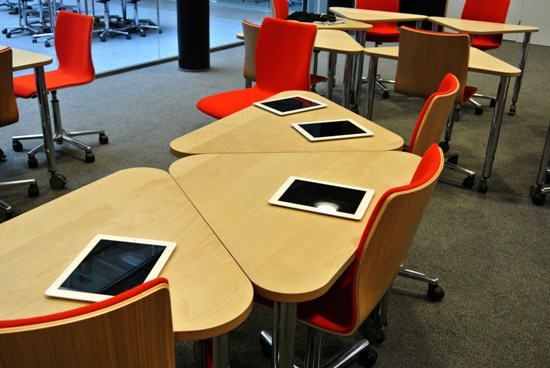
Smartphones, iPads and other technology are all part of a typical day in the learning lab.Photo: Annika Rautakoura

Minerva Plaza, a learning lab located in the facilities of the Faculty of Behavioural Sciences at the university, is a learning environment that has been transformed into an architecturally innovative space. It implements technology in larger and smaller spaces for groups of different sizes and various types of events.

“This is a learning environment of the future for teachers and students, so they can take the conventions to schools,” says project manager Oskari Salmi. “The idea is not to get ahead of technology, but teach teachers to utilise it as well. What’s important here is the transformability of the space; other methods can be also used here, such as drama.”

The lab contains 12 iPads and 12 Nokia Lumia smartphones configured for use in this space. They utilise Flinga, an app from Finnish startup Nordtouch that enables you to connect mobile devices and classroom teaching aids. Images may be viewed on all screens in Minerva Plaza, including those in the smaller rooms, and everyone may edit the content. The devices allow the student to become involved by editing the same document that everyone sees.

In one exercise, students introduce themselves by sending pictures of each other from iPads to the big main screen, then organising the photos, matching them with names. Students can also use iPads to associate colours with certain activities to indicate motivation.

Experimenting with future teaching methods

|||Photo: Annika Rautakoura

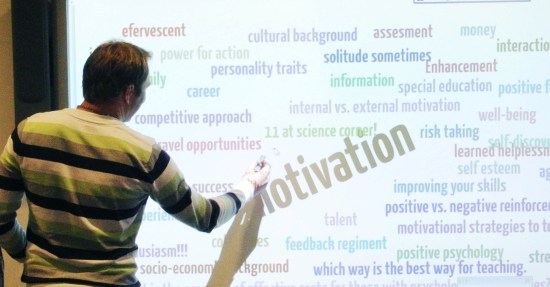
Lauri Vaara, one of the hosts of Minerva Plaza, moves terms around on the screen during a learning sessionPhoto: Annika Rautakoura

“It’s a space where you can safely experiment with new and different procedures,” says Lauri Vaara, a student of educational psychology and one of the hosts of Minerva Plaza. “Whatever can be found here can be incorporated into teaching at the university, comprehensive school and upper secondary levels, as well as company training. It is challenging to develop activating lectures and teaching methods, to find out how we can make use of technology and how new technology supports new pedagogical scripts.”

Currently the lab is used by the Departments of Teacher Education and Behavioural Sciences for educational purposes. The aim is to host outside events too, such as company training events, when the university is not using it.

Learning spaces can be divided and merged, and the spaces are completely soundproof. A huge glass wall enables visibility, a crucial aspect of active learning. “In this environment you can practice what it feels like when someone sees what you are doing,” says Vaara.

Lonka calls the space neofunctionalistic: “It should be beautiful and user-friendly, inspiring. It is a place where people gather and share their enthusiasm.”

Even after Helsinki’s year as World Design Capital ends, the lessons of the Engaging Learning Environment are being carried forward, and Minerva Plaza will continue to exist as a learning environment. The project is a part of RYM-SHOK, a strategic centre for science, technology and innovation in built environments, and will continue its development as a living lab under the RYM Indoor Environment Programme.

Living labs are paving the way for permanent innovative learning environments of the future. With technology and educational research advancing, these environments may be turn out to look quite different.

By Annika Rautakoura, November 2012

Finnish rye-bread revolution hits the US

At barely 19 years of age, Simo Kuusisto left his home in the northern Finnish town of Oulu to explore the world. He never imagined he would end up baking rye bread for New Yorkers and carrying out a “ryevolution” in the US.

Kuusisto started baking rye bread purely out of self-interest. “I got rye bread only when my friends and family visited me, I had to satisfy my own needs! So I started baking,” explains Kuusisto while he shoves bread into the oven at Long Island City’s Artisan Baking Centre, a community kitchen for baking entrepreneurs in Queens, New York.

After moving to New York, Kuusisto attended the renowned French Culinary Institute. Shortly thereafter, he began baking and selling his bread at a weekend farmer’s market. Word spread and people started inquiring about the “dark and chewy bread.” When he realised nobody else was selling rye bread, Kuusisto’s idea for a business plan was obvious.

Kuusisto is currently the executive chef at the Canadian permanent mission to the UN. He and his brother Tuomas run the family company Nordic Breads on the side, and the baking happens mainly at night. Nordic Breads bakes an average of 10,000 loaves of rye bread every week. Kuusisto has become a rye-bread ambassador, and has managed to convert numerous New Yorkers.

Rye flour power

2602-7111964817_e7d32f2a0a_b-550px-jpg

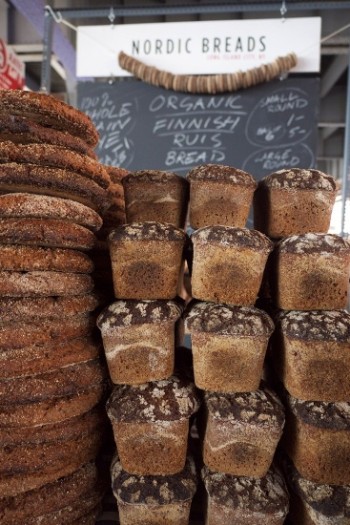
Mouthwatering organic loaves await customers. Finnish Ruis Bread/flickr, cc by 2.0

Nordic Breads uses 100% percent organic rye flour from Farmer Ground Flour, a farmer’s cooperative that produces “just the right type of rye flour.” But it wasn’t just the flour; he also needed the right type of sourdough starter. So he flew to Finland and brought back a container of the traditional Finnish sourdough starter needed for the preparation method of rye bread.

Perhaps the biggest applause goes to Kuusisto’s grandmother. “The recipe I use is based on my grandmother’s own recipe,” Kuusisto says proudly. “She was from Tornio [even farther north than Oulu]. So thanks to my grandma, New Yorkers are eating healthier bread!”

The label Nordic Breads markets its organic Finnish Ruis Bread (ruis is the Finnish word for “rye”) by emphasising that the product is a superfood: its high fibre content, antioxidants and essential nutrients such as magnesium all convey health benefits.

“When people realise it’s not just healthy bread but it’s also delicious, they go ballistic and just want more!” According to Kuusisto people immediately taste the difference between his bread and other local rye bread in which “wheat flour is often mixed in or the bread is coloured with molasses or caramel colouring.” For Kuusisto feelings also form a vital ingredient in perfect bread: “I’m baking with my heart; I like to see people happy when they taste my bread.”

The Finnish rye affair

2602-5617132799_e5d5bf24cc_b-550px-jpg

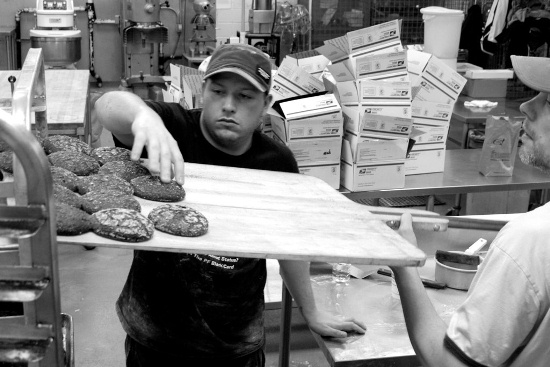
Simo Kuusisto (right) and a helper transfer a fresh batch of rye bread to trays at the Artisan Baking Centre in Queens, New York. Photo: Finnish Ruis Bread/flickr, cc by 2.0

Finns have always loved their rye bread, and rye represents one of the cores of Finnish culinary culture. The grain is easy to grow, since it tolerates both droughts and cold, and the bread has always been easy to store, even in the olden days. The flat, round loaves, each with a hole in the middle, used to be hung on a stick for storage, and the shape persists to this day.

“For me rye bread brings back memories from my childhood. I think I’ve been eating rye bread since the age of three!” concludes Kuusisto, whose slogan for Nordic Breads is “Start your ryevolution today!”

Organic Finnish Ruis Bread can be found in places such as New Amsterdam Market or Whole Foods in New York, or it can be ordered directly from Nordic Breads.

By Carina Chela, December 2012

Engineer becomes entrepreneur in Finland

What happens when an Indian immigrant in Finland leaves behind the cosy confines of a stable job to test the waters of entrepreneurship?

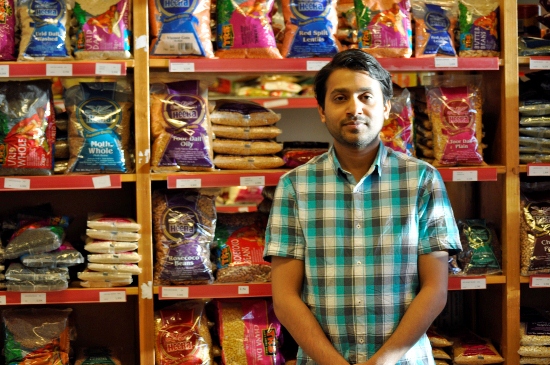
Come hell or high water, everyone foots the food bill. That thought got Shakir Abdulkhader, an Indian immigrant entrepreneur in Finland, into the food and grocery business during the economic downturn.

A software engineer by profession, Abdulkhader moved to Finland in 2010 and worked with Barona IT. However, the lure of business changed the course of his career in 2012. “I’ve an appetite for risks and I’ve always wanted to be a businessman,” he says, beaming with conviction.

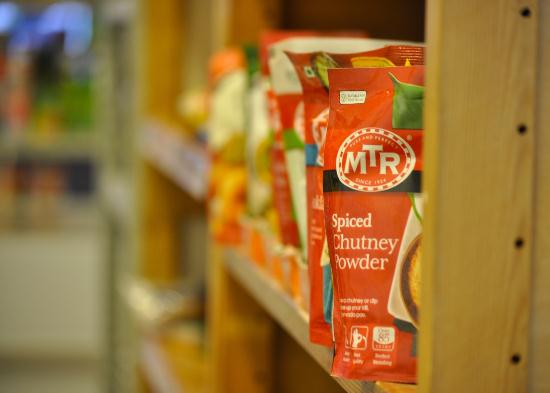
Abdulkhader realised that the Finns were taking a liking towards Asian and African cuisines, but the corresponding grocery market was fragmented. “I knew it’d work if I had a one-stop-shop for various spices and pulses [edible seeds such as beans and peas] imported from India”, he says.

The idea has worked wonders. His store, Kairali Foods, now has branches in Helsinki and nearby Espoo. It started with a small customer base among fellow Indians, but caters today to people of various nationalities.

Word of mouth

2433-indian-spicesok-550px-jpg

Demand continues to rise for “exotic” groceries. Abdulkhader’s customers are both Finns and immigrants. Photo: Asha Gopalkrishnan

Marketed through community forums, social media and word of mouth, his business has a solid following. Its strategy includes offering better quality at a cheaper price, and it thrives on variety. Abdulkhader says the key is to keep improvising the product lines based on consumption patterns.

For instance, Kairali Foods imports fresh vegetables from India every Thursday. That attracts throngs of Indians who get access to Indian vegetables in Finland and opens up a new arena for locals seeking some change on their platter. The already significant and still rising number of Indian, Nepalese and Thai restaurants in Finland further strengthens his supply chain by sourcing groceries from Kairali Foods.

The credit for this growing network and codependence goes to the internationalisation of Finland. The country is witnessing a steady rise in its immigrant population, providing the perfect springboard for budding entrepreneurs.

A case in point is the approximately 3,000 Indians in Finland. While most Indians here are employed by IT companies, individuals like Abdulkhader may be setting a trend in motion. Some people with stable job profiles or prospects are turning into entrepreneurs or toying with ideas about starting new businesses. The key attraction for them is the easy and simple process of starting a business venture in Finland.

Add to that favourable government policies, transparency in operations, liberty to function in a fair market, relatively less competition and the possibility to retain exclusivity, and it’s a basket full of goodies for entrepreneurs.

Creative foot forward

2433-shakir-abdulkhader-the-owner-of-kairali-foods-bok-550px-jpg

Shakir Abdulkhader’s Kairali Foods shows that the scope for growth as an entrepreneur in Finland is huge and the business is rewarding. Photo: Asha Gopalkrishnan

Apramey Dube, an Indian PhD student at Hanken School of Economics in Helsinki, aspires to start his own marketing and branding consultancy firm in Helsinki. His venture would “bridge the gap between the theoretical and practical application of services,” he says.

He notes that the scope for growth as an entrepreneur in Finland is huge and the business is rewarding. Such a combination can be hard to find in a country like India, where complex procedures and cutthroat competition result in wafer-thin profit margins. For instance, it takes roughly ten days to get your company registered and patented in Finland, compared to six to eight months in India.

Perhaps that’s why the Indian community in Finland is putting its creative foot forward. According to Statistics Finland, out of the 1,494 Indians working in Finland in 2010, three percent were self-employed. That number could rise significantly in coming years.

Some issues, such as the language, need attention. Not only are certain official documents in Finnish, but Indian immigrant entrepreneurs in a customer-oriented industry also need to interact and conduct business in Finnish, which has an effect on their networking. However, entrepreneurs are dealing with the challenge; some are learning Finnish and others plan to partner with a Finnish resource to clear that hurdle. After all, they are shaping their dreams into reality.

By Asha Gopalkrishnan, December 2012

Meet one of Santa’s elves

Elves tend to shy away from grown-ups, but our reporter used his contacts in Finnish Lapland to catch up with Crackers, one of Santa’s elves, for a rare, exclusive interview.

Are you friends with Santa Claus?

Well, he is more like a father than a friend to me! We have very respectful relationship.

Where do elves live?

We live in our special place at Korvatunturi, a mountain in Finnish Lapland where Santa Claus makes his home.

What do elves eat?

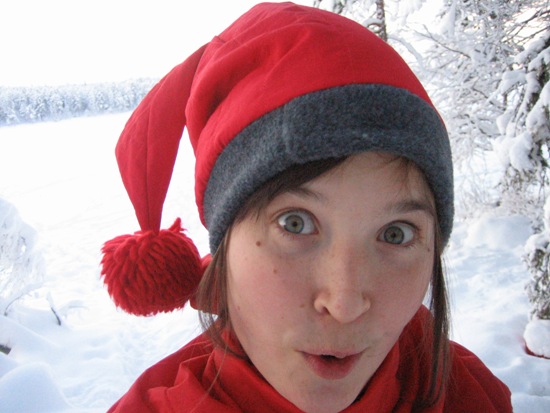
Some kids think I eat jumping beans in the morning, but actually I get my energy from oat porridge; that’s my favorite food. We elves love porridge!

3970-tf-elf-550px-jpg

Crackers the elf says that Santa’s elves get their energy from porridge, their favourite food. Photo: Kaisa Salo

What is your elf job during the holiday season?

To make families’ holidays unforgettable! And to remind them that life can be very nice and wonderful!

What do elves do the rest of the year?

We work all the time! We like to work! We watch the children to see how nice they are and what they want and need for Christmas. We make the presents, prepare the cards and train the reindeer so they’ll be fit for Christmas Eve. We’re Santa’s helpers and there is so much to do! It takes the whole year to prepare for the big day.

What is your favorite part about being an elf?

Playing, dancing, jumping and just being with the kids! And seeing in their eyes how happy they are in our snowy Christmas land!

Tell us about your relationship with the kids.

We are not only their very good friends, but we also get quite a lot of respect from them. They really do listen to us. You might call it authority but we don’t really use such difficult words. If I ask them to be nice and to take care of each other, they do! And still they don’t hesitate to play with us. Perhaps we get respect because of our age – an elf may be hundreds of years old.

How would you compare this relationship to the one Santa Claus has with the kids?

I guess it’s easier for kids to be friends with the elves. There is only one Santa, but hundreds and hundreds of us elves. The children respect Santa so much that they are often too excited and forget what they wanted to say when they finally meet him. Santa is the high point of their holiday season, and maybe even their year! We’re around all the time! It’s easier to approach us and ask something that is on their minds. And often those questions are about Santa Claus. So we’re like a liaison between the children and Santa.

What do you do if you hear that a kid has been naughty?

I just stop him for a second to remind him how there is no sense at all in being naughty. It just doesn’t help anyone! And of course I tell them how important it is to be nice.

Crackers and other elves can sometimes be found doing field research among the families who stay at Snowy Wilderness Lodge at Pallas Mountain in Muonio, Finnish Lapland.

By Andy Kruse

New York sings a Finnish Christmas tune

Each year, traditional Christmas songs bring together the dispersed Finnish community in New York. Our reporter visits the event, and a US-based Finnish musician compiles a Top Five playlist (link below).

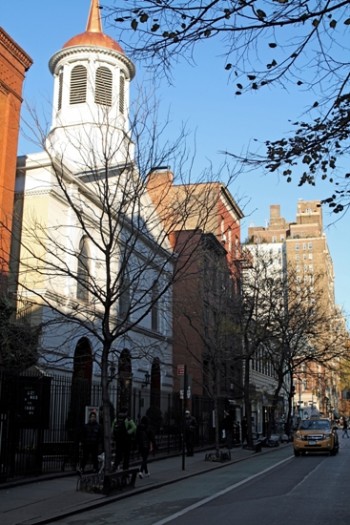
Greenwich Village in Manhattan, known for its jazz venues, celebrity-inhabited brownstones and collegiate bars, is also home to the New York Finnish Lutheran Congregation. Its bimonthly services are usually attended by a small group of devotees, but once a year, roughly 300 people crowd in these pews to partake in a seasonal tradition: a sing-along of Finnish Christmas songs.

Accompanied by an organ, members of this immigrant community form a solemn chorus of varied ages and accents as they recall the melodies of their childhoods. Children shift in their seats, candles emit fine strands of smoke, and the honks, shouts and clicks of heels on the surrounding streets seem to disappear.

“The atmosphere makes you feel like you’re back in Finland,” says Harri Rehnberg, who has lived in New York since 1998.

Minor keys rule

Photo: Laura Palotie

New York’s Finnish Lutheran Congregation meets in a little church nestled in Greenwich Village. Photo: Laura Palotie

Much has been said about the Finnish preference for slow tempos and minor keys. While American holiday tunes focus on mistletoes and silver bells, Christmas songs in Finland are usually more meditative; many are also church hymns. Often noting the harshness of winter or describing Christmas as a day of reflection, a thread of spirituality runs through Finnish evergreens.

“Christmas in Finland is a family-oriented holiday that arrives at a dark time of the year,” says Finnish Lutheran Congregation pastor Tiina Talvitie, whose surname just happens to mean “winter road.” “Through these songs, we remember the ways in which we used to celebrate as kids. A lot of people want to keep these traditions alive for their own children.”

Rehnberg, who is married to an American and has a four-year-old daughter, says that becoming a father has drawn him closer to the local Finnish community. “It’s good for my daughter to hear Finnish so that she doesn’t think of it as some secret language invented by her dad.”

The event wraps up with a distribution of candles and the singing of “Silent Night” in Finnish, Swedish and English.

Lucia sing-along

Photo: Ilona Lähde

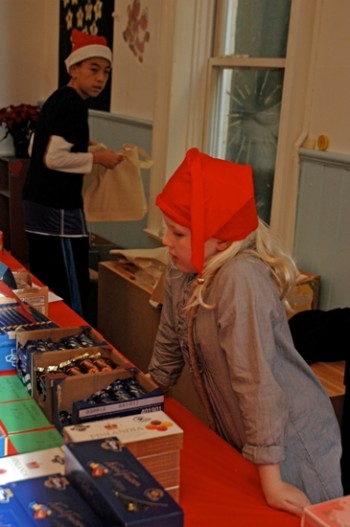
Selling Finnish candy makes for good fundraising. Photo: Ilona Lähde

Another part of the service is a children’s Lucia procession, held in honour of Lucia Day, a Scandinavian December tradition officially celebrated on December 13.

As the congregation sings “Santa Lucia,” the children walk down the aisle, dressed in white robes and clutching electric candles. Many are students of the New York Finnish School, which organises a Christmas bazaar in conjunction with the sing-along. Rice porridge, wool socks and Fazer chocolate are among the items on sale.

“This is the largest fundraiser of the year for both the school and our congregation. We don’t earn money from taxes like congregations in Finland, so we depend on donations,” says Talvitie. The sing-along and bazaar take place every year early in the Christmas season.

New York-based classical pianist and organist Kalle Toivio recently took the stage with his sister Seeli at the famed Carnegie Hall. He’s also the Finnish Lutheran Congregation’s musical director, and accompanies the annual Christmas carol event.

“Our holiday songs often display a thorough sense of musical expertise in their composition,” he says. “Many of them are also based on real poetry – there’s beautiful prose and a strong sense of structure in them.”

Kalle Toivio’s Top Five Christmas playlist

New York-based Finnish musician Kalle Toivio lists his personal Top Five Finnish holiday songs for us below.

1. Maa on niin kaunis (“Beautiful is the Earth”), a popular hymn that originated as a Silesian folk song. “In 1906, my family name was changed to Toivio [denoting “hope”] based on a line in the song that refers to ‘the hopeful road of our souls,’” Kalle Toivio says.
2. Sylvian joululaulu (“Sylvia’s Christmas song”), based on a poem by 19th-century Finnish author Zacharias Topelius, describes the longing that a migratory bird feels for its Nordic home.
3. Varpunen jouluaamuna (“A Sparrow on Christmas Morning”) is also based on a Zacharias Topelius poem. In the song, the spirit of a little boy comes to visit his sister as a bird.
4. En etsi valtaa loistoa (“Give Me No Splendour, Gold or Pomp”) was written by Finland’s most legendary composer Jean Sibelius, with lyrics by Topelius.
5. Enkeli taivaan (“Angel of Heaven”) is played at almost every holiday church service. The hymn was written by Martin Luther in the 1500s.

By Laura Palotie, December 2012

Christmas - Ylaornamentti

What Westerners weren’t supposed to see

Finnish Estonian writer Sofi Oksanen talks with us about her bestselling novel Purge. The first book ever to win both the Runeberg Prize and the Finlandia Prize, it also took the Nordic Council Literature Prize. By the end of 2012, four years after publication in Finnish, Purge had been translated into 38 languages.

Sofi Oksanen’s Puhdistus (Purge) topped the Finnish bestseller list in 2008 and won the prestigious Finlandia Prize, as well as several others. In February 2009 it went on to receive Finland’s other big literary award, the Runeberg Prize, named after the country’s national poet J.L. Runeberg (1804–1877).

Purge has the honour of becoming the first book ever to win both the Runeberg and the Finlandia, and Oksanen swept the board by winning the 47,000-euro Nordic Council Literature Prize as well, in March 2010. The English translation appeared in mid-2010.

In April 2013, Oksanen was awarded the Swedish Academy’s 42,000-euro Nordic Literature Prize.

The real Soviet Estonia

Oksanen may be the only person in a position to write a book like Purge. Born in 1977, the Finnish Estonian author grew up in Jyväskylä, central Finland and spent her summers in Estonia – not in the capital Tallinn, where tourists were not unusual, but out in the country. Her grandmother lived on a kolkhoz, a Soviet collective farm, so going to see her meant visiting an area where no Westerners were actually allowed.

Thus Oksanen saw what Westerners weren’t supposed to see – “the real Soviet Estonia”, as she calls it. She is close enough to that world to have street credibility, but distant enough to perceive the bigger picture.

The novel flips back and forth between past and present, following Estonia from before the Stalinist deportations of 1949 until after independence in 1991. “It’s almost impossible for me to write chronologically,” says Oksanen. “I try to link things on a metaphorical or symbolic level, or just by intuition.”

The book also alternates between the main characters, two women from different generations: Aliide, a rural villager, and Zara, a victim of human trafficking. Both experience extreme violence and try to survive their lives in worlds that offer limited options, and where sanity often seems scarce.

Musicality, pace and pain

3402-oksanen2_b-jpg

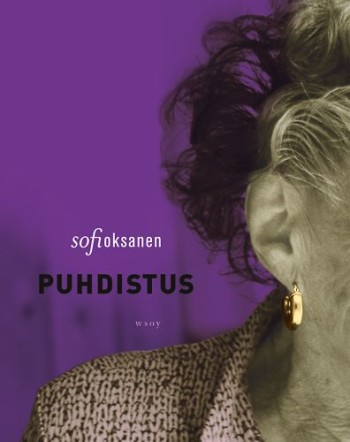
“For the cover I wanted a big ear and a golden earring,” says Oksanen. Photo: R. Eiro; art: S. Sorsa

Purge appeared as a play before Oksanen wrote the novel, and she garners recognition from reviewers for her ability to build a plot full of suspense and drama. She writes prose that flows naturally, showing events in vivid detail.

Somehow you know what she means when she describes a kitchen as “mute and screaming”, or when Aliide thinks of herself and another character as “safe and together” when in fact they are neither. “My intention is to write in a musical way,” says Oksanen.

She changes gears at will, increasing the pace over the course of a sentence to keep up with characters as their minds race. Her style is warm enough to let the reader into their thoughts at their darkest, most painful moments. We experience their despair as they weather betrayal, violence, rape, injustice and fear, yet Oksanen never makes the reader feel like putting the book down.

Going to Siberia

The Finnish word puhdistus can mean “purge”, but it comes from the word for “clean” and can also be translated as “cleansing”. It denotes the deportation to Siberia of tens of thousands of Estonians under Stalin.

“When I was a child,” says Oksanen, “no one talked about deportations. People ‘went to Siberia’. Certain things were so dangerous to mention that people used a lot of expressions to circumvent the actual issues.”

“When I started the play and was thinking about the title, I was thinking about the traumatic reaction people can have after they’ve experienced violence or been raped,” she says. “People always try to clean themselves. So that was the first meaning – cleansing.”

Audience watching

Is it easier to write a novel after creating the story as a play? “A novel requires more background information,” Oksanen says. “You have to know a lot of things that you don’t need when you’re staging a play.

“I wanted to make the atmosphere and the world realistic in the novel. You don’t have to put the names of magazines and things like that into a script, because on stage the audience can’t see them.”

Telling the story in two different forms even alters the characters: “Even though I knew that Aliide was the type of person who would keep quiet, who wouldn’t talk things out or say them to Zara, in a play you have an audience. So in the play Aliide speaks more about what has happened. That’s a big difference.”

Strange incidents

3402-oksanen3_b-jpg

Oksanen has her sights set on her next two novels. Photo: Toni Härkönen

When a Finnish Estonian author writes a book that digs into recent Estonian history, you have to wonder about parallels with Finland. Of course Finland never formed part of the Soviet Union, but “there are a lot of strange incidents in Finnish history related to the Soviet Union,” notes Oksanen. Certain films were censored for political reasons in the 1970s, and part of Solzhenitsyn’s Gulag Archipelago was published in Finnish in Sweden because no publisher in Finland dared to touch it.

Are any of the incidents worth writing a book about? “I think so,” she says. “How ‘Finlandisation’ affected the press is a big issue, and how it affected Finnish schoolbooks.” For now, however, Oksanen has her sights set on her next two novels. Both will deal with Estonia; she won’t reveal any more than that.

Just days before her Runeberg win was announced, she told us, “Winning both Runeberg and Finlandia would be quite unique. Finlandia is only for novels, while Runeberg includes all genres, which means a much greater variety of rivals.”

Topping it all off by winning the Nordic Council Literature Prize makes Purge even more unique, and the rivals came from six different countries this time. “It’s difficult for me to see the novel as exceptional,” Oksanen told Finland’s largest daily, Helsingin Sanomat, after Purge was selected over competitors from Sweden, Finland, Denmark, Norway, Iceland and the Faroe Islands.

“Lots of readers from outside of Finland have said that the novel remains in their dreams for weeks,” she continued. “The feeling stays with you.”

By Peter Marten, February 2009; updated April 2013

Finnish Christmas: Good, bad and ugly

Christmas signifies the most important holiday of the year for the Finns. However, like many good things, this holiday is not without its foibles and nuisances.

Everyone from toddlers to senior citizens looks forward to Christmas for many months in advance. Here is a light-hearted list of the ups and downs of this special season.

Lights

Among the first signs of Christmas are the spectacular lights of all colours. They hang across streets, illuminate parks and shine from store windows. Although the decorations are admired by all, some Finns worry that the world’s greenest country shouldn’t be wasting electricity.

Christmas trees

A large, healthy Christmas tree is a highly desired object in Finland. Strange how in a country that is 75 percent forested, these trees are so expensive – and it’s highly illegal to cut down your own. Once in the house, the tree is decorated with beautiful ornaments and brings bliss to Finnish families – until those spruce needles start dropping onto the floor. Even after the tree is disposed of, it could take many days before all those stealthy needles are found.

Goodies

For many weeks before Christmas, gingerbread cookies, star-shaped pastries and holiday chocolates are given out all over town. These delicious treats are wonderful to the taste buds. Eventually though, you wonder how you put on all those extra kilos.

Music

2488-7333874-550px-jpg

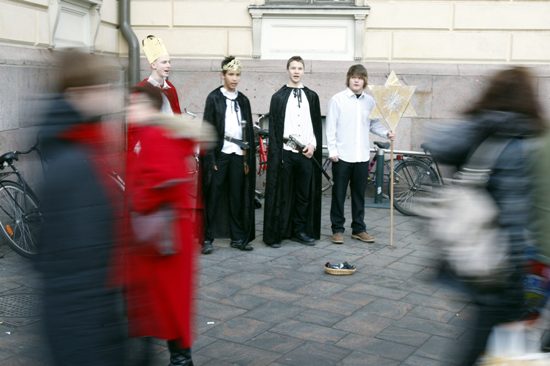
A group of Tiernapojat dressed to resemble the Three Wise Men and King Herald sing Christmas carols outside of the Old Student Union in Helsinki. Photo: Martti Kainulainen/Lehtikuva

One sure sign of the upcoming holidays is the arrival of the Tiernapojat. This is a group of boys (sometimes girls) who enact a Christmas scene starring the Three Wise Men and King Herald. They are dress up in period customs and sing verses – a kind of mini-musical. The first time you witness this at some event, you think, “How charming!” and happily give them a tip. After the 50th time, you discreetly slip out the side door, thinking, “Enough is enough!” The same goes for the popular Christmas tunes you hear in department stores and the radio. They are really enjoyable at the beginning, but by Christmas Day you’ve heard all you can handle – until the next year.

Christmas Peace

On Christmas Eve, shops close, public transportation stops and very few restaurants are open. Many people take this opportunity to enjoy quality family time. But after hearing the same stories for two days, some people desperately look forward to Boxing Day, the day after Christmas, when custom dictates that they are allowed to visit friends again.

Parties

Preholiday parties form an important tradition, and are held by companies, organisations and associations. It’s terrific to enjoy free refreshments and entertainment. Partygoers enjoy the relaxed atmosphere – and they sometimes feel free to say things they wouldn’t normally utter. Often this is just healthy expression. Other times, people say something they will regret the next day. Fortunately, there is also a tradition of pretending to forget everything that was said and done at a Christmas party.

Food

Finnish Christmas ham is always a treat, but it gets progressively less tasty after you eat leftovers for the following week. Christmas fish dishes such as herring, salmon and whitefish are delightful. Too bad Finns always insist on serving lipeäkala (lutfisk), which is reconstituted dried cod, and tastes worse than it sounds. Let it be said that even some Finns, as well as most foreigners, have trouble appreciating this delicacy.

Presents

These should be highly appreciated because people have struggled to find parking, fought crowds in shops and paid the highest prices of the year to get them. So enjoy your presents, even if they’re not precisely what you asked for in your letter to Santa Claus. Christmas is about more than just gifts.

Santa Claus

2488-19672980-550px-jpg

Nothing negative about him: The sight of Santa Claus always makes people happy. Photo: Kaisa Siren/Lehtikuva

He lives in Finnish Lapland, and there isn’t anything negative about him (except, perhaps, for all the commercialism people insist on attaching to him). Santa Claus always makes people smile when they see him.

So despite any minor inconveniences that Christmas brings, it will remain the number one holiday. For the Finns, a few challenges just make something more worthwhile. As you might already know, this quality is called sisu in Finnish, and denotes a special blend of courage and endurance that comes in handy during a hot sauna, a cold winter or even a busy Christmas season.

By Russell Snyder

Christmas - Ylaornamentti