Finnish kiddie apps win youthful approval

Companies in Finland, the country where Angry Birds, Clash of Clans and Hay Day were invented, are showing that they know how to make apps that grab the attention of young kids and even win their parents over.

Sleek and functional, a small toy train made of wood weaves a loop next to the desktop of Tommy Incrosnatu, CEO of Helsinki’s Kapu Toys. This train set, much loved by Finnish children, represents to Incrosnatu a standard of quality and design that all of his company’s digital products are measured against.

Kapu’s main focus is the burgeoning child app market, offering youngsters a digital toy box of various delights. Their first app, Kapu Forest, found an audience immediately upon its release in mid-2012, with its collection of forest friends going on to entertain and educate children locally and also in such far-flung regions as China, Uganda and Brazil.
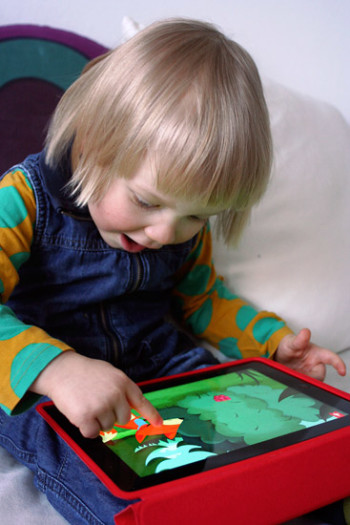
Kapu Toys’ apps make kids use their brains while they play.

Kapu Toys’ apps make kids use their brains while they play.Photo: Leena Karppinen

“The idea was to do something good for a change,” explains Kapu’s Tuomas Vanamo, the sole father in the four-member crew. “We were each working in advertising for over ten years, and decided to do something different.”

To these guys, doing something positive for society involves improving the wellbeing of children, and also of their sleep-deprived parents. Utilising jazz music for their apps may be one method for this – a far cry from the grating jingles often associated with children’s playtime. However, it is the subtle presence of learning that forms the core of what Kapu is trying to achieve.

“It’s easy to put your child in front of the TV while you make dinner,” Vanamo continues. “But, when playing one of our games, kids are actually doing something with their brain at the same time.”

This approach saw the Kapu crew release their second app towards the end of 2012. Kapu Tickle encourages children to take photographs of their surroundings; the pictures are eventually incorporated into scenes featuring a range of 1950s-era cartoon characters.

“It automatically makes your kid interact with their environment and other people,” says Hannu Koho, Kapu’s lead programmer. “There are all sorts of apps that are strictly about getting to know ABCs, 123s and things like that. In our games the learning comes accidentally, in a way.”

Whopping alternatives
One local company that is tailoring its focus to more direct learning is that of Whopping Apps.

“Whopping ABCs with Animals shows beautiful photos of different kind of animals for every letter of the alphabet, each of which is also spoken,” explains Whopping Apps’ Mikko Töykkälä. “It also has seamless Wikipedia integration, so parents can easily check relevant info about the animals.”

Töykkälä’s portfolio of apps also includes eight simple photo and video books for the one-plus age group, exploring the joys of trains and diggers. With over 500,000 downloads worldwide, it seems that this one-time hobby is now turning into a whopping business.

Peliporkkana (“Game Carrot”) is another Finnish app developer aiming itself at children, with the likes of Tohtori Molekyyli (“Doctor Molecule”).

“My apps are designed to support children’s learning – or what’s being taught in school, to be more exact,” explains Peliporkkana’s Markus Kuuranta. “I also like to think that my games may reach some children who otherwise wouldn’t be interested in the subject being taught, or in traditional teaching methods.” Currently only available in Finnish, Kuuranta has plans for English versions of his apps. His timing for expansion couldn’t be better, as Kapu’s Koho points out.

“When we started in 2011 there were maybe three companies who were solely doing children’s games. Now the US App Store has around eight games for kids in the top 25.”

Children, that’s the game plan.

By James O’Sullivan, April 2013
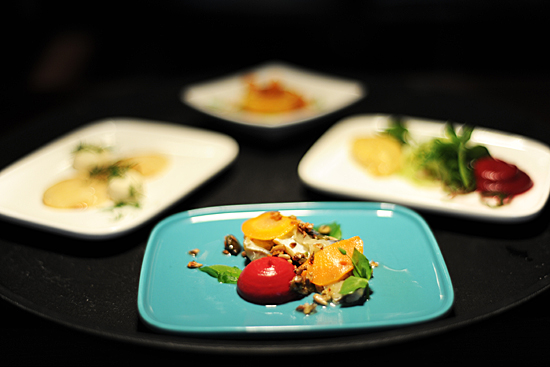
Finnish autumn brings out the flavours

When autumn arrives, Finns cook up a feast using ingredients found above and below the ground. A Helsinki chef explains what’s so special about fall food in Finland, and even shares a few recipes.

As the long days of summer fade and autumn approaches, the Finns get back in the swing of working life or recommence their studies, and many people take up new hobbies. The autumn also influences the world of Finnish cuisine.

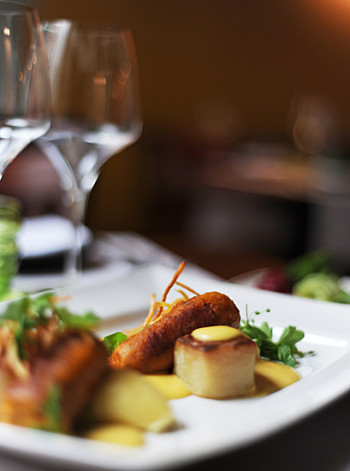
“Summer’s always hectic, everything happens really fast,” says Jukka Nykänen, head chef at Helsinki’s Juuri restaurant. “In the autumn everything starts to slow down a bit. I really like it, as the beginning of the season is pretty much the high time of the year in terms of food.”

An abundance of taste

2608-dsc_8957-550-jpg

The menu at Juuri is made up of “sapas” dishes, a Finnish take on “tapas” (the “s” comes from Suomi, the Finnish word for “Finland.”)Photo: Emilia Kangasluoma

A typical Finnish autumn dining table offers an indulgence of delicious seasonal tastes that utilise the abundance of fresh ingredients on hand.

“It’s the ‘in’ season for almost everything,” Nykänen says enthusiastically. “We have fresh, good-quality vegetables, hunting season starts for different kinds of game and there are many things we can forage for at this time of the year.”

Indeed, after the summer months spent plucking nature’s goodies, such as berries, from the multitude of forests around the country, there are still plenty of mushrooms to be discovered during the autumn. In fact, the number of varieties on offer actually increases over the autumn, with the last mushrooms of the season eventually being picked from underneath the first blanket of winter snow.

Roots of autumnal food

2608-dsc_8890kasvismakkaroita-409-jpg

Juuri serves a vegetarian sausage made with barley and five different kinds of root vegetables.Photo: Emilia Kangasluoma

While many ingredients are found aboveground, autumn also sees numerous flavours and textures produced beneath the surface.

“As a chef, the main thing for me this time of year is that root vegetables are in their prime,” Nykänen explains. “The range of what Finns do with root vegetables these days is much wider than it used to be. They aren’t a necessity for each meal anymore.”

Given that the name of the restaurant, Juuri, is the Finnish word for “root,” it should come as no surprise that Nykänen’s kitchen concocts numerous combinations of root vegetables.

“I love to use them all, as they each have a different nature and texture,” he says. “We have a vegetarian sausage made with barley and five different kinds of root vegetables. We also make ketchup from beetroot, and use parsley root in desserts. Your imagination is the only limitation you have.”

Seasonal change

2608-dsc_8746-550-jpg

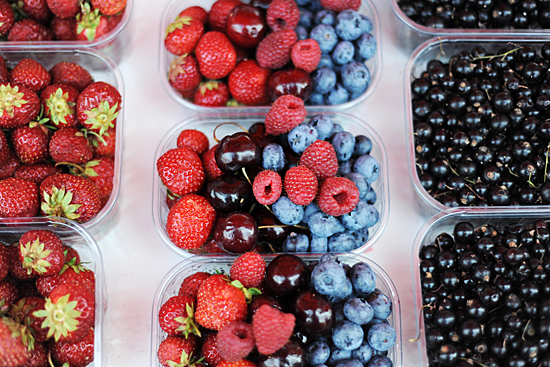
As autumn begins, Finnish outdoor markets may still stock strawberries and blueberries, but the balance soon shifts to black currants (right) and lingonberries.Photo: Emilia Kangasluoma

Elsewhere around the country as autumn sets in, the northern region of Lapland in particular begins to experience ruska, the annual spectacular bloom of colours as leaves change colour. However, having grown up in Finland’s former capital city of Turku, in the southwest of the country, Nykänen has other memories of the season.

“When I look back on my childhood, it pretty much revolves around food,” he says, smiling. “My mother and my grandmothers were good cooks. We always ate a lot of cabbage during autumn: cabbage rolls, cabbage casseroles, cabbage stews. We used to fish a lot, catching plenty of pike and perch. Our neighbour was an enthusiastic hunter so we had wild game. I was really lucky.”

While such seasonal staples are still commonplace in Finnish homes, a lot has changed on the local foodie scene in recent years.

“Now is the time to build our food culture, as people don’t have preconceived notions of what Finnish dining culture consists of,” Nykänen observes. “We don’t have a long history of dining out. This is a really great time to be in the cuisine field in Finland.”

And with that, Nykänen is ready to disappear into the kitchen once again, to see what flavoursome innovations he can devise for his customers.

Autumn cuisine according to Jukka

“With the more traditional dishes of Finnish autumn, such as venison meatballs and cabbage rolls,” says chef Jukka Nykänen of the restaurant Juuri, “the nature and the charm of these dishes is to make them by feel and intuition – therefore it’s more or less impossible to write an exact recipe for them. The following dishes are some that I have used at Juuri, with a focus on root vegetables and mushrooms.”

Wild mushroom brioche with roast onion cream cheese
Brioche:

approximately 500 g (1 pound, 1.5 ounces) any wild mushrooms you prefer
1 large onion
1 clove of garlic
A few sprigs of thyme
Fine sea salt and black pepper
Butter for frying

Chop the mushrooms a bit smaller and chop the onion, garlic and thyme finely. Heat a frying pan, add some butter and let it melt. Pour all the ingredients in the pan and fry until cooked. Season with salt and pepper. Let the mushrooms cool down before using in the brioche.

300 ml (1 1/4 cup) whole milk
15 g (0.5 ounces) live yeast
7 organic eggs
25 g (1 ounce) sugar
150–200 g (5–7 ounces) of the mushroom mix
5 g (0.2 ounces) fine sea salt
700–750 g (1.5–1.65 pounds) wheat flour
250 g (9 ounces) softened butter

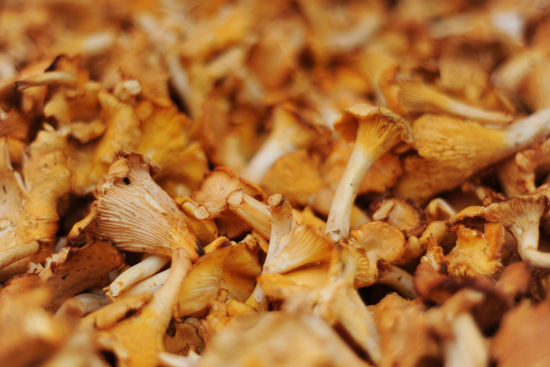
Chanterelle mushrooms are a Finnish favourite. Photo: Emilia Kangasluoma 

Heat the milk to hand temperature and dissolve the yeast into it. Mix in eggs, sugar, salt and the mushroom mix. Knead in the flour, add the butter and keep kneading for a while. Let the dough rise for about two hours. Butter an adequate-sized baking dish, knead the dough once more and lift into the form. Let it rise again and bake in the oven (175 degrees Celsius) until done. Afterwards, let the brioche cool down before cutting.

When serving, cut the brioche into slices 1 to 2 cm thick and fry with butter. Serve with a traditional salad made from preserved wild mushrooms and cream cheese mixed with roast onion puree.

Carrot casserole with goat cheddar crème
Carrot casserole:

Rice porridge:

150 ml (2/3 cup) water
100 g (3.5 ounces) porridge-type rice
250 ml (1 cup) whole milk
350 ml (1 1/2 cups) cream

Casserole:

1.125 kg cooked and pureed carrots
750 g rice porridge
100 ml cream
100 g dark sugar-beet syrup (traditional Scandinavian dark syrup)
1/4 nutmeg, finely grated
25 g fine sea salt
3 organic eggs
150 g buckwheat flour

Cook the porridge a day before making the casserole. When preparing the casserole, preheat the oven to 160 degrees Celsius. Mix all the casserole ingredients together. Pour the mix into a buttered casserole dish, put into the oven and bake until set (about 30 min). Let the casserole cool down and leave until the next day. Take it out and cut into pieces.

Serve the casserole with a patisserie-style crème seasoned with goat milk cheddar and carrot strips pickled in sweet caraway seed vinegar.

Venison ragout with mashed roasted root vegetables and lingonberries
Ragout:

1000 g (2.2 pounds) venison (the tough cuts)
1 large onion
2 cloves of garlic
2 carrots
1/2 parsnip
1/4 celeriac
Bouquet garni (thyme, rosemary and parsley)
Couple of bay leaves, some whole black peppers and all-spice
Fine sea salt
2 bottles of beer (anything with sufficient bitterness)
Good quality unsalted game stock
Butter for frying

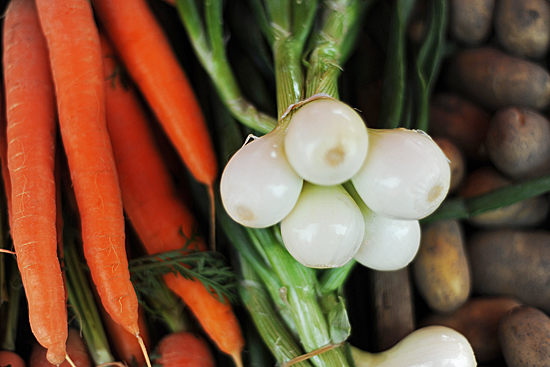
Seasonal vegetables make autumn a feast of flavour in Finland.Photo: Emilia Kangasluoma

Cut the meat into bite-size pieces and chop all the vegetables. Heat a cast-iron casserole and melt the butter. Brown the meat and the onions until nicely brown. Add the beer, the bouquet garni and the spices. Season with salt (start with around 15 g, a tablespoon. If using salted stock, add less salt). Let cook for about 60 to 90 minutes and add the root vegetables. Let simmer until the meat is tender.

Serve the venison ragout with mashed roast root vegetables (I prefer rutabaga (also known as swede), carrot, potato and parsnip) and some sugared lingonberries.

By James O’Sullivan, August 2013

Helsinki’s streetheart: Minna Parikka

Ask Finnish shoe designer Minna Parikka what a typical day in her life looks like, and you won’t get a straight answer.

She doesn’t have a daily routine – every day is different. “When I open my email, I never know what I’m going to get,” she says.

When Lady Gaga descended upon Scandinavia to snatch the Double Platinum Award in 2011, Parikka got a message from the star’s record label, Universal Finland. With three days left before Gaga’s arrival, they needed something extraordinary. Parikka designed a pair of high-heeled platinum pumps for Gaga for the award ceremony.

“I was thrilled,” says Parikka. “For Gaga, you always need to design something extra.”

You have to be playful

2675-minnaparikkabykristiinamnnikk409-jpg

Parikka’s philosophy: “May these shoes lead you to new adventures.”Photo courtesy of Minna Parikka

It all started in high school. As the fable goes, Parikka was only 15 years old when she decided she was destined to become a shoe designer.

She stepped on a plane to England at 19-years-old to study footwear design. Upon graduation, she worked as a freelance designer in London and Italy until returning to Helsinki in 2006 to launch Minna Parikka shoes.

Now, her shoes and accessories are sold all over the world, including a shop on Helsinki’s Aleksanterinkatu, called Minna Parikka Universum. A sign there reads: “May these shoes lead you to new adventures.”

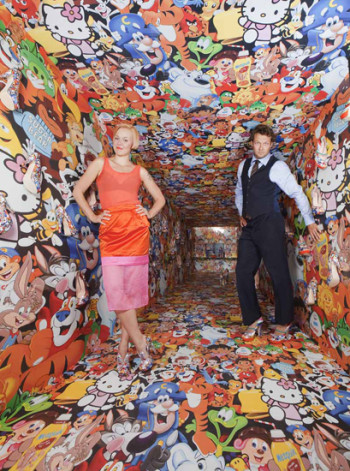
Best known for designing bombastic, colourful shoes, quaint leather gloves, little clutches and party purses that draw out every woman’s inner Catwoman, she creates work that combines sultry and vintage styles with a slap of fetish. She also has cartoon-covered footwear called Bugs pumps, which draws upon the inspiration of Disney and Hello Kitty (created in collaboration with artist Jani Leinonen).

“You have to allow yourself to be playful,” says Parikka. “Life is too short to take style too seriously.”

Create your own universe

2675-minnaparikkajanileinonenamosanderson1-409-jpg

Minna Parikka teamed up with Jani Leinonen for “Shoe Liberation Army,” an exhibit at Helsinki’s Amos Anderson Art Museum.Photo courtesy of Minna Parikka

Her bright, candy-hued pieces are worn by celebrities and stars such as Fergie, performer Beth Ditto, first lady of Finland Jenni Haukio, and supermodel Kirsi Pyrhönen. Parikka’s Ginger bag was selected as a gift by the Finnish presidential couple to the Swedish royal family’s Princess Estelle.

Her shoes are exported to 17 countries – including Italy, Germany, China, France and Denmark. Her latest conquests are China and Japan, where she is infiltrating the market. Meanwhile she is taking part in museum exhibitions like Stepping into the Limelight, a group show at the Grassi Museum in Leipzig, Germany (until September 29, 2013).

Parikka has inspired many younger designers, too. Since her company won the Timangi 2011, a young entrepreneur’s prize of 30,000 euros, a first-class Finnish postage stamp was printed featuring cherry red heels from her 2009 collection.

When asked what advice she has for young female entrepreneurs, Parikka says to “create your own universe and keep on developing it no matter what.”

Parikka’s queendom

Her designs include her Spiderwoman black heels or the Jacqueline pumps in a deep, red wine. One typical trademark is her “melt and drip” gloves, which feature cartoonish drop-shaped curves of colour that appear to ooze over the hands.

2675-minnaparikka29-550-jpg

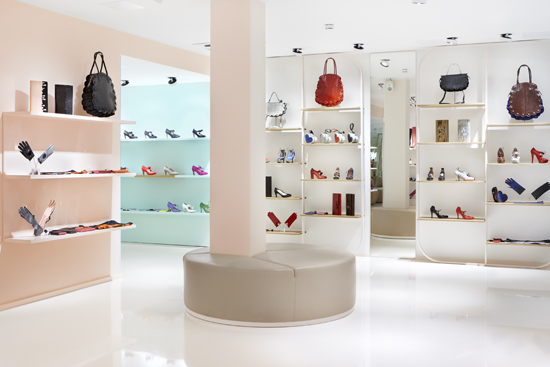
Parikka’s universe: A variety of bold styles are found in the Minna Parikka Universum boutique on Aleksanterinkatu in the Finnish capital.Photo courtesy of Minna Parikka

The more experimental designs include fetish-inspired masks and giant head pieces made from shoes paired on top of one another. Bizarre, weird and otherworldly – almost bondage – it doesn’t necessarily fit in with the cutesy boutique she has in Helsinki.

There’s room for both according to Parikka, who clearly knows the best part about running her own business: “I am my own boss and I get to be the ruler of my own queendom,” she says.

With all this steam behind her, you could simply say she took the Finnish fashion scene by storm. Although that scene isn’t extensive, its small size has actually given her the space to become the designer she desires to be.

“It doesn’t feel like you have to be running after somebody else or running after some current trends or design movements,” she says.

Finnish fashion universe in the blogosphere

Fashion Flash Finland, a blog opened in June 2013, welcomes readers to “the Finnish fashion universe” with news, reviews, interviews and tips. It aims to “open the door to the fascinating fashion scene” of this “mysterious northern country.”

When we checked it out, the blog included pieces about not only Minna Parikka, but also Shoebakery, where five young shoe designers share a workshop and showroom in downtown Helsinki. Which is to say that on Fashion Flash Finland you’ll find famous names like Paola Suhonen’s Ivana Helsinki, but you’ll also run across smaller names that are waiting to be discovered.

Text: Peter Marten

By Nadja Sayej, August 2013

The art of Finnish cottage life

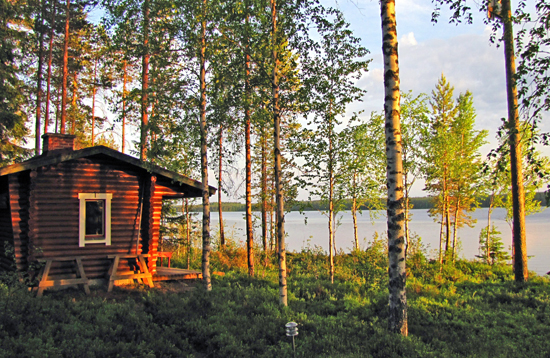
Retreating to the countryside is about more than just taking a well-deserved holiday, it’s about maintaining work-life balance, tuning into nature, rest and restoration. Call it Nordic Zen.

“Finns go to the cottage to relax, sauna, swim, and spend quality time with relatives or friends,” says Lana Lavonen, a Russian-Finnish yoga instructor and Ayurveda consultant raised in Russia’s Petrozavodsk who moved to Finland 28 years ago when she was 18.

“Some go fishing and others go with friends to drink and have a good time, but mostly Finns want to get away from busy city life to relax,” she says.

Lavonen is just one of the many Finns who goes to their summer cottage for what is called mökkielämä, or cottage life. Her cottage is in Hämeenkoski, about 100 kilometres from Helsinki.

Country of a thousand cabins

4106-rachel-soininen_550px-jpg

Retreating to the countryside is about maintaining work-life balance, tuning into nature, rest and restoration. Call it Nordic Zen.Photo: Rachel Soininen

According to Statistics Finland there are close to half a million official summer cottages in the country as of December 2017. The official statistic refers to traditional, basic cabins with a median size of about 40 square metres or less. As larger leisure homes don’t qualify, the actual number of cottages in Finland is likely much higher than 507,000.

Statistically speaking, the town of Kuopio in Eastern Finland leads the way with the most summer cottages at 10, 789. It’s followed by Mikkeli, Parainen, Lohja, Savonlinna, and Hämeenlinna (near Lavonen’s Hämeenkoski getaway), with 8, 043 cottages.

For Lavonen, retreating to the countryside means leaving behind the stresses of the city including work.

“I enjoy nature, walks in the forest, quietness and solitude,” she says. “My life at the cottage is not as busy and hectic as in the city, and I sleep better.”

In addition to being nourished by nature, Lavonen recharges. “Cottage life gives me strength and life energy,” she says.

Nature’s spa

4106-carolina_maia_550px_2-jpg

An old Finnish proverb holds that the sauna – the Finnish temple of heat, steam, and relaxation – is the poor man’s pharmacy, a natural cure for all that ails man, woman or child.Photo: Carolina Maia

An old Finnish proverb holds that the sauna – the Finnish temple of heat, steam, and relaxation – is the poor man’s pharmacy (“sauna on köyhän apteekki”), a natural cure for all that ails man, woman or child.

The quintessential Finnish summer cottage experience features a lakeside sauna. “I sauna twice a day, in the morning and evening,” says Lavonen. “It warms up the body, and when you sweat your body gets rid of toxins. Then I go for a swim in a cold lake and then back into a hot sauna. It’s very refreshing, fun, and feels good.”

Though not all traditional Finnish cottages have mod cons or are winterized, Lavonen’s cabin has both electricity and running water because she also goes there during the colder winter months.

Lavonen adds an extra twist to the traditional cottage experience by practicing yoga at her Hämeenkoski cottage. “Nature helps me relax and tune into myself. Combined with yoga, it brings more peace and joy from within,” she says. “I leave the cottage feeling happy and relaxed, full of energy and ready to face busy city life and withstand its stresses.”

By Katja Pantzar, July 2013, updated July 2018

New toolbox for presenting Finland

Planning to give a presentation about Finland for your colleagues, clients, classmates or friends? We offer a presentation toolbox, complete with informative speaking points.

You’ll find themes such as technology, social innovations and the education system. Use these practical slideshows “as is” or personalise them by adding your own material.

Each presentation relates to the Finns’ solution-oriented, problem-solving mentality, one of Finland’s main strengths and something that we’d like to share with the world.

Keep an eye out for regular updates and new themes, too.

Finland brand’s toolkit (Scroll the page down for more presentations.)

Scenic Finnish retreat inspires artists

The Arteles Creative Centre helps international artistic talent thrive in a picture-perfect Finnish landscape. We ask a couple of participants what it’s like to land in Finland.

Hämeenkyrö is a living, breathing postcard, a region in west-central Finland filled with forests and lakes, about 35 kilometres (22 miles) west of Tampere. A map distributed by the Finnish Tourist Board marks the area as a “landscape of outstanding natural and cultural heritage.”

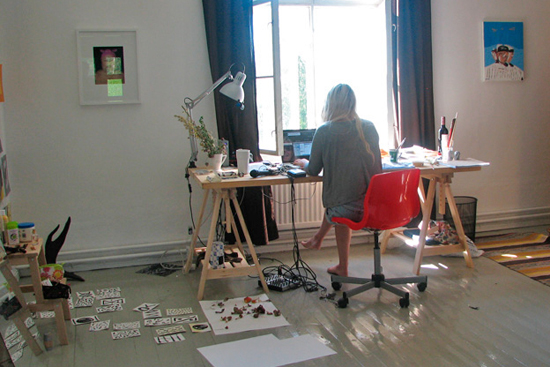
These days the region is also known for offering a slightly different fare. The Arteles Creative Residency Program in the village of Haukijärvi has brought over 220 artists from 39 countries to live, work and find inspiration in the Finnish landscape.

They also hold monthly events where residents show their works-in-progress. “Arteles is all about the freedom to create,” says the director, Teemu Räsänen, “and the possibility to go ‘out of the box’ without having any outside, work-life or art-world pressure.”

Northern ambience for creative freedom

4522-timberroom-550-jpg

No outside pressure: Arteles exists to encourage creative freedom, far removed from the daily grind.Photo: Arteles

Finland’s northern ambience has been drawing artists to Arteles since Räsänen and his colleagues took over and renovated the old schoolhouse in Haukijärvi in 2010. The landscape boasts ample opportunity for hiking, swimming and berry picking in the warm months, and cold-weather activities such as ice skating once winter arrives. Several national parks are located within easy driving reach.

“Some residents have gotten really hooked and keep on coming back here,” says Räsänen. “Some have even moved to Finland.”

Guests stay in a restored timber house built in 1897 and fitted with seven guest rooms, two kitchens, and open-area loft spaces for creative collaboration, not to mention a sauna from 1961. The “creative freedom” approach means that artists have no obligation to finish what they start. Arteles offers residencies ranging from two weeks to three months, gathering groups of seven to ten artists at a time – from architects to designers and from painters to professors.

Perilous yet beautiful

4522-susanevans_hoar2-550-jpg

While at Arteles, Susan E. Evans captured the Finnish landscape at majestic moments when the natural light felt magical.Photo: Susan E. Evans

Susan E. Evans applied to Arteles for the collaborative element and lived there during the winter. “The rural setting was ideal for me, as I wanted to experience Finland authentically rather than be in an artificial bubble,” says Evans, a new media artist and an assistant professor at Oakland University in Rochester, Michigan.

Susan was an adopted child. Years later, she discovered that her DNA could be traced back to Finland. “I found this to be quite amazing and started looking for opportunities to go to Finland,” she recalls.

Her journey began at Arteles, where she photographed the winter Finnish landscape at majestic moments when the natural light felt magical. Her photos were featured in Arteles un-Finnish-ed catalogue, an ebook published in January 2013 showcasing the works of the winter residents. It all forms part of her search for the idea of the Arctic Sublime.

She found the Finnish landscape powerful during the cold season, as it reminds her of paintings by Turner and Friedrich. “I enjoy the contradiction of the sublime,” says Evans, “the perilous yet captivatingly beautiful.”

Homebrew, tango and ice fishing

4522-vanessabrazeau_waiting-550-jpg

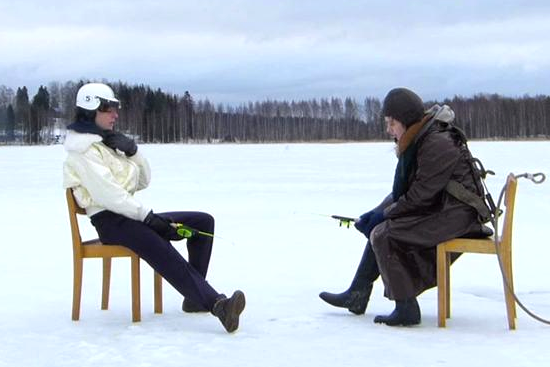
In Vanessa Brazeau’s video “Waiting for Poisson,” she and another artist compete in ice fishing. Who will triumph?Photo from Brazeau’s video

While in Finland, Evans learned how to make Finnish sahti (a type of homebrewed beer), how to heat a Finnish sauna and how to dance the Finnish tango. “I also learned about the Finnish connection to nature, the resulting intrinsic environmentalism and various complexities of the language,” she says.

Evans profited from the discussions, collaborations and adventures, leading her to apply for another residency the following year.

Canadian artist Vanessa Brazeau lived at Arteles in March, when the weather ranged from four degrees Celsius down to minus 20 (39 to minus four degrees Fahrenheit). At first she was surprised by the chill, the deep snow and the way darkness fell early in the afternoon.

That led Brazeau to create a video about ice fishing. “I like how fishing is mostly waiting, sometimes only waiting,” she says. “It is a very meditative activity, a lot like making art can be.” Her nine-minute video piece Waiting for Poisson shows two artists competing as ice fishers.

“When it was time to leave, I could see the grass and the sun was around until the evening,” she says. “The landscape had completely changed over the month. It was really great to be there for that transition.”

By Nadja Sayej, August 2013

To Hell’s Lake and back in Finland

Contrary to what its name might imply, Helvetinjärvi (Hell’s Lake) National Park offers a break from the hustle and bustle of city life. The fearsome title conceals fresh forest air and a feast for the senses.

Crack, snap, roar. The flames lick the logs merrily and mesmerise my eyes and ears as I sit by the campfire at the end of the day. It has been two days of Hell – Hell’s Lake National Park, that is, located about 80 kilometres north of Tampere.

My intrepid friends and I are hiking and camping along the trails, some well marked and others tantalisingly less travelled. These woods, friendly despite the hellish name, awaken the senses and offer a wealth of experiences.

The sound of silence

2964-6-409-jpg

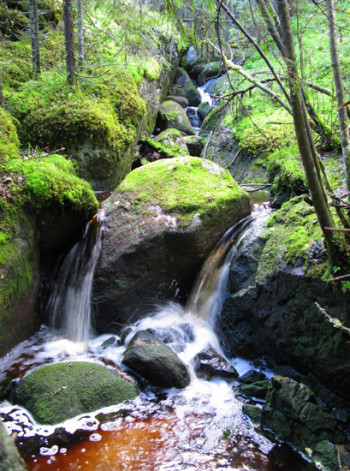
The sound of water gushing over boulders breaks the silence.Photo: Laura Waris

The silence of a pine and birch forest can be deafening as well as soothing. On the one hand, it is the sound of growing things, of air through leaves and the flow of my own breath matching the sound of hiking boots swishing through the underbrush. It is echoes that ricochet from the rocks, and it is water gushing over boulders in a nearby stream.

But in the early morning hours, the silence is a lullaby to soothe the soul. Our adventure soundtrack also contains guest vocals by curious sheep in a nearby field and the strains of Sibelius’ Finlandia on a friend’s flute.

A gorgeous view

The rugged scenery around Hell’s Lake comes from deep fault lines. We descend from spacious ridge-top views through a rough, two-metre wide gorge that has attracted visitors since the 1800s. In the evening, the sun casts long shadows through the trees onto the forest floor, now a carpet of light and dark lichen and low shrubbery, different but no less beautiful than the earlier marshland and brilliant moss under tall pines.

Upon our arrival at our campsite, Nature tries to outdo herself: The lake surface is placid, a pair of swans welcomes us from a polite distance, and later a double rainbow sweeps the sky. We are duly impressed.

Olfactory forests

2964-2-550-jpg

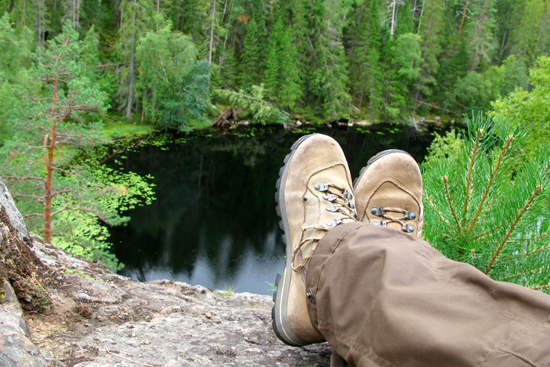
Weary feet rest after a day of hiking.Photo: Laura Waris

The evening campfire not only enthrals our eyes and provides us with cooking fuel, but also gently cloaks us in its pungent, smoky smell. We decide to replace this in the morning by going for a pre-breakfast dip in the lake, which leaves us perfumed with eau de forêt, a scent composed of chopped wood and fresh air, a hint of smoke and wet skin, and the lingering aroma of blueberry pancakes that we devour with gusto.

Who says you can’t eat gourmet in the forest, especially when the provisions come from Nature herself?

Flavours of camp

The blueberries are courtesy of an obliging patch along a ridge of boulders. Crouched down in a faint drizzle, we stained our fingers with berry picking, enjoying juicy bursts of blue; one for the collective cup, one for me, one for the cup, two for me, and so on.

All food tastes better cooked outdoors – morning coffee, afternoon sausages with mustard, evening rice dinner and a final cup of chamomile tea to wind down the day.

Getting the feel of it

2964-4-1-550-jpg

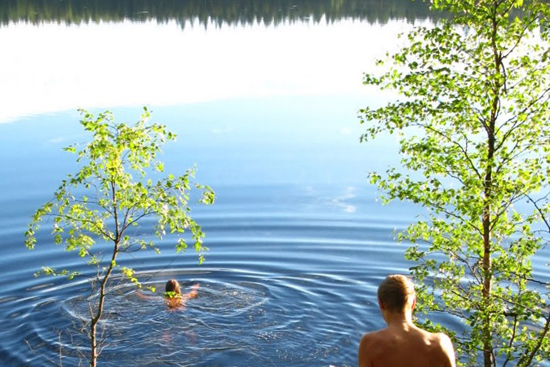
A refreshing morning swim in Hell’s Lake may leave you with goose bumps.Photo: Laura Waris

Everything I’ve mentioned so far meshes with what my body tells me it “feels” like: goose bumps from the refreshing morning swim; rough granite walls covered with moss in the gorge; tense steps over a slippery path made of rain-drenched planks; raindrops tickling my face; the weightless feeling of taking a backpack off at the end of the day; hands and toes warmed by the fire.

The day ends with a well-earned stretch before falling asleep – if I have been careful enough to remove all the rocks beneath my tent – and with a thankful sigh expressing inner peace and bodily wellbeing.

By Laura Waris, July 2013

Island ambience by the Finnish capital

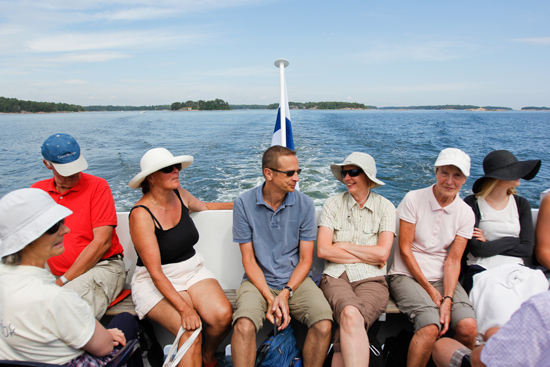
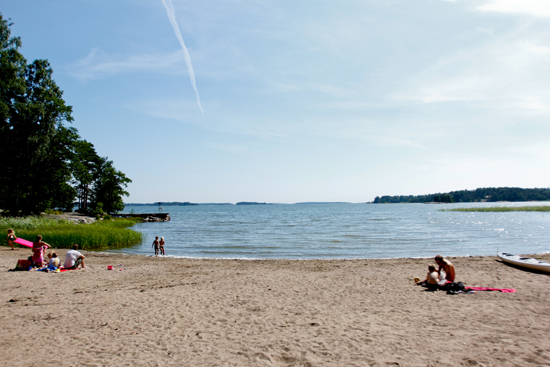
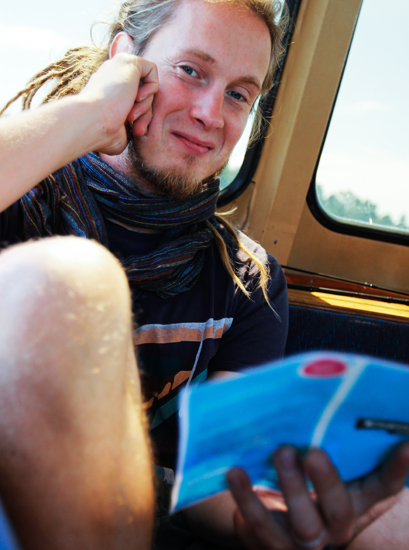
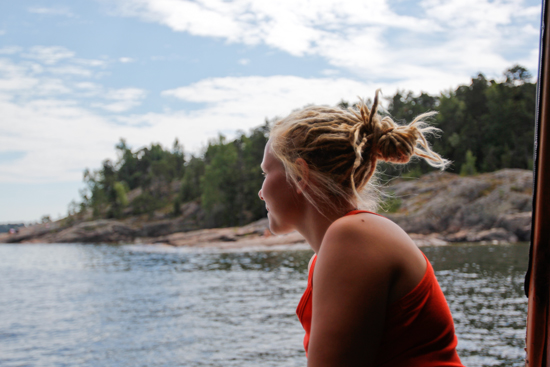
Espoo, the municipality just west of Helsinki, runs summer ferries to the islands along the coast, where you can find archipelago ambience complete with cafés, observation towers and camping areas.

Three scheduled ferries operate from early June until early September from seven different harbours on the Espoo coast. One of the boats goes to Iso Vasikkasaari (Big Calf Island), while the other two each visit four different islands.

Iso Vasikkasaari forms the largest of the islands, a great place for swimming and trail walking, complete with a restaurant and a café. The other islands are mainly intended for camping, with facilities to overnight stays and outdoor cooking. You can admire the magnificent views from the island perimeters or ascend observation towers on two of the isles, Iso Vasikkasaari and Stora Herrö.

Espoo residents Tuomas and Elina Lindroos think highly of the ferry service. “The price is quite decent, and this is practically the only way to get to the islands if you don’t have your own boat,” says Tuomas. They are heading for the small island of Gåsgrund. After their trip they report back by email that it turned out to be a nice, peaceful camping location.

Juha Nyberg, captain of the boat M/S Aurora, says that most of the passengers come from nearby, but many foreign tourists also visit the beautiful archipelago. “People go to all of the islands for various reasons; camping, berry picking or just for a daytrip with the kids to enjoy the Finnish summer.” He says that numerous people have told him that the ferry season should be longer than three months – they would be willing to visit the islands even in a bit rougher weather.

Atmospheric archipelago

Photos by Emilia Kangasluoma, July 2013
Text by Kasperi Teittinen