Finnish education apps: More than a game

Finnish technological expertise and flair for mobile gaming unite with the country’s excellence in education to form a winning combination. We look at examples by SkillPixels and 10monkeys, as well as something different from Angry Birds.

“PISA tourism” represents one of Finland’s attractions, but it has nothing to do with leaning Italian towers. The country’s repeated high ratings in the Programme for International Student Assessment (PISA) since it began in 2000 have initiated visits by policymakers and education professionals from all over the world, keen to discover the secrets of Finland’s educational success.

At the same time, Finland has become a hub of the computer and mobile gaming world, led by Rovio’s phenomenally popular Angry Birds, not to mention Supercell’s runaway hit Clash of Clans.

Now expertise in education and gaming is combining in an exportable commodity that utilises technology and pedagogical ability in a variety of ways that make learning fun, especially for younger children. Several ventures receive support from the Future Learning Finland programme, which is in turn nurtured by Finpro, the national trade and investment organisation. This new export cluster has been earning a growing list of international contracts.

Competitive education combinations

3216-photo-2-12-2013-7-20-550px-jpg

In SkillPixels’ SmartKid Maths, an owl asks questions and the player helps a mouse pick the answer.iPad screenshot

“I think that when Finnish traditions in education and game design are combined, the result is one of the most competitive combinations imaginable,” says Harri Ketamo, founder of SkillPixels, whose Math Elements (now renamed SmartKid Maths) earned the title of Best Digital Educational Game 2013 from the Finnish eLearning Centre.

“When starting out as a young teacher in the late 1990s, I recognised that when two children are teaching each other, both children learn,” says Ketamo. “The only downside is that sometimes children pass the wrong information to each other. So when they can teach their virtual pet game characters, the children learn.

“If the game character receives the wrong information, no harm is done. In fact, such cases can be used as data for detailed learning analytics.”

In its studies, SkillPixels has demonstrated a learning improvement of more than 50 percent in specific topics as a result of just two hours of gameplay. “Of course we are also interested in the motivational dimensions of educational gameplay,” adds Ketamo.

SkillPixels’ approach is based on scientific conceptual learning theories, and it can be applied to any subject: “In addition to SmartKid Maths, we have prototypes for physics, chemistry, geography, biology and languages.”

Better use of high tech

3216-photo-2-12-2013-7-01-49-550px-jpg

In this 10monkeys app, the player helps the apes by solving a barrage of multiplication problems. iPad screenshot

Mathematics is also the subject of choice for 10monkeys, which has just launched a Spanish-language version of its online learning tool. “One of our team members, Lisen Häggblom, a PhD in mathematics didactics, has been making maths textbooks for children for two decades, and she’d felt for a long time that new technology wasn’t being used well enough in primary schools,” explains managing director Katri Björklund.

“This inspired us to create a fun and easy-to-use maths learning and teaching tool that would be very easy for teachers to use alongside traditional materials.”

10monkeys products, says Björklund, are developed together with teachers and students so that their needs can be answered effectively: “We started by focusing on the most fundamental topics in basic arithmetic – addition, subtraction, division and multiplication. More topics will be added in the future.”

Like SkillPixels, 10monkeys has taken a well-informed and methodical approach to its product development, seeking more than just fast-buck gimmickry. “From the very beginning we have worked closely with top universities to research the usability and effectiveness of 10monkeys,” says Björklund.

“The most significant impact is the increasing motivation and support for individualised learning. 10monkeys is a personal practice tool for early learners. It lets the children learn at their own pace and motivates with features like stars and badges.”

Learning should be fun
3216-photo-2-12-2013-6-52-550px-jpg

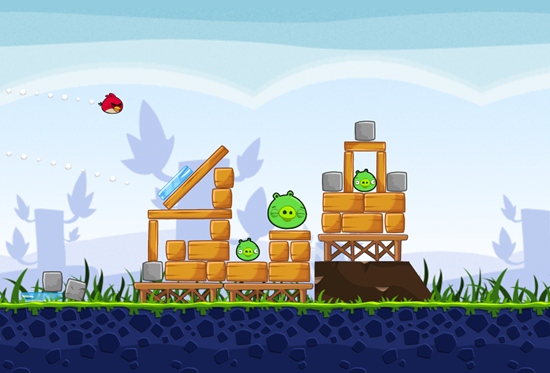
Taking off from the onscreen popularity of Angry Birds, Rovio has developed an education concept that extends to the physical kindergarten environment. iPad screenshot

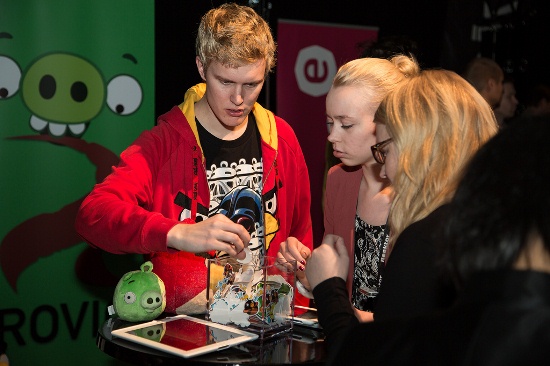
The highest-profile game to have winged its way from Finland, of course, is Angry Birds, which in autumn 2013 also launched something called Angry Birds Playground in China – it’s a “kindergarten concept based on the idea of fun learning combined with Finnish educational expertise.”

“The observation that the world of Angry Birds and its characters activate people led our team to think about how this motivation could be used to promote fun learning experiences,” says Sanna Lukander, vice president of entertainment company Rovio, the Finnish “nest” of Angry Birds.

“The observation that the world of Angry Birds and its characters activate people led our team to think about how this motivation could be used to promote fun learning experiences,” says Sanna Lukander, vice president of entertainment company Rovio, the Finnish “nest” of Angry Birds.

“The concept consists of teacher training, an inspiring environment and learning products where fun and play are core,” she continues. “Rovio works together with the University of Helsinki CICERO Learning Network as a research partner, and with the teacher education department involved in the teacher training. And there is a lot of interest in the programme coming from different parts of the world.”

By Tim Bird, December 2013

Stuck on the feeling

We in Finland are the first in the world to publish our own set of country themed emojis. The Finland emojis are part of our Christmas calendar. FINemojis illustrate Finnish emotions and strengths, as well as vices.

It’s freezing outside. You have so many layers of clothes on that you feel like a Michelin man. You don’t feel like moving. So you just stand. But hang on, there’s a hand rail, or a light pole, you notice. It’s metal. What would it taste like, you wonder. You take your tongue out of your mouth and decide to lick the pole. Just a little bit, just to get the taste. Just for fun.  And then you’re – stuck!

‘Stuck’ – a familiar feeling for us Finns. Usually we try our luck with licking the metal as a child. But how will you get your tongue off the pole? Well, that’s a different story. Ask a Finn.

Even a Finnish child knows you shouldn’t lick anything made out of metal when it’s freezing outside.

Even a Finnish child knows you shouldn’t lick anything made out of metal when it’s freezing outside.ThisisFINLAND / Bruno Leo Ribeiro

Stuck is one of the feelings featured in the ThisisFINLAND Christmas calendar. The main role in the calendar is played by emojis this year. All the emojis are available to download for free on Android devices from the Google Play store and later this month they will be available for iOS devices from the App Store. The emojis can also be downloaded for all devices as images from the Christmas calendar site xmas.finland.fi. In addition, the emojis are featured in the following third party applications: iMoji, Jongla, Futurefly and gotIT.

Even though the entire collection of 29 emojis will be available for download at once, the Christmas calendar will provide a short representation of each of the emoji backgrounds every day. At the end of the month a final special, 30th emoji will be published as a New Year’s gift.  The emoji calendar can be followed at xmas.finland.fi and the social media channels of ThisisFINLAND (Facebook, Twitter and Instagram).

The Christmas calendar is available in thirteen languages, including all of the usual ThisisFINLAND languages plus Japanese, Arabic, Korean, Hindi, Polish and Turkish. The emojis are drawn by Art Director Bruno Leo Ribeiro.

By Jenita Cresswell, December 2015

Finnish Paralympians aim at golden future

Finland’s top Paralympian, Leo-Pekka Tähti, makes the case for even more support for “disabled sports.” Thanks to the winter and summer Paralympics and other world championships, there’s always a major event on the horizon.

According to Finland’s best-known and most successful Paralympian, Leo-Pekka Tähti, the most difficult part of a career in physically challenged sport isn’t finishing the race – it’s managing to get yourself to the starting line in the first place. The challenges are great enough in top-level sport if you’re able-bodied. People with disabilities have to fight even harder if they have ambitions to be Paralympians – and it offers no advantage if, like Tähti, you have a surname that means “star.”

Naturally competitive

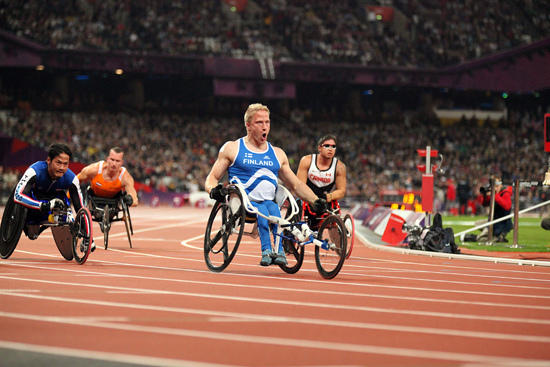
Leo-Pekka Tähti whoops it up after crossing the finish line in London at the 2012 ParalympicsPhoto: Maiju Torvinen/Lehtikuva

Tähti took the gold medal in the 100-metre T54-class wheelchair sprint at the 2012 London Paralympics, clocking a world-record time. He has become a standard bearer for “disabled sports” in Finland and offers inspiration for future Paralympians.

“Ever since I was a child, I have been interested in sports and competing,” he says. “Competition is in my blood. I started wheelchair racing when I was 15, when I got a racing chair for the first time and I was able to try the sport properly. I didn’t have any role models.” Membership of a club, Porin Tarmo, formed the next milestone. “Sponsors were really hard to find at a time when there hadn’t been any success or publicity. Disabled sports also involve big expenses, and this is one of the biggest problems for disabled sports.” Tähti remains a member of Porin Tarmo.

Investment needed

|||Photo: Maiju Torvinen/Lehtikuva

Finland’s Amanda Kotaja smiles after qualifying for the 100-metre sprint finals at the London Paralympics; she set a new European record and came in fourth. Photo: Maiju Torvinen/Lehtikuva

In Finland the situation is relatively good for would-be Paralympians compared with many other countries, says Tähti. “For example, top disabled athletes can get Ministry of Education tax-exempt sports grants. Also, many of the disabled sports are integrated into an association, which is heading in a good direction.”

Even so, he believes that more could and should be done. “For success in the future, it should be possible to invest more in the recruitment of young athletes. The main threats are that promising athletes stop competing when those who are currently the best and most experienced stop.”

The allocation of lottery funds, for example, could be increased to help the Paralympics in the same way as it supports the Olympics.

Just the same, and not least because of Tähti’s high-profile Paralympic success, disabled sports have gained momentum in recent years in Finland. In 2014, for example, the city of Espoo hosted the International Blind Sports Association Goalball World Championships.

Fierce ambition

|||Photo: Maiju Torvinen/Lehtikuva

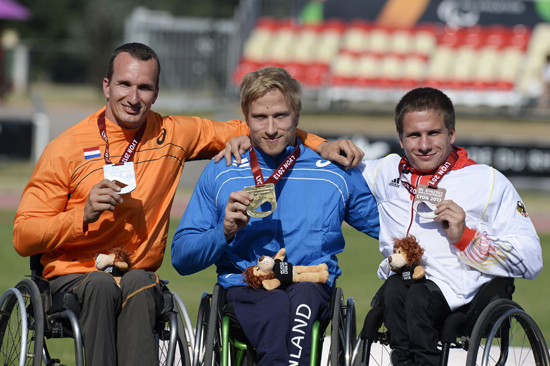
At the International Paralympic Committee’s 2013 Athletics World Championships, Tähti (centre) got gold again, while the Netherlands’ Kenny van Weeghel (left) took silver and Germany’s Marc Schuh won bronze. Photo: Maiju Torvinen/Lehtikuva

“The attitude of the Paralympian must be that of the top sportsman,” says Tähti. “You’ve got to love training and learn from your mistakes. No single sportsman rises to the top alone. He or she also needs support from [friends and family], as well as others in the sport.”

Tähti’s ambition still burns fiercely. “My success at London was just one of the wonderful high points in my career,” he says.

“I also think of the 100-metre and 200-metre wins at the Athens Paralympics in 2004 and my first world championship in New Zealand in 2011.”

Täht also has his sights set on achieving a faster 100-metre world record at Rio de Janeiro in 2016 – and a fifth Paralympic gold medal!”

By Tim Bird, November 2013, updated August 2015

Top 10: Your favourite Finnish books

We asked fans to vote for their favourite Finnish book. Here are the rankings.

The Finns’ active cultural life is especially evidenced by their literary vitality. Many Finnish literary works are translated into multiple languages for global audiences, and the reputation of Finnish writers is expanding worldwide.

1. Tove Jansson: Tales from Moominvalley

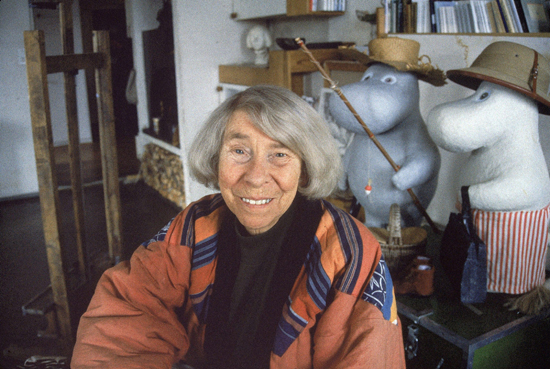
Photo of elderly Tove Jansson sitting next to two Moomin plushies.

Photo: C.G.Hagström/Lehtikuva

A Swedish-speaking Finn, Tove Jansson (1914–2001) is primarily known as the creator of the imaginary Moomin characters, which she wrote about and illustrated in novels and comic strips. Books such as Tales from Moominvalley and Comet in Moominland continue to enjoy worldwide success among audiences of all ages. She also wrote novels and short stories for grown-up readers; many of these works have recently been re-released in English.

2. Elias Lönnrot: Kalevala

The cover of Kalevala; a man riding a horse-driven sleigh and pointing up to the sky towards a lady standing on a rainbow.

Photo:Flickr.com, 50 Watts, CC BY 2.0

Originally a rural physician, Elias Lönnrot (1802–1884) took advantage of time spent in Kainuu, northeastern Finland, by collecting Finnish poems sung in popular oral tradition. Impassioned by his discovery, he published the fruits of his labour under the title Kalevala. The vast mythological epic helped awaken and cement the Finnish national consciousness of the 19th century. The Kalevala themes, complemented by trips to Karelia, have influenced many Finnish artists, including the composer Jean Sibelius.

3. Mika Waltari: The Egyptian

The cover of The Egyptian; a stern-looking Ancient Egyptian man against a yellow background with hieroglyphs.

Photo: Courtesy of WSOY

One of Finland’s most renowned writers, Mika Waltari (1908–1979) created novels, poems, plays and screenplays. After the publication of his first novel, and inspired by a visit to Paris in the late 1920s, he published many thrillers. In the wake of the Second World War he produced what many consider his best work, a historical novel called The Egyptian, noted for its faithful reconstruction of the lives of the Egyptian pharoahs.

4. Sofi Oksanen: Purge

Portrait of author Sofi Oksanen.

Photo: Toni Härkönen

Born in 1977, Sofi Oksanen became known in 2003 for the novel Stalin’s Cows. In 2008 came Purge, which follows two different generations of women in Estonia during and after the Soviet occupation. The novel earned Oksanen international recognition, including the European Book Prize and the Prix Femina Étranger. Known for her feminist sensibilities, Oksanen regularly comments on social issues in the Finnish press. She is also a playwright.

5. Arto Paasilinna: The Year of the Hare

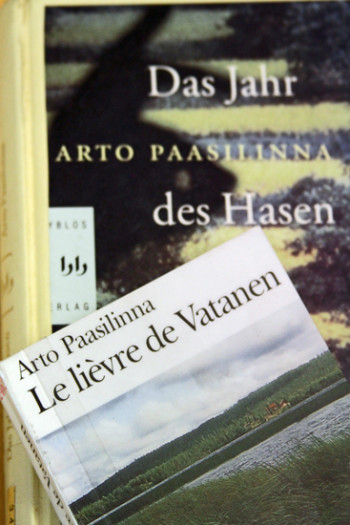
Covers of French and German translations of Arto Paasilinna's books.

Photo:Pia Grochowski

Arto Paasilinna (1942–2018) was born in Lapland. He found his place in literature after practising various trades. Author of numerous novels, he gained international praise for The Year of the Hare, a story of pastoral tribulations by a narrator who befriends a hare. Translated into over 20 languages, this novel became the first in a long series of literary successes, particularly in France. Critics praised him for his use of sarcasm combined with an extraordinary sense of narration and farce, qualities that give his stories an unmistakable tone.

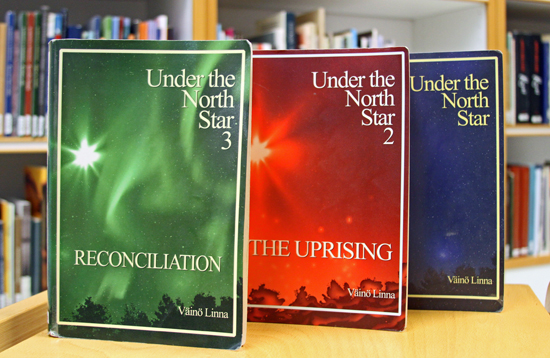
6. Väinö Linna: Under the North Star

Under the North Star trilogy pictured in a library.

Photo: Pia Grochowski

Väinö Linna (1920–1992) forms one of the most influential Finnish writers of the post-war era. Originally a worker from a simple background, he took part in the Fenno-Soviet wars of 1939–1944. This experience led him to write a realistic novel, The Unknown Soldier, that earned him great success. In another book, Under the North Star, he painted a historical portrait of a Finnish family across many generations attempting to describe the social reality in familiar settings. Many of Linna’s novels have been adapted into films.

7. Riikka Pulkkinen: True

Photo of a smiling Riikka Pulkkinen dressed in a red dress.

Photo:Jouni Harala/Otava

Born in 1980, Riika Pulkkinen caused a sensation with the 2006 release of her first novel,The Border, in which she featured characters struggling with violent internal conflict. The book also covered topics such as Alzheimer’s disease and euthanasia. She later confirmed her literary talent with two more novels, including True, in which she continued to explore struggles of the human soul. Highly regarded as a novelist, she also regularly writes columns in the Finnish media.

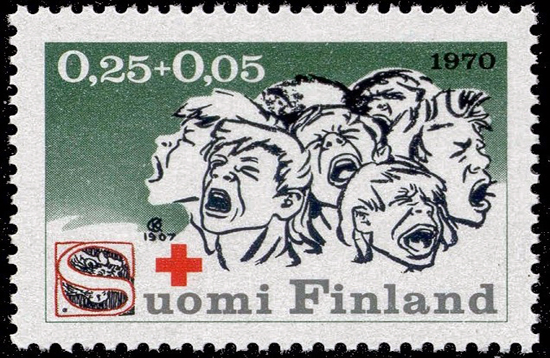
8. Aleksis Kivi: The Seven Brothers

A postage stamp with an illustration of seven shouting boys.

Photo: Posts and Telecommunications of Finland Archives

Aleksis Kivi (1834–1872) began as a playwright. Of all his plays, Heath Cobblers continues to be the most popular. He spent ten years writing The Seven Brothers, which was published in 1870 to mixed reviews. It forms a scathing, yet truthful depiction of Finnish rural life. Exhausted by work and illness, Kivi passed away as a destitute man at the age of 38. Today he has been promoted to the rank of national writer, for he is reputed to have paved the way for Finnish-language literature (before him, the bulk of Finnish literature was written in Swedish). He also left behind many poems, some of which have been turned into songs.

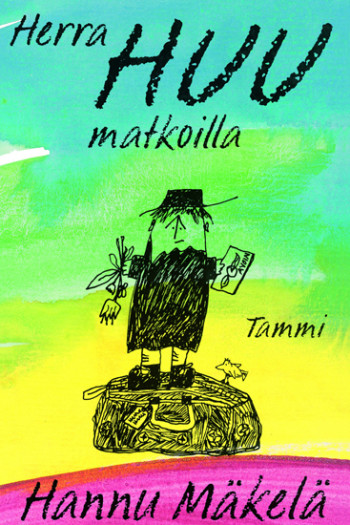
9. Hannu Mäkelä: Mr Boo

Colourful cover of a Mr Boo book.

Photo: Courtesy of Tammi

Born in 1943, poet and novelist Hannu Mäkelä has had a particularly productive career. His works for children, based on the imaginary Mr Boo, a farcical character who appears to children at night, earned him much success and international recognition. Since 1973 Mäkelä has published a series of stories based on this popular character. Mr. Boo’s popularity has been amplified in the music of M.A. Numminen, a singer of unbridled imagination, who transcribed the adventures of this imaginary character into music, to the delight of young Finns.

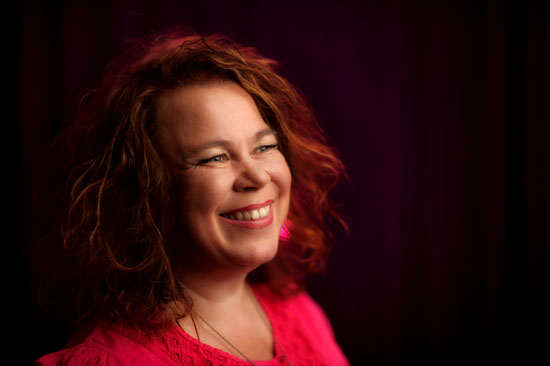
10. Leena Lehtolainen: My First Murder

Portrait of Leena Lehtolainen smiling widely.

Photo: Tomas Whitehouse

Since her first novel was published at the age of 12, Leena Lehtolainen (born in 1964) has become known for her thrillers, such as My first Murder, Her enemy and Copper Heart, which feature police inspector Maria Kallio. Acclaimed for their well-crafted intrigue and captivating atmosphere, Lehtolainen’s books have been translated into over 20 languages; some have been adapted for television and theatre.

By René-Philippe Thomas, October 2013

Finnish families get to grips with trash

Finland, long a leader in recycling bottles and paper, now ambitiously aims to minimise the quantities of household waste sent to landfill sites.

For Finnish households, sorting, returning and recycling waste has long been a matter of everyday routine. “Finns are very aware and concerned about environmental problems,” says Sirje Stén, a waste specialist from the Ministry of the Environment. “Separating and recycling waste material is an easy practical way you can do something yourself to benefit the environment.”

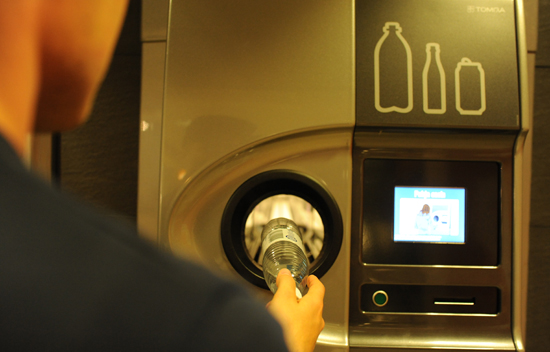
A person putting a plastic bottle into a bottle recycling machine.

Beverage container recycling programmes work well because of a monetary deposit system. Recovery rates are near 100 percent. Photo: Emilia Kangasluoma

Finnish recycling figures are particularly praiseworthy when it comes to returnable bottles and cans within the nationwide deposit scheme. The return rate for refillable glass bottles is almost 100 percent. For recyclable aluminium beverage cans and plastic bottles, recovery rates are 96 percent and 94 percent. Finland also leads the way on paper recycling with a recycling rate of 93 percent in 2011, which is very high by European standards. This is largely because Finland has a well-established paper industry able to use the recovered paper. Used paper has been collected in Finland for almost a century, while in many other countries this is still a new green idea.

Handy collection points

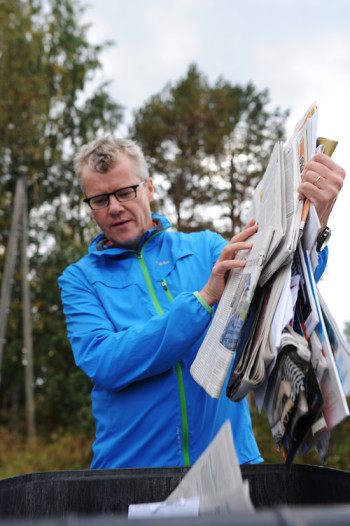
A man putting a bunch of newspapers into a paper recycling container.

Paper recycling has a long history in Finland, where the large paper industry is able to re-use the material. Photo: Emilia Kangasluoma

“Our infrastructure for recycling household wastes is generally good, especially in towns and cities,” explains Stén. Apartment blocks and housing cooperatives have their own handy shared collection points for paper, organic waste and, increasingly, cardboard and cartons, making recycling easy. Supermarkets and shopping centres also have collection points for metals and glass. Used batteries and lamps can be returned to shops that sell those products, and the same will soon be true for all used electronic devices. Finnish homes generate about 340 kilos of household waste per person per year. About a third of this is compostable organic waste; nearly one-fifth is paper; plastics make up another fifth, and the rest mainly consists of textiles and packaging materials including glass, cartons and metals. Finland’s National Waste Plan aims to ensure that more than half of the material content of household waste is recycled by 2016. “Our target is achievable, though challenging,” says Stén. “In 2011 the figure was about 35 percent, but we want Finnish households to sort their waste even more effectively.” This recovered material content includes glass, paper, cardboard, cartons and metals, as well as organic waste, which is centrally composted for use in public parks and green spaces.

Drastic solutions for plastic

A construction site of a power plant.

Shown here during construction and commencing operations in 2014, this incineration and power plant in Vantaa, north of Helsinki, can recover energy as waste is destroyed. Photo: Martti Kainulainen/Lehtikuva

Like many other countries, Finland is struggling to find ways to recycle problematic plastic wastes. Finnish shoppers have long had to pay for their plastic carrier bags, which are widely reused. “But the problem is there are so many other kinds of plastic packaging with different recycling properties,” says Stén. “We can’t expect householders to become plastic sorting experts, but there is scope for improving the recovery of reusable hard plastics.” The national plan envisages that after recovering all usable materials, the maximum possible amount of the remaining waste will be used to generate energy. This includes most plastics. “By 2016 we should have seven energy recovery plants around Finland where waste will be incinerated,” says Stén. “Here in Finland, by using combined heat and power technologies, we can maximise the amounts of energy obtained from waste for district heating systems as well as electricity. “Our municipal waste management companies reckon that with the help of these energy recovery plants by 2016 we could reduce the proportion of household waste ending up in landfill sites to perhaps as little as 5 percent, which would represent great progress.”

By Fran Weaver, November 2013

Ideas and money flow at Slush Helsinki

Our reporter sends an update from among the throngs of entrepreneurs and investors at the wildly popular Slush Helsinki, one of Europe’s premier annual events for startups (this article describes the atmosphere at Slush 2013).

Peter Vesterbacka of Rovio, the company that created Angry Birds, was disappointed. Several years ago he asked a group of 600 students how many were interested in entrepreneurship. Only three hands went up.

“We had to do something,” Vesterbacka says.

Judging from the 6,000 people crammed into Cable Factory in western Helsinki, that “something” appears to be working. This is Slush Helsinki, the world’s largest community-organised event for startup companies. As part of the renowned Startup Sauna organisation, Slush has the goal of promoting entrepreneurship.

3177-10839244373_e2424495e1_b-550px-jpg

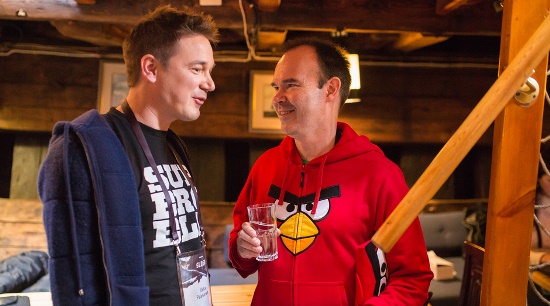
Bigwigs: Ilkka Paananen (left) of Supercell and Peter Vesterbacka of Angry Birds creator Rovio compare experiences. Photo: Samuli Pentti/Slush Helsinki

“As political decision-makers, this gives us hope,” Finnish Prime Minister Jyrki Katainen said during the opening ceremonies. “At Slush there is a spirit of changing the world.”

Giant multinationals such as Nokia and Amazon maintain a presence, but the majority of the companies are small, high-tech startups. Out of the 1,200 firms in attendance, the largest industry represented is healthcare and life sciences. Gaming is also popular, with dozens of enterprises hoping to follow in the magnificently successful footsteps of Finnish gaming giants Rovio and Supercell.

“It’s not all social networks and web services,” Vesterbacka says. “We have companies engaged in actual rocket science, and we even have 23 in nuclear or radiation technology.”

One of the big draws is robotics. In the yard outside Cable Factory, ZenRobotics has a giant robotic contraption whose arms, guided by artificial intelligence, sort through rubble for recycling. Hundreds of people gather to see it unveiled.

“The only thing we have to worry about is a robot uprising,” jokes ZenRobotics founder Jufo Peltomaa.

In search of hot young companies

3177-10839025595_4812e36cf4_b-550px-jpg

Investors, entrepreneurs, journalists and students pack the hall at Slush Helsinki’s main stage to hear nonstop presentations and pitches. Photo: Samuli Pentti/Slush Helsinki

The proof that Helsinki has become one of the world’s premier ecosystems for nurturing creative young companies is evident from those in attendance. They have come from all over Northern Europe and Asia, but Russia is especially well represented, with about 400 people participating.

“Finland and Russia compete against each other in ice hockey, but we collaborate in innovation,” says Russian Deputy Prime Minister Arkady Dvorkovich with a smile.

Hundreds of international venture capitalists come to Finland in their search for a hot young company. Entrepreneurs take the stage to quickly pitch their companies to potential investors, explaining who they are and what they do.

Another firm present has a different way to match companies and investors. FundedByMe is the only international crowdfunding company that uses both equity and reward-based platforms.

“I’m so proud that we have something like Slush in Finland!” says FundedByMe’s Kristiina Pääkkönen. “It’s very inspiring.”

Generating entrepreneurship

3177-10837105844_f8228e6497_b-550px-jpg

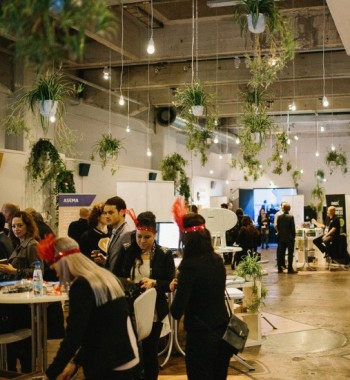
It’s a jungle out there: One of the spaces at Slush Helsinki is decked out with hanging plants. Photo: Jussi Hellsten/Slush Helsinki

Yet there is much more to Slush than finding funding, and not all startups are even interested in more capital.

“We’re already profitable, so we aren’t looking for investors right now,” says Jussi Virtanen of Venuu. “We’re here to make contacts and tell people about our service.”

Venuu finds venues – a person looking for a place to hold a birthday party or wedding, for example, can input what type of place they need and discover what is available and fits their criteria. It’s remarkable the company is already profitable, because it was only founded five months ago. But Virtanen is no stranger to entrepreneurship and is exactly the type of person Slush wants to encourage.

“I’m 27 years old and this is my fourth company,” Virtanen says.

Norbert Juhasz is one of those people Peter Vesterbacka would like to turn into a serial entrepreneur just like Virtanen. He is in his first year of a master’s programme at Aalto University in Helsinki.

“This is my first time at Slush,” says Juhasz. “They recommended I come to get information about startups. Maybe I will start my own company someday.”

By David J. Cord, November 2013, updated November 2014

Finns improve testing for rare diseases

Young Finnish company Blueprint Genetics has its sights set on revolutionising genetic testing for inheritable diseases.

Just a few short years ago, Tommi Lehtonen’s job could have been found only in works of science fiction. He is the CEO of Blueprint Genetics, a Finnish company that provides clinical genetic diagnostics for rare diseases.

“We launched our first ten products in June 2013,” says Lehtonen. “Our sales have picked up well, and there are already more than 20 hospitals in several countries sending us diagnostic samples.”

Headed for Slush Helsinki

3176-9499888626_93b34ac77a_b-550px-jpg

Startup companies and investors flock to Slush Helsinki each year. Photo courtesy of Slush Helsinki

In the Finnish tradition of close partnerships between corporations and researchers, Blueprint Genetics can trace its beginnings all the way to a famous California institution.

“The roots of the company are in Stanford, where our core technology was originally invented by our chief technology officer. We raised seed funding in spring 2012 from Finnish angel investors and we have gathered an ambitious team of 11 to take hospital genetic diagnostics to the next level.”

One component of their growth strategy was their attendance at Slush Helsinki, the largest conference for startup companies in Northern Europe. The event, held annually in the Finnish capital, attracts investors from all over the world. Participants attend from life sciences companies such as Blueprint Genetics, as well as from sectors including software, hardware, cleantech, information security and gaming.

“We went to Slush to meet investors and network with entrepreneurs and advisors,” Lehtonen says. “We hoped to get into good one-to-one meetings and find contacts that lead to practical collaboration. We have an ambitious expansion plan and we need both the financial resources and talented people to help us execute it.”

Heart disease runs in the family

3176-istock_000020292796medium-550px-jpg

Accurate DNA analysis can form a tool in doctors’ repertoire to greatly improve the lives of patients and their families. Photo: Blueprint Genetics/iStockPhoto

Just like all the other life science companies at Slush, at the core of Blueprint Genetics’ mission is to help patients with the best tools available.

“Our current diagnostic products concern rare diseases that are often serious and in many cases fatal,” says Lehtonen. “Diagnostics enables clinicians to reach a diagnosis quickly and choose the right treatments for the patient. Quick engagement of the treatment reduces symptoms and can prolong life expectancy significantly. Also, a quick diagnosis relieves the patient from the anxiety of not knowing.”

Tiina Heliö, a cardiologist at Helsinki University Central Hospital, explains why such genetic testing from Blueprint Genetics is important for her patients.

“Cardiomyopathies are often familial,” she says. “In these cases, the accurate DNA diagnosis helps to recognise those family members who need follow-up.”

Heliö emphasises that these new tools can be added to her repertoire to greatly improve the lives of patients and their families.

“Even if there are several cardiomyopathy cases in the same family and it is reasonable to presume that the background might be genetic, the penetrance of the disease genes is variable,” she notes. “This means that without DNA diagnosis, apparently healthy family members should be followed up regularly, even until middle age, in order to detect possible developing cardiomyopathy. In most cases, individuals who are not carriers of the mutation may be released from years of unnecessary restrictions.”

Finnish research community

3176-istock_000021925918medium-550px-jpg

Studying data: Genetic testing is evolving at a rapid pace and already forms a fast-growing industry in which Finland plays a significant part. Photo: Blueprint Genetics/iStockPhoto

Lehtonen says genetic testing is evolving at a rapid pace and already forms a fast-growing industry. Many factors in its evolution can be traced back to Finland.

“The diagnostics would not be possible without the vast research information available, to which Finland has contributed significantly,” he says. “Finland has a very strong and globally recognised genetics research community, which provides a credible background for us to make international contacts.”

The next step for Blueprint Genetics is to continue their expansion and offer more services for other genetic diseases. They already offer testing for heart diseases, but should soon be able to help other patients, such as those who suffer from kidney diseases.

“We are already beating our revenue targets,” says Lehtonen. “We are excited to launch more products soon that extend our line to other disease categories.”

By David J. Cord, November 2013, updated November 2014

Investors descend upon Slush Helsinki

Francesco De Rubertis is on the prowl. He is thinking about Slush, the largest conference for small, high-tech startup companies in Northern Europe. As a partner in Index Ventures, one of Europe’s most successful venture capital firms, De Rubertis will discover some of the hottest young companies in existence.

“Yes,” he says in the most enigmatic way. “There are several companies that I am eager to meet at Slush.”

Sixty billion euros in venture capital

3178-9499869748_0141575d3d_b-550px-jpg

Slush Helsinki offers a scene for constant pitches, meetings and networking for startups and investors. Photo courtesy of Slush Helsinki

Slush has exploded in popularity in just a couple of years. It grew out of Aalto University and Startup Sauna, a nonprofit organisation dedicated to promoting entrepreneurship. In 2012 Slush attracted some 3,500 attendees from 550 companies and 250 investors over the two-day event. In 2014 the number of attendees surpassed 14,000.

De Rubertis says there are good reasons for him flying in to Finland from his base in London.

“Slush offers a concentrated top-level network and networking opportunity you can’t find elsewhere,” he says. “Events like this are very important for Index Ventures.”

Many of the world’s top venture capitalists agree. Silicon Valley’s Accel Partners, which were early investors in Facebook, are regular attendees. BlueRun, which had success with their investment in Paypal, also comes to Helsinki for the event. In total, investors with about 60 billion euros in venture capital come to Slush.

Investors like De Rubertis listen to entrepreneur pitches, meet with them one-on-one, and watch presentations in their search for the next Supercell, the phenomenal Finnish gaming company that has been valued at 2.2 billion euros by Japanese investors. Yet while Supercell and Rovio’s Angry Birds have received much attention, there are many other inventive industries at Slush.

“Life sciences is very important in Northern Europe,” De Rubertis explains. “In Finland there is a great tradition of medical devices and instrument manufacturing, in addition to a very sophisticated focus on digital healthcare and consumer healthcare.”

Besides gaming and life sciences companies, Slush attracts startups focusing on software, hardware, cleantech and information security, among others. It all takes place in western Helsinki at Cable Factory, a glorious old industrial property which has been renovated to handle such large events.

Angel investors

3178-9499888194_66978aea29_b-550px-jpg

While Rovio and its Angry Birds receive much attention, there are many other inventive companies at Slush. Photo courtesy of Slush Helsinki

Putting together Slush is a weighty endeavour, so organisers have partnered with major firms such as Nokia, Google and Evli Bank.

Head of wealth management Esa Pensala says Evli does not directly invest in companies presenting at Slush, but they are still closely involved. “Many of our clients have found investments at Slush,” he points out. “These are angel investors, so there will be quite a few there looking at startups.”

Angel investing is the term normally used for capital placed in very young companies. Yet those investors at Slush need to worry about more than simply finding a good company.

“We help investors diversify, to make sure the overall risk in their portfolio is correct,” Pensala says. “We help with liquidity matching, so capital needs in the future can be met. We also assist with valuation, and we give advice on taxes and how to structure their ownership.”

Investors come to Helsinki to find those exciting young companies which have sprouted in Finland in recent years, but they need the correct environment to grow and prosper. Luckily Slush has proven to be nurturing.

“Slush is nonprofit,” explains Pensala. “We want to support entrepreneurship, and we can encourage the startup scene with Slush.”

By David J. Cord, November 2013, updated November 2014