Finnish reading dogs help kids learn and grow

Fifth-grader Donita is reading aloud from a children’s book while a Bernese mountain dog called Hilma-Maria listens attentively. When Donita scratches Hilma’s chin, the big dog’s eyes close blissfully.

Hilma is no ordinary dog – she’s a “reading dog,” on the job today at Hovirinta School in Kaarina, a town in southwestern Finland. Hilma’s mistress, Maarit Haapasaari, who is with her in the small classroom, started to use reading dogs in Kaarina in 2011, bringing the method to Finland for the first time.

Reading to a dog can be a highly rewarding experience for kids in need of reading practice. “The idea is to encourage children with reading difficulties to read aloud,” she says. “Dogs will listen contentedly to a child, not caring if the reader makes mistakes or only reads slowly.”

Kids who read to dogs experience a sense of fulfilment that boosts the children’s self-esteem and encourages them to pick up books more readily in future.

All over Finland

Hilma relaxes during a break between reading assignments.

Hilma relaxes during a break between reading assignments.Photo: Ilari Välimäki

Reading dogs have also been used to help struggling readers in the other Nordic countries and in the US. The special feature of the system used in Finland is that during the activity only the dog, the child and the dog’s handler are present. “This makes the situation more intimate, so it’s easier for the child to read with no other listeners present,” says Haapasaari.

Inspired by the pioneering work done in Kaarina, many other localities around Finland have adopted the idea. Dozens of dogs today prick up their ears gratifyingly in response to young readers, though reading to dogs does not form part of the official school curriculum.

Heidi Puputti, who teaches a special needs class at Hovirinta School, reckons that reading to dogs particularly helps kids to relax and improves their ability to concentrate.

“Some children may normally be hyperactive in the classroom, but when they read to a dog, they calm down,” she says. “They understand that they are the ones in control of the situation, and that they must consider the needs of the listener. They also learn to be empathic and interactive. And when they read carefully, they notice that they can actually read quite well after all.”

Affectionate audience
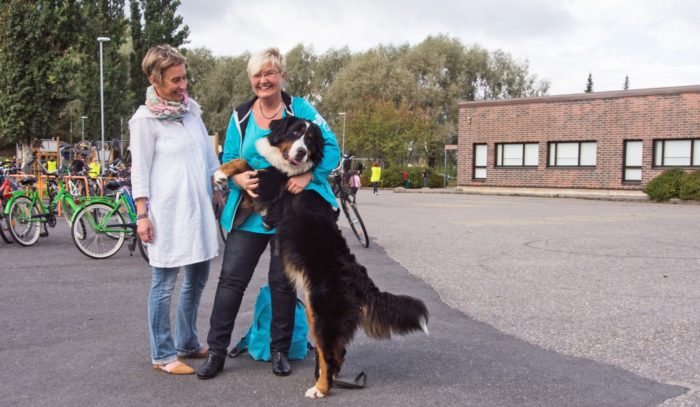
Special-needs teacher Heidi Puputti (left), Maarit Haapasaari of Hali-Koirat (Hug Dogs) and Hilma the Bernese mountain dog hang out in front of Hovirinta School.

Special-needs teacher Heidi Puputti (left), Maarit Haapasaari of Hali-Koirat (Hug Dogs) and Hilma the Bernese mountain dog hang out in front of Hovirinta School.Photo: Ilari Välimäki

A session with a reading dog typically lasts about five minutes, or up to 15 minutes for more advanced readers. The dogs visit the same schools many times, giving kids a chance to enjoy reading to them repeatedly. 

Donita has also read stories to two other Bernese mountain dogs, called Viljo-Valdemar and Neiti Namu (Miss Cutie). “Viljo was really nice,” she says. “He listened very calmly.”

Bernese mountain dogs are particularly well suited to such tasks, due to their affectionate nature and cuddly appearance, though their large size also gives them a sense of dignity and authority. The breed of the dog is of little importance, though. All reading dogs start training as puppies to accustom them to different settings and people.

“We also keep in mind that some kids may be a bit afraid of dogs,” says Haapasaari. “The children can decide for themselves how close they want to be to the dog. The reading activity can also help children to overcome a fear of dogs.”

Canines and even cows encourage creativity
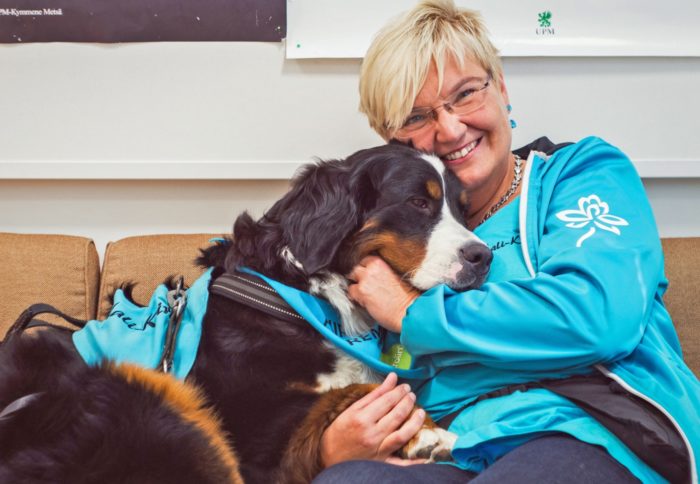
Maarit Haapasaari brought the reading dog concept to Finland in 2011.

Maarit Haapasaari brought the reading dog concept to Finland in 2011.Photo: Ilari Välimäki

Haapasaari provides reading dogs for schools in southwestern Finland through her own business, called Hali-Koirat (Hug Dogs). In addition to being read to, her dogs visit old people’s homes and centres for people with disabilities, to be cuddled and stroked.

“Together with creative writing specialist Veera Vähämaa, we’ve also developed and registered a concept we call ‘Writing stories to tell to dogs,’” says Haapasaari. “Children write their own stories that they can then read aloud to a dog. This kind of activity isn’t practised anywhere else in the world yet.”

In the town of Raisio, not far from Kaarina, another business has set up a similar scheme, but the listeners are “reading cows.” Since it’s impractical to bring such listeners into schools and libraries, the kids also get to enjoy a visit to a farm.

By Matti Välimäki, October 2016
Joined-up transport solutions for smart cities

Residents of smart cities will in future be linked through their smartphones to mobility integration services that enable them to travel conveniently wherever they wish, switching flexibly between different transport modes. Finland is a global forerunner in the piloting of such services.

The concept of a smart city involves using existing and innovative technologies to make life easier for everyone. We can especially get smarter when it comes to getting around town. A pioneering programme run by Finland’s Ministry of Transport and Communications and Tekes aims to realise the concept of Mobility as a Service (MaaS).

“The idea is that a single smartphone app will look after all your mobility needs, finding the best way to get where you want to go using any combination of transport modes – and letting you pay for all your mobility needs conveniently through a single system,” explains Sonja Heikkilä who coordinated Tekes’s MaaS programme in 2015, and now works at OP Financial Group, leading a project developing new mobility services.

Mobility on demand

According to Heikkilä, it is already feasible to expand the journey planning services run in many large cities to encompass options like taxi services, shared car rides or even free city bikes, as well as public bus and rail services.

These bundled options will be provided by “mobility integrators”. Working in a whole new business area, these competitive service-providers will run hi-tech systems that display information on timetables, real-time vehicle locations and journey fares on user-friendly interfaces, while enabling you to instantly book all parts of your trip.

“Depending on your agreement with your chosen mobility integrator, you might pay-as-you-go for whatever mode of transport you use, pay in advance for a fixed time period package, or pay afterwards just like the way we pay our telecom bills,” adds Heikkilä.

Such schemes depend on transport operators giving mobility integrators access to their information and payment systems. The Finnish Taxi-Owners’ Federation and national rail company VR are already open to the idea.

“As a small and agile market Finland is an excellent test-bed for such solutions. Finns tend to be open to new technologies, while we also have plenty of people with expertise in smart mobile communications, as well as government agencies keen to support such initiatives,” says Heikkilä.

Heikkilä’s vision of future integrated mobility services in Helsinki, as set out in her Master’s thesis for Aalto University, has attracted international interest. Foreign Policy magazine listed her among their 100 Leading Global Thinkers in 2014.

After developing apps and services through the MaaS Programme during 2015, budding Finnish mobility integrators including MaaS.fi, Tuup, Tziip and TeliaSonera aim to expand their pilot schemes with real users during 2016. Interested cities include Helsinki, Tampere, Seinäjoki, Hämeenlinna and Turku, while the ski resort of Ylläs in Finnish Lapland is planning a unique scheme to help tech-savvy visitors get to, from and around the resort.

“There’s been a lot of international interest in how we’re pioneering the MaaS concept in Finland,” says Sonja Heikkilä.Photo: Ari Heinonen

Trains and boats and planes

“Though it takes time to change attitudes and behaviour, such systems could become large-scale within a couple of years,” says Heikkilä. “There’s been a lot of international interest in how we’re pioneering the MaaS concept in Finland. We believe such schemes can be scaled up and replicated through international cooperation to enable travellers to use similar interoperable services anywhere in the world through ‘roaming’ mobility services like those we already use for telecoms.”

Airlines and shipping companies can be integrated, while in some localities vehicles delivering goods or the post could also carry passengers attracted through mobility integrators.

Heikkilä believes the time is ripe for such schemes, since attitudes towards mobility among the smartphone generation are changing fast. “Young people in cities no longer feel it’s so important to have their own car,” she says. “Instead they appreciate the flexibility of switching between private and public transport modes, as well as the economies of crowdsourcing solutions such as sharing a car or a ride.”

Though such multimodal mobility trends may mainly be driven by demands for convenience, they will also mean cleaner air and more space for pedestrians and cyclists on city streets.

By Fran Weaver, October 2016

Finnish singer Alma’s crazy summer

Alma’s story is the story of a star falling into place. In 2013 Alma was a 17-year-old participant in the Finnish version of the TV show Idols, and had been listening to Amy Winehouse and the Jackson Five all her life.  She dropped out of Idols before the semifinals, but during the competition she befriended one of the judges, Finnish rapper Sini Sabotage, and ended up doubling her at gigs for a few years.

In addition to “Karma,” Alma was featured in “Bonfire” by German EDM artist Felix Jaehn – which topped the charts in Germany. She has signed deals with two major labels: Warner in Finland, Scandinavia and the Baltic, and Universal Music Germany in the rest of the world. Alma’s first EP is released in autumn 2016 and her debut album in the first quarter of 2017.

Finland’s greatest asset: Talented R&D engineers

Continuous growth between 1990 and 2009 turned the Finnish telecom industry into a nationally important sector – with ICT regarded as the cornerstone of the national economy. In those days, Nokia was the jewel in the crown that all Finns were proud of.

But the new decade saw a structural change brought about by the maturisation of the telecom industry, new players, a new global model and changing market shares. In 2009, Nokia started to downsize its mobile operations, making more and more people redundant. Confronted with plummeting sales figures, Nokia eventually decided to sell its mobile phone business to Microsoft in 2013. This caused a radical contraction in the large Nokia ecosystem.

Further bad news followed in summer 2015, when Microsoft announced it was scaling down its mobile business and laying off roughly 2,300 employees in Finland. The R&D site in Salo was to be closed down and major redundancies were expected elsewhere in Finland.

End of the story? A discouraging final blow for Finnish ICT? No, Finns do not give up that easily. This is where a new story, a new vision, of determined recovery begins.

A new start

Extensive and rapid change is painful, but also a strong driver for renewal. Major mobile players have exited the stage, but today’s Finnish ICT arena is alive with new energy and an ambitious can-do attitude.

Telecoms, radio technology and mobile technology remain strong, the ICT subcontracting industry is competent and lean and the Finnish gaming industry has been booming. Hundreds of new technology startups have created a vibrant startup scene. And new players such as Intel, Huawei, LG and Zalando have set up R&D units in Finland to utilize the available talent pool and to tap into the local tech community. In a recent study for innovative capital cities, Helsinki is listed as one of the top five tech cities in the world.

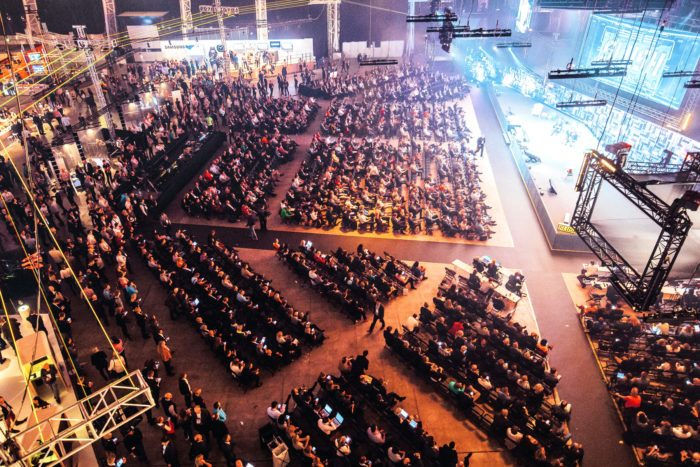
In 2015, the leading start-up conference Slush brought 1,700 startups, 800 venture capital investors and 630 journalists to Helsinki. Photo: Jussi Hellsten

“This rapid change has created a unique opportunity to utilize world-class Finnish R&D expertise. You could say Finnish engineers are amongst Finland’s greatest assets,” says Minna Matinaho, Head of Customer Process at Invest in Finland.

“In Finland the price to quality ratio of technology professionals is excellent. The R&D engineers are innovative problem-solvers and committed to the task and to the job,” Matinaho highlights.

Finns go that extra mile

Creoir is a Finnish startup providing design and engineering services. Winner of the iF Design Award 2015, Creoir specializes in designing user interfaces for consumer brands, most notably designing the Marshall London smartphone and the Ibis smartwatch. Most of Creoir’s employees have a Nokia background. Pekka Väyrynen, CEO of Creoir, is convinced that the way Finns work makes a real difference.

“Before joining Creoir at the end of 2012, I headed the product development of Nokia’s N9 Meego phones in Oulu. During my business trips across the world I got to see various working cultures, and realized how naturally it comes to Finnish employees to show initiative and always walk the extra mile,” Väyrynen says.

“You may be able to outsource work overseas at a lower price, but Finnish workers are extremely flexible. If quality and adhering to schedules are important to you, choose Finland,” he urges.

Legacy networks and good language skills

Part of the Nokia and Microsoft legacy are the professional networks born during those years.

“Looking back, the thing I appreciate most is the professional competence we accumulated while working for Nokia. Old networks are crucial to the current success of our company. They enable us to scale up our production. And they allow potential cooperation partners to learn about us,” Väyrynen says.

Another valuable legacy is the ability to use English as a working language.

“Finns speak English really well. We are used to working in an international multi-site environment and we have existing contacts around the world. This means we can always find a solution to any problem that may arise.”

Other benefits for international companies establishing themselves in Finland are a very low employee turnover rate and a culture of straightforward communication.

“Personnel don’t change twice a year, as happens in certain countries. This means you don’t have to use valuable working time for training new employees or getting trained. Also Finns can admit their errors. Problems can often be solved quicker if you do not have to think about saving face,” Väyrynen notes.

By Leena Koskenlaakso, ThisisFINLAND Magazine 2016

Northern Finnish microbrewers build on tradition

In the Finnish north country, two distilleries and four microbreweries are either already chugging away or about to open. Up here the alcohol business doesn’t mean just brewing or distilling, but also connecting with the local heritage.

The newest company in the field, Sangen, calls itself an alcohol laboratory. It garnered lots of media attention by gaining over one million euros in a share issue in the spring of 2016. The company was aiming to raise enough to manufacture 200,000 litres of beer per year, but the money it received can cover a capacity of ten times that amount.

Sangen is brewing and distilling in Tornio, a town on the Finnish-Swedish border, in a brewery space that used to produce Lapin Kulta beer (the name means “Lapland gold”). Formerly owned by the beverage company Hartwall, the location shut down when a merger with Heineken took effect in 2010, halting more than 130 years of brewing tradition in the area. Lapin Kulta is now produced in southern Finland. The Tornio brewery’s resurrection has been hailed as good news in Tornio and the whole of Finnish Lapland.

“Locality is very important for us,” says Jami Teirikari, Sangen’s head of marketing. The company has consulted with Finland’s Sámi Parliament about possibly using the colours of the Sámi flag in packaging. The indigenous Sámi people’s homeland stretches across northern Finland, Sweden, and Norway, and a corner of Russia.

Expanding tastes in Oulu

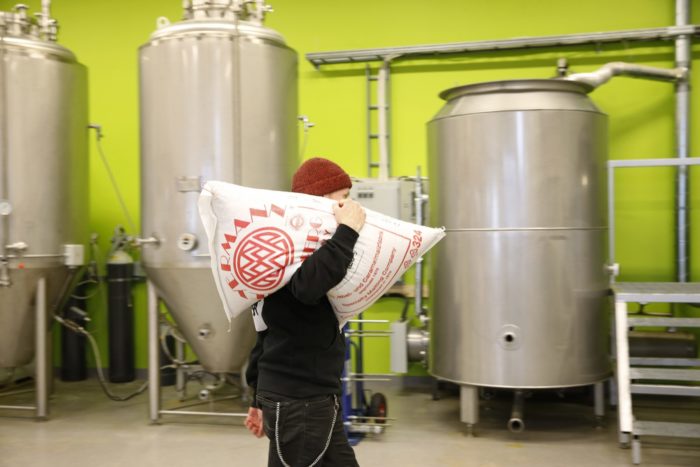
Sonnisaari cofounder Timo Kanniainen carries a 25-kilogram (55-pound) sack of malt across the brewery floor to add to the vat.

Sonnisaari cofounder Timo Kanniainen carries a 25-kilogram (55-pound) sack of malt across the brewery floor to add to the vat.Photo: Timo Heikkala/ Lehtikuva

The local connection is also vital to two new breweries in Oulu, a city of 200,000 people about 130 kilometres (80 miles) down the coast from Tornio. One of them, Sonnisaari, has declared itself the heir of Oulu beer culture. “We are on a mission to make Oulu a brewing city again,” says founder Timo Tyynismaa.

Beer has been brewed in Oulu since 1847, but later northern Finland almost dried up. For a while Polarpanimot (Polar Breweries) was the only one left, located first in Kiiminki, near Oulu, and later 450 kilometres (280 miles) farther north in Saariselkä, a town best known as a ski resort in Finnish Lapland.

Sonnisaari got its start in 2011, when its founders began wondering why there was no brewery in a city the size of Oulu. The company, whose name means “bull island,” after a place in Oulu, was founded in 2014. Its first beer hit the market in spring 2015. The other Oulu-based brewery, Maistila, grew out of a love of beer, says owner Riku Harju, one of the founders. Its name references the Finnish word maistaa, “to taste.”

A passion for brewing and working locally has proven successful for both companies; they are now working to expand their businesses. Sonnisaari even had to triple its expansion plans.

Another brewery, Lapin Panimo (Lapland Brewery), opens its doors in autumn 2016 in Rovaniemi, 200 kilometres (125 miles) north of Oulu. Rovaniemi city centre is located just south of the Arctic Circle – the last time there was a brewery that close to the Arctic Circle was in 1958. Still another brewery is getting established in Taivalkoski, 180 kilometres (110 miles) east of Oulu.

Sonnisaari and Maistila welcome the competition. “I don’t think the competition is insane at the moment,” says Harju. “On the contrary, the Finnish microbrewery scene is very open. People help each other out. It’s a great community.”

Beverages for boutiques

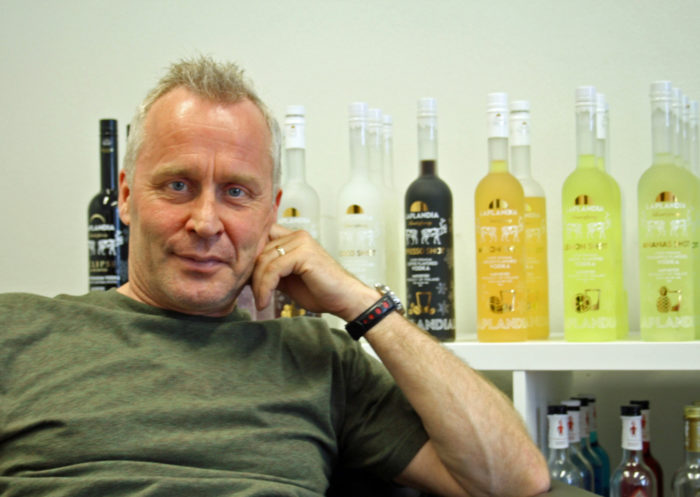
Ilpo Sulkala, CEO of Shaman Spirits, knows from experience that a market exists for Finnish “boutique booze.” Photo: Jonna Pulkkinen

Shaman Spirits, operating in Tyrnävä, not far south of Oulu, stands out as a pioneer of the northern distilling business in the new millennium. It was founded in 1998, a few years after Finland joined the EU, thereby adopting more liberal regulations for manufacturing alcohol. The company started as an initiative on the part of local potato farmers who wanted their surplus production put to good use. This was also a nod to local heritage, since distilling potato booze was by no means a new invention in Tyrnävä; it was common as far back as the 19th century.

The product line at Shaman Spirits includes various flavours in addition to the traditional vodkas and potato “moonshine.” At the moment over 90 percent of the company’s production is exported. “That is because of the Finnish alcohol monopoly,” says CEO Ilpo Sulkala. Only one, state-owned chain of stores sells hard liquor, and artisanal producers are far from satisfied with the shelf space they receive there.

Shaman Spirits’ concept lies in the manufacture of “boutique booze,” as Sulkala puts it. “We have no interest in manufacturing alcohol products in bulk,” he says. “Our market is the international vodka market, where our goal is to create new trends, not to follow them.”

Purity sells

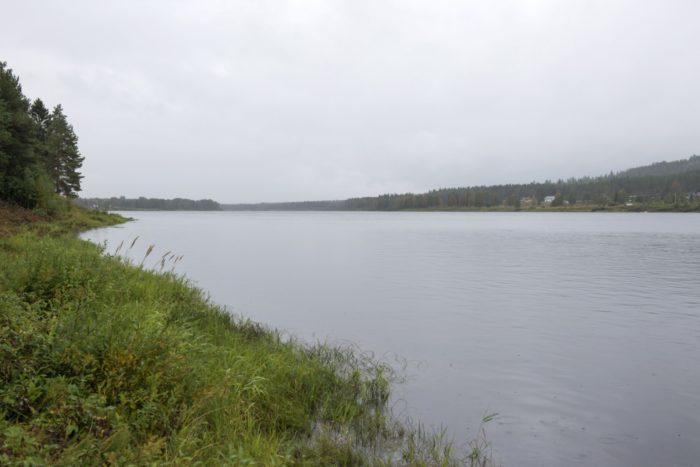
The Tornio River with Finland at left and Sweden on the opposite shore: Sangen is looking into the possibility of reviving an old tradition by using water from the Tornio in its brewery and distillery.

The Tornio River with Finland at left and Sweden on the opposite shore: Sangen is looking into the possibility of reviving an old tradition by using water from the Tornio in its brewery and distillery.Photo: Reima Flyktman/ Lehtikuva

Although acting locally, other northern breweries and distilleries also have their sights set abroad. Shaman Spirits, in business for almost 20 years, naturally has a head start. Their products are known all over the world, from Hollywood to Moscow, and now the company is aiming to make progress in Asia. “We succeed because our ingredients are pure,” says Sulkala.

Sonnisaari’s Timo Tyynismaa says that their competition isn’t Finnish. “Our competitors are all the beers in the world,” he says. The demand for northern products is obvious: Sangen’s products haven’t even appeared in local stores yet, but it has already made its first sales on the Continent. “We also invest in purity,” says Jami Teirikari of Sangen. “In our Tornio factory, we are currently studying the possibility of using water from the Tornio River again. Its origins are in the mountains and the mountain brooks.”

This idea can also be connected to a local tradition. “The freshness of mountain streams” is a well-known advertising slogan for Lapin Kulta, the beer that used to be brewed in Tornio.

By Jonna Pulkkinen, September 2016

Johanna’s arctic endurance dive

British director and photographer Ian Derry talks about his profile of Finnish freediver Johanna Nordblad, who holds the world record for a 50-meter dive under ice, after finding the sport during recovery from a downhill biking accident that almost took her leg.

“I became aware of Johanna from her sister who is a photographer. I liked her story—to have such a terrible injury and to overcome it in the most extreme way.

“Once I had met her and gone to the location—which at that point was -24C—I knew I had to make the film. The environment and the silence there is something I will never forget.

“I dived under the ice to get a perspective on it and it was literally breath taking. What she does is so close to the edge, but she does it in such a comfortable way.”

Wireless & visionary

An excellent engineering team with visionary ideas have made Haltian,
a 3-year old startup, a promising Internet of Things supplier.

In June 2012, the employees at the Emerging Products Unit within Nokia in Oulu heard that their unit was to be shut down. Later that day, they got together to consider their options.

“We realized we had an excellent team, visionary ideas for smart products of our own, and the quality of our engineering was exceptionally good. Having purchased design services previously, I knew the market and saw we would be able to provide high-class premium design services,” recalls Pasi Leipälä, CEO of Haltian.Photo: Haltian

It took them a couple of months to set up Haltian, spread the word about it to their global networks and get their first customer projects. Today, Haltian has 80 employees, several patents and a sales office in Silicon Valley.

From product idea to sales package

“We are able to deliver finalized devices in sales packages based on any new idea for a wireless product. Among the items we have designed and productized are the Ôura wellness ring and the Asmo charger,” Leipälä says.

Trust is a crucial asset in the service business, according to Leipälä. Thus, new customers have come through existing global networks; half of Haltian’s customers are located in the US and Central Europe, the other half in Finland.

Launching the Thingsee One

“Currently we focus on design services for the Internet of Things. Volume production and shipments of our Thingsee One IoT developer device started in August 2015.”

The Thingsee One is a device equipped with many programmable sensors that can measure air pressure, humidity, temperature, direction, speed, distance, light and acceleration. It wirelessly transfers the measured data to a cloud service via a telephone network or WLAN. Then, using a mobile application, the user can remotely adjust the measurement patterns and reporting interval and see the data in visualized form.

“The device is aimed at three user groups: professional business developers who develop IoT services and applications, private firms and user communities developing their own web applications, and individuals who use it in their homes or hobbies to measure and monitor ambient conditions,” Leipälä explains.

The Thingsee One is not a mass consumer product, but an innovation platform that liberates its users from having to design an entire customized device. It is a patented product that comes complete with service and connectivity.

By Leena Koskenlaakso, September 2016

Design and high tech meet in Finland

Here’s a game anyone can play: the next time you rent a car, see how long it takes for you to reset the trip odometer to zero. Unless you are already familiar with the model, it will probably be some time before you navigate your way through the control panel and figure it out.

“With the increasing use of electronic solutions we see a lot of the old-fashioned usability is lost,” says Heikki Salo of ED Design, a company based in the coastal city of Turku on the southwestern tip of Finland. “Old cars had a tiny switch close to the odometer which was available instantly. Now it takes minutes to find out how to set the trip odometer.”

New technologies bring many advantages, but often they are neither aesthetically pleasing nor easy to use. But some Finnish companies hope to change that. Finland has a long history in both technology and design, and innovative firms are finding a happy union between the two. It all boils down to the age-old question of balancing form and function.

Inspiration from technology

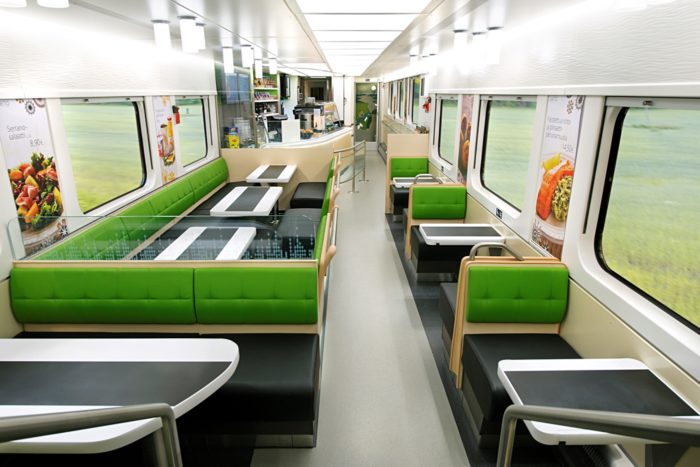
Link Design helped create new double-decker dining cars for the Finnish state railway company, VR.

Link Design helped create new double-decker dining cars for the Finnish state railway company, VR.
Photo courtesy of Link Design

If you have taken a long train trip in Finland you’ve probably enjoyed some of Saara Anundi’s handiwork. She is the team leader for industrial design at Link Design, which helped create new double-decker dining cars for the state railway company, VR.

“You can get inspiration from seeing the new technologies as enablers for new uses or new types of products and services,” Anundi says. “For example, LED lights give the opportunity for new types of interior design solutions, which is an advantage especially in small places such as a train.”

A wide variety of people use trains, from young backpackers to the cleaning staff. To benefit them all, Link Design had to integrate the technology into the design, from high-efficiency ovens to automatic doors.

Anundi finds train projects inspiring. “Restaurant cars are important because travel times are long and people like them a lot,” she says. “They are kind of like a living room.”

Link has participated in a number of other jobs that integrate good design into technology, such as home automation, captains’ bridges on ships and smart ventilation systems.

“Our strong expertise in product design, product development and the integration of different fields of knowledge is the important foundation,” says Anundi. “One of the benefits of being based in Finland is that you can find both design and technical excellence here. Such synergy is important.”

Good design has the ingredients of good business

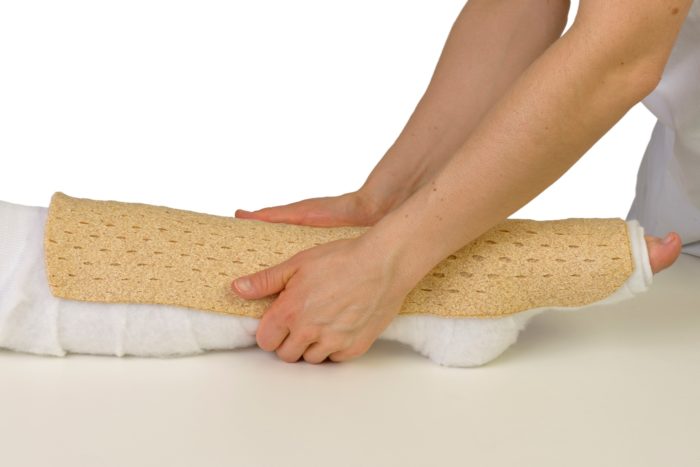
A hospital employee applies a wood-based cast by the Finnish company Onbone. ED Design designed a heater to warm up the material before application.

A hospital employee applies a wood-based cast by the Finnish company Onbone. ED Design designed a heater to warm up the material before application.
Photo copyright Onbone

ED Design is another Finnish company that specialises in projects in high-tech industries. In the health and wellbeing sector, their numerous designs have included patient monitors for GE and a heater to warm up wood-based medical casts for the Finnish company Onbone, as well as many other products such as X-ray equipment, anaesthesia machines, dentist’s instruments, measuring devices, and equipment for lymphatic care.

“A good design helps decrease the workload of healthcare professionals and increases the effects and good results,” says Salo. “The more value the system has for us, the more important the design is. What could be more important than our health?”

He says a successful design is based upon good usability, the effective use of technology, and understanding the needs of the market. He cites all the success stories coming out of the Finnish healthcare industry as examples of how well-balanced design has achieved good commercial results.

Back in 1982, Salo designed a high-tech home entertainment system that included a giant wall-mounted flat screen television. It had a remote control with widgets and a touchscreen, like modern smart devices. He saw a fundamental change in home entertainment four decades ago, and now he has advice for a fundamental change in the way people do business.

“A good design has the ingredients of a good business,” he says. “What we could do is to make use of more simple, everyday possibilities around us. What we need is the vision and belief that we can create value and strong brands.”

By David J. Cord, August 2016