Virtual reality brings Finnish forests into view

The Virtual Reality Forest research team at the University of Helsinki has designed a demo app for virtual forest management. It takes a quarter of an hour to transform the conference room of the Department of Forest Sciences into a forest in need of thinning.

The use of virtual reality has exploded in 2016 and is set to increase in 2017. The glasses and applications have become accessible to consumers and the technology is expected to be the next world-changing factor after smartphones and the internet.

The new technology is already used in machine maintenance training, as well as to test construction plans, to sell real estate and to create travel experiences.

Finnish feel-good film takes the world by storm

How has the true story of featherweight boxer Olli Mäki, a distinctively Finnish tale, connected with cinema-goers across the globe?

The events in The Happiest Day in the Life of Olli Mäki unfold in Helsinki in the spring of 1962. The film follows the amateur fighter (played by Jarkko Lahti) as his highly ambitious manager Elis Ask (Eero Milonoff) puts him through a grueling training regime in the lead-up to a fight against the American pro Davey Moore (John Bosco Jr).

The venue is booked, the tickets have been sold and the door to the big time is ajar – not just for Mäki himself, but for Finland as a nation. The question is, can he give this fight everything he’s got? Or is he more focused on a future with his fiancée Raija (Oona Airola)?

Kuosmanen uses black and white cinematography, a subtle injection of humour and just a touch of nostalgia to tell a colourful story about love, ambition and the desire to live life to the fullest. Despite its links with the past, the film succeeds in drawing our attention to our contemporary obsession with success.

Local colour, universal themes

Watch the trailer for “The Happiest Day in the Life of Olli Mäki.”

In many ways a markedly Finnish film, The Happiest Day in the Life of Olli Mäki still seems to have universal appeal. According to director Juho Kuosmanen, who has travelled the world this year as his film plays at various festivals, audiences everywhere are responding to it in exactly the same way: The most noticeable reaction is laughter.

“You often hear people mention how we represent a small language community, and they say humour is something that is deeply connected with the national culture, but I don’t share that view,” says Kuosmanen. He believes that a wide range of movie-goers can identify with the film’s values. “As long as you are not using any overtly specific cultural references, situational humour and emotion can cut across any boundary.”

“The film industry as a whole is fairly heavily focused on success, and I have a feeling that many of my fellow filmmakers see their own professional circumstances reflected in Olli Mäki’s story,” he says.

“Just the other day, someone I met in Germany told me that it was like watching his own life’s story on the screen, and a French woman in her nineties put it concisely when she said, ‘That’s exactly how we were.’ It just goes to show you that it’s easy to share in universal emotions such as love, fear and joy.”

Strong women, mild-mannered men
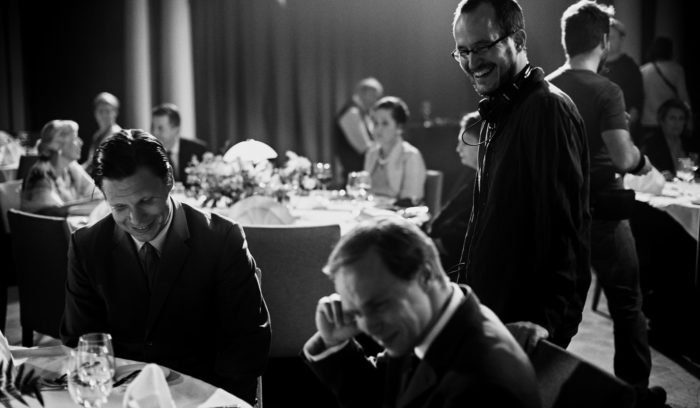
A smiling Finnish man: Director Juho Kuosmanen (standing) laughs with cast members during a break on the set of “The Happiest Day in the Life of Olli Mäki.”

A smiling Finnish man: Director Juho Kuosmanen (standing) laughs with cast members during a break on the set of “The Happiest Day in the Life of Olli Mäki.”Photo: Kuokkasen Kuvaamo/Aamu Film Company

The 1960s can be seen as a pivotal moment for society in many ways.

“What came up in our conversations when we were writing the script was the film’s portrayal of women, and a number of commentators have also picked up on that point since it was released,” says Kuosmanen. “An American told me that it would have been impossible for women in the 1960s to be as modern as they are in the movie.

“I don’t always feel a huge sense of pride about Finland, but at that moment I was tremendously proud to be able to say yes, absolutely, Finnish women really were like that.”

The film features strong women, but Kuosmanen concentrates even more on masculinity and what it means to be a man. This focus is also apparent in the decision to launch the film with different titles at home and abroad. The Finnish name is Hymyilevä mies (The Smiling Man).

“When I’m travelling abroad, I often have to explain to people why we turned a two-word Finnish title into a long phrase in other languages,” says Kuosmanen. “From a Finnish perspective, a smiling man is considered a rarity, if not an aberration.”

“This notion [that a smiling man is a rarity] is further highlighted by the fact that Olli Mäki never really matched all the expectations that were heaped on him,” says the director. “Compared with the traditional image of a boxer, he was far too cheerful and good-natured.”

Against the background of many other Finnish films, Kuosmanen’s portrayal of Mäki is a breath of fresh air. It breaks away from the cliché-ridden representation of Finnish men as melancholy, lacking self-confidence and out of touch with their own feelings.

Media angle
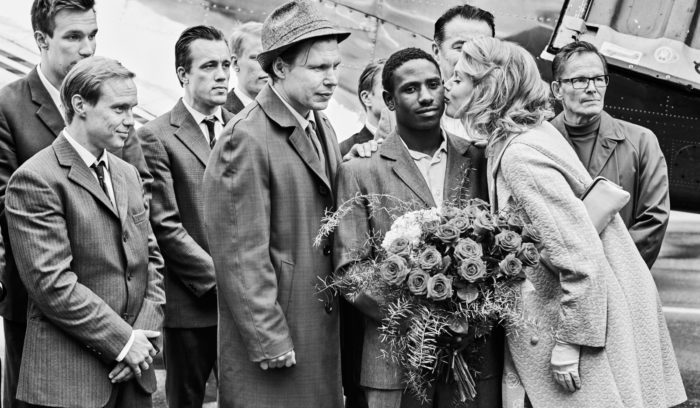
Manager Elis Ask (Eero Milonoff, wearing hat) encouraged a great deal of hype around the big boxing match between Olli Mäki (Jarkko Lahti, front left) and Davey Moore (John Bosco Jr, holding flowers).

Manager Elis Ask (Eero Milonoff, wearing hat) encouraged a great deal of hype around the big boxing match between Olli Mäki (Jarkko Lahti, front left) and Davey Moore (John Bosco Jr, holding flowers).Photo: Kuokkasen Kuvaamo/Aamu Film Company

A key part of the movie portrays the making of a documentary film about Olli Mäki, shot on the eve of his big match in Helsinki in 1962.

Kuosmanen shows Mäki’s manager Elis Ask (played by Eero Milonoff) shaping and arranging reality in a manner that wouldn’t be out of place in today’s social media. The characters pretend that Olli lives in a beautiful, photogenic villa. He shadowboxes for the camera and poses for photos with a model so tall that he has to stand on a footstool to match her height.

The real Ask also worked hard to generate a buzz around the boxing match. The time was ripe for that sort of thing; television was playing an ever greater role in people’s lives, and advertisers were starting to make their moves on the sporting world.

“Ask had visited the US during his own boxing career,” says Kuosmanen, “and he wanted to import the concept of boxing as a big show to Finland, despite the fact that the public didn’t really have the mindset for it at the time.”

The competition must go on
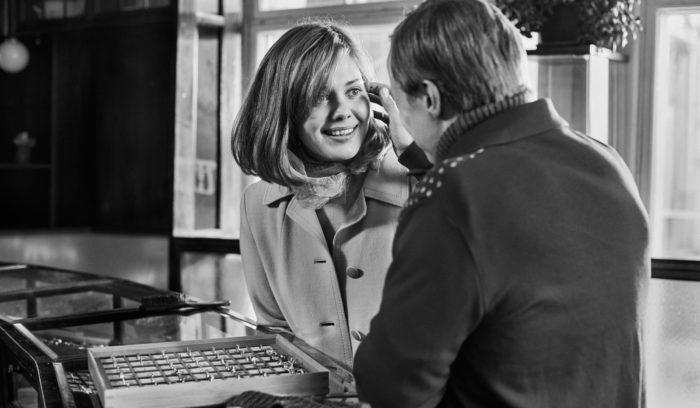
Although Juho Kuosmanen’s film has been greeted with great success, one of its themes is that winning isn’t the only way to find happiness.

Although Juho Kuosmanen’s film has been greeted with great success, one of its themes is that winning isn’t the only way to find happiness.Photo: Kuokkasen Kuvaamo/Aamu Film Company

Kuosmanen had an intense film festival season in 2016, and it took a while yet before he gets to enjoy some well-earned rest. He was championing his movie in the fight for a Best Foreign Language Film nomination ahead of the Oscars in February 2017, but in the end it was not one of the chosen ones.

How did he feel about entering the fray with a film that claims winning isn’t the only way to find happiness?

“It is a little amusing I guess, but I don’t really mind, as it wasn’t something we focused on while working on the film. It’s different if you set out to achieve that sort of goal despite the fact that everyone knows that it’s best to stay true to your own vision.” He believes that the film has been so successful because it doesn’t come across as calculating.

“But you can’t ignore the fact that our film would have been just about impossible to sell if it hadn’t got off to a flying start in Cannes,” says Kuosmanen. “On paper, we had nothing going for us – a Finnish director making his feature debut with a black and white movie about boxing. I suspect a lot of people looked at us and saw only a long row of minus signs.”

And he smiles the smile of a man whose first film is punching well above its weight – in all categories.

By Silja Sahlgren-Fodstad, November 2016, updated February 2017
Finland unveils uniquely ecofriendly icebreaker

The icebreaker ship Polaris is unique in many ways. It is the first icebreaker in the world capable of running on both liquefied natural gas (LNG) and ultra-low-sulphur diesel. Its total output of about 22 MW also makes it the most powerful icebreaker in Finland, a country that has long been known for its icebreaking expertise.

Polaris began its service at a historical moment. In 2017, Finland celebrated the 100th anniversary of its independence.  In recognition of the centenary, Polaris was decorated with the Finland 100 logo. The slogan for Finland’s big year, “Together,” is also an appropriate term to describe the design and construction process of the new icebreaker. The ship is the sum of the efforts of all the people who have contributed to Finland’s world-famous expertise in designing, building and operating heavy icebreakers.

The main purpose of Polaris is icebreaking and assisting other vessels in icy conditions on the Baltic Sea. The ship is also able to perform oil spill response operations, emergency towing and rescue operations on open water all year round.

Kemi’s Snow Hotel is a world-famous luxury destination

The gigantic Snow Castle is a real artwork made of ice and snow. It is built every year on the sea coast, not far from Kemi city centre, and stands there from late January until early April.

Great lighting effects add to the charm of sculptures made from snow and ice and highlight the buildings around the Snow Castle. The Snow Restaurant, Snow Chapel and Snow Hotel are all situated in the Snow Castle area.

The Snow Hotel won prizes in two categories at the World Luxury Hotel Awards 2016: It topped the global listings in the Bespoke Luxury Experience category and was also awarded the title of Luxury Eco/Green Hotel in the Finnish listings. Spending the night in a Snow Hotel room made completely of snow, beautifully lit and decorated, offers one of the most unique arctic experiences. The temperature is always around minus 5 degrees Celsius (23 degrees Fahrenheit), but a comfortable bed with white sheets, lambskin covers, a pillow, a fleece blanket and a sleeping bag designed for arctic conditions ensures a good night’s sleep.

Finland: We’re number 3, we’re number 3!

Lonely Planet’s reasons for selecting Finland include Hossa Hiking Area, which is becoming Finland’s 40th national park, as well as the numerous events planned for Finland’s centenary celebrations in 2017.

The 100th anniversary of Finland’s independence offers guests a diverse programme of thousands of events all year long; Lonely Planet mentions outdoor concerts, communal culinary experiences, sauna evenings and exhibitions of vintage travel posters.

Helsinki sees seaside sauna renaissance

Alvar Aalto, Finland’s most famous architect and designer, once said, “Form must have a content and that content must be linked with nature.” Helsinki’s new seaside saunas can be seen as monuments to that sentiment. Although Löyly, Allas Sea Pool and Culture Sauna are ambitious in design, they show respect for the surrounding landscape while inviting visitors to connect with the chilly Baltic Sea and the scalding steam of the sauna.

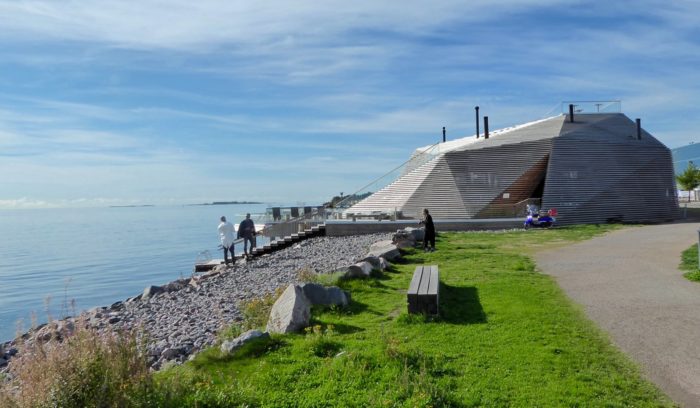
Löyly (the pronunciation is indescribable – you’ll just have to find a Finn to tell you how to say it) shows off Finnish wood architecture. Designed by Avanto Architects, the low-slung eco-sauna (it was built with timber certified by the Forest Stewardship Council) hugs the shoreline in Hernesaari, a former industrial area currently under redevelopment.

Steam and a sea view

Although made out of wood, Löyly also fits into the rocky coastal landscape.

Although made out of wood, Löyly also fits into the rocky coastal landscape.Photo: Karen MacKenna

The architects wanted to design an organic structure that would eventually blend in with its natural environment. The heat-treated pine slats form protective cover while also providing horizontal windows of light and sea views. In time, the wood will turn grey, the colour of the surrounding rock.

In Finnish, löyly refers to the steam that rises from hot stones as water is poured over them. The Finns also use the word to refer to the essence of the feeling you experience in the sauna – a kind of spiritual cleansing. You can find out what we mean in Löyly’s two main saunas: a regular wood-burning sauna and a smoke sauna, which leaves a sweet aroma on your skin. Alternating between the two saunas on a crisp day with a chill in the air, a dip in the cool ocean water feels refreshing.

Men and women share saunas at Löyly, so bathing suits are required – a notable departure from the Finnish sauna tradition of wearing nothing at all. There’s also a restaurant, and champagne flows in the lounge.

Harbour swimming

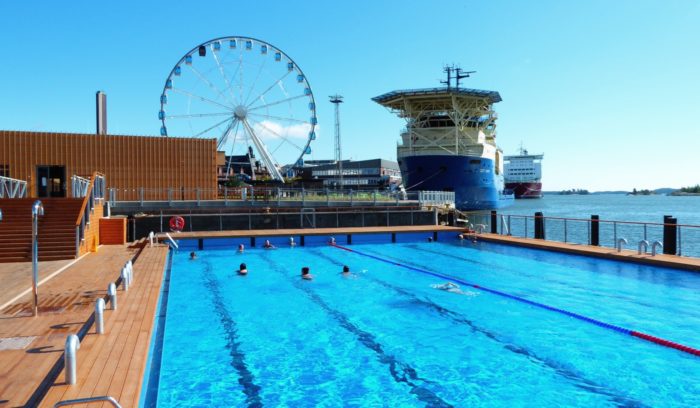
At Allas Sea Pool, you get sauna and swimming in an urban harbour setting.

At Allas Sea Pool, you get sauna and swimming in an urban harbour setting.Photo: Karen MacKenna

Allas Sea Pool is just what its name implies (allas translates to “basin” or “pool”). It offers a uniquely urban public bathing experience in the heart of Helsinki.

The wooden spa complex, designed by Huttunen-Lipasti-Pakkanen Architects in cooperation with Marinetek Finland, is made of Finnish fir trees and contains saunas, outdoor swimming pools, a floating deck and a recreation centre right on Helsinki harbour.

Two of the three pools are open year-round, and that makes all the difference. The filtered seawater pool remains at its natural temperature and attracts intrepid swimmers, but two freshwater pools (one of which stays open all winter) are maintained at a comfortable 27 degrees Celcius (80 degrees Fahrenheit).

From the pool or the deck, you can watch ferry traffic move across the water in front of bustling Market Square. The Presidential Palace and other architectural landmarks are also visible, and the ferris wheel known as the Sky Wheel turns in the background.

Wood-burning stoves heat two saunas, one on the women’s side and one on the men’s side. To comply with Finnish sauna etiquette, you’re supposed to take your bathing suit off before entering the sauna, in contrast to the unusual bathing-suit rule at Löyly.

Urban authenticity prevails

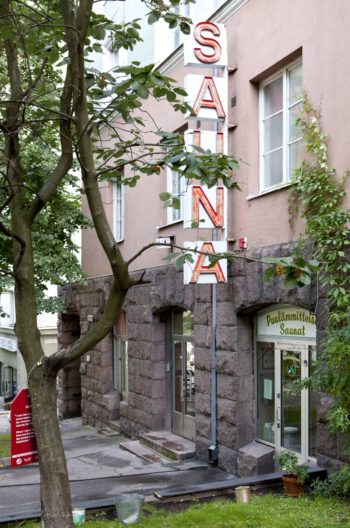
The Helsinki neighbourhood of Kallio is home to Kotiharju (pictured here) and Arla, two public saunas from the 1920s.

The Helsinki neighbourhood of Kallio is home to Kotiharju, a public sauna from the 1920s.Photo: Jorma Marstio/ Otavamedia/Lehtikuva

Dozens of public saunas existed in Helsinki in the early 1900s. People came to these bathhouses to wash in the days before everyone had their own bathroom, and before it became common to equip apartments with their own saunas. A visit to the sauna was also a social occasion.

Public saunas saw a decline in popularity as incomes and access to private saunas rose. Today, just a few of the older locations remain, reminders of a sense of community that fell by the wayside as times changed.

One authentic 1920s sauna still stands in the former working-class neighbourhood of Kallio.  At the wood-heated Kotiharju Sauna (the name means “home ridge”) temperatures are not for the faint of heart. Just a few tram stops farther out, Sauna Hermanni is another old-time Helsinki favourite, recently renovated and redecorated with authentic 1950s furnishings in keeping with the place’s original atmosphere. Both of these locations have separate saunas for women and men.

The most elegant of the old bathhouses is Yrjönkatu Swimming Hall downtown, also built in the 1920s. It offers a wood-burning sauna, an electric sauna and a steam room. Private booths overlook the beautifully tiled swimming pool flanked by arches two stories tall. With the schedule divided into separate days for men and women, bathing suits are optional.

Cultural sauna connections

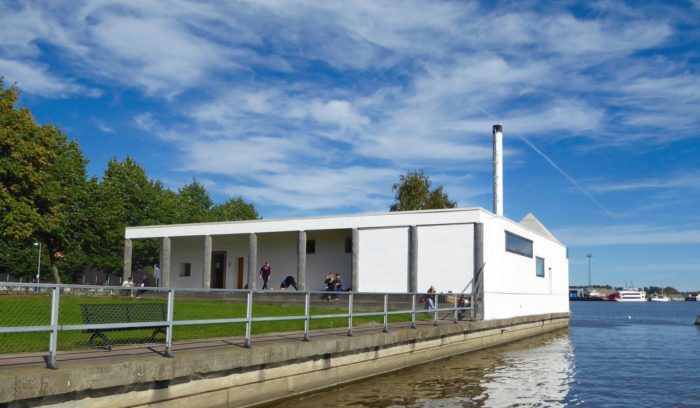
Kulttuurisauna (Culture Sauna) offers an intimate, zen-like experience that you can top off with a dip in the sea.

Kulttuurisauna (Culture Sauna) offers an intimate, zen-like experience that you can top off with a dip in the sea.Photo: Karen MacKenna

Helsinki’s current public sauna revival can be traced to Kulttuurisauna (Culture Sauna), which began as a project connected with the city’s year as World Design Capital in 2012 and opened in 2013.

The first public sauna built in the city in half a century, Culture Sauna’s humble but exquisitely crafted building perches on the water’s edge in front of the concrete structures that make up the Merihaka district. Architect Tuomas Toivonen and artist Nene Tsuboi created a compact, one-story, white building and equipped it with candle-lit rooms and a wood-pellet–fired stove that emits an intense and perfect heat.

It’s an intimate, zen-like experience that you can top off with a dip in the sea. Although the city is all around you as you swim – in one direction you may glimpse a power plant, and just across the water stands the venerable Kruununhaka neighbourhood – you feel far removed from the busy pace of urban life. A glass of potent sea-buckthorn berry juice forms the ideal post-sauna elixir.

While the capital city’s public sauna renaissance gives cause for celebration, most Finns will tell you that nothing compares to a secluded sauna in the Finnish wilderness on the shore of a lake or the ocean. If you have the opportunity to visit one, you will come even closer to understanding the Finnish soul.

By Karen MacKenna

When the sun doesn’t rise in northern Finland

The Polar Night Counter counts down the days to the winter solstice, the shortest day of the year. After the winter solstice, the days gradually lengthen until the darkness of winter disappears. The counter also shows the duration of kaamos, the polar night during which the sun doesn’t show itself above the horizon, in locations where kaamos occurs.

Kaamos only occurs above the Arctic Circle. In Utsjoki on the northern border, it lasts for almost two months. In Sodankylä, (located farther south, close to the Arctic Circle) the polar night lasts for four days.

Although kaamos is the darkest period of the year, it is rarely pitch black. Finnish Lapland is located close enough to the Arctic Cricle that, although the sun stays below the horizon, sunlight still reaches the upper layers of the atmosphere, allowing some ambient light through. Blue twilight is typical for the polar night in the northern Finland. The moon may also light up the sky, and the snow reflects its light. You might also see the multicoloured northern lights dancing across the firmament.

In the southern parts of Finland there is no polar night, but the days are still short. For example, in Helsinki the length of the shortest day of the year is less than six hours.

Finnish fashion gives new life to old fabric

The Finns, like people all over the world, are concerned about environmental conservation. A large proportion of the Finnish population separates recyclables such as cardboard, paper, glass, metal and plastic from other household waste. Several Finnish companies are finding new ways to reuse discarded textiles, as well.

Old rags are recycled into new fibres and fabrics, then new lines of clothing. Fashion designers are showing increasing interest in textile reprocessing, which has spurred the creation of unique designer clothing and accessories.

In 2003, clothing designer Seija Lukkala had become disappointed in some aspects of the textile industry, where she had worked for more than 13 years. She observed that the amount of textile waste was constantly growing and employees of large textile factories were working in appalling conditions.

Fabrics with a history

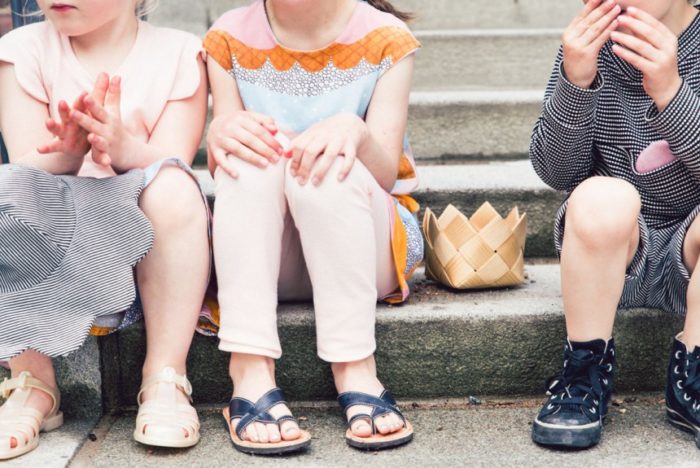
“Seija decided to create clothes and accessories from old clothing and fabrics and founded Globe Hope,” says Miisa Asikainen, who is in charge of international sales at the Finnish company. “She realized that while natural resources were being depleted, the accelerating pace of work life and the disposable culture of the fashion industry were getting increasingly destructive.”

Muka Va, a company whose name sounds like the Finnish word for “pleasant,” produces sustainable clothing made exclusively from natural fibres.Photo: Samuel Loueranta/Muka Va

Today, Globe Hope is a world-renowned company whose values focus on ecology, ethics and aesthetics, according to its website. Globe Hope’s fashion collections are sewn from used materials, combining different fabrics. Bags, hats, jewellery and purses are reborn this way, as is clothing such as tank tops, cardigans, dresses, trousers, jackets, coats, raincoats and other items, for both women and men. A pocket cut from a worn-out coat may become part of a fashionable new bag when sewn onto other material.

Globe Hope’s creations often retain the original brand mark and worn look of the used clothing, providing clues about the time and place it was initially made. For example, one collection used a Swedish army jacket adorned with a production stamp from 1932.

Repurposing textiles

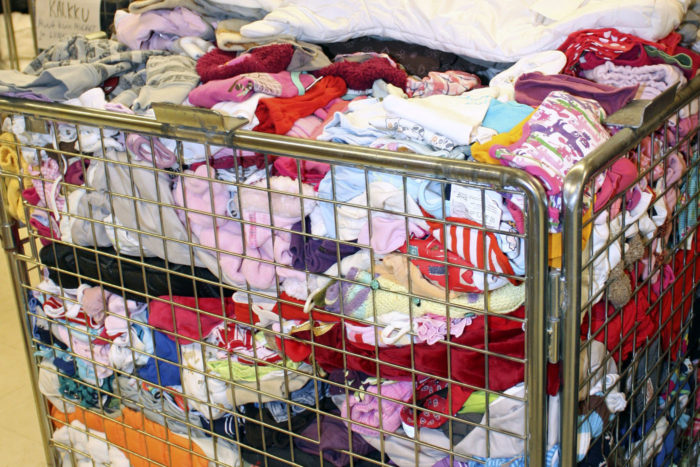
Recycling clothing decreases the burden on the environment.Photo: Tarja Repo / Lehtikuva

Finnish designers form part of a growing trend; dressing in apparel made from textile waste has become quite prestigious. This fits with the environmental concerns that continue to make themselves felt in the world.

In addition to Globe Hope, other brands are also plying their wares in Scandinavia, continental Europe and beyond. Each one has its own approach to today’s sustainability challenges. Muka Va, a company whose name sounds like the Finnish word for “pleasant,” produces women’s and children’s clothing made exclusively from natural fibres. It has met the admission requirements for participation in the sustainability-oriented Ethical Fashion Show Berlin. Another Finnish brand, Papu (the word means “bean”), produces collections of baby clothing made of cotton with Global Organic Textile Standard certification, which sets environmental requirements and social criteria for the entire textile supply chain.

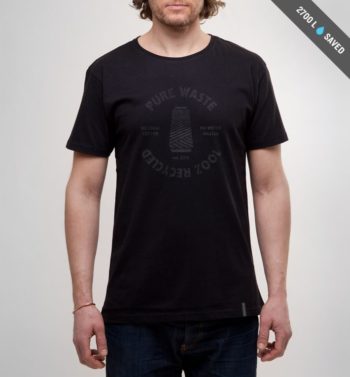
The Finnish company Pure Waste deliberately forsakes dyes. It sorts textile waste by colour and quality to produce only white, black or grey T-shirts and sweatshirts for men and women. According to its own calculations, Pure Waste has already saved 200 million litres of water – on average, farmers need 11,000 litres of water to grow one kilogram of cotton.

New life cycle for old textiles

Based on the amount of water needed to grow a kilogram of cotton, Pure Waste has calculated that it has already saved 200 million litres of water.Photo: Pure Waste

In the summer of 2016, 12 tons of second-hand textiles departed from the southwestern Finnish city of Turku, bound for the Netherlands. The shipment is part of a pilot programme called Textile 2.0; collection of old clothing and other textiles started at the beginning of 2016. The cargo is recycled in the Netherlands and used for EU industrial needs, especially in the automotive industry.

Another southern Finnish company, Dafecor, uses textile waste from clothing stores to make other products, decreasing the burden on the environment. “We are saving surplus textiles that would otherwise go to landfills and waste incineration plants,” says Dafecor CEO Risto Saha. “We recycle them into fibres and give products a new life cycle.”

Dafecor produces parquet flooring underlay, furniture upholstery and, for technical facilities, special carpets that can absorb water, fuel, light oils and chemicals. The products enjoy steady demand.

“Ecology itself is not the only goal,” says Saha. “It’s part of the greater objective of social, economic and environmental sustainability in Finland.”

By Anna Liukko, October 2016