Choosing the features of the future in Finland

Sari Stenfors, executive director of the Augmented Leadership Institute in California, looks upon anyone who wears glasses or uses a smartphone as a potential future cyborg. One day, she believes, we will be able to connect with machines and even other human brains to allow work to become more decentralized as people strive for a state of greater happiness. In her future, personal data will be the most valuable asset you can own or sell.

“How many of you would like to impact your own future, to make it better?” Stenfors asked the audience in an appearance as a keynote speaker at the annual Slush Helsinki event for startup companies and investors, just a few weeks before the end of 2017. “How many of you have taken it upon yourselves to do something about it?”

She added, “It’s up to us to choose which parts we want to adopt. We need to think what features we would like to have more in the future.”

Staying warm is a huge deal
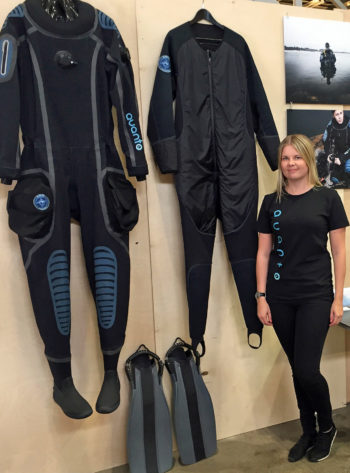
Avanto Technologies’ Aino Aarnio-Juurinen displays some of her heated-clothing creations.Photo: Visa Kupias

Among the other people at Slush, an event attended by thousands of startup entrepreneurs, were two young Finns: Aino Aarnio-Juurinen and Suvi Ellilä. Each represents a new company with big ideas and plans for success.

Aarnio-Juurinen is cofounder and chief tech officer of heated-clothing manufacturer Avanto Technologies (avanto is the Finnish word for a hole cut in the ice on the surface of a lake or the sea for purposes of winter swimming). She designed a scuba-diving suit with an infrared heating system as part of her master’s thesis at Aalto University in the Finnish capital region. Working with business partner Visa Kupias, Aarnio-Juurinen wanted to create user-friendly wearable technology with style. Now Avanto is moving toward making its infrared heating technology available to established companies in the clothing industry.

“We can help people who work in a cold environment, such as construction workers, guards, military personnel or sailors, by bringing adjustable heat to the garment itself,” Aarnio-Juurinen says. “That lessens the need for multiple layers of clothing and improves performance.”

Her small company, which includes the two founders and one employee, aspires to become a market leader in wearable integrated-heating solutions. Avanto Technologies has already caught the attention of some investors, and finished in the top 50 in the Slush 100 Showcase competition for startups.

Clearing contradictory demands
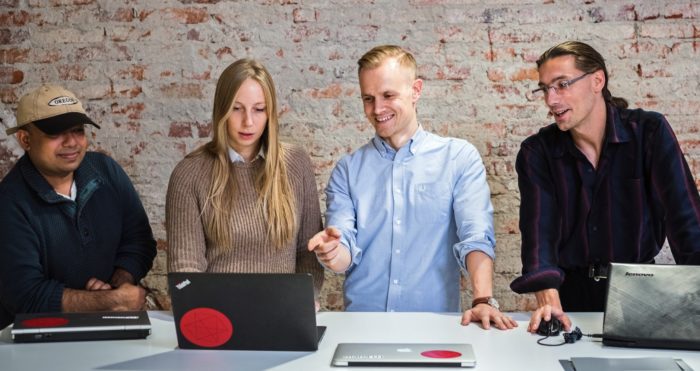
At Selko, Suvi Ellilä (second from left) and her team (from left: Faisal Mokammel, Tuomas Ritola and Vladislav Nenchev) harness artificial intelligence to solve legislative and requirement-data problems in engineering.Photo: Tarmo Pekola

Suvi Ellilä’s Selko, an artificial intelligence (AI) company aiming to solve legislative and requirement-data problems in engineering, finished in the top 10 of the Slush 100 Showcase.

“The [top 10 placement] was better than we expected,” says Ellilä, who joined Selko’s four-person team as chief operating officer in April 2017.

Through artificial intelligence, Selko (a Finnish word that denotes clarity and comprehensibility) helps large engineering companies handle substantial amounts of bureaucratic requirements.

By way of example, Ellilä says that an engineering company working with aircraft, satellites or nuclear power plants could be subject to many regulations. Her company could help engineers sort through the legislative texts and the possibly contradictory demands they contain.

AI could also help businesses maintain safety regulations within budget, possibly saving taxpayer money on publicly funded projects and preventing workplace accidents. Selko wants to use AI for product development and to expand its capabilities into law and healthcare, among other areas.

“It’s up to us how far we can go into teaching the algorithms to pick up peculiarities of different industries,” Ellilä says. “But we have more ideas than time, so we need to make sure to put our efforts in the right place.”

Thinking big and small

Both Ellilä and Avanto Technologies’ Aarnio-Juurinen say they are most intrigued by innovation through nanotechnology – the manipulation of matter on an atomic, molecular, and supramolecular scale that can be used in healthcare, chemistry, biology, engineering and other fields.

“I’m very interested in nanomotors [tiny devices that move things around] in bionanotechnology, where ingenious biological mechanisms are used for nanostructures,” says Ellilä. Thinking on another scale, she says, “I’d also like to use my time more efficiently, so I find the idea of self-driving cars very appealing.”

Aarnio-Juurinen also follows rapidly advancing nanotech and its applications, capable of self-cleaning textiles. However, a clothes designer by trade, she wonders about sustainability and the future of the culture of consumption.

“We don’t necessarily need more useless things in this world, but we can improve the current solutions by ecological thinking,” she says. “For example, clothes could be recycled back into raw materials, or the whole garment industry could be revolutionised by 3D printing.”

By Nina Broström, February 2018
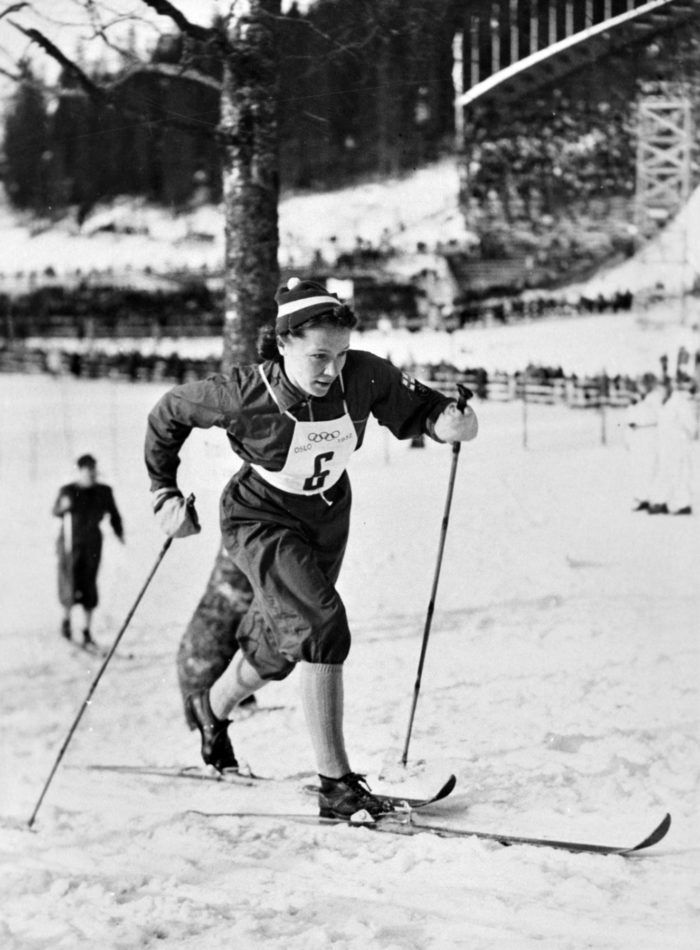
Finnish women contend for Winter Olympic medals

If you visit Finland during February – or just look up the weather for a northern town such as Kuusamo – you won’t have any trouble seeing why Finnish athletes excel at winter sports.

Finland is an arctic nation, with the northern third of the country located above the Arctic Circle, and while Finnish summers are beautiful and green, snow and ice decorate the landscape during the winter months.

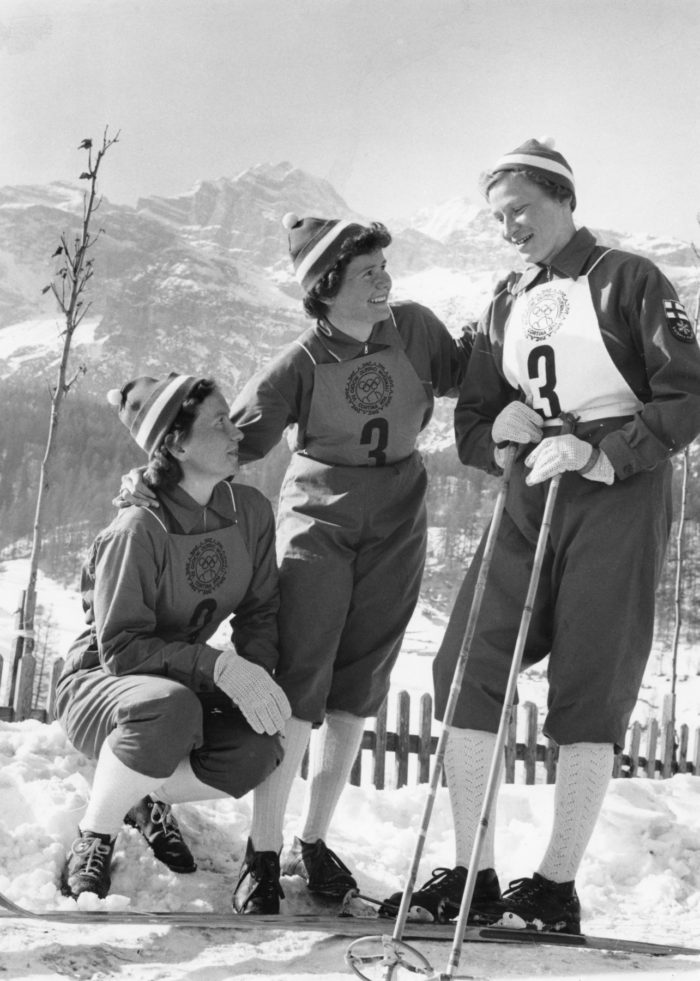
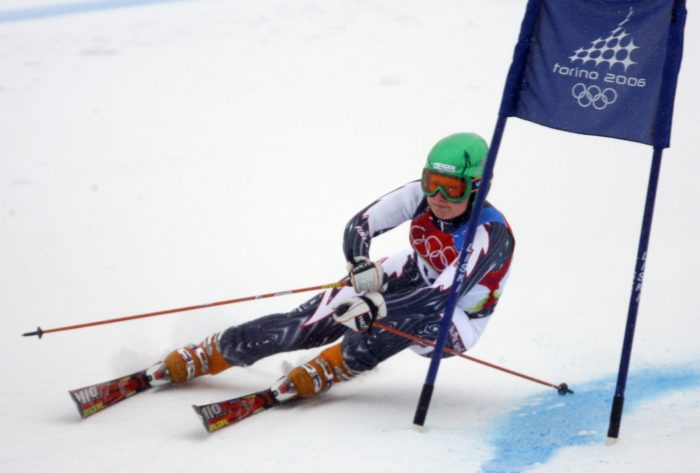
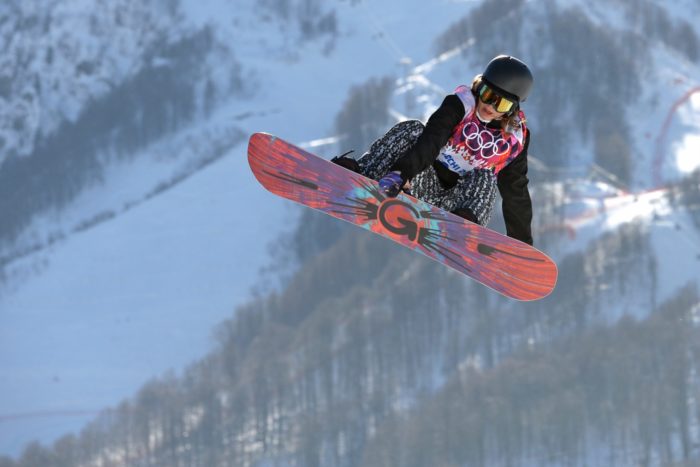
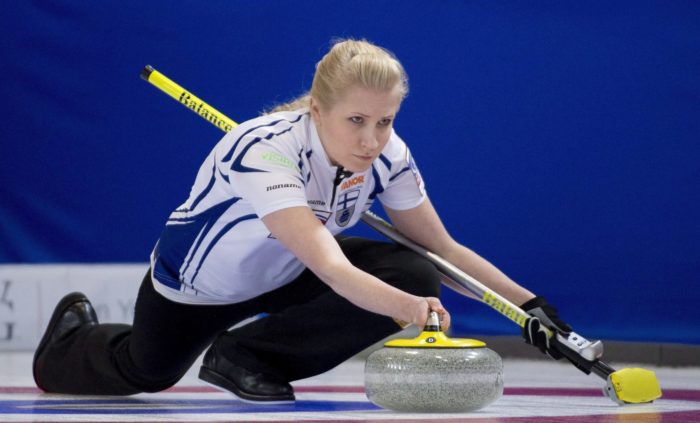
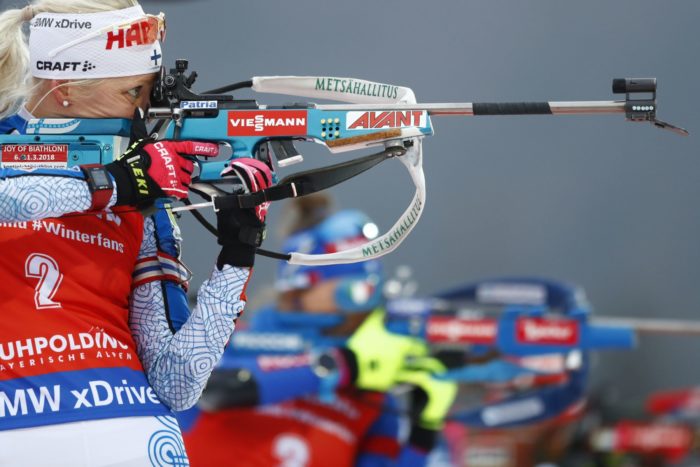
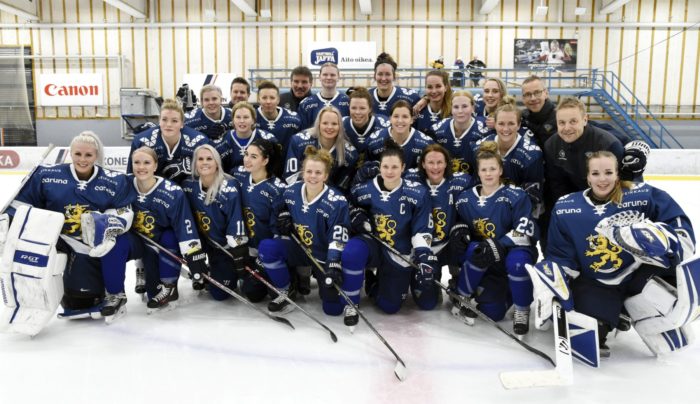
It seems natural, then, that Finnish women helped pioneer female participation in winter sports and the Winter Olympics. Our slideshow rediscovers some of the early winners and spotlights several of the many Finnish women competing for medals in Pyeongchang, South Korea in 2018.

The first woman to win a medal for Finland was German-born figure skater Ludovika Jakobsson. Together with her Finnish husband Walter Jakobsson, she won gold in 1920 and silver in 1924.

By Emma Rispoli and ThisisFINLAND staff, February 2018

Finland’s basic income may boost motivation to accept work

Markus Kanerva at the political analysis unit of the Prime Minister’s Office says that the purpose of the basic-income experiment is to pragmatically test whether people are motivated to accept work when extra income does not reduce their social benefits.

“During the trial period [January 1, 2017–December 31, 2018], the unemployed person gets to keep their basic income in full, even if they find a job,” says Kanerva. “It is believed this will motivate the unemployed to accept work even if the pay is not high or the job does not last long.”

A basic income is not a cure-all, but for 30–40-somethings who have short-term employment contracts, it seems to be a perfect fit. Miska Simanainen, a researcher at the Social Insurance Institution of Finland (often called by its Finnish abbreviation, Kela), points out that the proponents of basic income often claim that it would fit the needs of various self-employed persons, such as freelancers.

Preventing poverty is not a goal of the experiment.

“The basic income in itself does not necessarily reduce poverty as much as expected,” Simanainen says. “Reducing poverty depends on the level of the basic income and how other elements of social security are arranged.”

Could lead to a policy that reduces bureaucracy

Kanerva explains that social benefits are already underutilised in the current system, because people do not know they are available.

“However, the experiment could result in a basic-income–like policy,” he says. “This could include an automatic basic level of support, which would reduce bureaucracy and the intermittent nature of benefits. In other words, the system would combine various benefits, such as business startup allowances and social security funds.”

The experiment is unrealistic in the sense that the participant gets to keep the entire income, even if they find a full-time job. If the basic income was implemented more widely, it would probably be recovered through taxation after a certain salary threshold was reached.

Because the basic income mainly replaces existing benefits, the experiment is not very expensive. It is calculated to cost an extra 7.5 million euros over two years. The first results of the experiment become available at the beginning of 2019.

“During the experiment, not even the preliminary results can be published, to ensure that they do not affect the study subjects’ behaviour,” Kanerva says.

This is how we do it

By Tuomas Muraja, ThisisFINLAND Magazine 2018

With first-round victory, Niinistö remains president of Finland

While the incumbent entered with a strong position and was always the favourite, the election, held on January 28, 2018, underscores the significance of the democratic process.

The campaign season lasts, mercifully, only a few months, but it allows for debate and exchange of ideas on the national stage, and all parties that decided to field a candidate received media coverage and a turn at the microphone. Voter participation was 69.9 percent, compared to the previous presidential election, in 2012, which saw a participation rate of 72.8 percent.

The 2018 runner-up was the Green Party’s Pekka Haavisto, with 12.4 percent of the total. He also got second place against Niinistö in 2012, although that contest progressed to a second, run-off round. The rest of the 2018 candidates shook out as follows: Laura Huhtasaari (“Finns” Party, 6.9 percent), Paavo Väyrynen (previously Centre Party, running as an independent, 6.2), Matti Vanhanen (Centre Party, 4.1), Tuula Haatainen (Social Democrats, 3.3), Merja Kyllönen (Left Alliance, 3.0) and Nils Torvalds (Swedish People’s Party, 1.5).

Parties and candidates who knew they had no chance of winning participated for the opportunity of setting up for the next election cycle – the parliamentary election in April 2019. The presidential election percentages are almost certainly not an indication of how the parliamentary election will play out. However, something can be gleaned by looking at the regional runners-up. The country is not unified, despite Niinistö’s popularity: Väyrynen or Vanhanen held second place in much of northern and central Finland, while Haavisto covered large swaths in central and southern areas, and Huhtasaari had significant patches in western Finland. Torvalds did predictably well in the west coast regions where large concentrations of Swedish speakers live.

Looking for strength in stability

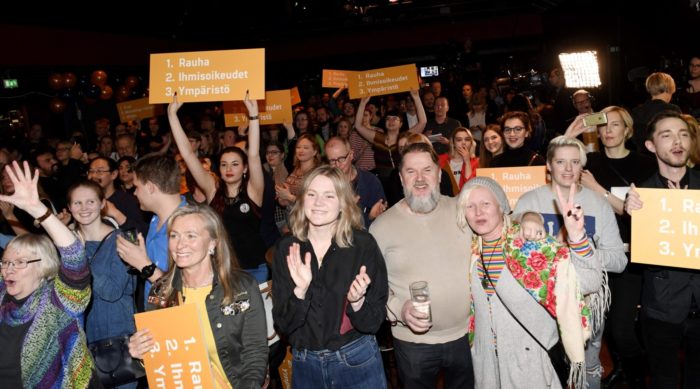
Supporters of Green Party candidate Pekka Haavisto, who took second place in the presidential election, cheer and hold up signs that read, “1. Peace, 2. Human rights, 3. Environment.”Photo: Antti Aimo-Koivisto/Lehtikuva

Niinistö, who made his career in the moderate conservative National Coalition Party, ran as an unaffiliated candidate. This wasn’t such a big leap, since the president of Finland always renounces formal party membership when taking office, but it allowed the incumbent to campaign without becoming entangled in party politics.

In his acceptance speech, Niinistö said, “This is a fine country. And we’ll take care that it remains fine.” After a race that included seven other candidates, which is not unusual for Finnish presidential contests, he also pointedly mentioned that one of Finland’s strengths is that people can disagree constructively, respecting viewpoints that are different than their own.

He alluded to the fact that Finland was chosen as the most stable country in the world by the Fund for Peace in both 2017 and 2016. “That’s a big deal,” he said, and added, “Small but stable is much stronger than large and broken.”

By Peter Marten, January 2018

Finnish basic income facilitates dream job and volunteer work

Sini Marttinen, one of the 2,000 people selected randomly for Finland’s basic-income experiment, has a master’s degree in social sciences. She found a job with a foundation that provides funding in the disaster aid and logistics sector.

“This is a dream job,” she says. She bills for the work through her own company; the basic income experiment provided the impetus for her to start her own business again. Previously, becoming an entrepreneur could have ended all social allowances.

At the same time, she holds a voluntary position as a board member of the Kallio-Käpylä chapter of the Finnish Red Cross in Helsinki, and also volunteers as their campaign manager.

“Working part-time, I can also continue doing voluntary work among low-income families, inmates and asylum seekers,” she says.

Erasing the stigma of unemployment

“I used to say that I would never become an entrepreneur again, but here I am,” Marttinen says. “The basic income helps me pay the mandatory pension contributions, even if I have months with no orders or assignments. For me, this arrangement is perfect; it’s like winning the lottery.

“It is very common in Finland to blame the unemployed for their own predicament. I wish people would realise that anyone can lose their job for reasons beyond their own control.”

She believes that paying a basic income to everyone would help erase the stigma associated with being unemployed. It would be similar to the child allowance, which is paid to families with children automatically once per month.

“No amount of money alone is going to help those in the weakest position, but a basic income system might leave social workers with more time to care of those who really need help. For example, the biggest problem for someone in and out of prison is not money but finding a new way of life, a place to call home, education, work, and the means to fight addiction and settle debts.”

Excellence through experimentation

Promoting pilot programmes and experiments is one of the key projects of Finland’s current government. The aim is to find innovative ways to develop Finnish society and services in order to encourage both efficiency and empowerment. This experimental culture is especially developed in the fields of employment (with the basic-income trial being one good example), the circular economy, and artificial intelligence. By 2025, Finland wants to be a forerunner in creating new solutions through experimentation.

Source: Experimental Finland

By Tuomas Muraja, ThisisFINLAND Magazine 2018

Writer explores basic income in Finland, first-hand

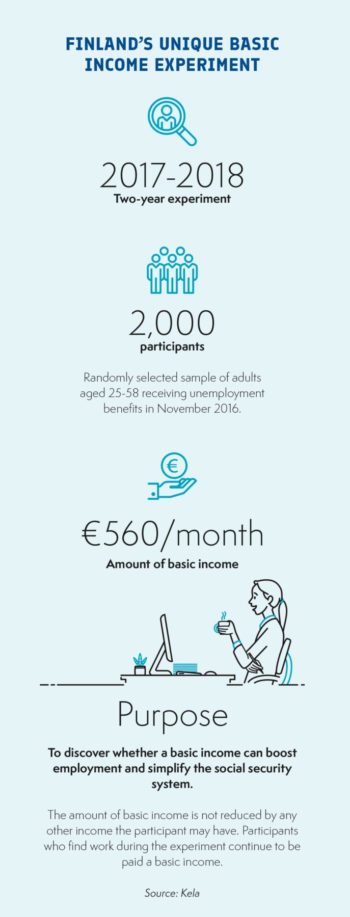
The idea of Finland’s two-year basic-income trial is to test whether people are motivated to accept work when extra income does not reduce the social benefits received.

I won the “lottery” organised by the Social Insurance Institution of Finland [often called by its Finnish abbreviation, Kela]. In other words, I was selected to participate in the basic-income experiment. I am one of the few freelancers of my kind – those who alternate between short job stints and periods of unemployment – to be given this opportunity.

The purpose of the experiment is to simplify social security and eliminate unemployment traps, situations in which people cannot accept work for fear of losing their benefits. In the experiment, 2,000 adults are being paid a basic income of 560 euros per month for two years, without any conditions attached. Participants were selected at random from among unemployed people between the ages of 25 and 58 who were recipients of basic unemployment benefits – labour market subsidies or basic unemployment allowances – in November 2016.

The launch of the basic-income experiment in January 2017 was noted all over the world, and many foreign newspapers covered it. To date, I have been interviewed by the BBC, Rai Uno, Tageszeitung and several others.

The most common question I have been asked has been, “How has the basic-income experiment changed your life?”

The simple answer is: financially, it has not. The international press seems surprised to learn that Finland already has a system that provides basic financial security to citizens in various life situations. This is not the case in most parts of the world.

Just say yes

However, for me, being included in this experiment has had very positive psychological effects. I much prefer receiving basic income, rather than dealing with the old system and filling in its complicated forms.

Earlier, I didn’t accept all small jobs, for fear of losing my benefits and having to reapply for them. Because of the bureaucracy, it was not financially worthwhile to accept all those tiny jobs. I feel much more secure now that short-term jobs no longer reduce my benefits or delay their payment.

Thanks to the experiment, I have been able to attend events to promote my books, for example. Fees from such events are often very low. Previously, it made no sense to attend library or school seminars. The experiment has lowered my tax rate considerably. Now I say yes to all invitations.

At the beginning of 2017, I received a grant from the Finnish Cultural Foundation to finalise a non-fiction book, which was published in the spring of 2017. I am currently working on new book projects, but so far I have not received any new grants. I’ve submitted a few articles to publishers, but I can’t invoice them until the articles have been published. In addition, I have sent out dozens of applications in the communications and journalism sector, but haven’t been invited to any interviews so far.

A basic income alone is not enough to live on. My living expenses total nearly 2,000 euros per month. That’s the amount I need to earn regularly through writing. Usually, an unemployed person can earn 300 euros without losing any unemployment benefits. Once that limit is reached, the take-home pay is 50 percent of the additional income.

Applying for the adjusted unemployment benefit requires that the applicant reports each and every wage received, which can delay the payment of benefits due to long processing times.

In the new arrangement, no reporting is required. I can focus on writing and job searches. It feels like the basic income gives you increased freedom and makes society more equal.

By Tuomas Muraja, ThisisFINLAND Magazine 2018

Finland expects refreshingly unsurprising presidential election

In the presidential election in late January 2018, (with a possible second round in February), Niinistö seems quite certain to be re-elected for a second term.

At the time of writing in early January, it is somewhat difficult to believe that Finland is holding a presidential election on January 28. Political discussion is tepid, even though the election is close at hand and eight presidential candidates are trying their best to run election campaigns.

The most common topic of speculation is whether current President Sauli Niinistö will be re-elected directly in the first round, or whether he’ll be forced into a second round against the closest runner-up.

A second round happens on February 11 if no candidate earns more than half of the vote in the first round. The next six-year presidential term begins on March 1, 2018.

No one doubts Niinistö’s re-election, as his popularity is exceptionally high. Public opinion polls show a clear majority of voters backing him.

Incumbent president and seven challengers

Pekka Haavisto of the Green Party inspired 37 percent of Finnish voters when running against Niinistö in 2012, and is hoping for a good showing in 2018.Photo: Jussi Nukari/Lehtikuva

This is not merely a passing phenomenon. Niinistö has been Finland’s most popular politician since winning the largest number of votes nationally in the 1995 parliamentary election.

At 69, Niinistö has had a long political career. He was a Member of Parliament from 1987 to 2003 and from 2007 to 2011. He served as a cabinet minister from 1995 to 2003, including one year as minister of justice and seven as minister of finance. Niinistö chaired the conservative National Coalition Party (NCP) from 1994 to 2001.

In the previous presidential election, in 2012, Niinistö ran as the NCP candidate. It went into a second round, where Niinistö earned 62.6 percent of the vote, while 37.4 percent went to his opponent, Green Party MP Pekka Haavisto.

Haavisto is running again, with polls showing around 10 percent support, which corresponds to the Green Party’s backing in surveys of overall party support. By contrast, the candidates of two large parties, Centre Party MP Matti Vanhanen and Social Democrat MP Tuula Haatainen, have fallen far short of their own parties’ popularity figures. Also running are Laura Huhtasaari of the populist “Finns” Party, Merja Kyllönen of the Left Alliance, Nils Torvalds of the Swedish People’s Party, and veteran politician Paavo Väyrynen, previously of the Centre Party but running as an independent. Besides Niinistö and Haavisto, the other candidates’ support numbers have mostly remained below 3 percent.

Unaffiliated frontrunner

When a presidential campaign takes place in Finland during December and January, voters don’t have to worry about unseemly baseball caps – toques are the order of the day (these bear the initials of the incumbent).Photo: Heikki Saukkomaa/Lehtikuva

Niinistö chose to run not under the NCP banner, but rather as the candidate of an unaffiliated “citizens’ movement.” Rules require such candidates to collect 20,000 signatures of support; Niinistö’s organisation raked in more than 150,000 signatures over the summer of 2017.

The president’s former party is backing his candidacy, with NCP activists taking part in the citizens’ movement. Finland’s business leaders are also strongly behind Niinistö. This was revealed in late December 2017, when a list of his largest campaign donors was released. They include Nokia’s former chair, Jorma Ollila, and current chair, Risto Siilasmaa.

So why was a citizens’ movement launched to support Niinistö? There are three important reasons.

First, when an incumbent president runs as the candidate of an independent movement, voters find it easier to vote for him or her in the first round.

Second, as the candidate of such a group, Niinistö is not obliged to take part in domestic political wrangling, which could have weakened his popularity. Niinistö has focused on foreign policy and detached himself almost entirely from the domestic political discussion.

The third reason was a difference of opinion between Niinistö and the conservative party in which he used to serve, over Finnish membership in NATO. The NCP backs efforts to join the alliance, but Niinistö does not.

If Niinistö had run on an NCP ticket, he would have had to explain this awkward contradiction.

You need to keep in mind that only one in five Finns supports applying for NATO membership, according to a public opinion poll in late 2017. In the same survey, three-quarters of respondents indicated that they were satisfied with the country’s foreign policy and the actions of the government leadership. The president received good grades; he has focused on leading the way in international relations, as the constitution specifies.

Low-key election debates

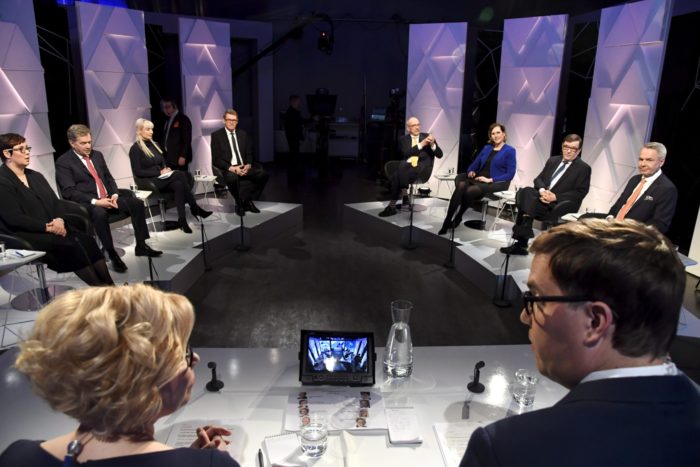
The eight candidates prepare for a debate in the run-up to the presidential election. In the foreground are hosts Seija Vaaherkumpu (left) and Jan Andersson; the candidates are (from left) Merja Kyllönen (Left Alliance), Sauli Niinistö (incumbent, running as unaffiliated), Laura Huhtasaari (“Finns” Party), Matti Vanhanen (Centre Party), Nils Torvalds (Swedish People’s Party), Tuula Haatainen (Social Democrats), Paavo Väyrynen (Centre Party, running as an independent) and Pekka Haavisto (Green Party).Photo: Markku Ulander/Lehtikuva

A broad consensus on foreign policy is also noticeable in the presidential campaign debates. The candidates from the largest parties – the Centre’s Vanhanen, the SDP’s Haatainen, and the Greens’ Haavisto, as well as Niinistö – all agree on the most important foreign policy issues. Any differences of opinion are mere nuances.

Small-group candidates Huhtasaari, Väyrynen and Torvalds have tried to play the role of challengers. Huhtasaari and Väyrynen are EU critics, while Torvalds supports NATO membership. They have not, however, succeeded in taking over the political arena.

The campaign is likely to heat up before the January 28 election, including tougher election debates among the candidates. That could change the constellation as voters go to the polls.

What, if anything, could undermine Niinistö’s popularity during the final phase of the campaign?

Niinistö’s standing could weaken if two things were to happen at once: he would have to fail badly in the final debates, and his rivals would have to simultaneously rack up great successes. Fundamentally it is also a question of whether the people of Finland want the contest to go to two rounds or would rather get it over in round one.

By Unto Hämäläinen, January 2018

Imagination galloping wild in Finland

A new phenomenon, born in Finland, consists of long walks in the forest, complicated dressage routines and jumping over fences – all on hobbyhorses. Firmly established among Finnish enthusiasts and still growing, hobbyhorsing is also increasing in popularity in many other countries as young people swing into the saddle.

“I was out in Helsinki one day when I came upon a hobbyhorse lying discarded on the ground,” says Mariam Nije, 18. “I can’t quite put it into words, but I immediately felt drawn to it. I saw no owner around so I took it home with me. That was 2008, and that’s how hobbyhorses entered my life.” These days, Nije is an active coach and organiser of hobbyhorsing camps and other activities.

“I have ridden real horses for more than ten years, so I find the world very familiar,” she says. “When I ride dressage, I have a clear picture in my mind of the way a real horse moves, how it extends its legs, and I try to mimic the movements with the utmost accuracy.

“Initially, what attracted me to the sport was that I like creating things with my hands. When I came across my first hobbyhorse, I tried to duplicate its simple sock-and-stick design. Later, I found the tight-knit hobbyhorse community and I joined in, coaching and organising camps. I love being a coach because I love to contribute and watch my students progress.

“I enjoy the creativity of hobbyhorsing. The sky is the limit! We share design tips with one another, in person and on Instagram, but everyone really can create whatever they want. Some say I have developed my own, recognisable style: my horses tend to be rather big, with long necks and short manes. I have a very special bond with my horses, and it would break my heart if something were to happen to them.”

By Tiia Rask, ThisisFINLAND Magazine 2018