Island and mainland: At Helsinki Biennial, art inspires viewers and makes summer linger longer

What’s the significance of a biennial? It offers locals and visitors new perspectives and insights, like any arts event, but it does so in a concentrated, festival format. Altogether, 29 artists and artists’ collectives from all over the world are on show at the second Helsinki Biennial.

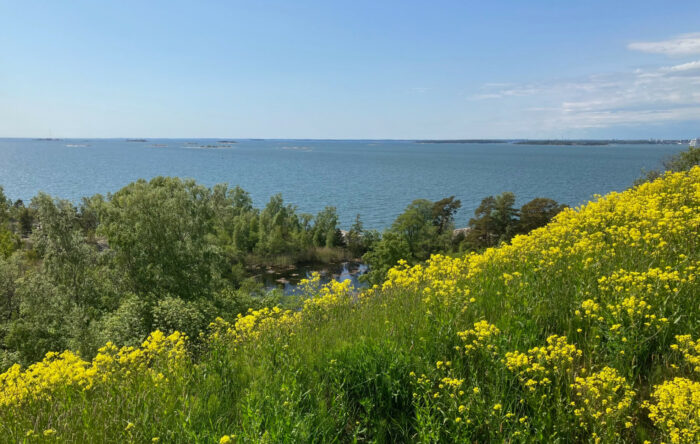
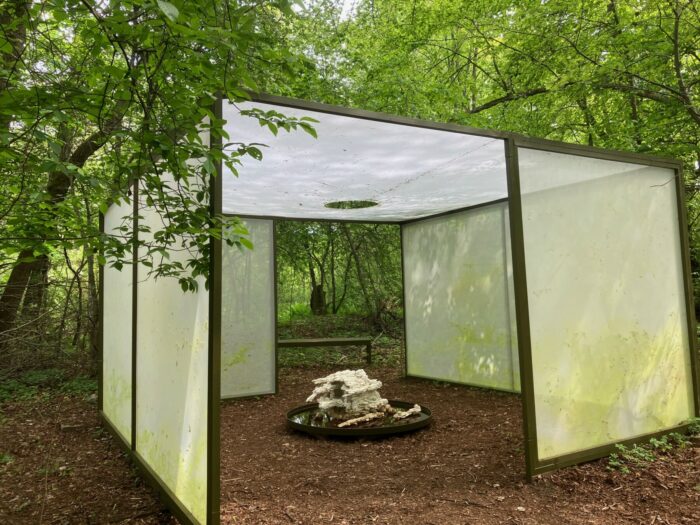
Entitled New Directions May Emerge, it features 16 locations on scenic Vallisaari, an island just off the coast of the Finnish capital (until September 17, 2023). Additional artworks are on view at Helsinki Art Museum (until October 22) and several other places around the city. Some art is online or has online components.

Cultural events spill over and benefit businesses and society as a whole, too. “An interesting and attractive city cannot exist without a vibrant and distinctive cultural life,” Helsinki mayor Juhana Vartiainen told the press when the biennial opened. Arts and culture are “essential for…recruiting new talent and bringing business activity to the city.”

Tunnel visions
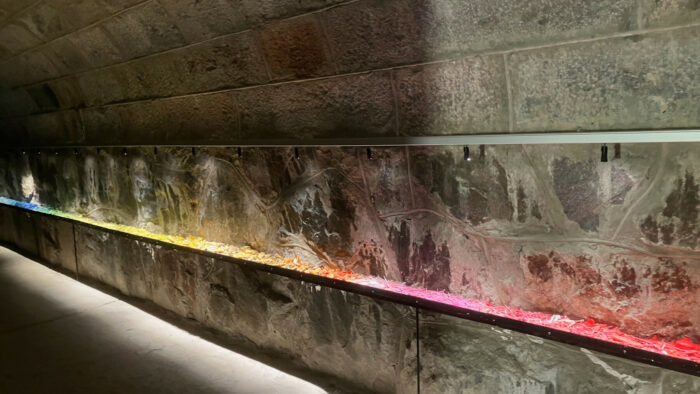
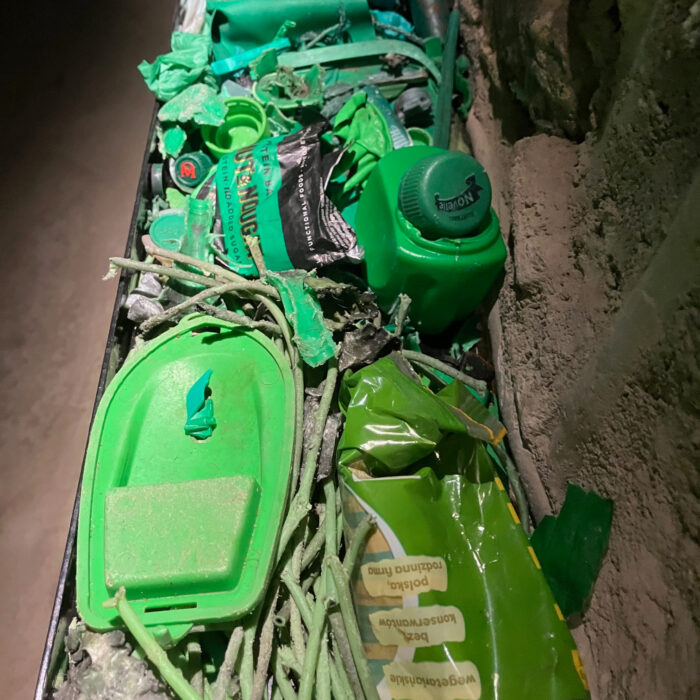
A long, narrow shelf on a stone wall is holding something colourful.

Tuula Närhinen’s The Plastic Horizon contains pieces of plastic that washed up on the shore. (For a closer look, see the slideshow below.)Photo: Peter Marten

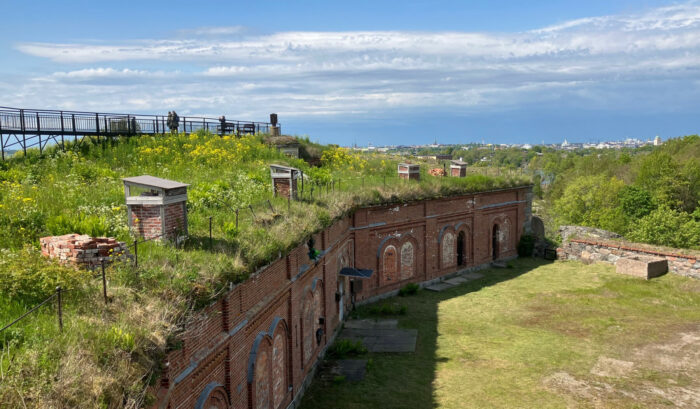
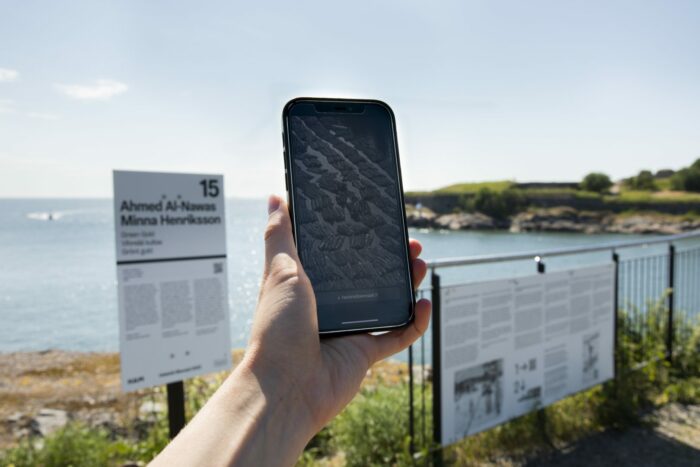
The name Vallisaari (Embankment Island) refers to former military fortifications there, many of which date back to the 1800s. A number of the biennial’s exhibitions are located in spacious, tunnel-like chambers within those ramparts.

One of them, Finnish artist Tuula Närhinen’s The Plastic Horizon, consists of a low, narrow shelf loaded with pieces of plastic that she collected on the shores of Harakan saari (Magpie Island), where she has her studio, close to Helsinki. Scraps, fragments, candy wrappers, bottle tops, Covid masks and toys are arranged by colour along the shelf. The rainbow-like array attracts the eye from a distance, but becomes disgusting as you approach and realise that it’s a collection of trash.

Närhinen makes the point that this surprisingly large amount of plastic rubbish, collected on one tiny island, represents a minuscule fraction of total human pollution. Just as the colours hold a certain appeal for the artist’s audience, they also attract birds and marine life, which often die after ingesting the plastic.

Atmospheric records
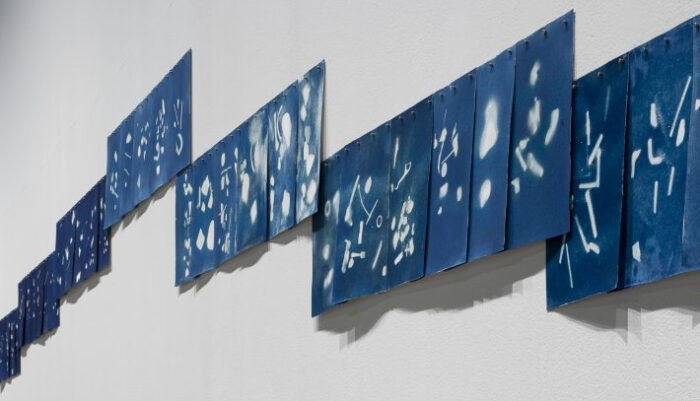
Sets of three to five papers are hanging on a wall. Each paper is dark blue except for a jumble of white shapes.

Närhinen’s cyanotype prints show the white silhouettes of objects she found at low tide along the River Thames in London.Photo: Kirsi Halkola/Helsinki Biennial/Helsinki Art Museum

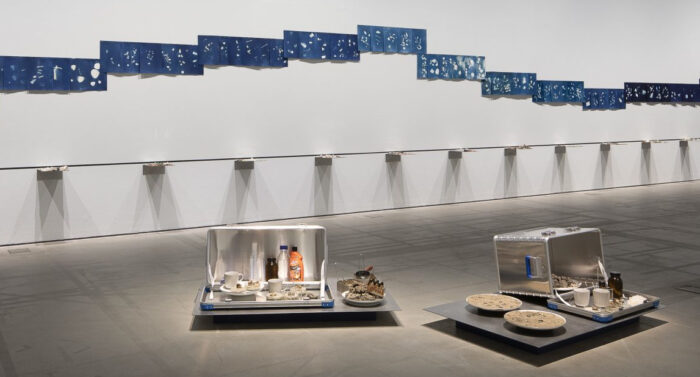
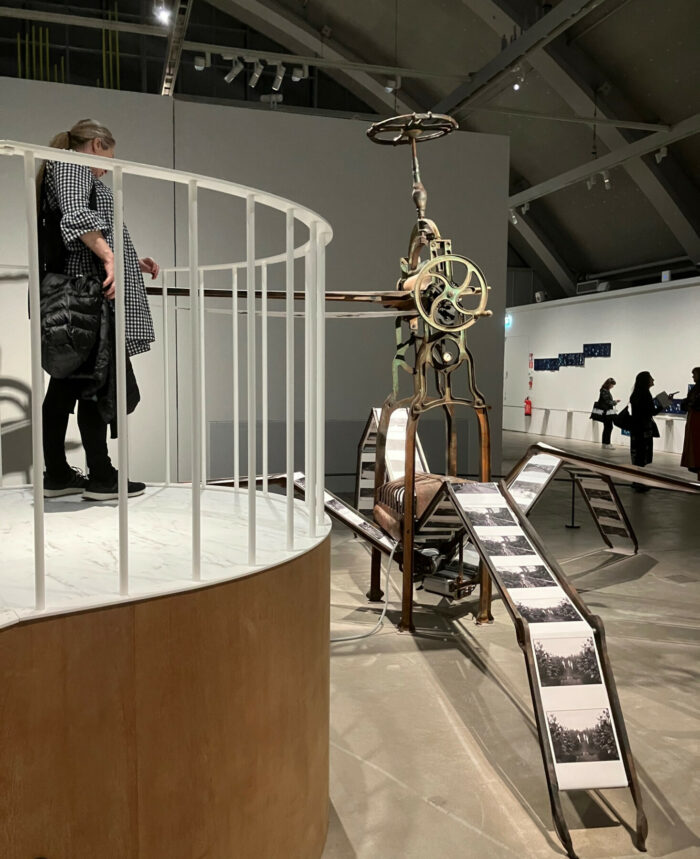
On the mainland, Helsinki Art Museum contains another of Närhinen’s installations, Deep Time Deposits, where she has hung sheets of paper in groups on two long walls. Each sheet is completely blue except for a scattering of white shapes. Accompanying shelves hold the objects that made those forms: shards of glass and pottery, seashells, jigsaw puzzle pieces, remnants of metal tools and nails, and other flotsam — even a crab claw.

The creative process included scouring the tidal flats of London’s River Thames, an activity called “mudlarking.” She found “very different objects” there than back home, she told me. “These objects are actually heavier. They’re buried in the mud, which then erodes when the river eats its way into the soil.”

For 34 days, she went mudlarking and used the debris she found to create cyanotypes – paper prints made with a photographic process that recorded the objects as white silhouettes on a deep blue background. The exhibition also displays all the bottles, trays, gloves and other equipment she used to complete the project, so we see not only the result, but how she achieved it.

The blue colour readily symbolises the aquatic environment, and the white shapes show what the artist has removed. She exposed the prints outside in the sun and rain, making them “an atmospheric record of the river’s ‘anthropogenic burden,’” as she says in the exhibition catalogue.

Reindeer, ice and embers
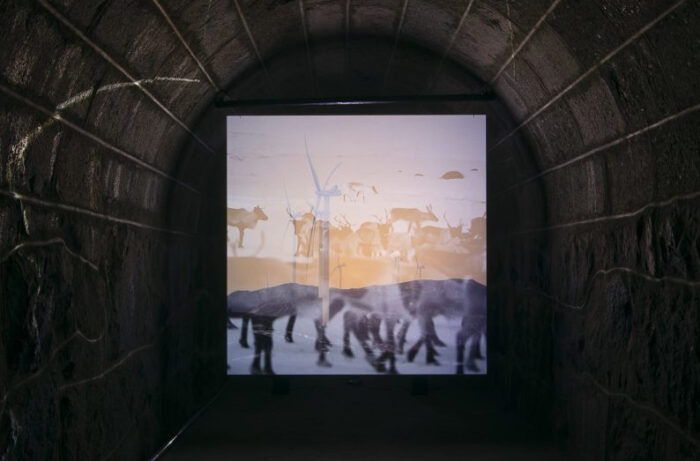
A square-shaped screen shows two pictures at the same time: a windmill and a group of reindeer.

In Matti Aikio’s video Oikos, a turning wind turbine and a walking herd of reindeer are superimposed upon each other.Photo: Kirsi Halkola/Helsinki Biennial/Helsinki Art Museum

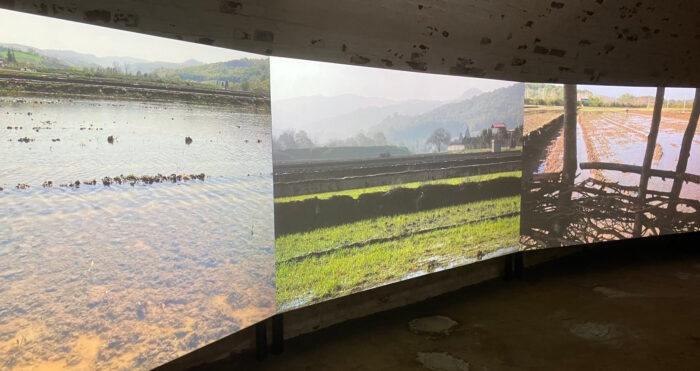
Back in another of Vallisaari’s tunnels, a video plays on a square screen. Long-lasting shots, sometimes overlapping to occupy the screen two at a time, show mist lifting from a mountain range, a herd of reindeer walking and grazing, half a dozen wind turbines turning, a snowmobile moving through the landscape, sunshine refracting into halos of light.

The name of the work, Oikos, an ancient Greek word for “family” or “household,” is the same word that gave rise to the prefix “eco” in both “ecology” and “economics.”

Near the end of the video, there’s a shot of what looks like pockets of air under the ice on the shore of a lake. Glowing, flaming campfire embers gradually appear; they also seem to be under the ice. Then the picture slowly fades to darkness.

The artist, Matti Aikio, filmed the footage of reindeer in an area where his ancestors herded reindeer more than 100 years ago. “My mother is Finnish and my father is Sámi,” he said, standing in the sunlight outside the gallery. The Sámi are the indigenous people whose homeland is divided into four parts by the borders of Finland, Sweden, Norway and Russia. His father’s village is Vuotso (Vuohčču in the Northern Sámi language), near Urho Kekkonen National Park in the far north of Finland.

The mountains in the video are in Norway and Finland, and the windmills are in Fosen, a region near Trondheim, Norway. (At the time of writing, a dispute about windfarms in that area was continuing long after a court had ruled that they interfere with Sámi reindeer herders’ rights.)

Images linger
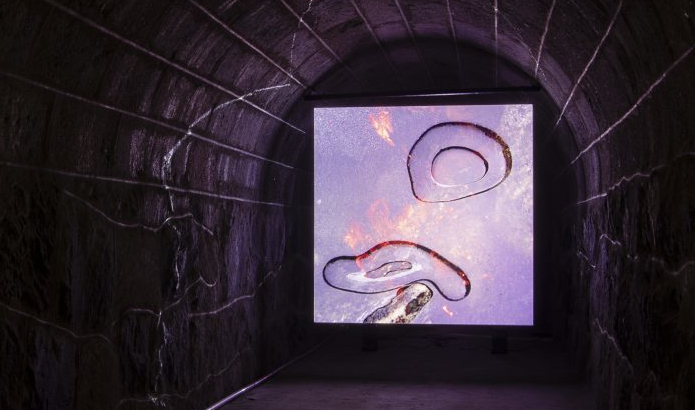
A square-shaped screen shows two pictures at the same time: the embers of a campfire and bubbles under an ice surface.

Near the end of Aikio’s video, embers and fire appear behind a shot of bubbles under an ice surface.Photo: Kirsi Halkola/Helsinki Biennial/Helsinki Art Museum

“I wanted to use very long, lingering images and slow shifts, because one important aspect of the topics that I’m working with is also the relationship to time,” Aikio said. “The relationship to time is very connected to the relationship with nature. How do we relate to time as linear or cyclical or something else?”

He ventured, “Everything has to happen cyclically on this planet. That’s the only way to live inside the borders of the ecosystem.” That stands in contrast to the way much of the world runs today: societies consume resources without sufficient consideration for the future.

The conflict over windmills is one example of the complexity and ramifications of the climate crisis, to which “there is no easy answer,” said Aikio. “But the simple answer is that we just all need to slow down. We need to spend more time sleeping and thinking, and less time doing destructive things. We’d have time to think about the real consequences of our actions.”

One good way to slow down is to spend more time looking at art – maybe even on an island near Helsinki.

More views of the second Helsinki Biennial
By Peter Marten, August 2023
Six Finnish pioneers in carbon neutrality

We look at ambitious projects in Espoo, Helsinki, Lahti, Lappeenranta, Tampere and Turku.

Espoo

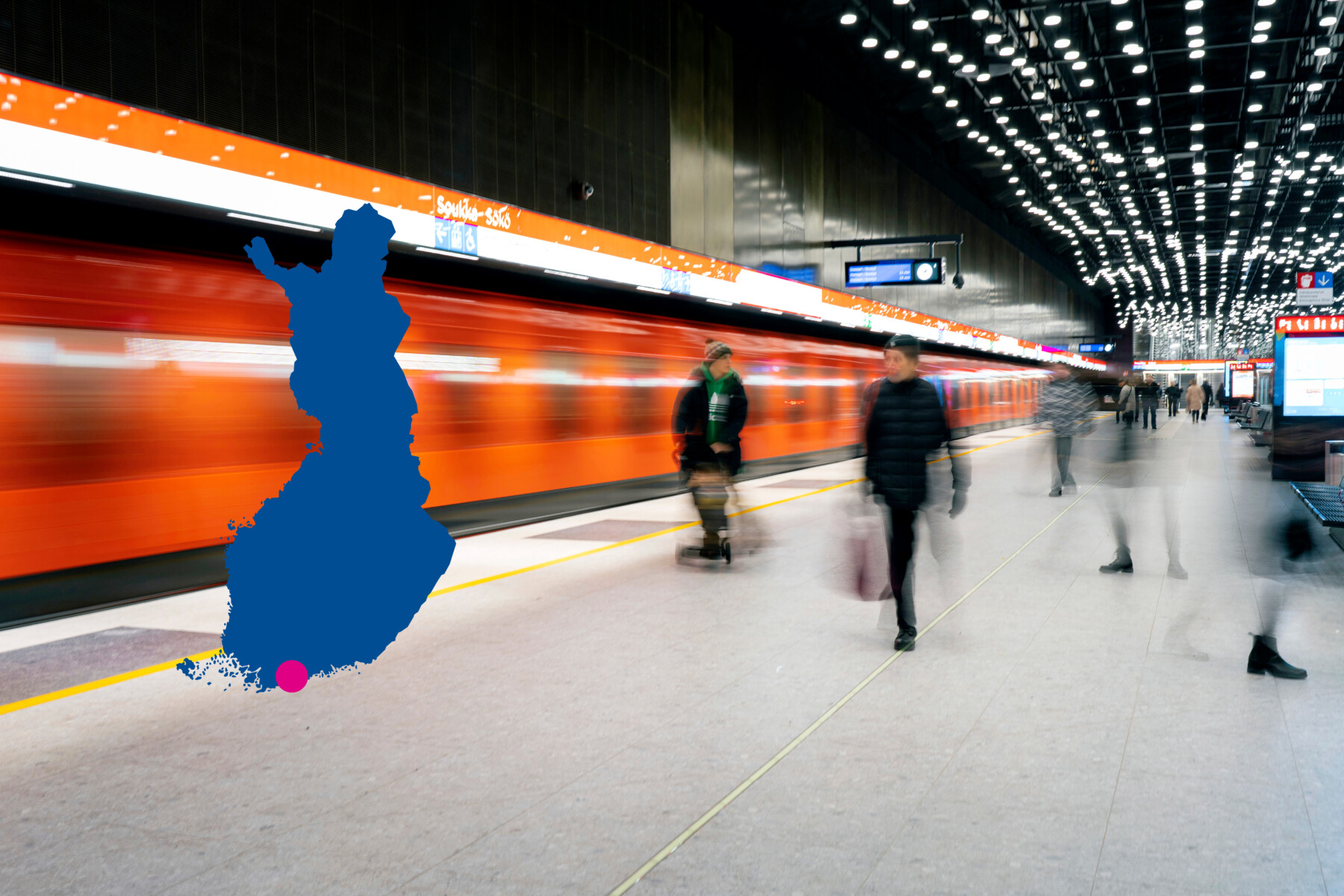
A blurred orange metro train is departing a station in Espoo, a city located in southern Finland.

Photo: Elias Metsämaa/City of Espoo

The city of Espoo is prioritising energy and traffic solutions in its plans to become carbon neutral. It recently launched the Espoo Climate Watch website, which compiles the city’s climate actions, monitors their progress and evaluates their impact.

Fortum, a state-owned energy company headquartered in Espoo, is developing a next-generation district heating system. The production will largely be based on waste heat, heat pumps and electric boilers, including excess heat from Microsoft’s new data centres nearby.

A new light-rail line connects Espoo directly with northern and eastern Helsinki. At the time of writing, it is set to start running in late 2023 or 2024. In 2022, the capital region’s underground metro line opened five new stations in western Espoo.
Helsinki

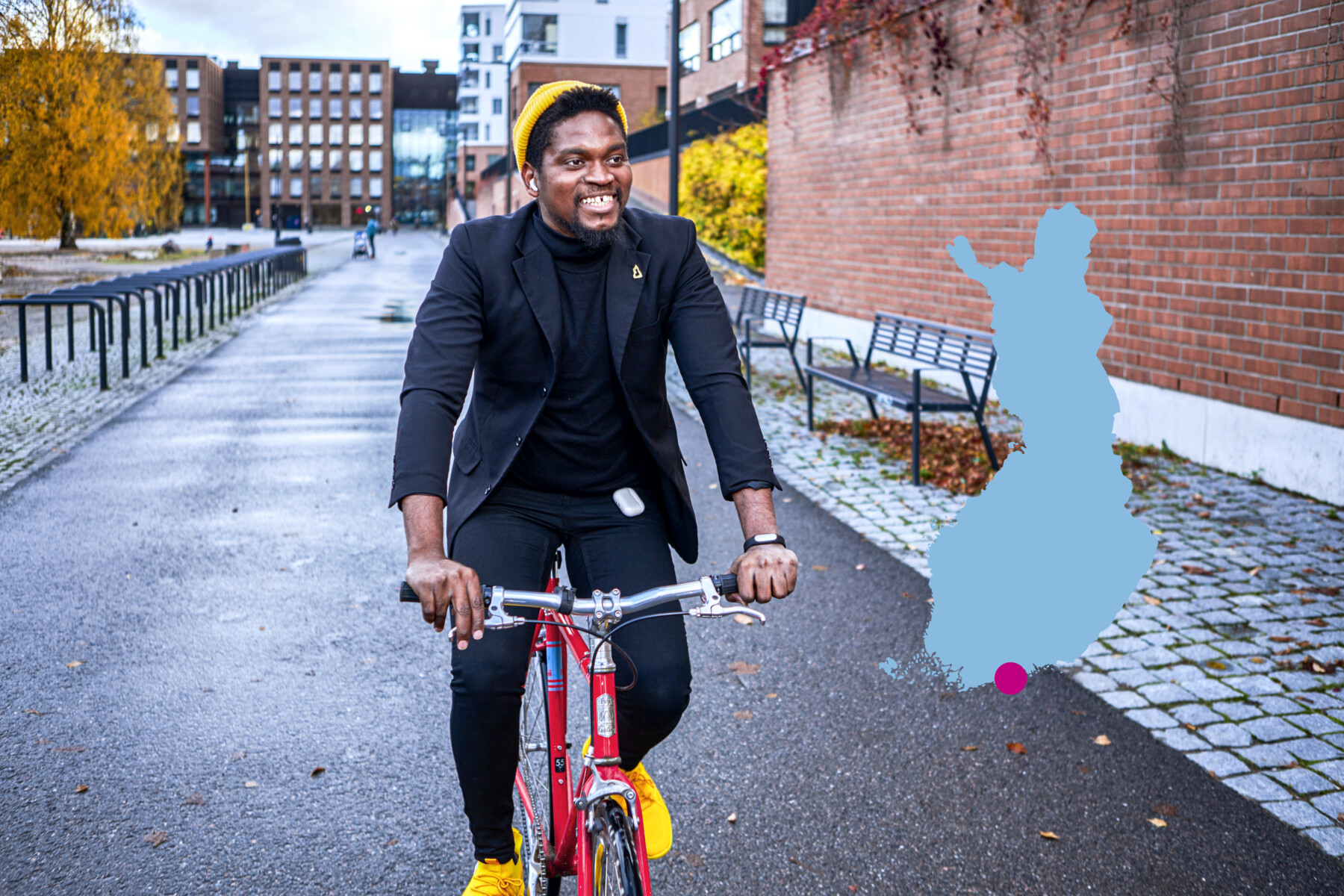
A man wearing a black jacket and jeans and a yellow beanie and shoes is cycling on an autumn day through Helsinki, a city in southern Finland.

Photo: Matti Pyykkö

The city of Helsinki is focusing its efforts on energy, construction and transport to become carbon neutral. Only buildings with top energy efficiency can be built on plots owned by the city. Soon, low-carbon concrete will be required in infrastructure projects.

Helen Ltd, the local energy company, is closing its coal-fired plants by 2025. Geothermal wells for private properties are allowed also in public areas – a special allowance compared to the rest of the country. The city advises housing companies on energy-saving renovations.

Helsinki is being developed as a polycentric network, where most journeys are made by public transport, by bike or on foot. Helsinki is transforming its bicycle network with best-practice infrastructure informed by examples from Denmark and Holland. The city aims to further reduce emissions from transport by conducting an analysis to find new means.

Lappeenranta

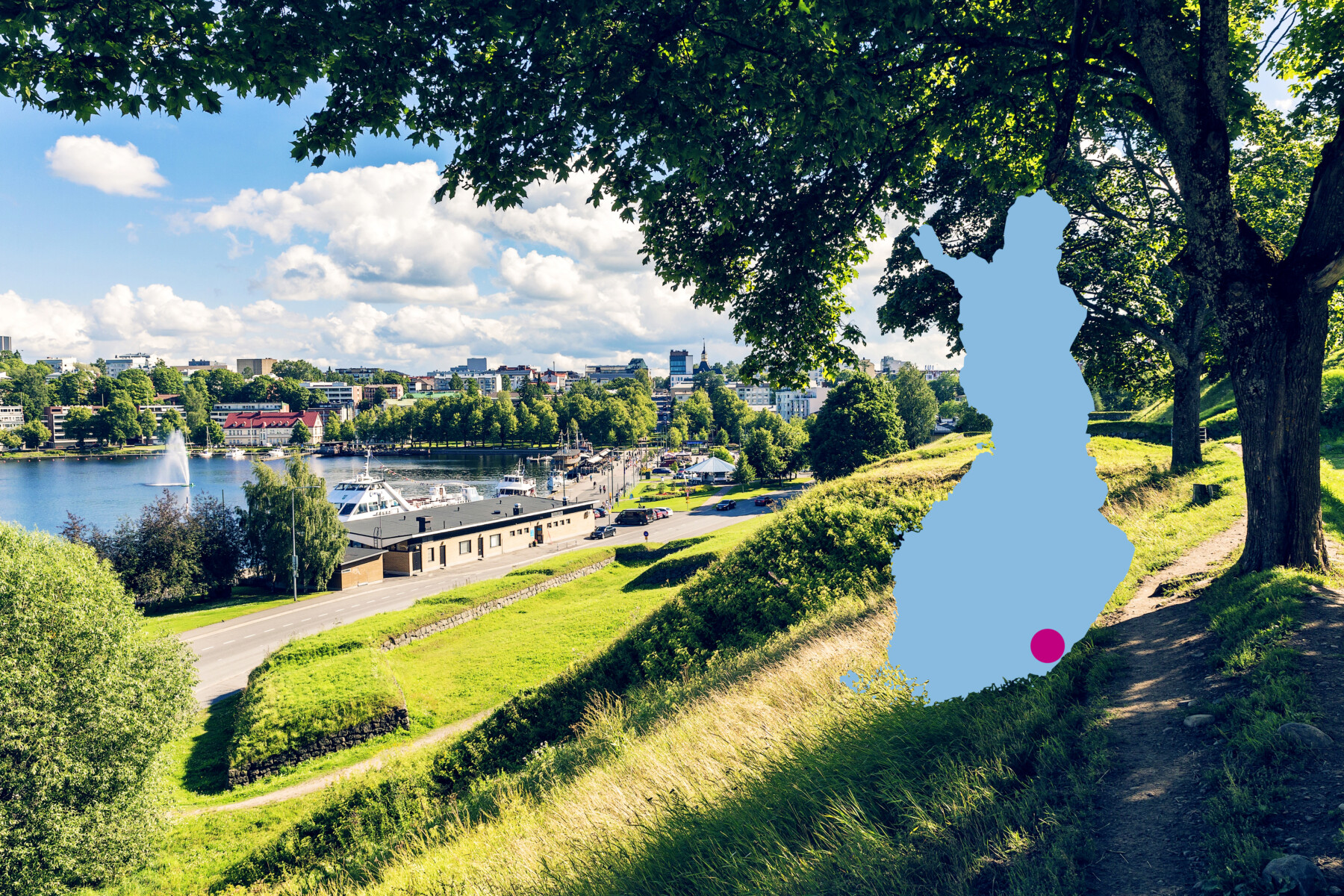
Buildings and a harbour are shown in a view from a green hill in a park in Lappeenranta, a city in southeastern Finland on the shore of Lake Saimaa.

Photo: Mikko Lemola

The city of Lappeenranta is a testbed for global carbon-neutral solutions and cooperates closely with Lappeenranta-Lahti University of Technology and local companies.

The city stopped using natural gas for district heating in 2010 and is using sidestreams from the forest industry instead. Every city service, from education to sports facilities, uses green electricity. Lappeenranta is located on the shore of Lake Saimaa, and almost every inhabitant lives less than 100 metres from a green area.

Fuel company St1 plans to base Finland’s first green methanol production plant in Lappeenranta. Green methanol is a sustainable raw material for fuels and plastics. Forus, a company that finances energy investments, has plans to construct a 250 MVA solar power plant in Lappeenranta, producing enough electricity for 150,000 apartments.

Lahti

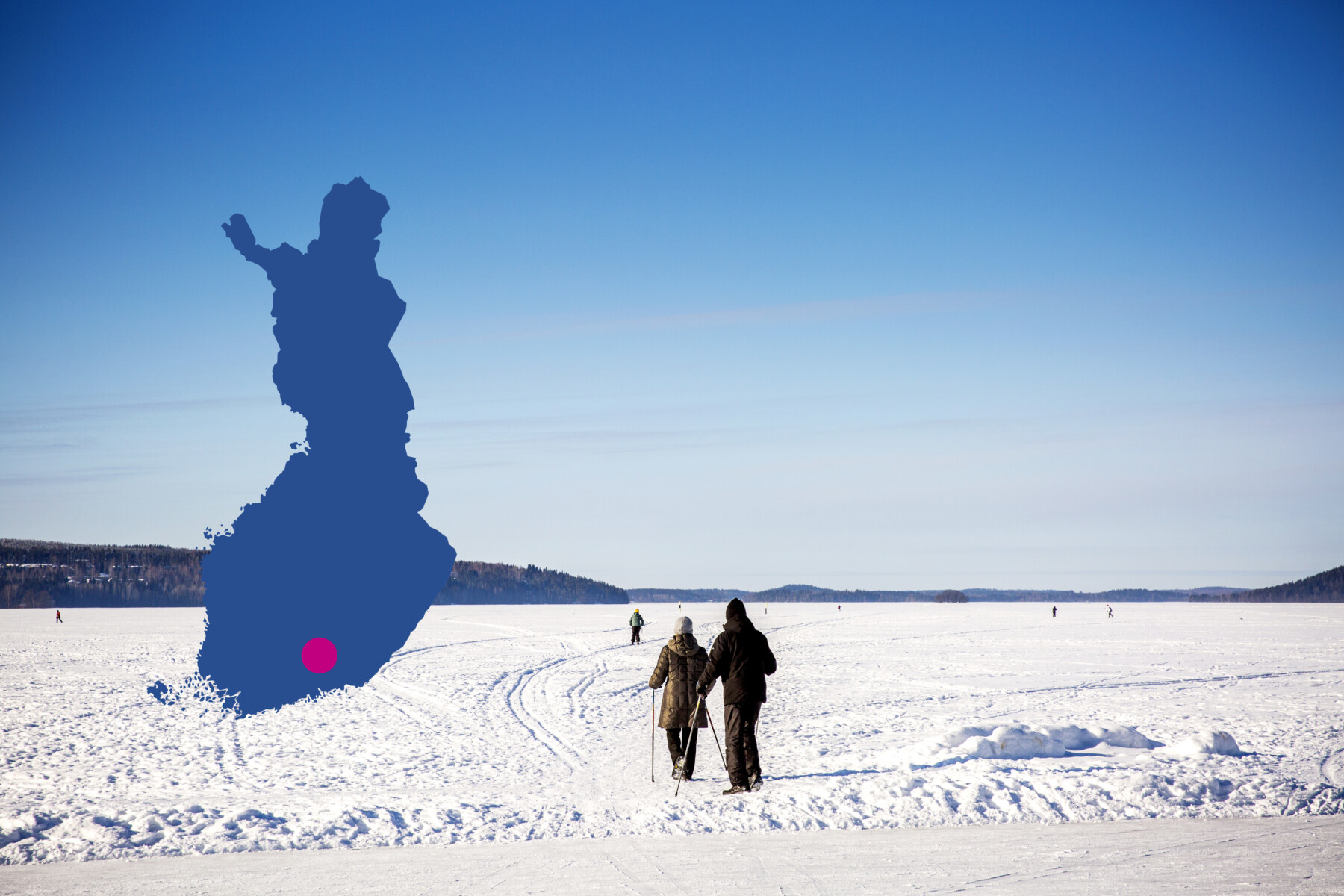
People are cross-country skiing over a frozen lake under a blue sky in Lahti, a city in southern Finland.

Photo: Lassi Häkkinen

Decision-makers in the city of Lahti have a long tradition of climate awareness. The local power company, Lahti Energy, has replaced coal with biomass. Residents favour heat pumps over oil heating.

In transport, Lahti Energy and Nordic Ren-Gas are studying the feasibility of a Power-to-Gas project that will include the production of green hydrogen and renewable methane that can be used by heavy road vehicles.

Lahti has a significant electric transportation cluster, with more than 30 businesses developing technologies for decarbonising transport. The city also encourages residents to cycle and walk by highlighting the health benefits and developing the main cycling network. Lahti has also launched a city bike system.

Tampere

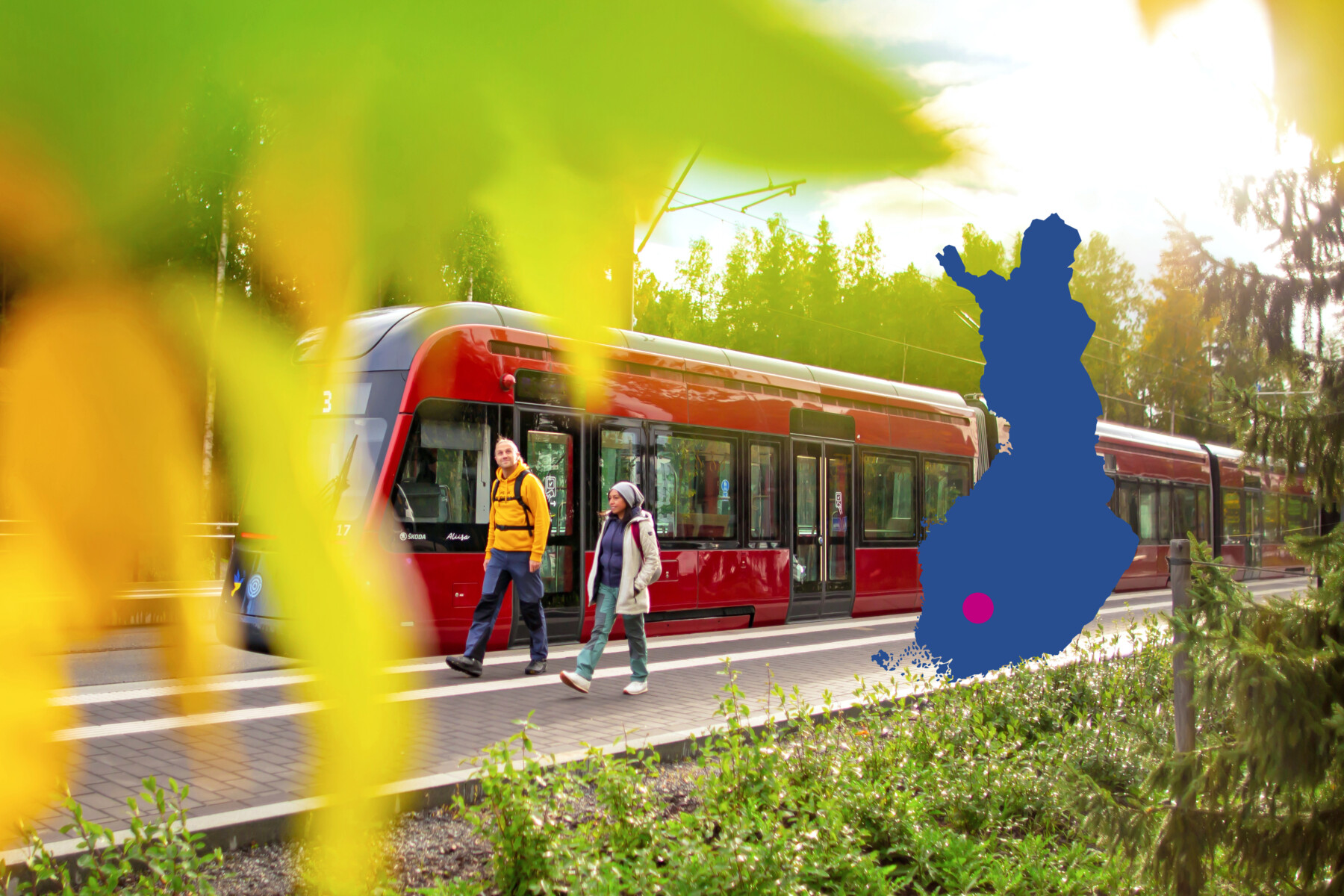
Two people are walking beside a red tram along a platform flanked by green trees in Tampere, a city in central western Finland.

Photo: Laura Vanzo/Visit Tampere

The city of Tampere showcases its climate actions and their impact on the Tampere Climate Watch website, making it easy for locals, partners and others to follow up.

Tampereen Sähkölaitos, the city-owned power company, is continuing to invest in renewable energy. It recently inaugurated Naistenlahti 3, a bioenergy plant producing heat and electricity mainly out of woodchips and other sidestreams from the forest industry.

The city encourages residents to adapt their traffic and consumption habits according to the opportunities in their residential areas. Developments include the opening of the city’s first tram system, in 2021, and new cycle lanes.

Tampere is trying to stimulate a circular economy in cooperation with local companies. An example is the procurement guidelines for roadwork, which include using recycled materials.

Turku

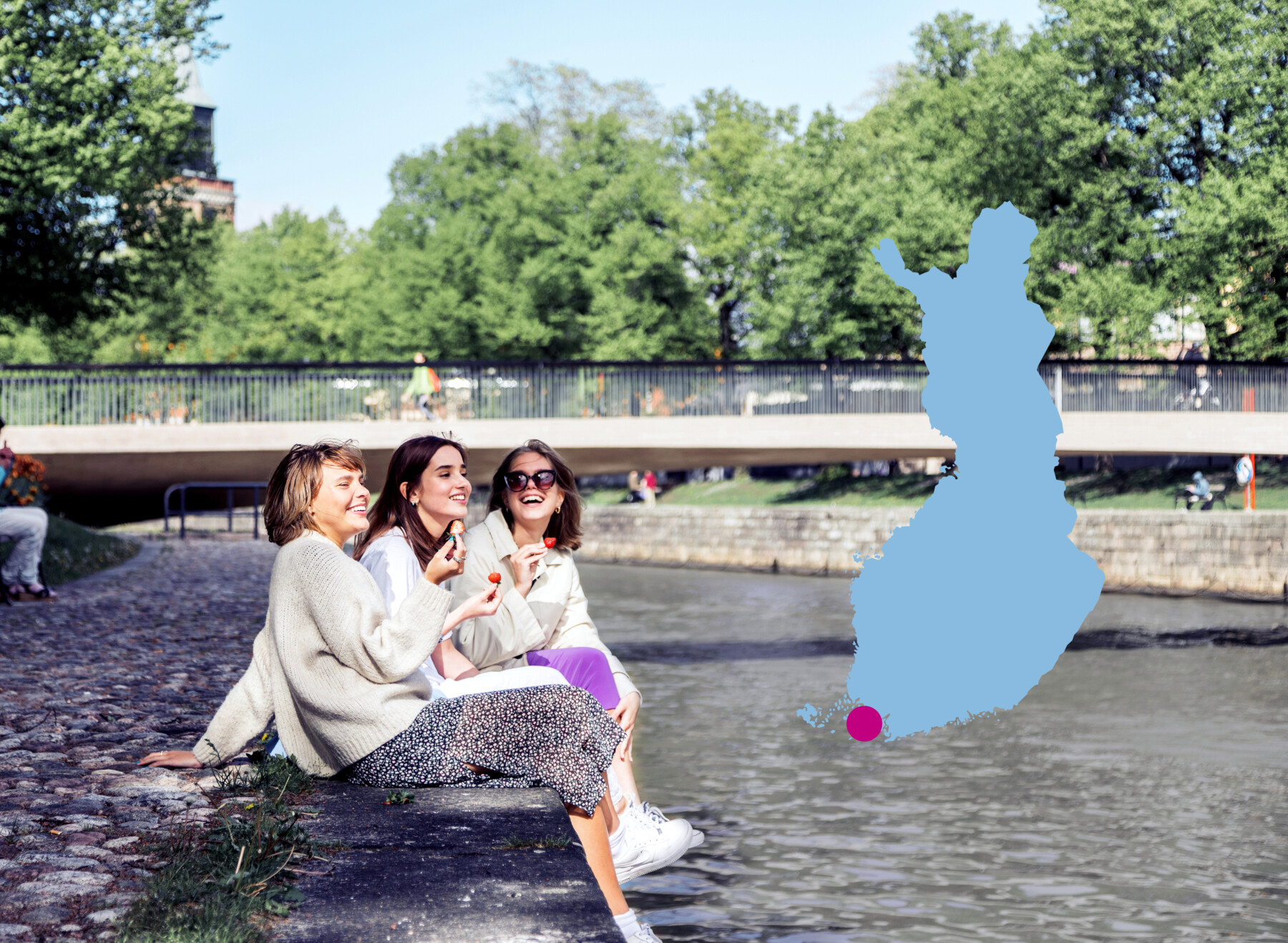
Three women are eating strawberries while sitting on an embankment by a tree-lined river in Turku, a city in southwestern Finland.

Photo: Terri Vahtera/Visit Turku

The city of Turku encourages locals to make climate-friendly choices by offering them carbon-neutral district heating and electricity, public transport and climate-friendly rental housing.

Coal has already been replaced with renewables. A large proportion of district heating is produced by heat recovery from wastewater. The city is turning the Student Village District and Campus into an energy-positive area, with solar power plants, geothermal fields and heat pumps.

For example, the city cooperates closely with all five local universities and with companies. The Promise, a movie made in Turku in 2020, was one of the world’s first carbon-negative film productions. In the production, travelling was limited to Finland, costume design was based on recycled clothes and materials, and only electric and hybrid cars were used.

By Katja Alaja, ThisisFINLAND Magazine 2023
Music in the Finnish capital: The Flow must go on

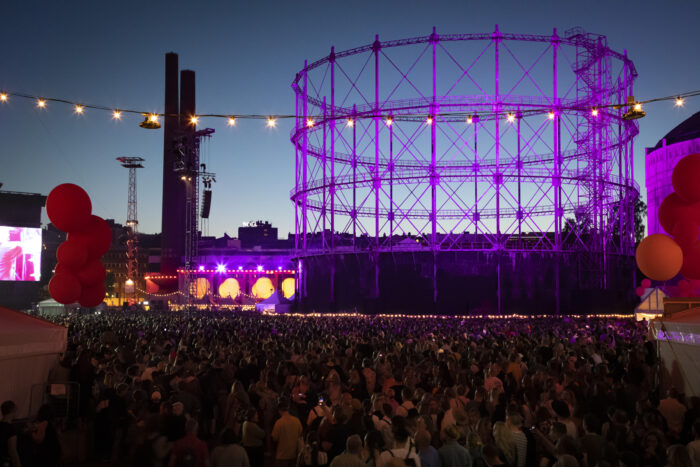
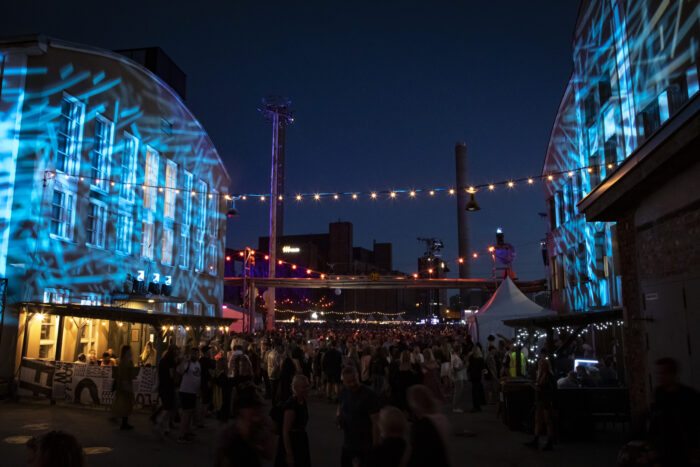
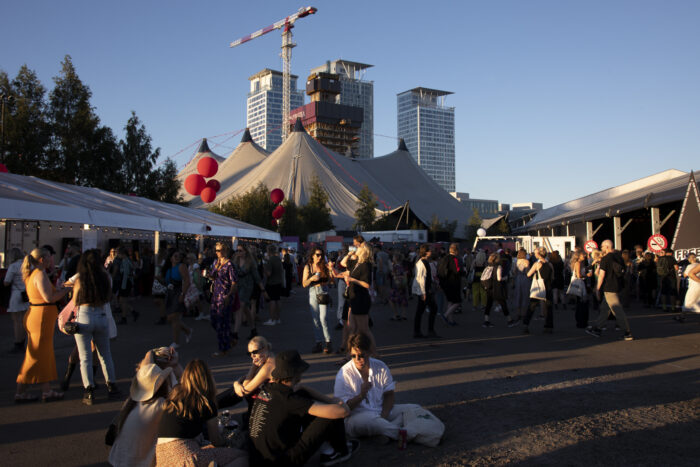
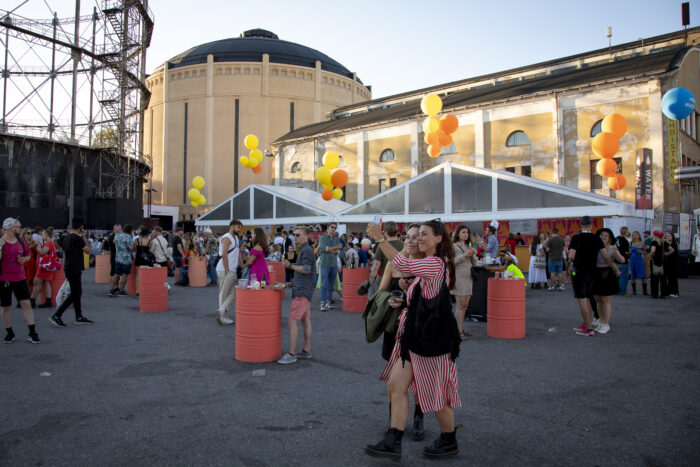
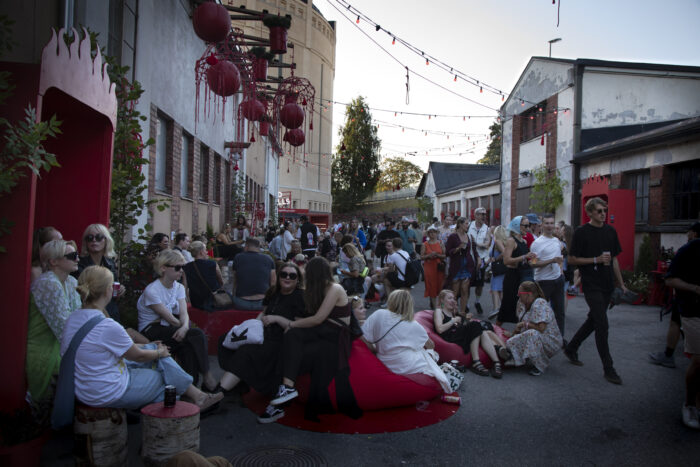
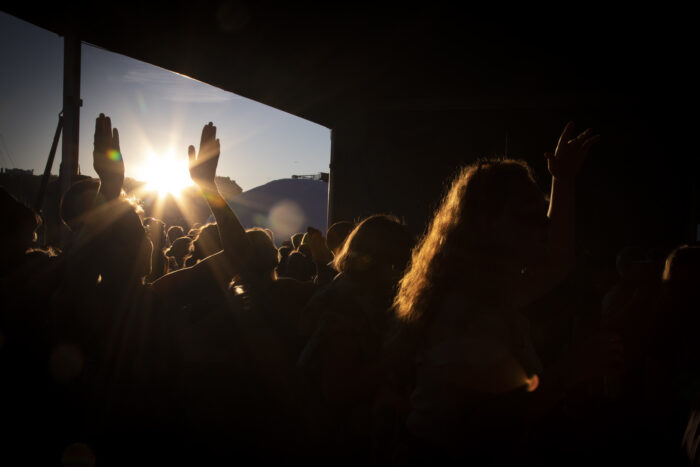
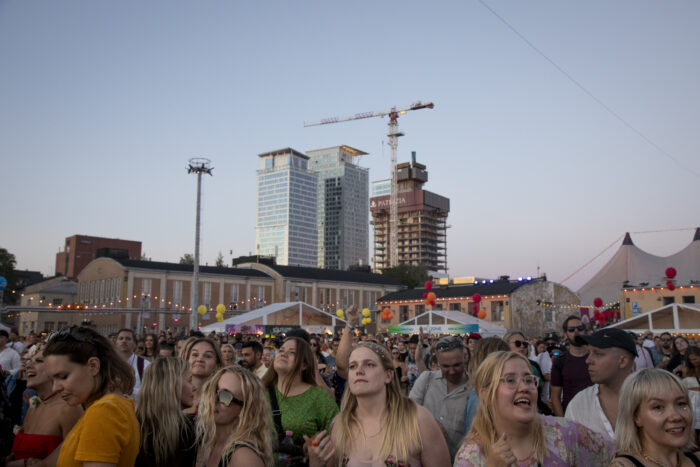
It hosts more than 150 music performances on nine stages, as well as two dozen food vendors and several art exhibitions. (Slideshow below.)

It’s urban, romantic and modern. The first half of August is the perfect time for a festival in Helsinki; although the white nights of June and July have receded, the days are still long and a lot of summer light remains.

Since 2007, Flow Festival has taken place in Suvilahti (which means “Summer Bay”), a former industrial district next to the new neighbourhood of Kalasatama (“Fish Harbour”), which is still growing.

Suvilahti is only 15 minutes from the city centre, close to the hip Kallio (“Rock” or “Boulder”) neighbourhood. It’s great to be able to get home by public transport or bike after a long day of listening and dancing. An impressively large bike parking area flanks the festival grounds.

Flow Festival organisers have plans to move to a different venue in the Finnish capital after the 2024 edition. At the time of writing, the destination is still a secret, but the event’s unique, atmospheric blend of urbane and down-to-earth is sure to reappear at the new location.

Time flies at Flow Fest

By Anna Ruohonen, July 2023
Nature is for everyone: Finland adds to accessibility at national parks and nature areas

Gentle waves break against the shore, and the sea stretches all the way to the horizon. The sun even comes out on a previously cloudy day.

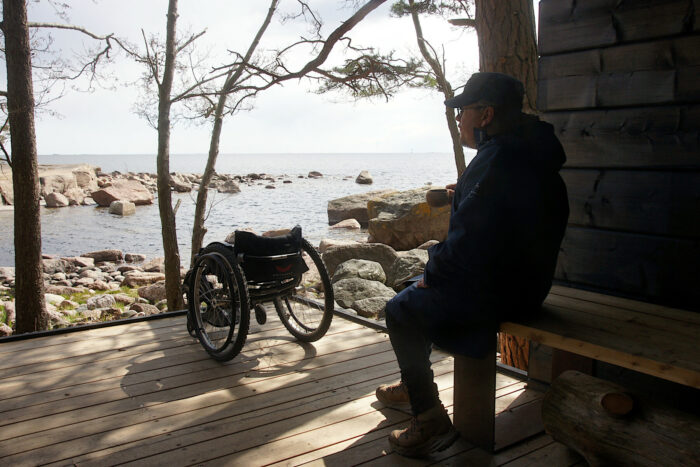
Niko Halminen smiles as he admires the scenery. We’re at Varlaxudden, a recreation area on the southern coast of Finland. It is located about 25 kilometres south of the historical town of Porvoo, which is 50 kilometres east of Helsinki.

Not so long ago, this place would have been out of reach for Halminen and thousands of others. Recent improvements make all the difference, however: 300 metres of relatively smooth trail plus a final 50-metre stretch built with wooden planks. Now wheelchair users can enjoy the view right by the water’s edge.

Enjoying nature

A man sits on a bench on a wooden seaside terrace, with an empty wheelchair a couple metres away from him.

Not so long ago, this particular sea view would have been out of reach for Niko Halminen and thousands of others.Photo: Juha Mäkinen

Halminen was born with cerebral palsy, a disorder that affects mobility. For most of his adult life, he managed without mobility aids, but he started using a wheelchair four years ago.

“It took two cases of stress fracture for me to finally admit that I need a wheelchair if I want to maintain an active life outside of my home,” Halminen says.

He has been an avid outdoor person throughout his life, from childhood weekends at the family cottage to a recently found love of canoeing. He wants to enjoy nature as much as he can.

He also promotes accessibility in his professional life. Since 2022, he has worked at the Finnish Paralympic Committee, with the aim of advancing accessibility in outdoor recreation.

Recent improvements

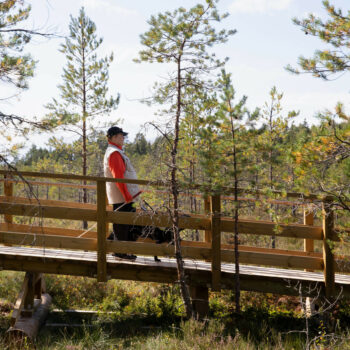
A person with a white cane and a seeing-eye dog traverses a railed wooden walkway through a nature area with trees and grasses.

A wooden boardwalk spans swampy terrain at Kurjenrahka National Park in southwestern Finland. The Finnish word for an accessible trail is esteetön, which means “obstacle-free.”Photo: Katri Lehtola/Visit Finland

Halminen credits the Finnish municipalities and Metsähallitus (the state-owned enterprise that manages Finland’s national parks) for improving accessibility in recent years. Also, a growing number of wilderness guides now offer services for customers with special needs.

There are now dozens of accessible trails all over Finland. Metsähallitus alone has close to 40 kilometres of them at their national parks and nature reserves. The majority are very short, measured in hundreds of metres. Liesjärvi National Park boasts the longest, at 3.8 kilometres. It is located about 100 kilometres northwest of Helsinki.

In the far north, Pallas-Yllästunturi National Park, the country’s most popular park in terms of total visitor numbers, has half a dozen accessible trails. At Kurjenrahka National Park in southwestern Finland, visitors can traverse swampy terrain on a wooden boardwalk.

Good descriptions essential

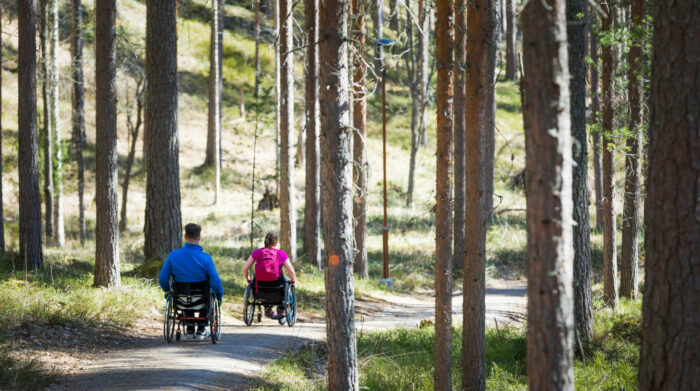
Two people in wheelchairs make their way along a forest path on a sunny day.

In eastern Finland, at the heart of one of the country’s most scenic landscapes, Punkaharju Nature Reserve offers an accessible trail.Photo: Petri Jauhiainen/Visit Finland

Accessible trails are divided into two categories: regular accessible trails are usually hard-surfaced, and in most cases a wheelchair user can navigate them without any assistance. On accessible trails classified as “demanding,” the surface may be softer and slightly uneven, and the trail may have a steeper gradient. Depending on the individual, a personal assistant may be required on demanding accessible trails.

Since people’s capabilities vary greatly, Halminen points out that it is essential to provide detailed trail descriptions online. That gives everyone the chance to check beforehand and estimate whether the trail is suitable for them.

The trail at Varlaxudden falls in the demanding category – and rightly so, says Halminen. Since he uses a manual wheelchair (as opposed to an electric one), the return to the parking lot means a hefty workout for his arms.

More than just trails

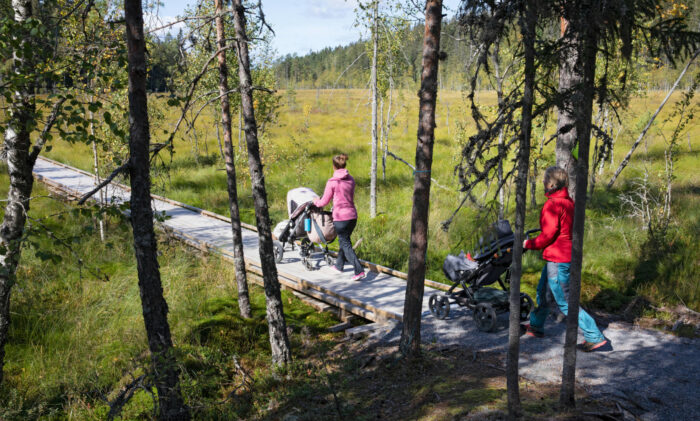
Two parents in brightly coloured jackets push strollers along a boardwalk path across a meadow surrounded by forest.

Accessible trails, such as this one at Kurjenrahka National Park in southwestern Finland, benefit everyone by expanding visiting possibilities for all kinds of people.Photo: Katri Lehtola/Visit Finland

Halminen emphasises that improving accessibility does not mean just building suitable trails. It is equally important to consider the full infrastructure, from campfire sites to dry toilets. If you can’t visit the toilet, even the easiest trail becomes inaccessible, practically speaking.

“It is also important to bear in mind that accessibility is not only about mobility,” Halminen says. “People with sensory or cognitive impairments should also be considered when planning accessible locations.”

As an example, Halminen praises the design of the dry toilet at Varlaxudden: clearly distinguishable colours and a skylight make it easier to use for people with visual impairments. “Making these places accessible means that they are accessible for everyone,” he says.

Mutual consideration

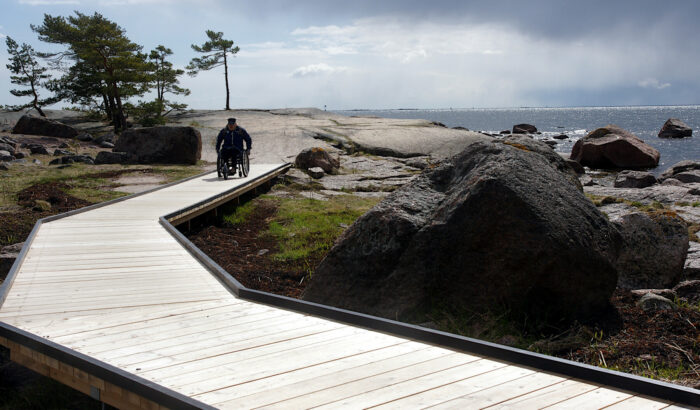
A man in a wheelchair moves along a boardwalk path that leads to a large smooth stone area on the shore.

The accessible trail at Varlaxudden in southern Finland leads to the shoreline, to a smooth rock outcropping that is also navigable in a wheelchair.Photo: Juha Mäkinen

Driving back towards Porvoo, Halminen reflects on the experience. He thinks Varlaxudden was very nicely updated to make it accessible, and he says he will warmly recommend it to his peers. “They have done the necessary things, but not too much,” he says, pointing out that nature in itself can’t and shouldn’t be made completely accessible.

The only problem we encountered had nothing to do with either design or nature: someone had left a heavy log lying by the campfire location, blocking part of the platform. There’s a lesson there: maintaining accessibility requires a bit of consideration from other visitors, too.

At Varlaxudden, the trail leads to a broad stone outcropping on the seashore. In its natural state, without human intervention, the rock face is smooth and flat enough for a wheelchair.

By Juha Mäkinen, July 2023
Having fun on the water in Finland

Here are some of the water activities you can experience in Finland – a few of them are even winter hobbies.

Swimming: Jump in!

Photo: iStock

There are plenty of natural bodies of water in Finland suitable for swimming, both lakes and sea. During the summer in southern Finland, lake water temperature is usually around 20 degrees Celsius (68 Fahrenheit). Take a dip in the beautiful calmness of northern nature.

Fishing and ice fishing: Catch some fish

Photo: Asko Kuittinen/Visit Finland

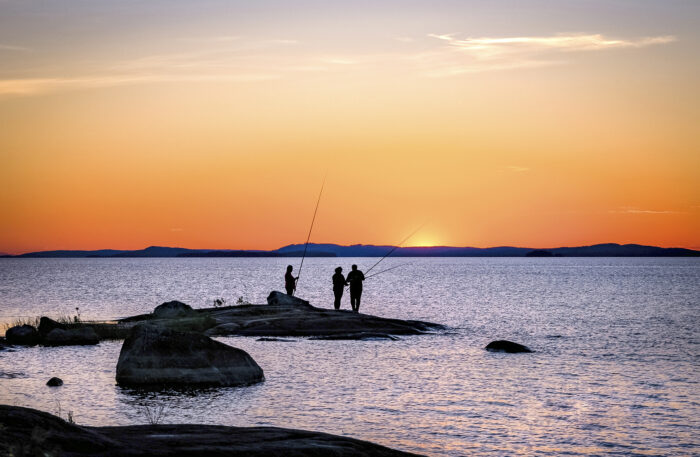
Almost a third of Finnish people list fishing as one of their hobbies, and there are plenty of options available for fishing tourists. You can take the fishing trip of a lifetime to the far-northern fly-fishing paradise in Finnish Lapland to catch salmon in the rivers. Or how about heading to the Lake District in eastern Finland for pike, perch and pikeperch? If you are staying in Helsinki, take a look at the opportunities along the coast. In winter, try ice fishing through a small hole in the ice while the sun glitters on the snow, and you will never forget the experience. Fishing permits are available online.

Canoeing and kayaking: Calm down or speed up

Photo: iStock

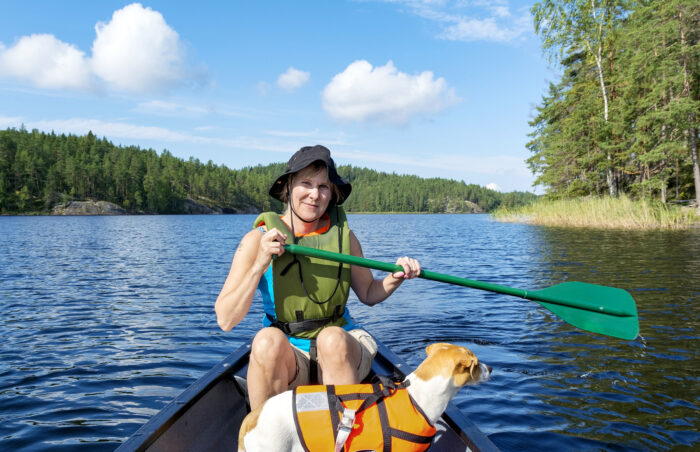
Enjoy the tranquillity of the lakes, explore the islands of the archipelago or challenge yourself with white water rafting in the rivers. Immerse yourself in the silence on the wilderness lake or ask for guided river-rafting excursions. No permit is required, but it is essential to have appropriate clothing, life jacket, a map and a compass.

Sailboats, motorboats & rowboats: Take a boat trip

Photo: Juha Valkeajoki/Visit Helsinki

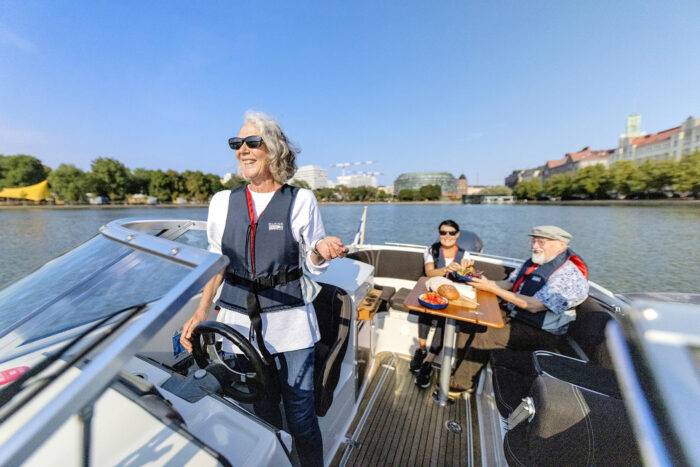
Finland is a great boating destination, whether you like sailing, motorboating or rowing. You can rent a boat with or without a captain in many lakeside and coastal towns. You can row on the lakes, rivers and sea, and there are plenty of scenic routes to take. Whichever boat you choose, you can explore water routes or go island hopping, and there are inviting guest harbours along the way, too.

Wakeboarding: Perform tricks on the waves

Photo: Ville Pääkkönen

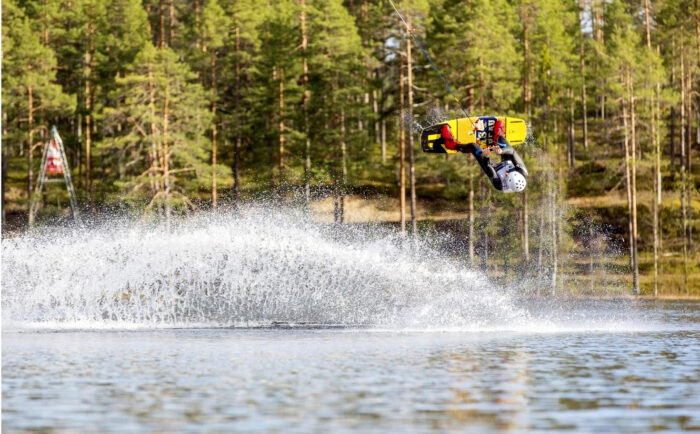
Finnish coastlines and lakes provide plenty of fun for wakeboarders. You can find rental equipment in many towns across the country.

The more ecological version of the sport, cable wakeboarding, is growing. No boat is needed: the riders are connected to a cable system that pulls them around the area. The more seasoned riders can try their tricks on tracks that resemble skateparks, with ramps and obstacles. Wakepark Vuokatti has one of Finland’s longest zipline wakeboard tracks, 280 metres long.

Diving: Into the deep

Photo: Mika Saareila

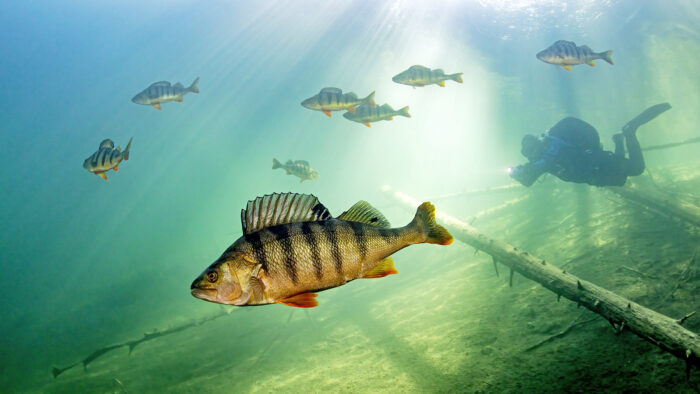
The archipelago of the Baltic Sea is stunningly beautiful and its many islands give great opportunities for diving. For long, deep dives, you need a full regalia of wet suit with hood, socks and gloves. Many divers also enjoy diving in lakes that have clear waters and great visibility. Contact local diving clubs or the Finnish Divers’ Federation.

Standup paddleboarding: Walk on water

Photo: Jussi Hellsten/Visit Helsinki

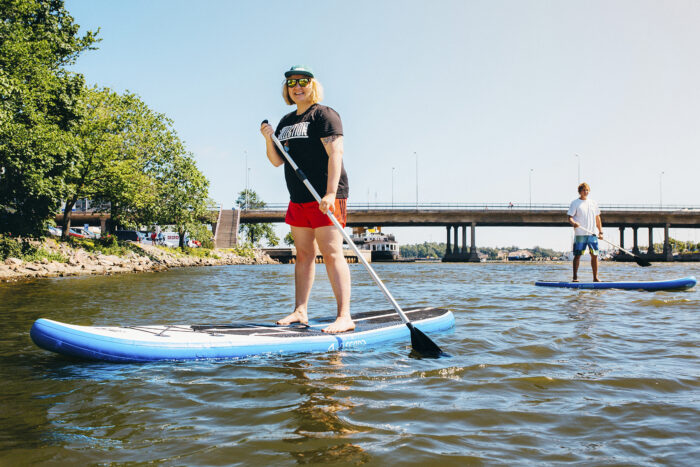
Standup paddleboarding may be the closest you will ever come to walking on water. Lakes, rivers and the archipelago are all suited to this hobby. You can rent SUP boards and paddles in many towns, and enjoy city views from new angles.

Outdoor ice hockey: Fast-paced action, #SavePondHockey

Photo: Marko Seuranen

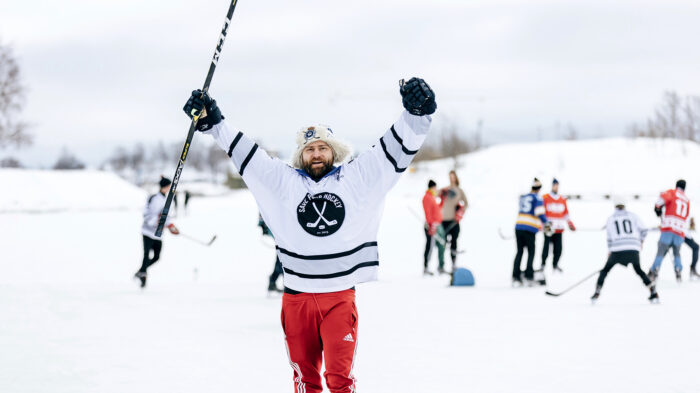
In Finland, there are hundreds of outdoor ice hockey rinks where children learn to play and adults keep up their skills. You can join them and experience playing this fast and exciting sport outdoors. The organisation and movement Save Pond Hockey was established in Finland and is uniting the global hockey community against climate change. The profits from Save Pond Hockey tournaments go to projects that are tackling the climate crisis.

Ice swimming: Dip yourself in icy water

Photo: Aku Pöllänen/Visit Finland

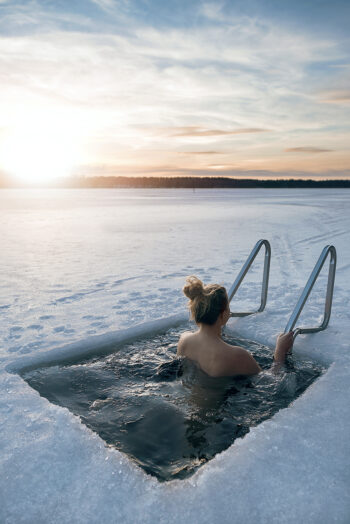
Finnish lakes and the Baltic Sea usually freeze during the winter, depending on weather conditions. Ice swimmers enter the icy water (about 3 degrees Celsius, or 37 Fahrenheit) through a hole in the ice, usually a couple of metres in diameter. Most swimmers spend less than a minute in the water before they head to the sauna. All you need is a swimsuit, a towel, a beanie and a lot of courage. Afterwards, you feel super-relaxed and a bit euphoric. Finland’s first official ice swimming club was founded in 1924 in Helsinki, and ice swimming remains a popular hobby among people of all ages. The clubs make sure that the hole in the ice stays open and the sauna is heated.
Winter surfing: Let the wind be your motor

Photo: iStock

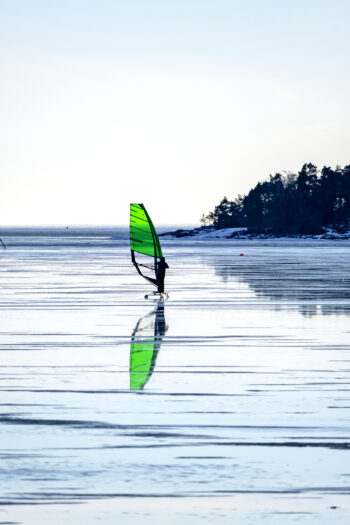
How about wind surfing on an ice surface? No waves, just gliding on solid ice across a lake or the sea. Winter surfing (or ice surfing) is done with a sail and skis, a ski sled or a skate sled. You can book a course and rent the equipment. All you need to bring with you is very warm clothing. What a lovely way to spend several hours on the ice, travelling with the wind.

By Päivi Brink, ThisisFINLAND Magazine 2023

Amos Rex’s Generation triennial spotlights talented young artists in Finland

The third edition of the Generation triennial, Generation 2023 (until August 20, 2023), includes more than 50 young artists chosen from a pool of 1,004 proposals. Many of the artworks came about during the pandemic, when the world as we knew it had ended.

Upon entering, before you have the chance to focus on anything else, a video demands your attention.

On a vertically oriented, rectangular screen, a soundless procession of dozens of human faces rapidly replace each other. The slightly irregular pace yields an effect like a flipbook animation. Each face distorts – features stretch, skin texture changes or colours turn neon – before morphing into the next person.

Resurface your face

A makeup table with bottles and implements on it, and instead of a mirror, a rectangular screen showing a woman’s face.

From Face: to put on a face, to remove a face (2022), by Juho LehiöPhoto: Stella Ojala/Amos Rex

This is Face: to put on a face, to remove a face, an installation by Juho Lehiö (born in 2000). It’s arranged as a makeup table, with a screen in place of the mirror. The makeup option still exists, but recent years have brought another possibility: in the online world, filters let you edit and remake your face.

For some people, that’s more real than their real-life visage. That was the case with one of Lehiö’s customers in his job as a makeup artist, which inspired this piece.

On the other side of the installation, you can sit in front of a similar screen fitted with a camera and try filters on your own face. Looking past Lehiö’s makeup station, another rectangular image beckons from the wall.

Layers that divulge

A painting of a woman showing her head and shoulders, looking down towards the viewer with a neutral expression.

Self-portrait with makeup (2020), by Johanna SaikkonenPhoto: Stella Ojala/Amos Rex

Self-portrait with makeup, a large painting by Johanna Saikkonen (1998), is taller than it is wide. Her head and shoulders fill the frame; if this were a photo, you’d say it was close-cropped. We’re looking slightly upward at her – the angle is reminiscent of a video call.

From afar, the rich, multilayered texture led me to expect thickly applied paint, but when I came face-to-face with the image, that turned out not to be the case. What you do see is the texture of the underlying canvas, the surface of the subject’s skin and the makeup covering that skin.

You can see individual stray hairs and the shadows of those hairs on her forehead. The light is coming from somewhere above her, causing eyeshadow-like circles of shade around her eyes and a shadow from her chin to her collarbone.

Close up to the painting, it’s like being near enough to someone to see that they’re wearing makeup, so that it no longer makes their skin look smooth, but rather divulges that neither skin nor makeup is perfect. The layers of paint don’t correspond exactly to layers of makeup, but they convey the same effect. How’s that for a filter?

A multilayered take on makeup

A large projection of a computer display with a program open shines on a woman so that it almost looks like she is part of the display.

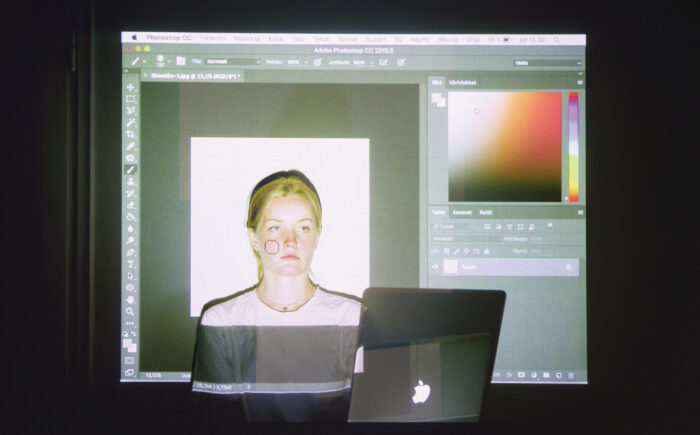
From Filter (2022), by Juulia VanhataloPhoto: Stella Ojala/Amos Rex

In Filter, Juulia Vanhatalo (1999) films herself putting on makeup, but not the way you might think.

The three-minute video is projected onto the wall of a darkened side gallery. In the sequence, Vanhatalo is sitting in front of a wall, in the middle of a projection that shows the display of her own laptop.

She sits with her head and shoulders inside a white square that is a new, blank Photoshop picture. Using the program’s brushes, she superimposes “makeup” over her face, carefully applying colours for base, lipstick and eyeshadow.

In the video, the projection switches to show her phone screen as she opens Instagram and posts the new picture there. We see the makeup with no face behind it. Tapping the picture to enlarge it, she stands and moves into place, matching her features to the picture once again, like putting on a mask. Her eyes swivel before the video ends, gazing into the camera, looking at us.

The soundtrack during all this is the skittering, retro noise of a movie projector, as if to say, Nothing has changed. Or perhaps, Look how far we’ve come. Or maybe, We haven’t come very far. Or even, This is getting so old. We show the world a projection of a projection of a person in a painted mask, but the person and the mask exist separately.

Picking up the pieces

Three photos on a wall show two women in an office coffee room and on the street picking something up off the ground.

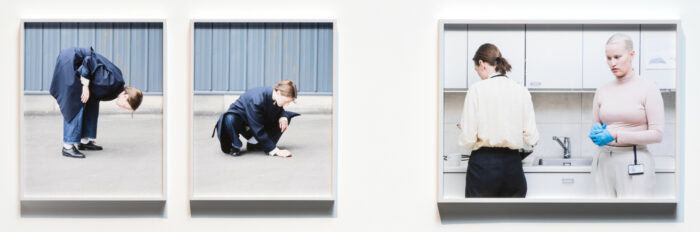
A fragment of Fragment collectors (2021–22), by Olivia ViitakangasPhoto: Stella Ojala/Amos Rex

Fragment collectors, by Olivia Viitakangas (1999), comprises seven framed photographs and a couple of display cases. It documents an imaginary profession: fragment collector (Viitakangas plays that role in the photos, while Liisa Hietanen appears as a trainee, a junior fragment collector).

The installation shows job interviews, contracts, authentic-looking ID badges, an office coffee room and the fruits of the labour: dozens of found glass shards, each in a tiny zip-lock bag and labelled with a number, a date, a colour, measurements, location coordinates and a description (“polygonal crumb, slated, scratched and bruised”).

It’s a tragicomic, deadpan send-up of working life, whether you take it literally or figuratively: worker ants gathering and cataloguing an endless supply of a specific subcategory of miniature garbage. Somebody made a mess, and someone else has to pick up the pieces of broken glass.

Fragment collector is such a great job title – you get the feeling it could really exist. It’s a nice touch that the display cases and photos are covered with panes of glass.

The end of something

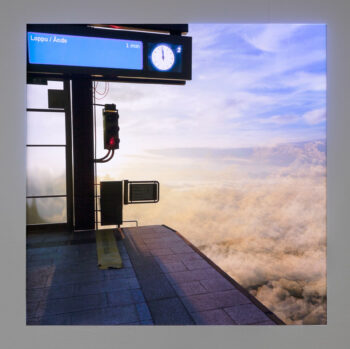
A photo of a typical train platform, but beyond the platform are sky and clouds rather than train tracks.

The End (2022), by Amos BlomqvistPhoto: Stella Ojala/Amos Rex

The End, by Amos Blomqvist (2004), is a digital image, about 80 centimetres (31.5 inches) square, on a screen set into the wall. On a Helsinki metro platform, a display shows that a train will be arriving in one minute. The destination is given in Finnish and Swedish, which are both official languages in Finland: “Loppu / Ände” (End). The hands of an analogue clock say one minute before 12.

There’s just one thing: beyond the platform, where the track and tunnel should be, are clouds and blue sky, as if we’re looking out of an airplane. Viewers stop, waiting for something in the picture to move. People react differently to a glowing screen than they would to a print. We passively stare and expect something to change.

A man with a grey-flecked beard was looking at The End with his daughter, about ten years old, who was wearing a pink sweater. “It’s the end of the line,” he said. The girl asked, “Of what?”

“Exactly – what?” said the man.

“Is it the end of the world?”

“A world, yeah. Whose world? Or maybe just the train.”

“Is that real?” the girl asked.

“I don’t know,” the man said. “It looks real.”

By Peter Marten, June 2023

What’s the deal with the overalls you see university students wearing in Finland?

We’re at Åbo Akademi University in the southwestern Finnish city of Turku.

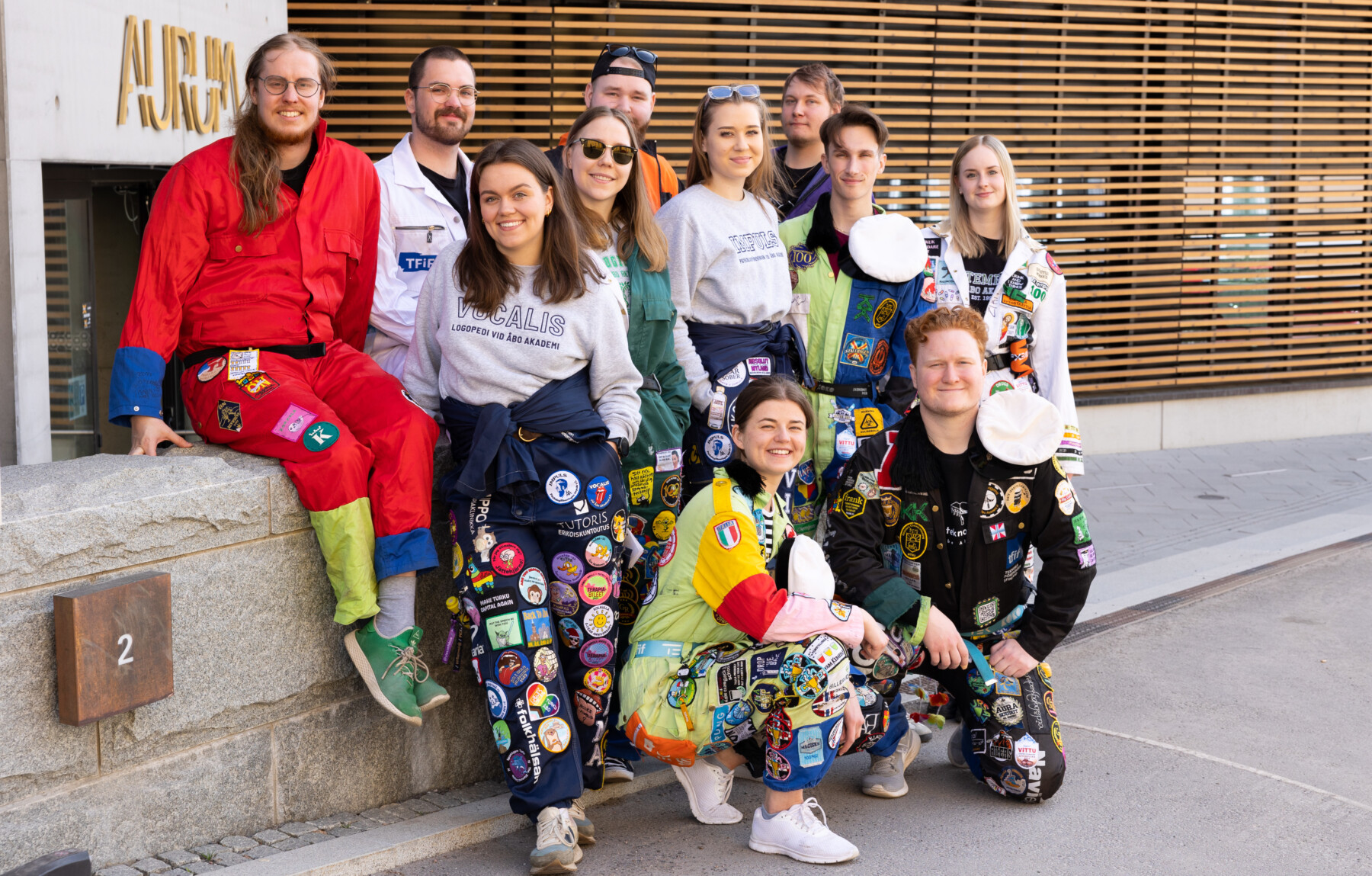
While other people in regular clothes walk by on their way to lectures or lunch, a group of 11 students has gathered at the new Aurum Building to show off their colourful overalls and share their insights about the special outfit. None of them is originally from Turku, and they represent ten different academic disciplines between them.

Students usually acquire the coveted overalls during their first year of studies. The colour depends on the university and the field of study.

“Biology students usually wear green overalls, medical students wear white and computer engineering students wear black ones,” says Jenny Ek, dressed in a dark green outfit. “However, the colours vary throughout Finland.”

The overalls are called haalarit in Finnish and halare in Swedish, which is also an official language in Finland. (Turku also has a Swedish-language name: Åbo.)

Intro to campus life

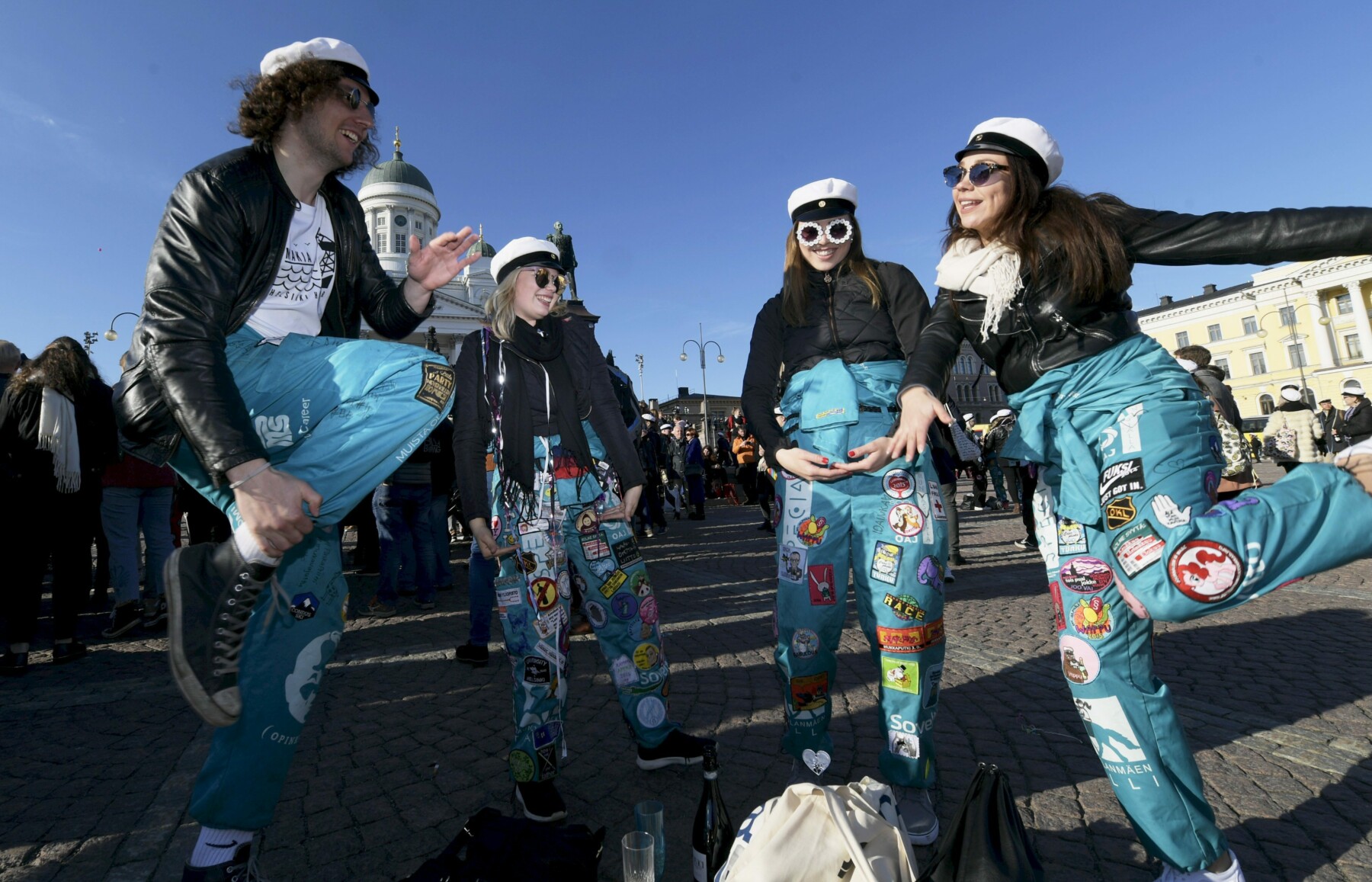
Four people wearing overalls and round white caps are smiling and jumping around, with a church tower visible in the background.

Dressed for a party: These students have donned their overalls to celebrate May Day (known as Vappu in Finnish) on Senate Square in Helsinki. The white high-school graduation caps have their own story.Photo: Vesa Moilanen/Lehtikuva

You’ll see people in overalls at many casual events, especially big ones, where they are the perfect way to recognise other students. They also help you keep warm at outdoor events and picnics if the weather is cool.

“We use the overalls to identify with our fellow groups of students and to show that we are part of the community,” says Julia Latva-Pirilä, a fourth-year pharmacy student.

“At bigger events and school visits, it’s a way of representing our university and our student organisation,” says Cecilia Dahl, who studies chemical engineering and has dyed her overalls a distinctive shade of light green.

Every autumn, the academic year begins with an introductory week for first-year students. It is filled with fun events to welcome the new arrivals and help them integrate into campus life. The older students who host the activities wear specific colours of overalls so the new people can find their way to the right group.

“During that week, each student organisation helps the freshmen order their own overalls,” says Joakim Stewen, a fourth-year computer engineering student.

Personalised memory

Eleven people in colourful overalls pose in front of a university building.

Student overalls are different colours depending on the person’s university and field of study.Photo: Catarina Stewen

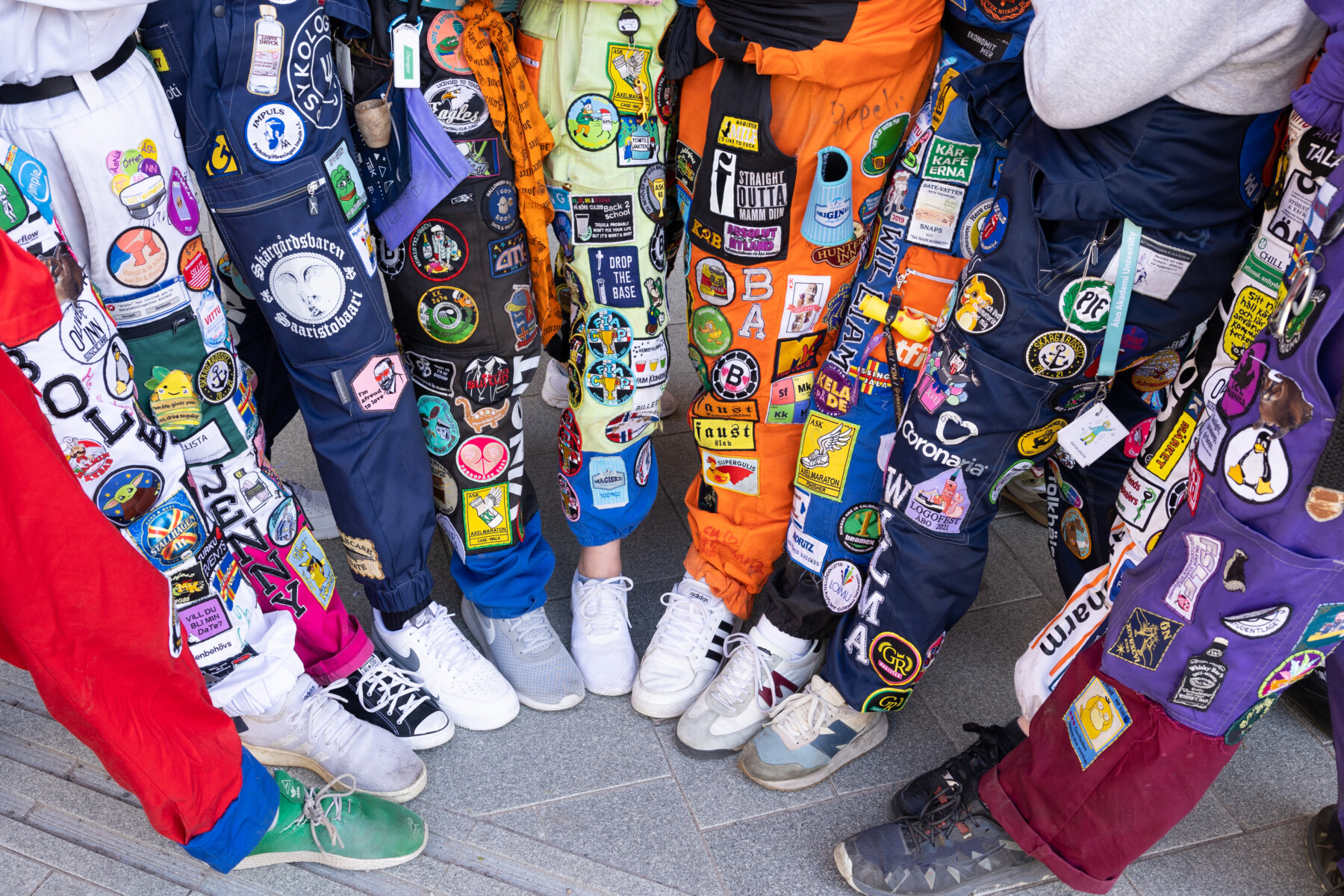
Brand-new overalls are spotless and plain. It is up to the individual students to decorate and personalise them. “The overalls are like a clean canvas you can pour your personality into,” says Vilma Sumelius, who studies psychology.

You usually get patches for participating in student events, then stitch or glue them onto the overalls. Badges promoting hobbies, showing support for organisations or featuring funny messages are also common. You can swap part of a sleeve or leg with someone else’s overalls to add colour and display kinship.

“The overall becomes a cherished memory from your student years,” says William Törnqvist, a chemical engineering student wearing an outfit that is half green and half blue.

Magical confidence boost

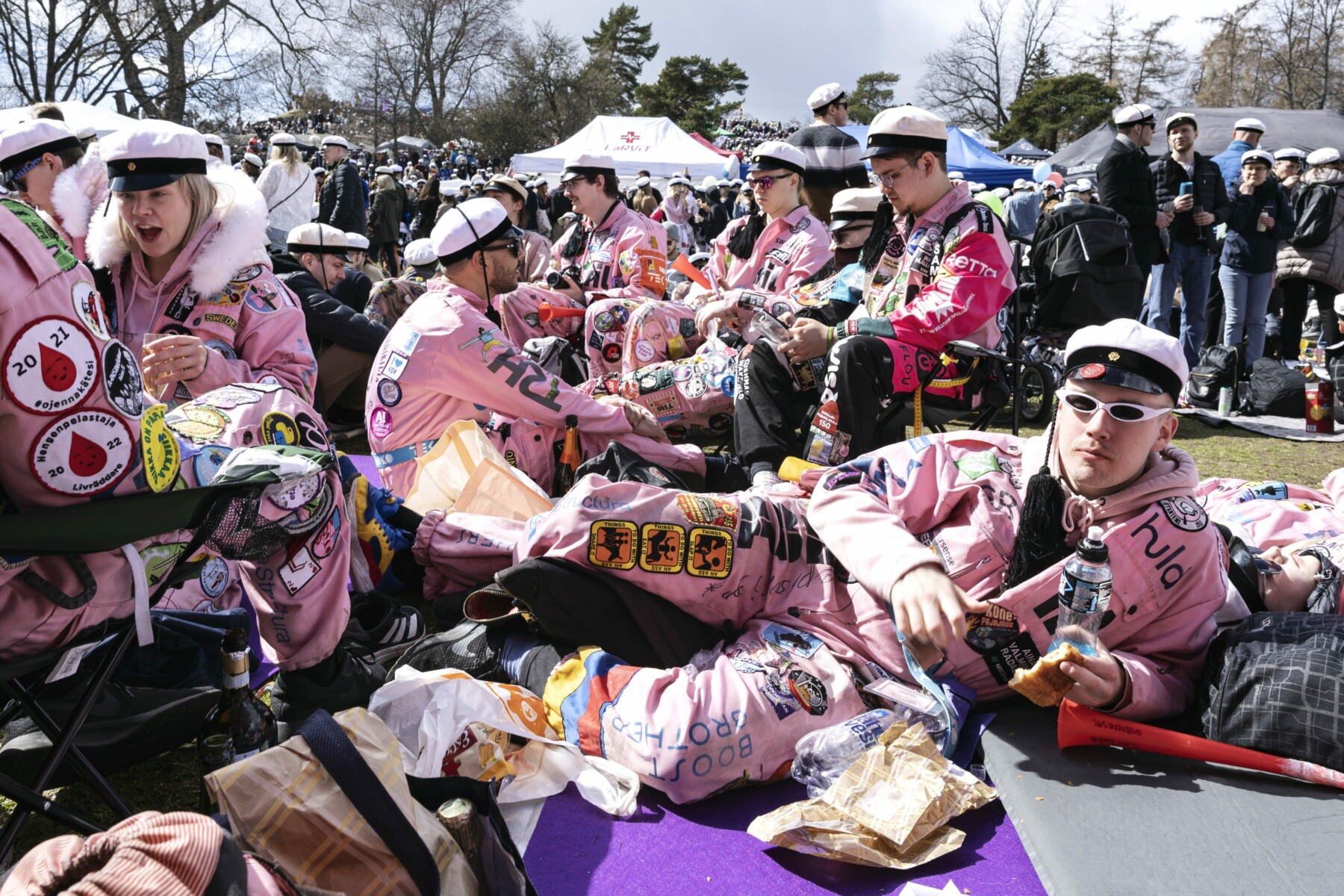
Half a dozen people in pink overalls and round, white caps are having a picnic in a park filled with similarly festive picnickers.

On May 1, which is Labour Day and a national celebration of spring, students in overalls are visible all over the place.Photo: Roni Rekomaa/Lehtikuva

Sewing evenings and inauguration events help freshmen decorate their untarnished overalls and teach certain rules regarding the use. At the same time, these are occasions to socialise, ask for advice and make friends.

Everyone remembers how good it felt to put on their overalls for the first time.

“Wearing the overalls is a magical confidence boost,” says Jesper Öhman, who studies English language and literature. “With your overalls on, you are never alone. It is also a fail-proof icebreaker wherever you go. You can always talk about the overalls, even with people you don’t know.”

Niko Sandberg, a political sciences student, adds, “The overalls symbolise that you are a university student, and that always makes you proud.”

A city full of students

Eleven people in colourful outfits stand in a tight semicircle formation, each with one leg extended towards the middle of the circle.

Students personalise their overalls with patches and other decorations.Photo: Catarina Stewen

With multiple institutes of higher education, Turku is one of Finland’s major university towns. Young adults arrive every autumn from all around Finland and the world to attend one of the universities or polytechnics, and students make up about 20 percent of the city’s population of almost 200,000.

The assembled overall-clad students say that Turku is a great place to study because everything is within walking distance. The abundance of events lets you meet people from new places and make friends with people from other departments.

By Catarina Stewen, June 2023

At a university in northern Finland, international cooperation thrives

The Arctic Centre is Finland’s leading Arctic institute, operated by the University of Lapland in Rovaniemi, just below the Arctic Circle. It is located in the Arktikum building, a local landmark that also houses a science centre and museum.

International cooperation has been an important principle of the Arctic Centre since its beginnings more than 30 years ago. At the time of writing, it has about 50 employees from 11 different countries. Some have permanent positions, while others are visiting for only a few months. The institute also sends people to participate in projects abroad.

Falling in love with Finnish Lapland

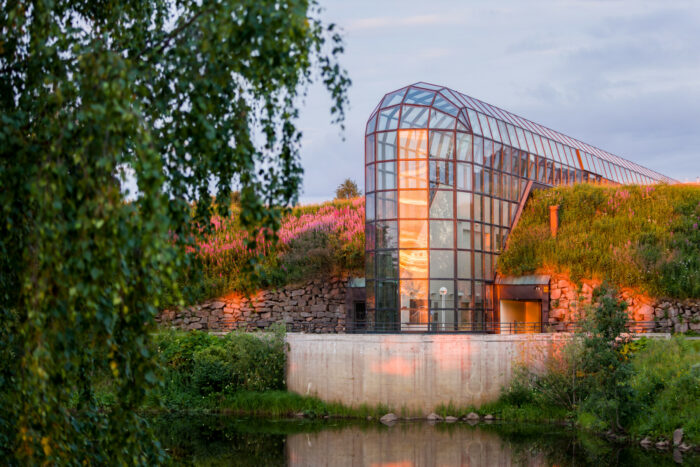
A building whose centre is entirely composed of windows is surrounded by a lush park with green trees.

The atrium of the Arktikum building connects it with Finnish Lapland’s wide-open landscapes, which begin just outside the city limits.Photo: Matti Kantola

When Nicolas Gunslay, now director of Arktikum Science Centre exhibitions, arrived in 1997, some other international staff members were already working there. He came to do fieldwork about the identity and ethnicity revitalisation process of Arctic peoples for his PhD at Strasbourg University.

“The plan was to stay for only nine months, but really soon I realised that I didn’t want to leave,” he says.

The main reason he stayed was the good living conditions. “I really fell in love with Lapland,” says Gunslay. “When I travelled here the second time, I took everything with me: my skis, my bike, my fishing gear – I think I had almost 60 kilograms [130 pounds] of luggage.”

In his opinion, the employees and the whole Arctic Centre profit from the atmosphere of openness he has experienced there. “Every researcher coming from outside of Finland brings his or her own networks,” he says. “You gain one extra person, but a full new network.”

Full of forests – and more

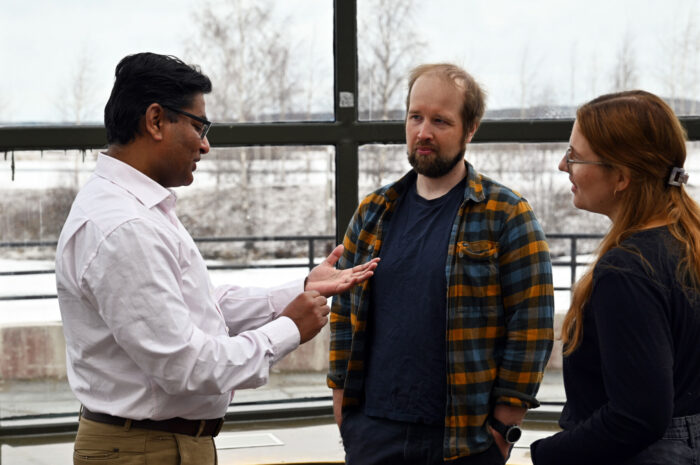
Two men and one woman are standing in front of a large window and conversing.

From left: Kamrul Hossain, Henri Wallen and Katharina Heinrich discuss their plans at Arktikum, where a glass atrium lets in the light and affords a view of the park outside.Photo: Lisa König

Kamrul Hossain, research professor and director of the Northern Institute of Environmental and Minority Law, came to Finland from Bangladesh in the late 1990s.

“I always had a fascination for the Nordic countries, even though I didn’t know much about them,” he says. “The only thing I knew about Finland was that it is full of forests. But my friend gave me a flyer from the University of Helsinki including this application form for an international master’s degree programme and I thought, Why not?”

He studied public international law in Helsinki. Later, he got a job in a somewhat different field: environmental and minority law. He came to Rovaniemi for a four-month position in 2007. “And I’m still here today,” he says.

“I think it is unique how international the work environment here is. We collaborate with scholars from all different countries and continents. English is the primary language at work, even for our Finnish colleagues.”

Close-up view

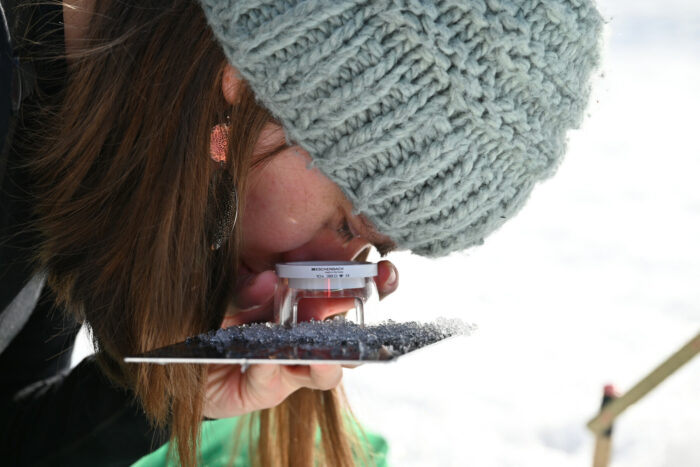
A woman in a winter hat peers at a tray of snow crystals by putting her eye to a lens that is close to the tray.

Marina Falke came to Finnish Lapland to try living in the far north and gain hands-on experience studying Arctic snow, which she says is different in structure from the Alpine snowpack.Photo: Lisa König

There are also short-term visitors, such as Marina Falke from the University of Hamburg in Germany. She came to Lapland for a few months to do snow measurements for her master’s thesis in integrated climate system sciences.

“It is the first time I have seen the Arctic snow type, and the structure is just so different from the Alpine snowpack,” she says. “My supervisor suggested a master’s topic that only included the modelling, but for me, it was important to do fieldwork and to stay in a research unit on site.

“I wanted to do this exchange to see what I am actually working with and to find out if I can picture myself working in Finland in the future.”

One thing she particularly likes at the Arctic Centre is the down-to-earth working atmosphere. “I feel like this is a place where research leaders really look at the people themselves, and not only at what they can achieve,” she says.

Doing what is really interesting

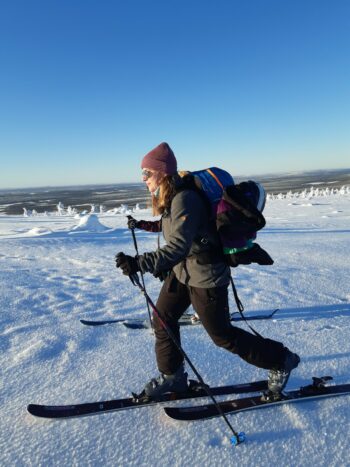
A woman is cross-country skiing on a sunny day, with mountains visible in the background.

For Katharina Heinrich and other researchers living in the northern Finnish city of Rovaniemi, good skiing opportunities come with the territory.Photo courtesy of Katharina Heinrich

Junior researcher Katharina Heinrich, also from Germany, studied economics and management there, then accrued two master’s degrees in Iceland, one in polar law and one in coastal and marine management. Moving to Iceland was a great step, because “it led to me doing what I am really interested in,” she says.

It was kind of a coincidence that she ended up at the Arctic Centre in 2021. She originally contacted a research professor there when looking for a supervisor for a PhD application at the University of Lapland.

“He answered that he could be my supervisor, but also offered me a job for this project where they were looking for someone with exactly my background,” she says. “It is supercool, because I get the chance to experience research work and see if I like it before I start a PhD in that field.”

For Heinrich, it makes sense to research Arctic topics in an international team. “So many countries have an interest in the Arctic – not just the Arctic states themselves.” (The Arctic states are Finland, Sweden, Norway, Denmark, Iceland, Canada, the US and Russia.)

New ideas and perspectives

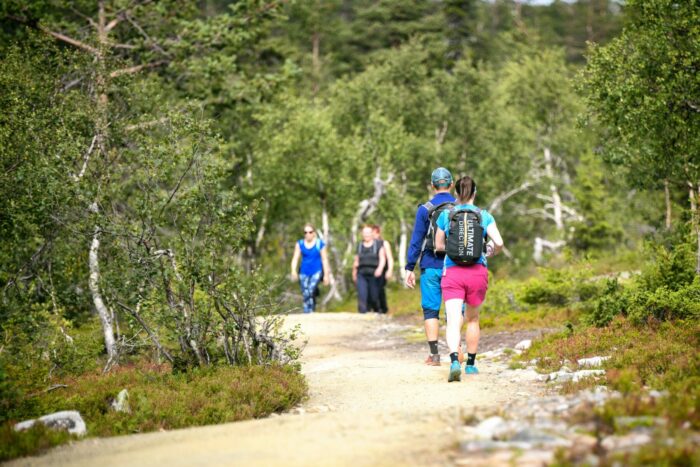
Several hikers in summer garb walk along a trail surrounded by green forest.

Living in Rovaniemi puts you within reach of Finnish Lapland’s numerous national parks, such as Pallas-Yllästunturi, which happens to be Finland’s most popular national park.Photo: Aku Häyrynen/Lehtikuva

Henri Wallen, who is doing his doctoral research, comes from Rovaniemi and is one of the Finnish people working at the Arctic Centre. He joined it in 2015 after finishing his studies in sociology.

“At the moment, I am mainly doing quantitative modelling and analysis for the CHARTER project,” he says. (“CHARTER” stands for CHanges in ARctic TERrestrial biodiversity.) “It’s an EU Horizon project, so it is very international by nature.”

He enjoys the international atmosphere. “People come and go and bring new ideas and different perspectives,” he says. “I guess that is one of the main reasons why things work out well.”

At the same time, Finnish staff members such as Wallen provide roots for the research efforts, since they naturally have numerous connections to the local community and culture.

By Lisa König, June 2023

Lisa König came to Rovaniemi from Germany. During spring 2023, she worked in science communications at the Arctic Centre.