J.V. Snellman: Where would Finland be without him?

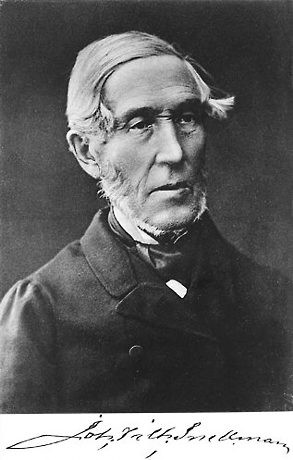
More than two centuries after his birth, Johan Vilhelm Snellman remains one of the most influential architects of Finnish society. Philosopher, scholar, journalist and politician, he came to acquire towering importance for the genesis of Finnish literature, and, ultimately, Finnish national identity.

Johan Vilhelm Snellman was born on May 12, 1806 in Stockholm, Sweden, where his father was a sea captain. After the Russian takeover of Finland in 1808 and 1809, and the establishment of the autonomous Grand Duchy of Finland, his family moved to the Finnish coastal town of Kokkola in 1813. When Snellman’s mother passed away only one year later, he was sent to school in Oulu, northern Finland, where his aunt lived.

Snellman matriculated from school at the age of 16. He then studied at the Academy of Turku, which was relocated to Helsinki in 1828 and became the Imperial University, and received his bachelor’s degree in 1831. During his studies, Snellman became friends with Elias Lönnrot and Johan Ludvig Runeberg, both of whom would have significant impact on his future endeavours.

Fostering national consciousness

An antique black-and-white portrait photo of a man.

Snellman wanted to awaken Finnish national consciousness and stressed the importance of literature in promoting a sense of national identity.Photo: National Board of Antiquities

After finishing his doctoral thesis on Hegel, Snellman was appointed to the post of lecturer at the Imperial University in 1835. As an ardent opponent of Russian rule over Finland, he refused to take orders from the Russian-influenced university directorate on what and how to teach. Eventually, despite being highly popular among students, Snellman was temporarily suspended, in 1838, after a judicial action aimed at increasing the government’s control over dissent among academic personnel.

Consequently, Snellman voluntarily exiled himself to Sweden and Germany in 1839, and did not return to Finland until 1842. It was during these years that his ambitions in academic and political life began to crystallise: he wanted to awaken Finnish national consciousness.

In the mid-1800s, Swedish was the language spoken by the political and economic elite. Snellman believed that increasing the use of Finnish was a way for Finland to avoid assimilation by Russia. He stressed the importance of literature in promoting a sense of national identity.

Until the 19th century, however, there had been almost nothing published in Finnish apart from religious works. This void was eventually filled by the Kalevala, the Finnish folk epic and single most important work of Finnish literature. The book was compiled by Snellman’s friend Lönnrot. Another important publication was The Tales of Ensign Stål, a collection of poems authored by Runeberg. The first poem of the cycle, entitled Our Land, was soon set to music, and later became the national anthem of Finland.

Polemical periodicals

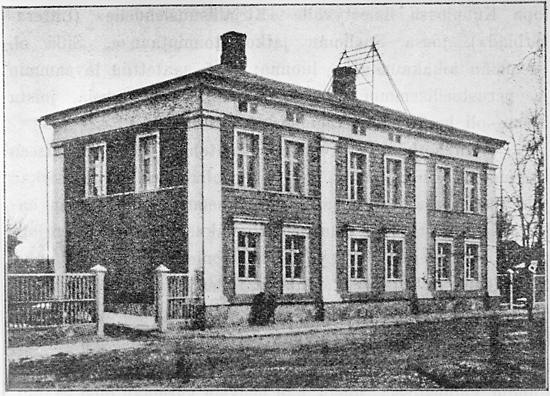
The school in Kuopio, E. Finland, where Snellman taught.

The school in Kuopio, eastern Finland, where Snellman taught.Photo: National Board of Antiquities

When Snellman returned to Helsinki, his popularity had increased further. Nevertheless, he quickly learned that his pro-Finnish opinions and aims did not please the Russian rulers. He was considered a radical extremist, and the political quandary prevented the university from employing him. Snellman thus moved to Kuopio, in eastern Finland, where he became headmaster of a school.

From Kuopio, Snellman began to publish two periodicals. Maamiehen ystävä (The Countryman’s Friend), the only newspaper published in Finnish at that time, was aimed at ordinary Finnish people, to strengthen their national identity and enhance their language skills. The other, Saima, written in Swedish, emphasised the duty of the educated classes to take up Finnish, spoken by 80 percent of the population at that time, and develop it into a language that could be used in academic work, fine arts, statecraft and nation-building.

Saima was regarded as highly controversial, especially by the targets of its criticism, and the government ultimately banned it in 1846. The views expressed in the paper nevertheless remained in public discourse, and Snellman received wide support for his views.

In 1849 Snellman returned to Helsinki, where he was again rejected, this time for a professorship at the University, leaving him and his family in economic hardship until the death of Emperor Nicholas of Russia in 1855.

Man of power

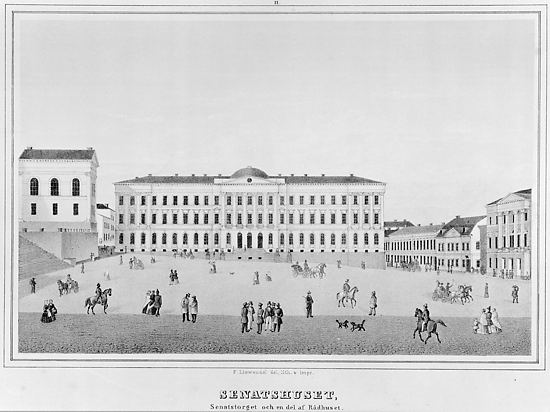
The Senate Building, Helsinki 1851 (half-tone lithograph, F.Liewendal).

The Senate Building in Helsinki in 1851 (half-tone lithograph, F. Liewendal).Photo: Harald Malmgren/National Board of Antiquities

In 1856, Snellman was, to the great satisfaction of politically interested Finns, finally appointed professor. Seven years later, he was nominated for a cabinet post in the Senate of Finland, in effect as the Minister for Finance. As a senator, Snellman was able to pass a language decree that gradually gave Finnish a position equal to that of Swedish within the Finnish government, and thus effectively in the entire country. Moreover, Finland’s own currency, the markka, was introduced in 1865 mainly as a result of Snellman’s efforts.

However, Snellman, now a man of the government, was not able to retain his unparalleled popularity among all Finns. His uncompromising stand on the language issue also contributed to considerable opposition against him. Ultimately, Snellman’s inflexibility and position in the political debate, together with his old reputation as a radical agitator, accumulated too much resistance and antagonism against his person and policies. He was forced to resign from the Senate in 1868.

Eminent statesman

Despite his setbacks, Snellman continued to participate in political debate for the remainder of his life. He was made a nobleman in 1866 and thus acquired a seat in the Nobles’ Chamber in Parliament. Even though Snellman never lost his popularity among his pro-Finnish adherents, he had developed into a highly divisive figure in Finland’s political landscape.

Snellman died in July 1881. His statue stands in front of the Bank of Finland and his picture has appeared on Finnish banknotes. Given his colossal significance in Finnish nation-building, Johan Vilhelm Snellman is regarded by some as the greatest statesman in the country’s history.

By Otto Utti, January 2006

How Mannerheim helped Finland earn its independence

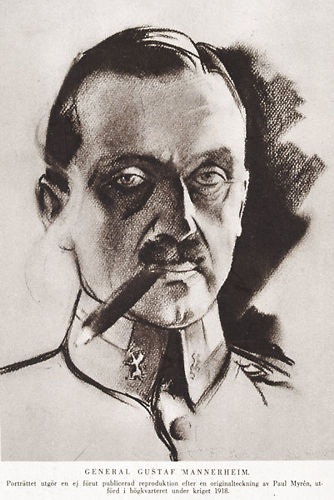
C.G.E. Mannerheim (1867–1951) charted the course of Finnish history and was voted greatest Finn of all time.

He served in the Russian Imperial Army for decades, and later became a war hero in his home country of Finland. He was the symbol of the Finnish struggle against Soviet Russia during the Winter War of 1939–1940. He was hailed as a champion of liberty throughout the Western world during those 105 days of stubborn resistance against a vastly superior enemy.

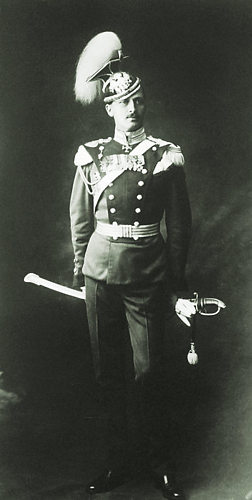
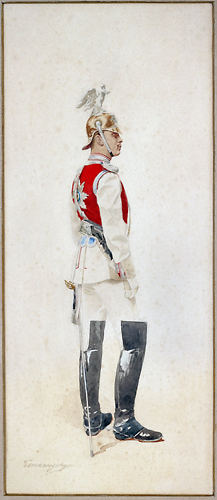
A black and white photo of Colonel Mannerheim in his parade uniform.

Colonel Mannerheim in his parade uniform as commander of the 13th Vladimir Regiment of Uhlans at Novo Minsk in 1909.Photo: Mannerheim Museum

This was not the first time that the stately representative of Finland’s Swedish-speaking aristocracy had been supreme commander in a war against Russia.

The War of Liberation in 1918 – later also called the Civil War – had been fought against Soviet Russia and against its allies, the Finnish “Reds.” And the Winter War was not the last war Mannerheim fought against Russia, either.

The period of combat known as the Continuation War, 1941 to 1944, during which German forces fought alongside the Finnish army, exacted a much heavier toll on Finland and Russia than the Winter War had.

Moreover, during the Continuation War, Finnish forces even advanced into Russian territory with the intention of annexing Eastern Karelia, a region which had never belonged to Finland.

Admittedly, Finnish policy towards the Russians and Finland’s methods of warfare substantially differed from those of the Germans. Finland declined to launch a ground attack or a bombing attack on Leningrad, despite German pressure to do so.

Remarkable career in Russia

A black and white photo of Colonel Mannerheim in his parade uniform.

Colonel Mannerheim in his parade uniform as commander of the 13th Vladimir Regiment of Uhlans at Novo Minsk in 1909.Photo: Mannerheim Museum

Mannerheim spent no less than 30 years in Russia, mostly in Saint Petersburg, serving in the Russian Imperial Army.

During this period he not only reached the rank of lieutenant general and was appointed commander of the Cavalry Corps of the Imperial Army, he was also known personally to the emperor and became a member of his suite.

A black and white photo of the commander-in-chief with his generals and staff watching something with binoculars.

The commander-in-chief with his generals and staff at the Rajajoki (Border River) in August 1941, observing Leningrad and the fortress of Kronstadt. Rajajoki had been the border of Russia and Finland, or more precisely Russia and Sweden-Finland, since the Treaty of Schlüsselburg of 1323.Photo: Gunnar Strandell, SA-Kuva

Mannerheim’s record as a soldier was impressive. He fought for Russia on the battle front in both the Russo-Japanese War of 1904–05 and in the First World War between 1914 and 1917. General Mannerheim was decorated with the St George’s Cross for gallantry and was famous for his military skill and efficacy.

Mannerheim was also an able sportsman whose horsemanship won prizes. This was evidently one of the reasons why he was chosen for the formidable task of undertaking a reconnaissance mission, on horseback through Asia, that lasted two years.

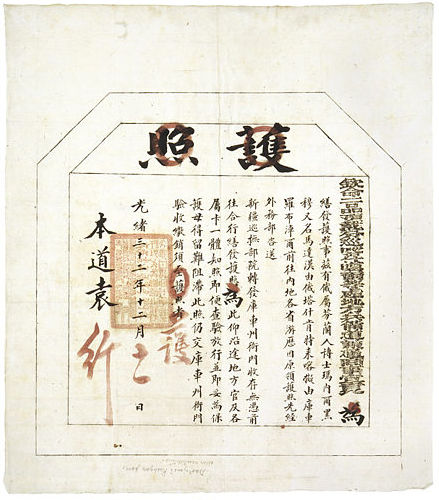
Mannerheim’s passport; old-looking paper with Chinese characters.

Mannerheim’s passport: “Order of the Imperially appointed minister to grant a passport. The Russian consul has stated that this man will come from the Russian-Chinese border to Xinjiang to visit certain localities and to see old monuments. He is to be given a passport and allowed to visit the places that he desires, and in addition he is to be protected. Given as a certificate to the Russian authorities. On the 27th day of the fourth month of the 32nd year of the reign of (Emperor) Guangxu (1906).”Photo: National Board of Antiquities

You could add courteous manners to the list of Mannerheim’s merits. This contributed to the progress of the young cavalry officer in high society and at the imperial court itself.

A non-Russian officer in the Imperial Army was no rarity. In fact, there were thousands of them. Many of these inorodtsy or “non-orthodox” subjects of the emperor serving in the Russian army came from the Baltic provinces, spoke German as their mother tongue and were Lutheran by religion, as was Mannerheim.

Distinctive background

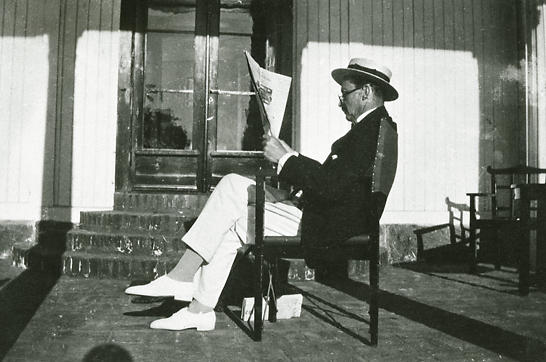
A black and white photo of Mannerheim reading a newspaper on the porch of a villa.

Mannerheim reads a newspaper on the porch of Stormhällan villa in 1926. In 1920, he rented Iso Mäntysaari, an island near Hanko in southwestern Finland. He later bought it and renamed it Stormhällan.Photo: Otava Publishers

However, Mannerheim’s background differed from that of his Baltic brother officers. He came from the Grand Duchy of Finland, which sent more than 4,000 officers to serve in the Russian army between 1809 and 1917. Almost 400 of them reached the rank of general or admiral.

Most of the officers from Finland spoke Swedish as their mother tongue, Finnish being used mainly as a second language, if they knew it at all. Mannerheim’s Finnish before 1917 was far from fluent.

However, in common with the Baltic German officers, the Finnish officers served the emperor impeccably. In fact, there are no records of disloyalty among the Finns, even during the period from 1899 to 1917 when Russia began to pressure Finland by undermining its juridical status. In lieu of disloyalty, some of the officers chose to retire from active service.

Mannerheim did not retire. He remained a faithful soldier even though he privately deplored the emperor’s policies, which he regarded as unwise. Even when his own brother was exiled to Sweden, Mannerheim’s loyalty to the emperor remained unshaken. His relatives understood his position.

Loyalties redefined

A black and white photo of Mannerheim reading a newspaper on the porch of a villa.

Mannerheim reads a newspaper on the porch of Stormhällan villa in 1926. In 1920, he rented Iso Mäntysaari, an island near Hanko in southwestern Finland. He later bought it and renamed it Stormhällan.Photo: Otava Publishers

It was only when the Bolshevik revolution of 1917 crushed the old order that Mannerheim realised his ties of loyalty to Russia had been cut. After the revolution he became a champion of the White Finnish cause.

His loyalty towards his native land was now total and he always respected its democratic institutions even though he was hardly a true democrat by conviction.

Mannerheim’s career in the service of two states is an intriguing story that excites curiosity. To Russians, Mannerheim is above all the cultivated young officer of the Chevalier Guards who stood by Nicholas II during coronation procession.

In Finnish eyes Mannerheim stands tall as the elderly marshal, a man of honour and a fatherly figure whose moral integrity and intelligence could always be trusted.

By Timo Vihavainen, February 2005, updated June 2017

The author is a Finnish historian and professor emeritus of Russian Studies at the University of Helsinki.

Bare facts of the sauna in Finland

How should a visitor to Finland react to the following proposition?

You are invited to take off all your clothes and go to a little room heated to almost 100 degrees Celsius (212 degrees Fahrenheit), where you will sit, naked, with others for a while and sweat. Then you will go outside and jump (still naked) through a small hole in the ice on a lake, the sea or whatever and refresh yourselves in the freezing water – or roll in the snow instead.

In short, “What about a sauna?”

The answer should be simple. Be courageous and say yes – because if you don’t you will miss a deliciously relaxing experience which will provide a vital insight into the culture and mentality of your Finnish hosts.

Saunas have existed in other cultures, but in Finland they have become entwined in the national culture. In days gone by, they were the most practical place to wash during the long winters when there was no hot running water. You can still find people in Finland who were born in a sauna. Not when it was heated up, of course, but it was a sterile place where hot water was available.

It is estimated that there are three million saunas in Finland, for a population of 5.6 million. Big companies and state institutions have their own saunas. The president has an official sauna, as does the prime minister. Saunas can be found in city apartments and country cottages.

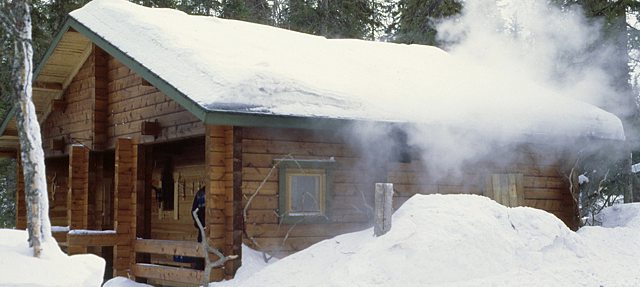
A steaming sauna hut in the snow.

A smoke sauna in winter attire.

Traditional saunas are heated by wood, burned either in a stove with a chimney or in a stove with no chimney. The latter – a smoke-sauna – is the original sauna, and most Finnish people believe it to be the best kind. The door is closed after the wood has burned down (and most of the smoke has escaped), leaving the embers to heat the sauna to the proper temperature, yielding a soft heat and an aroma of wood smoke.

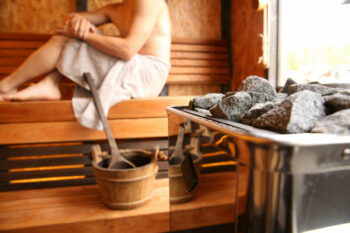
In all saunas, the stove heats a basket or tray of rocks, and you throw water on the stones to increase the humidity. Called löyly in Finnish (for pronunciation, contact your host), the steam increases the feeling of heat and makes you sweat.

Basic etiquette in the sauna is quite simple. You first take all your clothes off – something you have to try not to be shy about. It is considered polite to shower before going in. Otherwise, there are few rules. Stay in as long as you feel comfortable, and return to the sauna several times if you wish.

When you come out of the sauna, jump in a lake or roll in the snow. Or – and this will be the case for most foreign visitors – simply take a shower. But if you do roll in the snow, make sure it is fresh and powdery; old, icy snow can affect your skin like sandpaper.

In summertime, you may also be handed a vihta – a bunch of birch branches that you dip in water and then use to gently hit parts of your body. This is not as weird as it sounds – it stimulates the circulation and gives fresh aroma.

An invitation to sauna from business contacts you have never met before is perfectly normal. If you want to take the initiative yourself, almost all hotels have good saunas, though mostly heated by electricity.

A version of this article was first published in the Financial Times.

Some additional tips for newcomers to the sauna

A person in a towel sits on a bench in a wooden sauna, the stove visible in the foreground.

Photo: Harri Tarvainen/Visit Finland

Allow yourself a reasonable amount of time: the sauna is a place for relieving stress and tension – unhurriedly.

Have a shower before entering the hot room.

Place a small towel on the bench to sit on, both for hygienic reasons and because the bench may feel rather hot.

The temperature in the hot room is a matter of preference but the Finnish Sauna Society recommends from 80 to 100 degrees Celsius (176 to 212 degrees Fahrenheit). Some people, however, are quite happy in 70-degree heat (158-degrees Fahrenheit). What is universally agreed by responsible sauna bathers is that competing to see who can stand the most heat is both silly and unhealthy.

Increase the humidity by throwing water on the stones and after a few minutes of perspiring refresh yourself in the shower or with other clean water. People with heart complaints or high blood pressure should avoid swimming in cold water after leaving the hot room.

If you are enjoying the sauna experience, go back into the hot room to perspire more and whisk yourself with the bundle of leafy birch twigs known in Finnish as a vihta. Use of the vihta, or sauna whisk, is not essential (and you may not be able to obtain one) but it does enhance the cleansing effect of the sauna by opening up the pores.

You can repeat the heating and cooling process as many times as you wish: in Finland most people would have at least two sessions in the hot room. Washing with soap or shampoo is generally part of the sauna routine, usually towards the end of the whole procedure.

Get dressed only after the your body temperature has returned to normal and you have stopped perspiring.

The following words of advice from the Finnish Sauna Society are worth remembering: “Big meals and alcohol should be avoided before the sauna.” However, “the sauna leaves you not only content but also thirsty and hungry.” Then, of course, refreshing drinks should be taken to quench the thirst and restore the body’s fluid balance. What you drink depends on local custom. The Finns usually enjoy a beer – nice and cold.

Box text by Joe Brady

By Mikko Norros

Finnish cuisine – east meets west in Scandinavian style

Finnish cuisine combines international inspiration with seasonal domestic ingredients to create unmatchable dining experiences.

The meeting of east and west in Finland has been a source of wealth for this country’s culinary culture. Ever since the Middle Ages novelties from the west have come to Finland via Sweden, and from the east originally from Novgorod; indeed some have arrived directly from Stockholm and St. Petersburg. For example, the Finnish cold buffet has been influenced by both the Swedish smörgåsbord and the Russian zakuska table. In the early twentieth century, Finnish, German, Swedish and Russian master chefs worked in the kitchens of Finnish restaurants creating food according to the precepts of French cuisine.

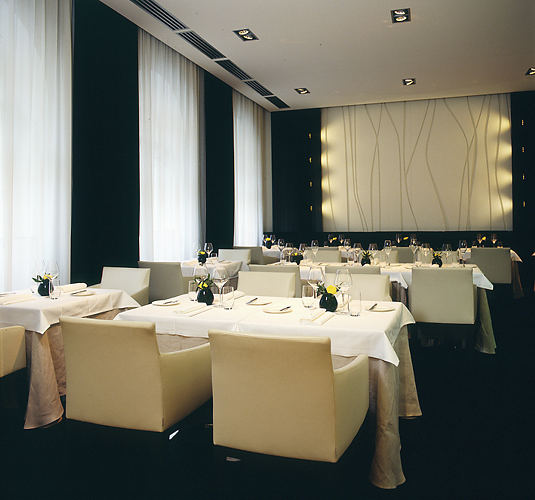
The elegant interior of Chez Dominique.

The elegant interior of Chez Dominique.Photo: Katja Hagelstam

Today gastronomic experiences, inspiration and new ideas are taken from all over the world and then combined and applied to create a truly original Finnish cuisine. The six Michelin stars that have been awarded to four restaurants in Helsinki (Chez Dominique, Demo, Carma and Postres) are an indication of the high quality of restaurants in the capital, the excellence of their personnel and the professional success of their head chefs.

Seasonal variety

Fish, game, forest mushrooms and wild berries – pure ingredients with striking flavours – form the basis of Finnish gastronomic culture, and the four seasons, each with its own food varieties, bring their own contributions. Burbot stew in the middle of winter, blinis and burbot roe at Shrovetide, mämmi (a pudding made from rye flour and malt) and roast lamb at Easter, new potatoes and herring at Midsummer, crayfish in August, game in Autumn and ham at Christmas – each of these dishes tastes best when eaten at just the “right time”.

Plenitude from fresh water and the sea

Fresh fish is available all year round, and it is prepared in a variety of ways. The old recipe for salting – two handfuls of fish and one of salt – seems rather extreme in modern cooking, in which salmon, whitefish and perch are marinated and flavoured only lightly. Steamed zander served with spinach, a timbale of smoked perch with a chervil sauce and pumpkin flower stuffed with minced salmon, and Baltic herrings on a bed of lettuce with French white wine are some of the finest piscine delicacies. In Finnish restaurants, zander, a freshwater pikeperch, is used in many of the classic dishes. It is said that fish that live in cold water taste best.

Game in abundance

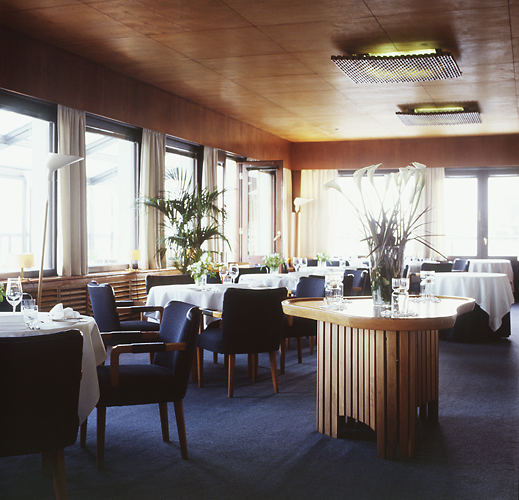
The 1930s décor of the Savoy Restaurant in Helsinki (interior design by Alvar Aalto).

The 1930s décor of the Savoy Restaurant in Helsinki (interior design by Alvar Aalto).Photo: Katja Hagelstam

Reindeer, elk and wildfowl offer excellent and highly appreciated foods. Reindeer hash, made from strips of frozen reindeer meat served with mashed potatoes and lingonberry relish, is one of the best-known reindeer dishes. Cold beer makes a suitable accompaniment for this simple, wholesome fare, while reindeer bundles stuffed with mushrooms and blue cheese are best accompanied with French red wine. Modern executive kitchens serve elk filet stuffed with spinach, apricots and goat cheddar cheese, flavoured with balsamic syrup and topped with Soignon goat’s cheese. The filet is served with sweet potato, Portabella mushrooms, baby fenugreeks and elk sauce. Broiled wildfowl such as ptarmigan and pheasant are seasoned in the homely old-fashioned way with just salt and white pepper.

Mushrooms from the forest

Wild mushrooms go well with both meat and fish. The mushroom season starts in the spring with morels, which are used in soups and stews. The first ceps and chanterelles come out after Midsummer. A warm chanterelle salad, grilled whitefish with a crayfish sauce and a berry tart make a splendid late summer meal. The popular food culture of eastern Finland included russulas, milkcaps and nearly all other edible fungi. In the manors and vicarages of western Finland, on the other hand, only ceps and chanterelles were eaten.

Berries galore

Cloudberry mousse.

Cloudberry mousse.Photo: Katja Hagelstam

Finnish berries – strawberries, bilberries, raspberries, lingonberries, cranberries, cloudberries, sea buckthorn and arctic brambleberries – are mostly aromatic wild varieties. They are excellent in cold puddings, parfaits and ice cream. Indeed, cranberries, sea buckthorn, arctic brambleberries and cloudberries served with ice cream and a liqueur are typical items on the dessert menus of executive restaurants. A delicious cloudberry whip is served with fresh cloudberries and a sauce made with cloudberry liqueur. Frozen redcurrants with a hot butterscotch sauce provide an ideal dessert to follow a main course of reindeer meat. Berries also make excellent garnishes for meat and game dishes. The homely Finnish dish of liver casserole is served with melted butter and a relish of puréed lingonberries. Filet of reindeer is served with morels and cranberries or with a creamy sauce flavoured with lingonberries, and blackcurrant jelly is used to flavour reindeer sauce.

Desserts aplenty

Ice cream has maintained its place as the queen of desserts for a couple of centuries now, although tastes have changed. A hundred years ago, people favoured ice cream flavoured with fresh pineapple, almonds, chestnuts and other nuts. Ice cream with foreign canned fruits and chocolate sauce was regarded as a delicacy in the 1950s. In the present century, wild strawberry ice cream with a garnish of puréed wild strawberries is typically served as a dessert at lunch. The purée of wild strawberries is flavoured with strawberry liqueur and Koskenkorva vodka. Crème caramel is served with vanilla ice cream, and a chocolate flan is accompanied by blackcurrant ice cream, blackcurrant sauce and coffee ice cream sweetened with coffee syrup. Pastries, often made from wheat bread or crumble, tarts and pies are sweets that can also be enjoyed with coffee.

Crayfish – pride of the north

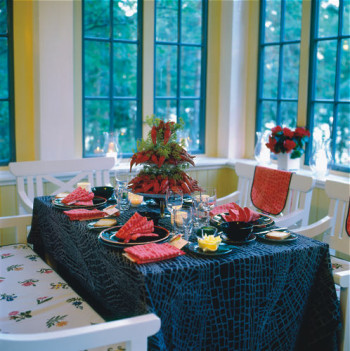
A cheerful crayfish party closes the summer season in festive mood.

A cheerful crayfish party closes the summer season in festive mood.Photo: Katja Hagelstam

The crayfish parties of late summer evenings are an integral part of Finnish culinary culture. In the old days the crayfish was the main item, and these gatherings reached a climax when hundreds of carefully boiled and chilled crayfish accompanied by bottles of ice-cold schnapps were carried to the table, wafting an aroma of dill. Since those days, crayfish parties have become lighter. Today lake crayfish are eaten as a starter, followed by a main course of fowl, for example mallard, and wild berries as a dessert. Crayfish butter and crayfish tails are still used in restaurants all year round. Lake crayfish tails flambéd with cognac, crayfish butter and chopped dill are used to give a final touch to the flavour of crayfish soup.

Popular food culture

Until the mid-nineteenth century, the fare of the common people consisted largely of cereals, fish and milk products; in other words, bread, porridge, salted fish and buttermilk. The meeting of eastern and western cultures is still apparent in the dietary traditions of ordinary folk in Finland. The border between the two is usually drawn by a line running from the Kymijoki river in the south-east to the town of Oulu on the northern coast of the Gulf of Bothnia. Northern Finland belongs to both the east and the west according to what aspects of folk culture are taken as criteria. In western Finland, people ate hard rye bread, in the east soft rye bread, and in northern Finland unleavened bread and barley bread. The buttermilk drunk in the western parts of the country was elastic and smooth, while in the east it was thick and clotted. Previously, cheeses and sausages were only made in western Finland. The traditional leipäjuusto (bread cheese) of northern Finland and Lapland is a round fresh cheese baked over an open fire. It is sliced up, and in the Lappish tradition dunked in coffee to soften it. The softened pieces of cheese are then spooned into the mouth. Doused with cream and served with cloudberries, this cheese is also a typical Finnish dessert.

By Kirsti Grönholm, September 2008

The writer is the Director of the Hotel and Restaurant Museum.

This article is based on the book The Best Kitchen in Town, published by the Finnish Literature Society in 2007

Nobel recognition rewarded former Finnish President Martti Ahtisaari for achieving peaceful resolutions

Diplomat and negotiator Martti Ahtisaari (1937–2023) won the Nobel Peace Prize in 2008 for his achievements in helping to resolve conflicts in Namibia, the Balkans, Aceh and other troubled areas.

Over the years, former Finnish President Martti Ahtisaari helped bring resolution to conflicts in Africa, Asia and Europe. His untiring work for the cause of peace was rewarded with the 2008 Nobel Peace Prize.

Ahtisaari, who served as president of Finland from 1994 to 2000, received more publicity in international affairs than any other Finn in recent memory, rivalled later only by former prime minister Sanna Marin, who was in office from 2019 to 2023. Upon leaving office, Ahtisaari founded Crisis Management Initiative, where he served as chair of the board.

Great reputation

Several men and women in business clothing are sitting and smiling.

President Ahtisaari joined a meeting of the Joint Steering Committee of the African Union Mediation Support Capacity project in Helsinki in July 2017.Photo: Riku Isohella/CMI

Diplomats, journalists and other informed individuals saw Ahtisaari as straightforward, approachable and considerate. He was well liked in the multicultural environment of the UN, by many different nationalities and on many different levels of the organisation’s hierarchy.

Pragmatic, as a good mediator should be, he employed sound Finnish common sense and a clear vocabulary. He could also be tough when necessary, and spoke the truth openly, even if it meant denting someone’s ego.

To make sure all angles are considered, he was known to employ a method that involved giving his aides an issue to discuss, then listening and selecting the ingredients that could be crafted into a successful proposal.

From teacher to diplomat

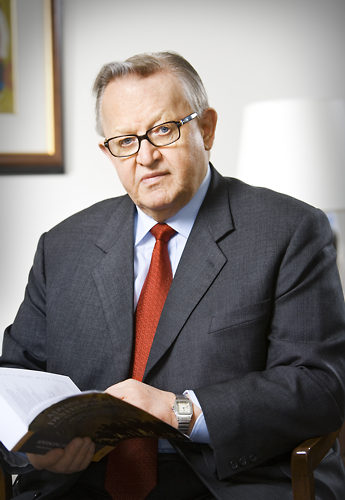
A main in a suit, tie, and glasses, with an open book in his hands, looks at the camera.

Martti Ahtisaari was born in 1937 in Vyborg, which was part of Finland at the time. He was known for his role in mediation for peace in Kosovo, Aceh and Namibia.Photo: Janne Mikkilä/Studio Blick/CMI

Martti Oiva Kalevi Ahtisaari was born in 1937 in Vyborg (Viipuri in Finnish), a town on the Gulf of Finland that belonged to Finland until 1940, when it was annexed by the Soviet Union. After national service in the late 1950s, Ahtisaari became a teacher and worked in schools in Finland and Pakistan.

From 1965 to 1973, he served in the international development cooperation department of the Finnish Ministry for Foreign Affairs. In 1973, he was appointed ambassador to Tanzania, also accredited to Zambia, Somalia and Mozambique.

From then on, in the words of the Norwegian Nobel Committee, he was to “figure prominently in endeavours to resolve several serious and long-lasting conflicts.” In Tanzania he gained a reputation as a specialist in African politics.

At the request of African leaders, the UN Secretary-General appointed him UN commissioner for Namibia in 1977. The following year, he became the Secretary-General’s special representative for Namibia. In announcing that Ahtisaari had won the 2008 Peace Prize, the Nobel Committee noted that, in 1989 and 1990, he played a significant role in the establishment of Namibia’s independence.

Ahtisaari’s role in the Namibian independence process consisted of coordinating the often diverging positions of the UN, South Africa, the Namibian independence organisation SWAPO, the West and the Soviet Union, while forging an agreement that would be acceptable to all concerned. It took many years before all the pieces of the puzzle fell into place.

The Kosovo challenge

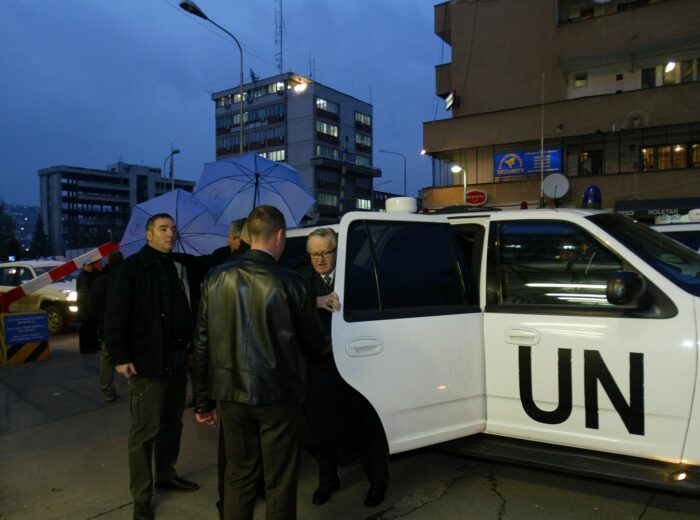
Several people holding umbrellas wait as a man steps out of an automobile marked with the abbreviation for United Nations.

Martti Ahtisaari steps out of a UN vehicle after arriving at UN headquarters in Pristina, Kosovo in November 2005 for a fact-finding mission ahead of crucial negotiations.Photo: Visar Kryeziu/AP/Lehtikuva

In 1999, under notably difficult circumstances, Ahtisaari crafted proposals to resolve conflict in Kosovo. When genocide was under way there, the Nato countries sought to exert pressure on Yugoslavia with an extensive bombing campaign. This did not appear to be enough in itself, and diplomatic efforts were required.

The task consisted of getting the US, its Nato allies, Russia and Yugoslavia to approve an agreement that combined all their minimum demands so that no one would feel they were suffering unduly. This time the challenge lasted only eight weeks, but was all the more hectic for its brevity.

In the autumn of 2005, Ahtisaari again turned his attention to Kosovo. He headed talks on the exceptionally complex topic of the future status of Kosovo.

Assuaging Aceh

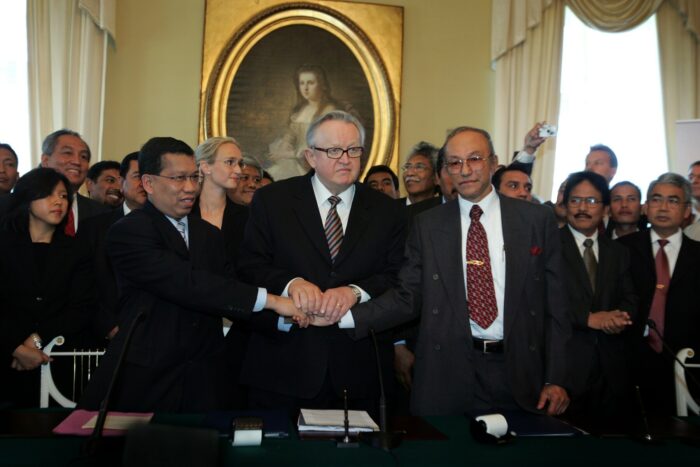
In a stately room, two men are shaking hands, while another man has laid his hands on top of their hands in agreement. In the background is a crowd of dozens of people.

Martti Ahtisaari and his Crisis Management Initiative (CMI) were central to the solution of the complicated matter of the Indonesian province of Aceh’s bid for independence.Photo: Jenni-Justiina Niemi/CMI

The Nobel Committee recalled that in 2005 Ahtisaari and his Crisis Management Initiative (CMI) were central to the solution of the complicated matter of the Indonesian province of Aceh’s bid for independence. CMI was asked to facilitate talks between the Indonesian government and the Free Aceh Movement (GAM).

The first round of negotiations, actually the first face-to-face meeting between the parties since May 2003, took place in Helsinki in January 2005. Subsequent rounds of talks were held in February, April and May.

CMI then prepared a draft Memorandum of Understanding, which formed the basis for a fifth meeting in July. The agreement was signed on August 15, 2005. CMI was also present during the implementation phase.

Several sides to every story

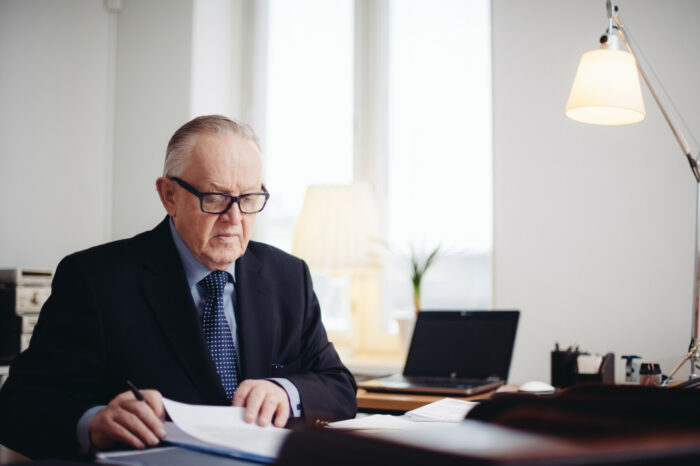
A man in a suit sits at a desk, arranging a stack of papers.

Ahtisaari made significant contributions to settling conflicts in challenging situations all over the world.Photo: Tomas Whitehouse/CMI

Ahtisaari also made exceptional contributions to settling conflicts in Iraq, Northern Ireland, Central Asia and the Horn of Africa. His solutions for international problems were not always to everyone’s liking, of course.

His detractors were particularly uncomfortable with his proposals for the future status of Kosovo. Hinting at such issues, Yuri Deryabin, an eminent Russian diplomatist and former Russian ambassador to Finland, wrote in the Finnish newspaper Kaleva that Ahtisaari had not been awarded the Nobel Prize for the negotiations he had chaired over Kosovo.

Deryabin stated his belief that Ahtisaari had sincerely tried to advance the cause of peace in Kosovo, and added that he doubted whether critics had even read Ahtisaari’s proposals for that area. Ahtisaari had proposed “conditional” independence for Kosovo, which would have guaranteed extensive rights for the Serb minority.

The value of mediation

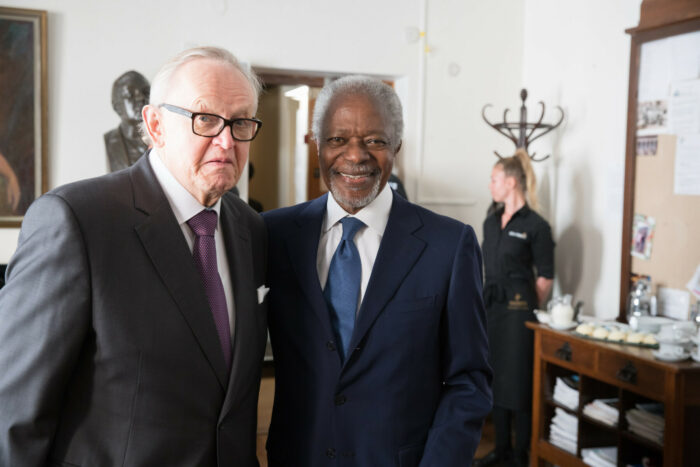
A white man and a black man, both dressed in suits and ties, smile at the camera.

President Ahtisaari and his good friend, former UN Secretary-General Kofi Annan, had a reunion in 2017 at a CMI seminar in Helsinki.Photo: Riku Isohella/CMI

Between the operations in Namibia and Kosovo, Ahtisaari occupied the posts of UN Under-Secretary-General for administration and management, secretary of state at the Finnish Ministry for Foreign Affairs and chair of the Bosnia Working Group of the UN International Conference on the Former Yugoslavia.

He was a member of the board of the New York-based EastWest Institute, as well as a member of the joint advisors’ group for the Open Society Institute and the Soros Foundations, which operate in various countries. He served as chair of the Balkan Children and Youth Foundation and Global Action Council of the International Youth Foundation, as well as chair of the Governing Council of Interpeace.

Until 2003, he was a member of the board of directors of the International Institute for Democracy and Electoral Assistance (IDEA), and until 2004 chair of the Brussels-based International Crisis Group. In October 2008, Ahtisaari was also awarded the Unesco Peace Prize.

Ahtisaari’s Nobel Prize was welcomed in Finland, a country that devotes much brainpower and money to the cause of peace. The Norwegian Nobel Committee referred to him as an outstanding international mediator who showed, through his untiring efforts and good results, the value of mediation in bringing peace to international conflicts.

Martti Ahtisaari died on October 16, 2023, at the age of 86.

By Joseph Brady and Peter Marten, last updated October 2023

A guide to Finnish customs and manners

Finland is an easy country to visit. Finnish customs and manners are clearly European, with only a few national variations, and attitudes are liberal. There is very little chance of a visitor committing fundamental social gaffes or breaches of etiquette that would fatally damage relations between himself and his hosts. Such breaches are viewed by Finns with equanimity if committed by their own countrymen and with understanding or amusement if committed by foreigners. Codes of behaviour are fairly relaxed, and reputations – good or bad – are built up over time as the result of personal actions rather than conforming to norms or standards. It is difficult in Finland to make or break a reputation with a single social blunder.

Finland is a country where considerable weight is attached to the spoken word – words are chosen carefully and for the purpose of delivering a message. Indeed, there are very few other culture-specific considerations that visitors need be aware of. Finns place great value on words, which is reflected in the tendency to say little and avoid ‘unnecessary’ small talk. As the Chinese proverb puts it, “Your speech should be better than silence, if it is not, be silent.”

Identity
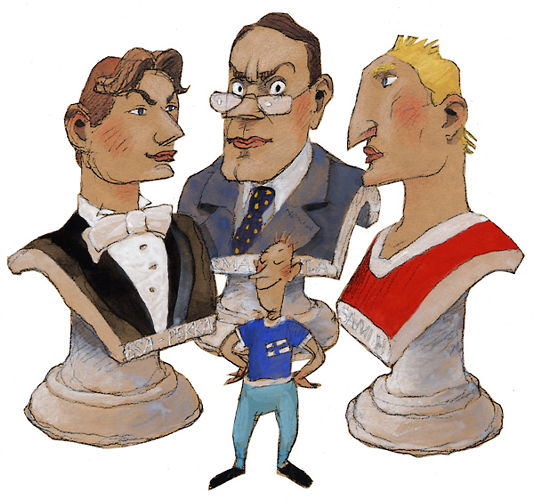
An illustration of a proud-looking man in a Finnish flag t-shirt standing in front of three chess pieces portraying Finnish celebrities.

Finns have a very strong sense of national identity. This is rooted in the country’s history – particularly its honourable wartime achievements and significant sporting merits – and is today nurtured by pride in Finland’s high-tech expertise. Being realists, Finns do not expect foreigners to know a lot about their country and its prominent people, past or present, so they will be pleased if a visitor is familiar with at least some of the milestones of Finnish history or the sports careers of Paavo Nurmi and Lasse Viren. Finns would be happy if visitors knew something about the achievements of Finnish rally drivers and Formula 1 stars, or if they knew that footballers Jari Litmanen and Sami Hyypiä are Finns. Culturally oriented Finns will take it for granted that like-minded visitors are familiar not only with Sibelius but with contemporary composers Kaija Saariaho and Magnus Lindberg, and orchestral conductors Esa-Pekka Salonen, Jukka-Pekka Saraste, Sakari Oramo and Osmo Vänskä. While Finns are aware that Nokia is often mistakenly thought to be a Japanese company, this misconception is viewed forgivingly but with pity. They are proud that Linus Torvalds, the inventor of Linux, is a Finn.

Visitors should also be prepared to encounter the other side of the Finnish national character: Finns are chronically insecure about whether the wider world is aware of the achievements of this northern nation. Finns love reading things written about them abroad, and visitors should not feel uncomfortable being asked repeatedly what they think of Finland. However, although Finns are ready enough to criticize their own country, they do not necessarily wish to hear visitors doing so.

Religion

As far as religion is concerned, there are very few dangers for visitors to Finland, even on subjects that in other cultures might be particularly sensitive. Most Finns belong formally to the Evangelical-Lutheran Church (about 83%), while 1.1% belong to the Finnish Orthodox Church; but people in general are fairly secular in their views. Despite this, the Church and its ministers are held in high esteem, and personal religious views are respected. It is difficult to observe differences between believers and everyone else in everyday life, except perhaps that the former lead more abstemious lives.

Gender

There is a high degree of equality between the sexes in Finland, as can be seen in the relatively high number of women holding advanced positions in politics and other areas of society.

There are numerous women in academic posts, and in recent years visiting businessmen have also found increasing numbers of ‘the fairer sex’ on the other side of the negotiating table. The Evangelical-Lutheran Church of Finland accepts the ordination of women, and there are women priests in numerous parishes. The first female Finnish bishop in the Evangelical Lutheran Church of Finland was Irja Askola, bishop of Helsinki from 2010 to 2017.

Chauvinistic or patronizing attitudes towards women are generally considered unacceptable, although such attitudes do persist in practice. Women do appreciate traditional courtesy, although ultimately they appraise men on the basis of their attitude towards equality. Women are usually independent financially and may offer to pay their share of a restaurant bill, for instance. A man may politely refuse such an offer, but it is equally polite to accept it.

In international contexts, or when using foreign languages, particularly English, Finns have become accustomed to politically correct language in which traditional masculine terms are replaced with gender-neutral ones (e.g. ‘chairperson’); or the third person singular pronoun is offered in both forms (he/she) when they exist. In Finnish the latter problem does not exist. Instead, the third person singular pronoun hän covers both genders. There are also many titles ending with the suffix –mies (man) that are not considered gender-specific. It is appropriate for visitors to follow the established practice of whatever language they are using.

Conversing
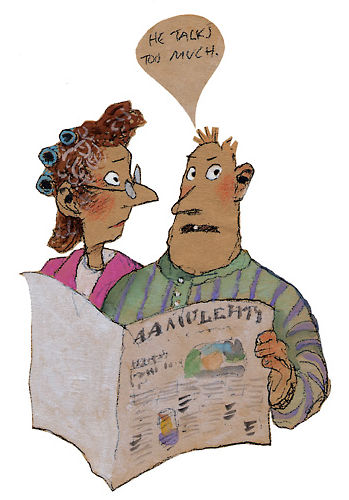
An illustration of a middle-aged couple; the man is holding a newspaper and saying 'He talks too much'.

The conception that Finns are a reserved and taciturn lot is an ancient one and does not retain the same validity as it used to, certainly not with the younger generations. Nevertheless, it is fair to say that Finns have a special attitude to words and speech: words are taken seriously, and people are held to what they say. “Take a man by his words and a bull by its horns,” says a Finnish proverb. A Finn will carefully consider what he (or she) says and expect others to do so too. He (or she) considers verbal agreements and promises binding, not only upon himself but upon the other party too, and he (or she) considers that the value of words remains essentially the same, regardless of when and where they are uttered. Visitors should remember that invitations or wishes expressed in a light conversational manner (such as: “We must have lunch together sometime”) are often taken at face value, and forgetting them can cause concern. Small talk, a skill at which Finns are notoriously lacking, is considered suspect by definition, and is not especially valued.

Finns rarely enter into conversation with strangers, unless a particularly strong impulse prompts it. As foreigners often note, Finns are curiously silent in the metro, the bus or the tram. In lifts, they suffer from the same mute embarrassment as everyone else in the world. However, a visitor clutching a map will have no trouble in getting advice on a street corner or in any other public place, since the hospitality of Finns easily overrides their customary reserve.

Finns are better at listening than at talking, and interrupting another speaker is considered impolite. A Finn does not grow nervous if there are breaks in the conversation; silence is regarded as a part of communication. Finns usually speak unhurriedly, even in their mother tongue (the pace of newsreading on Finnish TV is a source of amusement for many foreigners), and although many Finns are competent in several foreign languages, they may be wary of the speed at which these languages are spoken. Nevertheless, Finns can become excited and voluble, given the right situation.

Having once got to know a stranger moderately well, Finns are quite willing to discuss any topic; generally not even religion or politics are taboo. Finland is one of the world’s leaders in the reading of books and newspapers and the use of libraries, and thus the average Finn is fairly well informed on what is happening in Finland and in the world. Finland’s membership of the EU has increased interest in other EU countries, and the common currency, the status of agriculture and the effects of Community legislation are viable topics of conversation wherever two or three Union citizens come together. Though Finns enjoy bitching about the niggling directives of ‘Brussels bureaucrats’ as much as the next man, in general they seem to approve of EU membership and recognise its benefits.

Shared hobbies are a natural topic for conversation and exchange of opinions in Finland as elsewhere, and it can be easy to strike up a lively conversation with a Finn about culture and the arts on the one hand and about sports on the other. Sports is a particularly feasible topic because in recent years Finns have enjoyed success in sports other than the traditional long-distance running and winter sports: there are now world-class Finnish footballers, racing drivers and alpine skiers, and consequently amateurs and enthusiasts in these fields too. Golf has established itself securely especially among urban Finns, even though they are obliged to abandon this pastime for the winter months. This deprivation is an eminently suitable topic for conversation on the part of a visitor who is familiar with the world of drivers and putters.

Information technology

The now ubiquitous mobile phone is revolutionizing the image of Finnish communication skills. The persistent, supposedly amusing ringing tones of the phones demonstrate how eager people are to talk to each other, especially when they are not face to face. One foreign journalist described a scene that he considered typically Finnish: a lone man sitting in a bar with a beer and speaking into a cell phone. A Finnish version of small talk? Communication without intimacy?

The use of mobile phones is governed in Finland, as indeed in other countries, by a loosely defined etiquette which forbids their use if disruptive or dangerous, so using a mobile phone is completely forbidden on aeroplanes and in hospitals. During meetings it is inappropriate. In pubs and restaurants it may be regarded by many as irritating but it goes on regardless. At concerts, at the theatre and in church it is barbaric and considerate people switch their phones off in those places.

Mobile phones have no doubt changed visitors’ perceptions of Finland. Whereas a few decades ago a visitor might report back home on an uncommunicative, reserved and introvert Arctic tribe, the more common view today is that of a hyper-communicative people who are already experiencing the future that some fear and others hope for: a society where anyone can reach anyone else, no matter where or when.

All over the world, the Internet and e-mail have radically changed how people find information and keep in touch, and Finland is no exception. For young people, using the ever-increasing range of IT applications is commonplace, and it is also an important factor in shaping youth culture. Increasingly, politicians and corporate managers set up websites and maintain personal blogs to comment publicly on their lives and views.

Languages

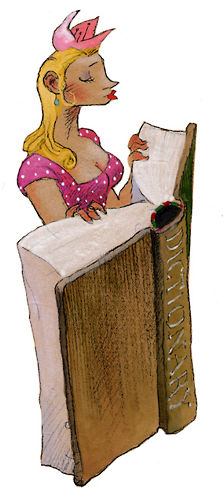
An illustration of a blonde woman in a pink dress standing behind a dictionary almost as tall as herself.

A Finn’s mother tongue is either Finnish, Swedish (5.6% of the population are Swedish speakers) or Saami (some 8,000 native speakers). Finnish belongs to the small Finno-Ugrian language group; outside Finland it is understood (and to some extent spoken) in Estonia. And in Sweden, too, Finnish is spoken among the large number of Finnish immigrants. Finns take care of their linguistic communication by maintaining a wide range of foreign languages in the school curriculum.

English is widely spoken in Finland and in the business community some companies use it as their house language. German is no longer widely taught but many Finns in their 50s or older learned it as their first foreign language at school. French, Spanish and Russian have grown in popularity both in schools and among adult learners. Membership of the European Union and the related practical and social demands have increased the need to study European languages, at least in the case of Finns who travel in Europe on business or are studying abroad.

Educated Finnish speakers, particularly those working in the public sector, speak Swedish to some degree whilst almost all Swedish-speaking Finns speak Finnish too. Only in some coastal areas and in the autonomous province of the Åland Islands is Swedish the dominant language, indeed in Åland it is the only official language. The status of Swedish as the joint official language of mainland Finland can be seen in the bilingual names of public institutions and in street signs, the latter case depending on the percentage of minority language speakers resident in a given municipality, and in the Swedish-language programmes on radio and TV. Swedish-speaking Finns have a distinctive culture, and their social mores are influenced by Scandinavian traditions moreso than amongst the Finnish-speaking majority.

Names and titles

When introducing themselves, Finns will say their forename followed by their surname. Women who use both their maiden name and their husband’s surname will state them in that order. Although Finns are conscious and proud of any official titles they may have, they rarely mention these when introducing themselves. In contrast, they do expect to be addressed by their title in professional and official contexts: Doctor Virtanen, Managing Director Savolainen, etc. Foreigners, however, are not expected to follow this practice, with the exception of the titles “doctor” and “professor” if these are known to the speaker. Otherwise, foreigners can safely address Finns using the English practice of calling them Mr, Mrs, Miss, Ms, Sir or Madam, as appropriate.

The familiar form of address in Finnish (i.e. the second person singular pronoun sinä, as opposed to the formal second person plural pronoun te) is commonly used, not just between friends and acquaintances but among strangers too. It is usual nowadays for people in a workplace to address each other as sinä, up to and including senior management, at least in larger workplaces. Using sinä is common today in service occupations, too, although older people may resent the implied familiarity. However, young people still tend to address middle-aged or elderly people by the formal second person plural if they do not know the persons well.

Although the use of the familiar sinä is common, using first names requires a closer relationship. It is relatively easy to get onto first-name terms with a Finn, especially if it is evident that the parties will continue to meet regularly for business or pleasure. However, it is felt appropriate that the use of first names is specifically and mutually agreed upon. The use of first names is always proposed by the older or more senior person to the junior, or, in the case of equals, by the woman to the man; the agreement is enacted by shaking hands, making eye contact, with each party saying their first name aloud, and nodding the head. Raising a toast with schnapps, wine or champagne lends a festive air to the occasion.

Apart from this, Finns are not nearly as demanding in remembering names as many other people are. It is not usual to address people by name when greeting them (regardless of how familiar one is with them) or in the course of a normal conversation. Addressing by name has trickled into Finnish culture from the American practice, but as nice as it is to hear one’s name spoken, Finns will not be offended if they are not addressed by name.

Businessmen and persons in public office are expected to distribute business cards as a means of ensuring their name and title are remembered. There are no special rituals related to exchanging business cards in Finland. For a visitor, receiving a business card provides a convenient opportunity to ask how a name is pronounced or what a cryptic title might mean.

Greeting

When greeting, the parties shake hands and make eye contact. A deep bow denotes special respect – in normal circumstances, a nod of the head is enough. A Finnish handshake is brief and firm, and involves no supporting gestures such as touching the shoulder or upper arm. When greeting a married couple, the wife should be greeted first, except on a formal occasion where the hosts should first be greeted by the spouse to whom the invitation was addressed. Children are greeted by shaking hands too. Embracing people when greeting them is rare in Finland. A man greeting someone in the street should raise his hat; in the cold of winter, a touch of the hand to the brim of the hat is enough.

Finns can kiss as well as the next nation, but they rarely do so when greeting. Hand-kissing is rare. Friends and acquaintances may hug when meeting, and kisses on the cheek are not entirely unknown, although this habit is not generally found in rural areas. There is no special etiquette regarding the number of kisses on the cheek; however, most Finns feel that three kisses is going a bit far. Men very rarely kiss each other in greeting, and never on the mouth in the manner of our eastern neighbours.

Eating

Finnish cuisine has western European, Scandinavian and Russian elements. Table manners are European. Breakfast can be quite substantial. Lunch is usually eaten between 11:00 and 13:00, a typical lunch break at work lasting less than an hour. The once common long business lunches have shrunk to 90 minutes or two hours. Evening meals at home are eaten around 17:00 or 18:00. In most restaurants, dinners are served from 18:00 onwards. Many restaurants stop serving food about 45 minutes before they actually close, so it is worthwhile checking the serving times when booking a table. Concerts and theatre performances usually begin at 19:00, and audiences adjourn to restaurants at around 22:00.

Restaurant menus and home cooking rarely involve food that western visitors would not be acquainted with. Increased nutritional awareness has made the once heavy, fatty Finnish diet lighter, and the better restaurants can cater for a variety of dietary requirements. Ethnic restaurants, constantly increasing in number, have added to the expanding choice. Beer and wine are drunk with restaurant food in the evening, but at lunchtime these days they feature very little, if at all.

At a dinner party, the host determines the seating order if necessary. The guest of honour is seated to the right of the hostess (or the host, if it is a men-only dinner). This is a seat dreaded by most Finns, since the guest of honour is expected to say a few words of thanks to the hosts after the meal. Guests should not begin to eat until everyone has been served; usually, the host will propose a toast at the beginning of the meal, wishing his guests hyvää ruokahalua, the Finnish for bon appétit! It is not appropriate for guests to drink before this, unless the beginning of the meal is badly delayed.

Finns seldom make speeches during a meal, but they do so on formal occasions. In such cases, the speeches are made between courses. During the meal, the host may toast individual guests, or guests may toast each other, by raising their glasses and making eye contact. Once the toast is drunk, eye contact should be made again when lowering the glass to the table.

A meal normally concludes with coffee and postprandial drinks are served with it or immediately after. If the hosts allow smoking, this is the moment to bring out the cigars and cigarettes, unless of course the host has already allowed or suggested this earlier. When leaving the table, the guests should thank the hosts briefly for the fare when they get the chance, regardless of whether the guest of honour has done so or not.

Drinking
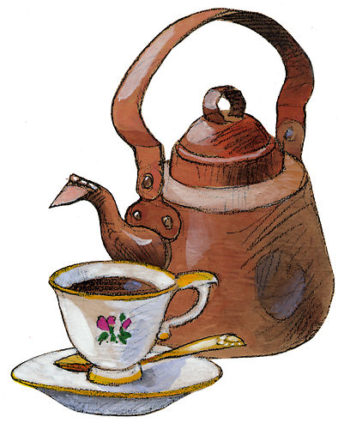
An illustration of an old-fashioned coffee pot and a small China cup with floral decoration.

Finns consume the equivalent of slightly over ten litres of pure alcohol per person per year, which is close to the European average. Drinking habits mainly follow Scandinavian and European practices.

However, consumption of wine and beer, as opposed to spirits, has increased in recent years, and as a result more decorous drinking behaviour has become more common. Consumption of alcohol at lunchtime is less common in the business world than it used to be, and in the public sector it is extremely rare.

Alcohol consumption varies somewhat, according to socio-economic differences and, to some extent, by region. The influence of central European or Mediterranean drinking habits is primarily visible among urban middle class young adults and slightly older Finns with tertiary education.

The import and sale of wines and other alcoholic beverages is largely controlled by the state-owned Alko organisation, and private individuals can only buy alcoholic beverages in Alko shops, with the exception of medium strength beer and cider, which can be bought in food stores. Alko is a major buyer of wines and stocks a wide and geographically representative selection of all qualities, including top labels. Many restaurants import their own wines directly from suppliers abroad.

In households wine is normally reserved for weekend meals, but meals prepared for guests or eaten in a restaurant usually involve wine. Often – and in the case of Swedish-speaking Finns, almost always – a meal is preceded by schnapps, a shot of vodka or aquavit in a tiny glass. This is considered an integral part of cold fish courses, and absolutely essential with crayfish. Swedish-speaking Finns have a custom of enlivening the occasion with a line or two of a drinking song before each shot of schnapps. Big dinner parties have an appointed toastmaster who determines the interval between shots and leads the singing. Finnish-speaking Finns have a less elaborate and less structured drinking etiquette, although there are schnapps songs in Finnish too. Schnapps is usually accompanied by mineral water, or sometimes beer, which is also commonly served with meals. Beer is also used to slake the thirst created by the sauna.

Visitors can approach Finnish drinking customs as they see fit. It is not necessary to drink a shot of schnapps in one gulp even if your neighbour does. So it is enough to raise the glass to one’s lips without swallowing. It is also perfectly acceptable to request mineral water or non-alcoholic wine with a meal. Lunch is usually accompanied by non-alcoholic beverages in any case, and non-alcoholic drinks are usually provided. Abstinence is also supported by legislation; in Finland, the blood alcohol level for drunken driving is very low, and the penalties are severe.

Tipping

Tipping has never fitted very comfortably into the Finnish way of life. This may have originally been due to the traditions of a religion which emphasized frugality; today, the rather blunt reason for not tipping is that the price paid includes any unusual instances of service or politeness i.e. the view taken is that “service is included”. Tipping does nevertheless exist in Finland, and you can feel safe that while nobody will object to being tipped, very few will mind not being tipped.

As a rule, service is included in restaurant bills. However, an extra service charge is often added to bills which are to be paid by a customers’ employers. Those who pay for their own meals and in cash often choose to round the bill up to the nearest convenient figure. This does not require any complicated arithmetic from the customer, as no one cares whether the tip really is 10-15% of the total bill.

Tipping at hotels is fairly rare. If you know that you have caused extra inconvenience for the room cleaner, it would be regarded as an appropriate to leave a tip. Receptionists should be tipped only by long-term guests at the hotel. Like their colleagues across the world, Finnish hotel porters will be glad to be tipped the price of a small beer. It is also OK to leave a few coins on the bar for the bar staff.

Taxi drivers do not expect to get a tip, but customers often pay the nearest rounded up figure to the actual fare. Major credit cards are usually accepted in taxis, and in this case tipping in cash is practical.

If you are the guest of Finnish hosts, you should leave any tipping to their discretion.

Smoking

Smoking has decreased in recent years, and attitudes towards it have become more negative. The law prohibits smoking in public buildings and workplaces and, being generally law-abiding, Finns have adapted to this legislation. Nevertheless, smoking is still quite common, in all age groups. International trends have increased the popularity of cigars amongst a minority of tobacco smokers.

As have many other countries, Finland has banned smoking in most restaurants and other licensed premises completely.

Smokers are expected to be considerate. When invited to a private home, a guest should ask the hosts if they object to smoking, even if there are ashtrays visible. Smokers may be guided to the balcony, which may have the effect of reducing the intake of nicotine considerably in cold weather.

Visiting

The home is to a great extent the focus of social life in Finland – to a greater extent at least than in countries where it is more common to meet over a meal in a restaurant. There are cultural, and also economic, reasons for this. A growing interest in cooking and wines has led to an increase in entertaining in the home. A foreign visitor need have no qualms about being invited into someone’s home; he can expect a fairly relaxed and informal atmosphere, and sending or bringing a bunch of flowers or a bottle of wine for the hosts will be appreciated.

A greater cultural challenge for the visitor is accepting an invitation to one of the innumerable summer dwellings that dot the seashores and lakeshores of Finland. One in four Finns owns a summer cabin, and for many, it is regarded as a second home. Sociologists like to explain that the summer dwelling is a tie that Finns maintain to their rural past; and it is true that many Finns transform into surprisingly competent fishermen, gardeners, farmers, carpenters or foresters when they withdraw to their summer homes.

A guest is not expected to take part in this role-play, at least not actively. On the other hand, he is expected to submit without complaint to the sometimes primitive conditions at the summer residence, since not all of them have electricity, running water, a flushing toilet or other urban amenities Many families consider that even a TV set is incompatible with genuine summer cabin life.

A guest is expected to dress casually but practically when going to a summer cabin. The hosts will have rubber boots, raincoats and windcheaters that are worn as the weather dictates or when going fishing, picking mushrooms or walking in the forest. An experienced guest understands that under these conditions the hosts, particularly the hostess, have to go to a lot of trouble to give the guest an enjoyable stay. Help with routine chores is greatly appreciated: peeling the potatoes or the onions is a job the guest can safely offer to undertake.

The best reward for the hosts is that guests enjoy themselves, rain or shine. As for correctness, it would be polite for a guest to raise the question of departure at breakfast time on the third day, and only agree to stay longer if the hosts protest with particular conviction.

Time and the seasons

Although seasons occur everywhere, in Finland they mark the progress of the year with striking conspicuousness. Extending far beyond the Arctic Circle, Finland enjoys such extremes of temperature and daylight that it would not be too far-fetched to say that there are two cultures in Finland: one dominated by the almost perpetual daylight of the summer sun and surprisingly high temperatures, and the other characterized by mercilessly cold winters and Arctic gloom that only briefly gives way to twilight during the day.

Even though summer comes every year, it is considered so important that virtually the entire country ‘shuts down’ for the five or six weeks that follow Midsummer, which falls in late June. After Midsummer, Finns move en masse to their vacation homes in the countryside and those who do not spend their time out of doors, in street cafés and bars, in parks and on beaches, being social and feeling positive. Business and personal correspondence may be temporarily shelved, e-mails cheerfully return ‘out of the office’ notifications for a month or more, and conversations between acquaintances revolve more around how the fish are biting or how the garden is doing than around important issues of international politics or the economy. It is easy for a visitor to observe that in summer Finns are especially proud and happy to be Finns and to live in Finland, and encouraging these feelings is welcome.

With the advent of winter, Finns close down their summer dwellings, store their boats in dry dock, put snow tyres on their cars, stash their golf gear in the basement and check their skis. Whereas the rural ancestors of today’s Finns whiled away the long winter days in making and repairing tools for summer, their descendants labour in offices to make their country an increasingly efficient and modern high-tech marvel.

Finns are punctual people and, in one sense, prisoners of time. As is the case elsewhere in the world, those holding the most demanding jobs have tight daily schedules; missing appointments can cause anguish. Agreed meeting times are scrupulously observed, to the minute if at all possible, and being over 15 minutes late is considered impolite and requires a brief apology or an explanation. Concerts, theatre performances and other public functions begin on time, and delays in domestic rail and bus traffic are rare.

In general, busy lifestyles have come to stay and a diary full of meetings and negotiations is a matter of pride and a status symbol in Finland rather than a demonstration of poor scheduling. In such an environment, the time allocated for the entertaining of guests is one of the most important indicators of the value attached to the occasion. When a Finn stops glancing at his watch and suggests something more to eat or drink, or even a sauna, the visitor can rest assured that a lasting business relationship, or friendship, is on the cards.

Festivals
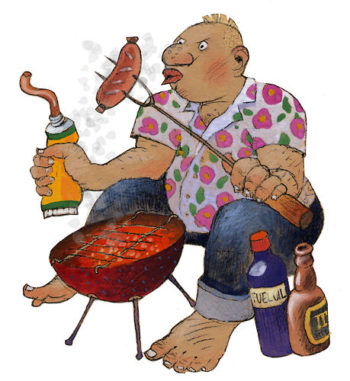
An illustration of a man sitting by a small barbeque grilling a sausage.

Finns like celebrations and Finland’s calendar of official festivals is not very different from that of other European countries. One major difference is that the Protestant Lutheran calendar does not accommodate all the feast days of Catholic tradition. Visitors may find it strange that Finns have calm and serious festivities on occasions that would be boisterous and joyful in continental Europe.

Christmas, and Christmas Eve in particular, is very much a family festival in Finland, usually spent at home or with relatives. Customs include lighting candles by the graves of deceased family members. Finns wish each other ‘Merry Christmas’, but equally often they say ‘Peaceful Christmas’. Christmas Day is generally a quiet day and Christmastide social life does not restart until Boxing Day.

December 6 is Independence Day, an occasion marked with solemn ceremonial observances. It is a day for remembering those who fell in the wars to protect Finland’s independence, which was achieved in1917. In the evening, the President of the Republic hosts a reception for some 2,000 guests – including the diplomatic corps accredited to Finland – and watching this reception on TV has evolved into a favourite pastime for the entire nation.

In wintertime, Shrove Tuesday is just about the only festive occasion where public merrymaking can be observed, though even this is not even a pale reflection of the carnivals held in more southerly lands. Logically enough, the most flamboyant annual parties in Finland occur at a warmer time of year. May Day, internationally a festival day for workers and students, can with justification be described as a northern version of Mardi Gras, and Midsummer – the ‘night of no night’ – is an occasion for uninhibited rejoicing, as for most Finns it marks the beginning of summer holidays and a move to the summer dwelling in the countryside.

The sauna
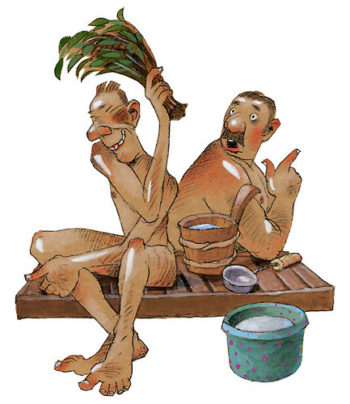
An illustration of two men sitting on a sauna bench, the other man is whisking himself with a bunch of birch branches called vihta.

A nation of five million people with 1.5 million saunas has no need to acquire a formal sauna education – learning to bathe in the sauna comes as naturally as learning to speak. Visitors would do well to have their first encounter with the sauna in the company of a Finnish friend or acquaintance, rather than following a mechanical set of instructions that reduces sauna bathing to a drill by numbers.

In Finland, both men and women bathe in the sauna, but never together except within the family. There are no mixed public saunas in Finland. A visitor hesitant about having a sauna should remember that if it has been heated specially for him or her, it is a matter of pride for the hosts, and only medical constraints are an acceptable reason for not trying it.

Having a sauna is something natural to all Finns, yet people do have their own ways of bathing in the sauna. But Finn would never say to another that he is ‘doing it wrong’. It is a matter of preference. This is a good principle to follow for the visitor too: listen to your own body and follow your own rhythm in moving between the hot room, the washing room and the open air, perhaps including the lake or the sea. It is helpful to follow what others are doing, but avoid extremes: some Finns feel the need to demonstrate their tenacity by sitting in a scalding hot sauna for inordinately long periods. In such a situation, a wise visitor will quietly slip out to consume some liquid and enjoy the scenery. On the other hand, it can be equally rewarding to surrender to unknown rituals with an open mind. The feeling of being slapped on the skin with a bundle of soft birch leaves in the heat of the steam room can be a pleasant therapeutic experience.

The sauna is no place for anyone in a hurry. When the bathing is over, it is customary to continue the occasion with conversation, drinks and perhaps a light meal. A guest’s comments on the sauna experience will be listened to with interest, After all, this is a subject that Finns never tire of talking about.

By professor Olli Alho, November 2002, updated March 2010
Illustrations by Mika Launis
Tapio Wirkkala: Applying the Finnish approach to design

The father figure of Finnish applied art created some of the nation’s most recognisable designs, from household utensils to objets d’art.

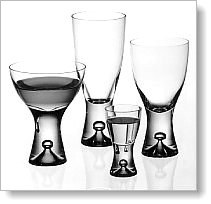
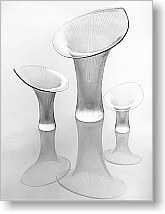
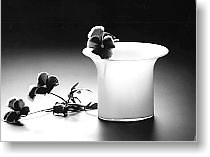
Tapio Wirkkala (1915-1985) rose to world fame in the early 1950s following the breakthrough of Finnish industrial design at the triennial fairs of 1951 and 1954 in Milan. Wirkkala was an exceptionally versatile artist who was not held back in any design project by challenges of scale, materials or conventions.

He is best known as a glass designer although his artistry ranged from postage stamps to a fell-sized landscape memorial, and from a tumbler to a futuristic cityscape.

Wirkkala was an artist in whose work the sources of inspiration evolved into powerful shapes like natural phenomena. The object achieves perfection when the mind and the matter, the idea and its realisation, the form and the function merge. Shape was just not an aesthetic goal or intellectual perception for Wirkkala. It was born of a sensitive dialogue between thought, hand, eye and material.

Inspired work

  Photo: Iittala Glass

Wirkkala’s themes often derived from nature: from leaves, from the swirls of seashells, from the shapes of birds or fish, or more distant observations such as ice formations or the movements of water. Usually his primal emotion is so deeply ingrained in the object created that its origin can no longer be identified or analysed. He also sought inspiration from his travels abroad and from early Renaissance art.

Wirkkala combined art and craft in serial manufacture, when artistic form met anonymous industrial production methods. He bonded Finnish rural simplicity to universal elegance, sensitivity and discernment. He wedded light-hearted experimentation to a sense of high seriousness. His objects feature both a sculptural theme and a scientifically researched functionalism.

Universal appreciation

wirkkala1

  Photo: Iittala Glass

Wirkkala’s artworks and objets d’art are exhibited in the most important museum collections the world over, while his anonymous household utensils have been well-worn in the hands of the Finnish people for decades. His name is so widely linked to luxury objects that few know, for example, that such everyday items as Finnish banknotes and ketchup and liquor bottles are Wirkkala’s creations.

wirkkala2

  Photo: Iittala Glass

Tapio Wirkkala spent long periods abroad, most notably in Italy, Germany and Latin America. His modesty, diligence and professional skill removed barriers of language and culture whether he was working with glass blowers in Venice or traditional silversmiths in Mexico.

Tapio Wirkkala

  • born 2.6.1915 Hanko, died 19.5.1985 Helsinki
  • eminent Finnish designer who contributed to high international reputation of Finnish design
  • the natural environment of Lapland greatly influenced much of his work
  • best-known creations: Finlandia vodka bottles, Iceberg vase, Ultima Thule crystal object.
  • worked for Finnish glassware company Iittala from 1946 until his death
  • won awards at the Milan Triennial (1951, 1954, 1960, 1963), the World Fair in Brussels (1957) and the Domus Golden Obelisk, Milan (1963)
  • awarded the following honorary titles: Honorary Royal Designer for Industry, London, England 1964; Royal College of Arts, doctor honoris causa, London, England 1971; Worshipful Company of Goldsmiths, honorary membership, London, England 1971; Member of the Finnish Academy 1972

By professor Juhani Pallasmaa, March 2009

Libraries: serving an appreciative nation

Public libraries in Finland are a service guaranteed by law. In addition to municipal libraries, there is a network of regional central libraries and university and other academic libraries, together with a handful of special libraries, such as a library for the visually impaired that is maintained by the state. The libraries are inter-networked. This means that the services offered by all libraries are available for everyone living in Finland through inter-library loans. The aim is to place library services within the reach of all, regardless of age, domicile or state of health.

The Library Act lays down provisions on the functions of libraries:

“The objective of public libraries and information services provided by them is to promote among citizens equal opportunities for personal development, for literary and cultural pursuits, for access to knowledge for the acquisition of personal and civic skills, for broadening their world view, and for lifelong learning.”

“Library activities should also aim at promoting the development of virtual and interactive network services and their educational and cultural contents.”

Library services are free for registered users. Extra services such as photocopying, reserving material or dealing with borrowed material returned late may incur a fine that at most corresponds to actual costs. Everyone living permanently in Finland can obtain a library card, both adults and children alike, and many public libraries issue cards to people who are not permanent residents.

The amount of non-printed material available from libraries has increased in recent years. Libraries today acquire proportionally more recordings, videos, DVDs and other electronic material than they do printed books. One result of this trend is that for many, the library has become a source of digitally stored informational and cultural material.

Finnish society has experienced a period of transition and structural change known to many other countries in Europe, namely the movement of large numbers of people from the land to urban areas. Public services in general have shrunk in rural areas. But libraries are an exception due to their statutory position. Their status has remained the same or even strengthened in some cases. In many localities libraries have become important civic meeting places, cultural centres, which people visit for a variety of reasons, apart from borrowing books and recordings.

The network of libraries in Finland have long played a key role in public education and in protecting and preserving the national culture and languages. This is a fact that decision-makers and citizens both realized back in the early days of independence. It explains why funding has been made available for improving libraries and why they are respected as collective property. The materials in libraries and the functions of libraries have changed down the years, but the attitude of the Finnish public towards this cultural institution has remained the same.

Children are taught how to make use of libraries before they’re old enough to go to school and this skill is an asset in the pursuit of lifelong learning. It’s fair to that the Finns love their libraries.

Finnish libraries in figures, 2007:

  • In Finland there are 837 public libraries, 58 institutional libraries (for example in hospitals, and old people’s homes), 166 mobile libraries and one seagoing library that serves residents in the offshore islands of SW Finland.
  • Every Finn visits a library on average 10.91 times a year and borrows about 19 books or other items during the year.
  • There are about 40 million books or other items in stock in Finnish libraries — just under 8 items per resident.
  • The operating costs of Finnish libraries are about EUR 50/resident. The lion’s share of expenditure on libraries is paid by the municipalities. Central government, too, contributes to their upkeep. The government’s library allocation for 2007 was around EUR 110 million.
  • Finland’s first public library opened in Vaasa, on the west coast, in 1794. Establishing and maintaining libraries became the responsibility of local authorities in the early 20th century.

By Salla Korpela, September 2005