Aimo Sori, what’s your name?

Meeting new people from different backgrounds is always exciting, but sometimes you run into unexpected complications – for instance, pronouncing the name of your new acquaintance. Finns are no exception.

The Finnish language in general is regarded as difficult and Finnish names have an exotic ring to them. For example, you introduce yourself to a Finnish woman and it sounds like she responds, “I know.” She might not be saying that she is aware of who you are, but that her name is Aino. Perfectly normal.

Understandably, Mr Aimo Sori (pronounced “I’m oh sorry”) also had a hard time getting his name across initially. But most problems occur with long names including the letters å, ä and ö. Therefore names such as Äkäslompolo or Yrjönen often raise eyebrows and give rise to verbal acrobatics. However, your new Finnish friend will appreciate your effort. At worst, you’ll have a laugh together.

When being introduced, a follow-up question in many countries is about the meaning of your name. Let’s present some well-known Finns and explain what their names mean.

Nomen est omen

It seems as if some people were destined for their vocation the moment they were christened. Weather forecaster and television profile Pekka Pouta is one. To the regret of many Finns and tourists alike, he all too seldom forecasts the type of weather associated with his last name, which means “sunshine”. That of course, is not his fault, but an occupational hazard of working in Finland.

Mika Ihamuotila, the chairman of leading Finnish clothing and textile design company Marimekko, has been dubbed Mr Marimekko by Finnish media. Probably a name and a title to his liking, but his surname already contains the word “muoti”, which means “fashion” in Finnish. He used to be a banker, but perhaps he was driven by his fateful name to buy a controlling interest in Finland’s famous fashion house.

The kindest man and the fastest man

Most Finns were proud, and with good reason too, when former Finnish President Martti Ahtisaari was awarded the 2008 Nobel Peace Prize. Interestingly, in contrast to his nonbelligerent nature, Ahtisaari’s first name actually means warlike. It can be traced back to the Latin name Martinus, which in turn is linked to Mars, the god of war.

What about Ahtisaari’s surname? “Ahti” is the sea god in the Finnish national epic Kalevala, and “saari” is Finnish for “island”. So the name of the current Nobel Peace Prize holder can actually be loosely translated as “Warlike, from the island of the sea god”. A patriotic Finn could try to excuse this juxtaposition between character and name by noting that Ahtisaari’s grandparents were Norwegian and changed their surname from Adolfsen to Ahtisaari in 1929.

Nicknames can describe a person’s career or maybe even character. Finnish Formula One star Mika Häkkinen is called “Häkä”, a diminutive of his surname which also happens to mean carbon monoxide, a waste gas produced by engines. His compatriot Kimi Räikkönen, however, is called “Räkä.” Räka means “snot” and might refer to his childish looks and unapologetic behaviour.

Trying to pronounce Finnish names just adds to their charm. But sometimes even a Finn is left wondering if there might be a hidden meaning behind all those ä’s and ö’s.

By Jens Alderin, April 2009, updated July 2015

Clean claim to fame in northern Finland

Here’s how one enterprising storekeeper in Lapland is devoting his energy to sustainable development.

If you needed beer or booster cables in the village of Äkäslompolo, near the Ylläs ski resort in Finnish Lapland, Jounin Kauppa (Jouni’s Store) was where you went to find them. Overrun with tourists in winter and sleepy in summer, the shop’s narrow aisles always had shelves piled high with everything you’d expect to find in a general store – and then some.

“A few years ago, we started to notice how we were running out of space,” says 30-something Sampo Kaulanen, the third generation of store managers since the original Jouni opened a small shop in the basement of his home in 1950. Back then, the story goes, there were less than a dozen homes in the village. Now, at the height of ski season, the population swells from 400 to more than 20,000.

Illuminating the darkness

Jounin Kauppa has also expanded, into a 5,894-square-metre hypermarket complete with café, liquor store and beauty salon. Where the old shop stood, visitors are now confronted with a shiny new strip of businesses, names illuminating the winter darkness.

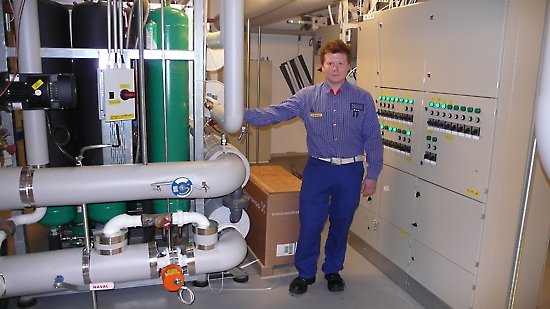
Sampo Kaulanen researched and commissioned a unique, sustainable combination of energy sources for his 5,894-square-metre store in Finnish Lapland.

Sampo Kaulanen researched and commissioned a unique, sustainable combination of energy sources for his 5,894-square-metre store in Finnish Lapland.Photo: Carey Toane

But it’s what you can’t see that makes it remarkable: Jounin Kauppa is the first and only store in Finland with a heating and cooling system that runs entirely on clean, renewable energy. If you’ve ever been to Lapland in the wintertime, you’ll realise that energy accounts for a large part of the cost of operating a business.

“With an architect we were planning how to expand the old shop, but it was impossible because the old building was just so small, and the parking lot too,” says Kaulanen. “So we started to think of a completely new building, and that’s when I got the idea that it should be as high-tech as possible. And it was also that I just like doing things a little differently.”

Pays its own way

Kaulanen studied various heating and cooling systems and ended up with the only building of its kind in the country, using a combination of geothermal energy for heating and lighting and carbon dioxide for cooling refrigerators and freezers. All power sources are managed via one fully integrated system.

During peak times, additional energy is pumped from 15 heat wells drilled into the rock beneath the shop, which also power air conditioning. During off-peak times, surplus energy is stored for later use. This keeps the condensate heat from the cold equipment at a low level and minimises the amount of additional energy that has to be bought from the grid.

The total renovation cost 13.5 million euros, which Kaulanen anticipates will be recouped soon. After that, the next stage is a combination of solar and wind energy to remove the last dependence on fossil fuels, making the building self-sufficient and 100 percent emission free. “This is what I can do for more sustainable development, to help change things. Second, this is an investment that’ll pay for itself in the long run, though it’s quite a bit more expensive to build.”

What do the locals think of this latest claim to fame for Äkäslompolo? “I don’t know,” says Kaulanen. “I guess they’re kind of amazed.”

Link

By Carey Toane, March 2009, updated January 2014

A gem of nature in southeastern Finland

Repovesi National Park is an outstanding success story of nature conservation. It is the embodiment of all that is best in the backwoods of southern Finland, yet it lies just a couple hours’ drive northeast of Helsinki.

Here you will find pine-covered rocky outcrops, sheer cliffs, lush fertile hollows, limpid pools, expanses of open lake water and a plenitude of wildlife. It wasn’t always like that.

The Repovesi area was once a site for intensive commercial forestry but now it is a nature reserve free to revert to its primeval state. It is already an area of copious biodiversity. It is also easily accessible from population centres, a mixed blessing that accounts for its growing recreational role.

The process by which Repovesi National Park was created is worth a mention for it had a touch of wisdom and generosity by no means commonplace in environmental matters.

A crucial step was the decision of the UPM-Kymmene Corporation, a forest industry giant, to donate some 600 hectares of land to the state and to place a nature conservation order on another 1,200 hectares of its own adjacent forests for use in the same way as the National Park.

Repovesi thus became the first nature conservation project in Finland jointly midwifed by the private and public sectors. The public player, in the form of the municipality of Valkeala, had been developing the Repovesi reserve since the early 1980s, marking out hiking routes and providing resting places, information display boards and landing stages for small boats.

It goes without saying that the big challenge facing the reserve will be handling a growing, year-round stream of visitors all possessing the right and the freedom to enjoy the wilds to the full. This will require of them a personal sense of responsibility and respect for nature.

In a sense, Repovesi and all such places have the backing of the Finnish Constitution, which states that the environment is the responsibility of all. That’s a conviction emphatically appropriate in such precious and vulnerable territory.

By Joe Brady, April 2004
Photos by Lassi Kujala

Finland’s weather and light

“Weather notes”:

Summer warm and fair, rain ample, nature green
Winter snowy in the north; Northern Lights shine through Lapland nights
Autumn forests aglow with tinted foliage
Spring brings in the thaw; Lapland alone keeps its vernal snow for winter sport

In Finland the weather can vary greatly during one day, first sunshine, then rain. Rapid changes in the weather are a characteristic feature from one day to the next. In the winter troughs of low pressure that have formed over the North Atlantic bring mild, cloudy and wet weather on southerly and southwesterly winds. The hottest weather in the summer, on the other hand, generally comes from the southeast, bringing thunderstorms and heavy rain showers.

As far as tourism in Finland is concerned, the weather both in summer and winter has its own exotic attraction. Autumn and spring are short and the weather in those seasons has its own beautiful features reflected by the natural surroundings. The striking tints on the leaves in Lapland in September are particularly splendid. The rich colours of the autumn last a week or two, their timing varying from year to year. Leaves obtain their colourful tints after a few nights of frost. Once these colours fade away in the north, they reappear quickly in southern Lapland. Elsewhere in Finland the period of autumn foliage occurs during September and October. In March and April the spring snow in Lapland glistens under the plentiful sunlight, a magnificent time for a winter holiday.
Because of our northern location and because nights are light from the end of May to the beginning of August there is daylight in summertime around the clock across the whole of Finland. Lapland, north of the Arctic Circle, has “nightless nights” in the middle of the summer, when the sun does not sink beneath the horizon at all. This period starts at the end of May and continues to mid-July. In the far north of Lapland the nightless nights last from May 17 to July 27.

In the middle of winter, in contrast, daytime is very short. In the south of the country daylight in December lasts only for 6 hours. In northern Lapland a period of darkness prevails at that time, with the sun not rising above the horizon at all. In the far north of Lapland (69-70 °N) the sun stays below the horizon for the whole of December and the period of gloom does not end until January 16. But in Sodankylä (67.3 °N) the sun is below the horizon only for a few days around Christmas.

In the middle of winter it is memorable to experience the dawning of a day on the southern sky around noon. Clear weather allows one to see outdoors for a few hours, but soon the darkness takes over. However, when the sky is clear, it is not pitch black. A layer of clean white snow increases the brightness by as much as 80%, because artificial lights and moonlight are reflected off it. It is only completely dark when very thick cloud covers the sky and there is drizzle or mist.

Moonlight provides its own splendid atmosphere on the fells, not to mention the glowing of the Northern Lights in the grey-blue sky. The period of grey is really long throughout the country in the winter, 1.5 hours before dawn and the same duration after sunset. On clear days the beautiful, blue-tinted grey can be enjoyed for a long time, much longer than in central and southern Europe.

1. Location determines weather and climate

Finland is situated right in the far north, between latitudes 60 – 70 °N. At similar latitudes in other parts of the world, such as Siberia and Canada, it is much colder than in Fennoscandia. In the autumn and winter in particular the weather in Finland is dominated by troughs of low pressure that form over the North Atlantic and usually come to Finland from the west or southwest. As far as weather coming from the Atlantic is concerned, Finland is situated behind the Scandian mountain range, which separates Norway from Sweden. Both the Scandian mountain range and the landmass of southern Scandinavia reduce the effect of storms and rainfall before they reach Finland. Conversely, Finland is quite close to the Arctic Ocean, from where the northern winds bring cold, although clear and bright, freezing weather in winter.
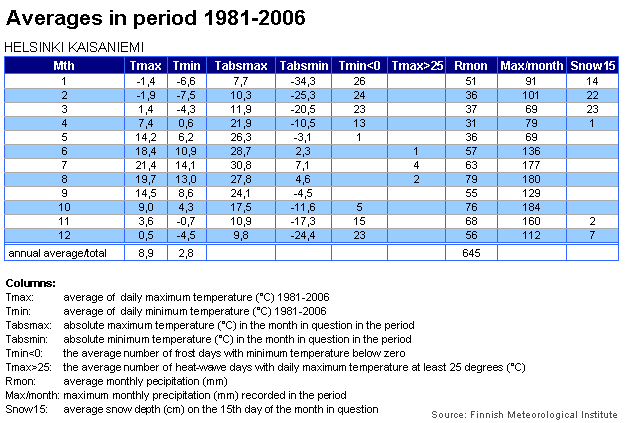
A table showing Helsinki weather statistics between 1981 and 2006.

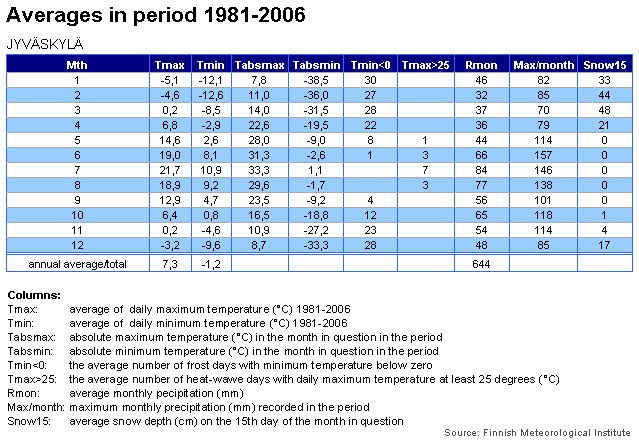
A table showing Jyväskylä weather statistics between 1981 and 2006.

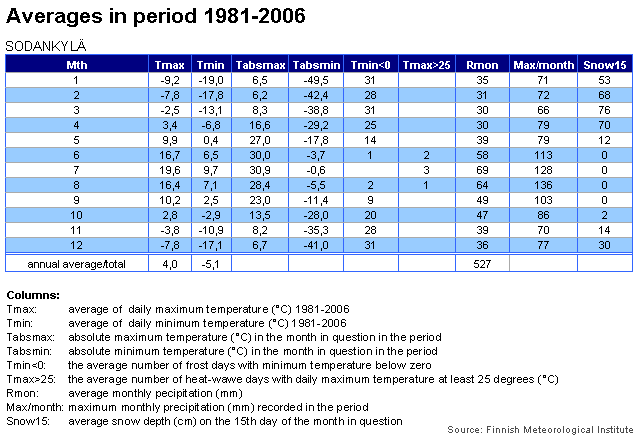
A table showing Sodankylä weather statistics between 1981 and 2006.

In summer Finland receives doses of cold air from the north and northeast. The cold air first arrives in Lapland, from where it spreads rapidly to central and southern parts of the country. Sometimes in January or February continental winter high pressure that has formed in Siberia moves westwards and brings dry but icily cold weather to Finland, especially the eastern part of the country as well as Lapland.

Finland’s northern location and the closeness of a big ocean can be clearly seen in the climate statistics (tables for a number of localities for the period 1981-2006). They show the weather statistics at both average and record values. You can make comparisons with the climate of your own country.

2. Summer weather
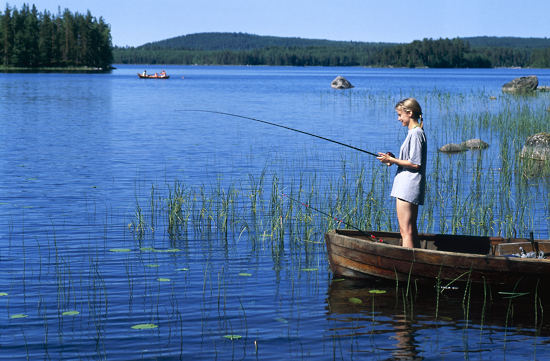
A girl standing in a boat fishing on a clear blue lake.

© Finnish Tourist Board

The climate is becoming warmer all over the world, including Finland, where in the 2000s summers have often been warmer than usual. Hot spells are more frequent and they last longer. In Finland, days when the highest temperature is above 25 degrees Celsius are recorded as hot days. Some increase in summer rainfall is also expected. The summer rains accumulate from numerous showers. Spells of dry summer weather with no rain are likewise forecast to become longer.

Hot and record-dry summers or comfortably warm summers with heavy rainfall have been experienced in Finland for more than ten years. The last cool summer occurred in 1998.

Although in the long term Finnish summers will become warmer, the weather will still vary greatly; during daytime the sun will shine and showers, accompanied by thunder, will moisten the ground.

Summer temperatures

In summer, even after a chilly night, the temperature in the morning rises to between 10 and 15 degrees Celsius, and the weather warms quickly towards the afternoon. From the Midsummer festival (around June 24) to mid-August afternoon temperatures are typically between 20 and 23 degrees, and in Lapland, too, they are often about 20 degrees. Sometimes cool air spreads from the Arctic Ocean over the whole country. Then the temperature is only 10 – 15 degrees in Lapland during daytime and 15 – 18 degrees in southern and central parts of the country. On cool days it is also often cloudy for part of the day.

Sometimes in summer tropically warm humid air reaches Finland from the southeast or south, raising the daytime temperature to close on 30 degrees or more. Heavy thunderstorms with pouring rain often occur on such days. Sometimes continental high pressure from Siberia moves westwards in summer, bringing very dry, hot weather to Finland. The highest summer temperatures in Finland during the 2000s have varied between 30 and 33 degrees.

In Finland a day is called hot when the afternoon temperature is at least 25 degrees. This criterion was met in June 1999 (22 hot days), July 2003 (27 hot days) and August 2002 (26 hot days). Even at the beginning of September such temperatures are recorded occasionally in southern Finland.
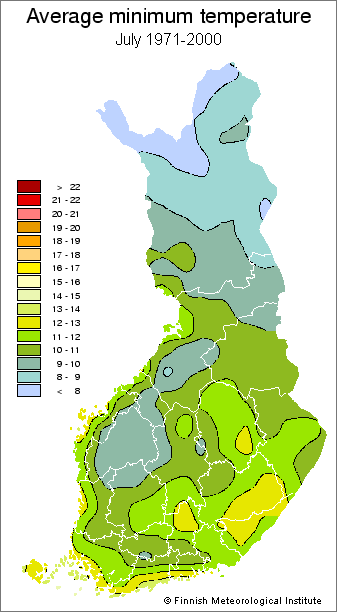
A map showing Finland's average minimum temperature in July during 1971-2000.

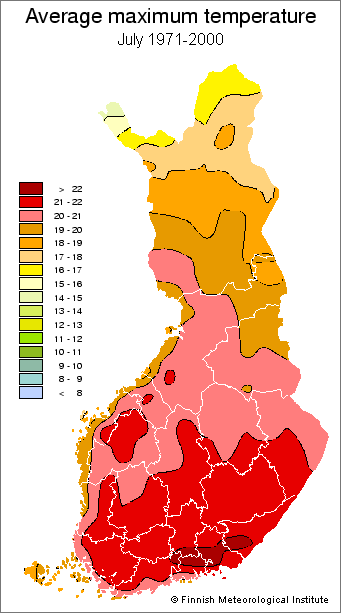
A map showing Finland's average maximum temperature in July during 1971-2000.

Summer rain and winds

There is relatively little rain in Finland in early summer. The average rainfall in May and June is 40 – 60 mm, compared with 65 – 85 mm in July and August. Summer precipitation is normally in the form of brief rain or thunder showers.

A summer shower in Finland usually lasts for about half an hour. Very few summer days are cloudy or rainy all day long. If there is high pressure, the weather is generally sunny and dry, even if fair-weather cumulus clouds (Cumulus humulis) may develop into thunderstorms (cumulonimbus) in the afternoon. Finland’s coast is sunnier than the interior and has less rainfall. At the beginning of summer it is very sunny on the coast because the sea breeze from the cool sea keeps the rain clouds inland in the afternoon. Only towards evening can they move from inland towards the coast as the wind weakens. When there is a strong ridge of high pressure, the longest spells of dry weather last 2 – 3 weeks.

Average rainfall from June to August varies from 180 millimetres on the coast and in northern Lapland to 225 millimetres inland. Typical rainfall on a summer’s day is 2 – 4 millimetres. Heavy rain showers, however, easily bring between 20 and 40 mm of rain. In a dry summer, such as 2006, it rained less than a half of the average and in places on the coast only a quarter compared with the long-term average. Then again, in the rainiest summers rainfall may reach 300 – 450 millimetres, the years 2004 and 2005 being examples of this.
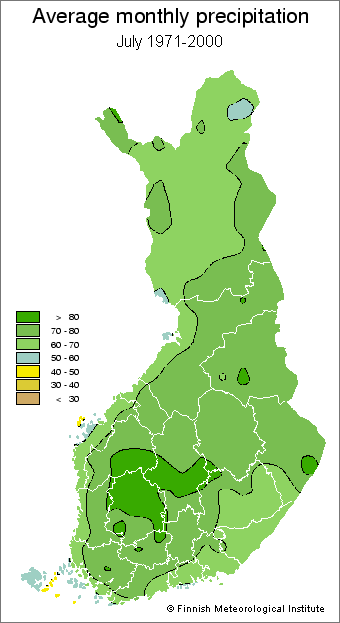
A map showing Finland's average monthly precipitation during 1971-2000.

Winds

In summer winds are much lighter than in autumn or winter. In summer the air is often quite calm at night. The wind stirs in the morning as the sun heats up hill and dale. In summer, and winter, too, the prevailing direction of the wind is between south and southwest. The direction of the coastal sea breeze on the Gulf of Finland is between south and southwest but on the Gulf of Bothnia it blows from the west. The effect of the sea breeze extends 10 – 20 kilometres inland from the coast. At night the sea breeze weakens and the coastline becomes calm. At night a contrary land breeze stirs on the sea. Thunder clouds form their own strong gusty winds, thunder squalls, and weather bulletins include warnings about them for land areas and coastal and inland waters.

Sunshine

Many coastal towns advertise themselves as being the sunniest places in Finland in the summer, which, according to the sunshine statistics, holds true compared with localities inland. The sun shines most at sea in the southwestern archipelago and on the coast. The average number of hours of sunshine on the coast in May and June is more than 300, whilst inland the figure is slightly lower. In July, because of rain and thunder, there are fewer than 300 hours of sunshine, and as the days shorten, especially in August, the sun shines less.

Because in the north the sun is above the horizon in the middle of summer for a long time, it is possible to enjoy sunlight on clear days for 18 – 19 hours in southern Finland and 24 hours in Lapland. On a typical summer day including the shade from rain and thunder clouds, it is possible to enjoy an average of 9 – 10 hours of sunlight per day. In Finland, too, ultraviolet radiation from the sun is strong on either side of midday in summer. Protecting oneself from sunshine between 11.00 and 15.00 is highly recommended.

Thunder

In the middle of summer (July-August) enormous thunderclouds can develop in Finland, almost like in the tropics. Flashes of lightning are frequent and heavy rain is also part of the picture. Hailstones may also fall but they are fairly rare. Widespread storm systems that cause damage occur less frequently than once every other summer. With warming of the climate, the frequency of violent thunderstorms may increase.

Thunderstorms are more frequent in July than in the other summer months, usually on more than 5 days. In the period May to September thunder occurs on average 12 days in southern and central parts of the country,but less frequently on the coast and in northern Finland. The number of thundery days per year varies from 6 to 20.

3. Autumn weather
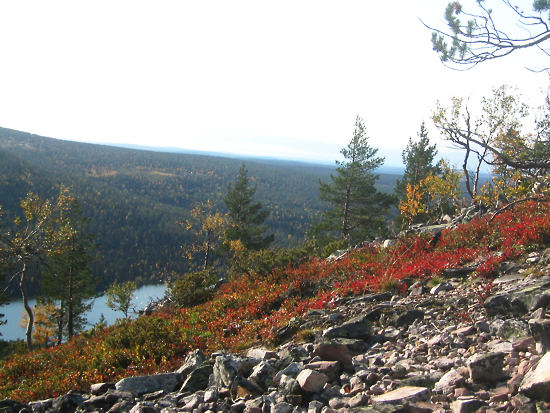
A rocky slope with trees and shrub in autumn colours.

Photo: Eija Vallinheimo/FMI

In Finland summer weather fades into autumn as August comes to an end. In Lapland autumn weather starts at the end of August, with the advent of the first real frosty nights. In Lapland the period of colourful autumn foliage begins,lasting a few weeks and steadily moving southwards. In southern Finland,especially on the coast, summer temperatures linger until mid-September. There are a few days of summer warmth at the beginning of September. In September, too, the first snow usually falls in the north, but soon melts away.

The autumn equinox, when day and night are of equal length all over the world, occurs on September 21. Thereafter, the days become shorter every day until Christmas.

At the end of October the temperature is about six degrees lower than at the beginning of the month. At the beginning of the month the average daytime temperature in Lapland is 5 degrees and in southern Finland 10 degrees, whereas at the end of the month it is just below zero during the day in the north and 5 degrees in the south. Sometimes there are frosty nights and mornings in southern Finland, too, and the first snow in central parts of the country often falls in October.

By November the change to normal time has been made and the daylight keeps getting shorter. November is also the time of winter storms. Deep troughs of low pressure coming from the Atlantic bring stormy winds and rain. There are, on average, four stormy days in Finnish sea areas in November, which shows that stormy winds do not blow in Finland all the time. Precipitation may start as snow, but the further south it moves the more likely it is to fall as rain.

4. Winter weather
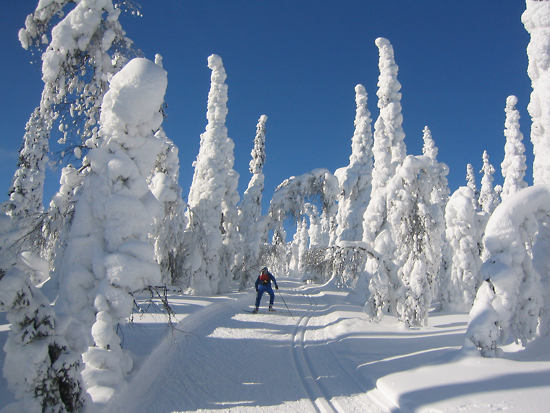
A person skiing on a snowy path between snow-covered trees.

Photo: Eija Vallinheimo/FMI

The changeover to winter weather in Finland takes place fairly quickly in November and December. Winds blowing from the north bring cold air from the Arctic Ocean. In Lapland the weather is wintry in November. In fact in northern Finland in general and in parts of eastern Finland, too, the ground is usually already covered in snow in November. Southern and southwestern parts of the country get a permanent snow cover in December. This is preceded by several snowfalls that usually melt away. For example, the average date for the start of the permanent snow cover in the Helsinki region is Christmas Day, December 25. In the extensive archipelago off the southwestern part of the mainland the snow cover does not become permanent until the New Year.

The increasing mildness of winter is apparent in the 2000s in weather statistics: rain and drizzle are more common than they used to be. It often rains in December, sometimes even in January and February. Temporary thaws accompanied by rain do not melt the snow in Lapland, although they do further south. During the past 15 years record mild early winters have been experienced, in 2006 for example, when it was almost December before the first snowfalls occurred in the north. The warming of the climate is making winters start later than previously throughout the whole country.

Winter temperatures

Winter is the longest season in Finland. According to climatic definition, when the average daily temperature remains below zero, it is winter. Winter weather in the southwestern archipelago, when the sea is ice-free, lasts about three months (December-February) and in northern Lapland more than six months, from mid-October to the end of April. In the central part of the country winter weather usually prevails from November to the beginning of April, and in the interior of southern Finland from December to the end of March.

Winter in Finland includes days when the temperature is above zero. There are, on average, 6 – 10 such days, often with drizzle or rain, in each winter month in the south of the country, and 2 – 8 days in central Finland. In really mild winters it even rains for a few days in Lapland. In winter the drizzle is often freezing, and this makes road conditions very slippery. Radio stations issue warnings about the hazardous conditions which require extra caution from road users.

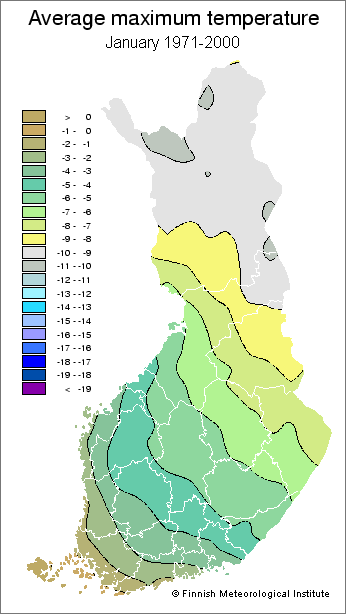
The coldest time in midwinter (the period from December through February) is January in Lapland, and the beginning of February in a typical winter in the south. The temperature on a winter day is determined to a large extent by whether cold, dry air has flowed to Finland from the north, in which case the weather is clear, or a moist, windy and cloudy thaw, warmed by the Atlantic, has moved in from the southwest. In winter the sun does not warm the air as it is low, close to the horizon. But the situation changes rapidly in February-March, because in March, around the time of the vernal equinox, the warming effect of the sun is already considerable. This is particularly so in Lapland. In Lapland’s glistening snow in March – April sunshine can raise the temperature from 15 degrees below zero in the morning to above zero later in the day. In clear weather the sun gives off a maximum of 20 degrees of heat. Further south change in temperature over the course of a day is somewhat smaller than in Lapland.
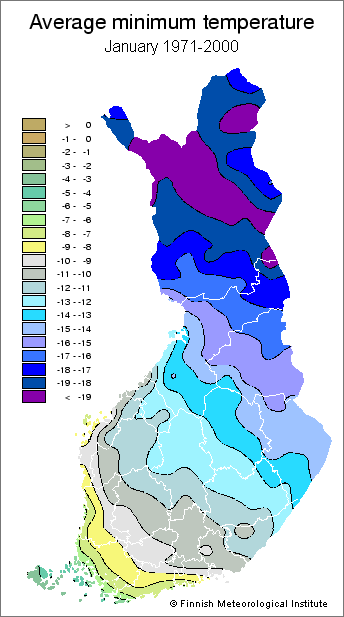
A map showing Finland's average minimum temperature in January during 1971-2000.

A map showing Finland's average maximum temperature in January during 1971-2000.

Snow cover

Winter weather arrives first in the north. In Lapland the tops of the high hills, or fells, generally receive their first coating of snow at the end of August or in September. A permanent snow cover settles on northern and central Lapland on average after mid-October. It is usually preceded by 2 – 3 snowfalls that melt away. The timing of the start of permanent winter varies greatly in different years. In the province of Oulu and in central Finland the first snow typically falls in October, but the period of permanent snow cover does not begin until about a month later. On the coast, as long as the sea is free of ice, the snow cover appears and melts numerous times at the beginning of winter. In Helsinki, for example, the snow cover melted away 14 times in the early stage of the winter of 1992-1993.

The southwestern part of the country and the coastal areas receive a permanent snow cover during December on average, and it arrives earlier inland than by the open sea. The Åland Islands and the Turku archipelago are the areas with the shortest period of snow cover. In both areas the snow comes at the turn of the year and the final remnants melt away at the beginning of March at the latest.

The snow cover is usually at its deepest in mid-March, although in Lapland the maximum is not reached until early April. In a typical winter the greatest snow depth is only 10 – 30 cm in southwestern Finland, in the western province of Ostrobothnia and on the coast. In southeastern and eastern Finland the snow cover is between 40 – 70 cm in the middle of March. In the hilly areas of eastern Finland, in the region of Kainuu and in most of Lapland the snow cover amounts to 60 – 100 cm in early April. The depth of the snow cover depends on the type of winter weather and it can vary greatly from the long-term average. Snowfalls and the depth of snow cover are decreasing as the climate becomes warmer. The duration of the snow cover is gradually shortening at both ends.

In spring, specifically in March, snow melts fairly quickly because the sun then gives off a great deal of warmth. At this time of year, the snow softens into crystals during the day and some of it melts, but with freezing temperatures at night it solidifies once again. The southern slopes lose their snow cover quickly because the sun’s rays are directed on them. In the forests and shaded places on northern slopes snow disappears 1 – 2 weeks later than in open spaces. In coastal regions and the south of the country the snow cover has disappeared completely by the beginning of April. The earth reveals itself in eastern Finland and the province of Oulu between the end of April and May 10. Only in central and northern Lapland can the snow cover locally linger until the end of May.
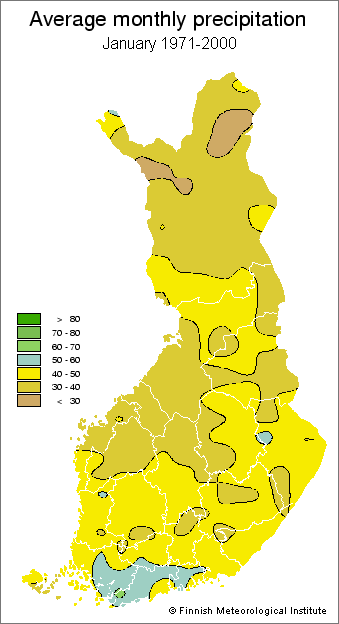
A map showing Finland's average monthly precipitation in January during 1971-2000.

Winds

The windiest periods are autumn and, in particular, the winter months. In Finland’s maritime areas storm-force readings (more than 21 m/s) are recorded on average on four days in November, December and January. The number of stormy days per year fluctuates greatly. The windiest winter in recent decades was in 1992 – 1993, when there were 30 days of storms in Finland’s maritime areas between November and January. And in November 2001 there were exceptionally severe autumn storms, which caused damage to forests in inland areas.

5. Late winter and spring
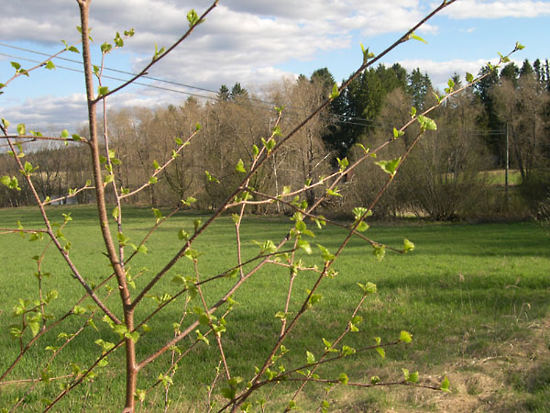
A budding tree on a green field.

Photo: Eija Vallinheimo/FMI

The months of late winter and spring are March, April and part of May. Springtime is characterized by light winds, clear weather and sunshine during the daytime. This pattern is, however, sometimes interrupted by troughs of low pressure arriving from the southwest and bringing snow and sleet and a cold spell in spring as late as May. The evenings have already been light for several weeks. Spring starts in the southern part of the country first, and spreads out in a good seven weeks over the entire country. In March-April the sun sheds powerful warmth on the dark forests and the ground, which has reappeared from under the snow. In spring, snow and the ice on lakes and on the sea melt. In the south lakes and rivers lose their ice cover at the end of April, while in the north this occurs during May.

Temperatures

In spring the temperature varies greatly between night and day as the sun brings warmth during the daylight hours. On a clear night the temperature often falls below zero. Around dawn, in southern and central parts of the country, as the sun rises, the lowest temperatures are below zero. In Lapland they are well below zero. In March, in fact, the temperature there can drop to minus 30 and in April to minus 20 degrees. But on a sunny morning the temperature rises above zero rapidly. At the beginning of March the daytime temperature is typically around zero in southern and central parts of the country, but at the end of April it is already above 10 degrees. In recent years it has occasionally been as high as 20 degrees at the end of April. In northern Finland, on the other hand, the daytime temperature rises from –5 at the beginning of March to +5 at the end of April. In cloudy weather there is little variation in the temperature during the course of the day.

Rain and wind

In spring there is little rainfall in Finland because the atmosphere in the northern hemisphere is dry after the cold winter. That is why it is often clear and sunny in spring. Although rainfall amounts are generally quite small, snow may fall persistently. Sometimes the south of Finland experiences a cold spell in May, when snow falls and the temperature is only just above zero.

In the spring the winds are much lighter than in winter. A storm-force wind on the sea is rare in the spring months; on average there is only one stormy day per month. In May, as in the other summer months, there is, according to statistics, only one stormy day in two years.

By Anneli Nordlund, senior meteorologist, Finnish Meteorological Institute, January 2008
Concern for a precious sea

In late summer the water lapping the shores of the Baltic is warm. Children would like to go swimming but their mothers often have to stop them. The reason for this is apparent to the naked eye. Cruise passengers approaching Helsinki can see it. The water is cloudy and greyish-green, and there are great rafts of blue-green algae floating on top. Many types of blue-green algae are dangerous to humans, as the toxins they secrete damage the nervous system and liver.

The state of the Baltic Sea has caused all parties at the national, international and NGO level to take resolute action. Wastewater is being cleaned more thoroughly; attention is being paid to discharges from agriculture and to pollution caused by transportation. Consumers are more aware of the effect of their choices. So there is a light flickering at the end of the tunnel, and perhaps one day our grandchildren will be able to swim in clean water on a warm August evening. Reports by marine biologists on what is going on below the surface tell us that the Baltic is in need of urgent aid. In the Gulf of Finland, the seabed is in many places completely dead. There is no oxygen in the water and no living organisms of any kind at the bottom of the sea. In fact the Baltic is the most polluted sea in the world. Nine industrialized nations border on it; thus there are big cities and intensive agriculture putting a heavy load on the water. Moreover, the natural conditions and shape of this sea make it extremely vulnerable. It is a shallow basin in which the water is rarely replaced. Any nutrients and poisons that find their way into the Baltic stay there.

A shallow sea overloaded by man

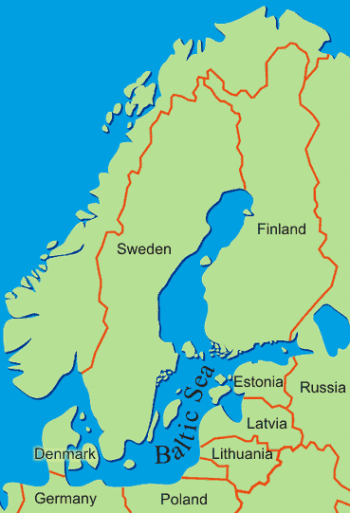
Nine countries border the Baltic Sea.

Nine countries border the Baltic Sea.

The Baltic is a small sea that lies to the north and east of the Straits of Denmark. Its average depth is only 55 metres, and even its deepest point is only 450 metres. The average depth of the Atlantic, by comparison, is two kilometres. The water in the Baltic is far less salty than Atlantic water, because the former gets surges of oxygen-rich saline water through the Straits only occasionally. A large number of rivers empty into the Baltic, and their estuaries are practically salt-free. The catchment area of the Baltic — the area from which river water flows, and with it nutrients and other pollutants — is four times the size of the sea itself. It comprises the three Baltic states and the whole of Poland, almost the whole of Finland and Sweden, and substantial parts of Denmark, northwest Russia and Belarus. Some 85-90 million people live in the catchment area, and there is a lot of heavy industry and intensive agriculture. The Baltic also carries a large amount of shipping. The load imposed on the Baltic by the activities of man is thus wide-ranging and heavy. The heaviest strain on the well-being of the Baltic comes from the untreated wastewater that is released into it. The biggest single polluter is the huge metropolis of St Petersburg. At the present time only a fraction of its wastewater is treated. But the problem is being tackled both by Russian and international action, and major improvements can be expected in the next few years. Finland’s municipal sewage has been treated before release into the Baltic for many decades already.

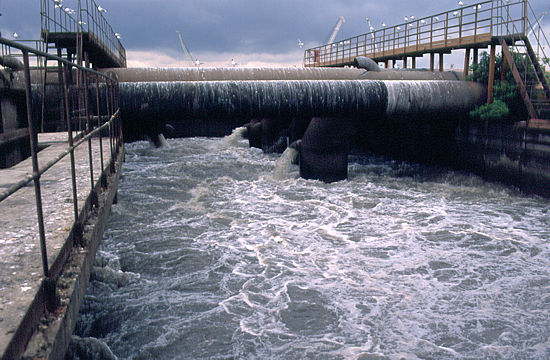
A sewage treatment plant in St. Petersburg.

A sewage treatment plant in St. Petersburg.Photo: Tero Pajukallio

Finland’s biggest challenge is agriculture: artificial fertilizers used in arable farming currently account for over half of all the phosphorus and nitrogen discharges from Finland into the Baltic. Farmers are being persuaded to take action by offers of tied subsidies. If they reduce the amount of fertilizer they use, fewer nutrients get into the sea, they can create buffer zones and wetlands that adsorb them and they can adopt organic farming methods. There is still a lot to do in this respect, though. The growing prosperity of the three Baltic states, Poland and Russia has made farming more intensive there, too. Thus reducing nutrient emissions from artificial fertilizers is a problem for all the countries around the sea.

Hope

The year 1974 witnessed the signing of the ‘Helsinki Convention’ on protection of the Baltic, and this was ratified by all the countries around the sea and by the EEC. To put the Convention into effect a special Commission was set up, commonly known as HELCOM. In 1992, the HELCOM countries approved a joint protection programme designed to restore the sea’s ecological equilibrium. Experts identified the 162 worst sources of pollution, or ‘hot spots’, and devised a 20-year investment programme for cleaning them up. A summit meeting every second year works out plans for taking the work forward, and progress is monitored by a Secretariat in Helsinki. In autumn 2007, the aim is to draft an ambitious new Baltic Sea Action Plan to dramatically reduce the Baltic’s pollution level and restore its ecological equilibrium by 2021. A great deal has already been achieved. The nutrient load has been reduced, risks and discharges from shipping have been decreased, and emissions of harmful chemicals into the sea have been restricted. Discharges of DDT, PCB and mercury into the sea have been drastically reduced and in some cases halted altogether, and thanks to this the white-tailed sea eagle and seal populations have started to grow. The International Maritime Organization (IMO) has put the Baltic on its list of PSSAs (Particularly Sensitive Sea Areas). The biggest passenger shipping lines operating on the Baltic have voluntarily undertaken to stop releasing all forms of wastewater into the sea.

Baltic protection arouses artists, media and public

The need to protect the Baltic is clear to everyone living along its shores. No wonder, then, that the media and ordinary people make sure that action to protect it is kept in the news. Since 2002, a Baltic Festival has been held every August, gathering musicians from all the Baltic countries in support of the common cause. The Festival was engendered by the concern and love for the Baltic shared by the eminent orchestral conductors Valery Gergiev of Russia and Esa-Pekka Salonen of Finland, and Michael Tydén, director of the Berwaldhallen concert hall in Stockholm. The programme includes high-quality concerts in most Baltic cities and on board passenger ships, as well as discussions and seminars about the state of the sea. The event is arranged in cooperation with the World Wide Fund for Nature, or WWF. The Finnish media keep a close and conscientious eye on the state of the Baltic and are active in other ways, too. At the end of summer 2007, for instance, the Finnish evening paper Ilta-Sanomat, with the WWF, launched a ‘Save the Baltic’ competition in which readers were urged to send in photographs, videos and text messages on the state of the sea. The winning picture and suggestions for ways of improving the condition of the Baltic were presented to Prime Minister Matti Vanhanen. Ordinary citizens have few opportunities to directly affect the state of the Baltic through the choices they make because the pollution comes mostly from communities, agriculture and shipping. But there is something the enlightened consumer can do, namely buy organic food from nearby and favour shipping lines that do not release their wastewater into the sea, and do not tip soapy water directly into the sea. By Salla Korpela, November 2007, updated June 2014

By Salla Korpela, November 2007, updated June 2014

Treasures of Finland’s boreal forests

Nordic growing conditions are harsh yet productive. The berries and mushrooms that grow in Finnish forests are part of the traditional Finnish diet, and for many families gathering them is an activity that has been passed down through generations. The fruits of the northern forests are coveted by gourmet chefs, and are increasingly exported.

Towards the end of July, Finnish grandmothers put on boots, tie scarves around their heads to protect their hair, and then disappear into the woods. As twilight falls, they return home laden with treasures — bilberries, raspberries, lingonberries and mushrooms. Approximately 500 million kg of berries and a staggering two billion kilograms of mushrooms grow in Finland’s forests every year and the tradition of picking wild berries and mushrooms is as popular as ever, despite urbanization.

One study shows that 56 percent of Finns, irrespective of their socioeconomic status, go to pick forest berries at least seven times each summer. The most enthusiastic berry pickers are elderly women: 87 percent of them in the age group 60-74 pick wild berries. Northern and eastern Finland produce the largest quantities of berries, and the people living there are the most active in picking them. In the region of Kainuu, in northeastern Finland, each household picks an average of almost 60 kilograms of berries a year.

The berries are turned into juice or jam to preserve them for the winter, or frozen without processing to retain their valuable nutrients. Cleaning the berries of their leaves and stalks, putting them in freezer boxes and freezing them is a common summer occupation for the whole family. At the end of summer, kitchens are filled with the fragrance of freshly made jam or juice.

Berries and mushrooms are also picked to sell. Demand well exceeds supply, which is mainly because there are not enough pickers and only a tiny proportion of what grows is gathered. In recent years, this shortfall has been partly filled by pickers from Estonia, Russia and Southeast Asia.

Finland has universal rights which allow everyone to move freely around the countryside, to pick berries and mushrooms and to fish with a rod and line, without permits. Any money made from the sale of this natural produce is exempt from tax. The income from picking berries in years when there is a good harvest is a significant bonus for many households in eastern and northern Finland, and of course also for the pickers from abroad.

A significant proportion of the wild berries and mushrooms that are sold are exported. This applies to more than 60 percent of bilberries and lingonberries and to more than 90 percent of ceps. Germany, Austria and other continental European countries have traditionally been the destination for these exported berries and mushrooms, but lately Japan and China have increased their demand.

A new speciality that is greatly valued in Japan is the matsutake (pine mushroom) which is also found in Finland. The Finnish Forest Research Institute has started to chart the places where this species grows, and it is already being exported for Japanese gourmets. All this enthusiasm is scarcely surprising considering that Finnish berries and mushrooms are incredibly tasty. When important guests visit Finland these delicacies are practically guaranteed to be on the menu at formal dinners. Anyone who comes to Finland and is interested in new culinary sensations should try the fruits of the Finnish forest.

Some favoured berries and mushrooms that grow in Finland’s forests

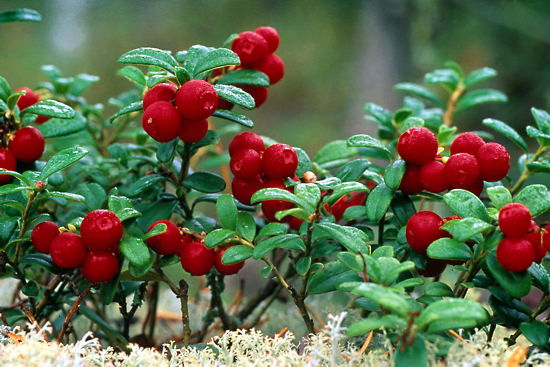
Lingonberries growing on a shrub.

Photo: Finnish Tourist Board

Lingonberry (Vaccinium vitis-idaea). In September, Finnish forests turn red with lingonberries. The berry is known as the red gold of the Nordic forests, and with good reason; the lingonberry is abundant, easy to pick and incredibly nutritious. Lingonberries contain large quantities of fruit acids, which give them a sharp taste, and they keep well without sugar or preservatives. Because of this, they were an important source of vitamins and other nutrients all year round in Finland long before freezers were invented. Lingonberries can be used to make jam, pastries and juice and used in porridge and various desserts.

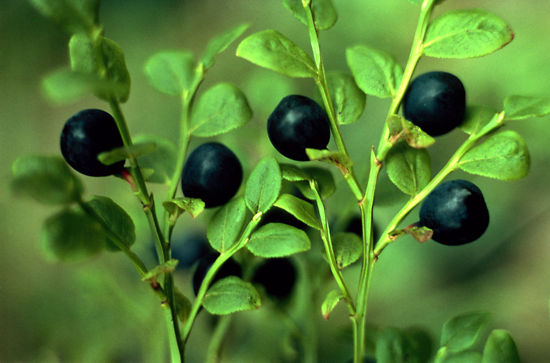
Bilberries growing on a shrub.

Photo: Finnish Tourist Board

Bilberry (Vaccinium myrtillus). This grows in different types of forests all over Finland all the way to Lapland in the far north. In terms of the volume picked, the bilberry is one of the most important fruits in Finland, even though the harvest is prone to fluctuate significantly. Bilberries contain high levels of vitamins A, B, and C and of manganese, calcium and flavonoids. They lower blood sugar levels and are good for the eyes and stomach. Bilberries have a subtle, aromatic flavour, somewhat stronger than that of the similar, but cultivated, blueberries. They are used to make pies and desserts, whilst hot bilberry ‘broth’ is a traditional energy drink favoured by skiers in Finland.

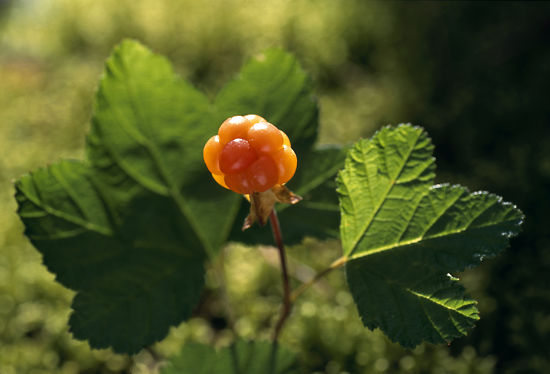
A cloudberry growing on a stem.

Photo: FTB/P.Luukkola

Cloudberry (Rubus chamaemorus). This is the most valued Finnish forest berry and the most expensive to buy. Cloudberries grow best on boggy terrain in northern Finland, often in places that are well hidden and difficult to reach. If someone finds a good spot with lots of berries, it remains a well-kept secret. The cloudberry is related to the raspberry but its plants do not grow as high as the latter’s. The berries are yellow or reddish and have a sweet taste. They also have rather large, hard seeds, which may take a bit of getting used to. In Finland cloudberries are regarded as a delicacy to be served on special occasions — a cream cake topped with cloudberries is often eaten at family celebrations, when golden cloudberry liqueur is served with coffee.

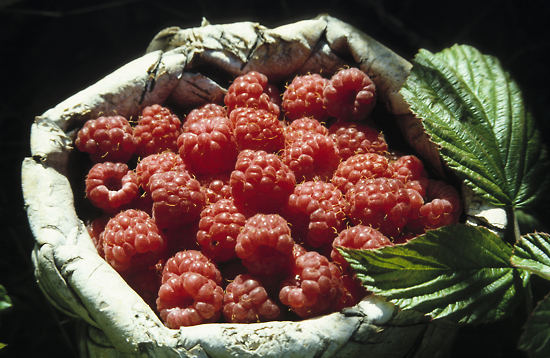
A basket full of raspberries.

Photo: Finnish Tourist Board

Raspberry (Rubus idaeus). Clear cutting in forests is a controversial practice but it has at least one positive consequence: a few years after timber felling, raspberry bushes will appear in the space cleared. The wild raspberry has spread remarkably along with timber felling over the last few decades, and Finns pick these berries in the same way that they pick lingonberries and bilberries for extensive home use. Wild raspberries are hardly ever sold in shops, however. They are smaller and much more tasty than cultivated raspberries.

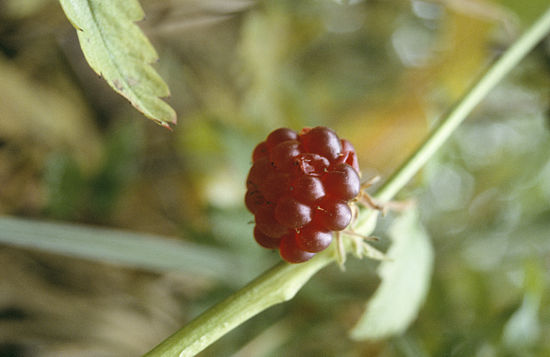
An arctic bramble.

Photo: Finnish Tourist Board

Arctic bramble (Rubus arcticus). This is rarer than the aforementioned berries and is regarded as far more refined. It is also related to the raspberry, but its plants do not grow as tall. The berries are red. Sadly, the wild Arctic bramble is becoming increasingly rare, but for some years now it has also been cultivated. Most of the yield is not sold as fruit but goes for the production of liqueur.

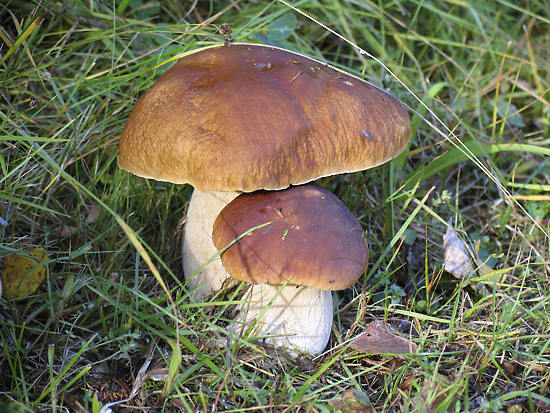
Two brown cep mushrooms.

Photo: Arctic Flavours

Cep (Boletus edulis) and pine cep (Boletus pinophilus).

These mushrooms are very common in Finland, except for the northernmost part of Lapland. As much as 90 percent of ceps picked for sale end up being exported, mainly to Italy, where they are regarded with as much respect as truffles. The volume of ceps picked each year varies significantly and their appearance is often a matter of uncertainty. In the hot summer of 2006, it seemed at first that there would be no ceps at all, until surprisingly hordes of them appeared in the space of a few weeks. An operation to gather these fungi was quickly launched, and over 300,000 kg of ceps were dispatched to central and southern Europe. In Finland, the use of mushrooms, ceps in particular, spread from across the eastern border. They are not nearly as highly valued in western as in eastern Finland. Finnish mushroom dishes are very Russian in style. Often salted and eaten as a salad, mushrooms are also used to make creamy soups, sauces and casseroles.

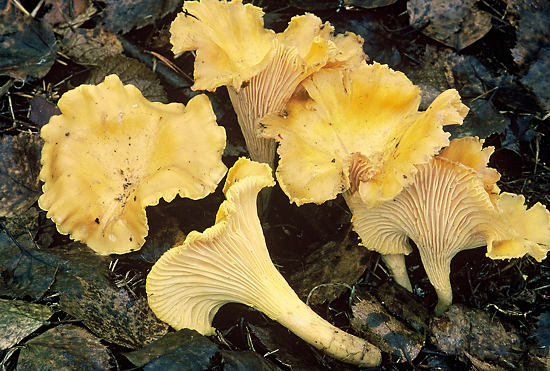
Yellow chantarelles.

Photo: Arctic Flavours

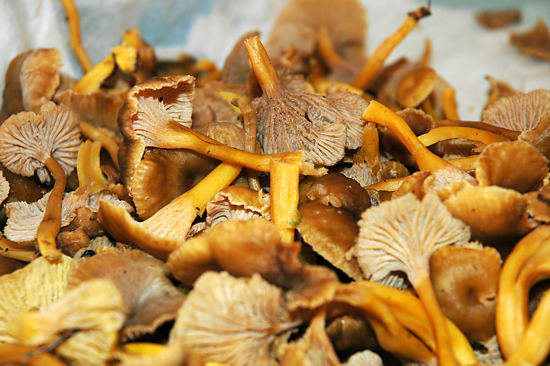
Chantarelle (Cantharellus cibarius). Every time you see something yellow peeking out from the moss on the forest floor, it is worth taking a closer look and making a mental note of the exact spot, as chantarelles tend to grow in groups and in the same place from one year to the next. And better still, chanterelles never accommodate maggots, unlike many of the other delicious types of mushroom. Chantarelles grow in southern and central Finland, and are used to make sauces and soups.

A pile of autumn chantarelles.

Photo: Finnish Tourist Board

Autumn chantarelle (Cantharellus tubaeformis). This is a mushroom that appears in late autumn and can even be picked after the first snow has fallen. You need sharp eyes when you are looking for autumn chantarelles, as they are very small and well camouflaged on the forest floor due to their brown-grey colour. But if you do find one you will often find many, many more nearby. The autumn chantarelle is, like the chantarelle, used in soups and sauces.

Wrinkly and brown false morels.

Photo: Finnish Tourist Board

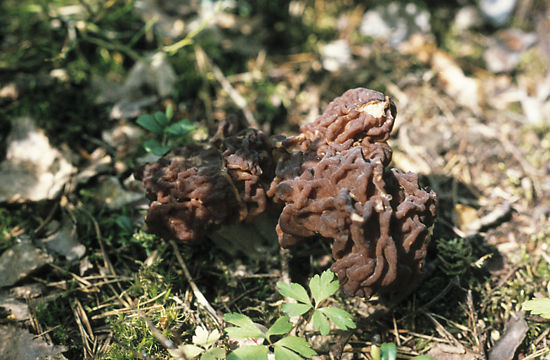
False morel (Gyromitra esculenta). This mushroom is deadly poisonous when raw but incredibly delicious when properly prepared. It has a wrinkly brown hollow cap and can be found on the forest floor as early as April after the snows have melted. False morel soup is a delicacy that is often on the menu in early summer. In order to remove the poisonous substances the mushrooms must be boiled twice in copious amounts of water, which is then thrown away. The mushrooms are washed before each treatment. It is also essential to ensure good ventilation during boiling. False morels are also sold at markets. Sellers are obliged to ensure that buyers know how to prepare them properly and safely.

Pine mushrooms on forest floor.

Photo: Arctic Flavours

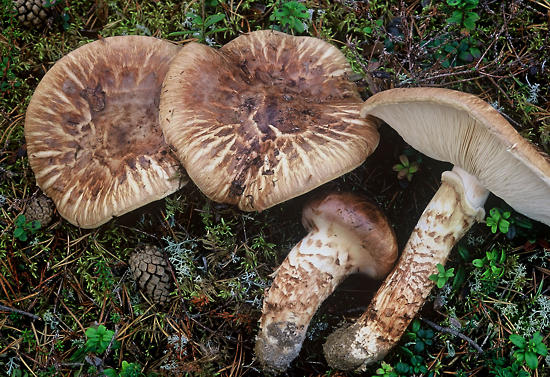
Pine mushroom, (Japanese: matsutake). This has not traditionally been eaten in Finland but has been included in the official catalogue of commercial mushrooms. A number of years ago, a group of Japanese tourists found pine mushrooms in Lapland and took them to be identified by Finnish mushroom experts. They turned out to be the mushroom that is called matsutake in Japanese. In Japan, the matsutake is considered a special delicacy on a par with the truffle. It is believed to have an aphrodisiac effect and a kilo can fetch hundreds of euros. The pine mushroom is a large and compact mushroom that travels well.

Bilberry Pie (Mustikkakukko)

Mustikkakukko is a traditional dessert from eastern Finland. It combines the delicate taste of the bilberry and the robust energy of rye. Rye and bilberries are health-enhancing.

1 litre (about one quart) bilberries
1 dl (0.4 cups) sugar
250 g (1/2 pound) butter
1 1/2 dl (2/3 cup) sugar
4 dl (1 2/3 cups) rye flour
1 dl (0.4 cups) wheat flour
1 teaspoon baking powder
Mix the softened butter and sugar together. Mix the rye flour, wheat flour and baking powder together and add to the sugar and butter mixture. Press about 2/3 of the dough onto the base and sides of a high-sided oven dish. Add fresh or frozen bilberries. (If you are using frozen bilberries, add 1 dessert spoon of potato starch.) Sprinkle sugar over the bilberries. Cover the bilberries with the rest of the dough. Bake for about an hour at 200 degrees Celsius (390 degrees Fahrenheit). After you have left it to cool for a while serve with vanilla ice cream, custard or whipped cream.

List of things you will need when you go picking berries or mushrooms

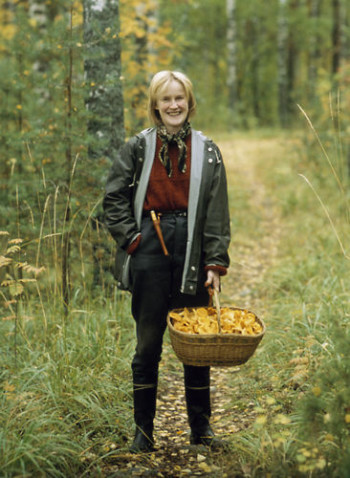
A smiling woman with a basket full of chantarelles.

A mushroom picker properly dressed for autumn in the forest.Photo: Finnish Tourist Board

  • Waterproof boots — there can be damp areas in the forest even in dry weather, and boots will also protect you from snakes. The adder is in fact the only species of poisonous snake that lives in the wild in Finland. There are no other dangerous animals or plants.
  • Long trousers and a long-sleeved anorak to protect you from being scratched by branches and from insect bites.
  • A brightly coloured hat, preferably red, is important especially during the hunting season so that you can be easily seen (and not mistaken for a hunted animal).
  • A mosquito jacket will provide effective protection against mosquitoes and deer flies (Lipoptena cervi), which are rapidly on the increase in Finnish forests.
  • A berry picker (a scoop-like device) for picking bilberries or lingonberries. Use the picker to scoop up the berries from the plants — the prongs of the picker will trap the berries, while leaves and twigs fall onto the ground. It is worth learning to use a berry picker, as you can gather about three times more berries than you would picking by hand.
  • A bucket with a lid to carry the berries. When picking raspberries, it is a good idea to attach the bucket around your neck or hang it on your waist so both your hands are free for picking.
  • For picking mushrooms, you will need a basket and a special knife which has a brush at one end for removing dirt. It is also a good idea to carry a small book on mushrooms with you to help you identify them. Identifying the most common mushrooms is a civic skill still taught at Finnish schools.

By Salla Korpela, October 2007, updated July 2013

Kalevala: the Finnish national epic

The first edition of the Kalevala appeared in 1835, compiled and edited by Elias Lönnrot on the basis of the epic folk poems he had collected in Finland and Karelia. This poetic song tradition, sung in an unusual, archaic trochaic tetrametre, had been part of the oral tradition among speakers of Balto-Finnic languages for 2,000 years.

When the Kalevala appeared in print for the first time, Finland had been an autonomous Grand Duchy under Russia for a quarter of a century. Prior to this, until 1809, Finland had been a part of the Swedish empire.

The Kalevala marked an important turning point for Finnish-language culture and caused a stir abroad, as well. It brought a small, unknown people to the attention of other Europeans, and bolstered the Finns’ self-confidence and faith in the possibilities of the Finnish language and culture. The Kalevala began to be called the Finnish national epic.

Elias Lönnrot and his colleagues continued their efforts to collect folk poetry, and new material quickly accumulated. Using this new material, Lönnrot published a second, expanded version of the Kalevala in 1849. This New Kalevala is the version which has been read in Finland ever since and upon which most translations are based.

By Anneli Asplund and Sirkka-Liisa Mettomäki, October 2000, updated 2017

Finland’s other epic: The Kanteletar

“In literary poetry Finland lags far behind many other nations; but this need not greatly trouble us, for in folk poetry it is among the leaders.”

So wrote the Finnish scholar-physician Elias Lönnrot (1802-84) in his preface to the Kanteletar, published in Helsinki in 1840-41. This collection of more than 660 lyrics and ballads is the companion work to the national epic, the Kalevala.

Both works were compiled by Lönnrot from poetry passed on by word of mouth over many centuries and written down by scholars from the late 1800s onward, in the belief that national identity had its roots in folklore. Finland has one of the richest stores of folk poetry in the world. The Kalevala is world-famous; less so the Kanteletar, though it too has great beauty and power.

Many of the lyrics reflect peasant wisdom. Here is a mother advising her son on the choice of a wife:

My offspring, my younger one
my child, my baby
if you want to wed well, to
bring me a daughter-in-law
don’t propose on a Sunday
on the church path don’t betroth:
then even a piglet shines
and even a sow wears silk;
the very worst concubines
hurry along the chuch path
all got up in blue stockings
all made up in red laces
their heads bound in silk
their hair tied in braids.
Weekdays are the better time:
do your wiwing then, my boy!
Take one from the throshing-floor
from those holding flails choose one
from those grinding betroth one
who has her coat on crooked
or straight without meaning it
whose kerchief has hoarfrost on
her bottom dusty from the stamper
her body white from grinding!
(1:88)

The most famous lyric is based on a folk poem translated into German by Goethe. A girl is missing her beloved:

Should my treasure come
my darling step by
I’d know him by his coming
recognise him by his step
though he were still a mile off
or two miles away.
As mist I’d go out
as smoke I would reach the yard
as sparks I woud speed
as flame I would fly;
I’d bowl along beside him
pout before his face.
I would touch his hand
though a snake were in his palm
I would kiss his mouth
though doom stared him in the face
I’d climb on his neck
though death were on his neck bones
I’d stretch beside him
though his side were all bloody.
(2:43)

The ballads are narrative poems about events outside the Kalevala. The longest is a 25-page sequense of stories about the Virgin Mary from Eastern Orthodox tradition, including a curious account of the Nativity:

On Christmas Day God was born
the best boy when there was frost:
the moon rose, the sun came up
the dear sunlight woke
and the stars of heaven danced
and the Great Bear made merry
when the Creator was born
the most merciful appeared.
(3:6)

Other ballads include one about the martyrdom of Henry, Finland’s patron saint, who – we are told – was born in “Gabbageland”, which is probably England; the grim tale of a 15. lord who married the peasant Elina and ended up murdering her, and a myth-poem about the theft of the moon and sun. The hero who recovers them places them half way up a tree, for only from there will they shine on rich and poor alike. This poem, from the incomplete second edition of 1887, is available in print – original and translation- only in the English selection: The Kanteletar, translated by Keith Bosley (Oxford University Press paperback, 1992), who also contributed this article. Oxford University Press has also published a Bosley translation of the Kalevala.

By Keith Bosley,  March 2000