Wetland centre draws nature tourism

Birds and birdwatchers flock to Liminka Bay in northern Finland, where a visitor centre forms Finland’s national wetland conservation centre and a leading destination for nature tourism.

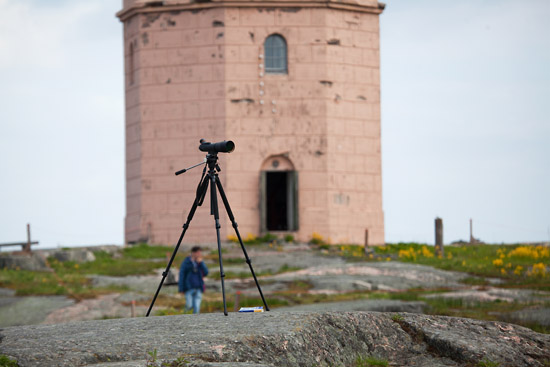
From a birdwatching tower by the reed-fringed shores of Liminka Bay, 35 kilometres southwest of Oulu, nature guide Antti Vierimaa scans the skies and trains his telescope on a white-tailed eagle soaring over the bay.

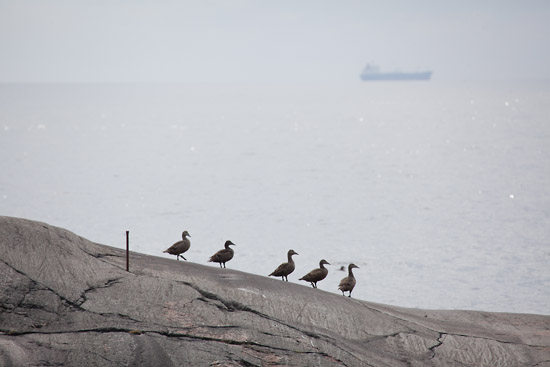
“This is an excellent location for birdwatching, as this vast shallow bay lies along important migration flyways for many northern birds, which stop here to rest,” he explains. “The bay attracts huge flocks of cranes, geese, whooper swans and waders at different times of year. Finnish birdwatchers come here to see rarities like the beautiful black-tailed godwit. And many visitors also come from around Europe to see exotic northern and eastern species.”

Liminka Bay is part of a worldwide network of reserves set up under the Ramsar Convention on Wetlands of International Importance. “Wetland birds are suffering around the world due to habitat loss, so refuges like Liminka Bay are vital,” explains visitor centre manager Ulla Matturi. “Our visitor centre has now been designated as Finland’s national centre for wetland conservation, which means we’ll be a centre for ecological education and expertise related to wetland management.”

Bird’s-eye view

Aerial view: Beautiful Liminka Bay forms part of a worldwide network of wetland reserves vital to bird species suffering from habitat loss.

Aerial view: Beautiful Liminka Bay forms part of a worldwide network of wetland reserves vital to bird species suffering from habitat loss.Photo: Jari Peltomäki

The attractive wooden Liminka Bay Visitor Centre offers comfortable accommodation, catering and a superb exhibition spotlighting Finland’s wetlands and their rich birdlife, depicted in stunningly beautiful photographs and films.

An airport-style notice board lists the expected spring arrival and autumn departure dates of the bay’s winged inhabitants. The centre is topped off with a viewing tower that looks out towards the bay over meadows and reed beds.

The centre attracts as many as 50,000 visitors a year. “We welcome many school groups, as well as holding conferences and events such as nature photography workshops,” says Matturi.

Sleepless nights for birders

An airport-style display board at the Liminka Bay Visitor Centre shows the expected arrival and departure dates of migratory bird species.

An airport-style display board at the Liminka Bay Visitor Centre shows the expected arrival and departure dates of migratory bird species.Photo: Fran Weaver

In the centre’s café, two tired-looking Dutch birdwatchers, Harold and Otto, are drinking coffee. They have been up since 3 am photographing male ruffs performing their bizarre courtship rituals.

This is part of the Dutchmen’s week-long tour of northern Finland capturing images of migrating waders, several different owl species, rare northern ducks and even wild bears. “Our guides have slept even less than us, and they’ve arranged our trip really flexibly with the help of a network of contacts who know where different birds can be seen at any time,” says Harold.

“Birdwatching tourism, and particularly nature photography tours, are booming in Finland,” says Jari Peltomäki, a renowned Finnish nature photographer who also runs the nature tourism agency Finnature. “Liminka Bay is an ideal base for us since we can take our clients out to see many of Finland’s bird specialities in quite a small area – and it’s very convenient to the well-connected Oulu Airport.”

By Fran Weaver, July 2012

Set sail for Suomenlinna off the coast of Helsinki: a quick intro

The island fortress of Suomenlinna, a Unesco World Heritage Site, is hugely popular among tourists and locals alike. Fifteen minutes by ferry from Helsinki’s Market Square, its 80 hectares form an ideal destination for an excursion lasting several hours or a whole day.

You can walk the cobblestone paths, admire the coastal landscape of the Finnish capital, have a picnic by the water, go for a swim, check out the museums, watch crisscrossing ferries and sailboats, or visit the various cafés and restaurants.

We’ve gathered a quick list of Suomenlinna trivia to whet your appetite.

The last surviving Finnish submarine, Vesikko, which operated during the Second World War and sunk the Russian merchant shop Vyborg, is moored at Suomenlinna and is open to the public.

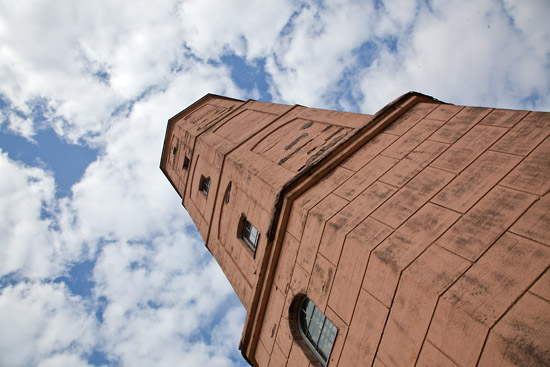
Visitors roam Suomenlinna’s paths, bridges and embankments, taking in the sights, sounds and sea views. The tower of Suomenlinna Church doubles as a lighthouse.Photo: Peter Marten

Did you know?

  • The island receives almost a million visitors every year (904,000 in 2023). It is home to six museums and the seat of the Finnish Naval Academy. Its strategic geographical position means that it sometimes used to be known as Gibraltar of the North.
  • Suomenlinna has about 850 registered inhabitants, and several hundred other people work there throughout the year. Eight kilometres of walls surround its buildings and barracks. The embankments contain more than 100 cannons, recalling the times when the place was a defense outpost.
  • The fortress of Suomenlinna forms one of Finland’s seven Unesco World Heritage Sites. (The others are Old Rauma, Petäjävesi Old Church, the Verla Groundwood and Board Mill, the Sammallahdenmäki Bronze Age Burial Site, part of the Struve Geodetic Arc and the Kvarken Archipelago.)
  • The fortress was used as a prison after the Civil War that afflicted Finland in 1918, in which the right-wing Finns (Whites) eventually defeated the pro-Communists (Reds). More than 8,000 prisoners were held within its walls, in lamentable conditions. Around 1,500 of them died, either executed or unable to survive the harsh circumstances. At the end of that year, a general pardon freed the remaining prisoners.
  • Fantasy author George R.R. Martin of the Song of Ice and Fire saga, the basis for internationally successful television series Game of Thrones, wrote a short story about the surrender of the fortress, published in 2007 in the collection Dreamsongs.
  • Internationally known artists such as Finnish rock legends Hanoi Rocks and Franz Ferdinand have recorded at Suomenlinna’s Seawolf Studios.
  • The last surviving Finnish submarine, Vesikko, which operated during the Second World War and sunk the Russian merchant shop Vyborg, is moored at Suomenlinna and is open to the public.

By Antonio Díaz, July 2012, updated March 2025

Part 1: My secret gardens

Explore summer in Helsinki

Our summertime video series: a look at life in the capital during the brightest time of the year.

Follow an avid roof-top gardener to her favorite green getaways around the city.

Helsinki contains many gardens that are hidden from the general public’s view. We follow a gardening enthusiast around the city as she shows us her favorite green getaways.

University teacher Anna Maija Luomi takes us to her favorite garden haunts in Helsinki.

The trip starts in the Ruoholahti neighbourhood, where we visit a rooftop garden – a visionary project by Slow Food Helsinki. We also meet grow-it-yourself activists from the environmental organization Dodo. Their Turntable greenhouse near Pasila Railway Station utilises free city space for ecological food production. Our last stop is at the allotment gardens in Vallila, a small, village-like community inside of the city. Originally the municipality rented the land to workers for recreation and food production.

It’s possible to garden anywhere. See for yourself!

By Gustavo Alavedra, July 2012

Part 2: Hip-hop by the sea in Helsinki

Explore summer in Helsinki

Our summertime video series: a look at life in the capital during the brightest time of the year.

At Urban City Camp, young people can immerse themselves the world of hip-hop.

Sebastian, 13, brings us along to his favourite Helsinki summertime activity: Urban City Camp, where young people can immerse themselves in the world of hip-hop music, street art and media production.

Participants also get to enjoy the summer by chilling outdoors, walking through the forest and swimming in the sea. Organised by the City of Helsinki Youth Department and held in the eastern suburb of Vuosaari, the camp lasts one week and is open to 13-to-25-year-old Helsinkians.

By Gustavo Alavedra, July 2012

Sun and surf in the Finnish capital

When summer hits Helsinki, you don’t have to leave the capital to find a good beach. Grab your towel and your sunscreen and get going.

Think of Helsinki, but forget snow and winter hats.

The Finnish capital shows a completely different side of itself during the long, bright days and white nights of summer. The people become more cheerful and talkative; meet for drinks and dinner at outdoor cafés and restaurant terraces; and enjoy lazy days at the city’s beaches, some of which are just a stone’s throw from the city centre.

The Baltic Sea waters invite inhabitants to cool down with a dip and bask in the sun. Here are some of the places not to be missed by beach-lovers:

Location, location, location

Everyone calls Hietaniemi Beach by its nickname, “Hietsu,” and it’s the ultimate beach to visit for many reasons. With a perfect location, nearly downtown, it’s easily accessible by public transport, on foot or by bicycle.

There’s a bar and terrace, and for sports freaks there’s room to play volleyball and football. This is the place to go to show off the body you’ve been cultivating in the gym all through the winter.

Concerts are also held here. Big-name artists drive the crowds wild, and it’s also common to see local bands filming videos in the area. People may go to Hietsu to enjoy evening picnics – the sky remains light well into the night.

No clothes, no problem

Although the Finns are very open-minded when it comes to entering saunas in the nude, it’s not normal to see topless women on beaches, in contrast to common practice at many tourist destinations in southern Europe.

However, those who like to savour sun and water the way nature intended can visit nudist beaches at Seurasaari or Pihlajasaari. Seurasaari, a few kilometres from the city centre, offers separate areas for men and women. Another part of the park contains historical buildings and forest paths that attract numerous tourists. Pihlajasaari, located a short ferry ride away from Helsinki, is unisex. The beach there is quite rocky, so it’s more suitable for sunbathing than swimming.

For all tastes

4150-beach2_550px-jpg

The beach on Suomenlinna forms an excellent option for beach-goers who want to combine tanning with culture.Photo: totinkoti, flickr.com, ccby3.0

Helsinki has a total of 29 official beaches, four of them on the banks of the River Vantaa. Many of them are located close to other leisure activities. For example, on the island fortress of Suomenlinna, you can combine tanning with visits to museums, cafés and the fortress walls. Mustikkamaa, close to Helsinki Zoo, is ideal for energetic families.

Rastila boasts a campground and a public sauna in addition to a beach, while other sites like Kallahti or Laajasalo offer lovely views for those who want to enjoy the beauty of the archipelago. You can enjoy a delicious ice cream on the small but charming beach in Marjaniemi, and Vuosaari offers an open-air gym and cafés where you can contemplate views of the port.

By Antonio Díaz

Finnish fashion designer makes ecoluxury

When Finnish-born, UK-based Minna Hepburn recounts her path from war studies graduate to internationally renowned fashion designer, it forms an inspiring tale. In just four years she has built an ecologically minded brand, Minna, that catches readers’ attention in top fashion mags such as Vogue and Elle.

Born in Joensuu, eastern Finland, Minna Hepburn moved to London in 1998 after meeting the man who is now her husband. She enrolled in war studies at King’s College London and worked in the banking sector.

When she graduated and got married in 2003, the newlyweds decided to go backpacking across Asia for four months. The trip marked an important turning point in Hepburn’s life. While travelling, she met people who introduced her to the clothing business, and upon her return to the UK, she started her own shop – without any formal training in fashion.

Becoming a fashion designer

2719-hepburn2_h550px-jpg

Minna Hepburn may be the only fashion designer whose career started with a degree in war studies.Photo: courtesy of Minna

Minna started out selling clothing in her own boutique at Borough Market and at other London locations, including the clothing chain Topshop. The idea for the Minna brand originated in 2005 when she took time off from work after the birth of her first child. For a year, Minna conducted market research and developed a business plan for her brand.

While running her first clothing business, she had grown increasingly disturbed by mass production and the short lifespan of high-street clothing. When planning her new business, she decided that her designs would utilise environmentally friendly, sustainable, locally sourced materials. When she discovered Scottish lace produced near Glasgow by local workers, she knew she had found her material.

In launching her first self-designed Minna collection in 2008, she had to start from scratch. Branding and PR have played an important role from the very beginning. As she explains, it isn’t enough to have a good product – if nobody knows about it, it isn’t going to succeed.

The Minna brand maintains a strong internet presence through social media and an online store. She truly succeeds in getting people’s attention globally. At the prestigious London Fashion Week her designs have been shown on the Estethica runway, which revolves around ethical fashion production.

Hepburn’s designs have also been seen on the likes of actress Laura Bailey and Livia Firth, who started the Green Carpet Challenge, aimed at bringing sustainable style to red-carpet events internationally.

Ethically produced luxury

2719-hepburn3_h550px-jpg

The Tory dress can be worn to a wedding or on other, less formal occasions.Photo: Courtesy of Minna

Hepburn describes her design as eco luxe, referring to the luxurious quality of her environmentally friendly designs. However, she emphasises that she isn’t an “ecofanatic.” Rather, she is hoping that through her work people will become more aware of the waste of environmental resources and other issues that mass-produced clothing raises.

According to Hepburn, sustainable fashion shouldn’t just be an elitist “fashion phenomenon,” but something that any fashion-loving person can relate to. She wants her designs to be multifunctional so that even her popular bridal collection pieces can also be worn for occasions other than weddings. The Minna brand aims to capture the imagination of consumers who are determined to buy beautiful clothes that are also durable and ethically sound.

Though she is marketing her brand internationally and is based in the UK, Hepburn still has strong ties to Finland and is happy about the attention that her work receives in her home country. In 2011, she won the Elle Style Awards 2011 in Finland.

By Henrietta Hautala, July 2012

Moving pictures from Schjerfbeck’s world

On the occasion of her 150th birthday, Finnish museums honour Helene Schjerfbeck, a bold artist who was ahead of her time – and whose paintings are now worth millions of euros.

More than six decades after her death, the work of Helene Schjerfbeck (1862–1946) is more vital than ever. Her career mirrored – and presaged – the arrival of modernism. It began with realist village scenes from France and Cornwall in the 1880s and climaxed with haunting, cartoonish self-portraits during the Second World War.

Schjerfbeck’s international stock has been rising since a milestone New York show two decades ago. Her works have fetched auction prices previously unseen for Finnish artists, such as nearly four million euros for her Dancing Shoes at Sotheby’s in London.

In 2012, several Finnish museums are saluting her 150th anniversary with exhibitions. The biggest takes place at Helsinki’s Ateneum, while museums in Tammisaari on the south coast and Vaasa on the west coast are also in on the action.

Rediscovering her originality

At Ateneum, the largest-ever Schjerfbeck retrospective features nearly one third of the roughly 1,000 paintings she created during her lifetime. The show also includes work by artists who inspired her. Schjerfbeck paintings influenced by 16th-century Spanish master El Greco will for the first time be shown beside his originals.

“Of course, Schjerfbeck was influenced by other artists, but their influence is difficult to pinpoint as she filtered her impressions of others’ work and drew her own artistic conclusions,” notes curator Vesa Kiljo of the Provincial Museum of Western Uusimaa, known by its abbreviation, EKTA. It houses a more modest, intimate permanent exhibition on Schjerfbeck in the south-coast town of Tammisaari, where the artist lived between 1918 and 1941.

Photo: Finnish National Gallery, Central Art Archives/Kari Lehtinen       Helene Schjerfbeck: Dancing shoes (1939 or 1940), Private collection.    		Photo: Finnish National Gallery, Central Art Archives/H. Aaltonen   		   		Helene Schjerfbeck: Red Apples (1915) 		 		 		Photo: Finnish National Gallery, Central Art Archives/Hannu Aaltonen   		   		Helene Schjerfbeck: The Convalescent (1888)

Helene Schjerfbeck: Dancing shoes (1939 or 1940), Private collection. Photo: Finnish National Gallery, Central Art Archives/Kari Lehtinen 

Photo: Finnish National Gallery, Central Art Archives/Kari Lehtinen       Helene Schjerfbeck: Dancing shoes (1939 or 1940), Private collection.    		Photo: Finnish National Gallery, Central Art Archives/H. Aaltonen   		   		Helene Schjerfbeck: Red Apples (1915) 		 		 		Photo: Finnish National Gallery, Central Art Archives/Hannu Aaltonen   		   		Helene Schjerfbeck: The Convalescent (1888)

Helene Schjerfbeck: Red Apples (1915)Photo: Finnish National Gallery, Central Art Archives/H. Aaltonen 

Photo: Finnish National Gallery, Central Art Archives/Kari Lehtinen       Helene Schjerfbeck: Dancing shoes (1939 or 1940), Private collection.    		Photo: Finnish National Gallery, Central Art Archives/H. Aaltonen   		   		Helene Schjerfbeck: Red Apples (1915) 		 		 		Photo: Finnish National Gallery, Central Art Archives/Hannu Aaltonen   		   		Helene Schjerfbeck: The Convalescent (1888)

Helene Schjerfbeck: The Convalescent (1888)Photo: Finnish National Gallery, Central Art Archives/Hannu Aaltonen

“Recognition of her originality is the basis on which respect for her as an artist has constantly increased over the years both at home and abroad,” says Kiljo.

Her studio has been partially recreated at the museum. On display are her easel and a rocking chair that features in many of her pictures. Films, photos and letters help to explore Schjerfbeck’s world. Local actor and guide Anne Ingman impersonates Schjerfbeck, and is on hand on July 10, 2012 as the museum celebrates the painter’s birthday with cake and free admission.

Frida Kahlo, Edvard Munch and Schjerfbeck

That kind of hoopla would no doubt have horrified Schjerfbeck, described by her neighbours as shy and introverted. The Independent has written of her: “Imagine the life of Frida Kahlo yoked to the eye of Edvard Munch, and you’ll begin to get the measure of this oeuvre.”

4539-schjerfbeck2_550px-jpg

Helene Schjerfbeck paints at her home in Tammisaari in 1937.Photo: H. Holmström FNG/CAA/Coll. Gösta Stenman

While Schjerfbeck’s life was not as dramatic as Kahlo’s, she too had a tough one. After breaking a hip in a childhood accident, Schjerfbeck became a recluse who walked with a limp and battled illnesses most of her life. She never married, despite one engagement and a long-term unrequited friendship, and spent many years caring for her ill mother – who was Scherfbeck’s other primary model besides herself.

Schjerfbeck is best known for her self-portraits, shown at EKTA as a row of reproductions of 36 works from 1878 to 1945. “Now that I so seldom have the strength to paint, I’ve started on a self-portrait,” she wrote to a friend in 1921. “This way the model is always available, although it isn’t at all pleasant to see oneself.”

While her early self-portraits were naturalistic, the last ones are just a few stylised strokes. Some other portraits – such as The Californian and The Gipsy – show eyes downcast or turned away, which can paradoxically reveal a great deal about a subject.

“She wanted to capture the inner person, not just the exterior,” says Kiljo.

By Wif Stenger, June 2012

Good taste with passion – 21 years rewarded

Linus Torvalds, a Finnish open source software engineer, has won the prestigious Millennium Technology Prize together with stem cell scientist Dr Shinya Yamanaka. Torvalds’ Linux operating system and Yamanaka’s stem cell research are both unparalleled and revolutionary in their respective fields.

The world’s most prestigious technology prize has been awarded to Torvalds in recognition of his work initiating the development of the open source operating system Linux kernel – used today by an estimated 30 million people worldwide.

Linux is the operating system behind most of our digital existence. Drawing cash from an ATM, watching a movie on board of a plane, or playing with your Android smartphone – all these devices have Linux at their core, making work and social life ever so much easier and more pleasurable. According to Torvalds himself, it all comes down to having “good taste” in visual planning and code. And the passion to give it all away for free.

Developing the Linux operating system has involved the equivalent of 73,000 person-years of work so far – most of it voluntary and unpaid. Linus Torvalds has worked around 21 years on the system himself. This award praises his achievements as having “significantly influenced not only the development of other major operating systems, but the online networking culture and ethical questioning as a whole, as well as the openness of the internet to everyone.”

Our article on Torvalds in 2000:

master programmer

Written by Patrick Humphreys
Drawing by Pekka Vuori

Linus Torvalds, Finland
* * * * * * * * * * * * * * * * * * * * * * * * * * * * *

This year is turning out to be an extraordinary one for computing. Perhaps not a very enjoyable time for the richest man on the planet, Bill Gates, with his programs under virus attack and his Microsoft empire facing possible break-up. But all the better for the world’s best-known programmer, Linus Torvalds, who surely also bears the title of best-known Finn.

It’s hard to trump the achievement of writing a world-class computer operating system at the age of 21. Yet this year Torvalds was back in the headlines as one of the team that has produced a revolutionary new computer chip. And while the Linux operating system is a challenge to Microsoft’s Windows, the Crusoe chip could threaten the other computing giant, Intel.

The story of Linux is one of the great fables of computing, yet it begins as recently as 1991. That was when Linus Torvalds, a 21-year-old student at Helsinki University, decided to write his own computer operating system. Only a nerd would try; most folk buy their computers with the operating system already installed. And only a master nerd would succeed.

In some important respects, Torvalds’ Linux is better than the world’s principal operating system, Windows. It is more compact and it runs faster. It is also more stable, so it is preferred for use on the Internet, powering web servers that can be left unattended, without operatives to “turn off and then start again”, as Windows still so often requires.

The Love-letter virus that raced around the world at the start of May was another reminder of the dangers of dependence on Microsoft programs. It was designed to attack features of Windows and its popular e-mail application, Outlook. Linux users were unaffected. In the 1990s the world’s computing stock became a monoculture, like a forest with just one type of tree. Any disease can decimate it.

But Linux is not just another operating system. It is the outcome of a completely different philosophy, which has made its author into such a cult figure. Torvalds did not copyright his computer code so as to receive payment for his work. Instead, he published it on the Internet and invited other programmers to improve on it and to send their results back to him. By e-mail, of course.

Linux therefore was and remains a free program. Anyone can use it without charge, on condition that any improvements they make are also uncopyrighted and freely available. The nerds of the world took up Torvalds’ challenge. Of Linux today, only about 2% was written by the master himself, though he remains the ultimate authority on what new code and innovations are incorporated into it.

Again, the contrast with Windows is striking. How that system works is a proprietary Microsoft secret. An operating system is what controls a computer, but finding out how it does so is a lot harder than looking at the engine of a car. Computers translate everything into ones and zeroes. It is impossible to see what is happening from this digital stream.

Because the original quantities and instructions that make up Linux have been published, any programmer can see what it is doing, how it does it and, possibly, how it could do it better. Torvalds did not invent the concept of open programming but Linux is its first success story. Indeed, it probably could not have succeeded before the Internet had linked the disparate world of computing experts.

In making Linux an open language, Torvalds gave up the opportunity of growing rich from his work. This too is part of nerd culture, which thrives on the satisfaction of authorship and the respect of one’s peers rather than a portfolio of shares and a sports car in the drive. Today Torvalds lives in a rented bungalow though, admittedly, in California, where he moved in 1997 to work for a mysteriously secretive company called Transmeta.

The results of that project were unveiled in January this year, prompting some observers to suggest that the Finnish dragon-slayer was now taking on the world’s foremost chip manufacturer, Intel. Transmeta’s new Crusoe chips contain an array of computing tricks, allowing it to run programs intended for Intel processors but using a fraction of the power. For mobile devices this will be ideal. The first applications are expected this summer.

Linus Torvalds did not invent the Crusoe, of course, just as most of his Linux system was written by others. But this computing genius has quite a knack for being in the right place at the right time.
 

Original article by Patrick Humphreys, 2000
Foreword by Anna Leikkari, June 2012