Literally meaning “see you on the square” or “meet on the market square,” torilla tavataan captures the idea that everyone should gather to celebrate together. It’s a phrase Finns use when something of national significance happens. Sometimes they shorten it to torille – “to the square.”
Online, the phrase often appears in comment sections when Finland is spotted abroad – for instance, when TV host Conan O’Brien filmed an episode of his show in Finland. Finns will post “torilla tavataan” in response, echoing each other in a kind of shared, tongue-in-cheek celebration in the comments.
But at a moment of true national significance – like a major ice hockey victory or a Eurovision win – the phrase is meant quite literally. And it often turns into an exuberant display of pride, with people dancing, singing, waving flags and climbing on statues – some even swimming in fountains.
In Helsinki, the roads heading to Market Square may become blocked by the sheer amount of traffic, with people stuck in their vehicles honking horns and playing music in celebration.
Heading for the tori
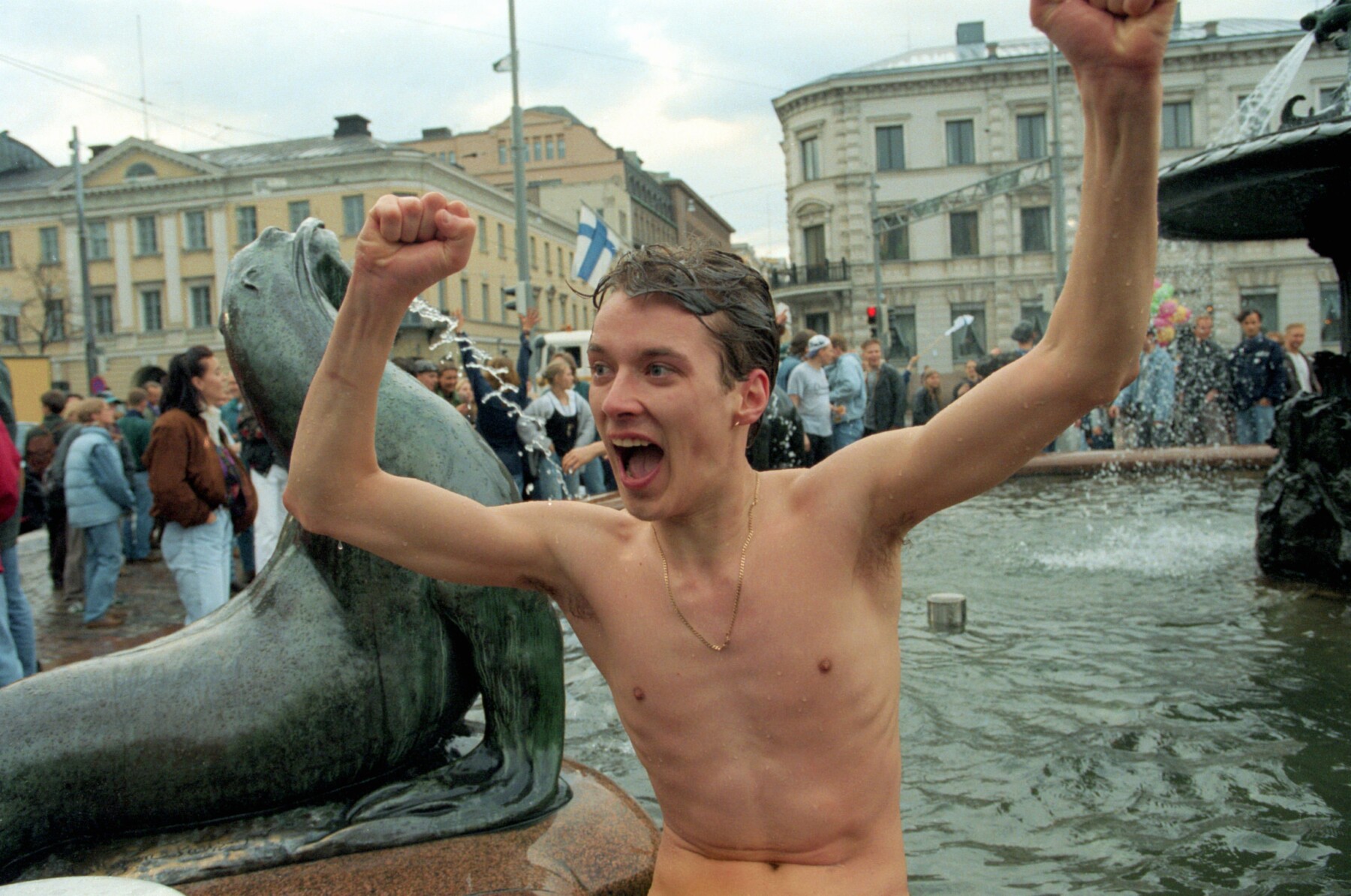
Swimming in fountains has become a tori staple. This guy is celebrating Finland’s first-ever world championship in ice hockey in 1995. Photo: Matti Björkman / Lehtikuva
Although the ancient Greek agora held significance as a place of public assembly, Finland’s tori gatherings are part of a younger tradition. It all started in 1995, when the Finnish men’s national ice hockey team won its first-ever World Championship gold medal and fans gathered to celebrate on Sergel Square, in Stockholm, where the match took place.
The win came against Finland’s friendly rival Sweden – in the Swedish capital, no less. It has been described as a defining moment for Finns at a time when a deep economic crisis was putting the country under strain. The day after the final, as the team returned home, huge celebrations were also held on Market Square in Helsinki.
The following year, the team’s official slogan was “Tavataan torilla,” which later morphed into “torilla tavataan” (both versions have the same meaning, thanks to the flexibility of Finnish word order). Although the team came back empty-handed, the phrase endured.
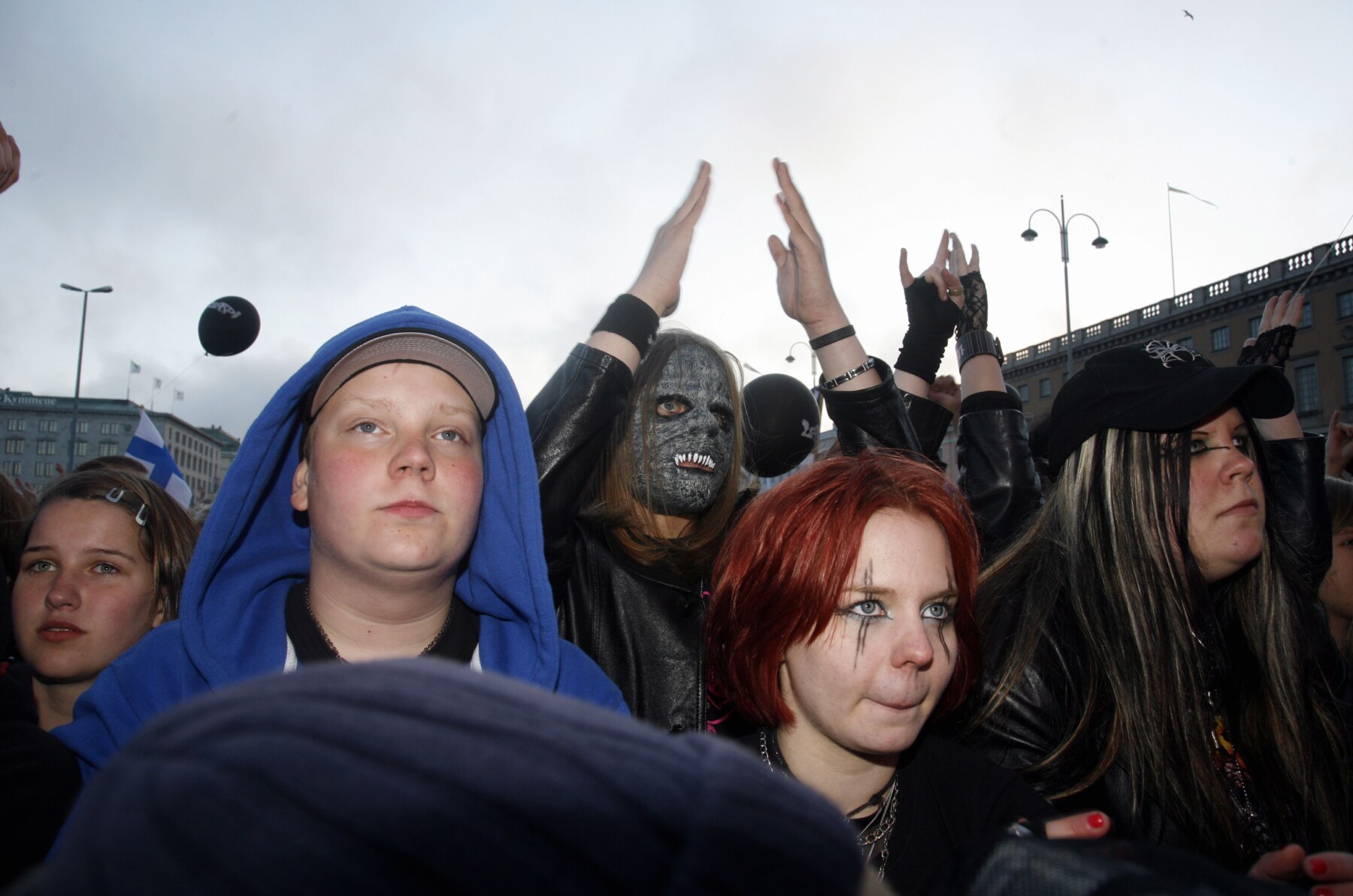
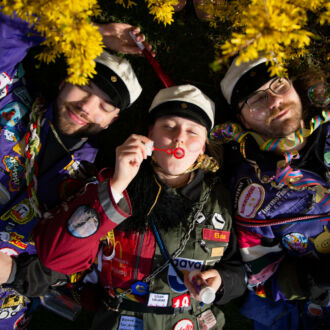
When Lordi won the Eurovision Song Contest in 2006 with their monster costumes and horror-inspired style, some fans joined the celebrations in matching face paint. Photo: Pekka Sakki / Lehtikuva
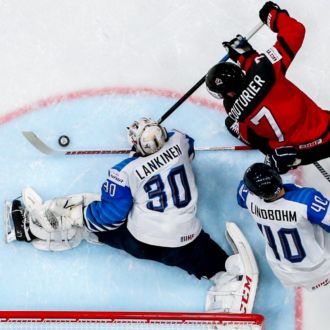
Another major tori celebration took place in 2006, when monster-metal band Lordi won the Eurovision Song Contest with “Hard Rock Hallelujah.” Since then, further hockey victories have brought people together, to the point that newsrooms are often prepared to send photographers to their local tori whenever there is a chance of a big win.
Sharing in the celebration
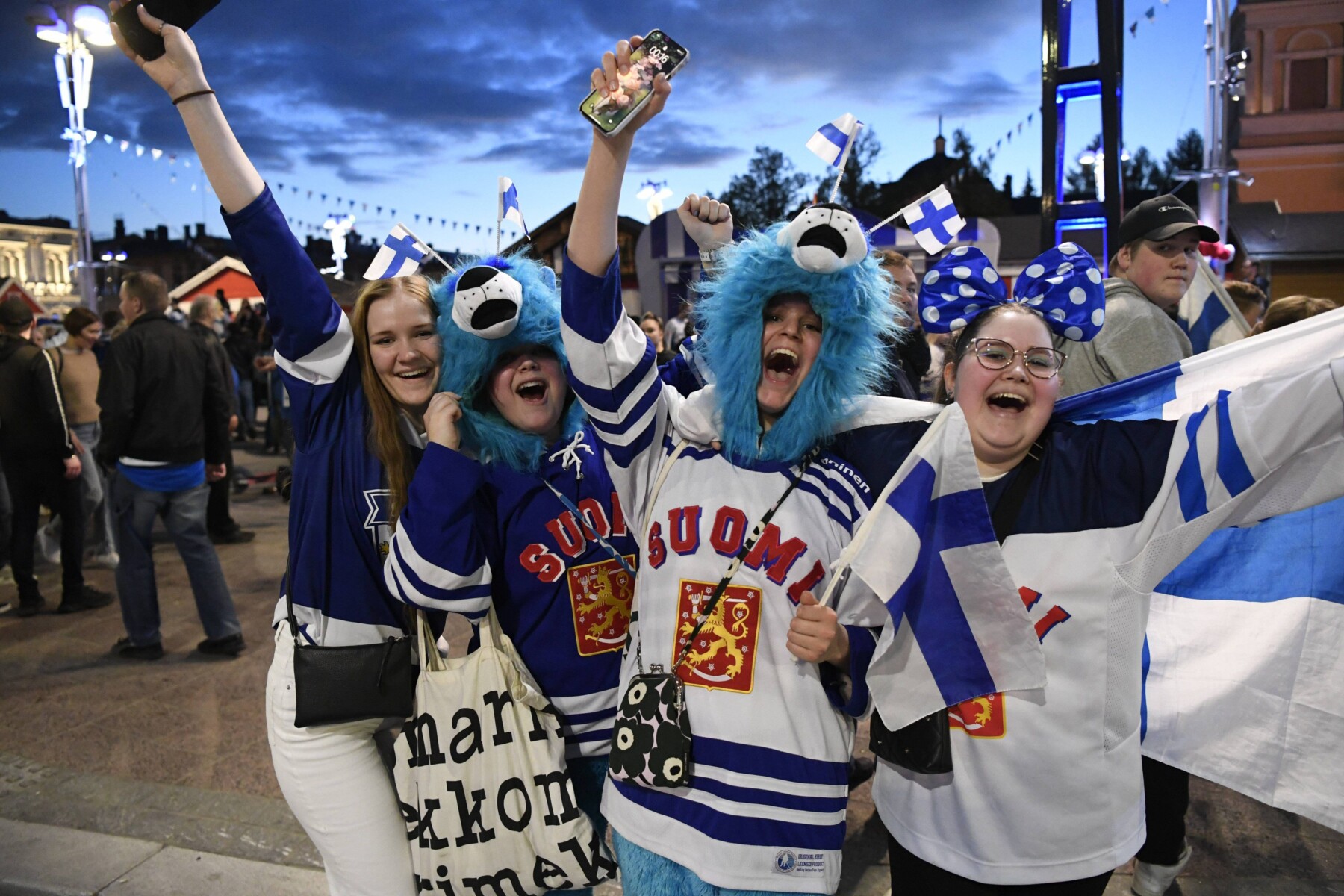
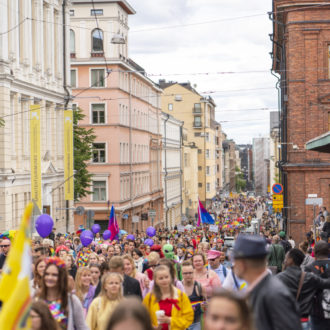
Tori celebrations, like this one in Tampere in 2022, give people permission to let loose and celebrate in the middle of the city. Photo: Jussi Nukari / Lehtikuva
Torilla tavataan is far from niche. It’s even included in Finland’s official national emojis, described as “the feeling when something so great happens, you just have to share it with somebody.”
In 2019, the men’s ice hockey World Championship final took place on the same night as the European Parliament elections. Based on media coverage, ice hockey clearly dominated: team captain Marko Anttila was mentioned almost twice as often as Eero Heinäluoma, the most visible election candidate.
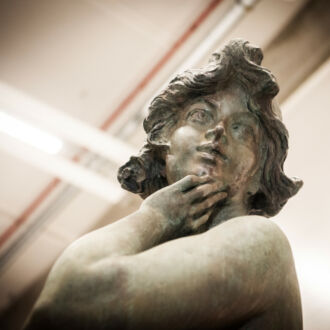
Torilla tavataan celebrations may be joyful, but they can also be hard on Helsinki’s most famous fountain statue. Havis Amanda, dating to 1908 and known locally as Manta, was recently renovated, and nowadays a special fence is installed every time a large celebration is anticipated.
And although fans might be disappointed, Havis Amanda probably lets out a sigh of relief every time the opponent scores or the Finnish Eurovision competitor doesn’t bag a maximum score.
By Anne Salomäki, May 2026