For many foreigners in Finland, first names are an early puzzle. Try saying the name Pyry and the man will smile politely, even though his name means “blizzard” and you’ve just reduced it to a pathetic drizzle.
Add secret baby names and a calendar devoted to name days, and it’s clear that naming works differently here.
“First names carry a lot of tradition, and the whole Finnish culture can be seen in our first names – the medieval times, the pre-Christian times, Russian and Swedish influences, and later influences,” says Minna Saarelma-Paukkala, a docent of onomastics (name studies) and name-day specialist at the University of Helsinki’s Almanac Office.
From Kalevala to the national awakening
Some of Finland’s oldest first names predate Christianity’s arrival. These names, drawn mostly from the Kalevala, Finland’s national epic, still echo through modern birth registers.
“We have many names that come from the pre-Christian times, like Kalevala names – Tellervo, Kyllikki, Mielikki for women and Väinö, Tapio and Ilmari for men,” Saarelma-Paukkala says. “They are very old – thousands of years old – Finnish names.”
These names did not remain in constant use, however. Their revival is closely tied to a moment when Finland was actively shaping its national identity.
“They became especially popular in the mid-19th century, during the national awakening, when people started to take all these old names again,” she explains.
That period helped establish naming as a cultural statement – a way of signalling Finnishness through language and heritage.
Familiar names in Finnish form
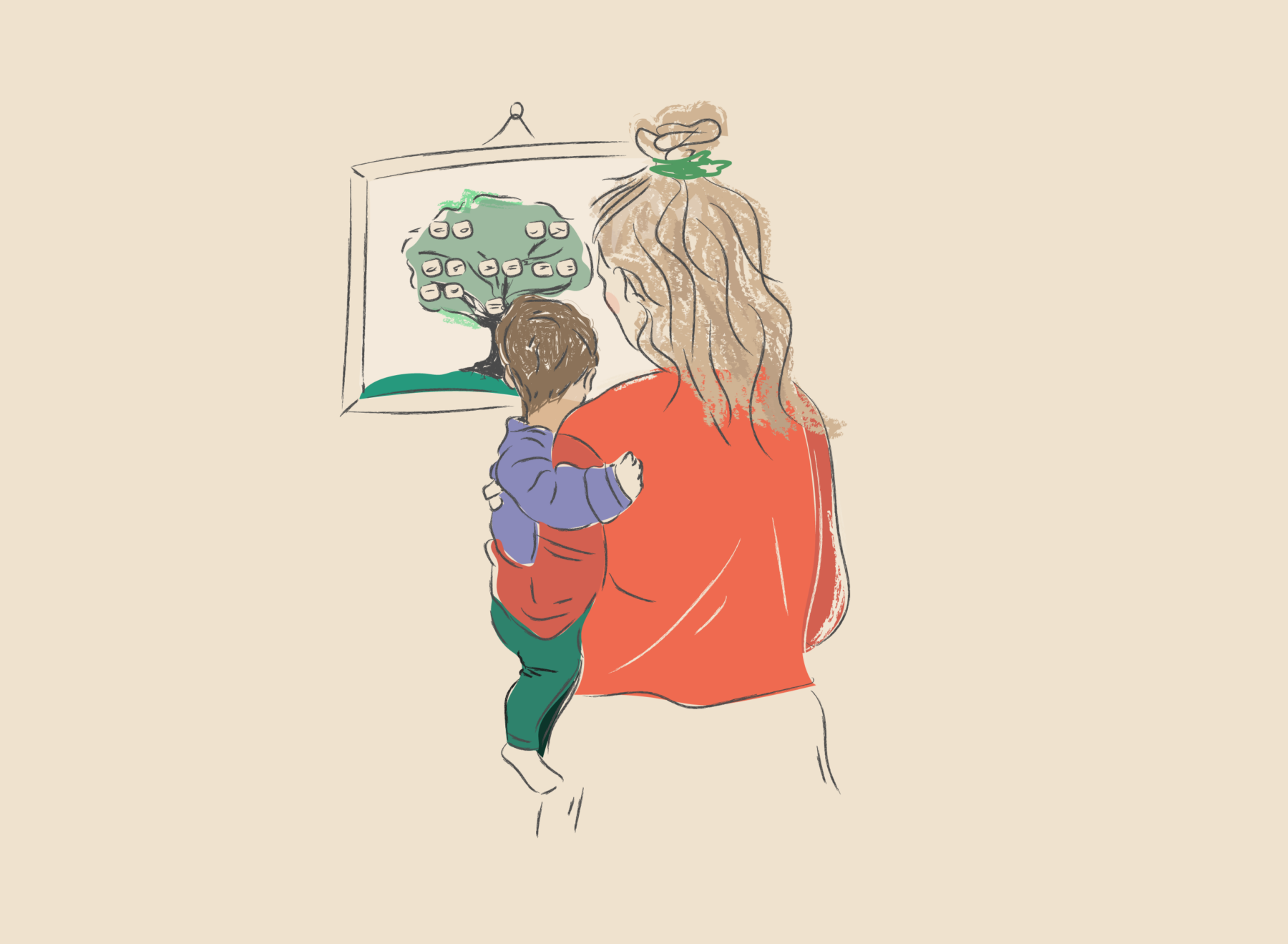
In Finland, parents may wait months before announcing a baby’s name, taking time to see which name truly fits the child.Illustration: Aino Korpinen
Christianity has also been influential in shaping Finnish names, though often in ways that are not immediately obvious to non-Finns.
Rather than borrowing Christian names wholesale, Finnish usage reshaped them. Many familiar biblical or European names are present, but disguised by centuries of phonetic adaptation.
“About two-thirds of Finns have names that are connected to Christianity, but they are often Finnish forms,” Saarelma-Paukkala says. “Pekka is Peter, Antti is Andrew, Kerttu is Gertrude and so on.”
A culture of creativity
Finland’s naming culture is also marked by a striking openness to invention.
“Because of the national awakening, we became very creative in name-giving,” Saarelma-Paukkala says. “This is something very specific to Finland – that we can create first names simply from the Finnish language. Often they refer to nature – flowers, trees, spices – and you can give a name even if no one else has the same one.”
As a result, Finland has an unusually wide range of first names relative to its population size, with many names belonging to only a handful of people. For example, there are names such as Puolukka (lingonberry) or Sumu (fog).
Secrecy and spirits
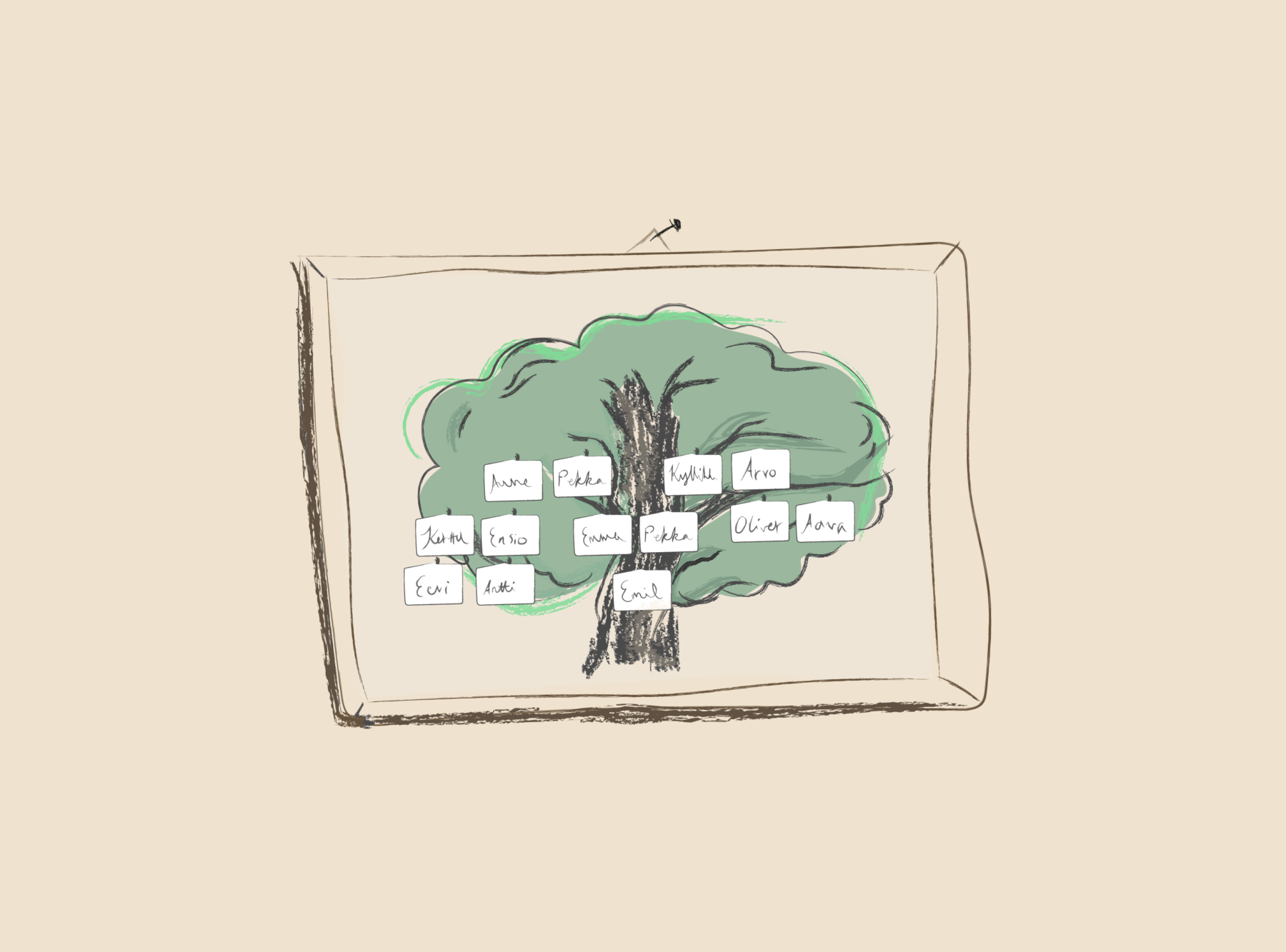
See if you recognise any of these common Finnish names. In Finland, many first names have their own celebration in the name-day calendar – but to be included officially, a name must be shared by at least 500 people.Illustration: Aino Korpinen
One of the most surprising Finnish traditions for outsiders is the custom of keeping a baby’s name secret or undecided after birth.
“The name is kept secret for a maximum of three months,” Saarelma-Paukkala says. “Parents often say they want to see what kind of person the child is first, and then decide which name suits them.”
The practice has roots in Christian tradition, where a child’s name was officially given at baptism, marking their formal welcome into the community. Announcing the name before this ceremony was believed by many to have spiritual consequences.
“The tradition goes back to medieval times,” she explains. “There was this idea that an evil spirit could take the child if the name was revealed before the baptism.”
Few Finns today worry about evil spirits, but the habit of waiting has endured well beyond religion. Many parents value those early, nameless weeks, using the time to get to know their child before deciding which name fits.
Nature names and sound preferences
Nature-based names are especially visible in recent years.
“Nature names are very typical now – strong natural phenomena for boys, like Myrsky, which means ‘storm,’ and beautiful flowers or nature-related names for girls, like Lumi, which means ‘snow,’” Saarelma-Paukkala says.
Sound also plays a role. Certain phonetic patterns are more popular than others.
“Names that begin with vowels are very common now – Aino, Eevi, Aava, Emma, Alvar, Oliver, Elias, Emil,” she says.
Some sounds have become less common, particularly the Finnish rolling R, as well as the vowel sounds Ä, Ö and Y, which are difficult for foreigners to pronounce.
“It’s easier to be Emma or Emil than Päivi or Yrjö,” she notes.
Occasion to celebrate
Alongside first names themselves, Finland has preserved another distinctive custom: the name-day calendar.
Its roots lie in the medieval Catholic calendar of saints, but during the Protestant Reformation the focus shifted from honouring saints to celebrating the people who carried their names. The tradition has since evolved into a calendar in which the most popular Finnish names have a designated day, officially maintained and updated every five years to reflect changing name use.
“You often don’t know your coworkers’ birthdays, but you can look at the calendar and see that it’s Heikki’s name day and congratulate him,” Saarelma-Paukkala says.
The tradition remains surprisingly widespread.
“About 85 percent of Finns say that other people congratulate them on their name day,” she says.
And the calendar is still evolving. To have your name added to the calendar, it must be carried by at least 500 people in Finland, but that doesn’t stop Saarelma-Paukkala from suggesting unofficial name days for people with less common names.
“Sometimes people contact me because their child’s name isn’t in the calendar and they are unhappy,” she adds. “I always try to help them find a good day to celebrate anyway.”
Most popular names (2025)
Most popular names in Finnish (girls)
1. Olivia
2. Linnea
3. Aino
4. Viola
5. Aava
Most popular names in Finnish (boys)
1. Eino
2. Leo
3. Elias
4. Väinö
5. Oliver
Most popular names in Swedish* (girls)
1. Saga
2. Alva
3. Ella
4. Astrid
5. Edith
Most popular names in Swedish* (boys)
1. Edvin
2. Emil
3. Hugo
4. Oliver
5. Felix
Most popular names in other languages (girls)
1. Sofia
2. Eva
3. Emilia
4. Emma
5. Maria
Most popular names in other languages (boys)
1. Muhammad
2. Adam
3. Elias
4. Daniel
5. Liam
* Swedish is one of Finland’s official languages.
By Tyler Walton, July 2026