It looks as if a flying saucer has landed in the middle of Helsinki – more specifically, among the carefully laid paths and climbing plants of the Kaisaniemi Botanic Garden.
The pale structure is eight metres across. A set of stairs folds down like the boarding steps of an aircraft. Inside, the elliptical building even smells faintly of plastic, which is hardly surprising: there are roughly 4,000 kilograms (8,800 pounds) of reinforced plastic surrounding us.
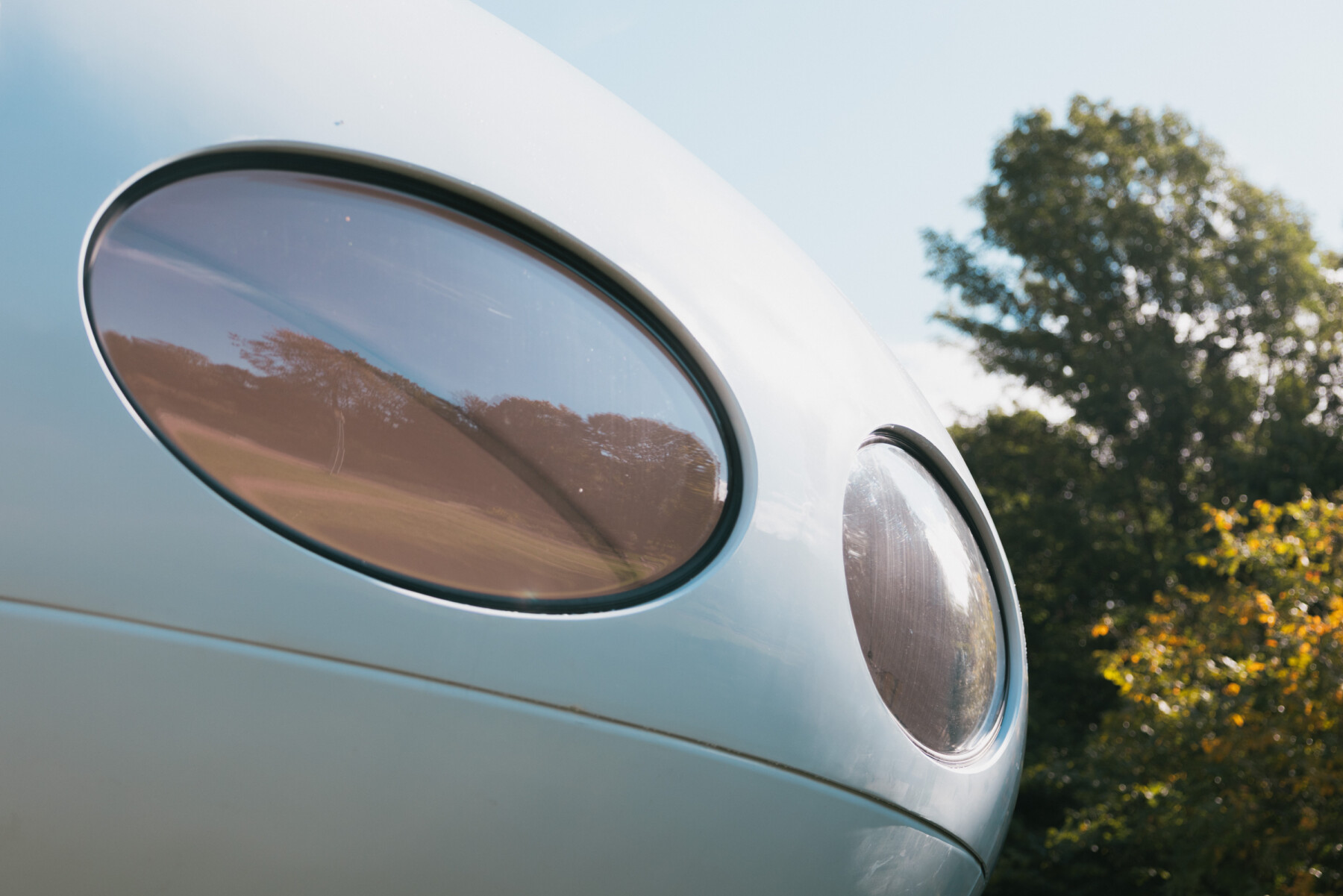
This new Futuro, unveiled at Helsinki Design Week in 2026, was made using the original moulds acquired by Dutch-American designer Jan van Dijs. It is the first Futuro built since 1978 and an exact replica of Suuronen’s original design.
This is a brand-new Futuro, the first one built in decades, recreated using the original moulds. Fewer than 100 of these unusual Finnish structures exist worldwide.
A ski cabin from the future
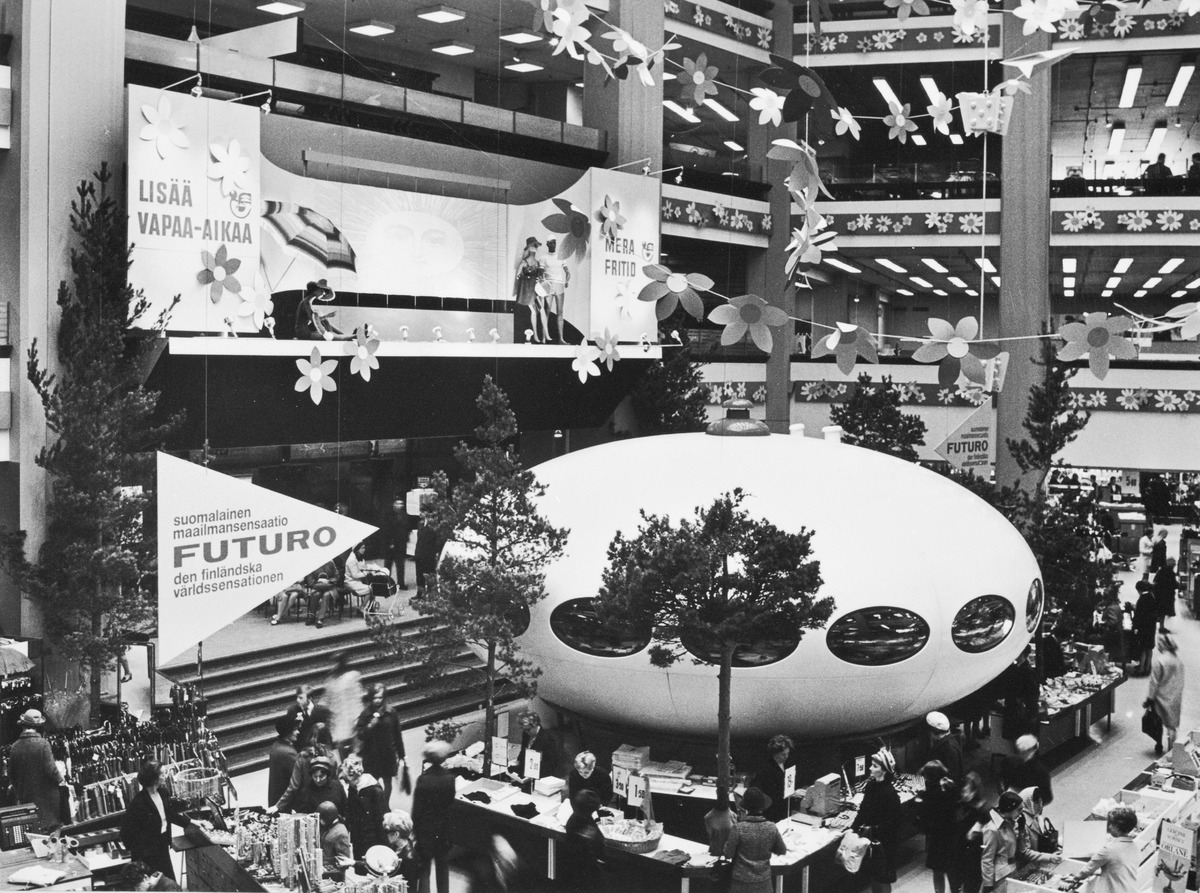
A glimpse of the future in 1969: a Futuro on display at Helsinki’s Stockmann department store.Photo: Ritva Bäckman / Finnish Heritage Agency
The story of the Futuro began when a friend of Finnish architect Matti Suuronen asked him to design a ski cabin that could be placed in difficult terrain.
The request made perfect sense in Finland, where skiing is a national pastime and ski trails often lead into remote landscapes.
The cabin needed to be easy to transport, quick to assemble and fast to heat. Suuronen’s solution was radical. The house was manufactured in sections at a factory, transported to its destination and assembled on site. It was even light enough to be moved by helicopter. The idea was that homes could be mass-produced, almost like cars.
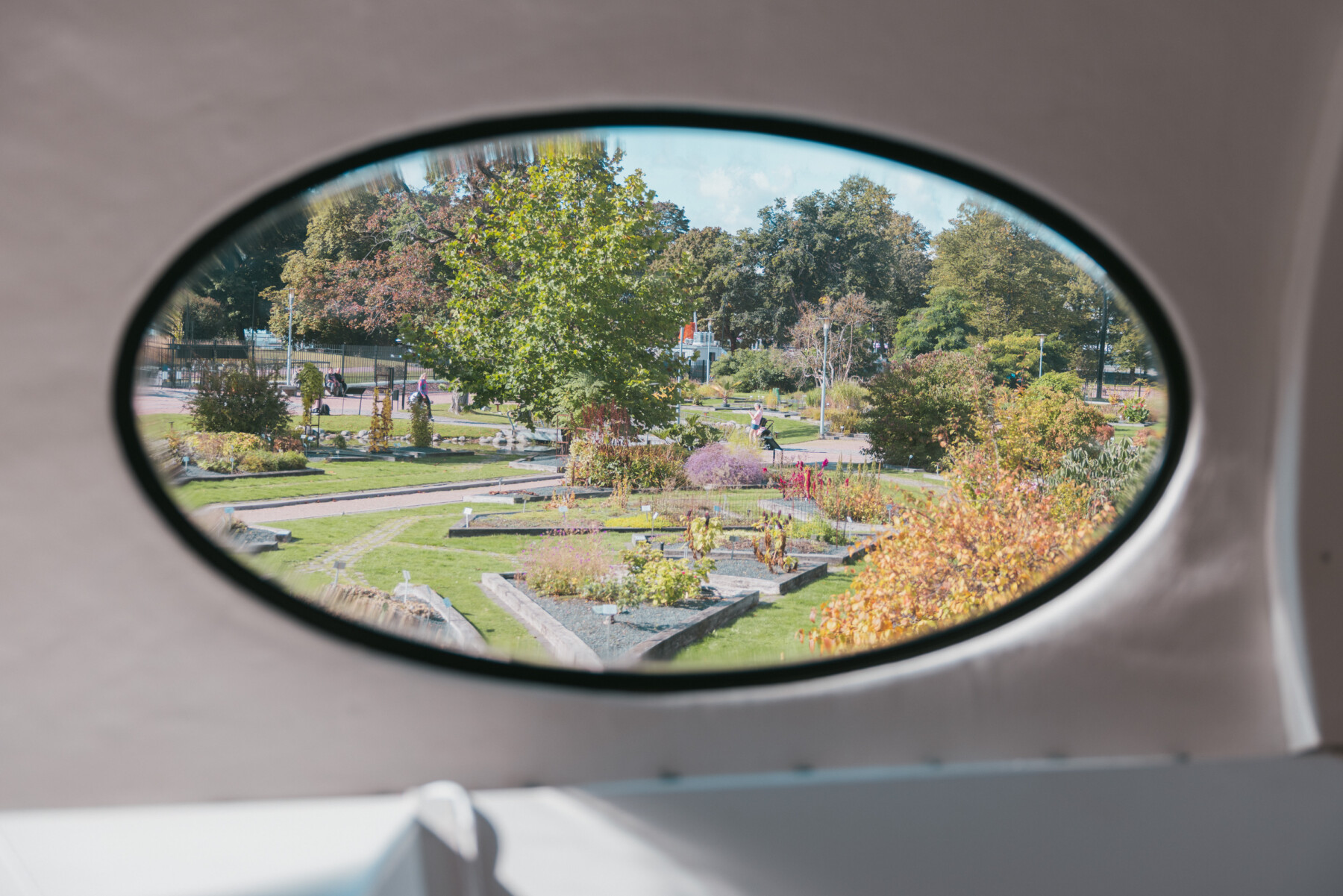
Part ski lodge, part summer cottage, part UFO. Futuros have served many purposes around the world, often equipped with all the comforts of home.
In the late 1960s, these were revolutionary ideas.
The era was defined by faith in technology and the future. Space exploration captured imaginations around the world, and many people genuinely believed flying cars were just around the corner.
Finnish architecture, meanwhile, was strongly influenced by functionalism – the idea that design should first and foremost solve practical problems. The Futuro combined both visions: practical engineering wrapped in a futuristic shell.
When the world fell in love with a UFO
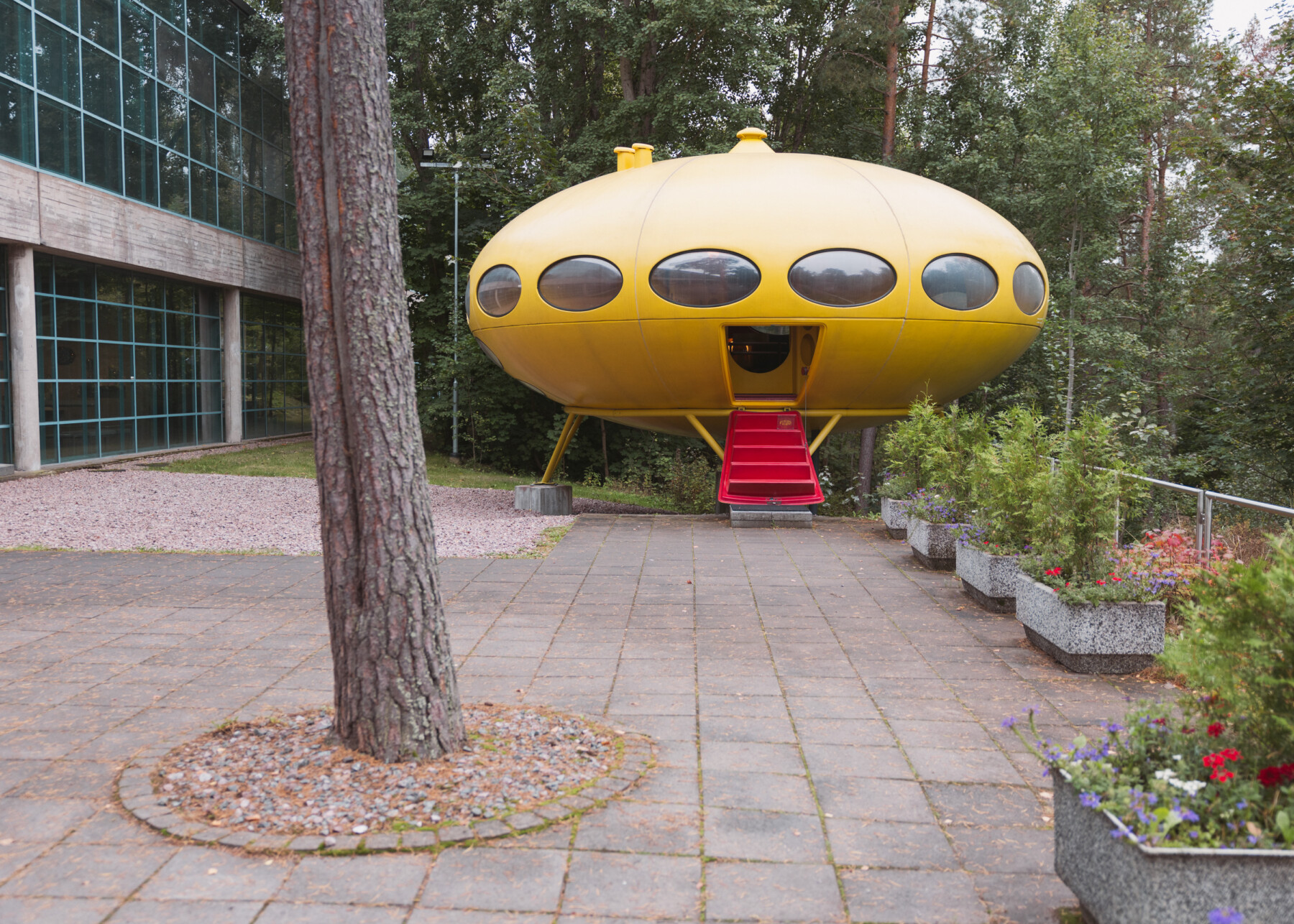
The yellow Futuro No. 001, manufactured in 1968, now rests behind the Espoo Museum of Modern Art, near Helsinki.
The first Futuro was unveiled in the spring of 1968.
Known as Futuro No. 000, it was painted light blue and placed at a private ski slope in southern Finland. The second, a yellow model numbered 001, became an extension to a summer cottage in Hirvensalmi, near the eastern Finnish city of Mikkeli.
Despite its compact size, the Futuro was fully equipped. Inside were six convertible seats, sleeping alcoves for two people, a fireplace, a kitchen and a bathroom.
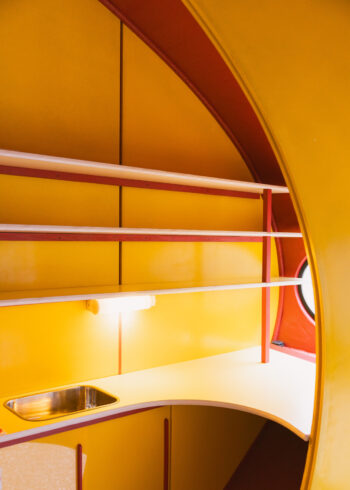
Despite its compact size, the Futuro included all the essentials for a weekend getaway, with a small kitchen, sleeping area, fireplace and toilet built into its futuristic interior.
It was the third Futuro, however, that captured international attention.
In autumn 1968, a yellow Futuro was displayed at a Finnish export exhibition in London on the deck of a ship moored on the River Thames. Visitors were fascinated. In the months that followed, manufacturer Polykem received more than 400 inquiries about production licences.
A Finnish export unlike any other
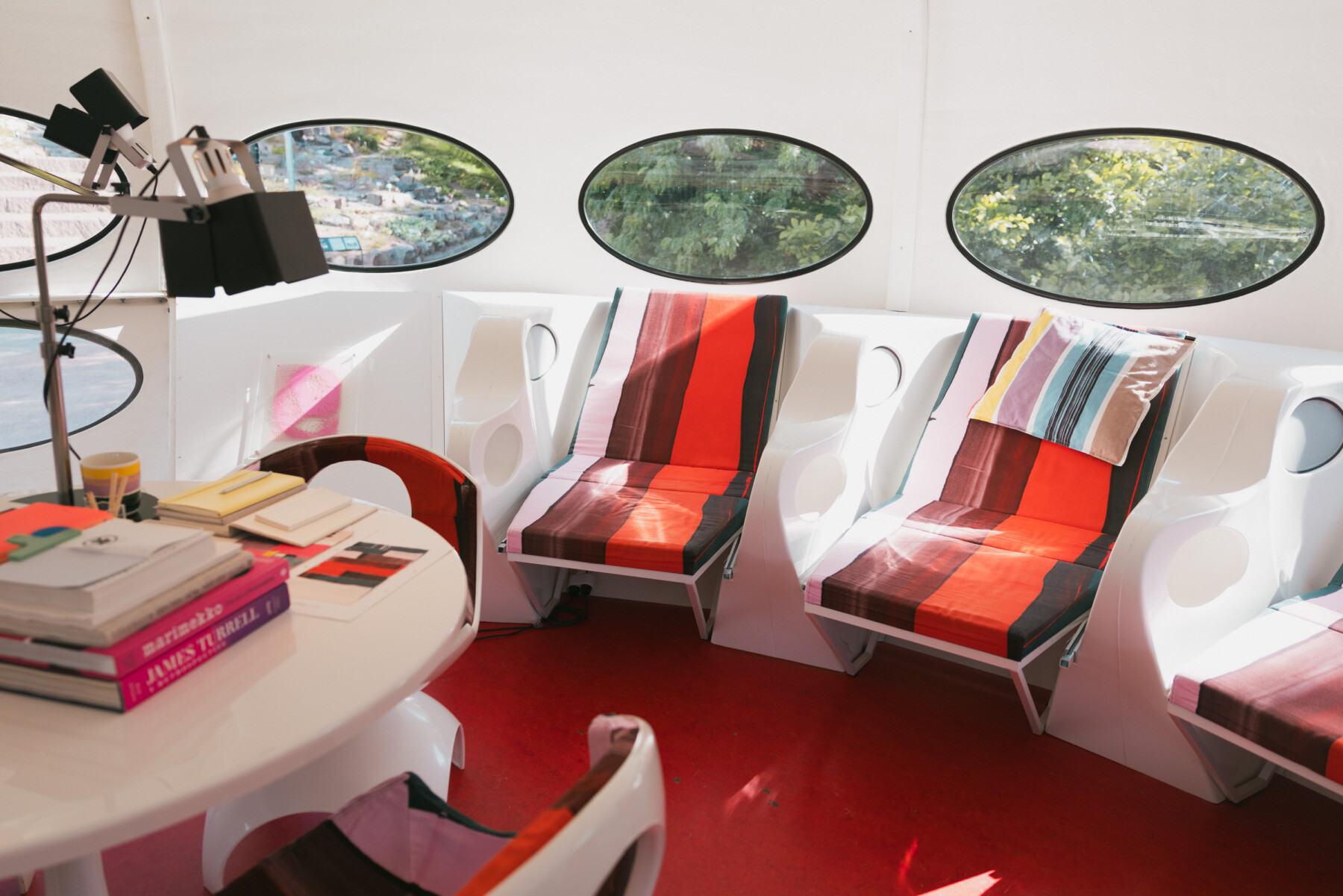
The Futuro’s interior features textiles by Finnish design brand Marimekko as part of its 2026 Helsinki Design Week installation.
Visitors queued to see the new Futuro during Helsinki Design Week.
Inside, Marimekko textiles and carefully chosen lighting make the compact interior surprisingly cosy. It feels less like a spaceship than a small, comfortable retreat.
Between 1968 and 1978, 20 Futuros were manufactured in Finland, 12 of them for export. Production licences were sold to 25 countries, and manufacturing began in ten of them.
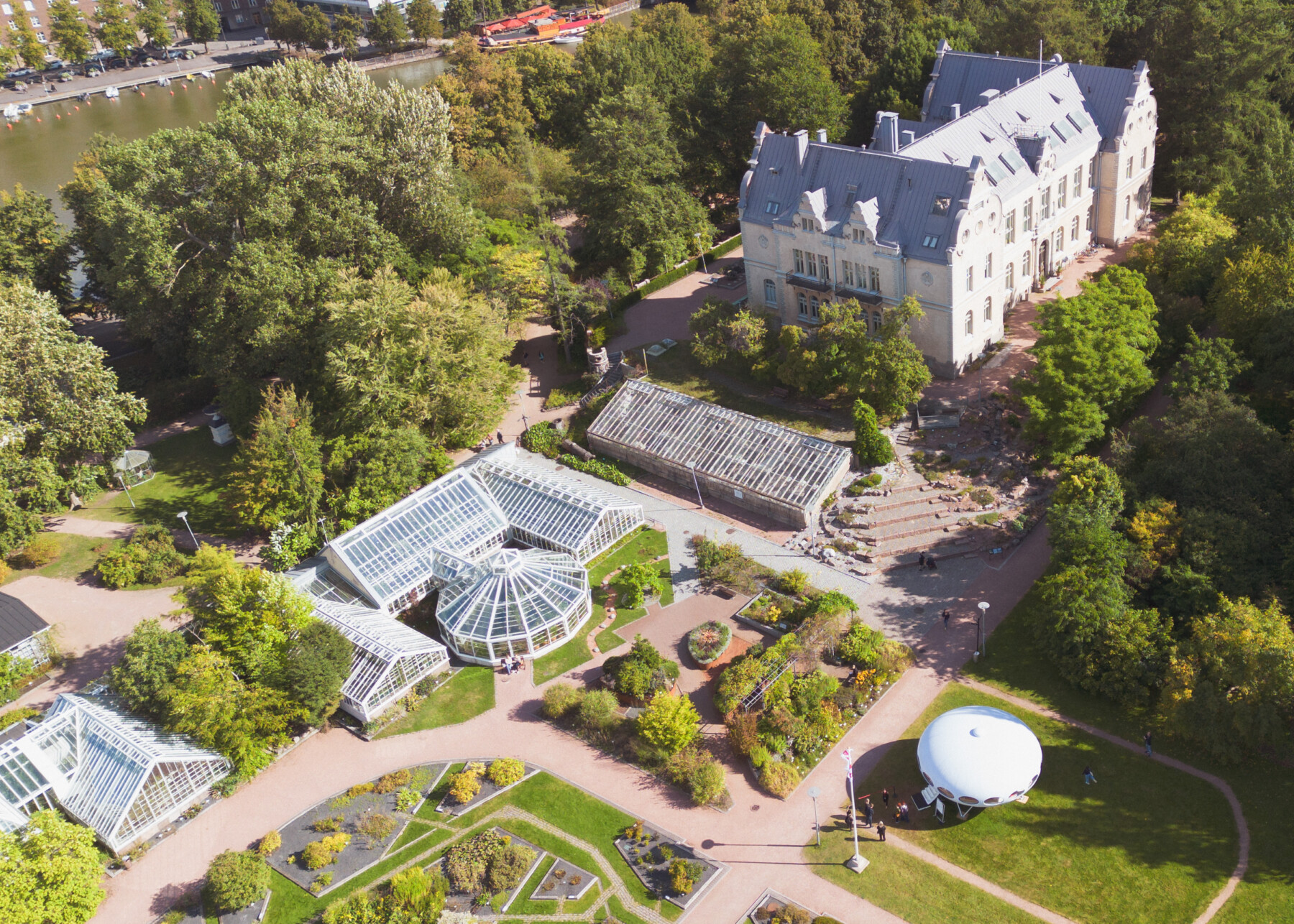
In autumn 2026, visitors could see the new Futuro at the Kaisaniemi Botanic Garden. Its final destination has yet to be announced.
The Futuro was a highly unusual Finnish export. At a time when Finland was known mainly for timber, paper products and functionalist architecture, the Futuro offered a radically different vision of Finnish design.
In total, fewer than 100 Futuros were produced worldwide.
Suuronen continued experimenting with reinforced plastic and designed an entire family of futuristic structures known as the Casa Finlandia series. The best-known after the Futuro was the Venturo.
A futuristic house meets the oil crisis
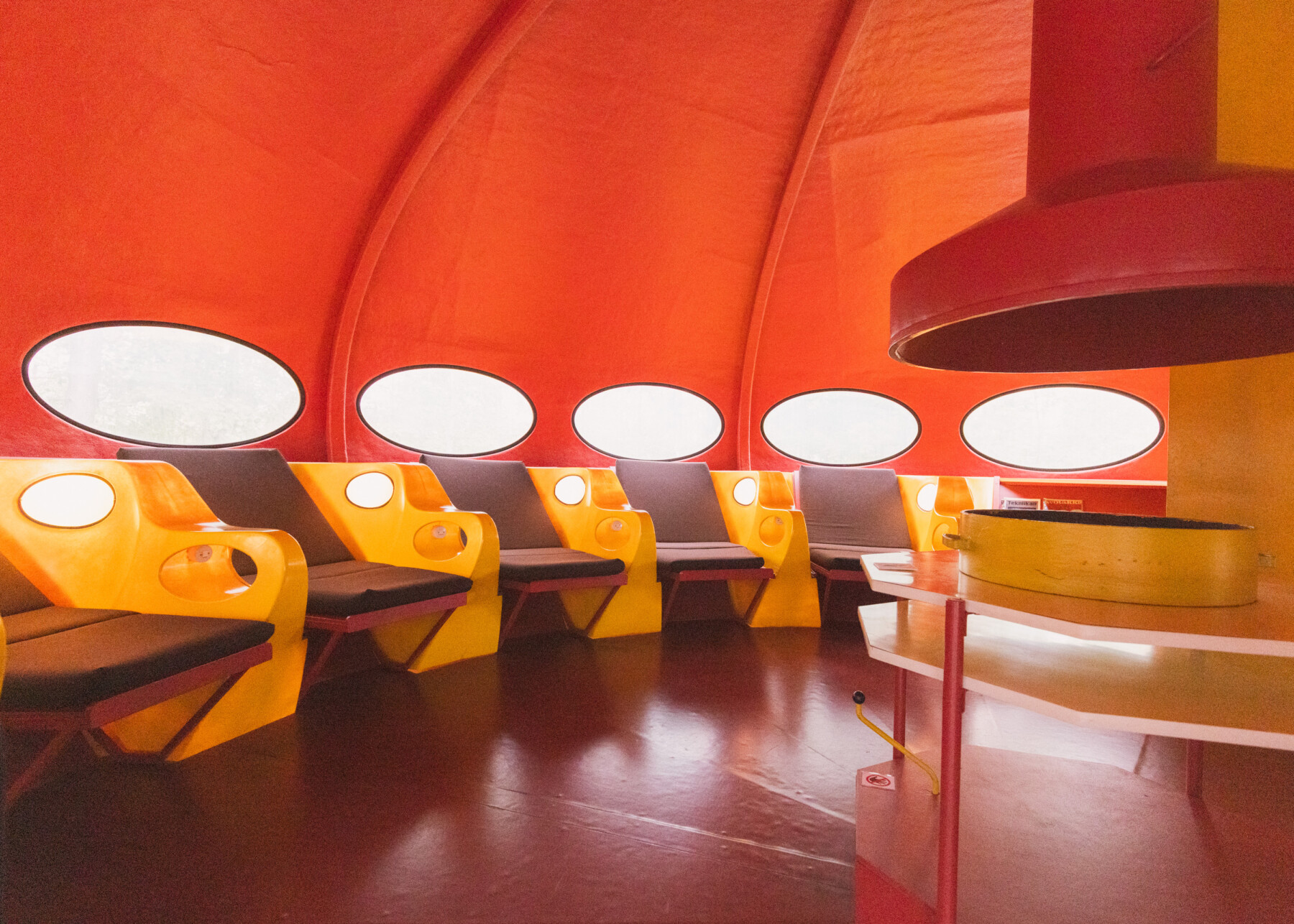
Over the decades, Futuro has found a second life in pop culture, appearing in music videos, adverts, TV and museums around the world. Many recognise the UFO-shaped building without knowing it is a Finnish design classic.
Despite the international attention, the Futuro never became a commercial success.
For many people it was simply too unusual and too expensive.
Then came the oil crisis of 1973. As oil prices soared, producing large plastic structures became far less attractive. The Futuro’s dreams of global expansion faded.
Yet the story did not end there.
Fewer than 70 Futuros are still known to survive. They can be found across Europe and in the US, Australia, New Zealand and Japan. Taiwan even has an entire village inspired by the Futuro concept.
Some houses were demolished. Others were abandoned and deteriorated.
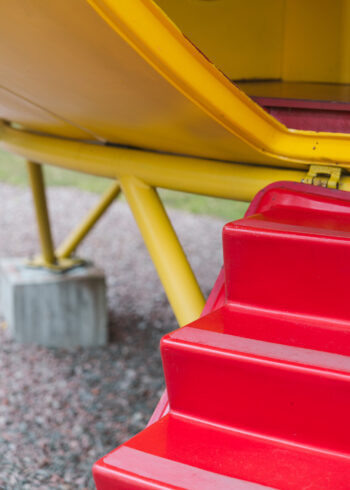
The surviving Futuro houses in Finland can be found in Espoo, Åland, Merimasku, Pöytyä and Kauhava.
Today, the Futuro is one of the best-known examples of Finnish futuristic design and a sought-after architectural collectible. It has appeared in music videos, advertisements, television programmes and museum exhibitions around the world. Many people recognise the UFO-shaped structure without realising it originated in Finland.
At least five Futuros remain in Finland. One can be found at the Espoo Museum of Modern Art, just west of Helsinki. The others are in private ownership.
So if you happen to encounter an elliptical UFO somewhere in the world, look twice: you may be looking at a piece of Finnish design history.
Futuro in brief
Designed by Finnish architect Matti Suuronen (1933–2013), the Futuro is a prefabricated house that embodies the future-oriented optimism of the 1960s.
The original colour options were white, yellow and light blue.
Constructed from fibreglass-reinforced polyester plastic, the house measures eight metres (26 feet) in diameter and four metres (13 feet) in height, with a floor area of 25 square metres (270 square feet).
The ellipse motif appears throughout the design: windows, light fittings, electrical outlets and even door handles repeat the same rounded shape.
By Emilia Kangasluoma, October 2026; photos by Emilia Kangasluoma unless otherwise noted
This article is partially based on information from Marko Home and Mika Taanila’s book Futuro: Tomorrow’s House from Yesterday (Desura, 2002).