Oh-so-sweet Finnish Christmas!

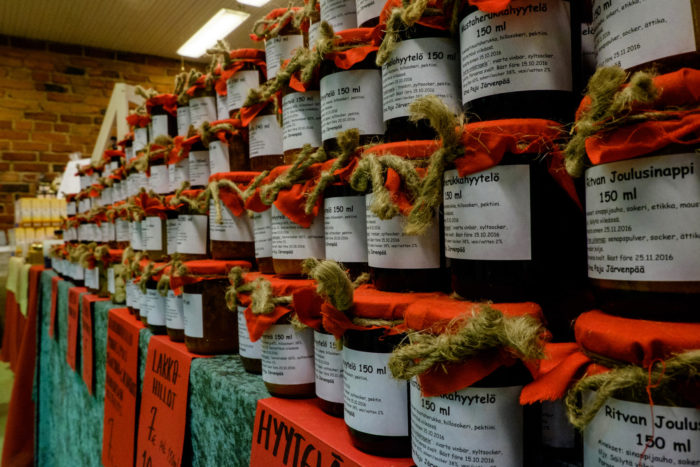
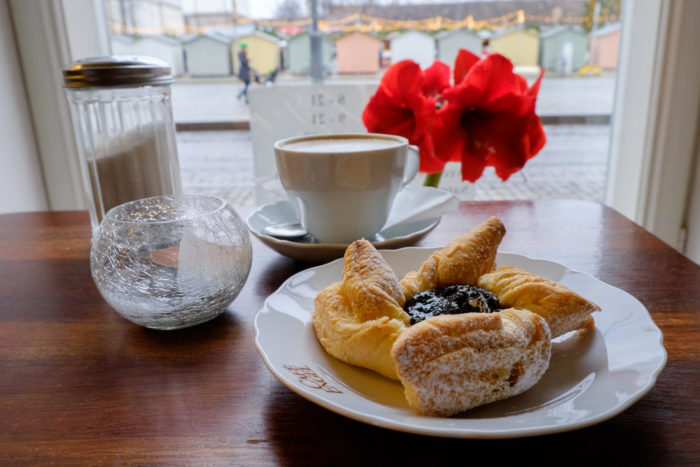
There is plenty to satisfy Finland’s collective sweet tooth as Christmas approaches, from candy and chocolate to hot drinks and pastries.

It only comes once a year, which is just as well for the Finnish national waistline, but an endless roll call of traditional treats heralds the arrival of the Christmas season. The New Year diet will come soon enough, so tuck into a visual feast on a Helsinki tour of seasonal Finnish goodies to get you in the festive mood.

By Tim Bird

Klaus Härö’s The Fencer launches Finland’s first ever crowd-funded Oscar campaign

The Fencer, Finland’s official entry for Best Foreign Language Film at the 88th Academy Awards next February, has launched the first ever Finnish crowd-funded Oscar campaign. The campaign, which opened on 18th November, subsequently announced it had already reached 10% of its goal within five days.

Director Klaus Härö and producer Kai Nordberg, the filmmakers behind the picture, have launched the campaign via Indiegogo, the world’s largest crowd-funding platform, as part of their extensive Oscars promotion plan. The goal is to raise funds for marketing efforts to help The Fencer secure its nomination.

Klaus Härö is one of Finland’s most internationally respected film directors, and The Fencer is his fourth film to be selected as Finland’s official Oscar entry for Best Foreign Language Film. Produced by Making Movies, The Fencer is a touching drama about love and a man who finds meaning in his life through the children who need him.

From the virtuoso to virtuosi

What would Jean Sibelius think if he knew his music is very appreciated all over the world by both musicians and audiences but his countrymen mostly know only his personal history?

Jean Sibelius
8 December 1865 – 20 September 1957Photo: Yousuf Karsh, Reprography: Taneli Eskola

Jean Sibelius was born 8 December 1865 and after 150 years he still remains the figurehead of Finnish music.
“If there’s one person who is the icon of the Finnish music, it is definitely Sibelius. He was the most famous Finn when alive and will most likely continue to be in the future too”, says Hannu Lintu, the Chief Conductor of the Finnish Radio Symphony Orchestra.

Yet Jean Sibelius is not a synonym for the Finnish music, says Sibelius Researcher Timo Virtanen from The National Library of Finland. There were composers before Sibelius, along side him and after him. Many composers of his time borrowed their approach from Mid-European, German-style musical traditions.

The Finnish sound was found at the turn of the 20th century through Sibelius. He created a style, which was at the same time national and universal. “There’s a strong recognisable Finnishness in Sibelius’s music but sometimes he felt like the Finnishness was overplayed. He wanted to be a cosmopolitan,” Virtanen reminds.

”Sibelius’s works should be approached through the music itself, not through a strong national feel”, Hannu Lintu agrees.

Finns know his bio better than music

Even though Sibelius is the National Composer of Finland, many Finns know of the details of his life from movies and biographies of his life, rather than through his music. The Finlandia hymn is the most recognisable of his works amongst Finns. The average layman can’t tell Sibelius’s effect on Finnish music but professionals hear its echo very strongly.

”Sibelius didn’t have his own school but the symphonic structure that many Finnish composers favour,  dates back to Sibelius. Of course another effect is that some composers have strived to take a totally different path, a different direction than Sibelius,” Timo Virtanen reminds.

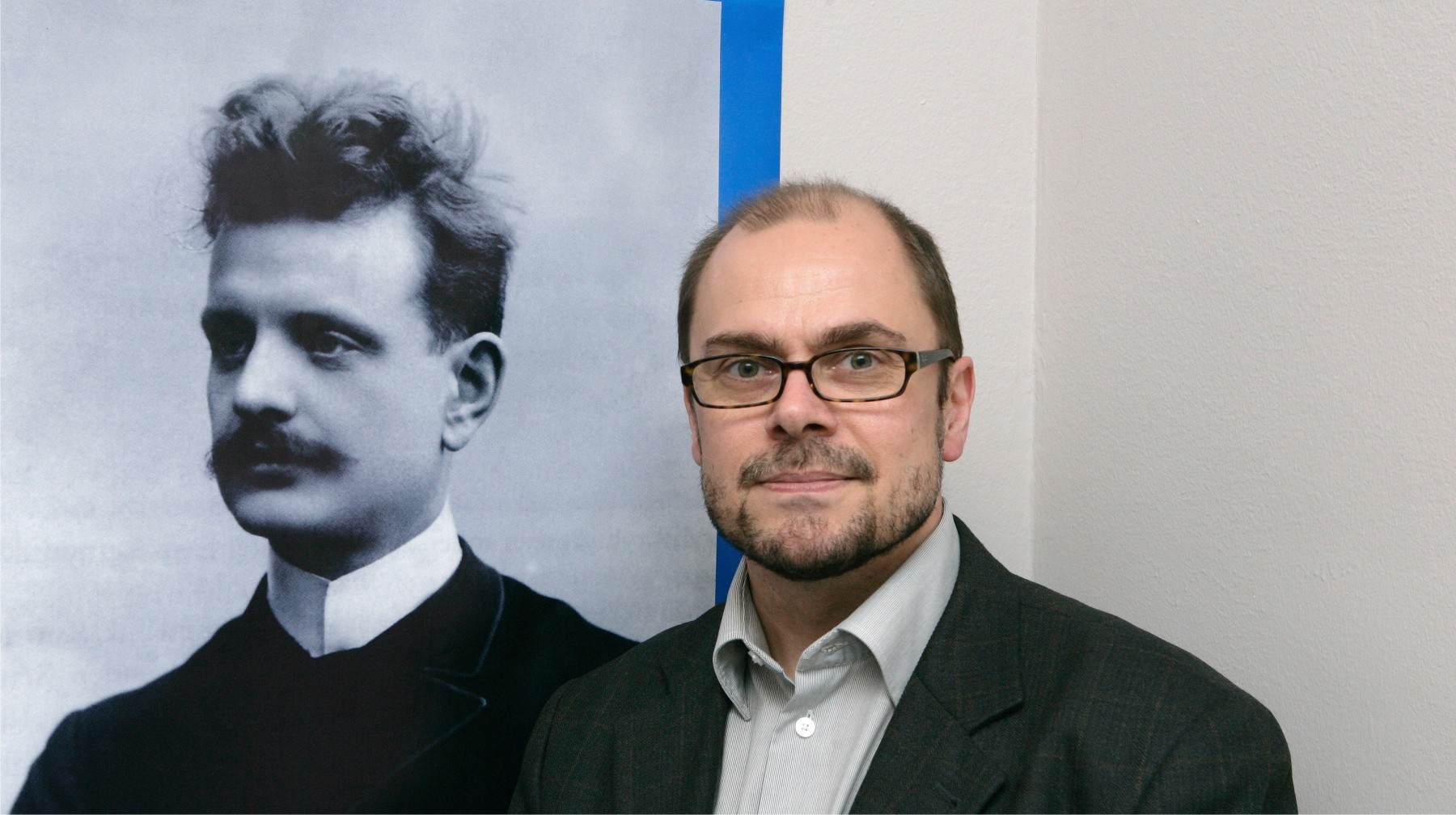
Timo Virtanen has worked since 1997 as the Editor-in-Chief of Jean Sibelius Works at The National Library of Finland. He thinks for his birthday the composer genius would have wanted to hear that his ever-so-appreciated work was collected together as a critical edition. For now, 26 parts of the total 52 has been published. “It would be so great to give him all the published parts and give him the promise that he will get all the rest eventually.”Photo: Timo Virtanen

Sibelius’s music is often called revolutionary,  especially his later works.  Compositions such as his 7th Symphony and Tapiola have a modern tone that intrigues modern musicians too.

‘The cursed violin concerto’

The Chief Conductor of the Finnish Radio Symphony Orchestra Hannu Lintu thinks that Jean Sibelius would have wanted a gift from musicians for his 150th birthday: “I think he would have been delighted if the musicians had come to thank him for his compositions. I believe that he would have appreciated that gift the most.”

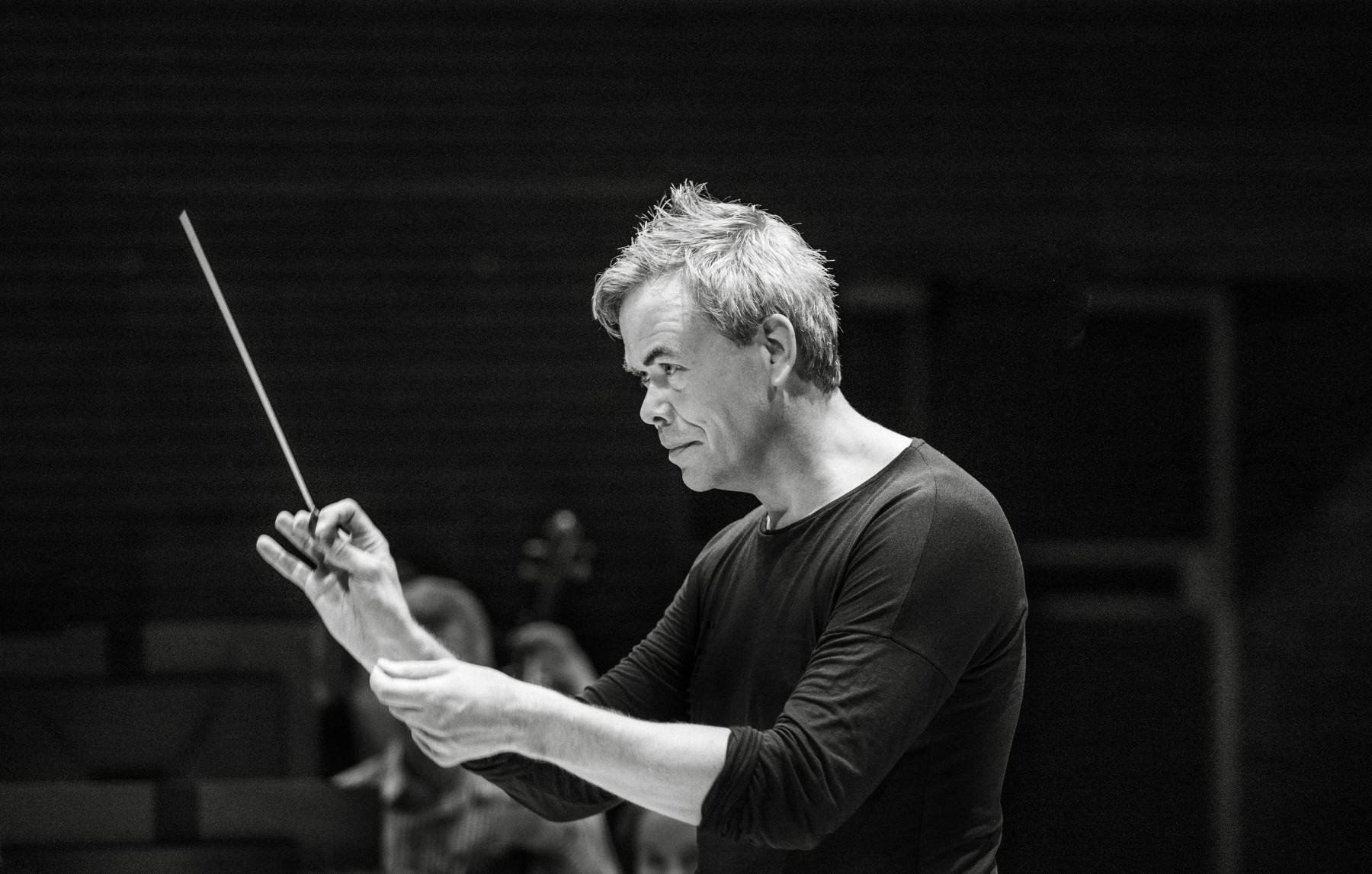
The Chief Conductor of the Finnish Radio Symphony Orchestra Hannu Lintu thinks that Jean Sibelius would have wanted a gift from musicians for his 150th birthday: “I think he would have been delighted if the musicians had come to thank him for his compositions. I believe that he would have appreciated that gift the most.”Photo: Veikko Kähkönen

Sibelius was ahead of his time in many ways say both Timo Virtanen and Hannu Lintu. The most famous example of his braveness, is his Violin Concerto, op. 47 d. It had its premier in 1905, but only grew to its full glory several decades later.

“It is a difficult, original and demanding composition for the soloist, the conductor as well as for the listener. Sibelius himself called it as a cursed i. e. lovely violin concerto. He used to call himself a phenomenon from forest and that’s what the violin concerto is from the point of view of his contemporaries: dark, melancholic and strange,” Virtanen sums up.

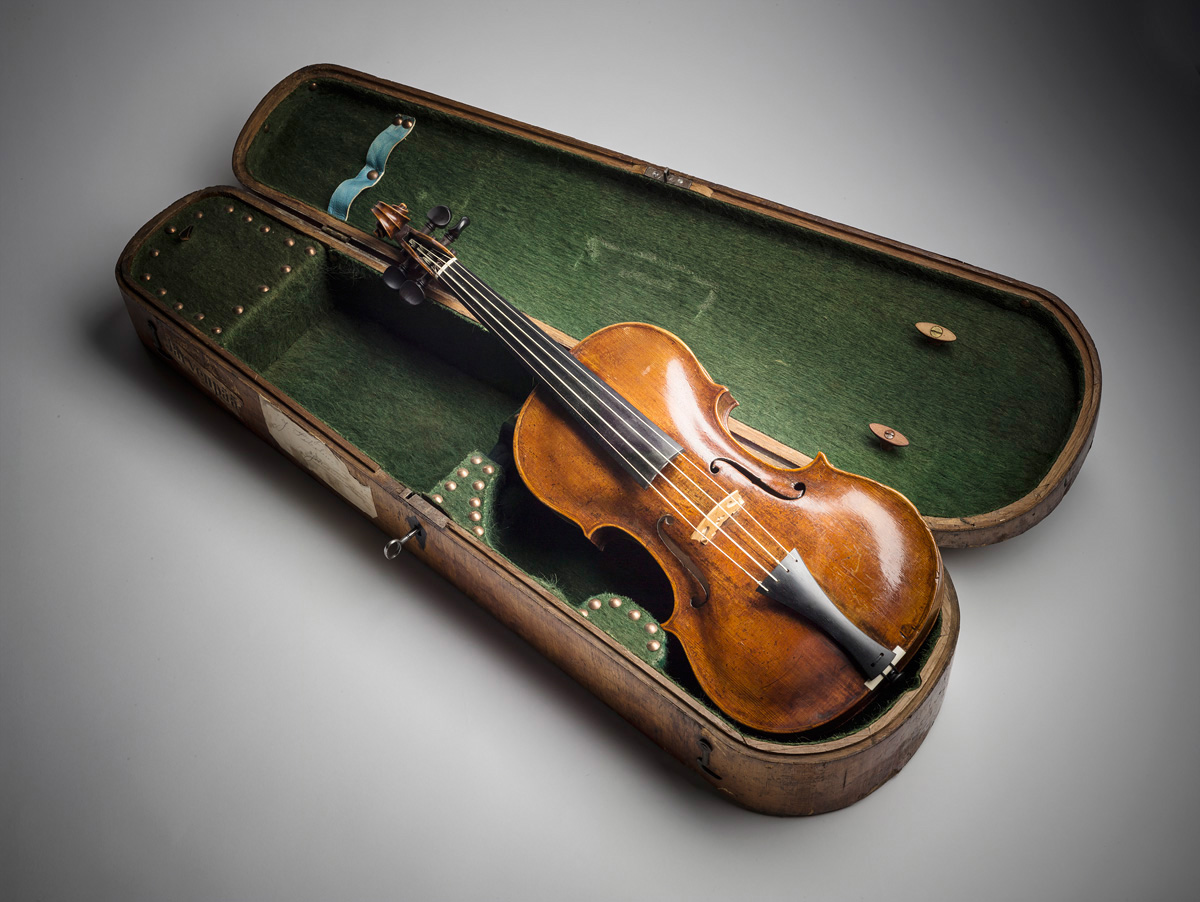
A violin given to Jean Sibelius in 1881 by his uncle. Builder Santo Serafin (1668-1748), Venice Italy. Private collection. Photo: National Board of Antiquities / Ilari Järvinen 2015

Today this Violin Concerto is the world’s second most recorded violin concerto after Vivaldi’s Four Seasons. What makes it so popular?

Timo Virtanen believes that the extraordinary balance between the showy concerto of virtuosis and a musically emphatic composition make the concerto both exciting and original, and is easily approachable but enchanting.
“It is not an easy piece to listen to, but it offers you bloomingly beautiful moments and a magnificent ending, which gives the listener a very up-lifting feel,” Virtanen describes.

Chief Conductor Lintu has conducted the Violin Concerto as well as other of Sibelius’s works  countless times all over the world.

“In the best performances the soloist has had a strong ability to perceive the unity, not just to focus on the composition with one tone at a time. The Violin Concerto demands virtuosity from a soloist. There are a lot of interpretation possibilities. The technical perfection isn’t enough. One kind of needs to get inside the composition,” Lintu imparts.

By Lena Nelskylä, December 2015

Jean Sibelius

1865–1957

– Internationally renowned and most recorded Finnish composer

– Main works:

Symphonies 1–7 (1899–1924)
Kullervo op. 7 (1892)
Finlandia op. 26 (1899)
Karelia-series, op. 11 (1893)
Violin Concerto, op. 47 d-molli (1905)

– Since 2011 Finland has had a flag day to honour Finnish Music and Jean Sibelius on his birthday, December 8.

Hannu Lintu

born 1967

– The Chief Conductor of the Finnish Radio Symphony Orchestra

– Known for his contribution to contemporary music and premier pieces

– Conducted numerous symphony orchestras around the world

Timo Virtanen

born 1965

– Doctor of Music, Docent at the Sibelius Academy, University of the Arts Helsinki

– Works as the Editor-in-Chief of Jean Sibelius Works at the National Library of Finland

Balancing tradition and cutting-edge

In autumn 2016 Susanna Mälkki takes charge as Chief Conductor of the HPO – not only the first woman in that post, but only the third worldwide in such a position.

Susanna Mälkki strides onto the Helsinki Music Centre stage in a slim-cut black suit. She’s a petite figure, earrings sparkling, blonde ponytail swaying – but immediately, decisively takes command of the Helsinki Philharmonic Orchestra’s 100-plus musicians. With energetic, fluid motions, she leads her force through a shattering Russian programme of Liadov, Shostakovich and Tchaikovsky.

Besides being the first woman to conduct a production at Milan’s la Scala, she’s led opera productions in Hamburg and Paris, as well as the top US orchestras in cities such as San Francisco, Los Angeles, Philadelphia and Chicago.

The Hot Event in the Cold North

The Slush event brings some of the biggest names in technology and innovation to Finland every November.

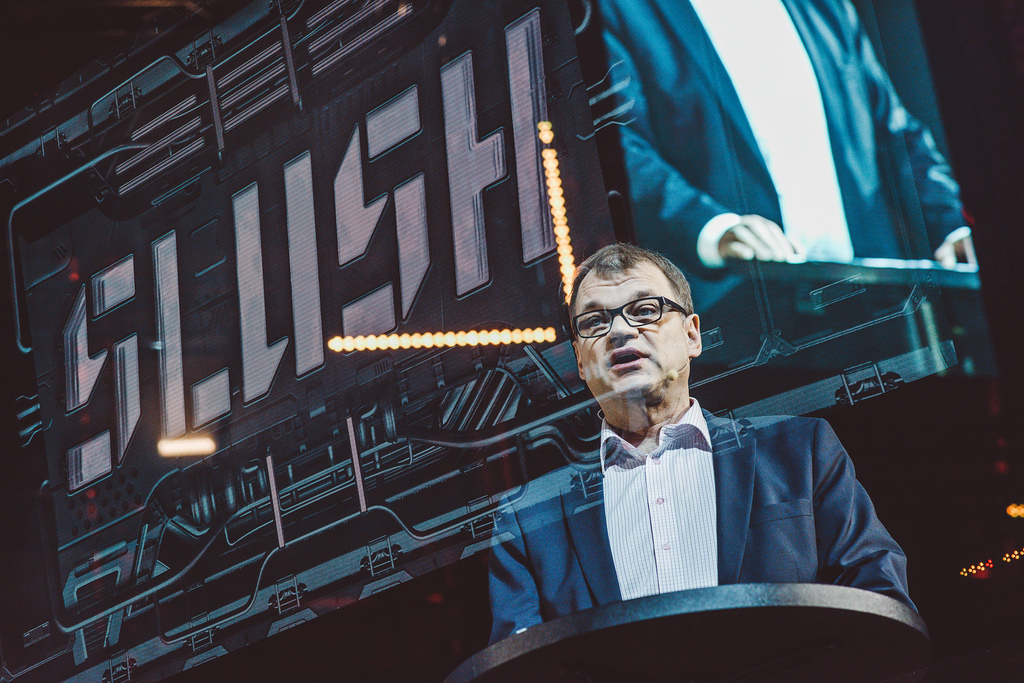
The Prime Minister of Finland, Juha Sipilä, opened the 2015 Slush event in style. Preceded by flashing lights, lasers and a throbbing bass track, he welcomed over 15,000 people from over 100 countries to the largest high-tech and startup event in northern Europe.

“Everyone in Finland is proud of Slush,” he says. “It is an amazing success story. Slush is the hottest event in the cold North.”

“Everyone in Finland is proud of Slush,” says The Prime Minister of Finland Juha Sipilä.

“Everyone in Finland is proud of Slush,” says The Prime Minister of Finland Juha Sipilä.Photo: Sami Välikangas

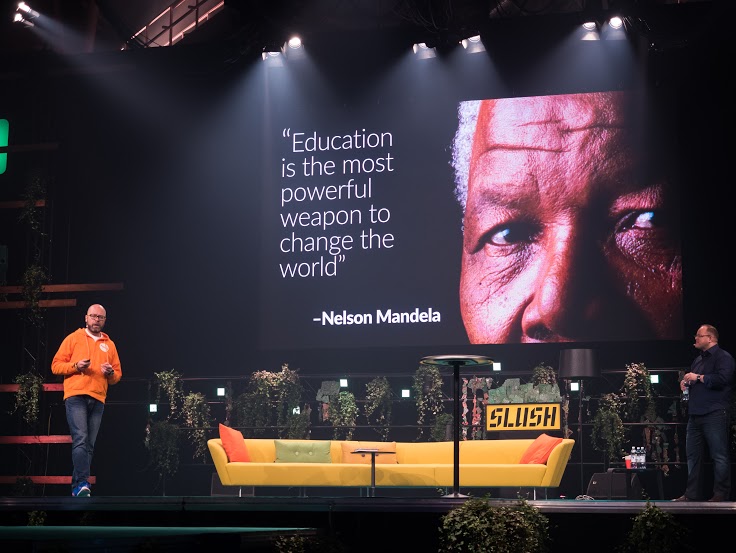
Some of the largest high-tech companies in the world attend Slush, such as Samsung, Google and Nokia, but the heart of the event has always been innovative startups. Hundreds of investors come to Helsinki to find great young companies.

This year several different industries are in focus, such as cleantech, gaming and biotech, but particular attention is on education technology. Combining the two national strengths of education and software has created many startups which aim to change how we learn.

Music education

Ilkka Räsänen, CEO of Mubik, opens up his application and Van Halen’s iconic song “Jump” begins to play. The game is simple: you follow along with the melody, pressing colour-coded buttons in time with the song.

“It is a cognitive music game,” Räsänen explains. “You learn as you play.”

He shows a Youtube video of a class of eight year-olds acting as an orchestra, each playing different instruments on their iPads.

“The kids made this song,” he says. “This was their first experience programming as well as their first experience playing an instrument!”

Mubik is already an innovative method of music education, but Räsänen hopes to find investors at Slush to help them expand their offering globally.

Emerging countries

Funzi focuses on entrepreneurship and personal development, as well as information for asylum seekers in Europe. “Europe has an opportunity to educate people coming,” says CEO Tero Salonen.

Funzi focuses on entrepreneurship and personal development, as well as information for asylum seekers in Europe. “Europe has an opportunity to educate people coming,” says CEO Tero Salonen.Photo: Funzi

Funzi is a small team which already has had a big impact. Their goal is to help educate people of emerging countries using mobile technology. Funzi’s first courses focus on entrepreneurship and personal development, as well as information for asylum seekers in Europe.

“Europe has an opportunity to educate people coming,” says CEO Tero Salonen. “It would be a crime against humanity if that opportunity is not used.”

Funzi teams with educational content providers and sees themselves as publishers using a mobile platform.

“Emerging markets don’t use wires,” Salonen continues. “Mobile devices are the key to delivery. That is a better way to educate people.”

By David J. Cord, November 2015

Finnish fintech trio make your everyday life easier

Startup event Slush brings together some of Finland’s most exciting startups in fintech.

How to organise a massive pile of receipts after a trip and then split the costs between friends? Or what if you want to be an entrepreneur, but you don’t have any accounting qualifications? How about when an opportunity to buy your first apartment comes knocking at your door, but you need to pack your bags immediately for a long-awaited trip to California? How to be sure that your personal finances can manage all this?

Thankfully, financial technology has made the leap into digitalisation and a wave of fintech companies emerging from this disruption are now solving our problems.

Pop the scientists’ bubbles!

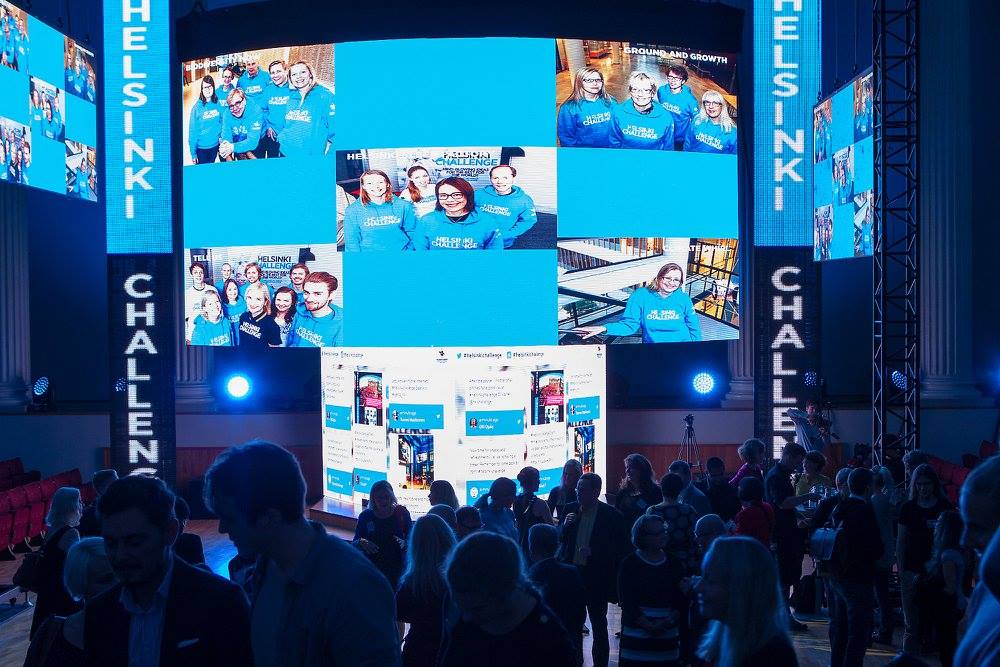
Helsinki Challenge is a new science-based competition and idea accelerator which looks for solutions to some of the world’s biggest challenges. Teams are studying climate change, the future of learning, urban development and even the morality of machines.

Michael Laakasuo is thinking about killer robots. This isn’t in regards to a new game or scifi novel; he is thinking about modern robotics and artificial intelligence. Robots are gaining more and more power: they are able to fly us, drive us and even kill us. But few people have considered the implications.

“Military robots already have the capacity to decide whether to open fire or not, but they just don’t do that yet,” he says. “Up to now the major problems have been about engineering: how to make this work. The questions of morality or how to implement these things from a moral perspective has not been in the forefront.”

The five finalists of the Helsinki Challenge are: Biodiversity now, Helsinki Sleep Factory, Moralities of Intelligent Machines, NEMO and Safepreg.Photo: Helsinki Challenge

Mentors and collaborators

Helsinki Challenge is an unusual way for science projects to be funded. This is an actual competition, with dozens of teams competing for a 375,000 euro prize. But what is even more important is the innovative way the projects are developed.

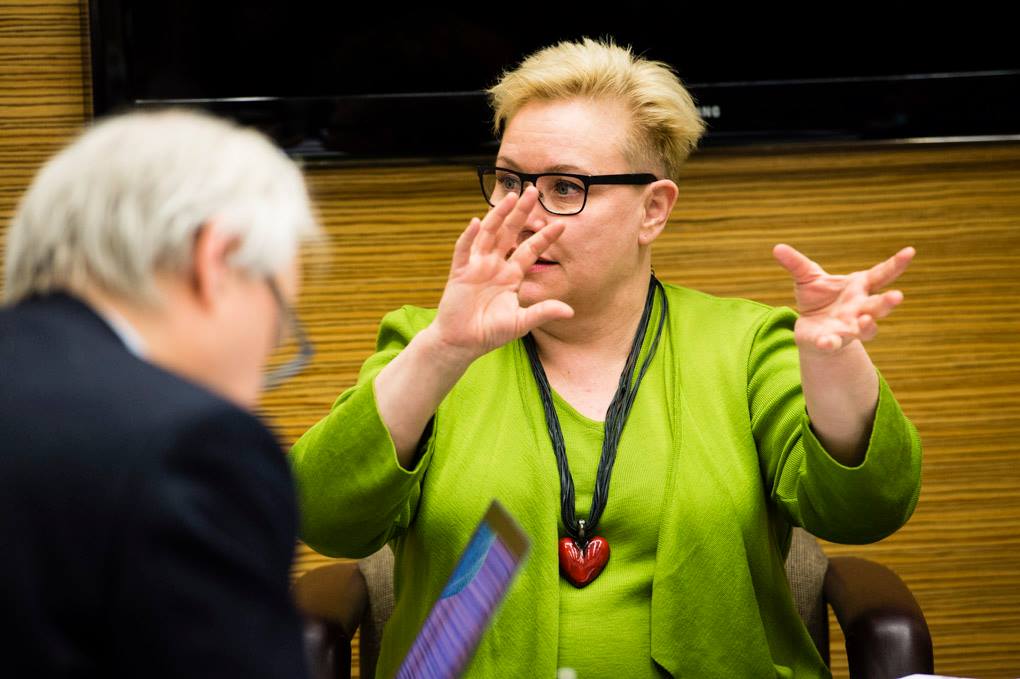
“I felt I most helped as a matchmaker between these projects and other ongoing European and national processes,” says Sirpa Pietikäinen, Member of European Parliament and Helsinki Challenge mentor. “I do however think that I also learned a lot myself!”

Member of the European Parliament, Sirpa Pietikäinen mentors Helsinki Challenge teams.

Member of the European Parliament, Sirpa Pietikäinen mentors Helsinki Challenge teams. Photo: Veikko Somerpuro

Pietikäinen explains that one main goal of the Helsinki Challenge process is collaboration. Scientists and academics often work in bubbles, cut off from the rest of the world. But here the teams meet and work with each other. They also go to camps to talk to business leaders, politicians, the media and members of the public. This is a two-way street: not only do the teams get inspiration from those people outside science, these outsiders also learn from the teams.

“The camp was one of those great, all too rare high points in a politician’s career,” Pietikäinen says. “Everyday politics often means dealing with just the problems at hand. We need time to think about new ideas, projects and opportunities, too.”

Think differently

“This has been a fantastic opportunity for ‘traditional’ researchers to really think of the relevance of science in society,” says Anu-Katriina Pesonen. “I think Helsinki Challenge has already shaped my concept of making science! I am curious to see where this path is taking me.”

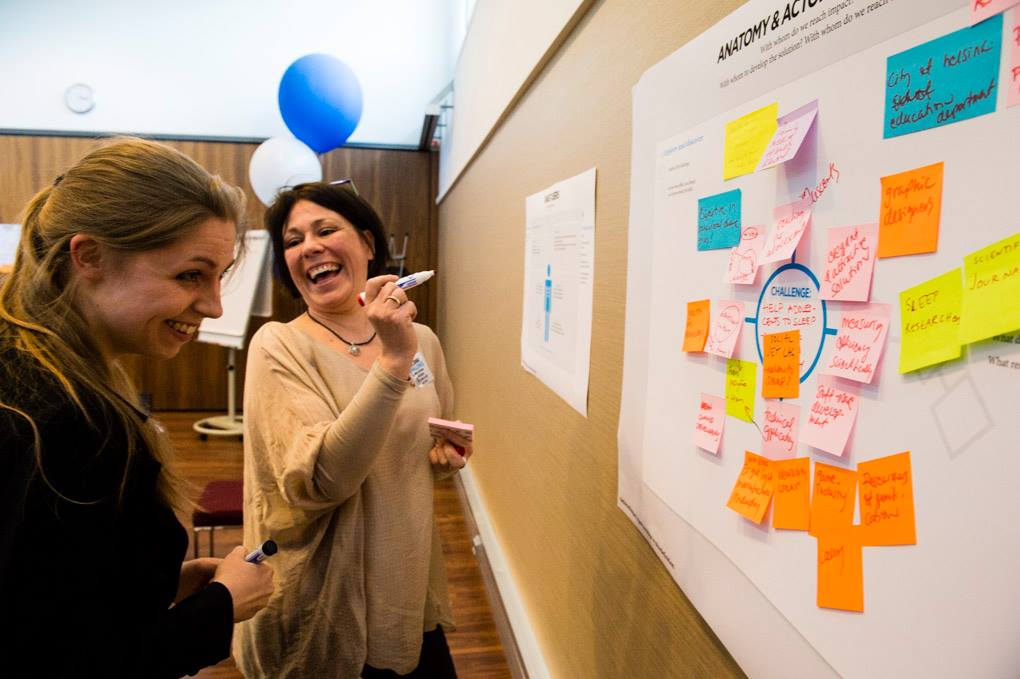
Pesonen is part of the Helsinki Sleep Factory team, which aims to solve the unique problems of adolescent sleep. About 15 percent of adolescents have delayed sleep symptoms, which can affect their education and hence their adult lives. The team concentrates on the social, motivational and cognitive issues which contribute to sleep problems.

Helsinki Sleep Factory identifying their anatomy of impact.Photo: Veikko Somerpuro

“We have learned so much from our collaborators and stakeholders, and plunged into processes we would never have experienced without Helsinki Challenge,” Pesonen says. “We have taken the opportunity to think slightly differently about making science, we have taken more risks, and made creative openings that exceed the normal protocol when applying for research funding.”

Public interest

Michael Laakasuo’s team, Moralities of Intelligent Machines, at first wanted to conduct research using vignettes and simple questionnaires to discover how people thought about machines and morality. But the strong feedback they received has led them into more immersive research, such as with 3D goggles and virtual reality technology.

“I think the best thing about Helsinki Challenge has been that the contact with people and the public events seem to confirm that this topic is relevant,” he says.

“I have learned how easy and fun networking can be and how the world actually opens up if you just give it a chance. Previously during my career I found networking to be difficult and almost painful. Now the Helsinki Challenge has shown me that it is not actually that bad, and that maybe networking and talking to people could actually be fun.”

The Grand Finale of the Helsinki Challenge will be held on Thursday 12 November 2015.

By David J. Cord, November 2015

On the trail of sustainable business at Slush

Technology and startup conference Slush might still be perceived by many as a meeting place for game companies. In reality, the event draws all kinds of enterprises: for example, those seeking financing for businesses that promote sustainable development.

Sometimes the best thing about travelling is meeting the local people – moments where you suddenly blend into the crowd and become part of someone else’s life.

This is also something the founders of Duara Travels have experienced while travelling in developing countries. These experiences led to the idea of a web-based service through which travellers can find accommodation with a local family. The majority of the accommodation fee goes to the host family, and a portion goes to the community’s village bank and to Duara.

“We want travellers to see where their money goes and how their trip affects the life of the local community,” explains Johanna Vierros, one of Duara’s three founders.