Family-friendly Finland

Finns pay high taxes but get a lot in return for their money. Families with children are especially well taken care of by society, and their lives are made easier by the many types of support and benefits available.

Let’s meet the Tuurala family from Helsinki and see how they benefit from society’s support for families with children. Clicking on the underlined words will bring up more information about the forms of support available in Finland.

Kati and Klaus Tuurala and their daughters Freja and Iiris (6 and 4 years old at the original time of publication) live close to the centre of Helsinki in Ruoholahti. They lead an active life and earn an average income.

Kati, 36, works full-time and her husband Klaus, 61, is retired. His last position was at telecoms company Sonera as a usability expert. He has used his retirement to return to studying at the University of Helsinki. The couple’s daughters are in municipal family daycare and Freja also attends preschool. But before going into greater detail, let us turn back the clock six years to when Kati and Klaus were about to become parents.

The big day

When Kati discovered she was pregnant, she did what all mothers-to-be do in Finland. She got in touch with the prenatal clinic in her own area. There she was assigned a midwife whose clinics she attended at least once a month during the pregnancy for check-ups and observation.

Kati was allowed to choose in which of the three local area hospitals that were part of the Hospital District of Helsinki and Uusimaa she would like to give birth. She chose the Kätilöopisto Maternity Hospital because of the homely Haikaranpesä (Stork’s nest) ward, which is especially for women wishing to have a natural, active birth. As prospective parents in the ‘Stork’s nest ward’, Kati and Klaus went and had a look at the maternity unit and met the staff in advance.

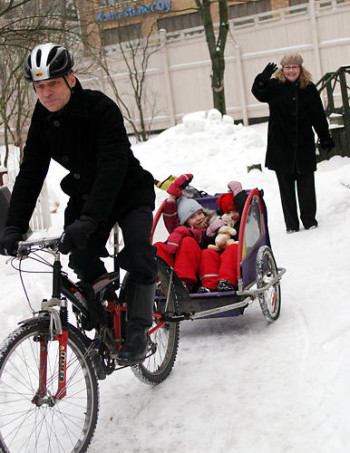
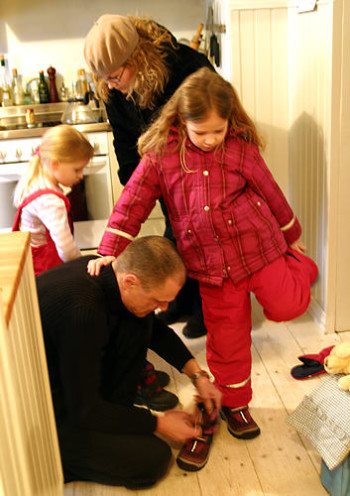
Wrapping up warm on a winter morning.

Wrapping up warm on a winter morning.Photo: Elina Bicsák

The couple discussed the birthing plan with the midwife, and familiarized themselves with the equipment and methods used to ease the birth and relieve pain. They also took part in antenatal classes held at the Stork’s nest with other expecting couples. Prospective fathers had their own discussion group. The birth went well, and the couple were left with pleasant memories of the event.

Klaus was present at the birth, and the whole family spent the night at the hospital in their own room. The midwife assigned to them for the birth visited them at home during the baby’s first weeks to check on progress and to teach the parents how the baby should be carried in a baby sling. The Tuuralas had everything ready for the baby on her arrival home, including little vests and suits in the cupboard together with the babycare equipment. Some of the baby gear they had bought themselves, while some they had received in the maternity package supplied by the state.

Kati went on maternity leave from Akava, her employer at the time, 5 weeks before the due date. Klaus took three weeks paternity leave when the child was born. When baby Freja was about four months old, Kati continued to look after her on parental leave and for some months after that on care leave. A daily allowance paid by the Social Insurance Institution (commonly known by its Finnish abbreviation, Kela) guaranteed the family income during these periods of leave.

Since the birth of Freja, the state has been paying child allowance directly into the parents’ bank account. This allowance will continue until the child reaches 17 years of age.

Back to work

Kati returned to work when Freja was 16 months old. She taught as a part-time teacher while finishing her teacher-training studies at the same time. The Tuuralas applied for a municipal family daycare place for Freja and their request was successful. Freja was looked after near home by a friendly lady called Riitta. The family’s second child, Iiris, was born when Freja was 2 years and four months old. The birth and benefits for the child were as before, with the exception that instead of the maternity pack the Tuuralas opted for the maternity grant and a higher rate of child allowance was paid for the second child.

And off we go to school.

And off we go to school.Photo: Elina Bicsák

Kati went to work for the publishing company WSOY a year after Iiris’s birth, and Iiris was able to go to the same family daycare as Freja, which both girls are still attending. Freja, who starts school next autumn, attends a preschool class at a nearby daycare centre in the mornings, and in the afternoon is in Riitta’s care. If one of the children falls ill she cannot go to daycare but must remain at home. In a situation like this, one of the parents has the right by law to stay at home to look after the sick child. If she so wished, Kati’s former employer, WSOY, would also pay for a carer for the sick child for the days when Kati had to be at work. Now that Klaus has retired he looks after the children at home when they are sick.

Fortunately, the Tuuralas’ children have been healthy. Since their birth, the children have attended their local child welfare clinic to be examined by a doctor or nurse at least once a month during their first year and after that at least once a year. The children’s growth and development is checked at the clinic and they receive vaccinations in accordance with the national vaccination programme. The children’s teeth are also checked at the clinic’s dental surgery once a year.

If they become unwell and need to see a doctor, they will be seen on the same day in the emergency medical clinic of their local health centre or at the city’s emergency clinic for children. If they have symptoms requiring further examination or treatment by a specialist, they will be referred to the children’s hospitals in the Helsinki and Uusimaa Hospital District. All services provided by child welfare clinics, dental clinics and health centres are free for children.

Home sweet home

The Tuuralas’ home is cosy, but not very large; many families with children face the same situation since living costs in Finland, and Helsinki in particular, are relatively high. The government alleviates this problem by allowing a tax deduction for interest on owner-occupied housing.

Families with children are never short of housework. The Tuuralas get some respite thanks to their home help, Leena, who comes to clean their home once a fortnight. The Tuuralas can offset the wage and social costs they pay on her behalf against their own tax as a domestic help credit. When they modernised their kitchen a few years ago, they were also able to deduct the labour costs of the builder and plumber from their taxes.

When their daughters were small, they attended infant swimming lessons with their parents and mother and toddler exercise classes. Nowadays, Klaus takes Freja to the fairytale gym every week and while she is there he takes Iiris to choose books to take home from a special children’s library. The children’s pastimes do not cost much because the facilities are provided by civic organizations that receive financial assistance. The girls spend some time every week in the local children’s play park, which has outdoor playground equipment provided by the local authority and is supervised during the daytime.

Does reading this leave you breathless? Perhaps it’s no surprise that there are dozens more forms of social support and services for families with children in Finland that could be described, but we included the most important ones here.

Effective family policies have achieved at least two things: Finland has for a long time had one of the lowest infant mortality rates in the world, and mothers have a significantly better chance of being active in working life than in many other EU countries.

Why not join Freja and Iiris? Put your ice skates on and head for the rink in your local park — which the council workmen have just iced over to the great delight of the local youngsters.

By Salla Korpela, updated April 2016

Helsinki’s Senate Square

In 1809 Finland was annexed by the Russian Empire and became an autonomous Grand Duchy. Until then Finland had been an integral part of the Swedish realm for more than 600 years.

Finland’s destiny was sealed in Tilsit, in 1807, when Napoleon and the Russian Tsar Alexander I came to an agreement on their respective spheres of influence. Finland, situated in the Russian sphere, was conquered in the Finnish War of 1808–09.

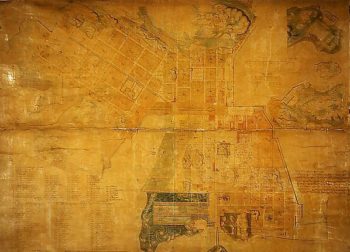
Ehrenström’s city plan, 1820Drawing: Captain Anders Kocke

The cornerstone of modern Finland was laid in 1809 at the Porvoo Diet, where Tsar Alexander proclaimed himself constitutional ruler of the new Grand Duchy and promised to maintain the faith and laws of the land (Porvoo is located about 50 kilometres (about 30 miles) east of Helsinki). Historian Matti Klinge has pointed out that Sweden ceded a mere conglomerate of provinces to Russia; the Porvoo Diet united them as a state, “raised to the rank of nations.”

The creation of a capital was a clear indication of the Tsar’s will to make the new Grand Duchy a functioning entity. Under Swedish rule, the southwestern city of Turku (called Åbo in Swedish, which is still one of Finland’s official languages) had been the administrative and spiritual centre of Finland, but Stockholm had of course been its capital. In 1812 Alexander declared Helsinki – a small town of about 4,000 inhabitants – the capital of the Grand Duchy of Finland. In 1808 the town had been badly damaged by a fire in which one third of the residents had lost their homes.

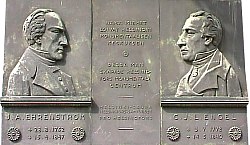
This plaque on the wall of the university library terrace reminds passers-by of Ehrenström’s and Engel’s achievements.Photo: Matti Hurme

On the same day as Alexander declared Helsinki the new capital he appointed the military engineer Johan Albrecht Ehrenström, a former courtier of Sweden’s King Gustav III, head of the reconstruction committee. Ehrenström’s task was, in accordance with the wishes of Tsar Alexander, to rebuild the new capital in an unprecedentedly grand manner, “in order to show both Finns and the outside world that a new political unit, the Grand Duchy of Finland, had come into being,” as Klinge puts it.

In 1817 Ehrenström’s final town plan was ratified. Senate Square, bordered by a church and various administrative buildings, became the monumental centre of the plan. In the words of art historian Riitta Nikula, Ehrenström thus created “the symbolic heart of the Grand Duchy of Finland, where all the main institutions had an exact place dictated by their function in the hierarchy.” Ehrenström’s plan provided a fine outline for the construction of the new capital, but without a skilful architect the whole project could have faltered. Fortunately, he found one in Prussian-born Carl Ludvig Engel.

Carl Ludvig Engel and Senate Square

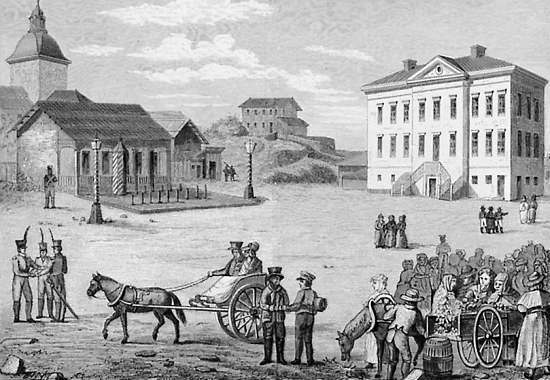
Senate Square in 1820© The National Library of Finland/Drawing: C.L. Engel

Carl Ludvig Engel (1778–1840), who had received his diploma in architecture from the Berlin Bauakademie in 1804, found no work in Prussia during the Napoleonic Wars. He applied for and received an appointment as city architect in Tallinn (Estonia). Soon he visited Finland and was asked to design an observatory for the Academy in Turku.

Ehrenström first met the talented young architect in 1814 and was immediately convinced that he had found the right man. After spending a couple of years in Saint Petersburg, Engel considered moving back to Berlin, but he was appointed architect of the reconstruction committee for Helsinki in 1816 and remained in Finland for the rest of his life.

Engel was thrilled by his new task: “Few architects have the good fortune to plan an entire city,” he explained in a letter to a friend. And Engel had every right to express himself this way; within a quarter of a century he had designed and completed about 30 public buildings in Helsinki, all in his chosen Neoclassical (Empire) style. Some of the buildings have been demolished, but his most important creations around Senate Square are preserved.

The first building to be completed was the main wing of the Senate (now the Palace of the Council of State) in 1822. The main University building, on the opposite side of Senate Square, was inaugurated in 1832. The general form of the building is similar to the Senate, but another expression can be found in the details. The University Library, completed in 1844 after Engel’s death, has often been praised as his most beautiful building.

No building task occupied Engel so long as the Lutheran church on the northern side of Senate Square. He worked on it from 1818 until his death in 1840. The Lutheran Cathedral, then called the Church of Nicholas, dominated the square and was finally consecrated twelve years later, in 1852. By the middle of the century, the new Empire-style Helsinki was finally ready. In his book Senate Square, professor Nils Erik Wickberg describes the result in the following way:

“It was a city in light colours – mainly yellow and grey – in which practically every building was in the same style, with the same kinds of cornices, window surroundings, pilasters and pediments and with the same low roof slope. There it lay, resplendently framed by sea inlets and bare masses of grey rock, which was later built on or converted into parks. When the distinguished poet, Bishop Frans Michael Franzén, who had moved to Sweden in the same year Ehrenström returned to Finland, visited Helsinki in 1840, he compared the city to a butterfly which has flown out of its cocoon and to Thebes charmed into place with the music of Amphion’s magic lyre.”

Ever since, the institutions responsible for guiding and governing the destiny of Finland have been located in the same buildings around Senate Square, and the square itself has been the venue of a great number of important gatherings and celebrations in the history of both the Grand Duchy and independent Finland. When, in the year 2000, Helsinki commemorated its 450th anniversary, the splendid Senate Square was a focal point for the celebrations.

By Frank Hellstén, June 2004

Sámi language in the digital age

After this article, your spellchecker’s red lines will never seem the same again.

Spellchecker – it seems like such an insignificant thing, doesn’t it? It’s not often you click on “Check spelling” and think, “This function is a small part of a larger effort to help this language survive for the next generation.”

But that’s precisely how Sjur Moshagen and his colleagues think. A Norwegian linguist who lives in Helsinki, Moshagen develops wordlists and source code for computer spellcheckers in the Sámi languages. “The most important thing is of course that parents speak Sámi with their children,” he says, “but a spellchecker can play a big role for a language.”

A word about language

Perhaps a word about the Sámi languages is in order here. They are distantly related to Finnish. Moshagen uses the plural, “languages”, since ten dialects exist or have existed, some so distinct that experts may refer to them as separate languages.

Six variants of Sámi are still spoken, while the others have become extinct or are used by only a handful of people. The Sámi-speaking area covers the roof of Europe, stretching over Norway, Sweden, Finland and a corner of Russia. Those countries’ majority languages overlap the region.

The project that employs Moshagen is sponsored by the Norwegian Sámi Parliament and a couple Norwegian government ministries. It began in late 2004 and by the end of 2007 the team had completed spellcheckers for Northern Sámi and Lule Sámi. Funding was renewed and they are now working on Southern Sámi.

Naturally digital

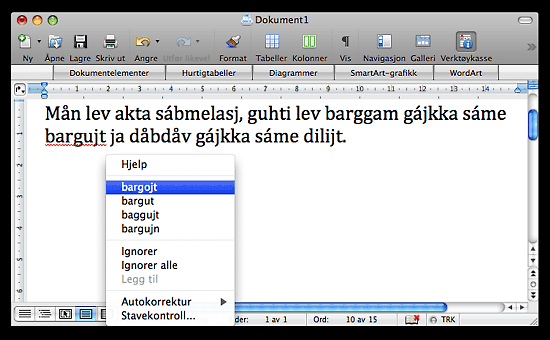
Whether you speak Sámi or not, you still know what that red line means.

Whether you speak Sámi or not, you still know what that red line means.

From an English-speaking or even a Finnish-speaking point of view, it might be hard to grasp the significance of a spellchecker. After all, English speakers have had spellcheckers since the dawn of word processing. You know, back when there was no internet, remember? Oh well, never mind about that.

The point is that Sámi children, even if they come from households where the language is strong, will soon get older, look around and ask, “Where else can I speak Sámi?” Computers are everywhere in our digital age, and if Sámi can be used accessibly in digital communication, then it will feel as natural to use it for email, chat sites and other online stuff as it does to speak it with parents or grandparents.

Sámi online

Moshagen notes that this is already happening. “There are Sámi-speaking online communities and a lot of young Sámi people not only speak Sámi daily, but write it too,” he says. Still, many Sámi speakers are not used to writing their language.

Why? For many decades, the Sámi and their language were marginalised by the Nordic countries’ majority populations. Many Sámi resorted to using their own language only at home, if at all. According to Moshagen, the situation began to improve in the 1970s in Norway; Sweden and Finland are generally thought to lag behind their neighbour in this process.

He sees spellchecker as a source of support for those who know Sámi but have trouble writing it, whatever their age: “They can easily see when they’ve written something wrong, correct it and keep going.”

Attitudes improving

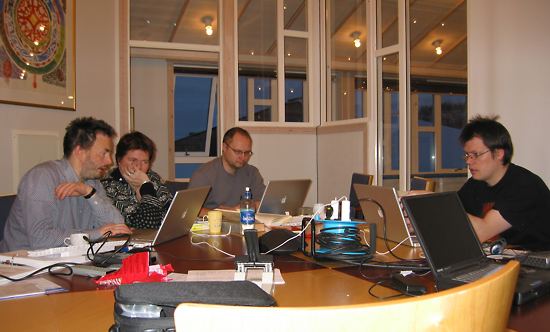
More of the Sámi spellchecker team: Trond Trosterud (left), Maaren Palismaa, Thomas Omma and Børre Gaup.

More of the Sámi spellchecker team: Trond Trosterud (left), Maaren Palismaa, Thomas Omma and Børre Gaup.Photo: Sjur Moshagen

“There are many heartrending stories of parents who chose not to speak Sámi with their children,” Moshagen says. “This shows how enormous the societal pressure must have been.”

Attitudes are changing and now many young parents of Sámi origin, even those who don’t know Sámi themselves, are demanding that their parents speak Sámi to the grandchildren. “You can skip one generation, but not two,” says Moshagen.

He says the spellchecker can form the basis for further projects. Next in line are grammar checking and speech synthesis (the computer reading text aloud). The same technology could easily be put to use in mobile phones for predictive texting.

Nokia, and that other company with the vaguely Swedish name, are you listening? And by the way, when will we be able to google in Sámi?

By Peter Marten, February 2009

Timo Sarpaneva

Designer

  • born 31.10.1926 Helsinki, Finland
  • died 6.10.2006, Helsinki, Finland
  • worked for glassware company Iittala since 1950
  • honorary member of the Royal Society of Arts 1963
  • awarded an honorary doctorate from the Royal College of Art in 1967
  • architectural exhibitions all over the world
  • architectural prizes including the International Design Award (American Institute of Interior Designers) 1963

‘People don’t really need holidays, after all; they can carry their holidays with them, and rest when they wish’, said Professor Timo Sarpaneva (born 1926), industrial designer, artist, and untiringly prolific star of international design.

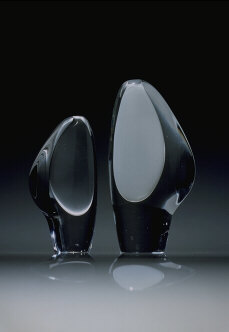
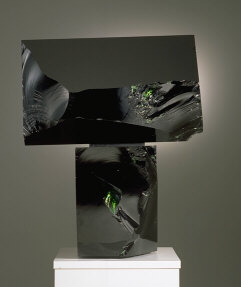
Sarpaneva belonged to the generation of designers who, in the post-war decades, acted as Finland’s cultural ambassadors to the world, beginning with the Milan Triennales in the 1950s, in which Sarpaneva won numerous Grands Prix. The secret of Sarpaneva’s great success, which he also enjoys at home in Finland, is that he, better than any other, was able to transform everyday objects into art, to give hope amid the gloom of life, because the companion of beauty is hope. Sarpaneva appeared to life and work at the point where time, space and material meet, and he made that point visible through his objects. He was the poetic interpreter of the material world. As a designer and artist he was unusually versatile, working as happily with ceramics, metal, textile and wood as with glass. Glass is, nevertheless, perhaps the material that was closest to him; ‘because glass is the material of space, it is best suited as a material to be given to light’, as he said himself. And it is in capturing light that Sarpaneva was at his best: he had the ability to show us light as if seen from beneath the ice that covers the sea, or in the living foliage of the forest.

In a career that spanned more than four decades, Sarpaneva had numerous one-man exhibitions all over the world, most recently a tour of the United States – New York, Chicago, Los Angeles and Washington – in 1994-95, and he also achieved eminence as a prominent exhibition architect. His countless prizes and honours include the following: Honorary Royal Designer for Industry, Royal Society of Arts, London, 1963; Honorary Doctor, Royal College of Art, London, 1967; Professor honoris causa, Academico de Honor Extranjero, Academia de Diseño, University of Mexico City, 1985; Honorary Doctor, University of Art and Design, Helsinki, 1993.

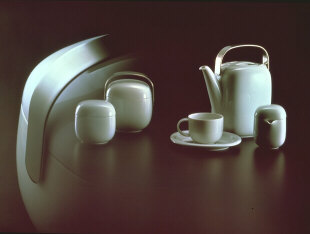
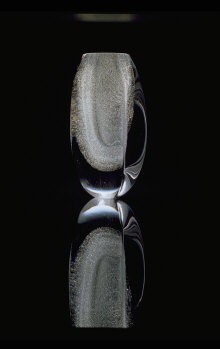
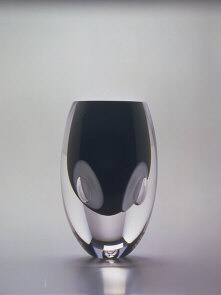
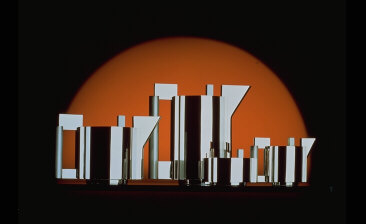
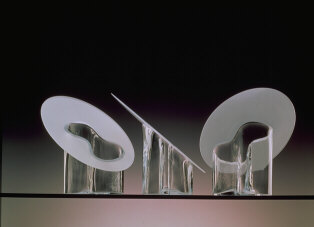
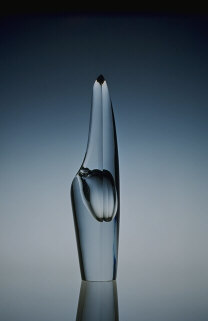
Small collection of designs by Timo Sarpaneva


Parliamentarism in Finland

If we had to select three important dates from the whole of Finland’s political history, they could well be 1809, 1906 and 1917.

In 1809, after a period of more than 600 years, Finland ceased to be the easternmost part of the Kingdom of Sweden and was “elevated as a nation among nations” by becoming an autonomous grand duchy under the Russian tsar. In 1906, the traditional Diet of Four Estates was replaced by a democratic representative parliament characterised by universal and equal suffrage, universal eligibility and unicameralism. On 6 December 1917, Parliament (Eduskunta) proclaimed Finland an independent republic. Many of the structures of state had been created during the previous hundred years, if not earlier.

Today, Finland is a parliamentary democracy based on competition among political parties, power being divided among the highest organs of government. It does not in every respect fit into categories of parliamentarism constructed by political scientists. After some incremental changes in the 1990s, culminating in the constitutional reform of 2000, the elements of the Finnish parliamentary system are seeking and finding new roles that are tested and concretised in everyday politics.

Constitutional basis

The Finnish Constitution crystallizes the main principles of governance in very plain terms. Power in Finland is vested in the people, who are represented by deputies assembled in Parliament. Legislative power is exercised by Parliament, the President of the Republic having a minor role. The highest level of government of the state is the Council of State (the Government) which consists of a Prime Minister and a requisite number of ministers. Members of the Government shall have the confidence of the Parliament. Judicial power is vested in independent courts of law, at the highest level in the Supreme Court and the Supreme Administrative Court.

A distinctive feature of Finland’s Constitution is its rigidity. A constitutional law can be amended only if two-thirds of the members of Parliament agree. Two consecutive Parliaments have to adopt the changes. The same Parliament can amend a law if the amendment has previously been declared “urgent”. This calls for a five-sixths majority, which means agreement among at least four or five parties. In spite of this formal rigidity, there have been many incremental changes to the Constitution during the past twenty years. One aim has been to increase the flexibility of political decision-making. The price of this has been a weakening of the parliamentary opposition’s available options for manoeuvre.

Relations between Parliament, the Government and the President of the Republic are governed by the principles of European party-based parliamentarism. The Government must enjoy the support of a majority in Parliament, which elects the Prime Minister. The President traditionally has had considerable power in the area of foreign policy, although not as much or such undisputed power as his or her American or French counterparts. Under the constitutional reform of 2000, the President’s power in other political areas is limited; but the power to appoint senior civil servants does incorporate the potential for acts of political significance. The Government has to cooperate with both the President and Parliament, but when successful, this relationship strengthens the Government’s position in practical politics.

Parliament
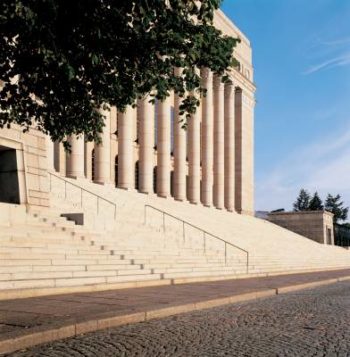
The Parliament building on a sunny day.

Situated on the main thoroughfare Mannerheimintie, the Parliament building is visible to anyone traversing downtown Helsinki by bus, train, tram or car.Photo: Joanna Moorhouse/Eduskunta

The history of the Finnish Parliament can be traced back to the 17th century, when the four estates of Finland were given the right to send their own representatives to the Swedish Riksdag of the Estates. At its birth in 1906, the Finnish Parliament (Eduskunta) was something of a rarity. It was unicameral and elected by universal suffrage, women included. Basically, the key elements of parliamentary organisation have remained unchanged for the past 100 years. In elections to choose the 200 Members of Parliament in recent years, about 70 percent of Finns over the age of 18, and eligible to vote, have done so. In the Parliament elected in 2011, no less than 85 of the members were women.

Parliament convenes – usually four times a week – for plenary sessions during which it debates matters, or rather makes speeches about them, and makes decisions by voting. MPs often put questions to members of the Government. It is unusual for an MP to vote against his or her party line. In principle, MPs have a free mandate; but in practice they have a party mandate, as in many other countries.

Much of an MP’s time is spent working in committees. The committees are preparatory bodies, usually comprising 17 MPs, through whose hands pass matters to be decided by Parliament. The committees regularly engage outside experts. The composition of the committees reflects the strength of each party in Parliament. As can be seen from the results of parliamentary elections, no single party is in a decisive position. Meetings of the parties’ own parliamentary groups are also important working forums for MPs.

Parliament has three main functions through which it represents the people and makes basic decisions on Finnish policy. It passes laws, it debates and approves the national budget and it supervises the way the country is governed.

Passing laws is a complicated process that usually begins with the Government placing a bill before Parliament, which it does some 200 to 300 times a year. Individual MPs may, and often do, propose legislation, but Government bills take preference and are better prepared. Parliament has no official machinery for making or preparing proposals. To be passed, a bill must have the support of a majority in Parliament and it must be signed by the President of the Republic. It takes about two to four months for a bill to be processed, in some cases even longer.

The national budget, presented to Parliament annually, is also prepared by the Government and much of the autumn period is devoted to debating it. Any changes made to the budget in Parliament tend to be marginal.

Parliament supervises the Government in many ways, both juridically and, in particular, politically. When a Government is being formed, Parliament has the vital role of electing a Prime Minister. When a new Government has been formed, it presents its political programme to Parliament. In accordance with a principle of classical parliamentarism, the Government must enjoy the confidence of a majority of MPs.

Every year, Parliament submits hundreds of written or oral questions to the Government or its individual ministers. Parliament may also test the degree of confidence enjoyed by the Government by making an interpellation. The result of the subsequent vote of confidence decides whether the Government may continue in office. Generally, the publicity attracted by such a move is greater than the risk to the Government. The risk last arose in the late 1950s, but this has not lessened the use of the interpellation.

Parliament also supervises the Bank of Finland, which is the central bank, and the Finnish Broadcasting Company, the country’s public service broadcaster.

Today, governments are predominately coalition governments with strong majorities. This allows them to be fairly confident that the MPs for the parties the governments represent will be loyal. Most ministers also act as MPs, which in turn allows them to participate in parliamentary voting.

Employers’ and labour organisations are not among the classical parliamentary players. In Finland, however, they often do have quite a noticeable – if not decisive – political role, particularly in issues concerning work and social security.

The Government and the President

The Government produces most of the material that Parliament deals with and uses as the basis for its decisions. The President formally appoints and dissolves the Government and he or she also suggests a candidate for Prime Minister, after negotiating with the parties in Parliament and consulting the Speaker of Parliament. In practice, the main role in the formation, functions and dissolution of the Government is played by the political parties involved.

If a Government resigns between parliamentary elections, the reason is usually disagreement among the Government parties that has come to light when the Government has had to make a difficult decision, or when its own bills are being dealt with by Parliament. After parliamentary elections the Government resigns. In recent years, from four to six parties have been represented in the Government and, in spite of their political heterogeneity, governments have been very stable.

The functions of ministers are extensive. They prepare the national budget and legislative reforms and, after obtaining the approval of Parliament and the President, implement the latter. The Government may also pass statutes if so authorised by Parliament. The ministers each direct their ministries with relative independence. There are 12 ministries, including the Prime Minister’s Office, and no more than 20 ministers. If an MP is appointed as a minister, he or she continues to work as an MP. Most ministers have this double role. It is normal practice that the leaders of the parties forming the Government, i.e. the party chairpersons, also act as ministers. But there are exceptions to this practice.

The main collective functions of the Government are sessions over which the President presides, ordinary sessions and evening sessions. The President attends only the first of these sessions, it being the highest level of the Government’s decision-making authority in legislative matters. An evening session is an informal occasion at which matters are prepared for discussion. It provides a useful opportunity for multi-party cabinets to try to reach agreement before actual decisions have to be made. There are also more limited preparatory ministerial committees; the most important of which handles all economic policy matters and could be regarded as the core of the Government. The President may attend meetings of the Cabinet Committee on Foreign and Security Policy.

The session presided over by the President is usually held on Fridays. Also present is the Attorney General, who oversees the legality of the procedures and decisions. At these sessions, the President formally makes his or her decisions on whether bills should be placed before Parliament or whether acts passed by Parliament should be signed. The President may go against the majority opinion of the Government. Similarly, he or she may refuse to sign a law passed by Parliament, in which case it does not come into effect. There is usually no visible conflict with the Government, however, because decisions are always well prepared and have gone through many stages. Finland’s presidents have refused to sign a law once a year on average. Moreover, Parliament may approve the same law again after it has been rejected by the President. If this happens, the law will come into effect without having been signed by the President.

The most important sanction open to the President in his or her relations with Parliament has been the right to dissolve Parliament and call new elections. This has happened seven times since 1917, and most recently in 1975. Under the constitutional reform of 1991, the President cannot dissolve Parliament if the Prime Minister has not made a proposal to that effect. Otherwise, interaction between the President and Parliament is limited to certain state ceremonies. For example, the President opens Parliament each year and declares Parliament closed at the end of an electoral period. Also, upon being elected, the President makes his or her solemn pledge of office before Parliament.

The Parties
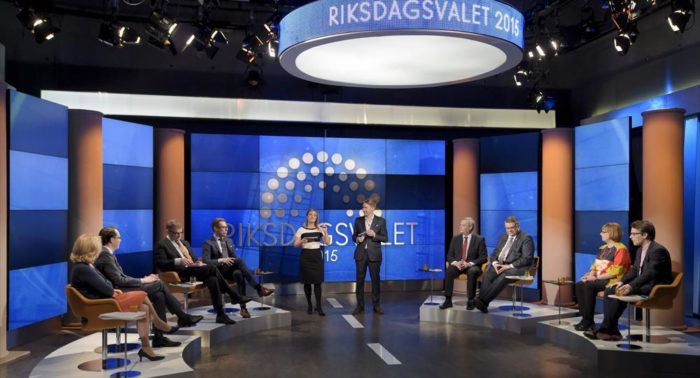
Finnish party leaders seated in a semicircle in a TV studio getting ready for debate.

Party leaders take part in a TV debate before the 2015 parliamentary election.Photo: Markku Ulander/Lehtikuva

During its approximately 100-year history, the Finnish political party system has been relatively stable. The historical background for the party divisions includes the ideal of nationality, the language issue (Swedish is a minority and official language), the socialist versus non-socialist divide, representation of the rural population, and the two-way division of the political Left. In Finland’s multiparty system, support for the parties runs approximately along the following lines: the three or four biggest parties each have around 20 percent of popular support and about ten smaller parties compete for the remainder – and half of them succeed in getting seats in Parliament.

In Parliament, it is essential for the parties to cooperate among themselves in the preparation of the budget and other legislation, but the representatives of the parties who are Government ministers are traditionally loyal to the Government’s line and the opposition parties do not normally form strong coalitions. Since the time when Finland became independent, the Centre Party (formerly the Agrarian Party) has been a kind of median party in government, being represented in almost all political governments.

Government coalitions may be large, and their compositions politically unconventional. For example, the largest right-wing party, the conservative National Coalition Party, was in government with two left-wing parties from 1995 to 2003; this was repeated in the Government formed in 2011. Also new parties have been added to the established system and have made their way into Government. For example, the small Finnish Rural Party (SMP), characterised by criticism against the “old parties”, was welcomed into the Government from 1983 to 1990 following its success in the elections. The Green League, which made its way into Parliament in 1987, was in the Government from 1995 to 2002 and from 2007 to 2011, and also in the Government formed in 2011. The populist “True Finns” party – the historical successor of the Finnish Rural Party – caught up with the three biggest parties in popularity in the 2011 elections. The “True Finns” participated in the coalition negotiations but decided to stay outside the new Government. After all, Finnish parliamentarism is nothing if not adaptable, pragmatic and absorbent.

From 1982 to 2012, all Presidents of the Republic came from the Social Democratic Party. Before that there had not been a single president of left-wing provenance. In 2000, Tarja Halonen became Finland’s first female president and served two six-year terms. In 2012, Sauli Niinistö of the moderate conservative National Coalition Party was elected president. He was re-elected in 2018.

Political parties elected to Parliament in 2023 (2019)

Party Seats % of votes
National Coalition Party 48 (38) 20.8 (17.7)
“Finns” Party 46 (39) 20.1 (17.5)
Social Democratic Party of Finland 43 (40) 19.9 (17.0)
Centre Party of Finland 23 (31) 11.3 (13.8)
Green League 13 (20) 7.0 (11.5)
Left Alliance 11 (16) 7.1 (8.2)
Swedish People’s Party of Finland 9 (9) 4.3 (4.5)
Christian Democrats 5 (5) 4.2 (3.9)
Others 2 (2) 3.0 (2.9)

Summary

In Finnish parliamentarism, the Government is the preparatory and executive body that produces material for Parliament to consider, approve or reject. The material is submitted to the President twice, but normally no conflicts arise between the President and the Government, or between the President and Parliament. A conflict between Parliament and the Government may lead to the Government’s fall. Since the 1980s, governments have been so strong that the opposition has had no way of toppling them. Constitutional reforms have strengthened progress towards majority parliamentarism. Indeed, governments usually sit for the whole of their four-year term. Parliament is highly dependent on the bills submitted to it by the Government. The Government has to report continually to Parliament in many ways on what it is doing and where it is going, but it controls the day-to-day political agenda.

Finland has been a member of the European Union since 1995. Membership has given Parliament and the Government new obligations and new roles, which every now and then revive the question of their relationship with the President, who leads the country’s foreign policy in cooperation with the Government. The Prime Minister’s role has become stronger along with the EU membership, plus the backing of constitutional reforms and long-lived governments. Through the Parliamentary Grand Committee, Parliament has access to EU matters being prepared by the Government, and any stand taken by the Grand Committee is politically binding on the Government.

In the type of party-based and consensus-oriented parliamentarism practised in Finland, political coalitions may be large and unconventional in composition. Interparty relationships may overshadow formal institutional ones. Decision-making requires the formation of coalitions and the acceptance of compromises. Nowadays, Finnish politics is characterised by pragmatism and a strong penchant towards consensus – factors that have not always been present. This situation limits the degree of freedom that parties have to articulate their ideologies or programmes and implement them.

Finnish parliamentarism is characterised by great flexibility, particularly in building coalitions to form the Government. This becomes evident before the elections in that the parties do not declare beforehand with which parties they are ready to form the Government. In practice, the Government is formed between those parties that can agree on a joint Government Programme. The Programme is more than a mere declaration presented to Parliament as a government statement at the beginning of the Government’s term in office. It is a plan of action containing objectives that the Government has determined it will achieve.

The political rhythm in Finland is set by parliamentary elections held every four years and presidential elections held every six years. Whereas even the new Constitution does not recognise the fact, parliamentarism receives some of its energy and dynamism from the ever-alert news media, from pressure groups and from the internationalisation of politics and the globalisation of the economy.

By Jarmo Laine, senior science counsel, Academy of Finland, April 2015, last edited June 2019
Finland’s parliament: pioneer of gender equality

In 1906 Finland’s national assembly, Eduskunta in Finnish, became the first parliament in the world to adopt full gender equality. It earned that distinction by granting equally to all men and women the right not only to vote but also to stand for election.

The Finnish Parliament celebrated its centenary in 2006 and 2007. Why did the anniversary cover two different years? Universal and equal suffrage was enacted in Finland in 1906, and the first elections for the new unicameral Parliament were held in 1907.

At that time Finland was still an autonomous Grand Duchy of the Russian empire, but it became independent ten years later, in 1917. Since that time the country has lived through two world wars and the Cold War, and become a member of the European Union.

The duties of the organs of state and their division of power have changed, but the system of parliamentary representation stretching back more than 110 years has proved its durability throughout all these periods. Parliament embodies the Finnish democratic ideal.

Parliamentary reform brought about a major upheaval in political life. For the first time, the right to vote was extended to include all of the country’s adult citizens, irrespective of gender, class, wealth or position. The number of people entitled to vote increased ten-fold. The previous legislative assembly, the Diet, had represented only 15 percent of the male population, and women had had no political rights whatsoever. Finland was the first country in Europe to allow universal and equal suffrage. All adult women were eligible to stand as candidates in national elections in Finland, the first in the world.

The powers of the state in Finland are vested in the people, who are represented by Parliament. Parliament enacts Finnish law, decides on matters such as the state budget and approves international treaties.

The parliamentary system still broadly functions along the principles adopted 110 years ago, although there have been changes in the way candidates are nominated, in legislative periods and in voting methods and procedures.

Women and men from across the country

Parliament contains 200 seats, and parliamentary elections affecting all 200 seats are held every four years; 2019 is an election year.

The Finnish President, who is the head of state, is elected every six years, local councils every four years and members of the European Parliament every five years. This means that there may be elections nearly every year in Finland (for example: local council elections in 2017, presidential elections in 2018, parliamentary elections in 2019 and European Parliament elections in 2019).

Nine parties are currently in Parliament: the Social Democratic Party (40 representatives), the “Finns” Party (39), the National Coalition Party (38), the Centre Party (31), the Greens (20), the Left Alliance (16), the Swedish People’s Party (10, counting one representative from the semi-autonomous Åland Islands), the Christian Democrats (5) and Movement Now (1).

One feature of the multiparty situation is that no single party is likely to win an absolute majority in parliamentary elections, so the country invariably has a coalition government that enjoys the confidence of Parliament. The government is usually headed by the leader of the largest parliamentary party, who serves as prime minister. The present prime minister is Sanna Marin, of the Social Democratic Party. The Centre Party, the Greens, the Left Alliance and the Swedish People’s Party form the other members of the Marin Government.

The parties, and constituency associations consisting of at least 100 people, adopt candidates in each electoral district, of which there are 13.

Members of Parliament are elected from each electoral district in proportion to the population, with an average of roughly one MP for every 26,000 people.

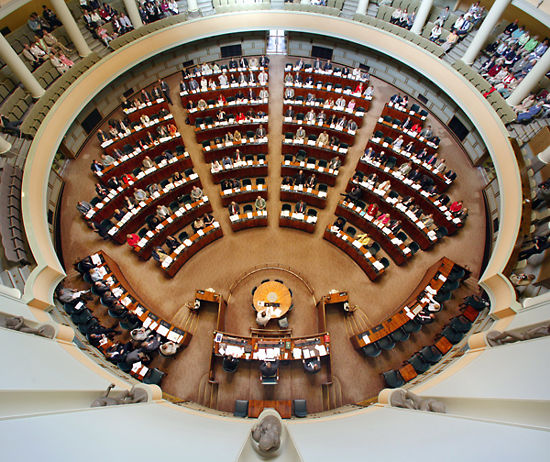
A bird’s-eye view of the parliamentary debating chamber.

A bird’s-eye view of the parliamentary debating chamber.Photo: M. Ulander/LK/Parliament

The largest and most populous electoral district is Uusimaa, comprised the municipalities surrounding the capital, Helsinki. It elected 36 MPs in the last elections. The smallest electoral district is Åland, a semi-autonomous archipelago in the Baltic Sea, which sends one MP. The distribution of MPs among the electoral districts varies with changes in the population. The maximum number of candidates that each party or constituency association can put up in an electoral district is the same as the number of MPs that are to be chosen from that district.

The parties receive subsidies from the public purse in proportion to their number of seats in parliament. They use the money to pay their election costs, the expenses that arise from implementing democracy.

Forthcoming elections are publicised on street advertisements, in newspapers and on radio, television and social media. Voters actively follow the party leaders’ election debates and use internet-based election engines to search for suitable candidates.

However, Finnish election campaigns are fairly restrained in comparison with those of other countries. Large public meetings and vociferous election rallies are rare.

Election day arrives

Election day is always a Sunday, and polling stations are open from 9 am to 8 pm. Advance voting forms an important feature of the Finnish parliamentary and presidential election systems. It allows voters to cast their ballot during a designated period before the actual election day. Post offices serve as polling stations for advance voting. Every citizen who has reached the age of 18 by election day is automatically entered in the electoral register. Arrangements are made to enable people who are disabled or hospitalised to vote.

Everyone entitled to vote is sent notification of their polling station’s location. Polling stations are usually in schools or public libraries and voters do not have to go far to vote. Voting is by secret ballot and each voter’s identification is checked.

The local election committees, which are elected by local councils and are responsible for election arrangements, conduct a preliminary count of the votes at the polling station.

The results of elections are usually known within an hour after the polling stations close. The results are determined using the d’Hondt system.

Powerful special committees

The most important task of Parliament is to enact laws. Bills usually come before Parliament as a government proposal or, more rarely, as a member’s bill. First, a preliminary debate is held on the government proposal in plenary session, after which it passes to one or several committees for further consideration.

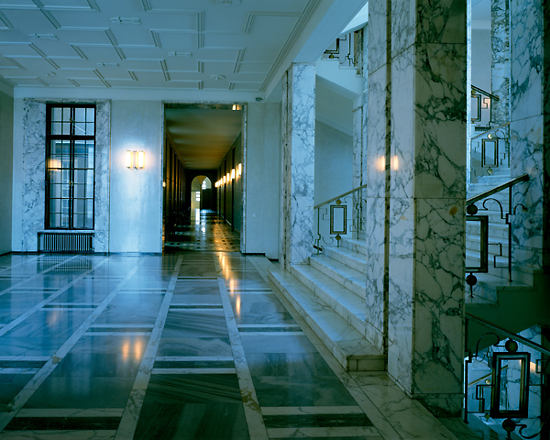
A marble corridor and staircase in the parliament building.

A “corridor of power” in the Parliament building.Photo: Simo Rista/Parliament

Parliament has 14 permanent special committees concerned with different areas of policy and they can make changes to a legislative proposal or reject it completely. Being a member of a committee is therefore the most important way MPs can exert influence.

After the committee stage, the proposal goes before two plenary sessions of Parliament where it undergoes first and second readings. In the first reading the bill is initially debated in general terms and then in detail; if necessary a vote is taken on the contents of the sections of the law.

In the second reading the proposal is either approved or rejected. It takes two to four months to handle most proposals in Parliament; urgent matters can be passed in a matter of days, while major bills can take several years to pass. Government bills and initiatives lapse if they have not been approved by the end of the legislative period. Plenary sessions are open to the public, whereas committee meetings are mainly closed. The public, the media and international visitors can follow parliamentary proceedings from the visitors’ gallery in the debating chamber. Only Finnish members of Parliament are allowed to make speeches in the chamber – visiting dignitaries, including heads of state, make their speeches in other prestigious premises.

The working ethos of the Finnish Parliament is reserved and dignified; emotional debates, provocative speeches, shouting and heated exchanges do not form part of its tradition. The opening of Parliament at the beginning of February is a solemn occasion with a staid, formal dress code.

By Salla Korpela, April 2006, updated June 2019
When everyone in Finland got the vote

On March 15 and 16, 1907, European history was made in the towns and rural hamlets of Finland. In the national election held on those two days, every citizen aged 24 and over, the humblest maid and crofter included, was allowed to vote.

In those days people made their way to the nearest village – in many cases on skis across the hardened snow of early spring – to put a red line in the box of their choice on a ballot paper.

Finland had been a Grand Duchy of the Russian empire since 1809. During that period there was a legislative assembly, a Diet, in Finland but it had very limited powers and comprised only male representatives of the upper levels of society, and it convened infrequently.

After Russia’s defeat in the war against Japan, internal political opposition against the imperial tsarist regime increased. This unrest spread to Finland, where a general strike began at the end of October 1905. As a result of the unrest, the tsar issued a manifesto which decreed that a Parliament based on universal suffrage would be established in Finland with powers to ensure the legality of the measures taken by the country’s Government.

Preparations for parliamentary reform started right away and the principle that the right to vote and to stand for election would be granted to both men and women was approved right from the start of the process. The Diet convened to approve the reforms on June 1, 1906, and elections were ordered to be held in the spring of the following year.

“Finnish women supporting precious matters of conscience”

Several months were needed for the preparations as the parliamentary reform signified a major upheaval in the whole political arena. The parties of the time were mainly debating societies and discussion groups but they began to reorganize in readiness to exert political power, and several new parties were established.

It took just under a year to organize polling stations, election committees, vote counting procedures, nomination of candidates, and to provide citizens with information on how to exercise their right to vote. Women in particular needed to be enlightened and awakened to the new opportunity.

Sisters,

The time for the elections is drawing near.

The Finnish woman is the first in Europe to whom suffrage has been granted. Let us perform with honour the duty that this entails. Sisters! Let us ensure that not one of us is absent when the composition of Finland’s first truly democratic Parliament is being determined. A heavy burden of responsibility will lie on the shoulders of the woman who stays away from the election without due cause.

Matters of conscience that Finnish women hold dear are first and foremost:

  • Supporting the State Church
  • Furthering decency
  • Establishing prohibition
  • Improving the position of women.

All those issues will be debated in Parliament. Therefore, sisters, rise up to cleanse society and vanquish the enemies of our homes.

From Mrs Hedwig Gebhard’s election proclamation

The first elections were successful. The turnout was 70.7 per cent and no irregularities or public disorder took place. Most Finns were at least moderately literate, and the national awakening that had been taking hold in the country for several years was linked to the creation of ideological and political organizations.

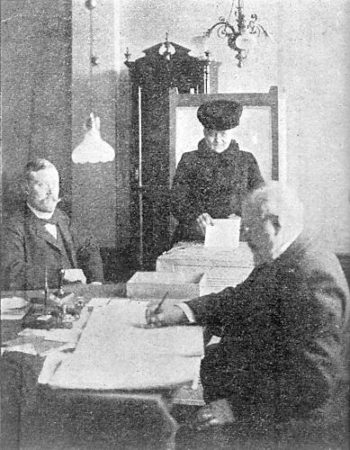
Elections 1907: a polling station in Helsinki.

Elections 1907: a polling station in Helsinki.Photo:
Finnish Heritage Agency

The election results became clear within a few weeks. The Social Democratic party was the largest, winning 80 of the two hundred seats. The moderate, conservative Old Finns party won 59 seats, but the parties in power at the time fared badly. The progressive, bourgeois Young Finns won 26 seats and the Swedish Party 24. The Agrarian Party, predecessor of today’s Finnish Centre Party, took 9 seats and the Christian Workers’ Union was left with 2.

Of the total of 62 women candidates, 19 (9.5%) were elected to the first Parliament, most of them representing the Social Democratic Party. The success of women in the first parliamentary elections can be regarded as good, since the number of women elected was lower on several occasions during the years before the Second World War.

First Parliament introduced prohibition

The new deputies were summoned to in Helsinki for the first time at the end of May 1907. The opening session of Parliament was held on May 25, 1907 in the assembly hall of a building, since demolished, belonging to the fire brigade in Hakasalmenkatu, a street now named Keskuskatu.

Much was expected of the new parliament; the air was thick with a sense of national identity and the euphoria of nascent self-determination. The work of the reshaped Parliament was begun by a man, the likes of whom had never been seen before in the corridors of power.

He, the oldest Member of Parliament, Mr I. Hoikka, a tenant farmer from Lapland, started his speech with the words “As a simple peasant from the furthest reaches of Lapland…” and went on to appeal to MPs to seek consensus despite differences and incompatibility among the parties and the recent passionate election campaign.

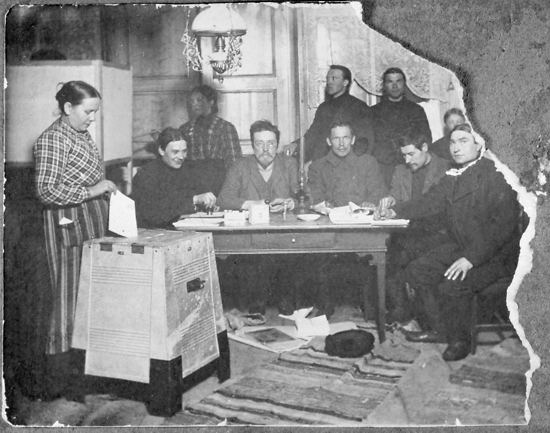
Elections 1907: a rural polling station in Ylihärmä, W Finland.

Elections 1907: a rural polling station in Ylihärmä, W Finland.Photo: Finnish Heritage Agency

The first session of Parliament lasted three months. Its significant achievements included an act on working hours for bakeries and a law prohibiting alcoholic beverages, issues backed by the workers’ movement and women’s groups. The prohibition law, however, did not actually come into force till more than ten years later.

Many proposals failed to progress through Parliament, such as legislation on land tenancy, business practices, disability and old-age insurance, and compulsory education. Legislative reforms in many key areas were only passed after Finland became independent in 1917.

The Tsar, who had the power to approve laws, considered Finland’s rising political activism a threat and left some laws unratified. The Conservatives, who advocated a policy of Russification in the autonomous regions, gained power in Russia.

In 1908, the Tsar issued a decree that made the procedure for dealing with matters concerning Finland less favourable for Finland. This triggered a storm of protest, as a result of which the Tsar dissolved Parliament and ordered new elections.

The first Parliament managed to sit for barely a year of its three-year term. This was repeated several times during the period of autonomy and new parliamentary elections were held nearly every year until independence.

By Salla Korpela, April 2006, updated 2011

Coat of arms

The following is a brief description of Finland’s national coat of arms, its symbolism and history.  The account is based on the official blazon and the most widely approved explanation.

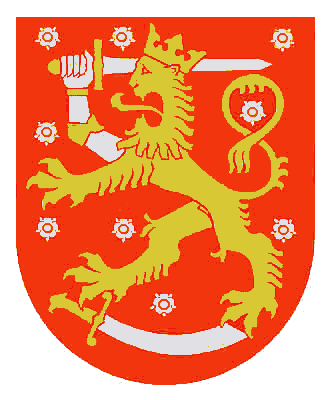
National Coat of Arms

4336-va_suomi-gif

When King Gustav I of Sweden (died 1560) gave his son John the title of duke of Finland in 1556, the territory also received its own coat of arms, which was probably approved by the king in 1557, although as far as we know Duke John never used it. In addition to national emblems, this coat of arms (Figure 1) included two other symbols referring to northern and southern Finland, in actual fact the areas of Satakunta and Varsinais Suomi (Finland Proper). These two symbols were later retained in the arms of these two provinces.

After ascending the Swedish throne, King John III adopted the title of “Grand Duke of Finland and Karelia” in the year 1581. It was probably at this time or a little later that Finland received a second coat of arms, which is somewhat like the present one. This coat of arms is generally thought to have been modelled on a shield sculpted for the tombstone of King Gustav I at the Uppsala Cathedral (completed 1591). This monument was designed during the reign of John’s elder brother, Erik XIV, who was king from 1560 to 1568, but it was only completed some thirty years later during John’s reign. The shield was probably designed by the Dutch artist Willem Boyen, who served under both Gustav I and Erik XIV.

There is no way to know whether Finland’s second coat of arms was purely the product of Willem Boyen’s own imagination or whether it was based on Erik XIV’s wishes or some other unknown historical tradition. It is known, however, that Erik XIV was himself interested in heraldry. This matter has been the subject of considerable academic debate among scholars and laymen.

At any rate, the general consensus has been that the symbol of the lion is derived from the arms of the Folkung family, which are included in the royal arms of Sweden. The two swords were borrowed from the Karelian coat of arms, which was publicly displayed for the first known time on a banner at the funeral of King Gustav I in 1560.

The placing of the curved Russian sabre beneath the lion’s paws is undoubtedly a reflection of the political situation at this time. Sweden and Russia were almost constantly at war, and the Swedes made use of this propaganda device to imply that they had the upper hand over their enemies. The nine roses are decorative, although they have falsely been interpreted as referring to Finland’s nine historical provinces. It is worth noting that the number of roses has varied over the centuries.

When Finland gained independence in 1917, the “lions arms” became the coat of arms of the new nation. Before this it had served as the common symbol for all the Swedish territory to the east of the Gulf of Bothnia; and from 1809 to 1917 it served as the coat of arms for the Grand Duchy of Finland, which was under Russian rule during this period.

The Finnish coat of arms appears on the state flag, official seals, coins, banknotes and postage stamps. On the President’s car it takes the place of an ordinary registration plate.

It was not until 1978 that legislation was passed concerning Finland’s coat of arms. This legislation gives the official blazon and prohibits the sale of the national coat of arms, subject to fine.

The national coat of arms displays a crowned lion standing on a red field. The lion holds a raised sword in its right gauntleted fore leg and is trampling a curved sabre. The lion, the crown and the sword and sabre handles are gold, as are the gauntlet joints. The blades and the gauntlet are silver. The field is adorned by nine silver roses.

By Maunu Harmo, former president of Finnish Society of Heraldry, last updated March 2011