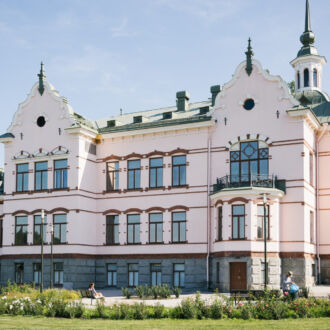
On a bright afternoon in late winter, I meet writer and photographer Tim Bird at the South Harbour ferry terminal in Helsinki.
Winter has been cold this year, but often sunny. Today is one of the first days when the temperature finally climbs above freezing and the snow and ice begin to soften. The sunlight feels different – warmer, springlike – and it seems like the perfect day to visit the nearby island fortress of Suomenlinna.
The sea between Helsinki and the island is still thick with ice. Where icebreaker boats and ferries have churned through it, the surface has broken into swirling formations that look uncannily like sugar crystals scattered on top of a korvapuusti – the cardamom-scented Finnish cinnamon bun found in cafés across the country.
Bird watches the patterns with interest. After more than four decades in Finland, the crossing is a familiar journey.
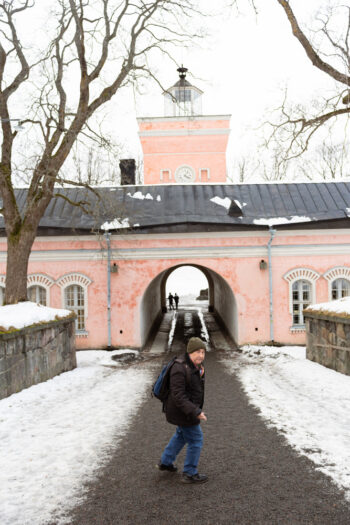
A short walk from the ferry brings us to Café Silo, located among the historic fortress buildings of Suomenlinna. Bird greets the owner; he’s a regular here. Several of his photos are on the walls. He interviewed, photographed and got to know many of the people who live and work on Suomenlinna when working on a book about the island fortress. [Full disclosure: Tim Bird has also written and photographed for this website.]
The happiness angle
In Happy Land, Tim Bird looks at life in Finland from what he calls a “sideways perspective” – appreciative, but not uncritical.Photo: Emilia Kangasluoma
Despite its title, Bird says his newest book, Happy Land: Finding My Inner Finn, is not meant to reinforce Finland’s status as the world’s happiest country. (The International Day of Happiness takes place each year on March 20. To coincide with it, the UN Sustainable Development Solutions Network publishes the World Happiness Report. Since 2018, Finland has occupied the top spot on the report’s list of the happiest countries in the world.)
“I’ve talked Finland up a lot,” he says. In the book, “I wanted to be a bit more set-back, not be cynical about this happiness idea, not taking it for granted, in spite of the title which might suggest I am. I’m looking at it from a sideways perspective.”
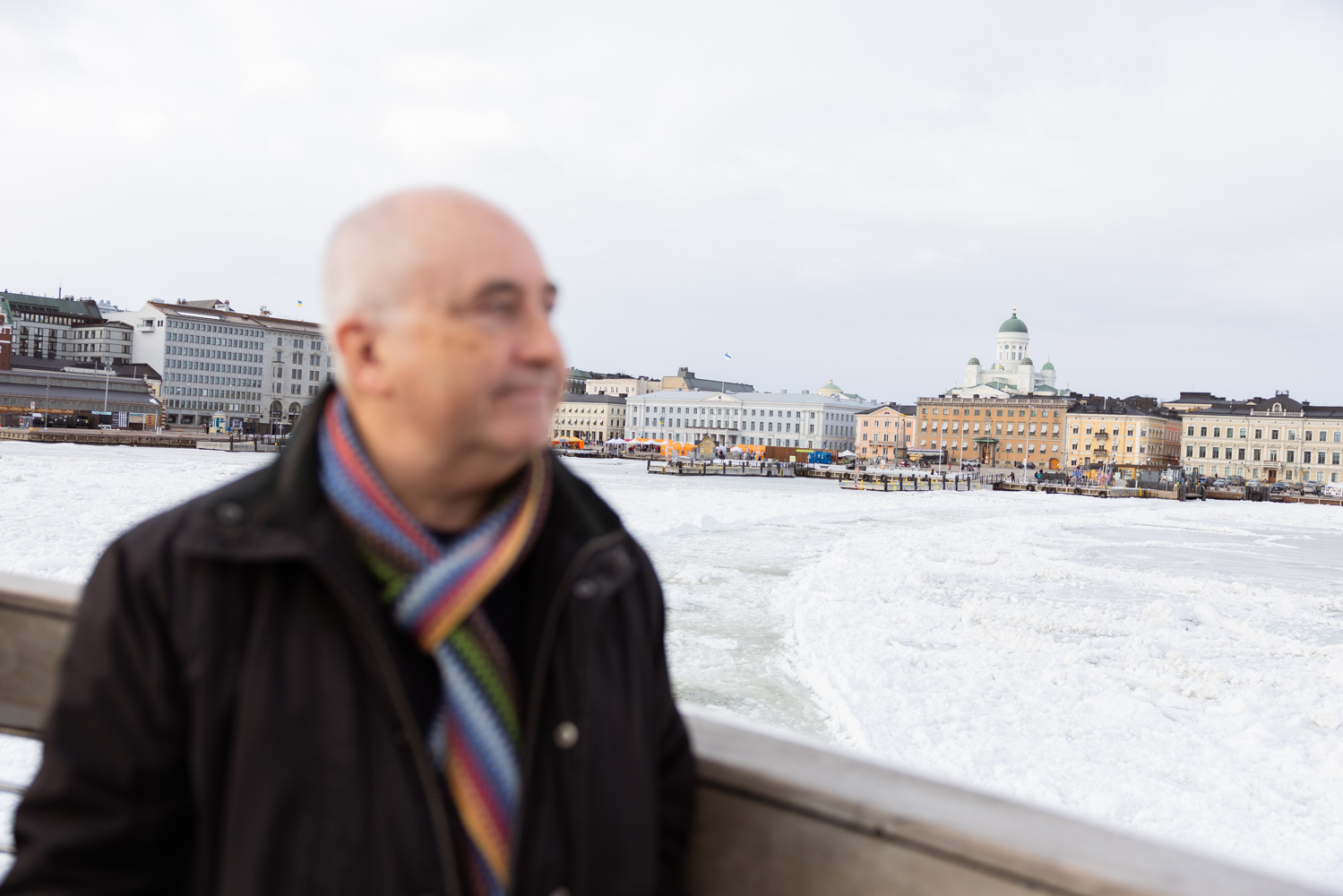
“Don’t wait for Finland to come to you,” says Tim Bird, recalling the advice he would give his younger self.Photo: Emilia Kangasluoma
Finland has repeatedly topped global happiness rankings. But Bird believes the word happiness itself can create the wrong impression.
“From an international perspective, it could give the impression that everyone’s in a good mood and cheerful,” he says. “If you start looking at it in more depth, it’s the wrong word – it should be contentment or satisfaction.”
Between resident and observer
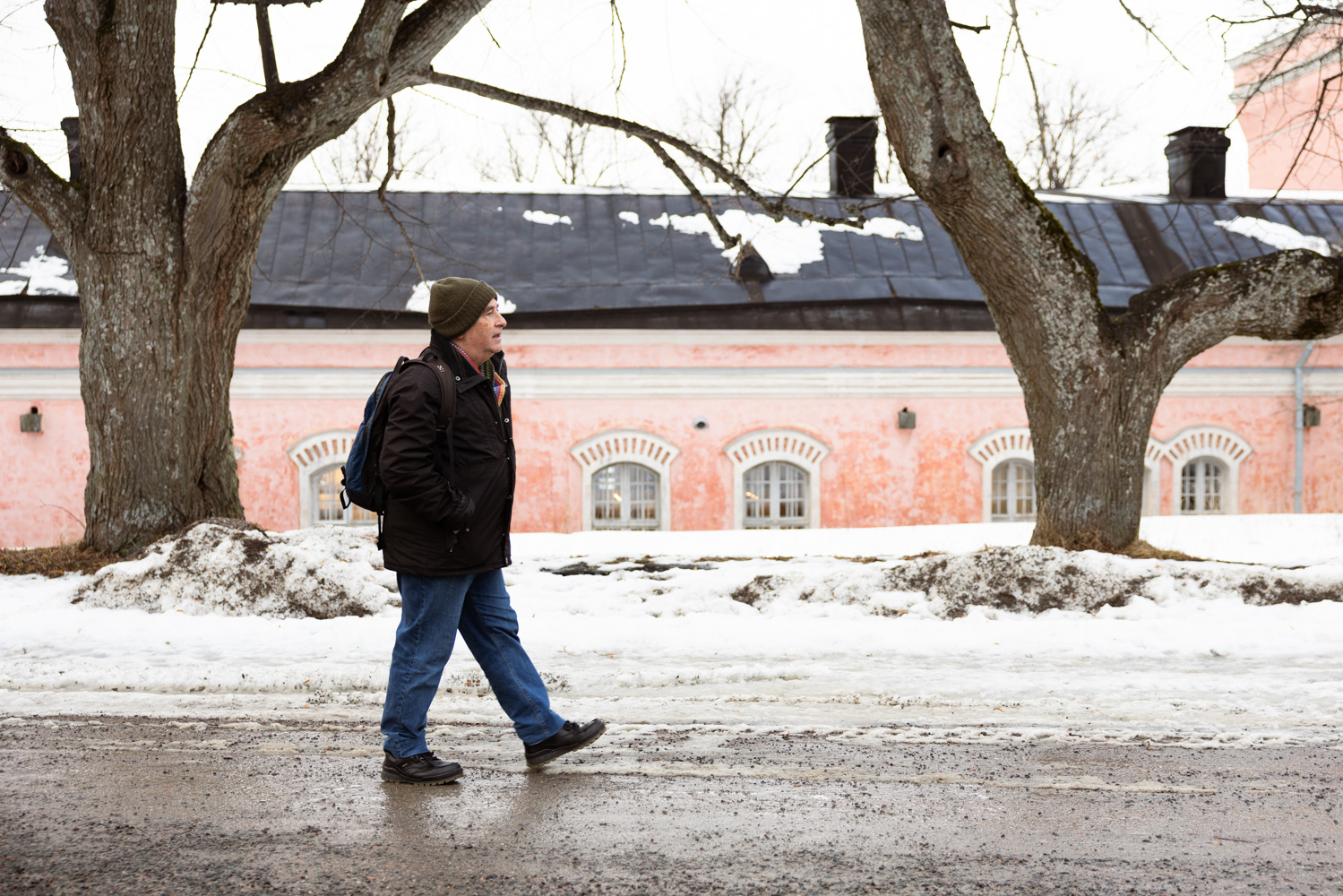
Tim Bird reflects on his experience in Finland from the perspective of both resident and observer.Photo: Emilia Kangasluoma
Bird arrived in Finland from the UK in the 1980s, initially planning only a short stay. Like many foreigners at the time, he began by teaching English.
In Happy Land, he recalls those early days with the reflective tone that runs throughout the book – part travel narrative, part memoir. Writing about his first day in Helsinki, Bird describes the strange emotional territory of arriving somewhere completely new:
“When I arrived in Finland, I had never wanted to be anything but English, and since then I have always attempted to achieve a precarious balance between enjoying the rights of a resident and the privileges of an observer. Home, it seems to me, can be more of a spiritual property than a particular location. But when I found myself alone in that apartment, the word ‘home’ was the least applicable to my situation in any sense. I was absolutely dislocated.”
A lot has happened since that first evening. He has written and photographed widely, covering Finnish culture, landscape and history. He speaks Finnish but often works in English – another reminder of the slightly in-between position he occupies after so many years in the country.

A ferry moves through sea smoke along Finland’s cold Baltic coast, where winter air can turn the water into drifting mist. Photo: Tim Bird
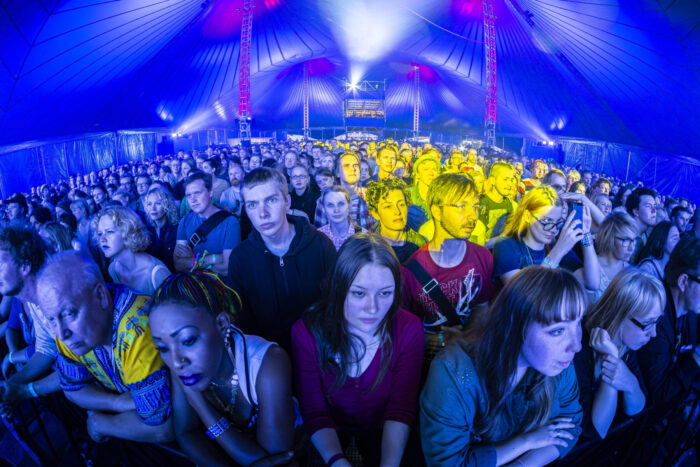
A crowd gathers in a concert tent – a familiar experience in Finland’s lively summer music festival scene, when long daylight hours and warm nights bring people together to experience live music. Photo: Tim Bird

Tim Bird has often photographed the aurora borealis in the north of Finland. In Finnish the Northern Lights are called revontulet, meaning “fox fires.” This photograph won third place, Man and Nature category, in the 2025 Finnish Nature Photograph of the Year competition. Photo: Tim Bird
That outside perspective, he says, allows him to observe Finland with both affection and distance.
“The idea is not to put Finland down, but to have a balance,” he says. “Ultimately, if I was too negative about Finland then I’d be stupid to still be living here.”
A conversation across centuries
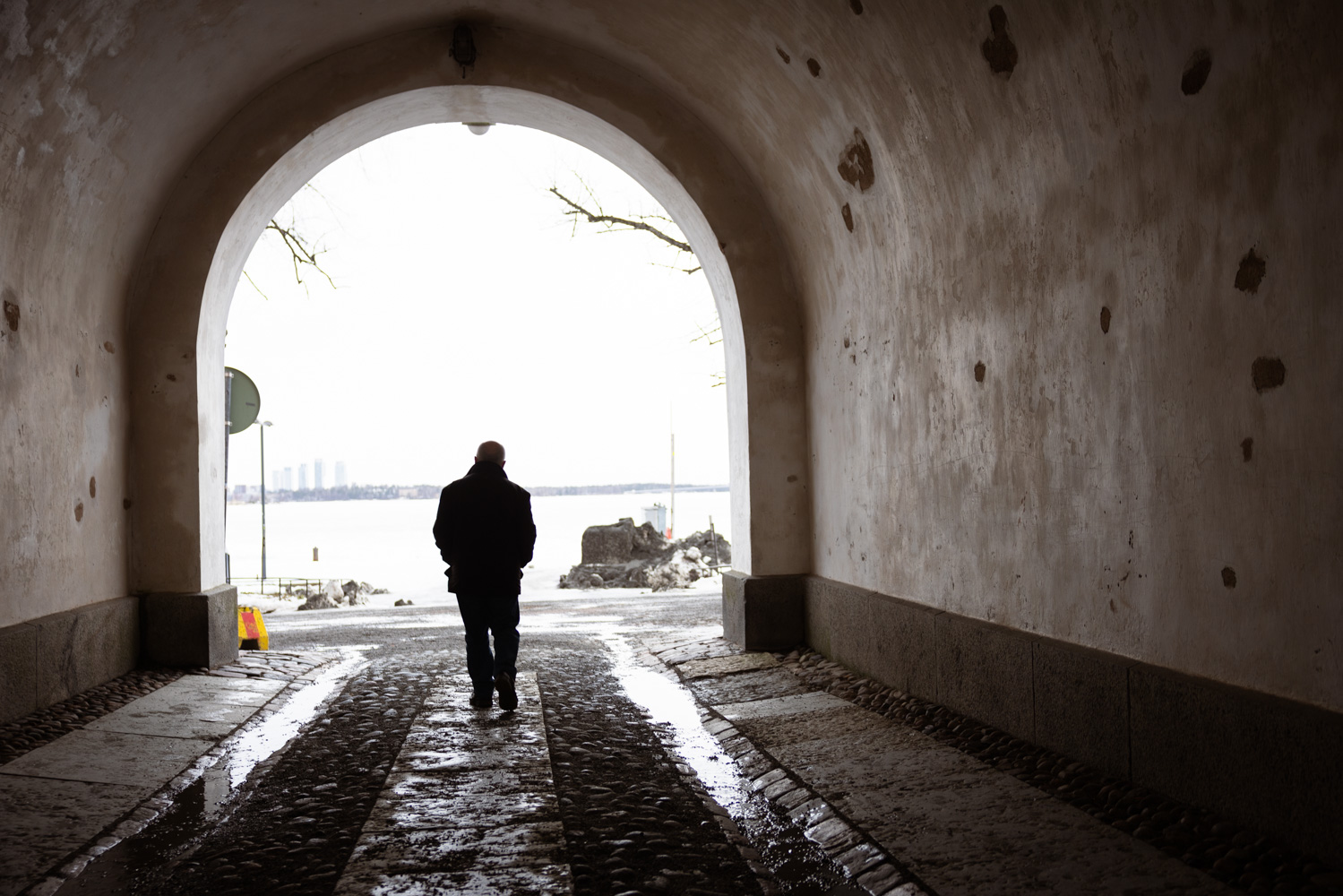
In Happy Land, Tim Bird places his own experiences of Finland alongside those of Victorian traveller Ethel Brilliana Tweedie, who wrote about Finland more than a century earlier.Photo: Emilia Kangasluoma
One of the more striking elements of Happy Land is Bird’s decision to place his own experiences alongside those of a much earlier traveller to Finland, British writer Ethel Brilliana Tweedie.
She visited Finland in the late 19th century and later wrote about the journey for English readers. At the time, Finland seemed far more remote and unfamiliar.
Bird writes in Happy Land, “Like myself when I arrived, she knew very little about the country she was intending to explore. ‘No-one ever dreamed of going to Finland,’ she proclaimed. ‘Nevertheless, Finland is not the home of barbarians, as some folk imagined; neither do Polar bears walk continually about the streets, nor reindeer pull sledges in summer.’”
Bird uses Tweedie’s observations throughout Happy Land as a kind of historical mirror, comparing how Finland appeared to a curious visitor more than a century ago with how it looks today.
“What I should have done was say that maybe in 100 years somebody will look at my book and I’ll be the Mrs Tweedie,” he jokes.
Advice to his younger self
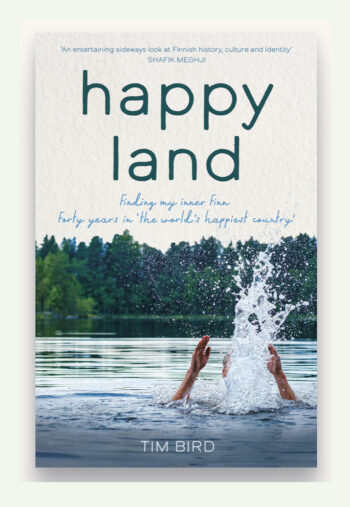
The book Happy Land sees Tim Bird reflecting on Finland after decades of living and writing in the country.
By the time we step outside, the sunlight has faded and low clouds have moved in from the sea. A light drizzle begins to fall – the sort of quick shift that often marks the beginning of spring in Finland. Snow and slush still cover parts of the ground as we walk back toward the harbour.
I find myself thinking back to the final question I asked him before we left the café: what advice he might give to the 26-year-old version of himself who first arrived in Finland, unsure how long he would stay.
“When I first came to Finland I was quite shy because I thought I probably wasn’t going to be here very long,” he says. “I suppose I’d say to myself, ‘Come out of your shell a bit more. Don’t wait for Finland to come to you.’”
The advice lingers as we board the ferry back to Helsinki. Like Bird, I also arrived in Finland in my mid-twenties, unsure how long I would stay. Ten years later, I’m still here – and his words feel unexpectedly personal. There are still parts of Finland, geographically and culturally, that I haven’t experienced yet: the Northern Lights, the archipelago, towns and landscapes beyond my familiar routines in Helsinki.
It is easy, even in a new country, to settle into habits and postpone exploration for another day. Yet I hope to take Bird’s advice forward in my own life in Finland, remembering that the country does not simply unfold before you – you have to go out and meet it.
By Tyler Walton, March 2026