What’s in Finnish Christmas for non-Christians?

Christmas means different things to different people, and you don’t have to be a Scrooge to decide it’s not for you. On the other hand, you don’t have to be a Christian to join in, either.

Christmas in Finland is impossible to ignore. The first cards and gift-packed chocolates appear a day or two earlier every year and the pikkujoulut – pre-Christmas parties – are arranged ever further ahead of the main event. When that main event arrives, we excuse the emptiness of our bank accounts, telling ourselves it’s Scrooge-like not to spend large amounts on food, drink and presents.

At least, most of us do. It’s sometimes hard to remember that there are people who actually make the decision not to participate – the estimated 40,000 Muslims living in Finland, for example. Many are descendants of Tatar Muslims who came here when the country was a grand duchy under the Russian Empire, while more recent arrivals are from Kosovo, Bosnia, Somalia and a number of other countries.

“Christmas is a non-Islamic holiday, so Muslims spend it as most Finns do in Finland, relaxing and trying to be with their family, but some might work,” says Anas Hajjar, deputy chairman of the Islamic Council of Finland. “Since Muslims do not celebrate birthdays as religious holidays, Christmas is not celebrated, but it is respected as it commemorates the birth of a great prophet.”

Differences aren’t a problem
3494-noncrist2_b-jpg

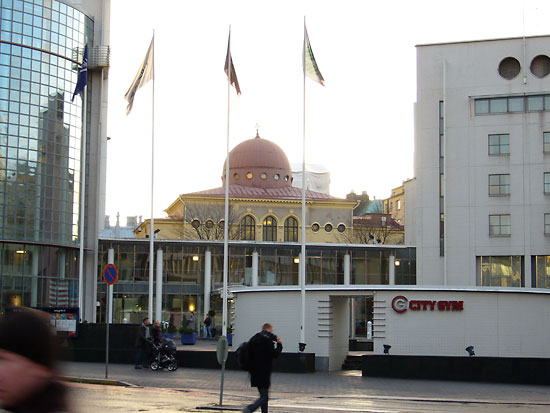
When the Radisson Hotel went up in Kamppi in 1991, it was designed so that Helsinki Synagogue, built in 1906, would remain a visible part of the neighbourhood.Photo: Peter Marten

“As the birthday of Christ, you could almost say that Christmas is the moment when Christianity is separated from the Jewish religion,” says Dan Kantor, executive director of the Jewish Community of Helsinki. The majority of Finland’s 1,500 Jews live in the capital area, using the synagogue in the Kamppi district and its adjoining community centre as their religious and social hub.

“I can remember my own experience as a small boy, when I used to look out of the window and see the Santas running around from neighbour to neighbour,” says Kantor. “At that time you perhaps thought that you didn’t quite belong to the rest of the Finnish people. But we have our own holidays. Of course, you feel a difference at this time – you can’t escape it. But it’s not a problem because we have a strong identity.”

The Jewish festival of Hanukah, a festival of light, coincides with the Christian festive season, and presents are also given to children at this time. “In most Jewish homes and families, Christmas doesn’t play a role,” Kantor says, “but most marriages these days are intermarriages and then Christmas enters the picture.”

Light over darkness
3494-noncrist3_b-jpg

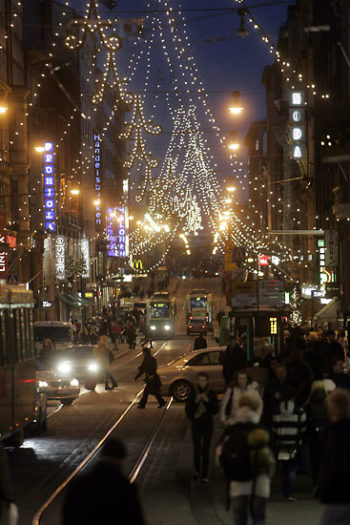
Christmas shopping isn’t for everyone, but it’s open to all faiths, part of the undefined area where culture and religion overlap.Photo: Mikko Stig/Lehtikuva

Another non-Christian element joins in the celebrations, but not out of religious respect. “My wife and I have both been atheists since our early teens, but nobody visiting us at Christmas time would notice any difference,” states Jaakko Wallenius, compiler of the Being Human blog site. “Everybody with a rudimentary knowledge of history knows that Christmas has really nothing to do with Christian beliefs. Christmas, also called Yule – which is close to the Finnish word for Christmas, joulu – was a big event for the pagan Germanic nations long before they were converted to Christianity.

“The main function of Christmas is to celebrate family ties and to provide an opportunity to cease all normal activities,” Wallenius continues. “Because of this, it is possible to find time to search for inner peace and harmony, as there are no strict schedules or places to go. Many people have a misconception that these feelings must somehow be connected to a religion, even though religion is not needed in any way to attain these things.

“This feast has always been a celebration of light over darkness, even though a part of the population has seen fit to simultaneously celebrate the birthday of the founder of their religion. We have no reason to dump these age-old traditions, even if the Christian church has for centuries tried to hijack them as its own.”

At least one group of non-Christians, then, gets to have its Christmas cake and eat it, too.

By Tim Bird
10 Finnish music startups you should know

Europe’s leading startup gathering, Slush, introduces an entirely new event to its lineup – a two-day music and technology conference called Slush Music, held on November 30 and December 1, 2016 in Helsinki.

They have put together a list of ten companies that you should know from the Finnish music-related startup scene.

The first on the list, Artist Exchange, started in 2015 in Helsinki with the idea of making buying and selling live music easy and customer-friendly. Their web application is a hybrid of a marketplace and an enterprise software that enables live music buyers to book acts for their events and increases the efficiency of live music sellers.

Finland moves towards a sustainable future

The Finnish strategy also foresees 250,000 electric cars – 10 percent of the country’s automobile total – on Finnish roads by 2030.

Measures will be taken to change the transportation system as a whole to create a more service-based mobility and easier access to public transport. A 30 percent increase in the use of bikes and walking is included in the calculations. The target of reducing import oil will bring massive reductions in emissions.

Sports, tech and startups meet at Smash

An official Slush gathering,  Smash presents a great lineup of stars from the sports and startup worlds, including Google, Mounir Zok (director of technology and innovation for the US Olympic Committee) and Alex Nisbett, who helped construct the customer experience at the London Olympics.

Smash is aimed at all sports, exercise and technology startups and growth companies. It offers an incredible framework for raising awareness, networking, developing partnerships and launching new products.

Smash takes place on November 29, 2016, the day before Slush, at Kattilahalli in Helsinki.

The Finnish games industry creates its own rules

The arrival of game studio Remedy’s Max Payne video game made a global splash when it appeared on shelves in 2001, selling four million units globally. Several years later, the arrival of the iPhone and the App Store opened the floodgates.

The Finnish game industry has become an attractive investment target for foreign studios. The past couple years alone have seen 70 million euros of private investor money from abroad boosting the industry. This is without taking into account the dizzying figure surrounding the acquisition of Supercell.

The number of employees in games development is set to expand from its current total of 2,500, with Finland’s vibrant startup culture attracting talent from all over the world. The growth of the Finnish games industry is not forecast to slow down, either. More than 20 institutions around Finland currently provide game education at all levels.

Startups at Slush hold one key to Finland’s future

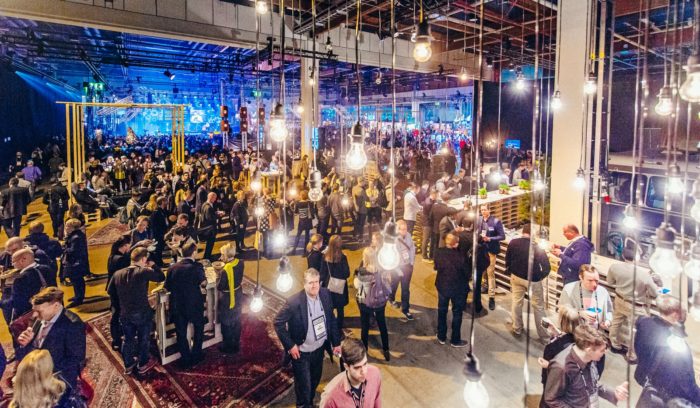
Many people know Slush as the hightech entrepreneurship event that takes place annually in late November or early December in Helsinki. Yet Slush CEO Marianne Vikkula is adamant that it is not an event. Instead, Slush is a movement.

It began when 300 people gathered in Helsinki to discuss entrepreneurship and technology during the dark days of 2008. The Finnish winter weather wasn’t the only reason for the darkness; the global financial crisis was blooming and many countries entered deep recessions.

These young Slush participants, many of whom were students, wanted a new way of life. Instead of the traditional career path of working for big corporations, they planned to be entrepreneurs. This idea had, and still has, immense appeal: at latest count 16,000 people from all over the world, including entrepreneurs, investors, students and media, take part in the annual Slush Helsinki. In addition, Slush organises numerous gatherings in locations as far-flung as Singapore, Shanghai and New York.

A culture of entrepreneurship

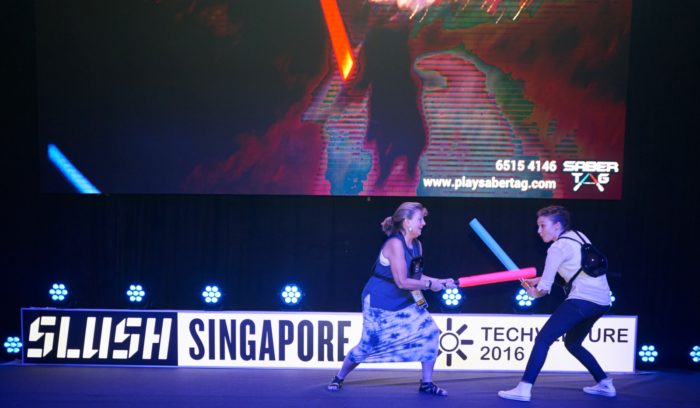
Slush organises gatherings in many different countries; there is time for both business and fun, such as this saber tag match at Slush Singapore.

Slush organises gatherings in many different countries; there is time for both business and fun, such as this saber tag match at Slush Singapore.Photo: Melvin/Slush

“The biggest impact we have had is definitely the culture,” says Vikkula. “Just look at how the media sees entrepreneurship now. What is even more dramatic is with the youth. Their goal is to run their own businesses.”

Pekka Ilmakunnas, professor of economics at Aalto University, agrees. He believes it’s a good thing that both the Finnish government and grassroots movements encourage owning your own business. Still, change happens slowly and we can’t expect miracles.

“Slush and other efforts to encourage entrepreneurship result in startups, many of which are short-lived,” Ilmakunnas says. “Among those which survive, only a few grow fast to become significant employers. It is important that we have startups, but we cannot hope that they quickly solve our unemployment problems.”

Capital, talent and good education

At Slush, great ideas hover in the air, appearing over people’s heads like lightbulbs in a cartoon.

At Slush, great ideas hover in the air, appearing over people’s heads like lightbulbs in a cartoon.Photo: Jussi Hellsten

Finnish startups have gained attention around the world: gaming powerhouse Supercell, internet-of-things specialist Enevo and healthtech pioneer Blueprint Genetics are just a few examples. Global investors are now eyeing these and other young companies. In 2015 about one billion euros of venture capital was invested in Finnish startups.

“Finland now has the highest rate of early-stage venture investment in proportion to GDP in Europe,” Vikkula says. “Many of those deals happened at Slush. In the years 2013 to 2015, investor meetings at Slush resulted in more than 500 million euros of funding for startup companies. Out of that, Finnish firms received about 200 million euros.”

While Slush has shown its worth in attracting venture capital, Vikkula says it is now rising to meet more challenges. One major issue is getting the best talent to work in startups. She explains that Slush wants to encourage young Finns in their education, as well as attract skilled immigrants to work in Finland.

Ilmakunnas stresses that it will take a variety of measures to ensure robust health for the Finnish economy in the future.

“There are foreign firms starting activities in Finland,” Ilmakunnas says. “However, in the long run it is also important to have new domestic firms that grow and increase employment. Over time it is research and good education which bring competitiveness.”

Nokia may still pack some surprises

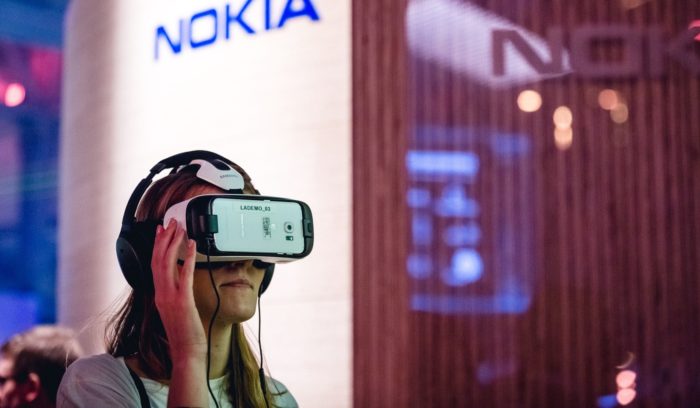
Trying to see what the future holds: With the Nokia stand visible in the background, a Slush participant tests a Samsung product.

Trying to see what the future holds: With the Nokia stand visible in the background, a Slush participant tests a Samsung product.Photo: Jussi Ratilainen

Movements like Slush exert their own broad impact on the economy over time, but Slush also remains extremely important on the level of individual companies. It has become a great forum for them to unveil new products. These big announcements have come from small startups, but also major corporations. In 2016 everyone is watching Nokia.

Nokia announced its return to consumer electronics with the N1 tablet at Slush in 2014. Now they are re-entering the mobile phone market through a licensing deal with the Finnish company HMD Global. It is widely speculated that during Slush 2016 Nokia will unveil their new smartphones and tablets. Thousands of budding entrepreneurs will be happily learning about new companies and ideas, but they will also be eager to hear what great innovations come out of the old favourite Nokia.

[Editor’s note, December 2, 2016: Nokia did not reveal any new smartphones or tablets at Slush 2016, but on the second day they unveiled a range of feature phones, Nokia’s first since selling the mobile device division to Microsoft.]

By David J. Cord, November 2016

There’s a hat for that: Finland’s shiny happy “pipo” people

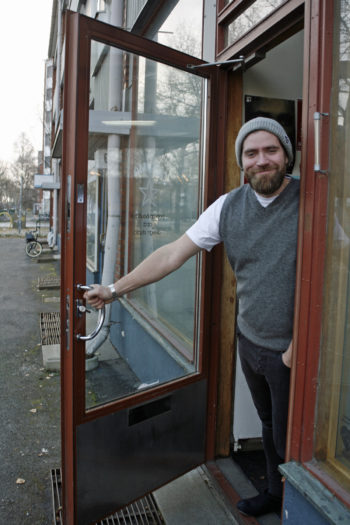
Antti Putkonen, now in his late 30s, first got hooked on knitting hats during his schooldays, and soon started selling his hats. After a break to devote time to his kids while they were small, he’s now increasing the amount of time he spends on his business.

He makes woolly pipo hats and beanies by hand, and wears the wintry accessories all year round. “A pipo is a natural extension to whatever you wear,” he says. “In a slightly anarchic spirit, I often like to wear a pipo indoors – though I’ll always take it off when heading for the dining table.”

In a workshop in the northern Finnish city of Oulu, Putkonen’s industrial-scale sewing machine thrums almost round the clock when he has a big order to meet. Some 15 kilos (33 pounds) of cloth has just arrived from the factory, and the customer has set a tight deadline for the delivery of this batch of woolly hats. “When the last pipo is ready,” he says, “I’ll clean up and stop to think: There goes another bunch of hats, out into the big wide world.”

Inspiration at school

Finnish knitwear firm Nevertex is another long-standing player in the “pipo” business featuring hats for all seasons.

Finnish knitwear firm Nevertex is another long-standing player in the “pipo” business featuring hats for all seasons.Photo: Nevertex

In secondary school, Putkonen was enthralled to realise how quickly and easily he could fashion woollen handicrafts. He earned a fair amount of pocket money by making hats to sell to his friends.

After leaving school in 1998, he set up his own company and pipo brand, called Kooma (the Finnish word for “coma”). This name came from the slang expression vetää koomat (literally “put on a coma”) used by young guys to mean “party like crazy.”

As skateboarding and hip-hop culture took off in Finland, his warm but supercool hats sold like hotcakes. In the early 2000s Putkonen and some friends started a business in Oulu called Real Deal, selling skateboarding gear and Kooma woollies.

At about the same time as his three kids started arriving on the scene, Putkonen was shuttling back and forth to Rovaniemi, more than 200 kilometres (125 miles) away, to study textile design at the University of Lapland. “For a while I was pretty close to burnout,” he says, “though I didn’t realise it at the time.”

It became clear that he had to take a break, so he put his pipo production on hold, leaving everything in the cellar of the family home, while he focused on raising his offspring. “It felt positive to just give in and do things the way it suited the kids,” he says.

Wearing hats makes sense

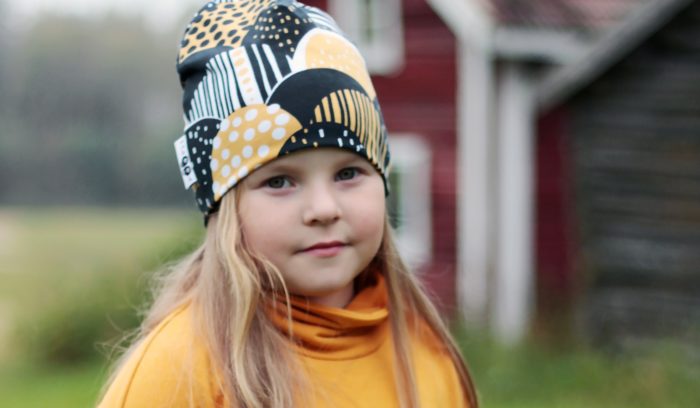
PaaPii Design, based in the Ostrobothnia region, produces family-oriented garments including hats such as this one, entitled “Harvest.”

PaaPii Design, based in the Ostrobothnia region, produces family-oriented garments including hats such as this one, entitled “Harvest.”Photo: PaaPii Design

Demand for Putkonen’s pipos never died down. With pipos coming into fashion, even Finns who had only ever worn woollens to protect themselves from the cold could now look trendy in their old woolly hats.

Finnish winter temperatures can sink as low as minus 30 degrees Celsius (minus 22 Fahrenheit). In the summer it can get very warm, though the country doesn’t experience the same kind of heatwaves as more southerly parts of Europe. This means you can wear thinner knitted hats even in the summer.

A few years ago it was trendy for pipos to have protective “wind stopper” lining. But today woollen designs that let the air through are also popular. One designer who has had the opportunity to keep an eye on hat trends is Terttu Harsunen at Finnish knitwear company Nevertex in the the central-western region of Ostrobothnia. “Merino wool is also ‘in’ now,” she says. “It’s soft but not itchy.”

Nevertex makes hats for customers of all ages; Harsunen reckons that the earlier craze for pipos among young men continues to show itself in the wardrobes of middle-aged guys today. “And there’s a new trend of older gentlemen who want black or grey pipos to wear with classic outfits,” she says.

Anniina Isokangas (whose last name coincidentally means “big fabric”) is CEO and designer at another company in Ostrobothnia, PaaPii Design. Looking at the opposite end of the age spectrum, she notices how children – and their parents – also follow and shape the direction of hat fashion. For families with young children, wearing a set of matching hats can give everyone a sense of shared identity and togetherness. “It’s a kind of twinning trend for the whole family,” says Isokangas. She also notes that a pipo can cover up a “bad-hair day” for a parent pressed for time.

Kooma comeback

“The ‘pipo’ in itself is timeless,” says Antti Putkonen of Kooma when asked about his company’s longevity.

“The ‘pipo’ in itself is timeless,” says Antti Putkonen of Kooma when asked about his company’s longevity.Photo: Susanna Ekfors

For ten years Kooma kept a low profile. But eventually Antti Putkonen’s kids grew up a bit, giving dad more time to himself. Now he’s making and marketing his pipos as a full-time entrepreneur again, in his brick-and-mortar premises and on the internet.

He’s got a lot of colleagues and competitors in Finland in addition to Nevertex and PaaPii. Although they won’t all fit into one article, we’ll also mention Costo, which offers “environmentally sustainable and good-looking designs;” Vai-kø, which makes 100-percent merino wool hats for “tough hikes or Sunday strolls” and says it gives 5 percent of its sales income to charity; and SuperYellow, which aims to “create a headwear culture” that is “colourful,” “innovative” and “functional.”

There are many hats vying for consumers’ attention, but the basic demand for pipos hasn’t changed at all, though different models may fall in and out of favour. The most popular knitted pipos today are taller designs that flop down slightly behind your head.

“But the pipo in itself is timeless, and I can quickly react to changing fashions,” says Putkonen. He aims to strengthen and grow Kooma until what is now a one-person business must hire more people.

By Susanna Ekfors, November 2016

It’s about talent and taxes: Finland’s great for foreign companies

The World Economic Forum’s Europe 2020 Competitiveness Index lists Finland as the most competitive country in Europe.

Finland offers a stable, predictable operating environment. It is an EU country and the only Nordic nation that uses the euro. It has a low corporate tax rate of only 20 percent. These factors have led many foreign companies to establish long-term operations in Finland, enjoying high return on investment. With access to top high-tech talent and a Silicon Valley-inspired business culture, Finland is an R&D hotspot and a testing ground for companies looking for business transformation.