Citizens’ initiatives prove popular in Finland as an expression of democracy

Finland introduced citizens’ initiatives in 2012, and the first proposal reached Parliament a year later.

That first initiative, which called for the abolition of fur farming, was rejected, but others have become law. The citizens’ initiative that included marriage equality for same-sex couples became the first initiative to be granted approval and to result in legislative change. It still holds the record for number of signatures gathered: 166,851.

Citizens’ initiatives are in use in about 30 countries around the world. There are European citizens’ initiatives, which go to the European Commission, while other political entities, such as some US states, also have a process in place.

Get your voice heard
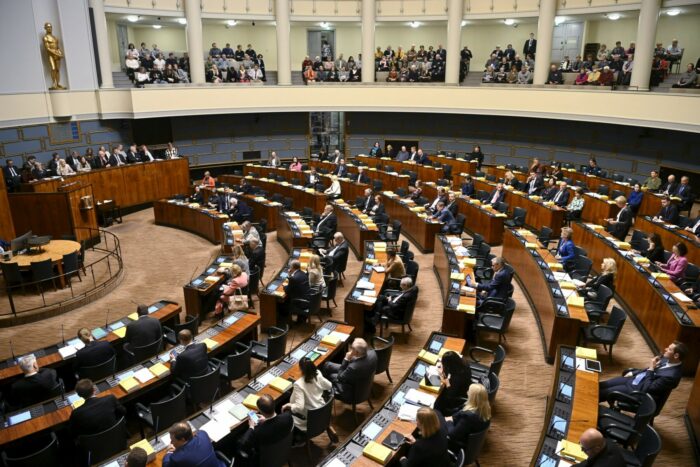
Members of Parliament sit in a large hall at desks arranged in concentric semicircles while spectators sit in rows of seats on a balcony level.

A debate progresses in Parliament in the Finnish capital as members of the public watch from the gallery.Photo: Markko Ulander/Lehtikuva

“I think the citizens’ initiative has been a huge success in many ways,” says Henrik Serup Christensen of Åbo Akademi, a Swedish-language university in southwestern Finland. He has published several academic papers about the initiative in Finland. “It has mobilised people and is the most popular form of democracy between elections. Young people in particular use it a lot.”

It is a common worry in many countries that young people are not engaging with the political process. Encouraging them to take part in democracy is important for a well-functioning society. One of Christensen’s studies discovered that 49 percent of millennials have supported at least one citizens’ initiative, compared to 28 percent of the general population.

In order to reach Parliament, an initiative needs 50,000 signatures, which is less than 1 percent of Finland’s population. Legislators then consider the proposal, but are under no obligation to pass it. In fact, the majority of initiatives don’t become law.

As of March 2023, 1,431 initiatives have been started, 64 have been sent to Parliament and five have become law. Two others received modifications before adoption. Although few initiatives make it through the process, studies have shown that citizens become more engaged in the political process, even if their ideas don’t enter the law books.

From taxes to legalisation
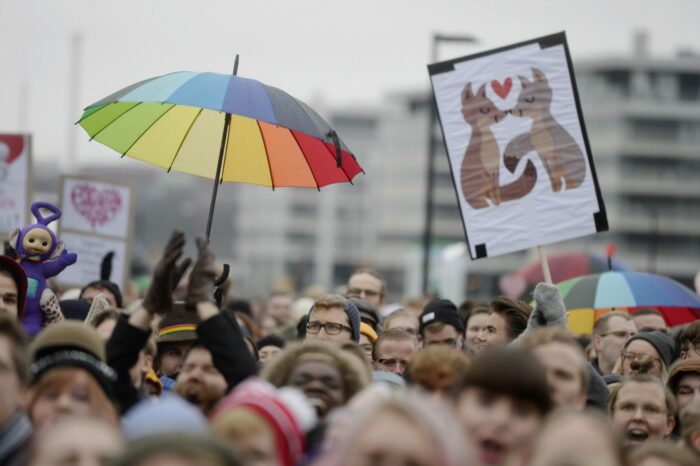
A crowd of people carry signs and rainbow-coloured umbrellas.

Thousands of people gathered across from Parliament on November 28, 2014, the day lawmakers voted on the bill including same-sex marriage rights.Photo: Vesa Moilanen/Lehtikuva

“People are willing to accept their initiative not being passed, but they get upset if they feel they are not being listened to,” Christensen says. “Politicians have to take these initiatives seriously and give them due consideration.”

Finns can use old-fashioned paper petitions to collect signatures, but there is also a secure online platform available. A strong verification method ensures the validity of digital signatures.

The initiatives cover a broad range of topics. Recent proposals include tax deductions for exercise expenses, increased staffing in daycares and legalisation of marijuana.

“An important point to remember is that citizens’ initiatives are sent to Parliament, and Parliament can only enact things that fall under its prerogative,” Christensen points out. “The Finnish Constitution says the President has a lot of responsibility in defence and foreign policy, for example.”

Lakes and forest cover about 80 percent of Finland, so many initiatives have to do with Finnish nature. Minna Mikkonen was one of the main organisers for a proposal to ban hunting traps.

“On social media I saw bears caught in traps,” she says. “I got so angry seeing their pain. These traps cause unnecessary suffering to animals.”

A way to take action
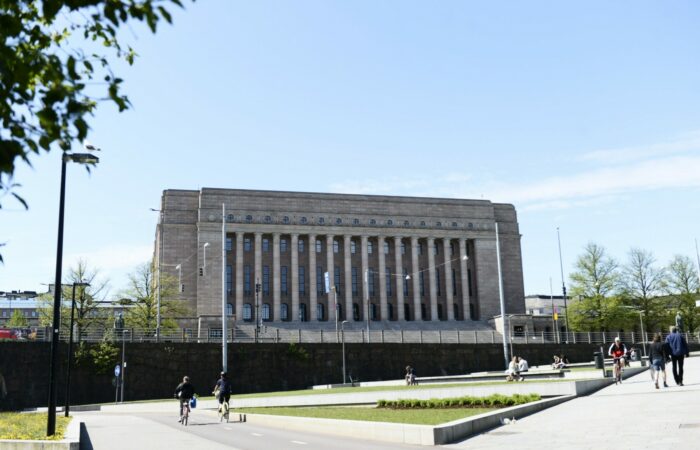
A majestic granite building is flanked by trees.

The Parliament House, designed by Johan Sigfrid Sirén and completed in 1931, overlooks Mannerheim Road and Citizens’ Square.Photo: Olivia Ranta/Lehtikuva

Mikkonen decided to channel her feelings into action. She could have lobbied politicians or organised protests and boycotts, but instead she chose the citizens’ initiative. Grassroots support quickly swelled as word spread.

“I got a lot of positive feedback from many animal rights organisations, like the Finnish Nature League and Animal Welfare Finland,” Mikkonen says. “I’m extremely grateful.”

They received 56,213 signatures for the proposal to ban hunting traps, of which all but 24 came through the official online platform. It has been sent to Parliament, and at the time of writing Mikkonen is waiting for them to consider it. There are no guarantees that it will pass, but she is still pleased with the process.

“Many politicians agreed with me, but there were a lot of people that didn’t,” she says. “But I’m happy that I made the citizens’ initiative.”

By David J. Cord, March 2023
Finnish companies working on 6G connectivity

The 6G promise of greater connectivity is based on reaching many more people and increasing peak data rates 50-fold, to around one terabyte per second.

The world’s first large-scale 6G research programme, 6G Flagship, was founded back in 2018 at the University of Oulu, 600 kilometres (370 miles) north of Helsinki. It’s a coalition of research institutes and companies whose network that consists of 500 academic partners from 71 countries and 400 industry partners from 31 countries. The programme is set to create the very first 6G testing network.

Among the goals of Finland’s pioneering research and innovation in the 6G arena is a secure, resilient and carbon-free European future. “The crucial green transition cannot happen without digitalisation, as this helps industries reduce emissions and minimise energy use,” says Pekka Rantala, head of the 6G Bridge Program, which Business Finland leads.

By James O’Sullivan, March 2023

Icy resolve: Creating the world’s widest ice carousel on a Finnish lake

On a frozen lake surface in the western Finnish region of Ostrobothnia, Käpylehto spent a total of almost two weeks driving an effort to cut a huge circle of ice and make it spin.

His display of resilience and determination continued until his work was through, despite variable weather conditions and machinery malfunctions.

An appetite for growth

See Janne Käpylehto and his friends persevere as they try to cut the world’s biggest ice carousel on a frozen lake in western Finland. (Watch for the dance at about 2:05.)Video: Erika Benke/ThisisFINLAND

“I just need to go inside and change my boots,” Käpylehto says matter-of-factly. “They’re full of water.” He has just emerged from behind a spray of frigid water created by the giant chainsaw he was wielding. He flashes a smile.

It’s January 28, 2023, and the temperature is minus 7 degrees Celsius (19 degrees Fahrenheit). Käpylehto is using the saw to clear a long channel, 15 centimetres (six inches) across, in the ice that covers Lappajärvi, a lake five hours’ drive north of Helsinki.

He’s attempting to create the world’s biggest ice carousel. Since arriving five days ago, he’s been working day and night on the frozen lake.

He has held the world record before: In 2021 he made a carousel 310 metres (340 yards) in diameter. His achievement stood until later in 2021, when Roger Morneault of Maine, USA made one 376 metres (411 yards) wide. In 2022, the Zwilling family in Minnesota, USA cut a carousel more than 400 metres (437 yards) in diameter. Käpylehto is eager to retake the title.

Friendly competition

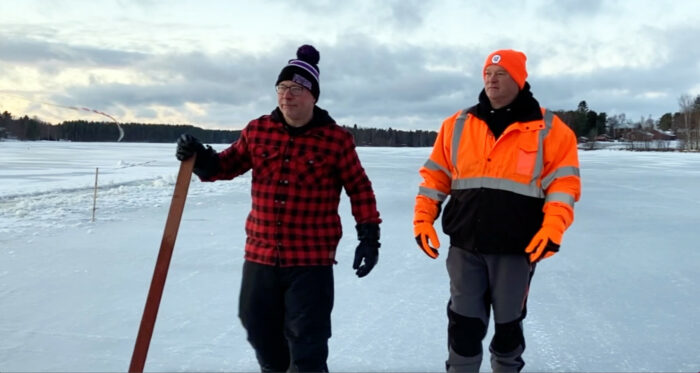
Two men dressed in heavy winter clothing walk on a frozen lake surface.

Janne Käpylehto’s American ice-carousel colleagues Roger Morneault of Maine (left) and Chuck Zwilling of Minnesota, flew over to Finland to participate. Each of them has also held the world record at some point.Still photo from video/Erika Benke/ThisisFINLAND

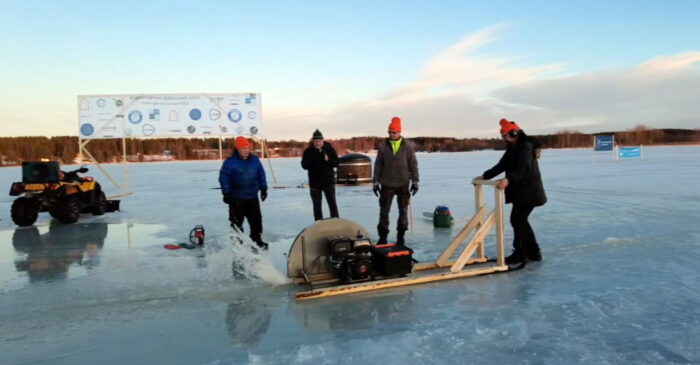
To saw through ice 42 centimetres (16 inches) thick, he and a team of 30 volunteers are using tools that include two custom-made machines. One is a circular-blade cutter that Käpylehto invented. He designed the other one in cooperation with nearby Seinäjoki University of Applied Sciences. It has two blades and is mounted on a pair of skis.

After five days, both machines break down. But Janne doesn’t let that get to him. “We’ll have to cut the ice with chainsaws,” he says.

A ten-person team from the US is also there, including members of the Zwilling family. The main reason for flying over to Finland is to help, says Chuck Zwilling. “Ice carousels connect people,” he says. “We compete with each other to break records, but we also help each other succeed.”

Despite the hard work and the camaraderie, the carousel isn’t spinning properly by Saturday night. So a gala dinner at the lakeside Hotel Kivitippu, just 100 metres from the carousel, comes and goes without the trophy changing hands.

The next morning brings harsh news: temperatures have plunged overnight, and the carousel is now frozen solid.

Going for a spin

A man pushes a circular saw mounted on a wooden frame along a frozen lake surface while several people watch.

Käpylehto (at right) cuts the thick lake ice with a saw contraption of his own devising, sending up splashes of water in the process.Still photo from video/Erika Benke/ThisisFINLAND

“It’s a bummer,” says Käpylehto. He says he needs to go home and rest. The Americans are also leaving.

However, Käpylehto hasn’t given up. Five days later, he’s back in Lappajärvi. “We’ve decided to make it spin,” he says.

Dozens of volunteers from the nearby villages of Lappajärvi, Alajärvi and Vimpeli join the effort again. This time the machines don’t break, and the sun is even shining.

Perseverance, local community cooperation and sheer willpower yield success five days later. On February 6, just a week after the initial target date, a triumphant Käpylehto shows off a rotating, record-breaking carousel.

It’s a massive 516 metres (564 yards) in diameter, with an estimated weight of 78,000 tonnes. The circumference is 1,620 metres (just over a mile).

“I called Chuck Zwilling in Minnesota,” he says. “He congratulated us and said he wasn’t surprised at all. In fact, he said he would have been surprised if I’d given up.”

What’s next? Käpylehto says he’ll make more ice carousels while the winter lasts, albeit smaller ones. And he’ll be back in Lappajärvi next winter to attempt another world record – just as you’d expect.

By Erika Benke, February 2023

For Finnish Culture Day, six videos transport you to festivals and arts events across Finland

The definition of “culture” refers to customs and social norms, but additionally extends to all forms of the arts. Finnish Culture Day is also called Kalevala Day, after the national epic Kalevala, a book of verses that were an oral tradition until 1835, when they were published in written format as collected by the scholar Elias Lönnrot.

While cultural events continue nonstop throughout the winter, many Finnish people are already looking forward to the summer festival season. During long days when the sun hardly sets at all, people get together to enjoy the enthralling atmosphere that arises only at live concerts.

We think you’ll agree that we’ve managed to capture some of that feeling with the help of the team that made the videos below. The concerts show a range of artists and genres. It’s the next best thing to being there. (For additional info, visit the videos’ YouTube pages.)

Jesse Markin: “Sidney Poitier”
Festivaali Festival, Tampere

Jesse Markin was born in Liberia and grew up in western Finland. At Festivaali Festival, in a scenic lakeside park in the city of Tampere, he raps about Sidney Poitier and captivates the audience.Video: Kerttu Penttilä, Vessi Hämäläinen, Pekka Rousi, Jukka Moisio/ThisisFINLAND

Silva Kallionpää Quartet: “Stretching Time”
Ilmiö Festival, Turku

Violinist Silva Kallionpää leads a jazz quartet that tests limits and takes new paths to tell its stories. “Stretching Time” refers to time passing faster or slower depending on what’s happening. Art and music make it feel like it’s possible to manipulate time. Ilmiö is an alternative music and art fest in the southwestern Finnish city of Turku.Video: Kerttu Penttilä, Vessi Hämäläinen, Pekka Rousi, Tommi Kinnunen/ThisisFINLAND

Joose Keskitalo: “The Golden Apple”
Odysseus Festival, Helsinki

Singer-songwriter Joose Keskitalo is known for quirky stage charisma, rough-hewn lyrics (now in English) and jangly guitar in songs that range from wistful to ominous. Odysseus Festival offers “adventures for the curious listener” on Lonna, an island outside of Helsinki’s South Harbour.Video: Kerttu Penttilä, Vessi Hämäläinen, Pekka Rousi, Jukka Moisio/ThisisFINLAND

Malla: “Moi” (Hi)
Bättre Folk Festival, Hailuoto

Malla (full name Malla Malmivaara) offers a smooth, light, Finnish-language club sound – an addictive mix of house beats, languid disco and sophisticated electropop. Bättre Folk is a two-day literature and music festival on Hailuoto, an island of the coast of the northern Finnish city of Oulu.Video: Kerttu Penttilä, Vessi Hämäläinen, Jussi Hellstén, Tommi Kinnunen, Relyonkaide (Bättre Folk)/ThisisFINLAND

Timo Lassy & Teppo Mäkynen: “Zomp”
Flow Festival, Helsinki

Saxophonist Timo Lassy and drummer Teppo Mäkynen join forces on the Balloon 360° stage at the always-innovative, ever-urban Flow Festival, a major event on the summer music calendar, held in the heart of Helsinki.Video: Kerttu Penttilä, Vessi Hämäläinen, Pekka Rousi, Jussi Hellstén, Skyproduction (Flow)/ThisisFINLAND

Bonus: Dancing and architecture in Helsinki

Somebody kind of famous once said, “Writing about music is like dancing about architecture.” What does that even mean? We don’t know, and we don’t even know if we want to know. This video is about dancing on architecture. It features award-winning Finnish choreographer Ismo-Pekka Heikinheimo’s Ismo Dance Company. Have a peek.Video: Ismo Dance Company/Anybody’s Architecture/ThisisFINLAND

By ThisisFINLAND staff, February 2023

CEO of Finland’s Supercell believes in work-life balance and an international workforce

Every month, 250 million people around the world play Supercell’s games: Hay Day, Clash of Clans, Boom Beach, Clash Royale and Brawl Stars.

Founded in 2010, Supercell maintains offices in Helsinki, San Francisco, Seoul and Shanghai. The company is thoroughly international and multicultural, with more than 45 nationalities among its more than 400 employees.

“We want to create global games for diverse players,” says CEO Ilkka Paananen. “Multiculturalism and diversity are part of everything we do. Interacting with colleagues from different backgrounds is important business-wise, but it also enriches our lives and makes our work more interesting. We have seen that diversity makes our teams better. Future workplaces will be fundamentally international.”

Supercell believes in independent teams that take responsibility for their work. The company slogan is, “The best teams make the best games.”

Growing the team

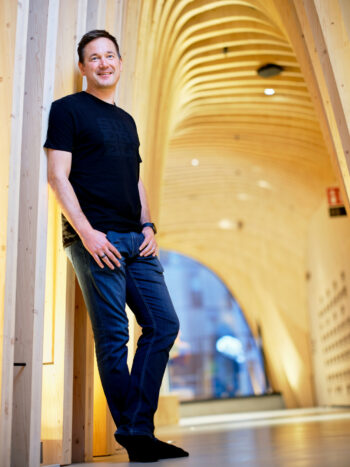
A man in blue jeans and a black T-shirt leans against the wall in a hall featuring wooden archways.

Ilkka Paananen stands in the lobby of Supercell’s Helsinki eight-storey headquarters building, which is constructed almost entirely out of wood.Photo: Sampo Korhonen

“We want our teams to be the best in the world,” says Paananen. “We start with two to three people who complement each other perfectly, and continue growing the team from there.

“Supercell was founded on the principle that every team works as a cell inside the company. This means that we trust the team and the people in it to make their own decisions, organise their own work and take responsibility for creating a game that they believe in. I do not want to tell people how to do their work. Trust is the fundamental value that keeps Supercell together.”

Paananen thinks that employees will be even more independent in the future.

“There will be less micromanagement, and employees will take even more responsibility for their work,” he says. “With various remote working tools, we are not always in our offices anymore, and this requires trust. Our teams can choose for themselves if they work at the office or not. We want the best people to work for us, and sometimes it can mean that they work remotely from different parts of the world. In the years to come, we will definitely get more technical tools to help us do this.”

Remember to take a break

Supercell’s Ilkka Paananen talks about being an entrepreneur in Finland.Video: ThisisFINLAND

Paananen expects to see many individuals with international networks working together in the future.

“Societies should be more supportive of the different ways of working,” he says. “Some people like freelancing and others like having stable employment. Diversity is key here as well. All work should be valued and properly paid, but we should not limit its structures too much.”

Another important value at Supercell is supporting work-life balance.

“We make sure everyone takes their holidays and remembers to look after themselves,” says Paananen. “We discuss coping at work and the importance of private life and work-life balance. You do not build good games if you burn yourself out. With remote working, it is very easy to slip into working from morning until evening. As a CEO, I take my full month’s summer holiday and go home in the evenings. I know sometimes creating games is so much fun it’s hard to stop, but you have to take a break.” He smiles.

By Päivi Brink, ThisisFINLAND Magazine 2023

Creating architecture and art from ice and snow in the Finnish far north

It’s a brisk January morning in the Finnish city of Rovaniemi, the provincial capital of Lapland, located on the Arctic Circle. The sun is hovering below the horizon – later it will peep over the edge for a mere hour or so.

On their way to work, people are pausing to admire another source of reflected light emanating from the space in front of Rovaniemi City Library and the concert and conference centre Lappia Hall. This eerie purple-pink glow has an otherworldly alien aura, but it issues from a plentiful and familiar local material: snow.

Showroom in a snow room

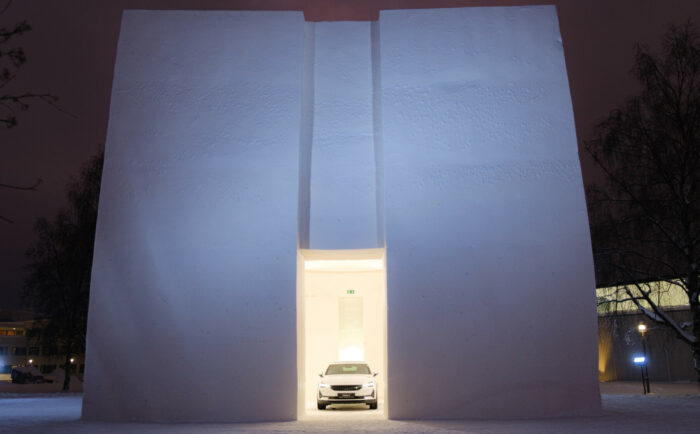
A car stands in an archway in a building made of snow.

The Polestar Snow Space displays the Polestar electric car brand and forms part of the preprogram of the Arctic Design Week in the northern Finnish city of Rovaniemi.Photo: Tim Bird

The Polestar Snow Space, completed in January 2023, is an elegant, 12-metre-tall white cube constructed from 3,000 cubic metres of compacted snow by a company called Frozen Innovations.

With a seven-week lifespan and a brightly illuminated, temple-like central chamber, it was conceived as a showroom for the Polestar electric car brand and as a novel venue for meetings and events. The structure is also part of the lead-up to the Rovaniemi Arctic Design Week in March.

“Snow is our local material,” says Taina Torvald, producer of the Design Week, which is a partner in the Snow Space venture. “Lapland is known for its snow castles, hotels and igloos, all of them popular and exciting for visitors, but this is something all local people can visit and enjoy.” The location is appropriate; Lappia Hall and the library are architectural landmarks by Finland’s most celebrated designer, Alvar Aalto (1898–1976; February 3, 2023 marks the 125th anniversary of his birthday).

Matching the pristine minimalist glow of the Polestar brand, snow was chosen for its cleanliness, sustainability and circular qualities (“circular” means the construction materials are recyclable or reusable). The snow was harvested locally, and after the structure is demolished, electric haulage vehicles will take it to the ski slopes of Ounasvaara, on the edge of the city.

Magical beauty

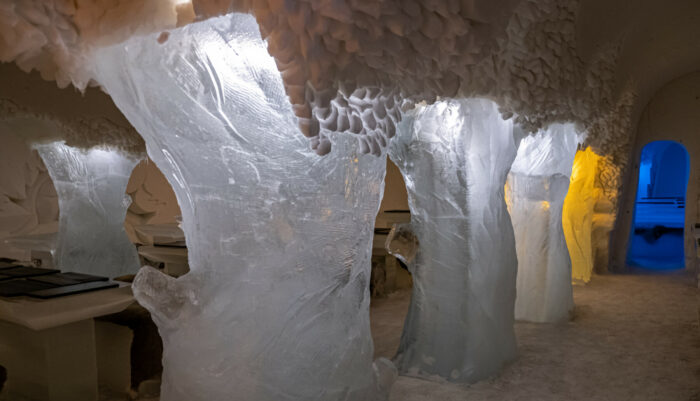
Several tree sculptures made of ice stand beside tables in a restaurant.

The restaurant and rooms at the Arctic Snow Hotel include ice sculptures, snow carvings and atmospheric lighting.Photo: Tim Bird

As a showroom, the Snow Space is the first of its kind, but the crafts of snow and ice design and architecture are established areas of expertise in Finland’s Arctic north. An annual manifestation of these skills occurs at the Arctic Snow Hotel & Glass Igloos resort, half an hour’s drive north of Rovaniemi.

The hotel designs change from year to year, but the magical beauty of the structure and interior is consistent, thanks in large part to the supervision of its founder, owner and managing director, Ville Haavikko, who also had a hand in constructing the Polestar Snow Space.

Haavikko’s expertise in this field of temporary but very functional architecture rests on academic foundations. A local boy, he enlisted in a land surveying course at Rovaniemi Polytechnic and noticed that he could earn required course points by attending the school’s class in snow and ice construction. Suddenly engrossed in this niche discipline, and inspired by the example of the Jukkasjärvi Ice Hotel in Sweden, he started planning his own snow building enterprise in 2007.

As cosy as ice

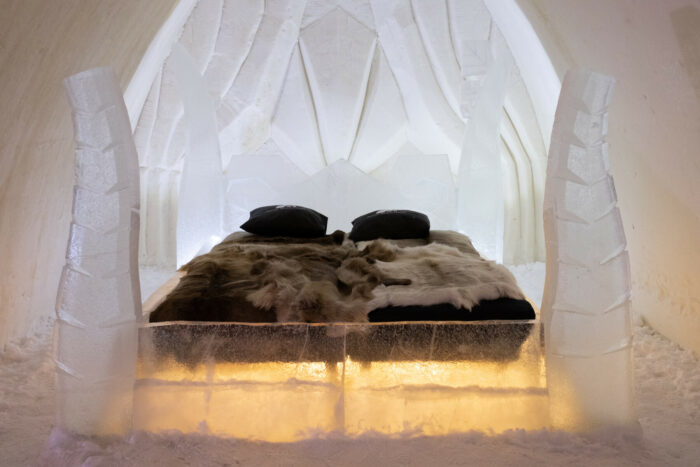
Blankets and pillows are arranged on a bed-size block of ice in a room made entirely of ice and snow.

A bed made out of ice can be cosy when covered with warm blankets and quilts.Photo: Tim Bird

The 2022–23 version of the Arctic Snow Hotel – the season lasts from mid-December to the end of March – has a capacity for 62 guests in 20 rooms fitted with beds of ice covered with warm blankets and quilts. Multinational daytime visitors and overnight customers safely traverse a magical maze of snow tunnels and chambers. Frozen sculptures and snow carvings decorate the premises, with sheep in one room, dinosaurs in another and frogs and thrones of ice in yet another.

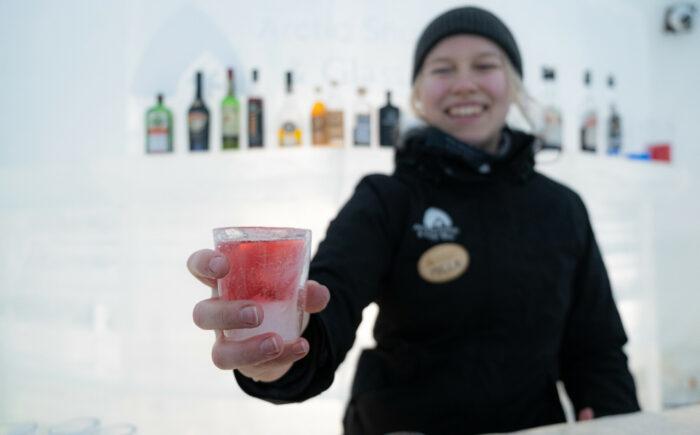
The restaurant, using exquisite snowflake-shaped ice “crockery,” is an especially dazzling creation resting on crystalline pillars, like a scene from some Tolkien fantasy. The Ice Bar serves drinks in glasses made of ice.

It’s a chilly environment, but the thermometer inside never drops below minus 5 degrees Celsius, even if it plummets – as it often does in these parts – to minus 30 outside. An annex houses two rows of individual snow saunas. As if by counterintuitive magic, they generate a steam heat of 80 degrees Celsius.

Fabulous winter creations

A bartender in winter clothing holds up a glass made of ice filled with red liquid.

Would you like ice in that? A winter-clad server at the Arctic Snow Hotel holds out a cocktail in a glass made of ice. Photo: Tim Bird

“My passion is snow and ice construction,” Haavikko says. “We have invested 1.5 million euros in a workshop adjacent to the resort where we have the machines for handling and snow construction, as well as snow and ice storage.”

Few people in Finland can match Haavikko’s snow construction expertise and facilities, but fabulous winter creations are integral features of Lapland’s tourism offering. Other pioneers include the Lapland Hotels Snow Village at Lainio, near the ski resorts of Ylläs and Levi, and the snow chapel and igloos at Kakslauttanen, another resort even farther north.

South of Rovaniemi, the Snow Castle in the city of Kemi on the far-northern shores of the Baltic Sea is an annual attraction, combined with day cruises on a vintage icebreaker ship.

All of them are located remotely near lake, river or sea, which serve as ice sources and facilitate drainage. The negligible amount of light pollution makes it more likely that you can catch a view of the Northern Lights.

“Snow is a live material,” says Haavikko. “It wants to move. You have to understand how it behaves. When we combine snow and ice, that’s a different kind of behaviour. Ice is hard like a rock, but even the big ice blocks can bend under pressure. It’s actually quite flexible. There are dozens of things to consider, including temperature, air pressure, quality of the snow – wet or dry, how often it is handled. That’s what makes it interesting.”

By Tim Bird, February 2023

Finnish space sector maintains upward trajectory

Finland’s history of space research began with magnetometers in the early 1800s and stretches through the 20th century to the present day. Today, Finland works with the European Space Agency (ESA) and has a growing new space economy commercial sector.

In this short Q&A, Helsinki University’s Minna Palmroth, director of the Finnish Centre of Excellence in Research of Sustainable Space, describes what Finland is doing in space.

ThisisFINLAND: It seems obvious to us, of course, but some people might be asking, “Wait, Finland has a space industry?”

Minna Palmroth: Finland possesses expertise in areas that can be applied to space, such as communications, software and technical hardware. Also, Finland has a long history of international collaboration and basic research, which are essential for the new space economy.

A satellite made of several flat metal panels is in space above planet Earth.

This artist’s conception shows an Iceye SAR satellite in orbit.Photo illustration: Iceye

What are Finland’s strengths in space?

Finland is especially strong in niche weather areas. For example, the Finnish Meteorological Institute (FMI) and Vaisala create some of the world’s best instruments for measuring pressure and humidity. These devices are used on American and European Mars probes. The FMI is also an authority on Earth observation, while the University of Helsinki is a world leader in simulating and modelling the space environment. The US National Oceanic and Atmospheric Administration uses Finnish technology to monitor space weather, such as X-ray flares from the sun’s coronal mass ejections, which expel millions of tons of matter into space. [Note: Almost all of the links in this article are in English.]

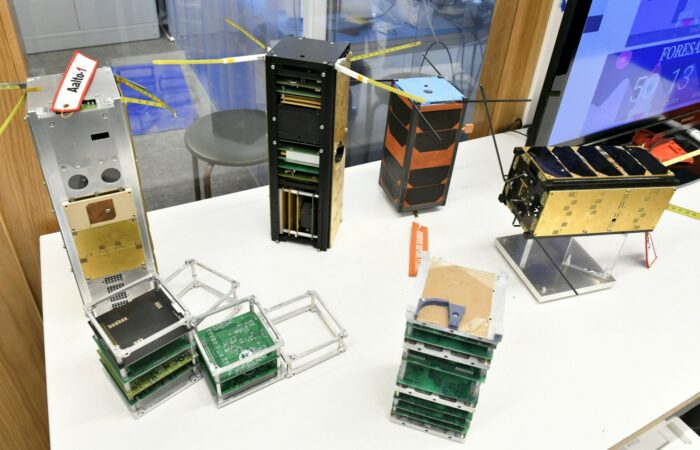
Miniature satellites are also one of Finland’s strengths. Finland’s first satellite, Aalto-1, weighed only four kilos. It was developed by students at Aalto University and launched in 2017. Finland also has several commercial companies specialising in microsatellites.

Some other Finnish innovations and expertise are also applied to space, even if they weren’t originally designed for the sector. Good examples of these are AI and data analytics, which are handy for analysing large amounts of information from satellites. This can be used in agriculture and forestry, or to analyse climate change.

Several satellites that look like rectangular metal boxes are on display on a table.

The Finnish Centre of Excellence in Research of Sustainable Space displayed various satellites at a media event in 2022, including Aalto-1 (left).Photo: Heikki Saukkomaa/Lehtikuva

What kind of space research is happening in Finland?

Research that doesn’t just end up in a scientific journal – much of it gets developed commercially. In fact, most of Finland’s newer private space companies grew out of this research.

The University of Helsinki is the biggest Finnish space researcher. Besides basic research, it is active in cutting-edge fields such as the sustainable use of space. The University of Turku is strong in physics and astronomy, while the University of Oulu is home to ionosphere experts. The University of Lapland works on space law at the Institute of Air and Space Law.

Government organisations developing space innovations include the FMI, which works on Earth and space weather, and VTT Technical Research Centre of Finland, which develops everything from sensors to microsatellite constellations.

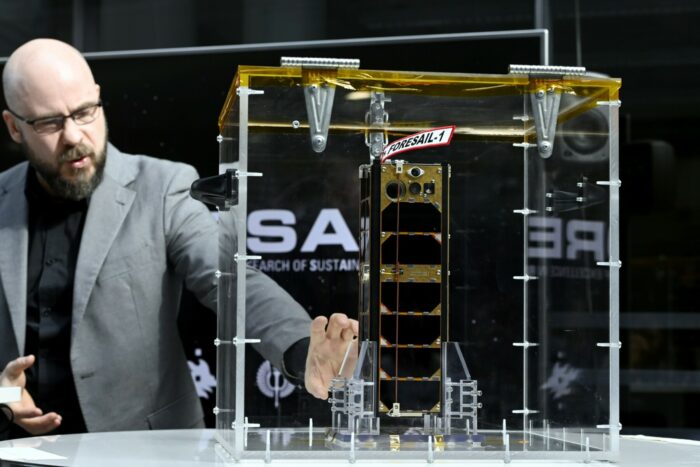
A man gestures towards a rectangular metal construction that is on display in a glass case.

Assistant professor Jaan Praks of Finland’s Aalto University explains the features of Foresail-1, a Finnish satellite that contains scientific instruments and is about as big as a one-litre milk carton.Photo: Heikki Saukkomaa/Lehtikuva

People may not be accustomed to seeing the words “space” and “sustainable” together. Why is space sustainability important?

There are already about 8,000 tonnes of debris in space, and people are launching more and more satellites. The Finnish Centre of Excellence in Research of Sustainable Space works on making satellites more durable so they stay in use and don’t become space junk. They are also developing de-orbiting technologies called plasma brakes, so satellites can safely burn up in the atmosphere.

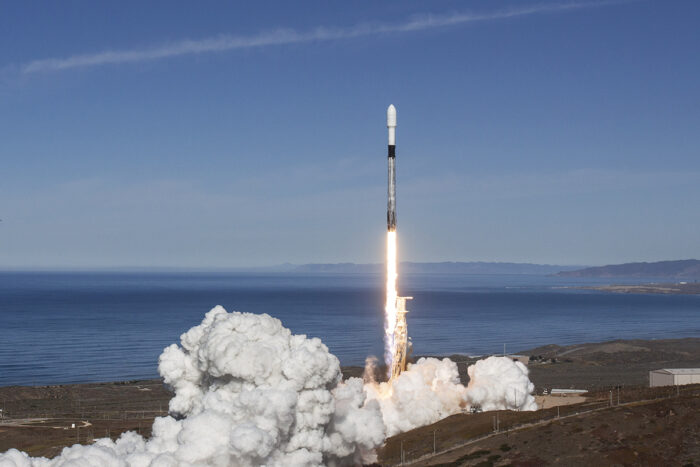
A rocket shoots straight upward into a clear sky, leaving a cloud of smoke at ground level.

A SpaceX Falcon 9 rocket carried the Finnish satellite Iceye-X2 and other small satellites into orbit from California in December 2018.Photo: Iceye

“Space law” is another term people may not have run into. What does it refer to?

Space law includes treaties, international agreements and domestic laws governing activities in space. Conceptually it is similar to the law of the sea, in that it covers the use of something that is the property of all humankind. Finland’s space law was updated in 2018 and encourages the sustainable and profitable use of space.

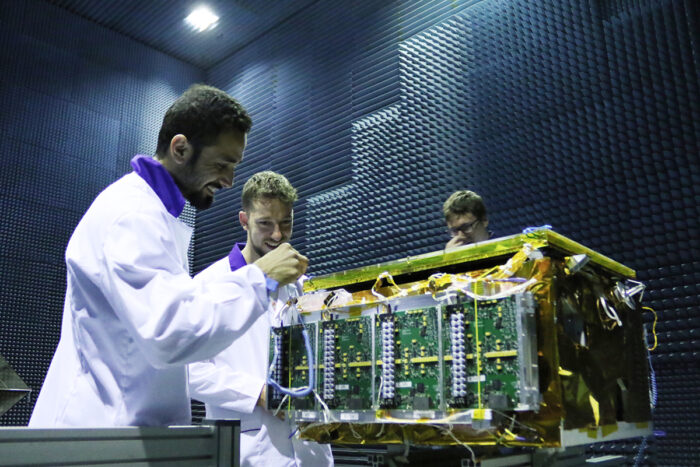
Three people in lab coats are gathered around a rectangular box that includes a row of circuit boards.

Iceye team members set up tests on a satellite in an anechoic chamber, a room designed to stop reflection of electromagnetic waves.Photo: Iceye

What are some Finnish space companies?

Finland has a diverse stable of space companies. The microsatellite company Iceye is currently the largest space startup in Europe, as measured by the amount of private funding they have received. Isaware develops instruments to measure space weather, and Collective Crunch uses AI to analyse satellite data for companies. Other companies specialise in communications, composite materials, optical hardware and robotics. You can find more in Business Finland’s company database. [Editor’s note: You can also check out Space Finland, a website maintained by Business Finland and the Ministry of Economic Affairs and Employment.]

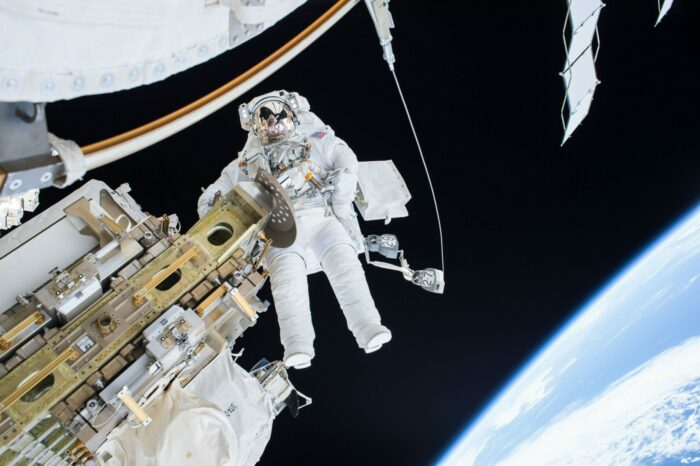
A person in a space suit performs maintenance work on the outside of a spacecraft, with planet Earth in the background.

As far as we’re concerned, American astronaut Timothy Kopra’s true claim to fame is that his paternal grandparents came from Finland. However, here he is during a spacewalk at the International Space Station in 2015.Photo: Ho/NASA/AFP/Lehtikuva

Are there any Finnish astronauts?

Not yet, but retired NASA astronaut Tim Kopra is of Finnish descent, on his father’s side of the family.

By David J. Cord, January 2023

Michelin-starred Finnish chef gets creative with plant-based food

“I encourage my staff to heighten all their senses when they cook,” says Mikkola.

He speaks highly of the value of paying careful attention when selecting ingredients. “You need to use various flavour profiles and be creative and innovative. I often pickle or ferment some of the vegetables in order to get different layers for the meals.”

Traditional Finnish preserves, jams, pickles, dried mushrooms and fermented vegetables contribute tantalising layers of flavour and texture.

“In our kitchen, there is hardly any food waste,” says Mikkola. “The main ingredients are local vegetables.”

Farm and forest

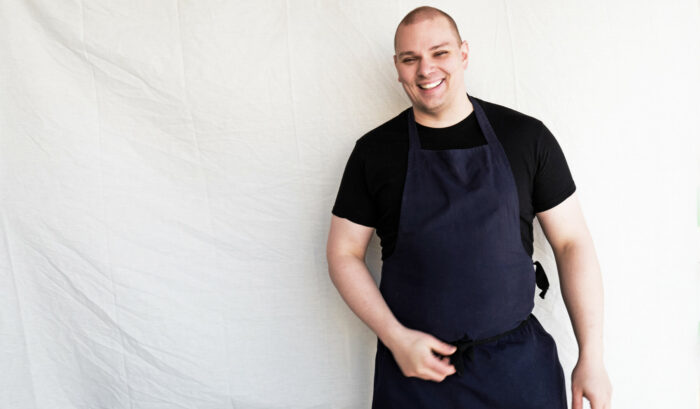
A smiling man in a black T-shirt stands in front of a white background.

“The old methods of preservation – making jams, pickling, salting and drying food – are still used to achieve interesting textures and flavours,” says Kim Mikkola.Photo: courtesy of Kim Mikkola

Finns appreciate local, seasonal produce. Summer brings a variety of green vegetables and autumn is a time for foraging.

“We pick berries, mushrooms and many herbs in the forests and the offering is very rich,” says Mikkola. “I believe it is our fantastic air and water quality that makes the food healthy and tasty.”

Many Finnish people associate winter with root vegetables that can be stored for long periods, such as rutabagas, beets, turnips, parsnips and potatoes. Winter is also a time to enjoy berry jams, pickled vegetables and dried mushrooms that are prepared in the summer and autumn.

“Nowadays, many vegetables are grown in greenhouses throughout the year, so we have more local options available during the winter,” says Mikkola. “Even so, the old methods of preservation – making jams, pickling, salting and drying food – are still used to achieve interesting textures and flavours.”

Inari is a Helsinki-based restaurant, but the name refers to an area of Finnish Lapland, in the far north. At the time of writing, Mikkola has closed the restaurant’s previous brick-and-mortar home, and plans to reopen at another location in the future. In the meantime, Inari has become nomadic, appearing in different places and finding new customers wherever it goes. The restaurant’s name continues to stand for the exceptional staff who surround Mikkola.

Recipe: Inari green curry

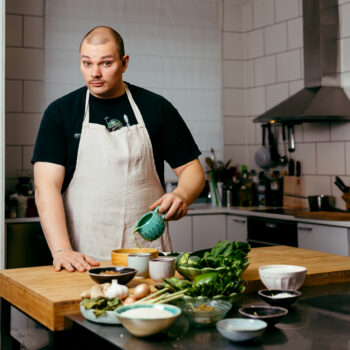
A man in an apron stands in a kitchen in front of a table with bowls of vegetables on it.

“In our kitchen, there is hardly any food waste, says Mikkola. “The main ingredients are local vegetables.”Photo: Santeri Stenvall

Prepare the greens:

  • Peas (raw)
  • Fava beans (blanch* them and then pop them out of their skin)
  • Romanesco, cut and blanched
  • Spinach, washed and cut, raw
  • Broccoli, cut and blanched
  • Thai basil leaves, washed
  • Coriander (cilantro) leaves, washed
  • Samphire, washed and cut (tastes like asparagus)
  • Asparagus, blanched and cut
  • Broad beans, blanched and cut
  • Green jalapeno (remove seeds and cut)

*Blanching means putting the vegetables into boiling water for a minute or so, then halting the cooking process by adding ice water.

Proceed to make Inari green curry paste as follows:

  • 6 Thai green chilies or regular green chilies, chopped (adjust the strength of the curry by varying the amount of chilies)
  • 2 shallots, chopped
  • 2 lemongrass stems, trimmed and finely chopped
  • 6 lime leaves (Makrut lime), chopped
  • 5 cloves garlic, chopped
  • 2 tsp lime zest, grated
  • 1 tsp ground coriander
  • 1 tsp ground cumin
  • 1/4 tsp white pepper
  • 1/4 tsp turmeric
  • 200 ml chopped coriander or cilantro leaves
  • 200–300 ml neutral oil (rapeseed, sunflower seed)

Mix everything together into a paste in a food processor. Fry the paste in a pot on low heat.

Prepare dashi (also known as the base for miso soup): Put 23 g kelp in 1 litre of water and heat to 70 degrees Celsius for 1 hour. Strain it and keep the water.

Bring the water to a boil. Add 10 percent katsuobushi (dried and fermented tuna). Infuse for 15 minutes. Strain the mixture and keep the liquid. Add the dashi into the paste.

Having sautéed the curry paste in a pot and then added the dashi, bring it to a boil. Leave it to rest for 5 to 15 minutes and strain. Add cream. Adjust the sauce with xantana (fermented corn starch) and butter. Pour the sauce over the vegetables. Season with lime juice, fish sauce, lime leaves and/or lemongrass.

By Päivi Brink, ThisisFINLAND Magazine 2023