Search for images of surfing online and you will find plenty of turquoise waves, palm-lined beaches and surfers in bikinis or board shorts.
However, in some places pine trees, not palm trees, line the shore. And a surfer might be riding a wave through water flecked with slushy ice.
Surfing conditions in Finland are challenging. Along the country’s Baltic Sea coastline, waves can’t grow as large as they do in the open ocean. Barrel riding – when a surfer glides inside a breaking wave as the curling wall of water arches overhead – is little more than a distant dream in Finnish waters.
Anyone who wants to surf in Finland needs to be well equipped. The shore is often rocky, and the best time to surf is usually when the sea is cold, in spring or autumn. Rather than bikinis and board shorts, surfers wear thick wetsuits, complete with neoprene hoods, booties and gloves. You also need to top up your sisu, that special Finnish combination of grit, courage and perseverance.
All this does little to deter Finns who are passionate about the sport. We talk to two experienced Finnish surfers, Outi Pursiainen and Sami Vuori, to find out why they take to the waves whenever they can.
Outi Pursiainen, 34, Pori
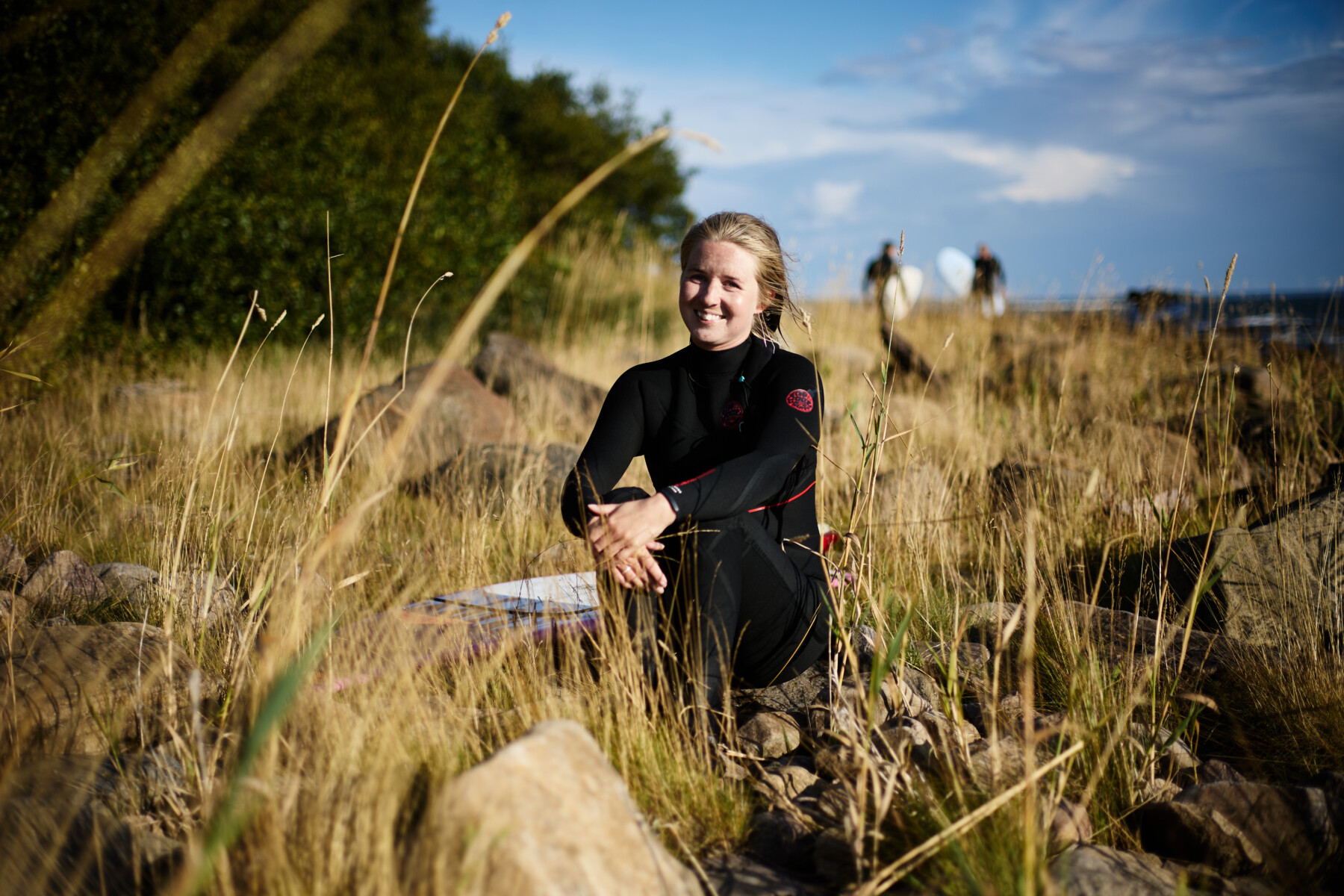
Outi Pursiainen’s love of surfing has shaped her life and career. Today, she surfs Finland’s Baltic coast and runs her own small business making bikinis designed for surfing.
“What I fell in love with about surfing was being out in the elements, in the middle of the ocean. Surfing is also such a difficult sport to master, so when you finally nail something, it’s incredibly rewarding.
I’d surfed on holidays in Portugal and Sri Lanka, and in Bali and other parts of Indonesia, and the holidays gradually became longer and longer. Surfing changed my life – it changed the way I wanted to live and how I wanted to work, so that I could spend more time in the water.
I moved to Lombok in Indonesia because of surfing and lived there for six years, although I’d come back to Finland from time to time to work as a nurse.
Lombok immediately felt like an amazing place to be. I could surf every day with my friends, and I didn’t even need a wetsuit.
The difference between surfing in Indonesia and Finland is like night and day. The sea temperature in Indonesia is around 28 degrees Celsius [82 degrees Fahrenheit] and the air is warm. In Finland, the wind creates the waves, which tend to be irregular and messy, whereas in Indonesia the swell comes in from the open ocean and breaks in clean lines along the coast. In Finland, the waves rarely look like the ones you see in surfing magazines.
I returned to Finland, initially planning to stay for no more than a year, but for family reasons I’ve ended up living here for much longer. I live close to my parents in Meri-Pori, an area in the western part of the city of Pori, on the coast of the Bothnian Sea.
What surprised me about Finland was how much surfing you can actually do here, and what a great surfing community there is. [In my area] there’s a group of about ten of us, and whoever happens to be able to get out surfing joins in. I go a few times a week, if the weather permits. Sometimes the waves are only knee-high.
In winter, I might take a break from surfing for several months because I don’t enjoy surfing in slushy, icy water. Once the water temperature drops to around five degrees Celsius [41 degrees Fahrenheit], it starts to feel seriously cold.
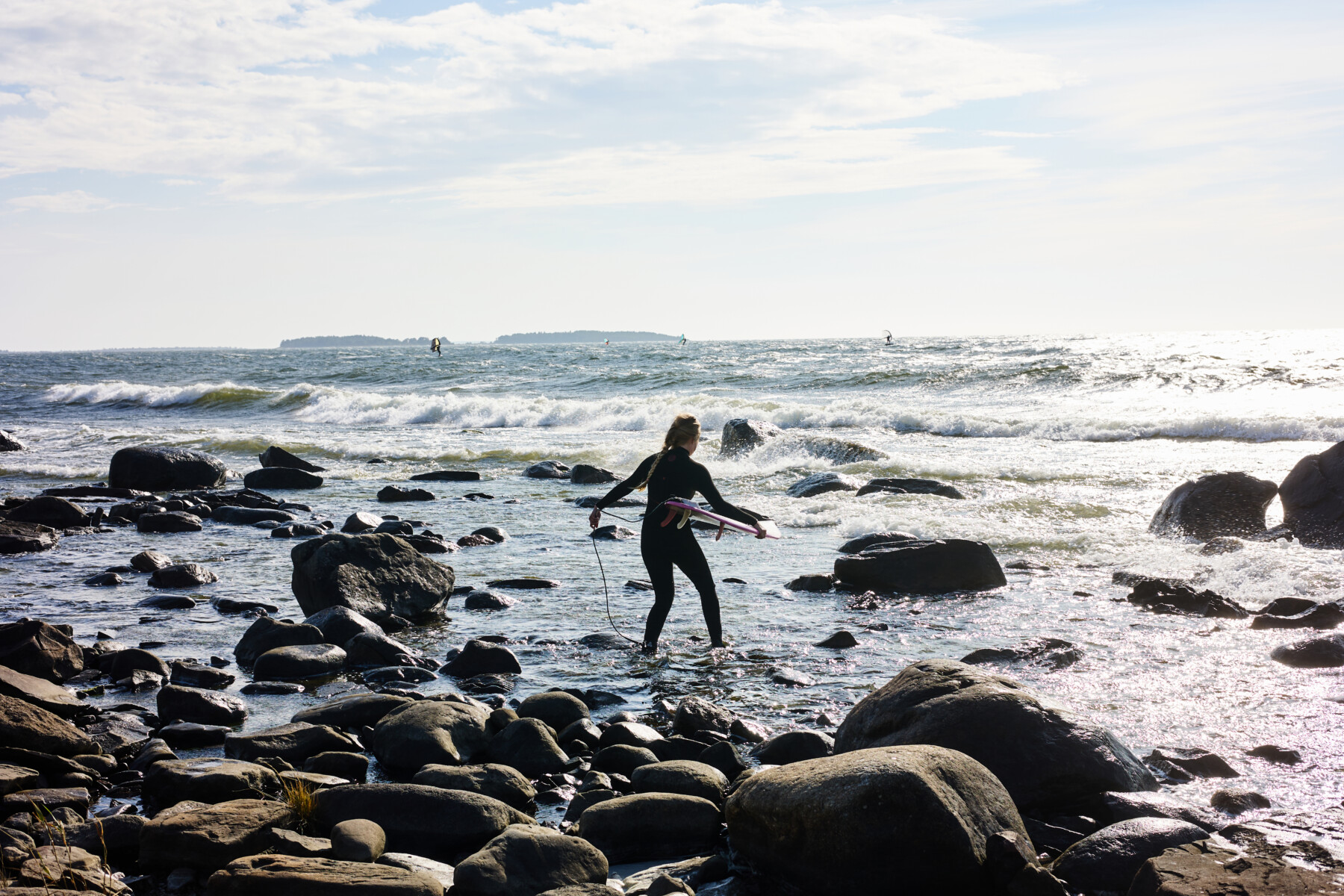
In Finland, the best surfing conditions often come in spring and autumn.
My most memorable surfing experience was the first time I went surfing in Finland. A friend and I paddled out to a rocky islet, and suddenly a huge storm front appeared in front of us. We just stood there admiring it. Then the sleet started coming down, but the weather kept changing, and the next thing we saw was a rainbow.
During that same surf, I also saw a seal, something I had never seen in the wild before. I was amazed – is this what surfing in Finland is like?
Here in Finland, I have my own little workshop, an old garage fitted with industrial sewing machines. I make bikinis designed for surfing and sell them through my own company, Muru. It’s a small-scale operation, but it’s something I’m passionate about. Everything I do is connected to surfing in one way or another.
In Indonesia, there was a couple in their 70s who were still surfing. It made me think that I want to keep doing what I love for as long as possible, too. I dream of being able to live the kind of life I enjoy, by the sea.”
Sami Vuori, 44, Espoo
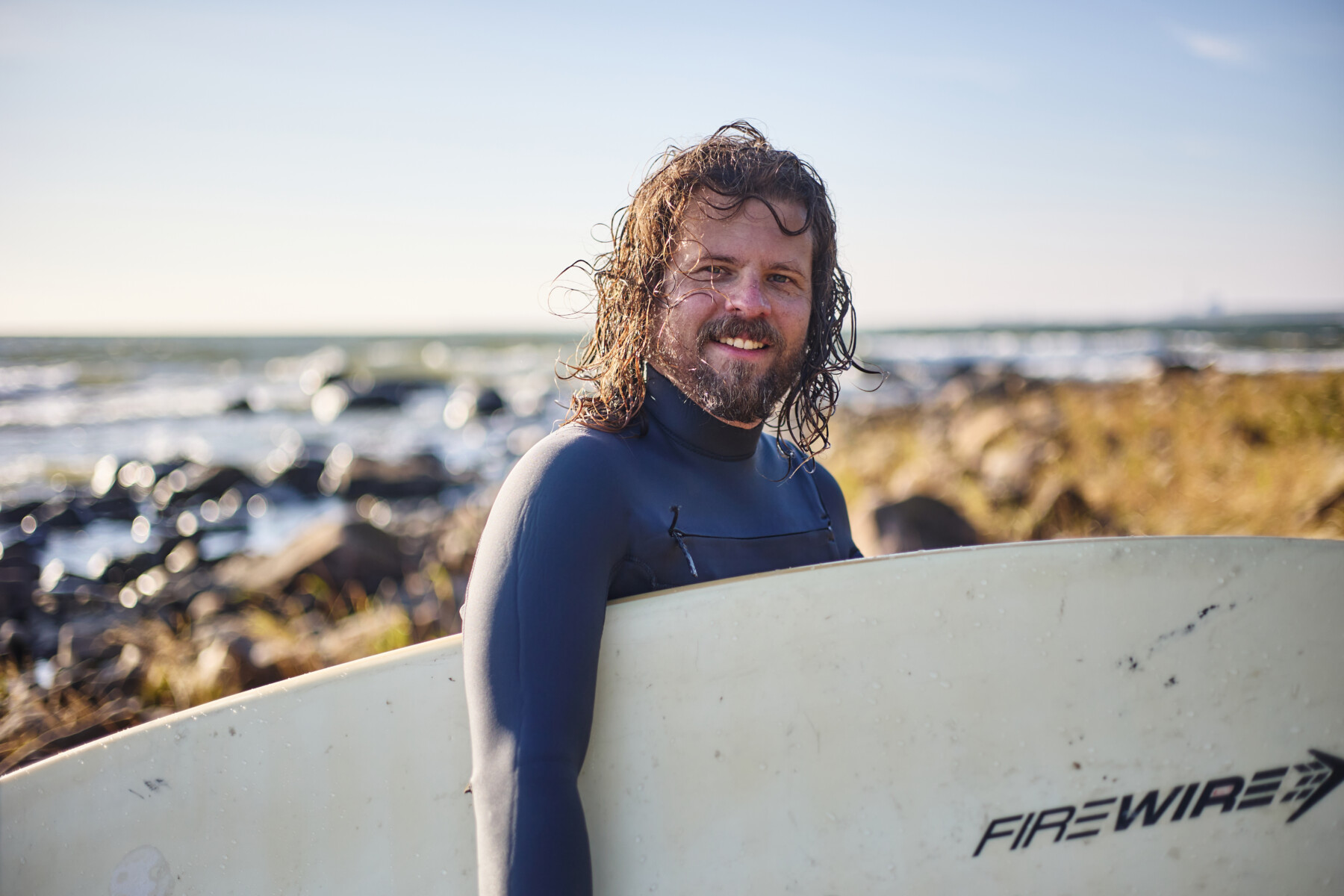
For Sami Vuori, surfing in Finland means keeping a close eye on the weather and being ready to travel for the right waves.
“I’ve loved the sea ever since I was a kid. Surfing lets you tap into your inner child – you get to play in the water as an adult. When I’m out surfing, I feel connected to something bigger than myself.
I walk through the forest, check the swell, paddle out and forget about everything else. For a while, I feel completely at one with nature. That’s when I relax and clear my head.
I was 18 when I first tried surfing, in the Dominican Republic. I had skateboarded and snowboarded, so I thought I was pretty good at board sports. Then I realised surfing was a completely different thing. I managed to stand up on the board a few times, but most of the time I was just getting scraped by coral.
I went surfing on holiday in Portugal and Tenerife, but I never really thought you could surf in Finland. I only started to believe it when I saw a photo of a surfer riding a wave in Finland. That’s when my surfing really started to progress – once I began surfing regularly in Finland.
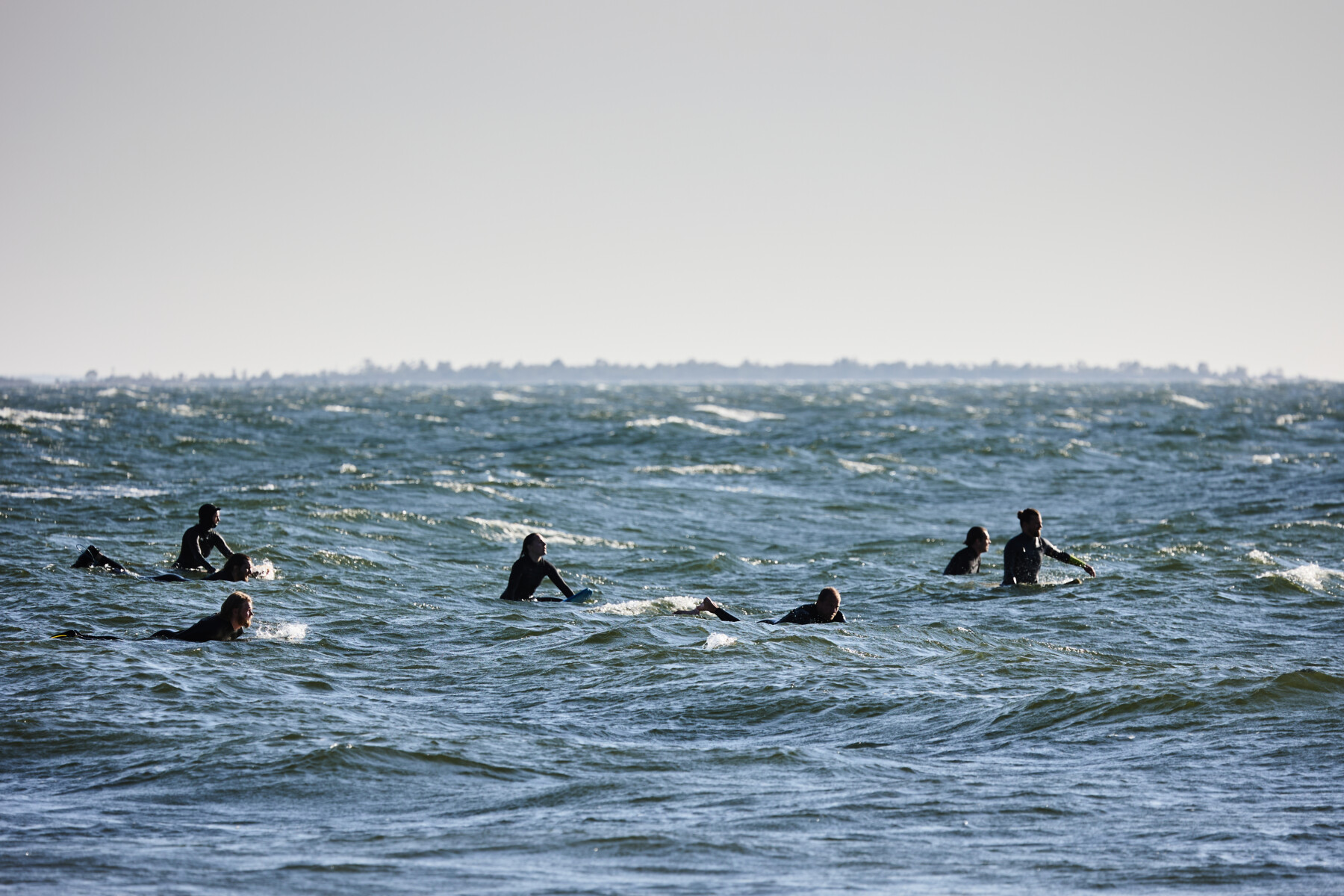
Finnish surfers often have to make the most of short windows when the wind and waves are right, heading out whenever conditions allow.
I live in Espoo, Finland’s second-largest city, close to the coast. But there aren’t any good surf spots particularly close by. If you want to surf around Helsinki or Espoo, you really need a boat to get to the right places. I surf in Porvoo, Hanko and Pori, which is basically Finland’s Tahiti when it comes to surfing.
Surfers tend to keep their best spots to themselves, a bit like secret berry-picking places. I think it’s slightly silly to hide good spots, because sharing the fun makes it more fun. Younger surfers have started to question that culture of secrecy.
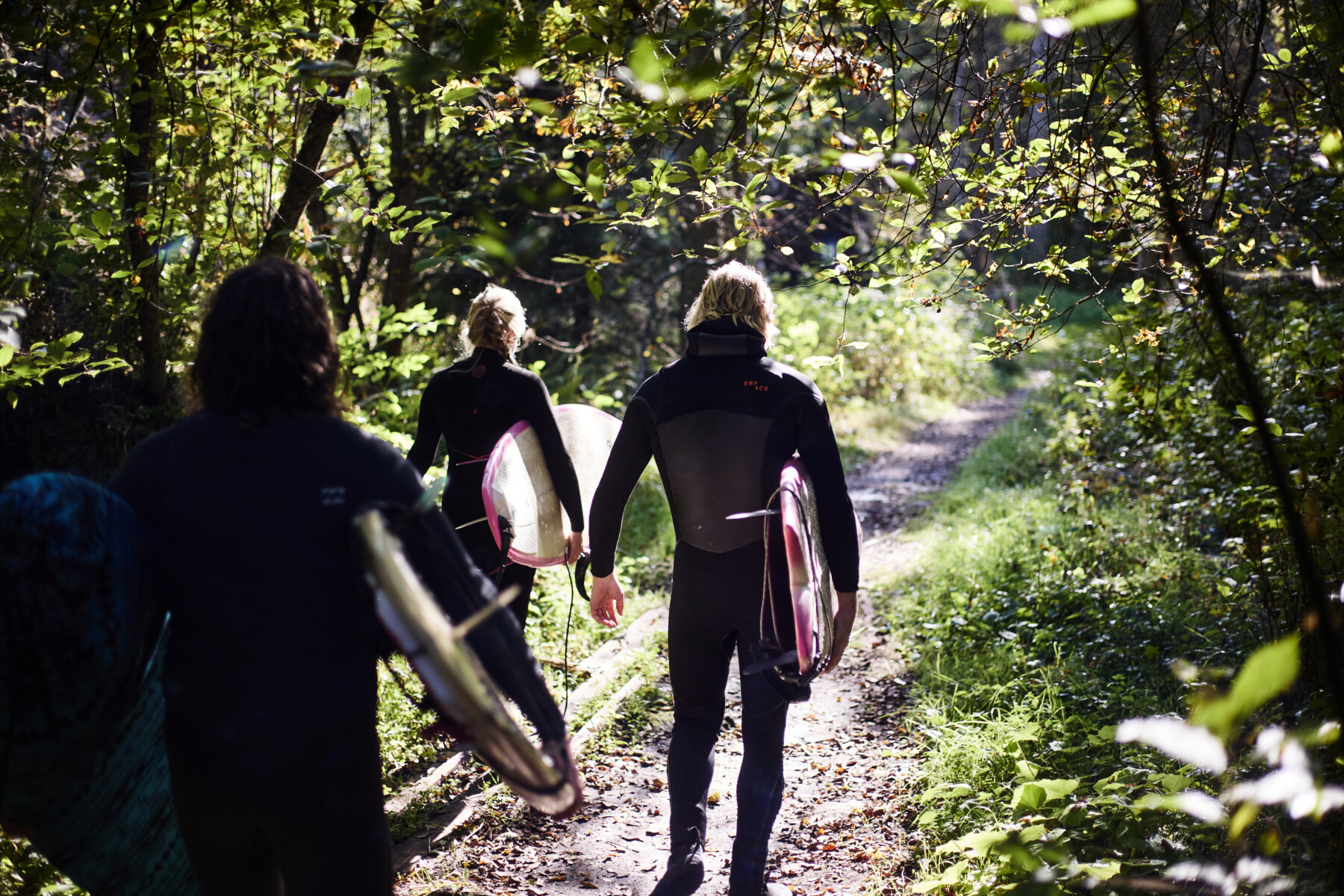
Finland’s coastline offers a different setting from the sandy beaches often associated with surfing, with wooded paths and rocky shores forming part of the journey to the water.
I definitely recognise the idea that Finnish surfers are a gutsy and resourceful bunch. In many places around the world, you can just go to a public surf spot and get in the water. In Finland, you have to keep an eye on where and when the conditions are right. If you hear the day before that the wind is going to be good, you have to make room in your schedule for surfing the next day.
Surfing is pretty hard to fit around family life. It would be much easier if I had a hobby like [the racquet sport] padel that I could do every Tuesday evening. A surf trip can easily take six hours. Hanko is about an hour and a half from Espoo, then you have to get into your wetsuit and walk for another 15 minutes to where the waves are breaking. You spend a few hours in the water, and that’s your day. If you go to Pori, it’s a full-day trip.
The toughness of Finnish surfers really shows when it comes to dealing with the cold. The coldest conditions I’ve ever surfed in were minus 20 degrees Celsius [minus four degrees Fahrenheit]. My friend had some friends visiting from Costa Rica who were curious about how anyone could surf in Finland, so we had to take them out and show them.
The sea at Tulliniemi in Hanko was only a few degrees above freezing and was almost icing over. We spent an hour and a half in the water. The walk back to the car park was bad enough, but getting out of our wetsuits in that bitterly cold wind was absolutely awful. The peak of my hood had frozen solid and my face was so swollen! I haven’t surfed in weather that cold since.
A campervan is on my wish list, and one day I’ll make good on my plan to drive through France, Spain and Portugal, surfing different breaks along the way. Ideally, I’d have a holiday home no more than 15 minutes from the nearest break.”
By Anitra Rönkkö, November 2026
Photos by Sami Heiskanen