Red curtains open like the entrance to a circus tent. Above them hangs a single word: Huimaa! – Finnish for “dizzying,” “breathtaking” or “amazing.”
Inside the exhibition hall, oversized clown trousers dangle from suspenders beside colourful costumes, juggling clubs and faded black-and-white photographs of performers from another era. A unicycle hangs nearby. A wooden trunk is pierced through with swords. Glass display cases hold top hats, magic props and other carefully preserved circus artefacts once used by legendary performers.
With Amaze! Tales and Magic of Circus, Helsinki’s Theatre Museum invites visitors into more than a world of spectacle. It tells the story of how Finnish circus evolved from travelling troupes and family traditions into a renowned contemporary circus scene.
Distinctly Finnish
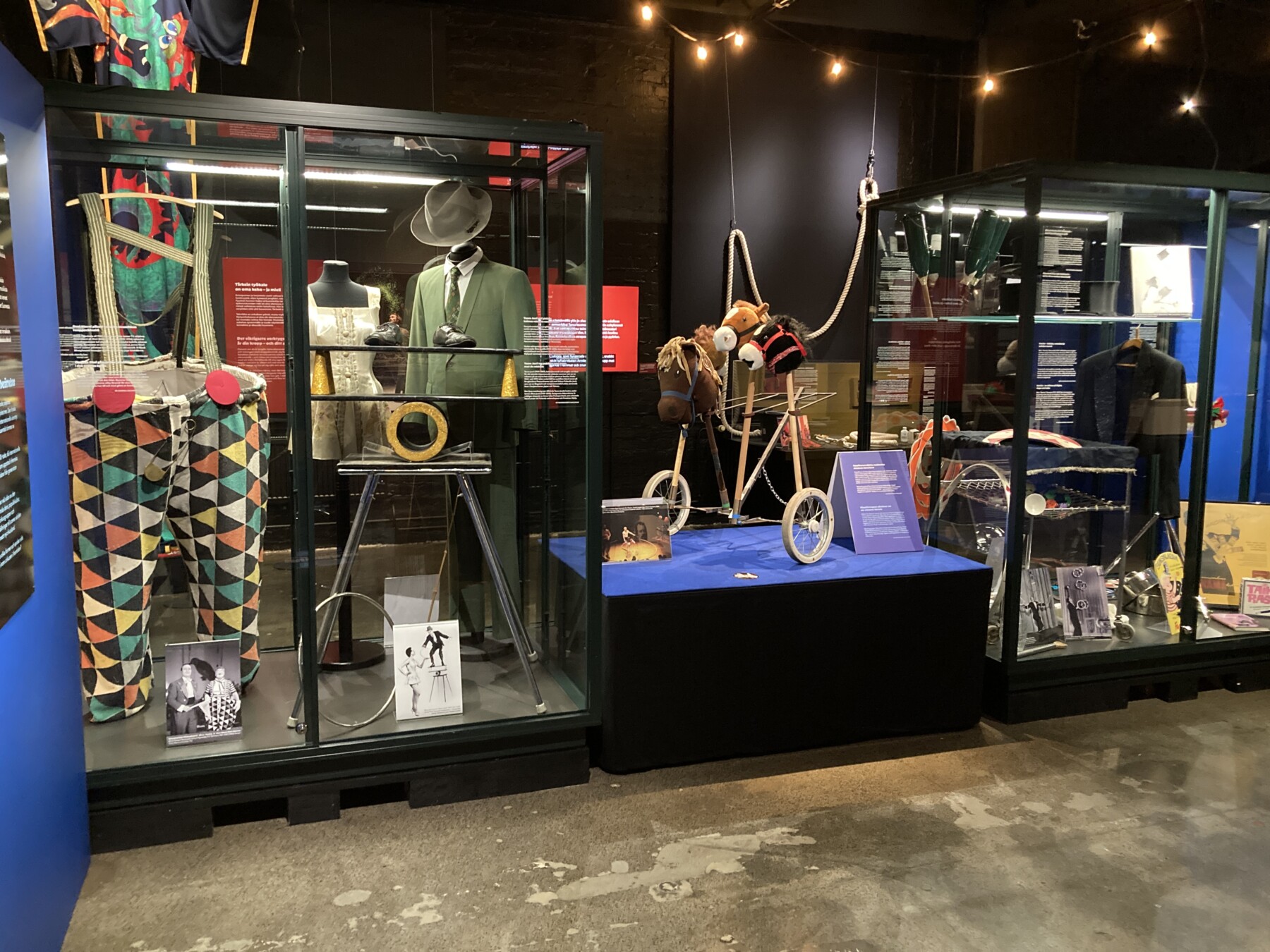
The exhibition brings together costumes, equipment and personal stories to trace the development of circus culture in Finland.Photo: Tyler Walton
Journalist and writer Emma Vainio, who curated the exhibition, says Finnish circus carries a certain eccentric spirit.
“Finnish circus artists have this unique craziness,” she says with a laugh. “A weird dark humour. It’s craziness in a good way. You don’t do small talk. You just do the thing.”
That spirit runs through the exhibition. One display celebrates the legendary clown Onni Tervonen, whose enormous trousers hid props – and once even a boa constrictor – during live television performances in the 1960s.
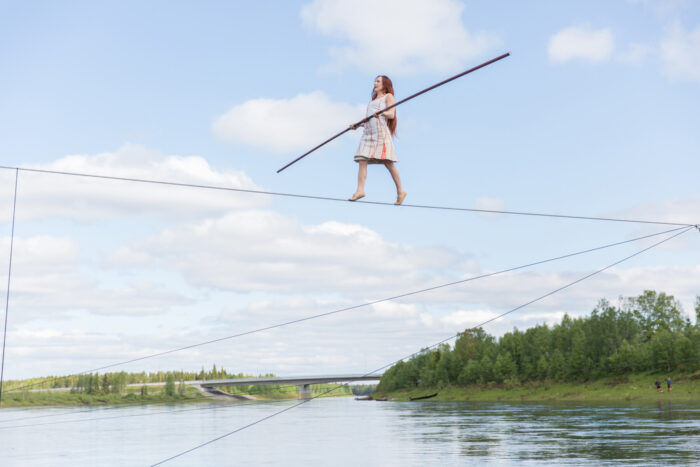
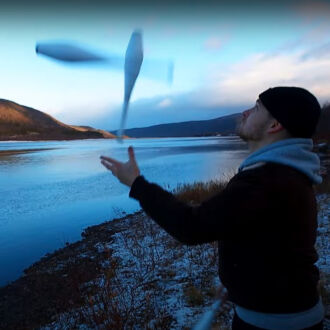
Hiljaisuus-festivaali (Silence Festival) focuses on contemporary circus and music every summer in the northern village of Kaukonen. Here, Sanja Kosonen is crossing the Ounas River on a 100-metre-long tightrope. Photo: Ben Hopper/Hiljaisuus-festivaali
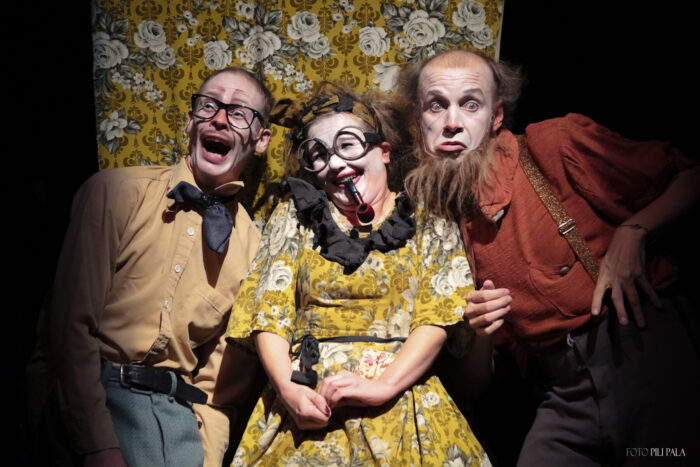
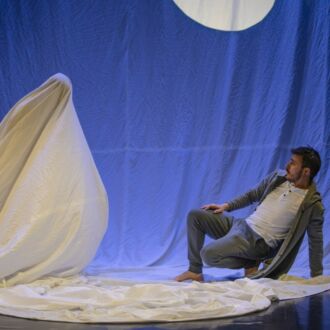
The props, costumes and sets for Kallo Collective’s Members of Our Limbs fit neatly into three suitcases, and the show has toured the world. Photo: Pili Pala/Kallo Collective
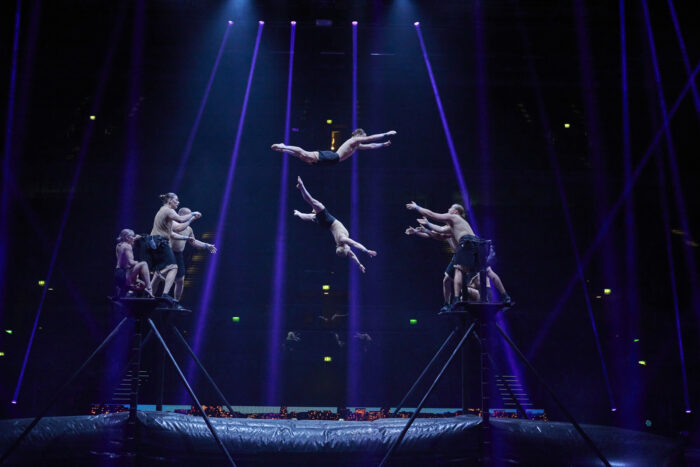
Acrobats take flight in a scene from Arctic Ensemble’s performance Double Cradle. Photo: Matthias Wulff/Arctic Ensemble
Another section highlights Mad in Finland, a contemporary circus performance created by seven Finnish female circus artists living abroad. Inspired by Aleksis Kivi’s Seven Brothers, one of Finland’s best-known novels, the performers reimagine themselves as seven sisters embracing a distinctly Finnish kind of “madness” through dancing, sauna rituals, skiing and wood chopping.
“One artist told me that they chop wood on stage, and that people in France have been like, ‘How can a woman do that?’” says Vainio. “But for Finnish women, it’s just that they are heating a sauna on stage. Somebody has to chop the wood.”
Work hard and repeat
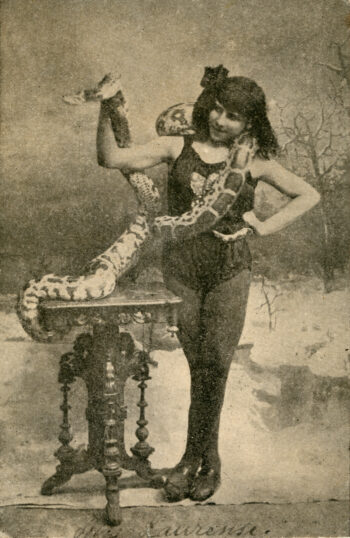
Elvira Bono was a snake charmer, tightrope dancer, and acrobat from an Italian circus family that toured Finland for decades.Photo: Photographer unknown/Theatre Museum archives
The exhibition traces how circus arrived in Finland in the 19th century with travelling European troupes. It developed relatively slowly at first, concentrated mainly in coastal cities such as Turku and Oulu.
Over time, domestic circus families and touring companies emerged, passing down skills from one generation to the next. By the 1990s, Finnish contemporary circus had begun to take shape, when young performers started combining traditional circus techniques with influences from dance, theatre, visual arts and absurd comedy.
Soon, Finnish groups were touring internationally, performing in theatres and festivals from Germany to Brazil. Today, Finnish contemporary circus artists regularly perform across Europe and beyond.
Part of that success, Vainio believes, comes from sisu, a specifically Finnish combination of courage, endurance and strength of will in the face of adversity.
“To become a good circus artist, you really have to work hard and repeat and repeat and repeat,” she says. “Maybe this has something to do with Finnish sisu. You need sisu in order not to give up.”
Opposite emotions strengthen each other
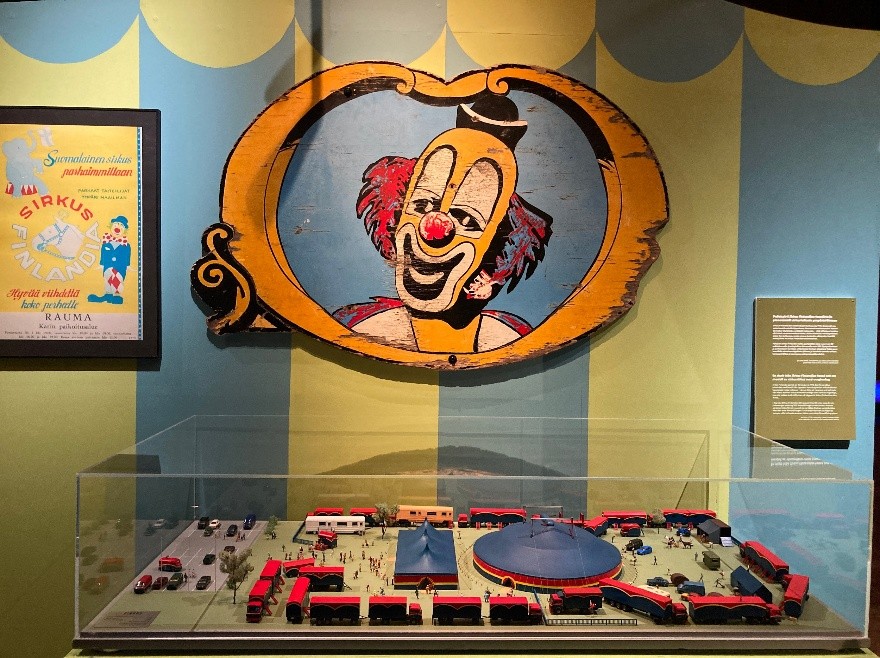
Once a staple of the circus ring, clowns brought humour and human frailty to performances built around extraordinary feats.Photo: Tyler Walton
Finnish circus is not only about discipline or technical perfection. Throughout the exhibition, one theme keeps resurfacing: contradiction.
Circus balances danger with humour, chaos with control, vulnerability with strength. The clown and the acrobat exist side by side.
“When you put sadness and happiness together, it forms something really deep,” Vainio says. “That is one of the most interesting things about circus.”
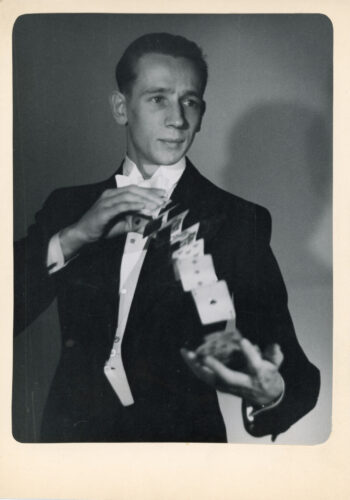
The legendary magician Solmu Mäkelä (1922–2018) always had a deck of cards in his pocket and became known for difficult tricks that required great dexterity.Photo: Photographer unknown/Solmu Mäkelä Collection
The exhibition repeatedly returns to the body as circus’s central instrument. Visitors encounter stories of aerial acrobats suspending themselves by their hair, jugglers practising for thousands of hours and performers risking injury high above hard floors without safety nets.
Yet circus involves more than physical feats. “While acrobats and tightrope walkers represent something superhuman,” reads one exhibition text, “the clown represents the flip side. He is allowed to fail, to be clumsy, to be wistful – and to be human.”
Circus as a real community
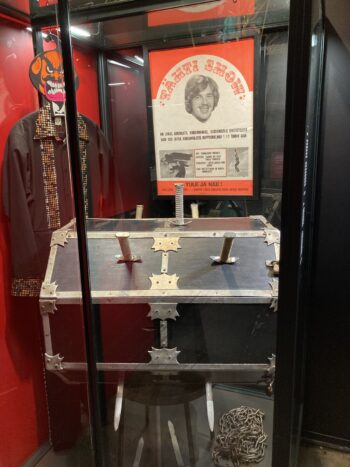
A trunk used by Finnish circus performer Aimo Leikas – known as the “Houdini of Haukivuori” – recalls one of his most famous illusions: escaping from a locked chest after it had been pierced by swords from every direction.Photo: Tyler Walton
Circus is also deeply collaborative. Trust is central.
“It’s a very communal form of art,” Vainio says. “If you do acrobatics, you really have to trust your colleague. There must be this trust that someone will catch you.”
That sense of community has historically made circus a refuge for outsiders, as well. One section of the exhibition explores how travelling circuses offered shelter to people excluded from mainstream society, including persecuted minorities and people who did not fit accepted social norms.
At the same time, the exhibition avoids romanticising circus life entirely. It acknowledges tensions around exploitation, danger and the historical use of animals in circus performance. One display examines the public debate that led Finland to ban elephants from circuses in the 1980s.
Still, what emerges most strongly is circus as a deeply physical and communal art form.
“We are living in a world where there’s a lot of polarisation between people who are in their own bubbles,” Vainio says. “Everything is digital, and people don’t meet each other live. Circus is totally the opposite. It’s very real. It happens in a real space where things happen for real.”
Beyond the spotlight
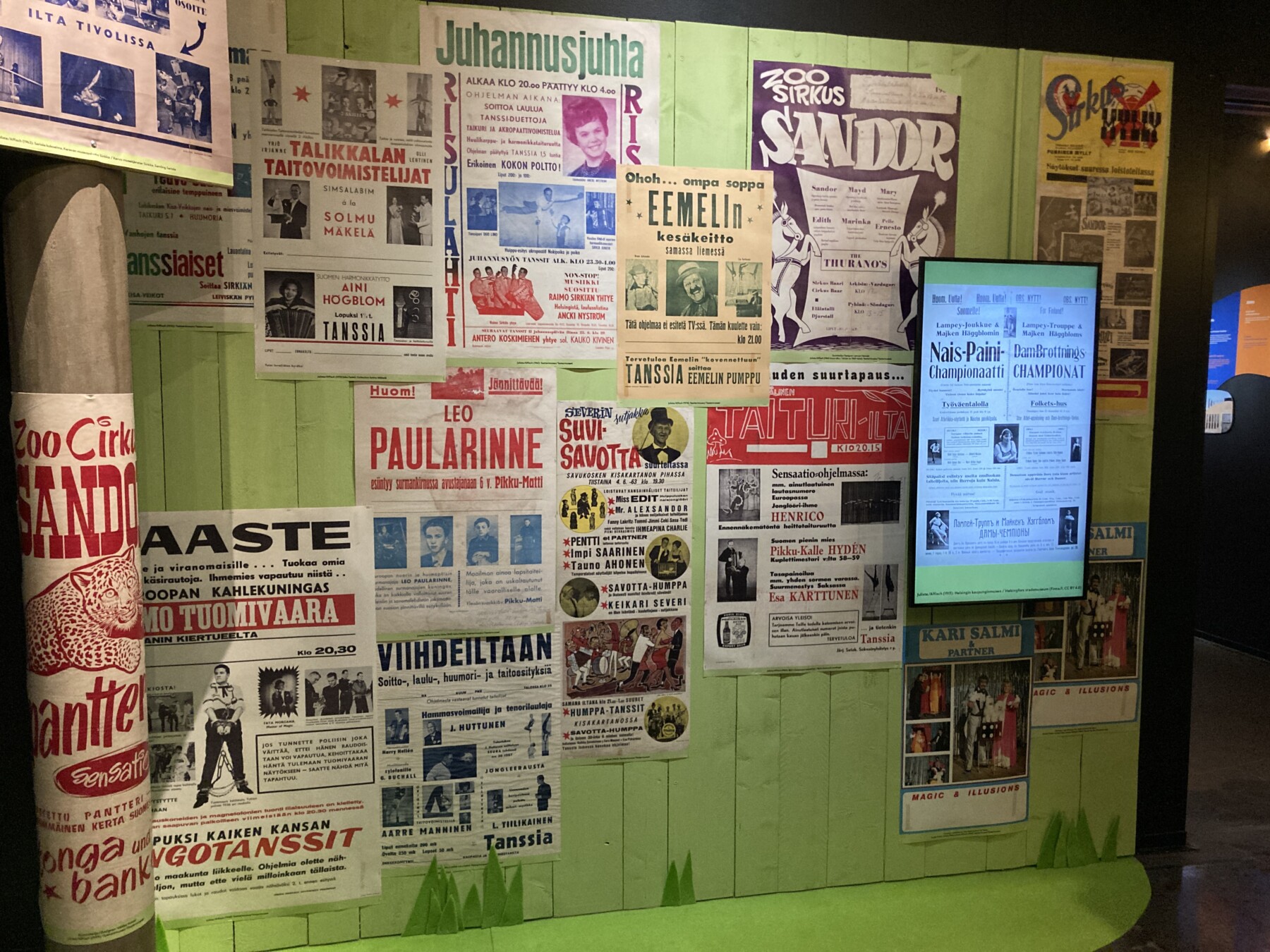
Before social media and digital marketing, circus artists relied on eye-catching posters like these to attract audiences across Finland.Photo: Tyler Walton
Today, roughly 12,000 people participate in circus activities across Finland, from children to retirees. Unlike many athletic disciplines, circus often emphasises collaboration rather than competition.
“One of the reasons it’s so popular,” Vainio says, “is that it’s very physical and you can express yourself. You have to be skillful and surpass your own limits. But at the same time, it’s not like competing against each other.”
Asked what she hopes visitors will take away from the exhibition, Vainio returns to the people at the heart of circus culture.
“I want them to see how many interesting personalities there are in the circus field,” she says, “because you have to be very brave and open-minded and a bit crazy to be a touring circus artist. You have to be brave enough to forget about what society maybe expects you to do and follow your own path.”
This spirit seems visible in the exhibition’s final room.
After displays filled with daring feats, legendary performers and extraordinary physical skill, visitors arrive at a simple table covered in crayons and paper. Children and grandparents alike sit down to draw clowns, rabbits in hats and circus creatures. One picture shows a cheerful clown with pink-and-blue hair. Another depicts a fish-bodied strongman in tall boots. The drawings are silly yet sincere.
Walking back out through the curtains of Amaze!, what lingers is the strange generosity of circus itself. It is one of the few art forms that still asks people to do something genuinely difficult in front of one another – not to defeat an opponent or prove superiority, but simply to create wonder together.
By Tyler Walton, August 2026