What one person’s path to speaking Finnish reveals about life and language

Take something completely foreign and make it familiar to you. That’s how Irina Pravet approaches learning new words – and entire languages.

Take the word kaunis, the Finnish word for beautiful. “In Finnish, beautiful starts with a cow,” she says. (The letters “kau” in Finnish sound very similar to the word “cow” in English.)

“At some point later down the road, the word turns into what it actually means. You lose the sounds, in a sense, but you innately embody the meaning.”

And meaning is what matters most to Pravet, not words in their technical sense. And she does have a lot of words: she is a polyglot, someone who can speak multiple languages.

“One of those Nordic countries”

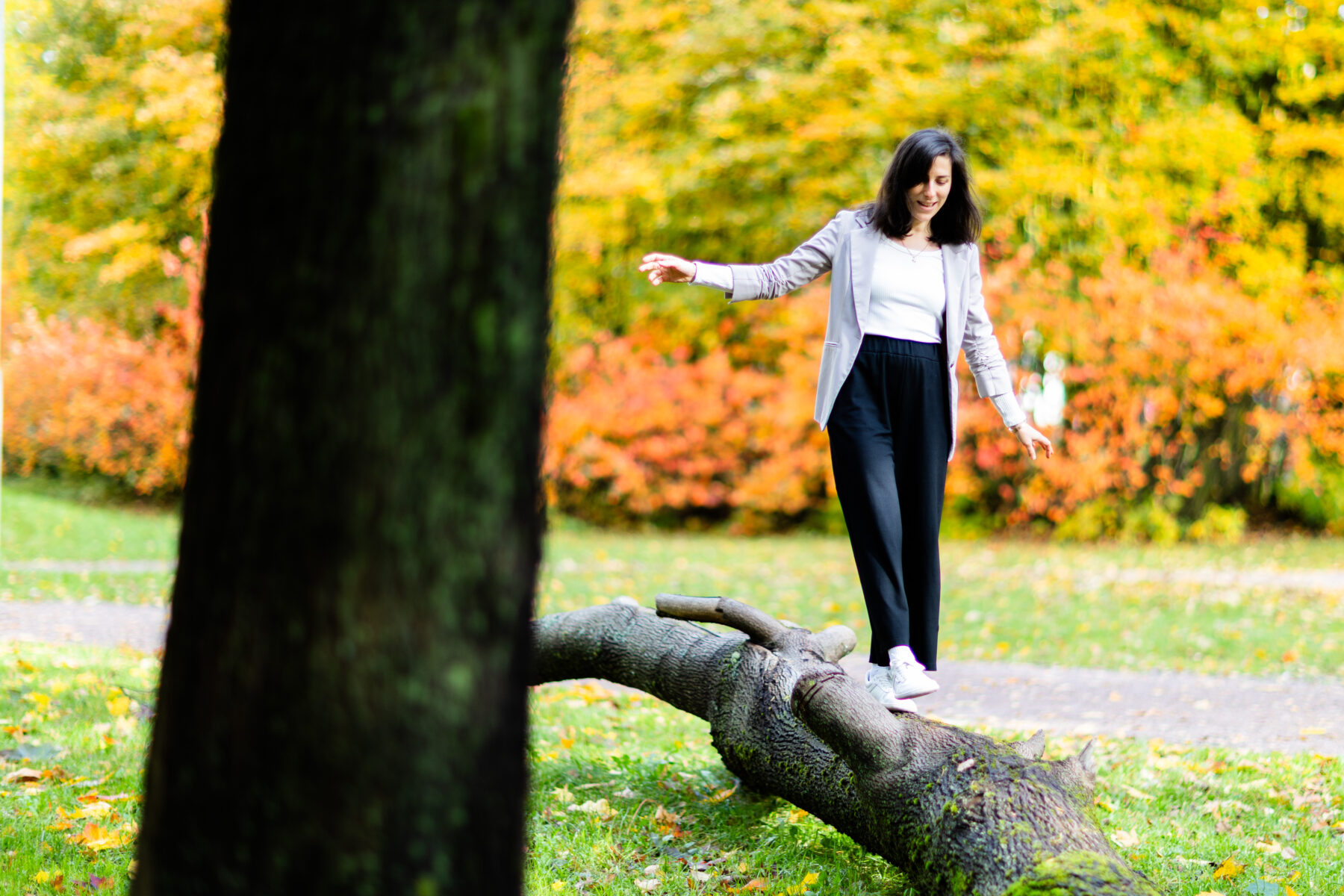
A woman walking on a fallen tree trunk in a park in autumn.

Irina Pravet says that her clients have gone from avoiding Finnish to actively seeking out ways to speak more.

When Pravet stumbled across kaunis during her university exchange in Mannheim, Germany, she already spoke Romanian (her mother tongue and the language of her country of birth), French (having learned it in preschool after her family immigrated to Canada), English (from TV and school), and Spanish and German (from having studied them since her early teens).

“I don’t think I’d ever met any Finns before moving to Germany, and the language felt so exotic,” she says. “All I knew was that Finland was one of those Nordic countries up there, but I probably wouldn’t have been able to place it on a map.”

Whilst in Germany, she also stumbled across something else: a young Finnish man. With him, Pravet learned yet another new Finnish phrase: Sinä olet ihana (“You are lovely”).

Contribute, belong, feel at home

A close-up of a hand reaching towards light purple flowers in a park.

For Irina Pravet, language is a tool, not an end goal.

Having followed the ihana man to Finland, Pravet found herself needing to learn yet another language. However, all the courses she took, the homework she did, and the materials she found didn’t seem to help her do what she most wanted: to fit in, to express herself in situations that mattered to her. Previously, she’d learned languages mostly by using them; this time, classrooms and grammar exercises weren’t taking her where she wanted to go.

After the third course she took, she had plenty of grammar in her head without even having the vocabulary to use it.

“It took a lot of banging my head against the wall until I figured out something that would work,” she says.

She decided to put herself – not the language – at the centre. She didn’t want to learn Finnish for the sake of learning it; she wanted to participate, contribute, belong, feel at home. She started to question the assumptions she had held about how the process was supposed to go, as well as some of the advice she had been given.

“Through a number of different epiphanies, I realised that there’s a gap between studying the language and speaking it,” she says.

Starting with what matters most

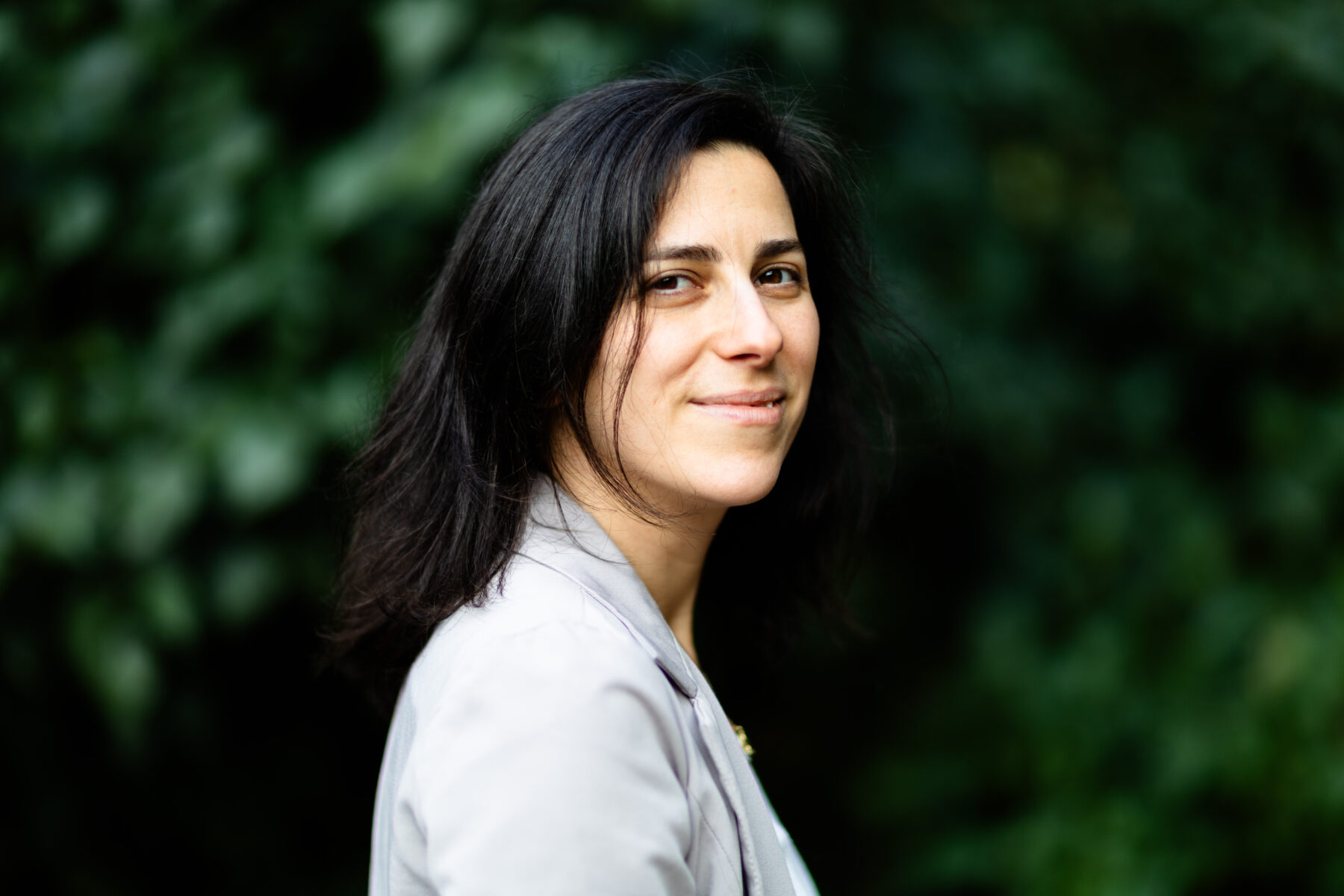
A woman in front of dense green foliage, smiling at the camera.

As a “multibelonger,” Irina Pravet has more than one culture she can call her own.

Pravet has turned her past frustrations into a mission. Her company aims to help people who’ve been studying Finnish to actually speak it.

It’s not a method, she emphasises, but an approach. Just like she herself started to do all those years ago, she now encourages others to put the focus on themselves and use their daily lives as classrooms.

Another important aspect is understanding the circumstances in which people are using the language and how those circumstances might impact the outcome. Pravet points out that being tired, or feeling judged or assessed, ties up the cognitive energy needed for speaking, and understanding that can help people give themselves some grace.

By focusing on what they find most important and what’s making the biggest difference to them, her clients have said they’ve started seeing a path forward. Sometimes she notices the moment when things click into place. It’s immensely gratifying and creates an upward cycle of inspiration.

It’s inspiring for her, too. She’s still learning, as well, and she wants to be really transparent about that. “If anything, I was my first client,” she says.

Now, Pravet can live her life in Finnish, from attending sales meetings and workshops to chatting with fellow dogwalkers and nurturing friendships. She believes that with the right tools, the same is within reach for everyone.

So has she reached her goal? Does she feel like she fits in now?

“I’m a multibelonger,” she responds. “I have several languages and cultures I can call my own. But Finland is definitely home.”

By Anne Salomäki, October 2025; photos by Emilia Kangasluoma

Libraries the Finnish way: welcoming, wild and wonderful

Weaving tales

What? Book club meets knitting club

Why? According to science, handcrafts are good for the brain, stimulating several parts of it. Contrary to what many might assume, our thinking doesn’t happen only in the brain: there’s also something called embodied cognition. Working with our hands can make us more vigilant – or relaxed. Either way, making things is a perfect combination with listening to stories.

The literal translation of “Novellikoukku” is “Short-Story Hook” – it is a club where people gather to crochet, knit or do other handicrafts while listening to short stories read aloud. It is a social event in a soothing atmosphere, a great example of what many Finns consider cozy. Plus – you can join even if you don’t have a handicraft! The same goes for several other storytelling sessions libraries offer for both kids and adults.

Music to all ears

A woman talks into a podcast-style microphone, hands resting on the stand.

Many Finnish libraries offer soundproof recording studios for podcasts, music or voice overs – free to use with a library card.Photo: Maija Astikainen

What? Music & recording studios

Why? Not quite ready for the Abbey Road Studios with your band? No worries, you can start recording in Finland, and it’s free. Finnish libraries have music studios that can be used for playing, recording and mixing music – some even host workshops for mixing and mastering music. Most studios have both acoustic and electric instruments like guitars, drums and piano. Who needs a garage when there are public practice rooms in libraries?

If you prefer to stick to just listening and cherishing those good old Beatles albums, many libraries provide tools for listening and digitalising LP records, cassettes and VHS tapes.

Creators welcome!

What? 3D printers

Why? 3D printing is a useful way to create something you need, like a detail to a doll house, prototypes or any missing parts that are made of plastic. Moreover, it is also a fun and subtle way to learn new digital skills such as 3D modelling.

Many Finnish libraries have workshops or makerspaces with 3D printers that are free to use. All you need to do is bring your own design on a USB drive (models can be downloaded for free online) and let the machine print it from non-toxic, biodegradable PLA plastic. The library staff is there to assist with printing, as with other digital tasks.

Other facilities in library workshops typically include sewing machines, vinyl cutters, laser cutters and laminators.

From chess to Space Invaders

What? Games and game rooms

Why? Finland has one of the largest and most vibrant game scenes in Europe. It is no surprise that Finns take gaming very seriously, even when it comes to libraries. Finnish libraries offer a wide range of games from traditional board games to digital games and game consoles, along with spaces to play.

Visit the lobby of Oodi, Helsinki’s main library, on any given day, and you’ll see people of all ages playing chess. Fancy some games but have no one to play with? Join one of the game clubs that several libraries host.

Games can also be borrowed and taken home with a library card just like books. And not just latest or current games are available but also retro games from the 1970s.

Reading tales and wagging tails

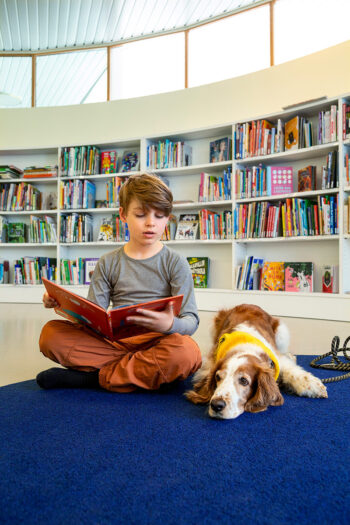
A child sits on the library floor reading to a dog wearing a yellow scarf, surrounded by children’s books.

Reading dogs offer quiet support for developing readers. The dog’s only job is to listen.Photo: Maarit Hohteri

What? Reading dogs

Why? Library dogs, or reading dogs, have an important job: being present. They listen when people, mainly kids, read to them. They don’t judge slow readers, nor do they comment or correct mistakes. According to studies, reading to a dog relieves stress and improves reading fluency and comprehension. This is especially useful for people who have problems with reading.

Library dogs are carefully chosen and trained for the job, and the activities are based on the voluntary work of their owners. The first reading dogs entered libraries in 2011, and nowadays there are also reading ponies or even cows, though not on library premises.

Other library activities that run on a voluntary basis include “reading grandmas and grandpas”, as well as language cafés: informal discussion groups where speaking Finnish – or other languages – can be practiced.

The bold and the beautiful

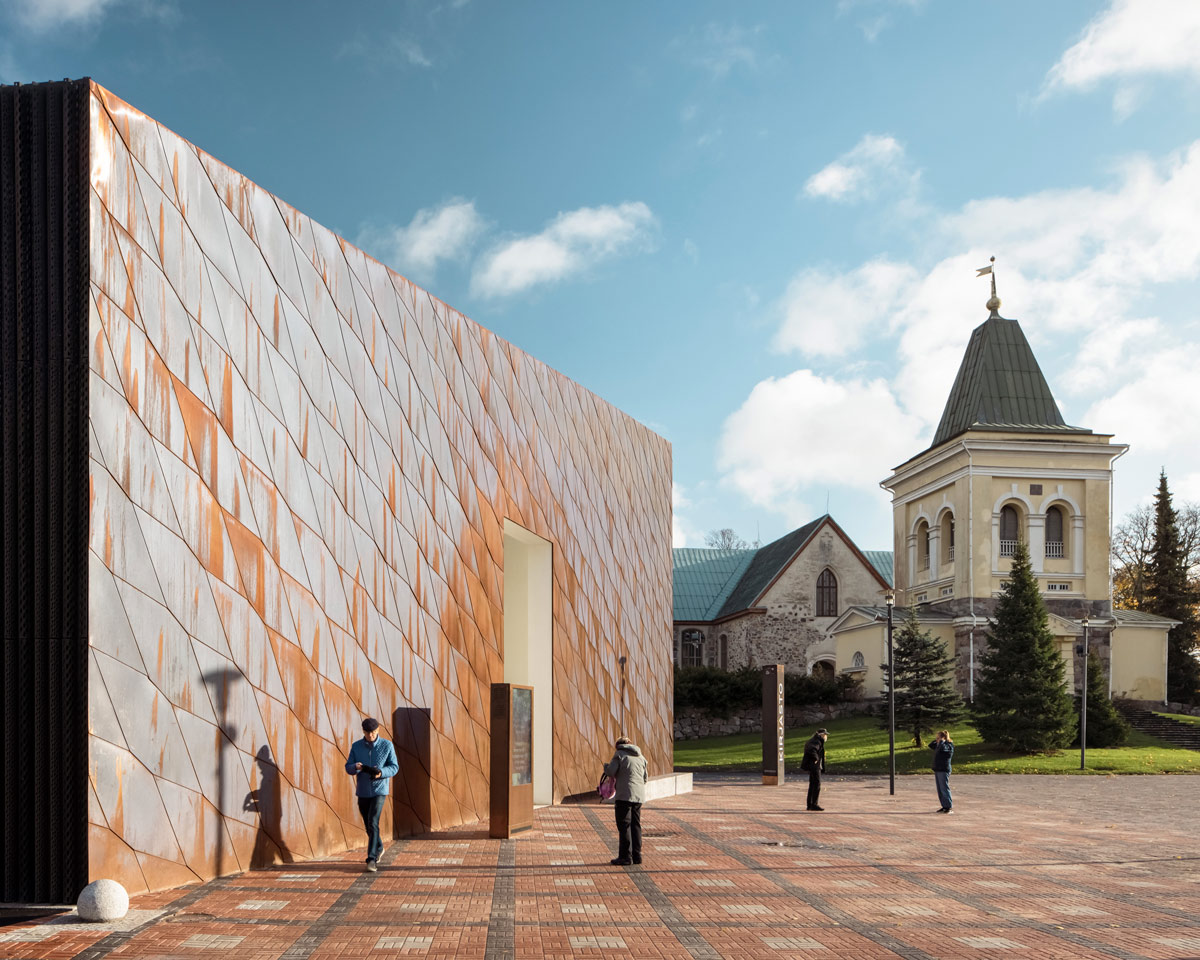
People walk across a sunlit square toward the copper exterior of a modern building.

Kirkkonummi’s Fyyri Library glows like a beacon. The name is a nod to both the Finnish word for a steamship furnace and the Swedish word for lighthouse. Photo: Tuomas Uusheimo

What? Award-winning architecture

Why? There’s something very Finnish in the fact that some of the most renowned architectural landmarks in Finland are libraries. Libraries are public spaces cherishing education, literacy and culture, some of the most valuable foundations of Finnish society.

The city libraries of Helsinki, Turku and Tampere are all must-visit places for architecture admirers, but there’s also award-winning architecture by leading Finnish architects in smaller cities and towns, like the Fyyri library in the southern town of Kirkkonummi.

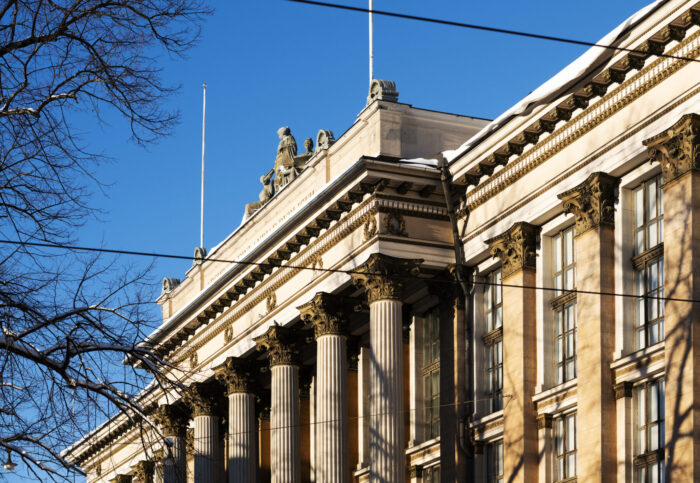
For lovers of architectural history, the northern city of Rovaniemi boasts a library designed in the 1960s by Alvar Aalto, the master and grand old man of Finnish modernism. Going even further back in history, the National Library by C.L. Engel from the 19th century is a hidden gem and a tranquil retreat on a busy university campus, right in the centre of Helsinki.

By Taina Ahtela, ThisisFINLAND Magazine

Lahti, Finland chooses most beautiful building as city celebrates 120th anniversary

Completed in the 1898, Lahti Manor represents the historicist architecture of the late 19th century, which admired past eras and national heritage. It was built as a home for August Fellman, a member of Parliament who had a significant influence in the development of industry and culture in Lahti.

The manor’s architectural style emphasised the roots of Finnish culture and society. In 1965, the building became part of Lahti City Museum, which continues to operate there today.

The vote was organised as part of Lahti’s celebrations in 2025 of its 120th anniversary, which culminate with a series of events in late October.

Why are saunas so dear to people in Finland?

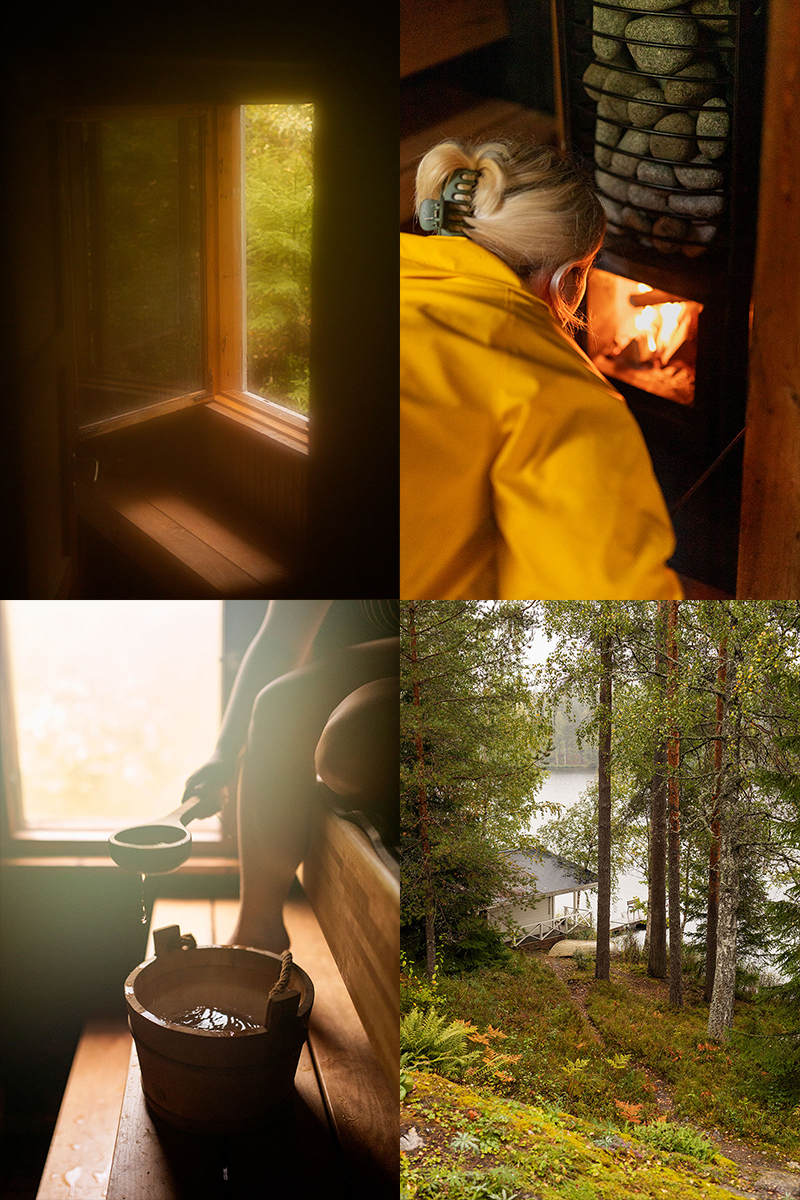
Nea Mänty, 24, student, 1950s cottage sauna on Lake Myllylampi, Vihti 

“​At the cottage we use the sauna every day. It’s an essential part of our family’s cottage life. The sauna is small but effective. It heats up in half an hour and fits five people.

In the city I try to go to sauna at least once a week. Electric saunas are OK, but nothing beats wood-heated ones like this. When you light the fire and feed it yourself, you feel a different kind of ownership for löyly (sauna steam). My best friend is also a sauna enthusiast. When she’s visiting, she always builds a fire under the washing water tank while I take care of the fire under the kiuas (stove). It’s turned into a little routine that just flows.

Not everybody likes sauna scents, but my mother and I use them, especially when days get darker towards the winter. A drop of tar or eucalyptus in the löyly water creates a lovely atmosphere.

I like to throw water on the hot stones so that I can really feel it in my back. Then I go for a swim in the lake and repeat this about five times. Swimming is great for winding down if I’m stressed.

For me this is a sacred place. When I was a kid, my mother told us a story about a sauna-elf to make us behave in sauna. If you didn’t, you would upset the elf. As a young adult it’s no longer about the elf, but if I ever happen to slip a swearword when talking with my friends in sauna, I scold myself immediately. It’s important to maintain everyone’s sauna peace.”

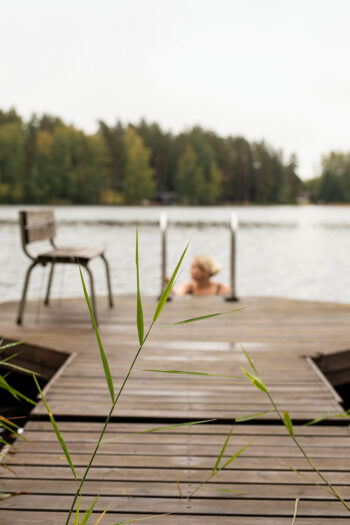
In the foreground, green grass stalks are in focus, while in the blurry background, a woman climbs a ladder from a lake onto a dock.

“When you light the fire and feed it yourself, you feel a different kind of ownership for löyly (sauna steam).”

Four photos arranged together: View from inside a wooden sauna toward an open window, where summer greenery glows softly in the warm light. A woman in a yellow raincoat leans over, blowing into a wood-fired sauna stove with a stack of smooth grey stones on top. A forested path leads down to a lake between tall pines, with a white boathouse visible. Inside a sauna, a wooden water bucket is in focus, with a hand lifting a dripping ladle.

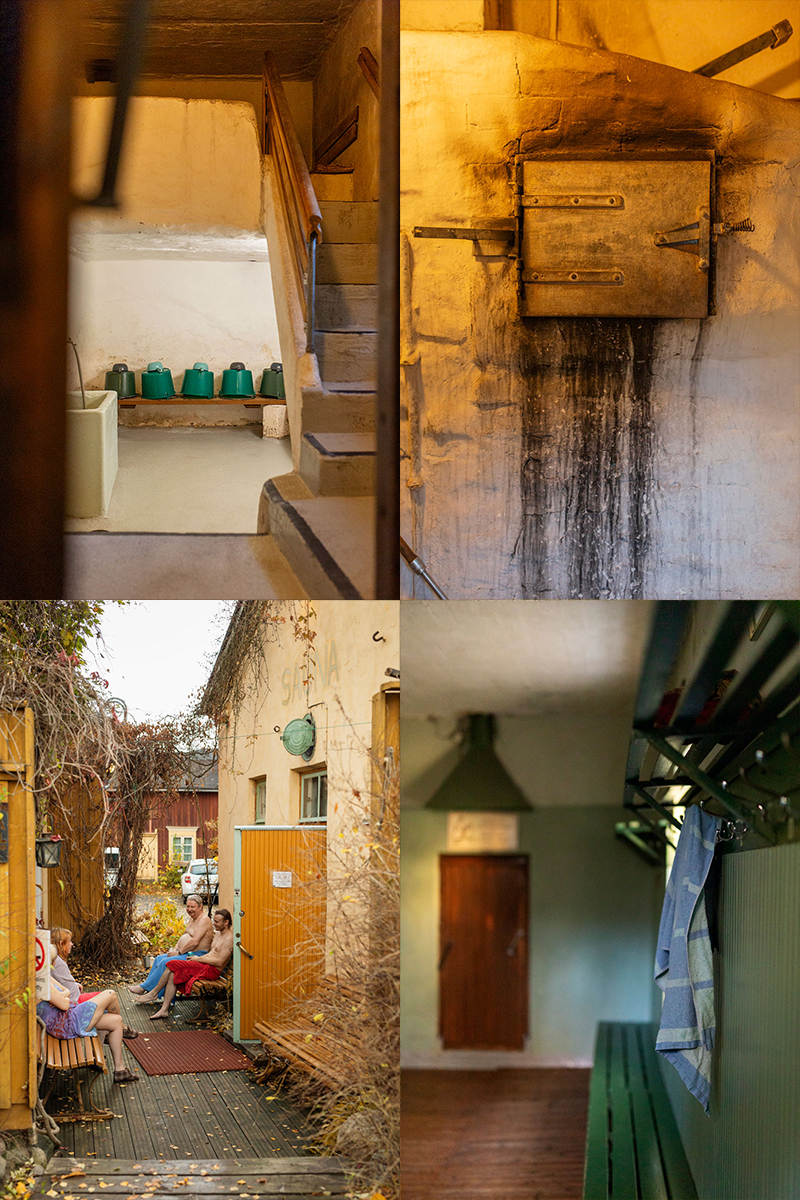
Ari Johansson, 68, retired, Rajaportti sauna, Tampere (the oldest public sauna in Finland)

“​I’ve been going to Rajaportti for 68 years now. When I was a baby, my mum would take me to the women’s side, and when I got a bit older I joined my dad and went to the men’s side. I’ve never gone to any other public sauna, except when Rajaportti has been closed for renovation.

In those days people in the surrounding area, Pispala, lived in very small flats and didn’t have their own washing facilities, so a public sauna was a necessity for them. Now it’s become a place where people go to relax. Rajaportti’s secret is that it has this perfect balance of humidity and heat.

In 1989 the city was planning to replace the sauna with a parking lot. As a response the sauna-goers set up Rajaportti Sauna Association and told the authorities they would like to start running the sauna on their own. They were laughed at but given permission to play with it for a year. Nowadays Rajaportti is a big tourist attraction with visitors from all around the world.

Public saunas like Rajaportti are very much about community: you don’t just wash your body, your mind gets purified too. At Rajaportti men and women have separate steam rooms and have their own chats there. Outside there is a shared area for cooling down between löyly. That’s where another set of talks takes place. Topics usually include sports and current events. We try to avoid discussing politics, because no-one should get their feelings hurt in sauna.”

Four photos arranged together: Inside a large sauna, a row of plastic buckets and ladles rest on a wooden bench. Smoke stains mark the surface around a small metal door in a brick stove. Outside a sauna, men and women sit on benches, wrapped in towels, conversing in the open air. Inside a sauna changing room, a green-painted wooden bench runs beneath a rack of hooks where a towel is hanging.

Text by Ninni Lehtniemi, photos by Heli Blåfield

Heads up for Helsinki’s urban overstory: Lions and gargoyles and bears, oh my!

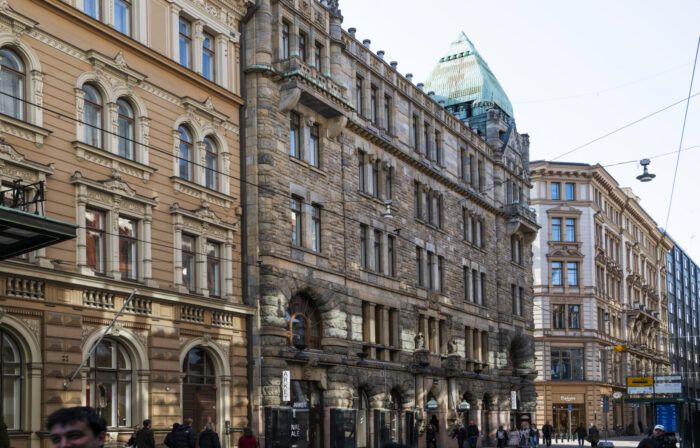
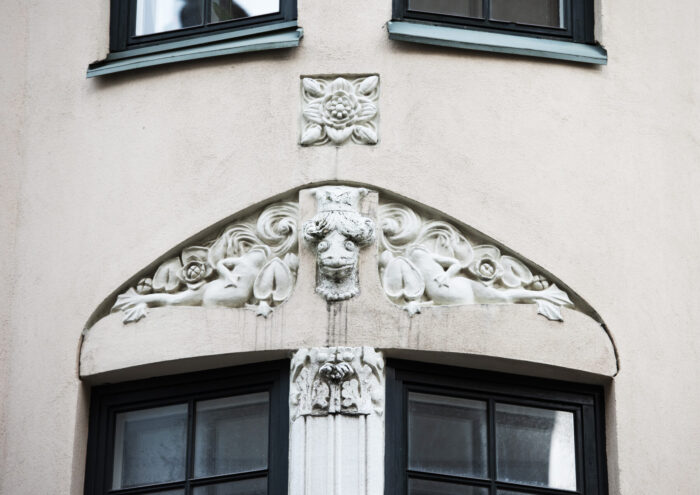
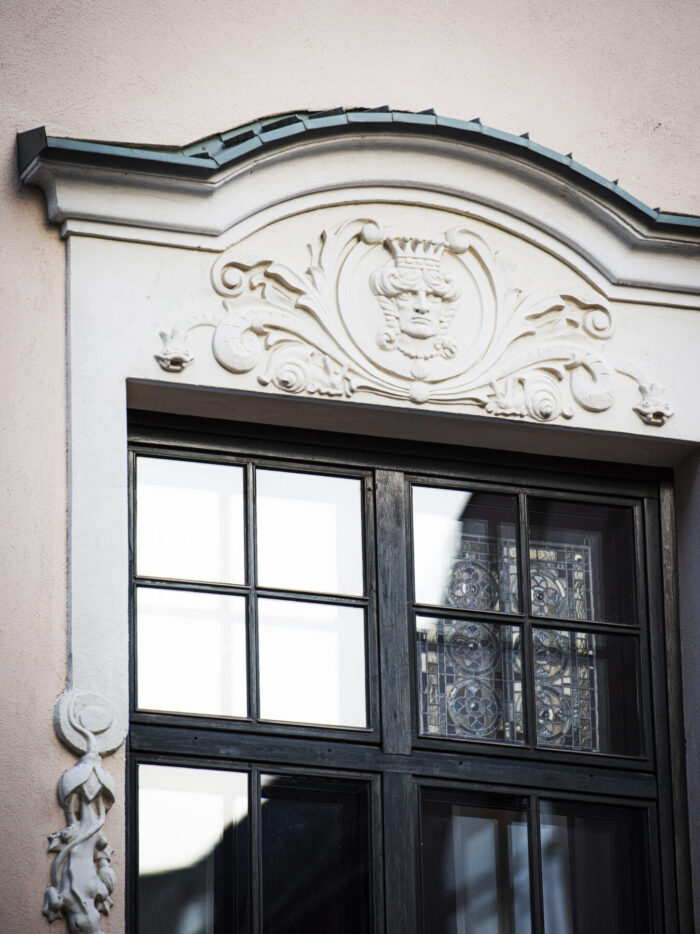
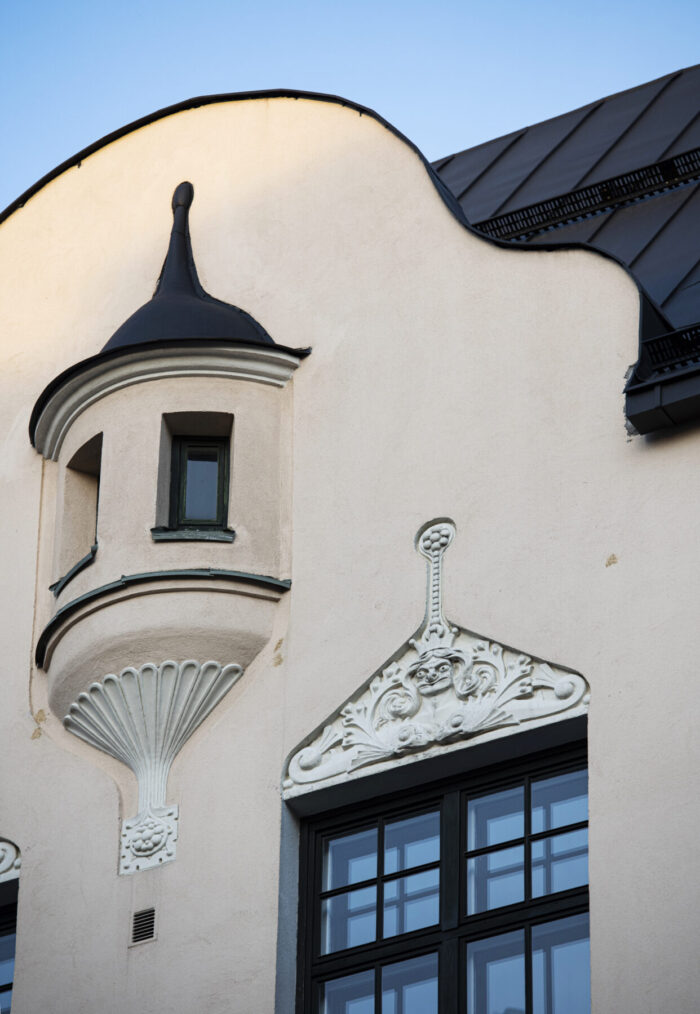
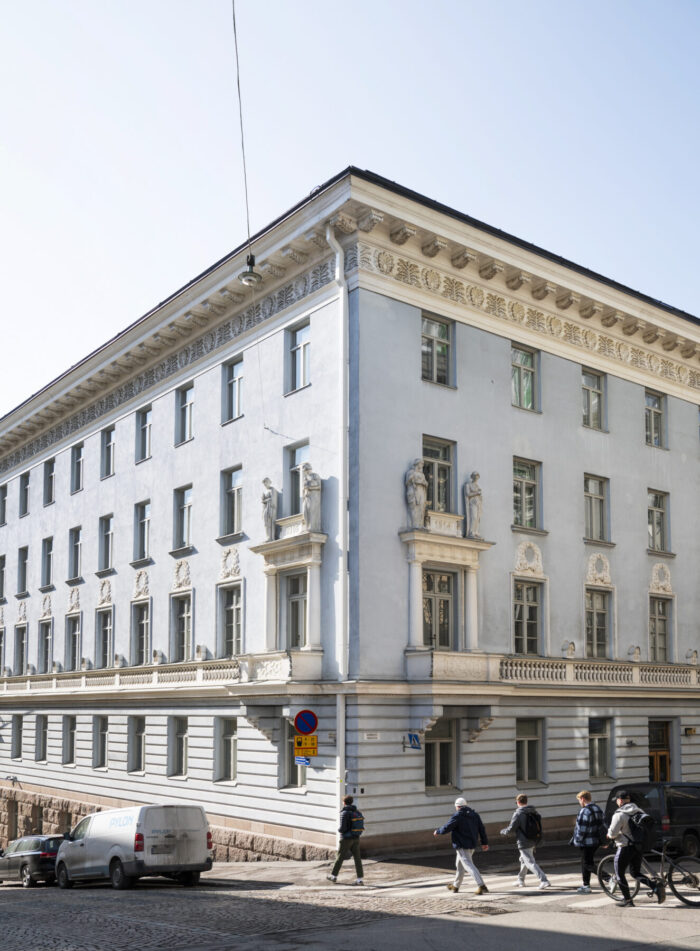
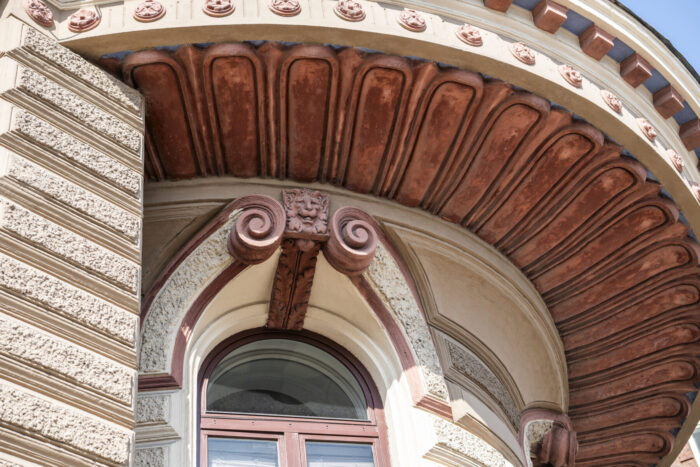
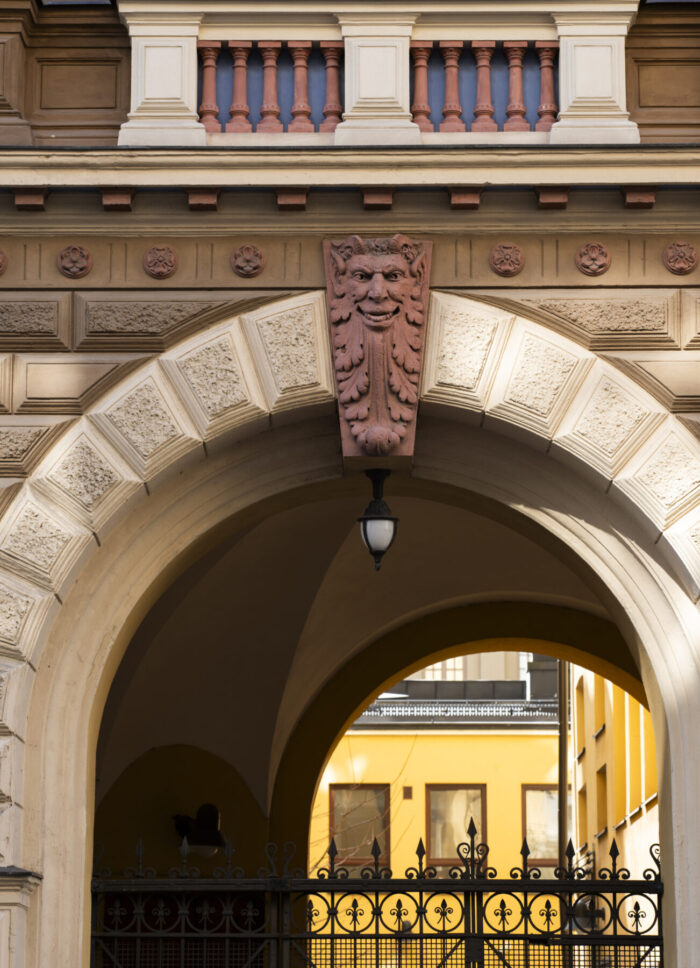
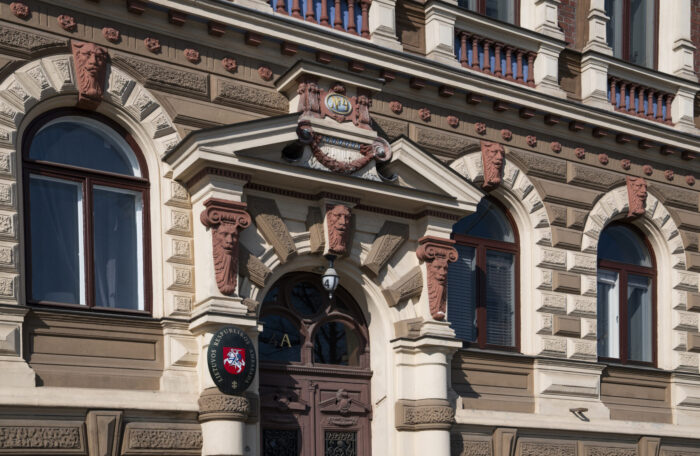
Many of the Finnish capital’s photogenic sculptural guardians can be found on art nouveau buildings.

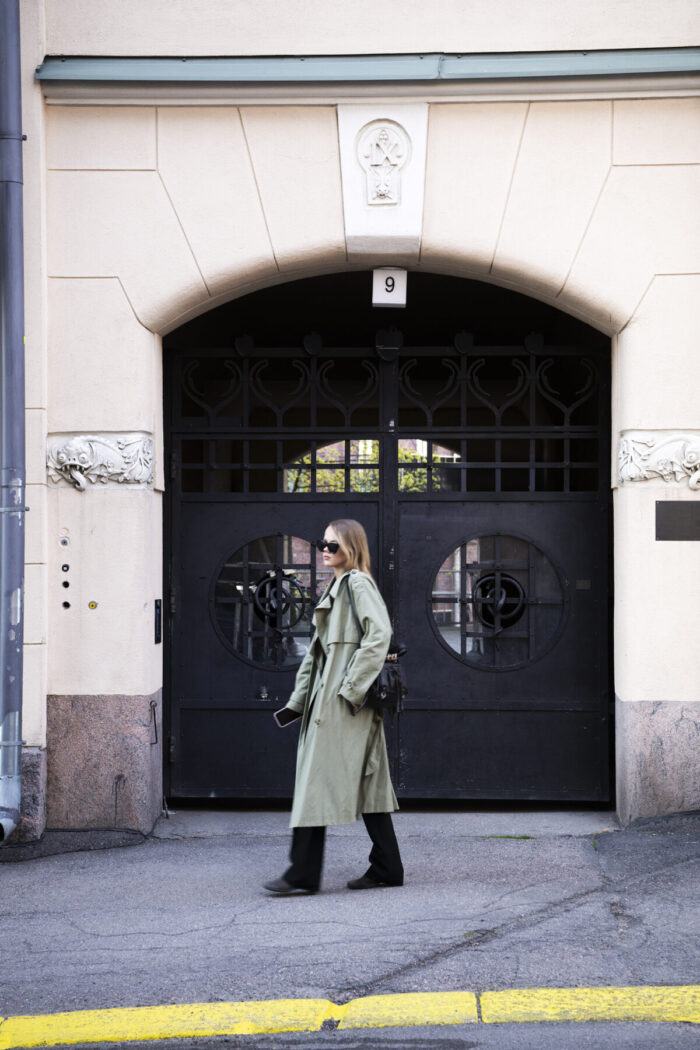
Known locally as Jugend (from Jugendstil (youth style), a German term for art nouveau), the genre bloomed from 1895 to 1915 and includes hundreds of buildings in the Finnish capital. Animals, gargoyles and other figures are also visible across various other architectural styles.

Photographer Kirsi-Marja Savola takes a closer look at some of Helsinki’s most intriguing façade sculptures.

[We list the building name (if any), street address, neighbourhood, architect and year of construction. Click the arrows or swipe to see more pics.]

Mythical creatures and legends

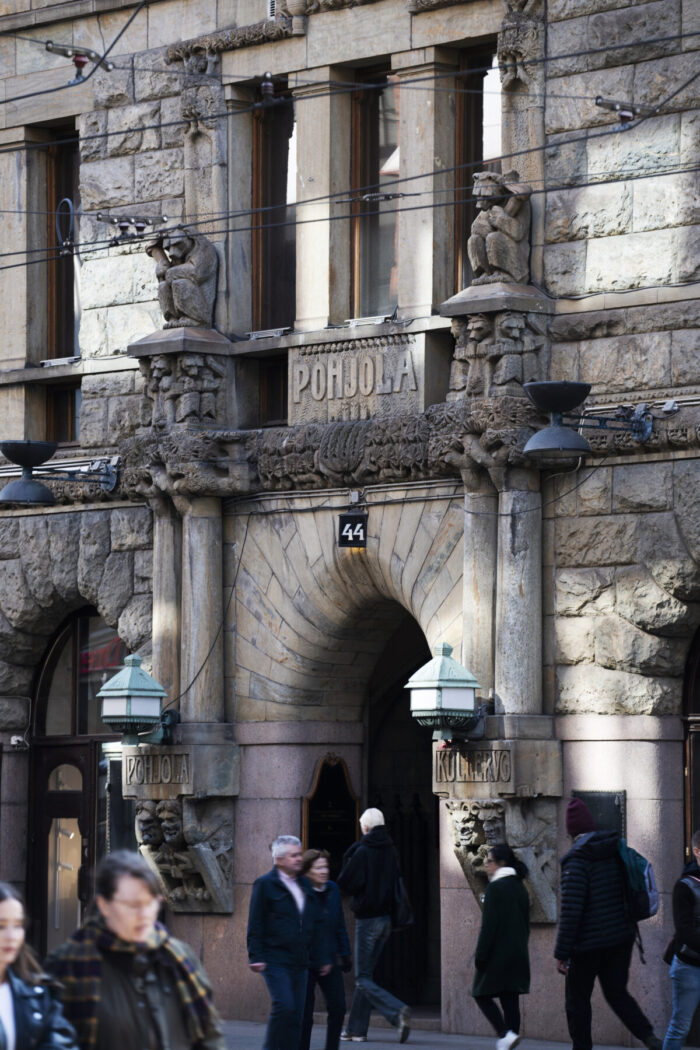
Pohjola Building, Aleksanterinkatu 44, Kluuvi

Herman Gesellius, Armas Lindgren and Eliel Saarinen, 1901

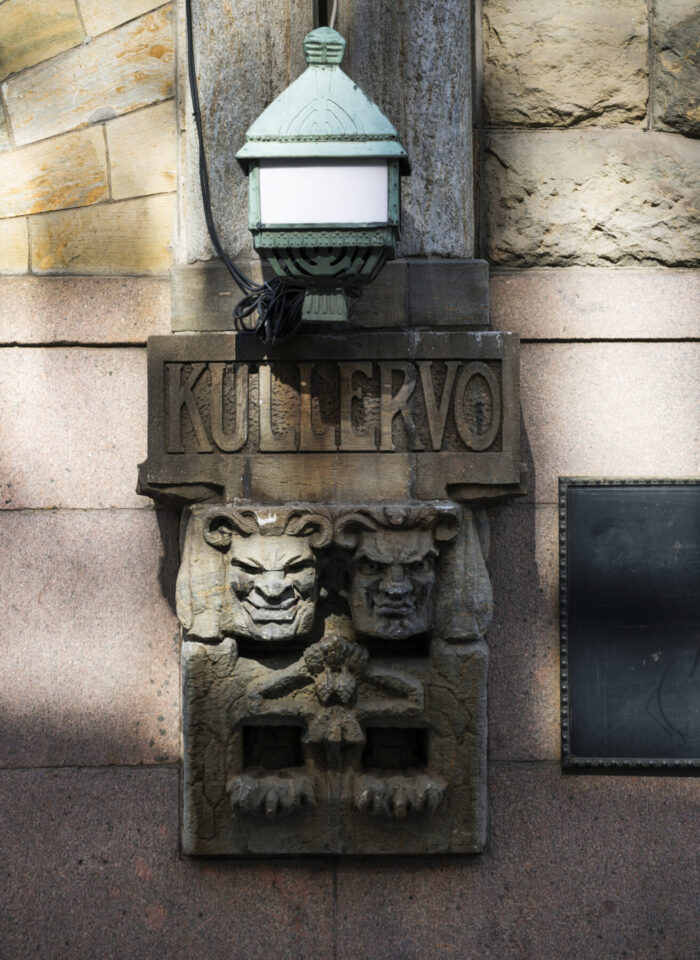
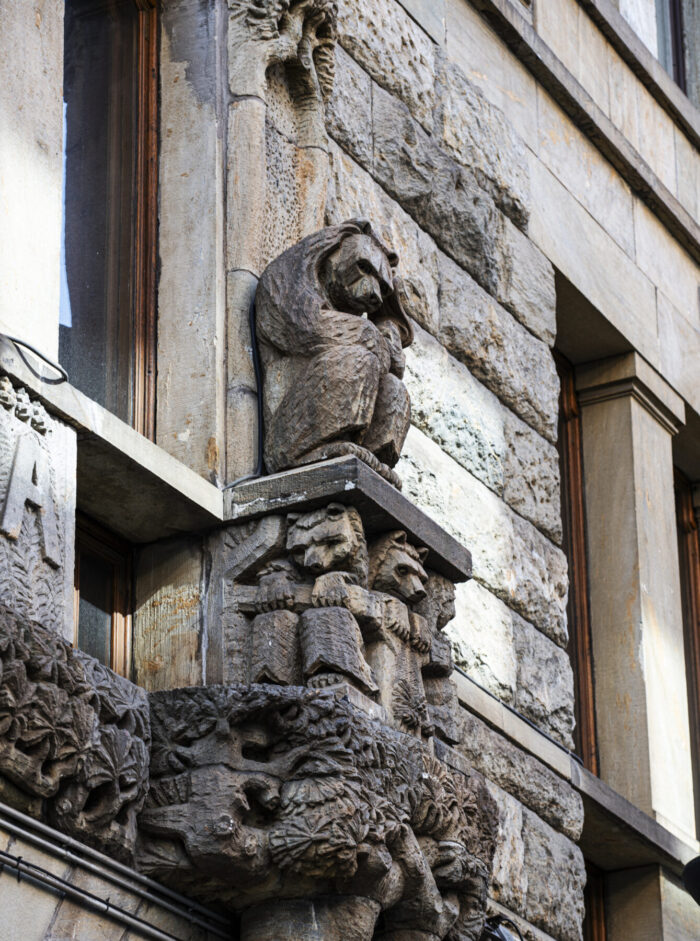
Named after Pohjola, the mythical Northland of Finnish folklore, this building features bears, squirrels, trees and numerous grotesque faces. Many of these carved figures surround the grand entrance, looming over visitors.

Originally commissioned to house two prominent insurance companies, Pohjola and Kullervo, the building cleverly blends mythological imagery with the modern world of risk and protection. The choice of symbols is striking – you could say that ancient representations of misfortune and peril have been repurposed to promote a modern concept: the need for insurance.

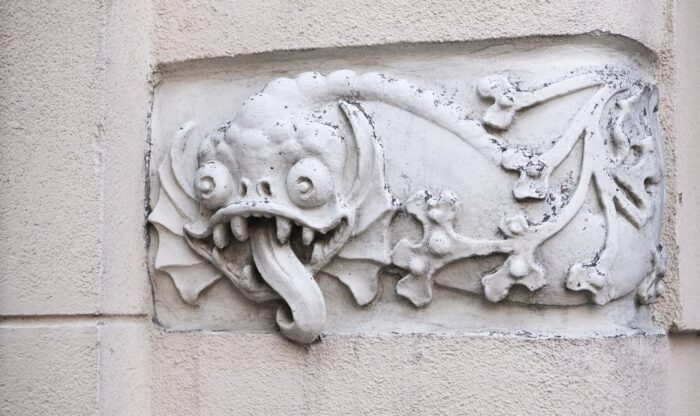
Wellamo, Vyökatu 9, Katajanokka

Selim A. Lindqvist, 1904

This building pays tribute to its namesake, Vellamo, the goddess of water in Finnish mythology. Flanking one entrance are a pair of sculpted creatures that may at first resemble sea dragons, but their features suggest another inspiration – dolphins, depicted in the classical Roman style. With bulbous heads and pig-like snouts, these dolphins reflect a long-standing tradition carried forward by Western European artists, who – rather than relying on firsthand knowledge of real dolphins – were consciously adhering to classical models in order to evoke the dolphin’s mythological significance.

The sinuous forms, however, are far from serene: sharp teeth and long, curling tongues transform them from playful sea creatures into unsettling guardians of the watery realm. The fearsome presence of these dolphins, poised to strike, adds an unexpected intensity to the building’s design. If you let your eyes wander up the rest of the façade, you will find other faces, some more human than others.

Religious and symbolic figures

St John’s Church, Korkeavuorenkatu 12, Ullanlinna

A.E. Melander, 1891

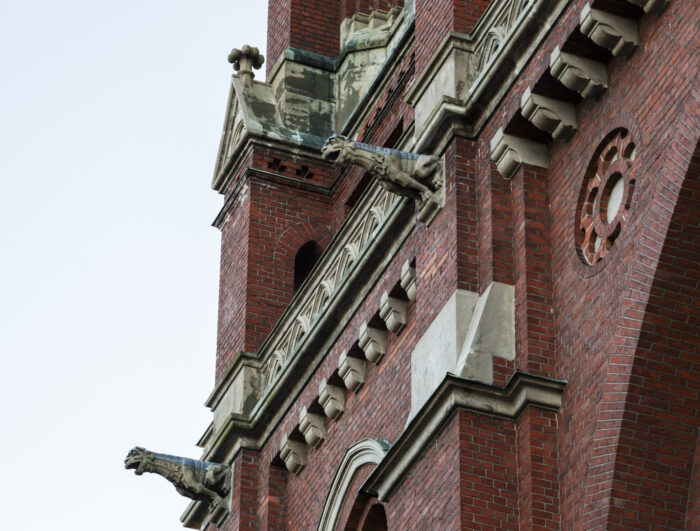
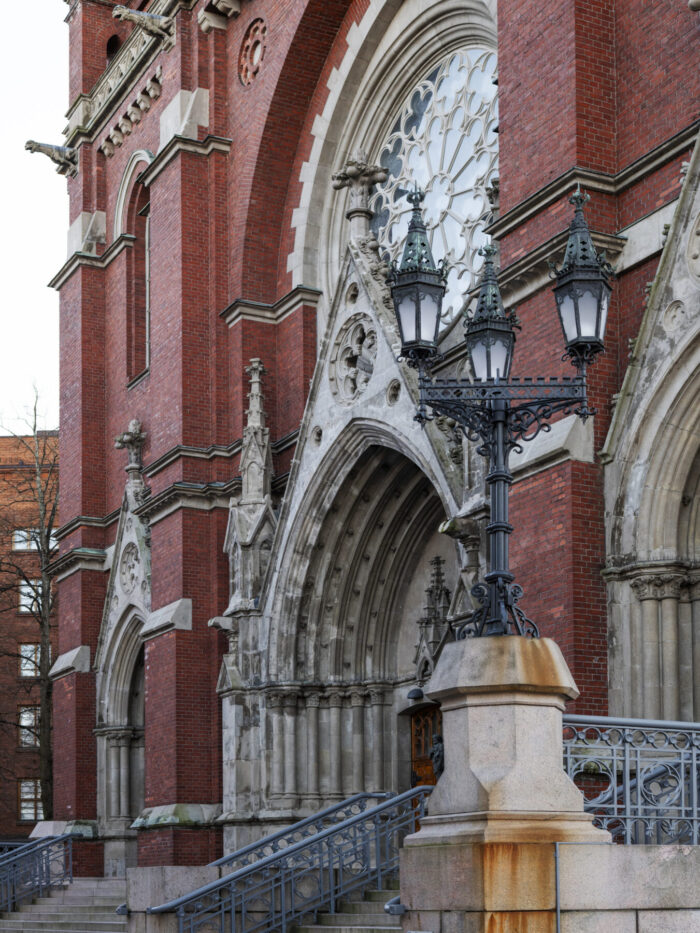
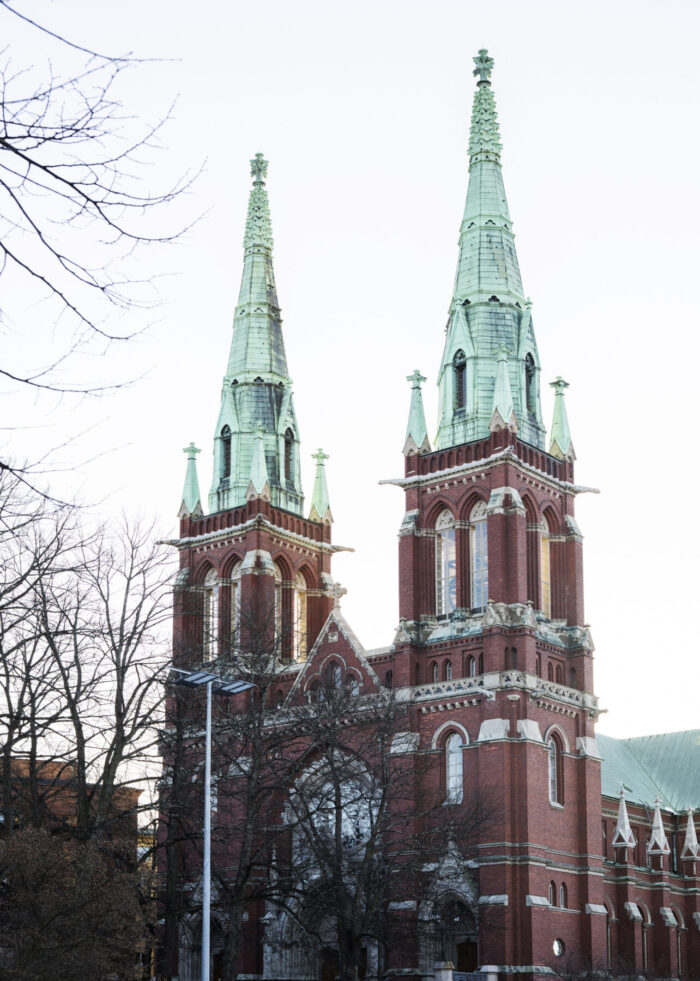
While traditional gargoyles were designed to channel rainwater away from stone walls, the gargoyles adorning this neogothic church do not serve that original function. Instead, they take the form of grotesques – chimeric statues that emphasise the dramatic flair typical of gothic architecture. The spiritual reasons for placing such monstrous figures on church façades in the Middle Ages remain unclear. They may have been intended to ward off evil spirits, intimidate the laity or reflect a medieval Christian worldview, in which even the most grotesque creatures were considered part of divine creation, just as capable as beautiful ones of worshipping God.

Helsinki Cathedral, Senate Square, Kruununhaka

Carl Ludvig Engel, 1830–1852

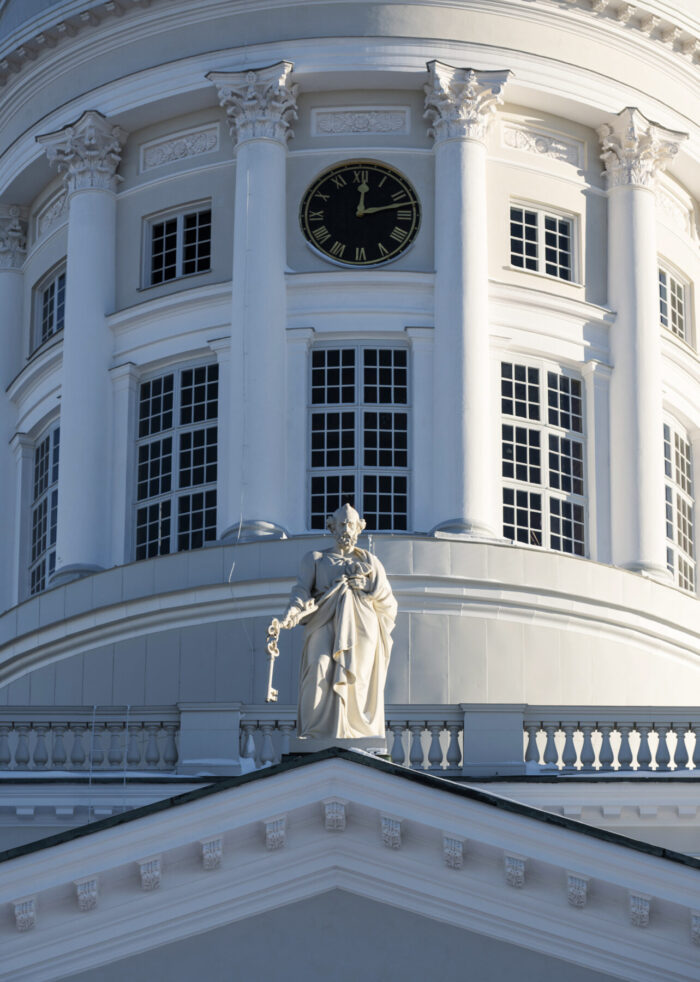
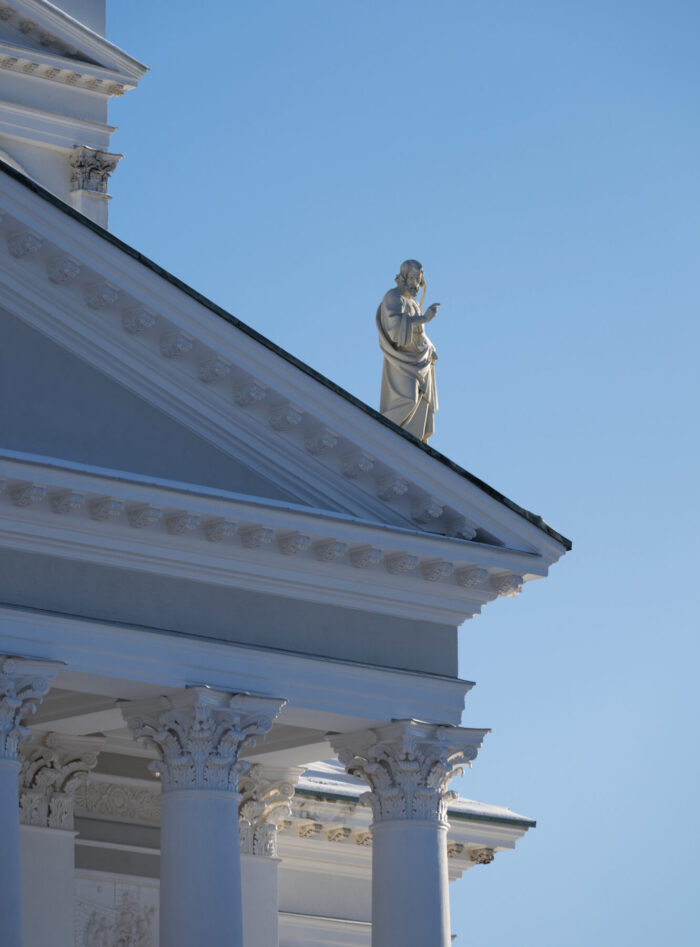
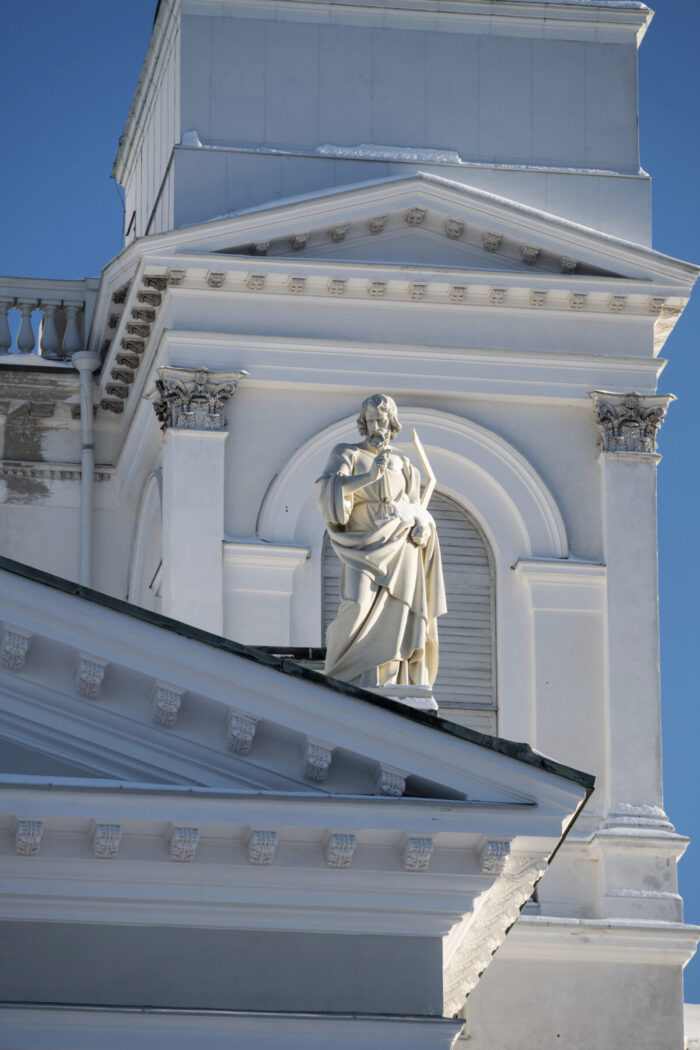
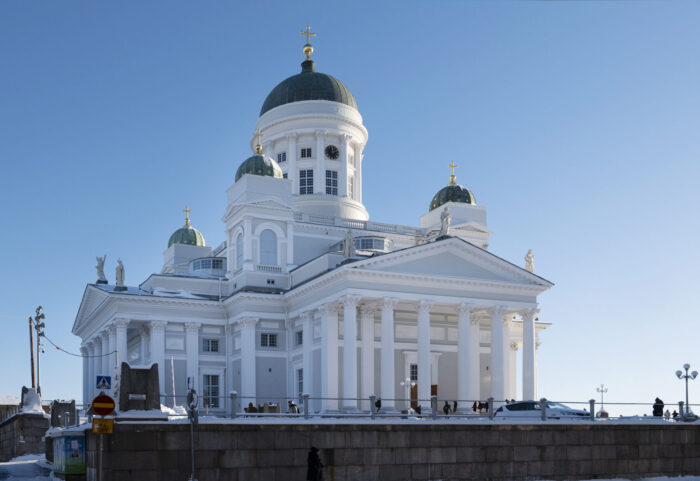
Crowning the city’s most iconic landmark, statues of the twelve apostles stand atop Helsinki Cathedral, their symbolic attributes helping to identify them – a tradition rooted in early Christian art. Peter is shown with the keys to Heaven, Paul with a sword, John a chalice, Matthew an angel, and so on for every apostle, each with something reflecting their biblical roles. This system of visual storytelling became essential in church iconography, allowing worshippers to recognise the apostles at a glance, even in an era of widespread illiteracy.

The animal world

Kontio, Kauppiaankatu 1–3, Katajanokka

Waldemar Wilenius, 1898

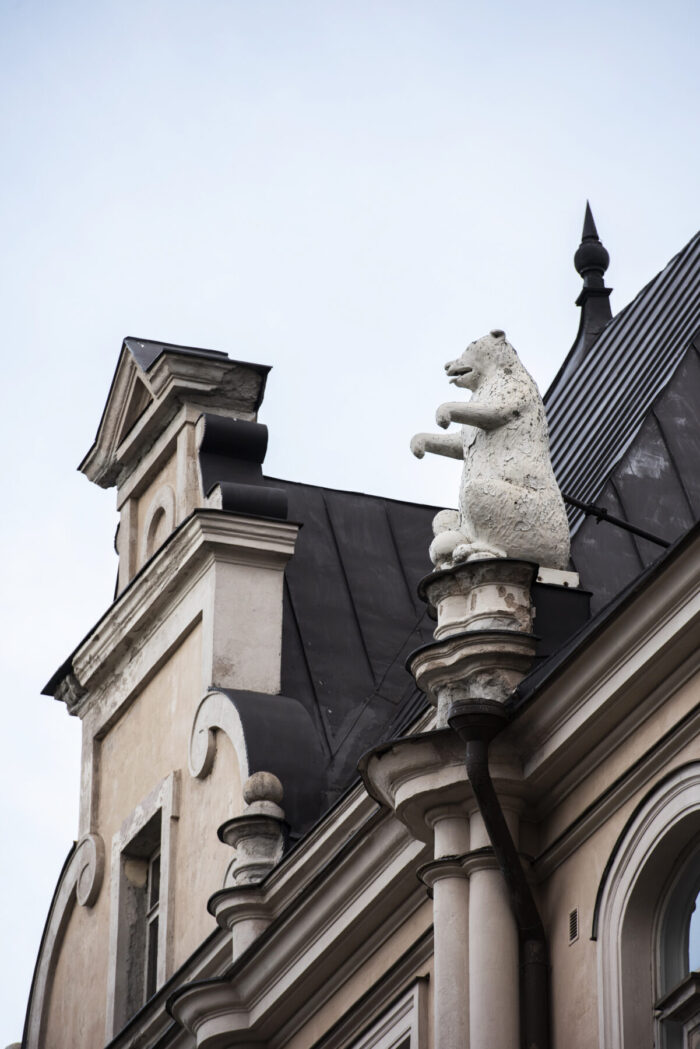
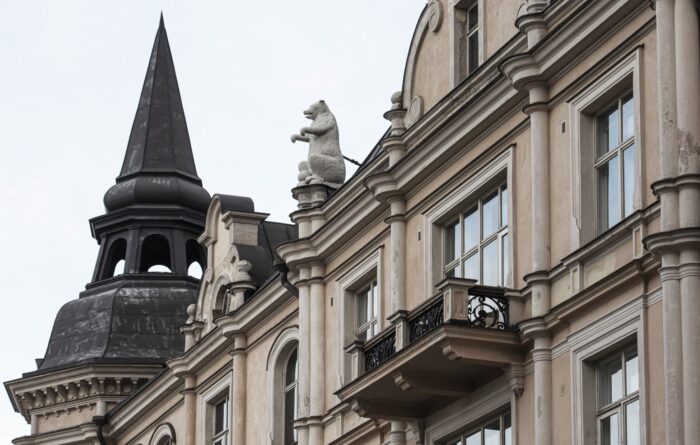
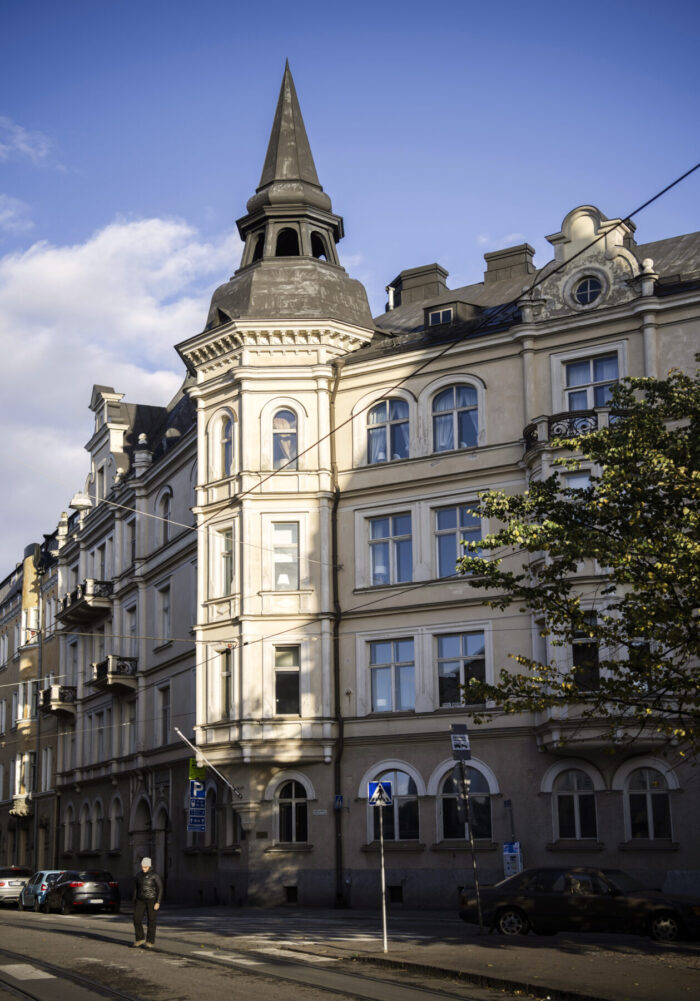
A pair of bear statues stands high above the streets, watching over the intersection. In Finnish folklore, the bear is a revered creature, often seen as a guardian of the forest and a symbol of strength, wisdom and resilience. The building’s name, Kontio, is a synonym of karhu (“bear”).

Traditionally, a successful bear hunt was followed by karhunpeijaiset, a ritual feast honouring the animal and marking its passing. However, by the early 20th century, overhunting had driven Finland’s bear population to the brink of extinction. Conservation efforts and legal protections have since allowed the species to recover, and today, Finland is home to over 2,000 bears – an enduring presence in both the wilderness and the cultural imagination.

Kruunuvuorenkatu 3, Katajanokka

Georg Wasastjerna, 1902

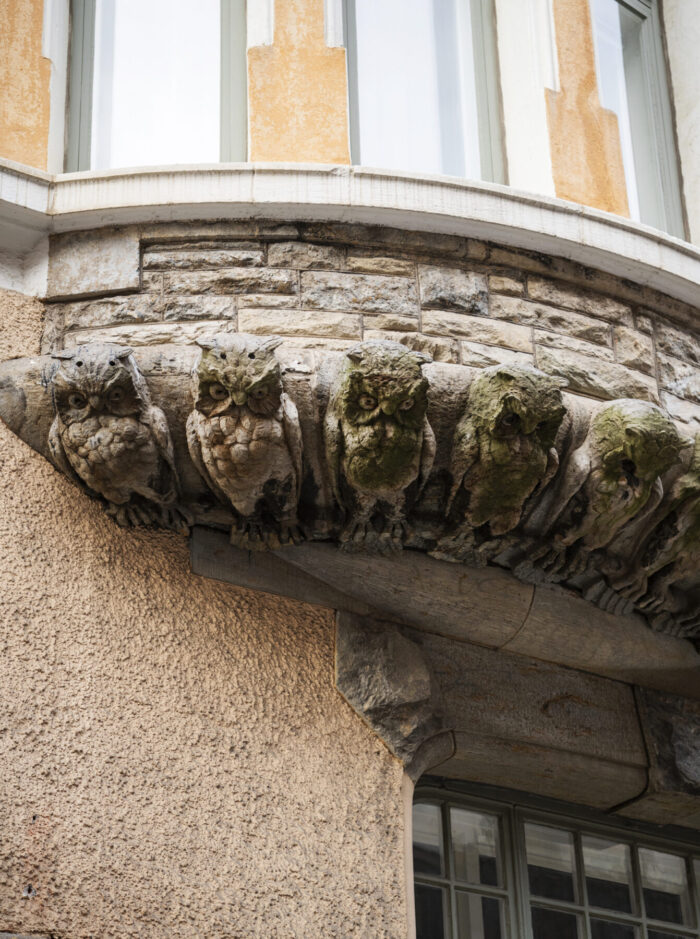
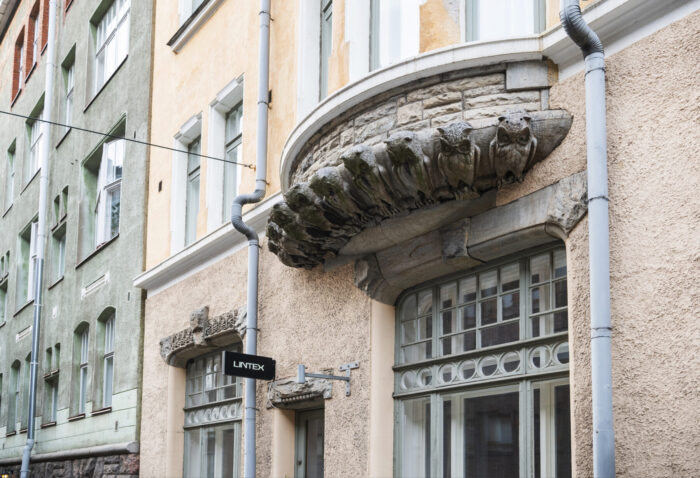
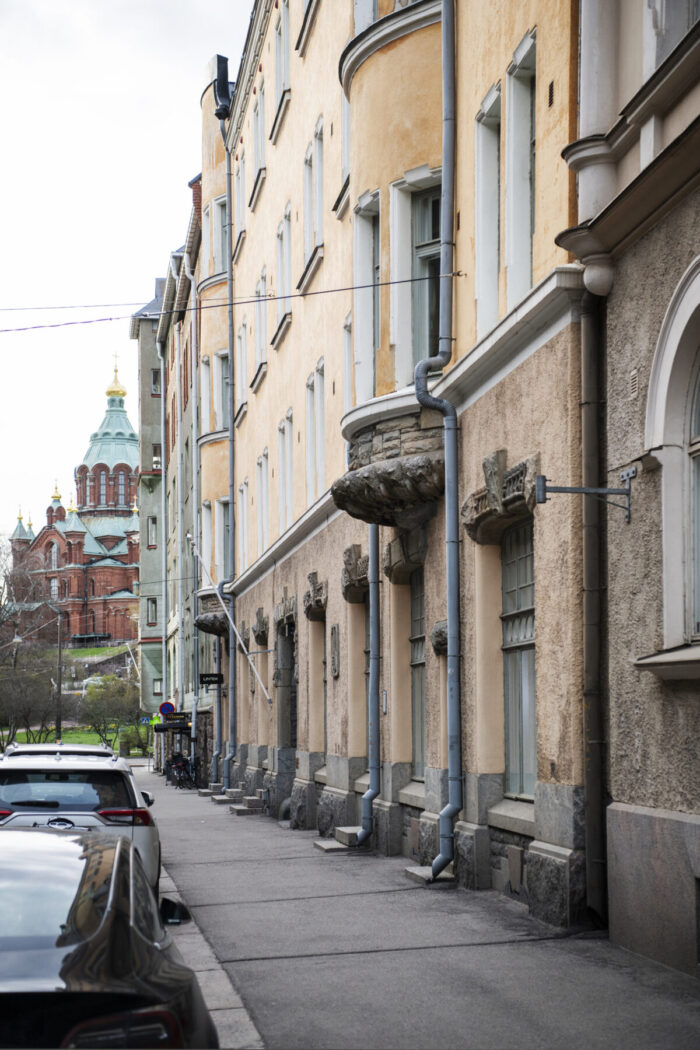
Below each set of bay windows on this art nouveau building, a row of sculpted owls watches over the entrance, their sharp eyes gazing at passers-by from furrowed brows. Despite their association with wisdom, the Finnish word pöllö (“owl”) can also refer to a fool.

Ten owl species breed in Finland, including the majestic eagle-owl, Europe’s largest, which was nearly driven to extinction by hunting – until the 1950s, people were even paid rewards for killing them. Today, the eagle-owl is a protected species, and conservation efforts continue.

Finland’s men’s football team goes by the nickname Huuhkajat (Eagle-Owls), while the women’s team is called Helmarit (Boreal Owls).

Mariankatu 11, Kruununhaka

A.H. Dalström, 1877

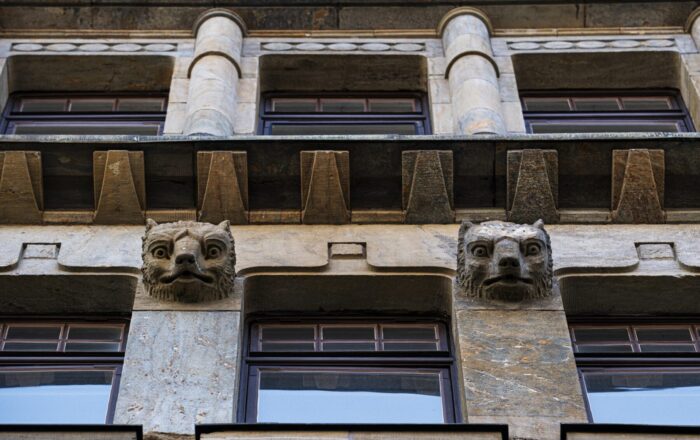
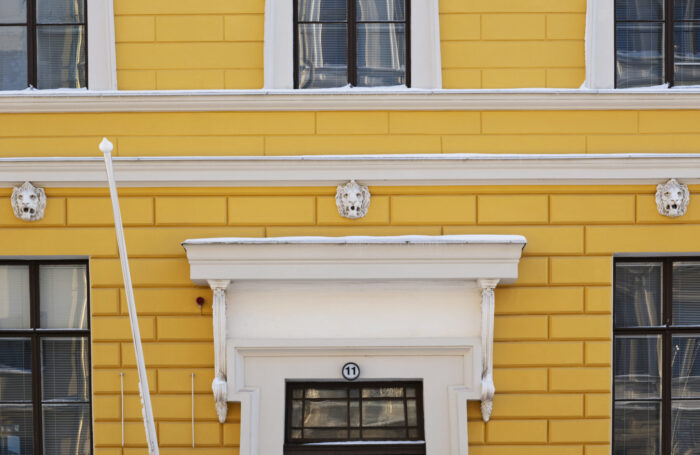
This historic building and former middle school features sculpted lion faces above its entrance. Their fierce expressions lend a regal quality to the façade, though they are easy to miss if you don’t look up.

Symbolic guardians

National Archives, Rauhankatu 17, Kruununhaka

Gustaf Nyström, 1890

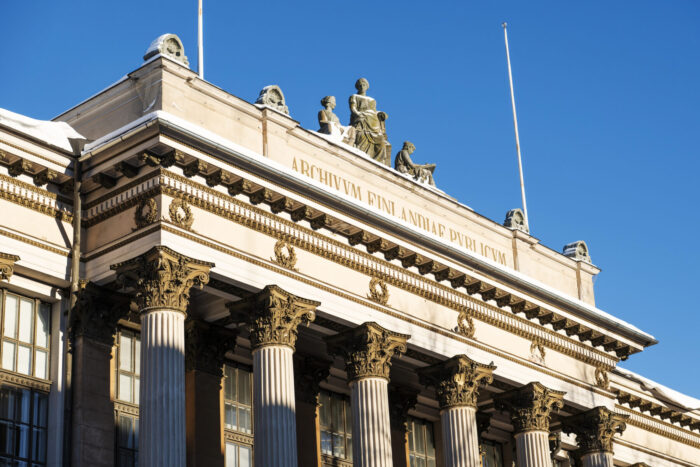
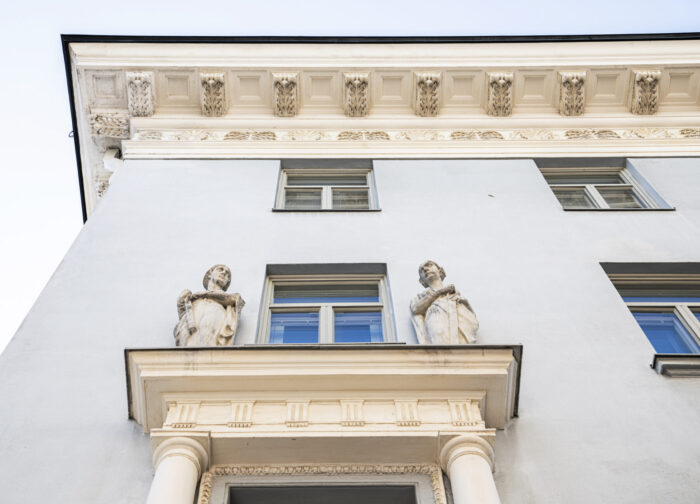
Above the entrance stands a trio of statues known as the Three Geni, completed in 1889. In Roman mythology, genius referred to a deity or guardian spirit, making these figures a fitting choice for the National Archives. The central figure represents Finland itself, while the two flanking statues symbolise historical research and writing – reinforcing the building’s role in preserving the nation’s past.

Rauhankatu 4 and Meritullinkatu 10, Kruununhaka

Georg Wasastjerna, approximately 1915

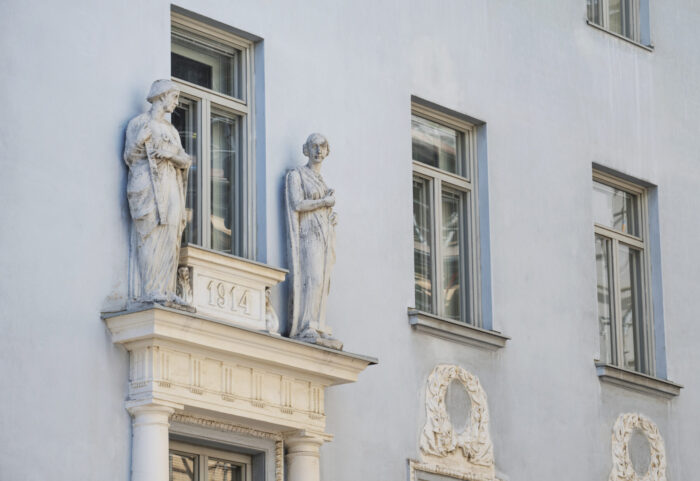
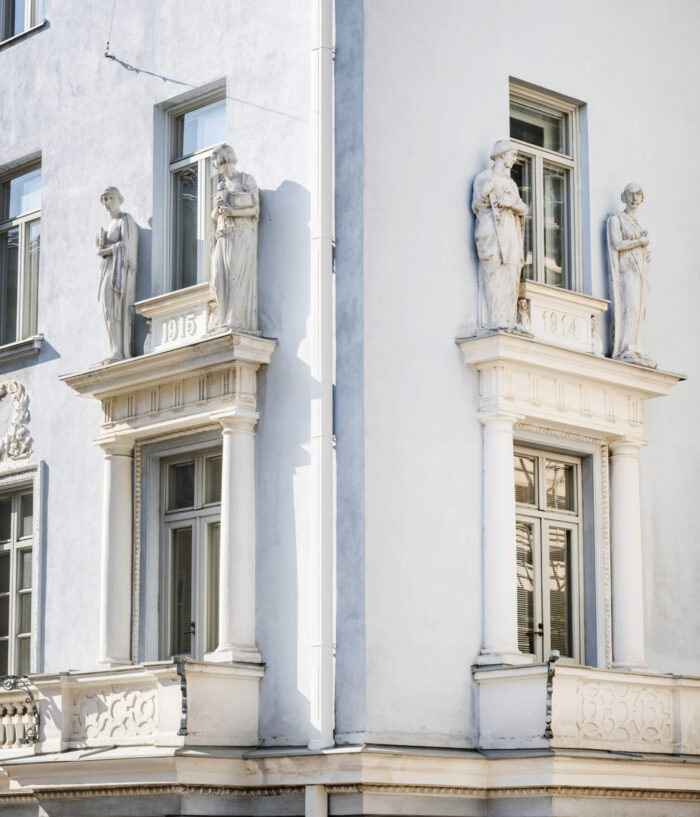
Above the second floor of this historic building, eight statues serve as symbolic reminders of its original function as the headquarters of the National Land Survey. Although it later came to house the Ministry of Education and Culture, the statues continue to evoke the technical expertise and heritage of land surveying.

Each figure holds an item that represents key aspects of that work: a gear and triangle; a model of a building; a ruler; and a T-square. These objects highlight the precision and creativity required in the fields of surveying, architecture and urban planning, reflecting the building’s role in shaping Finland’s infrastructure.

Other honourable mentions

Pohjoisranta 4, Kruununhaka

Theodor Höijer, 1885

Above each window, keystone sculptures of fauns – half-human, half-goat creatures from Greek and Roman mythology – adorn this 19th-century renaissance revival building. The figures, emblematic of the period’s fascination with antiquity, add a layer of mystery to the façade, evoking both mischief and wisdom.

Lundqvist Building, Aleksanterinkatu 13, Kluuvi

Selim A. Lindqvist, 1900

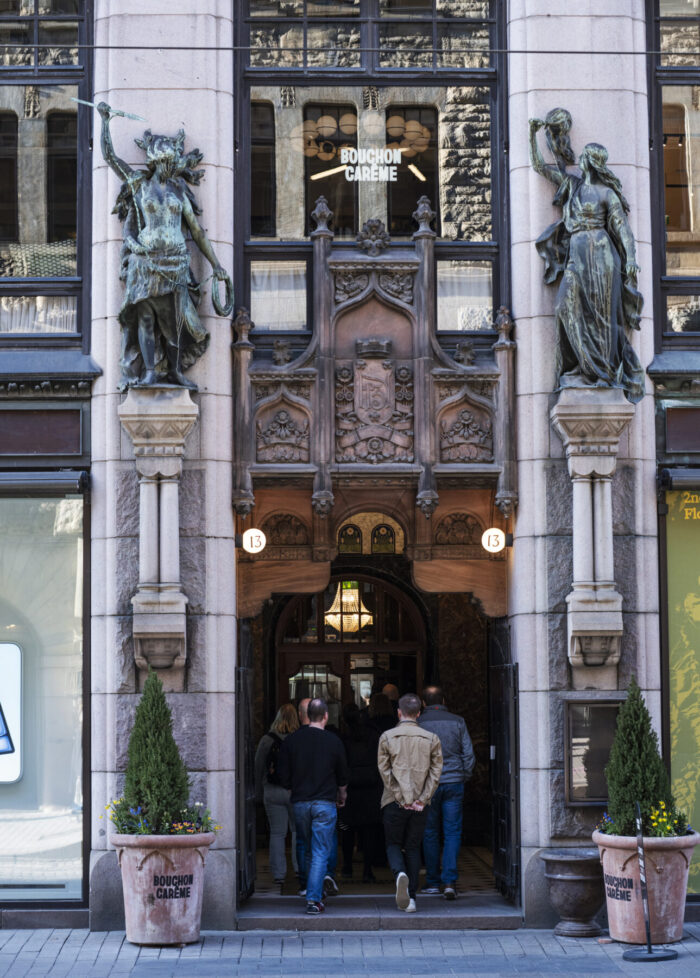
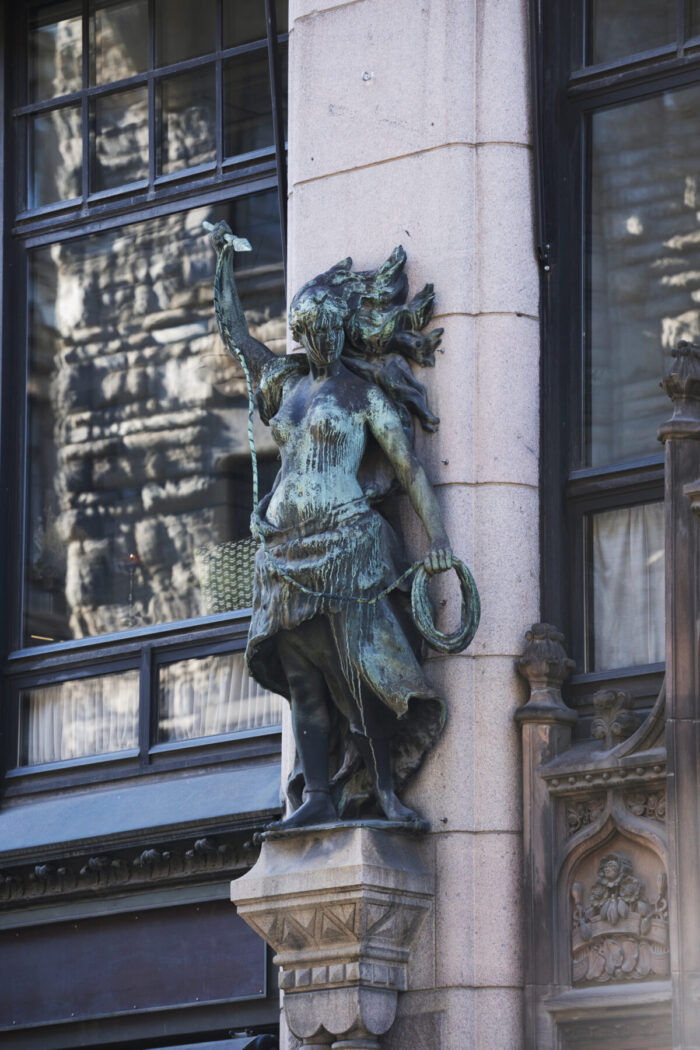
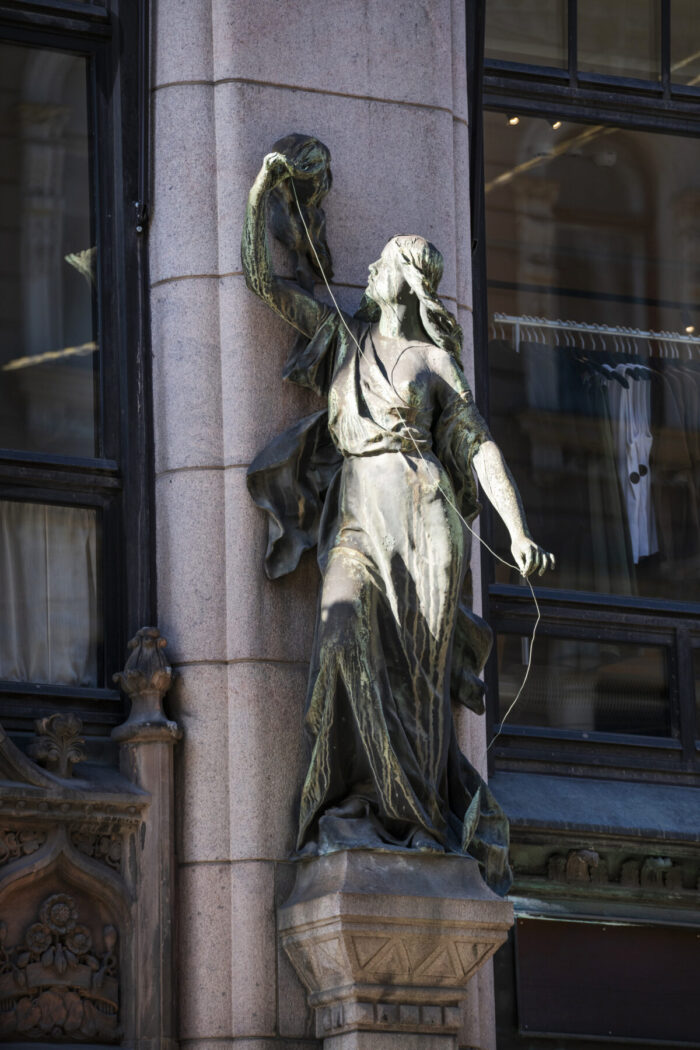
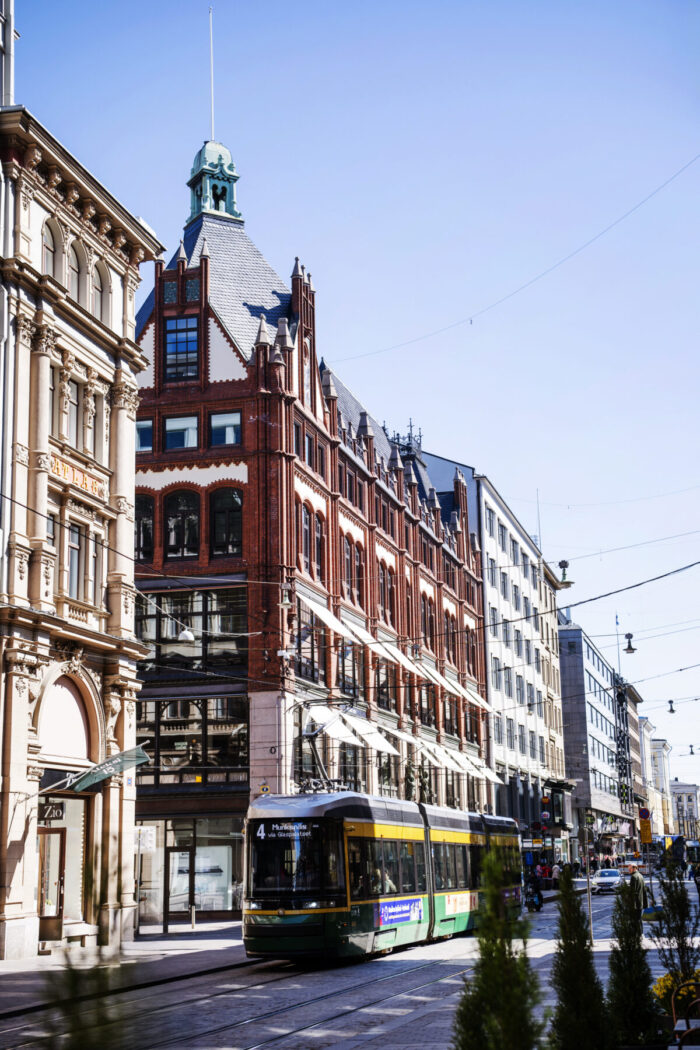
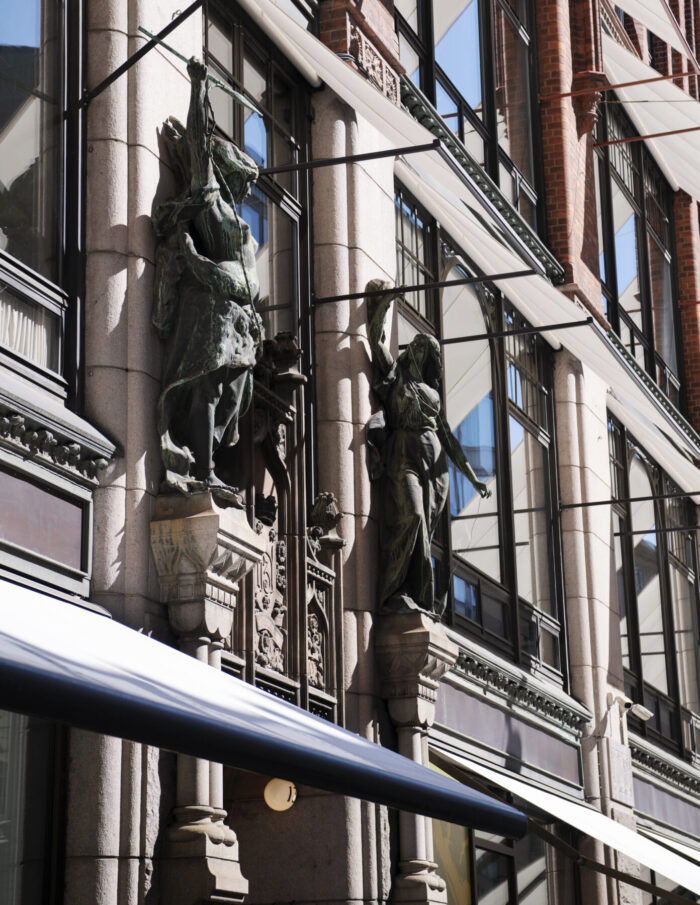
Helsinki’s first purpose-built commercial building features two prominent sculptures by Robert Stigell: Spinning and Hunting. One statue depicts a woman holding a ball of wool, symbolising craftsmanship and industry, while the other shows a figure with a spear and rope, evoking themes of hunting and livelihood.

Both statues draw inspiration from mythological goddesses such as Artemis, protector of hunters, and Athena, goddess of crafts, wisdom and practical skills. These sculptures reflect the building’s original purpose as a hub for commerce, embodying the spirit of industry at the heart of Helsinki’s development.

Helsinki’s sculpted figures offer a glimpse into the city’s rich history and mythology. Whether guarding buildings or simply observing from above, these sculptures – rooted in Finnish folklore and history – are more than just decoration. As you explore the city, take a moment to look up and discover the silent guardians that connect Helsinki to its cultural and natural heritage.

By Tyler Walton, October 2025; photos by Kirsi-Marja Savola

How Finnish glass design enchanted the world and keeps evolving

Heat radiates intensely. Deep rumbles and bangs echo through the air.

A glassblower gathers a small, glowing mass of molten glass from the furnace onto the tip of a blow pipe and lifts it into the air.

It seems as if the glass is dancing. With practiced precision, the glassblower blows, gathers more molten material, and blows again. The choreography is deeply ingrained in muscle memory.
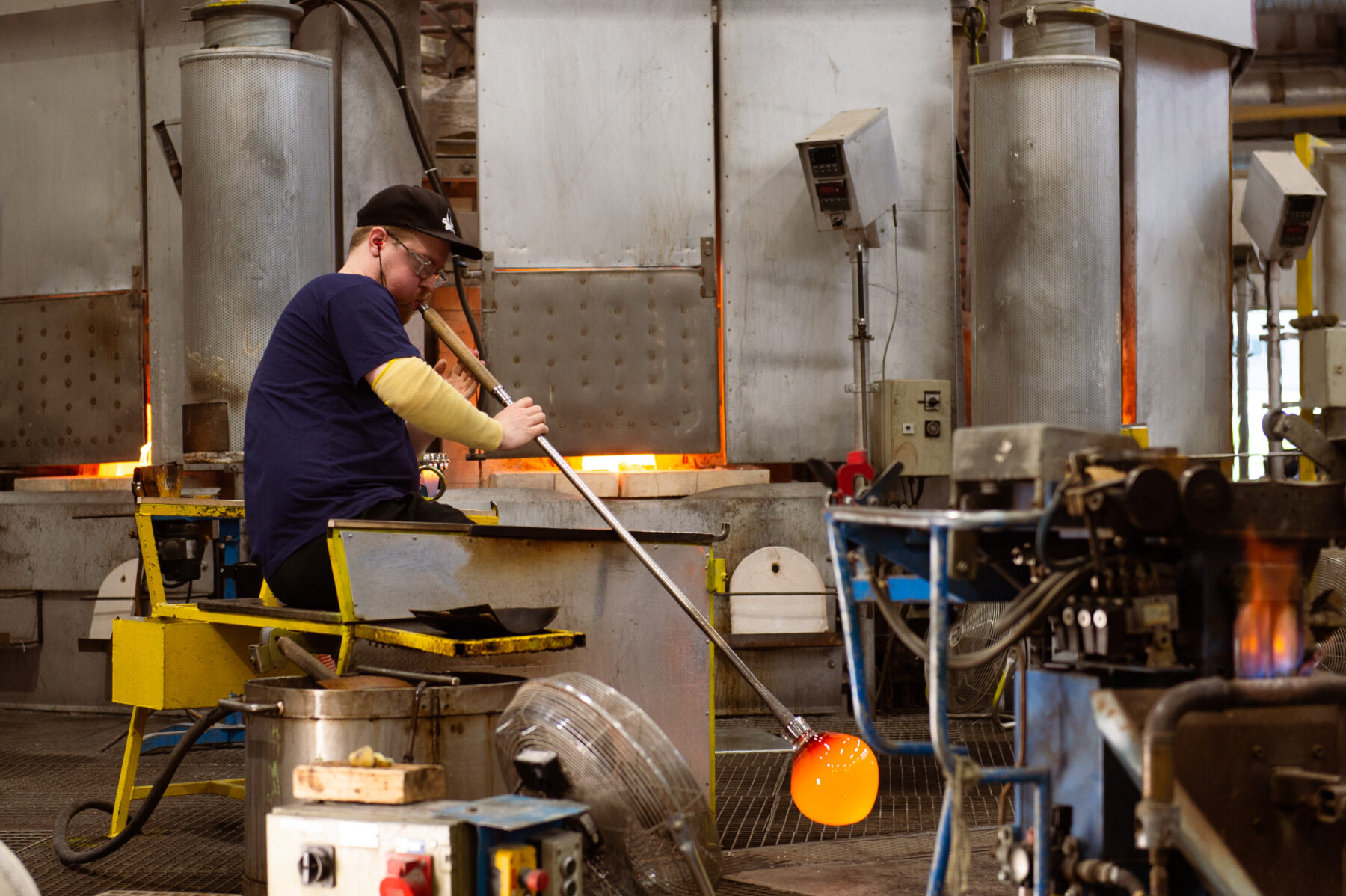
A man uses a long metal rod to manoeuvre molten glass in a workshop.

Glassblowing requires finely tuned coordination between the eye and the hand. The artist must not only shape the material, but intuitively respond to its ever-changing nature.

A new glass object is being born.

Peek into any Finnish kitchen cabinet, and you’ll likely find iconic design pieces recognisable to almost any Finn. The playful, undulating edges of the Aalto vase, for example, embody Finland’s distinctive approach to glass.

How did this Nordic country come to be synonymous with glass artistry?

The beginnings of Finnish glassmaking
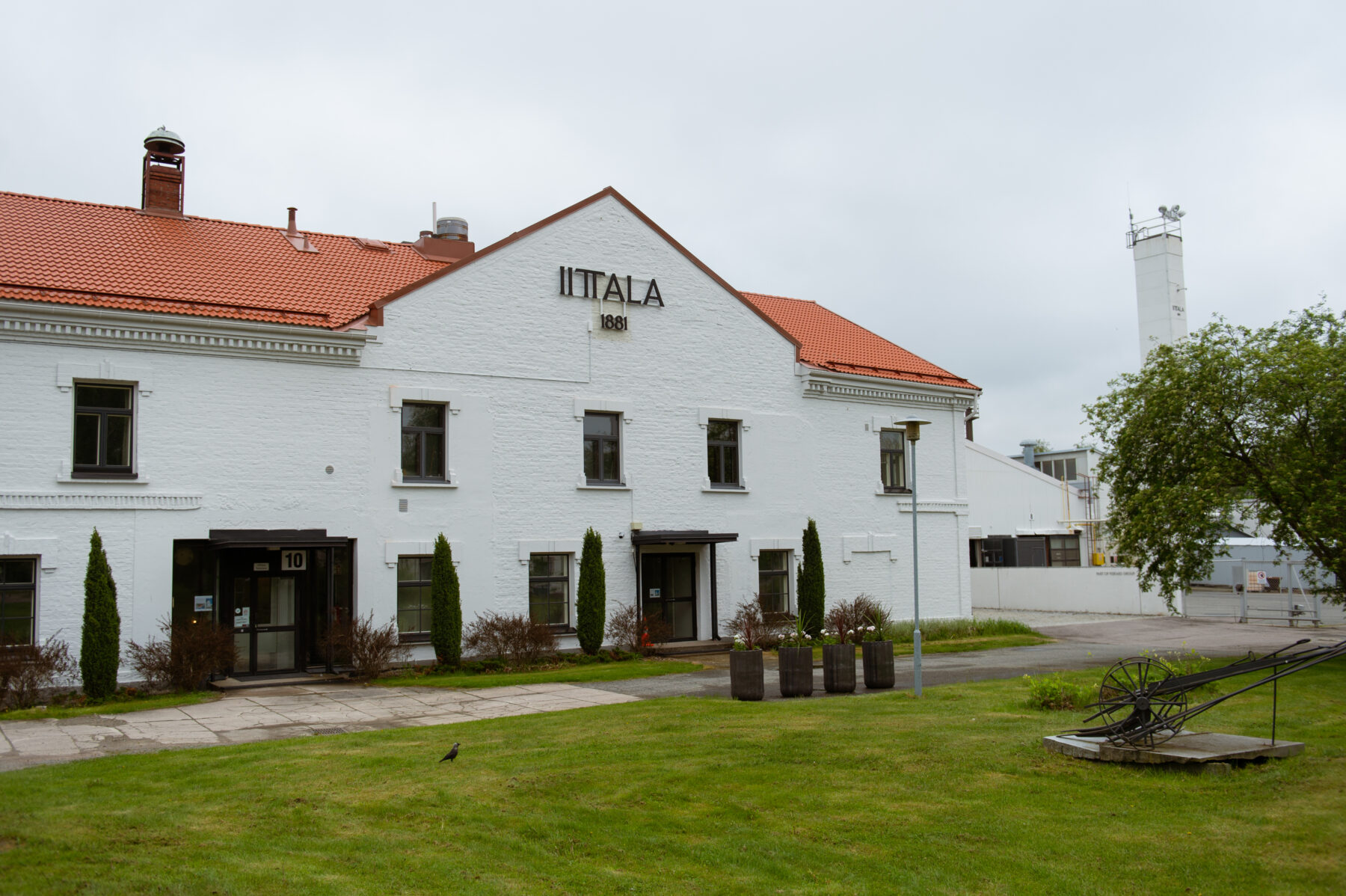
A white building with a red roof sits on a grassy lawn under a cloudy sky.

The Iittala glass factory is the only large-scale glassworks still operating in Finland. Smaller studios also continue the tradition in places such as Riihimäki, Nuutajärvi and Fiskars.

The journey to becoming a leader in global glass art took centuries of craft, persistence and innovation.

Finland’s glassmaking history dates back to 1681, when the first glass factory was established in Uusikaupunki, in southwestern Finland. Over time, new factories were established, while others were lost to fires or closures.

By the early 20th century, key players such as Iittala, Nuutajärvi and Riihimäki Glass had taken root in southern Finland.

Their early output largely focused on everyday utility glassware that was functional and well made, though stylistically similar and lacking distinction. At the time, Finland was rapidly developing its national identity, with design and artistic expression gaining momentum.

When Finland gained independence in 1917, it marked a turning point. Though Finnish glass design initially echoed international styles, the seeds of a distinct, homegrown aesthetic had already begun to grow.

By the 1930s, everything was about to change.

In the glass hut
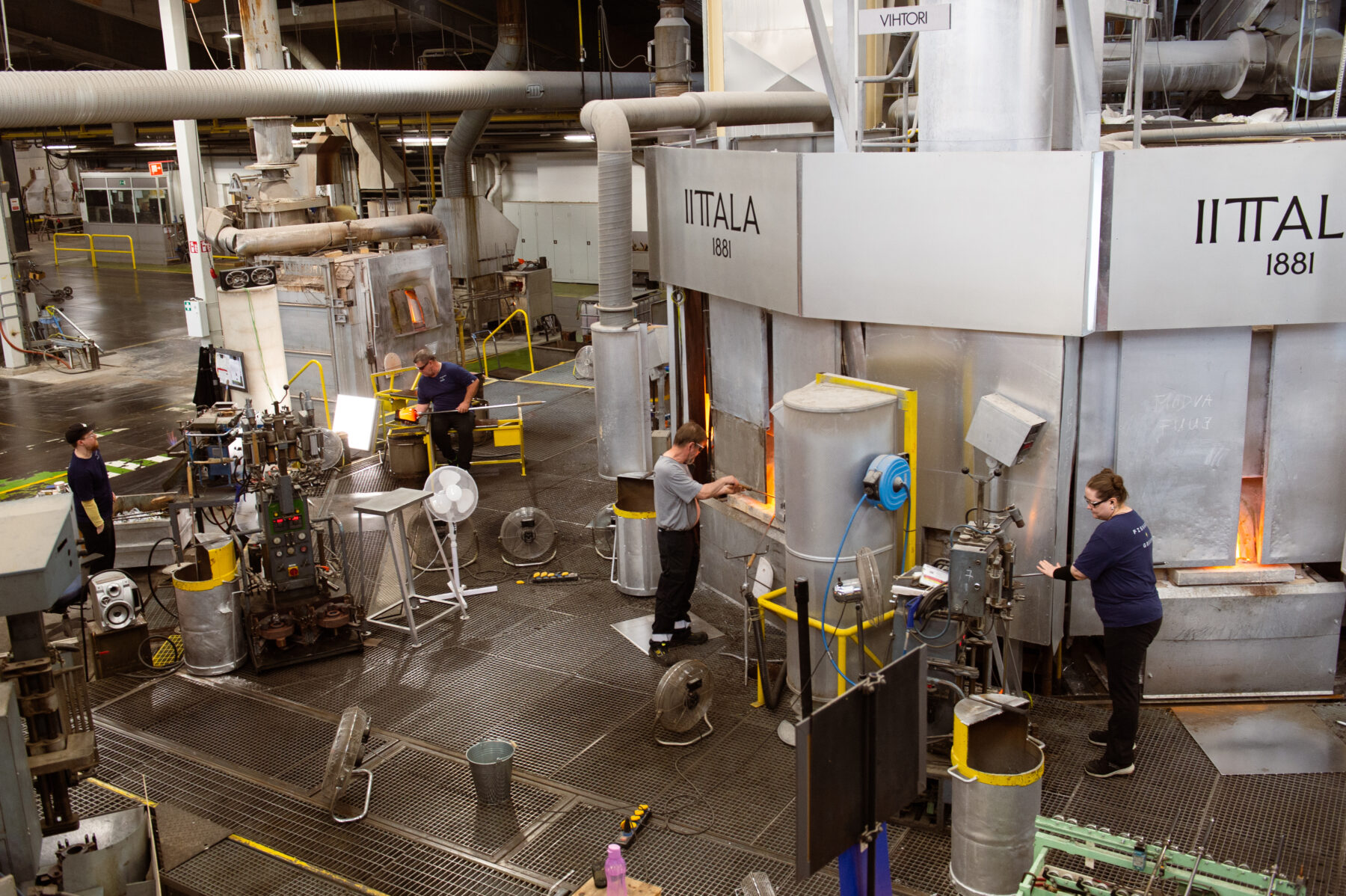
In a factory setting, several workers attend to different stages of the glassmaking process near large, industrial equipment.

Around 140 people work at the Iittala factory, including 45 glassblowers. Each handcrafted object is a team effort, supported by inspectors, finishers and skilled carpenters who shape custom tools and moulds.

Back inside the glass hot shop, the glassblower completes their work. A large, brownish lampshade emerges, perfectly formed.

A handler carefully inspects the piece before cutting it free. This one is a success, but not all pieces pass the test.

Mastering the art of glassblowing takes time, often a decade or more. Patience is as critical as skill in this demanding craft.

We’re in the village of Iittala, home to Finland’s only remaining operational glass factory. Here, thousands of glass objects are still made by hand each year.

The work is physically intense. The heat is unrelenting, and the process requires constant, deliberate motion.

“Rhythm is critical in glassblowing,” says Tuija Makkonen, Iittala’s brand manager. “Timing is everything.”

Makkonen and Jaana Eriksson, PR specialist at the Iittala Glass Museum, guide us through the glass hut and factory floor, offering insight into the intricate process.
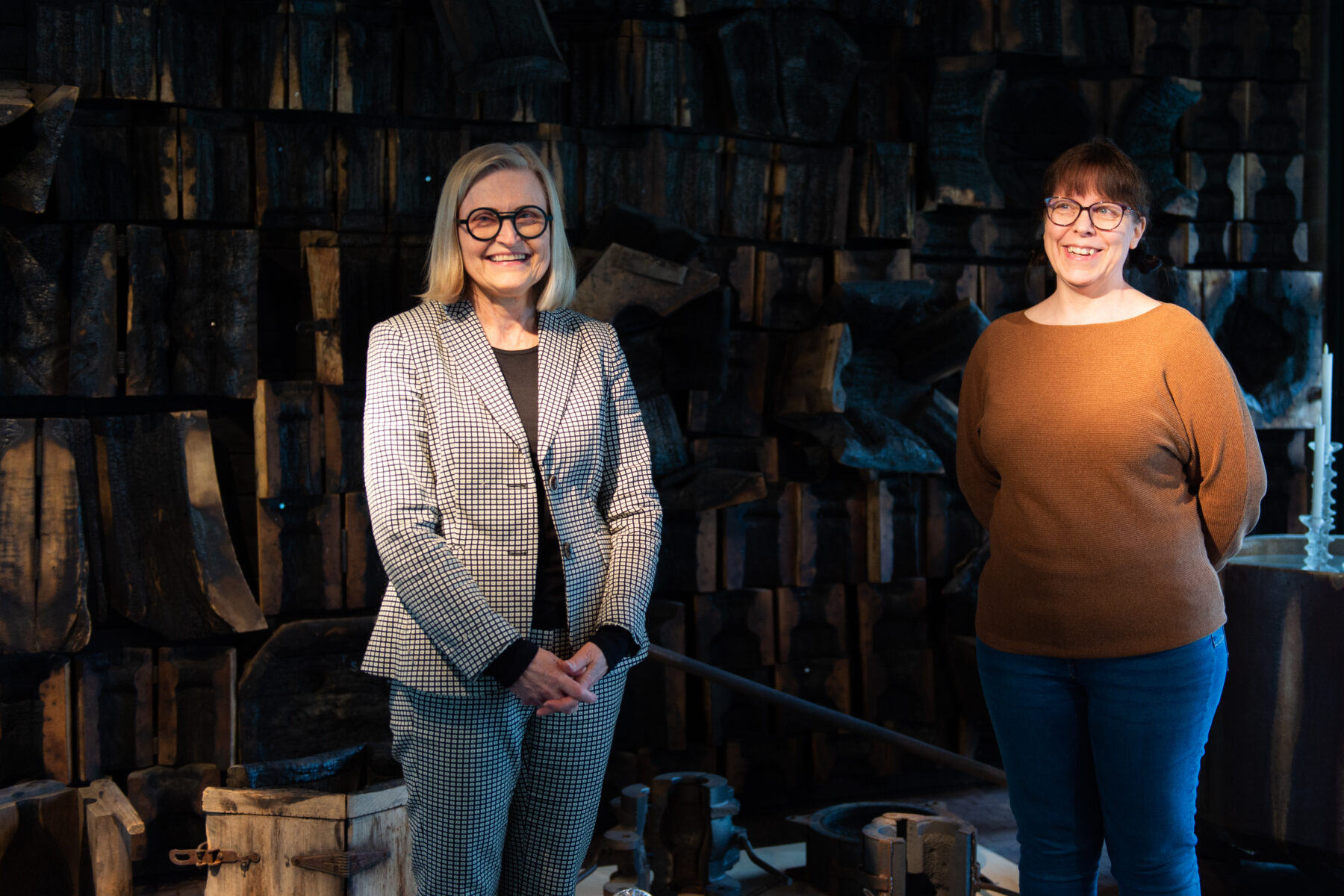
Two smiling women stand side by side in front of shelves stacked with old and weathered objects.

Tuija Makkonen (left) and Jaana Eriksson describe glass as a very challenging material.
“Glass behaves differently every time,” Makkonen says. “Even the weather can affect it.”

Inside the glass hot shop, a dozen glassblowers are on shift, their movements synchronised like a well-rehearsed dance.

One pauses to wipe the sweat from their forehead before returning to work.

Only the most skilled artisans tackle the most complex creations, such as the iconic, irregularly curved Aalto vase.

The Aalto glass is born
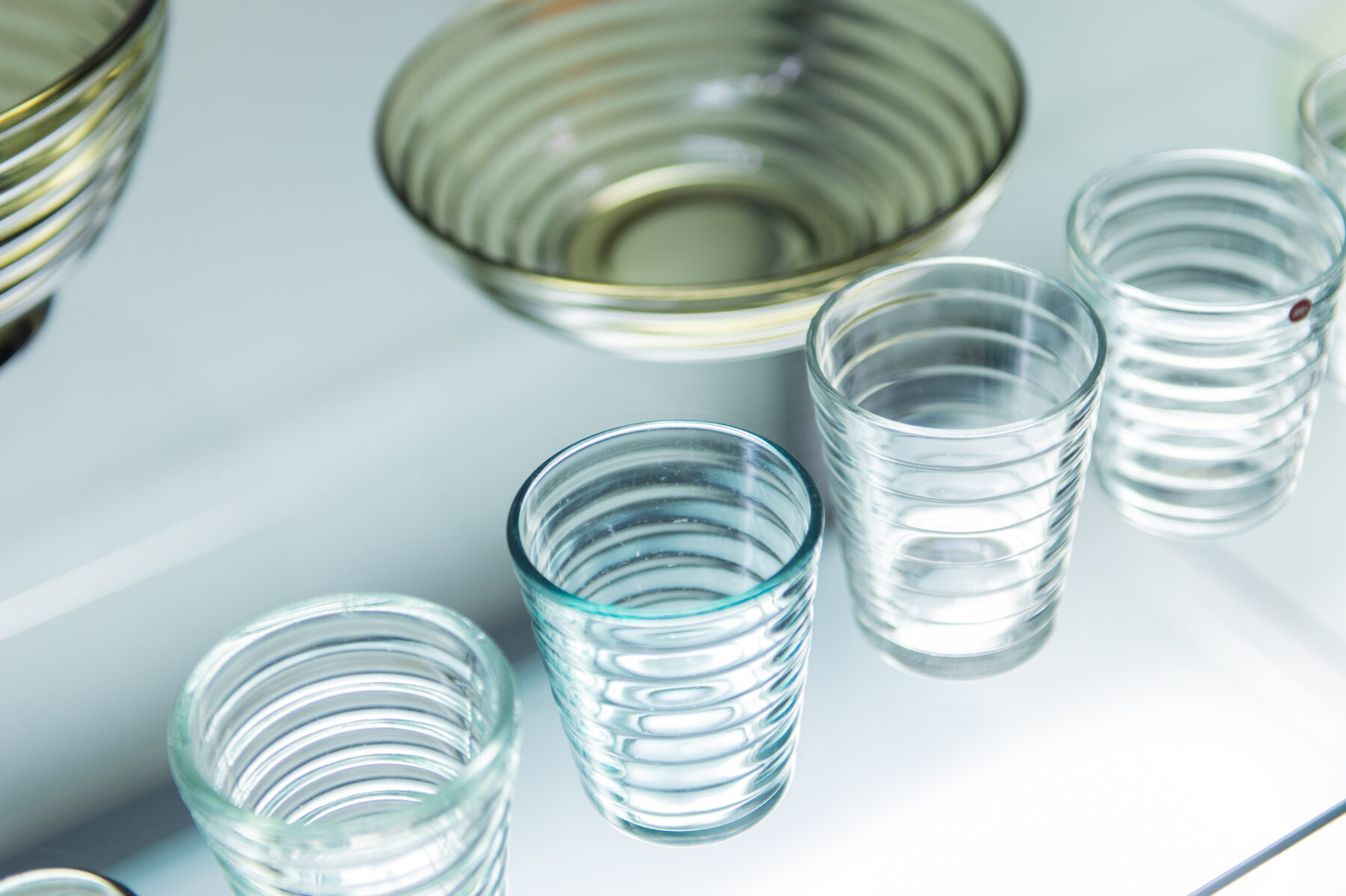
Round, clear glass bowls and drinking glasses with ridged concentric patterns are arranged on a white surface.

The Aino Aalto series, from 1932, is the oldest collection that Iittala still has in production.

In 1932, the Karhula-Iittala glass factory launched a design competition calling for simple, practical objects. The competition marked the breakthrough of functionalism in utility glass.

Among the participants were the designer duo Aino and Alvar Aalto. Aino’s Bölgeblick glass, later renamed the Aino Aalto series, was one of the five winning entries. With its clean, concentric lines and timeless silhouette, it became a classic of pressed glassware and remains in production today. The series captures the Finnish ethos of blending beauty with everyday functionality.
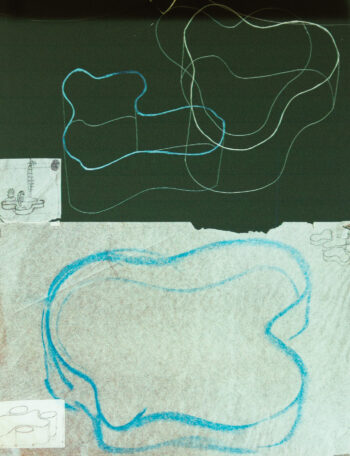
Various drawings and diagrams are layered together on a two-toned green and white surface.

Alvar Aalto’s sketches show the vision behind his now-iconic vase. Each one takes up to 30 hours to complete, involving seven people and 12 production steps.

A few years later, Alvar Aalto entered another Karhula-Iittala competition with a body of work intriguingly titled Eskimo Woman’s Leather Trousers. The name may have raised eyebrows, but the design won acclaim. From that series emerged what would become one of the most iconic objects in Finnish design – the Aalto vase.

With its soft, undulating curves, the vase defied the rigid shapes typical of the era. Today, it is a fixture in Finnish homes and museums alike.

Glassware for every home
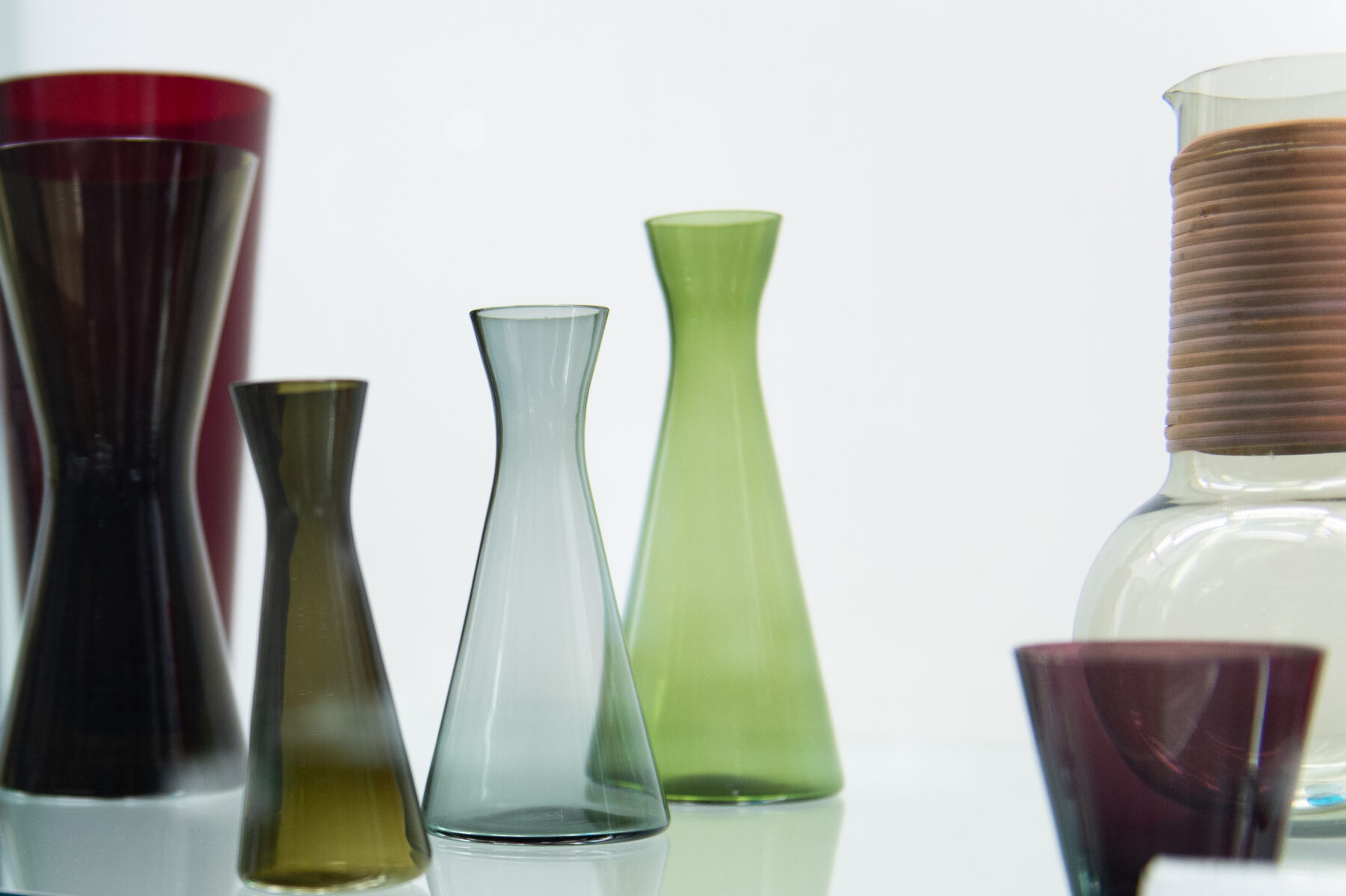
Various glass vases in several colours, shapes and sizes stand upright on a reflective white surface.

Designer Kaj Franck embodied the simple and understated style of 1950s Finnish design, blending minimalist aesthetics with everyday function.

The Second World War temporarily halted Finland’s promising progress in glass design. Scarcity of raw materials, price controls and strained international relations slowed production.

However, the post-war years saw a renewed drive for innovation. As the country rebuilt, so too did its design identity, now with even greater purpose. To thrive in a competitive global market, Finnish glass factories turned to a new generation of visionary designers: Timo Sarpaneva, Tapio Wirkkala and Kaj Franck.

These designers brought fresh ideas, emphasising simplicity and functionality even more. Franck, for example, championed the idea that glassware should suit every home.

His designs, like the stackable Kartio glasses, remain timeless staples, combining practicality with elegance. Similarly, Franck’s handleless pitchers symbolised 1950s design philosophy: affordable, space-saving and versatile.

This era marked a shift for Finnish glassware. It was no longer just for special occasions; it belonged in every home, for everyday use.

International recognition
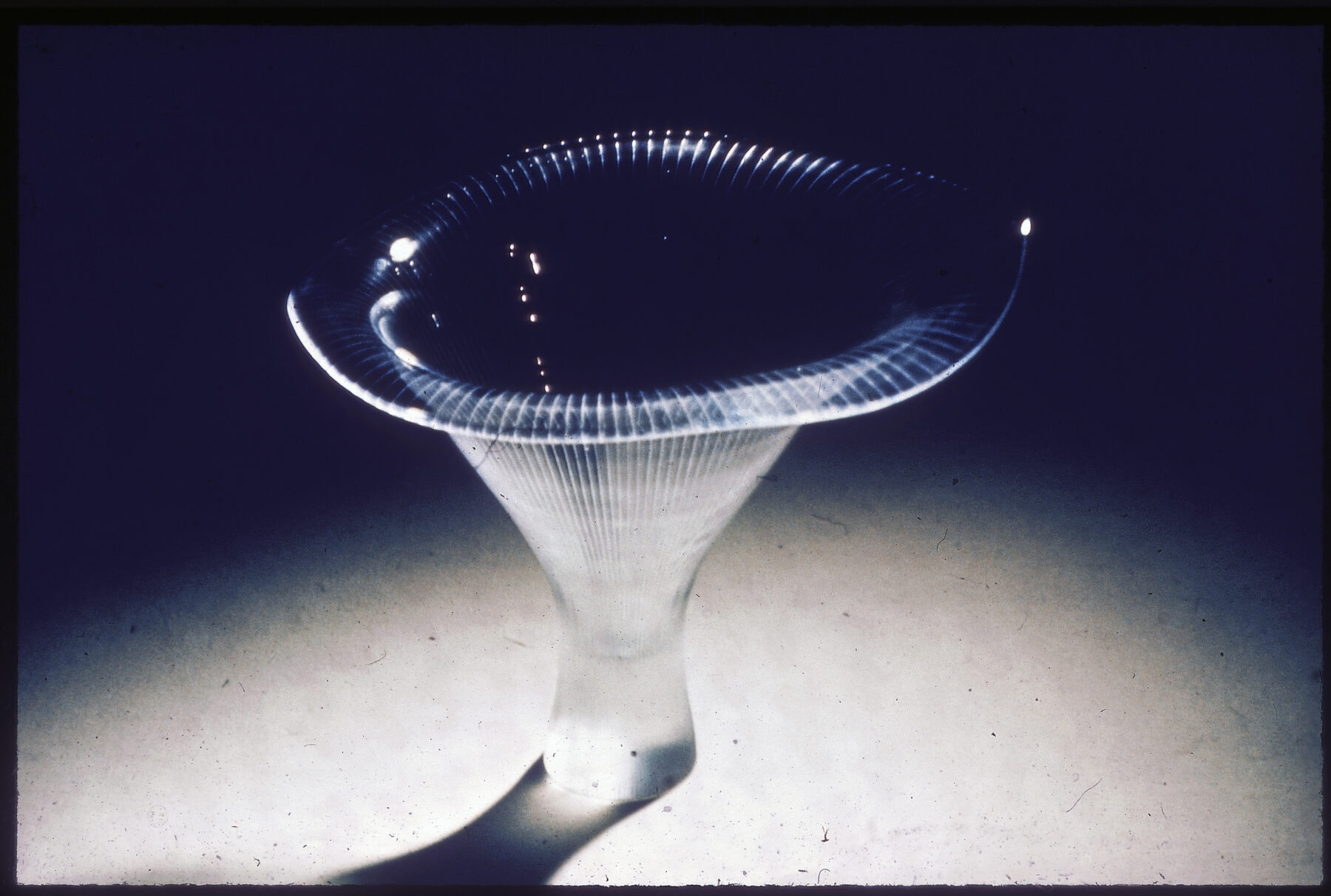
A shiny, transparent glass sculpture with a wide, flat top and a slender, ridged base is displayed against a dark backdrop.

Many Finnish glass art pieces draw inspiration from nature. Examples include Tapio Wirkkala’s design Kantarelli.Photo: Kaj Franck’s lecture slides /Aalto University Archives

The collaboration between designers and factories proved transformative. By the 1950s, Finnish glass design began garnering global attention.

Tapio Wirkkala’s Kantarelli vase, inspired by the delicate curves of the chanterelle mushroom, was a standout at a 1946 Nordic art exhibition in Stockholm, marking a turning point in Finland’s design story.

Soon after, Finnish designers began dominating the global stage. At the prestigious Triennale di Milano, Wirkkala, Franck and Sarpaneva won top honours, while contemporaries like Gunnel Nyman, Göran Hongell, Helena Tynell and Saara Hopea also brought home accolades. Finland had earned its place as a powerhouse of modern glass design.
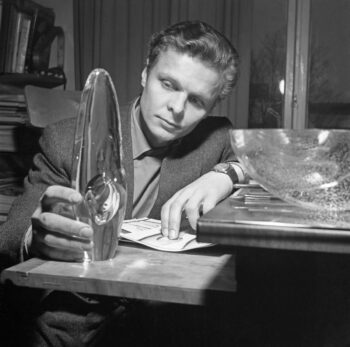
A man sits at a desk examining a clear, teardrop-shaped glass object.

In 1954, Timo Sarpaneva presented his iconic Orchid glass vase. Known for his versatility, he designed in glass, metal, wood, porcelain and textiles.Photo: U.A. Saarinen/Finnish Heritage Agency

In 1954, the American magazine House Beautiful named Sarpaneva’s Orchid glass vase the “Most Beautiful Design Object of the Year.” This clear-lined, minimalist vase remains celebrated as one of the world’s most beautiful objects.

By the mid-20th century, Finland had firmly established itself as a global design leader.

The evolution of glass art
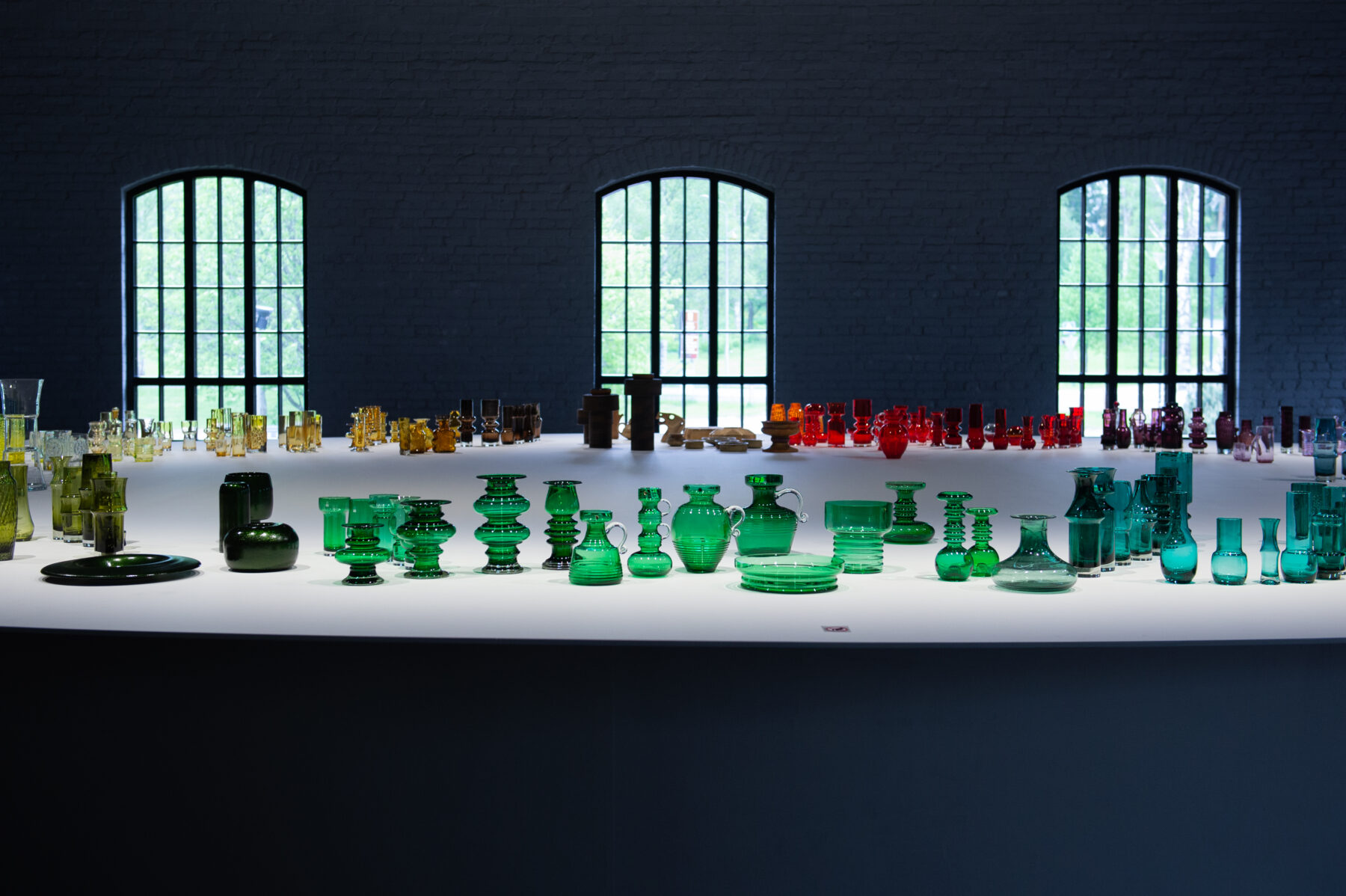
Many colourful, handblown glass vases are arranged on a long white display table in front of three arched windows.

Designer Tamara Aladin’s bold use of colour and form captured the playful spirit of the 1960s and 1970s.

While the 1950s saw designers drawing primarily from nature for inspiration, they began to push boundaries as the 1960s approached.

New techniques emerged, such as textured glass surfaces that played with light and shadow. Timo Sarpaneva’s Finlandia series, for example, used charred wooden moulds to imprint one-of-a-kind patterns onto molten glass.

Tapio Wirkkala continued to draw inspiration from the Nordic landscape. His iconic Ultima Thule series, with its icy, textured surface, echoed the beauty of melting snow and northern light, paying tribute to the stark beauty of Lapland, the northernmost region in Finland.
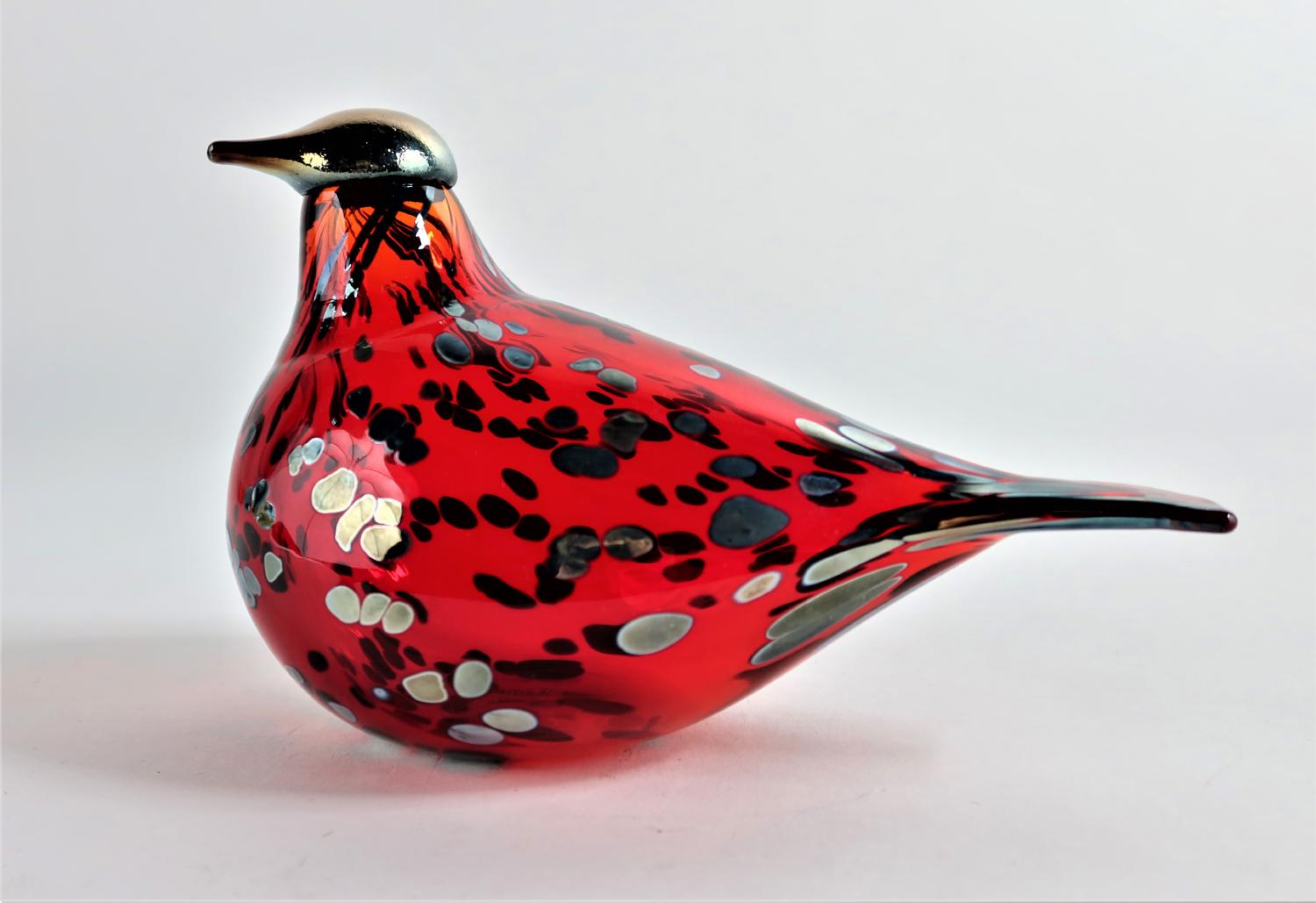
A decorative, translucent red glass bird figure with dark and light speckles stands against a light grey background.

Oiva Toikka designed over 500 unique glass birds, beloved by collectors around the world. The Ruby Bird, pictured here, was made at the Iittala factory.Photo: The Museum of Central Finland

Meanwhile, young designers like Oiva Toikka began exploring more whimsical forms. His beloved series of colourful glass birds captured hearts in Finland and around the world.

Finnish glass today
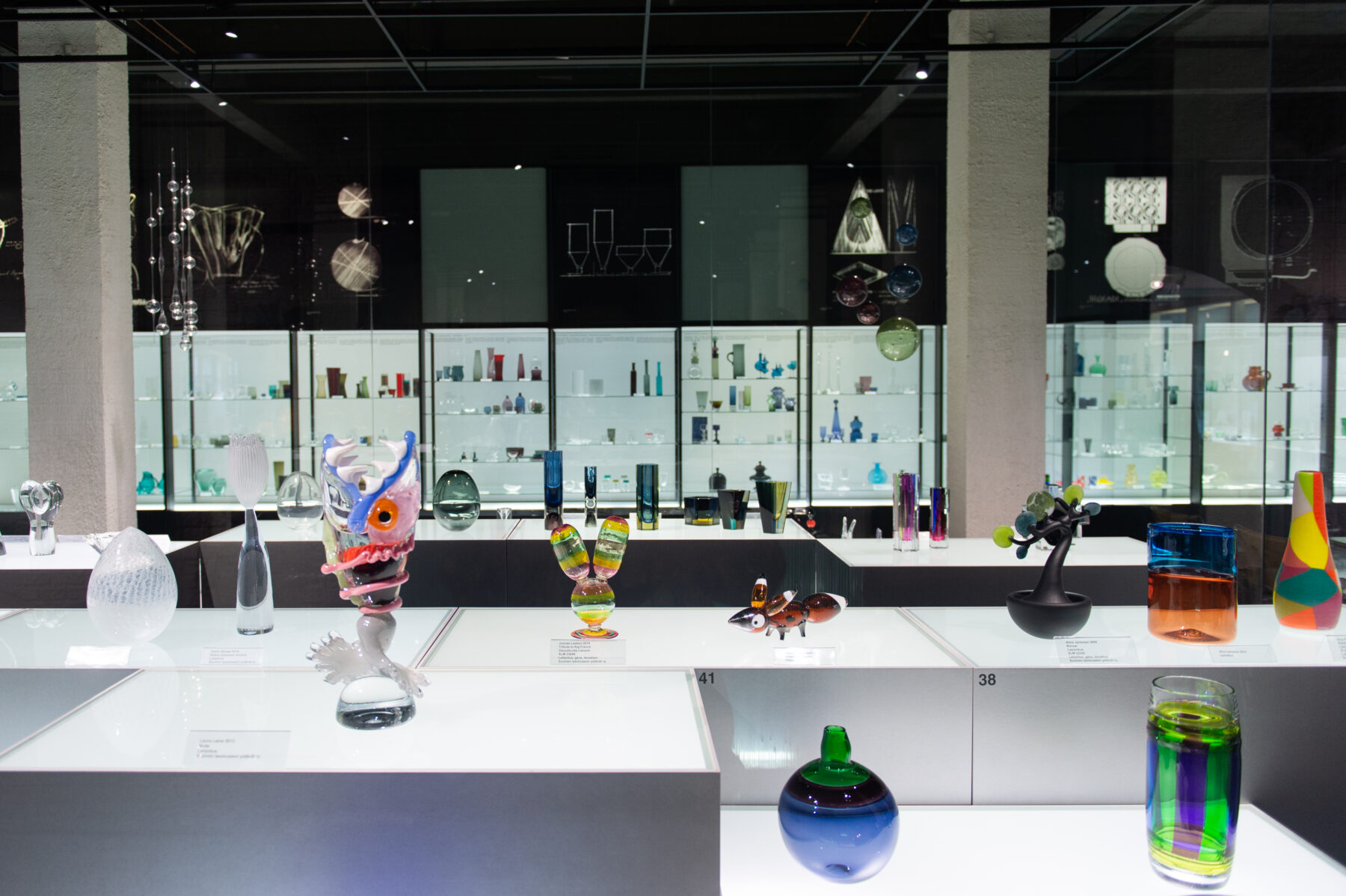
Various glass art objects sit on white display tables in a bright museum gallery.

At the Finnish Glass Museum in Riihimäki, visitors can view historic classics alongside contemporary works like Laura Laine’s Nude and Klaus Haapaniemi’s Vulpes.

While the Finnish glass industry has faced challenges in recent decades, with factories closing and traditional skills waning, the story is far from over.

In 2023, the Finnish glassblowing tradition was inscribed on Unesco’s List of Intangible Cultural Heritage of Humanity as part of a multinational project involving five other European countries.

This recognition affirms the cultural value of handmade glass and has sparked a renewed national interest in preserving and developing the craft.
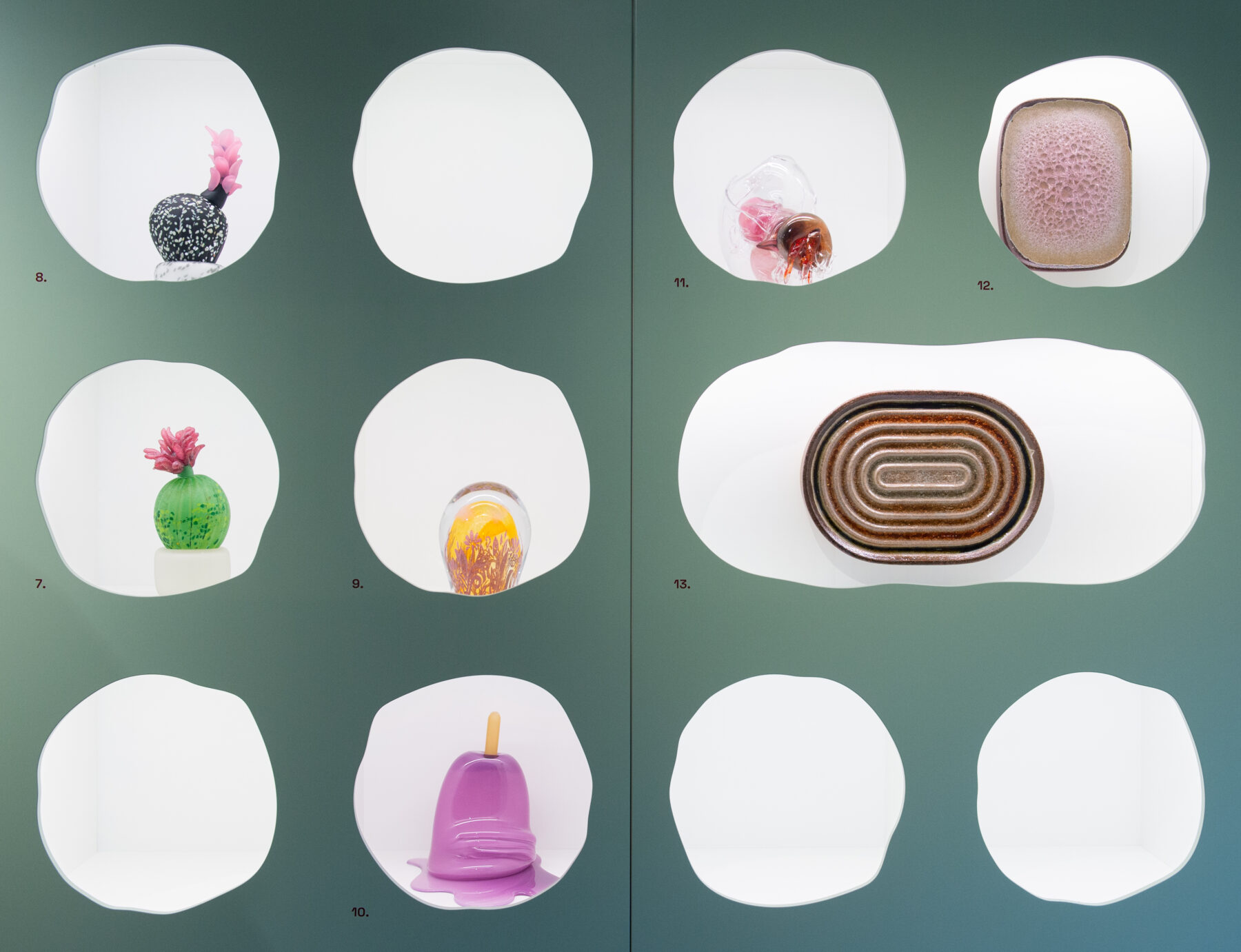
Glass art objects, a few with colourful adornments, are arranged within individual round windows in an art display.

The Finnish Glass Museum in Riihimäki showcases the work of contemporary artists such as Alma Jantunen (at left, 7 and 8), Aada Vainio (middle, 9), Paula Pääkkönen (bottom, 10), Tommi Toija (top, second from right, 11) and Arni Aromaa (top and middle right, 12 and 13).

Contemporary Finnish designers are building on this legacy with bold creativity.

Harri Koskinen’s glassware and lighting designs, Paula Pääkkönen’s glass ice lollies and Jasmin Anoschkin’s playful animal sculptures demonstrate the range and expressive power of modern Finnish glass.

Today, Finnish glass continues to be celebrated worldwide, featured in museums and sought after by collectors.
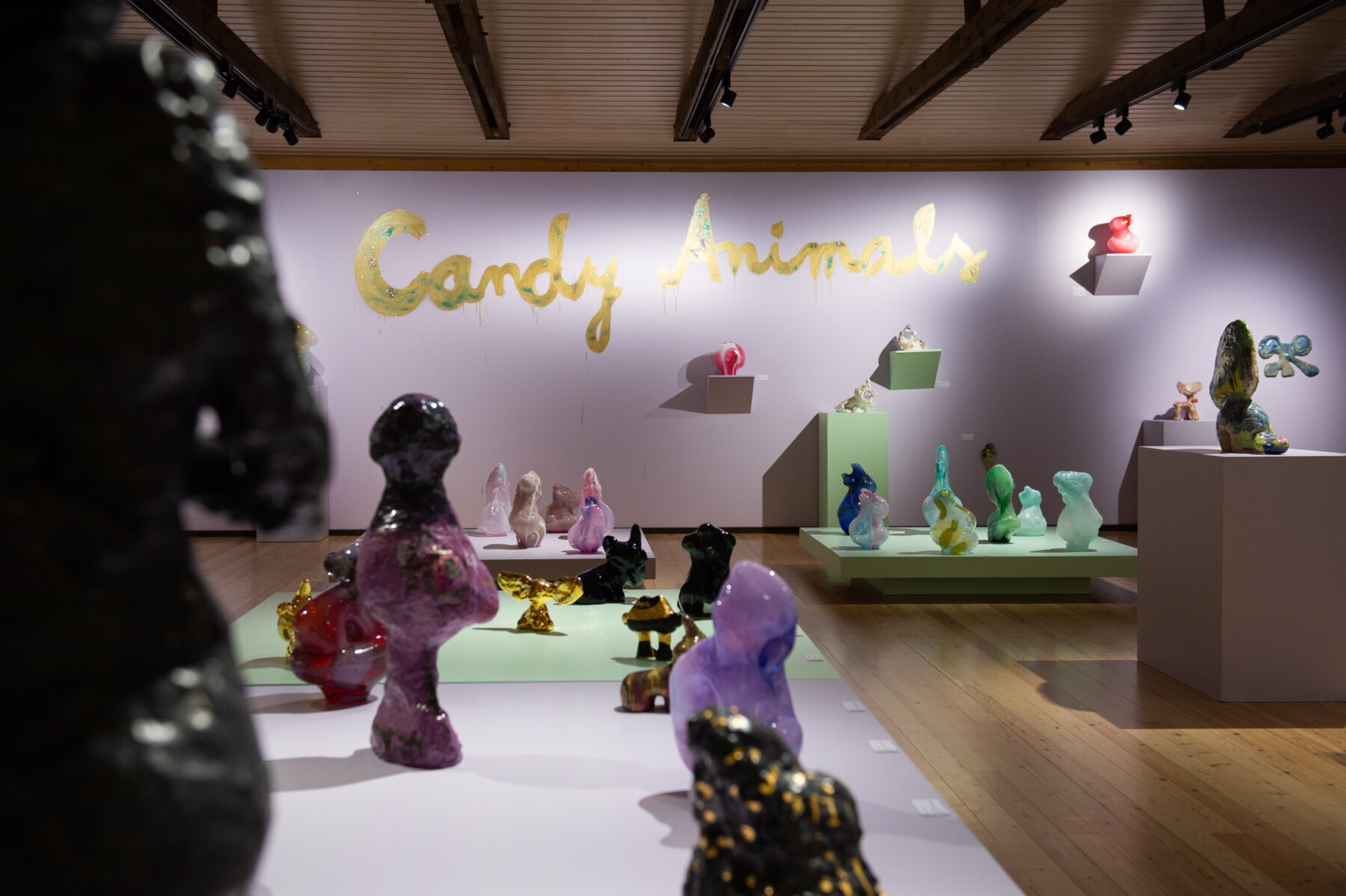
An art gallery displays glass and ceramic animal sculptures of varying size, with the exhibit title “Candy Animals” written in cursive gold lettering on the back wall.

Jasmin Anoschkin is known for her expressive ceramic sculptures. In recent years, she has also embraced glass, using it to bring her imaginative, playful world to life.

“We’ve been fortunate to retain our reputation,” says Tuija Makkonen of Iittala. “Finnish glass remains synonymous with quality and creativity.”

Finland hosted the first Finnish Glass Biennale, a landmark event bringing together tradition and innovation, in summer 2025. With its next edition planned for 2027, it reflects the vibrant and evolving state of Finnish glass design – still glowing brightly, still inspiring.

By Emilia Kangasluoma, October 2025; photos by Emilia Kangasluoma unless otherwise noted

This article is partially based on information from Kaisa Koivisto and Uta Laurén’s book Suomalaisen lasin kultakausi (The Golden Age of Finnish Glass, Tammi, 2013) and Marianne Aav’s book Iittala: 125 years of Finnish glass – complete history with all designers (Design Museum, 2006).
Trams carry the future in Helsinki and elsewhere in Finland

The tram doors slide open and I step aboard the number two, leaving the damp autumn air behind. Inside, the soft murmur of conversation mixes with shoes squeaking on wet rubber. Teenagers pile into the booth next to me, laughing and joking, as the tram eases forward.

The motor hums steadily. Wheels clatter as we traverse a junction. The seat opposite is patterned with a stylised map of the tram network, red lines tracing across grey fabric. Overhead, a screen flickers with weather updates and ads for seasonal fashion.

These sights and sounds are ordinary, yet they hold a nostalgic pull for me and many others in the city.

Stepping into history

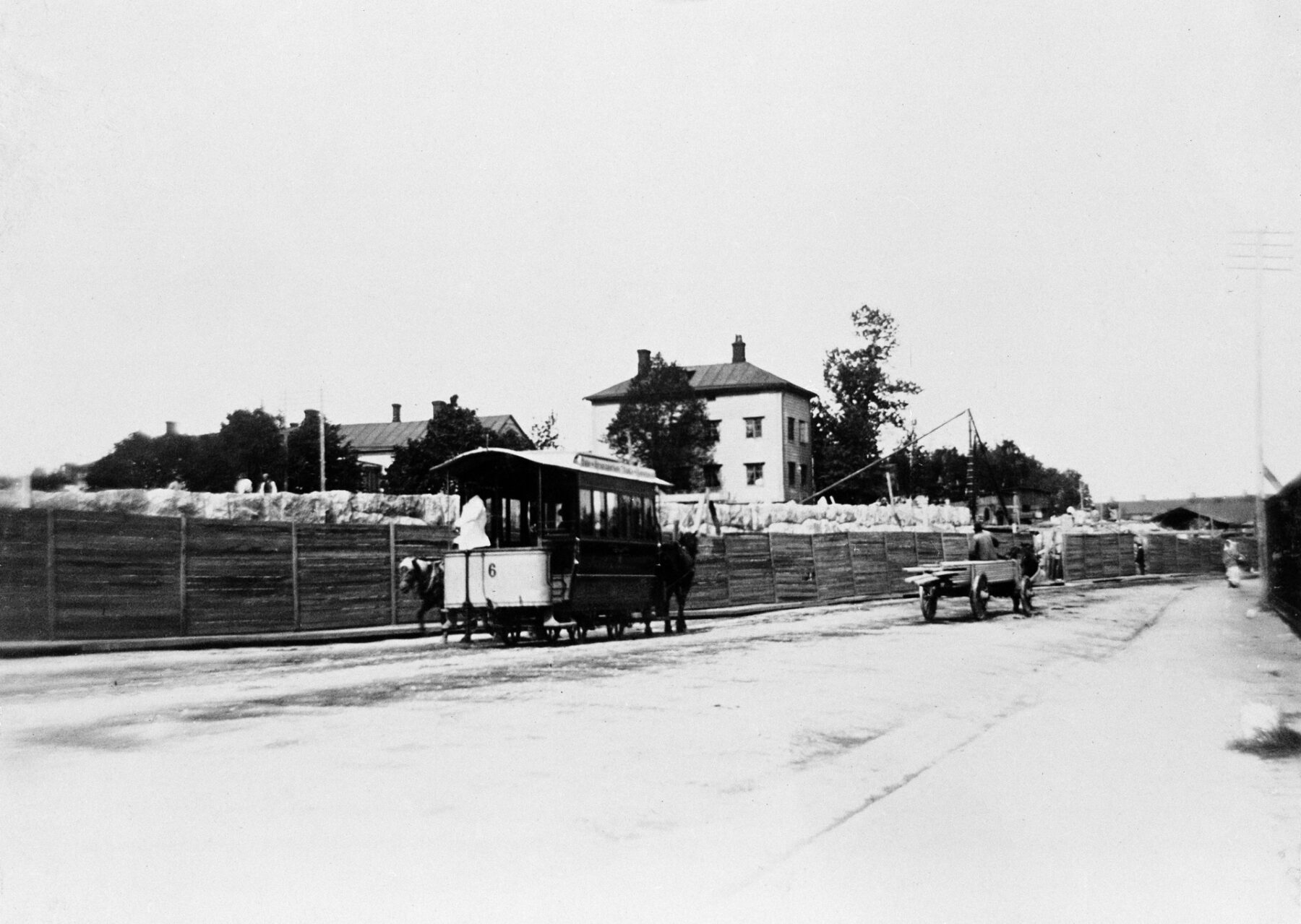
A horse-drawn tram sits on a road next to a wooden fence, with buildings visible in the background.

Helsinki’s first trams, introduced in 1891, were pulled by horses along just two short lines. Though slow and expensive to operate, these wooden carriages marked the beginning of the city’s journey on rails.Photo: Karl Mitterhusen / Helsinki City Museum

That thought stays with me as I make my way to the Töölö neighbourhood and step into the Tram Museum, housed in a former depot built in 1900. On this particular Saturday, the museum is alive with its annual Tramtastic! family event.

Children dance on stage to cheerful music. Families crowd around craft tables where kids can design their own tram colour schemes in bright crayon shades. Little feet clatter up and down the steps of historic carriages.

The museum’s collection invites this kind of play. Visitors climb into wooden cars with brass fittings, sit on polished benches worn smooth by decades of passengers and imagine how the daily commute felt a century ago. One of the most striking exhibits is a horse-drawn tram from the 1890s. “For ten years, the trams were pulled by horses,” explains Suvi-Tuuli Waltari, a museum educator with the Helsinki City Museum. “Then in 1900, the first motor tram was brought here from Germany.”

A growing city on rails

An old tram car towing an open-air trailer full of passengers stands idle on tracks while people in uniforms stand nearby, in a vintage black and white photograph.

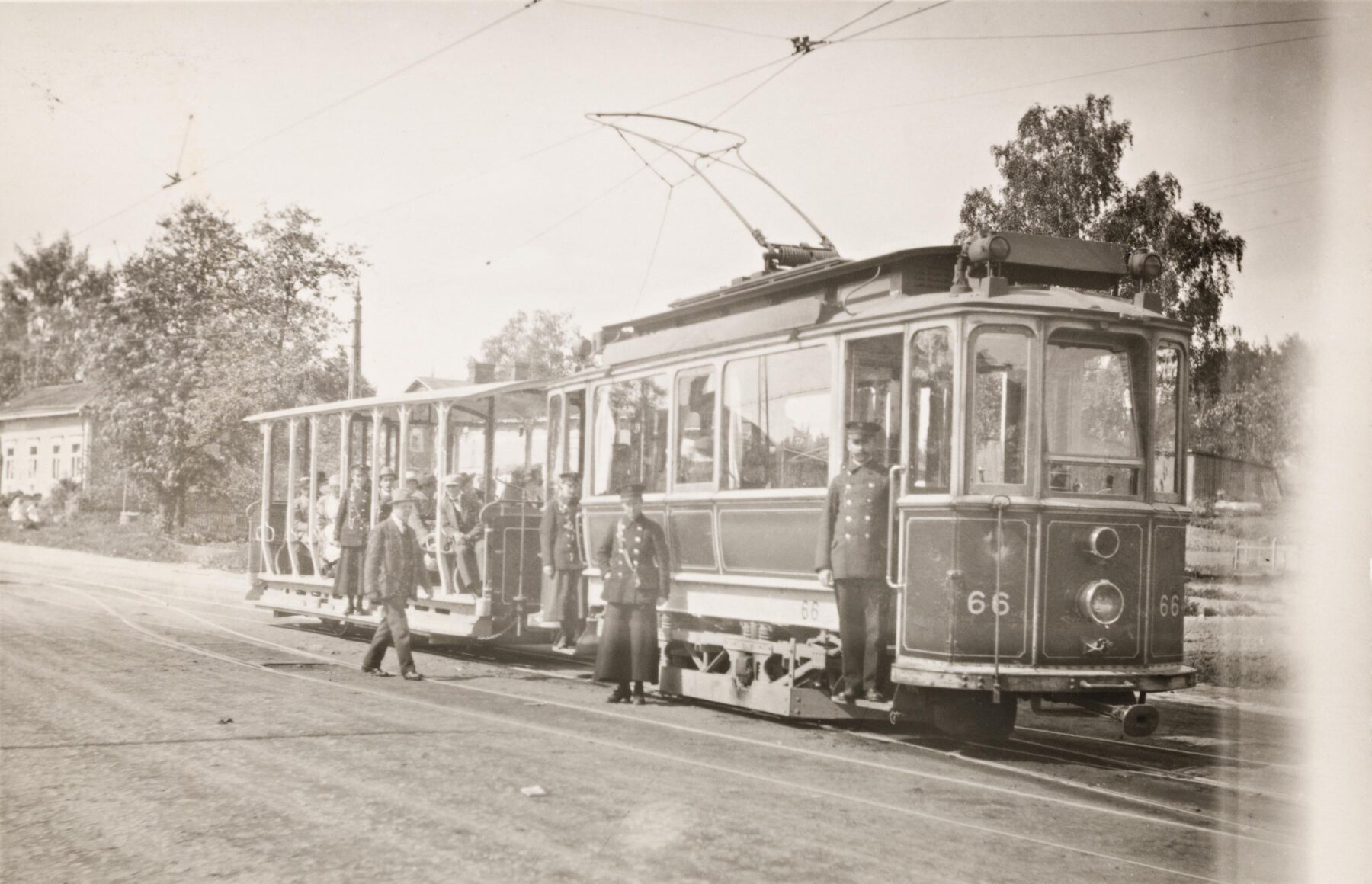
The pikkuruotsalainen (“Little Swede”) tram, built by ASEA in Sweden, and its open summer trailer became a beloved pair on city tracks. The breezy trailers were especially popular on hot days, so much so that passengers sometimes clung to the running boards or jumped off before the tram had fully stopped.Photo: Kaj Arnold-Larsen / Helsinki City Museum

Electrification arrived just as Helsinki was growing. “In the early 1800s the city was still small, and people could mostly walk everywhere,” Waltari says. “But as Helsinki expanded, we needed transportation for the people. By the 1920s and ’30s, the tram routes covered the whole city, and they were really packed.”

A black and white picture shows a crowd of people dressed in 1950s clothing crammed onto an open-air tram on a cobblestone city street.

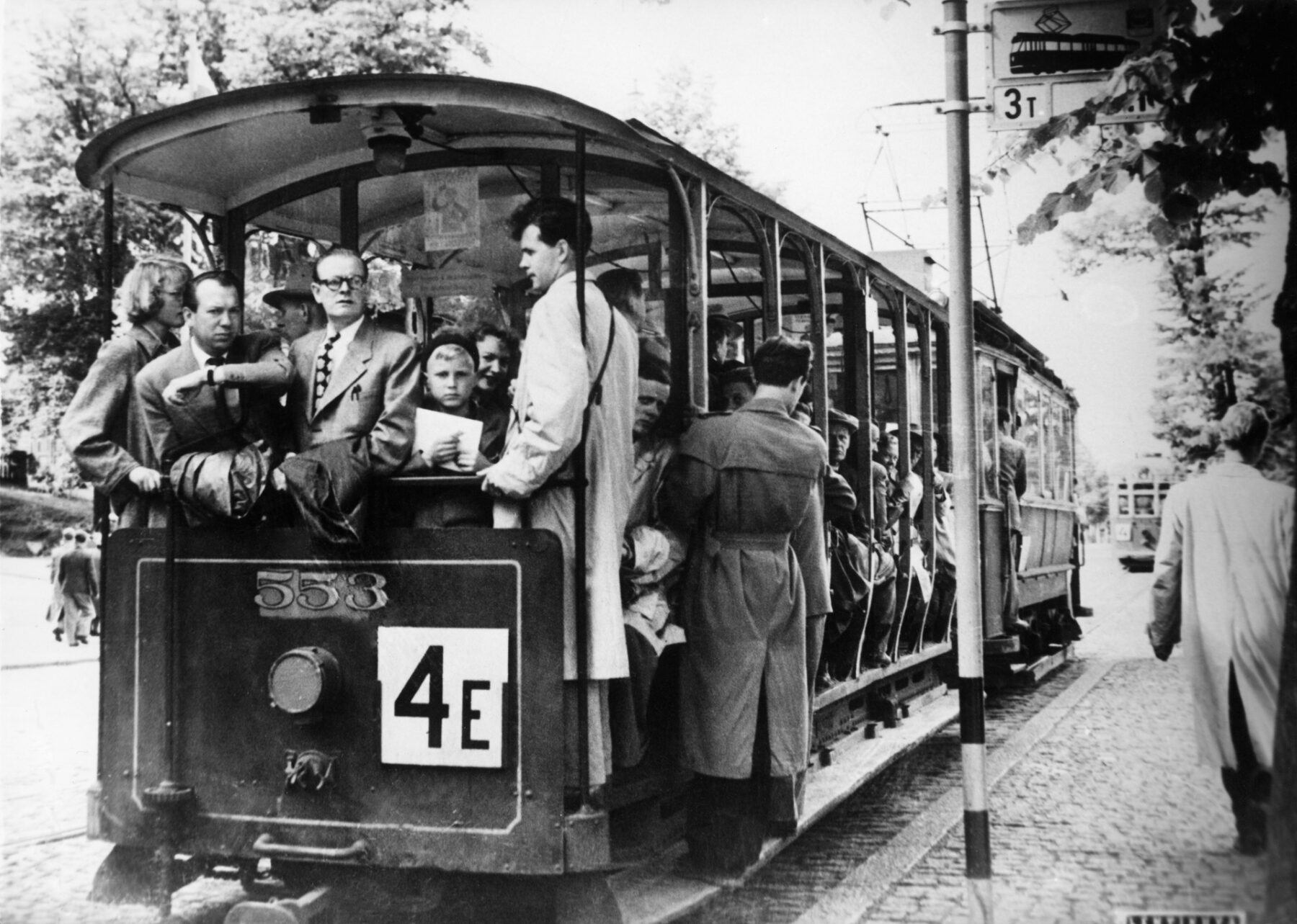
Though open trailers were meant only for summer use, wartime shortages forced them into winter service under tarpaulins. Their final flourish came during the Helsinki Olympics in 1952, when crowds crammed aboard one last time before the trailers disappeared from daily traffic.Photo: Helsinki City Museum

A crowd gathers near a line of trams on a busy city street in the 1930s.

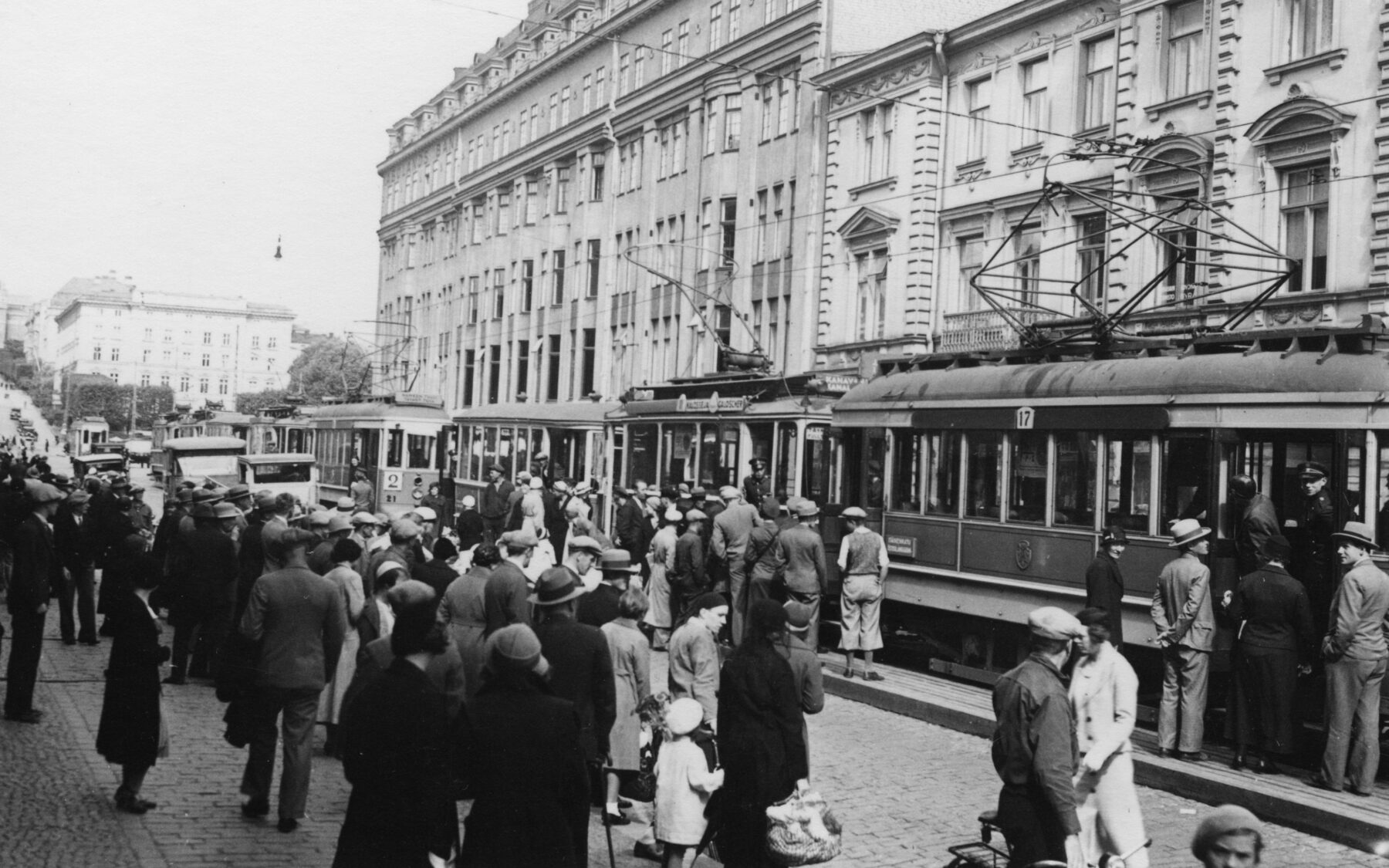
Horse-drawn trams first appeared in Turku in 1890, but the company soon went bankrupt, and service ended in 1892. Trams returned in 1908 with the launch of the electric network, which by the 1930s had become a bustling part of daily life, linking the harbour, Market Square, and growing suburbs.Photo: Birger Lundsten / Turku City Museum

A yellow tram sits on tracks in a 1970s urban setting, with people boarding and walking nearby.

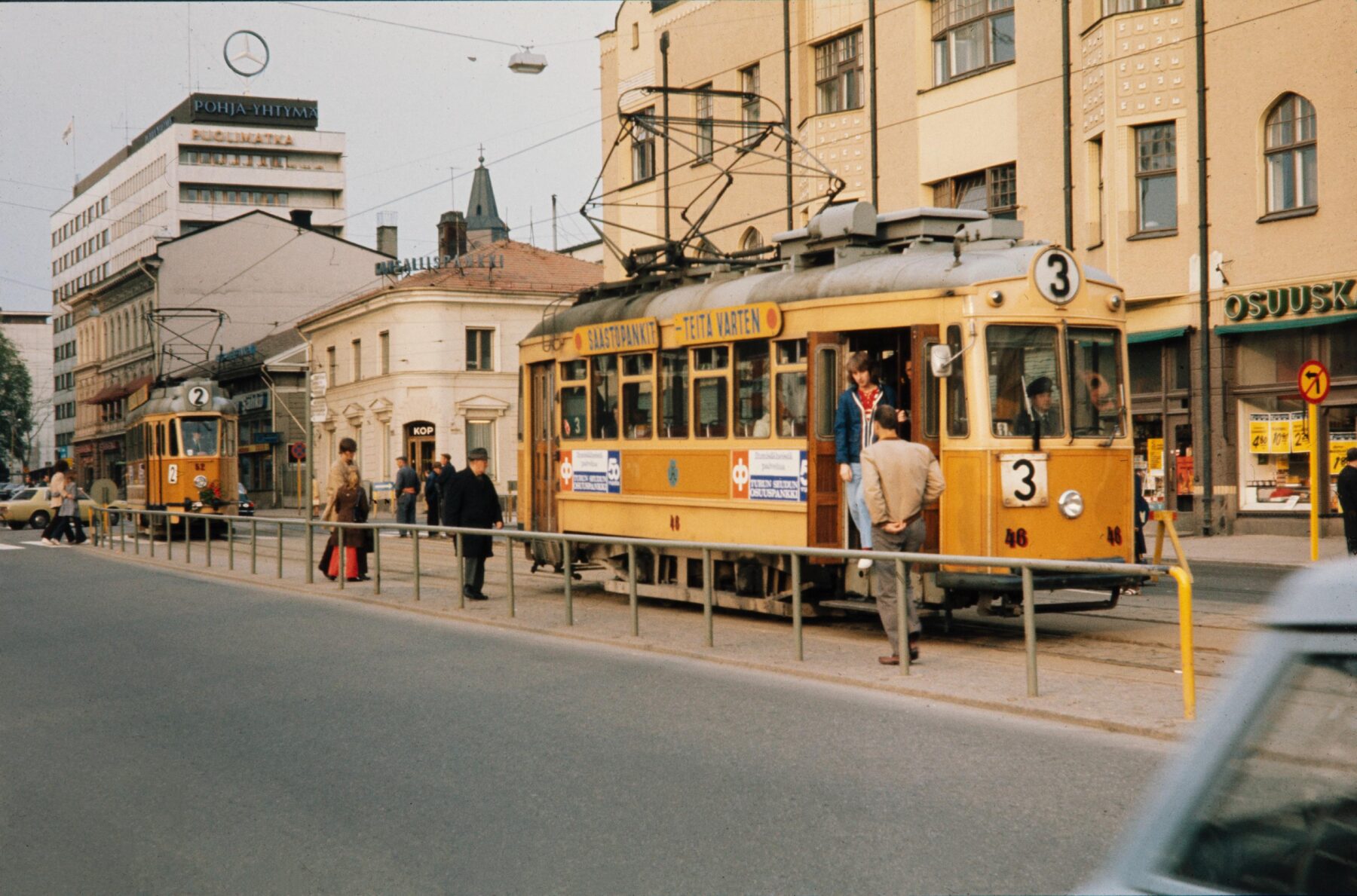
Turku’s electric trams ran for nearly 64 years, until 1972, when the system was dismantled. Rising car traffic and a shift toward buses were seen as more modern solutions, leading to the end of the city’s tram era.Photo: Carl Jacob Gardberg / Turku City Museum

Through war and winter, the trams kept running. During the 1940s, when buses were diverted to serve the army, trams became the main means of public transport in the city. By the 1960s, however, their future was uncertain. Many European cities tore out their tram systems, and Helsinki nearly did the same.

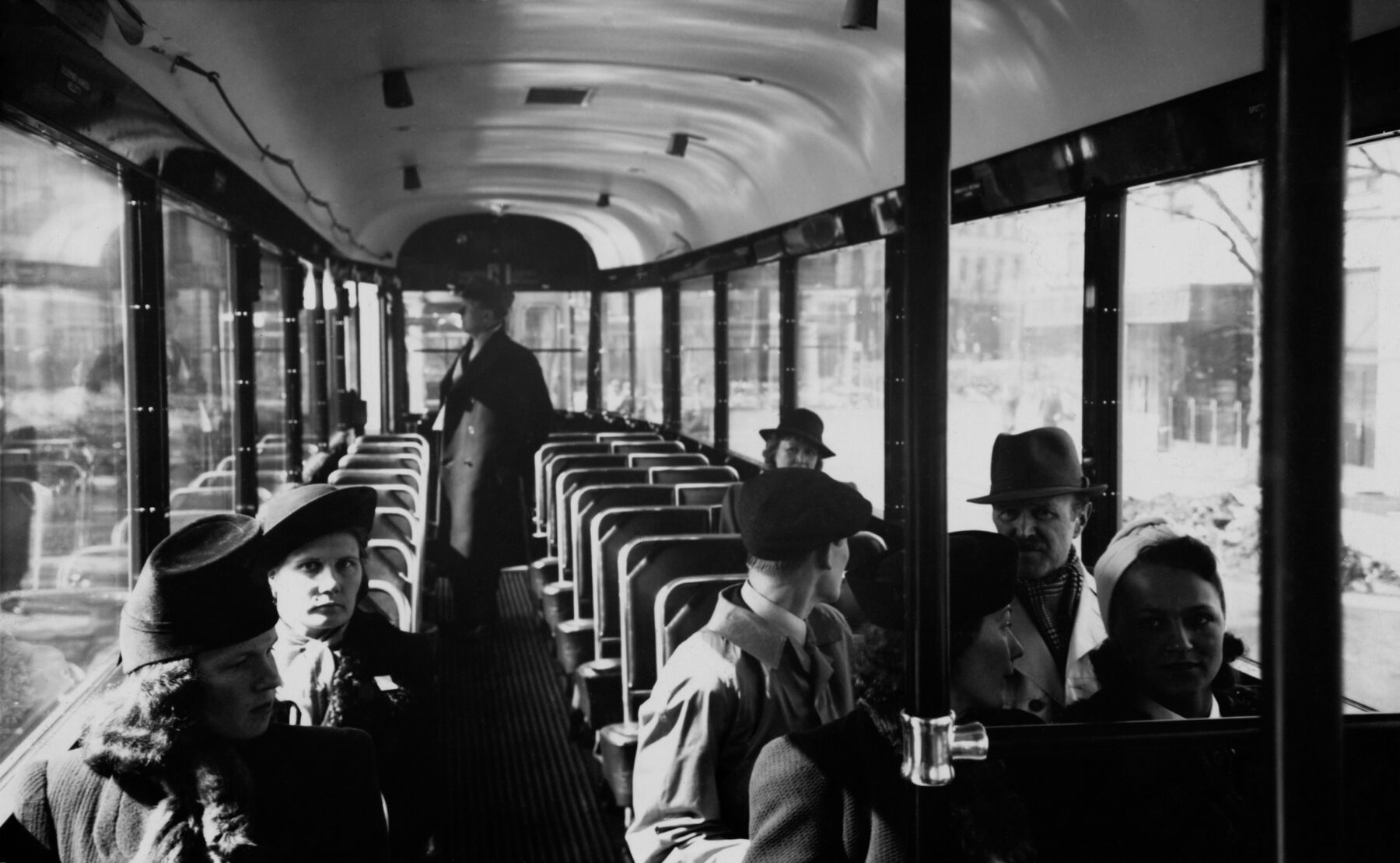
People in 1940s clothing sit on a tram with large windows and rows of empty seats with one man standing at the back.

Trams provided an essential lifeline during wartime. With fuel shortages limiting other transport, trams kept the city moving and offered a sense of continuity in daily life.Photo: Helsinki City Museum

“We came very close to eliminating the whole tram system like they did in [the southwestern Finnish city of] Turku,” Waltari says. “But in the 1960s, different voices became more visible – about the environment and democracy. Big cars are not the best solution for everything.”

Still a viable solution

A tram travels along a bridge with a tall tower over a body of water at sunset, with two figures on a hill in the foreground.

The Crown Bridges project, set to open in 2027, will create new tram, cycling and pedestrian links across Helsinki’s eastern waterfront, expanding access without adding car traffic.Illustration: WSP Finland

Today the decision to keep the trams feels farsighted. They fill a vital role in Helsinki’s transport network, linking neighbourhoods where buses or metro lines don’t reach, reducing congestion and offering a reliable, low-emission alternative to car travel.

Trams complement other modes of transport, creating a system that works efficiently for commuters, families and tourists alike. The system continues to grow, with several new lines operational or planned at the time of writing. An east-west light-rail line across the northern part of the city opened in 2023, and a new bridge is bringing tram traffic from the central neighbourhood of Hakaniemi to the eastern island of Laajasalo.

An elevated view shows a city square with a tram, surrounded by diverse architecture.

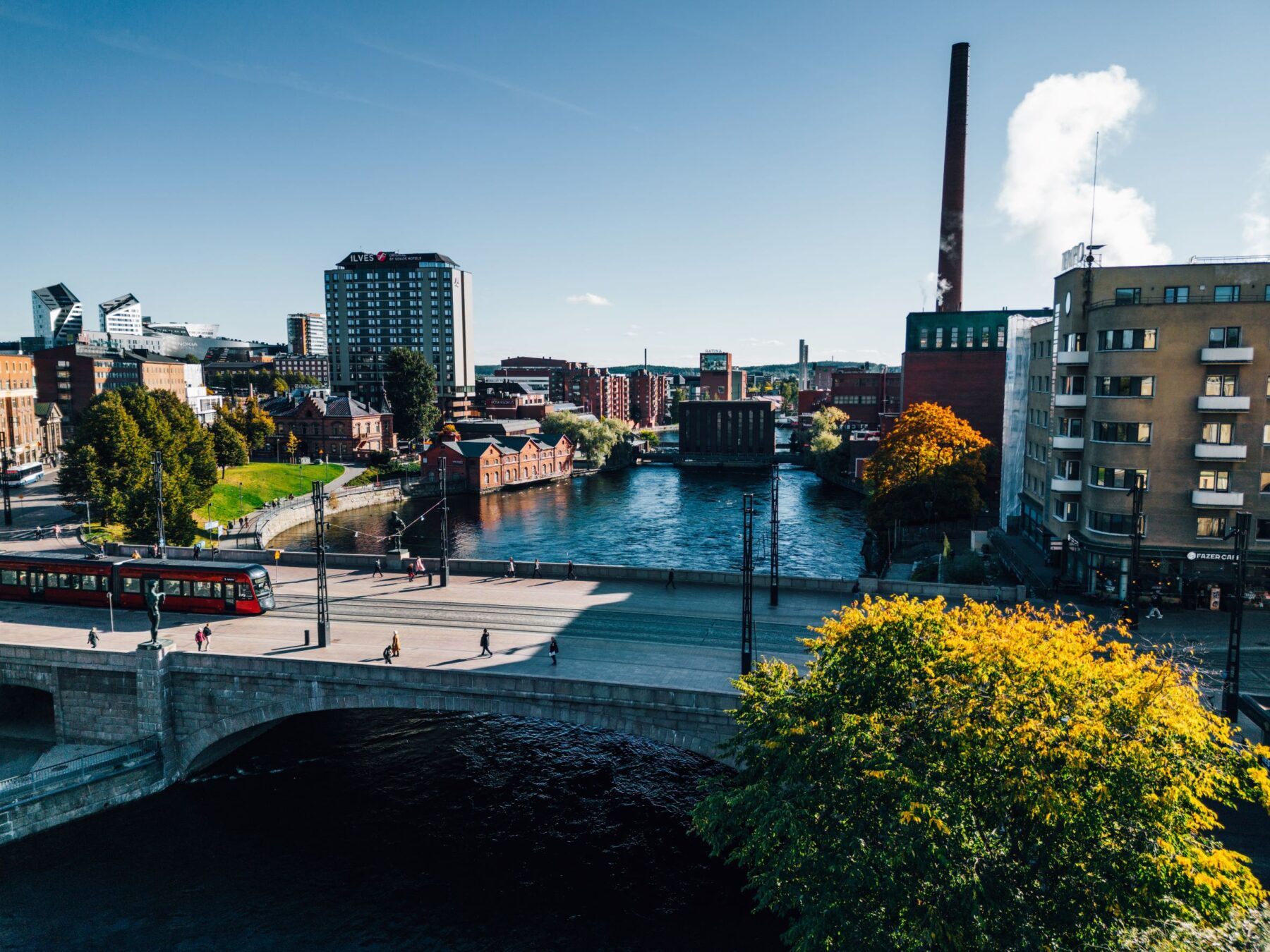
Tampere first considered building a tram system as early as 1907, but the plans stalled because of the First World War and financial constraints. More than a century later, the city’s first trams finally began running in 2021, marking a new era of public transport.Photo: Wille Nyyssönen / Tampereen Raitiotie Oy

Helsinki may have the country’s oldest and largest network, but trams are no longer its exclusive domain. In 2021, the southern central city of Tampere introduced a modern light rail, whose red carriages now glide down Hämeenkatu. Turku, which retired its last tram in 1972, is performing feasibility studies and seriously considering reintroducing this form of transport.

Tramstalgia

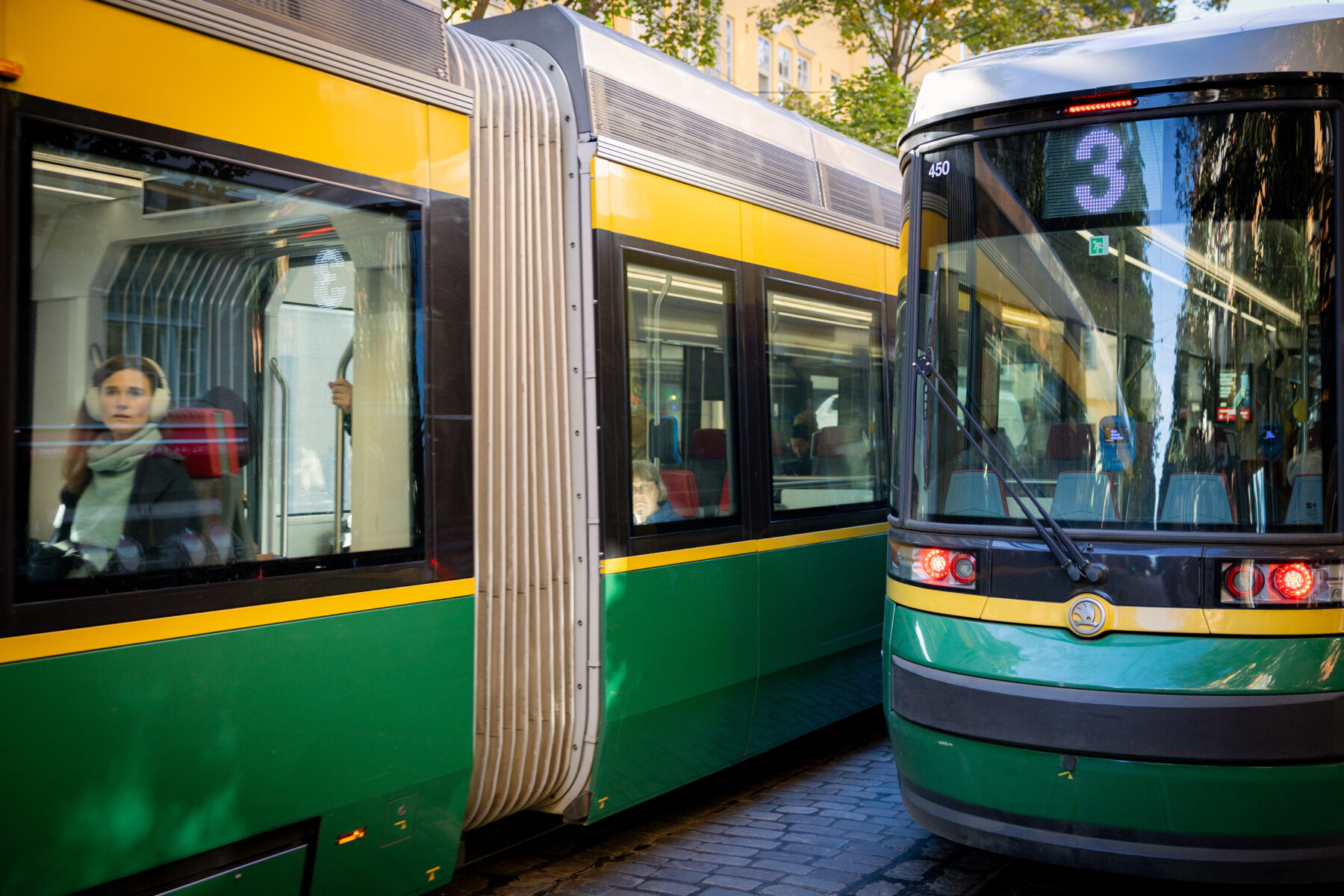
Two green and yellow trams pass each other on a city street, with passengers visible through the windows.

The Artic MLNRV-3 trams entered service in Helsinki in 2013. Built to handle the city’s sharp curves, steep hills and icy winters, they are fully low-floor with pivoting bogies and regenerative braking.Photo: Emilia Kangasluoma

For Helsinkians, affection for trams is not only practical, but deeply personal. The familiar green-and-yellow carriages are fiercely beloved. In the 1970s, when the city experimented with an orange and grey livery, the public backlash was swift and strong. “People got really mad and wanted the green and yellow ones back,” Waltari says with a grin.

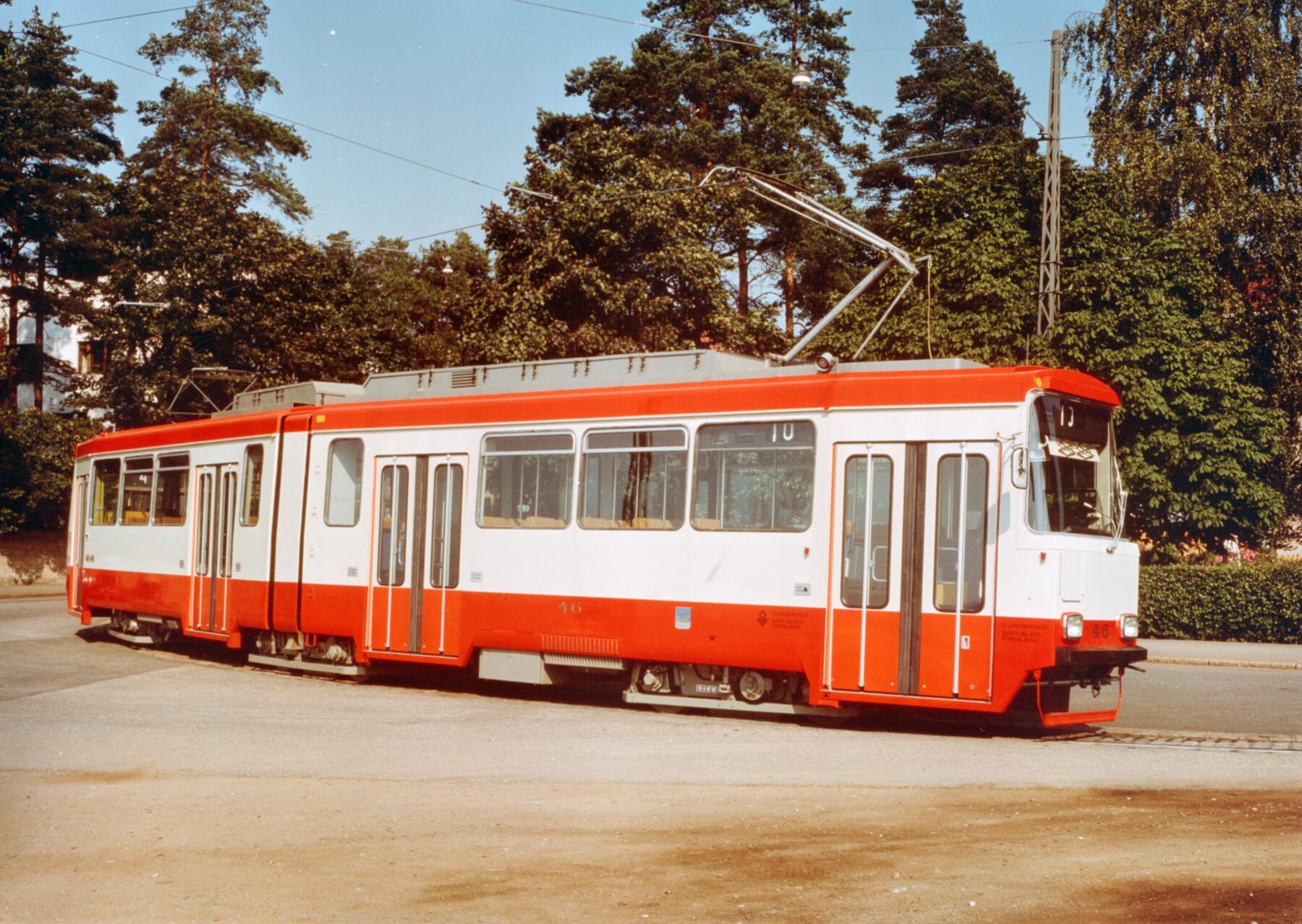
An orange and grey tram sits on a rail with greenery and tall trees in the background under a clear, bright sky.

The Valmet Nr I class entered service in 1973, followed by the nearly identical Nr II in 1983, both originally painted light grey with orange stripes instead of the traditional green and yellow. Due to public dislike, Helsinki City Transport began reverting the livery in 1986, and by 1995 all units had been repainted green and yellow. Today, some Nr I and Nr II trams are still in Helsinki’s fleet.Photo: Vapriikki Photo Archive

Their sounds, too, form part of the city’s identity: the hum of the electric motor, the clatter of wheels at junctions, the rattle of the doors opening and closing. “When we renovated this exhibition, we collected memories from people about public transportation,” Waltari says. “Most people remembered the sounds of the tram, and it was home.”

Transit for everyone

A tram operator waves from an open view of the driver's cabin with another tram car visible outside on tracks.

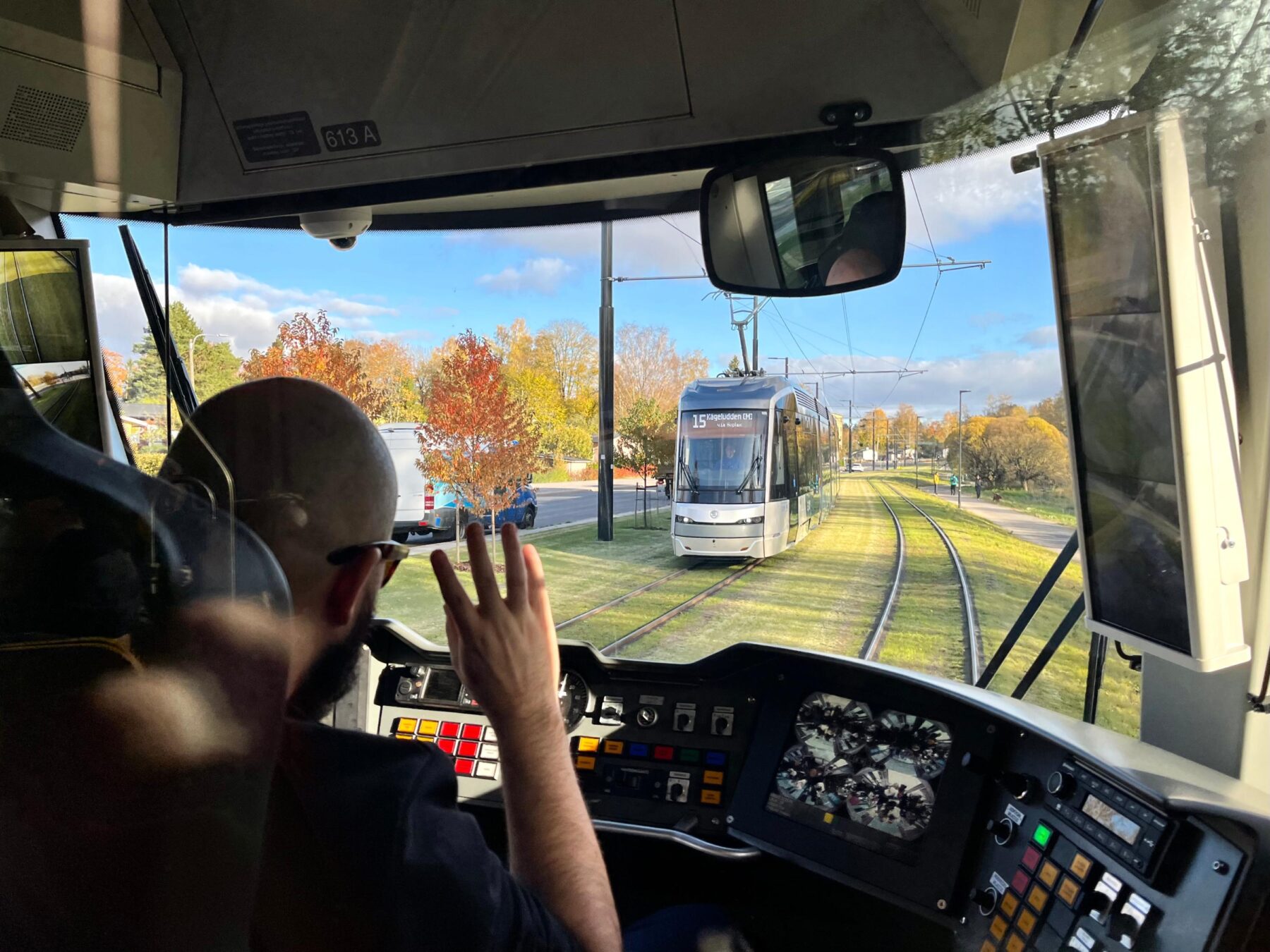
Helsinki’s light-rail line 15, the first of its calibre in the country, opened in 2023. With longer vehicles, fewer stops and higher speeds than regular trams, it connects eastern Helsinki with Espoo in the west without detouring through downtown.Photo: Merja Wesander / Helsinki City Museum

Leaving the museum, I step back onto the number two and take a seat. People from all walks of life are present: a young man scrolling on his phone, an elderly woman with a walking cane, a group of women chatting about the card reader in Swedish (one of Finland’s official languages). For a few moments, we are all sharing the same ride.
That shared space is intentional. Low floors and wide doors make boarding simple for parents with prams or passengers using wheelchairs.

Clear signage and card readers in multiple languages help newcomers. Modern vehicles run quietly and efficiently, and so do the fleet’s remaining 1970s models, which share the same tracks.

Ordinary and extraordinary

A yellow maintenance tram traverses an intersection in an urban setting, with pedestrians and grand architecture visible under a blue sky.

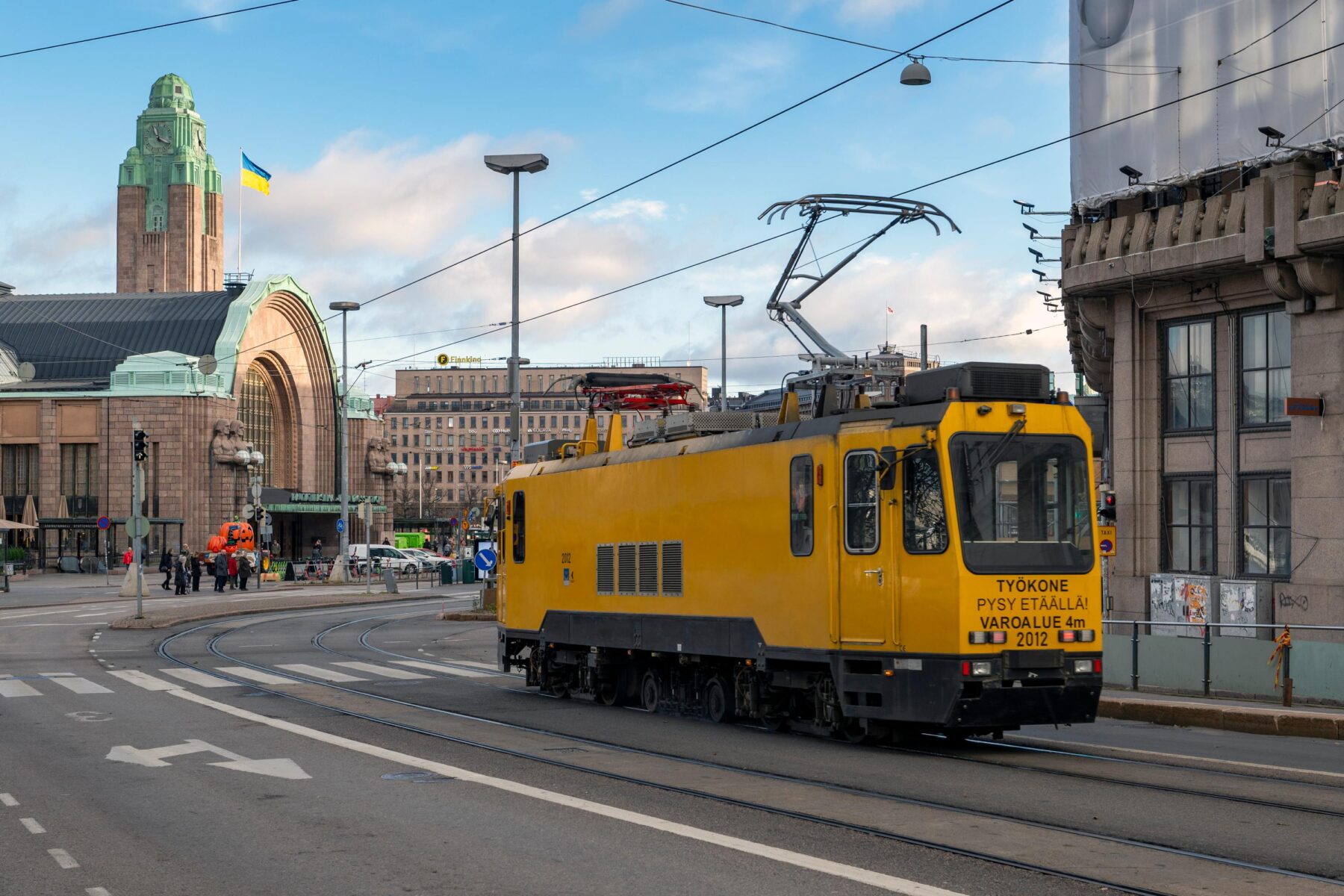
Affectionately nicknamed Banana for its yellow paint and angular shape, this is Helsinki’s workhorse tram. It keeps the lines running smoothly by honing tracks, brushing off snow and even applying glycerol to prevent ice on overhead wires.Photo: Pekka Vyhtinen / Helsinki City Museum

As my tram coasts past familiar streets and landmarks, the steady hum of the motor and the periodic clatter of wheels on the tracks create a quiet, meditative rhythm for me.

I’m reminded that these journeys are both ordinary and remarkable. The tram is more than just a way to get across town. It’s a thread that ties together history, everyday life and the city’s future.

By Tyler Walton, October 2025

Finland taps tragicomic film, 100 Litres of Gold, for Oscars

A jury whose members are assembled by the Finnish Chamber of Films has selected 100 Litres of Gold (100 litraa sahtia) to represent Finland in the upcoming Oscars race. Directed by Teemu Nikki, the film follows two middle-aged sisters, carrying on their family’s legacy as the best producers of local farmhouse ale (known as sahti in Finnish), who are tasked with brewing enough of it for their city-dwelling third sister’s upcoming wedding.

Starring Elina Knihtilä and Pirjo Lonka, who shared the Best Actress award at the Tallinn Black Nights Film Festival, the film has been praised for its mix of humour and melancholy in a quintessentially Finnish rural setting.

The final shortlist for the Oscars is announced in January 2026.