Household Dance Protocol choreographs chores in Finland

Household Dance Protocol (HDP) is a manifestation of Sandrina Lindgren’s imagination. The idea took shape in her mind over a long period of time before she put it into practice.

Lindgren comes from Sweden, and studied dance in the Netherlands and Israel before moving to the southwestern Finnish city of Turku in 2014. A modern dancer by education, she also works in physical and visual theatre.

In line with recent trends in modern dance, Lindgren is interested in integrating movement and dance into situations and places where they have not traditionally been experienced or seen.

“I’m fascinated by the connotations of activities linked to daily chores,” says Lindgren. “Few people see anything noble in cooking, vacuuming or dishwashing. They are necessary tasks to which people give no conscious thought.”

Lindgren wants to integrate playfulness and motion into these routine tasks. She has held a workshop centred on kitchen jobs, and she is planning workshops about other household chores. In addition to this, she publishes an English-language podcast so listeners can try various HDP exercises in their own kitchens.

A related installation by Lindgren is included in the New Performance Turku Festival in autumn 2017.

“All kitchen activity starts with the items found there,” she says. “I encourage participants to examine their kitchen with fresh eyes, and to play with routines in a new and different way.” For example, what does it feel like to chop vegetables or knead bread dough if you devote conscious attention to the movements? In her podcast, she calls this “the choreography of the kitchen.”

Providing meaning and provoking thoughts

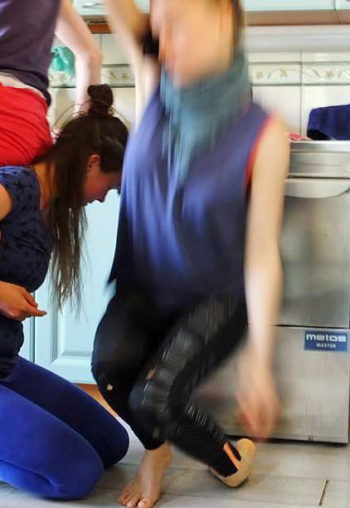
“All kitchen activity starts with the items found there,” says Lindgren. She encourages people “to play with routines in a new and different way.”Photo: Pia Bartsch

Although kitchen and cleaning routines have traditionally been regarded as women’s work, Lindgren does not consider women the sole target group for her project. In the future, workshops may be organised for chopping wood or other chores that are traditionally thought of as manly tasks. Originally, household chores were strenuous, physical work that supported the family and was fundamental to getting through everyday life.

Lindgren wants to ponder the meanings assigned to everyday tasks. We carry and unpack shopping bags and move items, some of them heavy, but we do not think of this as exercise or working out. “Instead, we drive to the gym to lift weights,” she says. “What is the difference between these things?”

In addition to the practical significance of household chores, a dance artist can see in them an aesthetic value similar to that of dance.

“I feel that as an artist, dancer and choreographer I have the opportunity to say and show that daily routines are beautiful and meaningful. I want to invite other people to experience this with me.

Kitchen in motion

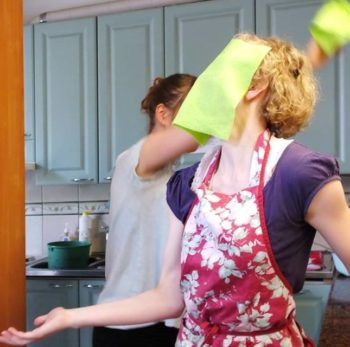
Kitchen motion commotion: Household Dance Protocol workshop participants approach cooking creatively.Photo: Pia Bartsch

Lindgren agrees to show me a few exercises in my own kitchen. At first I survey the kitchen and the items in it with my eyes according to her instructions.

By the time Lindgren asks me to repeat some familiar routines with my eyes closed, I become distinctly aware of the movements of my body and limbs. The familiar space transforms into a stage, the dish rag in my hand is not just an object used for cleaning, but an extension of my hand and its movements.

The kitchen isn’t just a dining space; it’s also a space for day-to-day interaction. The surface of the refrigerator, with its pictures, magnets and post-it notes, reveals more about life than the contents of the refrigerator reveal about today’s menu.

Although my experiences in the kitchen are subjective to a certain degree, Lindgren’s presence and participation make the situation a shared experience. Flexibility and accessibility are what defines HDP.

“We can pause,” she tells me, “and challenge ourselves to think, ‘Hey, I can also act this way in this space.’ And we can and should enjoy this!”

By Heidi Horila, September 2017

The medicine world needs great data, and Finland’s got it

While some of Finland’s more media-friendly digital health-tech products garner publicity around the globe, perhaps its greatest asset is its extensive network of biobanks and research centres.

Eight major biobanks currently collect, analyse, and store Finnish data samples. When these biobanks are linked with the single-payer healthcare system, in which every Finnish citizen is registered under one national programme, virtually the entire population structure can be mapped, grouped, and analysed. And because Finland has historically had a largely isolated and homogenous population, it provides exceptional opportunities for targeting genomic variations that underlie diseases.

Such a combination is invaluable to medical companies, both domestic and global.

“What the modern medical vision needs is big data,” says Dr Aarno Palotie, faculty member at the Centre for Human Genome Research in Boston and at the Broad Institute of MIT and Harvard.

“Biobank samples, per se, are worthless unless they are linked with data. We have a healthcare system linked with social security numbers, which provides access to longitudinal healthcare over decades, something that isn’t possible in many places.”

Access and opportunities

Illustration: iStock

In Finland close cooperation exists between both public and private organisations and enterprises. The country has also been instrumental in the development of Europe’s legislation for the implementation and security of health-related data, as well as in refining domestic legislation – both of which are key for creating new methods and opportunities for research and innovation.

Thus, measures are being taken to bolster the country’s reputation as the premiere destination for medical research and business.

“There is a lot of governmental support,” says Palotie. “I would especially praise what the ministries have done to ease the regulatory burden here, especially for health-related studies.”

One example is the working group appointed by the Ministry of Social Affairs and Health to prepare to set up a genome centre. The centre’s tasks would include taking responsibility for the creation and development of a national genome database.

Sitra, the state-based Finnish Innovation Fund, spearheaded the implementation of the recently completed Medical Research Map, which aims to increase the transparency of the collaboration potential between global pharmaceutical companies and Finnish medical faculties. Support for the report has been high, with five Finnish medical faculties and 16 of the world’s largest pharmaceutical corporations contributing to it.

The report will be used to implement Finland’s health sector growth strategy, which has become increasingly important. Recent surveys indicate that the greatest area for potential cooperation between multinational pharmaceutical companies and domestic medical faculties is that of research related to cancer and cardiovascular diseases.

Quality and depth

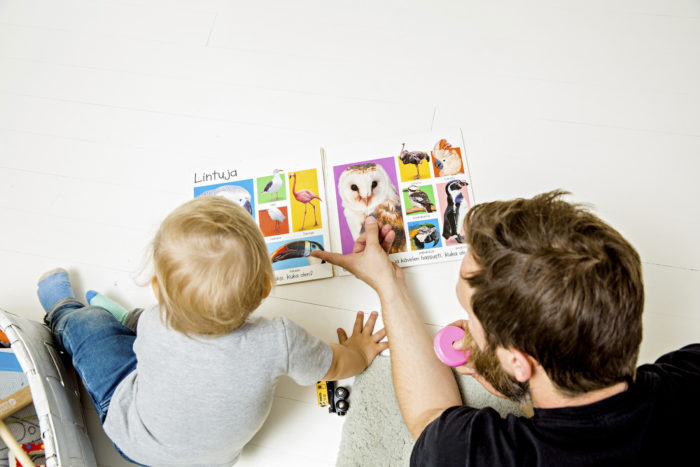
Photo: Visit Finland

The healthcare sector in Finland is ripe for growth. Tekes, the Finnish Funding Agency for Innovation, estimates that investments into Finnish companies working in the wellbeing and healthcare sectors will reach into hundreds of millions of euros over the next five years.

The competition, however, is serious. The UK, for example, operates a biobank comprising half a million samples, and China is gathering samples from five to ten million individuals over the next decade.

Still, Finland’s data is unrivalled in quality and depth, and the studies are longitudinal, which means that they observe the same variables over periods as long as multiple decades. That, along with the isolated population structure, will be key for variety of study designs essential for drug development.

“Finland has a tradition of doing this type of research,” says Palotie. “Our data quality is superb, our health register data that provides longitudinal follow-up is unique, our infrastructure is top-class, and our legal and ethical and regulatory systems are more in sync with countries where big pharma headquarters are located.”

This is how we do it: Three Finnish companies

Getting a grip on medical data: BC Platforms offers data management and analysis software solutions integrating and analysing large amounts of genomic data together with sample and clinical data. Its customers consist of top-tier research groups, biobanks and major pharmaceutical companies collecting and analysing medical data. Recently BC Platforms extended its research partnership with the Centre for Molecular Medicine at Sweden’s Karolinska Institute, to add capacity for large-scale next-generation sequencing.

Diagnosis before symptoms appear: LS CancerDiag’s DiagMMR technology also stems from academic research, in this case from that performed at the University of Helsinki. There researchers realised that most current Lynch syndrome (e.g. colorectal cancer) diagnoses rely on tumour studies, whereas the DiagMMR method enables diagnosis based on a non-invasive tissue sample before a person has developed any signs of cancer.

Faster, better, cheaper: The DNA sequencing method developed by Blueprint Genetics helps in analysing genes fast, with good quality and at an affordable price. Founded in 2012, the company is based on a technological innovation renewing a targeted sequencing method. The method is used to analyse genetic factors that cause a predisposition to disease. At the moment clinics around the world are utilising the company’s targeted gene tests in the diagnosis of hereditary diseases.

By Christopher Ryan Jones, ThisisFINLAND Magazine 2017

Design nation Finland also becoming illustration nation

Finland is widely known as a design nation – anywhere you go, you find glassware and tableware by Iittala and Arabia, as well as iconic, bold Unikko floral prints by Marimekko. These days, gifted Finnish illustrators and designers are extending the country’s reputation in the realm of illustration, too.

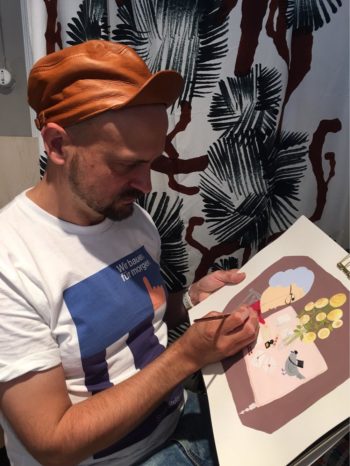
Kustaa Saksi is one of Finland’s internationally best-known illustrators. The artist has recently added textile arts to his already impressive portfolio, and is now taking New York by storm with his modern take on tapestry.

“Creating an international career nowadays is surely a lot easier when the internet makes getting visibility more democratic,” Saksi says. “Anyone, anywhere, can start an ‘international’ career by putting their portfolio online. But in addition to that you’ll need hard work and a pinch of good luck.”

Saksi, whose work has been exhibited all around the world, and commissioned by clients such as Nike and the New York Times, is wowing people with his experimental material usage, psychedelic atmospheres, and daunting imaginary.

Finnish graphic designers are technically skilled, and they have an ability to adapt different styles and to filter them in their own way.

“The dark Nordic sense of humour and worldview are also characteristic of Finnish designers,” says Saksi.

“Finnish designers are known for their courage to commit so wholeheartedly to a concept,” says Teemu Suviala. As the executive creative director of the New York-based brand and design consultancy Collins, Suviala really knows the ins and outs of the international world of design. Asked about the unifying characteristic of great Finnish designers, Suviala names the courage to commit.

“No matter whether the concept is minimalist or maximalist, Finnish designers approach it with similar fearlessness,” says Suviala.

Saksi doesn’t think it’s important for a designer to represent a certain country. He has lived outside Finland since the mid-2000s.

“I am, of course, a Finn, and grew up in Finland, so impressions for my works come from there,” Saksi says. “But designers should keep their eyes open and live in the moment.”

Finland’s education system can take part of the credit for the courageous approach of the country’s creatives.

“Our education aims to spur fearless, open-minded, and curious approaches to design,” Suviala says. In his opinion, this leads to a style that is both original and unique – just the kind that has put artists such as Saksi on the design map.

Suviala also notes that illustration agencies play a key role when it comes to opening international doors. They pair talented artists with clients, and take care of the business end of things – everything from marketing and contracts to international property rights issues – freeing up the designer’s time for creative work.

“A good, holistic design is the best way for a brand to stand out,” says Suviala, and quotes Thomas J. Watson: “Good design is good business.”

By Tiia Rask, ThisisFINLAND Magazine 2017

Sebastian Fagerlund – portrait of a composer from Europe in 2017

Composer Sebastian Fagerlund saw many years of work come to fruition when his new opera Höstsonaten (Autumn Sonata) got its world premiere at the Finnish National Opera and Ballet. 

The opera Höstsonaten is based on the screenplay for the eponymous film by Ingmar Bergman, released in 1978. Opera and cinema are very different forms of expression, and in fact the original screenplay underwent a considerable transformation en route to becoming a libretto. Fagerlund is full of praise for Gunilla Hemming about how well the libretto turned out. “The main thing with an opera libretto is that it must not have too much text, so that there is room for the music to convey events and emotions,” says Fagerlund.

Sebastian Fagerlund has a composer residency in Amsterdam, an opera premiere in Helsinki, commissions all over the world. An exploration of the work and music of Sebastian Fagerlund paints a portrait of a composer in Europe 2017: aiming high, probing deep, with a bold and open mind.’

Is Fagerlund at the top of his career now, or does he still have things on his bucket list? “I feel very fortunate to be able to choose what to do next and with whom. But I always feel that there’s so much more still to do. I mean in terms of composing and musical growth. With every new work, I set my sights higher. Hunger grows while eating, to quote a Finnish proverb.”

100 years of Finnish education success stories

Taito Vesala, 96, has seen how blackboards have been replaced by tablet computers in Finnish classrooms. The skills of his descendants never cease to amaze him.

When Taito Vesala started school at the age of six in 1926 (all ages, dates and school years are correct as of the time this article was written, in late 2016), in the first year he had two weeks of school in the autumn and another two weeks in the spring, in an ambulatory school. After that, he attended four years of primary school, and there his education ended.

“Before we were given our school-leaving certificates, the teacher’s niece and I competed on who had the best grades in the class,” Taito recalls. “The teacher very much wanted me to continue to grammar school, since my grades were actually quite good. But my family was poor, so I had to go to work and give the money I earned to my parents.

“So that was the end of my formal education, and the rest of my learning took place in the school of life.”

In the 1920s, Finland was a poor, predominantly agricultural country, and had just recently become independent. Taito was the first one in his family to receive formal education.

When Taito’s great-grandson Tatu Vesala, 10, started school in 2013, he had a minimum of nine years of schooling ahead of him. Tatu, now in the fifth grade, enjoys going to school and dreams of becoming an actor.
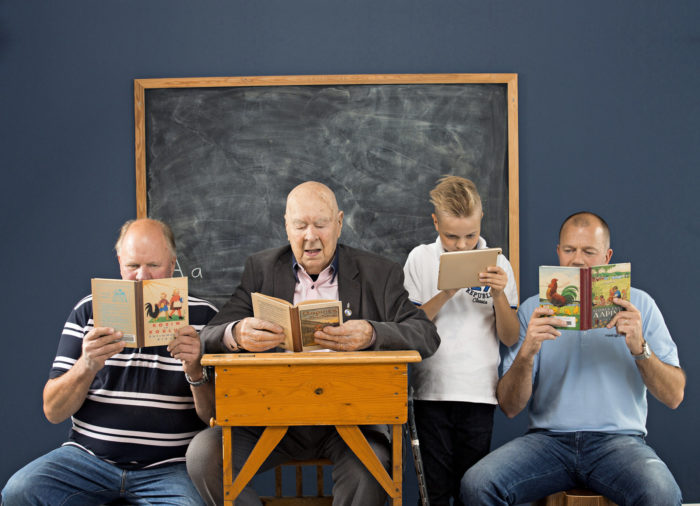
Three men and a boy reading ABC books in front of a blackboard.

From left: Jarmo Vesala, Taito Vesala, Tatu Vesala and Jari Vesala share certain school experiences. Photo: Arto Wiikari

The development of the Finnish school system has coincided with the growing up of Taito’s descendants. Each generation has received more education than its predecessors. The Finnish education system has received recognition worldwide. In the PISA study, the joint research programme of the OECD member states, the skills of Finnish schoolchildren have frequently been ranked high.

International comparison of schools is difficult, but Finland’s good performance in tests is based on a few cornerstones. In Finland, the attitude towards education is positive and education is valued.

A 100-year journey

During the first years of the 20th century, only a third of rural children went to school. In the 1921 act on compulsory education, the objective was for all children to learn the primary school syllabus. After the fourth grade, the children who had the financial means and sufficient grades could apply to grammar school.

Despite his good grades, this opportunity was not within Taito’s reach. At the beginning of his career, he worked in a variety of jobs, ranging from police officer to real estate broker. The career path of his son Jarmo Vesala, 66, has been similar: he just retired from his job as a service station entrepreneur.

Jarmo’s education began in Helsinki in 1956. The Primary Schools Act was enacted two years after he started school, adding two compulsory study years. Jarmo’s education was that much longer than his father’s had been.

The Finnish school system was reformed almost completely in the 1970s, when the comprehensive school reform ended the era of the primary and grammar school system. The reform replaced the primary and grammar school system with the nine-year comprehensive school, which consisted of a six-year lower level and a three-year upper level.

The comprehensive school system was implemented in Finland gradually starting in 1972. This coincided with Jarmo’s son Jari Vesala starting school.

The comprehensive school reform was a hot topic at the time, but for Jari, the new school system was the way of learning.

“For me, the comprehensive school was the only option to receive education,” says Jari.

There is such a thing as a free lunch
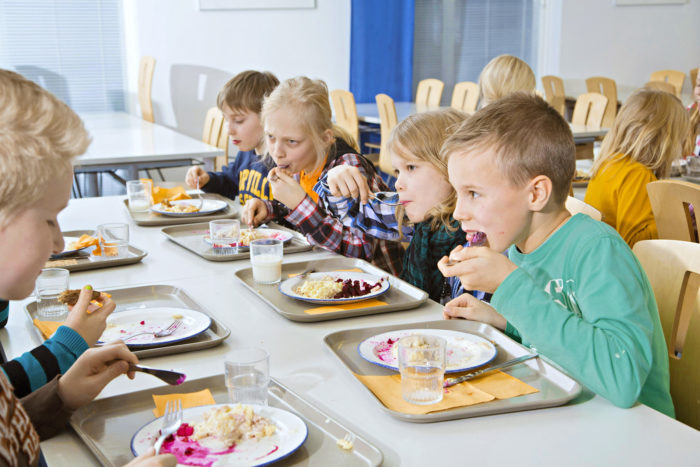
Pupils eating at the school cafeteria.

Today, a free meal is served to all preschoolers, comprehensive school pupils and upper secondary level students on each of the five school days. Photo: Lehtikuva

One of the recipes for success in the Finnish school system is the school lunch. In 1948, the act on school meals was enacted, obligating municipalities to provide a free-of-charge lunch in schools on each of the then six school days.

“In the 1950s, the school meal service was very much like it is today,” Taito’s son Jarmo recalls. “At a certain time, we all got together to have lunch. I was taught at home that you had to finish all food on your plate.”

“A dish with a bad reputation in my school was meat stew with dill,” Jarmo says. “I was the only one in my class who was ever able to eat all of it.”

The years have gone by, and meat stew with dill is no longer on the school menu, which has kept up with the changing times and nutritional recommendations. Today, a free meal is served to all pupils on each of the five school days.

Tatu, a schoolgoer in the 2010s, is happy with the school meals served.

“Usually the food is quite OK,” says Tatu. “For example, I like ham and potato casserole. The food is tasty and good.”

Jari, an earth-moving contractor, is also among those who praise school meals.

“I have good memories of school meals. The food served in schools is still good – in fact, my father Jarmo and I go to a school located near our current earth-moving site to have lunch. The food is reasonably priced, healthy, and really tasty,” Jari says.

“I can’t help but admire how the school lunch room serves meals to 700 pupils on each school day,” says Jarmo.

Assessment without grades

Ever since the day when Taito was in school, the Finnish school system has used a grading scale of 4 to 10, with 10 being the highest grade, to assess pupils’ performance twice per year.

“I used to be a solid 7,” Jarmo says of his own school years.

Grades were given based on tests and classroom performance. The only oral test in the 1950s was the singing test, where each student had to stand in front of the class.

In recent years the grading system changed from numeric grading towards written assessments. Tatu’s assessment was given in letters up until now.

“For example, I got an A on the big German test last spring. My classroom conduct was a B, but proactiveness an A+,” the quick-witted boy explains.

Grandfather Jarmo admires Tatu’s aptitude for foreign languages. He himself did not learn any foreign languages in school.

“And here we have a ten-year-old who speaks both English and German,” exclaims Jarmo.

Tatu started learning German in fourth grade, and English started when he was halfway through second grade. The new core curriculum enables Tatu to start learning Swedish in sixth grade next year, so after six years in school, he will have studied three languages.

Versatile learning

A boy balancing a stack of school books on his head.

Balancing the books: Nowadays kids study many school subjects that were not taught generations ago, and paper textbooks are becoming fewer.Photo: Arto Wiikari

The stories of four generations illustrate that while the basic principle of school has remained unchanged for nearly a century, the school system is also being constantly renewed. A big reform that will shuffle the Finnish school system in the coming years is the new core curriculum. In elementary school it took effect in autumn 2016.

In the recent years, phenomenon-based learning extending across different subjects has been introduced in schools. Tatu comes directly from school to meet us, from a class-organised travel fair. In the lessons, pupils plan and organise a travel fair, in which they present destinations and cultures of different countries to other classmates.

“This morning, Tatu left for school carrying our old suitcase, which is bigger than he is,” Jari says. The old suitcase is one of the props for the travel fair.

No more blackboards
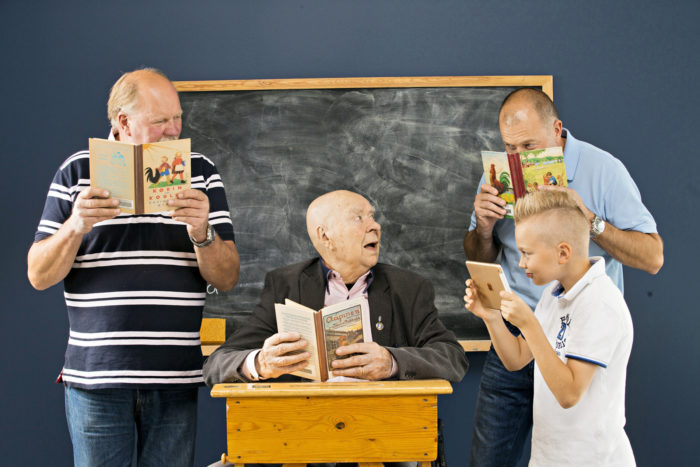
Three men and a boy reading ABC books in front of a blackboard.

Jarmo (left), Taito and Jari Vesala hold old-fashioned learn-to-read books, while ten-year-old Tatu uses a tablet.Photo: Arto Wiikari

New learning methods also have an impact on the school premises. As the pedagogic focus is shifting from collecting information to learning study skills, classrooms are transformed as well. Previously, the teacher’s desk was located between the pupils and a blackboard, and the pupils were seated in rows of desks. Today, school rooms are open and transformable. The teacher no longer lectures from a podium, due to the use of wireless computers and digitalisation.

Tatu’s classrooms no longer have blackboards or chalk. There is a digital camera on the teacher’s desk for displaying materials on a smart board. The teacher may also show videos from their computer. At times, the pupils also get to use tablets or computers.

“For example, when we colour or draw, we can use the tablet to look at models,” Tatu says.

Information retrieval skills are practised in connection with presentations, which the students give frequently in pairs or as a group.

Some of the textbooks are now completely electronic. Tatu’s elder brother Leevi Vesala, 14, has been assigned a tablet at school. The majority of learning materials are already electronic.

“Young people today are quite something,” says 96-year-old Taito.

“They receive so much information that I can’t help but admire their skills!”

By Hannele Tavi, ThisisFINLAND Magazine 2017
Four companies selected for Music Finland’s Fast Track export program

The participants in Music Finland’s new Fast Track export program have been chosen.

The artists and companies taking part in Music Finland’s Fast Track program, which aims to support the exports of the most potential names in Finnish music industry are Alma (PME Records), Isac Elliot (Sony Music Finland), Saara (Universal Music Finland) and Elements Music (focusing on songwriter Axel Ehnström’s international career). Participants for the Fast Track program are selected once a year.

“Fast Track marks a significant new strategic focus and shift in how we operate. Investing in the most potential export projects not only benefits the companies selected in the program, but also the entire Finnish music industry. Growth in export will enable further investments in new talent, and these success stories will help Finland become a more relevant player in the international music market. International breakthroughs are also important for our collective self confidence” says Tuomo Tähtinen, Executive Director of Music Finland.

Design and conquer: Global focus on Finland for Helsinki Design Week

Nordic design is world famous, helped in no small part by the careers of Finnish creatives. The design scene is nonstop, but if there was a designated season for design in Finland, early autumn would be it.

Honoured as World Design Capital in 2012, Helsinki has also held its own Helsinki Design Week every autumn since 2005. The 2017 festival runs from September 7 to 17 and features about 250 events. Attendance is expected to hit 200,000.

Finland has been selected as the first country to chair the World Design Weeks network, a group of 50 design and urban festivals from all over the world. During Helsinki Design Week, their representatives gather on September 14 and 15 at the World Design Weeks Summit, which includes events such as DesignCommons, where the audience can interact with international design stars.

Anna Alanko: Designer, illustrator and colour enthusiast

Design straddles the art world and the commercial sector: Anna Alanko created this pattern for use by the ice cream brand Häagen-Dazs.Photo: Anna Alanko

Q: What drives you? Does inspiration or discipline keep you going?

A: I’d say it’s a combination of both. I’m a very disciplined worker, but I do get bored pretty easily, so in order to keep myself motivated and inspired there needs to be an element of discovery and play in my work process. Inspiration often comes to me when I’m working with unfamiliar materials or learning a new skill.

Q: How important is Helsinki Design Week for Finnish artists and gallery owners?

A: Being the biggest design event in the Nordic countries, it is without a doubt one of the most important and comprehensive design-related events in Finland. It offers amazing exposure for Finnish designers both nationally and internationally, but it also brings designers closer to their customers, which is great!

Q: What’s your next project?

A: I’m making some cover art for a British band and designing surface patterns for clients in Sweden, the US and Japan. Lately I’ve also been dabbling with 3D, which is super inspiring and totally new for me. In the future I hope to make more illustrations and patterns mixing 3D elements with my organic and dreamy surface designs.

Matti Pikkujämsä: Portrait artist, illustrator and gallery owner

Working is about “passion and curiosity,” says Finnish designer Matti Pikkujämsä.Photo courtesy of Matti Pikkujämsä

Q: How do you go about creating art?

A: My way of working is about passion and curiosity; most of my work is sketchbooks, made only for me. I see inspiring things all the time and that gets me into a good working mood. I enjoy working. As a portrait maker, illustrator or pattern maker I am a humble servant. I want to make people happy, but not in an obvious way.

Q: How would you like to see Helsinki Design Week develop in the future?

A: My image is that it could keep going and expand into unexpected places that normally aren’t reached by Finnish design. It should not be just in design shops but anywhere. I hope people could start to see “design” as thinking, not only as decoration. And that goes for designers as well.

Q: What are you working on now?

A: Now I’m making a book and products called Cup of Therapy. My husband and I started the Instagram blog in May and it is expanding very fast. The book will be published by Otava in October and we’ll have products like T-shirts and mugs very soon.

Kari Korkman: Founder and CEO of Helsinki Design Week

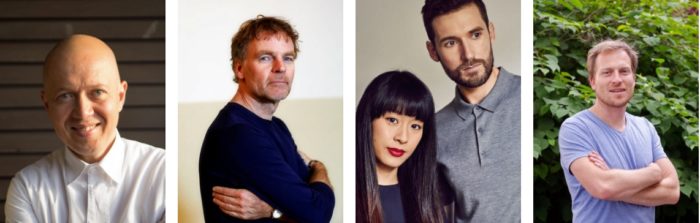
Speakers at DesignCommons include (from left): Marko Ahtisaari of Sync Project; Winy Maas of MVRDV; Alex Groves and Azusa Murakami of Studio Swine (Super Wide Interdisciplinary New Explorers); and Cees van der Veeken of LOLA Landscape Architects.Photo: World Design Weeks Summit

Q: What does it mean for Finland to be president of the World Design Weeks network?

A: We can be proud of the recognition, but at the end of the day it’s all about how well Finnish designers learn to utilise the international network. Design weeks gather a wide range of stakeholders: city authorities, universities, NGOs, designers, manufacturers, retailers, media and local consumers. World Design Weeks is an enabler for Finnish designers to make valuable connections.

Q: How do you feel about what you’ve achieved since the beginning of Helsinki Design Week?

A: We don’t tend to look back that much. We have drawn a big picture in which we see ourselves as partners to the industry and other stakeholders. Every achievement is a result of these partnerships. We are dependent upon content like fresh initiatives and novel products which the industry produces.

Q: What do you think about the future?

A: There are some trends that I am not excited about. The spectres of populism, nationalism and protectionism loom larger than ever. Creativity and innovation oppose these trends. New thoughts and ideas only emerge when we are open and collaborative.

By David J. Cord, August 2017

Around the world with Finnish Your Dinner

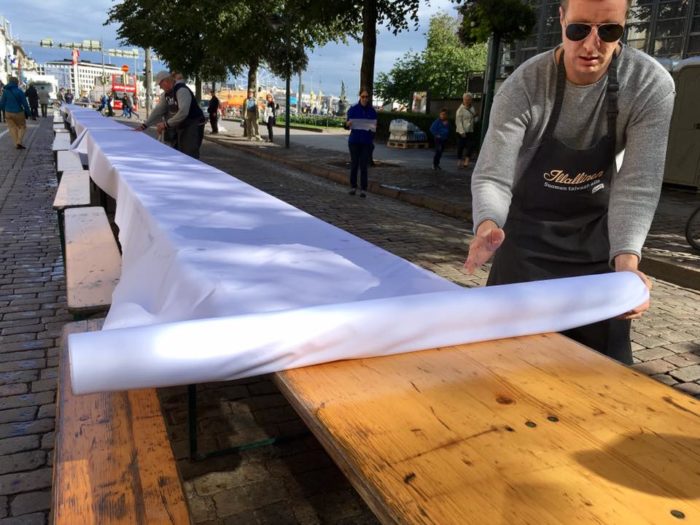
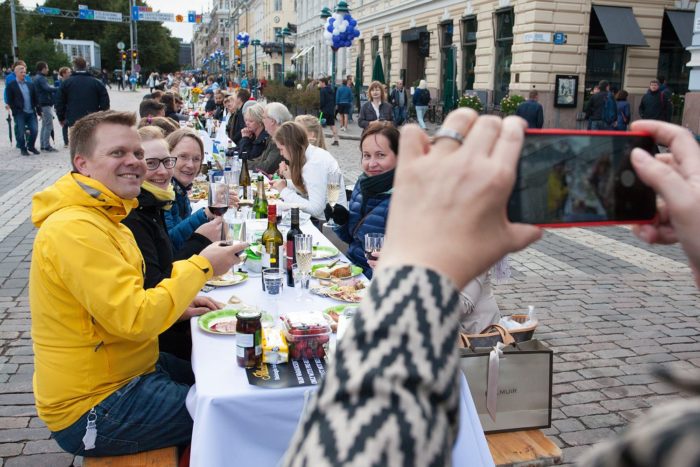
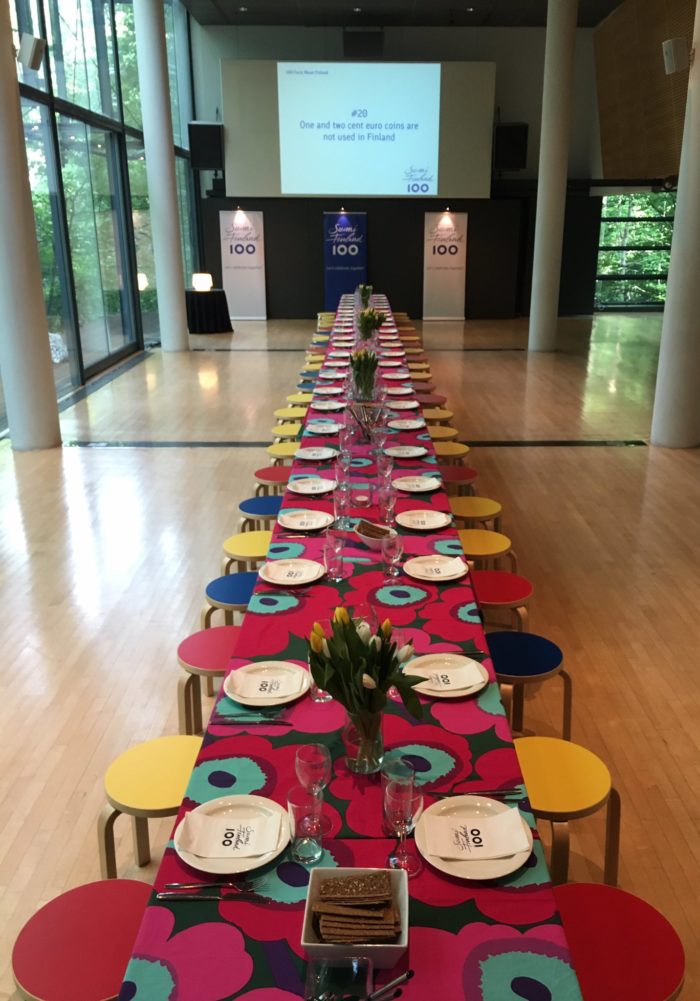
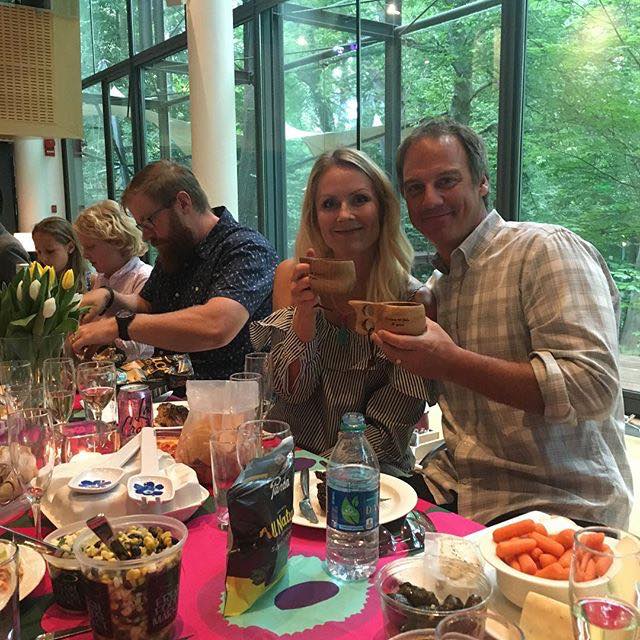
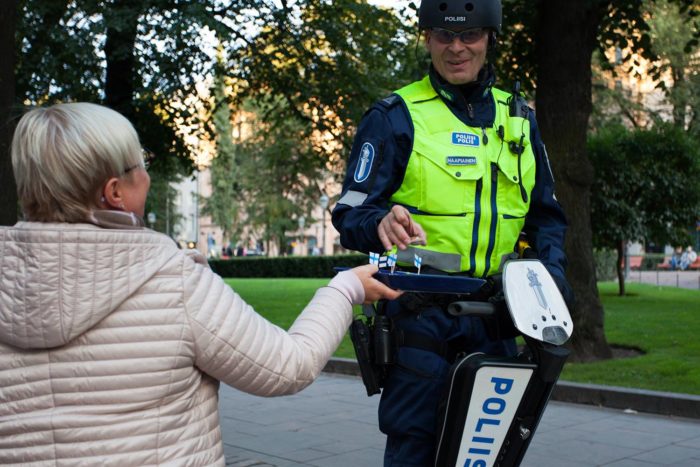
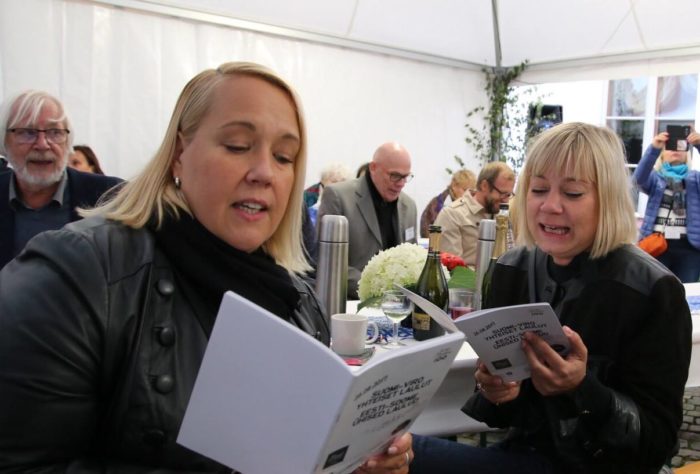
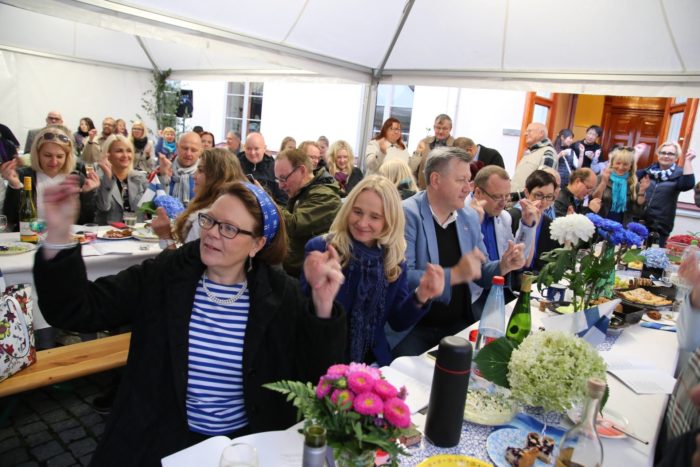
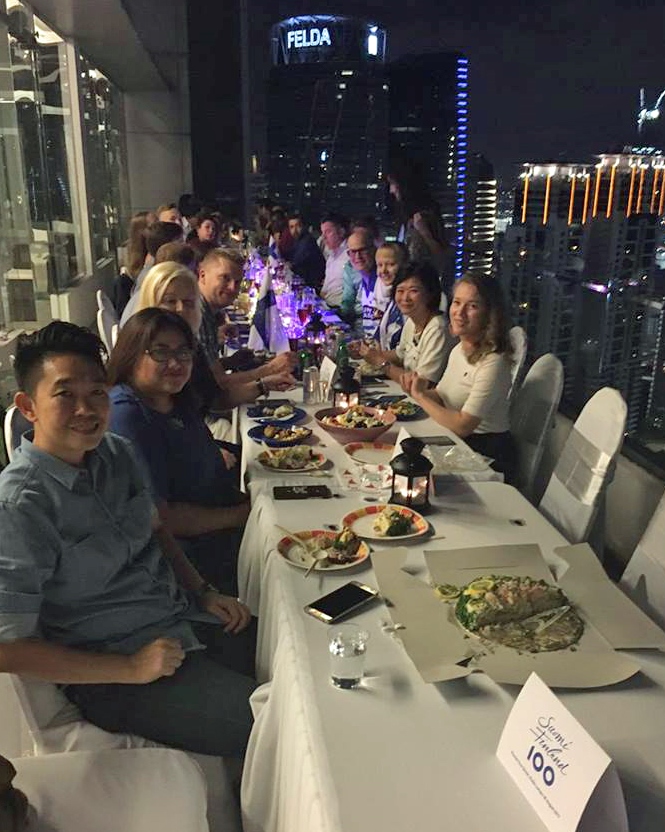
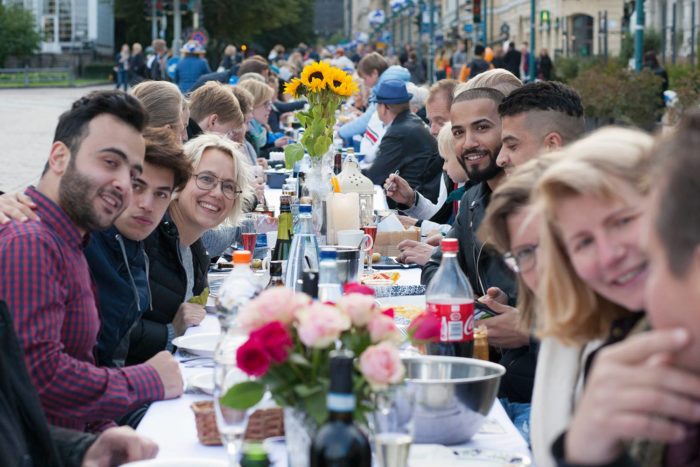
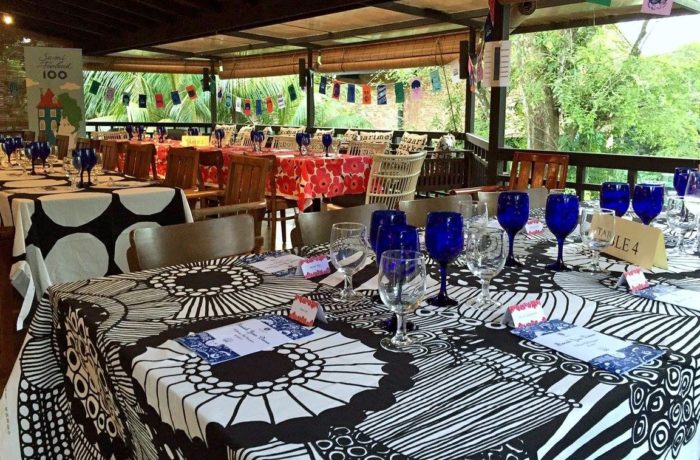
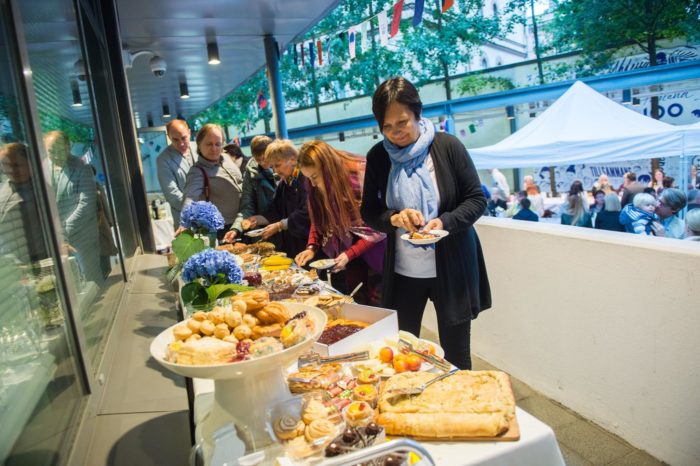
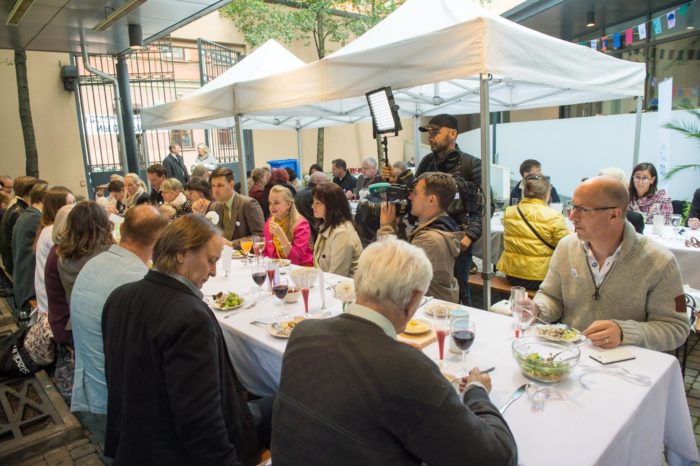
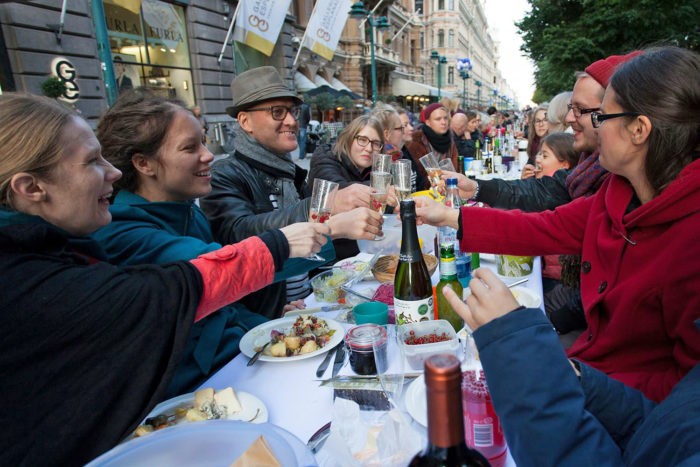
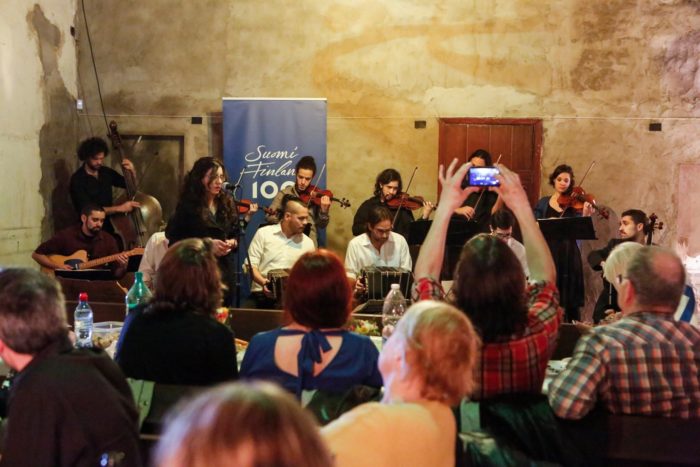
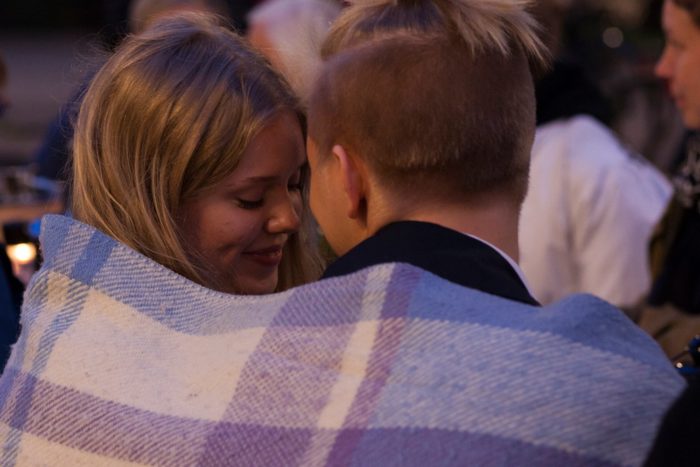
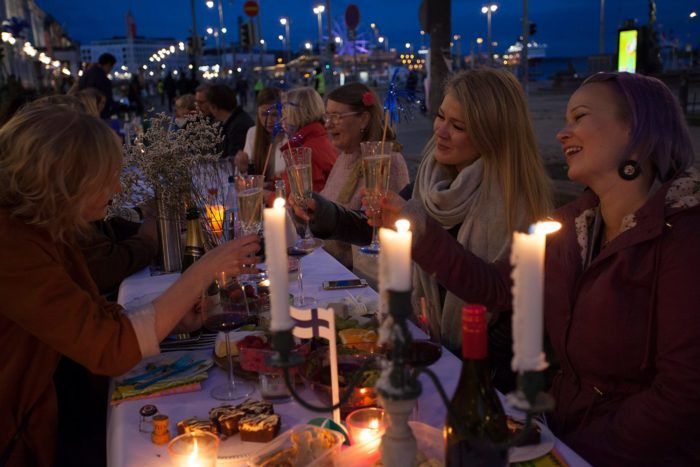
Anyone, anywhere in the world could organise or take part in a Finnish Your Dinner event in August 2017. A chance to hang out with old friends and meet new ones, the special day let people get a head start on the big party scheduled for December 6, 2017, when Finland officially marks 100 years of independence.

Our slideshow provides an excellent impression of how Finnish Your Dinner was celebrated at locations all over the world.

Global Finnish celebration

By ThisisFINLAND staff, August 2017