Chill skills: Finnish icebreakers and snow-how are more relevant than ever

The heavy door opens, and a rush of cool air greets us. 

“This is my favourite place in our offices during summer,” says Mika Hovilainen with a grin. He is CEO of Railotech (formerly called Aker Arctic), an icebreaker design company. 

Small red boats are neatly arranged across the large space, their hulls curving elegantly in and out. These are few-meters-long miniatures of existing and upcoming icebreakers and icegoing vessels that Railotech designs. 

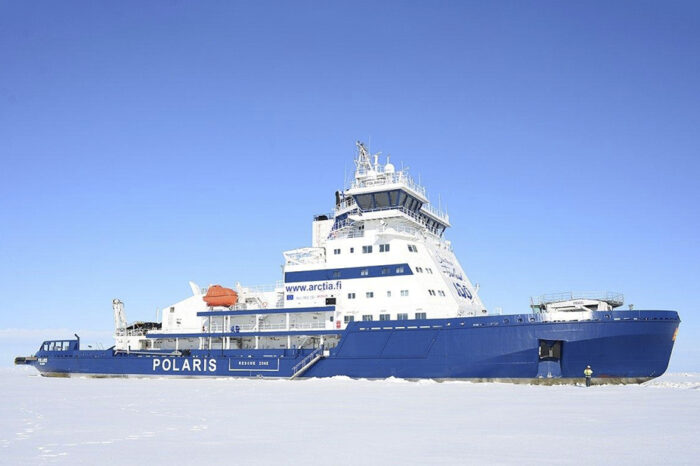
Finland is world-famous for its icebreaking expertise. The know-how was born out of necessity; all Finnish ports freeze during winter. (Estonia is the only other country that can make the same claim.) Shipping lanes need to be kept open. The challenge has driven technological innovation and fostered a deep understanding of how ice behaves. 

Hovilainen opens another door, and the air becomes even colder. This is Railotech’s pride and joy: a 75-metre-long ice tank where employees and visiting researchers can observe how miniature vessels manoeuvre in ice-covered waters. 
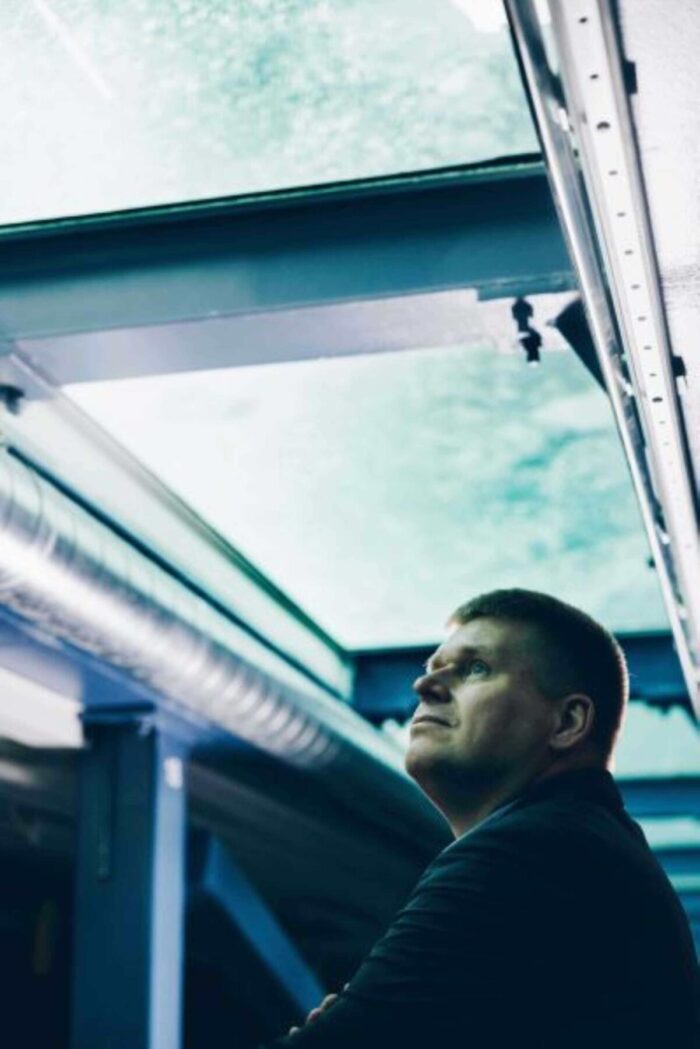
A man, Mika Hovilainen of the Finnish company Railotech, is looking up at an apparatus that is part of a pool where icebreaker ship prototypes are tested.

Mika Hovilainen is the chief executive of Railotech.

Real-life testing – albeit at 1:40 scale for the largest vessels – is crucial to understanding how ice and vessels interact. 

“People often think that an icebreaker simply rams through the ice, forcing the mass out of its way,” Hovilainen says. “In fact, the shape of the hull turns a forward force into a downward force that breaks the ice. The ice slides beneath the hull, breaks into smaller pieces, and is pushed to the back and to the side.”  

There’s more to ice than meets the eye 
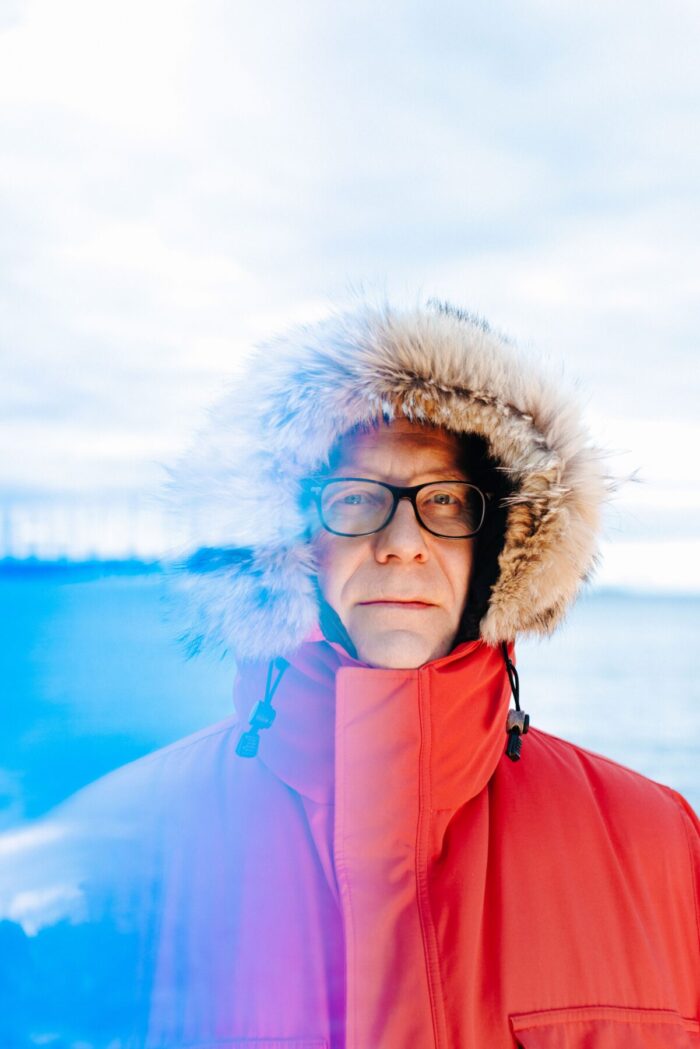
A man, Jukka Tuhkuri, a FInnish researcher, is shown in a red winter jacket with a fur-lined hood.

Jukka Tuhkuri studies ice mechanics and arctic marine technology.

“Ice is a difficult material,” muses Jukka Tuhkuri, professor at Aalto University. His area of expertise is ice mechanics, a discipline studying how ice deforms and breaks. 

Tuhkuri says there are a few common misconceptions about ice. The first and most persistent is that ice is cold. 

“As a material, ice is not cold, because it’s so close to its melting point.” 

To illustrate, he compares ice to steel, which melts at around 1,500 degrees Celsius. At room temperature, a steel beam is still far from its melting point. However, even at minus 10 degrees — a common winter temperature — ice is already very close to melting. 

Another misconception is that ice is fragile. 

“Yes, ice can be fragile when cold or under rapid loading, but if ice is under slow, steady stress, for example when it is pushed against something, it flows like liquid.”

Operating a vessel in ice-covered seas is far more complex than in open water. To add to the challenge, sea ice is not always a single flat field but a maze of ice floes that move around and press together with currents and wind, putting immense stress on any obstacles in their way. 

“When wind presses the ice slowly against a vessel or a structure, such as a bridge or an offshore windmill, it’s anything but fragile.” 

Unparalleled snow-how keeps airports open 

While ice is the raison d’être of Railotech’s expertise and Jukka Tuhkuri’s research, at Helsinki Airport ice is an unwanted visitor. 

Airplanes need friction to take off and land safely. When the temperature drops close to zero and ice starts to form on the runway, maintenance operations at Finland’s busiest airport kick into high gear. 

“Our objective is to provide summertime conditions on the runways year-round,” says Jani Elasmaa, vice president at Finavia. The company maintains Finland’s airport network and is world-famous for its “snow-how,” expertise in keeping airports safe and operational in the harshest weather. 

“The ideal winter weather would be long-lasting periods of sub-zero temperatures,” he says. “Unpredictable weather and temperatures that oscillate above and below freezing – the conditions we nowadays often have – are the most challenging.” 

There are around 130 maintenance workers on the ground at the peak of winter. They clear the runways of snow in dramatic convoys of trucks and inspect the tarmac for frost damage, another problem caused by repeated freezing and melting. 

Finavia’s snow-how attracts visitors from other airports. Guests are particularly interested in the collaboration between air traffic control and the ground team. 

“It’s not about keeping the planes in the air at any cost,” says Elasmaa. “The priority is to ensure that passengers and crew get home safely.” 

While the decision to shut down air traffic is never taken lightly, sometimes it’s the only option. A few years ago, a downpour of supercooled water covered the apron areas, the planes and all maintenance equipment in a four-centimetre-thick layer of ice. 

All air traffic had to be stopped. 

“We were running again in two hours,” Elasmaa says, with a touch of pride in his voice.  

Snow storing saves skiing seasons 

Just 20 kilometres west of Helsinki Airport along Ring Road 3 lies Oittaa, one of the most popular outdoor recreation centres in the capital region. It boasts one of the longest cross-country skiing seasons in the country, even when compared to the far north.

The capital region may get proper snowfall only a few times per year, but snow stored from the previous season means that Oittaa’s skiing season often starts as early as late October, before any new snow has fallen. 

Storing snow is not a new phenomenon. Before refrigerators, snow and ice were covered in sawdust or wood chips to help preserve food. Now, it’s also a promising business venture. 

“Storing existing snow is the most energy-efficient way to ensure there is snow in the early season,” explains Antti Lauslahti, CEO of Snow Secure, a company that develops snow storage systems. 

Snow storage is particularly appealing for ski centres in Europe and North America. The ability to open slopes early, when there’s no natural snow or it’s not cold enough to use snow guns that turn water into snow, makes a big financial difference. 

Storing snow doesn’t replace snow guns, but it complements them, Lauslahti explains. 

“Snow guns produce the best quality of snow when it’s minus ten degrees. That’s the optimal time to make good snow and store it for the upcoming season.” 

The snow is piled into hard-packed mounds and covered with insulating mats. Sensors monitor the temperature inside and outside the cover. Lauslahti says that even when the temperature outside rises above 40 degrees, it is barely above zero just a few centimetres below the mound’s surface. 

“I think this is a very Finnish solution. We take something very niche and turn it into a patented innovation with global appeal.” 

Warm ice behaves differently 

Finnish ice and snow expertise must now adapt to a major challenge: climate change. 

As winters become milder and temperature swings increase, ice changes as well. Lately, professor Jukka Tuhkuri has been studying what he calls “warm ice.” 

One key question Tuhkuri and his fellow researchers are rushing to answer is what kinds of loads warm ice places on icebreakers. This knowledge is crucial not only for icebreakers but also for other vessels operating in increasingly ice-free waters. 

“We have discovered some surprising things about warm ice,” he says. “For example, we have measured that ice loads on ships in a warm and soft ice can be just as high as ice loads on cold and hard ice.” 

Even incremental changes in ice temperature can make a big difference in its material qualities, Tuhkuri notes. These are not yet reflected on the calculations and vessel-building guidelines. 

“When ice conditions are seemingly – and I underline the word seemingly – easy, unenforced vessels will operate longer into autumn and earlier in the spring, but warm ice may not be as innocent as it looks like,” he says. 

Choppy waters ahead 

In Railotech’s test tank, a miniature prototype of an icebreaker sits still in open water. A few translucent sheets of ice float nearby, the last remnants of today’s test runs. 

For the icebreaker industry, climate change is both an opportunity and a challenge. Traffic is expected to grow significantly as the waterway remains open for longer, increasing demand for ice-enforced vessels. 

On the other hand, icebreakers have not been built for long voyages in open, choppy waters. 

“A vessel that is ideal for breaking ice is not ideal for manoeuvring in open water and waves,” Hovilainen explains. “An icebreaker’s life cycle can be over 50 years, so we have to carefully assess what kind of needs the vessels will have in the future.” 

We descend a flight of stairs to a viewing area beneath the test tank. Here a window runs the entire length of the pool. Through it, we’re looking directly up at the underside of the model vessel’s hull. This, Hovilainen says, is where many big aha moments about ice happen. 

Ice, in the end, is a difficult material – something computers or AI-powered weather prediction models cannot fully grasp. When the full-size version of this vessel powers through a jumble of ice floes in the future, it will continue to rely on a human’s understanding of ice. 

“Even with all the technology,” says Hovilainen, “it still comes down to the captain’s experience and ability to read the ice.” 

By Lotta Heikkeri
Illustrations: Tilda Rose
Photos: Vesa Laitinen
Finnish company creates an innovative sand battery

If you have ever walked barefoot along a beach at night, you will have noticed that the sand stays warm even after the sun goes down. A Finnish company is using the thermal properties of sand to create heat-storing batteries which could play a major part in meeting the world’s energy needs.

“My cofounder Markku Ylönen and I met at Tampere University of Technology,” says Tommi Eronen, CEO of Polar Night Energy.

“We were interested in energy technology, power plant engineering and energy storage. We knew the energy sector needed storage capacity because of the growth in renewable energy production.”

The problem with solar photovoltaics and wind power is that they generate power when the conditions are right, not when people need the energy. The solution is storing this energy somehow, such as in lithium-ion batteries, but these can be expensive and have a short storage duration.

“A battery might only be able to store energy for a few hours, but we need to store energy for days,” Eronen says. “Our solution is to store this energy as heat in solid materials.”

Storing renewable energy

Two smiling men in long-sleeved shirts pose in a relaxed manner.

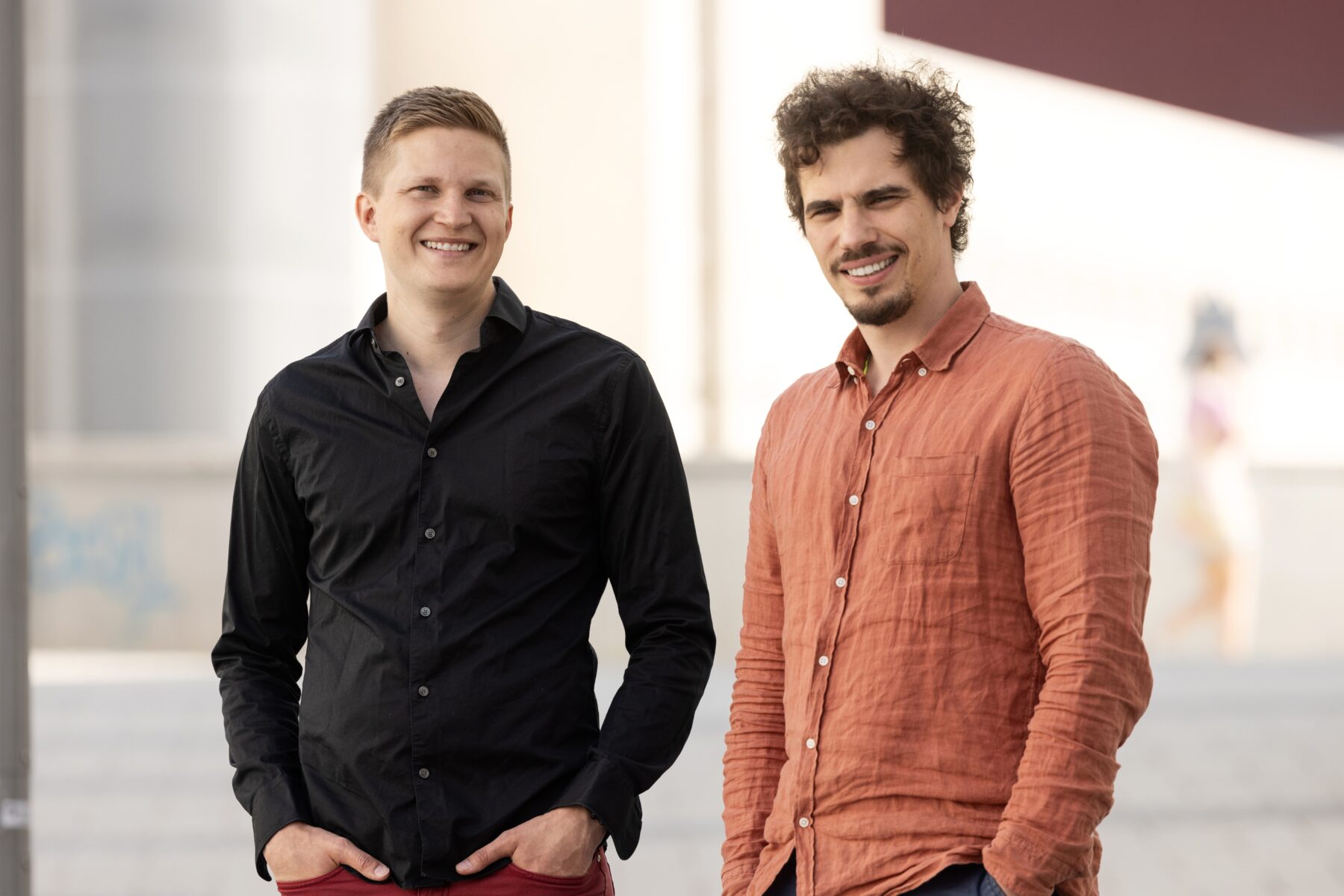
CEO Tommi Eronen (left) and CTO Markku Ylönen started working on their thermal battery when they were studying at Tampere University of Technology.Photo: Polar Night Energy

Founded in 2018, Polar Night Energy has developed sand batteries, attracting attention from around the world. They were featured on the BBC and were named one of TIME magazine’s best inventions of 2025.

Although heating sand seems simple, the company’s real advantage is their patented systems to charge and discharge the heat, transferring that energy with minimal loss.

Heat can be generated from renewable energy sources like wind and solar power. In Pornainen, the Sand Battery is charged with wind energy.

The heat is stored in giant silos of sand until needed for district heating or industrial processes.

“There are many industrial companies which need hot air or steam to deliver thermal energy, such as in the food and beverage, lumber, chemical, pharmaceutical and textile sectors,” Eronen says. “In the past they had to use fossil fuels like oil and gas, but now they have a new choice.”

Major sustainability benefits

The improved sustainability of sand batteries is one of its biggest selling points, and Eronen admits lowering CO2 emissions is one of his main goals.

“We saved 600 tonnes of CO2 emissions in one year at Loviisan Lämpö’s plant in Pornainen, compared to combustion-based systems,” he says. “I see cutting emissions to meet the world’s climate goals as a personal challenge.”

Circular solution with waste soapstone

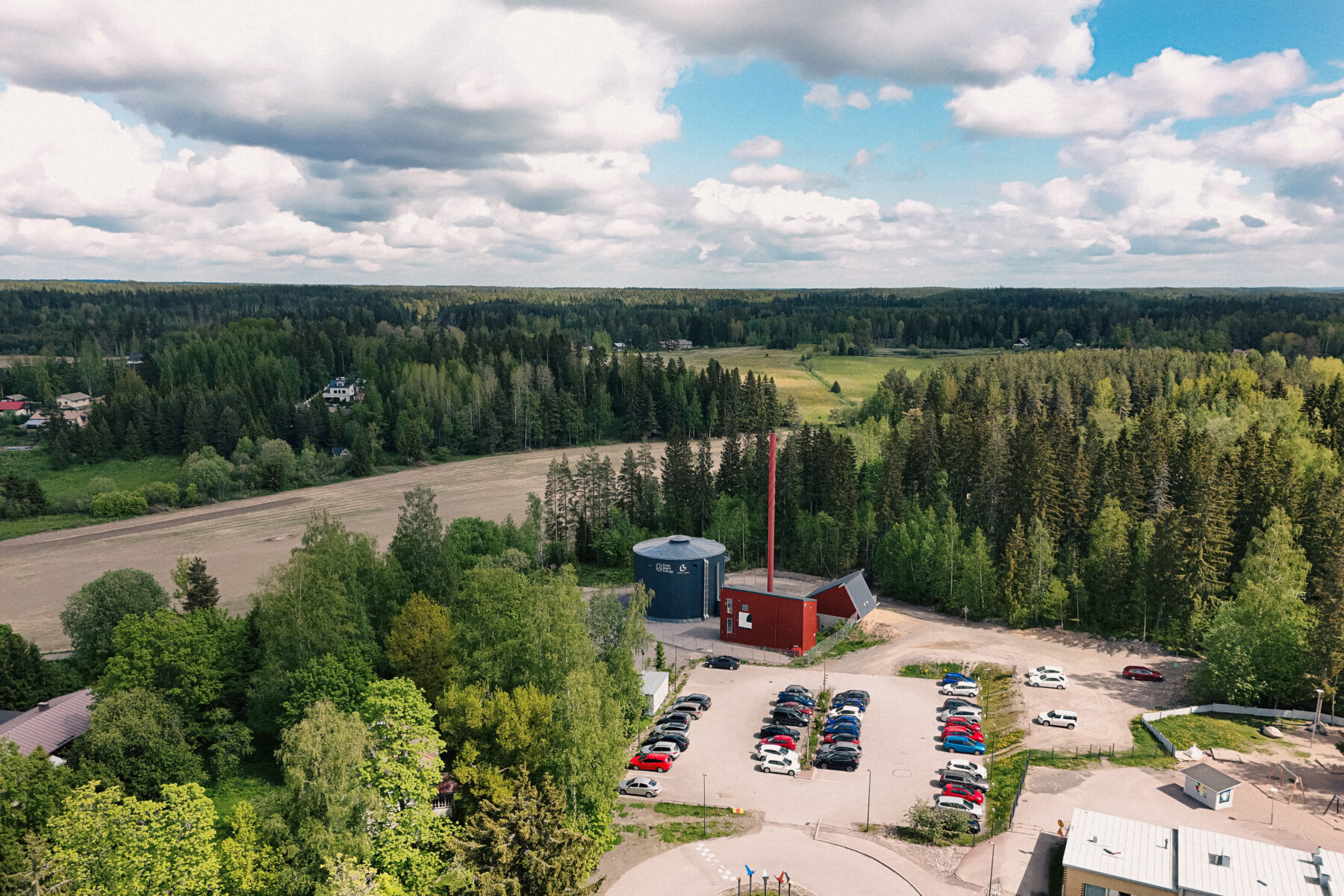
An aerial view shows a silo, a small industrial building and a small parking lot surrounded by trees.

The company’s sand batteries heat homes and businesses through Finland’s district heating networks.Photo: Polar Night Energy

Polar Night Energy has two commercial sand batteries in operation, one in Kankaanpää, near the Finnish west coast, and Pornainen, which is in southern Finland. The Kankaanpää sand battery was opened in 2022 and can store 8 MWh, which is used in the region’s district heating network.

The Pornainen sand battery began operations in 2025 and is much larger – 100 MWh – and delivers hot water for the local district heating network. In general, the sand battery can deliver hot water, steam or air, with current output temperatures of up to 400 degrees C (752 F). The 2,000-tonne silo is about 15 metres wide and 13 metres tall (50 x 43 feet). It uses sophisticated software that controls when heat is produced and released to minimise costs. It also shares heat with the district heating network, replacing a plant that burned woodchips.

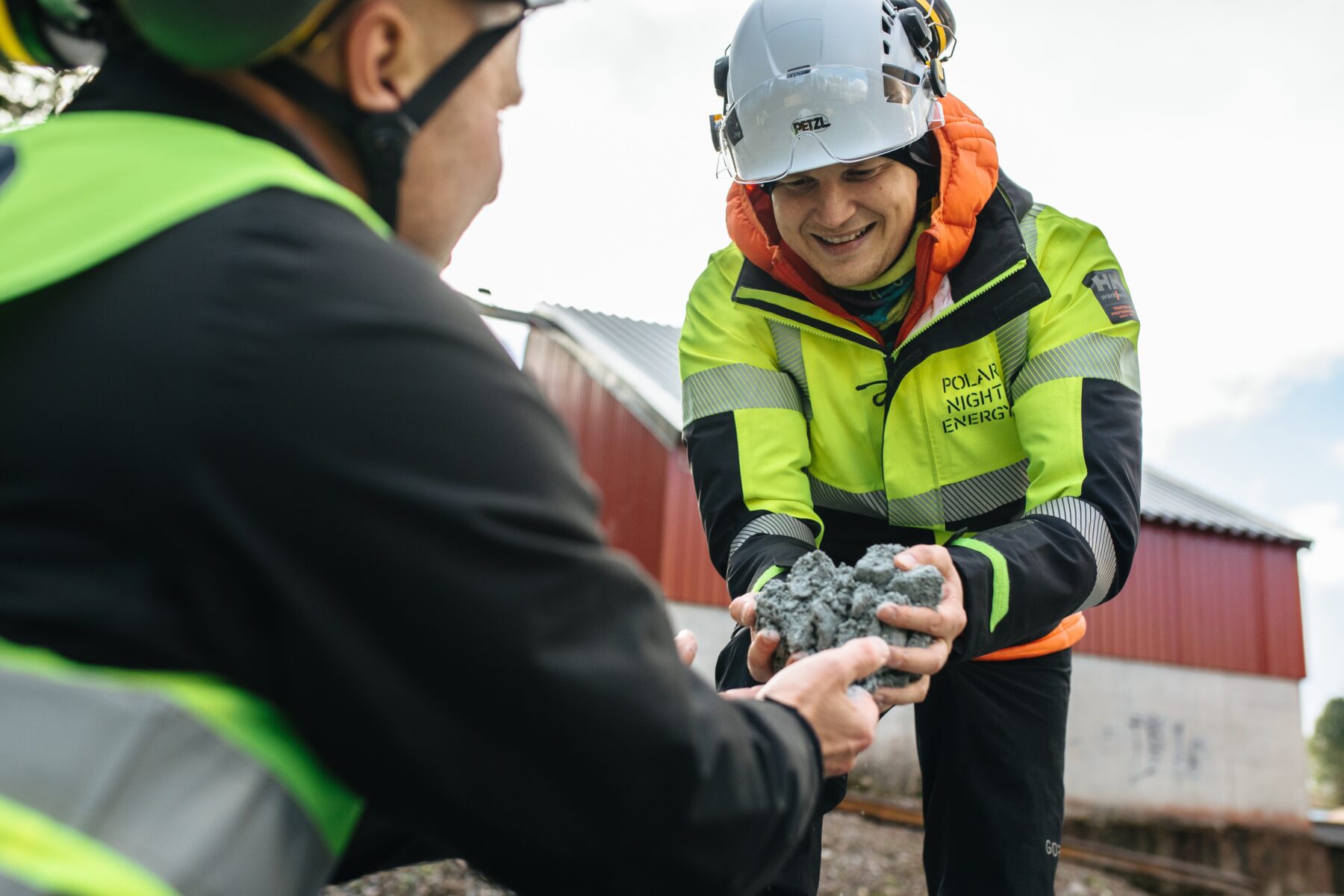
“In Pornainen we use crushed soapstone to store heat, a byproduct from the company Tulikivi’s fireplace manufacturing,” Eronen says. “This proves we can use sand-like materials and not expensive river sand. There is a global shortage of river sand, which is used in construction.”

Is generating electricity next?

Two people in safety equipment smile as they hold handfuls of crushed soapstone.

Although it is called a sand battery, the company’s solution can use other materials such as soapstone waste.Photo: Polar Night Energy

The 26-member team at Polar Night Energy is also working on a solution to turn stored heat back into electricity. When this is working correctly, sand batteries could be used not just to warm homes and help factories but even to power lights and charge electric vehicles. To expand, they are busy looking for partnerships with big global companies.

“We are excited about the future and are glad of all the attention we have received,” says Eronen. “We want to work fast and have a positive impact on the world.”

By David J. Cord, February 2026

Finland helps crack the oat genome in global research effort

An international research team has successfully created a genetic map of oats – the pangenome and pantranscriptome, which show when and where oat genes are active in different parts of the plant. This breakthrough helps scientists understand which genes are important for yield, adaptation and health, providing valuable tools for oat breeding.

A significant part of the sequencing work, led by senior scientist Lidija Bitz, was carried out at the Natural Resources Institute Finland (known by its Finnish abbreviation, Luke). “Oats hold an exceptionally strong position in Finland,” explains Sirja Viitala, research manager at Luke. “They are both an export grain, a health food and a raw material for the food industry. Research, breeding and the development of oat value chains are strategically important for building a sustainable food system and renewing agriculture.”

Finland is a global oat powerhouse – ranking among the top five producers worldwide. The importance of oats as a raw material for Finland’s food industry has grown, particularly alongside the development of plant-based alternatives to meat and dairy products. Oats are rich in dietary fiber, cholesterol-lowering beta-glucan and numerous other valuable compounds such as antioxidants and healthy fats.

In a changing climate, breeding resilient oat varieties is essential, and that journey begins with decoding oat genes and genomes. Breeding more diverse oat varieties opens new opportunities and strengthens Finland’s food sector.

Hear Tytti Metsä play an ancient Finnish instrument with a timeless voice: the jouhikko

It began on her high school graduation day back in the 1990s, when 19-year-old Tytti Metsä held a bowed lyre, jouhikko in Finnish, for the first time. The instrument, handmade by her friend’s grandfather, was as beautiful to look at as it was to hear.

Its tone was soft yet startlingly human, almost hypnotic.

“Something about it felt irresistible”, Metsä says. She was instantly captivated.

Metsä already sang and played the piano and the kantele, a kind of zither that is Finland’s national instrument. Yet it felt as though the bowed lyre had been waiting for her.

An ancient instrument in modern hands

Pääskyläinen (Little Swallow, Bird of Daylight) is one version of the world-creation myths found around the globe. Through a series of wondrous events, a clever young girl runs to a smith to commission an iron rake tipped with rowan spikes. She uses it to gather the fragments of a broken bird’s egg from the sea; from its yolk, she creates the moon, and from its white, the stars.Video: Nina Karlsson and Annukka Pakarinen

The bowed lyre is a surviving branch of Europe’s early lyre tradition. Evidence suggests, there were bowed lyres as early as 800–500 BCE in Hungary.

During the Middle Ages, lyres were played across a vast area from France to Karelia. The bow was likely introduced in the British Isles, from which the instrument travelled north and east, eventually reaching Finland.

While many other bowed instruments slowly evolved into the violin family, the bowed lyre remained largely unchanged in remote villages, especially in Border Karelia in eastern Finland and in Estonia’s island communities.
Today, only a small number of Finns still play it.

Learning the instrument’s strange logic

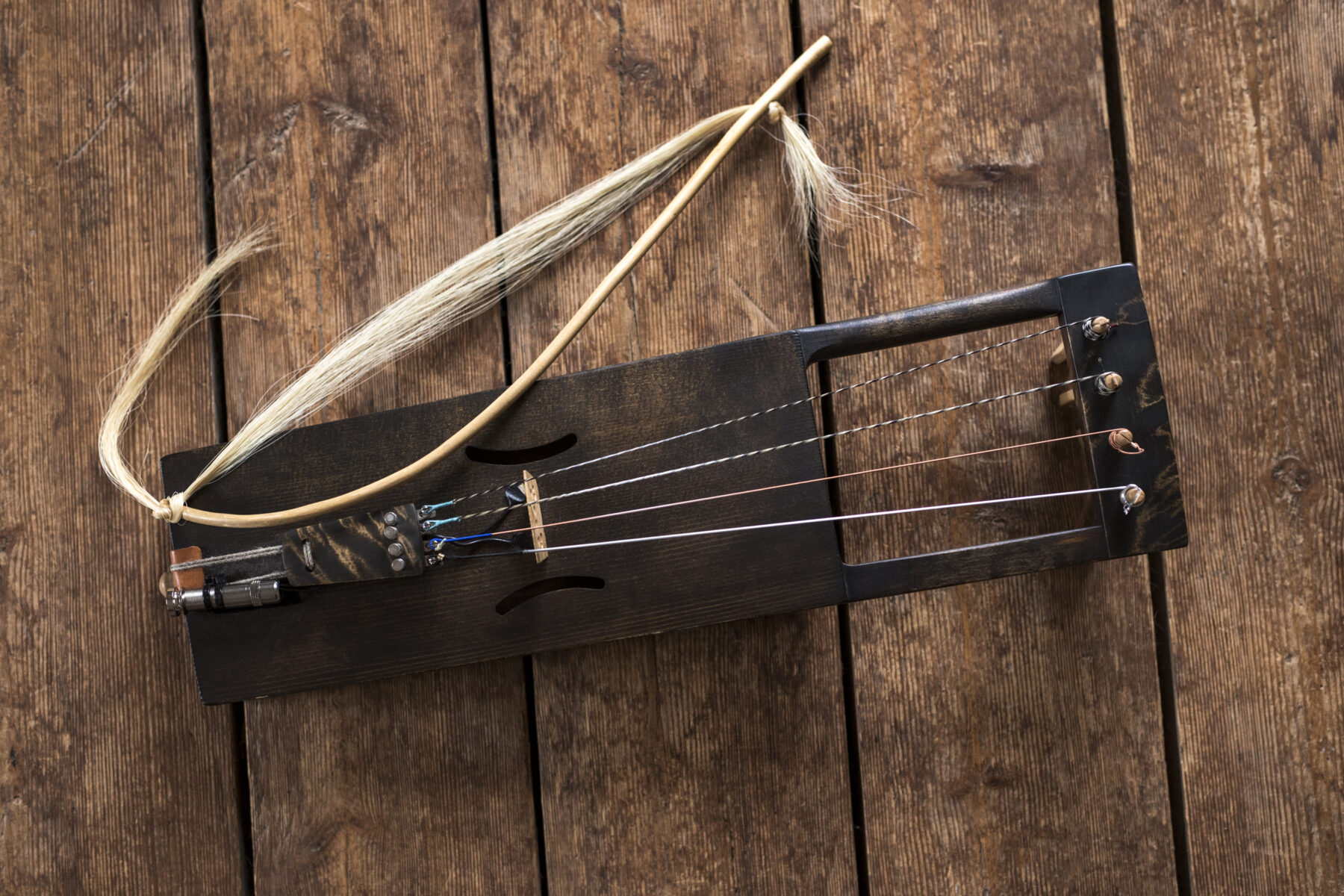
A wooden bowed lyre with several strings and a curved bow lies on a wooden surface.

The bowed lyre is an instrument with a history stretching back millennia. In Finland, it has been used both for dance music and to accompany singing. Its closest relatives include the hiiukannel or rootsikannel in Estonia and the talharpa or stråkharpa in Sweden.

Metsä, now a singer, songwriter and bowed lyre and harmonium (pump organ) player, lifts her handmade willow bow, its horsehair drawn taut. She lowers it onto the strings and begins to play.

She first studied the instrument in Kaustinen – a small town in western Finland that happens to be the heartland of the country’s folk music tradition – under masters such as Risto Hotakainen and Ritva Talvitie.
There, Metsä also built her first bowed lyre. Fragile in tone, she says, but a beginning.

From the start, she composed within the instrument’s limits: the narrow pitch range and the bow’s bouncing polyrhythms.

“What fascinates me about a new instrument is how it changes the way you think,” she says. “It can throw your musical logic off balance, in a good way.”

Those constraints led her into what she calls “meditative minimalism”: a slow, subtle aesthetic built on tiny shifts against a steady flow.

“It was almost a mind-altering experience,” she says.

She later continued her studies at the prestigious Sibelius Academy’s Department of Folk Music.

The sound becomes a voice: Tytti Metsä & Hyypiöt

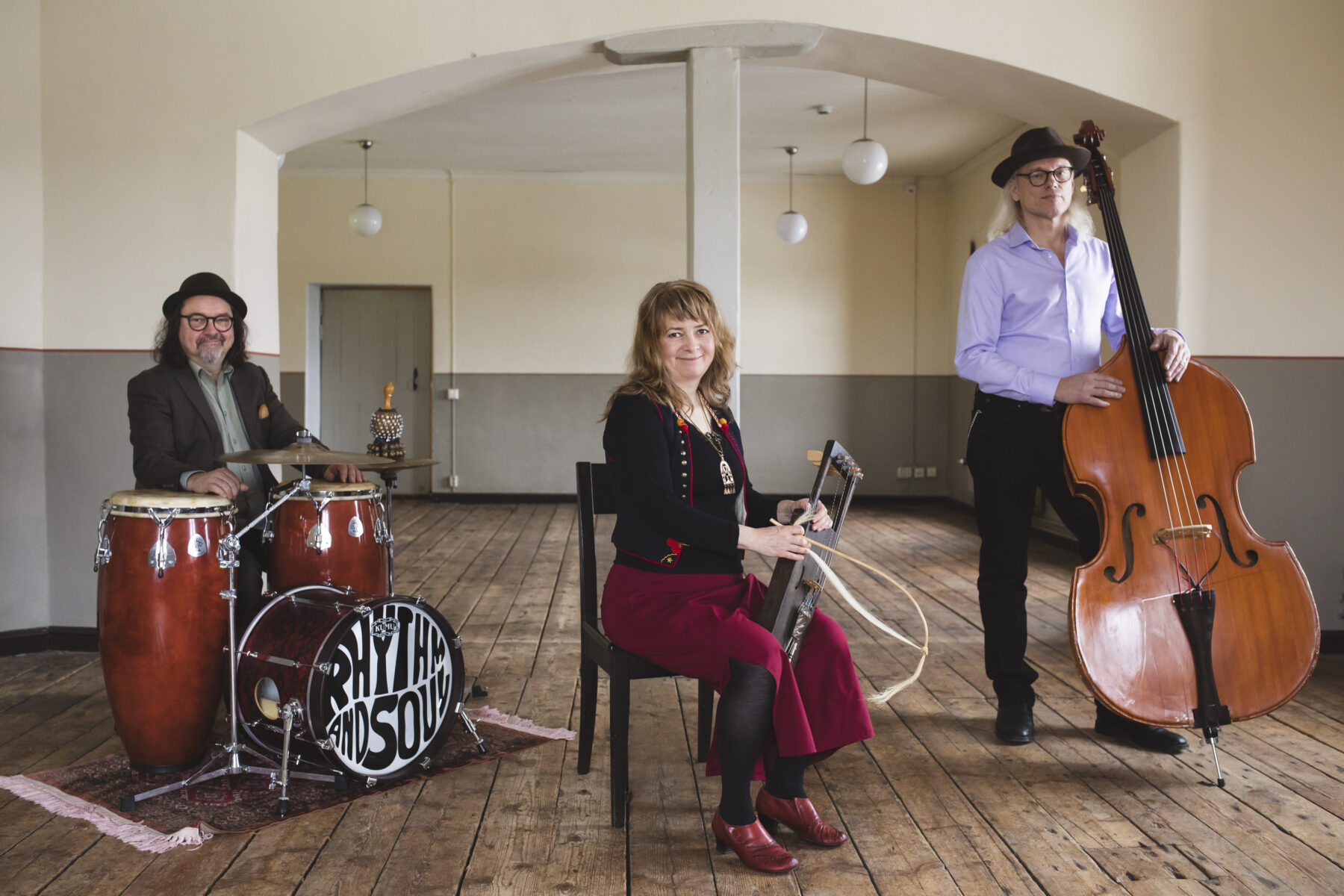
Three musicians are shown in a large room, with one sitting and holding a bowed lyre, one sitting in front of conga drums, and another standing beside a double bass.

Once Tytti Metsä started playing with drummer Janne Haavisto and bassist Miikka Paatelainen, she felt the stories in her songs began to take on new layers of meaning.

Today, Metsä performs with drummer Janne Haavisto and bassist Miikka Paatelainen as the trio Tytti Metsä & Hyypiöt.

“We have such beautiful folk poems shaped by the Kalevala metre,” she says, referring to the old rhythmic tradition that predates Finland’s national epic.

Her own instrument is carved from alder; its strings mix horsehair and synthetic fibres, with lower strings made of sheep gut. They require constant tuning – part of the jouhikko’s character, and something Metsä meets with precision and patience.

“When I play it like this, the sound resonates through me,” she says. “It’s breathy, and the bow creates its own rhythm. It feels as though someone is singing.”

Text by Emilia Kangasluoma, photos by Nina Karlsson, January 2026

This article is partially based on information from Rauno Nieminen’s book Jouhikko: The Bowed Lyre (2017).

The northern Finnish city of Oulu puts big ideas into action

Set on the shore of the Bothnian Bay in northern Finland, Oulu is a city where cutting-edge technology meets sea air and a vibrant cultural scene.

Throughout 2026, Oulu and 39 surrounding municipalities will host an ambitious year-long programme of art, music, performance and community-led events under the theme Cultural Climate Change. The concept reflects both environmental awareness and a desire to foster a cultural climate where people can enjoy fun, joyful and eye-opening creative experiences.

The Oulu2026 cultural region extends well beyond the city itself, encompassing destinations such as Kajaani, Tornio, Ii, Kuusamo and Kalajoki. Visitors can expect a calendar packed with experiences across all seasons, from winter festivals on frozen seas to long summer evenings filled with food, music and light.

Full programme:  Oulu2026 European Capital of Culture

Highlights from the year ahead:

PLAY – Fotografiska Tallinn × Oulu2026

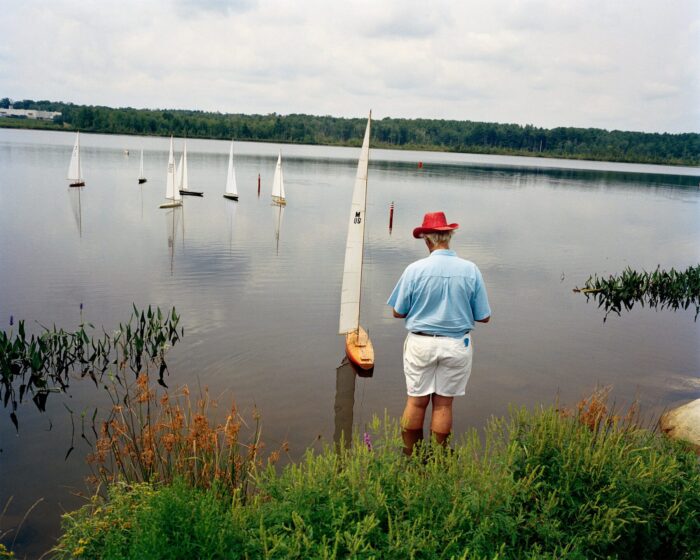
A man in a red hat guides a radio-controlled sailboat on a calm lake with other small boats nearby.

Sage Sohier’s photograph Perfectible Worlds, Man at radio-controlled sailboat regatta, Gilford, NH, 2003. Photo: Sage Sohier

January 14–December 31, 2026

For the first time, Fotografiska Tallinn brings a major photography exhibition to Finland. PLAY, a group exhibition by 17 international artists, explores play as a force of joy and connection but also as a form of escape. Featuring works by photographers such as Martin Parr, Jouko Lehtola, Susan Meiselas and Cristina de Middel, the exhibition is curated by Fotografiska Tallinn’s brand director Jorven Viilik. A bespoke soundscape by Estonian musician Erki Pärnoja completes the experience.

Layers of the Peace Machine

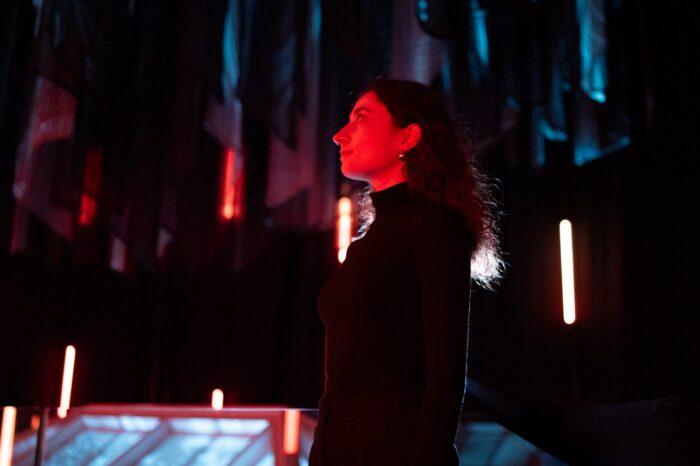
A woman gazes upward in a darkened space lit by red and blue lights, surrounded by suspended materials and vertical light strips.

Layers of the Peace Machine is an immersive, multi-part work by Ekho Collective. Photo: Linnea Laatikainen

January 15– December 31, 2026

Installed at Oulu City Hall, this immersive, multi-part work by Ekho Collective examines peace as an active and ongoing process. Inspired by AI researcher Timo Honkela’s Peace Machine, the installation invites visitors to participate through movement, sound, language and interaction.

Ovllá – Opera

January 16–February 28, 2026 (19 performances)

Opening Oulu’s Capital of Culture year, Ovllá brings Sámi perspectives to the main stage of Oulu Theatre. The opera addresses the lasting impact of state-led oppression on the Sámi, the only recognised Indigenous People in the EU area. Their northern homeland, called Sápmi, is divided into four parts by the borders of the nation-states Finland, Sweden, Norway and Russia.

Written by Juho-Sire/Siri Broch Johansen, with music by Finnish composer Cecilia Damström, the production is both politically resonant and artistically ambitious. It is performed in Northern Sámi and Finnish with subtitles in English.

Ice sauna

February 18–27, 2026

A distinctly Finnish experience: a community-built ice sauna, open to all and operated by the Oulu Sauna Association. After a week in the city, the structure will be transported to the Frozen People Festival.

Frozen People Festival

A crowd attends a small festival on a frozen sea, with illuminated structures standing out against the blue ice.

Frozen People is a festival held on a frozen sea. Don’t forget to bring your woollen mittens! Photo: Harri Tarvainen

February 28–March 1, 2026

An electronic music and northern arts festival staged on the frozen sea at Nallikari Beach. Expect installations, light art, performances and a mix of local and international electronic music talent, all framed by snow, ice and open horizons.

Climate Clock Public Art Trail

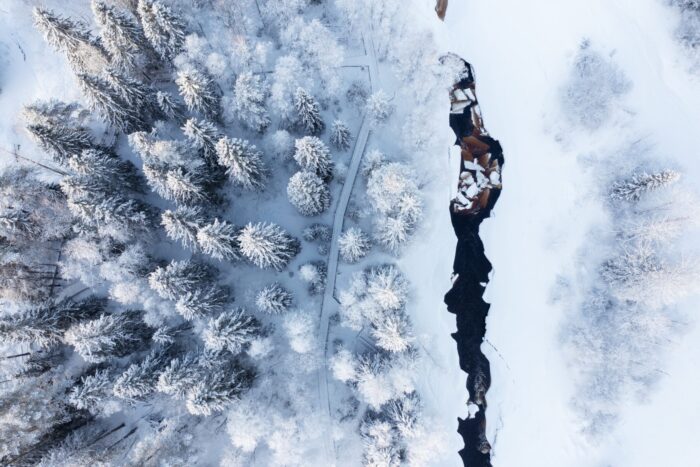
A snowy woodland seen from above is split by a narrow river flowing through the white landscape.

Climate Clock brings art to nature. Photo: Harri Tarvainen

Opening June 13, 2026

One of Oulu2026’s most significant productions, Climate Clock combines art, science and nature across six sites in the wider Oulu region, inviting reflection on ecological time, resilience and adaptability. Artists include Rana Begum, SUPERFLEX and Antti Laitinen, with curation by Alice Sharp (Invisible Dust, UK). The six permanent artworks are joined by The Most Valuable Clock in the World, a piece created by artists Tellervo Kalleinen and Oliver Kochta-Kalleinen with input from local residents.

Summer Night’s Dinner

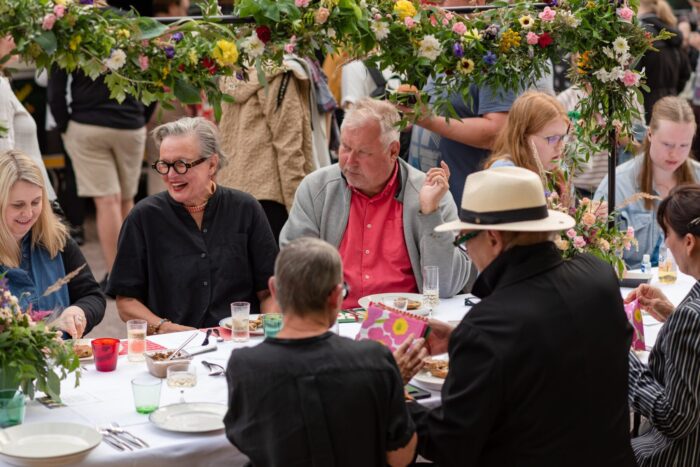
People of different ages dine together at a festive outdoor table adorned with greenery and flowers.

Summer Night’s Dinner is an opportunity to eat your favourite meal in a superb location. Photo: Kevin Kallombo

August 15, 2026

A kilometre-long communal table stretches across central Oulu for one relaxed summer evening. Residents and visitors are invited to bring their own food and share a moment of togetherness in a simple yet powerful celebration of food, culture and community under the northern sky.

Lumo Light Festival

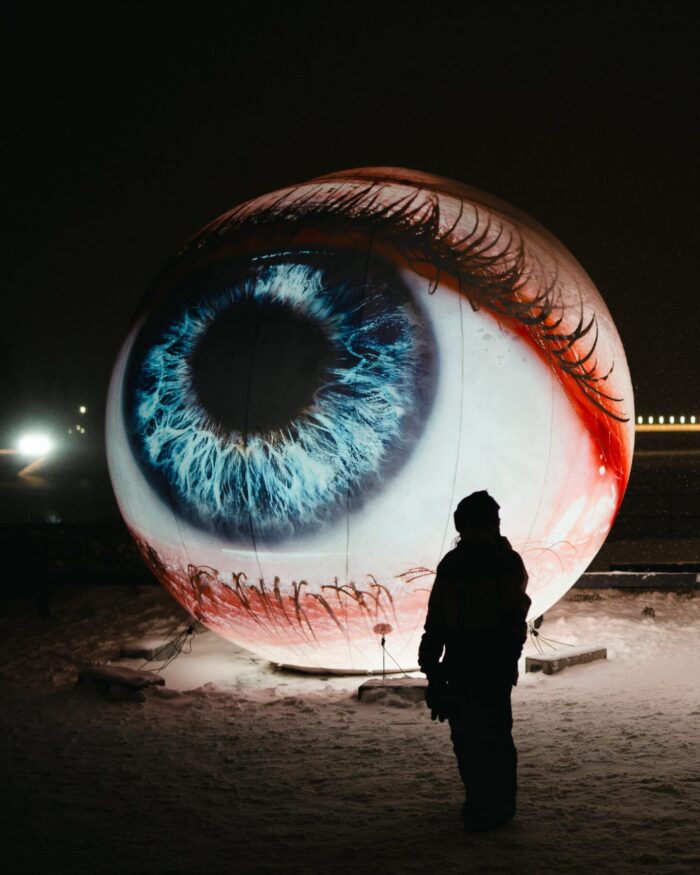
A person stands before a giant illuminated sculpture of a blue human eye displayed outdoors at a light art festival.

Oculucis by Italian artist Hermes Mangialardo appeared at Lumo Light Festival in 2025. Photo: Linnea Laatikainen

November 19–22, 2026
As autumn darkness sets in, Lumo Light Festival illuminates Oulu with light installations, regional events and special Lumo-themed restaurant menus. The festival turns the city into a glowing canvas, proving that winter can be a season of creativity.

Oulu Sinfonia: Beyond the Sky

November 19–21, 2026 (five performances)

An immersive orchestral experience combining Jukka-Pekka Metsävainio’s astrophotography with music by Lauri Porra. Conducted by Dalia Stasevska, the performance explores humanity’s relationship with the cosmos, science, myth and history.

Oulu at a glance: local tips

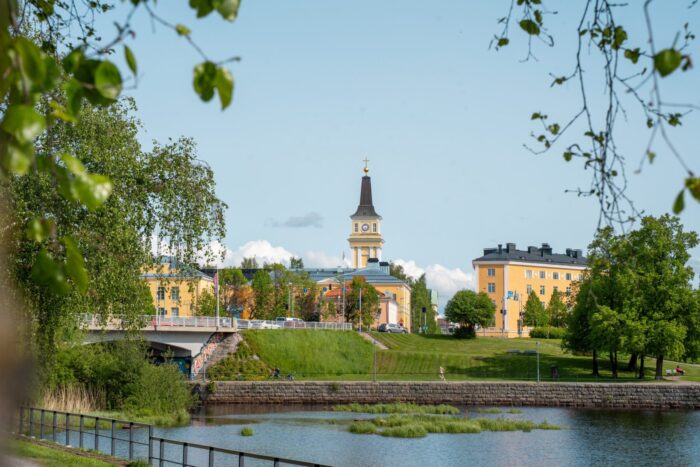
A riverside view of Oulu shows historic buildings and a church tower rising above green parkland on a clear day.

Oulu is a venerable city where you’re never far from the river or the sea. Photo: Rosa Ruuskanen, Visit Oulu

With a population of around 217,000, Oulu is the largest city in northern Finland, founded in 1605. Long known as a technology hub, the city balances innovation with easy access to nature and a relaxed coastal rhythm.

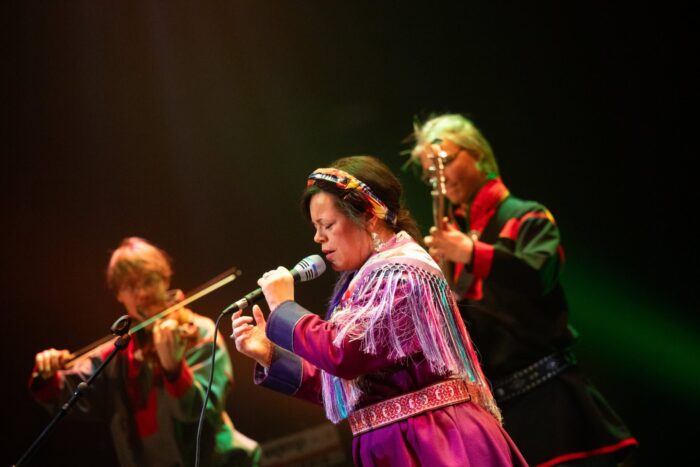
Ulla Pirttijärvi sings on stage with accompanying musicians under warm stage lighting.

Ulla Pirttijärvi & Ulda performed modern Sámi music at the Sámi National Day concert in Oulu in 2024. Photo: Sanna Krook

Don’t miss the Toripoliisi (Market Square Policeman) statue, a rotund local icon standing guard on Market Square, or the wide sandy beaches of Nallikari, often dubbed the Riviera of the North. The Oulu Museum of Art offers a strong focus on contemporary works, while nearby Hailuoto Island is ideal for slowing down with sea views, dunes and a historic lighthouse.
Stop by Oulu Market Hall (1901) for local delicacies and everyday life under one roof.
Oulu is easy to reach from Helsinki: around five and a half hours by train, or just over one hour by air.

Text by Emilia Kangasluoma, January 2026

Helsinki underground: Where the city plays, swims and shelters

Laughter echoes through the space – or rather, delighted cackling. Hugo, 11 months old, has discovered a trampoline and is testing it enthusiastically with his mother, Viivi Jokinen. Walking is still uncertain, but crawling offers a swift escape.

“This is our first time here with Hugo,” Jokinen says. “And I think he approves.”

Around them are slides, ball pits and soft-edged contraptions in bright colours. Artificial greenery climbs the walls. The atmosphere is light, calm and welcoming.

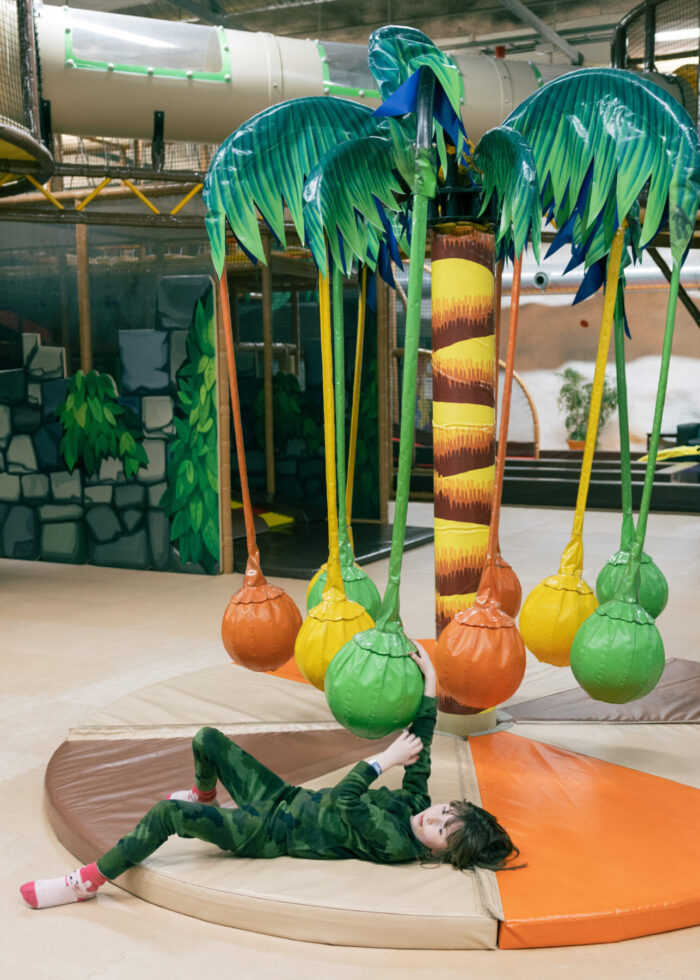
A child plays on a padded floor under a palm tree-style soft play structure at an indoor playground.

Ivy-Rose Clark, 7, was visiting the Play Cave with her parents and brother. The British family was travelling to the northern Finnish city of Rovaniemi to meet Father Christmas the same day.

It is easy to forget that we are not just indoors, but some 30 metres (100 feet) underground, inside an indoor playground known as the Play Cave, beneath Helsinki’s Hakaniemi district.

This is Helsinki’s surprise: the city continues below the surface.

A city beneath the city

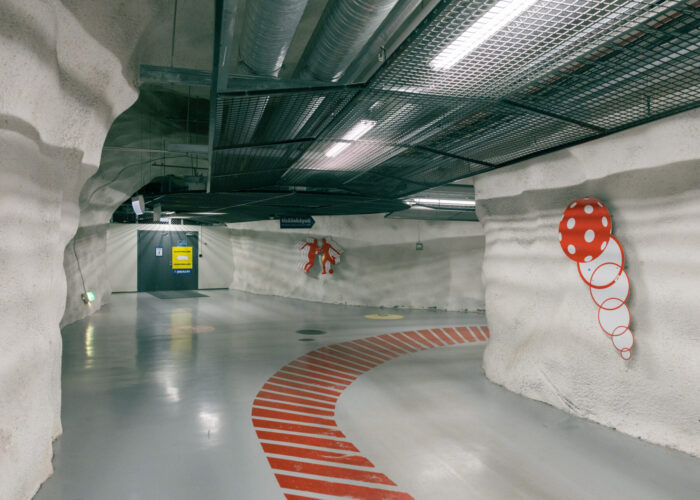
An empty underground shelter passage curves around rock-textured walls with smooth concrete floors and metal grating along the ceiling.

Finland’s granite-rich bedrock makes extensive underground construction possible. It could be said that preparedness is in the DNA of the Finns. Construction of shelters has continued from 1955 onwards.

Helsinki is thought to be the only city in the world with an underground master plan. Beneath its streets lie playgrounds, gyms and sports halls; running tracks, metro stations, art spaces and band rehearsal rooms; car parks, swimming pools, a museum and even a church. There are tunnels, retail spaces and, in some cases, artificial lakes.

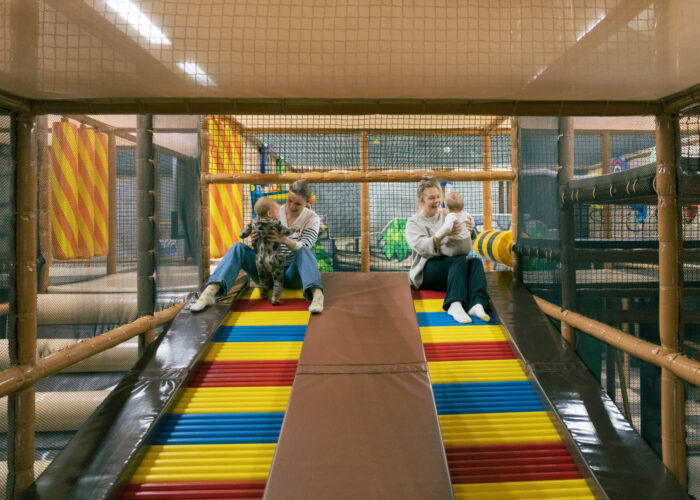
 Two women hold their babies on a colourful cushioned slope inside a children’s play space.

Anna Arvola with Anton, eight and half months, and Senni Niemi with Verne, also eight and half months, visit the Play Cave regularly. “Everything here is soft, so it’s safe for children to practise their motor skills,” Arvola says.

What is striking is how little this underground city resembles a bunker. Spaces are high, materials exposed and lighting carefully considered. Helsinki’s granite bedrock allows rooms to be carved wide, and the result feels deliberate rather than defensive.

Much of this subterranean world began life as civil defence infrastructure. Helsinki alone has around 5,500 shelters, with space for close to one million people which is a remarkable figure in a city of roughly 700,000 residents.

Back in the Play Cave, Hugo makes a determined crawl towards the slides. His mother follows, smiling.

Preparedness as a way of life

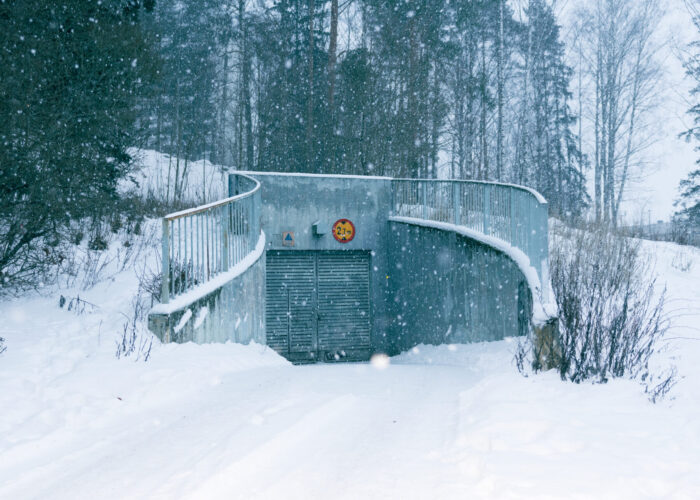
A snow-covered entrance to an underground facility in Helsinki sits beneath a curved concrete ramp in a forested area.

Helsinki has approximately ten million cubic metres of underground space, comprising nearly 500 individual subterranean facilities.

Few people know Helsinki’s underground as well as Pasi Raatikainen, a senior civil defence planner with the Helsinki City Rescue Department. He speaks about the shelters with pride.

“Finland is a model country for civil defence,” he says.

The origins of the system lie in the Second World War and its aftermath. As Finland set out to rebuild an equal and just society, preparedness became part of the social contract. Shelters were planned on a scale that would allow space for everyone, including the most vulnerable, Raatikainen explains.

Over time, the threats shaping preparedness have changed. During the Cold War, nuclear war loomed large. After the Chernobyl disaster in 1986, attention turned to nuclear accidents. The infrastructure evolved accordingly, without ever disappearing from everyday life.

Daily life, eight floors below

Helsinki has approximately 10 million cubic metres of underground space, comprising nearly 500 individual subterranean facilities.

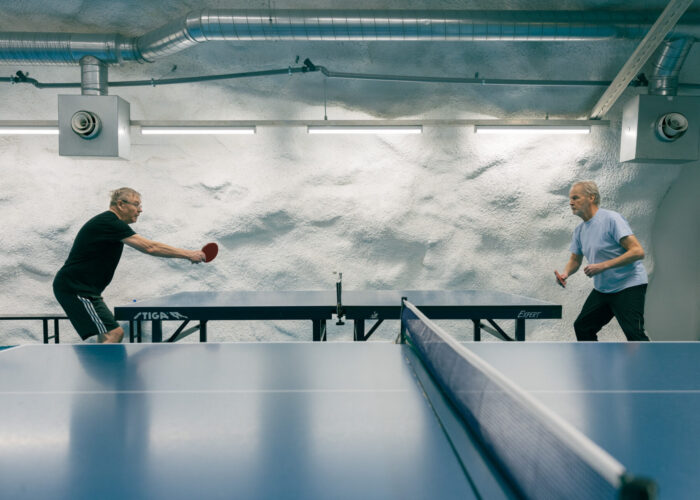
Timo Kauppila, left, and Veli Perikangas started playing table tennis at Maunula Sports Hall a few years ago, following a major renovation. “It’s been refurbished beautifully,” Kauppila says.

The sharp crack of a ping-pong ball cuts through the air at Maunula Sports Hall. Retirees Veli Perikangas and Timo Kauppila practise table tennis several times a week. On some days, they lift weights or stretch.

“So we don’t completely stiffen up,” Perikangas says, smiling.

The hall sits deep underground, roughly eight storeys below ground level, by Kauppila’s estimate. Rock music plays as barbells plates rise and fall. On a weekday morning, the space is shared by retirees and younger adults.

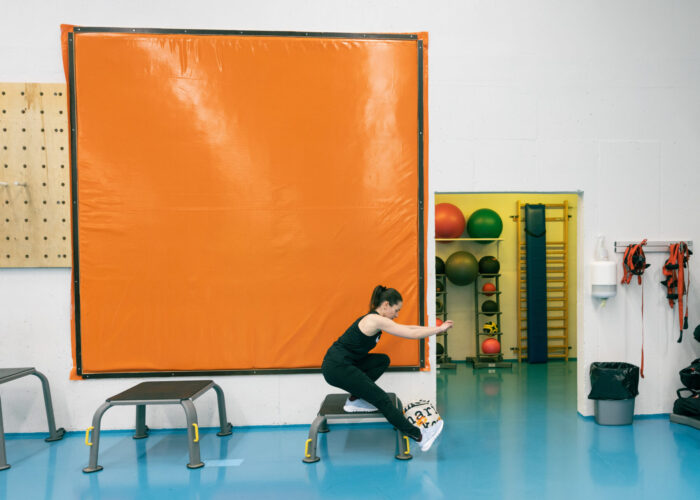
Professional dancer Lara Müller comes here twice a week. What she values most are the conditions.

A woman performs a single-leg squat on a low bench in a brightly lit exercise room with blue flooring and a large orange wall mat.

Originally from Switzerland, Lara Müller notes that civil defence shelters there are largely hidden from view. “You can’t simply walk into them like this,” she says.

“It’s bright and pleasant,” she says.

The ceiling is high, and the air fresh.

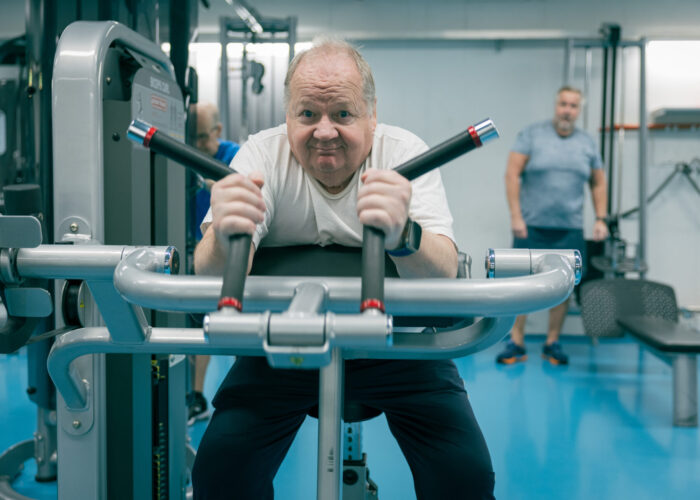
A man exercises on a gym machine, pulling handles towards him in a bright fitness space.

Retiree Reijo Lohtaja has gotten to know fellow gym-goers at the fitness centre. He likes to keep active, and works out there three times a week.

“I have a good feeling that there’s enough air,” says Reijo Lohtaja. He trains here three times a week with friends, chatting about current affairs between sets. Occasionally, they reflect on the fact that they are exercising inside a civil defence shelter.

“It’s good these spaces aren’t left empty,” Lohtaja says.

Why Finland is different

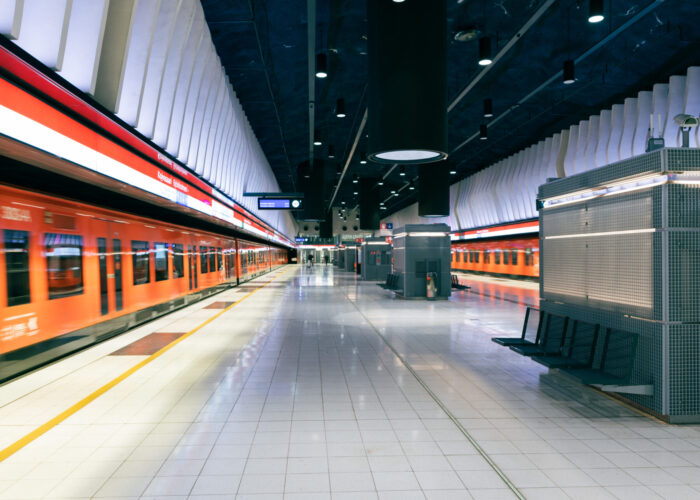
 Koivusaari metro station shows a wide tiled platform with orange trains and modern lighting in a clean underground space.

Helsinki’s metro network may be simple, but it works. Several of Helsinki’s metro stations double as civil defence shelters. Shown here is Koivusaari metro station, opened in 2017.

Finland’s approach to civil defence stands out internationally in three key ways. First, the commitment has been long-term: shelters have been built and maintained for decades. Second, unlike in many other cities, the system is unusually transparent. There are more than 50,000 shelters nationwide, and most Finns know where their nearest one is located.

Third – and perhaps most strikingly – many shelters are in active daily use. Underground spaces house playgrounds, gyms, car parks and swimming pools. In apartment buildings, shelters often double as storage rooms.

“It would be foolish not to use this capacity,” Pasi Raatikainen from the Helsinki City Rescue Department says.

Active use keeps the spaces in good condition and familiar to residents. If an emergency were ever to arise, people would not be entering an unknown place.

“There’s a sense of security in knowing this is somewhere your child has played,” Raatikainen says.

Sporting through the rock

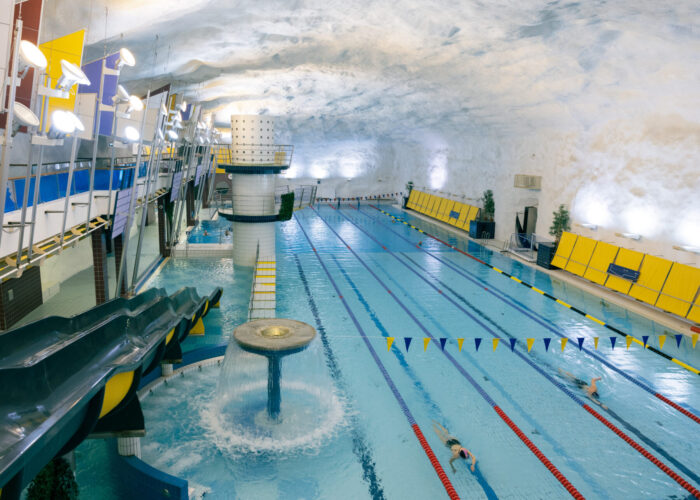
A view of Itäkeskus swimming hall shows lap lanes and water slides built inside a cavernous rock space.

Opened in 1993, the Itäkeskus Swimming Hall and multi-purpose complex welcomes around 375,000 visitors annually. In addition to pools and saunas, it houses gyms and sports halls.

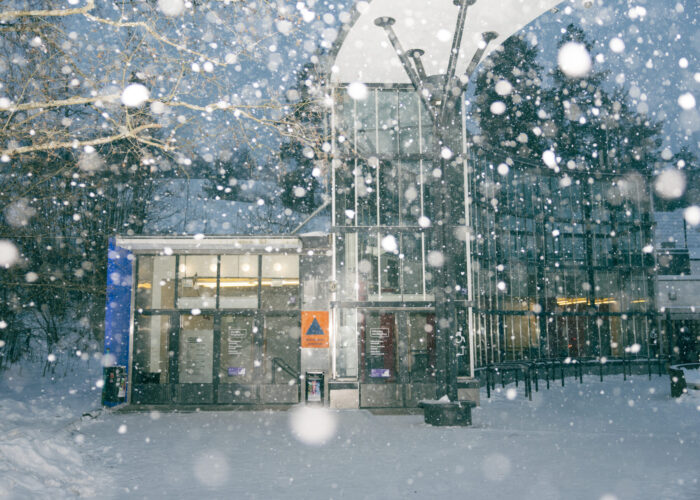
Outside, wet snow falls heavily. Inside, the air is warm and humid. Pools shimmer under artificial light.

The Itäkeskus Swimming Hall is opening for the day. Swimming is one of Finland’s most popular pastimes: lakes and beaches in summer, indoor pools in winter.

Above the hall lies some 50 metres of solid rock.

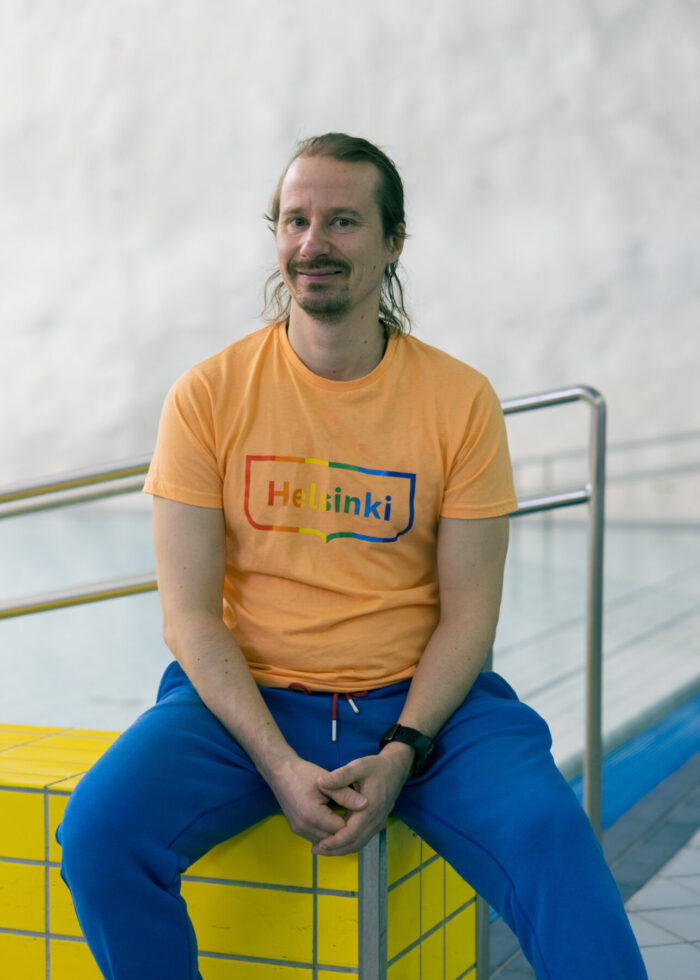
A man sits beside an indoor pool, dressed in a bright T-shirt and blue trousers.

Team manager Ville-Pekka Laukkanen is also a trained swimming instructor. “Though I swim far too little myself,” he admits.

“People don’t really think of this as a shelter,” says Ville-Pekka Laukkanen, the hall’s team manager.
“They see it as a swimming pool that just happens to be underground.”

Snow falls heavily outside the glass entrance to the Itäkeskus underground shelter.

A major renovation of Itäkeskus Swimming Hall is scheduled to begin in 2028.

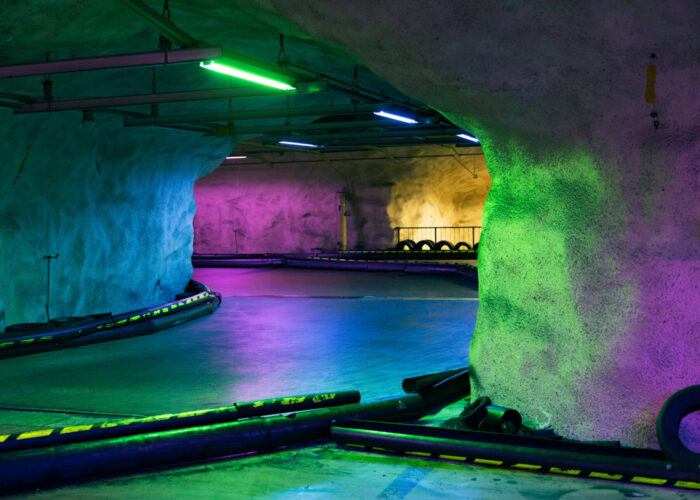
The same logic applies nearby, in the Myllypuro district, where Formula Center Helsinki operates a 300-metre indoor karting track carved deep into the bedrock.

An empty underground karting track curves through a concrete tunnel lit with colourful neon lights and lined with tyre barriers.

Almost all civil defence shelters can be taken into use immediately; the precondition is that they must be fully operational within 72 hours. Formula Center attracts plenty of workplace groups and first-timers keen to try their hand at karting.

Rain and wind are irrelevant here; conditions remain constant, lap after lap. Underground, sport becomes immune to weather.

When drivers finally emerge back on street level, the sudden daylight is almost blinding.

Punk, metal – and civil defence

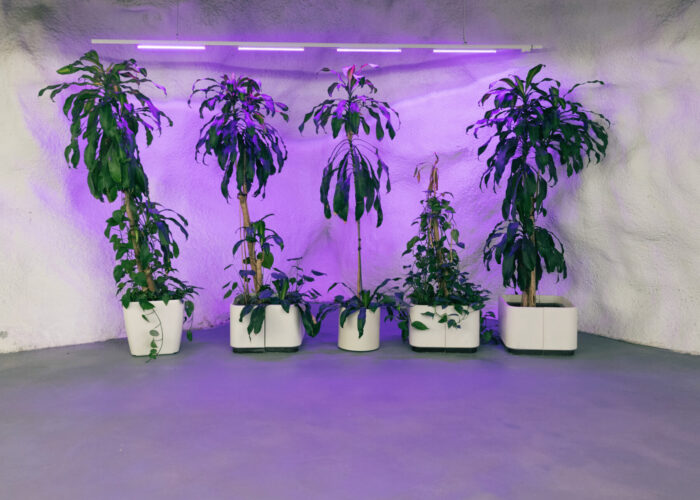
A row of tall potted plants stands against a concrete wall under purple grow lights in an underground room.

Most shelters have been funded either by municipalities or private actors, guided by national legislation and state oversight. In Finland, shelters have been required to be built by law for over 70 years.

While Helsinki’s underground city is unusual, it is neither finished nor static; nor is it meant to be. Like any infrastructure that matters, it remains in a state of constant adaptation.

Pasi Raatikainen saves one final observation for last. It has less to do with emergency planning and more to do with culture.

“Finland has some of the world’s best punk and heavy metal bands because of our civil defence shelters,” he says, grinning.

For decades, bands have rehearsed underground, tucked away in soundproofed spaces carved into the rock. Affordable rehearsal rooms are hard to find elsewhere but below Helsinki, they have long been part of the urban fabric.

“Bands genuinely still rehearse underground,” Raatikainen says. “Where else would young people find spaces like these?”

Beneath Helsinki, it seems, resilience has fostered not only security, but everyday life such as play, movement, music and community.

Text and photos by Emilia Kangasluoma, January 2026

Finnish actor Alma Pöysti believes in curiosity, compassion and communication

In early 2024, actor Alma Pöysti (born in 1981), shifted her attention from the silver screen to the audience – not to watch herself, though, but to observe the reactions of the viewers.

She was on an international promotional tour for her film, director Aki Kaurismäki’s Fallen Leaves, and noticed something quite special.

“No matter where we were in the world, people were amused and touched by the same things in the film,” Pöysti recalls. Her portrayal of Ansa, a working-class woman moving from job to job, earned her a Golden Globe nomination.

Now, fresh from rehearsal for an upcoming project, Alma Pöysti sits down to discuss how, exactly, one reaches that sense of cultural universality, and how that can bring us closer to each other.

1. Caring

“As long as we have compassion for one another, we will have hope.”

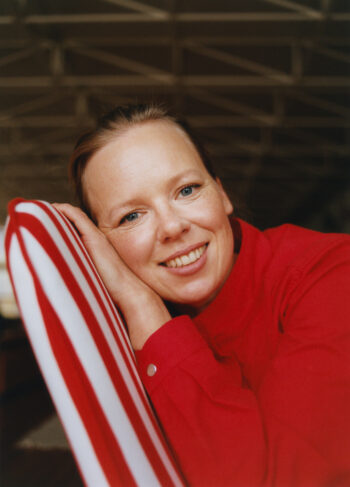
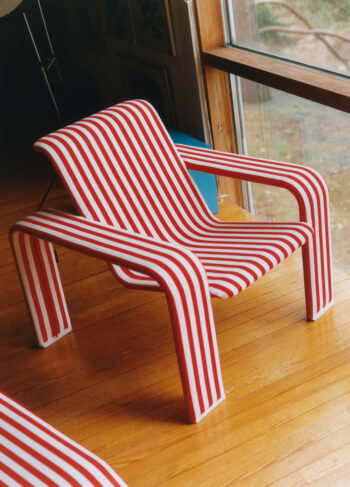
A woman smiles while reclining against a red-and-white-striped chair.

Alma Pöysti brings her distinct charm to every role, whether on stage or screen.Photo: Mikael Niemi

Before nominations, awards and foreign press, there were plays, domestic projects, and voice acting. Pöysti’s breakthrough performances have come relatively late in her career.

While promoting Fallen Leaves, Pöysti had a rare opportunity to witness how a film resonates with its audience. Despite being filled with inherently Finnish references – silent ­bars, pints and the needle drop of legendary Finnish rock band Hurriganes – the movie managed to touch audiences in the United States, Japan, Mexico and elsewhere.

“I think the movie’s magic lies in its humanity,” Pöysti says. “As long as we have compassion for one another, we will have hope.”

She is referring to not only the main romantic dynamic between her and Jussi Vatanen’s characters, but to all of the relationships in the film – and in life in general.

“Care isn’t just about romantic relationships. It also extends to dogs, friends, colleagues and nature. The world operates through connections.”

The dog she refers to, by the way, is her Fallen Leaves co-actor, coincidentally also called Alma. She’s a stray that Ansa rescues. Pöysti puts down her cappuccino and gushes.

“Such a wonderful colleague. Very, very talented. Has a great sense of humour and rhythm.”

In Fallen Leaves, the connections are built through gestures and blink-and-you-miss-it moments. Rescuing a dog. A shy smile, a subtle wink, a hand squeeze. Movies can drown the theme of love under a swelling soundtrack, overflowing dialogue and fireworks, but when you strip all that away, what remains is the core: caring.

Pöysti’s recent and upcoming film projects touch on relationships, caring and different phases and forms of love in one way or another. In Tove, she plays Finnish artist and writer Tove Jansson as she meets theatre director Vivica Bandler, one of her great loves. In Four Little Adults she stars as Juulia, who opens her marriage to explore polyamory, and in the upcoming thriller Orenda, she portrays a widow. The stories may be different and the themes unfamiliar, but the underlying experiences are widely shared.

“Everyone can recognise what loneliness is. And how difficult it is to fall in love or be shy, while still needing to be brave.”

Because if you’re not, nothing changes.

2. Exploration

“We should never rush to conclude that things are this way or that way.”

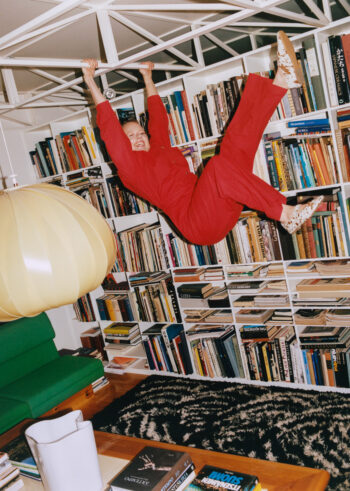
A woman playfully swings her feet while holding on to a metal bar in the ceiling structure of a home library.

At young age Alma Pöysti decided she would read all the books in the world.Photo: Mikael Niemi

When Pöysti landed the role of Tove Jansson in director Zaida Bergroth’s acclaimed biopic, she knew it would be a challenge. Portraying a beloved figure with a well-documented life and career came with high expectations.

“I remember Zaida saying, ‘Listen, Alma. It’s clear that we can only fail at this. But let’s fail in an interesting way’,” Pöysti recalls.

With this, they not only granted themselves permission to fail but also a clean slate. It allowed them to explore the idea of Tove Jansson and present her in a new light. The approach worked. As a critic at Helsingin Sanomat, the largest daily in the Nordic countries, sums it up: When Jansson dances, the viewer can feel her shaking off the expectations and demands the outside world places upon her.

It’s clear that Pöysti is willing to challenge both herself and the creative process. She doesn’t want to view any situation or thought as fixed; instead, she approaches the artistic process as an ongoing exploration.

“We should never rush to conclude that things are this way or that way,” she says. “Exploration and curiosity are healthy things: without them, you risk getting stuck. That can be quite dangerous in life, culture, art or politics.”

One of Pöysti’s favourite methods of exploring new points of view is reading books. Ever since childhood, she’s been a voracious reader: first listening to her mother read to her out loud, later secretly reading in her room under the covers by flashlight.

“I decided at a young age that I would read all the books in the world. I was very excited about it for a while, until I realised I would never have enough time for it,” she says.

3. Listening

“Our ability to listen and communicate is our greatest chance for survival.”

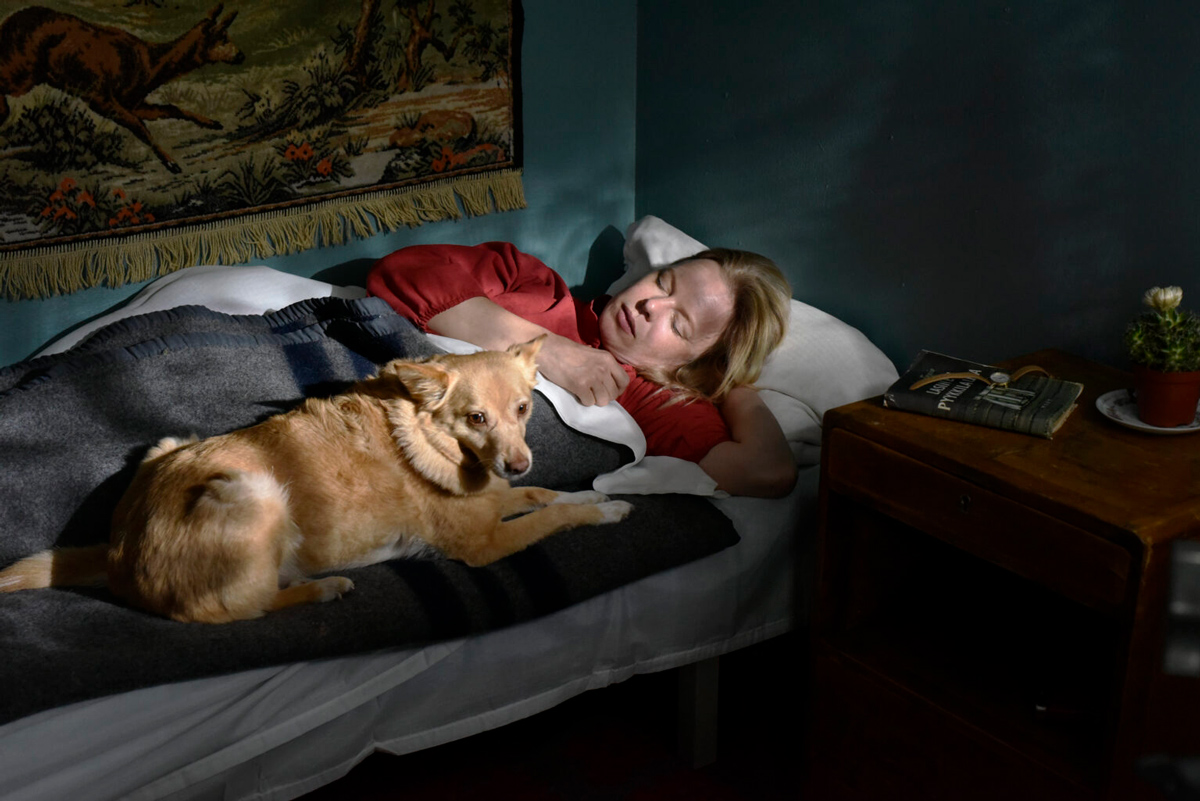
A still photo from the film Fallen Leaves, showing a woman lying in bed with a dog lying next to her.

One of Alma Pöysti’s co-actors in Fallen Leaves was a dog whose name also happens to be Alma.Photo: Malla Hukkanen

Every spring, some of the most prominent literary figures in the world gather for the translation literature festival Helsinki Lit. For the past three years, Pöysti has hosted the festival. While Pulitzer and Nobel winners take the stage, it’s the audience and the fact that the tickets sell out as soon as they’re out that leaves Pöysti in awe.

“People listen to these discussions between authors and translators so intently,” she says.

“It brings me a lot of solace. Despite how it feels sometimes, we’re interested in other humans and other worlds.”

Creating art during a time of global turmoil, pandemic, economic hardships, war and the climate crisis has often left Pöysti feeling like her faith is being tested. Yet, it’s moments of connection that give her hope – like witnessing how the festival audience is ready to listen.

Or moments of appreciation from moviegoers for the way Fallen Leaves handles Russia’s attack on Ukraine: in several scenes, the characters listen to radio reports about the war. Viewers have appreciated that the war is addressed as part of the film’s narrative and Kaurismäki’s courage to do so, says Pöysti.

“We need to be able to talk about everything, the dramatic things, too. If we don’t, they fester, and we will never learn from our mistakes. Our ability to listen, remember, communicate and feel empathy is our greatest chance for survival.”

However, there is a certain beauty in quietness, too. Some journalists and viewers have grappled with the amount of silence in Fallen Leaves. The characters themselves are at ease with it, drinking colourful cocktails or listening to karaoke in comfortable silence. So is Pöysti.

“When there’s little dialogue, you get the opportunity to listen to the silence. That’s quite special.”

But when there is dialogue, it gives voice to the underdogs. Pöysti thinks this is something Tove Jansson and Aki Kaurismäki, both globally recognised Finnish artists, have in common; they defend the quiet people and their shyness.

“Through their works we get to hear the creatures and the people who don’t get their voices heard,” she says.

And then there’s the power of culture and art, which operates beyond words. Pöysti speaks fondly of how music can help unlock doors for which you may not yet have the keys. When she was younger, she played the clarinet, and still reads sheet music and scores. She narrates operas and fittingly plays an opera singer in Orenda.

“Music and dance allow you to reflect on something beyond logic and reason. Anything that’s not verbal or visual is crucial, as it nurtures the imagination; especially since we live in such a visually dominant world.”

4. Universality

“When you’re brave enough to dive deep within yourself your work becomes universal.”

A modern red-and-white striped chair positioned near a window.

Alma Pöysti’s photoshoot took place in the stylish studio home of design icons Vuokko and Antti Nurmesniemi.Photo: Mikael Niemi

In screenings of Fallen Leaves, viewers laugh at the deadpan delivery of lines and the absurdity of watching a zombie apocalypse movie on a first date. These aren’t exactly knee-slappers, jokes that make you howl with laughter, but they’re subtle, and they’re realistic. Life is absurd.

This is Pöysti’s first Kauris­mäki movie. While the director didn’t want his actors to prepare much for their roles, she re-watched all of his films in order to place her character and the story within a continuum of his works. Does Pöysti agree with Kaurismäki’s portrayal of Finland?

“Well, yes, we definitely have dive bars,” she says with a little laugh. But then she becomes more serious.

“We have these sorts of people and these silences. But we also have so much more: our humanity, our quirks, our vulnerabilities. And those are nothing to be ashamed of.”

Instead, culture manages to cross boundaries when it taps into this weirdness and vulnerability. You don’t need to speak a certain language or read subtitles in order to identify with a character who’s experiencing loss, falling in love or feeling ashamed.

“When you’re brave enough to dive deep within yourself, your work becomes universal,” Pöysti says.

If you try to please everyone and ensure that everyone understands and likes us, we can easily end up with generalisations that don’t amount to much.

“Here in Finland, people might look at Kaurismäki’s movies and not love the way he represents us. But I don’t think we understand how widely beloved he is. There are so many people who get him, who speak the same language.”

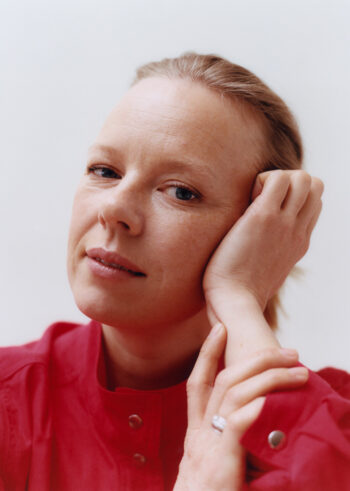
A woman rests her head on her hand and looks calmly and confidently into the camera.

Alma Pöysti’s portrayal of complex characters shows a deep understanding of human emotions.Photo: Mikael Niemi

  • Alma Pöysti (born in 1981) studied acting at the University of the Arts Helsinki, graduating in 2007.
  • Pöysti belongs to Finland’s Swedish-speaking minority. She has worked mainly at Helsinki’s Swedish Theatre but also at the Finnish National Theatre and various theatres in Sweden.
  • Pöysti has won two Jussi Awards, Finland’s premier film industry prizes.
  • In 2023 Pöysti was nominated for the Golden Globe Award for Best Actress for her main role in the Aki Kaurismäki film Fallen Leaves.
  • Passengers of Helsinki Regional Traffic trams and buses are very familiar with Pöysti’s voice, as she has been reading their stop announcements since 2015.

By Kristiina Ella Markkanen, ThisisFINLAND Magazine

Finnish app mobilises locals to clear out invasive plants

For the third consecutive year, Espoo, a municipality just west of Helsinki, mobilised citizens to fight invasive species with a mobile game. Through the Crowdsorsa app, 281 players mapped, removed and documented lupine and Himalayan balsam across the city – and got paid for their work.

“One of the most encouraging outcomes was the strong participation of young people in this year’s missions,” says Crowdsorsa’s CEO Toni Paju. “In Espoo, teenagers accounted for nearly half of all users.”

To complete tasks, players recorded videos of invasive species sightings before and after removal. The videos were then uploaded through the app for quality review and approval.

Espoo’s invasive species mission was part of a broader international effort, where Crowdsorsa was used to fight invasives in more than 70 municipalities and cities across Finland, Sweden and Canada.