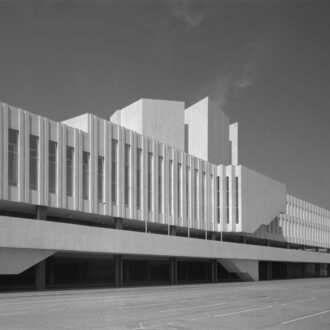
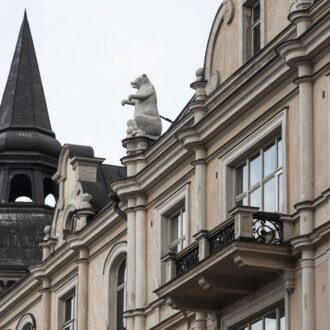
Finland’s internationally acclaimed architectural heritage has received its latest global recognition as Aalto Works, a collection of 13 buildings and sites designed by Alvar, Aino and Elissa Aalto, joins the Unesco World Heritage List.
The Aalto Works ensemble comprises examples of modern architecture across Finland, showcasing the work of one of the country’s most influential architectural families.
Completed between 1928 and 1988, the sites span both cities and rural communities, illustrating how the ideals of modern architecture were adapted to local needs. Characterised by a human-centred approach, Aalto architecture places people and everyday life at the heart of design.
The sites include Studio Aalto, the Aalto House, Finlandia Hall, National Pensions Institute (Kela) and the House of Culture in Helsinki, the University of Jyväskylä Aalto Campus, Muuratsalo Experimental House and Säynätsalo Town Hall in the Jyväskylä region, Paimio Sanatorium, the Seinäjoki Civic Centre, the Sunila Pulp Mill Residential Area in Kotka, Villa Mairea in Noormarkku, Pori, and the Church of the Three Crosses in Imatra.
The decision was made by the Unesco World Heritage Committee during its session held in Busan, South Korea, from July 19 to 29, 2026.
Finland’s Unesco World Heritage Sites
The Unesco World Heritage List recognises cultural and natural sites of outstanding universal value. It currently includes 1,273 sites around the world.
With the inscription of Aalto Works, Finland now has eight Unesco World Heritage Sites: seven cultural sites and one natural site.
Finland’s World Heritage Sites are Suomenlinna Sea Fortress, Old Rauma, Petäjävesi Old Church, the Verla Groundwood and Board Mill, the Bronze Age Burial Site of Sammallahdenmäki, the Struve Geodetic Arc, the Kvarken Archipelago, and Aalto Works.
By ThisisFINLAND staff, July 2026