An excited group of kids rings the doorbell of a house near the Finnish capital. A smiling neighbour opens the door.
After politely asking for permission, the children recite a traditional rhyme together while waving decorated pussy willow branches. The poem wishes health and prosperity for the coming year and ends with a playful exchange:
“Virvon varvon, tuoreeks terveeks, tulevaks vuodeks, vitsa sulle, palkka mulle!” (In translation: I wave a twig for a fresh and healthy year ahead; a twig for you, a treat for me!)
One by one, the children each hand over a branch and the homeowner places sweets in the baskets they carry.
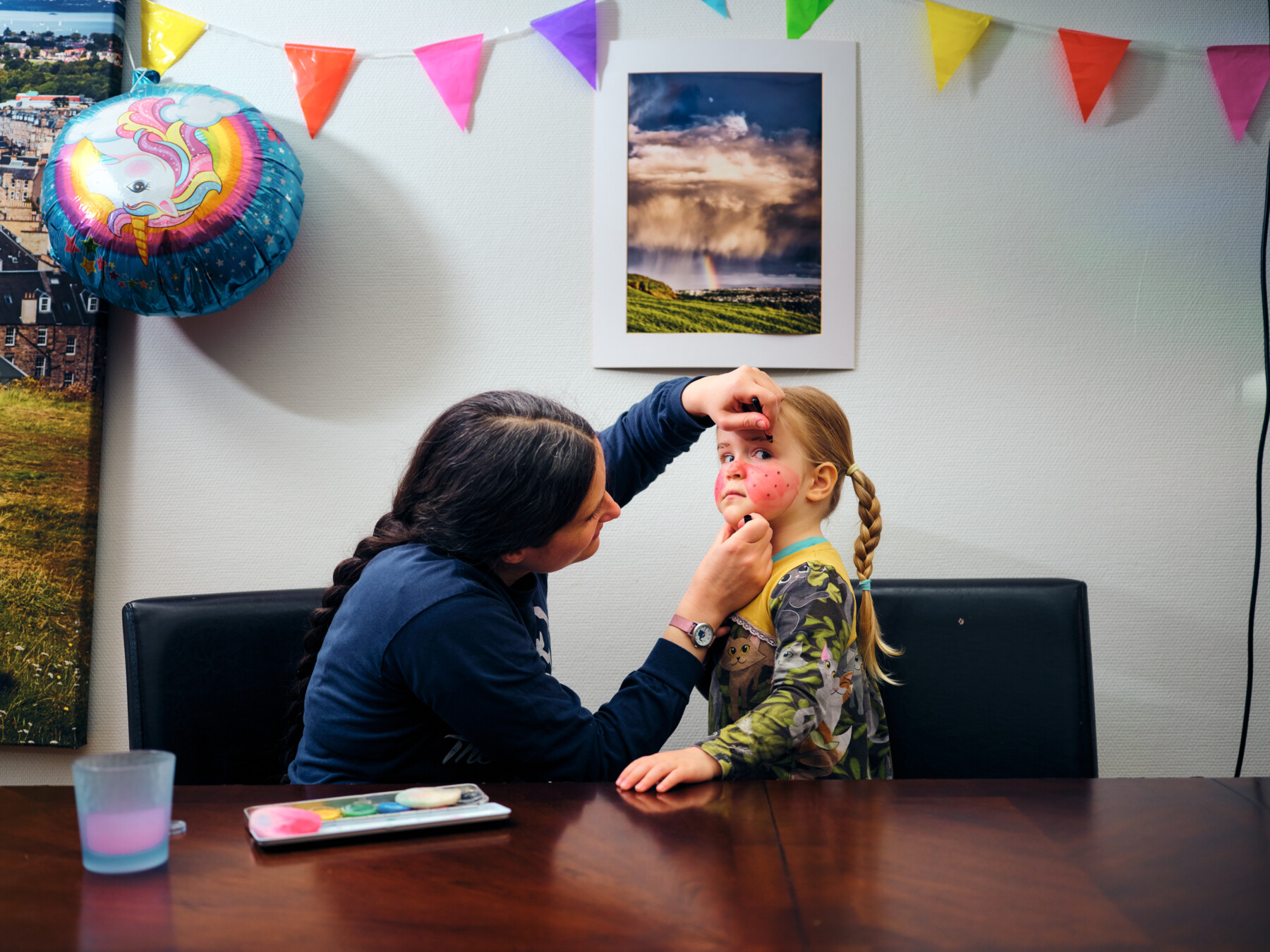
Ulrike Kivelä carefully applies Easter witch makeup to Felisa’s cheeks.
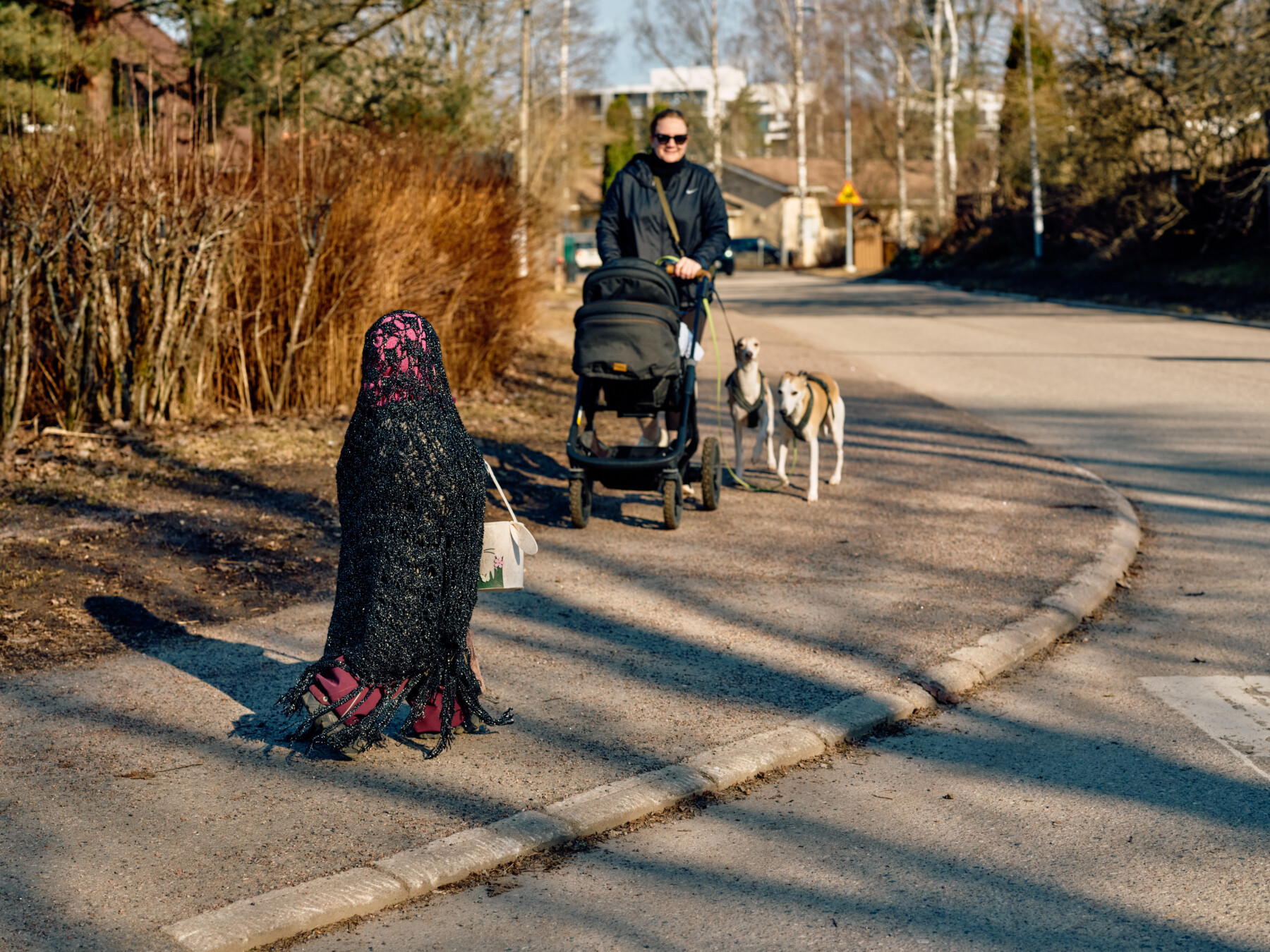
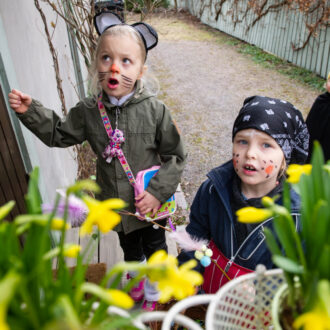
Little Felisa bumps into some neighbours on her way to the next house.
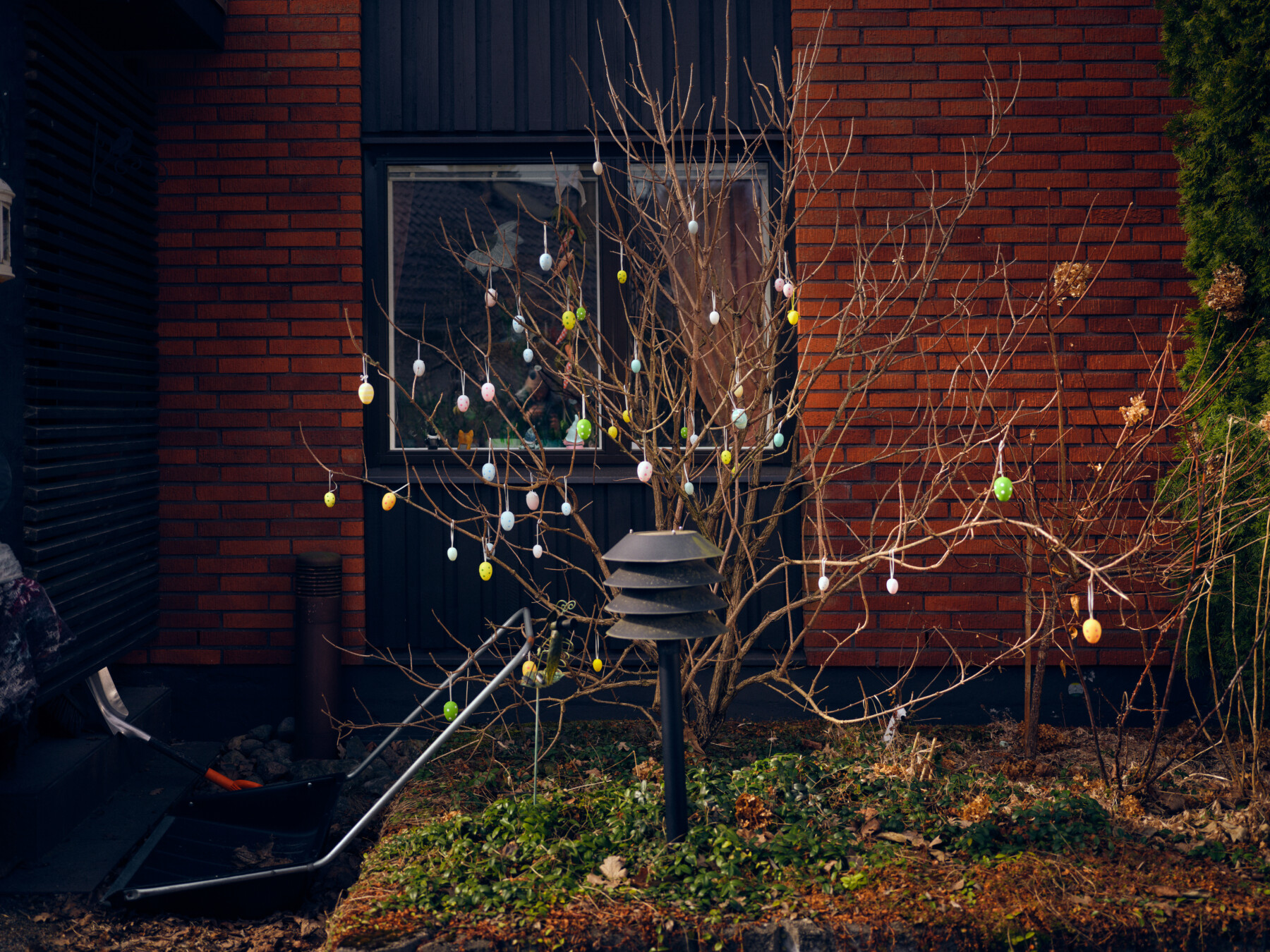
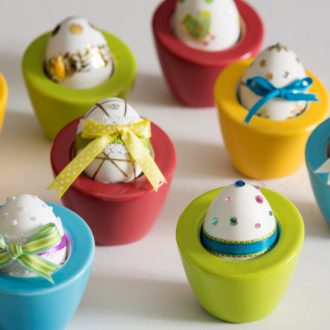
Easter decorations are already set out. The Easter egg, symbolising life and rebirth, is one of the most common decorations.
Easter is a Christian holiday, yet in Finland its traditions form a unique blend of ancient folklore and the celebration of spring’s arrival after winter.
Homes are decorated with colourful symbols of renewal – daffodils, freshly grown Easter grass and hand-painted eggs. But for many, the most anticipated tradition takes place on Palm Sunday or Holy Saturday, when children all around Finland dress up as witches and go from door to door, offering blessings and decorated willow branches in exchange for sweets.
We joined local children in the Lippajärvi neighbourhood in Espoo, west of Helsinki, to follow how the tradition continues today.
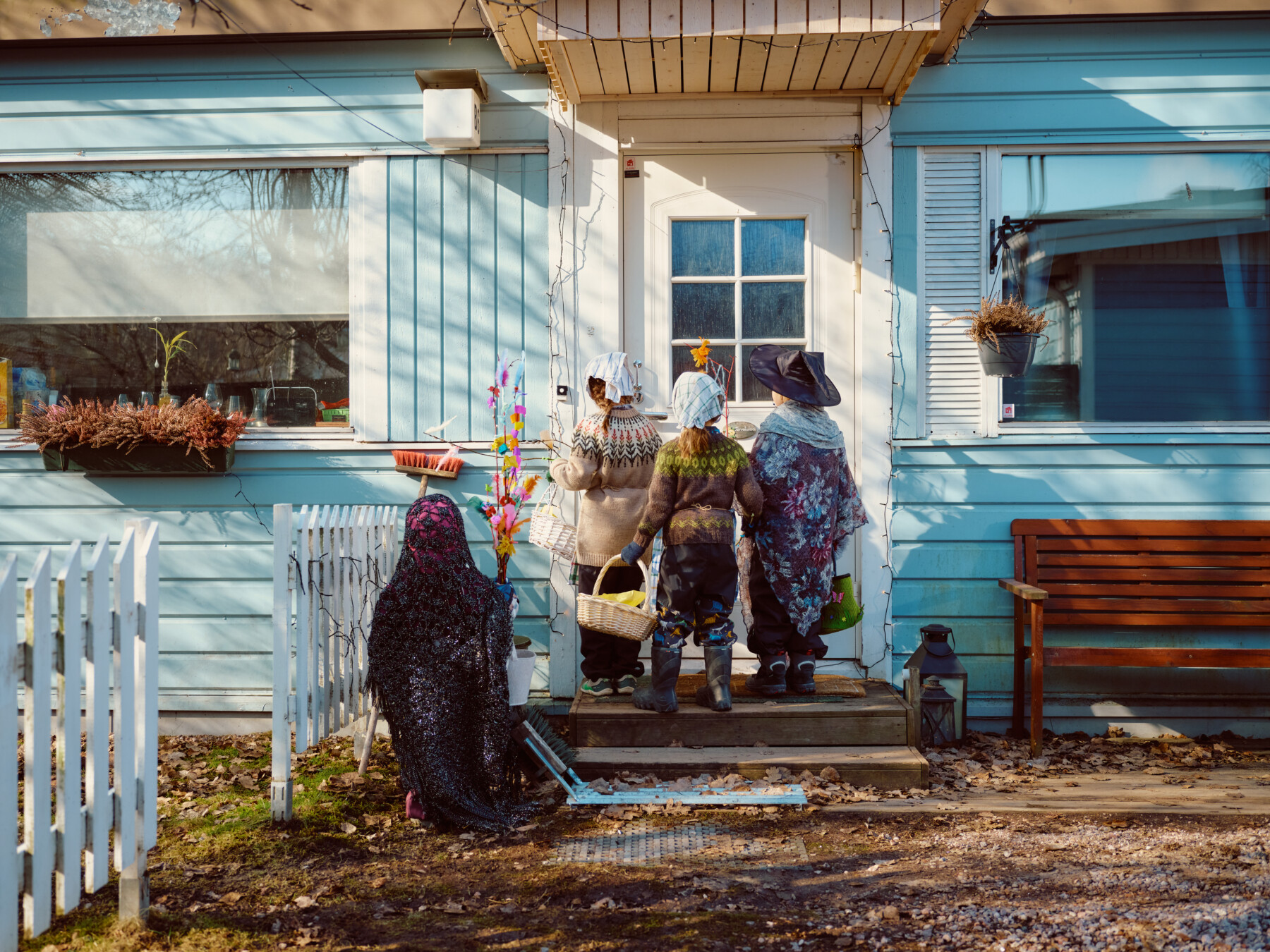
There’s no shyness in sight when the children ring the doorbell.
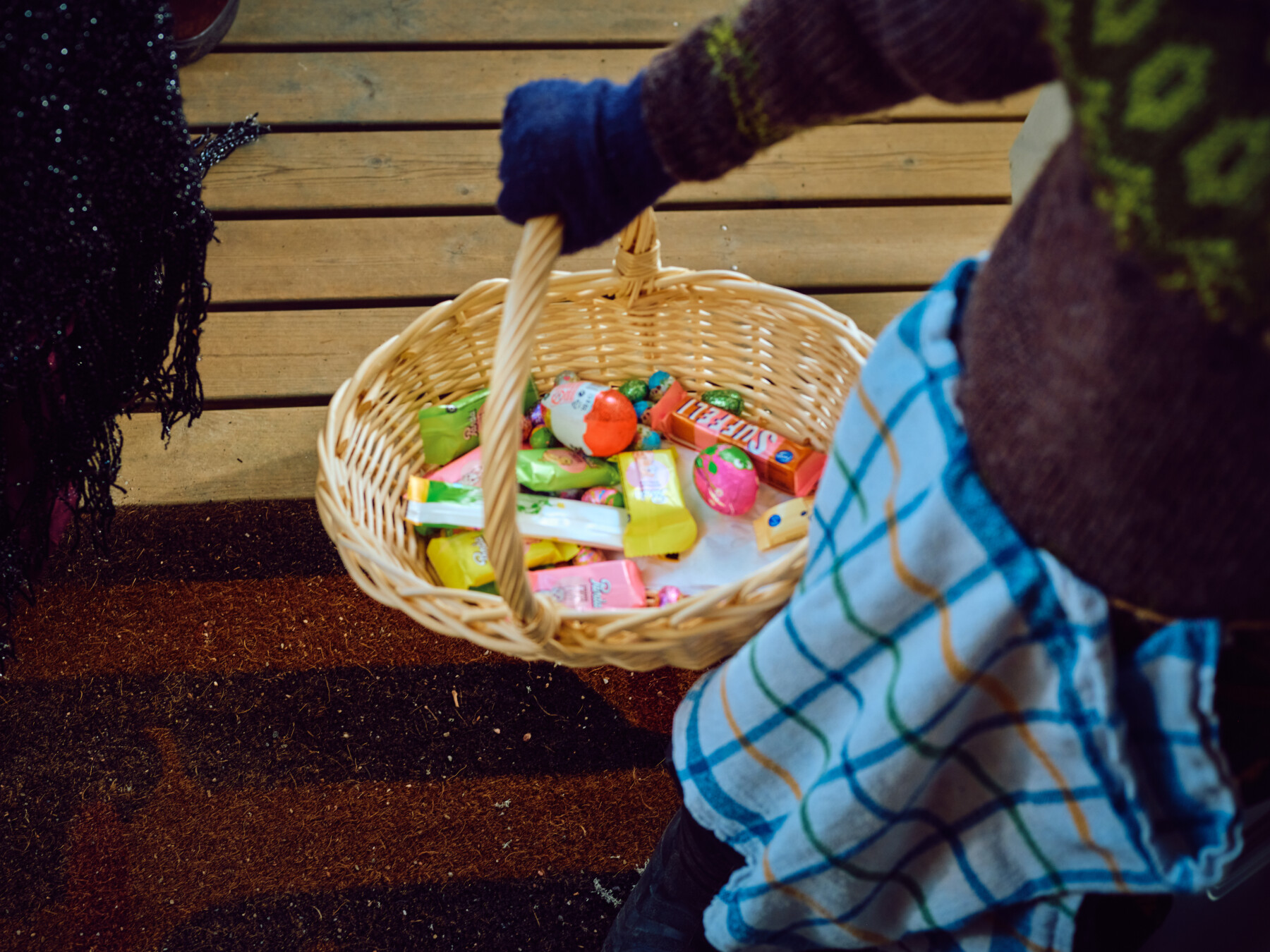
The day has been successful. Sweets are piling up in the baskets, and there are still a number of houses to go.
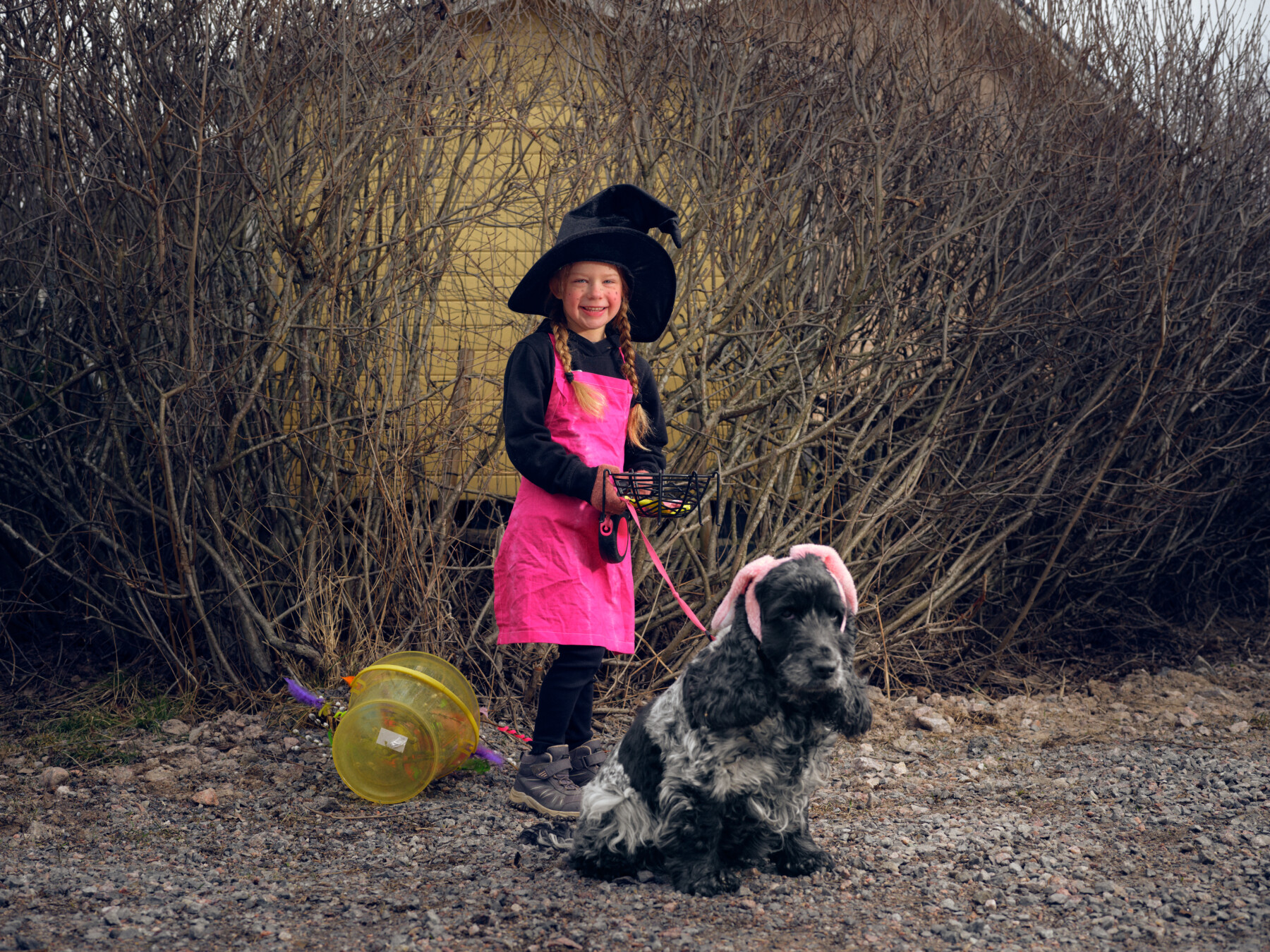
In the Easter spirit, the family dog is also wearing a pair of bunny ears, while Emily, 5, is dressed as a witch.
At the German-Finnish Kivelä family home, the day begins with a flurry of preparations. Mother Ulrike Kivelä helps Felisa, 3, and Tapio, 7, get into costume. She paints rosy cheeks and freckles on Felisa, while Tapio gets a little wizard’s moustache and beard.
The family is flying to Germany for Easter, but their mother deliberately booked a later flight so the children could take part in the Finnish tradition. “It’s important to create these memories for them,” she says.
Before heading out, the children meet up with family friends from the same neighbourhood. Viljo, 8, and Ivo, 5, are also dressed as witches, ready for the day’s adventure. Their mother, Daria Dunajewdka, carries a large bundle of beautifully decorated pussy willow branches that the children have prepared for the event.
Viljo, in particular, has been especially eager about decorating them – “for him, it’s even more important than the chocolate reward,” Daria says.
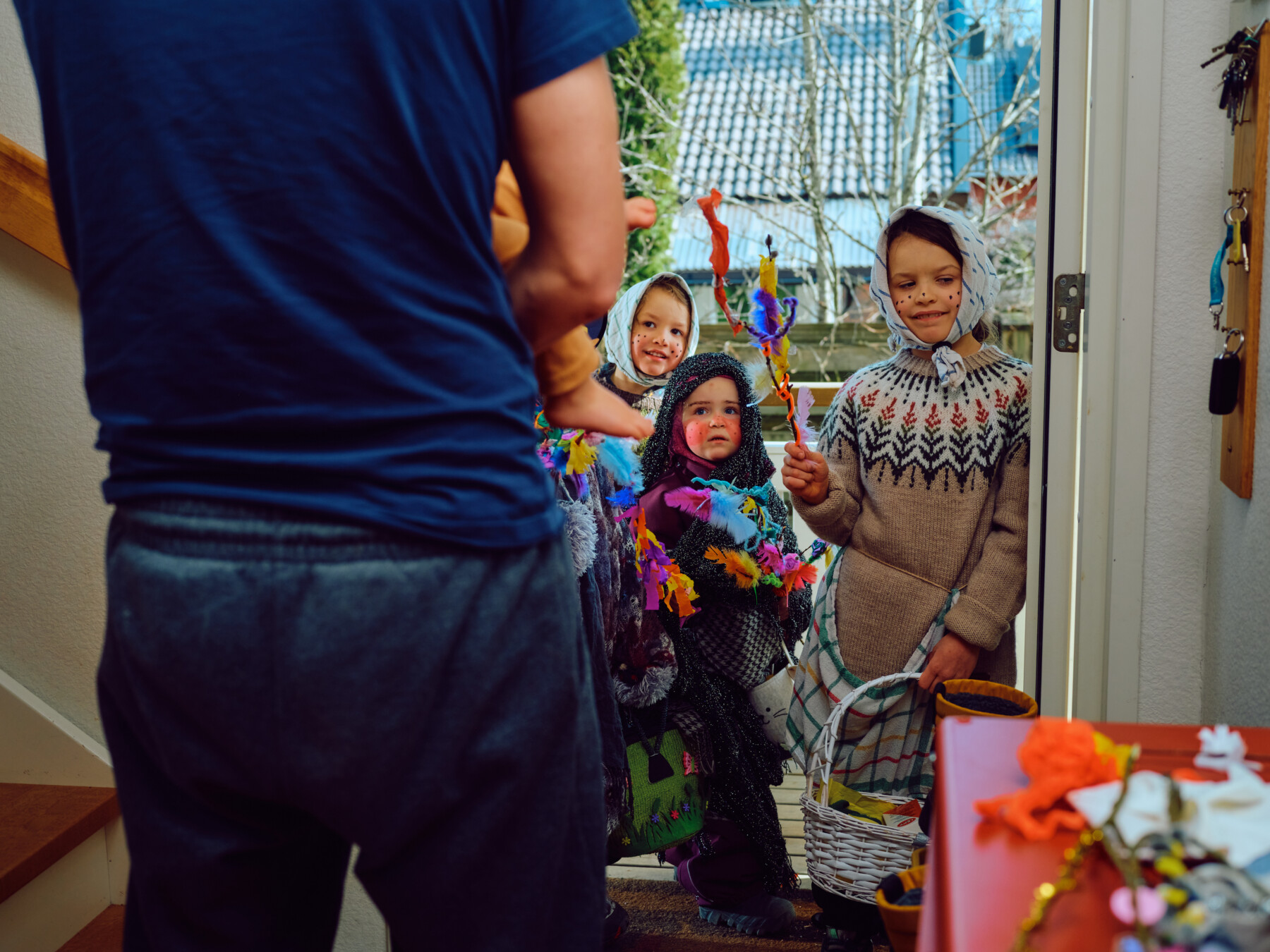
Ivo, Felisa and Viljo are greeted by the residents. In this family-friendly neighbourhood most people are prepared for Easter visitors.
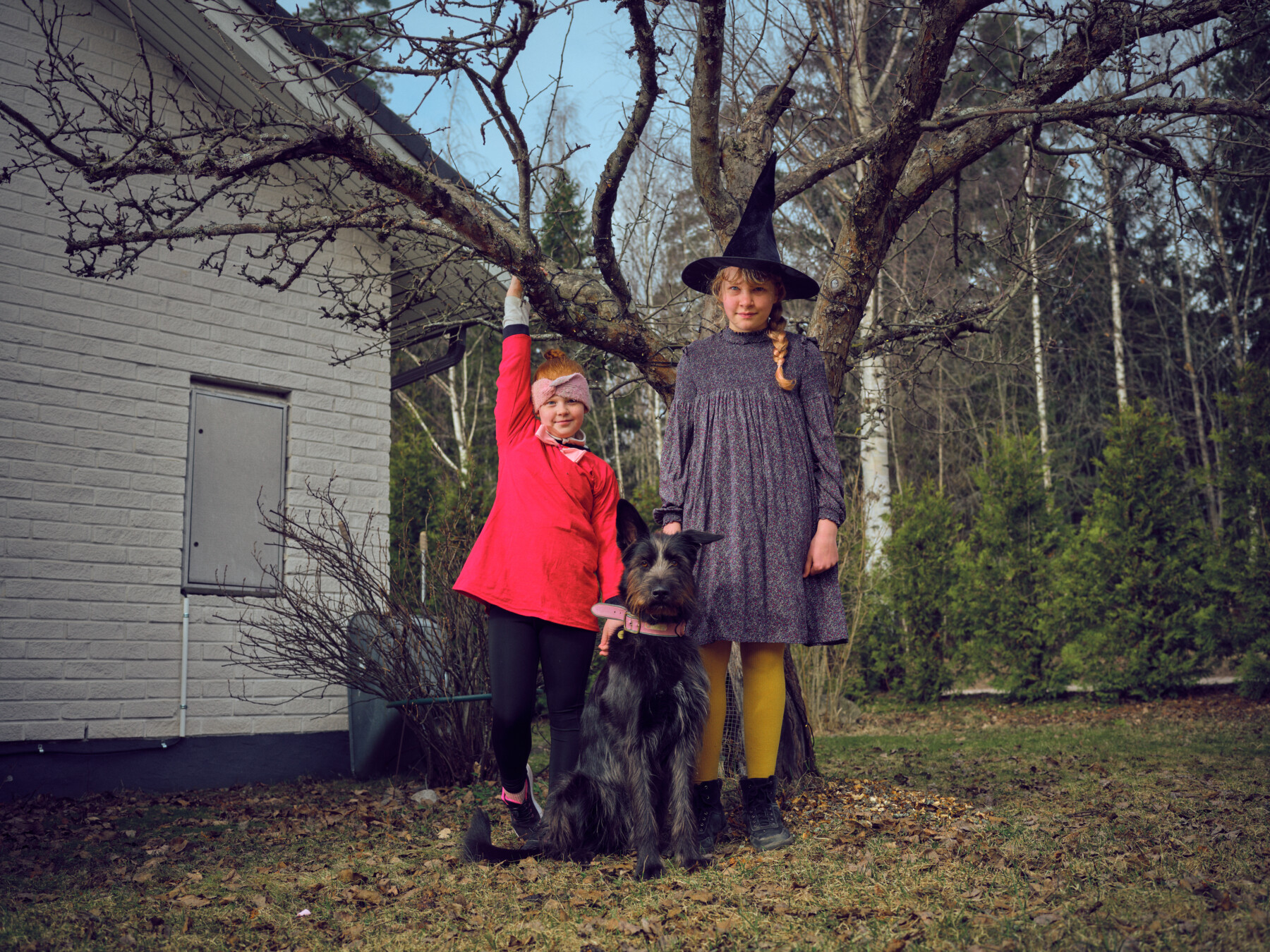
Friends Ella, 9, and Ida, 9, have a clever trick to collect candy faster: they each offer two branches at every door to double their reward.
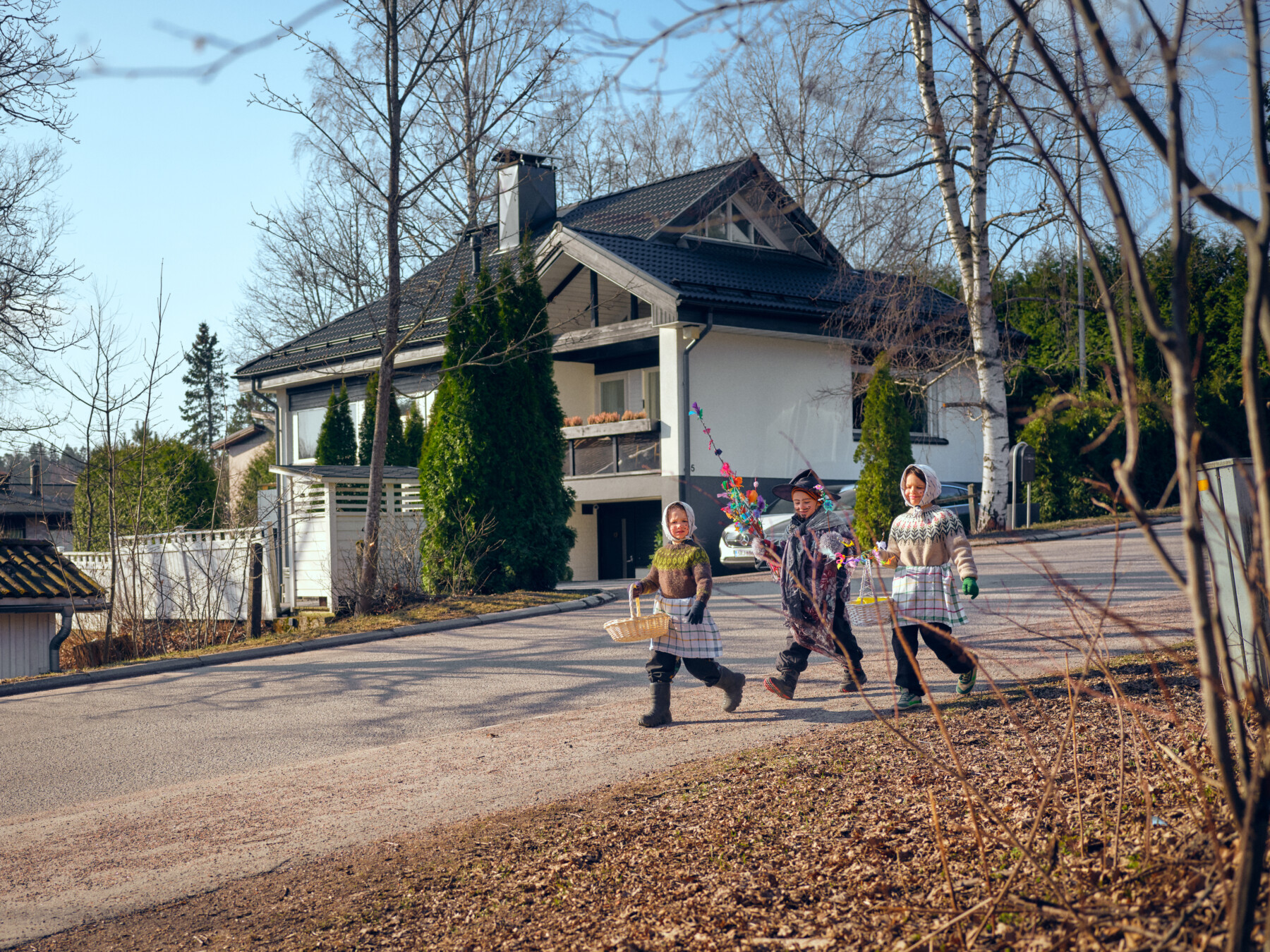
Little witches rush off to the next house.
The tradition of going from door to door at Easter is known as virpominen (“the act of wishing someone happiness with a willow branch”). It is a vivid example of how cultural traditions mix and evolve over time. The custom of blessing neighbours and relatives with willow branches originates in eastern Finland.
The branches symbolise the palm leaves that, according to the Gospels, people laid on the ground when Jesus entered Jerusalem on Palm Sunday.
Dressing up as witches, on the other hand, comes from western Finnish folklore, where people once believed that witches and evil spirits roamed freely around Easter. To ward them off, spells were cast and bonfires were lit. Over time, these two traditions merged, and the blessing ritual was combined with the playful witch costumes.
The next stop is at the children’s kindergarten teacher’s door. Most of the other visits are also at familiar houses in the family-friendly neighbourhood. From the smiles that greet them, it’s clear the little witches are welcome visitors. The steadily growing piles of sweets in their baskets are another sure sign that they were expected to call.
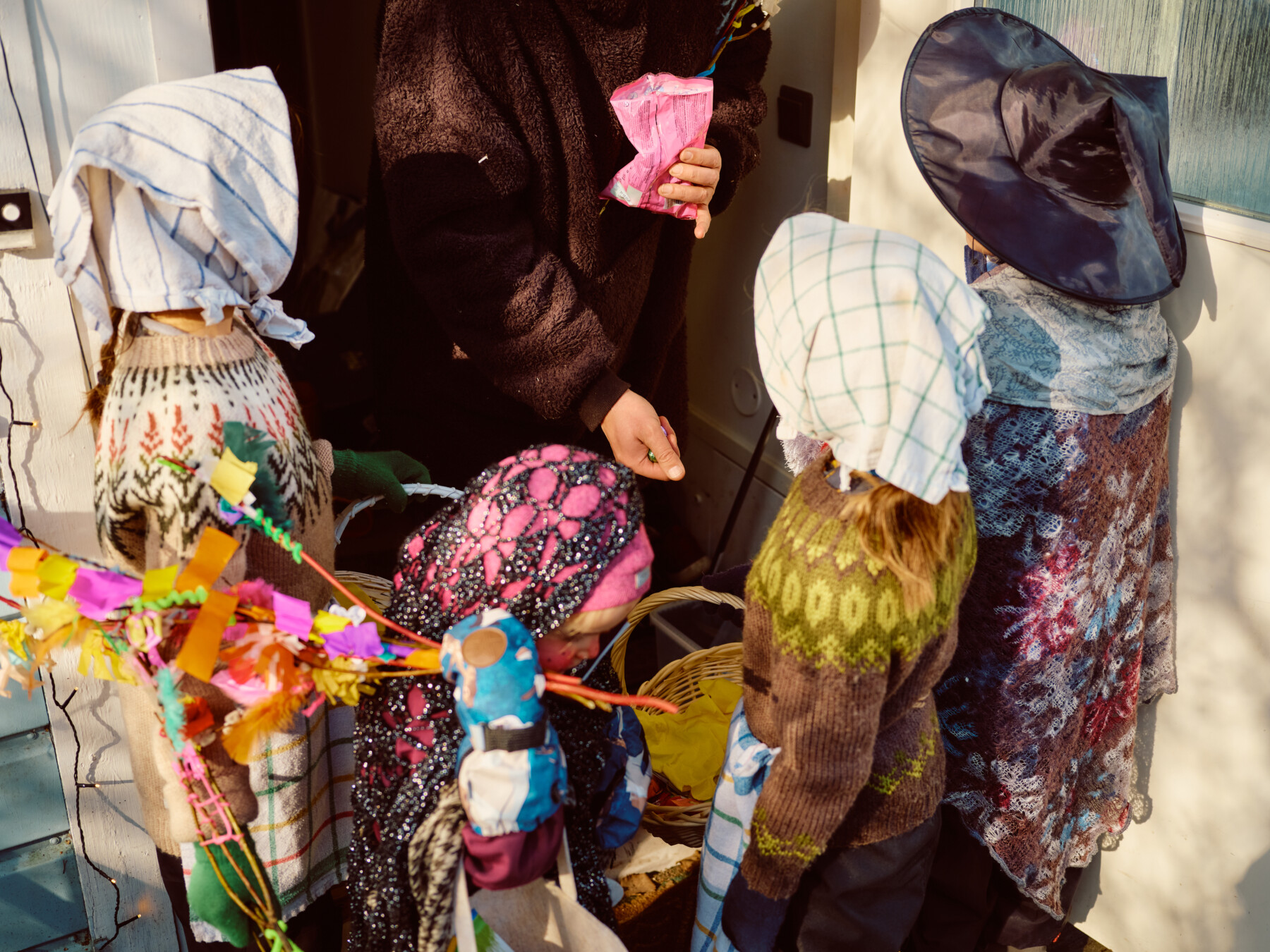
A decorated willow branch is exchanged for sweets. Typically they are chocolate eggs and other Easter-themed treats.
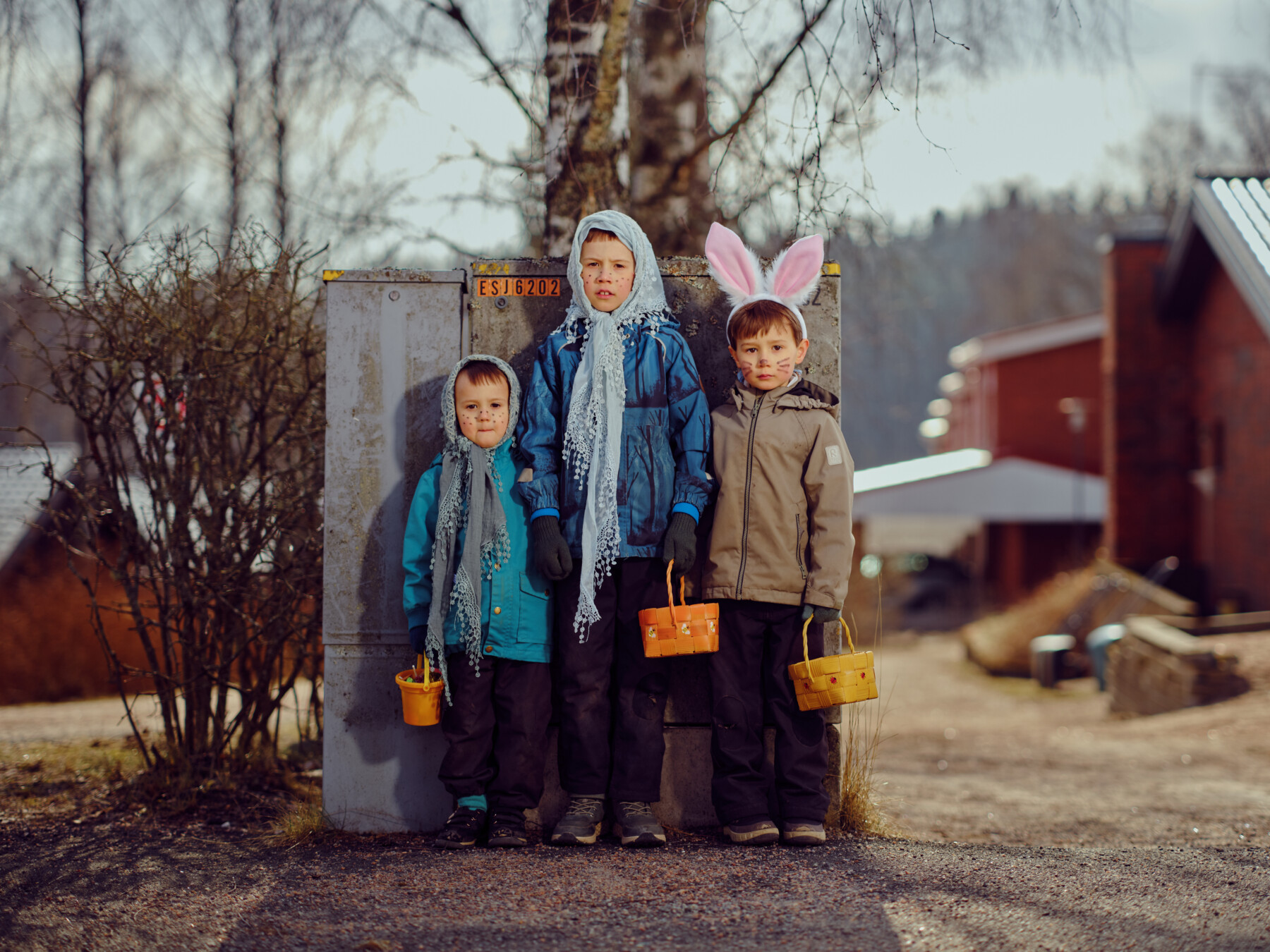
Brothers Samuel, 3, Mikael, 7, and Simeon, 5, have finished their rounds. They still have to wait until lunch is over before tasting the day’s candy catch.
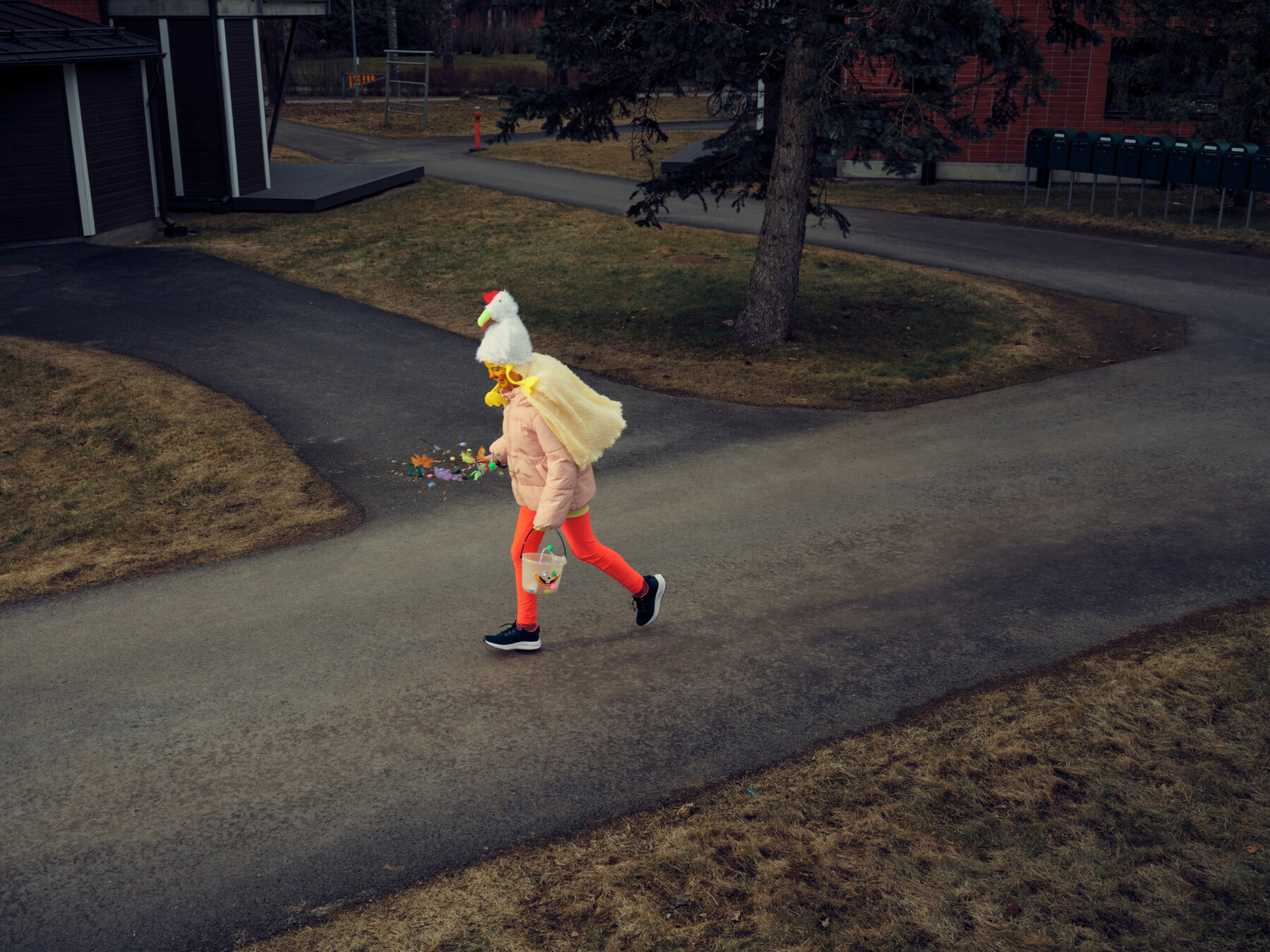
Lilian, 10, hurries to the next house. Most years she has dressed as a witch, but this year she is trying something different.
More children appear along the way on the sunlit streets. Most are dressed as traditional witches, but among them are also chicks, bunnies, a dinosaur and even a Moomin character, Little My (the world-famous Moomins are the creation of Finnish author and artist Tove Jansson). The variety of costumes shows how the tradition continues to evolve and adapt. The children pause to compare their catches before setting off again. The group hurries to the next house with such excitement that the youngest, Felisa, struggles to keep up.
As their route nears its end and the idea of heading home is mentioned, the children protest in unison: “Not yet, not yet!” Only when their last branch has been handed out are they finally ready to return, their baskets heavily laden with sweets.
For these little witches, the day has been a success.
Text by Ilona Koskela, photos by Mikko Suutarinen, April 2026