At 19, Emmi Salonen moved from Finland to the UK to improve her English. She ended up staying to study graphic design, and eventually built a successful international career.
She founded her own studio in 2005. Her work ranged from exhibitions and book design to visual identities, and took her across the globe. Over time, the pace became unsustainable and the growing workload led to burnout.
“I lost touch with myself, my creativity and what brought me joy,” she says.
In her book, The Creative Wellbeing Handbook (BIS Publishers, 2025), Salonen describes what happened: “I started noticing a new level of exhaustion after work each day. I stopped seeing my friends and started neglecting exercise. Over weeks that became months, I realised I felt increasingly unwell. More worryingly to me, I realised that I no longer wanted to create.”
As a child, she had developed a connection to nature. As an adult, that bond came to shape both her work and her recovery.
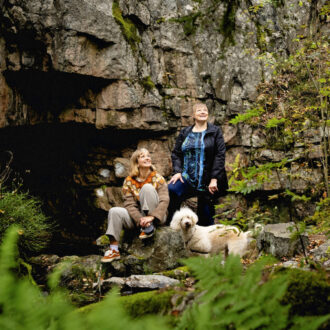
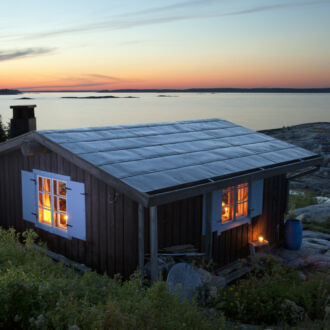
Growing up in Turku in southwestern Finland, Salonen had spent her summers at her family’s holiday cottage in the archipelago. There, she and her siblings roamed forests and coastal cliffs, embraced the seemingly endless white nights (when the sun hardly sets at all) and witnessed nature come alive after the long Nordic winter.
A year of recovery and reflection
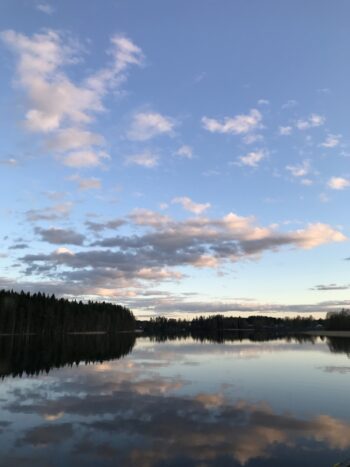
Spending summers at the family cottage in the southwestern Finnish archipelago, Emmi Salonen realised that she gains a lot of her energy from nature.Photo: Emmi Salonen
After realising she had burnout, Salonen took a year-long sabbatical, travelling alone to recover her energy and reflect on what truly mattered to her. During this time, she began to shape a personal framework that would become the foundation of her five-step wellbeing approach.
Her family encouraged her to share her ideas with others facing similar challenges. While hosting online talks and workshops during the Covid-19 lockdown, she noticed that her framework resonated with people. As restrictions eased, invitations arrived from conferences, universities and organisations in countries such as Japan, Australia and Canada.
“It took me by surprise, how much demand there was for a structured approach to healing,” she tells me.
From personal insight to practical workbook
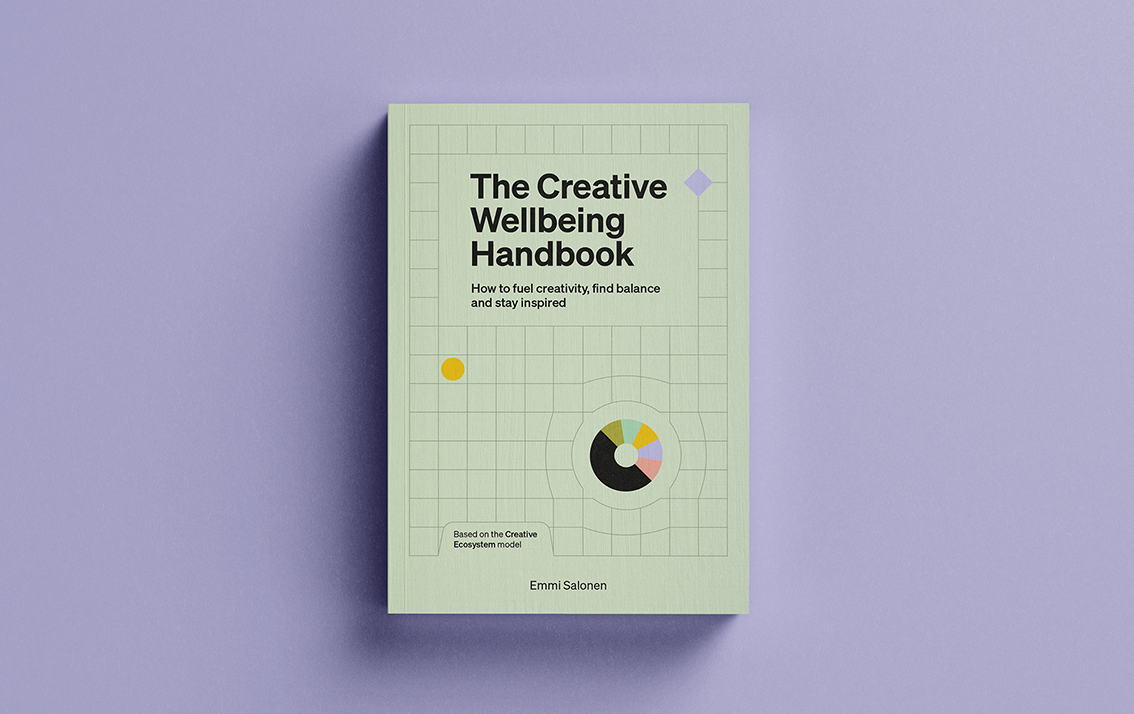
Emmi Salonen’s book includes easy exercises and tips to increase happiness and find sources of energy in everyday life.Photo: Emmi Salonen
Salonen eventually decided to document the process that had helped her recover. Nearly two years later, The Creative Wellbeing Handbook was completed, combining research, writing and design into a practical tool.
“It is an exercise book where people can dive into the areas resonating with them, not just a story about my journey,” she says. Within three months, the publisher had to order a second print run.
At the core of Salonen’s approach are five interconnected elements.
The Creative Ecosystem: 5 elements of wellbeing
- Connection: Connecting with yourself is about understanding what gives your life meaning. For Finnish designer Emmi Salonen, this includes regularly engaging with other creative people and intentionally setting aside time each week for meaningful interaction.
- Wonder is rooted in curiosity. Inspired by nature, Salonen actively seeks time outdoors. As a visual person, she also looks for colours and patterns in everyday surroundings.
- Pause: Creating space for stillness is essential. One of Salonen’s daily practices is to avoid using her phone in the morning, allowing time for a calm and undisturbed start to the day. She encourages everyone to take a peaceful moment as a source of energy. “It is such a grounding way to begin the day,” she says.
- Movement supports both physical and mental wellbeing. Salonen takes daily walks, and highlights research showing that even short walks increase creative output by up to 60 percent. Walking can also have positive effects on dementia and depression. “Movement is also about keeping your mind flexible,” she says. “We all experience negative thoughts, but learning to shift our focus helps us manage anxiety.”
- Joy can be found in small, intentional moments, such as collecting fresh flowers or revisiting a happy memory. Simple practices can help boost positive emotions and overall wellbeing.
Distinctly Finnish viewpoint
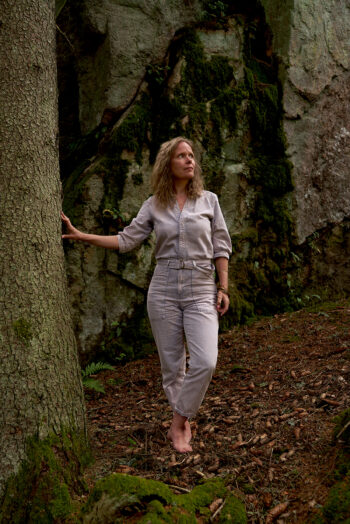
Photo: Jamie Thomas
Salonen sees a clear connection between her work and her Finnish roots. Growing up in a culture known for its practicality has influenced her systematic approach, while Finland’s deep relationship with nature continues to shape her philosophy.
“Finns listen to nature and retreat to it regularly,” she says. “It is one of the powerful ways we recharge.”
Each year, Salonen and her family return to their archipelago cottage for a summer creative retreat, gathering strength from being in nature. For many Finns, nature is a happy place to pause, reflect and reconnect.
“It was in the Finnish archipelago, where every detail in nature is interconnected, that I found the inspiration for the Creative Ecosystem,” Salonen says.
The science behind happiness
In addition to her work as a designer and author, Salonen is also a trained happiness facilitator who has studied positive psychology and wellbeing science. She refers to research by Sonya Lyubomirsky, which suggests that approximately 50 percent of happiness is influenced by genetics, 40 percent by intentional actions and only 10 percent by external circumstances.
“How we think and what we do has a significant impact, regardless of life’s challenges,” she says.
Salonen encourages people to begin by getting to know themselves. What brings you joy, what provides meaning and what influences your emotional state? This awareness, she believes, is the foundation for a more balanced and fulfilling life.
Her message is simple but powerful: Small, conscious changes can lead to lasting wellbeing.
By Catarina Stewen, June 2026