It began on her high school graduation day back in the 1990s, when 19-year-old Tytti Metsä held a bowed lyre, jouhikko in Finnish, for the first time. The instrument, handmade by her friend’s grandfather, was as beautiful to look at as it was to hear.
Its tone was soft yet startlingly human, almost hypnotic.
“Something about it felt irresistible”, Metsä says. She was instantly captivated.
Metsä already sang and played the piano and the kantele, a kind of zither that is Finland’s national instrument. Yet it felt as though the bowed lyre had been waiting for her.
An ancient instrument in modern hands
Pääskyläinen (Little Swallow, Bird of Daylight) is one version of the world-creation myths found around the globe. Through a series of wondrous events, a clever young girl runs to a smith to commission an iron rake tipped with rowan spikes. She uses it to gather the fragments of a broken bird’s egg from the sea; from its yolk, she creates the moon, and from its white, the stars.Video: Nina Karlsson and Annukka Pakarinen
The bowed lyre is a surviving branch of Europe’s early lyre tradition. Evidence suggests, there were bowed lyres as early as 800–500 BCE in Hungary.
During the Middle Ages, lyres were played across a vast area from France to Karelia. The bow was likely introduced in the British Isles, from which the instrument travelled north and east, eventually reaching Finland.
While many other bowed instruments slowly evolved into the violin family, the bowed lyre remained largely unchanged in remote villages, especially in Border Karelia in eastern Finland and in Estonia’s island communities.
Today, only a small number of Finns still play it.
Learning the instrument’s strange logic
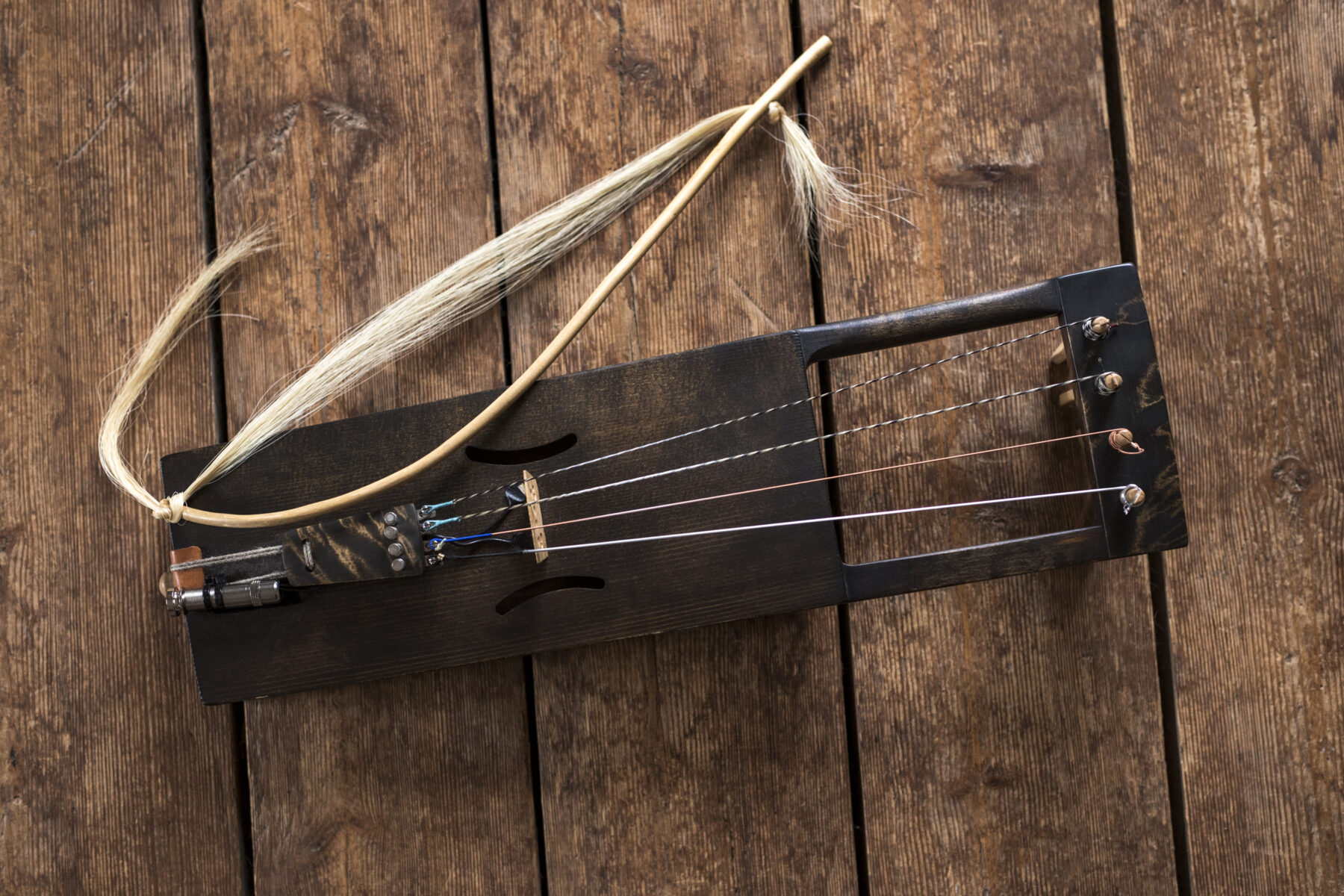
The bowed lyre is an instrument with a history stretching back millennia. In Finland, it has been used both for dance music and to accompany singing. Its closest relatives include the hiiukannel or rootsikannel in Estonia and the talharpa or stråkharpa in Sweden.
Metsä, now a singer, songwriter and bowed lyre and harmonium (pump organ) player, lifts her handmade willow bow, its horsehair drawn taut. She lowers it onto the strings and begins to play.
She first studied the instrument in Kaustinen – a small town in western Finland that happens to be the heartland of the country’s folk music tradition – under masters such as Risto Hotakainen and Ritva Talvitie.
There, Metsä also built her first bowed lyre. Fragile in tone, she says, but a beginning.
From the start, she composed within the instrument’s limits: the narrow pitch range and the bow’s bouncing polyrhythms.
“What fascinates me about a new instrument is how it changes the way you think,” she says. “It can throw your musical logic off balance, in a good way.”
Those constraints led her into what she calls “meditative minimalism”: a slow, subtle aesthetic built on tiny shifts against a steady flow.
“It was almost a mind-altering experience,” she says.
She later continued her studies at the prestigious Sibelius Academy’s Department of Folk Music.
The sound becomes a voice: Tytti Metsä & Hyypiöt
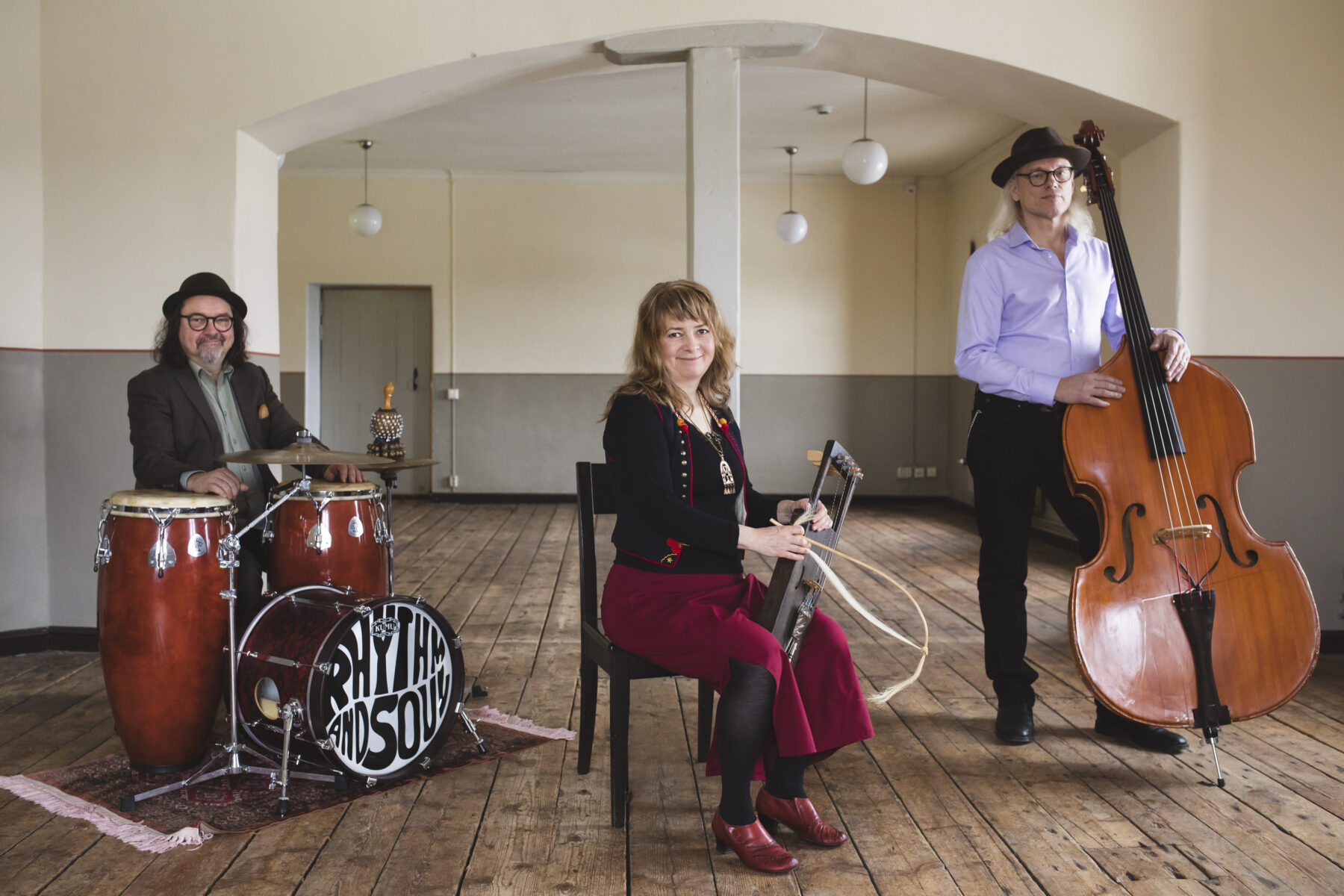
Once Tytti Metsä started playing with drummer Janne Haavisto and bassist Miikka Paatelainen, she felt the stories in her songs began to take on new layers of meaning.
Today, Metsä performs with drummer Janne Haavisto and bassist Miikka Paatelainen as the trio Tytti Metsä & Hyypiöt.
“We have such beautiful folk poems shaped by the Kalevala metre,” she says, referring to the old rhythmic tradition that predates Finland’s national epic.
Her own instrument is carved from alder; its strings mix horsehair and synthetic fibres, with lower strings made of sheep gut. They require constant tuning – part of the jouhikko’s character, and something Metsä meets with precision and patience.
“When I play it like this, the sound resonates through me,” she says. “It’s breathy, and the bow creates its own rhythm. It feels as though someone is singing.”
Text by Emilia Kangasluoma, photos by Nina Karlsson, January 2026
This article is partially based on information from Rauno Nieminen’s book Jouhikko: The Bowed Lyre (2017).