People in Finland build community is built through shared activities like talkoot – neighbours helping out together, for instance spring cleaning gardens and courtyards after the snow has melted – and hobbies that act as social glue. Indeed, around 90 percent of Finns have at least one hobby – including almost all children under ten. Participation isn’t unusual; it’s expected.
“I first started doing gymnastics when I was five,” says Meri-Tuuli Helin, a Turku-based mother of two. “Even when I returned to it later, after 20 years, it felt like coming back to the community. We all share the same hobby and the same interest.”
Belonging by design

“You can give – and get – so much from someone who has lived a different life,” says Meri-Tuuli Helin, CEO of Gubbe.Photo: Gubbe
Helin has since passed her enthusiasm on to her children, whom she regularly ferries between after school activities in a flurry of jackets, boots and sports gear. But Helin also works to maintain connections later in life – particularly when mobility, health or daily routines begin to shift.
As the CEO of Gubbe, Helin enables families to arrange regular visits for their older relatives. Most of these are carried out by young people, many of them students. Together, they bake pulla (a traditional Finnish sweet bun), go for a walk, tidy the flat or simply sit and talk. Efficiency isn’t the point. Presence is.
“It’s like a personal trainer that comes to help you stay active and live your wonderful life until the end,” Helin says.
The exchange runs both ways. Older people remain anchored in everyday life; youngsters gain flexible, meaningful work – and often an unexpected friendship.
“The most heartwarming thing is bringing together two generations,” Helin says. “You can give – and get – so much from someone who has lived a different life.”
For Helin, these small encounters are building towards something bigger on the horizon.
“The dream is to one day create homes similar to elderly housing, but where young people and older residents live together,” she says. “A real community, with shared activities and everyday life side by side.”
Asking is a strength
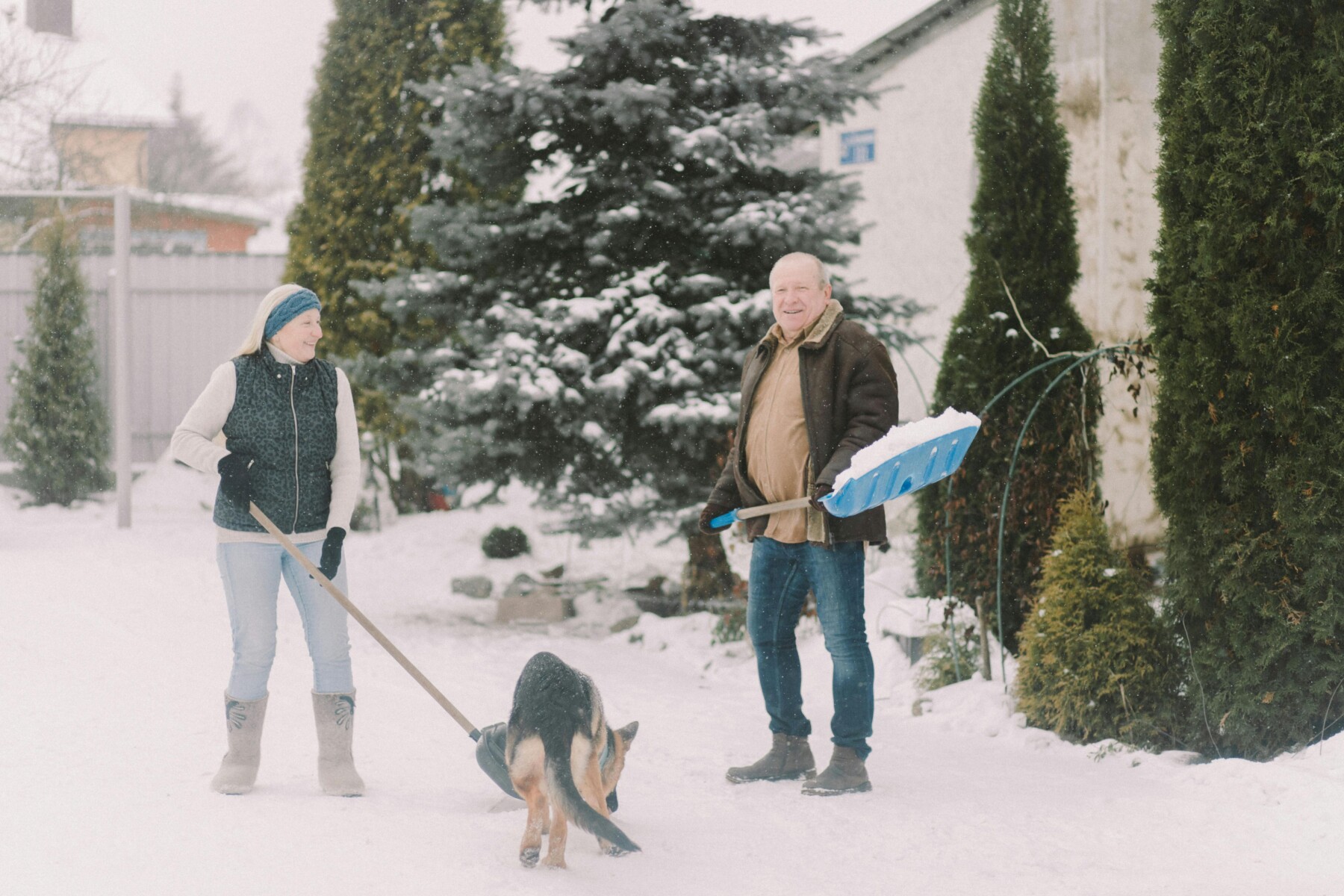
From silence to solidarity, Commu is lowering the threshold for asking for help.Photo: Commu
The same logic is reshaping everyday life in Finland, as digital platforms make asking for help simpler – and increasingly normal.
“With a few clicks of a button, just like you would order food for home delivery, you can find help,” says Karoliina Kauhanen, one of the founders of Commu, an app that connects people in need with neighbours willing to offer their time.
The appetite is there. Since launching in 2022, Commu has attracted more than 100,000 users in Finland.
“Asking for help is not a sign of weakness, but the bravest thing you can do for yourself when you’re in need,” Kauhanen says.
Often, what people are looking for is simply someone to talk to.
“Loneliness is one of the biggest social issues of our lifetime,” Kauhanen says. “It can’t be fixed with clinical tools alone.”
From silence to solidarity
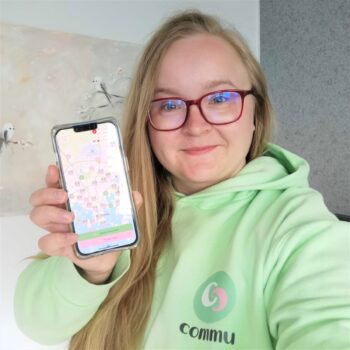
“If you don’t say anything, how can anybody ever help you?” asks Karoliina Kauhanen, founder of Commu.Photo: Commu
The Commu app offers a way into a community for people in a broad range of scenarios – whether it’s a newcomer to Finland navigating their integration or someone suddenly faced with unimaginable circumstances.
Kauhanen recalls how a recently widowed father hesitated before reaching out. “Asking for help was really, really difficult for him – but he just had to do it, to get the funeral and everyday life in order.”
People stepped up.
“He got the support that he needed during those first terrible weeks to survive for his children.”
Normalising asking for help has caught on fast elsewhere, too. Commu users can be found in the United Kingdom, Portugal, Sweden, Spain, Norway and Germany.
“We are seeing this wave of people wanting to do good for their own welfare and their community,” Kauhanen says.
“I have experienced what it’s like to be left alone without a way out. But I have also experienced the other side: how good it feels when someone finally sees you and the issue that you’re struggling with and you go about it together.”
By James O’Sullivan, April 2026