Even wearing snowshoes, you sink knee-deep into the powder. Progress is slow, laborious, with a heavy backpack pressing against your shoulders.
The temperature hovers close to minus 20 degrees Celsius (minus four degrees Fahrenheit), and the sun barely musters the strength to rise above the horizon. It is one of the darkest days of the year in Oulanka National Park in northern Finland.
And yet, in the cold and darkness, this feels like the perfect moment for a polar-night hike.
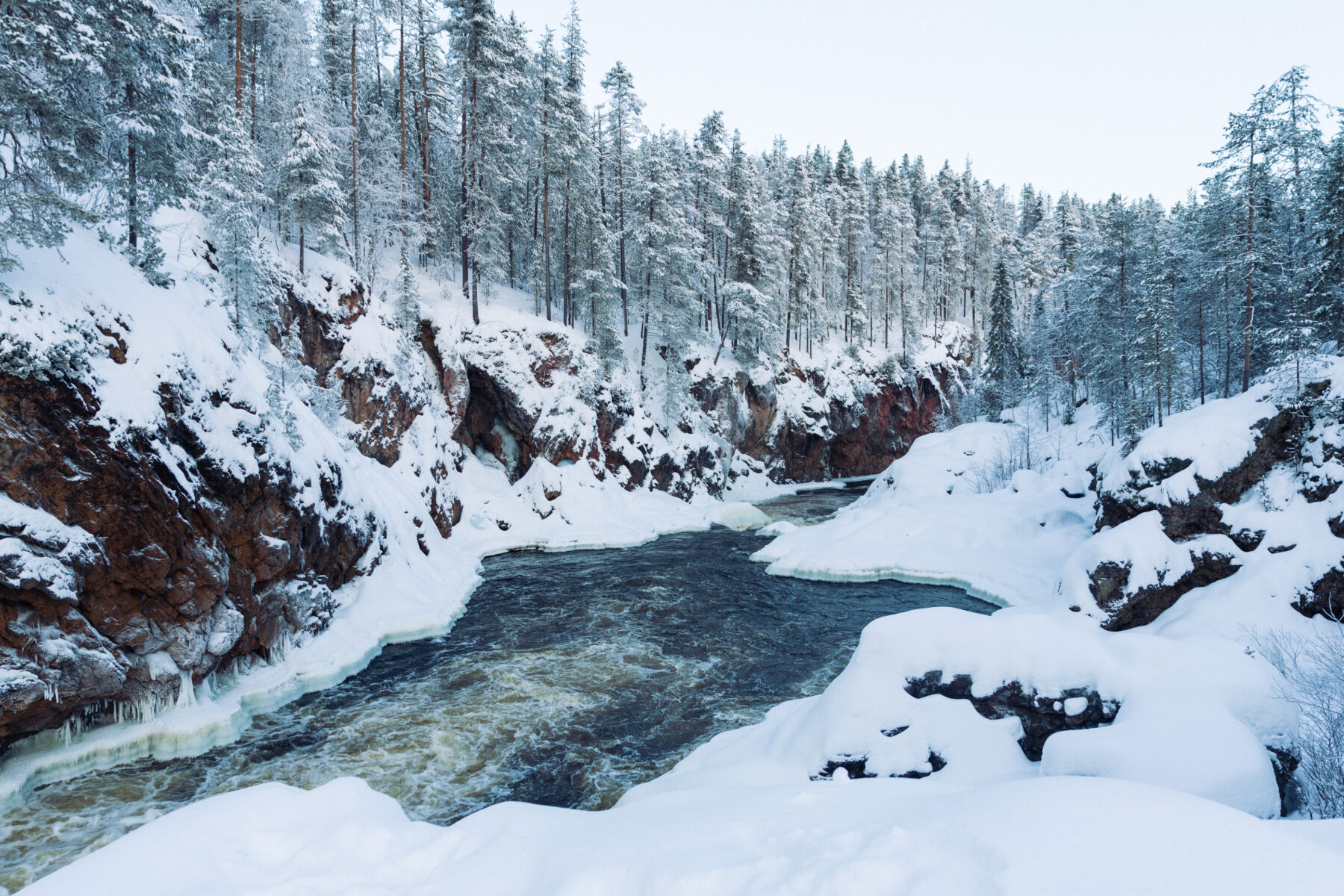
Kiutaköngäs, situated in northern Kuusamo, is a striking stretch of rapids, impressive to visit and admire at any time of year.
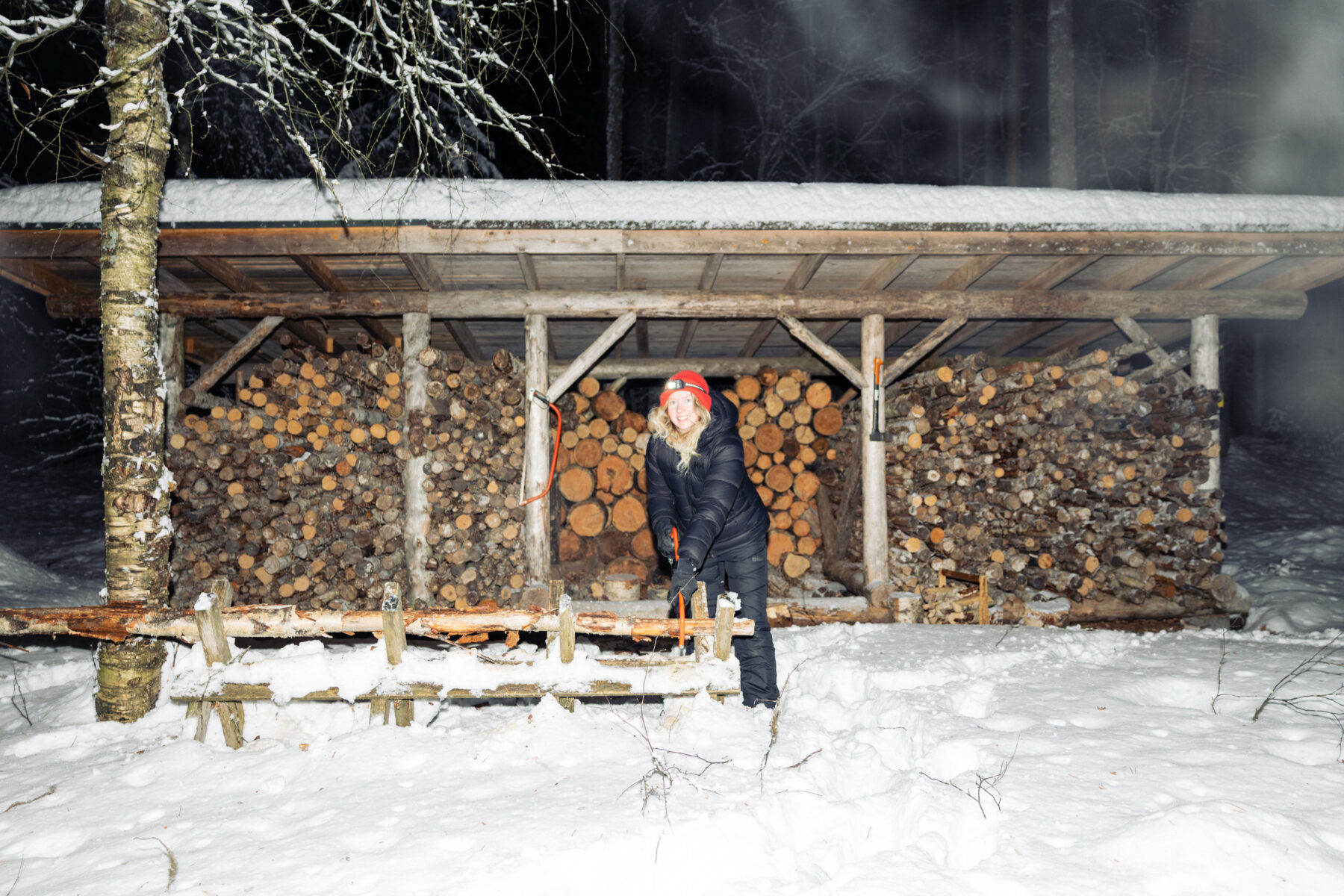
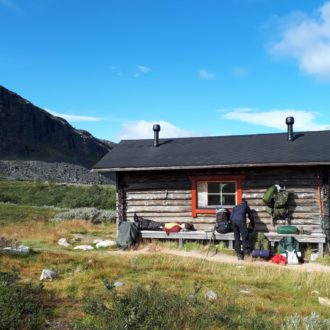
Finnish wilderness huts and rest shelters are often ascetic, but they are free for everyone to use. At our hut by the Oulanka River, there is a generous supply of firewood in the yard – splitting it soon warms you up, even in the deep cold.
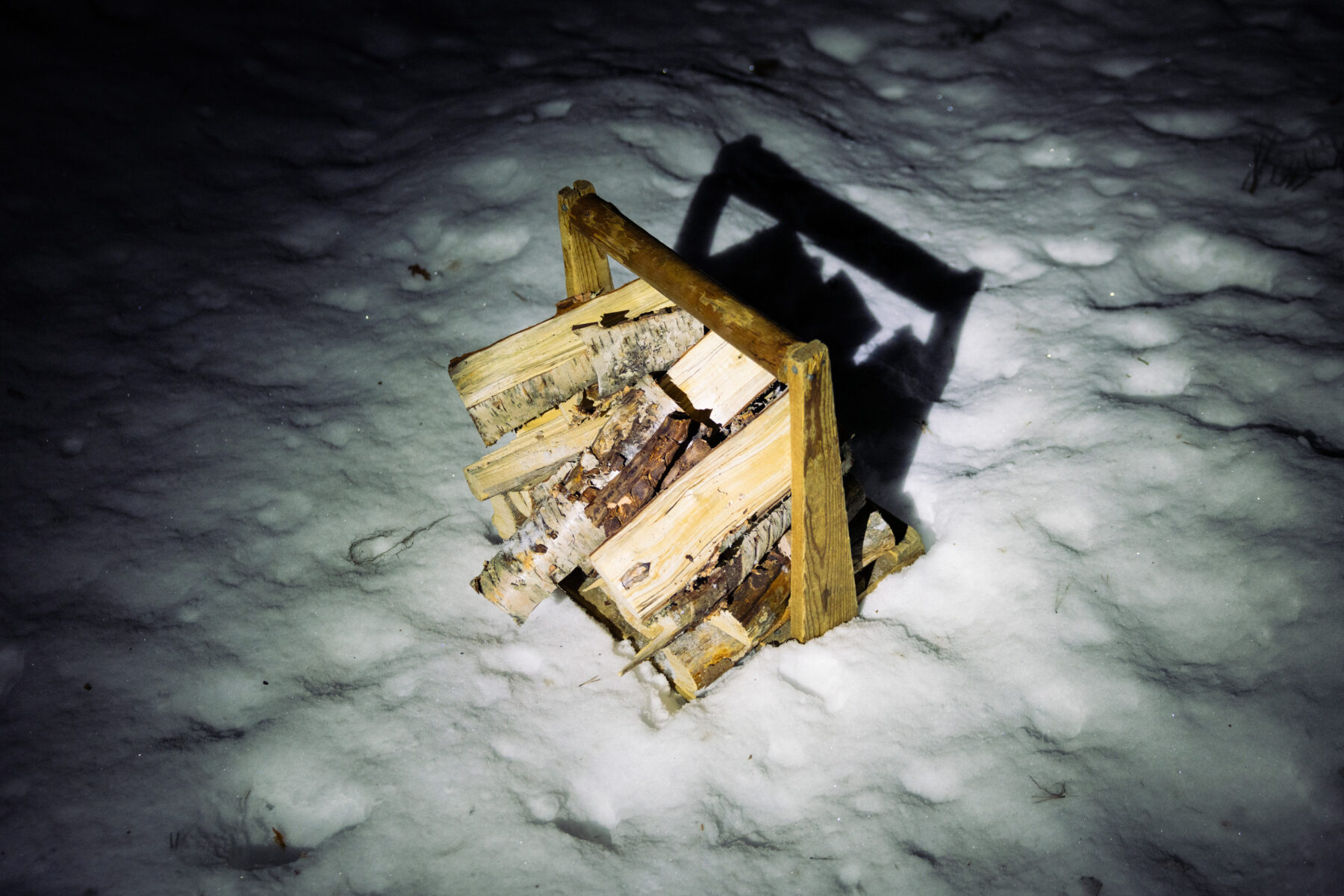
Good manners dictate leaving at least one basket of chopped firewood at the wilderness hut for the next visitors.
Reading the winter landscape
Reindeer tracks. Someone has passed this way before us. The snow is a canvas, every print leaving behind a story.
Soon, the sound of rushing water cuts through the silence. Even the sharpest frost cannot stop Kiutaköngäs, the powerful rapids of the Oulanka River. Elsewhere, the river is already sealed beneath a thick layer of white ice.
The forest speaks, too. Trees crack and groan in the cold, loud enough to set the imagination racing. Did something just move behind that spruce? Breathing slows, listening takes over.
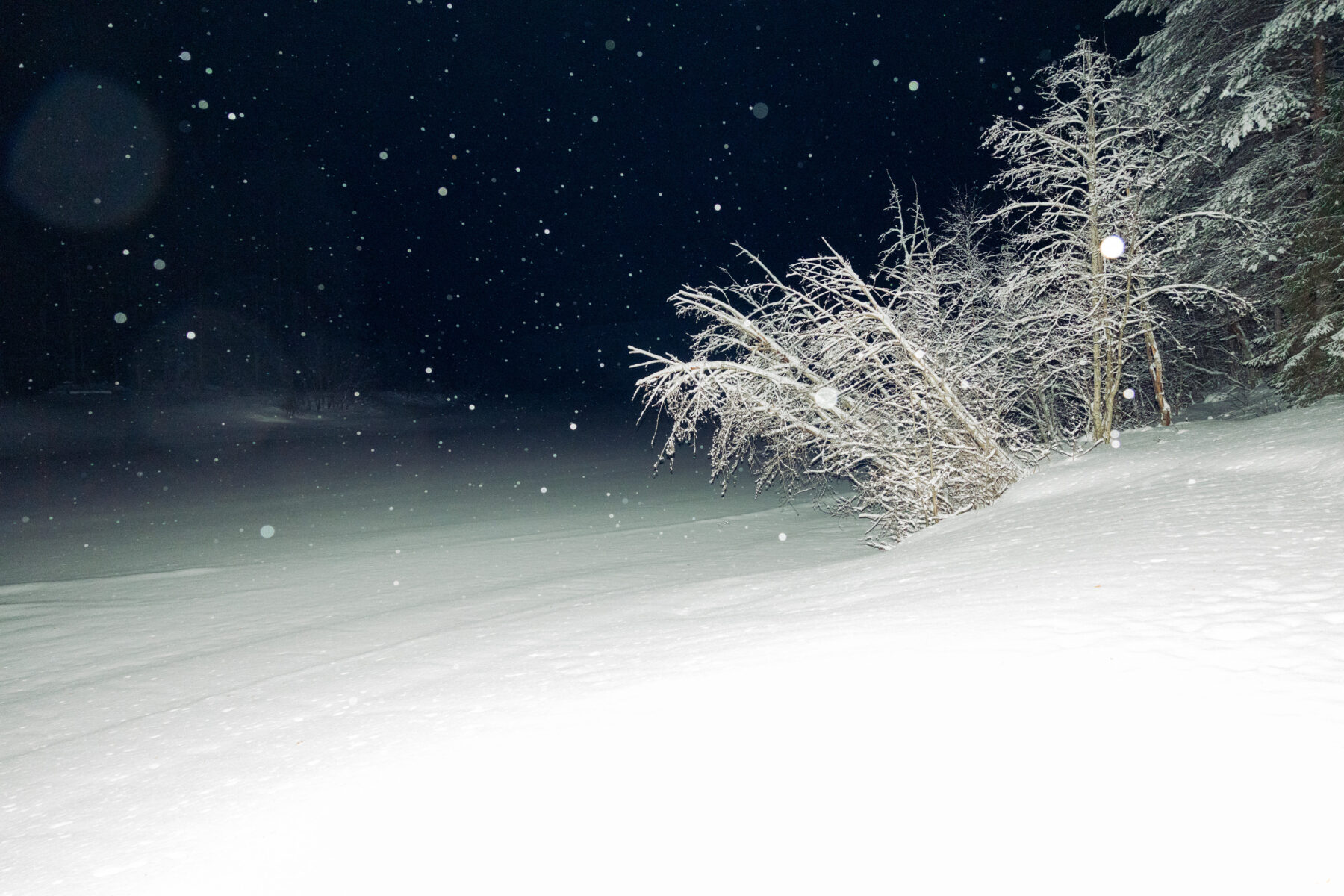
In the dark, the imagination starts to wander. Is there a herd of reindeer watching from somewhere just beyond view? Or is it something else entirely?
The air is so cold that it almost stings. Long strands of pale lichen hang heavily from the pine branches.
A recent storm has brought down several trees. Are we still on the trail? Hunger starts to gnaw. Luckily, there’s some chocolate in your pocket – frozen, but welcome all the same.
There is still a lingering twilight. And what a light it is. The sky turns soft pink, then every imaginable shade of blue. When darkness finally settles shortly after midday, the stars and the moon illuminate the snow so brightly that it never feels completely dark at all.
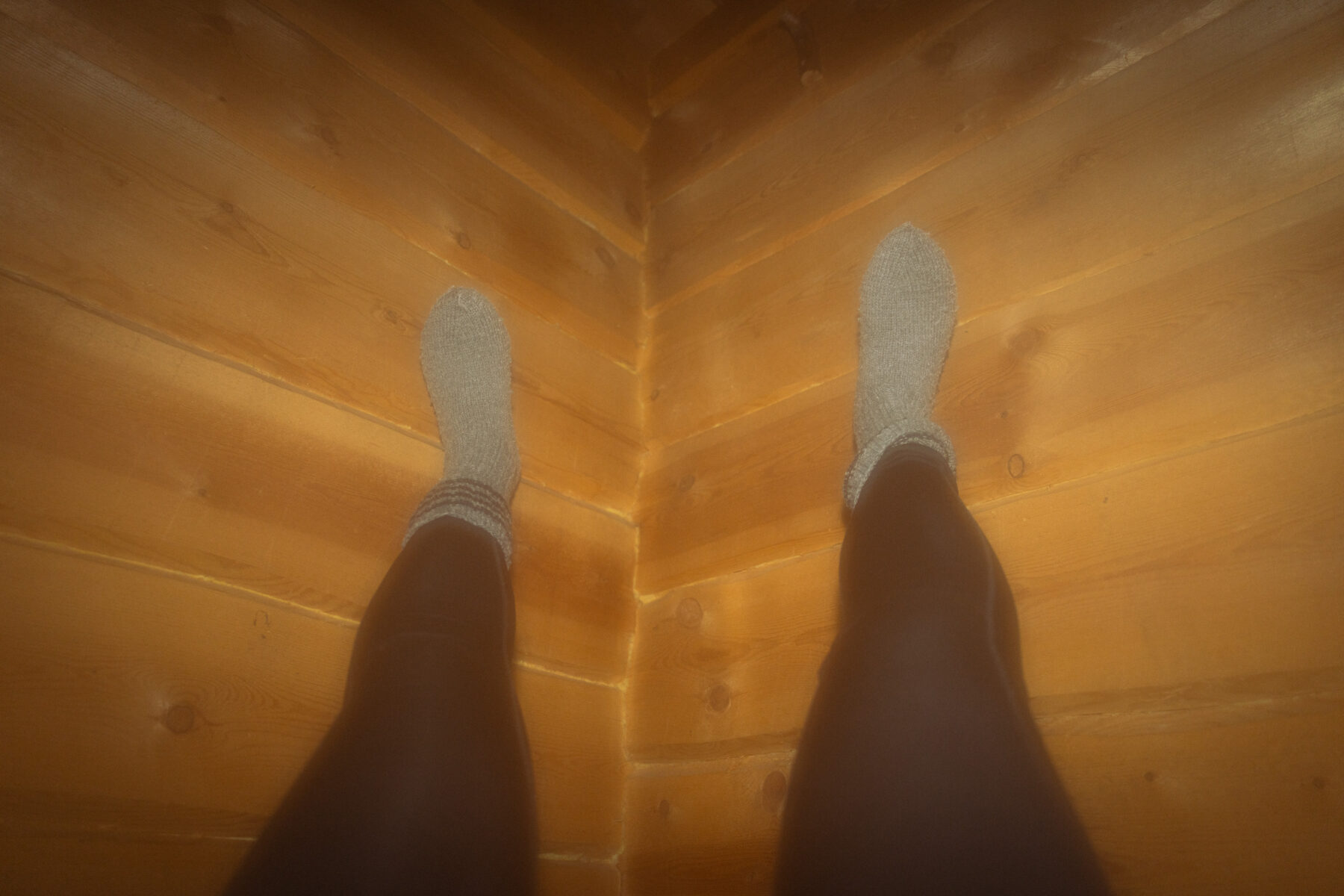
In the wilderness, a mobile phone is of little use, and in subzero temperatures its battery would not last long anyway. This offers a rare opportunity to be properly offline.
Before the spring sun begins to glint off the snow, nature is notably quiet. In the depth of midwinter, only a handful of walkers are out and about.
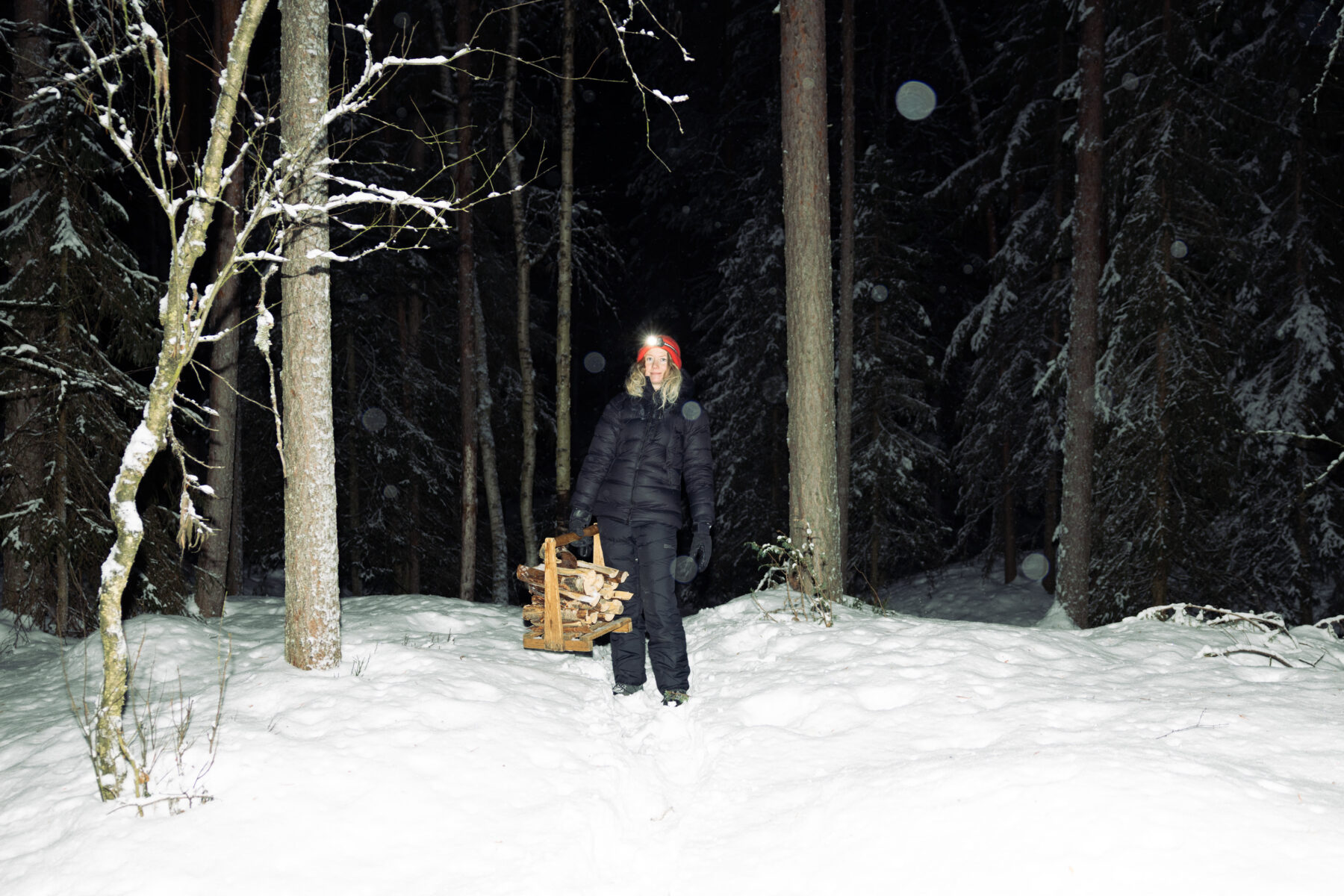
In freezing conditions, dressing in layers is essential. Start with wool or merino wool as a base, add further wool or down for insulation and finish with a windproof outer layer. In the dark, a head torch is an indispensable companion.
A night in a wilderness hut
By the beam of our headlamps, we find our place for the night. The wilderness hut is cold and empty – the guestbook notes the last visitors were here two months ago – but candles and a fire in the stove soon make it feel cosy.
There is still work to be done.
Firewood is plentiful, but it needs sawing and splitting first. There is no well, so melted snow will have to do for drinking water.
We eat dinner still wearing our woollen hats and winter jackets.
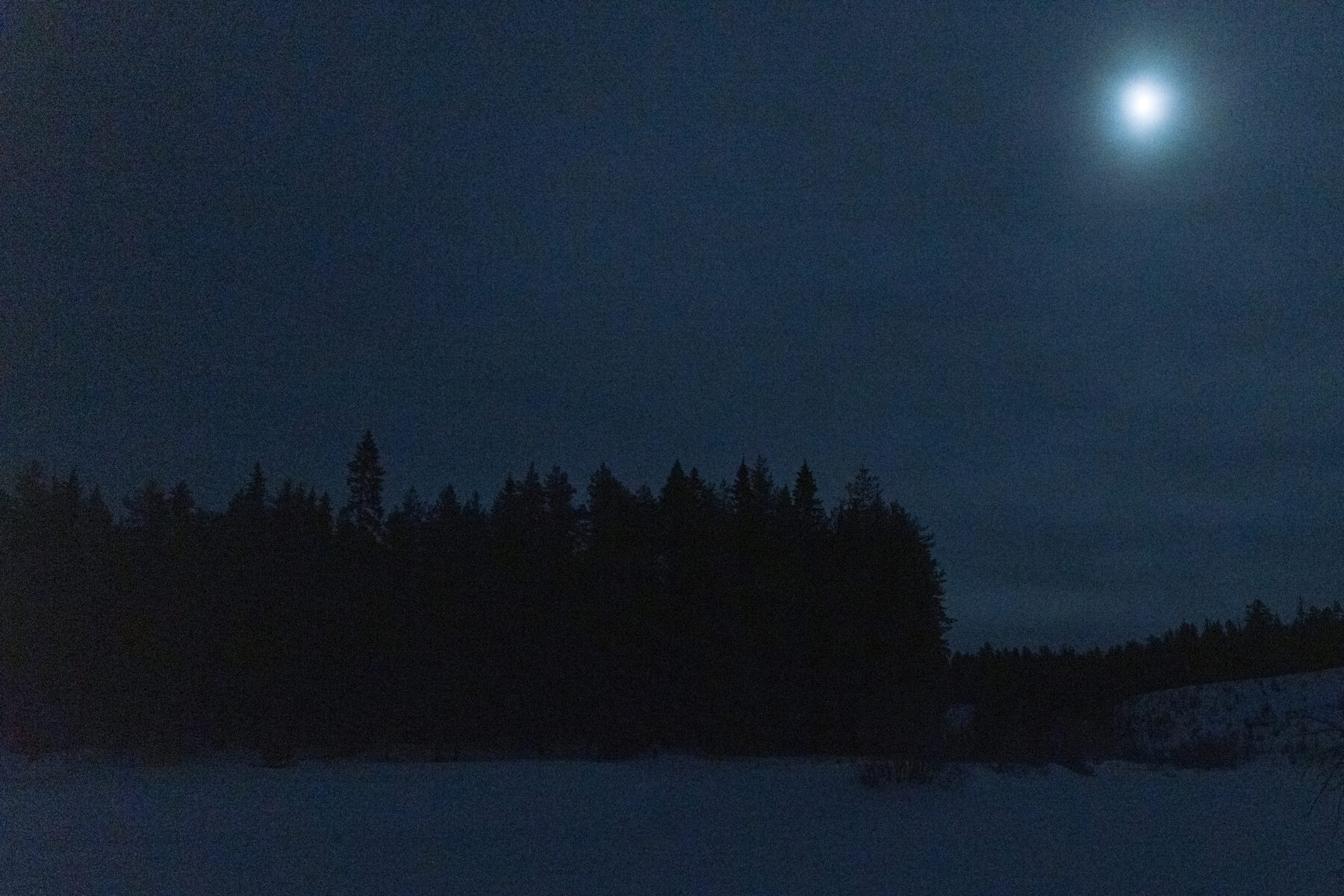
Finland’s national parks offer hundreds of kilometres of trails for hiking during the snow-free months. In winter, some routes are maintained, but mostly it is a matter of luck whether someone has passed along the trail before you. Especially in winter, navigation skills are essential.
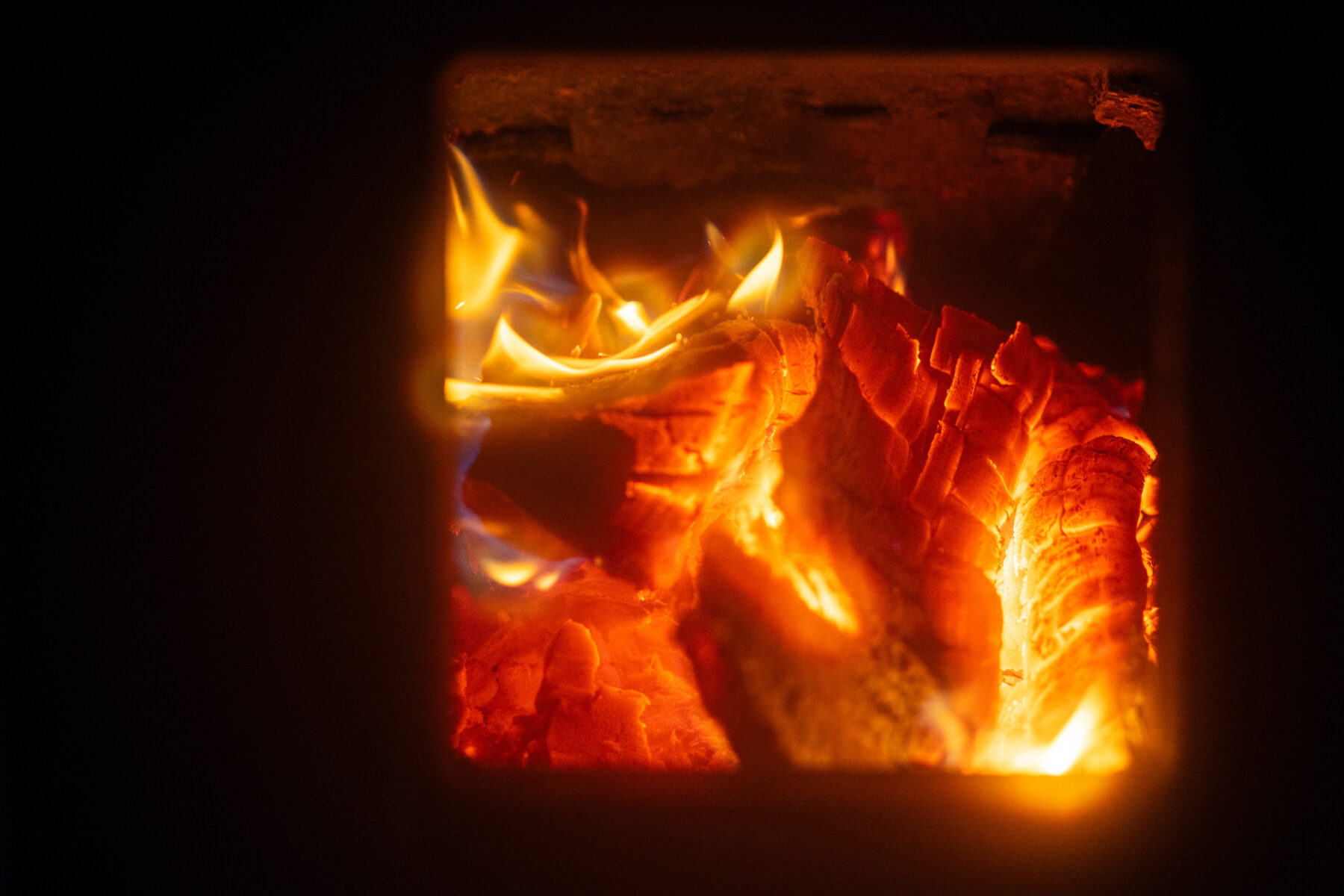
In freezing conditions, heating a wilderness hut with a wood-burning stove is work in itself. Firewood must still be used sparingly: hauling it into the middle of the fells or the forest is both costly and laborious.
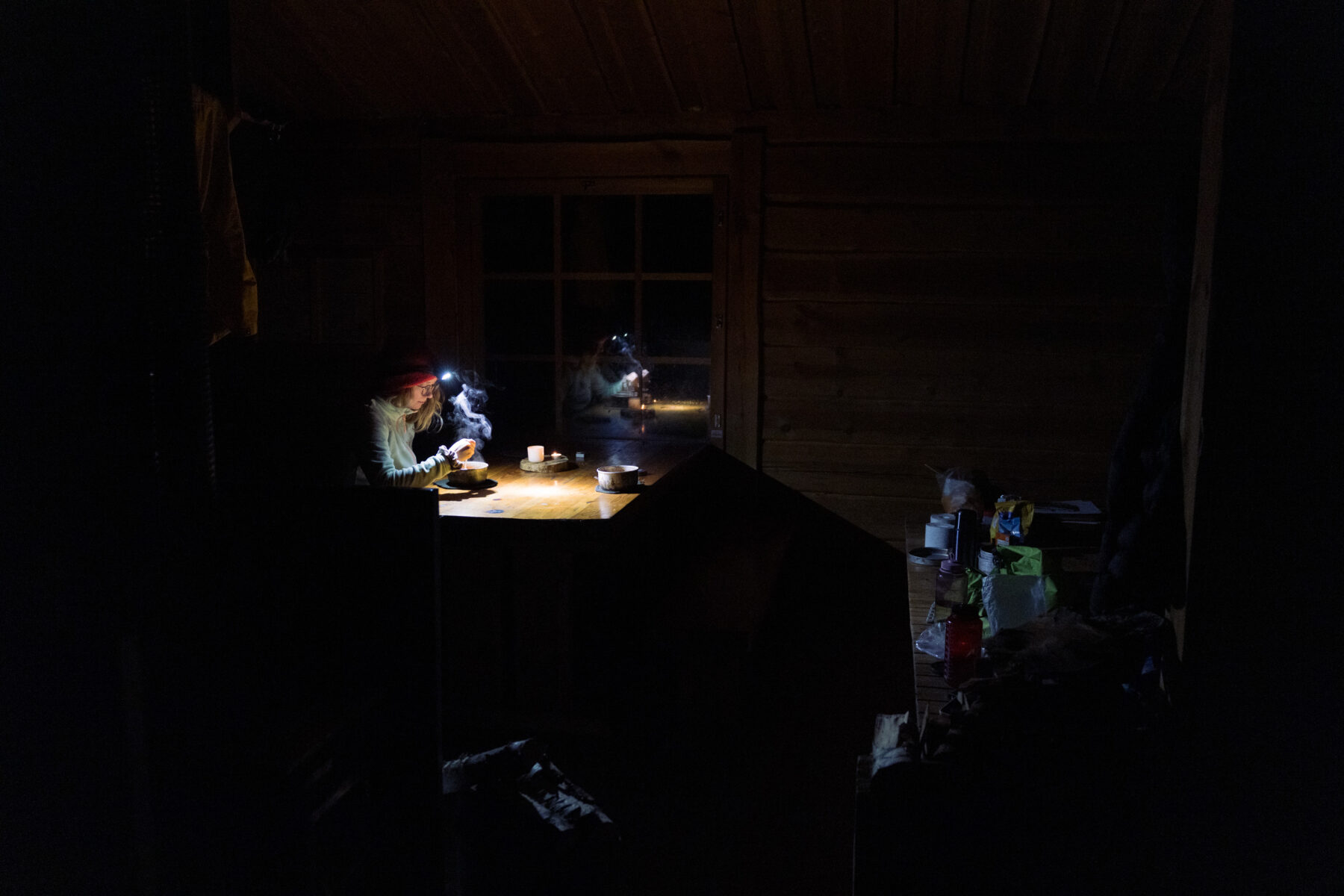
On a winter trek, the essentials are moving, staying warm, resting and, of course, eating. In subzero temperatures, your body consumes energy at a remarkable rate. When running water is not available, you can obtain drinking water by melting snow.
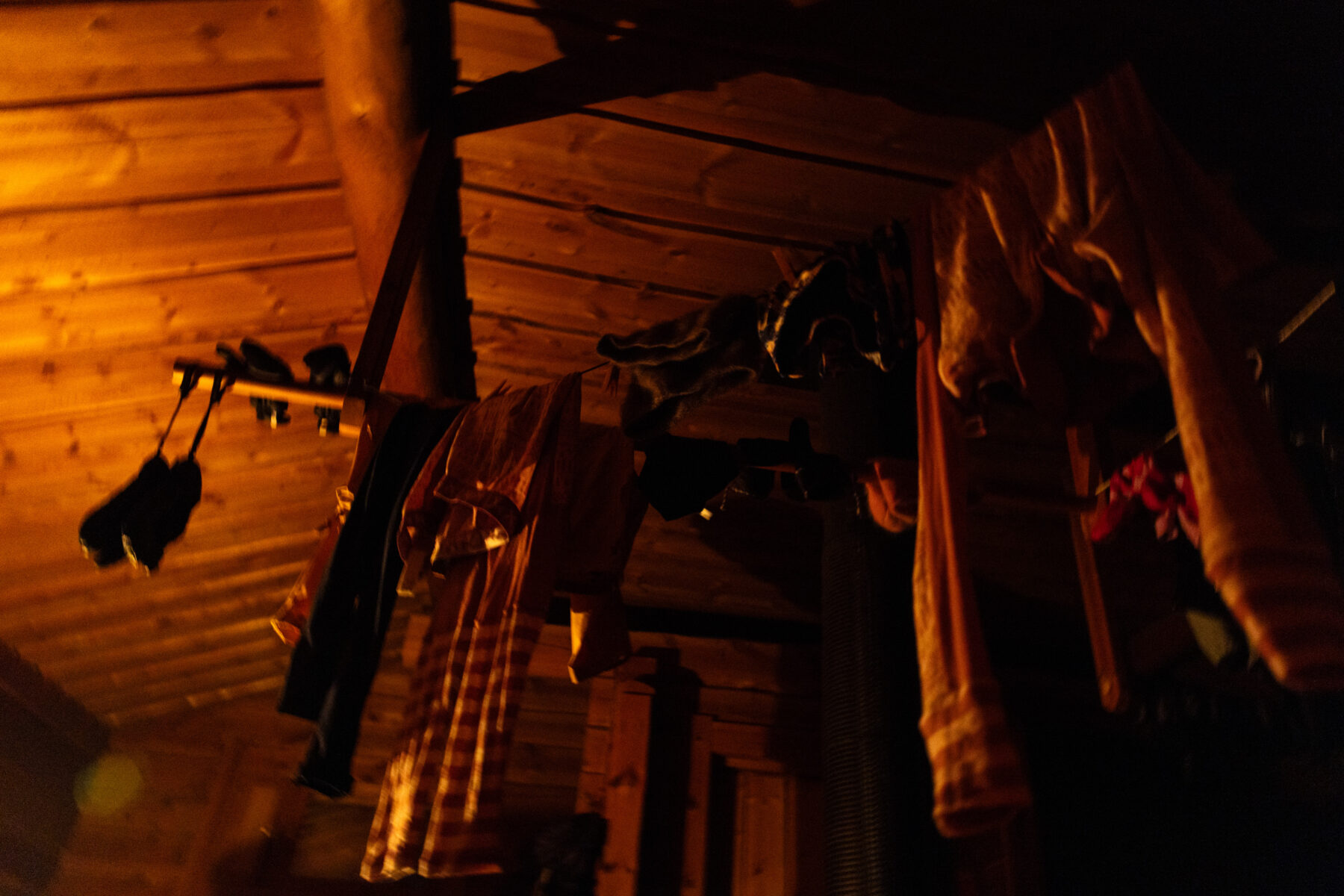
Wilderness huts suitable for overnight stays are found particularly in northern Finland. Many huts have stories of their own, having served for decades as shelters for loggers or reindeer herders.
Then comes rest. Curl up inside a sleeping bag, switch off the headlamp and watch the candlelight flicker across the wooden walls. Outside, darkness stretches in every direction. Rather than emptiness, it feels more like a protective embrace.
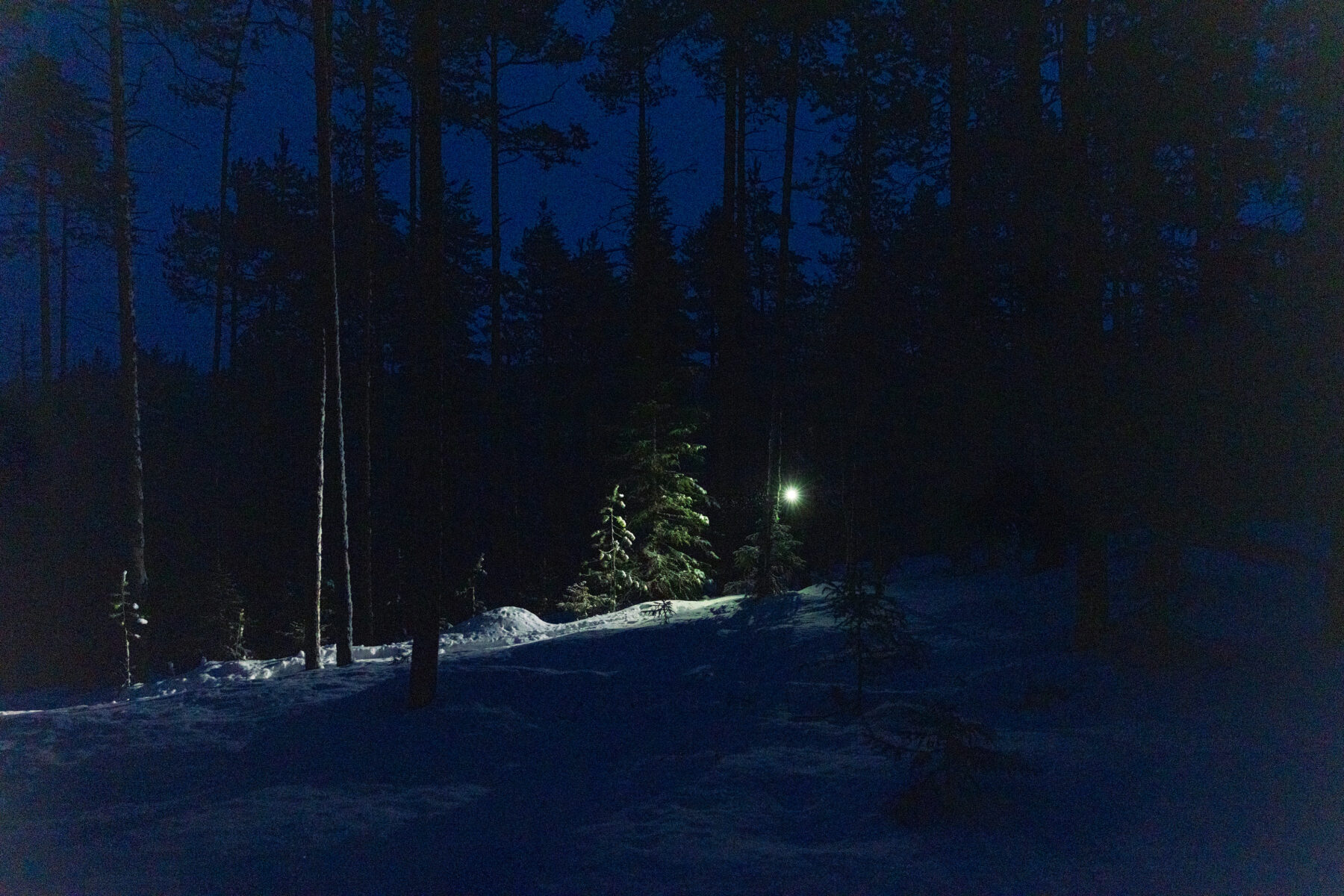
The return journey feels lighter, following our own tracks back. Until next time, forest!
Practical notes for a Finnish winter hike
What is the polar night?
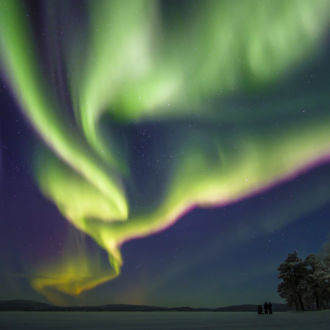
The polar night (kaamos in Finnish) is an annual period when the sun does not rise above the horizon. It occurs within the Arctic Circle, lasting longer the further you travel north toward the pole. In Nuorgam, Finland’s northernmost village, it lasts for more than 50 days. The polar night, however, does not mean complete darkness. In midwinter, the sky fills with shifting shades of pink and blue, a kind of twilight. If you’re lucky, you will see the northern lights appear, too.
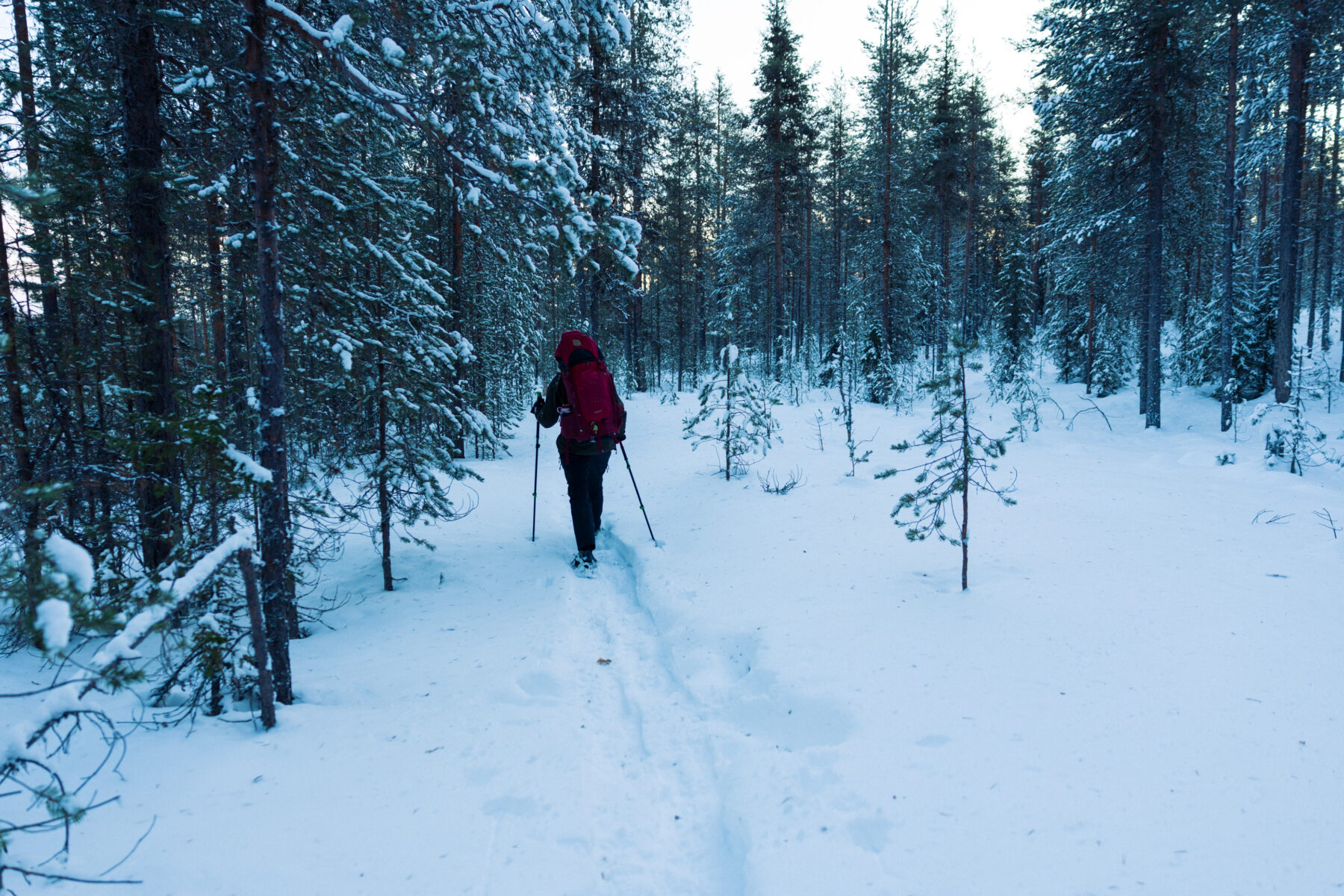
The northern reaches of Oulanka National Park lie on the edge of the Arctic Circle. Areas north of it experience the polar night each year.
How do you hike in winter?
Winter hiking is safest for those with solid experience of trekking in varied conditions. Always check weather forecasts and inform someone of your route and schedule. Essential equipment includes a first-aid kit, spare clothing, sufficient food, a stove, a headlamp and a properly rated winter sleeping bag, as well as a high-quality shelter.
In winter, travel is done on either skis or snowshoes. You carry your gear in a backpack or, more commonly, pull it behind you on a type of sled called a pulk in English and ahkio in Finnish.
Beginners might want to start with day trips to gain more experience. Late winter often offers easier conditions than midwinter: the snowpack is more likely to be firm, and daylight stretches well into the afternoon.
Trails, parks and huts in Finland
Finland has an extensive network of marked trails. All 41 national parks in Finland are free to access year-round. Always check local regulations, as camping is usually permitted only in designated areas. Many parks offer shelters and wilderness huts for overnight stays.
Hut etiquette is simple: make room for those who arrive after you, leave chopped firewood behind and clean the hut so it is at least as tidy as when you arrived. More details about Finnish national parks and huts are available online on a website called Luontoon (“into nature”).
Text and photos by Emilia Kangasluoma, February 2026