While Finland has a deep tradition of handmade textiles, industrial production in the 20th century unlocked new creative possibilities. Designers embraced fabric as a medium, producing some of the world’s most iconic patterns.
EMMA’s exhibition Draped: Art of Printed Fabrics (until March 14, 2027) explores this evolution, showcasing the historical and artistic significance of Finnish textile design.
A museum wrapped in fabric
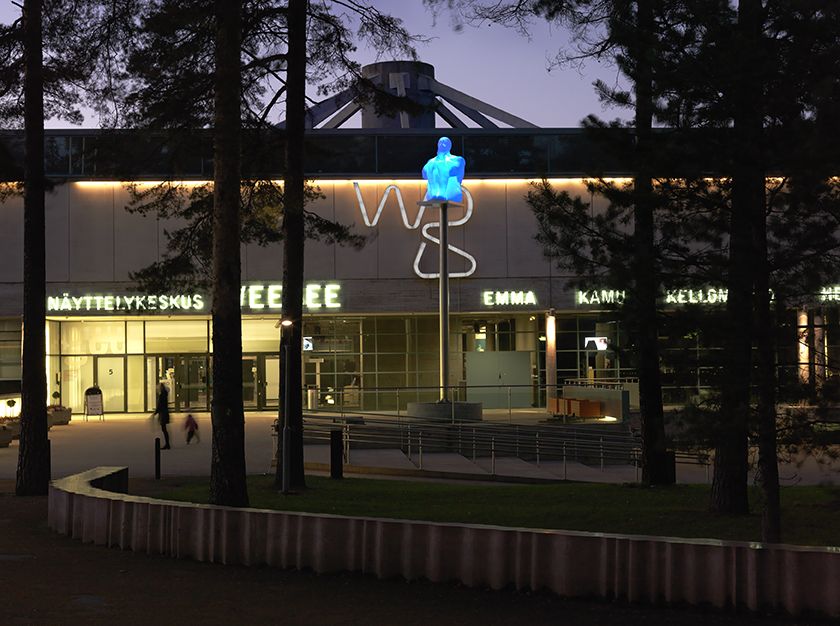
Set inside a former printing house, EMMA occupies a 1960s concrete brutalist building with expansive interiors originally built to accommodate massive printing presses.Photo: Ari Karttunen / EMMA Museum
Located west of Helsinki in Espoo’s Tapiola district, EMMA occupies a former printing house. Its vast, light-filled spaces provide the perfect setting for an immersive display of colour, pattern and textile artistry.
Featuring over 30 artists, the exhibition spans nearly a century, from the 1930s to today. It highlights pioneers of Finnish textile art, including early innovators like Aino Marsio-Aalto, Maija Isola, Vuokko Eskolin-Nurmesniemi and Howard Smith – designers whose work has been closely associated with iconic Finnish brands such as Artek, Marimekko and Vallila.
The selection ranges from classic commercial patterns to experimental works that push textile design in new artistic directions.
From everyday objects to iconic designs
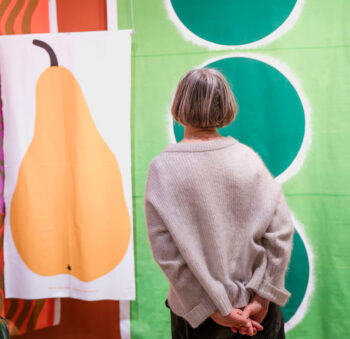
Maija Isola’s Päärynä (pear) captures her habit of painting patterns at full width, translating observations of nature into bold, graphic textile forms.Photo: Paula Virta / EMMA Museum
One of the exhibition’s highlights is Maija Isola’s Päärynä (Pear) pattern, designed for Marimekko in 1969. This playful, organic design features a stylised pear in a bold, graphic arrangement, reflecting Isola’s ability to capture nature in a strikingly modern way.
Isola often painted patterns by hand across the full width of the fabric, believing that industrial art needed the freedom of hand-painted designs to stay alive. This approach resulted in works that combined the colourful expressiveness of handcrafted art with the bold simplicity of minimalist design. As one of Marimekko’s most influential designers, Isola helped shape the brand’s iconic visual language, and her work remains a key part of its legacy.
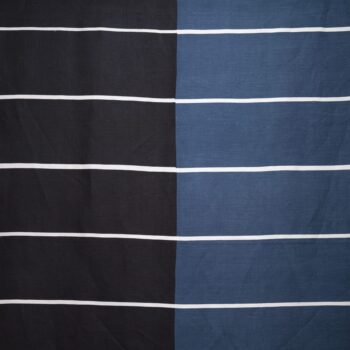
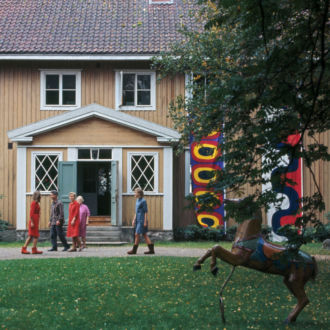
In Tibet, Vuokko Eskolin-Nurmesniemi turned the small irregularities of manual printing into a defining feature, allowing misaligned lines and open areas to become part of the design.Photo: Ari Karttunen / EMMA Museum
Vuokko Eskolin-Nurmesniemi’s Tibet fabric is another standout example. In 1952, Marimekko cofounder Armi Ratia requested a pattern similar to Viola Gråsten’s Oomph, but Nurmesniemi took a different approach, creating a design with bold, abstract colour fields and unprinted areas that embraced the slight irregularities of manual printing.
The result was so strikingly modern that Ratia recognised Nurmesniemi’s unique creative vision, allowing her to explore new directions within the brand, solidifying Tibet as a defining work in Finnish textile history.
American-born artist Howard Smith also left a lasting mark on Finnish textiles. Arriving in Finland in 1962 as part of an American art exhibition – unaware that it was organised by the CIA – he quickly made the country his home. In 1968, he was commissioned by Vallila to design 25 patterns, half of which were produced.
His Makeba design, named after singer and civil rights activist Miriam Makeba, remains in production today. Smith saw flowers as a way to share his passion for nature, creating bold, rhythmic patterns that brought beauty and peace to everyday life. Beyond textiles, he also designed Vallila’s logo, which is still in use.
Innovation in textile art
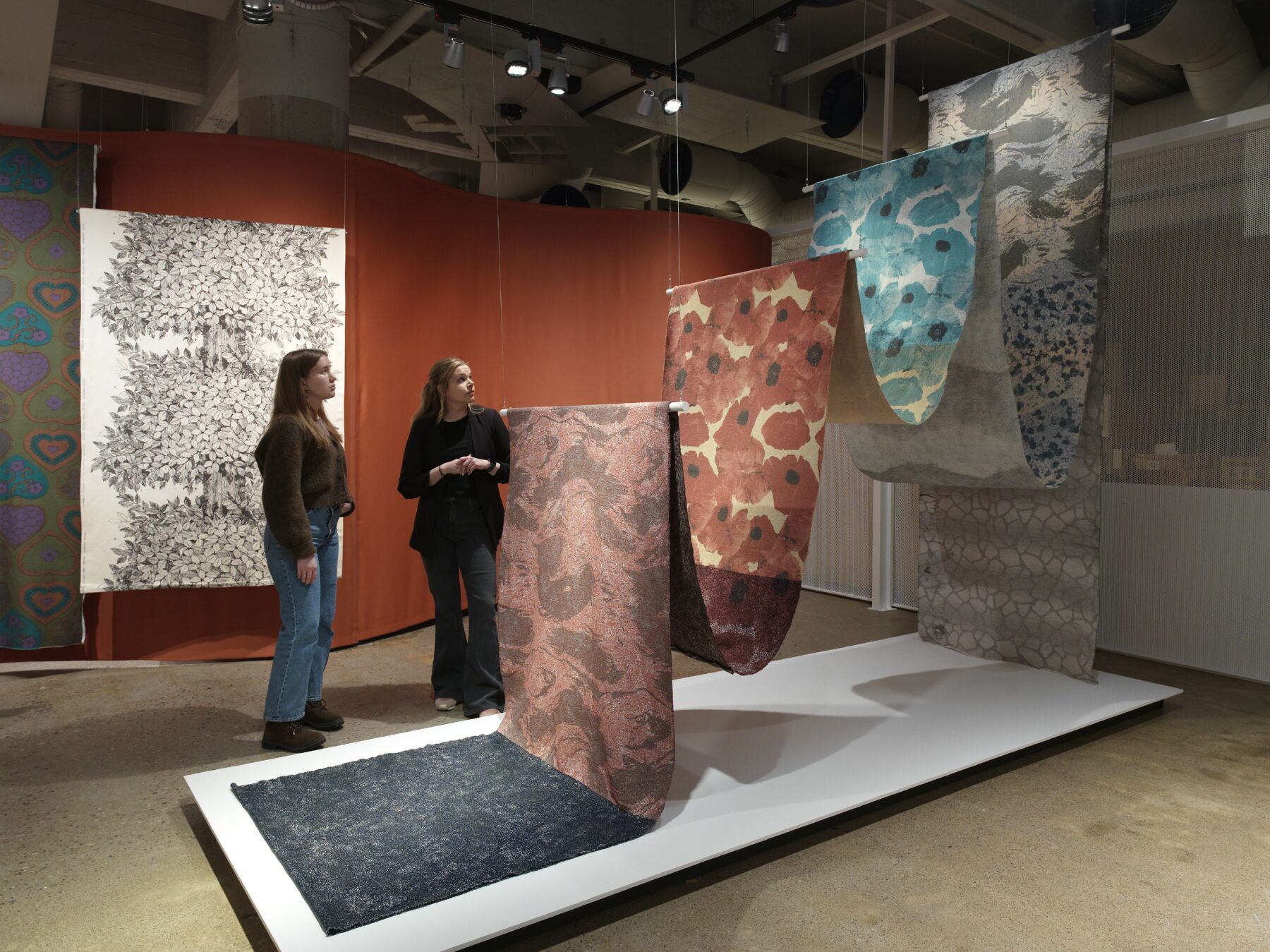
Suspended fabrics from the New Landscapes in Textile Design project illustrate how experimentation with digital tools and traditional weaving can produce more sustainable textiles.Photo: Ari Karttunen / EMMA Museum
Draped also highlights contemporary innovations in textile design. A project entitled New Landscapes in Textile Design, led by designers Maija Fagerlund, Emilia Kuurila, Maarit Salolainen and Anna Semi of Aalto University, forms part of the EMMA exhibition. It explores ways to reduce the environmental impact of textile production.
The project focuses on creating more sustainable textiles by repurposing surplus yarns and combining traditional jacquard weaving with digital pigment printing to minimize waste. Digital tools play a crucial role in making jacquard weaving more efficient, allowing for precise, intricate patterns with less material waste, and offering new possibilities for sustainable design.
Designer and Aalto alumna Sabina Simonsen notes, “As a practice rooted in tradition, textile design is by its very nature intertwined with materiality. While its environmental impact is undeniable, it is hardly set in stone. The naturalistic designs in the New Landscapes in Textile Design project extend beyond their artistic expression, exemplifying the sustainable potential of designing with hybrid techniques – creating new traditions in textile design.”
The legacy and future of Finnish textile design
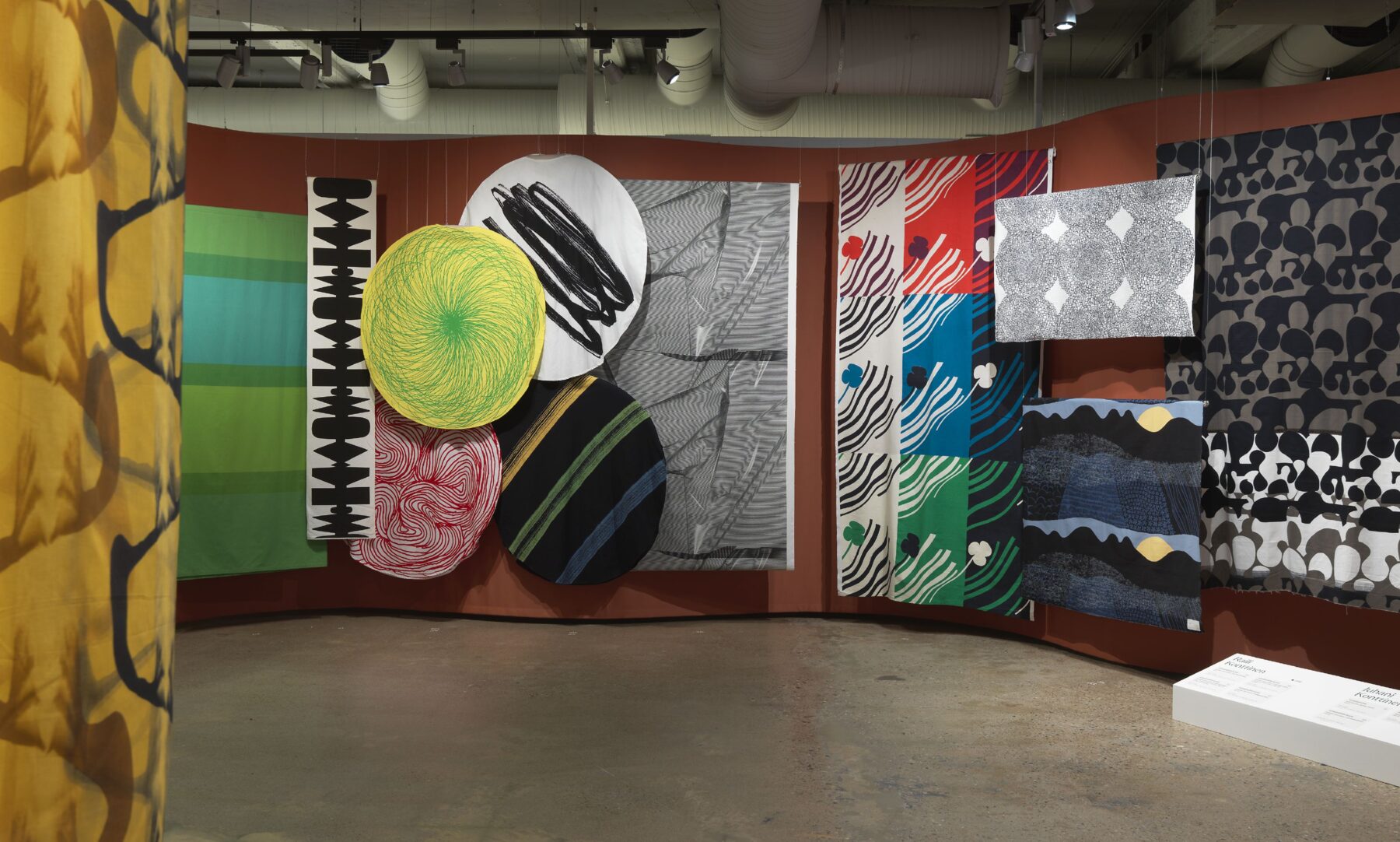
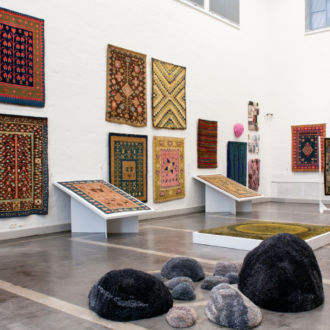
Bold prints and experimental techniques show how fabric became one of Finland’s most influential design languages.Photo: Ari Karttunen / EMMA Museum
For those eager to explore Finnish design, the exhibition offers a window into the patterns and textures that have shaped the country’s artistic landscape. From iconic works by designers like Maija Isola and Vuokko Eskolin-Nurmesniemi to contemporary innovations for sustainability, Draped highlights how Finnish textiles continue to blend tradition with creativity.
By Tyler Walton, March 2026